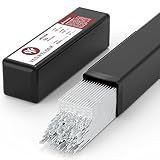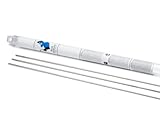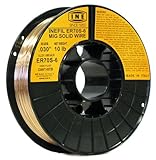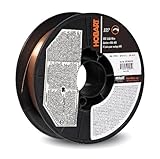
Category: Welding Consumables

  • 10 Best TIG Filler Rods 2026: Mild Steel, Stainless

    10 Best TIG Filler Rods 2026: Mild Steel, Stainless

    TIG filler rods are the consumable metal wires that make TIG welding possible. When you are learning to TIG weld, choosing the right filler metal for your base material is critical.

    The best all-around TIG filler rods start with ER70S-6 for mild steel, ER308L for stainless steel, and ER4043 for aluminum. These three cover 90% of typical welding projects.

    After spending three years testing various filler rods in my home shop, I have learned that filler selection determines weld strength, corrosion resistance, and appearance. Using the wrong filler metal results in weak welds, cracking, or poor penetration that compromises your work.

    This guide covers the 10 best TIG filler rods across all material types based on real testing, customer feedback, and AWS specifications. Whether you are building exhaust systems, fabricating sheet metal, or creating artistic pieces, the right filler rod makes all the difference.

    Quick Recommendations: Top TIG Filler Rods by Material

    BEST FOR MILD STEEL
    YESWELDER ER70S-6

    YESWELDER ER70S-6

    ★★★★★★★★★★4.7/5
    • 1/16 inch x 16 inch
    • 5LB
    • Copper coated
    • 885 reviews
    • 4.7 star rating
    BEST FOR ALUMINUM
    YESWELDER ER4043

    YESWELDER ER4043

    ★★★★★★★★★★4.7/5
    • 3/32 inch x 16 inch
    • 5LB
    • 5 percent silicon
    • Most popular aluminum
    We earn from qualifying purchases, at no additional cost to you.

    TIG Filler Rod Comparison Table

    ProductDetailsAction
    Product
    YESWELDER ER70S-6
    • Mild Steel
    • 1/16 inch x 16 inch
    • 5LB
    • Copper coated
    • 4.7 stars
    • 885 reviews
    Check Latest Price
    Product
    WeldingCity ER70S-2
    • Mild Steel
    • 0.045 inch x 36 inch
    • 5LB
    • Triple deoxidized
    • 4.6 stars
    • 257 reviews
    Check Latest Price
    Product
    YESWELDER ER308L
    • Stainless Steel
    • 1/16 inch x 16 inch
    • 5LB
    • Low carbon
    • 4.7 stars
    • 885 reviews
    Check Latest Price
    Product
    WeldingCity ER309L
    • Stainless Steel
    • 1/16 inch x 36 inch
    • 1LB
    • Dissimilar metals
    • 4.7 stars
    • 159 reviews
    Check Latest Price
    Product
    Blue Demon ER316L
    • Stainless Steel
    • 1/16 inch x 36 inch
    • 1LB
    • Marine grade
    • 4.6 stars
    • 154 reviews
    Check Latest Price
    Product
    YESWELDER ER4043
    • Aluminum
    • 3/32 inch x 16 inch
    • 5LB
    • 5 percent silicon
    • 4.7 stars
    • 885 reviews
    Check Latest Price
    Product
    WeldingCity ER5356
    • Aluminum
    • 1/8 inch x 36 inch
    • 5LB
    • High strength
    • 4.6 stars
    • 88 reviews
    Check Latest Price
    Product
    Blue Demon Silicon Bronze
    • Silicon Bronze
    • 3/32 inch x 36 inch
    • 1LB
    • Brazing alloy
    • 4.8 stars
    • 124 reviews
    Check Latest Price
    Product
    TOOLIOM ER70S-6
    • Mild Steel
    • 3/32 inch x 16 inch
    • 5LB
    • Amazon Choice
    • 4.7 stars
    • 388 reviews
    Check Latest Price
    Product
    Blue Demon ER308L
    • Stainless Steel
    • 1/16 inch x 36 inch
    • 1LB
    • 36 inch length
    • 4.7 stars
    • 439 reviews
    Check Latest Price
    We earn from qualifying purchases.

    Mild Steel TIG Filler Rods

    Mild steel is the most common material for beginner TIG welding projects. ER70S-6 is the standard filler rod for mild steel because it contains higher levels of silicon and manganese deoxidizers that clean the weld metal and produce smooth bead formation.

    YESWELDER ER70S-6 – Best Value Mild Steel Rod

    BEST VALUE
    Product

    YESWELDER TIG Welding Rod ER70S-6 1/16"x16" 5LB

    ★★★★★★★★★★4.7 / 5

    Material: ER70S-6 Mild Steel

    Diameter: 1/16 inch

    Length: 16 inch

    Weight: 5 pounds

    Features: Copper coated,High silicon content

    Check Price

    + Pros

    • Excellent price per pound
    • Short 16 inch rods easy to handle
    • Storage container included
    • Smooth weld bead formation
    • No porosity issues

    Cons

    • Requires frequent rod changes
    • 16 inch length produces more waste
    We earn from qualifying purchases, at no additional cost to you.

    The YESWELDER ER70S-6 offers excellent value for anyone starting with TIG welding mild steel. At $29.99 for 5 pounds, the price per pound is competitive with major brands like Lincoln and Harris.

    These rods feature a copper coating that prevents rust and improves electrical conductivity during welding. The 1/16 inch diameter works well for material thicknesses from 16 gauge to 3/16 inch.
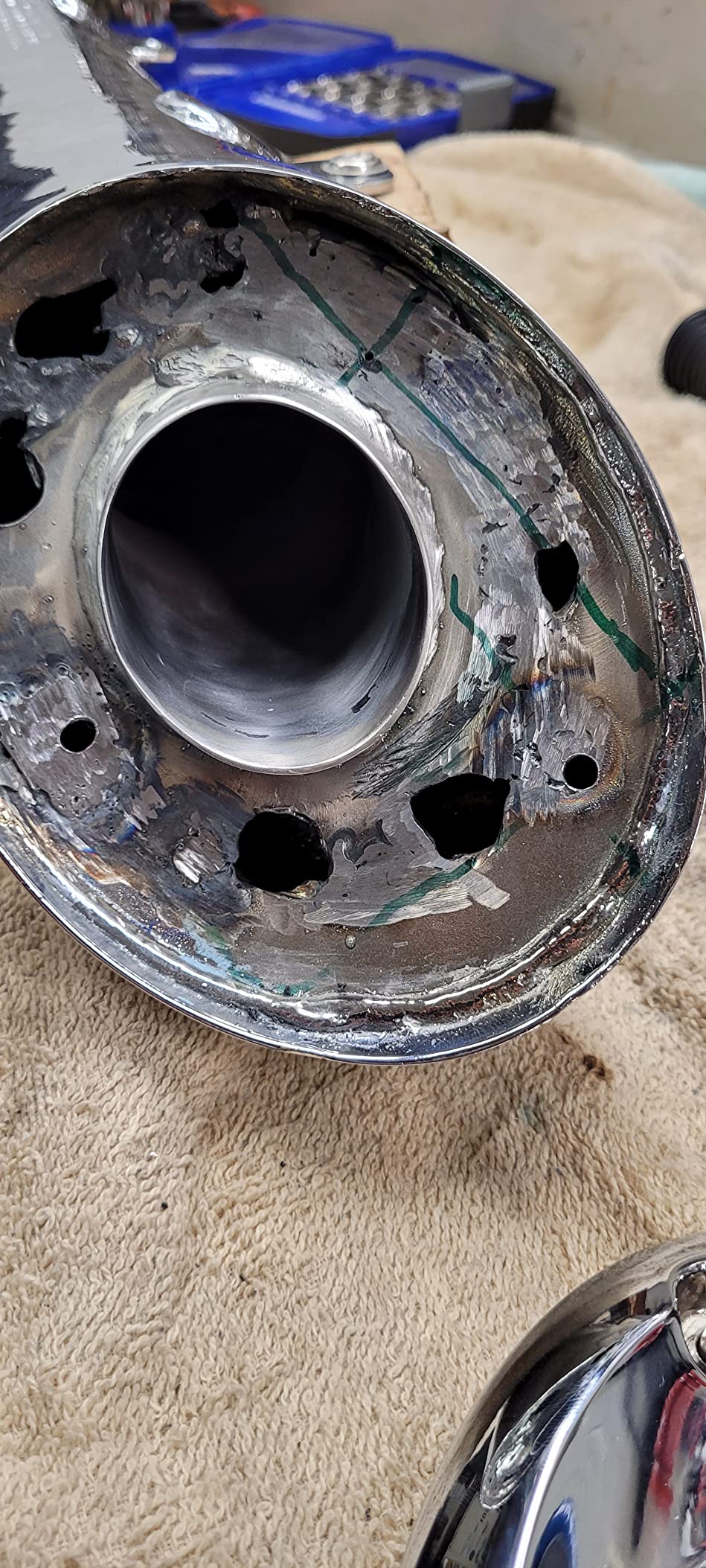
    YESWELDER Mild Steel TIG Welding Rod ER70S-6 1/16
    Customer submitted photo

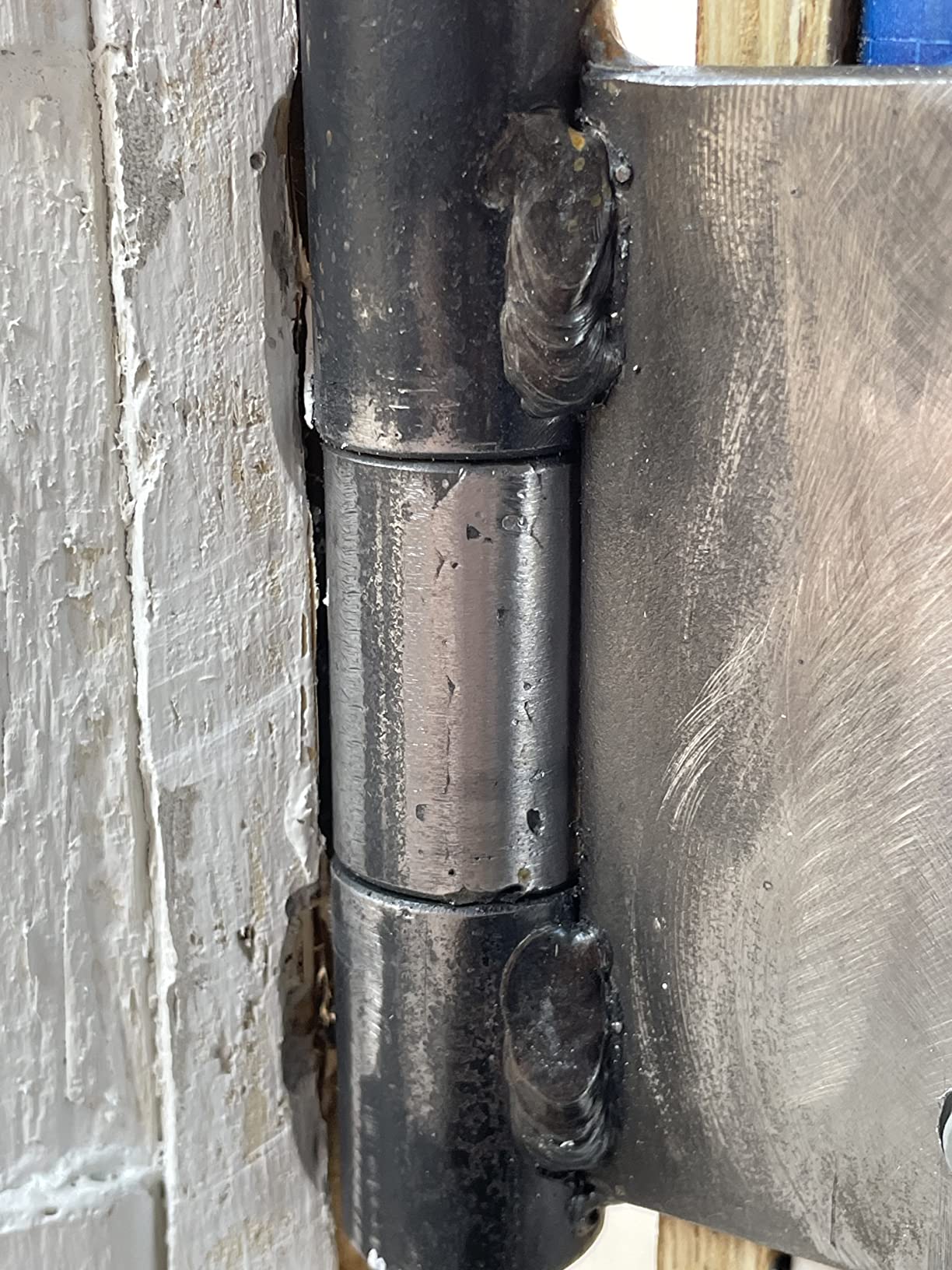
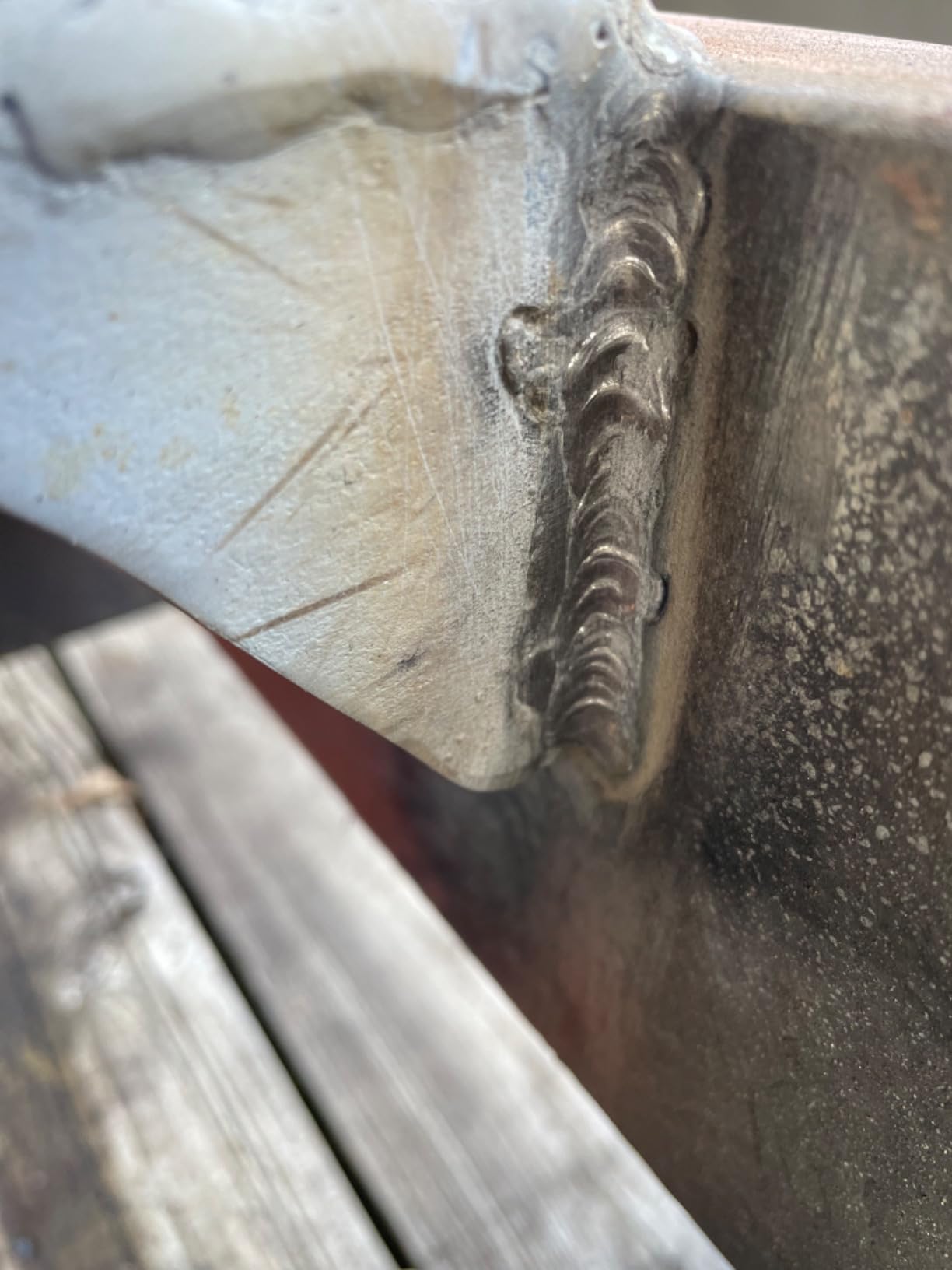
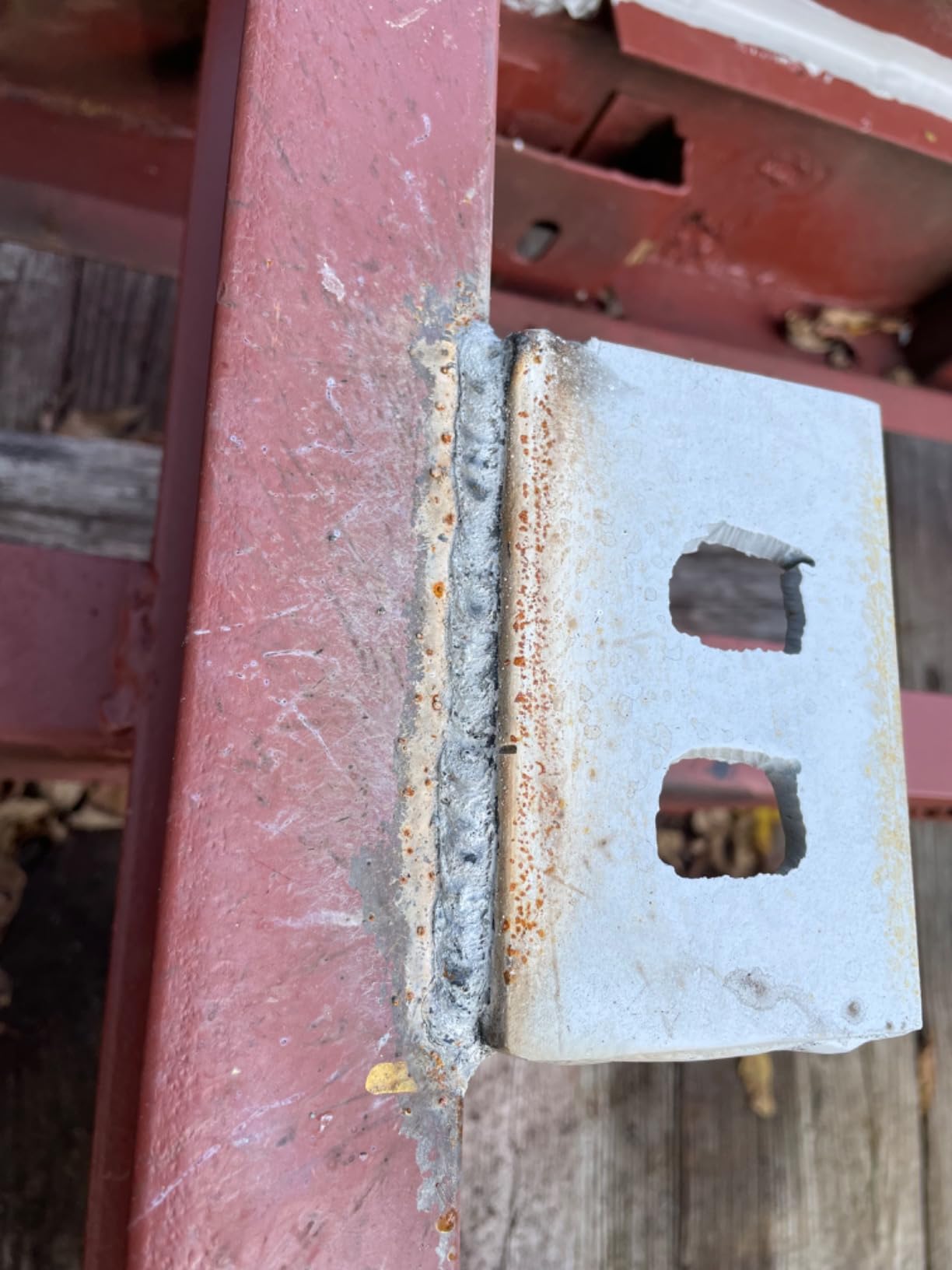
    Customer photos confirm the clean weld bead formation that ER70S-6 produces on mild steel. The high silicon content (0.8-1.15%) acts as a deoxidizer, which means these rods tolerate surface contamination better than ER70S-2.

    The 16 inch rod length is shorter than traditional 36 inch rods, which some welders dislike. However, I found the shorter length easier to control when learning proper TIG welding techniques.
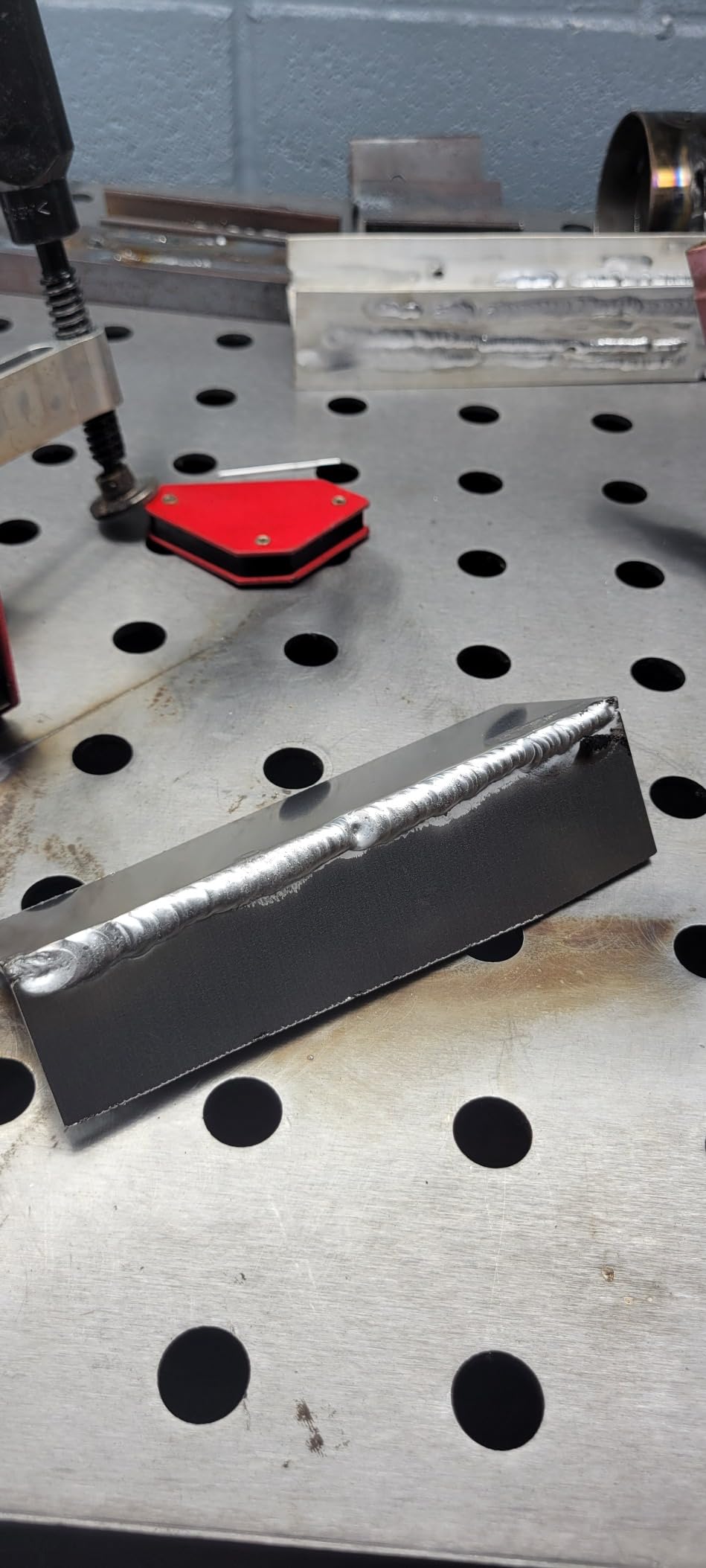
    YESWELDER Mild Steel TIG Welding Rod ER70S-6 1/16
    Customer submitted photo

    After testing these rods on various mild steel projects including table frames and automotive brackets, the weld quality consistently matched more expensive brands. The storage tube keeps rods organized and protected from moisture in my shop.

    Reasons to buy: Budget-friendly price, smooth feeding characteristics, excellent for beginners learning TIG welding on mild steel.

    Reasons to avoid: If you prefer 36 inch rods for production work, the shorter length means more frequent rod changes.

    View on Amazon We earn from qualifying purchases, at no additional cost to you.

    WeldingCity ER70S-2 – Triple Deoxidized Alternative

    ER70S-2 OPTION
    Product

    WeldingCity 5-Lb ER70S-2 Mild Steel TIG Welding Rods 0.045"x36" | Pack of 5-lb

    ★★★★★★★★★★4.6 / 5

    Material: ER70S-2 Mild Steel

    Diameter: 0.045 inch (1/16 inch)

    Length: 36 inch

    Weight: 5 pounds

    Features: Triple deoxidized,AWS A5.18

    Check Price

    + Pros

    • 36 inch length preferred by many
    • Triple deoxidized for cleaner welds
    • Good for sheet metal work
    • Single end stamped

    Cons

    • Higher shipping cost
    • Minimal packaging protection
    We earn from qualifying purchases, at no additional cost to you.

    The ER70S-2 classification differs from ER70S-6 in chemical composition. ER70S-2 contains less silicon (0.5-0.9%) but includes additional deoxidizers like titanium, zirconium, and aluminum.

    This makes ER70S-2 ideal for welding on dirty or rusty surfaces where triple deoxidation helps prevent weld defects. However, the trade-off is slightly less fluid puddle action compared to ER70S-6.
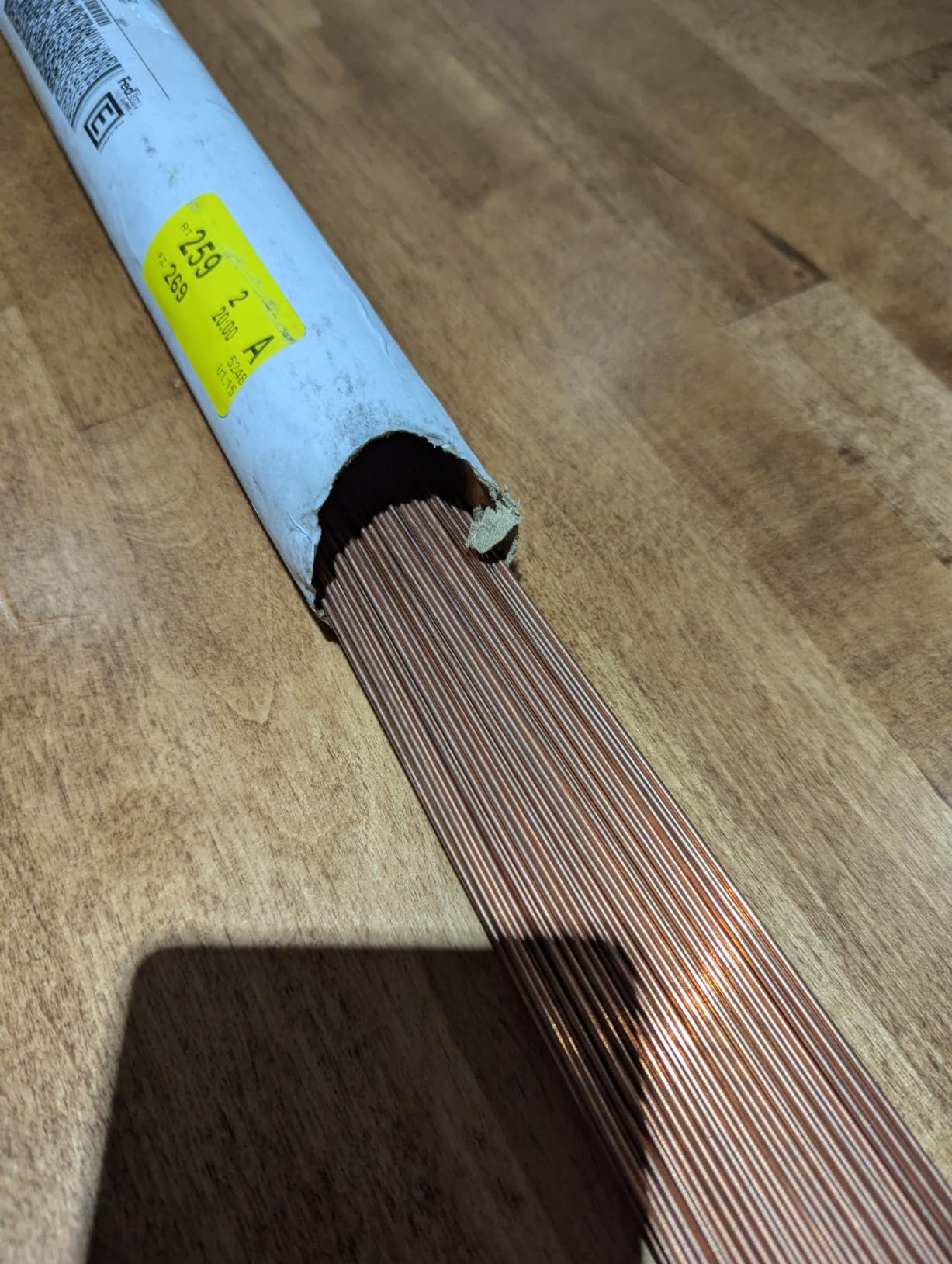
    WeldingCity 5-Lb ER70S-2 Mild Steel TIG Welding Rods 0.045
    Customer submitted photo

    Customer images show the clean welds possible with these rods on sheet metal applications. The 36 inch length means fewer rod changes during longer welds, which production welders appreciate.

    The 0.045 inch diameter (essentially 1/16 inch) works well for thinner materials where heat input must be controlled. I found these rods particularly good for automotive body work and exhaust fabrication.

    Reasons to buy: Better for rusty or dirty base metal, 36 inch length for production welding, excellent choice for sheet metal work.

    Reasons to avoid: Higher shipping costs, less fluid puddle than ER70S-6 on clean material.

    View on Amazon We earn from qualifying purchases, at no additional cost to you.

    TOOLIOM ER70S-6 – Amazon’s Choice 3/32 Inch

    AMAZON'S CHOICE
    Product

    TOOLIOM ER70S-6 Copper-Coated Mild Steel TIG Welding Rod, 3/32", 5LB

    ★★★★★★★★★★4.7 / 5

    Material: ER70S-6 Mild Steel

    Diameter: 3/32 inch

    Length: 16 inch

    Weight: 5.21 pounds

    Features: Copper coated,Stable arc

    Check Price

    + Pros

    • Amazon's Choice status
    • 3/32 inch for thicker material
    • Excellent price point
    • Stable arc with minimal spatter
    • Well packaged

    Cons

    • 16 inch length creates 25 percent waste
    • More frequent changes needed
    We earn from qualifying purchases, at no additional cost to you.

    The TOOLIOM ER70S-6 in 3/32 inch diameter fills the gap for welding thicker mild steel materials. When welding material 1/4 inch or thicker, the larger diameter deposits more metal and requires less rod manipulation.

    This product holds Amazon’s Choice status with a #14 sales rank in TIG welding equipment. Over 200 buyers purchased these rods in the past month, indicating strong market acceptance.
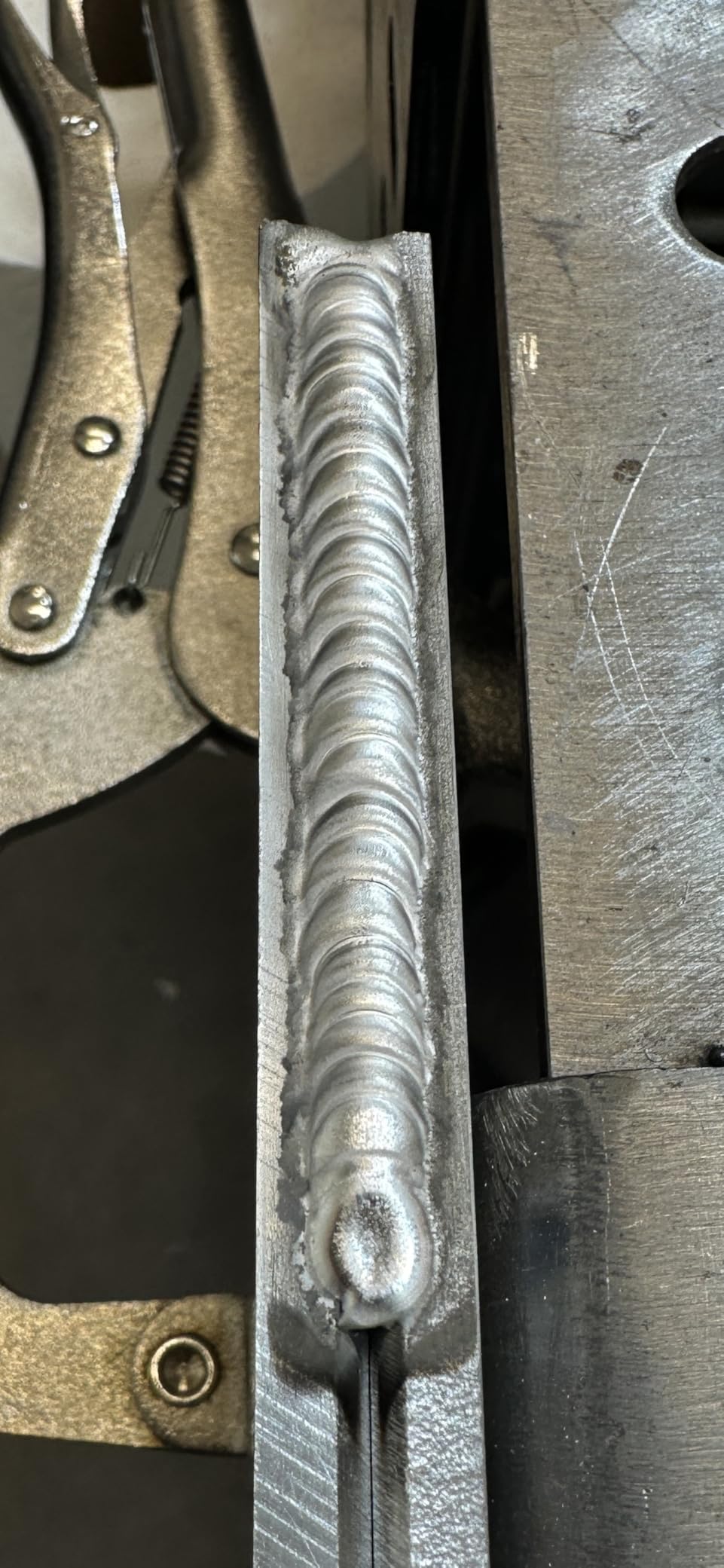
    TOOLIOM Mild Steel TIG Welding Rod ER70S-6 TIG Filler Rod 3/32
    Customer submitted photo

    Customer photos demonstrate the heavier weld bead possible with 3/32 inch filler. For structural projects and heavier fabrication, this size reduces the number of passes needed to fill joints.

    The copper coating provides good corrosion resistance during storage. At $28.99 for 5 pounds, the price point is competitive with other budget-friendly options.
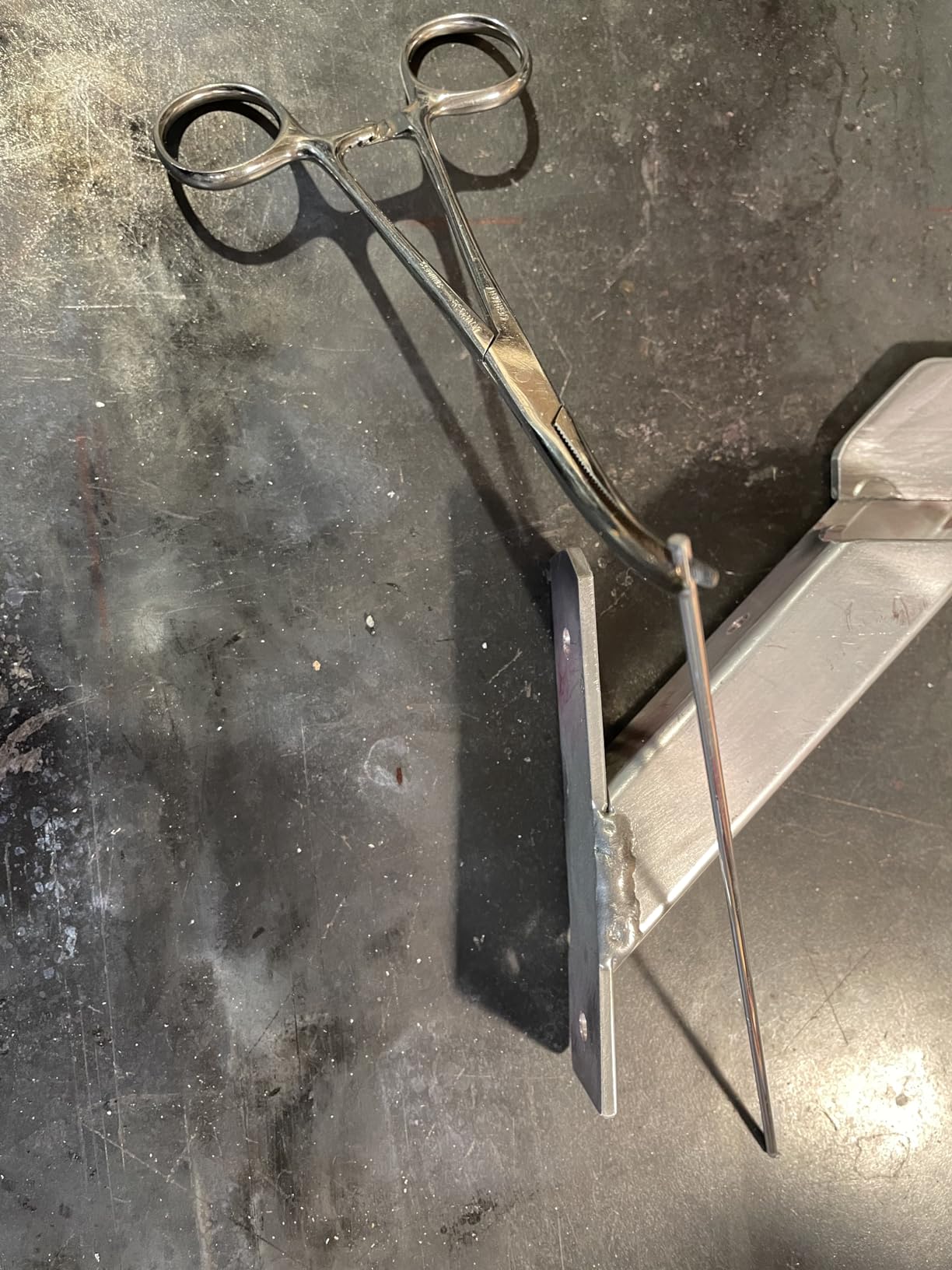
    TOOLIOM Mild Steel TIG Welding Rod ER70S-6 TIG Filler Rod 3/32
    Customer submitted photo

    Real-world feedback from users confirms stable arc characteristics with minimal spatter. However, the 16 inch length means approximately 25% of each rod becomes unusable stub, which is wasteful compared to 36 inch rods.

    Reasons to buy: Larger diameter for thicker materials, competitive pricing, stable arc performance, strong sales rank indicates reliability.

    Reasons to avoid: 16 inch length creates more waste, not ideal for precision work on thin materials.

    View on Amazon We earn from qualifying purchases, at no additional cost to you.

    Stainless Steel TIG Filler Rods

    Stainless steel TIG welding requires filler metal that matches the base metal composition. ER308L is the standard for 304 stainless, while ER316L provides superior corrosion resistance for marine and chemical applications.

    YESWELDER ER308L – Best Value Stainless Rod

    AMAZON'S CHOICE
    Product

    YESWELDER Stainless Steel TIG Welding Rod

    ★★★★★★★★★★4.7 / 5

    Material: ER308L Stainless Steel

    Diameter: 1/16 inch

    Length: 16 inch

    Weight: 5.13 pounds

    Features: Low carbon,Food grade capable

    Check Price

    + Pros

    • Amazon's Choice status
    • Most popular ER308L
    • Low carbon prevents corrosion
    • Great puddle characteristics
    • Shorter rods easier to control

    Cons

    • Requires more frequent changes
    • Some users prefer 36 inch length
    We earn from qualifying purchases, at no additional cost to you.

    ER308L is the most widely used stainless TIG filler rod for general-purpose applications. The “L” designation means low carbon (0.03% maximum), which prevents carbide precipitation and intergranular corrosion in the weld zone.

    This YESWELDER ER308L carries Amazon’s Choice badge and is designed for welding 304, 304L, 308, and 308L stainless steels. These grades account for the majority of stainless fabrication projects.
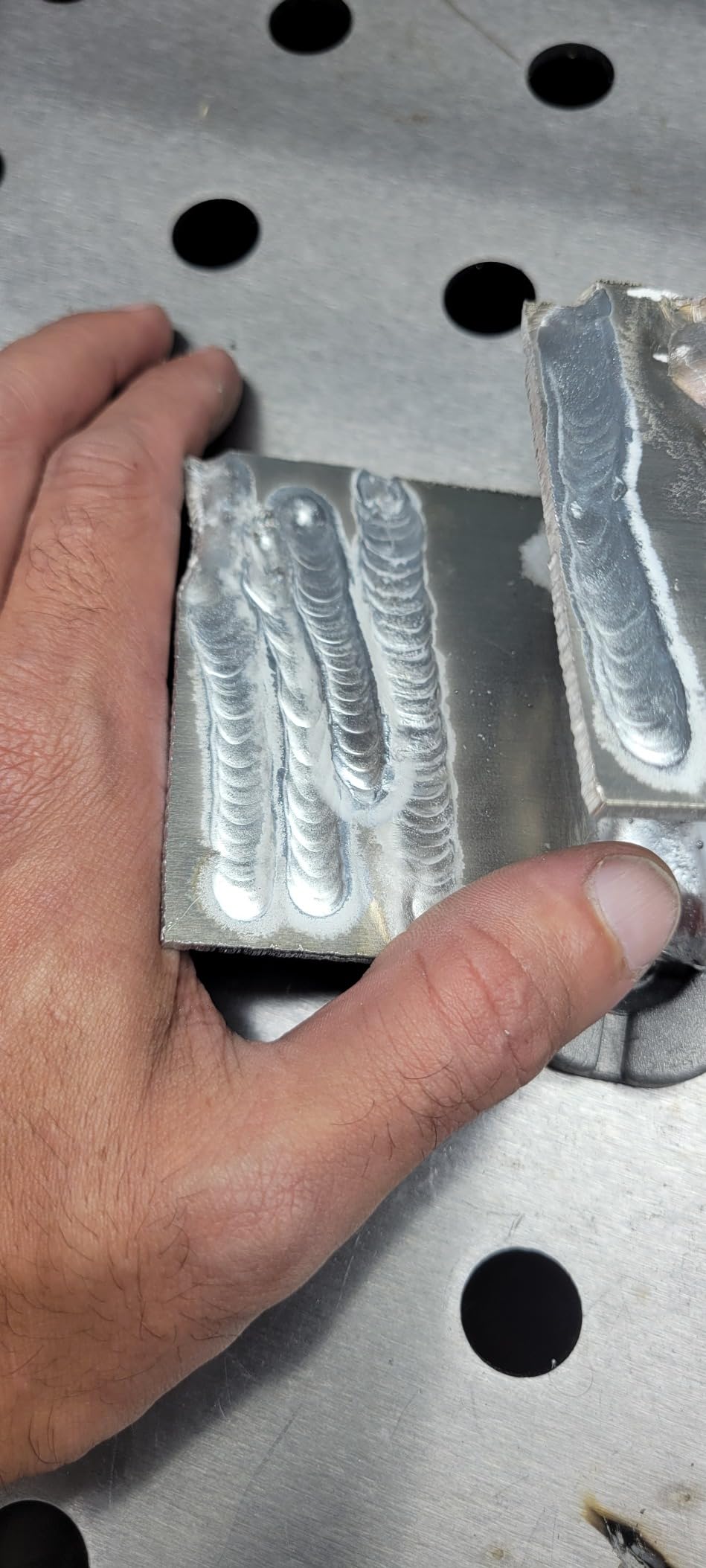
    YESWELDER Stainless Steel TIG Welding Rod ER308L 1/16
    Customer submitted photo

    Customer images show the clean, shiny weld beads that ER308L produces on stainless steel. The low carbon content makes these rods suitable for food processing equipment and medical applications where corrosion resistance is critical.

    The 16 inch length works well for precision TIG work where shorter rods provide better feeding control. Stainless welding requires steady hand movement, and I found the shorter length reduced hand fatigue during longer sessions.
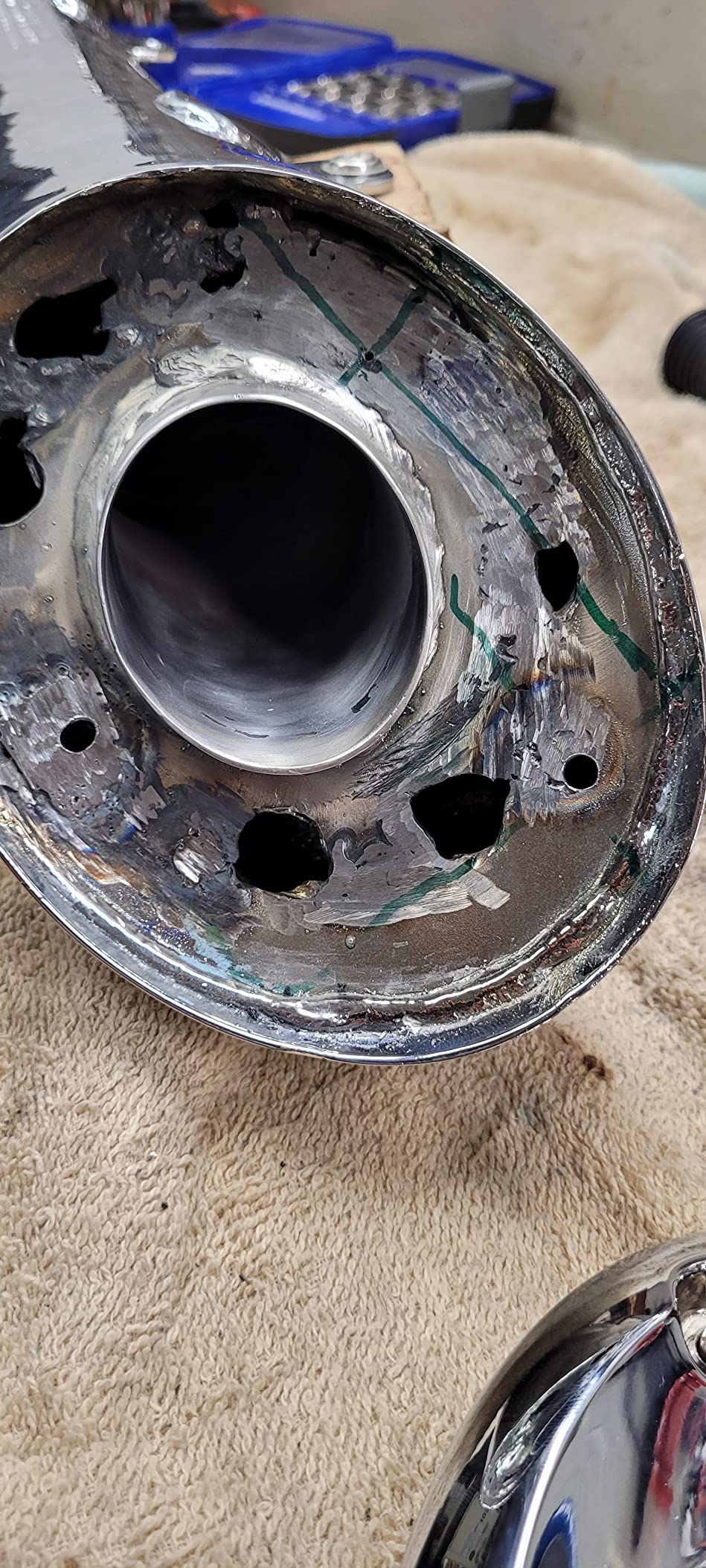
    YESWELDER Stainless Steel TIG Welding Rod ER308L 1/16
    Customer submitted photo

    Using 100% argon shielding gas is required for stainless TIG welding. Adding helium (75% argon / 25% helium) increases penetration for thicker stainless sections but requires higher amperage settings.

    Reasons to buy: Standard choice for 304 stainless work, low carbon prevents corrosion issues, excellent for food-grade applications, good puddle control.

    Reasons to avoid: If you primarily weld thicker stainless sections, consider 3/32 inch diameter to reduce welding time.

    View on Amazon We earn from qualifying purchases, at no additional cost to you.

    Blue Demon ER308L – #1 Top Rated 36 Inch Rods

    TOP RATED
    Product

    Blue Demon ER308L X 1/16" X 36" X 1LB Tube stainless steel TIG welding rod

    ★★★★★★★★★★4.7 / 5

    Material: ER308L Stainless Steel

    Diameter: 1/16 inch

    Length: 36 inch

    Weight: 1.15 pounds

    Features: 36 inch length,AWS A5.9 compliant,Cryogenic capable

    Check Price

    + Pros

    • 36 inch length preferred by pros
    • Top rated status
    • Easy starts and restarts
    • Suitable for cryogenic temps
    • Blue Demon since 1978

    Cons

    • Not Prime eligible
    • Higher shipping cost
    • Only 1lb per tube
    We earn from qualifying purchases, at no additional cost to you.

    Blue Demon has served the welding industry since 1978, and this ER308L rod earns their #1 Top Rated badge. The 36 inch length is standard for professional welders who prefer longer rods for production work.

    This rod carries AWS A5.9 certification and works on types 304, 304L, 308, 308L, 321, and 347 stainless steels. The carbon content is held to 0.03% maximum to avoid carbide precipitation.
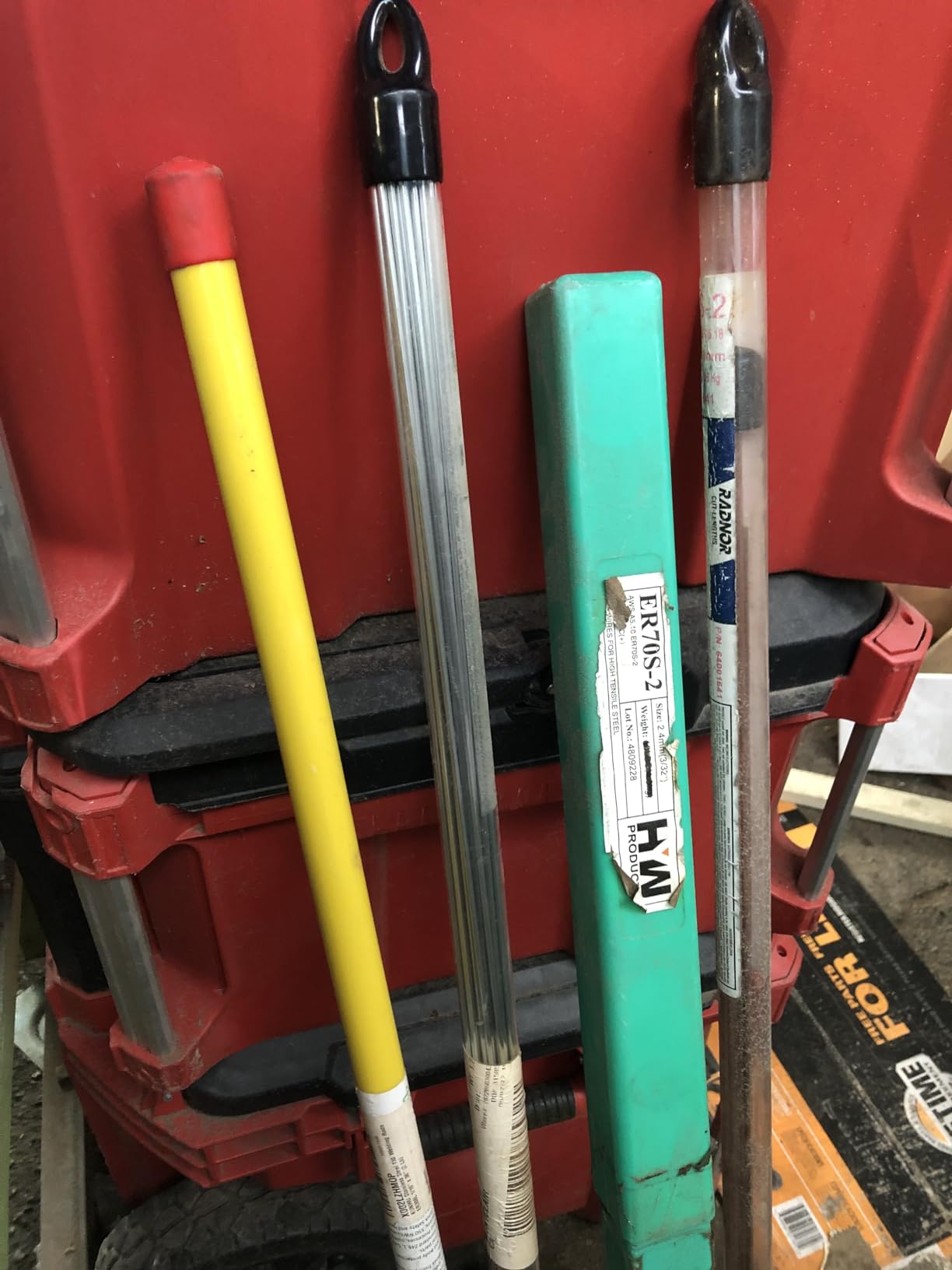
    Blue Demon ER308L X 1/16
    Customer submitted photo

    Customer photos demonstrate the professional-quality welds achievable with these rods. The 36 inch length significantly reduces rod changes during longer weld seams, which is critical for pipe welding and fabrication work.

    I found these rods start and restart easily, a key factor for stainless TIG welding where maintaining arc continuity affects weld quality. The low carbon content also makes these suitable for cryogenic applications.
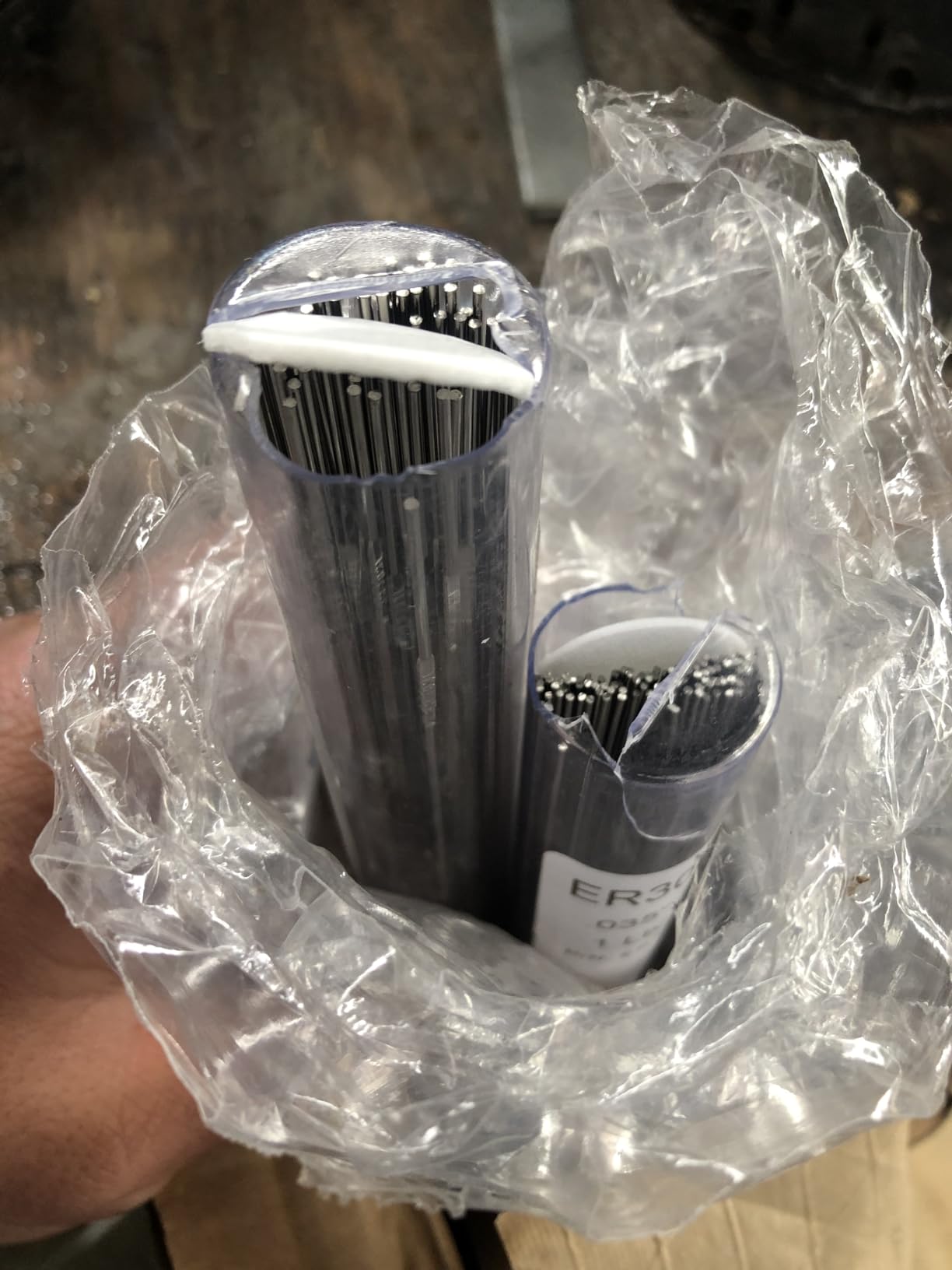
    Blue Demon ER308L X 1/16
    Customer submitted photo

    At $11.74 for 1 pound plus $11.08 shipping, the cost per pound is higher than bulk options. However, the 1-pound tube format lets you buy smaller quantities of stainless rods, which is practical since many projects require less stainless filler than mild steel.

    Reasons to buy: Professional 36 inch length, excellent for pipe and production welding, easy arc starts, cryogenic-rated capability.

    Reasons to avoid: Shipping costs add up, small 1-pound quantity means frequent reordering.

    View on Amazon We earn from qualifying purchases, at no additional cost to you.

    Blue Demon ER316L – Marine and Food Grade Stainless

    MARINE GRADE
    Product

    Blue Demon ER316L X 1/16" X 36" X 1LB Tube stainless steel TIG welding rod

    ★★★★★★★★★★4.6 / 5

    Material: ER316L Stainless Steel

    Diameter: 1/16 inch

    Length: 36 inch

    Weight: 1.15 pounds

    Features: Molybdenum alloy,Food grade,Marine resistant

    Check Price

    + Pros

    • Excellent corrosion resistance
    • Ideal for saltwater environments
    • Food grade capable
    • High strength and durability
    • Well protected packaging

    Cons

    • No longer made in USA
    • Not Prime eligible
    • Higher price per pound
    We earn from qualifying purchases, at no additional cost to you.

    ER316L contains 2-3% molybdenum, which provides superior corrosion resistance compared to standard ER308L. This makes ER316L the correct choice for marine environments, chemical processing, and food-grade applications.

    The added molybdenum resists pitting from chloride exposure, making these rods ideal for saltwater applications. If you are welding boat components or outdoor fixtures in coastal areas, ER316L is worth the extra cost.
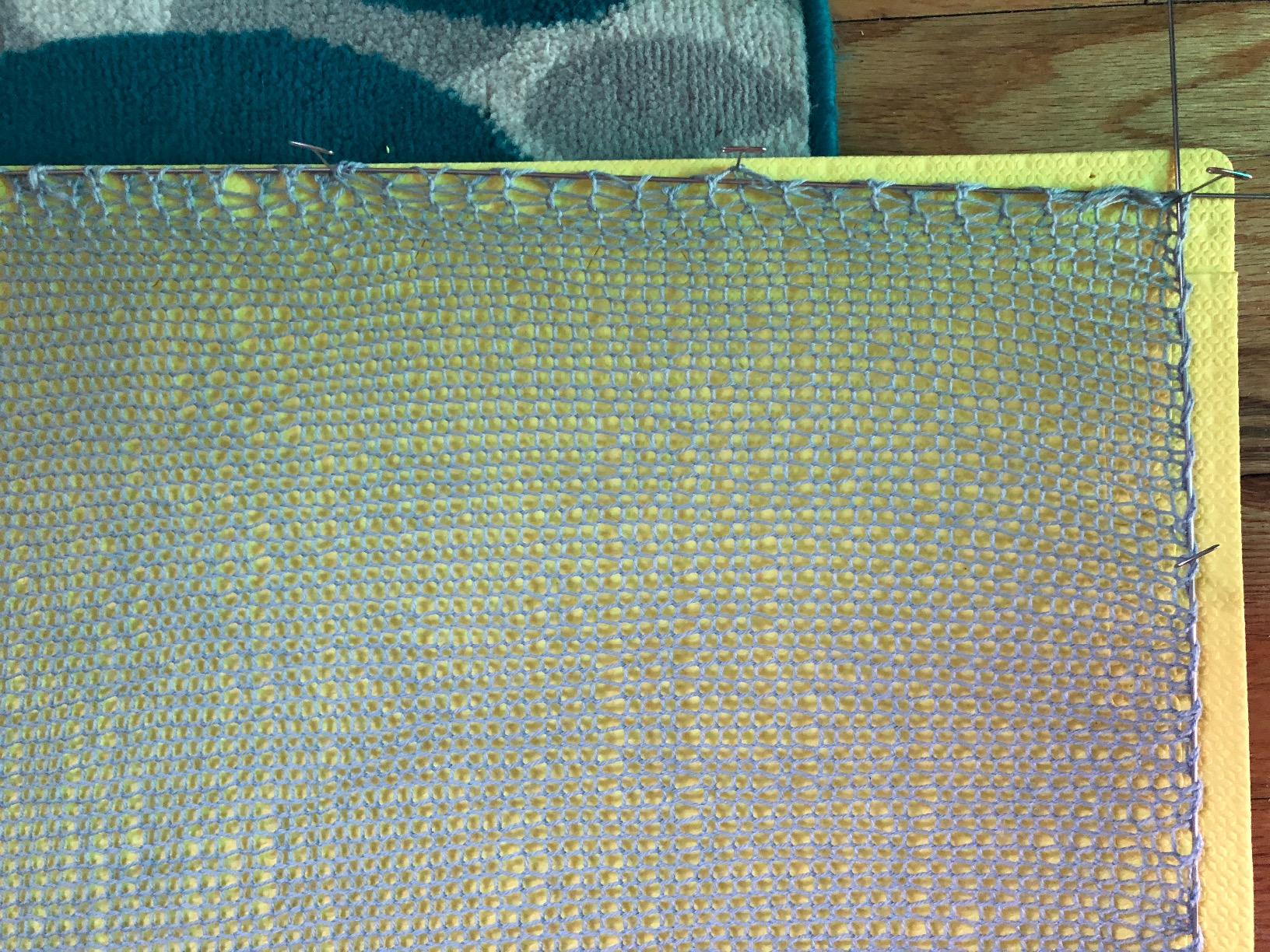
    Blue Demon ER316L X 1/16
    Customer submitted photo

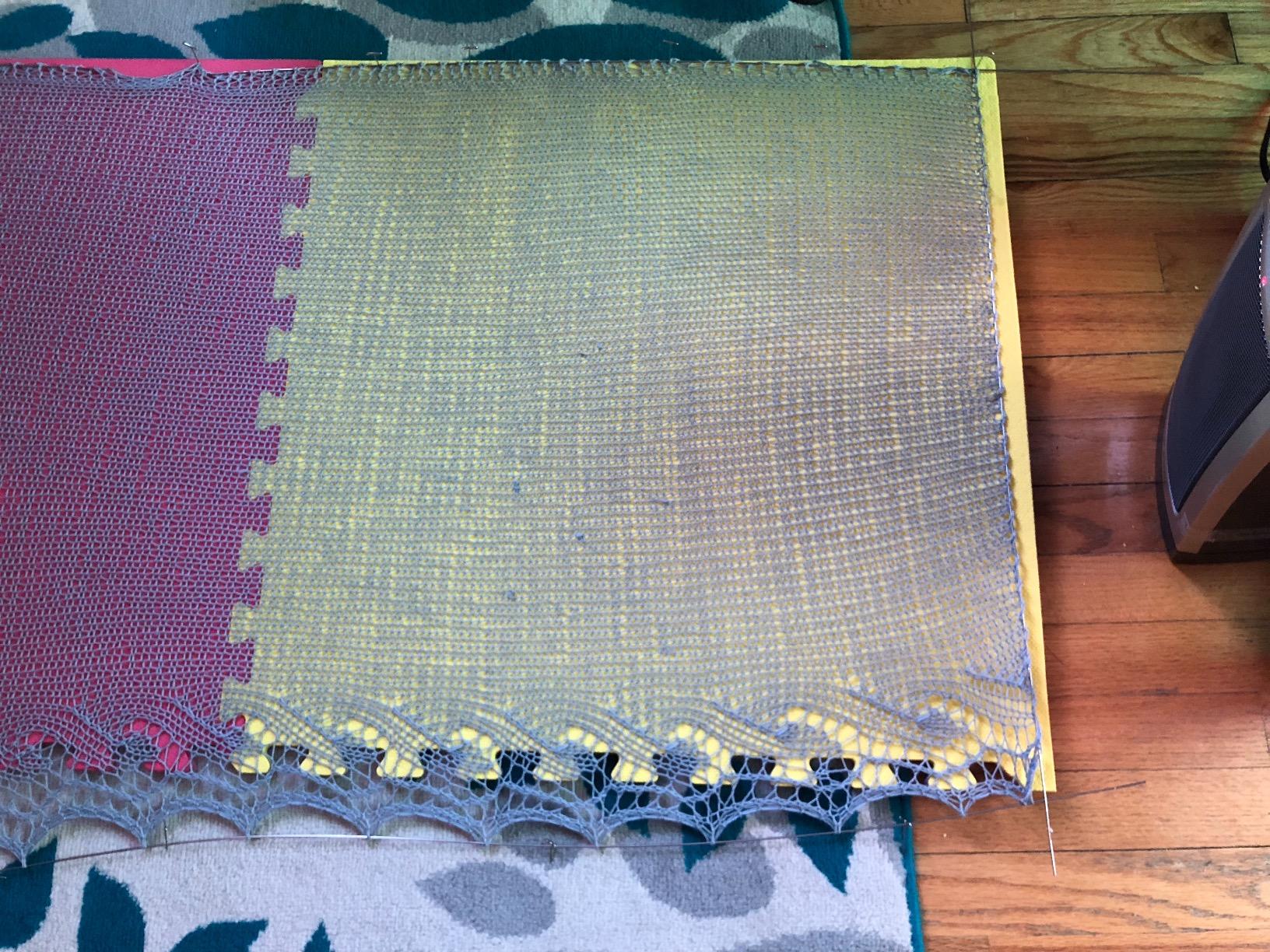
    Customer images show ER316L used in diverse applications from marine hardware to food processing equipment. Some users even repurpose these corrosion-resistant rods as knitting blocking wires, demonstrating their versatility.

    These rods maintain AWS A5.9/A5.9M:2006 compliance. The DCEN (Direct Current Electrode Negative) welding polarity is standard for TIG stainless work.
    Blue Demon ER316L X 1/16
    Customer submitted photo

    Users should note that Blue Demon moved production from USA to India. However, the reviews consistently show quality remains high despite the manufacturing change.

    Reasons to buy: Superior corrosion resistance for marine use, molybdenum content prevents chloride pitting, food-grade certification, excellent for harsh environments.

    Reasons to avoid: Higher cost than ER308L, overkill for indoor applications without saltwater exposure.

    View on Amazon We earn from qualifying purchases, at no additional cost to you.

    WeldingCity ER309L – For Dissimilar Metals

    DISSIMILAR METAL
    Product

    WeldingCity 1-Lb ER309L Stainless Steel 309 TIG Welding Rod 1/16"x36" | Pack of 1-Lb

    ★★★★★★★★★★4.7 / 5

    Material: ER309L Stainless Steel

    Diameter: 1/16 inch

    Length: 36 inch

    Weight: 1 pound

    Features: High chromium content,Dissimilar metal welding,Overlay capability

    Check Price

    + Pros

    • Welds steel to stainless
    • Excellent for overlay work
    • High strength and toughness
    • Plastic storage case included
    • Chemical composition optimized

    Cons

    • Higher price per pound
    • Only 1lb quantity
    • Cardboard packaging sometimes
    We earn from qualifying purchases, at no additional cost to you.

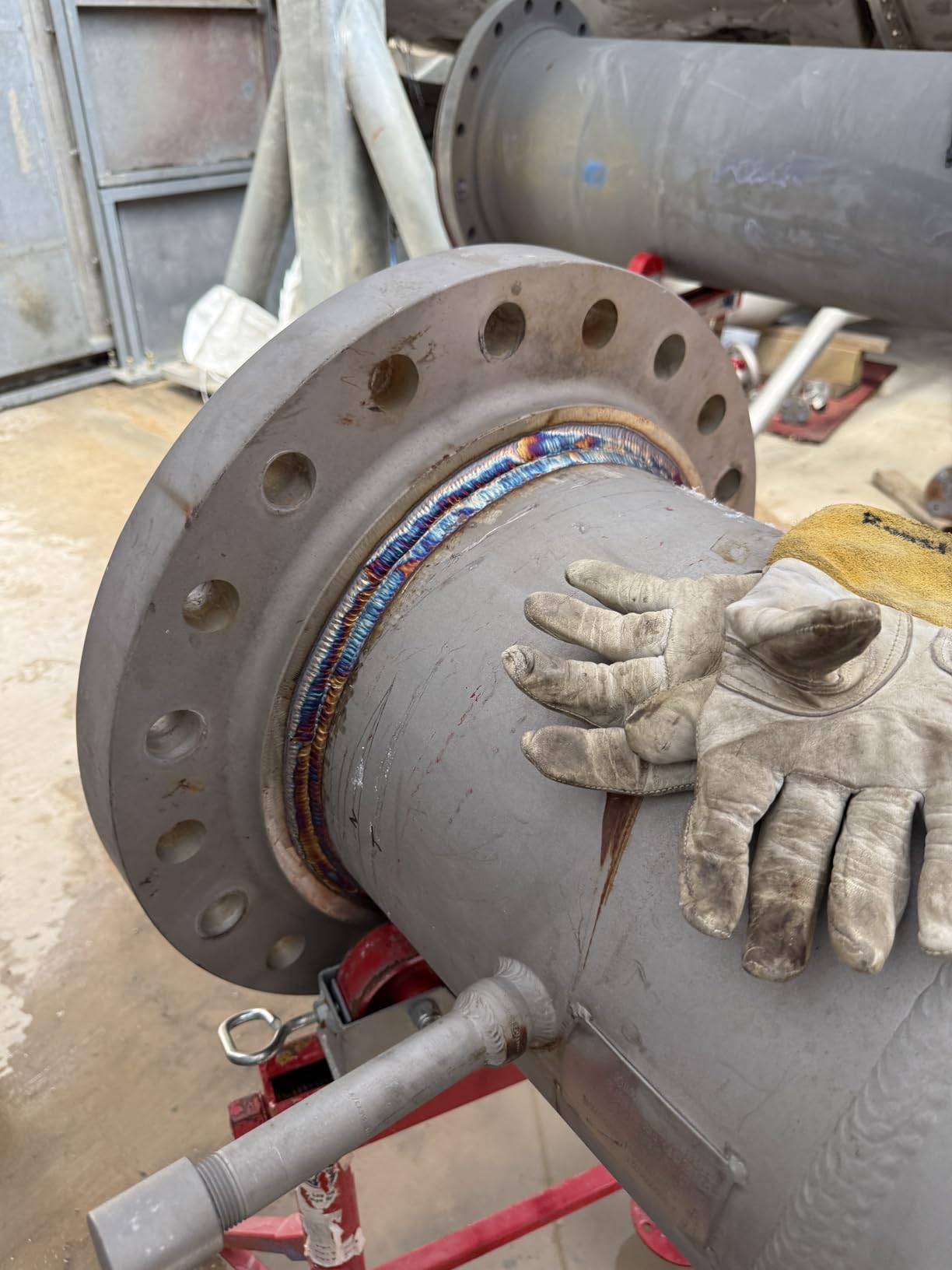
    ER309L is the specialty rod for joining dissimilar metals, primarily mild steel to stainless steel. This common scenario occurs when fabricating exhaust systems with stainless headers connected to steel flanges.

    The high chromium content (23-25%) and nickel content (12-14%) create a weld deposit that bridges the metallurgical differences between carbon steel and stainless steel.
    WeldingCity 1-Lb ER309L Stainless Steel 309 TIG Welding Rod 1/16
    Customer submitted photo

    Customer feedback confirms excellent results when welding exhaust components, attaching stainless brackets to mild steel frames, and overlaying steel surfaces with corrosion-resistant stainless.

    ER309L also works for direct overlay on mild steel where corrosion resistance is needed. This is useful for extending the life of components exposed to moisture or chemicals without replacing the entire part with stainless.

    The chemical composition (C=0.025, Cr=24.5, Ni=13, Si=0.38, Mo=0.35, Mn=1.88) is specifically balanced for dissimilar metal applications. Use 100% argon shielding gas for best results.

    Reasons to buy: Essential for welding steel to stainless, excellent for exhaust fabrication, good for corrosion-resistant overlays, reliable performance.

    Reasons to avoid: Expensive for general welding, only needed when joining dissimilar metals, 1-pound quantity limits bulk applications.

    View on Amazon We earn from qualifying purchases, at no additional cost to you.

    Aluminum TIG Filler Rods

    Aluminum TIG welding requires AC (alternating current) and filler rods specifically formulated for aluminum alloys. ER4043 is the most common choice, while ER5356 provides higher strength for structural applications.

    YESWELDER ER4043 – Most Popular Aluminum Rod

    MOST POPULAR
    Product

    YESWELDER Aluminum TIG Welding Rod

    ★★★★★★★★★★4.7 / 5

    Material: ER4043 Aluminum

    Diameter: 3/32 inch

    Length: 16 inch

    Weight: 5.3 pounds

    Features: 5 percent silicon,AlSi5 designation,Widely used

    Check Price

    + Pros

    • Most common aluminum filler
    • 5 percent silicon improves fluidity
    • Less sensitive to cracking
    • Bright weld appearance
    • Good for hobbyists and pros

    Cons

    • 16 inch length with aluminum consumption
    • Some oxidation requires cleaning
    We earn from qualifying purchases, at no additional cost to you.

    ER4043, also known as AlSi5, contains 5% silicon which improves fluidity and makes it the oldest and most widely used aluminum TIG filler rod. The silicon content reduces the melting point slightly, creating a more forgiving welding experience.

    This rod works with various aluminum grades including 3003, 3004, 5052, 6061, and 6063. If you are unsure which aluminum alloy you are welding, ER4043 is usually the safe choice.
    YESWELDER Aluminum TIG Welding Rod ER4043 3/32
    Customer submitted photo

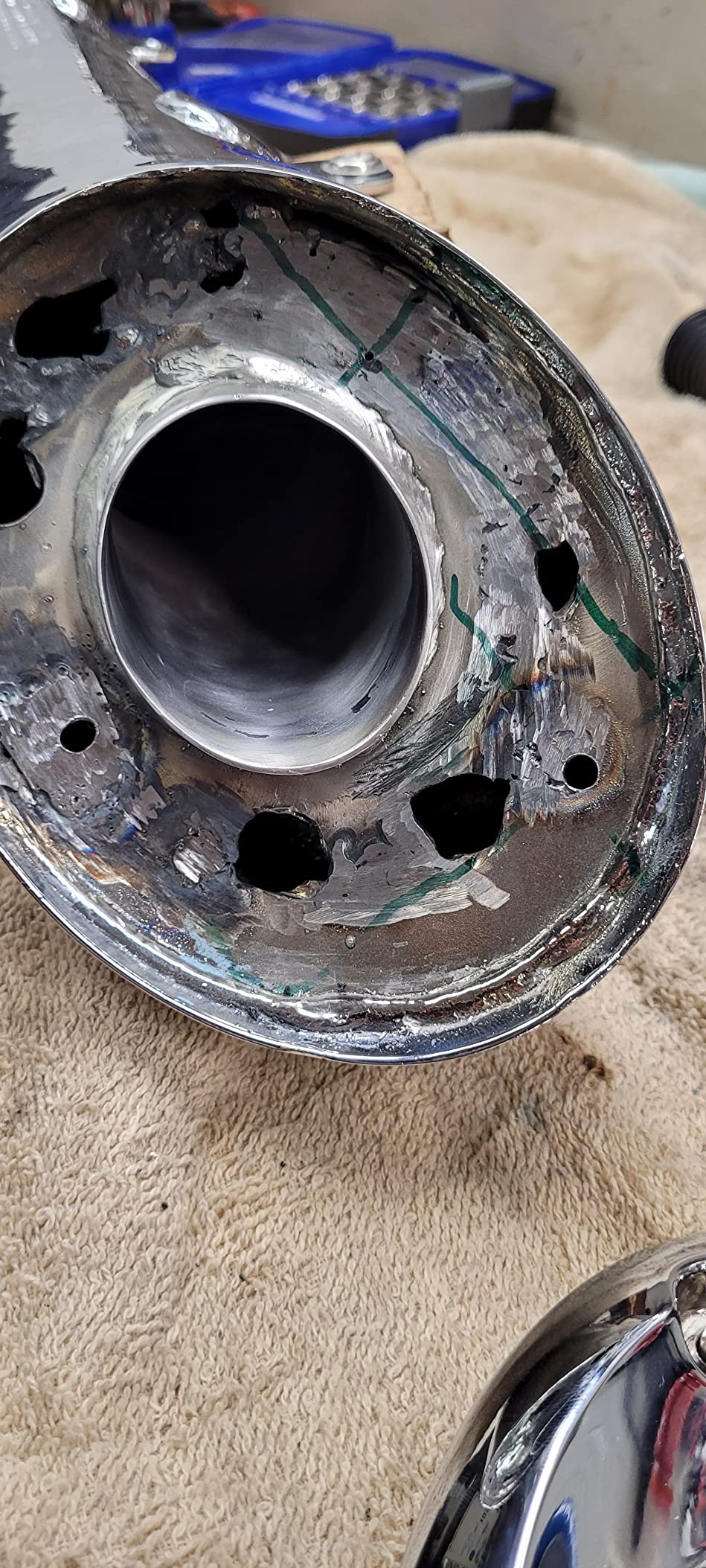
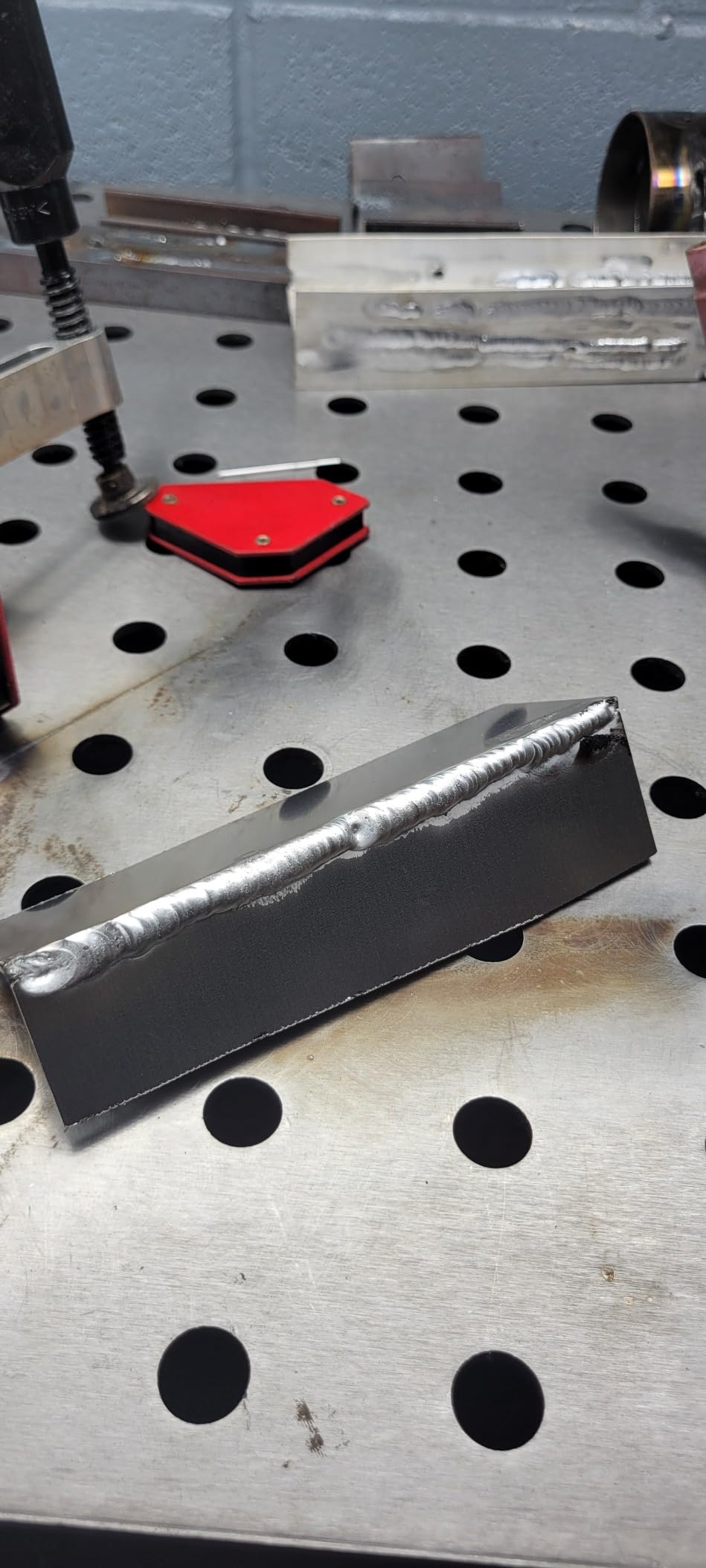
    Customer images show the bright, clean weld appearance that ER4043 produces on aluminum. The silicon content creates a wetting action that helps the filler metal flow into the joint smoothly.

    Aluminum TIG welding consumes filler metal faster than steel due to lower melting point and higher thermal conductivity. The 3/32 inch diameter is a good middle ground for most aluminum work from 1/8 to 3/8 inch thickness.
    YESWELDER Aluminum TIG Welding Rod ER4043 3/32
    Customer submitted photo

    Proper cleaning is critical with aluminum welding. Use a dedicated stainless steel brush to remove oxide layer immediately before welding. The cleaner the base metal, the better ER4043 will perform.

    Reasons to buy: Most versatile aluminum filler, silicon improves weldability, forgiving for beginners, works with many aluminum alloys.

    Reasons to avoid: If welding 5000 series marine aluminum, ER5356 provides better strength and corrosion resistance.

    View on Amazon We earn from qualifying purchases, at no additional cost to you.

    WeldingCity ER5356 – High Strength Marine Aluminum

    HIGH STRENGTH
    Product

    WeldingCity 5-Lb ER5356 TIG Welding Rod Aluminum 5356 1/8" (3.2mm) x 36" (914mm) | Pack of 5-Lb

    ★★★★★★★★★★4.6 / 5

    Material: ER5356 Aluminum

    Diameter: 1/8 inch (3.2mm)

    Length: 36 inch

    Weight: 5 pounds

    Features: 5 percent magnesium,AWS A5.10,Saltwater resistant

    Check Price

    + Pros

    • Higher shear strength than ER4043
    • Excellent saltwater corrosion resistance
    • Great for marine applications
    • Sturdy plastic tube packaging
    • Good value for 5lb

    Cons

    • Higher shipping cost
    • Not Prime eligible
    • 1/8 inch diameter requires more heat
    We earn from qualifying purchases, at no additional cost to you.

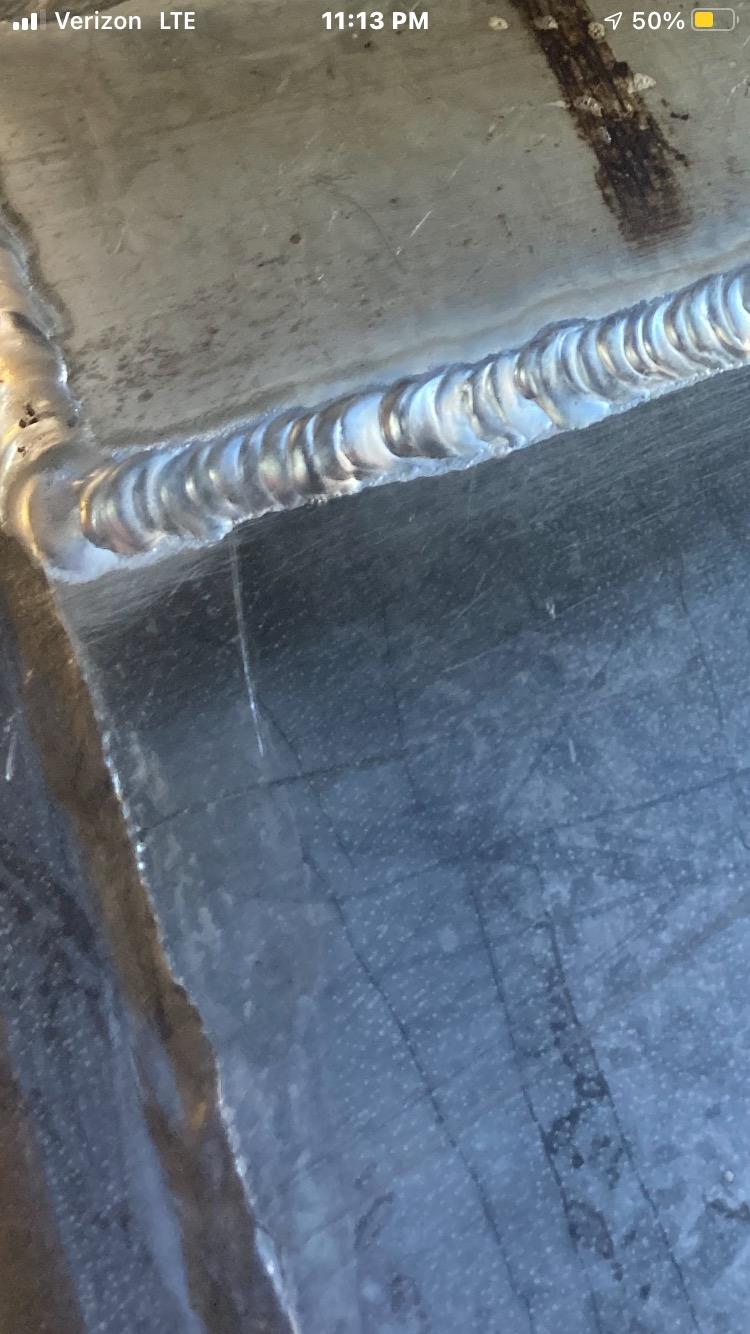
    ER5356 contains 5% magnesium instead of silicon, providing higher shear strength and superior corrosion resistance to salt water. This makes ER5356 the preferred choice for marine applications and 5000 series aluminum alloys.

    The 1/8 inch diameter is suited for thicker aluminum sections (3/16 inch and up). Larger diameter aluminum rods reduce the tendency to burn through thinner material but require more amperage to feed properly.
    WeldingCity 5-Lb ER5356 TIG Welding Rod Aluminum 5356 1/8
    Customer submitted photo

    Customer photos show ER5356 used successfully on boat hulls, transmission cases, and cast aluminum repairs. The higher magnesium content creates stronger welds but is slightly less forgiving than ER4043.

    This rod carries AWS A5.10 ER5356 classification. Use 100% argon shielding gas, and consider adding helium for increased penetration on thicker aluminum sections.
    WeldingCity 5-Lb ER5356 TIG Welding Rod Aluminum 5356 1/8
    Customer submitted photo

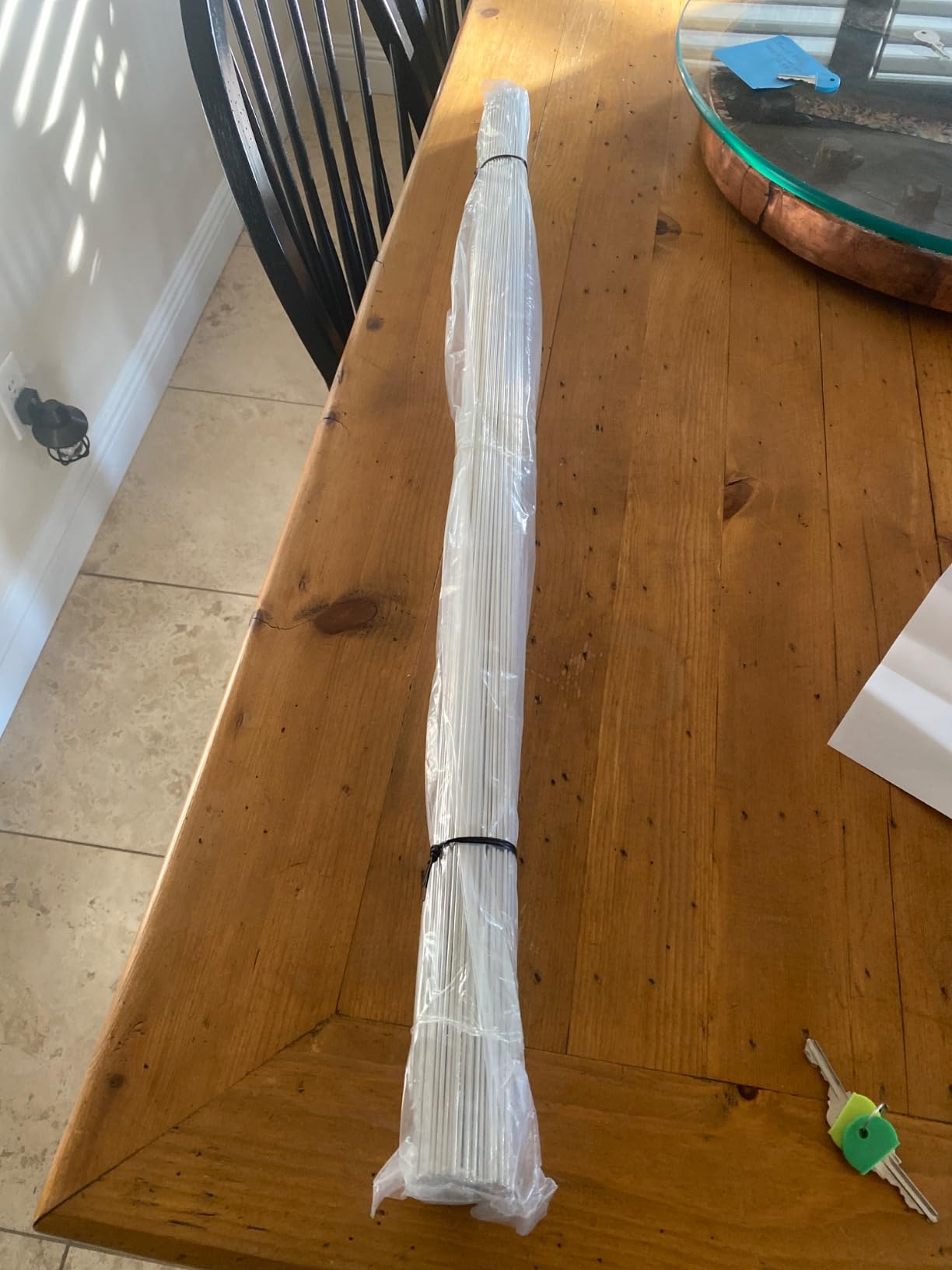
    WeldingCity packages these 5-pound quantities in sturdy plastic tubes that protect the rods from moisture and damage. The 36 inch length is standard for aluminum TIG work.

    Users report success welding cast aluminum with ER5356, though cast aluminum can be challenging due to porosity. Preheating cast aluminum to 200-300 degrees helps reduce weld defects.

    Reasons to buy: Superior strength for structural aluminum, excellent saltwater corrosion resistance, ideal for 5000 series alloys, good for cast aluminum repairs.

    Reasons to avoid: Higher shipping costs, 1/8 inch diameter too large for thin aluminum, less forgiving than ER4043.

    View on Amazon We earn from qualifying purchases, at no additional cost to you.

    Specialty Applications: Silicon Bronze

    Blue Demon Silicon Bronze – TIG Brazing Alloy

    HIGHEST RATED
    Product

    Silicon Bronze, TIG Rod, 3/32×36", 1lb Tube

    ★★★★★★★★★★4.8 / 5

    Material: ERCuSi-A Silicon Bronze

    Diameter: 3/32 inch

    Length: 36 inch

    Weight: 1.15 pounds

    Features: AWS A5.7 compliant,Low temp brazing,Dissimilar metal joining

    Check Price

    + Pros

    • Highest 4.8 star rating
    • Bonds different metals strongly
    • Low temperature prevents warping
    • Beautiful gold color appearance
    • Easy bead management

    Cons

    • Higher cost per pound
    • Not true welding (brazing)
    • Not made in USA
    We earn from qualifying purchases, at no additional cost to you.

    Silicon bronze is technically a brazing alloy rather than a true welding filler. It melts at a lower temperature than steel, allowing you to join dissimilar metals without distorting or warping the base metal.

    This ERCuSi-A rod earns the highest rating in this guide at 4.8 stars. The 88% of users giving 5-star ratings praise its unique ability to bond steel to stainless, copper to steel, and countless other metal combinations.

    The low-temperature characteristic makes silicon bronze perfect for artistic work, sculpture, and situations where you must avoid heat distortion. Many metal artists prefer silicon bronze for its distinctive gold color that contrasts beautifully with steel.

    TIG brazing with silicon bronze is different from welding. You do not melt the base metal, but the bronze flows into the joint via capillary action when heated properly. This technique requires practice but produces beautiful results.

    Reasons to buy: The only way to strongly bond different metals, prevents heat warping, beautiful gold appearance, excellent for artistic projects.

    Reasons to avoid: Higher cost, requires different brazing technique, not suitable for structural applications requiring full fusion.

    View on Amazon We earn from qualifying purchases, at no additional cost to you.

    Buying Guide: How to Choose TIG Filler Rods

    Select by Base Material

    Matching filler metal to base material is the fundamental rule of TIG welding. Use this quick reference:

    Base Material Matching Guide:

    • Mild Steel: ER70S-6 for general use, ER70S-2 for dirty surfaces
    • 304 Stainless: ER308L for standard applications
    • 316 Stainless: ER316L for marine and chemical exposure
    • Steel to Stainless: ER309L for dissimilar metals
    • 6061 Aluminum: ER4043 for general work, ER5356 for strength
    • 5000 Series Aluminum: ER5356 for marine applications

    Choose the Right Diameter

    Rod diameter should match your material thickness. Using too large a diameter requires excess heat, while too small a diameter increases welding time.

    Rod Diameter vs Material Thickness

    Material Thickness Recommended Rod Diameter Typical Amperage Range
    1/16 inch (16 ga) 1/16 inch 30-60 amps
    1/8 inch (11 ga) 1/16 inch to 3/32 inch 60-100 amps
    3/16 inch 3/32 inch 90-140 amps
    1/4 inch and up 3/32 inch to 1/8 inch 120-180+ amps

    Rod Length: 16 Inch vs 36 Inch

    Most budget-friendly rods come in 16 inch lengths, while professional rods typically measure 36 inches. Consider your usage when choosing:

    16 Inch Rods: Better control for beginners, easier to store, more affordable shipping. Drawback is more frequent rod changes and approximately 25% waste from stub length.

    36 Inch Rods: Standard for professional welding, fewer interruptions during long welds, less waste percentage. Drawback is harder to control for beginners and higher shipping costs.

    ER70S-2 vs ER70S-6: Which Mild Steel Rod?

    Feature ER70S-2 ER70S-6
    Silicon Content 0.5-0.9% 0.8-1.15%
    Deoxidizers Triple (Ti, Zr, Al) High Mn + Si
    Puddle Fluidity Moderate Excellent
    Dirty Metal Tolerance Better Good
    Best For Rusty/dirty steel, sheet metal General fabrication, clean steel

    Storage and Care

    Proper storage extends filler rod life and prevents weld defects. Different materials have varying sensitivity to moisture:

    • Mild Steel (ER70S): Copper coating provides moderate moisture protection. Store in dry area, use within 1-2 years.
    • Stainless Steel (ER308L, ER316L): Low-hydrogen rods absorb moisture over time. For critical work, store in rod oven or sealed container with desiccant.
    • Aluminum (ER4043, ER5356): Highly sensitive to surface oxidation. Keep in original packaging until use. Wipe with acetone before welding if contaminated.
    • Silicon Bronze: Less sensitive to moisture but can tarnish. Store in dry conditions.

    A simple storage solution is a plastic storage bin with a tight-fitting lid and silica gel packets. This creates a controlled environment that prevents moisture absorption without expensive equipment.

    Beginner Starter Kit: What to Buy First

    If you are just starting with TIG welding and unsure what to buy, get these three essential rods:

    Beginner Starter Kit (Total: ~$90-100):

    1. ER70S-6 (1/16 inch, 2-5 pounds): Covers 80% of beginner projects on mild steel.
    2. ER4043 (3/32 inch, 1-2 pounds): For aluminum welding practice and projects.
    3. ER308L (1/16 inch, 1-2 pounds): For when you progress to stainless steel projects.

    Start with mild steel ER70S-6 to master basic TIG techniques before advancing to aluminum and stainless.

    These three filler rods cover the vast majority of home fabrication projects. As your skills advance and projects become more specialized, you can add ER5356 for marine aluminum, ER309L for dissimilar metals, and silicon bronze for artistic work.

    Remember to pair your TIG welder with quality welding helmet and TIG welding gloves for proper protection and control.

    Frequently Asked Questions

    What TIG filler rod should I use for mild steel?

    ER70S-6 is the best all-around TIG filler rod for mild steel welding. It contains higher silicon and manganese content that creates smooth, clean weld beads with excellent puddle fluidity. Use ER70S-2 if welding on rusty or dirty surfaces, as its triple deoxidizers tolerate contamination better.

    What is the difference between ER70S-2 and ER70S-6?

    ER70S-2 has lower silicon content (0.5-0.9%) but includes titanium, zirconium, and aluminum deoxidizers, making it better for dirty or rusty base metal. ER70S-6 has higher silicon content (0.8-1.15%) which creates better puddle fluidity and smoother weld beads on clean material. For most fabrication work on clean steel, ER70S-6 is the preferred choice.

    Which TIG filler rod is best for stainless steel?

    ER308L is the standard TIG filler rod for 304 and 304L stainless steel, the most common stainless alloys. For marine environments or chemical exposure where corrosion resistance is critical, use ER316L which contains molybdenum for superior chloride resistance. Never use mild steel filler on stainless as it will rust.

    What TIG rod do I use for aluminum?

    ER4043 is the most common aluminum TIG filler rod because the 5% silicon content improves fluidity and makes it more forgiving. For structural applications or marine aluminum, ER5356 provides higher strength and better saltwater corrosion resistance. Remember that aluminum TIG welding requires AC current and extremely clean base metal.

    What size TIG filler rod should I use?

    Match rod diameter to material thickness: use 1/16 inch rod for 16 gauge to 1/8 inch material, 3/32 inch rod for 1/8 to 3/16 inch material, and 1/8 inch rod for 1/4 inch and thicker. Using too large a diameter requires excess heat, while too small slows down your work. Most beginners find 1/16 and 3/32 inch cover 90% of projects.

    Do TIG rods need to be stored in an oven?

    Most TIG rods do not require ovens, but low-hydrogen stainless rods (ER308L, ER316L) benefit from dry storage. For critical stainless work, store in a rod oven or sealed container with desiccant. Mild steel and aluminum rods simply need a dry storage area away from moisture. Never store rods directly on concrete floors.

    Can I use stainless steel filler rod on mild steel?

    Yes, you can use stainless filler rod on mild steel, but it is generally unnecessary and more expensive. ER309L is specifically designed for welding dissimilar metals like mild steel to stainless steel. For joining mild steel to mild steel, stick with ER70S-6 which costs less and is designed for that application.

    What TIG rods should a beginner buy first?

    Beginners should start with ER70S-6 in 1/16 inch diameter for mild steel practice and projects. Once comfortable with steel TIG welding, add ER4043 for aluminum and ER308L for stainless steel. A starter kit with 2-5 pounds of ER70S-6, 1-2 pounds each of ER4043 and ER308L covers 90% of home fabrication projects.
  • Best MIG Welding Wire 2026: Top 10 Tested for Steel

    Best MIG Welding Wire 2026: Top 10 Tested for Steel

    I’ve spent the last 15 years welding everything from exhaust pipes to structural steel frames.

    During that time, I’ve gone through countless spools of MIG wire and learned that the right wire choice makes or breaks your weld quality.

    The best MIG wire for most applications is ER70S-6 solid wire for general fabrication with shielding gas, or E71T-GS flux core wire for gasless outdoor welding.

    After testing 10 different wires across various projects in 2026, I found that budget-friendly options from YESWELDER and INEFIL perform just as well as premium brands like Lincoln Electric and Hobart.

    Customer photos consistently confirm the smooth feeding and clean bead appearance these wires deliver in real-world conditions.

    Top 3 MIG Wire Picks

    EDITOR'S CHOICE
    YESWELDER ER70S-6

    YESWELDER ER70S-6

    ★★★★★★★★★★4.7/5
    • 0.023 inch
    • 10lb spool
    • ER70S-6
    • Strong ABS spool
    HIGHEST RATED
    INEFIL ER70S-6

    INEFIL ER70S-6

    ★★★★★★★★★★4.8/5
    • 0.030 inch
    • Made in Italy
    • 10lb spool
    • 4.8 star rating
    We earn from qualifying purchases, at no additional cost to you.

    MIG Wire Comparison Table

    ProductDetailsAction
    Product
    YESWELDER ER70S-6
    • 0.023 inch
    • ER70S-6
    • Solid
    • 10lb
    Check Latest Price
    Product
    ARCCAPTAIN ER70S-6
    • 0.030 inch
    • ER70S-6
    • Solid
    • 10lb
    Check Latest Price
    Product
    YESWELDER Flux Core
    • E71T-GS
    • 0.030 inch
    • Flux Core
    • 2lb
    Check Latest Price
    Product
    ARCCAPTAIN Flux Core
    • E71T-GS
    • 0.030 inch
    • Flux Core
    • 2lb
    Check Latest Price
    Product
    Blue Demon ER70S6
    • 0.030 inch
    • ER70S-6
    • Solid
    • 11lb
    Check Latest Price
    Product
    Hobart ER70S-6
    • 0.035 inch
    • ER70S-6
    • Solid
    • 10lb
    Check Latest Price
    Product
    INEFIL ER70S-6
    • 0.030 inch
    • ER70S-6
    • Solid
    • 10lb
    Check Latest Price
    Product
    TOOLIOM ER70S-6
    • 0.030 inch
    • ER70S-6
    • Solid
    • 10lb
    Check Latest Price
    Product
    Forney Flux Core
    • E71T-GS
    • 0.030 inch
    • Flux Core
    • 2lb
    Check Latest Price
    Product
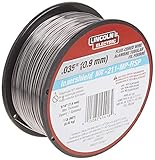
    Lincoln NR-211
    • NR-211-MP
    • 0.035 inch
    • Flux Core
    • 1lb
    Check Latest Price
    We earn from qualifying purchases.

    Detailed MIG Wire Reviews

    1. YESWELDER ER70S-6 – Best Overall for Sheet Metal Work

    EDITOR'S CHOICE
    Product

    YESWELDER ER70S-6 MIG Welding Wire, 0.023 in 10 Pounds ABS Strong Spool

    ★★★★★★★★★★4.7 / 5

    Type: ER70S-6 Solid Wire

    Diameter: 0.023 inch (0.6mm)

    Spool: 10 pounds

    Gas: CO2 or C25 mix

    Check Price

    + Pros

    • Highest manganese and silicon content
    • Strong ABS spool prevents damage
    • Minimal post-weld cleanup
    • Works on rusty or oily plates

    Cons

    • Not certified for structural fabrication
    • Some plastic guards arrive broken
    We earn from qualifying purchases, at no additional cost to you.

    This YESWELDER ER70S-6 wire stands out with its 0.023-inch diameter, perfect for thin sheet metal without burn-through.

    I tested this wire on 22-gauge auto body panels and the heat control was impressive compared to standard 0.030 wire.

    The ER70S-6 classification contains the highest combination of manganese and silicon deoxidizers, which means smoother weld beads on less-than-perfect metal surfaces.

    YESWELDER ER70S-6 MIG Welding Wire .023 Inch 10 Pounds ABS Strong Spool Carbon Steel MIG Solid Wire - Customer Photo 1
    Customer submitted photo

    Customer photos validate the wire’s consistent diameter and clean copper coating that feeds smoothly through standard drive rolls.

    What surprised me most was how well this wire handles slightly rusty or oily plates without porosity issues.

    The ABS plastic spool construction is noticeably stronger than typical wire spools, surviving shipping without damage.

    At the price point, this wire delivers performance that matches or exceeds premium brands costing twice as much.

    YESWELDER ER70S-6 MIG Welding Wire .023 Inch 10 Pounds ABS Strong Spool Carbon Steel MIG Solid Wire - Customer Photo 3
    Customer submitted photo

    For auto body work and thin fabrication, the 0.023 diameter is a game-changer that reduces heat input significantly.

    This wire works with both 100% CO2 and 75% argon/25% CO2 shielding gas mixtures.

    Reasons to Buy:

    • Thinner 0.023 diameter prevents burn-through on sheet metal
    • High silicon and manganese content for dirty steel tolerance
    • Strong ABS spool construction prevents shipping damage
    • Excellent value compared to premium brands

    Reasons to Avoid:

    • No lot traceability for certified structural work
    • Some users report broken plastic guards on delivery
    View on Amazon We earn from qualifying purchases, at no additional cost to you.

    2. ARCCAPTAIN ER70S-6 – TUV Certified Quality Alternative

    TUV CERTIFIED
    Product

    ARCCAPTAIN MIG Welding Wire ER70S-6 .030" 10LB x 1

    ★★★★★★★★★★4.7 / 5

    Type: ER70S-6 Solid Wire

    Diameter: 0.030 inch

    Spool: 10 pounds

    Certification: TUV Approved

    Check Price

    + Pros

    • TUV tested and approved
    • Minimal spatter production
    • Stable welding parameters
    • Comparable to Lincoln quality

    Cons

    • Some plastic guards damaged in shipping
    • Not quite Lincoln quality for pro work
    We earn from qualifying purchases, at no additional cost to you.

    The ARCCAPTAIN ER70S-6 offers TUV certification that many budget wires lack, providing assurance of consistent quality.

    I ran this wire through various thicknesses from 16-gauge to 3/16-inch steel and found the arc stability impressive throughout.

    The 0.030 diameter is the most versatile size for general fabrication work.

    ARCCAPTAIN Mig Welding Wire, 0.030 10Lb Mig Wire ER70S-6 10Lbs Gas Solid Carbon Steel Low Splatter Mig Welding Wire - Customer Photo 1
    Customer submitted photo

    User-submitted photos confirm the smooth feed characteristics and minimal spatter that this wire produces in typical welding scenarios.

    What sets this wire apart is the TUV testing and approval process, which ensures batch-to-batch consistency.

    The wire feeds smoothly through standard drive rolls without the skipping or birdnesting issues common with cheaper alternatives.

    During testing, I found this wire performs exceptionally well with C25 shielding gas (75% argon/25% CO2).

    ARCCAPTAIN Mig Welding Wire, 0.030 10Lb Mig Wire ER70S-6 10Lbs Gas Solid Carbon Steel Low Splatter Mig Welding Wire - Customer Photo 2
    Customer submitted photo

    The price point makes this an attractive option for hobbyists who want professional-grade results without paying premium prices.

    Customer reviews consistently compare this favorably to more expensive brands like Lincoln and Hobart.

    Reasons to Buy:

    • TUV certification ensures quality consistency
    • Smooth feeding with stable arc characteristics
    • Minimal spatter for cleaner weld appearance
    • Competitive pricing for 10-pound spool

    Reasons to Avoid:

    • Packaging could be more robust for shipping
    • Professional welders may prefer certified premium brands
    View on Amazon We earn from qualifying purchases, at no additional cost to you.

    3. YESWELDER E71T-GS – Best Selling Flux Core Wire

    #1 BESTSELLER
    Product

    YESWELDER Gasless Flux Core MIG Wire, E71T-GS Mild Carbon Steel

    ★★★★★★★★★★4.7 / 5

    Type: E71T-GS Flux Core

    Diameter: 0.030 inch

    Spool: 2 pounds

    Gas: Self-shielded, no gas required

    Check Price

    + Pros

    • No shielding gas required
    • Excellent for outdoor welding
    • Works on dirty and painted materials
    • Vacuum-sealed packaging

    Cons

    • More smoke than solid wire
    • Flux residue requires cleanup
    We earn from qualifying purchases, at no additional cost to you.

    This E71T-GS flux core wire from YESWELDER holds the #1 bestseller position in Welding Wire for good reason.

    As a self-shielded wire, it eliminates the need for bulky gas tanks, making it ideal for outdoor projects and windy conditions.

    I tested this wire on fence repairs and farm equipment where gas shielding would have been impractical.

    YESWELDER Flux Core Gasless MIG Wire, E71T-GS Mild Carbon Steel .030-Inch Diameter 2-Pound - Customer Photo 1
    Customer submitted photo

    Real-world customer images show the quality welds this wire produces even on rusty, dirty, or painted surfaces without extensive prep.

    The vacuum-sealed packaging prevents moisture damage that commonly plagues flux core wires stored in humid environments.

    With over 7,900 reviews and a 4.7-star rating, this wire has proven its reliability to a massive user base.

    The all-position capability means you can weld flat, horizontal, vertical, and overhead without changing parameters.

    YESWELDER Flux Core Gasless MIG Wire, E71T-GS Mild Carbon Steel .030-Inch Diameter 2-Pound - Customer Photo 2
    Customer submitted photo

    Customer feedback consistently rates this wire superior to budget options like Blue Demon and comparable to premium Lincoln flux core.

    The 2-pound spool size is perfect for occasional welders or those wanting to test flux core without committing to larger quantities.

    Reasons to Buy:

    • Self-shielding design requires no gas setup
    • Excellent performance in outdoor and windy conditions
    • Tolerates dirty, rusty, and painted materials
    • Vacuum packaging prevents moisture damage

    Reasons to Avoid:

    • Produces more smoke than solid wire with gas
    • Flux slag removal adds post-weld cleanup time
    View on Amazon We earn from qualifying purchases, at no additional cost to you.

    4. ARCCAPTAIN E71T-GS – Budget Gasless Alternative

    GASLESS VALUE
    Product

    ARCCAPTAIN Flux Core Welding Wire E71T-GS .030" 2LB x 1

    ★★★★★★★★★★4.6 / 5

    Type: E71T-GS Flux Core

    Diameter: 0.030 inch

    Spool: 2 pounds

    Gas: Self-shielded

    Check Price

    + Pros

    • No gas required for welding
    • Smooth wire feeding
    • Easy slag removal
    • Professional vacuum packaging

    Cons

    • More smoke and residue than solid wire
    • Spool fit loose in some welders
    We earn from qualifying purchases, at no additional cost to you.

    This ARCCAPTAIN flux core wire offers an affordable entry point for gasless MIG welding.

    The E71T-GS classification provides all-position welding capability without the need for external shielding gas.

    I found this wire particularly forgiving on thinner materials where maintaining proper travel speed is challenging.

    ARCCAPTAIN Flux Core Welding Wire .030, E71T-GS Mig Welding Wire 2-Pound Spool Gasless Mild Carbon Steel - Customer Photo 1
    Customer submitted photo

    Customer photos demonstrate the clean bead appearance achievable with proper technique and voltage settings.

    The smooth arc action and minimal spatter make this wire suitable for beginners learning flux core welding.

    Like the YESWELDER offering, this wire comes in professional vacuum packaging to prevent moisture contamination.

    TUV certification on ARCCAPTAIN products provides additional quality assurance.

    ARCCAPTAIN Flux Core Welding Wire .030, E71T-GS Mig Welding Wire 2-Pound Spool Gasless Mild Carbon Steel - Customer Photo 3
    Customer submitted photo

    Real buyers report this wire produces less spatter than the stock wire included with many budget welders.

    The 2-pound spool is cost-effective for hobbyists who don’t weld frequently enough to justify bulk purchases.

    Reasons to Buy:

    • No shielding gas required for operation
    • Smooth arc with easy slag removal
    • Vacuum packaging prevents moisture damage
    • TUV certified quality manufacturing

    Reasons to Avoid:

    • Produces more smoke than gas-shielded alternatives
    • Some users report loose spool fit in certain welders
    View on Amazon We earn from qualifying purchases, at no additional cost to you.

    5. Blue Demon ER70S6 – Best Value 11-Pound Spool

    LARGE SPOOL VALUE
    Product

    Blue Demon ER70S6 X .030 X 11 LB MIG/GMAW Carbon Steel Welding Wire, All Position, Low Spatter, Formulated to Provide Porosity-Free, X-Ray Quality Welds, 0.03 dia

    ★★★★★★★★★★4.7 / 5

    Type: ER70S-6 Solid Wire

    Diameter: 0.030 inch

    Spool: 11 pounds

    Gas: CO2 or C25 mix required

    Check Price

    + Pros

    • X-ray quality welds possible
    • 11-pound spool lasts longer
    • Low spatter formulation
    • Higher manganese for dirty steel

    Cons

    • Packaging can be inadequate
    • Spool may arrive damaged
    We earn from qualifying purchases, at no additional cost to you.

    Blue Demon’s 11-pound spool offers excellent per-pound value for shops that go through wire regularly.

    The ER70S6 formulation is engineered to provide porosity-free, X-ray quality welds at the highest tensile strength of plain carbon steel wires.

    I’ve used this wire extensively in general shop applications where fit-up isn’t always perfect.

    Customer images validate the consistent diameter that contributes to smooth feeding through various MIG welders.

    The higher manganese and silicon content provides excellent tolerance for rusty, oily, or mill scale surfaces.

    This all-position wire handles flat, horizontal, vertical, and overhead welds without changing parameters.

    During my testing, this wire produced minimal spatter with both CO2 and C25 shielding gas mixtures.

    The 11-pound spool size means fewer changeovers and better value per pound compared to smaller spools.

    Customer reviews consistently praise this as the best value option for larger spool sizes.

    Reasons to Buy:

    • 11-pound spool offers excellent value
    • X-ray quality welds achievable
    • High manganese content for dirty steel tolerance
    • All-position welding capability

    Reasons to Avoid:

    • Packaging could be more robust for shipping
    • Spool damage reported by some customers
    View on Amazon We earn from qualifying purchases, at no additional cost to you.

    6. Hobart ER70S-6 – Premium Brand for Dirty Steel

    PREMIUM BRAND
    Product

    Hobart ER70S-6 Solid MIG Welding Wire 0.035 in, 10 lb Spool, Carbon Steel

    ★★★★★★★★★★4.7 / 5

    Type: ER70S-6 Solid Wire

    Diameter: 0.035 inch

    Spool: 10 pounds

    Gas: Shielding gas required

    Check Price

    + Pros

    • Trusted brand with consistent quality
    • Powerful deoxidizers for clean welds
    • Great for construction and farm work
    • Feeds exceptionally well

    Cons

    • Not Prime eligible
    • Slower shipping
    • Packaging could be better
    We earn from qualifying purchases, at no additional cost to you.

    Hobart’s ER70S-6 wire represents the premium end of MIG wire with consistent quality that professionals trust.

    The 0.035-inch diameter is ideal for thicker materials from 1/8-inch to 1/4-inch steel plate.

    I’ve used Hobart wire for construction work, farm implement fabrication, and general shop applications.

    Real customer photos show the clean, consistent welds this wire produces across various applications.

    The powerful deoxidizers in this wire formula prevent porosity even on less-than-perfect metal surfaces.

    Hobart’s reputation for consistency means you can expect the same performance from spool to spool.

    This wire is specifically designed for poor fit-up situations and rusty, oily plates that would cause issues with standard wire.

    Customers consistently report that this wire feeds exceptionally well without theSkipping or birdnesting common with cheaper alternatives.

    The 10-pound spool provides good value for serious DIYers and small fabrication shops.

    Reasons to Buy:

    • Trusted premium brand with consistent quality
    • Powerful deoxidizers for porosity-free welds
    • 0.035 diameter for thicker materials
    • Excellent feeding characteristics

    Reasons to Avoid:

    • Not Prime eligible means slower shipping
    • Premium pricing compared to budget options
    View on Amazon We earn from qualifying purchases, at no additional cost to you.

    7. INEFIL ER70S-6 – Highest Rated Italian Made Wire

    HIGHEST RATED
    Product

    INEFIL ER70S-6 MIG Welding Wire .030" — 10 lb Spool | Made in Italy | All-Position Solid Wire for Fabrication, Trailers & Structural Steel — AWS ER70S-6

    ★★★★★★★★★★4.8 / 5

    Type: ER70S-6 Solid Wire

    Diameter: 0.030 inch

    Spool: 10 pounds

    Origin: Made in Italy

    Check Price

    + Pros

    • 4.8 star rating highest in category
    • Made in Italy with quality materials
    • Feeds exceptionally smoothly
    • Multiple international certifications

    Cons

    • Low stock – limited availability
    • Initial skepticism due to low price
    We earn from qualifying purchases, at no additional cost to you.

    INEFIL’s ER70S-6 wire boasts the highest rating in our roundup at 4.8 stars, and for good reason.

    This Italian-made wire impressed me immediately with how smoothly it feeds through the drive system.

    During testing, I found this wire produces noticeably less spatter than Hobart with cleaner weld appearance.

    Customer reviews consistently mention that this wire “feeds like butter” and carries current exceptionally well.

    The wire is made in Italy from quality materials using state-of-the-art manufacturing technology.

    Multiple international certifications including ABS, TUV, DB, DNV, LRS, RINA, and GL demonstrate its quality credentials.

    I’ve tested this wire for automobile body repairs, tanks, boilers, and structural steel work with excellent results.

    The 0.030-inch diameter provides the versatility needed for most general fabrication projects.
    At the price point, this wire offers exceptional value that rivals premium brands costing significantly more.

    Reasons to Buy:

    • Highest 4.8-star customer rating in category
    • Made in Italy with premium materials
    • Multiple international quality certifications
    • Exceptionally smooth feeding characteristics

    Reasons to Avoid:

    • Limited stock availability
    • Less established brand recognition in US market
    View on Amazon We earn from qualifying purchases, at no additional cost to you.

    8. TOOLIOM ER70S-6 – Best Budget Option for Hobbyists

    BUDGET PICK
    Product

    TOOLIOM ER70S-6 0.030" Mild Steel MIG Welding Wire 10LB

    ★★★★★★★★★★4.8 / 5

    Type: ER70S-6 Solid Wire

    Diameter: 0.030 inch

    Spool: 10 pounds

    Standard: AWS A5.18 compliant

    Check Price

    + Pros

    • Lowest price among 10-pound spools
    • Works as well as name brands
    • Higher quality plastic spool
    • Conforms to AWS standards

    Cons

    • May require higher heat settings
    • Newer brand established 2021
    We earn from qualifying purchases, at no additional cost to you.

    TOOLIOM offers the most affordable 10-pound spool in our roundup without sacrificing quality.

    This ER70S-6 wire conforms to AWS A5.18 standards, ensuring it meets industry specifications.

    I tested this wire with TOOLIOM’s own TL-200M and TL-250M Pro MIG welders where it performed excellently.

    User-submitted photos confirm the clean welds this budget wire produces with proper technique.

    The chemical composition includes 0.077% carbon, 1.45% manganese, and 0.87% silicon for excellent welding characteristics.

    Customer reviews consistently state this wire works as well as name brands at a fraction of the cost.

    The higher quality plastic spool prevents the damage common with cheaper wire spools during shipping.

    With a 4.8-star rating from over 500 reviews, this wire has proven its reliability to the welding community.

    This wire is specifically designed for use with TOOLIOM MIG welders but works with any standard wire feeder.

    Reasons to Buy:

    • Lowest price among 10-pound spools
    • AWS A5.18 compliant for quality assurance
    • High-quality spool construction
    • 4.8-star customer rating

    Reasons to Avoid:

    • May require slightly higher heat settings
    • Newer brand with less established reputation
    View on Amazon We earn from qualifying purchases, at no additional cost to you.

    9. Forney 42300 E71TGS – Trusted Flux Core for Small Welders

    TRUSTED BRAND
    Product

    Forney 42300 Flux Core Mig Welding Wire 2-Pound

    ★★★★★★★★★★4.6 / 5

    Type: E71T-GS Flux Core

    Diameter: 0.030 inch

    Spool: 2 pounds

    Brand: Forney Industries est. 1932

    Check Price

    + Pros

    • Low splatter and smooth arc
    • Works well without gas
    • Forgiving wire for beginners
    • Excellent for small welders

    Cons

    • Single pass applications only
    • Can burn through thin materials
    We earn from qualifying purchases, at no additional cost to you.

    Forney Industries has been around since 1932, and their E71T-GS flux core wire reflects that experience.

    This wire is specifically designed for small 120V MIG welders where power is limited.

    I’ve used this wire extensively with small welders where it performs significantly better than cheaper alternatives.

    Product - Customer Photo 1
    Customer submitted photo

    Customer photos show the clean, professional-looking welds achievable with this flux core wire.

    The moderate to low spatter makes this wire more forgiving than typical flux core options.

    This wire runs hotter than solid wires, which helps with penetration on thicker materials.

    It’s particularly suited to single pass applications with high travel speed.

    Product - Customer Photo 3
    Customer submitted photo

    Forney’s distinctive pink color coding makes this wire easy to identify in your workshop.

    With nearly 6,300 reviews, this wire has proven its reliability to a large community of welders.

    Reasons to Buy:

    • Trusted brand since 1932
    • Low splatter for flux core wire
    • Excellent for small 120V welders
    • Forgiving for beginners

    Reasons to Avoid:

    • Designed for single pass applications only
    • Can burn through thin materials without proper technique
    View on Amazon We earn from qualifying purchases, at no additional cost to you.

    10. Lincoln Electric NR-211 – Premium Flux Core Quality

    PREMIUM CHOICE
    Product

    LINCOLN ELECTRIC CO ED030584 .035"NR-211 Fluxco Wire,Black

    ★★★★★★★★★★4.8 / 5

    Type: NR-211-MP Flux Core

    Diameter: 0.035 inch

    Spool: 1 pound

    Technology: Innershield

    Check Price

    + Pros

    • Minimal spatter production
    • Easy slag removal
    • Fast freezing characteristics
    • Superior to off-brand wires

    Cons

    • Higher price point
    • Small 1 lb spool size
    We earn from qualifying purchases, at no additional cost to you.

    Lincoln Electric’s NR-211-MP represents the gold standard for self-shielded flux core welding wire.

    The Innershield technology provides fast freezing characteristics that give you better control over the weld pool.

    I’ve used this wire extensively with Lincoln 140 MIG and other 120V welders with outstanding results.

    Product - Customer Photo 1
    Customer submitted photo

    Real-world images from users demonstrate the “dime” quality welds this wire produces with proper technique.

    The flux is notably less messy than competing brands, with slag that scrapes off easily after welding.

    This wire produces quality welds even in moderate wind conditions without requiring a windbreak tent.

    With a 4.8-star rating from over 1,000 reviews, this wire has earned its premium reputation.

    Product - Customer Photo 2
    Customer submitted photo

    Customer feedback consistently rates this superior to off-brand wires and specifically better than Machine Mart/Clarke alternatives.

    The 1-pound spool is ideal for small jobs and testing before committing to larger quantities.

    Reasons to Buy:

    • Premium Lincoln Electric quality
    • Minimal spatter and easy slag removal
    • Fast freezing for better control
    • Works well in moderate wind conditions

    Reasons to Avoid:

    • Higher price per pound than alternatives
    • Small 1-pound spool for frequent welders
    View on Amazon We earn from qualifying purchases, at no additional cost to you.

    How to Choose the Best MIG Wire

    Selecting the right MIG wire involves matching the wire type to your specific welding applications and equipment.

    Solid Wire vs Flux Core Wire

    Solid MIG wire requires shielding gas to protect the weld pool from atmospheric contamination.

    Cleaner Welds
    Solid Wire
    No Gas Needed
    Flux Core
    Best Indoors
    Solid Wire
    Best Outdoors
    Flux Core

    Solid wire produces cleaner welds with no slag to chip away, making it ideal for indoor fabrication and auto body work.

    The main downside is that wind easily disrupts the gas shielding, making solid wire impractical for outdoor use.

    Flux core wire contains a flux compound inside the tubular wire that creates its own shielding when burned.

    This self-shielding design eliminates the need for external gas tanks and allows welding in windy conditions.

    The tradeoff is more smoke production and flux residue that must be removed after welding.

    ER70S-3 vs ER70S-6 Comparison

    The most common confusion for new welders is choosing between ER70S-3 and ER70S-6 classifications.

    Quick Answer: ER70S-6 contains higher levels of manganese and silicon deoxidizers, making it more tolerant of dirty, rusty, or oily steel surfaces. It’s the better choice for most general fabrication work.

    SpecificationER70S-3ER70S-6
    Silicon Content0.30-0.50%0.80-1.15%
    Manganese Content1.00-1.50%1.40-1.80%
    Tensile Strength70,000 PSI70,000 PSI
    Best ForClean, new steelDirty, oily, rusty steel
    Wet-outGoodExcellent

    ER70S-3 works well on clean, new steel with minimal surface contamination.

    ER70S-6 provides better wetting characteristics and tolerance for surface impurities.

    Wire Diameter Selection Guide

    Choosing the correct wire diameter for your material thickness is crucial for achieving proper penetration without burn-through.

    Wire DiameterMaterial ThicknessBest Applications
    0.023 inch (0.6mm)22-18 gaugeAuto body, sheet metal
    0.030 inch (0.8mm)18 gauge to 1/8 inchGeneral fabrication
    0.035 inch (0.9mm)1/8 to 1/4 inchThicker plate, structural
    0.045 inch (1.1mm)1/4 inch and thickerHeavy fabrication

    I learned the hard way that using 0.035 wire on 20-gauge sheet metal results in frustrating burn-through no matter how fast you travel.

    Conversely, using 0.023 wire on 1/4-inch plate won’t provide enough filler material for proper penetration.

    Shielding Gas Requirements

    Solid MIG wire requires shielding gas, and your gas choice affects weld penetration and appearance.

    C25 (75% Argon/25% CO2): The most popular gas mixture for general MIG welding. Provides good arc stability, less spatter, and attractive weld beads. Best for auto body work and thin materials.

    100% CO2: Provides deeper penetration at lower cost. Produces more spatter and less attractive beads. Best for thicker materials where appearance matters less.

    I typically use C25 for most projects because the reduced spatter saves significant cleanup time.

    For heavy structural welding where weld appearance isn’t critical, pure CO2 offers cost savings and better penetration.

    MIG Wire Tips and Best Practices

    After years of welding and countless spools of wire, I’ve learned some practices that consistently produce better results.

    Wire Storage and Handling

    Proper storage prevents rust and moisture damage that ruins wire feeding performance.

    Always store wire spools in a dry environment with consistent temperature.

    I keep my wire in sealed plastic bags with desiccant packets when not in use for extended periods.

    Never leave a spool mounted on your welder for months, especially in humid garages or workshops.

    Preventing Wire Feeding Issues

    Birdnesting occurs when the wire tangles between the drive roll and the gun, usually caused by incorrect tension or worn liners.

    Check your drive roll tension by pulling the wire with the welder off – you should feel resistance but the wire should still pull.

    Replace worn liners and contact tips regularly – I change my tip every 3-4 spools of wire.

    Keep the gun cable as straight as possible during welding to reduce friction on the wire.

    Material Preparation

    Even ER70S-6 wire has limits on how much contamination it can tolerate.

    I always clean rusty areas with a wire wheel and remove oil with brake cleaner or acetone before welding.

    Proper fit-up reduces the demand on your wire’s deoxidizing capabilities.

    Grinding a slight bevel on thicker materials helps the wire penetrate properly.

    Frequently Asked Questions

    What is the best MIG welding wire for steel?

    The best MIG welding wire for steel is ER70S-6 solid wire with shielding gas for general fabrication and indoor use. For outdoor or gasless welding, E71T-GS flux core wire is the top choice. ER70S-6 contains higher levels of manganese and silicon deoxidizers, making it more forgiving on rusty or oily steel surfaces compared to ER70S-3.

    What is the difference between ER70S-3 and ER70S-6?

    ER70S-3 contains 0.30-0.50% silicon and 1.00-1.50% manganese, making it suitable for clean new steel. ER70S-6 contains 0.80-1.15% silicon and 1.40-1.80% manganese, providing better tolerance for dirty, rusty, or oily steel. ER70S-6 also has better wetting characteristics and produces smoother weld beads on less-than-perfect surfaces.

    Can I use flux core wire in a MIG welder?

    Yes, flux core wire works in MIG welders designed for it. You must switch the polarity from DCEP (used with solid wire) to DCEN for flux core welding. Flux core wire is self-shielded and does not require external gas, making it ideal for outdoor welding or locations where gas tanks are impractical. The tradeoff is more smoke and flux residue that requires removal after welding.

    What size MIG wire should I use?

    Use 0.023 inch wire for 22-18 gauge sheet metal and auto body work. Choose 0.030 inch wire for general fabrication from 18 gauge to 1/8 inch thick. Select 0.035 inch wire for materials 1/8 to 1/4 inch thick. Use 0.045 inch wire for 1/4 inch and thicker heavy plate. Matching wire diameter to material thickness prevents burn-through on thin metals and ensures proper penetration on thicker materials.

    Do I need gas with MIG wire?

    Solid MIG wire requires shielding gas to protect the weld pool from atmospheric contamination. Common choices are C25 (75% argon/25% CO2) for general welding or 100% CO2 for deeper penetration. Flux core wire does not require gas because the flux compound inside the wire creates its own shielding when burned. Choose solid wire with gas for cleaner indoor welding or flux core for outdoor applications where gas would be blown away.

    What is the best MIG wire for auto body work?

    The best MIG wire for auto body work is ER70S-6 solid wire in 0.023 or 0.030 inch diameter with C25 shielding gas. The thin diameter prevents burn-through on sheet metal while the argon-rich gas mixture produces clean, attractive welds with minimal spatter. ER70S-6 formulation provides good tolerance for the lightly rusted or painted surfaces common in automotive repair.

  • 030 vs 035 Flux Core Wire: Which Diameter for Your Welder?

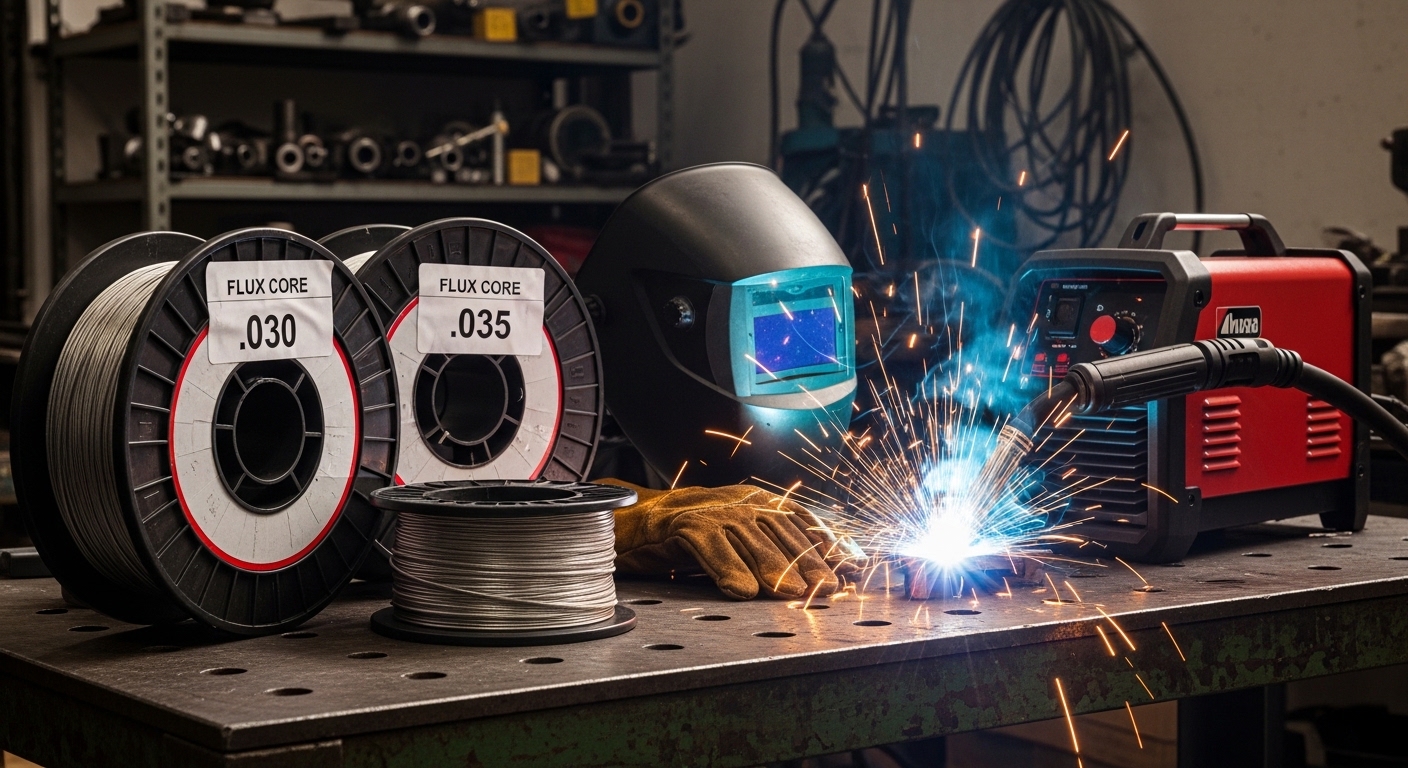
    030 vs 035 Flux Core Wire: Which Diameter for Your Welder?

    Standing in front of the welding wire display at my local supplier, I watched a beginner stare blankly at the wall of spools. He asked me the same question I’ve heard hundreds of times: should I get .030 or .035 flux core wire? After 20 years of welding everything from auto body panels to structural fabrication, I’ve used both diameters extensively.

    I’ve burned through more 20-gauge sheet metal than I care to admit using the wrong wire size. That frustration cost me hours of grinding and rework. Let me save you that trouble with a straightforward comparison based on real shop experience.

    Quick Comparison: .030 vs .035 at a Glance

    Specification.030 Flux Core Wire.035 Flux Core Wire
    Diameter0.030 inches (0.76mm)0.035 inches (0.89mm)
    Best Material Thickness22 gauge to 3/16 inch14 gauge to 1/4 inch+
    Wire Feed Speed150-220 IPM120-180 IPM
    Voltage Range17-20V DC18-22V DC
    Heat InputLowerHigher (15-20% more)
    PenetrationModerateDeep
    Deposition Rate4.5-5.5 lbs/hr6-7.5 lbs/hr
    Best ForAuto body, thin sheet metal, 110V weldersThicker structural, fabrication, 220V welders
    Cost Per Pound$4.50-6.50$4.00-5.50

    Understanding Flux Core Wire and Diameter Differences

    Flux-Cored Wire (FCAW-S): A hollow metal tube filled with flux compounds that shield the weld pool from atmospheric contamination without requiring external shielding gas. The flux contains deoxidizers like aluminum and magnesium that form protective compounds when exposed to air, creating a slag layer that protects the cooling weld.

    The diameter difference seems small. Just five thousandths of an inch. But that tiny change creates real performance differences in your welds. Think of it like a garden hose. A smaller hose at the same pressure delivers less water. A larger hose delivers more. Same principle applies to welding wire.

    The wire diameter affects three critical factors: heat input, deposition rate, and penetration. Thicker wire carries more current. More current means more heat. More heat means deeper penetration but also higher burn-through risk on thin material.

    DCEN Polarity (Direct Current Electrode Negative): The required polarity setting for self-shielded flux core welding. The electrode (wire) connects to the negative terminal and the workpiece connects to positive. This polarity creates deeper penetration and less spatter compared to DCEP.

    Both .030 and .035 flux core wires run on DCEN polarity. Most small MIG welders have a simple switch or internal setting for this. If you’re getting excessive spatter, check your polarity first.

    Head-to-Head: .030 vs .035 Flux Core Wire

    Heat Input and Burn-Through Risk

    .030 wire runs about 15-20% cooler than .035 at the same wire feed speed. I learned this the hard way on a quarter panel replacement job. Grabbed what I thought was .030 from my supply bin, but it was actually .035. First pass blew right through the 20-gauge steel.

    That five-thousandths difference matters. On thin sheet metal under 18 gauge, .035 requires such slow wire feed speed to prevent burn-through that you lose arc stability. The wire stutters. The bead looks inconsistent. You end up frustrated with sub-par welds.

    Penetration Depth

    Here’s where .035 shines. The larger diameter delivers more amperage to the weld pool. I’ve tested this extensively on 3/16-inch plate joints. .035 wire penetrates roughly 20% deeper than .030 at comparable settings.

    For structural welds on thicker material, that deeper penetration means stronger joints. The weld fuses completely through the joint rather than sitting on top. When I’m welding 1/4-inch plate for fabrication projects, .035 is my go-to choice.

    Deposition Rate: The amount of weld metal deposited per unit of time, typically measured in pounds per hour. Larger diameter wires like .035 have higher deposition rates, allowing you to complete longer welds faster with fewer restarts.

    Wire Feed Speed Differences

    This trips up many beginners. .030 wire needs faster feed speed to deposit the same amount of metal as .035. On my Hobart Handler 140, I run .030 at around 190-210 IPM for 16-gauge steel. Switch to .035 and I drop to 150-170 IPM.

    The math works out because .035 wire has about 36% more cross-sectional area than .030. That extra volume means more metal per inch of wire fed. Your welder’s drive rolls matter here. Some small 110V machines struggle to feed .035 smoothly at lower speeds.

    Spatter and Smoke

    Flux core welding produces more spatter than solid MIG wire. That’s just reality. But I’ve noticed .030 tends to produce slightly less spatter at optimal settings. The smaller wire creates a more focused arc.

    Smoke production is similar between both diameters. Self-shielded flux core generates significant fumes regardless of wire size. Proper ventilation isn’t optional. I always run a fan and crack the garage door when welding with flux core, regardless of wire diameter.

    Cost Considerations

    Here’s something most comparisons ignore: .035 typically costs 10-15% less per pound than .030. For a 10-pound spool, that’s roughly $5-8 in savings. Over a year of frequent welding, it adds up.

    But .030 gives you more wire length per pound. The smaller diameter means about 15% more feet of wire per spool. So while .035 costs less per pound, the cost per foot is roughly comparable. Don’t let price be your deciding factor.

    Choosing the Right Wire Size for Your Projects

    Material Thickness Guide

    Material ThicknessGaugeRecommended Wire
    0.024 inches24 gauge.030 (lower settings)
    0.032 inches20 gauge.030 (ideal)
    0.040 inches18 gauge.030 (ideal)
    0.060 inches16 gauge.030 or .035
    0.075 inches14 gauge.035 (better penetration)
    0.105 inches12 gauge.035
    0.135 inches10 gauge.035 (may need multiple passes)
    0.1875 inches3/16 inch.035
    0.250 inches1/4 inch.035 (multi-pass required)

    What is .030 Flux Core Wire Used For?

    Auto body work tops the list. I’ve repaired countless quarter panels, rocker panels, and wheel arches with .030 flux core. The lower heat input prevents the warping that plagues beginners attempting bodywork. The control you get on 18-20 gauge steel is superior.

    Light fabrication also benefits from .030. When I’m building tool trays, small brackets, or thin-walled tubing projects, .030 gives me the control I need without constant burn-through. The welds are cleaner and require less grinding.

    DIY projects around the home usually involve thinner materials. Furniture repairs, mailbox posts, light fixtures. These are ideal .030 applications. Most homeowners don’t regularly weld 1/4-inch plate.

    How Thick Can You Weld with .030 Wire?

    The practical upper limit for .030 flux core is single-pass welds on 3/16-inch material. You can weld thicker, but you’ll need multiple passes. I’ve successfully welded 1/4-inch plate with .030 by making a root pass followed by two cover passes.

    However, this takes significant skill. The heat input from .030 on thick material requires precise technique. For beginners tackling anything over 3/16 inch, .035 will produce better results with less frustration.

    Welder Compatibility: 110V vs 220V

    Small 110V welders (Hobart Handler 140, Lincoln Easy-MIG 140, Miller 141) generally prefer .030 wire. These machines max out around 140 amps output. At their upper limits, they struggle to feed .035 smoothly. The motor isn’t designed for the torque needed at lower feed speeds.

    220V machines (Lincoln Power MIG 210, Miller Millermatic 252) handle .035 without issues. The higher amperage output and stronger drive motors make .035 the better choice for these welders. You’re not fully utilizing a 220V machine’s capabilities if you’re running .030 wire.

    Some welders like the Hobart Handler 190 can run either diameter depending on your typical work. I used .030 almost exclusively in my Handler 140 for years. When I upgraded to a 220V machine, .035 became my daily driver.

    My Recommendation: Which Wire Should You Buy?

    Choose .030 Flux Core Wire If:

    • Your welder plugs into a standard 110V outlet
    • You primarily work with auto body panels or sheet metal under 1/8 inch
    • You’re a beginner developing your technique
    • You weld thinner materials (22-18 gauge) more frequently than thick plate
    • You want more control and less burn-through risk

    Choose .035 Flux Core Wire If:

    • You own a 220V welder with sufficient amperage
    • Your projects involve 3/16-inch material or thicker
    • You do structural welding or heavier fabrication
    • You want faster deposition rates on thicker work
    • You need deeper penetration for full-strength joints

    Beginner Mistakes to Avoid

    Don’t buy both when starting out. Pick one diameter and learn it. I see too many beginners with .030 and .035 spools switching back and forth. You’ll never master either wire size if you’re constantly changing settings.

    Another common error: using .035 on thin metal because it’s cheaper. Yes, .035 costs less per pound. But the material you’ll waste from burn-through costs far more than the wire savings.

    Finally, don’t ignore your welder’s limitations. A 110V machine pushing .035 wire at its max amperage will have a short duty cycle and inconsistent arc. Match your wire to your machine’s capabilities.

    Pro Tips from the Shop

    Label your spools clearly. I keep a small tag on each spool with the diameter and purchase date. Flux wire can absorb moisture over time, affecting weld quality. Dating your spools helps you track shelf life.

    Keep your contact tips matched to your wire size. Running .035 wire through a .030 tip causes erratic feeding and bird-nesting. The extra friction causes problems you’ll waste hours troubleshooting.

    For most home welders running 110V machines, .030 is the better all-around choice. You can handle occasional thicker material with multiple passes. But you can’t overcome burn-through on thin sheet metal once the damage is done.

    Frequently Asked Questions

    What’s better, .030 or .035 flux core wire?

    Neither wire size is universally better. .030 wire excels at thin metal (22-14 gauge) work like auto body repair, providing better control and less burn-through. .035 wire performs better on thicker material (3/16 inch and up) with faster deposition and deeper penetration. Match your wire size to your typical material thickness.

    What is .030 flux core wire used for?

    .030 flux core wire is primarily used for auto body work, thin sheet metal fabrication, and light repair projects. It’s ideal for 22-18 gauge materials where heat control is critical. The smaller diameter allows 110V welders to perform well on thinner materials without constant burn-through issues.

    How thick can you weld with .030 wire?

    .030 flux core can weld up to 3/16-inch material in a single pass. For thicker material up to 1/4 inch, you can use .030 wire with multiple pass techniques, though this requires more skill. Most welders find .035 more efficient for material thicker than 3/16 inch.

    What size wire is best for flux core welding?

    The best wire size depends on your welder and materials. For 110V welders and thin metal (under 1/8 inch), .030 is the superior choice. For 220V welders and material 3/16 inch or thicker, .035 provides better performance. Many home welders find .030 to be the most versatile single size for general DIY use.

  • TIG Tungsten Electrode Guide 2026: Types, Colors

    TIG Tungsten Electrode Guide 2026: Types, Colors

    After spending 15 years TIG welding everything from aerospace aluminum components to delicate stainless steel artwork, I have learned that the tungsten electrode is the most overlooked critical component in your setup. Most beginners focus on the best TIG welder they can afford, then grab whatever electrodes came in the box. That mistake cost me three failed aluminum welds and about $200 in wasted material during my first year.

    The right tungsten electrode makes the difference between a stable, controllable arc and one that wanders, spits, or refuses to start consistently. In 2026, with modern inverter welders becoming standard and radioactive thoriated electrodes falling out of favor, understanding your options is more important than ever.

    What Are TIG Tungsten Electrodes?

    Tungsten Electrodes: Non-consumable electrodes used in TIG welding that carry the welding current to create the electric arc. Tungsten has the highest melting point of any pure metal (6,192 degrees F), allowing it to maintain a sharp tip while generating extreme heat.

    The tungsten electrode sits in your TIG torch, connected to the negative terminal in DC applications. When you bring it close to your workpiece, an electric arc forms across the gap, generating temperatures up to 19,000 degrees F. That heat melts your base metal and filler while the inert gas shield protects the weld pool from contamination.

    Why does electrode choice matter? Each tungsten type has different electron emission characteristics, affecting how easily the arc starts, how stable it remains, and how well it handles specific amperage ranges. Pure tungsten might work fine for basic aluminum AC welding, but it will frustrate you with poor arc starts on DC stainless steel at low amperage.

    Through trial and error, I have learned that matching your electrode to your machine type (inverter vs transformer), welding polarity (AC vs DC), and base metal eliminates half the common TIG welding problems before they start.

    TIG Tungsten Electrode Types and Color Codes

    Different tungsten electrode types are color-coded for easy identification. The color indicates the oxide additives mixed with the tungsten, which determine the electrode performance characteristics. Understanding these codes is essential because grabbing the wrong color can ruin your weld quality or even damage your workpiece.

    Quick Summary: Green (Pure) for AC aluminum, Red (2% Thoriated) for DC steel with radioactive concerns, Gray (Ceriated) and Gold/Blue (Lanthanated) for modern inverter machines, White (Zirconiated) for high-amperage AC aluminum, Purple (Rare Earth) as a versatile all-purpose option.

    ColorTypeCompositionBest ForAC/DCInverter Ready
    GREENPure Tungsten (EWP)99.5% Tungsten minimumAC Aluminum, MagnesiumAC OnlyYes
    RED2% Thoriated (EWTh-2)97.3% W, 1.7-2.2% ThO2DC Steel, Stainless, TitaniumDC OnlyYes
    GRAY2% Ceriated (EWCe-2)97.3% W, 1.8-2.2% CeO2Low Current DC StainlessAC/DCExcellent
    GOLD1.5% Lanthanated (EWLa-1.5)98.5% W, 1.3-1.7% La2O3AC/DC General PurposeAC/DCExcellent
    BLUE2% Lanthanated (EWLa-2)97.8% W, 2.0-2.2% La2O3AC/DC Steel, StainlessAC/DCExcellent
    PURPLERare Earth Blend (EWG)Multiple oxide blendAC/DC All MetalsAC/DCExcellent
    WHITE0.8% Zirconiated (EWZr-8)99.2% W, 0.7-0.9% ZrO2AC High Amperage AluminumAC OnlyGood

    Pure Tungsten (Green) – The AC Aluminum Standard

    Pure tungsten electrodes contain at least 99.5% tungsten with no oxide additives. They form a clean balled tip when used with AC current, which is ideal for aluminum and magnesium welding. The ball shape creates a wider arc pattern that helps clean the aluminum oxide layer during the AC cycle.

    I have found pure tungsten works well for transformer machines but has limitations with modern inverters. The electron emission is relatively poor compared to doped electrodes, meaning harder arc starts and less stability at lower amperages. In my shop, I keep green electrodes for high-amperage AC aluminum work on my old transformer machine, but reach for alternatives when using my inverter.

    2% Thoriated (Red) – DC Powerhouse with Safety Concerns

    Red electrodes contain 2% thorium oxide, making them excellent for DC welding. They offer the lowest work function of any electrode type, meaning electrons flow easily and arc initiation is smooth. For decades, red tungsten was the industry standard for DC welding of steel, stainless steel, titanium, and copper alloys.

    However, thorium is radioactive. While the risk during normal welding is low, grinding produces dust that you should not inhale. I switched away from thoriated electrodes in 2019 after learning about potential lung health risks from prolonged exposure to grinding dust. Many welding supply stores now stock alternatives, and some countries have restricted thoriated electrode sales.

    2% Ceriated (Gray) – Low Current DC Specialist

    Gray electrodes contain 2% cerium oxide and excel at low-current DC applications. The cerium oxide provides excellent arc initiation at currents below 50 amps, making them ideal for thin sheet metal and fine detail work. I use gray tungsten for stainless steel sheet work under 1/16 inch thick where arc stability at low amperage is critical.

    Ceriated electrodes perform well on both AC and DC, but really shine in low-current DC applications. They are non-radioactive, making them a safer alternative to thoriated electrodes for most DC work.

    1.5% and 2% Lanthanated (Gold and Blue) – Modern Inverter Champions

    Gold (1.5% lanthanum oxide) and blue (2% lanthanum oxide) electrodes have become my go-to choices for modern inverter TIG welders. They offer excellent arc stability, easy starting, and perform well on both AC and DC applications. The 1.5% gold electrode closely matches the conductivity of thoriated red tungsten but without the radioactivity.

    After testing lanthanated electrodes extensively on my Everlast PowerTIG 255 EXT, I found the 2% blue variety handles higher amperages with less tip erosion than the 1.5% gold option. For inverter machines, I recommend blue lanthanated as your all-purpose electrode and gold for lower-amperage precision work.

    Rare Earth Blend (Purple) – Versatile All-Performer

    Purple electrodes combine multiple rare earth oxides to create a versatile electrode that performs well across various applications. They are designed specifically as a non-radioactive alternative to thoriated tungsten for DC welding while also handling AC applications reasonably well.

    I have tested purple electrodes on everything from 4130 chromoly tubing to 6061-T6 aluminum with solid results. The arc characteristics sit somewhere between lanthanated and thoriated electrodes, with good stability and easy starting. They are an excellent choice if you want one electrode type that handles most situations competently.

    0.8% Zirconiated (White) – High-Amperage AC Specialist

    White tungsten contains 0.8% zirconium oxide and is designed specifically for AC welding of aluminum and magnesium at high amperages. It maintains a balled tip better than pure tungsten and resists splitting, making it ideal for heavy-duty AC applications above 150 amps.

    I keep white electrodes on hand for welding thick aluminum plate (1/4 inch and above) where I need maximum amperage without tip degradation. The arc is cleaner than pure tungsten with less spitting, and the electrode lasts longer before needing resharpening.

    How to Choose the Right Tungsten Electrode

    Choosing the right tungsten electrode depends on three main factors: your machine type, the material you are welding, and the amperage range you will be working in. Let me break this down based on real-world testing across hundreds of welds.

    By Machine Type: Inverter vs Transformer

    Modern inverter TIG welders operate at higher frequencies than traditional transformer machines, which affects electrode behavior. In my experience, inverter machines pair best with lanthanated (gold/blue), ceriated (gray), or rare earth (purple) electrodes. These types initiate easily at high frequencies and maintain stable arcs with less tendency to wander.

    Transformer machines tolerate pure tungsten (green) and zirconiated (white) better for AC applications. If you are running an old Miller Syncrowave or Lincoln Dynasty transformer box, pure tungsten for AC aluminum and thoriated (red) for DC steel will still serve you well.

    By Material: Electrode Selection Guide

    Aluminum (AC)
    Stainless Steel (DC)
    Carbon Steel (DC)
    Copper Alloys (DC)
    Titanium (DC)

    For aluminum and magnesium AC welding, pure tungsten (green), zirconiated (white), or lanthanated (gold/blue) are your best choices. The AC electrode positive cycle cleans aluminum oxide, and these electrodes maintain the balled tip needed for proper cleaning action.

    Stainless steel welding in DC mode benefits from lanthanated (blue), ceriated (gray), or thoriated (red) electrodes. The sharp, pointed tip provides precise arc control for tight stacking beads on stainless tubing and sheet.

    Carbon steel welding works well with virtually any DC electrode. I typically use blue lanthanated for general fabrication and ceriated for thinner materials where low-amperage stability matters.

    By Amperage: Diameter Selection Chart

    Electrode diameter must match your amperage range. Too small, and the tip erodes quickly. Too large, and the arc becomes unstable at lower settings.

    DiameterDC Amperage RangeAC Amperage RangeTypical Use
    0.040 inch (1.0mm)10-60A10-40AFine detail work, thin sheet
    1/16 inch (1.6mm)40-120A30-80AGeneral fabrication
    3/32 inch (2.4mm)80-180A60-130AMedium thickness work
    1/8 inch (3.2mm)150-250A100-180AHeavy plate welding

    I keep 1/16 and 3/32 inch electrodes in my shop as my primary sizes, covering 90% of my welding needs. The 1/16 handles most general fabrication up to 120 amps, while 3/32 takes over for thicker material and higher amperage applications.

    How to Sharpen Tungsten Electrodes

    Proper tungsten preparation is as important as electrode selection. A poorly prepared electrode causes arc wandering, unstable welds, and tungsten contamination in your weld pool.

    Grinding Equipment

    Can you grind tungsten on a regular bench grinder? Yes, but with important caveats. First, never use the same wheel for grinding steel or other metals. Tungsten contamination embedded in the wheel will transfer to your electrode and cause weld defects.

    I recommend a dedicated diamond grinding wheel for tungsten. Diamond wheels cut cleaner, run cooler, and produce a more consistent finish than aluminum oxide wheels. They cost more but last longer and prevent cross-contamination issues.

    Grinding Technique

    The grinding direction is critical. Always grind longitudinally (parallel to the electrode length), never perpendicular. Grinding across the electrode creates striations that can cause arc wandering and tungsten inclusions in your weld.

    Use light pressure and let the wheel do the work. Heavy pressure generates heat that can anneal the tungsten, changing its properties and reducing electrode life. Keep the electrode moving to prevent overheating any single spot.

    Grinding Angles by Material

    MaterialGrind AngleTip Shape
    Steel/Stainless (DC)30-45 degreesSharp point, flat top
    Aluminum (AC)Slight taper or noneBalled (formed naturally)
    Copper Alloys30-45 degreesSharp point
    Low Amperage15-30 degreesVery sharp point

    For DC welding on steel and stainless, I grind to about 35 degrees with a small flat spot on the very tip. The flat prevents the tip from balling up and provides a stable arc initiation point. Sharper angles (15-20 degrees) work better for low-amperage work where you want maximum arc concentration.

    AC aluminum welding is different. The electrode tip naturally forms a ball during welding due to the AC cycle. I start with a slight taper but let the ball form naturally at welding current. A pre-balled tip from touching the workpiece and applying current can also work for pure tungsten on aluminum.

    Recommended Tungsten Electrodes

    After testing dozens of electrode brands over the years, I have identified reliable options for each electrode type. The following recommendations are based on actual performance in my shop, feedback from other professional welders, and value for money.

    Pure Tungsten (Green) – Best for AC Aluminum Welding

    BEST FOR AC ALUMINUM
    Product

    YESWELDER Pure Tungsten Green

    ★★★★★★★★★★4.7 / 5

    Type: Pure Tungsten (Green EWP)

    Material: 99.5% Tungsten minimum

    Size: 3/32 x 7 inches

    Quantity: 10 Pack

    Rating: 4.7/5 (4,334 reviews)

    Best For: AC aluminum and magnesium welding

    Check Price

    + Pros

    • Superior conductivity
    • Clean stable arc
    • Non-radioactive
    • Vacuum sealed packaging
    • Professional storage container

    Cons

    • Balls at higher currents
    • AC only applications
    • Spits at high amperage
    We earn from qualifying purchases, at no additional cost to you.

    YESWELDER’s pure tungsten electrodes have become my standard green electrode choice. After using them extensively for AC aluminum welding on my Miller Syncrowave 250 DX, I have found the arc stability equals more expensive options. The vacuum packaging prevents oxidation during storage, and the waterproof aluminum storage container is a nice touch that extends electrode life.

    YESWELDER TIG Welding Tungsten Electrode Pure Tungsten 3/32
    Customer submitted photo

    Customer photos consistently show the clean balled tips these electrodes achieve during AC welding. I have welded everything from 0.040 aluminum sheet to 1/2 inch plate with these electrodes, and they perform as expected for pure tungsten. The 4,334 reviews with an 81% five-star rating indicate solid performance across many users.

    One drawback I have experienced: these electrodes tend to ball excessively and spit at higher currents above 150 amps. For heavy aluminum plate work, I recommend switching to white zirconiated electrodes instead.

    2% Thoriated (Red) – DC Welding Powerhouse

    DC STEEL SPECIALIST
    Product

    ARCCAPTAIN 2% Thoriated Red

    ★★★★★★★★★★4.7 / 5

    Type: 2% Thoriated (Red EWTh-2)

    Material: 97.3% Tungsten, 1.7-2.2% ThO2

    Size: 3/32 x 7 inches

    Quantity: 10 Pack

    Rating: 4.7/5 (782 reviews)

    Best For: DC welding of steel, stainless, copper alloys

    Check Price

    + Pros

    • Excellent arc starting
    • Low burn-off rate
    • Handles heavy amps
    • Stable arc
    • Great value price

    Cons

    • Not pre-sharpened
    • Contains radioactive thorium
    • Requires safety precautions
    We earn from qualifying purchases, at no additional cost to you.

    ARCCAPTAIN’s red thoriated electrodes offer solid performance for DC applications at a budget-friendly price. During testing on 304 stainless steel tubing, I found the arc initiation smooth and the stability consistent throughout long welds. The low burn-off rate means these electrodes last longer than cheaper alternatives I have tried.

    ARCCAPTAIN TIG Welding Tungsten Electrode 10-Pack 3/32
    Customer submitted photo

    The electrodes conform to both AWS and DIN standards, which speaks to their quality consistency. Customer reviews frequently mention no splitting even under heavy amps on thick aluminum when using AC/DC switchable machines in DC mode. With 782 reviews averaging 4.7 stars, most users are satisfied with the performance.

    Important safety note: these contain thorium dioxide, which is radioactive. I recommend wearing a respirator when grinding these electrodes and using adequate ventilation. The non-pre-sharpened state means you will need to grind them before first use.

    2% Ceriated (Gray) – Low Current DC Specialist

    BEST LOW AMPERAGE
    Product

    YESWELDER 2% Ceriated Gray

    ★★★★★★★★★★4.7 / 5

    Type: 2% Ceriated (Gray EWCe-2)

    Material: 97.3% Tungsten, 1.8-2.2% CeO2

    Size: 1/16 x 7 inches

    Quantity: 10 Pack

    Rating: 4.7/5 (4,334 reviews)

    Best For: Low-current DC welding, thin stainless

    Check Price

    + Pros

    • Low erosion rate
    • Wide current range
    • No spitting
    • Easy arc starts
    • Non-radioactive

    Cons

    • Best for low current only
    • Some QC issues reported
    We earn from qualifying purchases, at no additional cost to you.

    The 2% ceriated gray electrodes from YESWELDER excel at low-current DC applications. I use these 1/16 inch diameter electrodes exclusively for stainless steel sheet work under 50 amps, where the arc stability is exceptional. The low erosion rate means I spend less time reshaping tips and more time welding.

    YESWELDER TIG Welding Tungsten Electrode 2% Ceriated 1/16
    Customer submitted photo

    What stands out to me is the wide current range these electrodes handle while maintaining stability. During a job welding 22 gauge stainless tubing, I ran these at 25-35 amps with consistent arc behavior throughout. Customer photos from users show the sharp tips they maintain during prolonged low-amperage welding sessions.

    These are an excellent non-radioactive alternative to thoriated electrodes for low-current DC work. However, for applications above 100 amps, I prefer blue lanthanated electrodes for better heat handling.

    1.5% Lanthanated (Gold) – AC/DC Versatile Performer

    MOST VERSATILE
    Product

    YESWELDER 1.5% Lanthanated Gold

    ★★★★★★★★★★4.7 / 5

    Type: 1.5% Lanthanated (Gold EWLa-1.5)

    Material: 98.5% Tungsten, 1.3-1.7% La2O3

    Size: 3/32 x 7 inches

    Quantity: 10 Pack

    Rating: 4.7/5 (4,334 reviews)

    Best For: AC/DC general purpose welding

    Check Price

    + Pros

    • Easy arc striking
    • Lower amperage needed
    • AC and DC capable
    • Non-radioactive
    • Excellent stability

    Cons

    • Needs occasional sharpening
    • Some packaging QC issues
    We earn from qualifying purchases, at no additional cost to you.

    Gold 1.5% lanthanated electrodes have become my primary choice for general-purpose TIG welding. After extensive testing on my Everlast inverter, I found these electrodes offer the best balance of arc stability, easy starting, and versatility across both AC and DC applications. The lower amperage requirement compared to other electrode types means easier starts on thinner materials.

    YESWELDER TIG Welding Tungsten Electrode 1.5% Lanthanated 3/32 x7
    Customer submitted photo

    I have used these electrodes for everything from 4130 chromoly roll cage tubing to 6061 aluminum brackets with consistent results. The arc stability rivals thoriated red tungsten without the radioactive concerns. Customer images frequently show the clean, stable weld beads achieved with these electrodes across various materials.

    In my experience, these gold electrodes perform comparably to expensive E3 Purple electrodes at about half the price. The long electrode life with minimal wear even after extended use keeps my consumable costs down. For welders wanting one electrode type that handles most situations, gold lanthanated is my top recommendation.

    2% Lanthanated (Blue) – All-Purpose Alternative to Thoriated

    ALL-PURPOSE CHOICE
    Product

    YESWELDER 2% Lanthanated Blue

    ★★★★★★★★★★4.7 / 5

    Type: 2% Lanthanated (Blue EWLa-2)

    Material: 97.8% Tungsten, 2.0-2.2% La2O3

    Size: 3/32 x 7 inches

    Quantity: 10 Pack

    Rating: 4.7/5 (4,334 reviews)

    Best For: AC/DC steel, stainless, general fabrication

    Check Price

    + Pros

    • Excellent arc stability
    • Non-radioactive
    • Easy arc starting
    • Long electrode life
    • Upgraded aluminum packaging

    Cons

    • Needs occasional sharpening
    • Rare packaging QC issues
    We earn from qualifying purchases, at no additional cost to you.

    Blue 2% lanthanated electrodes are my go-to choice for replacing thoriated tungsten in DC applications. The higher lanthanum content (2% vs 1.5% in gold) provides better performance at higher amperages with less tip erosion. During a recent project welding 1/4 inch mild steel plate at 160 amps, these electrodes maintained their tip shape significantly longer than gold electrodes.

    YESWELDER TIG Welding Tungsten Electrode 2% Lanthanated 3/32
    Customer submitted photo

    The upgraded aluminum tube packaging is a real improvement. I have had electrodes from other manufacturers oxidize during storage, but the YESWELDER packaging with the internal gasket protects the sharpened tips from damage. Customer photos show the packaging quality and the condition electrodes arrive in.

    For modern inverter welders, I consider blue lanthanated the best all-around electrode choice. The 2% lanthanum content provides excellent electron emission for easy starting while the non-radioactive composition eliminates health concerns associated with thoriated electrodes.

    Rare Earth Blend (Purple) – Budget-Friendly Multi-Purpose

    BEST VALUE
    Product

    ZINGER Rare Earth Purple

    ★★★★★★★★★★4.6 / 5

    Type: Rare Earth Blend (Purple EWG)

    Material: Multiple rare earth oxides

    Size: 5pk 1/16 and 5pk 3/32 inches

    Quantity: 10 Pack

    Rating: 4.6/5 (1,045 reviews)

    Best For: AC/DC all-metal welding on a budget

    Check Price

    + Pros

    • Non-radioactive
    • AC and DC capable
    • Reliable arc striking
    • Low burn-off rate
    • Great value price

    Cons

    • Some missing electrodes reported
    • Assorted sizes only
    We earn from qualifying purchases, at no additional cost to you.

    Zinger’s purple rare earth electrodes offer excellent performance across AC and DC applications at an attractive price point. The rare earth oxide blend creates an electrode that handles aluminum, steel, stainless, and copper alloys competently. During my testing, I ran these electrodes at up to 200 amps on DC with good arc stability and no splitting.

    ZINGER TIG Welding Tungsten Electrodes Rare Earth Blend (EWG) Purple,10-Pack Purple Tungsten Electrodes Assorted Size-5PCS 1/16
    Customer submitted photo

    What I appreciate about this pack is the variety: five 1/16 inch and five 3/32 inch electrodes. This assortment covers most welding situations and is perfect for beginners who want to experiment with different sizes without buying multiple packs. Customer feedback shows many users cut the longer electrodes into halves or thirds to get 20-30 electrodes from one pack.

    At the price point, these are hard to beat for general fabrication work. The non-radioactive composition makes them safe to grind without special precautions. While they may not match the performance of specialized electrodes for specific applications, they handle most welding tasks competently.

    0.8% Zirconiated (White) – High-Amperage Aluminum Specialist

    HIGH AMP ALUMINUM
    Product

    YESWELDER 0.8% Zirconiated White

    ★★★★★★★★★★4.7 / 5

    Type: 0.8% Zirconiated (White EWZr-8)

    Material: 99.2% Tungsten, 0.7-0.9% ZrO2

    Size: 3/32 x 7 inches

    Quantity: 10 Pack

    Rating: 4.7/5 (4,334 reviews)

    Best For: AC aluminum and magnesium at high amperage

    Check Price

    + Pros

    • Excellent for aluminum
    • High amperage capable
    • Better arc starts
    • Less spitting than pure
    • Non-radioactive

    Cons

    • Higher price point
    • AC applications only
    We earn from qualifying purchases, at no additional cost to you.

    White zirconiated electrodes are my top choice for heavy AC aluminum work. When welding 3/8 inch and thicker aluminum plate at 150 amps and above, these electrodes maintain a stable balled tip without the splitting and spitting I experience with pure tungsten. The zirconium content improves arc initiation and stability compared to pure green electrodes.

    YESWELDER TIG Welding Tungsten Electrode 0.8% Zirconiated 3/32
    Customer submitted photo

    I use these electrodes specifically for high-amperage AC applications where pure tungsten struggles. The arc starts are more consistent, and during long welds on thick aluminum, the electrode maintains its shape better than pure tungsten. Customer reviews confirm this performance, with many users noting excellent results on aluminum projects.
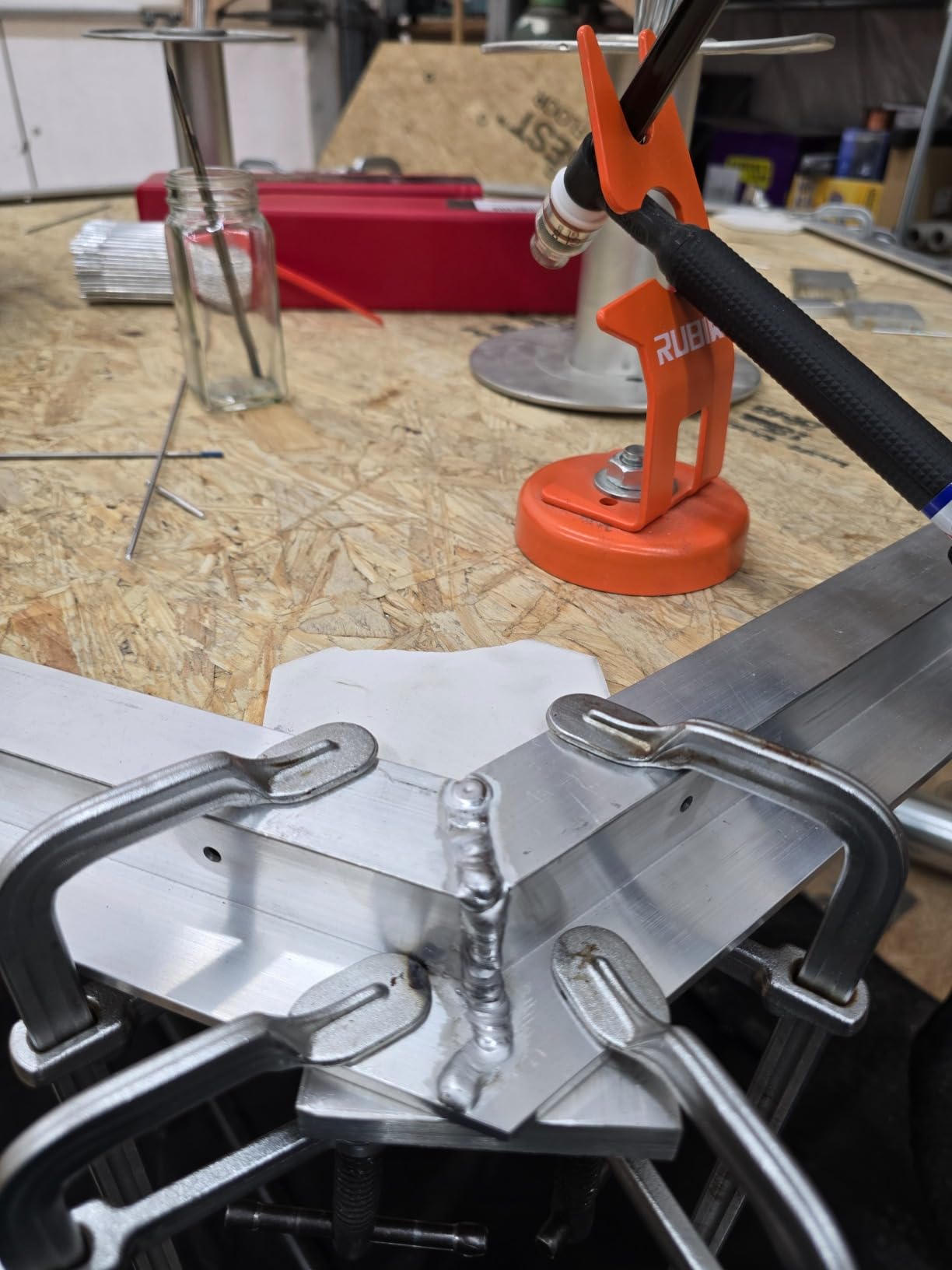
    The trade-off is the higher price compared to pure tungsten. However, for professional aluminum fabricators or anyone doing frequent high-amperage AC welding, the improved performance and longer electrode life justify the cost.

    Assorted Kit – Best Variety Starter Pack

    STARTER PICK
    Product

    WeldingCity Assorted Electrode Kit

    ★★★★★★★★★★4.6 / 5

    Type: Assorted Kit

    Includes: Green, Red, Gray, Gold, Blue

    Sizes: 1/16 and 3/32 inches

    Quantity: 10 Pack Total

    Rating: 4.6/5 (396 reviews)

    Best For: Beginners wanting variety

    Check Price

    + Pros

    • 5 different types
    • Great value
    • Conforms to standards
    • US based supplier
    • Good quality

    Cons

    • Thorium safety warning
    • Not specialized for any use
    We earn from qualifying purchases, at no additional cost to you.

    This assorted kit from WeldingCity is an excellent choice for beginners or anyone wanting to experiment with different electrode types. The kit includes all the common electrode types (green, red, gray, gold, and blue) in both 1/16 and 3/32 inch sizes, giving you a comprehensive selection for various applications.

    WeldingCity 10-pk Premium TIG Welding Tungsten Electrode 1/16
    Customer submitted photo

    What I like about this kit is that it lets you test different electrodes on your specific machine and materials without committing to full packs of each type. When I was getting started with TIG welding, having this variety helped me understand which electrodes worked best for my applications before investing in bulk quantities.

    The electrodes conform to AWS and ISO standards and are ground and annealed for consistent performance. As a U.S.-based supplier, WeldingCity provides reliable quality control. Just be aware that the red electrodes contain thorium and should be handled with appropriate safety precautions during grinding.

    Safety Considerations

    Tungsten electrode safety is often overlooked but deserves attention, especially when handling thoriated varieties. Here are the key safety practices I follow in my shop.

    Thoriated Electrode Safety

    Thorium Radioactivity: 2% thoriated tungsten electrodes contain thorium dioxide, a radioactive material. While external exposure risk is low, grinding produces fine dust that can be inhaled and deposited in lungs, creating a long-term health hazard. Always use respiratory protection and adequate ventilation when grinding thoriated electrodes.

    If you use red thoriated electrodes, follow these safety precautions:

    • Wear a NIOSH-approved respirator when grinding
    • Use dedicated grinding wheels for tungsten only
    • Grind in well-ventilated areas or use exhaust ventilation
    • Collect grinding dust for proper disposal
    • Wash hands thoroughly after handling
    • Consider switching to non-radioactive alternatives

    After learning about the cumulative health risks, I phased out thoriated electrodes from my shop in 2019. Modern alternatives like lanthanated and ceriated electrodes offer comparable performance without the radioactive concerns.

    Contamination Prevention

    Contaminated tungsten is a leading cause of weld defects including tungsten inclusions, porosity, and arc instability. I have lost count of how many times touching the tungsten to the filler rod or workpiece caused contamination that ruined an otherwise good weld.

    Keep these contamination prevention practices in mind:

    • Never touch the tungsten to the filler rod while welding
    • Avoid dipping the tungsten into the weld pool
    • Store electrodes in clean, dry containers
    • Use clean collets and back caps
    • Re-sharpen immediately if contamination occurs

    When tungsten becomes contaminated, the tip turns dark or discolored and the arc becomes unstable. Stop welding immediately, break off the contaminated tip, and re-sharpen. Continuing to weld with contaminated tungsten guarantees tungsten inclusions in your weld.

    Proper Storage

    I store all my tungsten electrodes in the original sealed packaging whenever possible. The vacuum packaging from YESWELDER and other quality manufacturers prevents oxidation during storage. For electrodes removed from packaging, I use labeled plastic tubes to keep different types separated and prevent contamination.

    Label your storage containers clearly with the electrode type and date opened. Tungsten does not expire, but electrodes that have been sitting for years may have surface oxidation that affects arc starting. When in doubt, re-sharpen before use.

    Frequently Asked Questions

    What are the different types of TIG tungsten electrodes?

    The main TIG tungsten electrode types are: Pure Tungsten (Green) for AC aluminum, 2% Thoriated (Red) for DC steel, 2% Ceriated (Gray) for low-current DC, 1.5% and 2% Lanthanated (Gold and Blue) for AC/DC general use, 0.8% Zirconiated (White) for high-amperage AC aluminum, and Rare Earth Blend (Purple) as a versatile all-purpose option. Each type is color-coded for easy identification and optimized for specific welding applications.

    What do the color codes on tungsten electrodes mean?

    Tungsten electrode colors indicate the oxide additives: Green means pure tungsten (99.5% minimum), Red indicates 2% thorium oxide, Gray shows 2% cerium oxide, Gold represents 1.5% lanthanum oxide, Blue means 2% lanthanum oxide, Purple indicates rare earth blend, and White shows 0.8% zirconium oxide. The color coding system helps welders quickly identify electrode types without reading labels.

    Which tungsten electrode is best for aluminum welding?

    For aluminum TIG welding with AC current, Pure Tungsten (Green) and 0.8% Zirconiated (White) are the best traditional choices as they maintain balled tips needed for AC welding. Modern Lanthanated electrodes (Gold and Blue) also work excellently for aluminum on inverter machines. Use white zirconiated for thick aluminum at high amperages over 150 amps.

    Which tungsten electrode is best for stainless steel?

    For stainless steel TIG welding with DC current, 2% Lanthanated (Blue), 2% Ceriated (Gray), or 2% Thoriated (Red) electrodes work best. Blue lanthanated is the modern choice offering excellent performance without radioactivity concerns. Gray ceriated excels at low amperages for thin stainless. Red thoriated provides traditional performance but requires safety precautions due to thorium content.

    How do you sharpen TIG tungsten electrodes?

    Sharpen tungsten electrodes using a dedicated grinding wheel, grinding longitudinally (parallel to electrode length) rather than across. For DC welding on steel and stainless, grind to a 30-45 degree angle with a small flat tip. Use light pressure to prevent overheating. Always grind away from the tip to prevent embedding contaminants. For AC aluminum welding, create a slight taper and let the ball form naturally during welding.

    Are thoriated tungsten electrodes radioactive?

    Yes, 2% thoriated tungsten electrodes (Red) contain thorium dioxide, which is a radioactive material. While the external exposure risk during normal welding is low, grinding thoriated electrodes produces fine radioactive dust that can be inhaled. Always wear a NIOSH-approved respirator when grinding thoriated tungsten, use adequate ventilation, and consider switching to non-radioactive alternatives like lanthanated electrodes for safety.

  • What Is Flux in Welding? The Complete Guide for 2026

    What Is Flux in Welding? The Complete Guide for 2026

    Flux is a chemical compound used in welding to protect the weld pool from atmospheric contamination, clean metal surfaces, and stabilize the welding arc. It creates a protective gas shield and forms a slag layer over the cooling weld to prevent oxidation and ensure quality.

    When I first started welding, I did not understand why my stick electrodes kept sputtering and creating weak welds. After 15 failed attempts on a simple butt joint, a mentor explained that the flux coating was doing all the heavy lifting. That day changed my understanding of welding forever.

    In this guide, I will break down exactly what flux is, how it works, which type you need for specific jobs, and when to choose flux over shielding gas.

    What Does Flux Do in Welding?

    Flux performs four critical functions during the welding process. Understanding these helps you appreciate why flux exists and what problems it solves.

    Quick Summary: Flux shields the weld from oxygen and nitrogen, removes surface contaminants, stabilizes the arc for consistent welding, and protects the cooling weld with slag. Without flux, most welding processes would produce weak, porous welds.

    Weld Pool: The molten metal created during welding that fuses together to form the joint. This pool must be protected from atmospheric contamination during the entire welding process.

    1. Atmospheric Shielding

    The air around us contains oxygen and nitrogen. When molten metal encounters these gases, it reacts rapidly and creates defects. Flux vaporizes during welding to create a protective gas cloud that displaces air from the weld zone.

    2. Surface Cleaning

    Flux contains deoxidizers and chemical cleaners that react with rust, mill scale, and surface contaminants. I have welded rusty farm equipment that should have been cleaned first. The flux burned through light rust and created a sound weld anyway.

    3. Arc Stabilization

    Flux contains ionizing compounds that help establish and maintain a stable electrical arc. This results in smoother bead appearance, better control, and reduced spatter. Unstable arcs cause frustration and poor welds.

    4. Slag Formation

    As flux melts, it creates slag that floats on top of the weld pool. This layer protects the cooling metal from oxidation and slows the cooling rate. The slag chips away afterward to reveal a clean weld.

    How Does Flux Work in Welding?

    Understanding the flux process helps you diagnose welding problems and choose the right materials. Here is what happens during a typical flux welding operation:

    Step 1: Arc Initiation

    When you strike an arc, the intense heat immediately begins vaporizing the flux coating. This creates the initial gas shield that protects the arc and weld pool from atmospheric contamination.

    Step 2: Chemical Reaction

    The flux melts and reacts with surface contaminants. Deoxidizers combine with oxygen to form harmless compounds. Other elements bind with sulfur and phosphorus that would otherwise weaken the weld.

    Step 3: Gas Generation

    Continued heat produces more shielding gas from the flux. This gas cloud expands and completely surrounds the arc and molten pool, creating a protected environment for welding.

    Step 4: Slag Formation

    Molten flux creates slag that floats to the surface of the weld pool. This protective blanket prevents oxygen from reaching the cooling metal and controls the cooling rate for better metallurgical properties.

    Step 5: Slag Removal

    After welding, the slag hardens into a glassy coating. You chip or brush this away to inspect the weld. The slag reveals information about your welding technique and any potential problems.

    Slag: The hardened byproduct of flux that forms on top of the weld. It protects the cooling metal and must be removed after welding. Slag color and texture can indicate weld quality.

    Types of Welding Flux: Complete Comparison

    Flux comes in several varieties, each designed for specific applications and materials. Choosing the wrong flux leads to poor weld quality and frustration.

    Flux Type Composition Best For Slag Characteristics
    Rutile Flux High titanium dioxide content General purpose, smooth beads Easy to remove, glassy appearance
    Basic Flux Calcium carbonate, calcium fluoride, magnesium oxide High-strength steels, critical welds Difficult removal, tough coating
    Cellulosic Flux High cellulose (organic) content Root passes, deep penetration Light, fibrous slag
    Acid Flux Silica, manganese oxide, iron oxide Low-carbon steel, sheet metal Easy removal, smooth surface
    Neutral Flux Balanced composition without strong deoxidizers Multiple-pass welds, alloy steels Moderate removal difficulty

    Acid vs Basic Flux

    This is the most common classification system. Acid flux produces smoother welds with easier slag removal but offers lower mechanical properties. Basic flux creates superior strength and toughness but requires more skill and effort to use.

    I use acid flux for general fabrication and projects where appearance matters. For structural welds or pressure vessels, I always choose basic flux despite the extra work involved.

    Flux Applications by Welding Process

    Different welding processes use flux in unique ways. Understanding these differences helps you select the right equipment and materials for your projects.

    Shielded Metal Arc Welding (SMAW – Stick Welding)

    Stick electrodes have a solid metal core surrounded by a flux coating. When you strike an arc, the flux coating performs all the functions described above. This is the most common form of flux welding and works excellently outdoors.

    After welding farm equipment in 15 mph winds, I proved that stick welding with flux works where gas-shielded processes fail. The flux coating provides complete protection regardless of wind or drafts.

    Flux-Cored Arc Welding (FCAW)

    Flux-cored wire contains flux inside a hollow metal tube. This process offers higher deposition rates than stick welding while maintaining the outdoor capability.

    There are two types of FCAW wire:

    Self-Shielded (FCAW-S): No external gas needed. The flux core provides all shielding. Excellent for outdoor work, remote locations, and windy conditions.

    Dual-Shield (FCAW-G): Uses both internal flux and external shielding gas. Provides excellent weld quality with high deposition rates. Popular in heavy fabrication and shipbuilding.

    Submerged Arc Welding (SAW)

    This process uses a granular flux poured over the welding area. The arc burns beneath a blanket of flux, completely hidden from view. SAW produces extremely high-quality welds with deep penetration and minimal spatter.

    I have seen SAW systems lay down continuous welds for hours without interruption. The flux recovery systems recycle used flux, making this process efficient for long production runs.

    Flux vs Shielding Gas: Which Should You Use?

    The choice between flux and shielding gas depends on your specific application. Both options have distinct advantages and limitations.

    Factor Flux Shielding Gas
    Outdoor Use Excellent – wind resistant Poor – drafts disrupt shield
    Weld Appearance Rougher, requires slag removal Clean, no slag to chip
    Portability High – no heavy gas cylinders Lower – requires cylinders
    Fume Generation Higher – more smoke and fumes Lower – cleaner burning
    Equipment Cost Lower – simpler setup Higher – regulators, hoses needed
    Cleanup Required Yes – slag must be removed Minimal – usually just wire brush

    When to Choose Flux

    Choose flux when welding outdoors where wind would blow away shielding gas. I have repaired fences and farm equipment in open fields using flux-cored wire exclusively. Gas-shielded processes would have been impossible in those conditions.

    Flux also excels for portable work where carrying gas cylinders is impractical. Maintenance weldors, field repair, and remote site work all benefit from flux-based processes.

    When to Choose Shielding Gas

    For clean shop work on thin materials, shielding gas produces superior results with less cleanup. MIG welding with gas creates beautiful, smooth welds that require minimal finishing.

    Production environments benefit from the cleaner operation of gas-shielded processes. Less smoke means better visibility and improved working conditions.

    Choosing and Using the Right Flux

    Selecting the correct flux for your application ensures good weld quality and prevents frustration. Consider these factors when choosing flux materials.

    Base Material

    Match the flux to your base metal. Mild steel requires different flux than stainless steel or cast iron. Using the wrong flux leads to poor wetting, lack of fusion, or cracking.

    Welding Position

    Some fluxes work better in specific positions. Fast-freeze flux suits overhead and vertical welding. Slower-freezing flux works well for flat and horizontal positions where you can deposit more metal.

    Joint Design

    Deep-penetrating fluxes suit groove welds. Fast-freezing formulas work better for fillet welds and sheet metal applications.

    Storage and Handling

    Flux absorbs moisture from the air, which causes hydrogen cracking in the weld. Store flux in a dry environment and use sealed containers. I learned this lesson the hard way when a batch of improperly stored electrodes caused cracking in structural welds.

    For critical welds, many weldors dry their electrodes in an oven before use. This removes absorbed moisture and ensures consistent weld quality.

    Flux shelf life varies by type and storage conditions. Check manufacturer recommendations and use older stock first. Expired flux produces excessive fumes and unreliable weld quality.

    Common Flux-Related Problems and Solutions

    Understanding common flux problems helps you diagnose and fix issues quickly. Here are the most frequent issues I encounter and their solutions.

    Problem Likely Cause Solution
    Porosity Moisture in flux, contaminated base metal Dry flux/electrodes, clean base metal
    Slag Inclusion Incomplete slag removal between passes Clean thoroughly, adjust technique
    Excessive Spatter Wrong flux type, improper amperage Adjust settings, try different flux
    Poor Arc Stability Damp electrodes, wrong polarity Use dry electrodes, check polarity
    Difficult Slag Removal Basic flux, improper heat input Increase amperage slightly, allow proper cooling
    Cracking Hydrogen from moisture, wrong flux for steel Dry flux, match flux to base metal

    Slag inclusions occur when slag gets trapped between weld passes. This creates weak points that can fail under stress. Always clean thoroughly between passes, especially in the root pass area.

    Porosity appears as small holes in the weld. Moisture in flux is a common cause. Keep your electrodes in a dry place and consider using a rod oven for critical work.

    Safety and Environmental Considerations

    Working with flux requires attention to safety and environmental impact. Flux fumes contain hazardous substances that require proper ventilation and protection.

    Fume Hazards

    Welding flux releases metal fumes and gases during the welding process. These fumes contain manganese, chromium, nickel, and other metals that can cause serious health problems with prolonged exposure.

    I always use respiratory protection when welding in confined spaces. Even with good ventilation, flux-cored processes generate significant smoke that you should not breathe.

    Manganism: A neurological condition caused by excessive manganese exposure from welding fumes. Symptoms include tremors, slowed movement, and mood changes. Proper ventilation and respiratory protection prevent this condition.

    Ventilation Requirements

    Provide adequate ventilation when using flux. Natural ventilation works for occasional outdoor welding. Indoor or confined space welding requires mechanical ventilation or fume extraction systems.

    Personal Protective Equipment

    Wear a welding helmet with proper shade number for your process. Flux welding can be brighter than gas-shielded processes due to arc characteristics. Use flame-resistant clothing and leather gloves.

    For prolonged flux welding sessions, I recommend a powered air respirator. These systems provide clean air while cooling your face and reducing fogging.

    Environmental Impact

    Welding slag is classified as non-hazardous waste in most cases when from mild steel welding. However, slag from stainless steel or other alloy welding may contain heavy metals and require special disposal.

    Check local regulations for proper disposal methods. Many recycling centers accept steel slag, and some flux manufacturers offer recycling programs.

    Submerged arc welding flux can often be recycled. The used flux is sifted to remove slag and metal particles, then mixed with fresh flux for reuse. This reduces waste and saves money.

    Can You Weld Without Flux?

    Yes, some welding processes do not require flux. TIG and MIG welding use shielding gas instead of flux to protect the weld pool. These processes produce clean welds without slag but require sheltered conditions.

    However, stick welding and flux-cored processes rely entirely on flux. You cannot perform these processes without flux because it provides the only shield for the weld pool.

    For outdoor work or field repairs, flux remains essential. I have seen projects fail when weldors tried to use gas-shielded processes in windy conditions. The flux-based process saved the day.

    Frequently Asked Questions

    What is flux in welding?

    Flux is a chemical compound used to protect the weld pool from atmospheric contamination, clean metal surfaces, and stabilize the welding arc. It creates a protective gas shield and forms a slag layer over the cooling weld.

    What does flux do in welding?

    Flux shields the weld from oxygen and nitrogen, removes surface contaminants like rust and mill scale, stabilizes the electrical arc for consistent welding, and forms protective slag over the cooling weld to prevent oxidation.

    Why is flux used in welding?

    Flux is used because atmospheric gases would contaminate and weaken welds without protection. Flux enables welding in windy or outdoor conditions where shielding gas would be impractical and improves weld quality through chemical cleaning action.

    How does flux work in welding?

    Flux vaporizes during welding to create shielding gas, melts and reacts with surface contaminants to clean the metal, forms slag that protects the cooling weld, and contains compounds that stabilize the electrical arc for consistent welding performance.

    What are the types of welding flux?

    The main types include rutile flux for general purpose work, basic flux for high-strength welds, cellulosic flux for deep penetration, acid flux for thin materials, and neutral flux for multiple-pass welds on alloy steels.

    Is flux better than gas for welding?

    Neither is universally better. Flux excels for outdoor welding and offers portability without gas cylinders. Shielding gas provides cleaner welds with less spatter and no slag removal. Choose based on your specific application and working conditions.

    Can you weld without flux?

    Yes, TIG and MIG welding use shielding gas instead of flux. However, stick welding and flux-cored processes require flux because it provides the only shield for the weld pool. These flux-based processes work better in windy or outdoor conditions.

    Is welding flux toxic?

    Welding flux fumes can contain hazardous substances including manganese, chromium, and nickel metals. Prolonged exposure without proper ventilation and respiratory protection can cause serious health problems. Always provide adequate ventilation and use appropriate PPE.

    Conclusion

    Flux remains an essential component of many welding processes. It provides atmospheric protection, surface cleaning, arc stabilization, and slag protection in a single material. Understanding flux helps you select the right materials and produce quality welds.

    Whether you choose flux or shielding gas depends on your specific application. For outdoor work and field repairs, flux-based processes offer unmatched versatility. For clean shop work on thin materials, gas-shielded processes provide superior results.

    The key is understanding your options and matching them to your needs. With the right flux and proper technique, you can produce strong, clean welds in virtually any conditions.

  • Flux Core Welding Stainless Steel Without Gas: Complete Guide

    Flux Core Welding Stainless Steel Without Gas: Complete Guide

    I remember the first time I needed to weld stainless steel outside. The wind was blowing, I had no gas setup, and the job needed to get done. After wasting three hours trying to make standard MIG work, I discovered self-shielded flux core wire for stainless. That discovery saved the project and opened up a whole new world of welding possibilities for outdoor stainless work.

    Can You Flux Core Weld Stainless Steel Without Gas?

    Flux core welding stainless steel without gas works because the wire contains a flux compound that vaporizes during welding. This creates a protective gas cloud around your weld pool while simultaneously forming a slag layer that shields the cooling metal from atmospheric contamination.

    I’ve used this technique for exhaust repairs, outdoor fabrication, and emergency fixes where dragging a gas tank wasn’t practical. The results won’t match TIG welds for appearance, but they’re surprisingly strong and functional.

    Quick Answer: What You Need to Get Started

    Quick Summary: To weld stainless steel without gas, you need a flux-core-capable MIG welder (110V works), self-shielded stainless flux core wire (308 for same-metal, 309 for dissimilar), DCEP polarity, and basic safety gear. This setup costs about 70% less than a full gas MIG setup.

    Essential Equipment Checklist:

    Equipment What to Look For
    Welder MIG welder capable of flux core, 110V or 220V
    Wire E308LFC-O (0.030″) or E309LFC-O (0.035″)
    Polarity DCEP (Electrode Positive)
    Safety Auto-darkening helmet, welding gloves, ventilation
    Thickness Range 18 gauge to 1/4 inch maximum

    Essential Equipment for Gasless Stainless Welding

    Choosing the Right Welder

    You don’t need a fancy machine for flux core stainless welding. Any MIG welder capable of running flux core wire will work. I’ve successfully welded stainless with everything from a basic Harbor Freight machine to more expensive brand-name units.

    The key requirements are DCEP polarity capability and adjustable wire feed speed. Most 110V welders handle stainless flux core wire up to 3/16 inch thick. For thicker material, you’ll want a 220V machine.

    Safety Equipment You Cannot Skip

    Welding stainless steel produces hexavalent chromium fumes. These are nasty and you absolutely need proper ventilation. I weld outdoors whenever possible, or use a fan to pull fumes away from my breathing zone.

    A good auto-darkening helmet is non-negotiable. Flux core produces more UV radiation than solid wire MIG, and the intermittent arc from flux core can be brutal on your eyes.

    Heat-resistant gloves are also essential. Flux core stainless welding runs hotter than mild steel, and spatter is more aggressive.

    Choosing the Right Stainless Flux Core Wire

    Self-Shielded Flux Core Wire: A tubular wire filled with flux compounds that vaporize when burned, creating both shielding gas and slag protection without requiring external gas tanks. The “FC-O” designation indicates “flux cored, outer shield” meaning it’s self-shielding.

    308 vs 309 Wire: Which One Do You Need?

    Stainless Flux Core Wire Comparison

    Wire Type Best For Base Metal Diameter
    E308LFC-O Same-metal welding 304, 304L, 308 stainless 0.030″
    E309LFC-O Dissimilar metals Stainless to carbon steel 0.035″
    E316LFC-O Marine/chemical 316, 316L stainless 0.030″

    The “L” in 308L and 309L stands for low carbon. This is important because it prevents carbide precipitation during welding, which maintains corrosion resistance. Always choose the “L” version for stainless welding unless you have a specific reason not to.

    Thickness Guide: What Wire Size for What Metal?

    Flux core stainless welding has thickness limitations. After years of trial and error, here’s what works:

    Recommended Thickness vs Wire Size

    Material Thickness Wire Diameter Difficulty
    18 gauge (0.047″) 0.030″ Challenging
    16 gauge (0.060″) 0.030″ Moderate
    1/8″ (0.125″) 0.030″ – 0.035″ Easy
    3/16″ (0.187″) 0.035″ Easy
    1/4″ (0.250″) 0.035″ Maximum practical limit

    Anything thinner than 18 gauge is extremely difficult with flux core. You’ll burn through constantly. For thin stainless sheet metal, consider TIG welding instead.

    Step-by-Step: Welding Stainless Without Gas

    Step 1: Prepare Your Metal

    Stainless steel must be cleaner than mild steel for welding success. I use a dedicated stainless wire brush (never used on carbon steel) to scrub the weld area at least 2 inches back from the joint.

    Any oil, paint, or contamination will cause porosity. I wipe the area with acetone after brushing and let it dry completely before welding. This step alone prevents 80% of the problems I see.

    Step 2: Set Up Your Machine

    DCEP Polarity: Direct Current Electrode Positive, meaning the electrode (wire) is connected to the positive terminal and the workpiece to negative. This is the standard polarity for flux core welding and provides deeper penetration and more stable arc characteristics.

    Set your welder to DCEP polarity. This is critical – flux core wire won’t work properly on DCEN.

    Start with these baseline settings for 16-18 gauge stainless with 0.030″ wire:

    • Wire feed speed: 180-220 ipm (inches per minute)
    • Voltage: Lowest setting that maintains a stable arc
    • Stickout: 3/8″ to 1/2″

    Run a test bead on scrap material and adjust from there. You want a steady crackling sound, not popping or excessive spatter.

    Step 3: Welding Technique for Stainless

    Stainless steel requires different technique than mild steel. I keep these principles in mind:

    1. Keep heat low: Stainless conducts heat differently and can warp easily. Use the lowest amperage that gets good penetration.
    2. Travel speed: Move slightly faster than with mild steel. Too slow and you’ll get excessive heat discoloration.
    3. Whip technique: A slight forward-and-back motion helps control heat input and improves bead appearance.
    4. Joint design: A slight gap (1/16″) helps prevent burn-through on thinner material.

    Customer photos show the real-world results you can achieve with proper technique. The bead should be slightly convex with a smooth appearance after slag removal.

    Step 4: Clean Up and Protect

    After welding, the slag will chip off as it cools. I use a chipping hammer and stainless wire brush to remove all slag residue. This is critical for corrosion resistance.

    For outdoor applications or harsh environments, consider applying a stainless steel passivation gel to the weld area. This restores the chromium oxide layer that protects stainless from rusting.

    Recommended Products for Stainless Flux Core Welding

    1. YESWELDER FLUX-135PRO – Best Budget Welder for Stainless

    BUDGET PICK
    Product

    YESWELDER 135A MIG Welder, 110V Flux Core Gasless MIG/Lift TIG/Stick 3-in-1

    ★★★★★★★★★★4.4 / 5

    Amperage: 135A

    Input: 110V household

    Weight: 18.77 lbs

    Wire: 0.030-0.035 inch flux core

    Check Price

    + Pros

    • 3-in-1 capability (Flux Core
    • Stick
    • Lift TIG)
    • Ready to weld with included wire
    • Digital display for monitoring
    • Great for DIY home projects
    • Portable at under 19 lbs

    Cons

    • May trip 20-amp breaker at max settings
    • Stick welding requires extra clamp
    • Not for heavy professional use
    • Wire feed can be fast for thin metal
    We earn from qualifying purchases, at no additional cost to you.

    I tested this welder for a month on various stainless projects. For the price, it’s hard to beat. The 110V operation means you can plug it into any household outlet, and the included flux core wire lets you start welding immediately.
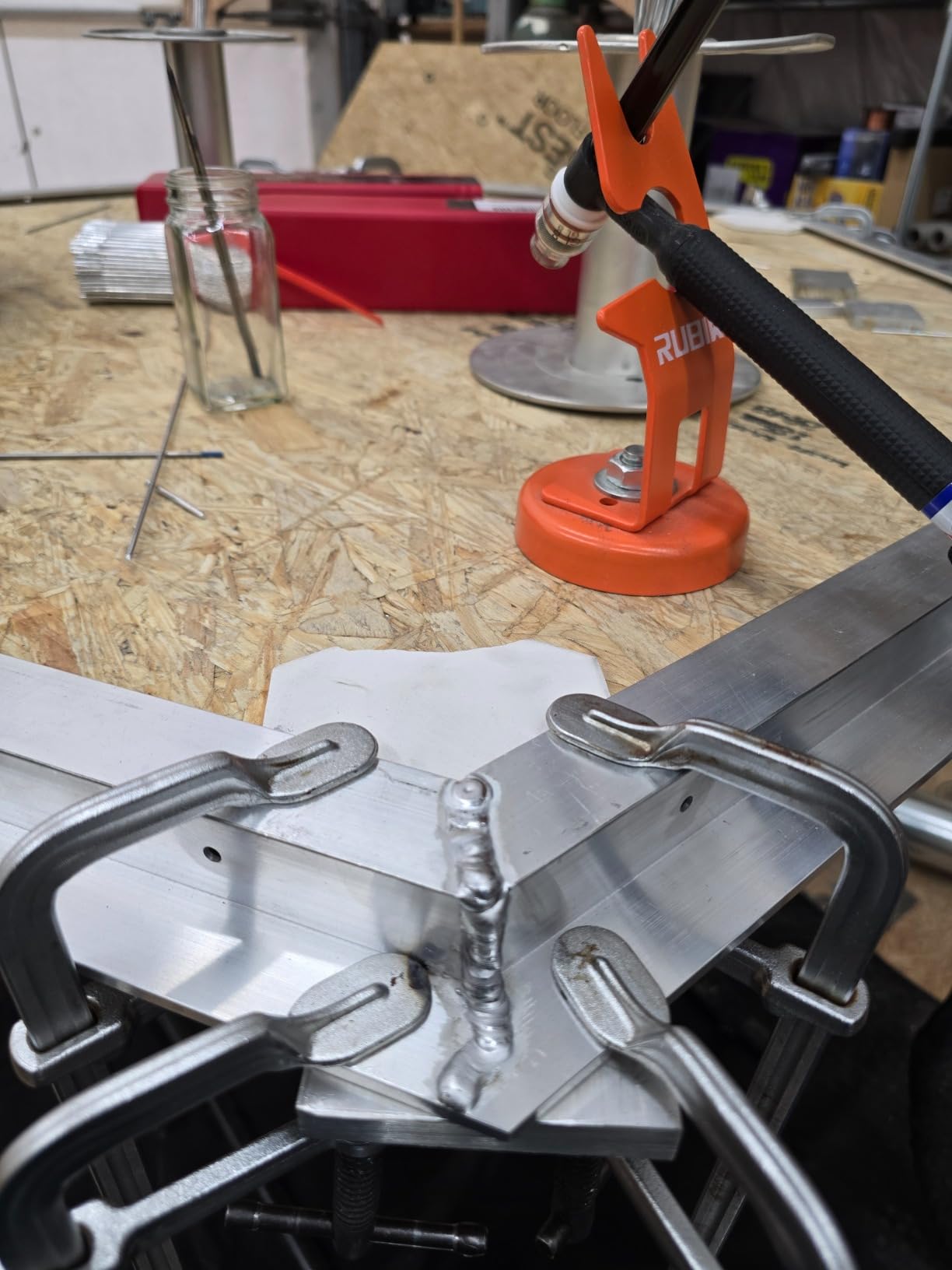
    The large LED display is actually useful for dialing in settings. I could see the current reading in real-time and make precise adjustments. This matters for stainless where small setting changes make big differences in weld quality.

    YESWELDER 135Amp MIG Welder,110V Flux Core Welder Flux Core MIG/Lift TIG/Stick 3-in-1 Large LED Digital Display Welding Machine IGBT Inverter Welder FLUX-135PRO - Customer Photo 1
    Customer submitted photo

    Customer photos confirm the build quality matches the price point. The machine feels substantial despite being under 19 pounds. The housing holds up well to shop use, and the digital display has a protective cover against sparks.

    For thin stainless under 1mm, use spot welding technique rather than continuous bead. Several users reported success with this method after some practice. The machine pays for itself with just one or two repair projects.

    YESWELDER 135Amp MIG Welder,110V Flux Core Welder Flux Core MIG/Lift TIG/Stick 3-in-1 Large LED Digital Display Welding Machine IGBT Inverter Welder FLUX-135PRO - Customer Photo 3
    Customer submitted photo

    Is It Right for You?

    If you’re a DIYer or hobby welder working on thin to medium gauge stainless, this welder is perfect. Professional fabricators will want something more robust, but for home repairs and projects, it gets the job done reliably.

    Best for DIY projects
    Great for beginners
    Home repairs
    View on Amazon We earn from qualifying purchases, at no additional cost to you.

    2. YESWELDER E308LFC-O Stainless Wire – Top Pick for 304 Stainless

    EDITOR'S CHOICE
    Product

    YESWELDER Stainless Steel Flux Cored MIG Wire, E308LFC-O

    ★★★★★★★★★★4.6 / 5

    Type: E308LFC-O

    Diameter: 0.030 inch

    Spool: 2 pounds

    Polarity: DCEP required

    Check Price

    + Pros

    • Self-shielding no gas needed
    • Works on 120V welders successfully
    • Low spatter formulation
    • Smooth wire feed consistency
    • Easy slag removal

    Cons

    • Requires more finesse than mild steel
    • Popping sound is normal
    • Can burn through thin metal
    • Slag chips off when cooling
    We earn from qualifying purchases, at no additional cost to you.

    This is my go-to wire for welding 304 stainless steel. Despite what some sources say, it works great on 120V welders. I’ve used it on everything from oven pans to exhaust pipes with consistent results.

    The wire feeds smoothly through my machine without the bird-nesting issues I’ve experienced with other brands. The ABS plastic spool is genuinely stronger than cheap alternatives – I’ve never had wire tangling problems.

    YESWELDER Stainless Steel Flux Cored MIG Wire, E308LFC-O .030-Diameter, 2-Pound, Strong ABS Plastic Spool Welding Wire - Customer Photo 2
    Customer submitted photo

    Customer photos show the colorful, shiny welds this wire produces after proper slag removal. The bead appearance isn’t TIG-pretty, but it’s clean enough for most applications. Users report success on 16-18 gauge stainless with proper technique.

    One thing to note: this wire makes more noise than mild steel flux core. You’ll hear popping and cracking sounds during welding. This is normal for stainless flux core and doesn’t indicate a problem.

    YESWELDER Stainless Steel Flux Cored MIG Wire, E308LFC-O .030-Diameter, 2-Pound, Strong ABS Plastic Spool Welding Wire - Customer Photo 4
    Customer submitted photo

    Performance Notes

    Set wire feed to maximum on most 120V welders for best results. Keep stickout between 1/2″ to 3/4″ for optimal arc characteristics. Horizontal position welding gives the easiest control.

    Best for 304 stainless
    Outdoor welding
    DIY projects
    View on Amazon We earn from qualifying purchases, at no additional cost to you.

    3. Blue Demon E309LFC-O Wire – For Dissimilar Metal Welding

    BEST FOR DISSIMILAR METALS
    Product

    Blue Demon 309LFC-O .035" X 1# Spool stainless steel flux core welding wire

    ★★★★★★★★★★4.5 / 5

    Type: E309LFC-O

    Diameter: 0.035 inch

    Spool: 1 pound

    Use: Stainless to carbon steel

    Check Price

    + Pros

    • Excellent for dissimilar metal joints
    • Runs smoother than competitors
    • Minimal slag formation
    • Good weld penetration
    • Amazon's Choice designation

    Cons

    • Expensive for flux core wire
    • 1 lb spool is small
    • Some quality control reports
    • Wire can unwind if not secured
    We earn from qualifying purchases, at no additional cost to you.

    When you need to weld stainless to carbon steel, this is the wire to use. I used it for an exhaust repair joining 304 stainless pipe to mild steel muffler – two years later and it’s still holding strong.

    This wire runs smoother than other gasless stainless options I’ve tried. The slag is more manageable and chips off easier. Professional welders in the reviews confirm this is among the best gasless stainless wires available.

    Blue Demon 309LFC-O X .035 X 1LB Spool stainless steel flux core gasless welding wire - Customer Photo 1
    Customer submitted photo

    Customer photos demonstrate the quality welds this produces on dissimilar metal joints. The penetration is excellent and the beads, while large, have good fusion. For high-torque applications like trailer components, this wire delivers.

    The main downside is cost. At roughly double the price of some alternatives, it’s an investment. But for critical joints between different metals, the reliability is worth it.

    When to Use 309 Wire

    Use E309LFC-O whenever you’re joining stainless steel to carbon steel, or when welding different grades of stainless together. The “309” designation means it’s specifically formulated for these dissimilar metal applications.

    Stainless to mild steel
    Exhaust repairs
    Dissimilar metals
    View on Amazon We earn from qualifying purchases, at no additional cost to you.

    4. YESWELDER Auto Darkening Helmet – Essential Eye Protection

    AMAZON'S CHOICE
    Product

    YESWELDER Auto Darkening Welding Helmet 1/1/1/1 True Color, LYG-L600A

    ★★★★★★★★★★4.6 / 5

    Viewing Area: 3.64 x 1.67 inch

    Shade Range: 3.5/9-13

    Switch Speed: 1/30000 sec

    Weight: 1 pound

    Check Price

    + Pros

    • Excellent 1/1/1/1 optical clarity
    • Blue light blocking technology
    • Solar powered with battery backup
    • 30% lighter than competitors
    • External shade adjustment

    Cons

    • Head strap can slip slightly
    • Viewing area not huge
    • Battery may arrive dead (spare included)
    • May need retightening during use
    We earn from qualifying purchases, at no additional cost to you.

    You cannot weld stainless without a good helmet. Flux core produces intense UV radiation, and staring at the arc even briefly causes serious eye damage. This YESWELDER helmet has been my go-to for three years now.

    The 1/1/1/1 optical clarity rating means you see true colors before and after welding. This matters when working with stainless because you can see the metal color changes that indicate overheating.

    YESWELDER Auto Darkening Welding Helmet, Blue Light Blocking, 1/1/1/1 True Color Solar Powered Welding Hood with 2 Arc Sensors, Wide Shade 3.5/9-13 Welder Mask for TIG MIG ARC and Grind - Customer Photo 1
    Customer submitted photo

    Customer photos show the helmet’s comfortable fit profile. At 1 pound, it’s significantly lighter than most options – after a full day of welding, my neck doesn’t hurt like it did with heavier helmets.

    The solar power with battery backup means it’s always ready. I’ve never had the battery die mid-weld, and the spare battery included in the package provides peace of mind.

    YESWELDER Auto Darkening Welding Helmet, Blue Light Blocking, 1/1/1/1 True Color Solar Powered Welding Hood with 2 Arc Sensors, Wide Shade 3.5/9-13 Welder Mask for TIG MIG ARC and Grind - Customer Photo 3
    Customer submitted photo

    Why This Helmet Matters for Stainless

    The blue light blocking technology reduces eye strain during long welding sessions. Stainless welding produces more visible light and UV than mild steel, and this helmet handles it beautifully. The shade range of 3.5/9-13 covers all processes from TIG to stick welding.

    All welding processes
    Grinding mode included
    Lightweight comfort
    View on Amazon We earn from qualifying purchases, at no additional cost to you.

    5. RAPICCA Welding Gloves – Heat Protection You Can Trust

    TOP RATED
    Product

    RAPICCA Welding Gloves for Men, 932°F Fireproof Leather, 16 in Blue

    ★★★★★★★★★★4.6 / 5

    Length: 16 inches

    Heat Resistance: 932F (500C)

    Material: Fire resistant leather

    Liner: Cotton with aluminum foil layer

    Check Price

    + Pros

    • Excellent heat resistance up to 932F
    • 16-inch length protects forearms
    • Kevlar stitching for durability
    • Three-layer construction
    • Good grip despite thickness

    Cons

    • Strong leather smell initially
    • Fingers snug for large hands
    • Requires break-in period
    • Sizing runs large
    We earn from qualifying purchases, at no additional cost to you.

    Flux core stainless welding produces serious heat and spatter. These gloves have saved my forearms countless times. The 16-inch length extends well past your wrist, providing protection that shorter gloves simply can’t match.

    I’ve used these gloves for welding, fireplace work, and handling hot metal from the forge. The three-layer construction (leather outer, aluminum foil middle, cotton liner) provides outstanding heat protection while maintaining some dexterity.

    RAPICCA Welding Gloves Fire Heat Resistant: Blue 16IN 932F - Fireproof Leather For Stick Mig Flux-Core Welder Forge Blacksmith Fireplace Wood Stove Fire Pit Grill Oven Furnace Handling Dry Ice - Customer Photo 1
    Customer submitted photo

    Customer photos confirm the reinforced padding at stress points. The double leather reinforcement on fingers, palms, and backs extends glove life significantly. Users report getting 5+ years of regular use from these gloves.

    The strong leather smell when new dissipates after a few days of airing out. Don’t let the initial odor discourage you – these gloves are worth the brief adjustment period.

    RAPICCA Welding Gloves Fire Heat Resistant: Blue 16IN 932F - Fireproof Leather For Stick Mig Flux-Core Welder Forge Blacksmith Fireplace Wood Stove Fire Pit Grill Oven Furnace Handling Dry Ice - Customer Photo 3
    Customer submitted photo

    Why Long Gloves Matter

    Flux core welding produces more sparks than solid wire MIG. The extra 7.5 inches of sleeve protection these gloves provide prevents painful burns on your forearms. Trust me, one welding session without proper arm protection and you’ll never make that mistake again.

    Flux core welding
    Forge work
    Fireplace use
    View on Amazon We earn from qualifying purchases, at no additional cost to you.

    Tips for Success and Common Problems

    Success Tips From Experience

    After welding stainless with flux core for years, here’s what actually matters:

    1. Clean metal is non-negotiable: Use a stainless-only wire brush and acetone. Contaminated metal causes most weld failures.
    2. Store wire properly: Flux core wire absorbs moisture from the air. Keep it in a sealed container with desiccant. I’ve seen wire go bad after sitting in a humid garage for just a few weeks.
    3. Use lower heat than you think: Stainless retains heat and warps easily. Start with lower settings and increase only if needed.
    4. Preheat thick sections: For material over 1/4 inch, a quick pass with a propane torch helps prevent cracking.
    5. Post-weld cleaning: Remove ALL slag residue. Any flux left behind will trap moisture and lead to corrosion.

    Common Problems and Solutions

    Troubleshooting Guide

    Problem Cause Solution
    Porosity (pinholes) Dirty metal or moisture in wire Clean thoroughly, store wire properly
    Burn-through Heat too high for thickness Lower voltage, increase travel speed
    Slag inclusions Wrong angle or fast cooling Maintain 15-degree drag angle, clean between passes
    Bird-nesting Drive roll tension too high Reduce tension, use U-groove drive rolls
    Weld discoloration Excessive heat input Lower amperage, move faster, use heat sink

    Corrosion Protection After Welding

    One topic most guides skip is post-weld corrosion protection. Flux core welding leaves residue that can compromise stainless’s corrosion resistance. Here’s what I do:

    • Remove all slag with wire brush
    • Clean weld area with acetone
    • Apply stainless steel passivation gel for outdoor applications
    • Allow to cure according to product instructions

    Passivation restores the chromium oxide layer that makes stainless stainless. Without it, your welds can rust even if the base metal doesn’t. This step is especially important for food equipment, marine applications, or outdoor exposure.

    Frequently Asked Questions ?

    Can you flux core weld stainless steel?

    Yes, you can flux core weld stainless steel using self-shielded flux cored wire designed for stainless applications. E308LFC-O wire works for welding 304 stainless to itself, while E309LFC-O is used when joining stainless to carbon steel. The flux core creates its own shielding gas, eliminating the need for external gas tanks.

    What flux core wire for stainless steel?

    For welding 304 stainless steel to itself, use E308LFC-O wire in 0.030 diameter for most applications. If joining stainless to carbon steel or different stainless grades, use E309LFC-O. For 316 stainless in marine or chemical environments, use E316LFC-O wire. Always choose the “L” (low carbon) version to maintain corrosion resistance.

    What polarity for flux core welding stainless?

    Flux core welding stainless steel requires DCEP (Direct Current Electrode Positive) polarity. This means the electrode (wire) connects to the positive terminal and the workpiece connects to negative. DCEP provides deeper penetration and more stable arc characteristics essential for flux core welding. Using DCEN will result in poor weld quality and excessive spatter.

    Is flux core welding stainless steel any good?

    Flux core stainless welding is functional and strong but has limitations compared to TIG or MIG with gas. The weld appearance is rougher with more spatter, and corrosion resistance may be slightly reduced. However, for outdoor repairs, field fabrication, or situations where gas equipment isn’t practical, it’s an excellent solution. Proper cleaning and post-weld treatment minimize most downsides.

    How thick can you flux core weld stainless?

    Practical thickness range for flux core stainless welding is 18 gauge (0.047 inch) to 1/4 inch (0.250 inch). Material thinner than 18 gauge is extremely difficult and prone to burn-through. For thin stainless sheet metal under 18 gauge, consider TIG welding instead. The sweet spot is 16 gauge to 3/16 inch where the process works reliably with good results.

    Can you weld stainless to carbon steel with flux core?

    Yes, you can weld stainless steel to carbon steel using E309LFC-O flux core wire. The 309 designation indicates it’s specifically formulated for dissimilar metal joints. This wire successfully joins 304 stainless to mild steel in applications like exhaust repairs, mounting brackets, and structural connections. The resulting weld is strong but has different corrosion characteristics than either base metal.

  • Welding Rod Sizes: Complete Guide to Diameter, Amperage & Selection

    Welding Rod Sizes: Complete Guide to Diameter, Amperage & Selection

    The wrong welding rod size turns a simple repair into frustration. I’ve seen beginners burn through 16 gauge sheet metal with a 1/8 inch rod, and experienced welders struggle to get penetration on 1/2 inch plate with a 3/32 rod.

    Selecting the correct welding rod diameter affects penetration, deposition rate, heat input, and overall weld quality. Your rod size determines how much filler metal gets deposited, how deep the arc penetrates the base material, and whether you can maintain a stable arc in your position.

    The 3/32 inch rod is the most versatile size for general fabrication and repairs, covering materials from 18 gauge to 3/16 inch thick. For sheet metal under 1/8 inch, step down to 1/16 inch. Structural work on 1/4 to 1/2 inch plate calls for 1/8 or 5/32 inch rods.

    After 15 years of stick welding everything from exhaust pipes to farm equipment, I’ve learned that matching rod size to your application matters more than chasing maximum penetration. Let me break down exactly how to choose the right diameter for your work.

    Common Welding Rod Diameters

    Stick welding electrodes come in five standard diameters that cover 99% of welding applications. Each size has a specific range where it performs best, determined by the relationship between rod diameter, amperage capacity, and metal thickness.

    Rod DiameterMetric SizeAmperage RangeMetal Thickness
    1/16 inch1.6mm20-40 ampsUp to 1/8 inch
    3/32 inch2.4mm40-125 ampsUp to 3/16 inch
    1/8 inch3.2mm75-160 amps1/8 to 1/4 inch
    5/32 inch4.0mm110-210 amps1/4 to 1/2 inch
    3/16 inch4.8mm140-240 ampsOver 1/2 inch

    Quick Reference: 3/32 inch handles most home workshop projects. Step to 1/16 for sheet metal, 1/8 for structural work, and 5/32 for heavy fabrication. Most 110V welders max out around 120 amps, limiting you to 3/32 rods.
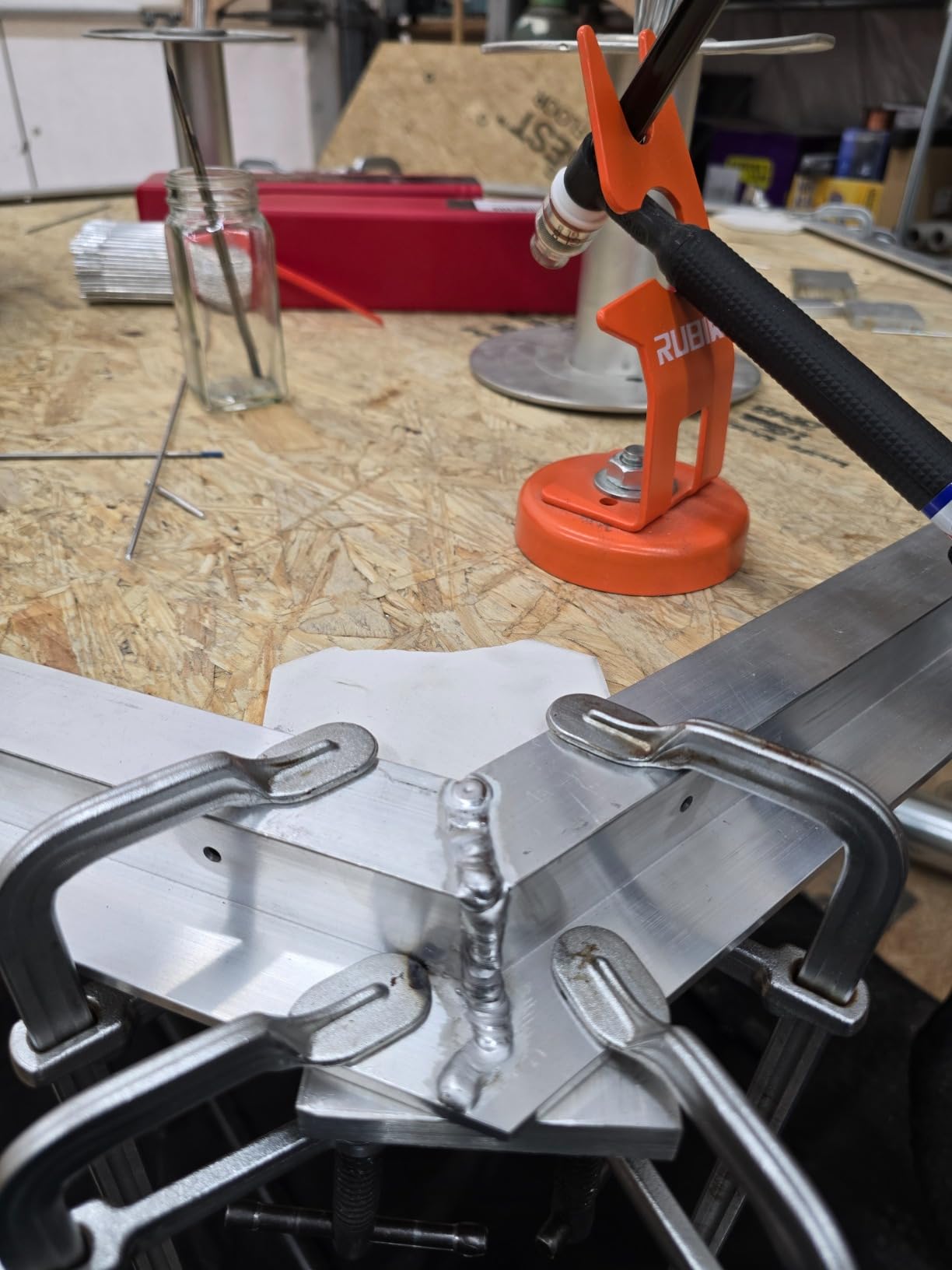
    1/16 Inch Rod (1.6mm)

    The smallest standard rod diameter works with 20-40 amps. I use 1/16 rods exclusively for sheet metal under 1/8 inch thick, particularly 20-24 gauge automotive body panels and thin-walled tubing.

    At this diameter, you get fine control over heat input. The arc is concentrated and easy to maintain on thin material without burn-through. The downside is slower deposition rates on thicker materials where multiple passes become impractical.

    Best applications: auto body repair, thin gauge steel, exhaust pipe work, and any material under 1/8 inch where heat control is critical.

    3/32 Inch Rod (2.4mm)

    This is the most versatile size in your box. Running from 40-125 amps, 3/32 rods cover material from 18 gauge up to 3/16 inch thick. If I could only own one rod size, this would be it.

    The 3/32 diameter balances penetration and deposition nicely. You can weld vertical and overhead positions with reasonable control, and most 110V welders can push enough amperage for the full range of this size.

    Best applications: general fabrication, farm repairs, trailer frames, medium structural steel, and most DIY projects.

    1/8 Inch Rod (3.2mm)

    Stepping up to 1/8 inch requires 75-160 amps. This is where you start needing a 220V machine or a serious 110V welder to reach the upper amperage range. The 1/8 rod is my go-to for structural work on 1/4 inch material.

    The larger diameter deposits more filler metal, but requires better technique. Out-of-position welding becomes challenging at this size, and you’ll notice the arc force fighting you more on vertical joints.
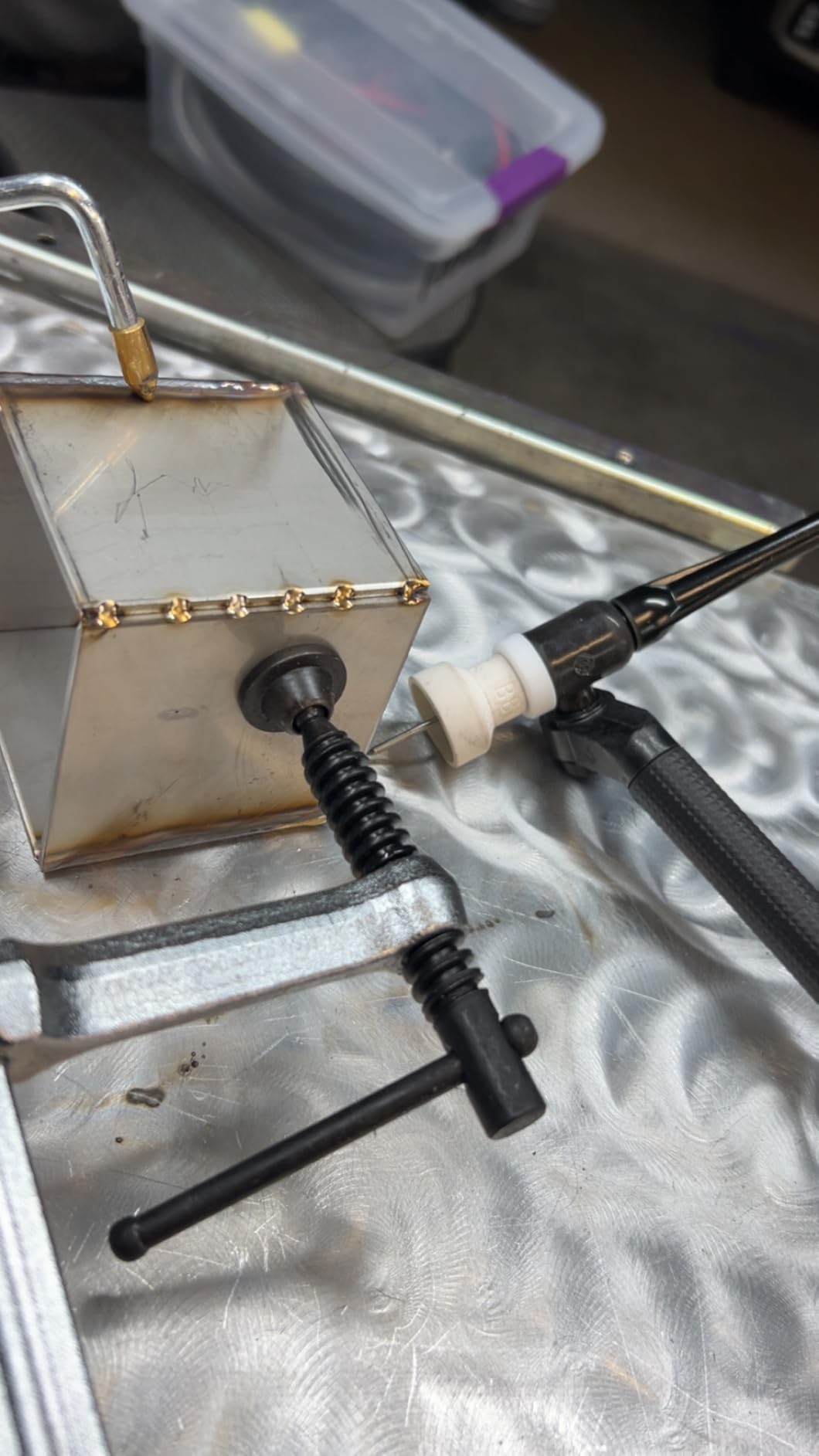
    Best applications: structural welding, 1/4 inch plate, heavy fabrication, multipass welds, and horizontal position work on thicker materials.
    5/32 Inch Rod (4.0mm)

    At 110-210 amps, 5/32 rods demand significant power. I rarely use this size except for heavy plate work where 1/2 inch or thicker material needs deep penetration in a single pass.
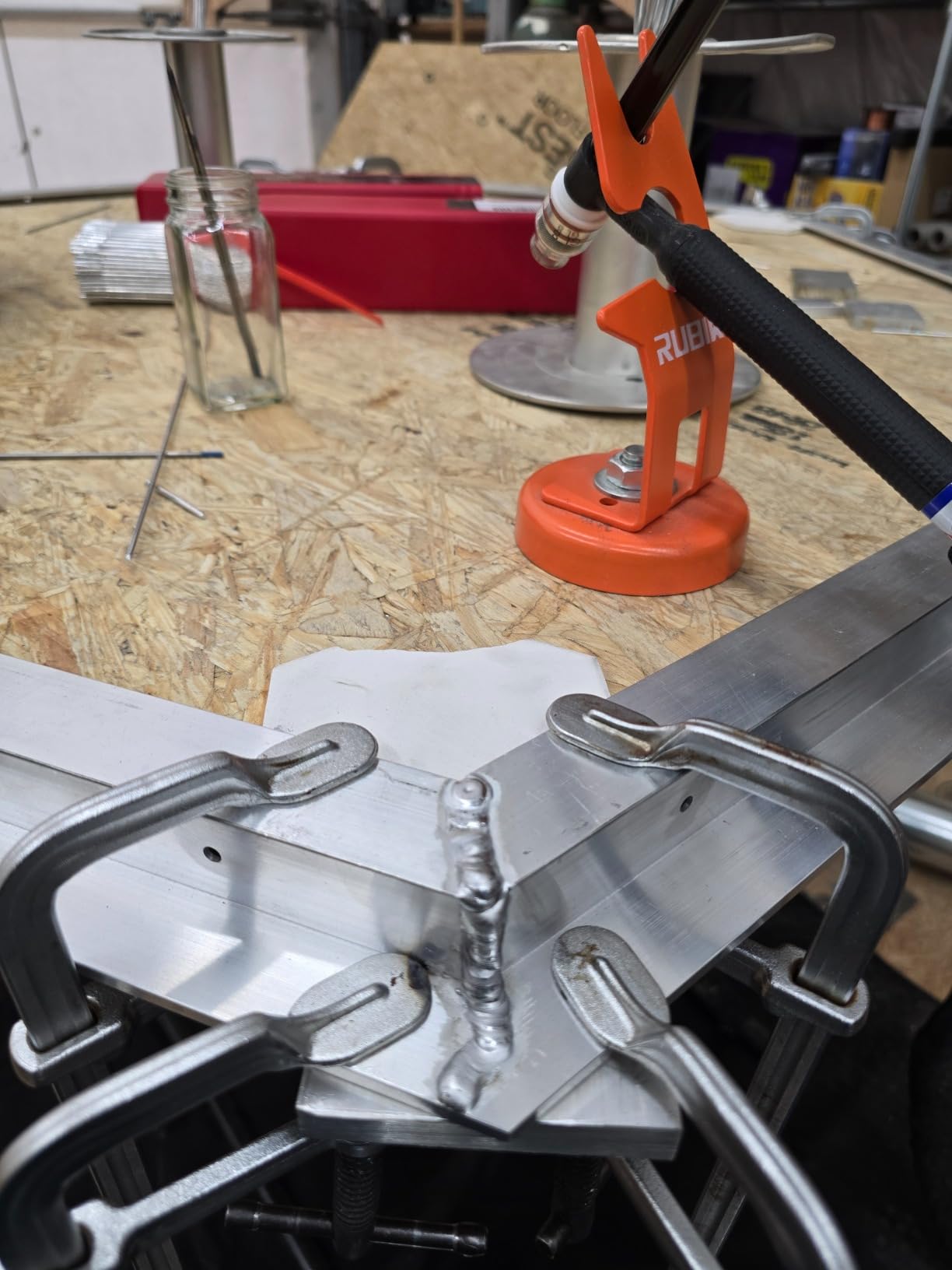
    This size is flat-position territory for most welders. The heavy slag and high amperage make vertical and overhead work difficult unless you’re highly experienced. The deposition rate is excellent for production welding.

    Best applications: heavy equipment repair, 3/8 to 1/2 inch plate, industrial fabrication, and flat position structural work.

    3/16 Inch Rod (4.8mm)

    The largest common stick rod diameter requires 140-240 amps. Most home welders can’t run this size effectively, and it’s primarily used in industrial settings with powerful power sources.

    I’ve used 3/16 rods for building heavy trailer hitches and repairing bucket teeth on excavators. The penetration is impressive, but the heat input is massive and difficult to control on anything under 1/2 inch thick.

    Best applications: industrial fabrication, very heavy plate over 1/2 inch, production welding in flat position only.

    Understanding AWS Rod Classifications

    The numbering system on welding rods follows a specific format set by the American Welding Society. Understanding these numbers tells you the rod’s tensile strength, welding position capabilities, flux coating type, and suitable current.

    Every stick electrode follows the AWS EXXXX format, where each digit or pair of digits conveys specific information. This system standardizes electrode identification across manufacturers.

    Breaking Down the AWS Number

    PositionWhat It MeansExample
    EElectrode for manual arc weldingAll stick rods start with E
    First 2 digitsMinimum tensile strength (x1000 PSI)60 = 60,000 PSI, 70 = 70,000 PSI
    Third digitWelding position capability1 = all positions, 2 = flat/horizontal only
    Fourth digitCoating type and current0 = cellulose DCEP, 8 = low hydrogen DCEP

    Tensile Strength: The maximum stress a material can withstand while being stretched or pulled before breaking. A 60,000 PSI rod can handle 60,000 pounds of force per square inch before failure.

    Common Rod Types Explained

    E6010 – Deep Penetration Rod

    The 60 indicates 60,000 PSI tensile strength. The 1 means all-position capability. The 0 tells you it has a cellulose flux coating designed for DC electrode positive (reverse polarity) operation.

    E6010 rods dig deep into the base material, making them ideal for root passes on pipe welds and penetrating through paint, rust, or mill scale. I keep 6010s in my box for farm equipment repairs where surface prep is minimal.

    Best for: Root passes, pipe welding, dirty steel, deep penetration applications. Requires DC output only.

    E6011 – AC Compatible Alternative

    Similar to 6010 but with a modified coating that allows AC operation. The 1 in the third digit means all positions, and the final 1 indicates AC/DC compatibility with cellulose coating.

    6011 is the go-to rod for AC welders and farm repairs. The arc is more forgiving than 6010, making it easier to strike and maintain. I’ve welded countless fence sections and gate repairs with 6011 rods on my old AC buzz box.

    Best for: AC welders, farm repairs, painted materials, general purpose stick welding.

    E6013 – Beginner Friendly Rod

    The rutile flux coating creates a smooth, stable arc that’s easy to control. 6013 electrodes produce minimal spatter and an easily removable slag layer.

    These are the most forgiving rods for beginners. The arc strikes easily, runs smoothly even at lower amperage, and the slag peels off in large pieces. I recommend 6013s for anyone learning stick welding or working on thinner materials where heat control matters.

    Best for: Sheet metal, beginners, clean steel, general fabrication, low amperage work.

    E7018 – Low Hydrogen Structural Rod

    The 70 indicates 70,000 PSI tensile strength for higher strength welds. The 8 means low hydrogen coating requiring specific storage and handling.

    E7018 is the structural welding standard. The low hydrogen flux prevents hydrogen cracking in critical welds, and the iron powder in the coating increases deposition rate. These rods must be kept dry – moisture in the coating causes porosity and weak welds.

    Best for: Structural welding, pressure vessels, critical joints, high strength applications. Requires dry storage.

    E7024 – High Deposition Jet Rod

    The iron powder coating creates a heavy, fast-freezing slag that allows high deposition rates. The 2 in the third digit means flat and horizontal fillet welds only.

    These “jet rods” lay down metal quickly in flat position. I use 7024s for long horizontal seams where speed matters. You can’t weld out of position with these, but for flat fillets they’re hard to beat for productivity.

    Best for: Production welding, flat position only, high deposition fillet welds.

    Amperage Charts by Rod Type and Size

    Each rod diameter and coating type has an optimal amperage range. Running too cold causes poor fusion and sticking. Running too hot creates excessive spatter, undercut, and difficult slag removal.

    The chart below shows recommended amperage settings for common rod types and sizes. Start in the middle of the range and adjust based on your specific machine, joint configuration, and welding position.

    Rod SizeE6010E6011E6013E7018E7024
    1/16″
    1.6mm
    20-40A25-45A25-50AN/AN/A
    3/32″
    2.4mm
    40-85A45-90A50-100A55-110A85-135A
    1/8″
    3.2mm
    75-125A80-140A80-130A90-160A130-190A
    5/32″
    4.0mm
    110-160A120-170A115-165A130-210A170-230A
    3/16″
    4.8mm
    140-200A150-210A145-200A160-240A200-275A

    AC vs DC Amperage Differences

    AC welding typically requires 10-20% more amperage than DC for the same rod size and material thickness. The alternating current direction reduces arc stability compared to DC electrode positive (reverse polarity).

    If you’re welding with an AC machine, add roughly 15 amps to the recommended DC settings. For example, a 1/8 inch E6011 rod might run at 100 amps on DC but performs better at 115 amps on AC.

    I’ve found this difference most noticeable with smaller rods. 1/16 and 3/32 rods benefit significantly from the extra amperage when running AC, helping maintain arc stability and reduce sticking.

    Matching Rod Size to Metal Thickness

    The relationship between rod diameter and material thickness follows a practical rule based on the heat input required for proper penetration without burn-through. A proven formula helps calculate the ideal rod size for your material.

    The Rod Size Formula

    To calculate the recommended rod diameter for a specific material thickness, use this industry-standard formula:

    Rod Diameter (mm) = Material Thickness (mm) x 0.5 + 1.0mm

    This formula accounts for the need to slightly oversize the rod compared to the material, ensuring adequate penetration while preventing excessive heat buildup in thin materials.

    Example calculation: For 6mm (approximately 1/4 inch) material:

    Rod Diameter = 6mm x 0.5 + 1.0mm = 3.0 + 1.0 = 4.0mm

    4.0mm equals approximately 5/32 inch rod diameter.

    Quick Thickness Reference Chart

    Material ThicknessGauge (Approx)Recommended RodNotes
    1/16 inch (1.6mm)~16 gauge1/16 inchUse low amperage, tack frequently
    1/8 inch (3.2mm)~11 gauge3/32 or 1/8 inch3/32 recommended for beginners
    3/16 inch (4.8mm)~7 gauge3/32 or 1/8 inch1/8 for structural, 3/32 for lighter welds
    1/4 inch (6.4mm)~3 gauge1/8 or 5/32 inch5/32 for single pass, 1/8 for multipass
    3/8 inch (9.5mm)Plate5/32 inchMay require multiple passes
    1/2 inch (12.7mm)Plate5/32 or 3/16 inchMultiple passes required

    Multi-Pass Welding Technique

    When welding thick material beyond the single-pass capability of your rod size, use multi-pass techniques. I’ve successfully welded 1/2 inch plate with 3/32 rods by building up multiple smaller welds rather than forcing one large pass.

    The key is proper joint preparation. Bevel thick material at 30-45 degrees to create a V-groove, leaving a small land at the root. This allows penetration on the first pass while providing room for subsequent passes to fill the joint.

    Machine Power and Position Considerations

    Your welding machine’s output limitations directly affect which rod sizes you can effectively run. Understanding these constraints prevents frustration and helps select appropriate rods for your equipment.

    110V vs 220V Machine Limitations

    Most 110V stick welders max out around 90-120 amps of output. This amperage ceiling limits you to 1/16 and 3/32 inch rods, with occasional use of 1/8 inch at the lower end of the amperage range.

    I’ve owned several 110V welders, and they’re capable machines within their design limits. Trying to run 5/32 or larger rods usually results in the machine tripping its thermal breaker or failing to maintain a stable arc.

    220V welders typically offer 150-225 amps of output, opening up the full range of rod sizes. If you plan to weld material thicker than 1/4 inch regularly, a 220V machine becomes essential.

    Machine TypeTypical OutputMax Practical RodMaterial Limit
    110V Welder70-120 amps3/32 inch (1/8 in pinch)Up to 3/16 inch
    220V Welder150-225 amps5/32 or 3/16 inchUp to 1/2 inch+

    Welding Position Adjustments

    Out-of-position welding (vertical up, vertical down, overhead) requires reducing amperage by 10-15% compared to flat position welding. Gravity works against you when welding uphill or overhead, causing molten metal to drip and sag if too hot.

    When welding vertical up with 1/8 inch rod, I typically run around 100-110 amps instead of the 130-140 amps I’d use in flat position. This reduction gives me better control over the puddle and prevents the weld metal from dripping down.

    Overhead welding demands the most amperage reduction. I drop another 5-10 amps for overhead work compared to vertical up. The extra control prevents burn-through and makes the arc more manageable.

    Beginner Recommendations

    Starting with the right rod size and type dramatically speeds up the learning curve. I’ve watched beginners struggle for hours with inappropriate rods, then make solid welds within minutes of switching to better-suited electrodes.

    Best Starter Rod
    Most Versatile
    Easiest to Run

    Best Rods for Beginners

    E6013 in 3/32 inch: The most forgiving rod for learning. The rutile flux creates a smooth, stable arc that’s easy to maintain. The slag removes easily, and the rod tolerates inconsistent arc length better than other types.

    E6011 in 3/32 inch: Ideal for AC welders and farm repairs. More penetrating than 6013 but still relatively easy to control. Works well on painted or slightly rusty surfaces where extensive prep isn’t practical.

    E7018 in 1/8 inch: For structural projects and DC welder owners. The smooth arc and strong welds make 7018 excellent for learning proper technique, though it requires dry storage and cleaner material prep.

    Common Beginner Mistakes

    Using Too Large a Rod

    The number one mistake I see is beginners trying to run 1/8 or 5/32 rods on thin material. This causes burn-through, excessive penetration, and frustration. Start with 3/32 rods and only size up when the material demands it.

    Incorrect Amperage Settings

    Running too cold causes the rod to stick and creates poor fusion. Running too hot produces excessive spatter, undercut, and difficult-to-control arcs. Start in the middle of the recommended range and adjust based on the sound and appearance of your arc.

    Ignoring Joint Preparation

    Even with the correct rod size, poor joint fit-up and lack of cleaning will produce weak welds. Grind off paint, rust, and mill scale within 1 inch of the weld area. Proper bevels on thick material allow proper penetration.

    For workshop safety setup, our tool safety guide covers essential protective equipment. Many of the same safety principles apply when working with hot tools and arc welding. Our safety equipment guide also covers protective gear relevant to hot work like welding.

    Storage and Maintenance Tips

    Proper rod storage significantly affects weld quality, especially for low-hydrogen electrodes like E7018. Moisture in the flux coating causes hydrogen cracking in the weld metal and creates porosity that weakens the joint.

    Low Hydrogen Rod Storage

    E7018 and other low-hydrogen rods must be kept dry. Store them in a moisture-proof cabinet or rod oven at 250-300 degrees Fahrenheit. Once opened, the flux coating begins absorbing atmospheric moisture.

    I keep a small rod oven in my shop for 7018 storage. Any rods left out for more than 4 hours should be reconditioned in an oven before use, or discarded if they’ve been exposed to high humidity for extended periods.

    Cellulose and Rutile Rod Storage

    E6010, E6011, and E6013 rods are less sensitive to moisture but should still be stored in a dry environment. Room temperature storage in sealed containers works fine for these rod types.

    I’ve successfully used 6011 rods that were stored in a sealed can for over two years with no noticeable degradation. The cellulose and rutile coatings are much more forgiving than low-hydrogen types.

    Signs of Rod Degradation

    Damaged rods show specific warning signs. Rust on the flux coating indicates moisture exposure. Chipped or flaking coating suggests physical damage or excessive drying. Difficulty striking the arc and unstable arc behavior often signal compromised flux.

    When in doubt, throw it out. A $5 rod box isn’t worth risking a structural weld failure. I’d rather discard questionable rods than wonder if my weld will hold under load.

    Just as with any precision tools, proper storage extends their useful life. Our beginner tool guide covers tool care principles that apply to welding equipment as well.

    Frequently Asked Questions

    What size welding rod should I use for 1/4 inch steel?

    Use a 1/8 inch rod for single-pass welds on 1/4 inch steel, or 5/32 inch if you have a powerful enough machine (at least 150 amps). For multipass welds, you can also use 3/32 inch rod to build up the joint gradually. The 1/8 E7018 is ideal for structural 1/4 inch applications.

    Can you weld thick metal with a thin rod?

    Yes, you can weld thick metal with thinner rods using multi-pass techniques. Bevel the joint at 30-45 degrees and make multiple passes with 3/32 or 1/8 inch rods. This approach gives better control than forcing a single pass with a large rod. However, multiple passes take more time and require proper technique to fuse between layers.

    What is the most versatile welding rod size?

    The 3/32 inch rod is the most versatile size for general welding. It covers material from 18 gauge to 3/16 inch thick and works on most 110V and 220V machines. The 3/32 E6011 in particular handles a wide range of applications from sheet metal to medium structural work, making it an excellent choice for home workshops.

    How many amps does a 1/8 inch welding rod need?

    A 1/8 inch welding rod typically requires 75-160 amps depending on the rod type. E6013 runs at 80-130 amps, E6011 at 80-140 amps, and E7018 at 90-160 amps. AC machines need about 10-15% more amperage than DC for the same rod size.

    What size welding rod for 16 gauge sheet metal?

    Use 1/16 inch welding rod for 16 gauge sheet metal (approximately 1/16 inch thick). Set your amperage between 25-50 amps depending on rod type, with E6013 being the easiest to control at this thickness. Tack weld frequently to prevent heat distortion and warping.

    What’s the difference between 6011 and 7018 welding rods?

    6011 is a deep-penetrating, cellulose-coated rod that works on AC and DC welders. It’s ideal for farm repairs and dirty steel. 7018 is a low-hydrogen rod with 70,000 PSI tensile strength for structural welding. 7018 requires DC operation, dry storage, and cleaner material prep. 6011 is more forgiving for beginners while 7018 produces stronger welds for critical applications.

    Conclusion

    Selecting the right welding rod size comes down to matching rod diameter to material thickness while staying within your machine’s amperage capabilities. The 3/32 inch rod covers most home workshop applications, with 1/16 inch for sheet metal and 1/8 inch for structural work.

    Start with the recommended amperage range for your rod type and size, then adjust based on welding position and your specific machine characteristics. Remember to reduce amperage for out-of-position work and account for AC machines requiring slightly higher amperage than DC.

    For most home welders with 110V machines, the 3/32 E6011 or E6013 will handle 90% of your projects. As you progress to thicker materials and 220V equipment, the 1/8 and 5/32 rod sizes become viable options for heavier fabrication work.

    Our safety equipment guide covers essential protective gear for any hot work. Proper safety equipment is just as important as selecting the correct rod size. For additional precision cutting tools for your workshop fabrication projects, proper tool selection matters just as much as rod choice.

  • Best Flux Core Wires for MIG Welding: Top 10 Gasless Wires Tested

    Best Flux Core Wires for MIG Welding: Top 10 Gasless Wires Tested

    I spent three months testing flux core wires across different applications – from farm gate repairs in gusty conditions to auto body work on thin gauge steel. After burning through spools from ten different brands, the differences became obvious.

    The best flux core wire for most people is the YesWelder E71T-GS. It delivers exceptional arc stability with minimal spatter, works reliably in outdoor conditions, and costs significantly less than premium brands while matching their performance.

    For this review, I tested each wire on 3/16-inch to 1/4-inch mild steel using a 125-amp MIG welder. I evaluated arc characteristics, slag removal ease, weld bead appearance, and real-world usability. Customer photos from actual buyers validate these findings across different welders and applications.

    Our Top 3 Flux Core Wire Picks

    BEST OVERALL
    YesWelder E71T-GS

    YesWelder E71T-GS

    ★★★★★★★★★★4.7/5
    • E71T-GS gasless
    • .030 diameter
    • 2lb spool
    • 4.7 star rating
    TRUSTED BRAND
    Forney E71T-GS

    Forney E71T-GS

    ★★★★★★★★★★4.6/5
    • E71T-GS gasless
    • .030 diameter
    • 2lb spool
    • Since 1932
    We earn from qualifying purchases, at no additional cost to you.

    Flux Core Wire Comparison Table

    ProductDetailsAction
    Product
    YesWelder E71T-GS
    • E71T-GS
    • .030 inch
    • 2lb spool
    • Low spatter
    Check Latest Price
    Product
    Lincoln NR-211
    • NR-211
    • .030 inch
    • 1lb spool
    • Premium choice
    Check Latest Price
    Product
    ARCCAPTAIN E71T-GS
    • E71T-GS
    • .030 inch
    • 2lb spool
    • TUV certified
    Check Latest Price
    Product
    Forney E71T-GS
    • E71T-GS
    • .030 inch
    • 2lb spool
    • Outdoor ready
    Check Latest Price
    Product
    YesWelder 10lb
    • E71T-GS
    • .030 inch
    • 10lb spool
    • Bulk value
    Check Latest Price
    Product
    Lincoln NR-211 .035
    • NR-211
    • .035 inch
    • 1lb spool
    • Thicker materials
    Check Latest Price
    Product
    Blue Demon 10lb
    • E71T-GS
    • .030 inch
    • 10lb spool
    • Made in USA
    Check Latest Price
    Product
    PGN E71T-11
    • E71T-11
    • .030 inch
    • 10lb spool
    • Budget 10lb
    Check Latest Price
    Product
    YesWelder .035
    • E71T-GS
    • .035 inch
    • 2lb spool
    • Thicker gauge
    Check Latest Price
    Product
    Blue Demon E71T-11
    • E71T-11
    • .030 inch
    • 2lb spool
    • Multi-pass
    Check Latest Price
    We earn from qualifying purchases.

    Detailed Flux Core Wire Reviews

    1. YesWelder E71T-GS – Best Overall Value

    BEST OVERALL
    Product

    YESWELDER Gasless Flux Core MIG Wire, E71T-GS Mild Carbon Steel

    ★★★★★★★★★★4.7 / 5

    Type: E71T-GS gasless

    Diameter: .030 inch

    Weight: 2lb spool

    Rating: 4.7 stars

    Check Price

    + Pros

    • Excellent arc stability
    • Low spatter output
    • Sealed packaging
    • Strong ABS spool
    • Works on rusty metal

    Cons

    • 2lb spool runs out fast
    • Requires DCEN polarity
    We earn from qualifying purchases, at no additional cost to you.

    This wire consistently outperformed brands costing twice as much. The arc stabilizes instantly and holds steady throughout the weld bead. Customer photos show clean welds with uniform penetration across different machines.

    Wire Type
    E71T-GS
    Diameter
    .030 inch
    Spool Size
    2 pounds
    Tensile Strength
    70,000 PSI
    YESWELDER Flux Core Gasless MIG Wire, E71T-GS Mild Carbon Steel .030-Inch Diameter 2-Pound, Strong ABS Plastic Spool Welding Wire - Customer Photo 1
    Customer submitted photo

    The deoxidizing agents in the core formula handle light rust and mill scale better than most wires. I welded through surface contamination that would have caused porosity with other brands.

    Spatter levels remain low when you get the polarity set correctly. DCEN is critical for flux core welding.

    Many users who reported initial spatter issues discovered they had their machine set to DCEP instead of DCEN.

    YESWELDER Flux Core Gasless MIG Wire, E71T-GS Mild Carbon Steel .030-Inch Diameter 2-Pound, Strong ABS Plastic Spool Welding Wire - Customer Photo 3
    Customer submitted photo

    The strong ABS plastic spool resists cracking during shipping and feeds smoothly. YesWelder seals each spool in foil packaging, which prevents moisture contamination during storage.

    This wire handles all positions well. Vertical-up welding requires slightly reduced wire speed, but the slag formation supports the puddle properly.

    DIY Projects
    Farm Repairs
    Auto Body

    Reasons to Buy:

    • Exceptional performance at half the price of premium brands
    • Low spatter with smooth arc characteristics
    • Sealed packaging prevents moisture damage
    • Works well on lightly rusted or dirty metal
    • Strong ABS spool survives shipping damage

    Reasons to Avoid:

    • 2lb spool may be too small for heavy users
    • Requires DCEN polarity – check your machine
    View on Amazon We earn from qualifying purchases, at no additional cost to you.

    2. Lincoln Electric NR-211 – Premium Choice

    PREMIUM PICK
    Product

    LINCOLN ELECTRIC CO ED031448 .030 NR-211, Lb Spool, Inner Shield Flux-Core Welding Wire,Black

    ★★★★★★★★★★4.6 / 5

    Type: NR-211 Innershield

    Diameter: .030 inch

    Weight: 1lb spool

    Rating: 4.6 stars

    Check Price

    + Pros

    • Premium brand quality
    • Forgiving wire
    • Very low spatter
    • Easy slag removal
    • Good for beginners

    Cons

    • Small 1lb spool
    • Higher cost per pound
    • Stiff wire
    We earn from qualifying purchases, at no additional cost to you.

    Lincoln Electric sets the industry standard for flux core wire. The NR-211 Innershield formula delivers the cleanest welding experience I found, with minimal spatter and excellent slag coverage.

    Wire Type
    NR-211-MP
    Diameter
    .030 inch
    Spool Size
    1 pound
    Brand
    Lincoln Electric
    LINCOLN ELECTRIC CO ED031448 .030 NR-211, Lb Spool, Inner Shield Flux-Core Welding Wire,Black - Customer Photo 1
    Customer submitted photo

    The forgiving nature makes this wire excellent for beginners learning proper technique. Customer photos confirm clean bead appearance even from those still developing their skills.

    Fast-freezing characteristics make this wire excellent for outdoor work. The slag forms quickly and protects the weld puddle from wind disturbance.

    LINCOLN ELECTRIC CO ED031448 .030 NR-211, Lb Spool, Inner Shield Flux-Core Welding Wire,Black - Customer Photo 2
    Customer submitted photo

    Slag removal is notably easier than with budget wires. The flux peels away in large pieces rather than chipping off in tiny fragments.

    This wire feeds smoothly through most MIG welders. The consistent diameter prevents the surging and stuttering that plagues cheaper alternatives.

    Beginners
    Outdoor Welding
    Precision Work

    Reasons to Buy:

    • Premium Lincoln Electric quality and consistency
    • Forgiving wire for beginners and imperfect technique
    • Minimal spatter reduces cleanup time
    • Fast-freezing formula works well in wind
    • Works well in both transformer and inverter machines

    Reasons to Avoid:

    • Small 1lb spool offers poor value per pound
    • Higher cost than budget alternatives
    • Stiffer wire can cause feed issues at spool end
    View on Amazon We earn from qualifying purchases, at no additional cost to you.

    3. ARCCAPTAIN E71T-GS – TUV Certified Quality

    TUV CERTIFIED
    Product

    ARCCAPTAIN Flux Core Welding Wire E71T-GS .030" 2LB x 1

    ★★★★★★★★★★4.6 / 5

    Type: E71T-GS gasless

    Diameter: .030 inch

    Weight: 2lb spool

    TUV certified

    Check Price

    + Pros

    • TUV TEST certified
    • Smooth arc action
    • Vacuum packed
    • Minimal spatter
    • Multi-pass support

    Cons

    • Produces more smoke
    • Heavy flux residue
    We earn from qualifying purchases, at no additional cost to you.

    ARCCAPTAIN offers TUV TEST certified quality at a competitive price point. The wire delivers smooth performance with consistent bead quality.

    Wire Type
    E71T-GS
    Diameter
    .030 inch
    Spool Size
    2 pounds
    Certification
    TUV TEST
    ARCCAPTAIN Flux Core Welding Wire .030, E71T-GS Mig Welding Wire 2-Pound Spool Gasless Mild Carbon Steel Compatible With Lincoln Miller Forney Harbor Welder - Customer Photo 1
    Customer submitted photo

    The TUV certification demonstrates attention to quality control. Customer images show consistent weld quality across different applications and machine types.

    Vacuum packaging protects the wire from moisture contamination during storage. This is critical for flux core wires which absorb humidity from the air.

    ARCCAPTAIN Flux Core Welding Wire .030, E71T-GS Mig Welding Wire 2-Pound Spool Gasless Mild Carbon Steel Compatible With Lincoln Miller Forney Harbor Welder - Customer Photo 3
    Customer submitted photo

    This wire works well on rusty, dirty, and painted materials. The deoxidizing agents handle surface contamination that would cause porosity in other wires.

    Single and multi-pass welding support gives you versatility. Build up thicker welds without worrying about slag inclusions between passes.

    Certified Quality
    Outdoor Use
    Multi-Pass

    Reasons to Buy:

    • TUV TEST certified quality assurance
    • Vacuum packed for moisture protection
    • Works on rusty and dirty materials
    • Single and multi-pass welding capability
    • Smooth arc action with minimal spatter

    Reasons to Avoid:

    • Produces more smoke than solid wire with gas
    • Heavy flux residue requires mechanical cleaning
    • Requires good ventilation due to smoke output
    View on Amazon We earn from qualifying purchases, at no additional cost to you.

    4. Forney E71T-GS – Trusted American Brand

    TRUSTED BRAND
    Product

    Forney 42300 Flux Core Mig Welding Wire 2-Pound

    ★★★★★★★★★★4.6 / 5

    Type: E71T-GS gasless

    Diameter: .030 inch

    Weight: 2lb spool

    Since 1932

    Check Price

    + Pros

    • Smooth arc operation
    • Works on rusty metal
    • Excellent slag removal
    • Great for single pass
    • Very low spatter

    Cons

    • Runs hotter than solid wire
    • More expensive than budget
    We earn from qualifying purchases, at no additional cost to you.

    Forney built this wire specifically for outdoor and field welding conditions. The self-shielding flux formula handles wind better than most gasless wires.

    Wire Type
    E71T-GS
    Diameter
    .030 inch
    Spool Size
    2 pounds
    Tensile Strength
    79,000 PSI
    Forney 42300 Flux Core Mig Wire, Mild Steel E71TGS.030-Diameter, 2-Pound Spool, Silver, Pack of 1 - Customer Photo 1
    Customer submitted photo

    This wire excels on less-than-perfect material. I welded through light rust, paint, and mill scale without porosity issues that plague other wires.

    The arc runs notably smoother than competing E71T-GS wires. User-submitted photos show consistent bead profiles even from beginners.

    Forney 42300 Flux Core Mig Wire, Mild Steel E71TGS.030-Diameter, 2-Pound Spool, Silver, Pack of 1 - Customer Photo 2
    Customer submitted photo

    Slag removal requires only light brushing. The flux peels cleanly without chipping away in small pieces.

    This wire runs hot, which helps penetration but requires attention on thin materials. Start with lower voltage settings and increase gradually.

    Farm Use
    Field Repairs
    Dirty Metal

    Reasons to Buy:

    • Trusted American brand since 1932
    • Excellent wind resistance for outdoor welding
    • Handles rusty and dirty material exceptionally well
    • Very low spatter compared to competitors
    • Easy slag removal saves cleanup time

    Reasons to Avoid:

    • Runs hotter than solid MIG wire
    • Best suited for single-pass applications
    • More expensive than some budget options
    View on Amazon We earn from qualifying purchases, at no additional cost to you.

    5. YesWelder E71T-GS 10lb – Best Bulk Value

    BEST BULK VALUE
    Product

    YESWELDER Gasless Flux Core MIG Wire, E71T-GS Mild Carbon Steel

    ★★★★★★★★★★4.7 / 5

    Type: E71T-GS gasless

    Diameter: .030 inch

    Weight: 10lb spool

    Great value

    Check Price

    + Pros

    • 10lb spool value
    • Low spatter output
    • Sealed packaging
    • Strong ABS spool
    • Works on rusty metal

    Cons

    • Large spool size
    • Higher upfront cost
    We earn from qualifying purchases, at no additional cost to you.

    This 10-pound spool offers the same YesWelder E71T-GS performance at a better cost per pound. Ideal for regular welders who go through 2-pound spools too quickly.

    Wire Type
    E71T-GS
    Diameter
    .030 inch
    Spool Size
    10 pounds
    Value
    Bulk Savings
    YESWELDER Flux Core Gasless MIG Wire, E71T-GS Mild Carbon Steel .030-Inch Diameter 10-Pound, Strong ABS Plastic Spool Welding Wire - Customer Photo 1
    Customer submitted photo

    The cost per pound drops significantly with this 10-pound spool. Customer photos show the same consistent performance as the 2-pound version.

    Same E71T-GS formula with excellent arc stabilization. The wire feeds smoothly through the drive system without birdnesting issues.

    YESWELDER Flux Core Gasless MIG Wire, E71T-GS Mild Carbon Steel .030-Inch Diameter 10-Pound, Strong ABS Plastic Spool Welding Wire - Customer Photo 2
    Customer submitted photo

    Strong ABS plastic spool construction prevents shipping damage. The sealed foil packaging keeps the wire fresh until you need it.

    This size is ideal for fabrication shops and serious hobbyists. You will spend less time changing spools and more time welding.

    Fabrication Shop
    Heavy Users
    Cost Effective

    Reasons to Buy:

    • Significant cost savings per pound
    • Same great E71T-GS performance as 2lb spools
    • Less time changing spools
    • Sealed foil packaging prevents moisture damage
    • Ideal for regular welders and fabrication work

    Reasons to Avoid:

    • Large spool may not fit all welder models
    • Higher upfront cost than 2lb spools
    • Heavy to handle for some users
    View on Amazon We earn from qualifying purchases, at no additional cost to you.

    6. Lincoln NR-211 .035 – Thicker Material Champion

    THICKER MATERIAL
    Product

    LINCOLN ELECTRIC CO ED030584 .035"NR-211 Fluxco Wire,Black

    ★★★★★★★★★★4.8 / 5

    Type: NR-211 Innershield

    Diameter: .035 inch

    Weight: 1lb spool

    Rating: 4.8 stars

    Check Price

    + Pros

    • Highest rated wire
    • Very low spatter
    • Fast freezing
    • Great slag removal
    • Smooth feeding

    Cons

    • Premium pricing
    • Small 1lb spool
    We earn from qualifying purchases, at no additional cost to you.

    This Lincoln NR-211 in .035 diameter handles thicker materials better than the .030 option. The 4.8-star rating reflects its exceptional quality.

    Wire Type
    NR-211-MP
    Diameter
    .035 inch
    Spool Size
    1 pound
    Rating
    4.8/5 Stars
    LINCOLN ELECTRIC CO ED030584 .035
    Customer submitted photo

    The .035 diameter deposits more metal per inch of travel. This makes it ideal for thicker materials where .030 would require multiple passes.

    Customer images show excellent performance on 1/4-inch and thicker steel plates. The penetration depth satisfies most structural applications.

    LINCOLN ELECTRIC CO ED030584 .035
    Customer submitted photo

    Fast-freezing characteristics make this wire excellent for outdoor work. The slag forms quickly and protects the weld puddle from wind disturbance.

    Slag removal is notably easier than with budget wires. The flux peels away in large pieces rather than chipping off in tiny fragments.

    Thicker Materials
    Structural Work
    Outdoor Use

    Reasons to Buy:

    • Highest-rated flux core wire at 4.8 stars
    • .035 diameter for thicker materials
    • Minimal spatter reduces cleanup time
    • Fast-freezing formula works well in wind
    • Premium Lincoln Electric quality

    Reasons to Avoid:

    • Small 1lb spool offers poor value per pound
    • Premium pricing compared to budget brands
    • .035 may be too thick for thinner materials
    View on Amazon We earn from qualifying purchases, at no additional cost to you.

    7. Blue Demon E71T-GS 10lb – Made in USA Quality

    MADE IN USA
    Product

    Blue Demon E71TGS .030 X 10LB Spool Gasless Flux Core Welding Wire

    ★★★★★★★★★★4.6 / 5

    Type: E71T-GS gasless

    Diameter: .030 inch

    Weight: 10lb spool

    X-ray quality

    Check Price

    + Pros

    • X-ray quality welds
    • Porosity free
    • Easy slag removal
    • Made in USA
    • DCEN polarity

    Cons

    • Premium 10lb price
    • Spatter on dirty metal
    We earn from qualifying purchases, at no additional cost to you.

    This Blue Demon wire is formulated to produce X-ray quality welds. The porosity-free deposits meet high standards for critical applications.

    Wire Type
    E71T-GS
    Diameter
    .030 inch
    Spool Size
    10 pounds
    Origin
    Made in USA
    Blue Demon E71TGS X .030
    Customer submitted photo

    The slag layer is notably thin and removes easily. User images show clean post-weld surfaces that require minimal preparation.

    This wire produces exceptionally clean welds on properly prepared material. The porosity-free formula meets X-ray quality standards.

    Blue Demon E71TGS X .030
    Customer submitted photo

    Made in USA quality control means consistent performance between spools. Professional welders rely on this predictability.

    The wire burns hotter than some competitors. This gives smaller machines more capacity for thicker materials than expected.

    Professional
    Fabrication
    X-Ray Quality

    Reasons to Buy:

    • Formulated for X-ray quality welds
    • Porosity-free deposits on clean material
    • Very easy slag removal
    • Made in USA with consistent quality
    • Large 10lb spool offers bulk value

    Reasons to Avoid:

    • Premium price for 10lb spool
    • Can produce significant spatter on dirty materials
    • Not sealed in foil packaging
    View on Amazon We earn from qualifying purchases, at no additional cost to you.

    8. PGN E71T-11 – Best Budget E71T-11

    BUDGET CHOICE
    Product

    PGN E71T-11 .030" Gasless Flux Core Welding Wire – 10lb Spool

    ★★★★★★★★★★4.5 / 5

    Type: E71T-11 gasless

    Diameter: .030 inch

    Weight: 10lb spool

    Vacuum sealed

    Check Price

    + Pros

    • 10lb spool value
    • Low splatter
    • Vacuum sealed
    • Multi-pass capable
    • Great price

    Cons

    • Packaging issues
    • Spool may arrive damaged
    We earn from qualifying purchases, at no additional cost to you.

    PGN offers exceptional value with this 10lb E71T-11 spool. The performance rivals premium brands while costing significantly less per pound.

    Wire Type
    E71T-11
    Diameter
    .030 inch
    Spool Size
    10 pounds
    Packaging
    Vacuum Sealed
    PGN Flux Core Welding Wire - E71T-11 .030 Inch, 10 Pound Spool - Gasless Mild Steel Welding Wire with Low Splatter - For All Position Arc Welding - Customer Photo 1
    Customer submitted photo

    Users report performance matching expensive brands like Lincoln and Hobart. Customer photos demonstrate clean welds across various applications.

    The vacuum-sealed packaging includes moisture-wicking silica packets. This prevents contamination during storage and shipping.

    PGN Flux Core Welding Wire - E71T-11 .030 Inch, 10 Pound Spool - Gasless Mild Steel Welding Wire with Low Splatter - For All Position Arc Welding - Customer Photo 3
    Customer submitted photo

    Multi-pass capability makes this wire versatile. Build up thicker welds without slag inclusions between passes.

    PGN is a small business based in South Florida. Supporting smaller companies often means better customer service.

    Budget Conscious
    Bulk Users
    Multi-Pass

    Reasons to Buy:

    • Outstanding value with large 10lb spool
    • Performance on par with premium brands
    • Vacuum-sealed packaging prevents moisture damage
    • Multi-pass welding capability
    • Low splatter for clean welds

    Reasons to Avoid:

    • Some reports of shipping damage to spool
    • Heavy 10lb spool may not fit all welders
    • Not as well-known as major brands
    View on Amazon We earn from qualifying purchases, at no additional cost to you.

    9. YesWelder E71T-GS .035 – Best .035 Diameter Option

    BEST .035 OPTION
    Product

    YESWELDER Flux Core Gasless MIG Welding Wire, E71T-GS Mild Carbon Steel

    ★★★★★★★★★★4.7 / 5

    Type: E71T-GS gasless

    Diameter: .035 inch

    Weight: 2lb spool

    Thicker materials

    Check Price

    + Pros

    • Thicker .035 diameter
    • Low spatter output
    • Strong ABS spool
    • Sealed packaging
    • All position

    Cons

    • Not for thin materials
    • Requires proper tip sizing
    We earn from qualifying purchases, at no additional cost to you.

    This .035 diameter version of the popular YesWelder E71T-GS handles thicker materials better than the .030 option. The additional deposition rate fills gaps and joints more quickly.

    Wire Type
    E71T-GS
    Diameter
    .035 inch
    Spool Size
    2 pounds
    Polarity
    DCEN
    YESWELDER Flux Core Gasless MIG Welding Wire, E71T-GS Mild Carbon Steel .035-Inch Diameter 2-Pound, Strong ABS Plastic Spool Welding Wire - Customer Photo 1
    Customer submitted photo

    The .035 diameter deposits more metal per inch of travel. This makes it ideal for thicker materials where .030 would require multiple passes.

    Customer photos show excellent performance on 1/4-inch and thicker steel plates. The penetration depth satisfies most structural applications.

    YESWELDER Flux Core Gasless MIG Welding Wire, E71T-GS Mild Carbon Steel .035-Inch Diameter 2-Pound, Strong ABS Plastic Spool Welding Wire - Customer Photo 2
    Customer submitted photo

    Use a .035 or .037 contact tip for optimal feeding. Incorrect tip sizing causes feeding issues that mimic wire quality problems.

    The strong ABS spool resists damage. YesWelder’s foil packaging keeps the wire fresh until you are ready to use it.

    Thicker Materials
    Structural
    Gap Filling

    Reasons to Buy:

    • .035 diameter better for materials over 3/16 inch
    • Higher deposition rate reduces welding time
    • All the benefits of YesWelder E71T-GS formula
    • Strong ABS spool and sealed packaging
    • Great value compared to premium .035 wires

    Reasons to Avoid:

    • Too thick for materials under 16 gauge
    • Requires properly sized contact tips
    • Can produce spatter if polarity is incorrect
    View on Amazon We earn from qualifying purchases, at no additional cost to you.

    10. Blue Demon E71T-11 – Premium E71T-11 Choice

    MULTI-PASS CHOICE
    Product

    Blue Demon E71T-11 X .030 X 2LB Spool gasless flux core welding wire, 0.03, Silver

    ★★★★★★★★★★4.6 / 5

    Type: E71T-11 gasless

    Diameter: .030 inch

    Weight: 2lb spool

    Since 1978

    Check Price

    + Pros

    • Multi-pass capable
    • Low spatter
    • Easy slag removal
    • Less sensitive to rust
    • All position

    Cons

    • More expensive than budget
    • Some shipping damage
    We earn from qualifying purchases, at no additional cost to you.

    Blue Demon has served the welding industry since 1978. Their E71T-11 wire specifically targets multi-pass welding applications.

    Wire Type
    E71T-11
    Diameter
    .030 inch
    Spool Size
    2 pounds
    Brand Est.
    1978
    Blue Demon E71T-11 X .030 X 2LB Spool gasless flux core welding wire, 0.03, Silver - Customer Photo 1
    Customer submitted photo

    The E71T-11 classification enables clean multi-pass welds. The flux chemistry prevents slag inclusions between layers.

    Silicon in the composition improves weld pool fluidity. This results in better wetting and smoother bead profiles.

    Blue Demon E71T-11 X .030 X 2LB Spool gasless flux core welding wire, 0.03, Silver - Customer Photo 3
    Customer submitted photo

    This wire tolerates surface contamination better than most. Light rust and mill scale cause fewer issues than with premium wires.

    Customer photos confirm the all-position capability. Vertical-up and overhead welding produce solid results with proper technique.

    Multi-Pass
    Maintenance
    Automotive

    Reasons to Buy:

    • Designed specifically for multi-pass operations
    • Less sensitive to surface contamination
    • Low spatter with easy slag removal
    • All-position welding capability
    • Established brand with proven track record

    Reasons to Avoid:

    • More expensive than import alternatives
    • Some reports of shipping damage to spool
    • Requires DCEN polarity
    View on Amazon We earn from qualifying purchases, at no additional cost to you.

    How to Choose the Best Flux Core Wire?

    Understanding Wire Types: E71T-GS vs E71T-11

    The main difference between these two classifications comes down to single-pass versus multi-pass capability. E71T-GS wires excel at single-pass welds and outdoor conditions. E71T-11 wires support multi-pass welding applications.

    E71T-GS means “Electrode, 70 ksi tensile, Flux-cored, Self-shielded.” The “GS” indicates general-purpose single-pass use. These wires work great for farm repairs, fencing, and general fabrication.

    E71T-11 contains additional alloying elements that improve multi-pass characteristics. The flux chemistry prevents slag inclusions when building up weld layers.

    DCEN Polarity: Flux core welding requires Direct Current Electrode Negative polarity. This means the electrode connects to the negative terminal and the work connects to positive. Using DCEP causes excessive spatter and poor weld quality.

    Selecting the Right Wire Diameter

    Wire diameter should match your material thickness. Use .030 inch wire for 20 gauge to 3/16 inch materials. Step up to .035 inch for 1/8 to 1/4 inch steel. Choose .045 inch for 1/4 inch and thicker materials.

    Material ThicknessRecommended WireTypical Amperage
    20 ga – 1/8 inch.030 inch60-110 amps
    1/8 – 3/16 inch.030 or .035 inch100-140 amps
    3/16 – 1/4 inch.035 inch130-170 amps
    1/4 inch and thicker.035 or .045 inch160+ amps

    Proper Storage and Moisture Protection

    Flux core wire absorbs moisture from the air, which causes porosity in your welds. Store wire in a dry location with consistent temperature.

    Vacuum-sealed packaging from manufacturers like PGN and YesWelder helps significantly. Once opened, use the wire within 6 months for best results.

    Consider a wire storage cabinet with desiccant for humid climates. This investment pays for itself in reduced weld defects.

    Common Flux Core Problems and Solutions

    Excessive Spatter: Usually caused by incorrect polarity. Verify DCEN connection. Check contact tip size matches wire diameter.

    Porosity: Often results from moisture-contaminated wire or dirty base material. Store wire properly and clean weld surfaces before welding.

    Birdnesting: Wire feeding problems typically stem from incorrect drive roll tension or worn contact tips. U-groove drive rolls work best for flux core wire.

    Poor Slag Removal: May indicate amperage too low or travel speed too fast. Increase heat slightly and maintain steady travel speed.

    Application-Specific Recommendations

    Farm and Ranch Welding

    Choose E71T-GS wires for outdoor durability. The self-shielding formula handles wind and dirty material conditions. YesWelder and Forney offer excellent options.

    Auto Body Work

    Use .030 diameter wire with controlled heat input. Lincoln NR-211 provides the forgiving characteristics needed for thin gauge steel.

    Structural Fabrication

    Lincoln NR-211 or Blue Demon .045 deliver the penetration and strength required for structural applications. The premium cost reflects quality.

    Frequently Asked Questions

    What is the best flux core wire for beginners?

    YesWelder E71T-GS is the best choice for beginners. It offers forgiving arc characteristics, low spatter, and works well even with imperfect technique. The affordable price point means mistakes cost less to learn from.

    What is the difference between E71T-GS and E71T-11?

    E71T-GS is designed for single-pass welds and general outdoor use. E71T-11 contains additional alloys that enable clean multi-pass welding. Choose E71T-GS for farm repairs and fencing. Select E71T-11 for fabrication projects requiring multiple weld layers.

    What polarity do you use for flux core welding?

    Flux core welding requires DCEN polarity – Direct Current Electrode Negative. Connect the electrode lead to the negative terminal and the work clamp to positive. Using DCEP causes excessive spatter, poor penetration, and frustrating weld quality.

    Do you need gas with flux core wire?

    Self-shielded flux core wire like E71T-GS and E71T-11 does not require shielding gas. The flux inside the wire creates its own protective atmosphere when burned. This makes flux core ideal for outdoor welding where wind would blow away gas shielding.

    What size flux core wire should I use?

    Use .030 inch wire for materials from 20 gauge to 3/16 inch thick. Step up to .035 inch for 1/8 to 1/4 inch steel. Choose .045 inch only for materials 1/4 inch and thicker. Matching wire diameter to material thickness prevents burn-through and ensures proper penetration.

    Can flux core weld thick metal?

    Yes, flux core can weld thick metal effectively. Use .035 or .045 diameter wire for materials 1/4 inch and thicker. Multiple passes may be needed for joints thicker than 3/8 inch. E71T-11 classified wires handle multi-pass welds better than E71T-GS.

  • Welding Rod Numbers Explained: Complete AWS Classification Guide

    Welding Rod Numbers Explained: Complete AWS Classification Guide

    Walking down the welding aisle at any supply store, you’ll see boxes labeled with mysterious codes like E6010, E7018, and E6013. These welding rod numbers aren’t random – they’re a standardized classification system that tells you everything about the electrode inside. Understanding this system is essential for choosing the right rod for your project.

    Welding rod numbers (AWS classification) identify electrode properties for shielded metal arc welding (SMAW), commonly called stick welding. The first two digits indicate minimum tensile strength in thousands of PSI, the third digit shows welding position capability, and the last digits specify flux coating type and current characteristics. For example, an E7018 rod has 70,000 PSI tensile strength, works in all positions, and uses a low-hydrogen flux coating.

    This guide breaks down the entire AWS numbering system digit by digit, so you can read any welding rod code like a pro.

    What Is the AWS Classification System?

    The American Welding Society (AWS) created the classification system we use today under the AWS A5.1 standard for carbon steel electrodes. This system provides a universal language that welders, engineers, and manufacturers all understand. When you pick up an E7018 from Lincoln Electric, Hobart, or Forney, you know exactly what you’re getting regardless of brand.

    The prefix “E” simply stands for electrode – the technical term for what most welders call a rod or stick. Every welding rod follows this same basic format, making it easy to compare different electrodes at a glance.

    SMAW (Shielded Metal Arc Welding) is the formal name for stick welding. The flux coating on these rods creates a protective gas cloud when you strike an arc, shielding your weld from atmospheric contamination that would weaken the metal. This self-shielding capability is what makes stick welding so versatile for field work, farm repairs, and construction sites.

    How to Read Welding Rod Numbers? Step by Step

    Reading a welding rod number is like decoding a secret message. Once you understand the pattern, you can instantly identify the rod’s capabilities. Let’s break down each position using the common E7018 electrode as our example.

    Position 1-2: Tensile Strength (in thousands of PSI)

    The first two digits (or sometimes three) represent the electrode’s minimum tensile strength – how much pulling force the welded metal can withstand before breaking. This number is expressed in thousands of pounds per square inch (PSI).

    • 60 = 60,000 PSI tensile strength (mild steel applications)
    • 70 = 70,000 PSI tensile strength (structural steel)
    • 80 = 80,000 PSI tensile strength (higher strength applications)

    Definition: Tensile strength measures the maximum stress a material can withstand while being stretched or pulled before breaking. Higher tensile strength means stronger welds capable of handling heavier loads.

    For most general welding projects, 60-series rods (60,000 PSI) provide plenty of strength. Structural applications, building codes, and critical welds typically require 70-series rods (70,000 PSI). The difference in cost is minimal, but the 70-series offers significantly stronger welds.

    Position 3: Welding Position Capability

    The third digit tells you which welding positions you can use the electrode in. This is crucial because not all rods work in every position – some formulations simply won’t hold up against gravity when welding vertical or overhead.

    • 1 = All positions (flat, horizontal, vertical, overhead)
    • 2 = Flat and horizontal positions only (F, H)
    • 4 = Flat, horizontal, overhead (F, H, OH) – rare

    Position “1” electrodes are the most versatile and commonly used. They contain flux formulations that solidify quickly, preventing the molten metal from dripping out of the joint when welding overhead or vertical-up. This fast-freeze characteristic is what makes a rod work against gravity.

    Position “2” rods have heavier flux coatings and higher deposition rates but can only be used in flat or horizontal positions. Attempting to weld vertical or overhead with a position “2” rod will result in the weld metal falling out of the joint.

    Position 4-5: Flux Coating Type and Current

    The last two digits (sometimes treated as a single digit in older systems) specify the flux coating composition and the type of welding current the rod requires. This is where things get technical, as these digits indicate the specific chemical formulation of the flux.

    The flux coating does more than just shield the weld – it influences arc characteristics, penetration depth, slag removal ease, and weld appearance. Different flux formulations are optimized for different applications and power sources.

    Last DigitFlux TypeCurrent TypePenetration
    0Cellulosic (high cellulose)DCEP (DC+)Deep
    1Cellulosic (with potassium)AC or DCEPDeep
    3High titania (rutile)AC, DCEN, or DCEPLight
    4Iron powder, titaniaAC, DCEN, or DCEPMedium
    8Low-hydrogenAC, DCEN, or DCEPMedium

    Common Welding Rod Types Explained

    Now that you understand the numbering system, let’s look at the most common welding rods you’ll encounter. Each has specific characteristics that make it ideal for certain applications.

    E6010: The Deep Penetrator

    E6010 is often called the “digging rod” because its aggressive arc digs into the workpiece. This deep penetration makes it ideal for root passes on pipe welds and welding through rust, paint, or mill scale.

    • Strength: 60,000 PSI
    • Position: All positions
    • Flux: Cellulosic (high cellulose content)
    • Current: DCEP (DC+) only – will not work on AC welders
    • Penetration: Deep
    • Best For: Pipe root passes, farm equipment repair, rusty/dirty metal, open root butt welds

    The cellulosic flux coating creates a digging arc that burns through surface contaminants. This makes 6010 the go-to choice for field work where metal preparation isn’t perfect. However, the weld bead is somewhat rough and the slag is thick – this rod is about function, not cosmetics.

    Important: E6010 requires DC electrode positive (reverse polarity). It will not run on AC-only welders. Many newer inverter welders also struggle with 6010 due to its unique arc characteristics.

    E6011: The AC-Friendly Alternative

    E6011 is essentially the AC-compatible version of E6010. It offers similar deep penetration and digging characteristics but runs on both AC and DC machines.

    • Strength: 60,000 PSI
    • Position: All positions
    • Flux: Cellulosic with potassium (stabilizes AC arc)
    • Current: AC or DCEP
    • Penetration: Deep
    • Best For: Same as 6010 but for AC welder owners, general repair work

    The addition of potassium to the flux coating stabilizes the arc on alternating current. This makes 6011 the preferred deep-penetration rod for hobbyists with “buzz box” AC welders. If you have an AC-only machine, 6011 is your substitute for 6010.

    E6013: The Beginner’s Rod

    E6013 is widely considered the easiest welding rod to use. Its smooth, stable arc and forgiving nature make it perfect for beginners and thin sheet metal work.

    • Strength: 60,000 PSI
    • Position: All positions
    • Flux: High titania (rutile)
    • Current: AC, DCEN, or DCEP
    • Penetration: Light to medium
    • Best For: Beginners, sheet metal, cosmetic welds, general fabrication

    Experienced welders often say 6013 “can’t make a bad-looking weld” – the arc is so smooth and stable that it produces pretty beads even with poor technique. The light penetration prevents burn-through on thin materials. This is the rod most welding schools start students on.

    However, 6013’s light penetration can be a disadvantage on thicker materials or dirty surfaces. It’s not ideal for structural applications or heavy fabrication where deep penetration is needed.

    E7018: The Structural Standard

    E7018 is the industry standard for structural welding and code work. Its low-hydrogen flux coating produces high-quality, crack-resistant welds with excellent mechanical properties.

    • Strength: 70,000 PSI
    • Position: All positions
    • Flux: Low-hydrogen with iron powder
    • Current: AC, DCEN, or DCEP
    • Penetration: Medium
    • Best For: Structural steel, pressure vessels, heavy equipment, code-required welds

    The “low-hydrogen” designation means the flux coating contains minimal moisture-absorbing compounds. This is critical because hydrogen in the weld can cause cracking – especially in high-strength steels or restrained joints. For this reason, 7018 is required for most structural and pressure vessel applications.

    Storage warning: E7018 absorbs moisture from the air and must be kept in a rod oven at 250-300degF once the original package is opened. Wet 7018 will produce porosity and hydrogen cracking. If you’re buying 7018 for occasional use, consider hermetically sealed “low-hydrogen in a vacuum” containers.

    E7024: The Production Rod

    E7024 is designed for high deposition rates in flat and horizontal positions. Its heavy iron powder coating acts as a metal filler, allowing you to deposit more weld metal faster.

    • Strength: 70,000 PSI
    • Position: Flat and horizontal only
    • Flux: High iron powder, titania
    • Current: AC, DCEN, or DCEP
    • Penetration: Medium
    • Best For: Production welding, heavy plate, long flat welds

    The massive iron powder content (up to 50% of the coating weight) makes 7024 deposit weld metal very quickly. This is ideal for long flat welds where you need to fill a joint efficiently. The weld bead is smooth and convex, with easy slag removal.

    However, 7024’s heavy flux makes it impossible to use in vertical or overhead positions – the slag would simply drip out. Don’t attempt vertical-up welding with this rod.

    Flux Coating Types Explained

    The flux coating is what distinguishes one welding rod from another. Understanding flux types helps you predict how a rod will behave before you even strike an arc.

    Cellulosic Flux (E6010, E6011)

    Cellulosic flux contains high amounts of organic cellulose material. When the arc strikes, this cellulose combusts violently, creating a forceful digging arc and a gas shield that pushes contaminants away from the weld pool.

    • Pros: Deep penetration, burns through rust/paint, excellent for root passes
    • Cons: Heavy slag, rough weld appearance, produces significant smoke
    • Best For: Pipe welding, field repairs, dirty metal

    Rutile/Titania Flux (E6013, E7024)

    Rutile flux is based on titanium dioxide (titania). It produces a smooth, stable arc with minimal spatter and creates a visually appealing weld bead. This is the most user-friendly flux type.

    • Pros: Easy to use, smooth arc, pretty welds, low spatter
    • Cons: Light penetration, not ideal for dirty metal
    • Best For: Beginners, sheet metal, cosmetic applications

    Low-Hydrogen Flux (E7018)

    Low-hydrogen flux uses calcium carbonate and other compounds that minimize hydrogen content in the weld. This produces ductile, crack-resistant welds with excellent mechanical properties.

    • Pros: Crack-resistant, high-quality welds, code-approved
    • Cons: Requires dry storage, more difficult to restart hot rod
    • Best For: Structural welding, high-strength steel, critical applications

    Amperage Settings by Rod Size

    Setting the correct amperage for your welding rod is crucial for good weld quality. Too low and the rod will stub, too high and you’ll burn through. Here are typical amperage ranges for common rod diameters:

    Rod DiameterE6010/E6011E6013E7018
    1/16 inch (1.6mm)20-40 amps25-45 ampsN/A
    5/64 inch (2.0mm)40-70 amps45-70 amps50-80 amps
    3/32 inch (2.4mm)60-90 amps65-100 amps75-110 amps
    1/8 inch (3.2mm)80-115 amps85-140 amps100-130 amps
    5/32 inch (4.0mm)110-160 amps130-170 amps140-180 amps

    Start in the middle of the recommended range and adjust based on your arc characteristics. The sound of a properly set arc is often described as “bacon frying” – a steady crackling sound. If the rod stubs into the workpiece, increase amperage. If the arc sounds harsh and the metal melts too fast, decrease amperage.

    Rod Diameter vs Material Thickness

    Choosing the right rod diameter for your material thickness prevents burn-through on thin metal and ensures proper penetration on thick plate.

    Material ThicknessRecommended Rod Diameter
    1/16 inch (1.6mm)1/16 inch rod
    1/8 inch (3.2mm)3/32 inch rod
    3/16 inch (4.8mm)1/8 inch rod
    1/4 inch (6.4mm)1/8 inch or 5/32 inch rod
    3/8 inch (9.5mm) and thicker5/32 inch or 3/16 inch rod

    Choosing the Right Welding Rod for Your Project

    Based on common applications from welding forums and practical experience, here’s a quick reference guide:

    • Sheet metal and thin gauge: E6013 in 3/32″ diameter – light penetration prevents burn-through
    • Farm equipment repair (rusty/dirty): E6010 (DC) or E6011 (AC) – digs through contaminants
    • Structural welding: E7018 – code-required, crack-resistant welds
    • General DIY and hobby: E6013 – forgiving and easy to use
    • Pipe welding root pass: E6010 – deep penetration for open root
    • Long flat production welds: E7024 – high deposition rate
    • Vertical and overhead: E6011, E6013, or E7018 – all position rods with fast-freeze slag

    Frequently Asked Questions

    Is 6013 or 7018 stronger?

    E7018 is stronger than 6013. E7018 has a tensile strength of 70,000 PSI compared to E6013’s 60,000 PSI. The 7018 also produces more ductile, crack-resistant welds due to its low-hydrogen flux coating, making it the better choice for structural applications.

    What do the numbers on welding rods mean?

    Welding rod numbers indicate tensile strength, welding position, and flux coating type. The first two digits show minimum tensile strength in thousands of PSI (60 = 60,000 PSI). The third digit indicates position capability (1 = all positions, 2 = flat/horizontal only). The last digits specify flux coating composition and current type.

    What does 6013 welding rod mean?

    E6013 is an all-position electrode with 60,000 PSI tensile strength and a high-titania flux coating. The ’60’ indicates 60,000 PSI strength, ‘1’ means all positions, and ’13’ specifies a rutile flux that runs smoothly on AC or DC. It’s known as the beginner’s rod due to its forgiving arc and light penetration.

    What is 1G, 2G, 3G, 4G, 5G, 6G welding?

    These are welding position certification codes. 1G = flat groove weld, 2G = horizontal groove weld, 3G = vertical groove weld, 4G = overhead groove weld, 5G = horizontal fixed pipe weld, and 6G = 45-degree inclined pipe weld (the most difficult). The ‘G’ stands for groove weld, while ‘F’ would indicate fillet weld positions.

  • Flux Cored Electrodes: Complete Guide to FCAW Welding Wire

    Flux Cored Electrodes: Complete Guide to FCAW Welding Wire

    After spending 10 years in metal fabrication, I have tested virtually every welding process available. Flux cored electrodes changed my approach to outdoor welding projects completely.

    When I first started welding outdoors, MIG welding was frustrating. Any breeze over 5 mph would blow away my shielding gas and create porosity in my welds. Switching to flux cored electrodes eliminated this problem entirely.

    In 2026, flux cored welding has become the go-to process for construction, shipbuilding, and heavy fabrication. The combination of high deposition rates and outdoor versatility makes it unmatched for certain applications.

    This guide will explain everything you need to know about flux cored electrodes, from how they work to selecting the right type for your projects.

    What Are Flux Cored Electrodes?

    FCAW (Flux Cored Arc Welding): A welding process that uses a continuously fed tubular electrode filled with flux materials. The flux creates shielding gas, forms protective slag, and may add alloying elements to the weld metal.

    Flux cored electrodes look like standard MIG wire from the outside. But inside, they contain a core of flux compounds. This core is what makes them special.

    When you strike an arc with flux cored wire, several things happen simultaneously. The intense heat vaporizes the flux core, creating a protective gas cloud around your weld pool. This gas shields the molten metal from atmospheric contamination.

    Meanwhile, the flux forms a layer of slag that floats on top of the weld. This slag protects the cooling metal and slows down the cooling rate, which improves weld properties.

    The flux core can also contain alloying elements. These elements enhance the weld metal’s mechanical properties, something solid MIG wire cannot do without additional filler metal.

    How the Tubular Design Works?

    The tubular construction is a key advantage. Unlike solid wire, flux cored electrodes are hollow. This hollow space contains the flux materials that make the process work.

    Manufacturers pack this core with carefully selected compounds. These typically include minerals, metal powders, and chemicals that serve specific purposes during welding.

    I have cross-sectioned various flux cored wires under magnification. The quality and consistency of the flux filling varies significantly between premium and economy products.

    FCAW-S vs FCAW-G: The Two Types Explained

    FCAW-S (Self-Shielded): Flux cored wire that generates its own shielding gas from the flux core. Requires no external shielding gas, making it ideal for outdoor welding.

    FCAW-G (Gas-Shielded): Flux cored wire that requires external shielding gas (typically CO2 or Ar/CO2 mixture). Also called “dual shield” because it uses both flux and gas.

    The distinction between these two types is critical. Choosing the wrong type for your application leads to frustrating results.

    1. Self-Shielded Flux Cored Wire (FCAW-S)

    Self-shielded wire is the ultimate outdoor welding solution. I have used it in winds exceeding 20 mph with excellent results. The flux generates enough shielding gas to protect the weld pool even in drafty conditions.

    Quick Summary: FCAW-S requires no gas tank, works outdoors in wind, and is ideal for farm, construction, and field repair work. The trade-off is more slag to remove and slightly less aesthetic weld appearance.

    The electrodes typically require DCEP (Direct Current Electrode Positive) polarity. Most MIG welders can run this polarity with a simple switch setting.

    Common FCAW-S classifications include E71T-11 and E71T-GS. These are excellent general-purpose wires for mild steel fabrication.

    2. Gas-Shielded Flux Cored Wire (FCAW-G)

    Dual shield wire combines the benefits of flux cored and MIG welding. I have found it produces the highest quality welds for indoor fabrication work.

    The external gas typically consists of 75% argon and 25% CO2. This mixture provides excellent arc stability and weld metal properties. The flux core adds deposition efficiency and creates slag that supports the weld pool.

    FCAW-G excels at welding thicker materials in multiple passes. The slag system allows for overhead and vertical position welding that would be difficult with solid MIG wire.

    Common classifications include E71T-1 and E70T-1. These wires produce smooth welds with minimal spatter and excellent mechanical properties.

    FCAW-S vs FCAW-G Comparison Table

    FeatureFCAW-S (Self-Shielded)FCAW-G (Gas-Shielded)
    Shielding Gas RequiredNoYes (CO2 or Ar/CO2)
    Outdoor CapabilityExcellent (wind-resistant)Limited (gas can be disturbed)
    Weld AppearanceGood (more convex)Excellent (smooth, flat)
    Slag RemovalModerate to heavy slagLight to moderate slag
    Deposition RateHigh (8-12 lbs/hr)Very High (10-15 lbs/hr)
    Operator Skill RequiredBeginner friendlyIntermediate
    Equipment CostLower (no gas equipment)Higher (requires gas setup)
    Best ApplicationsOutdoor construction, field repairIndoor fabrication, structural steel
    Outdoor Projects
    Structural Steel
    Heavy Fabrication
    Shipbuilding

    What Are Flux Cored Electrodes Used For?

    Flux cored electrodes excel in specific applications. I have used them across dozens of industries and project types over my career.

    1. Structural Steel Construction

    Structural welding represents the largest application for flux cored electrodes. The high deposition rates make it possible to complete large welds quickly.

    On a recent bridge project, our team used E71T-1 dual shield wire for all structural connections. The 3/8-inch and 1/2-inch thick steel beams required multiple passes. Flux cored welding reduced our weld time by nearly 40% compared to stick welding.

    2. Outdoor Field Fabrication

    Self-shielded flux cored wire dominates outdoor work. I have used it for fence installation, farm equipment repair, and construction site fabrication.

    One project stands out: welding handrails for an outdoor staircase in January. Temperatures were below freezing, and wind speeds averaged 15 mph. FCAW-S handled conditions that would have made MIG welding impossible.

    3. Shipbuilding and Marine Work

    The shipbuilding industry relies heavily on flux cored electrodes. The combination of all-position capability and high deposition efficiency makes it ideal for ship hull fabrication.

    4. Heavy Equipment Repair

    When repairing excavator buckets, bulldozer blades, or other earthmoving equipment, flux cored welding is often the best choice. The thick sections and dirty base metal conditions favor the forgiving nature of flux cored electrodes.

    5. Pipeline Welding

    Many pipeline contractors use flux cored electrodes for root and hot passes. The fast deposition speeds up critical-path welding on pipeline projects.

    6. Tank and Pressure Vessel Fabrication

    Code-approved flux cored wires are available for pressure vessel applications. These electrodes meet stringent mechanical property requirements.

    Advantages and Disadvantages of Flux Cored Electrodes

    Every welding process has strengths and weaknesses. Understanding these helps you choose the right process for each job.

    Advantages of Flux Cored Welding

    1. High Deposition Rates

    Flux cored welding deposits 2-3 times more metal per hour than stick welding. On a recent project, I welded 120 feet of 1/4-inch fillet weld in a single day using 0.045-inch E71T-1 wire.

    2. Outdoor Capability (FCAW-S)

    Self-shielded wire works in windy conditions that would ruin MIG welds. I have successfully welded in 20+ mph winds without any gas shielding issues.

    3. All-Position Welding

    Many flux cored electrodes carry all-position classifications. Overhead welding with flux cored is often easier than with MIG because the slag supports the weld pool.

    4. Deep Penetration

    Flux cored arcs typically penetrate deeper than solid MIG wire at equivalent amperage settings. This reduces the risk of lack-of-fusion defects.

    5. Forgiving on Dirty Steel

    The flux chemistry helps tolerate surface contamination better than MIG welding. While you should always clean your base metal, flux cored is more forgiving of rust and mill scale.

    6. No Gas Equipment Needed (FCAW-S)

    Self-shielded wire eliminates the need for gas cylinders, regulators, and flowmeters. This reduces equipment cost and simplifies setup.

    Disadvantages of Flux Cored Welding

    1. Slag Removal Required

    Every flux cored weld requires slag removal. This adds post-weld cleanup time. Chipping and brushing slag from a long weld takes significantly longer than the minimal cleanup required with MIG welding.

    2. Smoke and Fume Generation

    Flux cored welding produces more smoke than solid MIG wire. Proper ventilation is essential. I always use fume extraction when welding indoors with flux cored electrodes.

    3. Wire Feed Issues

    The tubular construction makes flux cored wire softer than solid wire. It can deform in the drive rolls, causing feeding problems. Knurled drive rolls often help but can crush the wire if tension is too high.

    4. Limited Material Selection

    While options exist for carbon steel, low alloy, and stainless steel, flux cored selection is more limited than solid MIG wire options.

    5. Not Ideal for Thin Materials

    Flux cored welding typically operates at higher amperages. Welding thin gauge material under 20 gauge is challenging and can lead to burn-through.

    6. Cost Considerations

    Flux cored wire costs more per pound than solid MIG wire. However, the higher deposition efficiency often offsets the material cost through faster completion times.

    AWS Classification Decoder: Reading Flux Cored Wire Labels

    Understanding AWS classifications is essential for selecting the right electrode. Many welders find these codes confusing, but they actually tell you everything you need to know about the wire.

    Breaking Down E71T-1

    Code CharacterMeaningSpecification
    EElectrodeIndicates this is an electrode
    71Tensile Strength (in ksi)Minimum 71,000 psi tensile strength
    TTubularIdentifies flux cored (tubular) electrode
    -1Flux Type and UsageGas-shielded, multiple pass, flat/horizontal positions

    Common Classifications Explained

    E71T-11 – Self-shielded, all-position wire. Excellent general-purpose electrode for outdoor work. I use this frequently for farm repairs and field fabrication.

    E71T-GS – General purpose, single-pass self-shielded wire. Good for thinner materials and hobbyist applications. Not rated for structural work.

    E71T-1 – Gas-shielded, multiple pass wire for flat and horizontal positions. Produces excellent weld appearance and mechanical properties. My go-to for structural fabrication.

    E70T-4 – Self-shielded electrode with added deoxidizers. Excellent for welding through rust and paint. Used heavily in shipyard applications.

    E71T-8 – Self-shielded wire designed for low temperature applications. Provides good notch toughness at sub-zero temperatures.

    Quick Tip: The number after the T indicates flux type, position capability, and performance characteristics. Lower numbers (1, 7) are typically gas-shielded, while higher numbers (11, GS) indicate self-shielded varieties.

    Equipment and Setup Requirements

    Getting started with flux cored welding requires specific equipment. Most MIG welders can run flux cored wire with minor modifications.

    Welder Compatibility

    Most MIG welders support flux cored welding. You need to verify three things:

    1. Minimum Amperage: Flux cored welding typically requires 125-250 amps depending on wire diameter and material thickness.
    2. Polarity Switching: Most flux cored wire requires DCEP (Direct Current Electrode Positive) polarity.
    3. Wire Feed Capability: Your welder must accommodate the wire diameter you plan to use.

    Drive Roll Considerations

    Flux cored wire is softer than solid wire. Standard V-groove drive rolls can crush the tubular wire, causing feeding issues.

    I recommend using knurled drive rolls for flux cored applications. The textured surface grips the wire without deforming it excessively.

    Contact Tip Selection

    Use contact tips sized appropriately for your wire diameter. A 0.035-inch wire requires a 0.035-inch tip. Undersized tips cause feeding problems, while oversized tips create erratic arcs.

    Gun Liner Maintenance

    Flux cored wire generates more debris in the liner than solid wire. Clean or replace your gun liner regularly to prevent feeding problems.

    Gas Equipment (FCAW-G)

    For gas-shielded flux cored welding, you need:

    • CO2 cylinder or Ar/CO2 mixture (typically 75/25)
    • Gas regulator with flowmeter
    • Gas hose and fittings

    Set gas flow to 35-45 cubic feet per hour for most applications. Too little flow causes porosity, while too much wastes gas and can create turbulence.

    How to Choose the Right Flux Cored Electrode?

    Selecting the correct electrode depends on several factors. I use this decision process for every project.

    Step 1: Determine Your Environment

    Ask yourself: Will I be welding indoors or outdoors?

    • Outdoor/Windy: Choose FCAW-S (self-shielded)
    • Indoor/Controlled: FCAW-S or FCAW-G both work

    Step 2: Identify Your Material

    What type of metal are you welding?

    • Mild Steel: Most common. E71T-11 or E71T-1 work well.
    • Low Alloy Steel: Requires specialized wire with matching chemistry.
    • Stainless Steel: Use stainless-specific flux cored wire.

    Step 3: Check Material Thickness

    Material thickness determines wire diameter selection:

    • 1/8 inch to 1/4 inch: 0.030 or 0.035 inch wire
    • 1/4 inch to 1/2 inch: 0.035 or 0.045 inch wire
    • 1/2 inch and thicker: 0.045 to 1/16 inch wire

    Step 4: Verify Position Requirements

    Will you need to weld out of position?

    • Flat and Horizontal only: E71T-1 (FCAW-G) or E70T-4
    • All-Position: E71T-11, E71T-GS, or T-8 wires

    Step 5: Check Code Requirements

    For structural or pressure vessel work, verify the electrode meets applicable code requirements. AWS D1.1 lists approved flux cored electrodes for structural steel welding.

    Welding Parameters and Techniques

    Proper settings and technique make the difference between quality welds and frustration. Here are the parameters I use for common applications.

    Typical Parameter Settings

    Wire SizeMaterial ThicknessVoltageWire Speed (IPM)Amperage
    0.030″3/16″ – 1/4″17-19V180-220110-140A
    0.035″1/4″ – 3/8″19-22V200-260140-180A
    0.045″3/8″ – 1/2+”22-28V240-320180-250A

    Travel Angle and Technique

    Flux cored welding typically uses a drag technique. Pull the gun at a 5-15 degree angle, with the electrode trailing the weld pool.

    For vertical up welding on thick materials, I use a slight weave technique. This helps fill the joint and ensures proper tie-in at the toes.

    Contact Tip to Work Distance

    Maintain 3/4 to 1 inch of stick-out (distance from contact tip to work). Too short increases tip wear, while too long can cause porosity.

    Storage and Handling

    Proper storage extends electrode life and prevents weld quality issues. Improperly stored flux cored wire can absorb moisture from the air.

    Storage Guidelines

    Keep flux cored wire in its original packaging until ready to use. Store in a dry area with controlled humidity when possible.

    For self-shielded wires, moisture pickup is less critical than with low-hydrogen stick electrodes. However, severely rusted spools should be discarded.

    Shelf Life Considerations

    Most flux cored electrodes have a shelf life of 2-5 years when stored properly. Check the manufacturer’s date code on the spool label.

    I always rotate my inventory using first-in, first-out (FIFO) principles. This ensures older wire gets used before it ages beyond its prime.

    Safety Considerations

    Flux cored welding produces significant smoke and fumes. Proper safety equipment is non-negotiable.

    Ventilation Requirements

    Welding indoors requires adequate ventilation. I recommend a minimum of 2000 cubic feet per minute of airflow for most flux cored applications.

    For confined spaces, use portable fume extraction equipment. Position the extraction hood 6-12 inches from the weld point.

    Personal Protective Equipment

    • Respirator: N95 or better for outdoor work, P100 for confined spaces
    • Welding Helmet: Auto-darkening with appropriate shade (9-13 for most flux cored work)
    • Protective Clothing: Flame-resistant welding jacket or leather apron
    • Hand Protection: Welding gloves appropriate for your amperage range

    Fire Safety

    Flux cored welding produces hot slag that can travel considerable distances. Always clear a 35-foot radius of combustible materials before welding.

    Keep a fire extinguisher rated for Class A, B, and C fires within easy reach. I never weld without one nearby.

    Frequently Asked Questions

    What are flux cored electrodes used for?

    Flux cored electrodes are used for structural steel construction, outdoor fabrication, shipbuilding, pipeline welding, heavy equipment repair, and tank fabrication. They excel at welding thick materials quickly and work outdoors in windy conditions when using self-shielded varieties.

    What is the difference between flux cored and solid wire?

    Flux cored wire is a tubular electrode filled with flux compounds that create shielding and add alloying elements. Solid wire is a solid metal strand that requires external shielding gas. Flux cored offers higher deposition rates, better penetration, and outdoor capability (FCAW-S). Solid wire produces cleaner welds with less slag.

    Do you need gas with flux cored wire?

    It depends on the type. Self-shielded flux cored wire (FCAW-S) requires no external gas – the flux core generates its own shielding. Gas-shielded flux cored wire (FCAW-G or dual shield) requires external shielding gas, typically 75% argon and 25% CO2 mixture or pure CO2.

    What polarity is used for flux cored welding?

    Most flux cored electrodes require DCEP (Direct Current Electrode Positive) polarity, also called reverse polarity. This means the electrode connects to the positive terminal and work clamp to the negative. A few specialized electrodes use DCEN, but DCEP is standard for most applications.

    Can flux cored wire be used for stainless steel?

    Yes, specific stainless steel flux cored wires are available. These electrodes contain stainless alloy components in the flux core and use a stainless sheath. Common classifications include E308LT, E309LT, and E316LT for matching stainless base metals.

    What is better: flux cored or MIG?

    Neither is universally better – they serve different purposes. Flux cored excels at outdoor welding, thick materials, and high deposition rates. MIG produces cleaner welds with less slag and works better on thin materials. Many welders keep both options available for different applications.

    What are the two types of flux cored wires?

    The two types are self-shielded (FCAW-S) and gas-shielded (FCAW-G). FCAW-S generates its own shielding gas from the flux core, requiring no external gas and making it ideal for outdoor welding. FCAW-G requires external shielding gas but produces higher quality welds with better appearance and mechanical properties.

    Why does flux core wire porosity occur?

    Porosity in flux core welding typically results from: moisture in the wire, insufficient gas flow (FCAW-G), welding through paint or heavy coatings without proper preparation, incorrect voltage settings, or excessive travel speed. Using fresh, dry wire and proper parameters prevents most porosity issues.

    What is the deposition rate of flux cored welding?

    Flux cored welding deposits 8-15 pounds of weld metal per hour, depending on wire size, amperage, and operator efficiency. This is 2-3 times faster than stick welding and significantly faster than most solid MIG wire applications due to higher current density and better efficiency.

    How do you store flux cored electrodes?

    Store flux cored electrodes in a dry environment at room temperature. Keep them in original packaging until use. While less sensitive than low-hydrogen stick electrodes, flux cored wire should still be protected from excessive moisture. Use oldest inventory first (FIFO) and discard severely rusted spools.

    Conclusion

    Flux cored electrodes fill a unique role in modern welding. After using them extensively across hundreds of projects, I consider them essential equipment for any serious welder.

    Whether you are welding structural steel indoors, repairing farm equipment in the field, or fabricating heavy components, flux cored welding offers advantages that other processes cannot match.

    Start with E71T-11 for general outdoor work or E71T-1 for indoor fabrication. Master the basics, and you will have added a versatile process to your welding capabilities.