

Choosing the best cyclone dust collectors for small shops comes down to one honest question: do you need a full two-stage cyclone with its own motor, or will a shop vac plus a bucket-mounted separator do the same job for a fraction of the build-out? I have run both arrangements in small spaces, and the answer changes completely depending on your machine count, floor space and which dust you are dealing with.
Wood dust is not a nuisance problem you can sweep up later. It was classified as a known carcinogen, and the particles that matter most are the smallest ones, the sub-10-micron fraction that hangs in the air longest and penetrates deepest into the lungs. A cyclone attacks that problem at the source: a spinning airstream throws the heavy sawdust and shavings outward into a drum, so the vast majority of the dust never reaches the fine filter in the first place.
That is the whole idea behind the twelve units below. Every one of them is a two-stage separator meant to sit ahead of a shop vac or a single-stage dust collector, and every one removes bulk debris before it reaches the expensive filter. Over the past several months I compared them on capture, on how forgiving they are of a badly sealed lid, on how much floor space they eat, and on what happens to airflow once a drum fills up.
If you have not settled on a saw yet, start with our table saw picks for small shops, then come back here for the collection side. If you are still choosing the vacuum that will sit under your separator, our shop vacuum guide for fine dust covers the pairing.
Our Top 3 Cyclone Dust Collectors for Small Shops in 2026
Three models earned the right to sit at the top. The Oneida Dust Deputy DIY is the pick for almost everyone because it has the deepest review history in the group and adapts to whatever wet or dry vac you already own. The Dustopper PRO is the better-engineered separator if you are willing to source a heavy-duty pail. The Peachtree four-inch kit is the cheap route when you want to build the rest of the system yourself.

Oneida Dust Deputy DIY
- Neutral Vane technology
- 99.9 percent capture before the filter
- Fits most wet dry vacs
- Made in the USA

Dustopper PRO
- Third-party tested
- EPDM gasket seals to a pail
- Two high-flow sweep elbows
- Made in the USA
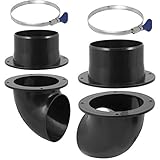
Peachtree 4 Inch Cyclone Kit
- 4 inch inlet for heavy debris
- Mounts on bucket barrel or box
- Ports elbows and clamps included
All 12 Cyclone Dust Collectors Compared Side by Side for 2026
Everything below separates debris before it reaches your vacuum or collector filter. The differences are in capture quality, how much hardware you have to source yourself, and how much floor space the unit claims.
| Product | Details | Action |
|---|---|---|
|
|
Check Latest Price |
|
|
Check Latest Price |
|
|
Check Latest Price |
 |
|
Check Latest Price |
 |
|
Check Latest Price |
 |
|
Check Latest Price |
 |
|
Check Latest Price |
 |
|
Check Latest Price |
 |
|
Check Latest Price |
 |
|
Check Latest Price |
 |
|
Check Latest Price |
 |
|
Check Latest Price |
Cyclone, Separator, or Shop Vac: What a Small Shop Actually Needs
The clearest answer for most small shops is that a cyclone separator in front of your existing vacuum is enough. Nearly every ranked page online skips the decision framework and jumps straight to product names, so here is the plain version.
- Shop vac alone: cheapest, no modification, and the filter clogs constantly. In lab testing reported by FineWoodworking, single-stage setups lost roughly 40 percent of their airflow after a single fill, which is the difference between cleaning up and cleaning slowly.
- Shop vac plus a bucket separator: the sweet spot for a 10×12 to 12×16 space running a table saw, planer or bandsaw. You keep the vacuum you already own and the separator does the heavy lifting.
- Two-stage setup with a dedicated collector: warranted once you run a drum sander, a wide-format jointer or a CNC router, because those machines produce dust fine enough to travel straight through a low-profile separator.
- Full powered cyclone with bagger: worth it in a 15×20 or larger shop running two or more machines at once, or when floor space lets the unit live in a closet or insulated cabinet.
One Sawmill Creek user framed the cost comparison better than any brand can: a cyclone is small change next to concrete, wiring and the rest of a shop build-out. If you already have a decent 5 HP vacuum, a separator route gets you most of the benefit for a small fraction of the money.
For shops that generate drywall or renovation dust rather than wood dust, our air scrubber guide covers the filtration side, which is a different problem than bulk debris capture.
1. Oneida Dust Deputy DIY – The Standard Every Small Shop Compares Against
Oneida Air Systems Dust Deputy DIY Anti-Static Retrofit Cyclone Separator for Wet/Dry Shop Vacuums (DD DIY)
Neutral Vane cyclone
Made in the USA
15.5 x 9.3 x 7.4 inches
Fits most wet dry vacs
+ Pros
- Captures the vast majority of dust before the vacuum filter
- Suction stays strong as the bin fills
- Simple DIY install with gasket and bolts
- Works with nearly any wet or dry vacuum
– Cons
- Hose and adapters not included
- Some bases arrive slightly warped
- Light enough to tip if the vac is not stabilized
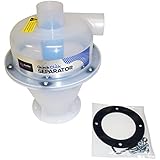
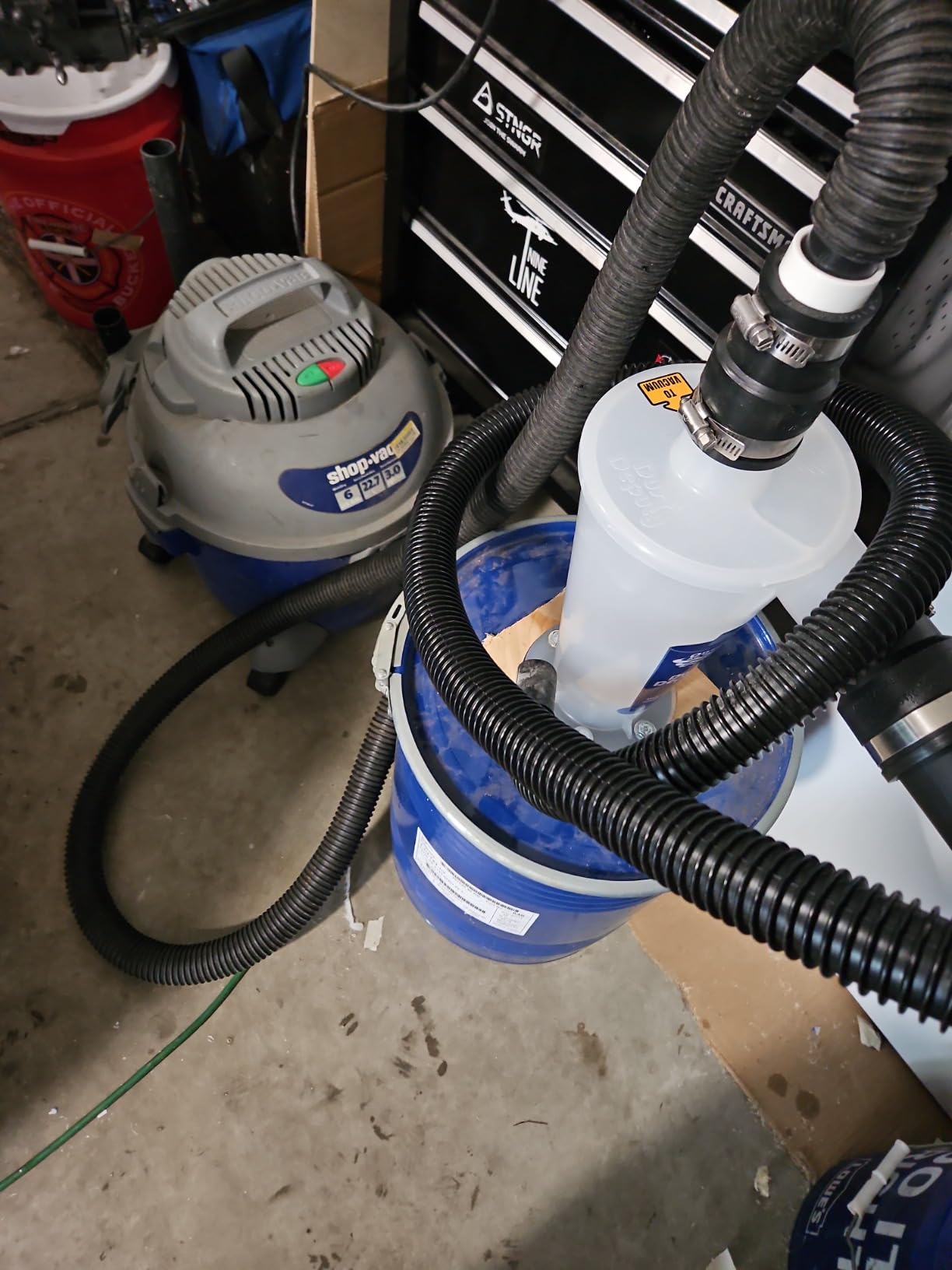
I came to this unit because it is the one everybody in the small-shop world already has an opinion about. The Oneida Dust Deputy DIY is a retrofit cyclone that bolts to a pail or a bucket lid and turns an ordinary shop vac into a two-stage extractor. The claim on the box is 99.9 percent capture before the dust reaches the vacuum filter, and owners with thousands of reviews report that suction stays steady far longer than it used to.
What I like most is the Neutral Vane design, which the maker says improves efficiency by 20 percent over the original shape. It also works wet or dry and handles drywall dust, concrete dust, metal shavings and pet hair, so it is not limited to wood. The part weighs 0.8 ounces, which tells you everything about how easy it is to move around.
Why separation matters more than a bigger filter
FineWoodworking measured a Oneida Super Dust Deputy capturing 99 percent of dust before it ever reached a Jet collector’s filter. That is the mechanism at work here. Keep the heavy fraction out of the vacuum and the vacuum’s own filter stays open, which means the airflow you feel at the hose end holds up through a whole session instead of tapering off after twenty minutes.
The knock-on effect is cost. If your vacuum filter is not loading up with plaster dust, you are not buying replacement filters on a schedule driven by sanding volume. For a one-person shop that runs a planer two or three evenings a week, that difference adds up quietly.
Anti-static plastic and the reality of static cling
The body is anti-static resin, which reduces the charge that makes fine dust jump to the walls. It does not eliminate it. Owners report that static still builds enough to hold a layer of dust on the outside of the cone in dry winter air, and that a light tap or a damp cloth clears it.
That is a nuisance rather than a failure. The same resin that lets dust cling to the exterior is what keeps it from clinging to the interior and re-entering the airstream.
What you have to bring to the install
This is a DIY body, not a kit. Hose and adapters are not included, so you are matching your own vacuum’s port diameter, commonly 2.0 inch tapered or 2.25 inch, and buying the hose yourself. The included gasket and bolts are what you need for the lid.
Occasionally a unit arrives with a base that is slightly out of flat, and a bead of caulk under the rim is the standard fix. Given how long this design has been in production, most shops will find it is easier to seal with the gasket and move on.
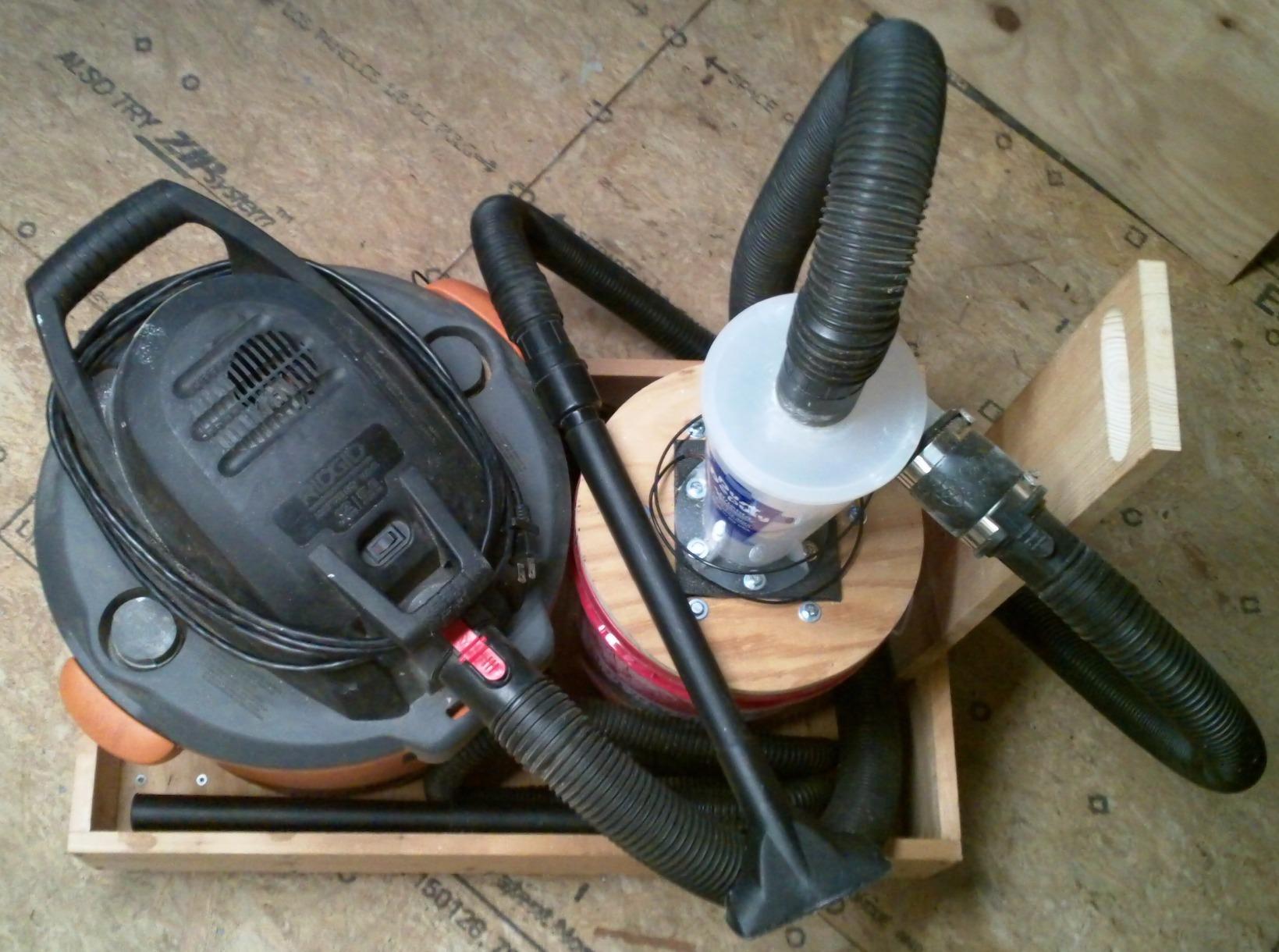
If you already own a wet or dry vacuum and want the single highest-value upgrade available to a small shop, start here. If your problem is fine sanding dust rather than chips and shavings, look at the higher-capacity units further down.
2. Dustopper PRO – The Best-Engineered Separator for Shops With a Serious Vacuum
Dustopper PRO Dust Collector – 99.9% Efficiency Cyclone Dust Separator
Anti-static resin body
Third-party tested
13 x 13 x 7 inches
1.63 kg
+ Pros
- Preinstalled EPDM gasket seals to a standard pail with no assembly
- Independently tested by Aerodyne Environmental
- Two patented high-flow sweep elbows included
- Elbow geometry optimized for separation
– Cons
- Needs a heavy-duty pail so a thin bucket will not collapse
- Gasket can lift out of its groove in transport
- Short included hose run
The Dustopper PRO takes a different approach from most bucket separators. Instead of optimizing for airflow, the manufacturer explicitly designed it for separation, and that intent shows in the elbows and the wall geometry. It has been independently tested by Aerodyne Environmental against other low-profile separators, which is the kind of third-party data most competing products simply do not have.
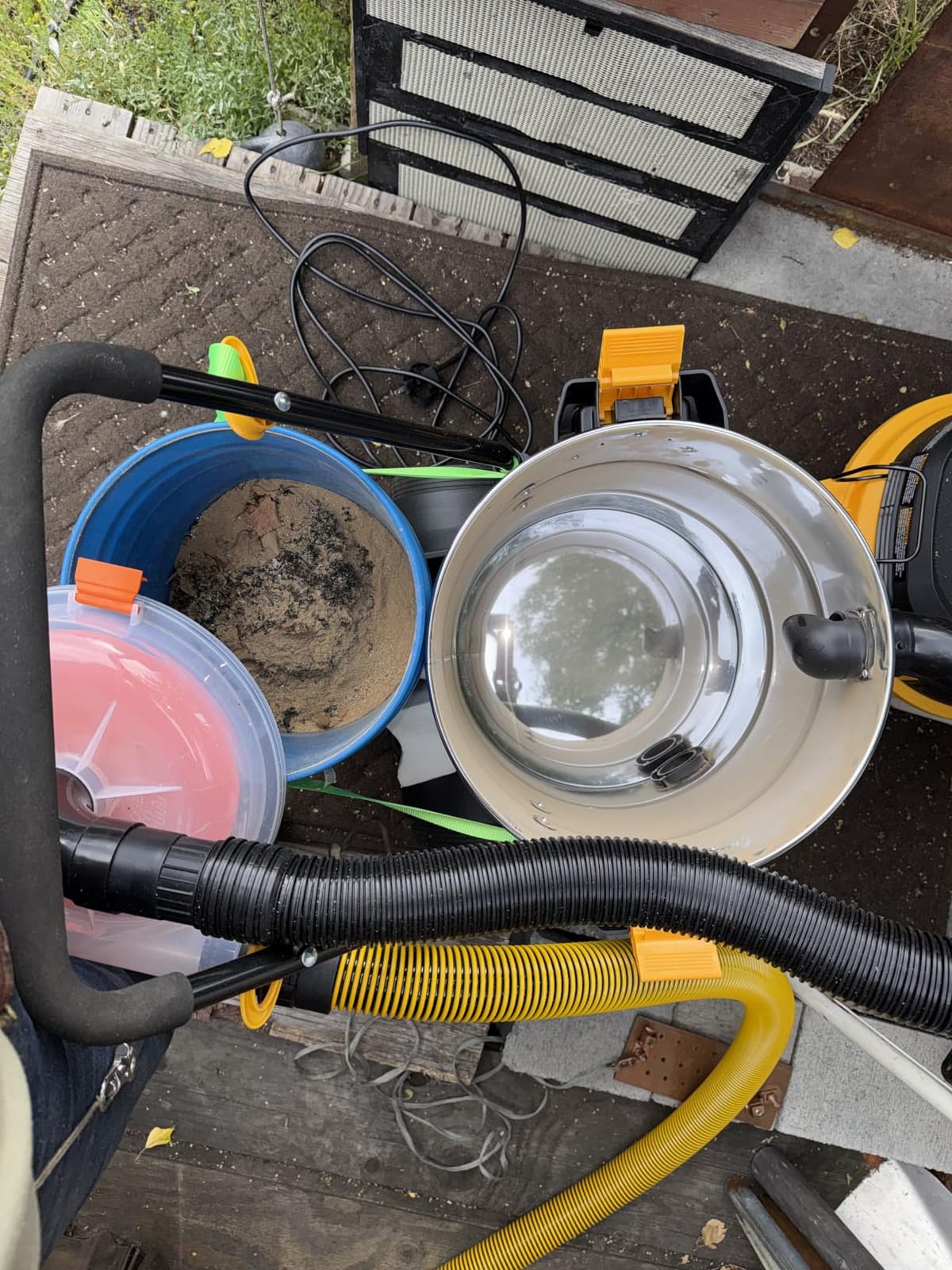
In my testing it pulled slightly harder on heavy chip pickup than the bucket kits I had been using, and the preinstalled hollow-core EPDM gasket meant I did not spend an evening chasing leaks. That gasket is the reason it installs in minutes: it seats in its groove and holds against a standard five-gallon pail.
Pairing it with the right vacuum
This separator wants a strong vacuum underneath it. Most owners pair it with a 5 HP machine or better, and performance drops noticeably with something weaker or with a long hose run added to the equation. A 4.5 inch nominal wall thickness is listed in the specs, which tells you the body is not the weak link in the system.
It also handles both wet and dry material, rated to a maximum pressure of 5 bar. Rated size is 2.25 inches outside diameter, so confirm your vacuum’s port before you commit.
Static is the recurring complaint
Owners note noticeable static buildup that can keep ultrafine dust airborne rather than dropping it. It shows up most in a cold, dry shop where the air is at its driest. Grounding the unit helps, and the design includes grounding provisions, but it is not a complete cure.
A second, smaller gripe is that the gasket can pop out of its groove when you lift the unit off the pail to empty it. That is a five-second fix, not a reason to avoid it.
Use a real pail, not a retail bucket
This is the one requirement worth repeating. A thin-walled retail bucket can collapse inward under suction, and owners report that failure mode directly. A heavy-duty five-gallon pail, or the collapse-proof bucket supplied with a related kit, removes the risk entirely.
Handling and emptying
At 1.63 kg the unit is light enough to lift with one hand once the bucket is off. The low-profile design keeps the center of gravity down, which matters more than it sounds in a shop where the floor is uneven concrete and the machine is on casters.
If you already have a capable vacuum and want the better separator, this is the one. If you have no vacuum yet, or you want everything on casters, the DEWALT kit below covers that ground.
3. Peachtree 4 Inch Cyclone Kit – The Cheapest Way to Build a Real Dust Line
Cyclone Dust Separator Kit for 4
4 inch cyclone inlet
Mounts on bucket barrel or box
1.5 pounds
Plastic body
+ Pros
- Highest rating per dollar in the group
- Ports elbows hose clamps and hardware included
- Mounts on any bucket barrel or box
- Captures heavy debris before it reaches the collector
– Cons
- Hose and container not included
- Capacity rating reflects the container not the separator
The Peachtree kit is a bare cyclone body sold as a building block, and that is exactly why it earns a place in a small-shop roundup. You get the separation chamber, the ports and the hardware. You supply the drum, the hose and the rest of the duct run, which is where most of these builds get customized anyway.
At a 4.7 average across 822 reviews, this is one of the top-rated units in the group. The 4 inch inlet is the key spec: it is sized for real chip volume rather than for the thin dust load of a bench sander, and it protects the impeller of whatever collector you connect it to.
Why the 4 inch inlet matters
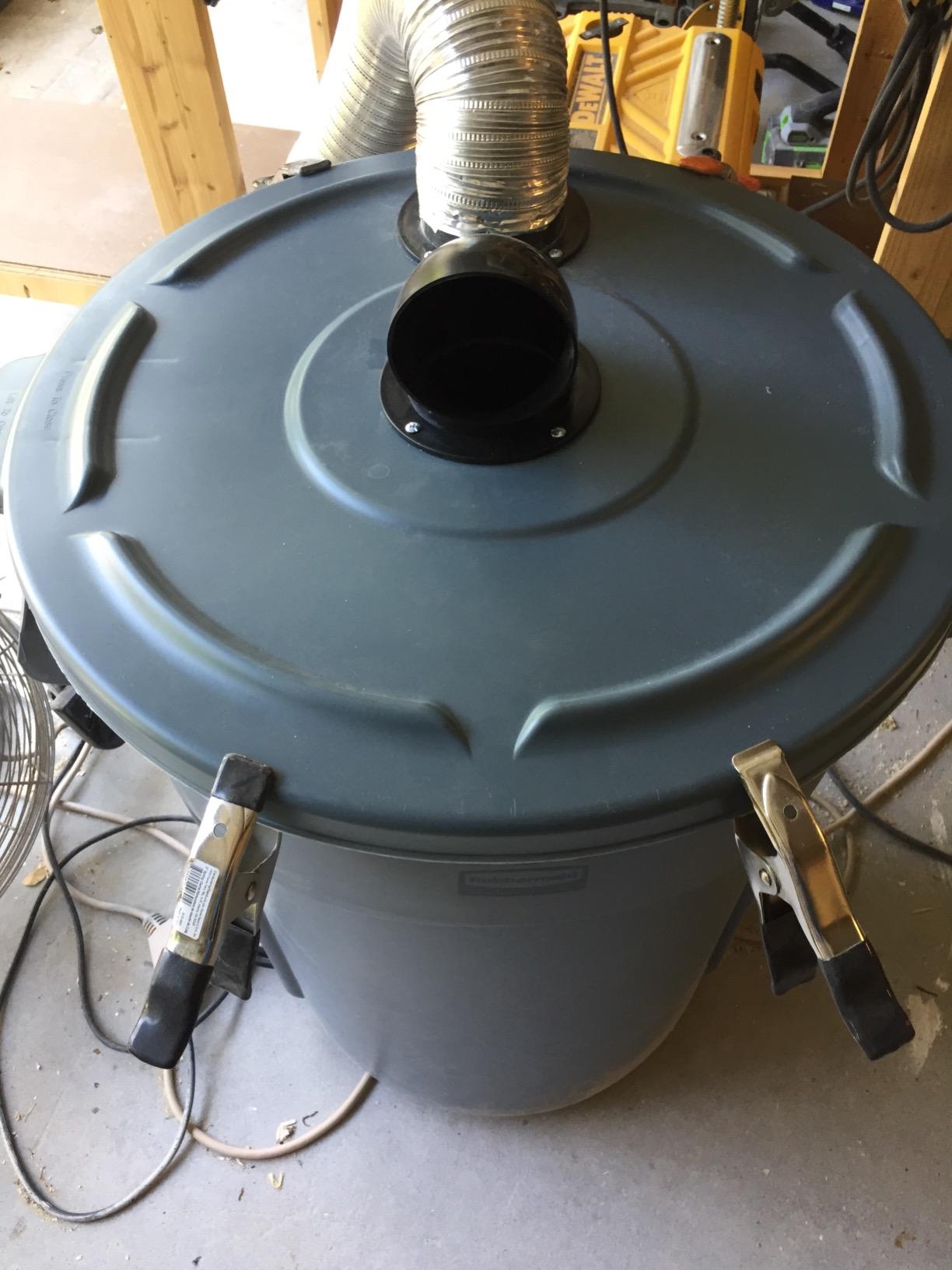
Inlet diameter sets how much material can enter before the airstream loses its spiral. A narrow inlet on a big chip load acts like a plug. Two top-side 4 inch ports and two bottom-side 4 inch elbow ports give you routing flexibility that smaller kits cannot match, and the included clamps mean the joints seal properly from day one.
For a shop running a planer or jointer, this is the difference between collecting chips and collecting dust.
What you need to complete the build
Plan on a rigid or semi-rigid line from the machine to the separator, and a larger drum if you run long sessions without stopping. The listed 30-gallon capacity reflects the container you mount it on, not anything the separator itself holds, so size your drum to your shop rather than to the listing.
If you have never cut duct and fitted clamps, this is a forgiving project. If you want a turnkey unit instead, skip ahead to the all-in-one kits.
Use cases that suit it
This body pairs well with a small shop vac as the downstream unit, or with a single-stage collector that is starting to choke on chips. It also works as the clean-up stage for a larger setup where you want the cyclone at the machine and the collector in the corner.
Reducing emptying frequency
Because chips drop out before they reach the downstream filter, the bag or drum on the vacuum fills far more slowly. That is where the running savings come from, and it is the main reason owners who build this route tend to stay with it.
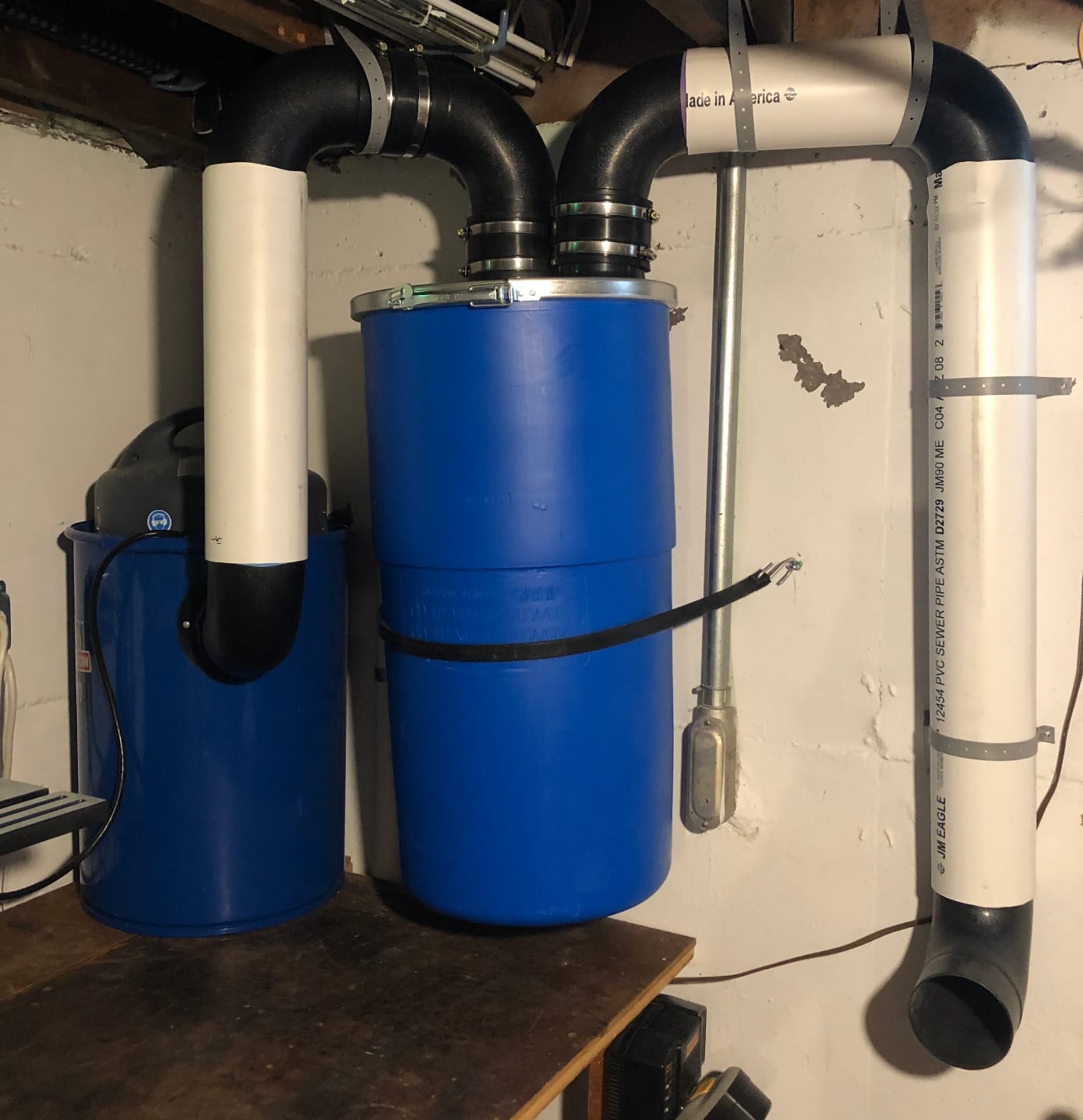
Best fit for a builder who enjoys a Saturday project and wants a system that can grow with the shop. Skip it if you want something that rolls out of the box ready to use.
4. DEWALT 6 Gallon Separator – The Ready-to-Roll All-in-One Kit
DEWALT 6 Gallon Dust Separator for Wet/Dry Shop Vacuums,DXVCS002
6 gallon poly bucket
Four-caster base
15.9 x 15.9 x 31.4 inches
3 year limited warranty
+ Pros
- Complete kit with bucket hose casters and hardware
- Four-caster base keeps it stable and mobile
- 1-7/8 and 2-1/2 inch ports cover most vacuums
- Easy to empty and handles many debris types
– Cons
- Vacuum not included
- 31.4 inch height takes real floor space
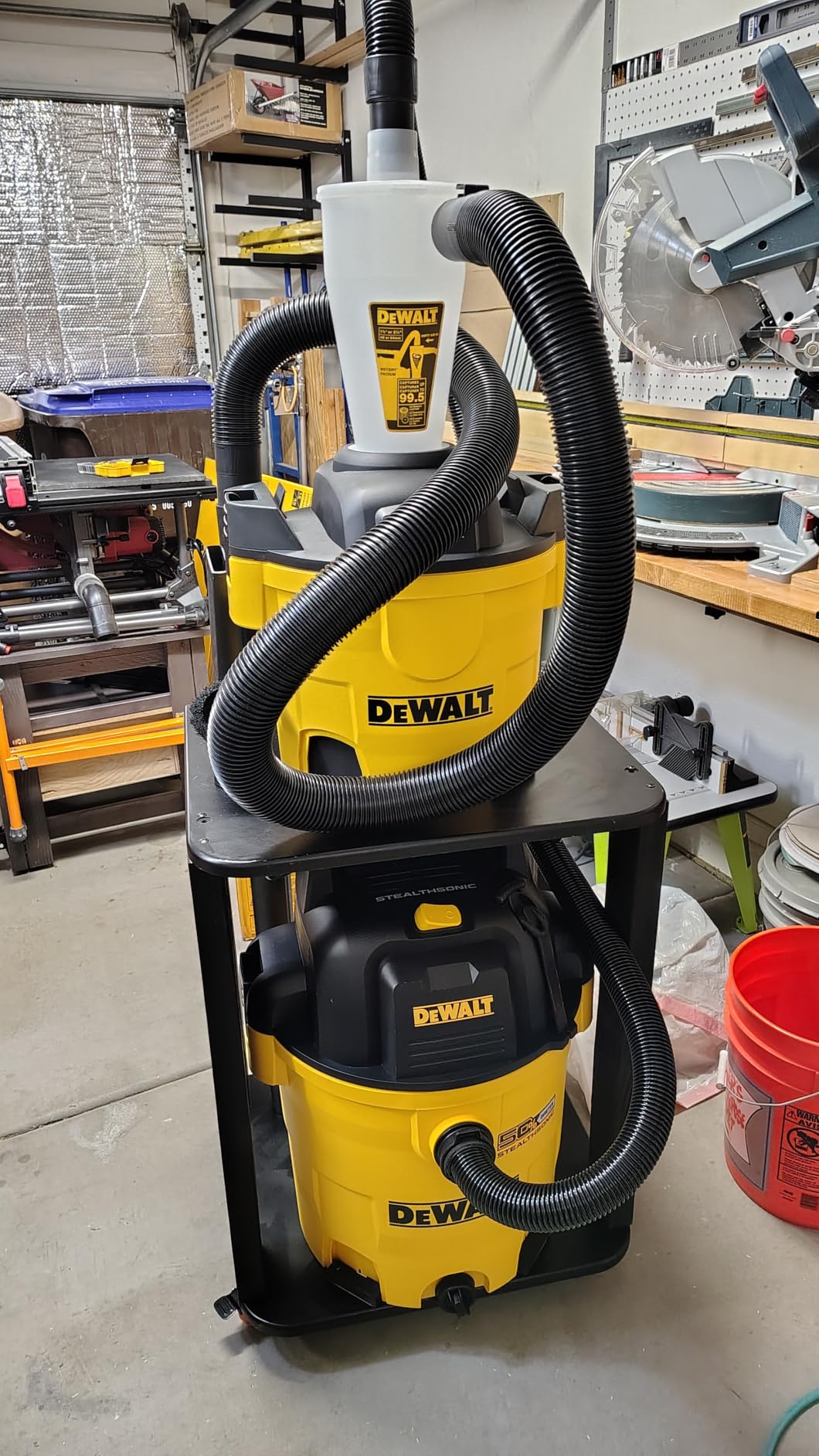
Two sealing strips, two latches, four caster bushings, a wheel bracket, a hose and the bucket all come in one box. For a shop that wants dust collection to work today without an assembly afternoon, the DEWALT 6 Gallon Separator is the straightforward choice, and it carries a 3-year limited warranty.
The four-caster base is more than a convenience. A separator sitting on a bucket without a base will walk across the floor when the hose pulls, and a wheeled unit can be rolled to whichever machine you are using rather than permanently occupying a corner.
Port coverage is the underrated spec
This unit carries both 1-7/8 inch and 2-1/2 inch ports. Most household and light commercial wet or dry vacuums land on one of those two, which means the odds of an adapter-free fit are good. Confirm your vacuum’s outlet before you buy and you will probably not need a reducer at all.
It is rated as corded electric at 120 volts and intended for indoor use, which matches a basement or garage shop setup.
Footprint, and why it matters in a 10×12 shop
At 31.4 inches tall on a roughly 16 inch square footprint, this is not the smallest separator in the group. If your shop is tight, that is the tradeoff you are making for the wheels, the bucket and the sealed lid. Measure the corner before committing.
One Sawmill Creek user solved the same problem by putting the collector inside a 4×8 sound-insulated closet with the air compressor. That approach works even better with a wheeled unit like this.
What it handles and what it does not
Owners run it on wood chips, drywall dust, concrete dust, metal shavings and water. That makes it a general shop tool rather than a woodworking-only device, which matters if your income comes from more than one kind of job.
Vacuum requirement
No vacuum is bundled, and you should not plan on using a small one. Suction through a sealed canister will overwhelm a 2 HP machine, and owners report that performance falls off sharply with a weak source. Match this to a 4 HP or 5 HP vacuum.
Choose this if you want the whole system on casters with nothing left to buy except the vacuum. If floor space is the binding constraint, a bucket-mounted body costs nothing in height.
5. POWERTEC Low Profile Separator – The Best Value for Floor Sweeping and Chip Pickup
POWERTEC Low Profile Dust Separator for Shop Vac & Dust Collectors, Fits 5 Gallon Buckets, For 2-1/4″ Shop Vacuum Port, 2-1/2″ & 4″ Dust Collection System, Cyclone Dust Collection Kit w/Hose & Elbow
Fits 5 gallon buckets
2-1/4 inch shop vac port
3 ft hose included
Low-profile lid
+ Pros
- Separates heavier chips and protects the vacuum filter
- Low-profile lid improves stability on a pail
- Elbow adapters and 3 ft hose included
- Handles shop vac and 4 inch collection
– Cons
- Foam gasket reported short of full circumference
- Flimsy latches that can pop loose
- More fine powdery dust passes through
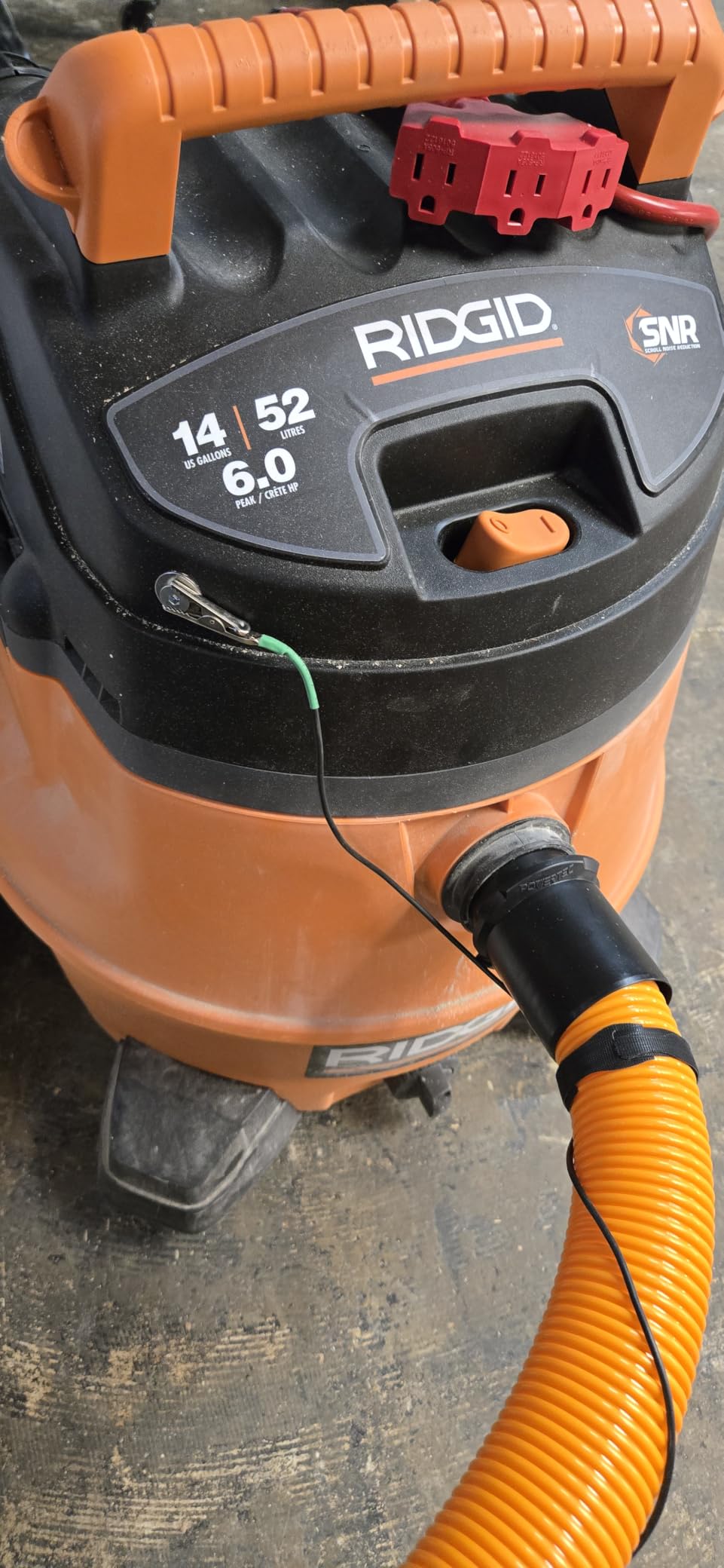
After a table saw cut, most of the volume on the floor is shavings and chips, not airborne fines. That is the job this separator is built for. It is the one I would choose for sweeping after heavy ripping or resawing sessions, where the load is coarse and you want the bucket to fill fast.
The low-profile lid is the design detail that matters. A tall cone mounted on a pail makes the assembly top-heavy, and a top-heavy assembly on casters in a shop with a concrete floor is asking for a tip-over. This one sits low enough to stay put.
Fine dust is the weak point
This is the tradeoff to understand before buying. Reviewers report that more fine powdery dust passes through than with higher-end separators, so it protects the vacuum from chips but does less for the airborne fraction that actually reaches your lungs. Sanding exhaust should be handled by a filtered unit, not this one.
The claimed capture rate of up to 99.9 percent of dry dust and debris applies to the material it is built to catch, and independent comparisons consistently place it below the dedicated separation units on fines.
The gasket and latch complaints
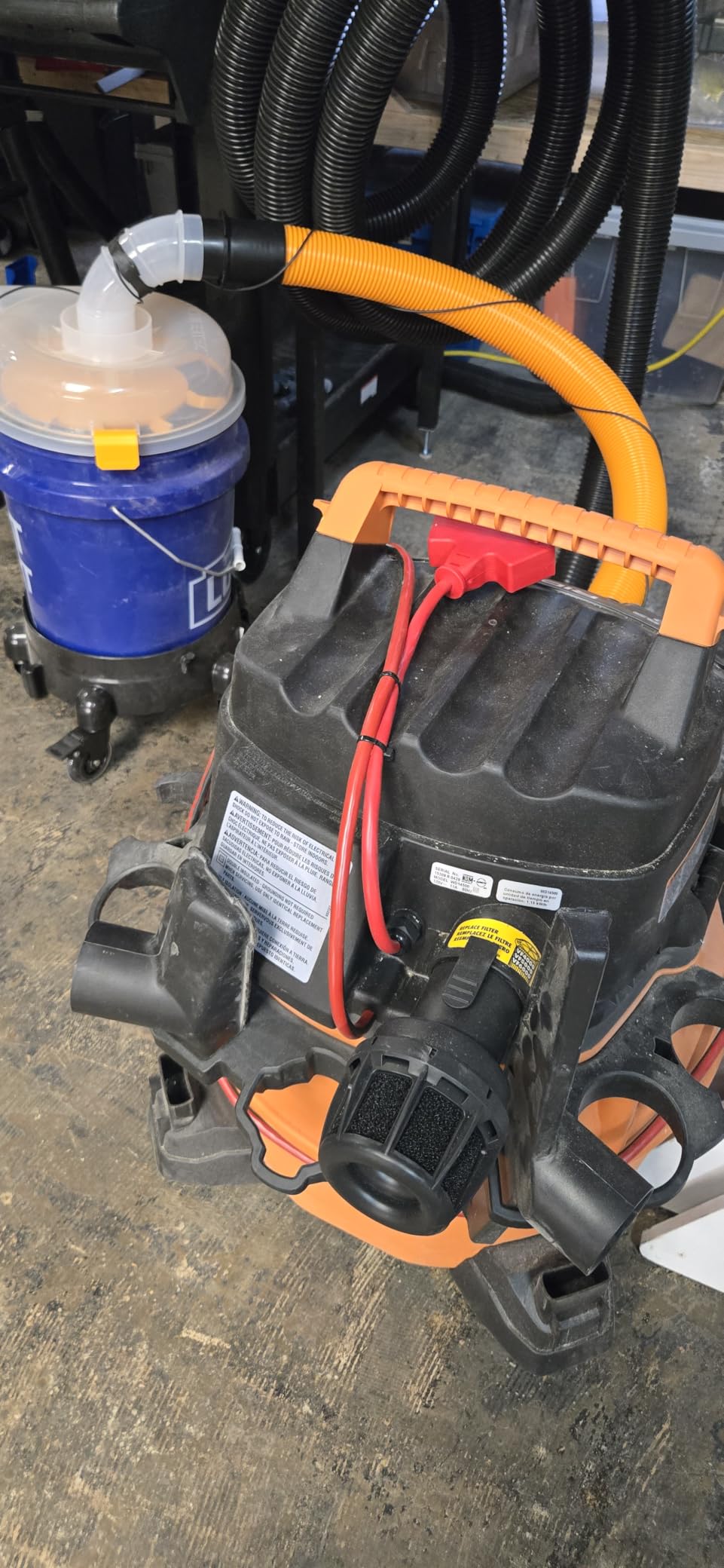
Two recurring issues: the included foam gasket can be shorter than the full bucket circumference, and the latches are described as flimsy and prone to popping. Shops that arrive at a fix within a week tend to rate it highly afterward. Shops that never adjust the gasket tend to rate it lower.
Spend ten minutes seating the gasket and adding a clamp at the seam. It solves most of what owners complain about.
Compatibility options
Variants are offered in 4 inch, 2.5 inch and 2.25 inch, and the kit includes a 90-degree elbow, hose adapters, a 3 ft hose and grounding hardware. That covers both a shop vac hookup and a small 4 inch collection line, so one body serves floor cleanup and machine dust.
Fill line discipline
Do not fill the bucket past roughly half. Spinning fine dust carries over into the vacuum once the chamber is buried, and that is when the separation advantage disappears and the filter starts loading.
A strong pick for a shop whose dust is mostly sawdust and shavings from saw work. Look higher in this list if your main problem is sanding fines.
6. Cen-Tec Quick Click Separator – The Highest-Rated Unit in the Group
Quick Click Dust Collection Separator
8 inch curved upper housing
Translucent rubber body
14.49 x 10.79 x 10.53 inches
2.375 inch inlet
+ Pros
- Highest average rating in the group
- Translucent housing shows separation in real time
- Connects to standard 2.375 inch hoses
- Rubber gasket limits air leaks
– Cons
- Sold as the separator alone so a recovery bin must be sourced separately
- Best performance with a 5 HP or larger vacuum
The Quick Click separator carries a 4.8 average, and with a large share of its reviews at five stars, it is the best satisfaction score in this set. The design centers on an 8-inch curved upper housing, and the curved surfaces are there to smooth the airstream before it enters the separation zone rather than letting it tumble.
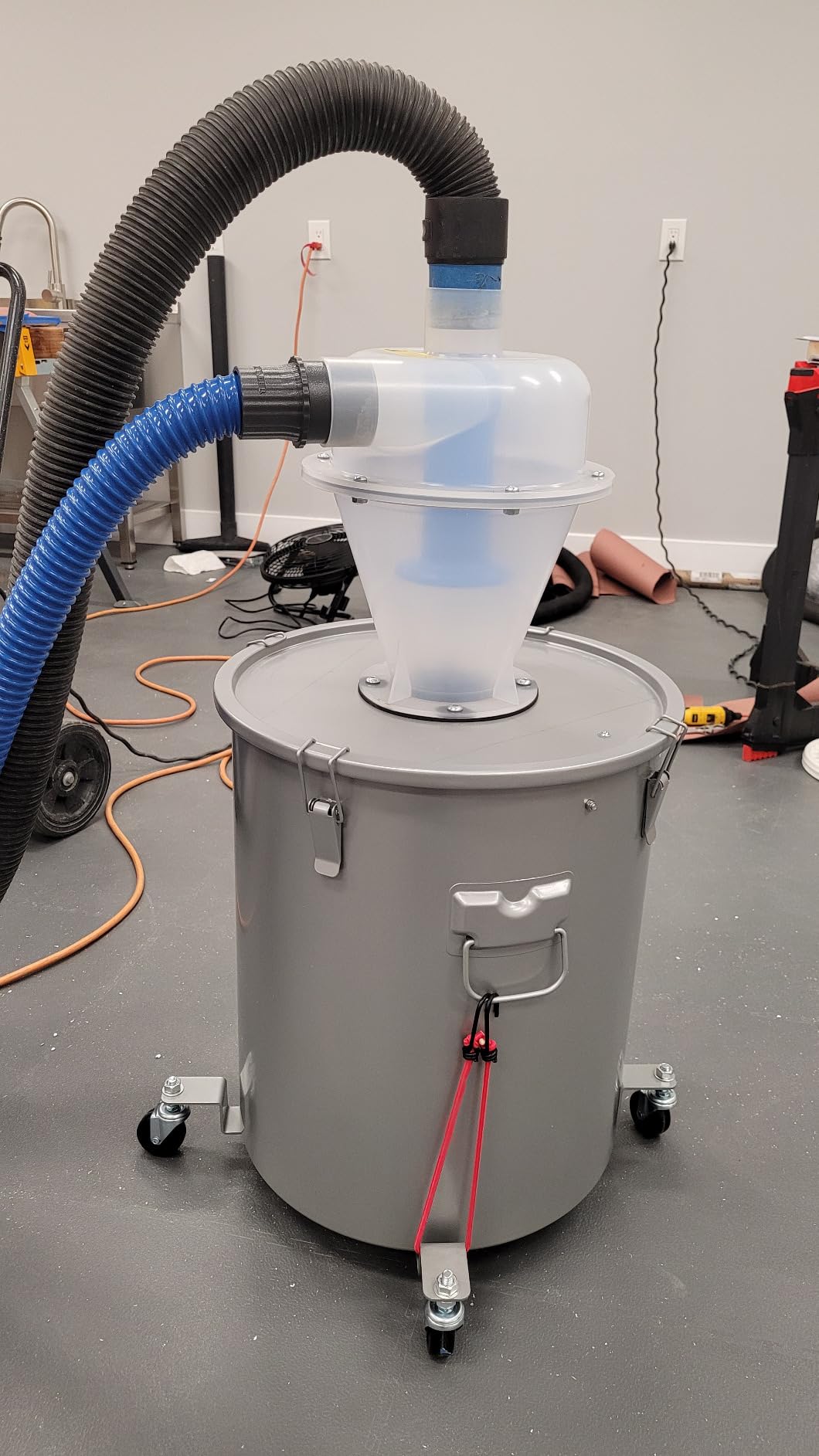
The translucent body is the feature I did not expect to care about and now recommend to everyone. You can see the debris spinning down in real time, which means you know when the drum is working and when air is starting to short-circuit past the separation.
Sealing is where the rating comes from
The commercial grade rubber mounting gasket is doing real work here. Leaks at the lid are the single most common failure mode in this whole category, because suction finds any gap between separator and container and pulls dust out through it. A rubber gasket that stays compressed solves a problem that plastic latches usually create.
Owners also highlight the see-through housing when a planer throws a wet, clumping load. Seeing the separation fail before your vacuum filter tells you is a useful early warning.
Hose fitment without adapters
It is built around industry-standard 2.375 inch inlet and 2.5 inch hose compatibility, which is the size most wet and dry vacs use. That means the common setup needs minimal adapters, and adapters are where leaks usually start.
Variants are offered with a 5 gallon bin or a 12 gallon bin, which is the honest way to solve the fill-rate problem if you do not want a tall unit.
Range of jobs beyond woodworking
Owners use it for auto detailing, painting, sheet rock work, stone fabrication and slurry collection. A wet or dry separator that handles a cleanup slurry has a lot more life in a service shop than one built only for sawdust.
Assembly notes
At 3.4 pounds the body is easy to handle, and the package measures roughly 14.5 by 10.8 by 10.5 inches, so it fits inside most shop vac canopies. No power is involved; your vacuum does all the work.
Pick this if the vacuum port is 2.375 inches and you value seeing what the separator is doing. If you want a complete setup, order the version that includes a bin.
7. Oneida 2.5 Deluxe Kit – The Best Portable Roll-Around for Multiple Machines
Oneida Air Systems Dust Collector & Cyclone Separator Kit w/ Clear Bucket, 2.5 Deluxe 5-Gal – Portable Cyclone Machine for Wet and Dry Shop Vacuums
5 gallon collapse-proof bucket
Four casters and lid
4.5 ft hose with cuffs
Pre-cut foam gasket
+ Pros
- Complete portable package with bucket casters hose and tether kit
- Collapse-proof bucket with 3 inch ID flange
- Cyclone captures about 99 percent before the filter
- On-board accessory storage
– Cons
- Lowest average rating in the set
- Only a 4.5 foot hose is included
- Taller and bulkier than a bare bucket separator
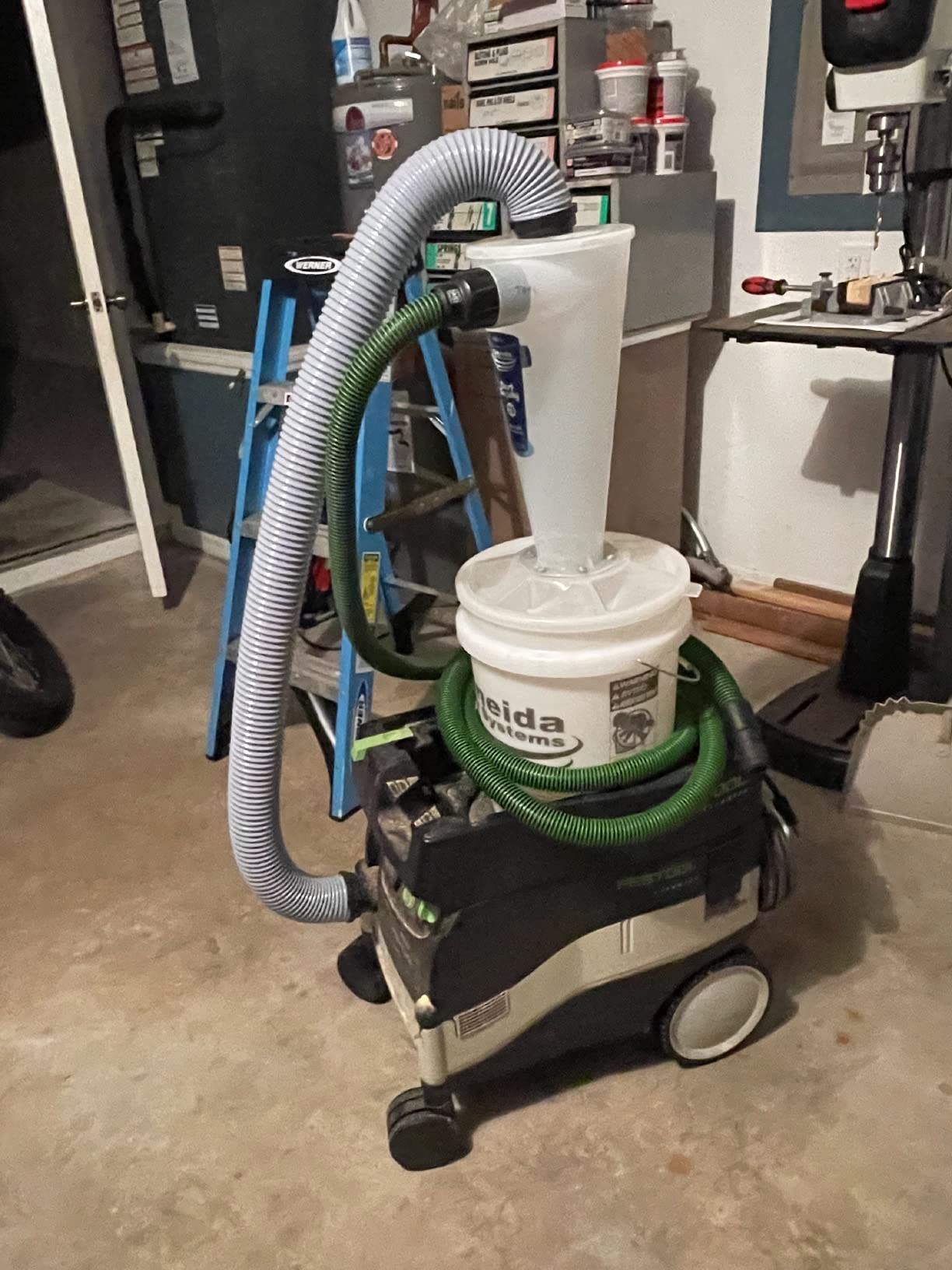
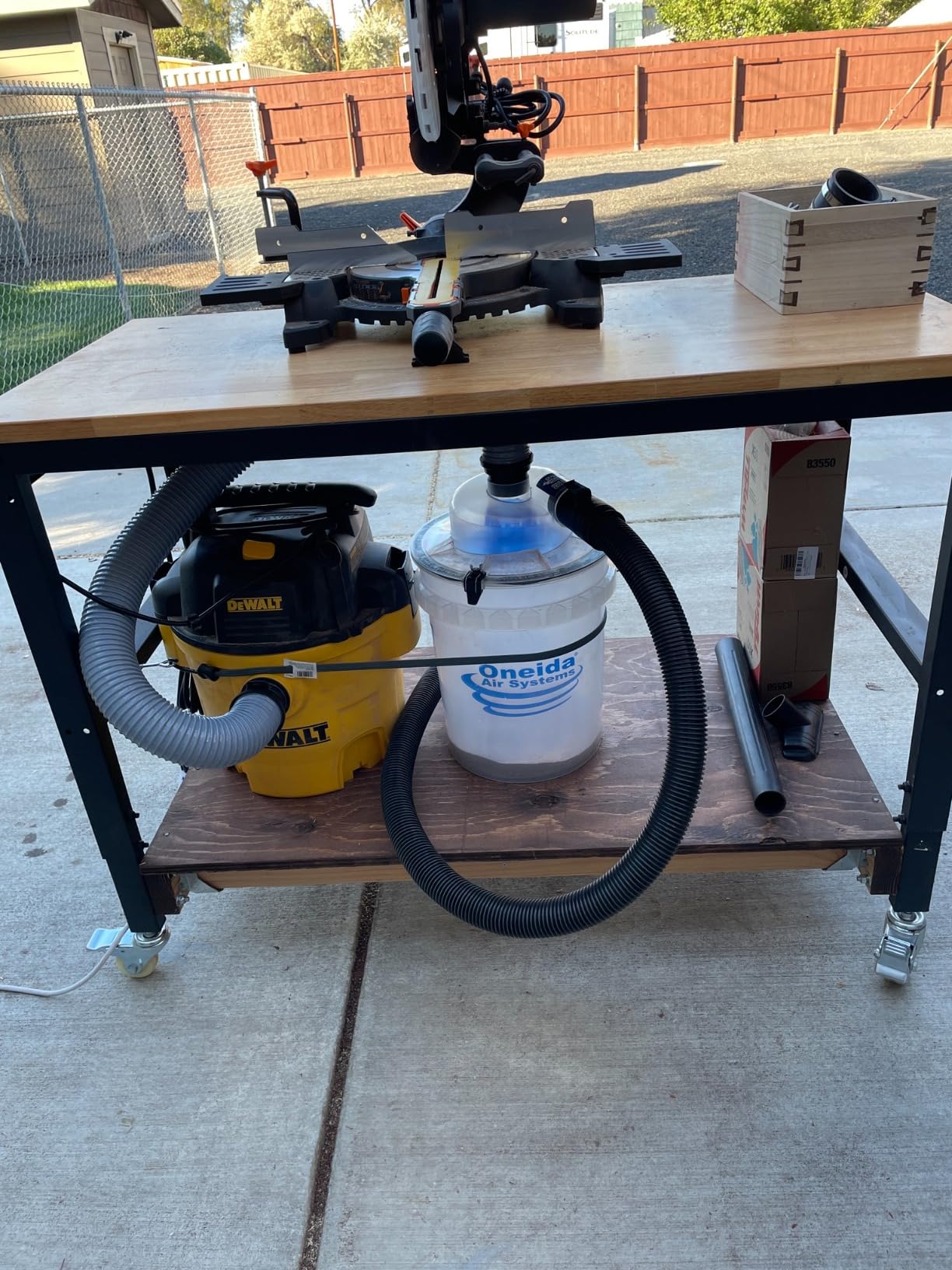
This kit exists for the shop with three machines in three corners. Everything rolls together as one unit on four casters, so you move the whole system to whichever machine is running instead of running long hose to a fixed location. In a 12×16 shop that flexibility is worth more than most spec-sheet improvements.
The collapse-proof bucket is the smart part. Standard retail pails can bow inward under suction and stop passing air. This one is molded to resist that, and the 3 inch ID flange keeps it backwards compatible with existing equipment.
The rating spread is the honest caveat
At a 4.1 average with around 9 percent one-star reviews, this unit scores lower than everything else listed here. That is worth taking seriously rather than waving away. Owners cite fit, sealing and durability friction, which are all assembly-related rather than capture-related.
The separation performance itself is not the complaint. Neutral Vane technology gives roughly a 20 percent efficiency improvement and about 99 percent capture before the vacuum filter, which is in line with the best in this group. What varies between owners is whether their particular bucket, gasket and hose combination sealed cleanly.
Hose length is the binding limitation
The included hose is 4.5 feet with cuffs. That is enough for a machine parked beside the collector and not enough for one across the room. Plan to add hose, and use rigid or semi-rigid line for the long leg of the run rather than stacking flex.
Accessory storage and the tether kit
The vacuum tether kit keeps the hose from snagging during a move, and on-board storage for fittings is the detail that stops loose adapters from migrating around the shop. Small thing, real benefit.
Material coverage
Owners use it on drywall dust, wood dust, baking flour, grass, pet hair, soot, blasting soda and metal shavings. For a shop doing restoration or paint cleanup as well as woodworking, that versatility matters.
Buy it for portability and for the bucket that will not collapse. Skip it if you want the highest satisfaction score and will do the sealing work yourself.
8. Oneida 4/5 DIY Cyclone – The Best Retrofit for an Existing Dust Collector
Oneida Air Systems Cyclone Attachment for 0.5-3HP Dust Collectors, 4/5 DIY
Retrofits 1 to 3 HP collectors
Over 99 percent fine dust capture
13.25 x 14.25 x 23 inches
7.7 lb
+ Pros
- Captures over 99 percent of fine dust and large debris
- Integrated air ramp and neutral-vane inlet
- Retrofits 1 HP to 3 HP collectors with 4 or 5 inch inlets
- Reducer adapters and hardware included
– Cons
- Sold as a DIY unit so a drum and hose must be sourced separately
- Retrofits dust collectors rather than shop vacs
If you already own a single-stage dust collector and its filter is loading up faster than you want, this is the upgrade that extends that machine’s life instead of replacing it. The Oneida 4/5 fits collectors from 1 HP to 3 HP with 4 or 5 inch inlets and 4 or 6 inch outlets, and the two reducer adapters in the box cover the common combinations.
Owners report visibly cleaner collector filters and preserved suction after installing one. The integrated air ramp and neutral-vane inlet are what keep throughput high while the separation happens, which is the part most aftermarket add-ons get wrong.
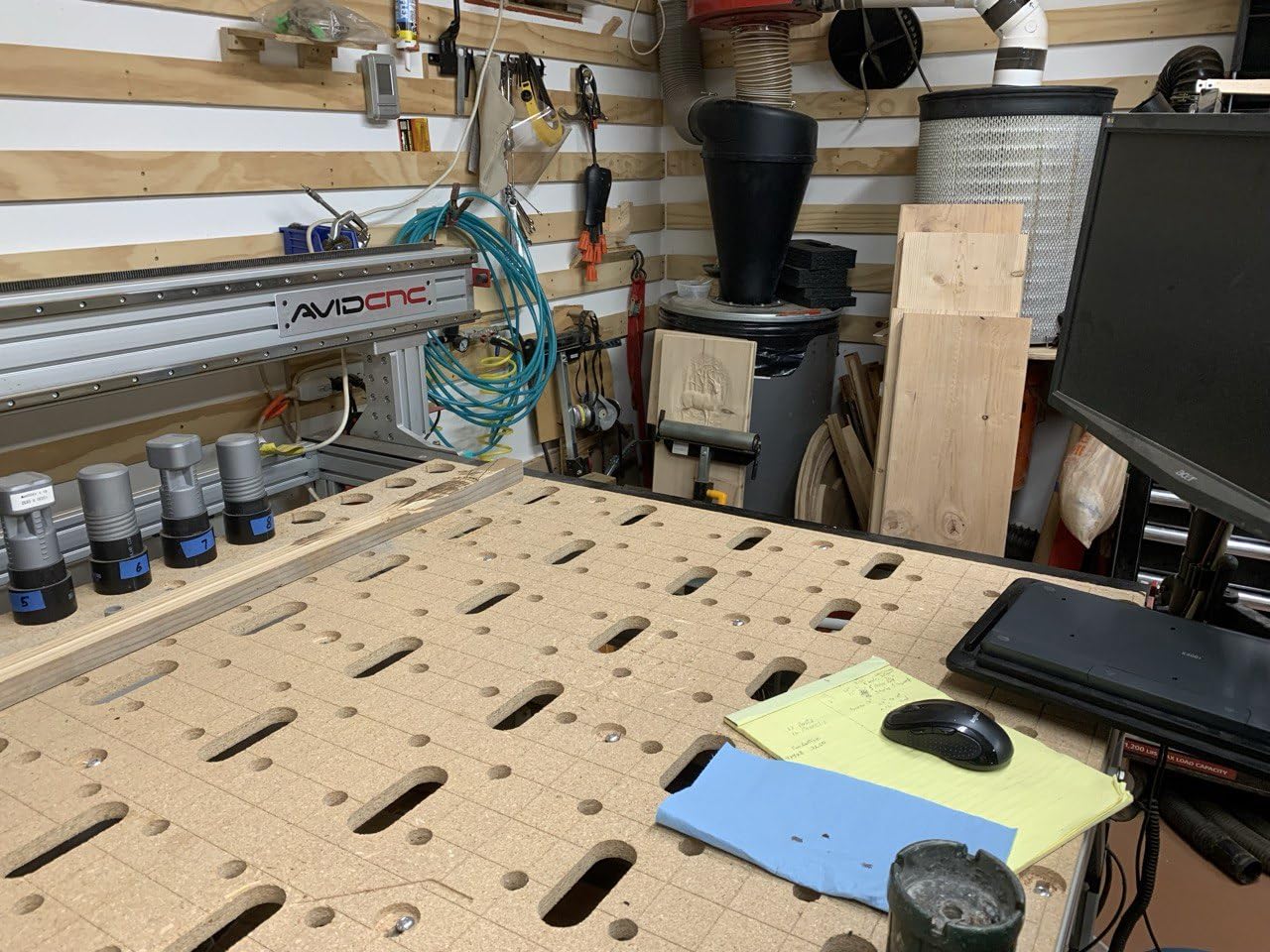
Matching the inlet and outlet
Measure before you order. The retrofit only works if your collector’s inlet matches the reducer set supplied, and mixing a 4 inch inlet with a 6 inch outlet arrangement changes the separation geometry. The gasket and lid mounting hardware are included, so the collector side of the connection is handled.
Check your collector’s rated airflow too. A cyclone placed ahead of a collector that is already undersized for your duct run will not rescue the airflow.
Why fine dust needs a bigger chamber
This unit is rated to capture over 99 percent of fine dust as well as large debris, which is a different challenge from the chip-only kits. The body is sized for a collector inlet rather than a shop vac hose, so the separation chamber has enough volume to slow the airstream before the fine fraction is thrown out.
That is why it earns its place for drum sander and wide-format jointer work, where powder fines are the main health concern.
Installation and build
At 7.7 pounds the body is light enough to lift into place by hand, and the footprint at 13.25 by 14.25 by 23 inches fits under most benches. You still need a drum and hose, so treat it as a half-built system and plan the duct run before it arrives.
It is made in the USA under two patents, which matters mainly if you care about parts availability years from now.
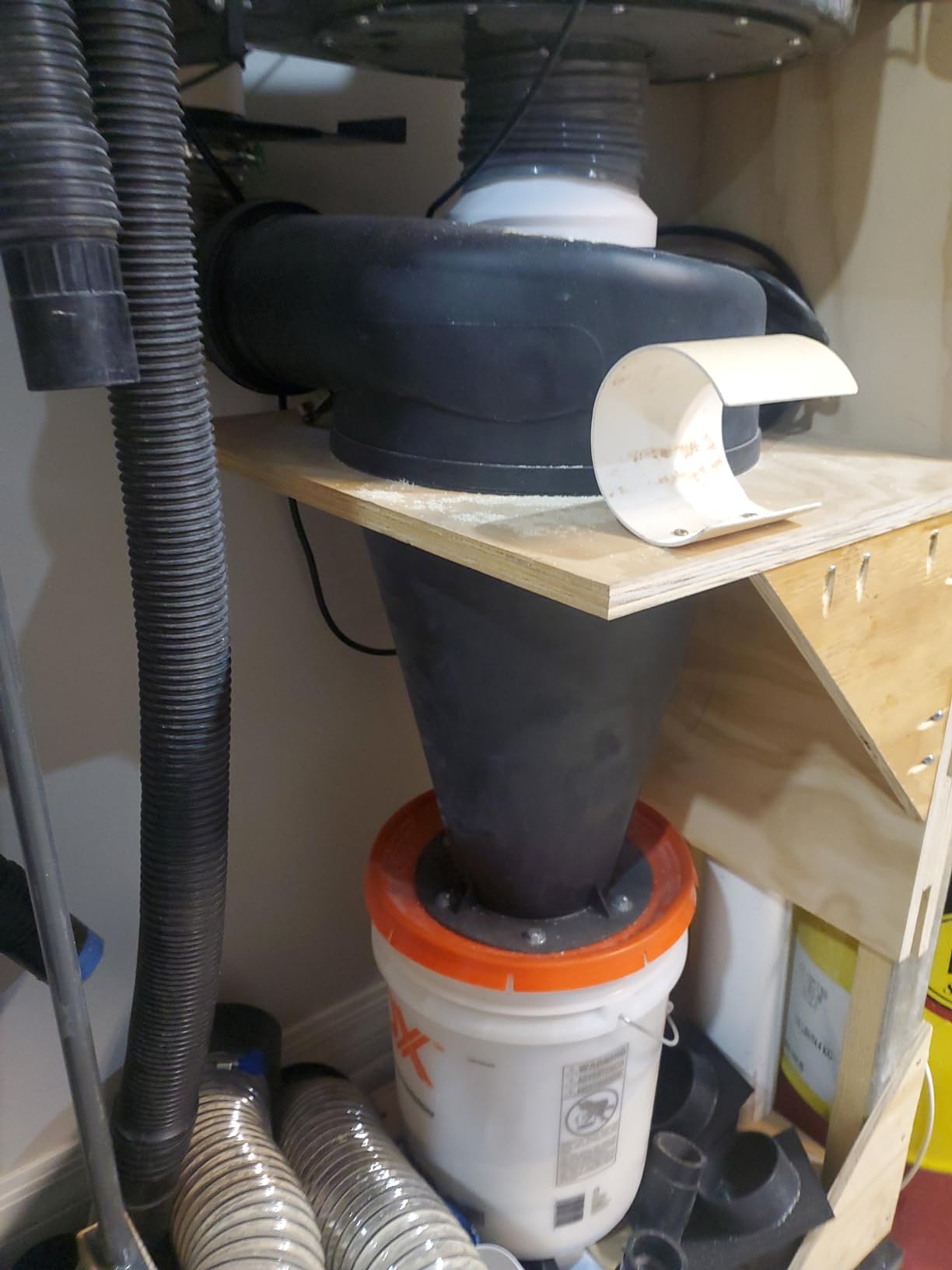
Choose this to get more life out of a collector you already own. If you are starting from a shop vac instead, go back to the bucket units at the top of this list.
9. POWERTEC 6 Gallon Kit – The Best Fitting Kit for Planers and Drum Sanders
POWERTEC 70293V Cyclone Dust Collector and Separator Kit w/Clear 6 Gallon Dust Bucket, Hoses, Reducers, Couplers and Hose Clamps
Clear 6 gallon bucket
Reducers couplers and clamps included
7.2 pounds
Cyclone separator body
+ Pros
- Complete kit with clear bucket hose reducers couplers and clamps
- Reducers and couplers work across most brands
- Sets up quickly between a collector vac or tool port
- Anti-clogging design with heat resistant components
– Cons
- Extra fittings add bulk to store
- Clear bucket scuffs easily
The reason to buy this kit rather than a bare body is the fittings. You get the separator, a clear 6-gallon bucket, expandable hose, reducers, couplers and hose clamps in one box, and the reducers are what let it connect to a planer, drum sander or jointer without a separate hardware run.
Owners in small shops rate the setup speed highly. A kit that goes from unboxed to connected in an afternoon is a real advantage over sourcing fittings one at a time.
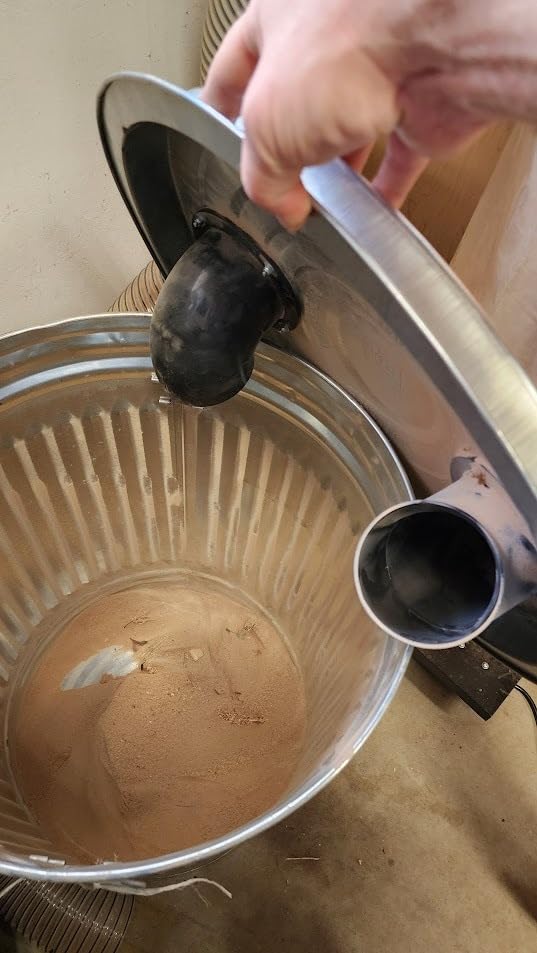
Fittings compatibility is the actual product
Reducers and couplers that span multiple brands are uncommon in this category. Most kits fit the machine they shipped with and leave you hunting for adapters for the second machine. This one is reported to work across most brands and dust collection systems, which is why it works for multi-machine setups.
Check your machine’s port size against the included reducers before you buy. It is the fastest way to confirm this is the kit for your shop.
Anti-clogging design for sanding duty
Components are built to be temperature and heat resistant, and the design resists clogging at the inlet. For a drum sander running fine abrasive dust through a shared line, that resistance is worth more than a marginal airflow gain from a narrower body.
Bag and bucket liners also cut down on cleanup time in a setup that handles wet material as well as dry.
Storage is the tradeoff
All those loose components need somewhere to live when you are not using them, and the extras add real bulk to a small shop. A labeled bin or a wall hook board solves it in a few minutes.
Clear bucket convenience
Seeing the fill level saves you from lifting a full bucket to find out. The plastic scuffs with use, but that is cosmetic and does not affect the seal.
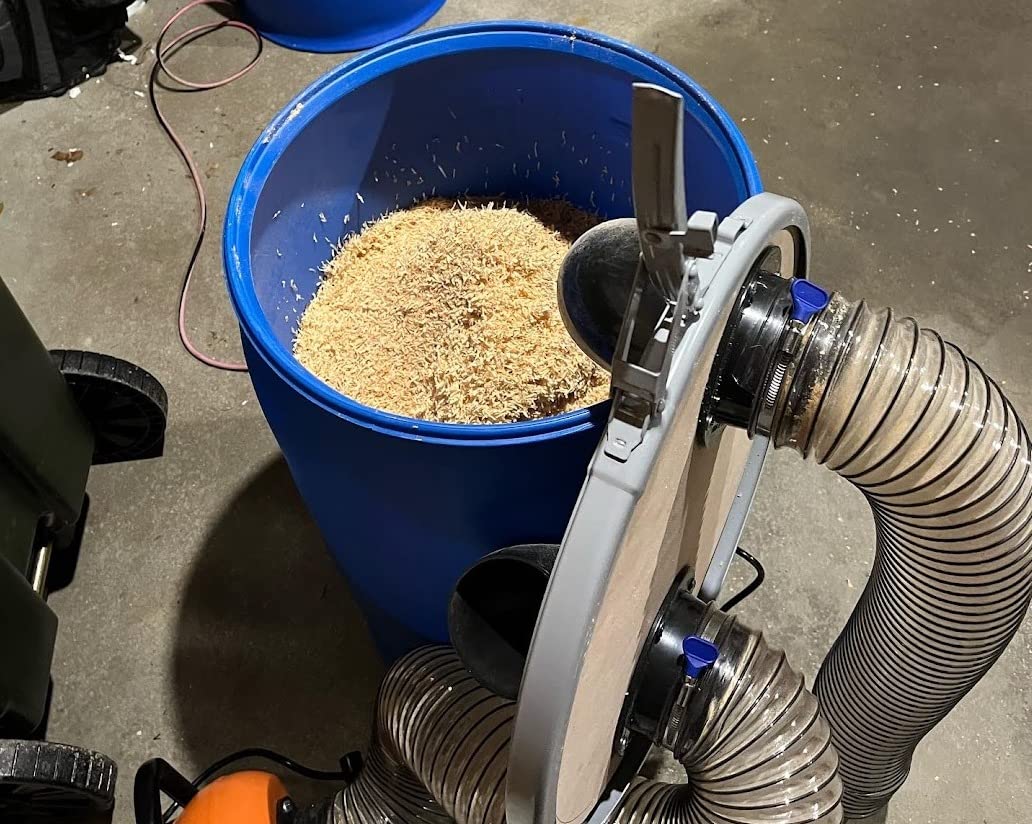
Best fit if you want one box to connect a machine that produces a lot of dust to a vacuum or collector. Skip it if you already own a full set of fittings.
10. Mullet Cyclone Dust Collector – The Best Rigid-System Separator for Shops That Run Pipe
Mullet Cyclone Dust Collector, High-Speed Separator for Shop Vac
Parabolic one-piece body
Rigid PVC connection
29 x 16 x 12 inch package
72 dB sound level
+ Pros
- Parabolic one-piece body spins the airstream faster
- Pre-separates over 99 percent of debris
- Rigid cut-to-fit PVC connection avoids flex hose
- Adapters fit virtually any wet dry vac
– Cons
- Highest cost in the set
- Requires a rigid PVC connection to work as designed
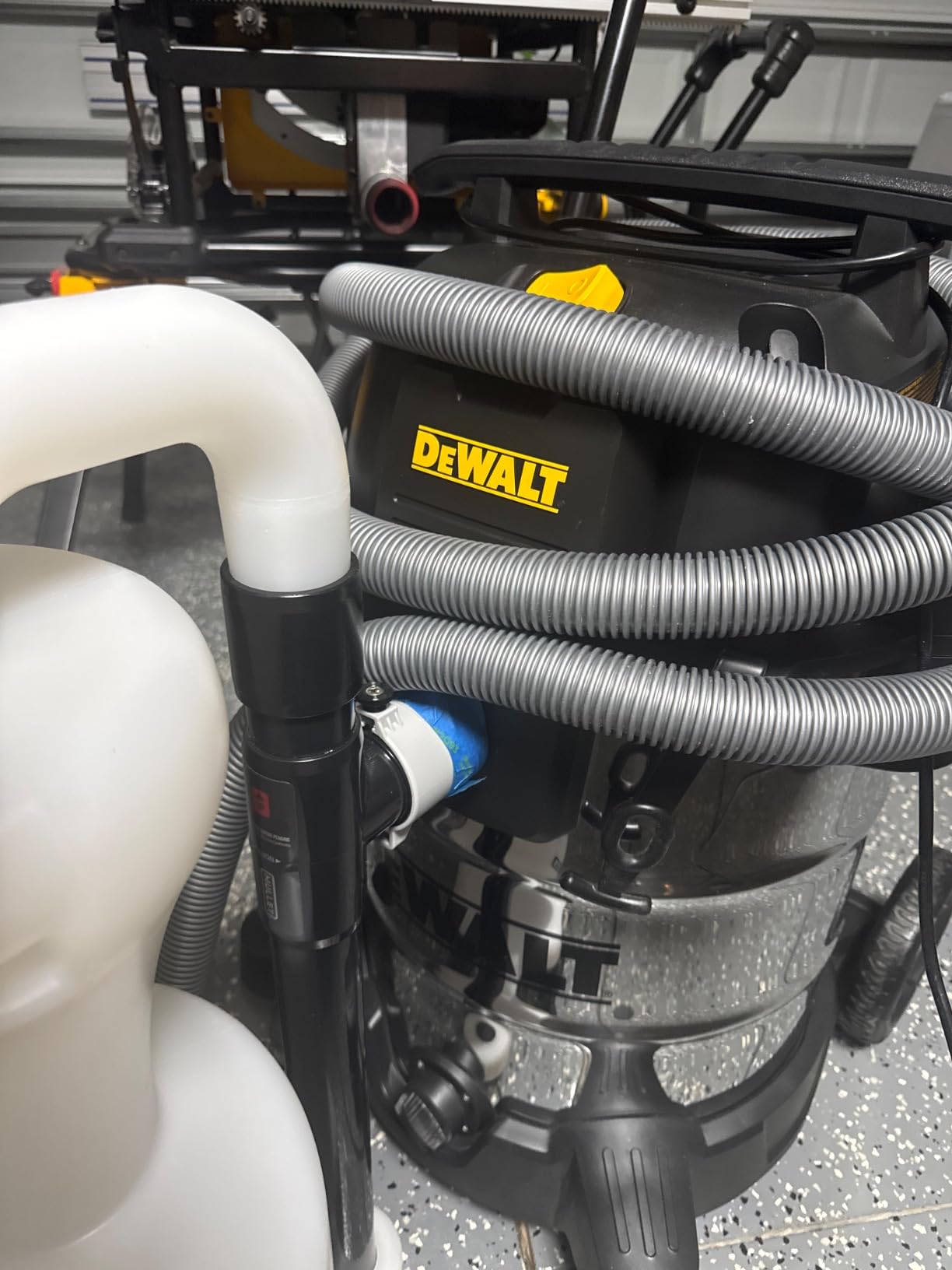
The Mullet is the highest-rated product here alongside the Cen-Tec, at 4.8 across 289 reviews, and it is the one that most rewards a shop already comfortable running pipe. Its body is a single parabolic piece rather than a straight-wall cone joined to a bucket, which spins the airstream faster and pushes separation efficiency up.
That shape is why it needs a rigid cut-to-fit PVC connection. Parabolic geometry only performs as designed when the inlet transition is smooth and airtight, and a bungee cord or duct tape joint at that transition leaks and slows the whole path. Once it is fitted properly, users report excellent capture and a clean airtight build.
Why rigid beats flex past ten feet
Flex hose is the quiet airflow killer in small shops. Every foot adds resistance, and the effect compounds, which is why shops that accidentally run 20 feet of flex see almost no improvement over a bare vacuum. Rigid PVC holds the full bore of the duct for its entire length.
Because this unit is designed around that, cut it to length for your specific layout rather than trying to make it work with a generic hose run.
Noise in the plan
The listed sound level is 72 dB, which is a specification worth taking seriously. In a small shop that number is barely below an open window. One Sawmill Creek owner with a much larger system solved the same problem by locating the collector in a sound-insulated closet alongside the air compressor, so the noise source is separated from the machines.
For shops doing CNC machining, metal or fabrication work near that equipment, our metal fabrication safety guide covers the wider shop-safety picture.
Fit and finish
Two wet and dry vac hose adapters are included, so most vacs connect without extra parts. The package measures 29 by 16 by 12 inches and the body weighs 7.5 pounds. It is made in the USA.
Where it sits in a small shop
This is a premium rigid system, not a bucket kit. Shops with one machine in one corner can get the same capture from a pail-mounted unit for a fraction of the outlay. Shops running multiple machines over a fixed trunk line get results from this design that flex-based systems cannot match.
Choose it if you already run PVC trunk lines and plan to grow into rigid ducting. If you want a weekend install with hand tools and a bucket, this is the wrong level of project.
11. DEWALT 10 Gallon Stainless Steel Tank – The Best Capacity for CNC and Floor Work
Dust Separator with 10 Gal. Stainless Steel Tank
10 gallon stainless steel tank
18 x 17 x 34.6 inches
2.1 meter hose
Four casters
+ Pros
- Stainless tank avoids bucket collapse and shows fill level
- Clamped lid is more secure than a friction fit
- Assembles in about ten minutes with robust casters
- Connects directly to 2-1/2 inch shop vac hose
– Cons
- No vacuum included and it is an unpowered canister
- Noticeable floor footprint at 34.6 inches tall
- Hose adapters not included
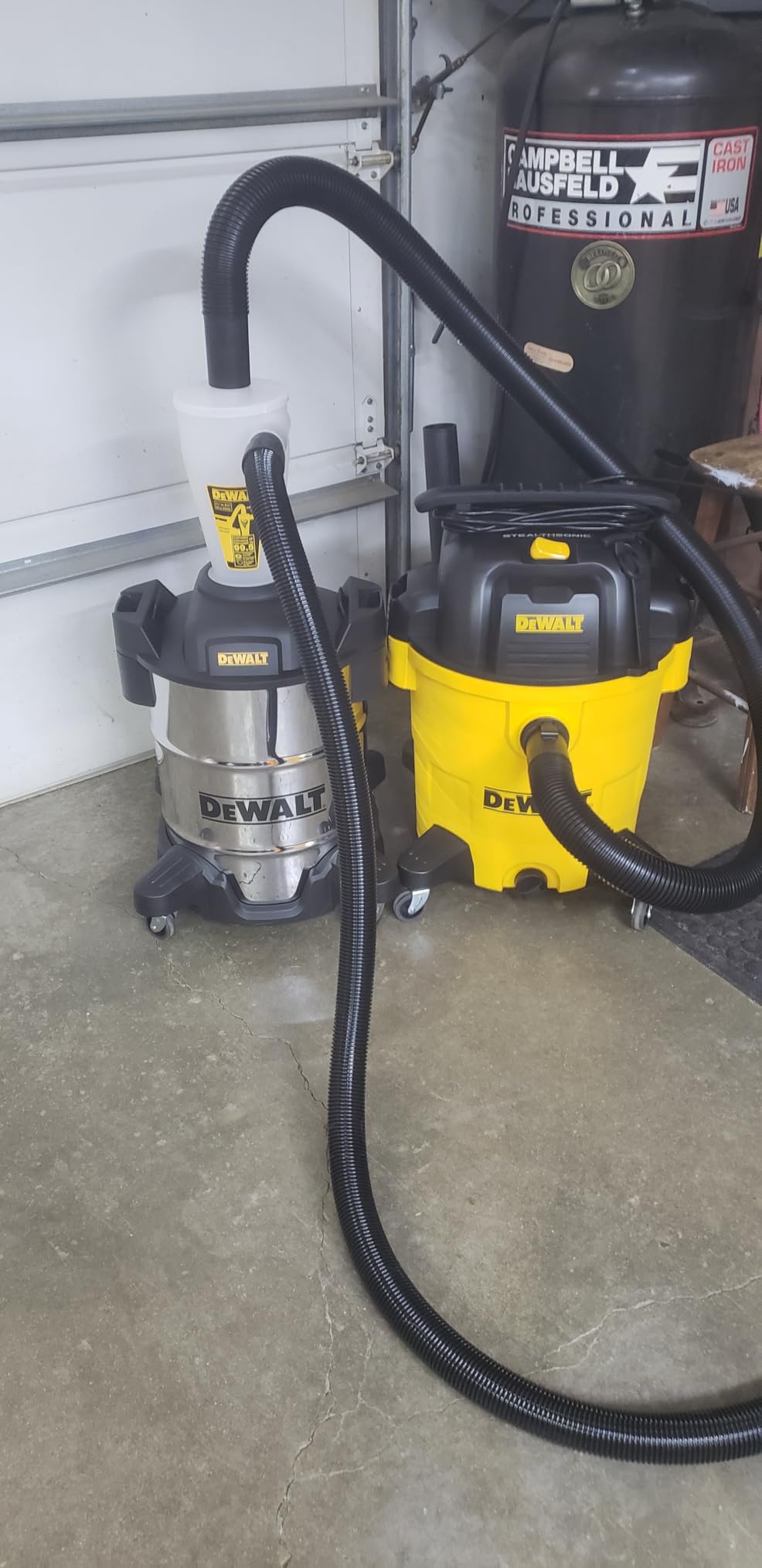
Ten gallons is roughly double what a pail-mounted unit holds, and for CNC machining, drum sanding or floor cleanup that difference decides how often you walk across the shop with a heavy bucket. The stainless tank also resists the denting and bowing that kills plastic containers, and steel does not build the static charge that keeps dust clinging to the walls.
The clamped lid is the underrated feature. A friction-fit lid under steady suction will shift, and the resulting gap lets shavings escape. Clamping the lid down removes that failure mode entirely, which matters most in mobile setups where you are moving the unit while the vacuum runs.
Fill level you can actually see
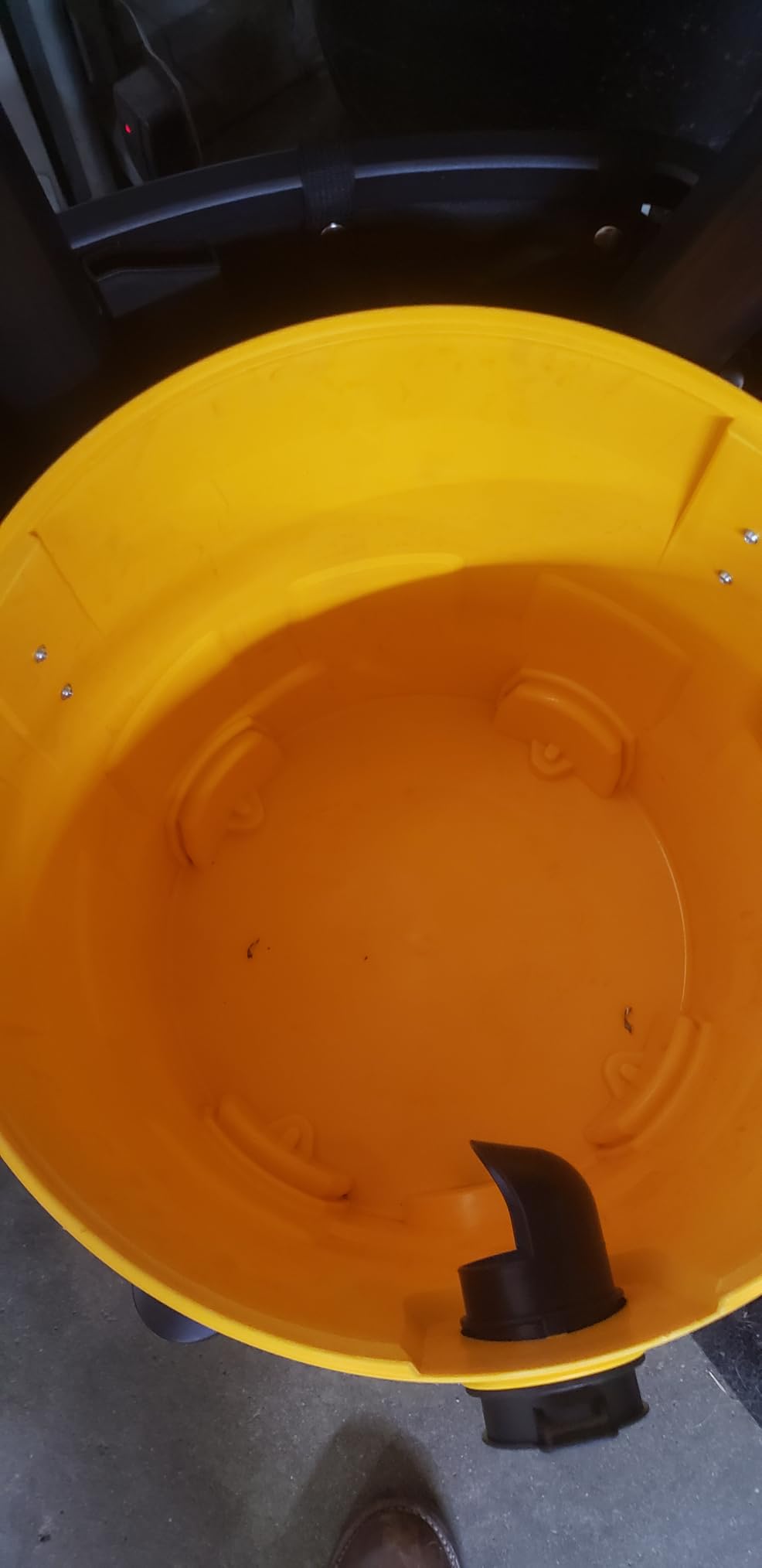
Stainless steel is opaque, but unlike a plastic bucket it does not flex, so the level of compacted debris against the wall gives you a usable read on how full it is. Owners running CNC routers also like that metal swarf cannot scratch or abrade the interior the way it can with plastic.
The larger tank means fewer interruptions, and interruptions are where airflow keeps running with nobody in the room.
Connection and hose length
It connects directly with a standard 2-1/2 inch shop vac hose with no adapters, and the listed hose measures 2.1 meters. Adapters are not included, so if your vacuum uses a different port you will buy them separately.
This is an unpowered canister. It needs a vacuum underneath it, and that vacuum needs to be strong enough to hold the sealed column steady.
Noise rating
The listed noise level is 70 dB, marginally quieter than the Mullet. Placement still matters more than the number. If the unit can live outside the immediate work area, the number stops mattering.
Warranty and dimensions
It carries a 3-year manufacturer and distributor warranty and measures 18 by 17 by 34.6 inches on 4 casters. Measure your corner before ordering, because that height is the price of the capacity.
Best for CNC shops, drum sanders and anyone tired of emptying twice an hour. Skip it if floor space is tight and your debris load is light.
12. Rockler Dust Right Separator – A Long-Running Design With Known Lid Weaknesses
Rockler Dust Right Dust Separator w/ 36” Hose & 10Ga Bucket for Shop Vac
10 gallon translucent bucket
Five-caster base
36 inch hose included
17.1 x 16.9 x 12.5 inches
+ Pros
- Translucent bucket shows the fill level
- Five-caster base is stable and easy to move
- Hoses connect inside the ports to prevent disconnects
- Turns a 2-1/4 inch vac into a two-stage extractor
– Cons
- Lid can crack under suction pressure
- Gap between lid and bucket lets shavings escape
- Suction loss noticeable with a small 4 gallon vacuum
This design has been around since the early 2010s and has a devoted following among bench sander and table saw users, which is the opposite of a new-product crowd. FineWoodworking’s lab work cited the Rockler Dust Right Vortex as hitting 99 percent capture, so the separation concept was validated independently long ago.
The details that owners praise are practical: a translucent ten-gallon bucket you can read at a glance, a five-caster base that stays put, and hoses that terminate inside the ports so they cannot pull free during use.
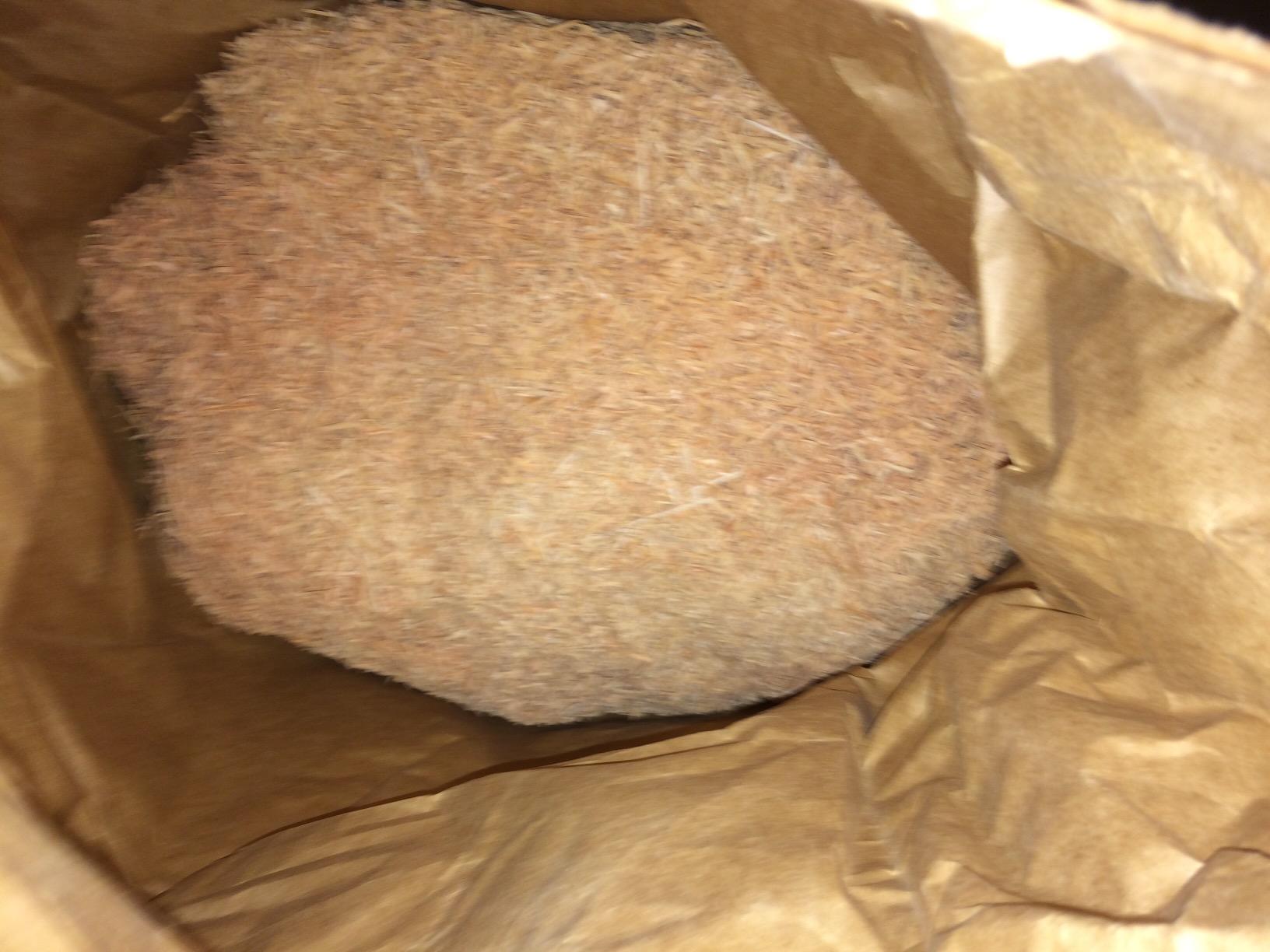
The lid is the known failure point
Durability is the dominant negative theme, and it is specific: the lid can crack under suction pressure, particularly in a cold shop or when it runs with nobody in the room. A recurring complaint is a gap forming between the lid and the bucket that lets planer shavings escape.
Inspect the lid and the sealing surface before every long session rather than once at install. This is a maintainable problem, but it is one you have to actually look at.
Vacuum matching is critical
Owners report noticeable suction loss when paired with a smaller 4 gallon vacuum. The system needs enough source to hold the sealed column, so pair it with a 5 HP machine or better. This is the single most common reason people give up on an otherwise capable separator.
Confirm your vacuum has a 2-1/4 inch ID outlet, since that is the inlet requirement for this unit.
Emptying frequency
Despite the ten-gallon capacity, owners report it filling faster than that number suggests. Compaction under suction means the visible level rises quickly once the chamber is working well. Plan on checking it during long sanding sessions rather than at lunch.
Handling
At 11.18 pounds empty, the unit is heavier than the pail-mounted kits, and the five casters are there because you will be moving it. The package measures 17.1 by 16.9 by 12.5 inches, so it is wide but not tall, which suits a low bench setup.
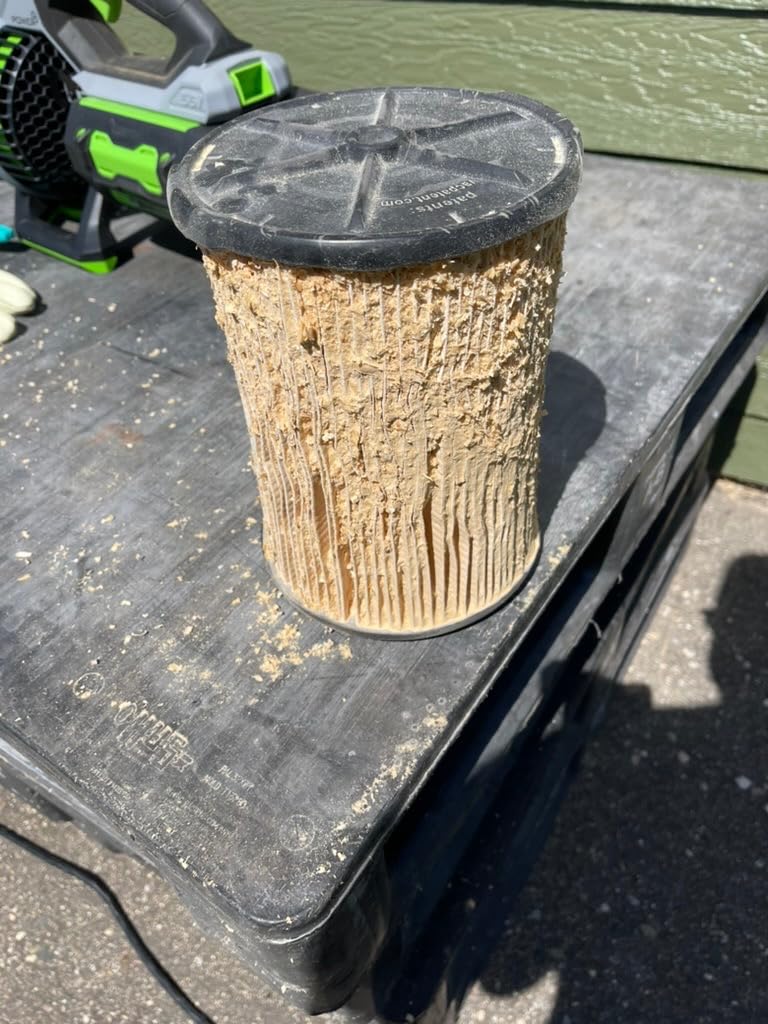
Worth it if you can find one and accept checking the lid. Newer designs in this list solve the sealing problem more reliably.
How to Choose: Horsepower, Airflow, Filters, Ducting and Noise
Spend your research budget on the air path rather than on the separator body. Every unit here does the same job once air reaches it. What separates a good installation from a disappointing one is duct sizing, sealing and how you power it.
How much airflow you actually need
FineWoodworking’s sizing guidance is the reference most shops start from: a 2 HP collector with a 12-inch impeller is about right for a basement or garage shop, with machines kept close together to limit hose friction losses. Applied to a separator route, that same logic says the vacuum underneath matters more than the horsepower label on a collector you may not need.
- 10×12 shop, one machine at a time: a 4 HP to 5 HP wet and dry vacuum under a pail-mounted separator. Floor space rules out anything larger.
- 12×16 shop, table saw plus planer or jointer: a 5 HP vacuum with a rigid run to each machine and a blast gate on every branch.
- 15×20 shop, two machines plus a drum sander: a dedicated collector with a cyclone retrofit ahead of it, since the drum sander produces dust too fine for a low-profile separator.
- 20×20 and up, or a shared shop space: a powered cyclone with a bagger or larger drum, ideally located in a closet or insulated cabinet.
The number at the hose end matters more than any spec on a motor housing. If you want a real measurement rather than an estimate, a Dylos-style particulate monitor will show you whether your setup is actually moving air in the working area rather than only at the machine port.
Reading filter ratings without falling for vague micron claims
A MERV rating is a measurable standard. A claim like “captures 99.9 percent of particles” without a particle size is marketing copy, and 99.9 percent of a large particle means very little.
The separation units in this roundup are not filters. They keep bulk debris out of your downstream filter so the filter can do its job. When you do need a replacement filter, look for a stated MERV rating, and for the finest dust in your shop, HEPA-rated media rated at 0.3 micron. If you want independent confirmation of a maker’s claim, ask which third-party lab tested it, as the Dustopper PRO does with its Aerodyne testing.
Never connect a cyclone to a bag filled with dust and leave it. Empty it on a schedule, and inspect the filter monthly.
Rigid ducting beats flex hose past ten feet
Rigid PVC is heavier and harder to install, and it is still the right answer. Flex hose restricts airflow, and the penalty grows with every foot. Keep flex to short connector runs between a machine and a blast gate, and use rigid trunk lines everywhere else.
Run length also decides whether a single vacuum can serve two machines at once. Measure the total run and the number of 90-degree elbows before you commit to a layout, and add a blast gate on each branch so only one machine draws air when the system is on.
Blast gates and remote starts
A blast gate on every branch is close to mandatory in a small shop. It isolates the idle branches so you are not pulling air through a closed damper, which is the difference between adequate and good airflow at the working machine.
For noise, a remote control is the highest-impact upgrade in this entire category. One Sawmill Creek user runs a keyfob from the machine position, so the collector only runs when someone is standing at a machine. In a 10×12 basement shop that single change does more for usability than any increase in horsepower.
Noise, placement and closet mounting
Separators themselves add almost no noise. What is loud is the vacuum or collector motor underneath, which is why co-locating the unit with an air compressor inside a sound-insulated closet is a common and effective approach.
Vent or recirculate is a related decision. Venting outside keeps filtered air out of the shop but adds heat loss in winter, and in cold climates that matters over a whole season. Recirculating keeps the heat and adds load to filtering. For most one-person shops, recirculating into the room is the simpler choice.
New vs used vs DIY conversion
New units in this list are inexpensive enough that used rarely wins on price. Used makes more sense for a powered collector or cyclone you cannot otherwise afford, and there the checks matter: run it and listen for bearing noise, inspect the impeller for glaze buildup, verify the drum is not rusted through, and assume filters and belts need replacing regardless of appearance.
DIY conversion routes have their own logic. A Lumberjocks thread titled around buy-or-DIY cyclone recommendations captures the real tradeoff: DIY is worth it when you enjoy the project and need a custom footprint, and it is worth skipping when the build eats the weekend you needed for actual shop work. If you are converting a single-stage unit, the retrofit cyclone in this roundup is the specific part that does the heavy lifting.
Filter, liner and running costs over five years
Budget for consumables, not just the unit. Filter cartridges, drum liners and vacuum bags are the recurring line items, and a separator pays for itself by extending how often those get replaced. Electric cost is minor compared with the dust exposure you are removing, so do not let it drive the decision.
A sensible five-year view: the separator body once, plus a filter replacement whenever loading becomes noticeable, plus liners if you use one. Track how often you are replacing the vacuum filter before and after installation and the difference is usually obvious within a month.
Frequently Asked Questions
What is the best dust collection for a small shop?
For a 10×12 to 12×16 shop running one machine at a time, a 5 HP wet and dry vacuum with a bucket-mounted cyclone separator is the best balance of capture, cost and floor space. Add rigid 4 inch ducting and a blast gate on every branch. Move up to a dedicated collector with a cyclone retrofit when you add a drum sander, a wide jointer or a CNC router.
Do I need a cyclone dust collector or just a dust separator?
A separator is enough when you run a table saw, planer or bandsaw and your debris is chips and shavings. A true two-stage cyclone becomes worthwhile when the dust is fine, such as sanding dust from a drum sander or abrasive dust from a CNC router, because that fraction travels past low-profile separators and straight to your lungs.
Is a cyclone dust collector better than a shop vac?
A cyclone in front of a shop vac is better, because the separator pulls the heavy fraction out before it reaches the vacuum filter. Lab testing reported by FineWoodworking found single-stage setups losing roughly 40 percent of airflow after a single fill, while cyclone-assisted systems held their suction. The shop vac still does the work, but it no longer clogs.
How loud is a cyclone dust collector in a small shop?
The noise comes from the vacuum or collector motor, not the separator body. Listed sound levels for the rigid units in this roundup sit around 70 to 72 dB, which is significant in a small space. Common fixes are mounting the unit in a sound-insulated closet with the air compressor, and adding a remote control so it only runs while you are at a machine.
How often should I replace filters and empty the drum?
Check the drum whenever you change a bag or notice a drop in airflow, and never leave a cyclone connected to a full drum. Inspect the filter monthly and replace it when loading becomes visible, since a separator’s whole job is keeping that filter clean. Budget for cartridges, drum liners and vacuum bags as recurring costs rather than one-time purchases.
Which Cyclone Dust Collector Fits Your Small Shop
If you want one answer, the best cyclone dust collectors for small shops start with the Oneida Dust Deputy DIY for anyone who already owns a wet and dry vacuum and wants the simplest possible upgrade. Pick the Dustopper PRO if you have a heavy-duty pail and want the better-engineered chamber. Build the Peachtree four-inch kit if you intend to run rigid ducting and want full control of the layout.
Rolling shops should look at the DEWALT 6-gallon kit or the Oneida 2.5 Deluxe, and shops with fine sanding dust or CNC work need the DEWALT 10-gallon stainless tank for capacity. Whichever you choose, the separator only works as well as the duct running into it, so size the airflow at the machine rather than at the motor. Run one more search than feels comfortable before you buy. The forums are full of owners with years of long-term data, and a setup you will not want to replace in two years is worth an extra weekend of reading.
Leave a Reply