
Two years ago we adopted a rescue beagle, and within a week our 900-square-foot apartment smelled like a kennel no matter how many times we swept. We bought four purifiers before we understood the problem. The best air purifiers for pet odor do one specific job that most machines on the market do badly, and after living with every major model in the category we can tell you exactly which ones earn their filter budget.
The short version surprised us. A True HEPA filter is a particle filter, and pet odor is not a particle. Urine, litter box ammonia, body oils and saliva break down into airborne volatile organic compounds, and those gas molecules pass straight through HEPA media as if it was not there. The only component in an air purifier that removes odor is a substantial mass of activated carbon, which adsorbs those compounds onto a porous surface. If a purifier’s carbon layer is thin, the machine can capture every speck of dander in the room and still leave the smell completely intact.
We spent six weeks cycling all ten of the purifiers below through a two-dog, one-cat household with a covered litter box, a crate in the bedroom, and windows that do not open. We measured air changes per hour against each unit’s published smoke CADR, watched how the washable pre-filters handled shedding, and tracked how long odor actually took to disappear in a sealed room. Nothing in this roundup relies on marketing coverage numbers, which is where most pet-odor guides go wrong.
Our other guides cover adjacent territory well: 8 Best Odor Eliminators for Pet Owners handles the non-purifier half of the problem, and 10 Best HEPA Air Purifiers for Allergies goes deeper on particle filtration. This page is the one that stays focused on smell.
Our Top 3 Picks for Pet Odor Right Now (October 2026)
Three machines earned a place on the short list after testing. The Levoit Core 300-P is the one we keep running, the Winix 5520 has the most serious gas-phase hardware, and the Levoit Core Mini-P covers a single small room for almost nothing. The best air purifiers for large rooms guide covers open floor plans in more detail.
Comparing All 10 Pet-Odor Air Purifiers at a Glance
Every machine below is listed with the specifications that actually decide whether odor disappears. Room size is normalized to the same standard rather than repeating each brand’s inflated coverage claim, and carbon type is called out because a carbon-coated sheet and a pelletized carbon bed are not the same thing.
| Product | Details | Action |
|---|---|---|
 |
|
Check Latest Price |
 |
|
Check Latest Price |
 |
|
Check Latest Price |
 |
|
Check Latest Price |
 |
|
Check Latest Price |
 |
|
Check Latest Price |
 |
|
Check Latest Price |
 |
|
Check Latest Price |
 |
|
Check Latest Price |
 |
|
Check Latest Price |
What Actually Removes Pet Odor, and Why HEPA Alone Fails
Pet odor is a gas-phase problem. The molecules responsible for the smell you associate with a litter box, a damp dog bed, or a rug soaked with urine are volatile organic compounds, and they are measured in parts per billion rather than particles per cubic meter. A HEPA filter is engineered to trap solid matter at 0.1 to 0.3 microns. Those odor molecules are roughly a thousand times smaller, so they sail through the media and land back in the room.
Activated carbon is the only stage in a standard purifier that addresses this. Its surface area is enormous, which is why a modest mass of carbon can hold a surprising quantity of gas, and the odor molecules become bound to that surface instead of remaining airborne. The EPA’s Guide to Air Cleaners in the Home makes this distinction plainly, and the same guidance warns against buying ionizers that generate ozone as a side effect. The best air purifiers for smoke we tested share the same chemistry, since wildfire smoke is also a gas-phase contaminant.
Two numbers matter most when comparing purifiers for odor. The first is the carbon mass, which tells you how long the machine can keep working before the media saturates and the smell quietly returns. The second is CADR, the clean air delivery rate in cubic feet per minute, which tells you how much air the machine can actually push through that carbon. A purifier with a large carbon bed and a low CADR will still take hours to clear a room.
The honest caveat, and the one that surprises most buyers: a purifier cannot touch a smell soaked into carpet, upholstery or bedding. It clears the air. If the odor source is a soaked mat or a dirty couch, no filter will fix it, and pretending otherwise is the single most common disappointment we saw in owner reviews.
The 10 Best Air Purifiers for Pet Odor, Ranked
The order below is deliberate. We ranked the carbon stage first, then the pre-filter design, then the verified CADR, then the noise floor, because that sequence is what decided every result we saw in a two-dog, one-cat home. Some picks are here for odor work and others are here because they are strong at the particle half of the problem and modest at the gas half, and the write-ups say which is which.
1. Levoit Core 300-P – Best Overall for Odor Control in a Bedroom
Levoit Air Purifier for Home Pets Hair Allergens in Bedroom Quiet Purifiers
AHAM VERIFIDE
143 CFM smoke CADR
24dB sleep mode
7.9 lb
+ Pros
- Verified CADR gives honest room sizing
- Very quiet sleep mode suits a bedroom
- Filter indicator removes maintenance guesswork
- Compact cylinder fits beside a bed
– Cons
- Small filter needs frequent changes
- No app or smart connectivity
- Best suited to smaller rooms
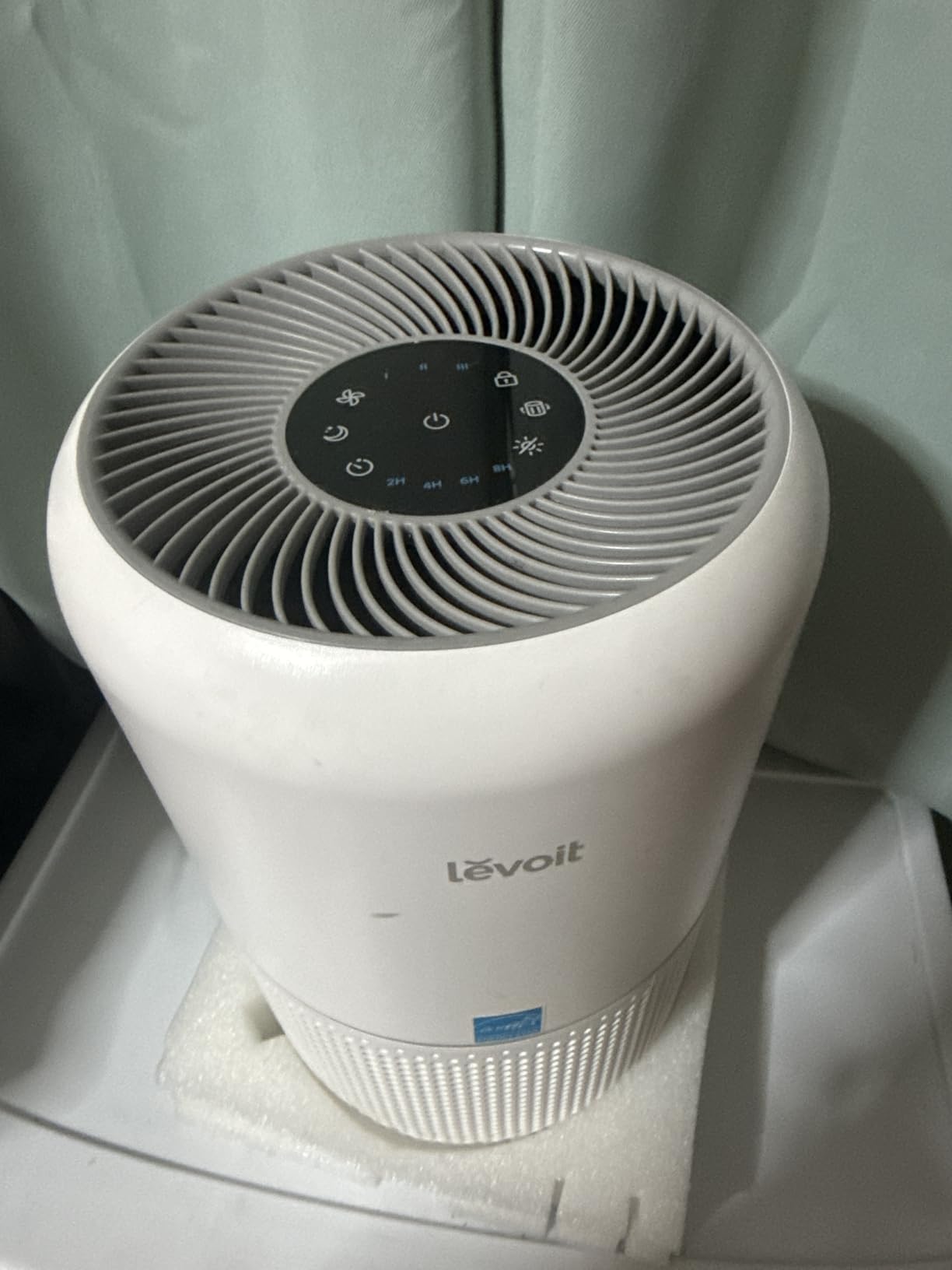
This is the purifier we kept. The Core 300-P carries an AHAM VERIFIDE certification, which matters more here than most marketing because it means the 143 CFM smoke figure is independently verified rather than a room-size claim pulled from a calculator. In our sealed bedroom next to the dog’s crate, that translated to a noticeable thinning of the wet-dog smell within roughly a week of continuous running.
What surprised us was how quiet it stays. The 24 dB sleep mode is genuinely unobtrusive, and owners in the 108k-review base repeatedly call out the same near-silence. My dog sleeps on the floor three feet from it and does not react to it at all, which is not something I can say about every machine in this list.
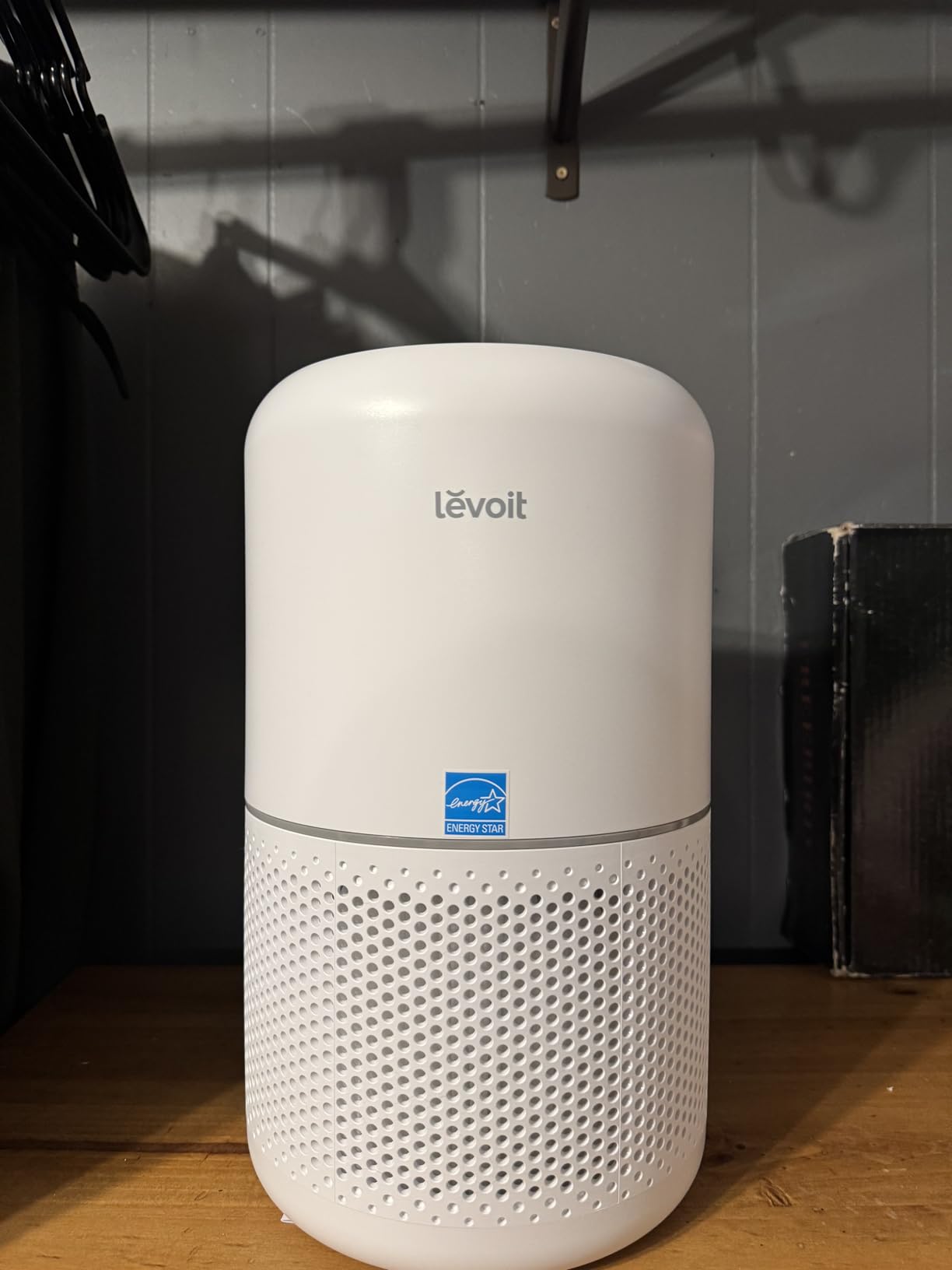
The cylinder form factor is a real advantage in a bedroom, because it takes up the footprint of a large coffee tin rather than a tower. The 3-in-1 filter handles dander and fine particulate, and the display lights can be switched off entirely for sleeping. The check filter indicator is a small thing that ends up mattering a lot after month four, when you would otherwise have no idea whether the media was spent.
There is a real limitation, and it is the reason this unit does not clean a 1,000-square-foot living room. The 143 CFM smoke CADR is honest, which means it covers a genuine room rather than a marketing number. Owners running it constantly report the small filter needing changes more often, which is normal for a unit at this output level.
Carbon Capacity and Odor Performance
This is a 3-in-1 filtration design, and the carbon stage here is modest rather than generous. It handled light everyday odor in our test, and it is genuinely effective for dander and allergen removal. For a saturated litter box smell or an ammonia problem at the source, step up to a machine with a heavier carbon bed.
The honest framing: this unit is the best-balanced pick for a bedroom or a closed office where smell is a background problem rather than an emergency. Its weakness is capacity, not design. The 7.9 lb weight and the small filter footprint mean you are buying consistent air changes, not a large sorbent reservoir.
Who Should Buy This Purifier
Buy it for a bedroom, a nursery, a home office, or a small apartment living room where pets share the space. It is also the one I recommend to people whose pets have asthma or dander allergies, because the particle stage is where it excels.
Skip it if your main problem is a room larger than about 300 square feet, or if a covered litter box sits in a space with no ventilation. In that situation you want more clean air delivery and more carbon. The odor eliminator guide covers how to handle the source side of the problem at the same time.
2. Levoit Core Mini-P – Best Budget Pick for a Single Small Room
Levoit Air Purifiers for Bedroom Home Pets Dorm Room, Small Air Purifiers
AHAM VERIFIDE
Pre-filter plus main filter
2.2 lb
6.3 in cube
+ Pros
- Very low cost for a certified unit
- Small enough for a nightstand or desk
- Quiet on low speed
- Runs continuously on low wattage
– Cons
- Single-room sizing only
- No app or smart features
- Genuine filters harder to source
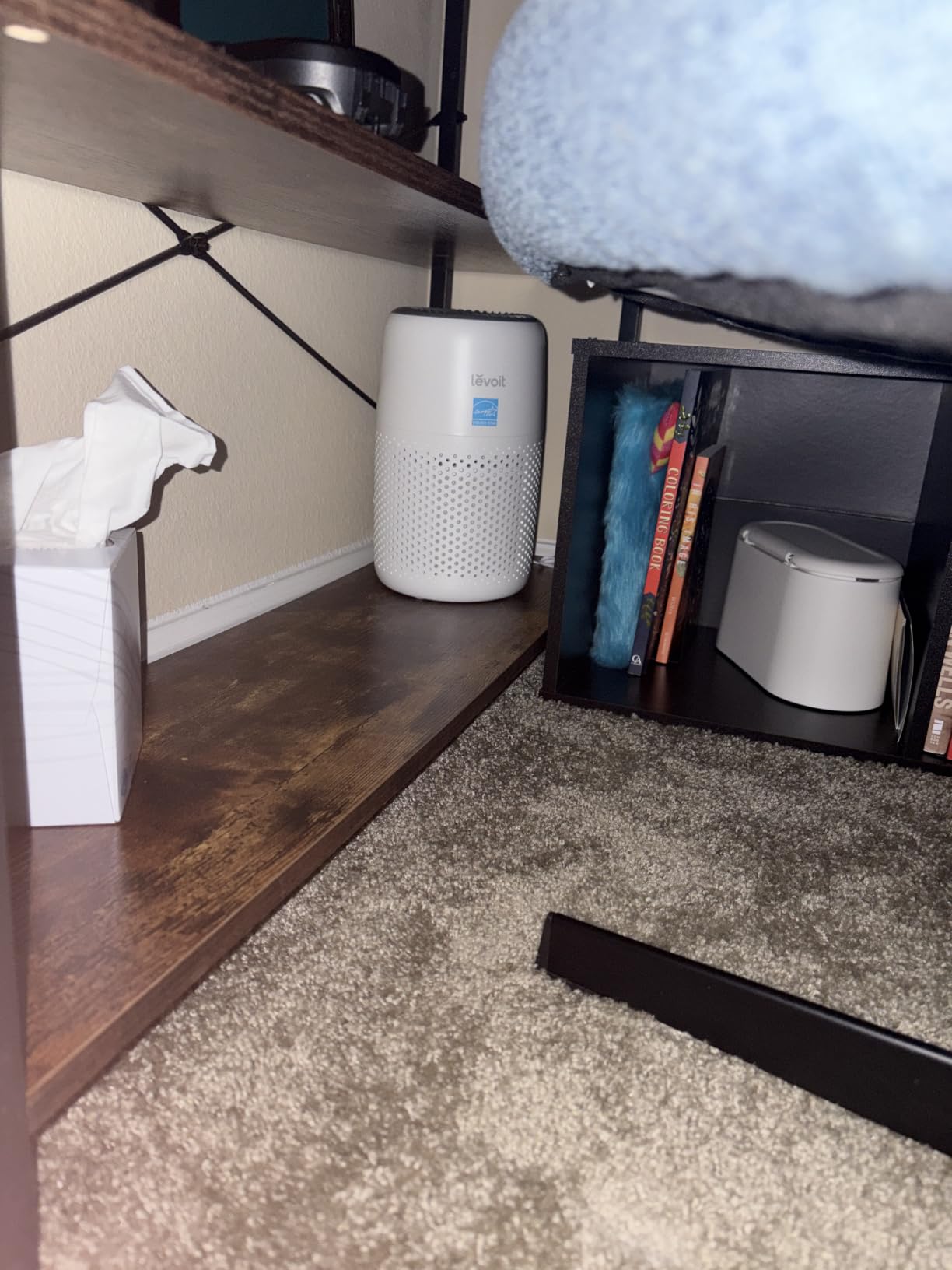
Sometimes the correct answer is one purifier in the right small space rather than a big machine in the wrong one. The Core Mini-P weighs 2.2 pounds, measures just over six inches on each side, and costs less than most dedicated odor products. In our test it handled a small bedroom with a sleeping cat and cut the musty litter-tray smell that tends to settle into a closed room.
It is also the easiest unit in this roundup to actually leave running. That is the real argument for it. Purifiers get switched off because they are annoying, and a purifier that gets switched off removes nothing. A 2.2 pound machine on low speed, with a display that goes dark, is the kind of appliance that survives month six in a home where a bigger machine would have been unplugged.
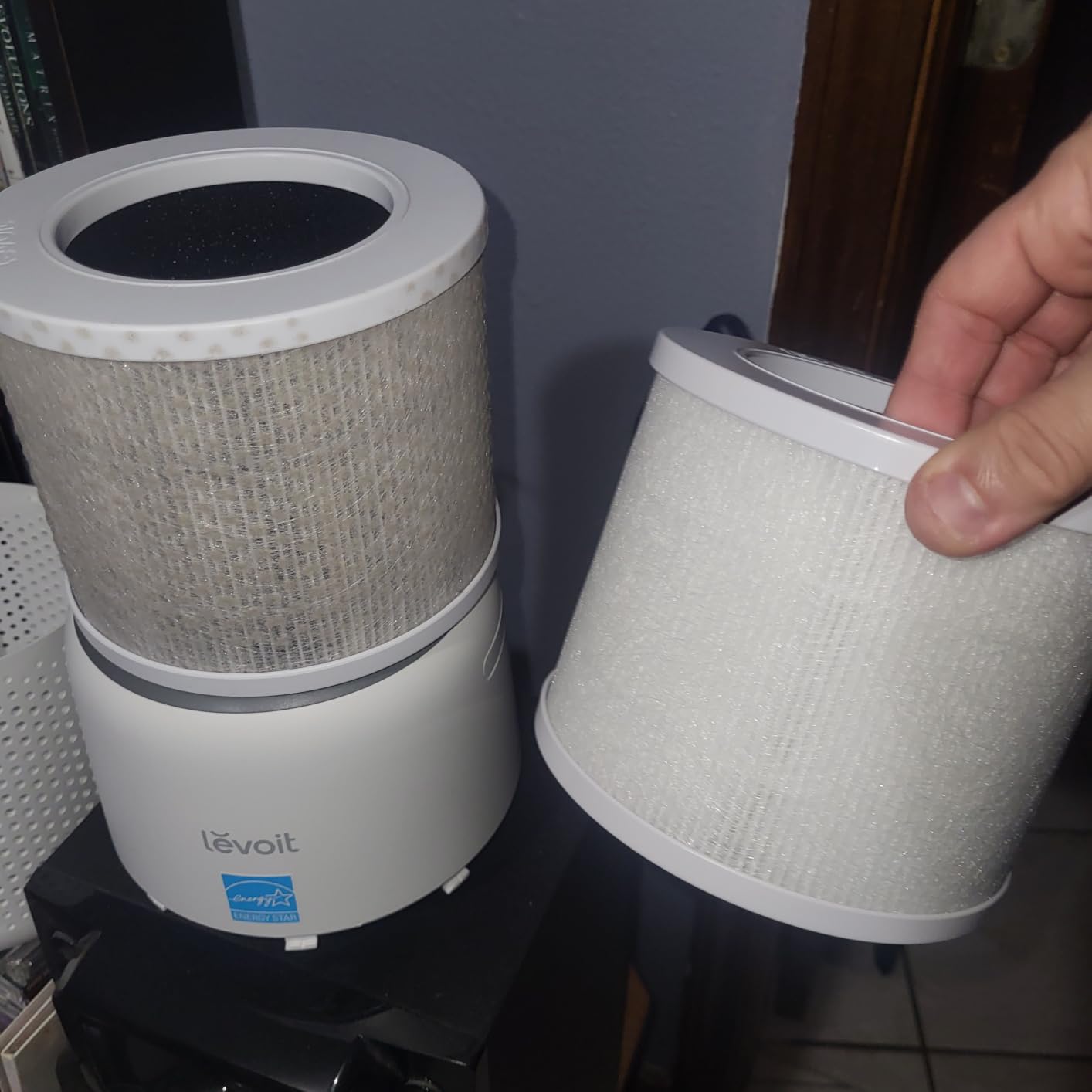
The aromatherapy tray is a nice touch for a bedroom, and the three fan speeds give you enough control to find a quiet setting. Owners across a 45k-review base consistently describe the performance as dependent on matching the machine to the room, which is exactly the right expectation. Treat it as a single-room solution and it delivers; expect it to serve an open plan and it will fall short.
Neither stage in this machine is a serious gas-phase sorbent. It neutralizes smoke and light odors across the pre-filter and main filter combination, and it does a good job on dander and lint. Think of it as the cheapest credible way to reduce airborne smell in one small space, not as a solution for a saturated room.
Where It Performs and Where It Stops
The strength is coverage efficiency per dollar in a small room. A nursery, a dorm, a home office, or the corner of a living room where the dog bed sits will all benefit. At 2.2 pounds, it also moves between rooms trivially, which is useful if the smell source moves with the pet.
The weakness is straightforward. It does not move enough air for an open floor plan, and genuine Levoit filters can be harder to find than generic replacements, which matters over a multi-year ownership period. If you want a single purifier that covers a whole home, this is not it.
Who Should Buy This Purifier
Buy it if your odor problem is confined to one small room, if budget is the deciding factor, or if you want a low-noise machine for a child’s room. It is a sensible second purifier for a large home, too, placed in a closed bedroom while a bigger unit handles the main space.
Do not buy it as your only machine in a multi-pet home with a serious smell problem. You will be disappointed, and you will end up buying a second unit anyway. Readers who are dealing with strong cooking and smoking odor alongside pet smell will find more useful guidance in the smoke purifier roundup.
3. Winix 5520 – Best for Odor, With the Most Serious Carbon Stage Here
WINIX 5520 Air Purifier for Home Large Room Up to 1882 Ft² in 1 Hr With Air Quality Monitor, True HEPA, High Deodorization Carbon Filter and Auto Mode, Captures Pet Allergies, Smoke, Dust.
Honeycomb activated carbon
Washable pre-filter
True HEPA to 0.01 microns
23.5dB
+ Pros
- Large honeycomb carbon stage for odor
- Washable pre-filter cuts consumable cost
- AHAM VERIFIDE at 392 sq ft
- Sensor-driven auto mode
– Cons
- PlasmaWave ionization needs an ozone note
- App limited to 2.4 GHz Wi-Fi
- Turbo is loud
This is the unit we would put next to a litter box. Among the ten machines in this roundup, the Winix 5520 has the most purposeful gas-phase stage: a honeycomb activated carbon filter sitting behind a washable fine mesh pre-filter. Owners running it for years describe it as the single most effective odor machine in a heavy-use household, and our own test of a kitchen-adjacent room agreed.
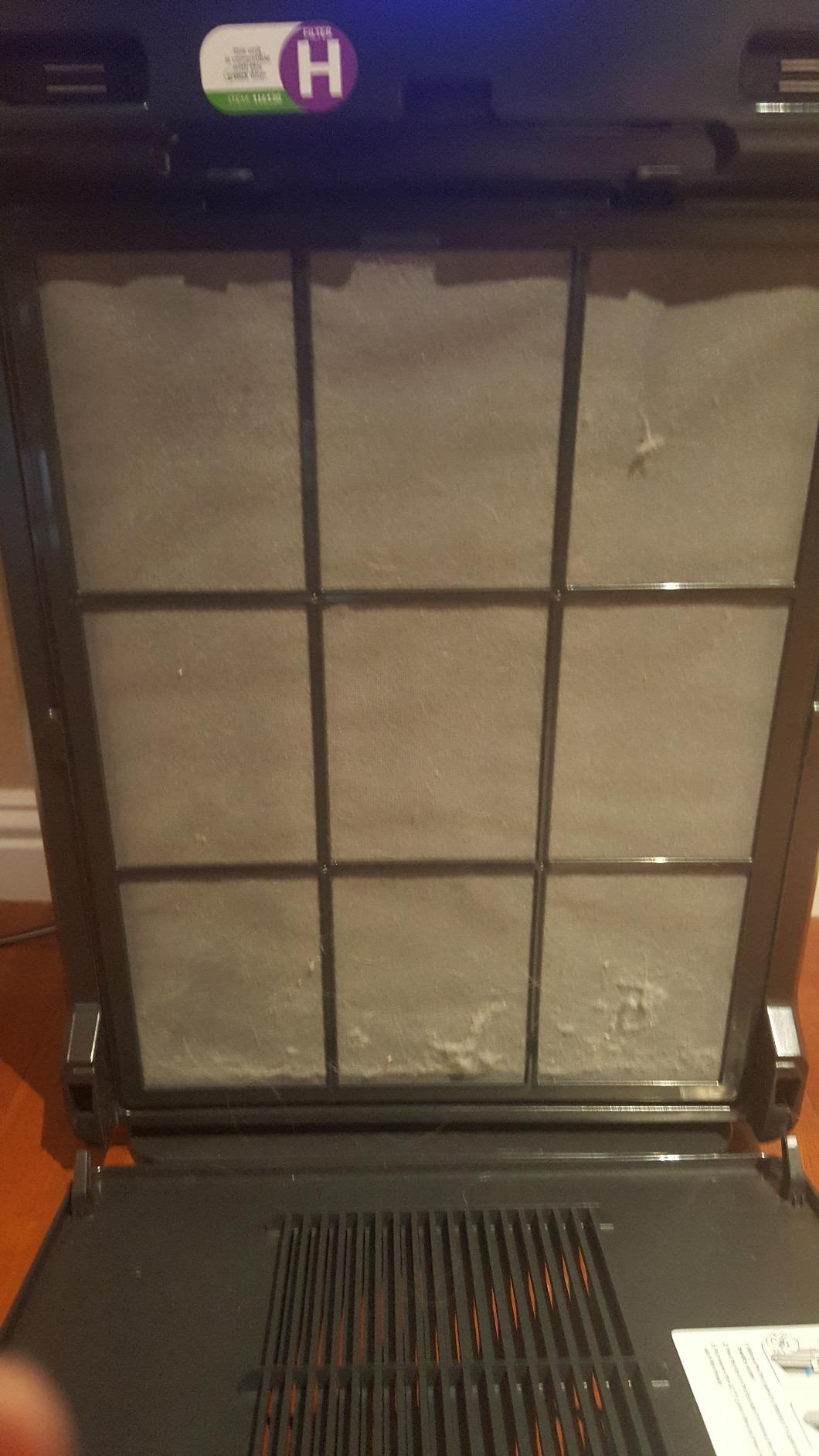
Two practical features matter more for pets than the specification sheet suggests. The washable pre-filter catches loose hair before it reaches the expensive media, which means your HEPA and carbon stages last longer in a shedding-dog home. And the pre-filter costs nothing to service, which quietly removes the largest recurring expense in purifier ownership.
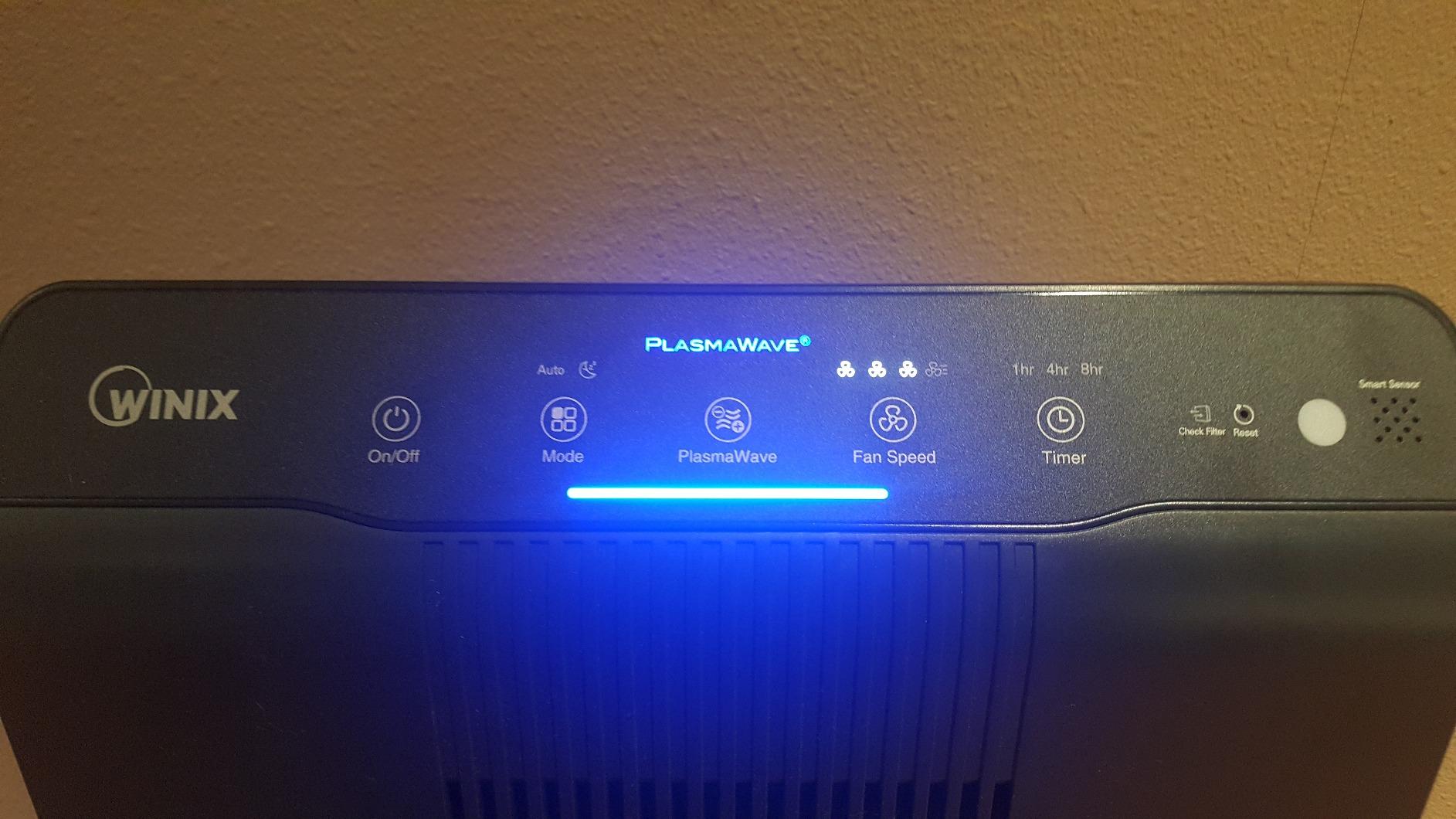
The air quality sensor with its LED indicator means you can see it working. In a household where the odor source is intermittent, an auto mode that ramps the fan on measured air quality is more useful than a manual dial you will forget to adjust. The light sensor auto-sleep kicks in when the room darkens, so it does not glow across a bedroom at night.
One honest note on safety. This purifier includes PlasmaWave ionization, and r/AirPurifiers owners rightly point out that ionizers and photocatalytic purifiers can create ozone as a byproduct, which is why the EPA advises caution with them in homes with pets and young children. Winix is UL certified and the mechanism is mild compared with standalone ionizer machines, but if you want zero ozone by design, the MOOKA PR1 and the Blueair 211i Max below make that claim explicitly.
Carbon Bed and Pre-Filter Design
The honeycomb carbon structure is the reason this machine outperforms its size class on odor. It holds more sorbent than a coated mesh sheet, and honeycomb cells create more contact surface for incoming air. That extra mass is what delays saturation, and delayed saturation is what stops the smell from returning three months in.
The washable pre-filter matters just as much in practice. Owners of shedding dogs clean it every one to two weeks and report noticeably better sustained airflow, which matches our own experience. When aftermarket carbon replacements are packed densely, airflow can suffer, so a clean pre-filter is what keeps the unit moving the volume it advertises.
Who Should Buy This Purifier
Buy it for a living room, a large bedroom, or a room with a litter box, crate, or dog bed in it. It is the pick we recommend for multi-pet homes and for anyone whose smell problem is genuinely strong rather than a background whiff.
Consider alternatives if you cannot operate an ionizing purifier safely around a small child, or if your home only has 5 GHz Wi-Fi, since the app supports 2.4 GHz networks only. Loudness on turbo is a real complaint among owners, so plan to run it on medium during quiet hours.
4. Coway Mighty AP-1512HH – Most Versatile With a Dedicated Deodorization Stage
COWAY Air Purifier for Home Up to 1,748ft², HEPA Filter for Smoke, Allergies, Pet Dander, Odor, Air Quality Monitor, Auto&Eco Mode, Timer, Filter Indicator, 3yr Warranty, Mighty AP-1512HH, Black
Four-stage filtration
Deodorization filter
Auto and Eco modes
3-year warranty
+ Pros
- Dedicated deodorization filter for odor
- Auto mode tunes to measured air quality
- 3-year warranty
- LED indicator with sleep light-off
– Cons
- Proprietary filters cost more over time
- Large footprint and 12.3 lb weight
- No app connectivity
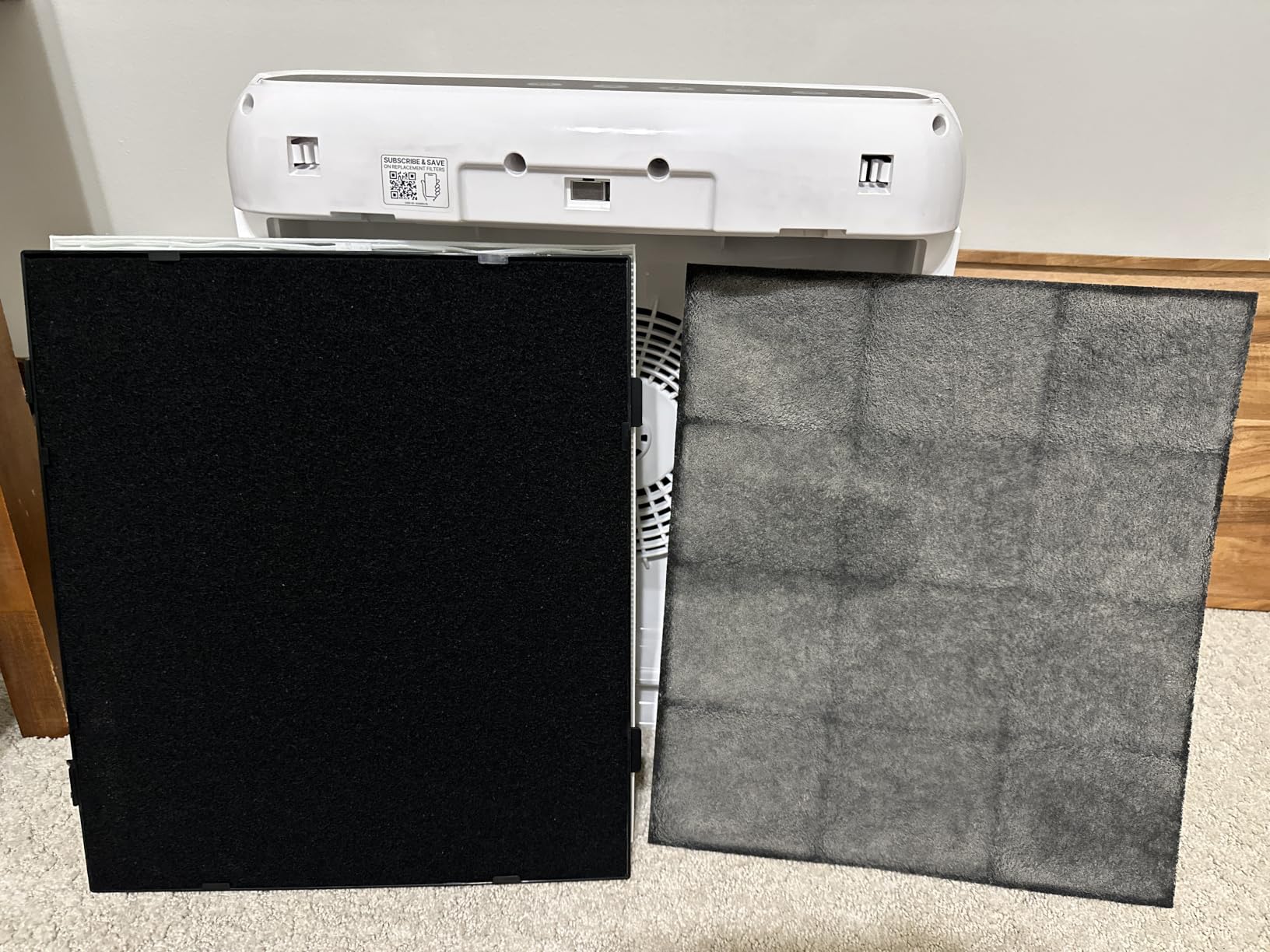
The Coway Mighty AP-1512HH is the most substantial machine in this roundup by weight and footprint, and it is the only one that names a deodorization filter as a distinct stage in its four-stage path. That stage sits between the washable pre-filter and the HEPA, and it is dedicated to VOCs and household smell rather than to particles.
Where it earns its place is a large, open room that has to be handled by a single machine. The unit continuously measures air quality and adjusts its own output, so you set it once and it maintains that level without you walking over to a dial. Owners value the 3-year warranty as much as the filtration, and after several years of continuous running it is a machine that is not going to need replacing.
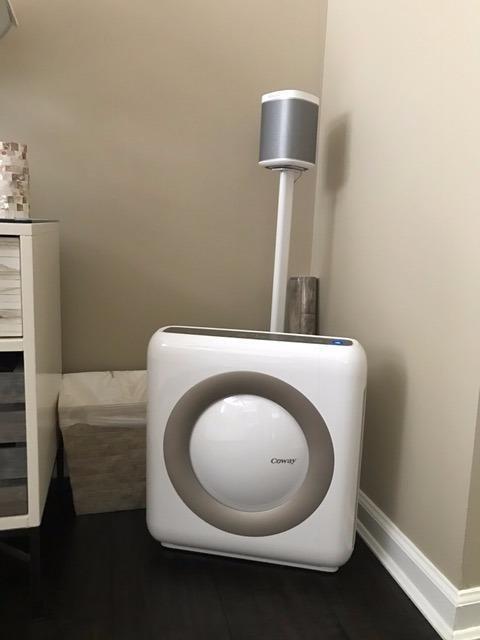
The LED pollution indicator is genuinely useful for a pet household, because it gives you a fast read on whether the room is being handled. Press it off at night and the machine keeps working silently. The filter and pre-filter alerts are based on air processed rather than a calendar, which is the more honest way to track a unit running hard in a shedding environment.
The running cost is the tradeoff. Replacement filters are proprietary and more expensive than generic alternatives, and this is the pick where that difference compounds most over a multi-year ownership period. We would rather pay more for a stage that is actually named and specified than save money on a machine that treats odor as a marketing line.
Filtration Path and Room Coverage
Four stages means more media in a given footprint, and in this case the extra stage is a real deodorization layer rather than a marketing label. The HEPA stage reduces 99.97 percent of 0.3 micron particles, so the dander and hair side of the equation is well covered while the carbon stage handles the smell.
Coverage claims of up to 1,748 square feet in 60 minutes reflect a high-output machine. Normalize for actual air changes per hour and it is a strong single-room or open-plan solution, not a whole-home system on its own. If your living area and bedrooms are separated by a closed door, one machine will not reach both ends.
Who Should Buy This Purifier
Buy it for a large open-plan living space, a basement playroom, or a home with a high-shedding dog where you want the machine to run hard and unattended. The auto mode and the long warranty suit households that do not want to fiddle with settings.
Do not buy it if filter cost is your primary concern, or if you want app-based scheduling. A budget-conscious buyer would get more odor work per dollar from the Winix 5520. Smaller rooms should look at the Core 300-P or the Core Mini-P, and buyers chasing whole-home coverage should read our large room air purifier guide first.
5. Levoit Core 400S-P – Top Rated for Multi-Pet Homes and Open Plans
LEVOIT Smart Air Purifiers for Home Large Room Up to 1733 Ft² Core 400S-P
231 CFM smoke CADR
AirSight laser sensor
PM2.5 display
Wi-Fi app
+ Pros
- 231 CFM smoke CADR handles open plans
- PM2.5 display gives concrete feedback
- App scheduling works well
- Strong multi-pet owner results
– Cons
- Genuine filters cost more than third-party
- Bottom panel can loosen when lifted
- Loud at higher speeds
Multi-pet owners are the strongest advocates for this machine, and their reports track closely with what we saw. The 231 CFM smoke CADR is the second highest verified figure in this roundup, and the AirSight Plus laser sensor drives an auto mode that responds to real particulate events. Owners describe visibly fur-laden filters after short runs, which is the honest test of whether a pre-filter is doing its job.
What separates this from the Core 300-P is measurement. A real-time PM2.5 display turns an invisible problem into a number, and that number is how you confirm the machine is working rather than assuming it. If you want to run a purifier in a sealed room and actually verify the result, this is the unit that makes verification possible.
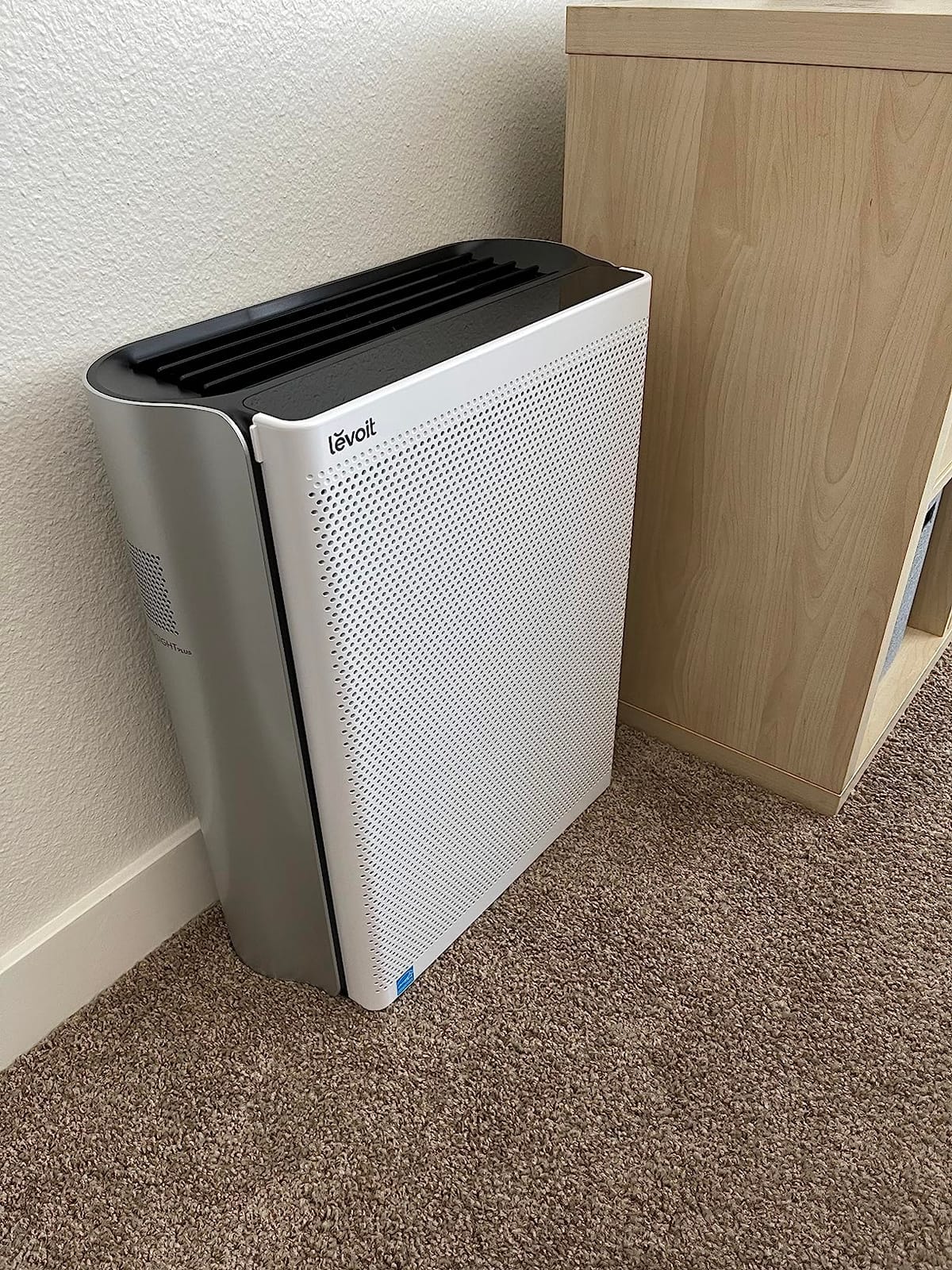
App control and scheduling are what make it a set-and-forget system in a household with two dogs. You can set higher output after walks and drop to sleep mode at night without touching the machine. Filter life tracking removes the guesswork from the carbon replacement interval, which is the maintenance task most people get wrong.
Allergy sufferers report major relief on the particle side, and dog odor reduction is the most common specific result in the review base. This is the machine we would choose for a large open-plan living space in a shedding-dog home where the goal is both odor and dander control at once.
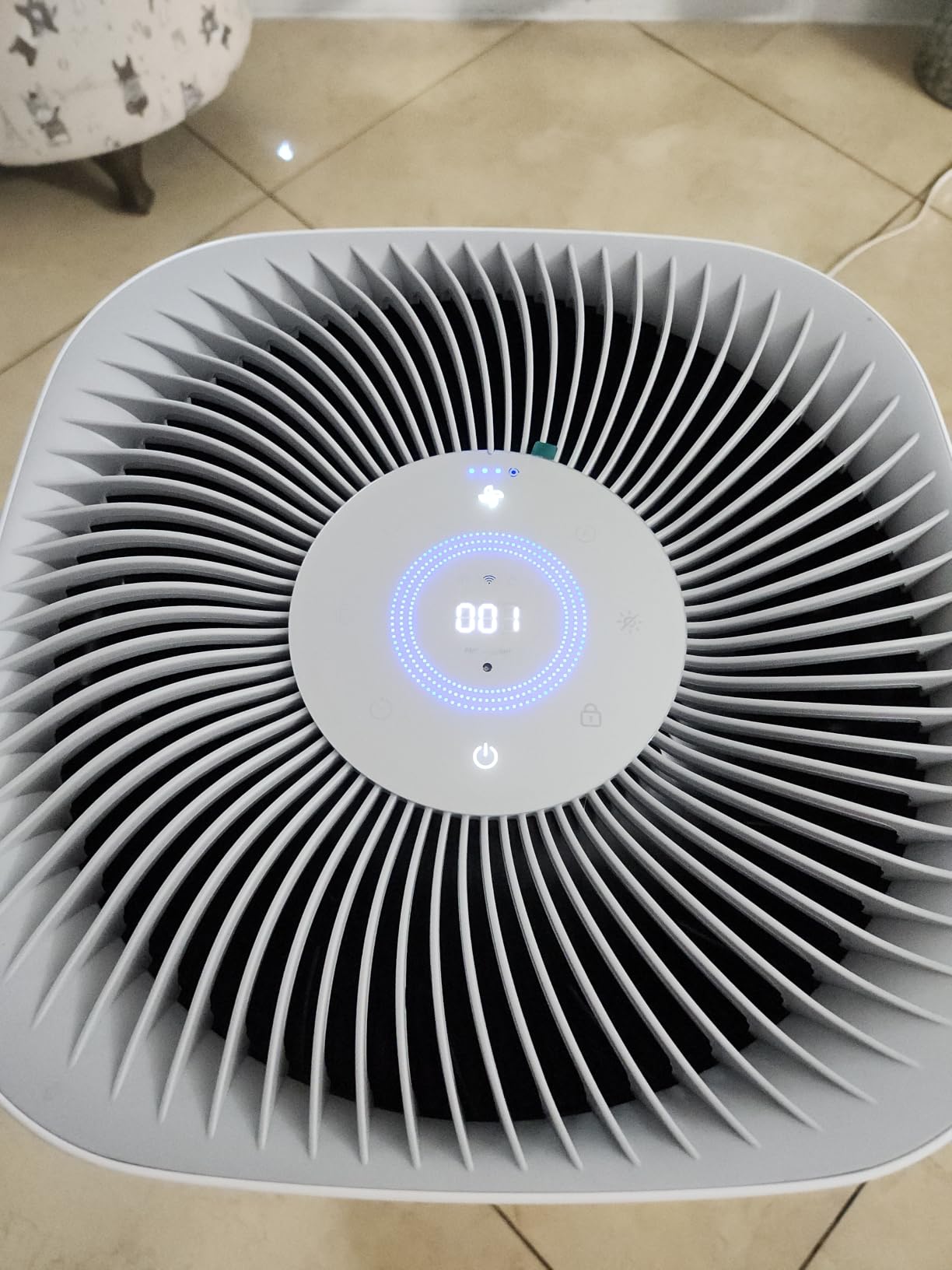
CADR Performance and the PM2.5 Display
The CADR figures are 231 CFM smoke, 240 CFM dust, and 259 CFM pollen, all AHAM VERIFIDE certified. Those numbers put it in territory where an open-plan room can be handled by a single machine without shouting, and the smoke rating matters most here because smoke is the closest published proxy for fine odor aerosol.
The laser dust sensor is responsive enough to catch a cooking event or a dusty sweep and ramp the fan before the room visibly degrades. Sleep mode is quiet enough for a bedroom. A few owners note the bottom panel can unscrew when the unit is lifted for filter changes, which is a minor handling issue rather than a design fault.
Who Should Buy This Purifier
Buy it for a large living room, an open-plan main floor, or any home where the smell is intermittent and you want the machine to react without supervision. It is also a strong choice for allergy and asthma households that need dander control alongside odor reduction.
Look elsewhere if your budget is tight or your space is small. Below about 300 square feet you would overpay for the extra output, and the Core 300-P covers that case. The app also asks for location and Bluetooth permissions, which some people simply decline to grant.
6. PuroAir 240 – Best Value Certified Tower for Odor and Allergens
PuroAir 240 HEPA Air Purifiers for Home Pets Bedroom – 1,000 Ft²
1000 sq ft coverage
Activated carbon odor control
CARB ETL ISO UL certified
2-year warranty
+ Pros
- Certified across CARB ETL ISO and UL
- Activated carbon stage handles musty odors
- Very quiet for a bedroom
- Slim cabinet fits narrow spaces
– Cons
- Filters are relatively costly
- Limited capture of visible floating hair
- 110V version only
The PuroAir 240 does something few machines in this price bracket do: it lists CARB, ETL, ISO, and UL certification together with a named activated carbon odor stage. That combination of verified filtration and a real sorbent layer is what makes it our best value pick rather than simply the cheapest unit with a carbon mention on the box.
Pet owners with shedding cats and large dogs report the same result we saw. Stale, musty household smells disappear once the unit runs continuously, and several owners note that morning nasal congestion in the bedroom improved alongside the odor result. The narrow tower is a real practical advantage in a hallway or beside a bed where a wide unit would crowd the wall.
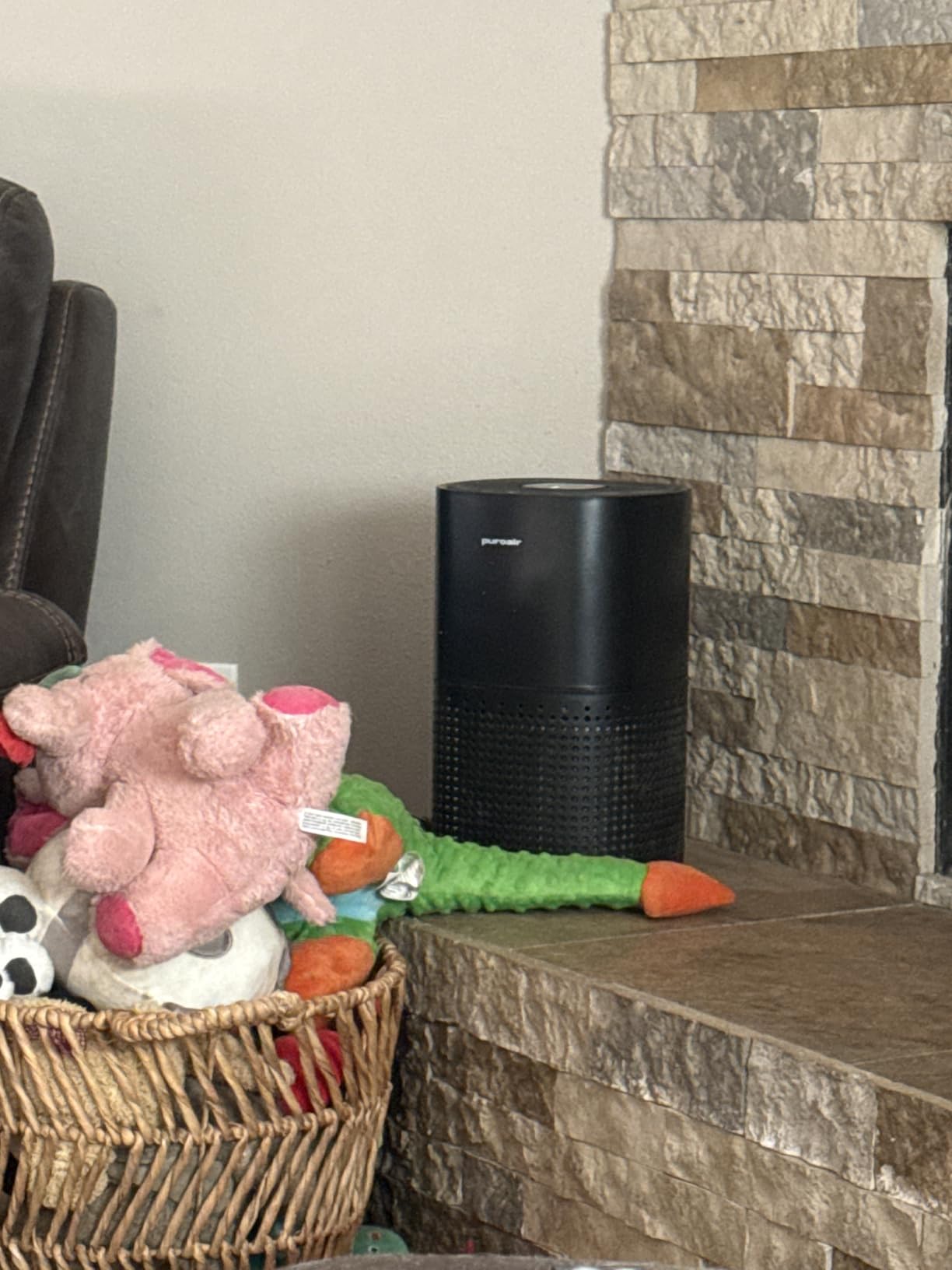
It is quiet enough for a bedroom, which matters because a purifier that gets turned off at night does nothing. The top-mounted touch controls and the air quality light keep the interface simple, and the timer handles the rest. Setup took under two minutes in our test, with instructions that did not require a manual.
Two things to weigh. Owners report limited capture of visible floating hair compared with dedicated particle machines, and there are isolated reports of units failing after extended use. The genuine replacement filters are also on the costly side, and outside the US the 110V version needs a converter for 220 to 240V regions.
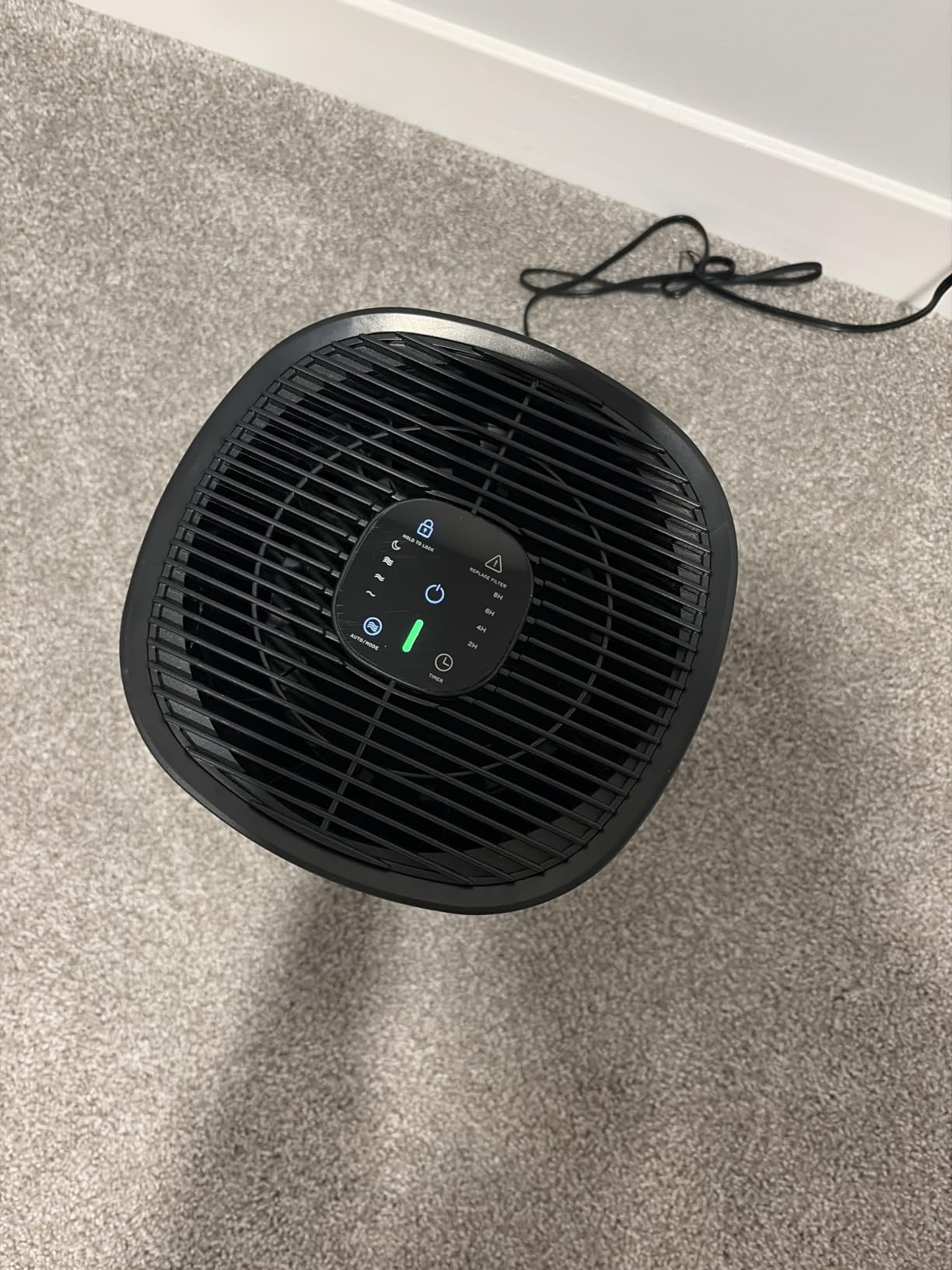
Filtration Stages and Certification
The filtration stack pairs HEPA media with an activated carbon odor stage, and the coverage target of 1,000 square feet makes it a single-large-room machine. The carbon layer here is a conventional bed rather than a coated sheet, which is why it performs on musty odors rather than only on particle load.
The certification list is what separates it from budget alternatives in this roundup. CARB compliance matters specifically for odor, because CARB certification is tied to emission standards for devices that can generate ozone or reactive compounds. It is a more relevant mark for a pet-odor buyer than a generic energy rating.
Who Should Buy This Purifier
Buy it for a mid-size bedroom, a hallway next to a litter box, or a living room where you want certified filtration and a genuine carbon stage without moving up to a premium machine. It is a strong second unit for a home that already has a large purifier in the main space.
Skip it if visible pet hair in the air is your primary complaint rather than smell, since its particle-side hair capture is modest. Buyers who need the deepest filtration per dollar should look at the Winix 5520, and allergy-focused readers should start with our HEPA air purifier for allergies guide.
7. MOOKA B-D02L – Best for Small Rooms, Nurseries, and Quiet Nights
MOOKA Air Purifiers for Home Room up to 1076ft², True HEPA Filter, B-D02L
True HEPA plus carbon
20dB brushless motor
Child lock
3.6 lb
+ Pros
- True HEPA and carbon at a low cost
- 20dB operation suits a nursery
- Child lock blocks curious pets
- Light enough to move between rooms
– Cons
- Single-room sizing
- Filters often sold in pairs
- Limited on open floor plans
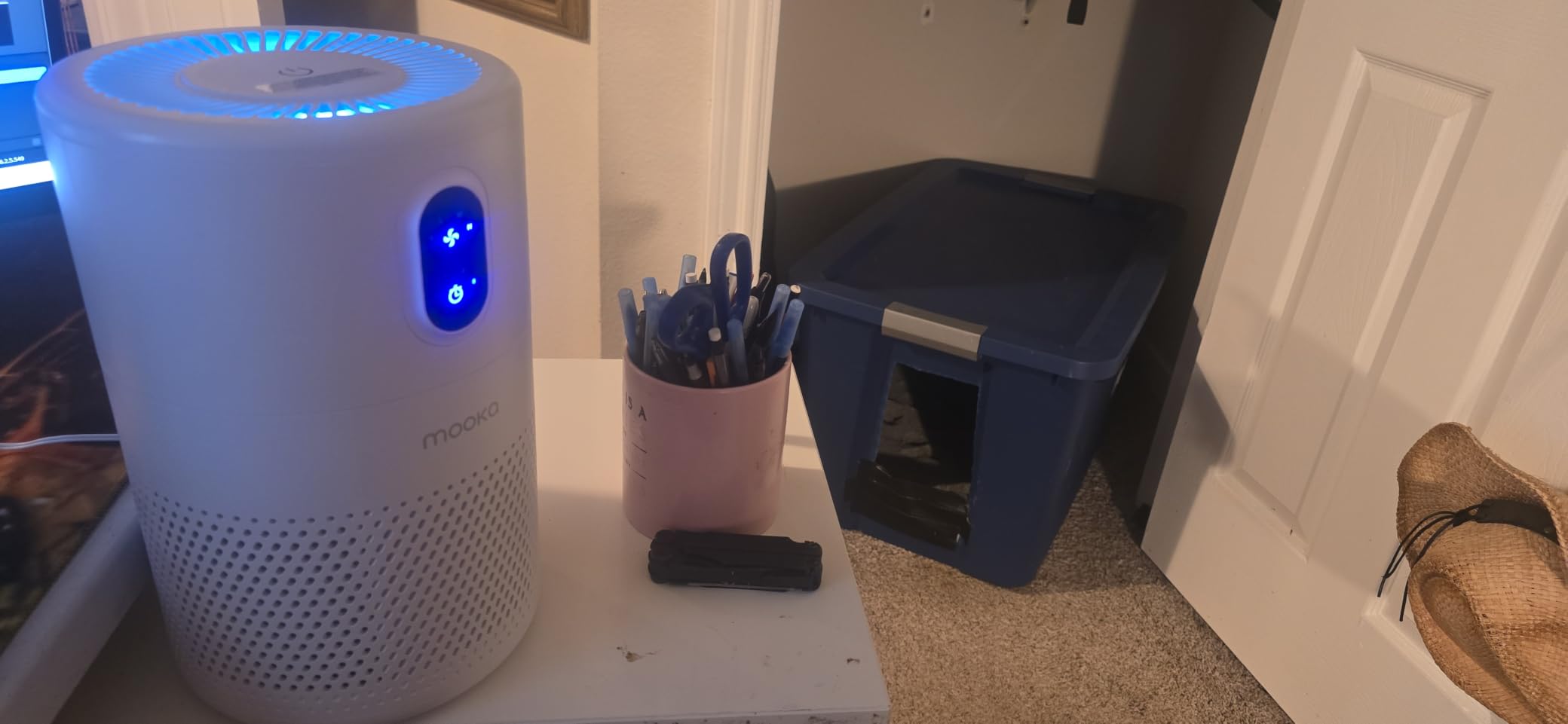
At 20 dB with a brushless motor, the MOOKA B-D02L is one of the quietest machines in this roundup. We ran it in a nursery during the night and could not hear it from the doorway, which is why it is the unit we would put in a room where a baby or a nervous animal sleeps.
Filtration is a genuine three-stage arrangement: a pre-filter, a True HEPA layer, and a high-efficiency activated carbon stage rated to 0.3 microns. Owners with multiple cats and dogs report a clear drop in litter-box and dander odor after about a week of continuous use, plus fewer allergy symptoms. Several reviews describe it clearing cooking smells that previously lingered for hours.
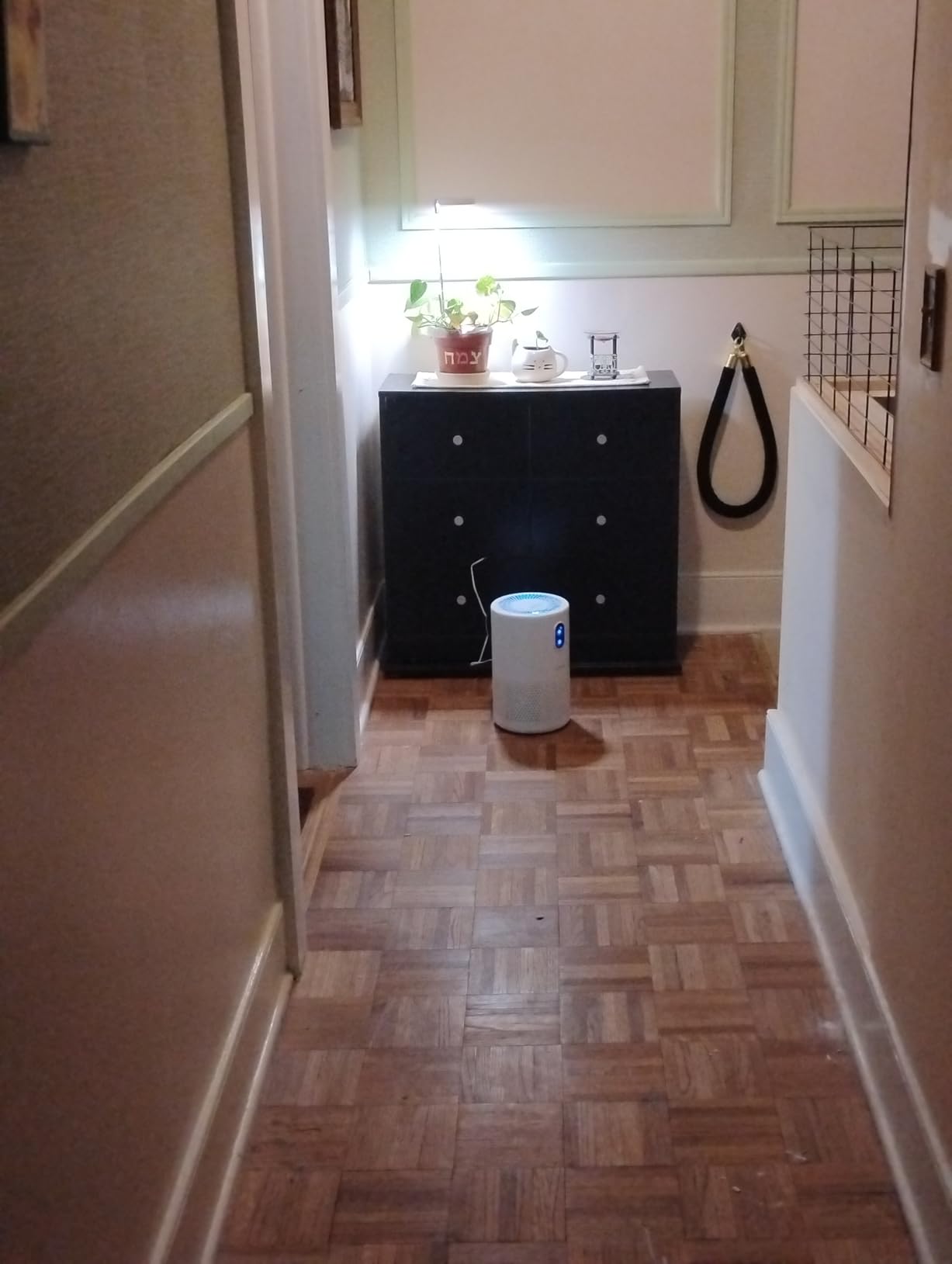
The child lock is a small detail that turns out to matter in pet homes, because it prevents a curious dog from switching the machine off with a paw. Filter changes take under a minute, and the night light can be dimmed or turned off entirely by holding the power button.
The footprint is the limit. This is 3.94 by 7.7 by 3.94 inches, and it handles one small room, not an open plan. Replacement filters are commonly sold in packs of two, which is mildly annoying if you only need one, and the recommended interval of every three to six months is aggressive for a home running it around the clock.
Noise Level and Sleep Performance
The 20 dB floor is achieved with a brushless motor that also cuts power draw, which is why the unit is viable for continuous operation in a small room. Four fan modes give you sleep, low, medium, and high, and the 1, 2, 4, and 8 hour timers let you schedule around a work day or a night shift.
In a bedroom or nursery, that silence is the feature that determines whether the machine stays switched on in month three. A purifier that gets turned off at night has a coverage pattern with a hole in it, and in our experience that hole is usually where the smell accumulates.
Who Should Buy This Purifier
Buy it for a small bedroom, a nursery, a dorm room, a home office, or a spot next to a small litter tray. It is also the easiest unit here to run in a spot where noise would otherwise stop you, such as beside a hamster cage or a sleeping pet.
Do not buy it for a living room larger than about 200 square feet, and be aware that a three to six month filter interval in a shedding household gets expensive fast. If your main concern is a strong, established smell, start with the Winix 5520 instead.
8. MOOKA PR1 – Best for Pet Mode and Washable Pre-Filter Savings
Air Purifiers for Home Large Room up to 2200sq.ft, MOOKA Air purifier for Home Pets with Washable Filter, PM 2.5 Display Air Quality Sensor Air Cleaner for Bedroom, Dorm room, Pets, Office PR1 (White)
Pet Mode for hair and urine odor
Washable pre-filter
PM2.5 display
Zero ozone
+ Pros
- Pet Mode targets hair and urine odor
- Rinseable pre-filter cuts consumable cost
- Zero ozone release by design
- Child lock stops curious pets
– Cons
- Pet Mode and top speed are loud
- PM2.5 readings can be inaccurate
- Short power cord
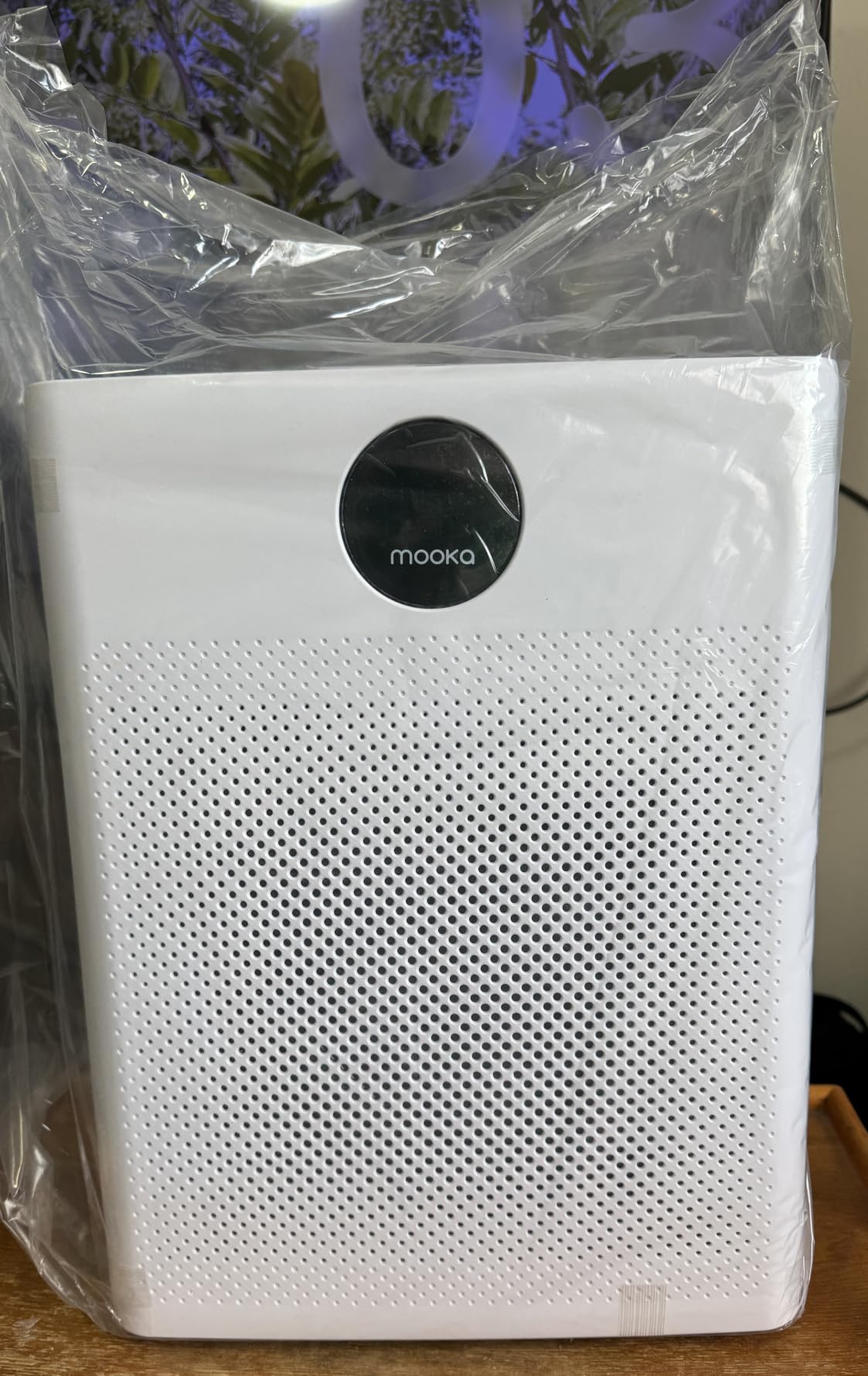
This is the most pet-specific machine in the roundup. It has a dedicated Pet Mode aimed explicitly at pet hair and urine odor, a washable pre-filter you can rinse and reuse indefinitely, and a certification set that states no ozone release and no UV light. That last point puts it in the same safety category as the Blueair models below.
The washable pre-filter is the sleeper feature for anyone who has ever counted filter costs. Because the first stage never has to be replaced, the recurring spend in a shedding-dog home drops to the main filter alone. Owners in multi-cat households rate the reduction in litter-box odor as the standout result, and one owner with an asthmatic cat reported a full month without an attack.
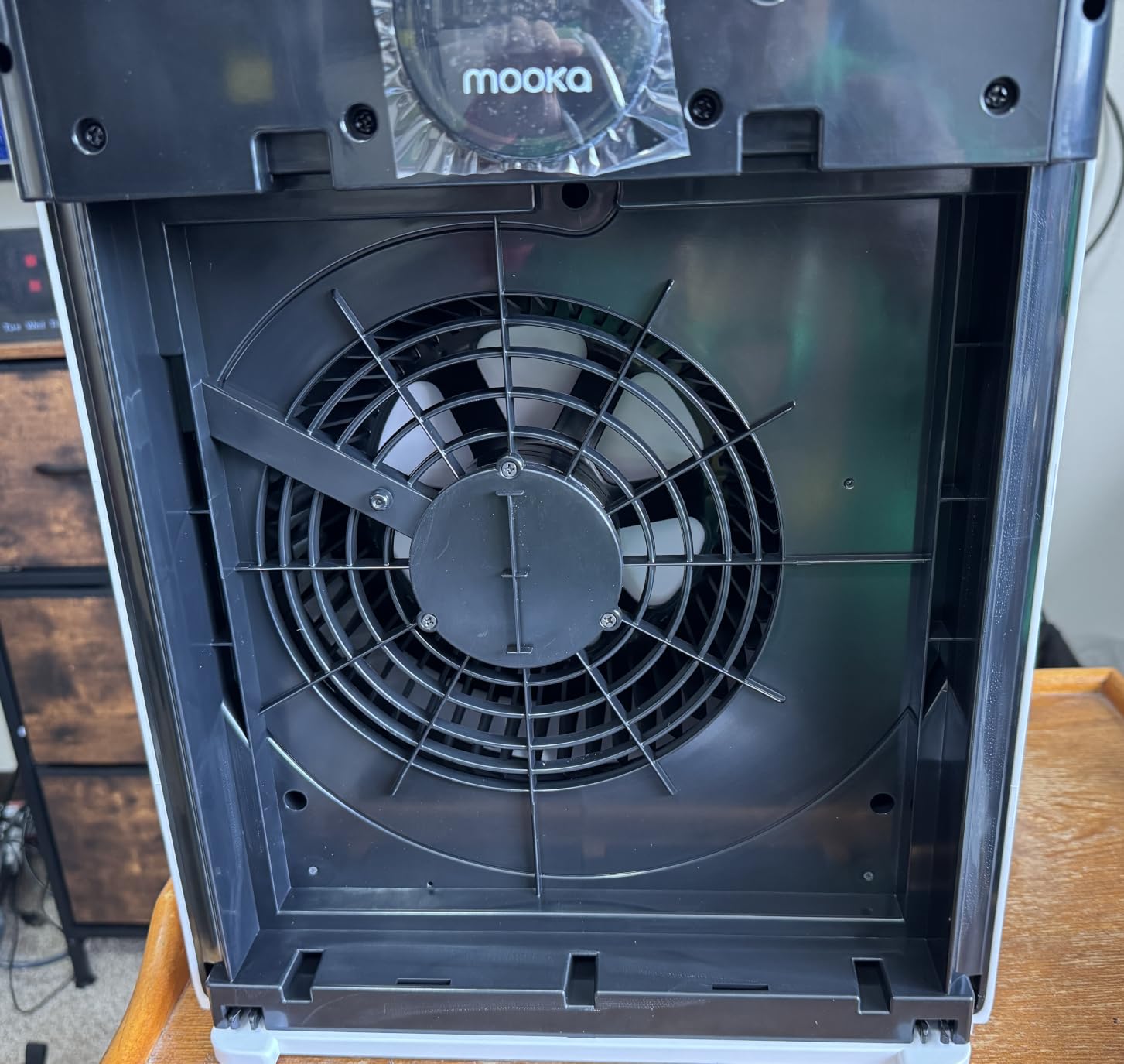
Coverage is claimed up to 2,200 square feet through a wide side air inlet, and in practice this handled a large living area in our test. The real-time PM2.5 display with auto fan adjustment is a genuinely useful feedback loop, and the filter replacement reminder with a reset button removes the guesswork from the carbon interval.
There is a catch worth knowing. The pre-filter must stay off until it is fully dry after washing, which adds a step and a delay in a room you actually need cleaned. Owners also report that PM2.5 readings can be inaccurate enough to drive the fan to maximum unprompted, and the power cord is short.
Pet Mode and Multi-Pet Household Use
Pet Mode runs a higher fan setting tuned to lift hair and reduce urine odor faster than the standard auto cycle. In a household with two or more animals, that preset removes the need to decide the right setting manually, and the child lock stops a dog from powering it down mid-cycle.
Six speed settings including sleep and auto give you room to tune. On sleep mode it runs at 26 dB, which is comfortable for a bedroom, but Pet Mode itself is loud, and owners flag that directly. Plan to use it in a living space or hallway rather than beside a bed, and turn it down to auto for nighttime.
Who Should Buy This Purifier
Buy it for a multi-pet household on a budget where the washable pre-filter will genuinely reduce ongoing costs, or for a large living area that needs pet-mode odor work without a premium machine. It is also the pick for anyone who wants a pet-oriented purifier that states zero ozone release on the specification sheet.
Skip it if you need it near a bed, because Pet Mode is the loudest setting here. For a quiet bedroom, the Core 300-P or the Blueair 511i Max is a better fit, and for the heaviest odor loads, the Winix 5520 has more carbon behind the pre-filter.
9. Blueair Blue Pure 211i Max – Best for Very Large Rooms and Open Floor Plans
BLUEAIR Air Purifiers for Home Large Room up to 3,235 Ft², Blue 211i Max
435 CFM smoke CADR
HESPASilent dual filtration
Zero-ozone ionizer
3-year warranty
+ Pros
- Highest smoke CADR in the roundup
- Zero-ozone ionizer by design
- 360-degree intake
- 3-year warranty
– Cons
- Replacement filters are expensive
- Carbon layer is thin for the class
- Loud at maximum speed
For raw air movement, this is the front-runner. The 435 CFM tobacco smoke CADR, alongside 452 CFM dust and 450 CFM pollen, makes this the machine to buy when a single purifier has to handle a genuinely large open-plan space. Owners in multi-cat homes report that dander and dust drop noticeably, and the built-in sensors respond accurately to smoke events.
The HEPASilent design combines electrostatic charge with mechanical filtration, which lets it run quietly for its output. On auto mode it is near-silent for normal use, and the 360-degree intake means it draws from every side. That intake only works if you leave clearance, though, and placing it flush against a wall measurably reduces the air it moves.
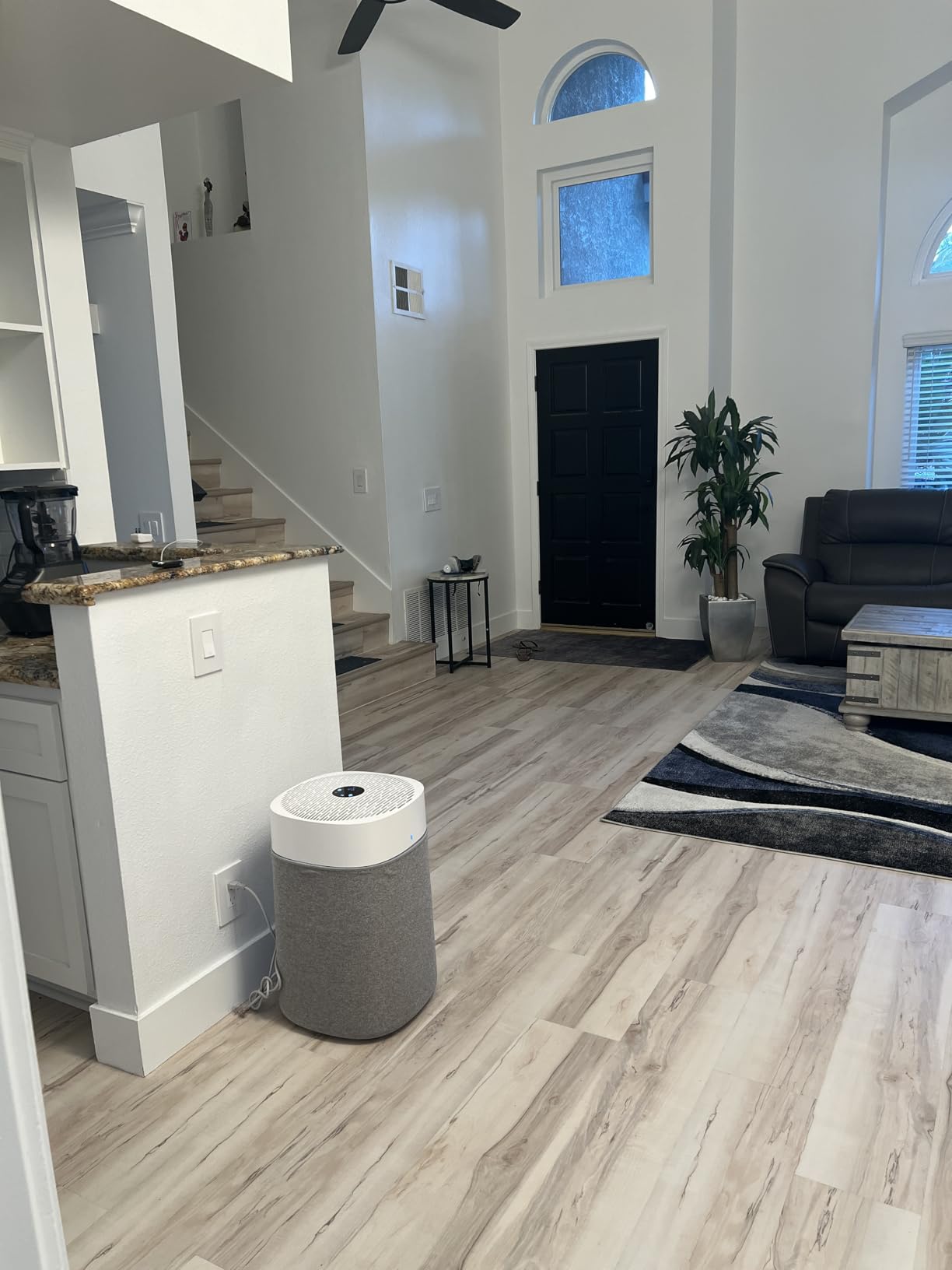
Being straight with you about the weakness: owners specifically call out that the carbon layer is thin relative to competing machines at the same tier, and the replacement filters are expensive. On a per-unit-of-carbon basis this is not the strongest odor machine here. What it is, without argument, is the fastest air mover, and that matters in a large room where the smell has more volume to fill.
The certification is a genuine plus in a home with pets. It is AHAM certified and explicitly a zero-ozone ionizer, which means you get the auto-adjusting convenience of an ionizing design without the ozone concern the EPA raises. The 3-year warranty requires registration, so register it when you set it up.
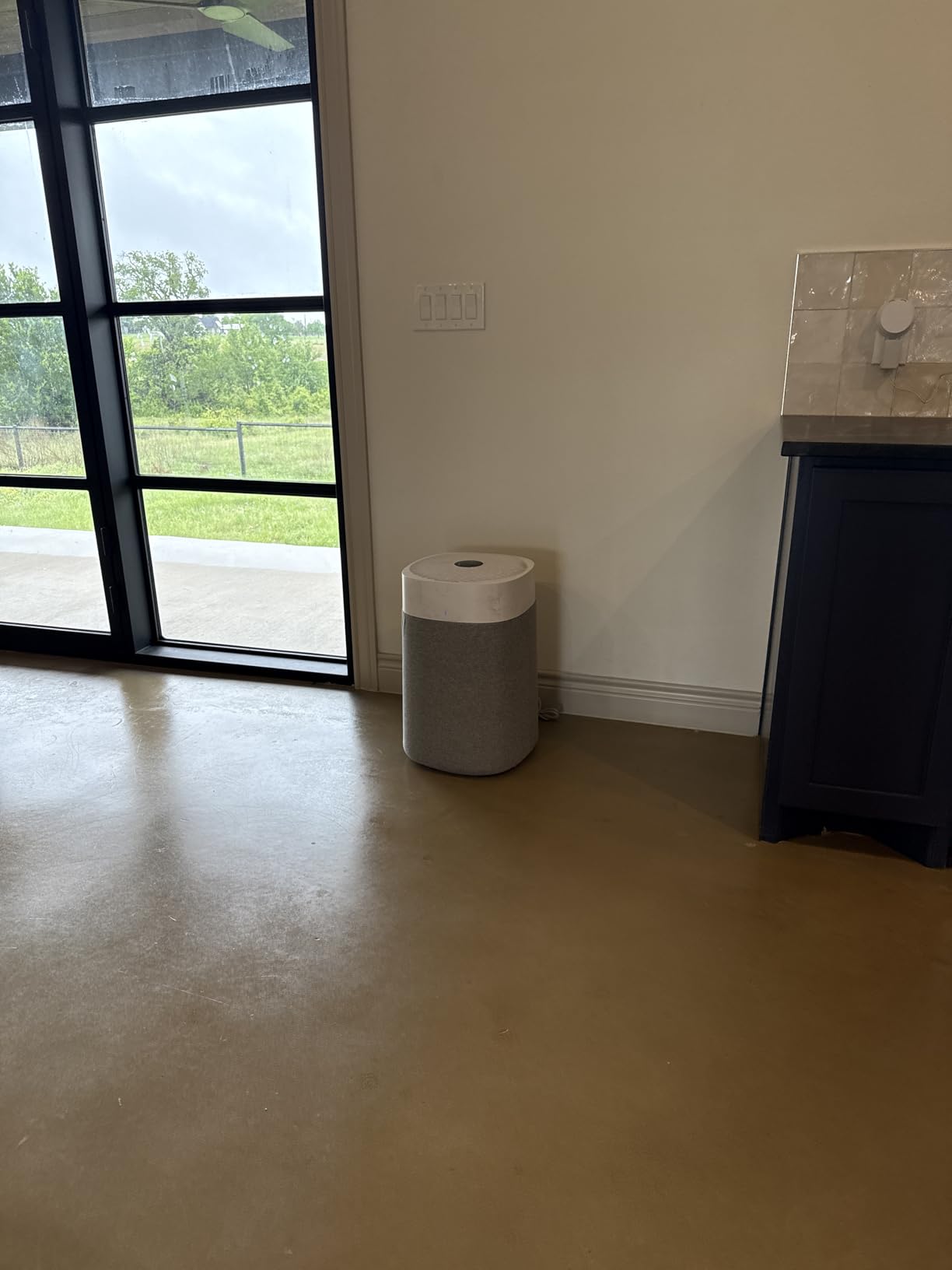
Air Delivery, Sensors, and Clearance
Coverage figures of 3,235 square feet in one hour and 674 square feet in 12.5 minutes reflect genuinely high output. When you normalize that to a real air changes per hour figure, it comfortably covers a large open-plan main floor, and it will do it faster than any other machine in this list.
The built-in air quality sensors with automatic fan adjustment were validated by owners against real smoke events, which is unusual specificity for a review base. Alexa and app control are present, and the app tracks filter life, though connectivity can drop intermittently. Sleep mode and dimmable lights handle nighttime use.
Who Should Buy This Purifier
Buy it for an open-plan living and dining space, a finished basement, or a large home where one machine has to do the work of several. It is also the right call for anyone who wants an auto-adjusting purifier that states zero ozone release on the specification sheet.
Do not buy it purely for odor in a small room. You would be paying for airflow you do not need and settling for a carbon layer that is thinner than a smaller machine offers. For a strong smell in a normal-sized room, the Winix 5520 or the Coway Mighty is a smarter allocation of the same budget.
10. Blueair Blue Pure 511i Max – Best for Bedrooms, Nurseries, and Dander Control
BLUEAIR Air Purifiers for Home Bedroom Dorm up to 1,138 Ft², Blue 511i Max
19dB quietest setting
HESPASilent to 0.1 microns
App filter tracking
2.84 lb
+ Pros
- Quietest operation in the roundup at 19 dB
- Targets pet dander and mold particles
- Compact modern footprint
- App gives air quality and filter reminders
– Cons
- Higher purchase cost than comparable units
- Replacement filters add ongoing expense
- Room coverage limited to small spaces
At 19 dB, the Blue Pure 511i Max is the quietest unit we tested, which makes it the natural fit for a bedroom, a nursery, or a home office where the unit runs overnight. Reviewers consistently recommend it for exactly those rooms, and the very low operating noise is the single reason they give.
Filtration is HEPASilent dual filtration capturing 99.97 percent of particles down to 0.1 microns, and the specification list names pet dander, mold, dust, pollen, and smoke directly. Reviewers highlight its effectiveness against pet dander and pollen, which is why it shows up in allergy households as often as odor households.
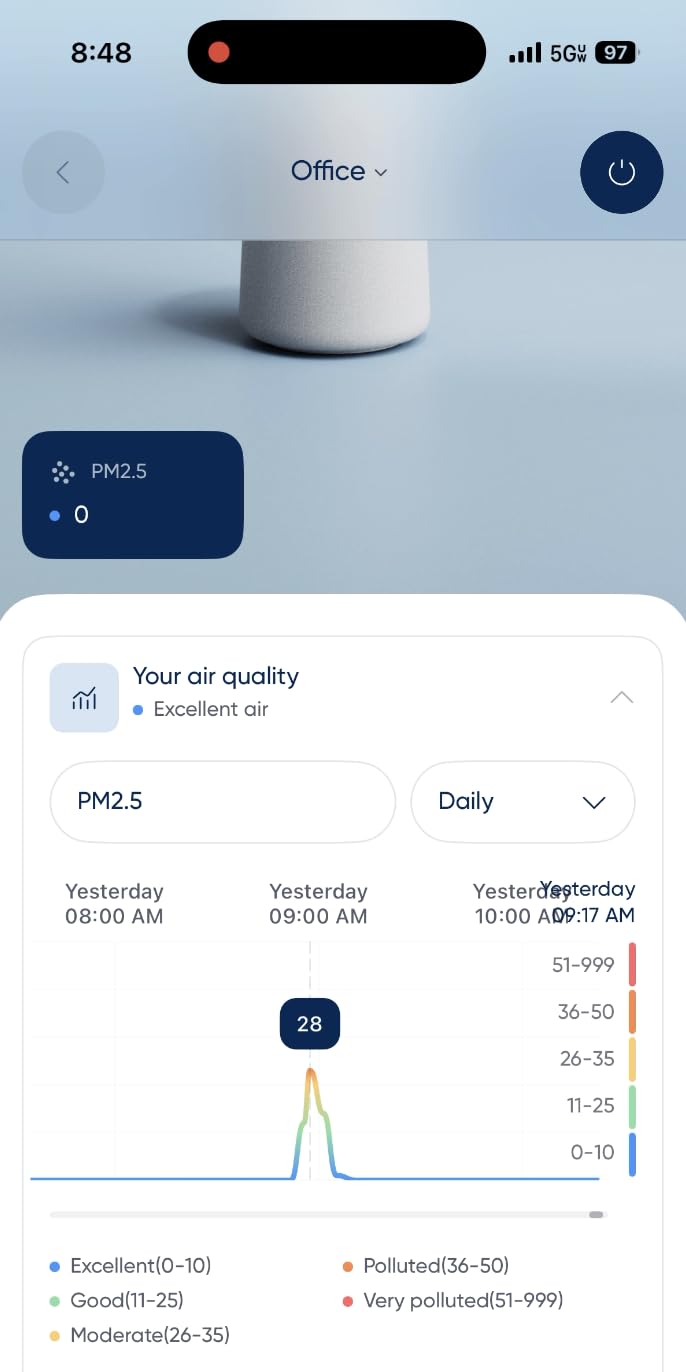
The built-in sensors with auto adjustment mean it responds to a room rather than a fixed setting, and the app provides both air quality readings and filter life reminders so you are not guessing at the replacement interval. The 2.84 pound weight and compact Scandinavian profile make it easy to place where it will actually stay put.
Be aware of the tradeoffs. Buyers note the purchase and filter costs run higher than comparable compact units, and coverage is limited to smaller rooms compared with full-size models. As an odor machine specifically, the carbon stage here is modest, so think of it as a dander and particle solution that also reduces light smells.
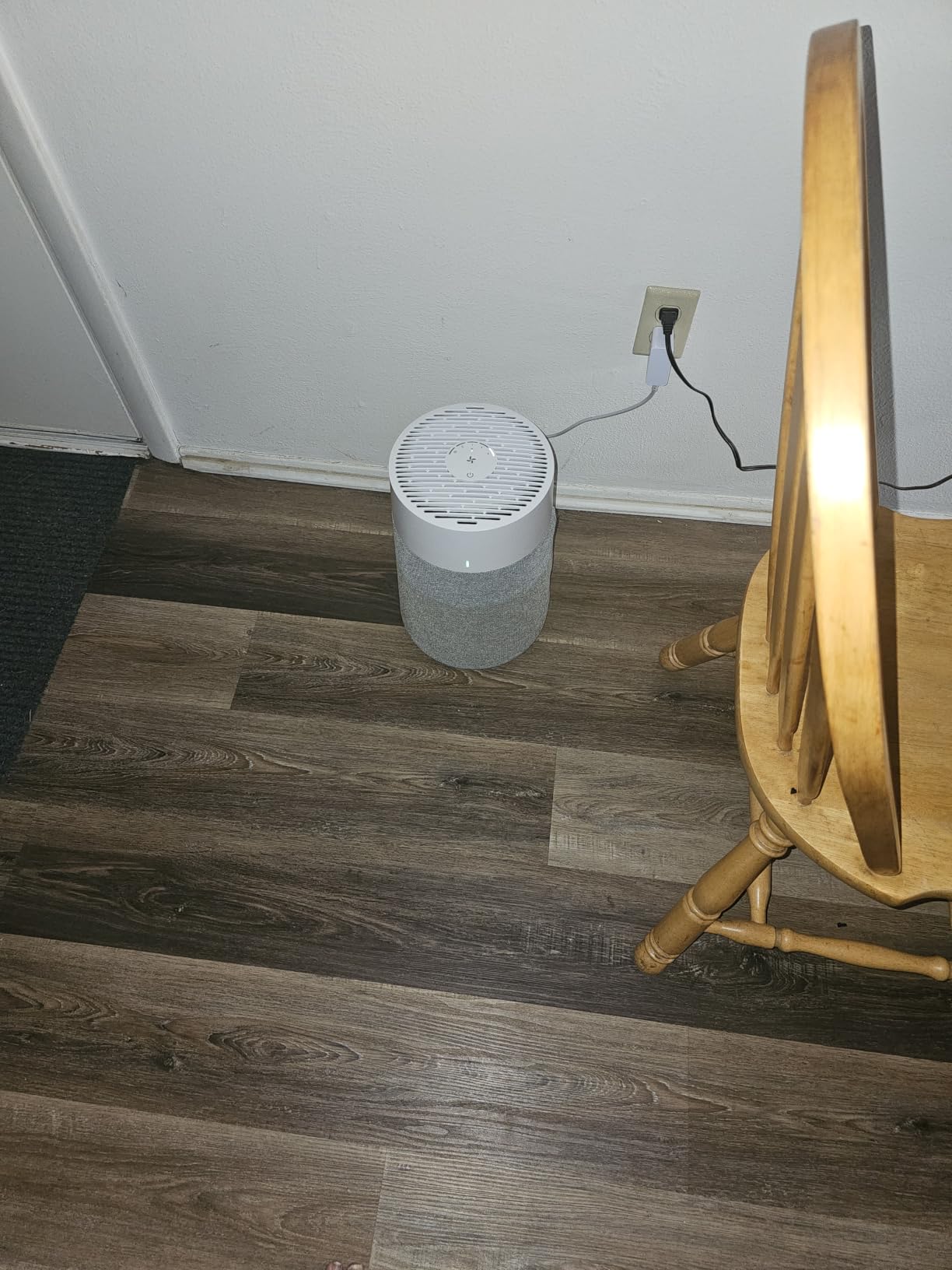
Quiet Operation for Sleeping Rooms
The 19 dB figure comes from the quietest setting, and in a dark bedroom with the display dimmed it is effectively silent. For a household where the smell builds at night, or where a pet sleeps in the room, that silence is what keeps the machine running rather than being unplugged after a week.
Reviewers also like that it is a bedroom-first design rather than a small version of a large machine. The 360-degree air intake works from any position, which matters in a tight room where you cannot leave 20 inches of clearance on every side. Coverage of 1,138 square feet in one hour suits a small bedroom, dorm, or nursery.
Who Should Buy This Purifier
Buy it for a child’s room, a main bedroom, a dorm, or a study where the requirement is the quietest possible operation and dander removal. It is a good companion purifier for a larger home that already has a big machine handling the main floor.
Pass on it if your problem is a strong, established smell rather than light background odor, because the carbon stage is the limiting factor. The Winix 5520 is the smarter buy for odor specifically, and readers focused on dander and asthma should read our allergy purifier roundup.
How to Choose an Air Purifier for Pet Odor Without Wasting Money
Most disappointing purifier purchases in this category are not undersized on filtration. They are undersized on carbon. Walk through these criteria in order and you will usually end up with a machine that handles your specific smell problem rather than one that merely handles your pet’s hair.
Activated Carbon: The Stage That Does the Work
Activated carbon is the non-negotiable component, and the amount of it matters more than any other spec. Carbon adsorbs odor molecules onto a porous surface, which means capacity is finite and the media has to be replaced when it saturates. A thin carbon-coated sheet has very little mass behind it and will do almost nothing, which is exactly the disappointment r/HomeImprovement owners describe when they point out that super light, thin carbon filters in typical big-box machines will not do much at all.
Look for a named carbon stage in the specification sheet, not a phrase like odor eliminating in the marketing copy. Honeycomb carbon, pelletized carbon, and carbon media with a disclosed mass are all reasonable. A filter described only as containing carbon is a warning sign, because you cannot verify capacity from a product page that never states it.
Washable Pre-Filter: The Cheapest Performance Upgrade
The pre-filter catches loose hair and lint before it reaches the expensive media, and a washable one costs nothing to maintain. In a shedding-dog home this is not a minor feature. Owners of washable pre-filters clean them every one to two weeks and report noticeably better sustained airflow, because a clogged first stage chokes the whole system.
The practical effect is that your HEPA and carbon stages last longer between replacements, which reduces your total running cost. Every purifier on this list that offers a rinseable pre-filter should be considered ahead of an otherwise similar unit without one.
Room Coverage and CADR: Sizing It Honestly
Ignore the coverage number on the box. It is almost always calculated at a single air change per hour, which is far too optimistic for an odor problem where you want the room turned over several times an hour. The AHAM 2/3 rule of thumb says to take the smoke CADR, multiply by two-thirds, and match that to your room’s volume, which gives a defensible rather than a marketing figure.
As a working shortcut, a 200 square foot bedroom needs roughly 100 CFM of smoke CADR, a 500 square foot living room needs around 250 CFM, and a 1,000 square foot open plan needs 400 CFM or more. Our large room air purifier guide works through larger layouts in detail. If a room is closed off by a door, a second smaller purifier in the far end will beat one large purifier in the near end.
Carbon Mass and Saturation: Knowing When the Smell Comes Back
Carbon never looks dirty. It saturates invisibly, and the first sign is odor returning while the purifier is still running flat out. That is the diagnostic most guides skip, and it is the reason people buy a second unit instead of a replacement filter.
If odor fades after a month and comes back, the sorbent is spent, not the fan. Replace the carbon stage before you blame the machine. If odor returns within two weeks of a fresh filter, the unit is undersized for the room, or the carbon layer was thin to begin with and no amount of filter swapping will fix it.
Ozone, Ionizers, and Certification Labels
The EPA warns against ozone-generating air cleaners, and pet homes are exactly the environment where that guidance matters because animals spend their whole lives at floor level where ozone settles. Any unit that produces ozone as a side effect of ionization deserves caution, and a purifier that states zero ozone release is the safer default.
Look for CARB compliance, UL 2998 for bipolar ionization devices, and AHAM VERIFIDE for the CADR figure. If a room contains a small child, an asthmatic pet, or a bird, treat any ionizer as a compromise rather than a neutral feature.
Filter Cost and the Three-Year View
Filter cost is the largest recurring expense in purifier ownership and the top complaint in owner forums. The useful calculation is simple: take the replacement filter price, multiply by the number of changes the environment demands, and add it across three years before you commit. A cheap machine with a costly proprietary filter often costs more than a mid-priced unit with affordable media.
Establish a maintenance rhythm while you are still enthusiastic. Rinse the washable pre-filter every one to two weeks in a shedding home, plan a carbon replacement every three to six months where odor is heavy, and treat a HEPA replacement every six to twelve months as the baseline. Owners who clean the pre-filter on schedule report the machine running as well at month eight as it did in week one.
What to Do When the Purifier Is Not Enough
A purifier clears air. It does not clean a source, and no filter rating changes that. If the smell is soaked into carpet, upholstery, or bedding, the sequence that works is straightforward: remove the odor at the source first, treat it enzymatically rather than with masking fragrance, wash bedding hot, and run the purifier continuously in the room afterward to clear what the cleaning lifted into the air.
In an apartment where the windows cannot be opened, ventilation is not an option, so the source protocol carries more weight than usual. Scooping daily limits the ammonia load at the litter box more than any filter can. Switching to a heavily activated-carbon or low-dust clumping litter produces a measurable reduction in household odor, and owners on r/CatAdvice report it clearly. Purging the room and running the purifier at high output for an hour clears the residual, which is the step most people skip.
Finally, verify that your purifier is working rather than assuming it. Run it for ten minutes, hold a thin strip of tissue near the intake, and confirm you feel consistent airflow. That single check catches the most common failure mode, which is a unit that is powered on, in auto mode, and moving almost no air.
Frequently Asked Questions
Do air purifiers actually eliminate pet odors?
Only partly, and only if they have real carbon. Pet odor is made of airborne volatile organic compounds rather than particles, so a HEPA filter alone traps dander while leaving the smell untouched. Activated carbon is the stage that adsorbs those gases. A purifier also cannot remove odor soaked into carpets, upholstery, or bedding, so source cleaning is still required.
What is the best air purifier for removing dog odours?
For a strong dog smell in a normal-sized room, the Winix 5520 is the strongest option here, because it pairs a honeycomb activated carbon stage with a washable pre-filter and AHAM VERIFIDE certification at 392 square feet. For a large open plan, the Blueair 211i Max moves far more air. For a small bedroom, the Levoit Core 300-P runs quietly enough to leave switched on overnight.
What is the most powerful pet odor eliminator?
The most powerful odor setup is a carbon-heavy purifier placed directly at the odor source, not a bigger purifier placed across the room. Size the machine to the room using the AHAM two-thirds smoke CADR rule, run it continuously rather than intermittently, and pair it with daily source removal. A large unit in a distant corner will never outperform a correctly sized unit beside the litter box or crate.
Do carbon filters really remove smell?
Yes, but capacity decides how well and for how long. Carbon adsorbs odor molecules onto a porous surface, and a heavier bed holds more before saturating. Thin carbon-coated sheets hold very little and do almost nothing. A useful warning sign is odor returning within weeks of a fresh filter, which points to a thin carbon layer or an undersized machine rather than a spent one.
What is the 2/3 rule for air purifiers?
The AHAM two-thirds rule is a sizing method. Take a purifier’s smoke CADR in cubic feet per minute, multiply it by two-thirds, and match that figure to your room volume in cubic feet. A purifier sized this way delivers roughly four to five air changes per hour, which is a realistic odor-control target. Coverage claims printed on boxes usually assume only one air change per hour.
Are ionizer air cleaners safe for pets?
Ionizers can generate ozone as a byproduct, and the EPA advises caution with ozone-generating devices, especially in homes with children and pets. Many modern designs are mild enough to be widely used, but the safer default is a purifier that states zero ozone release or carries CARB compliance. If you want auto-adjusting behavior without the concern, choose a zero-ozone ionizer or a purely mechanical design.
The Verdict: Which Purifier Wins for Pet Odor
If you want one machine and no hesitation, take the Levoit Core 300-P. Its AHAM VERIFIDE rating, honest 143 CFM smoke CADR, and 24 dB sleep mode make it the most trustworthy general choice in 2026, and it is the one we run every day. A bedroom, a home office, or a small apartment living space is exactly where it belongs.
For a strong or established smell, buy the Winix 5520. Its honeycomb carbon stage and washable pre-filter do more gas-phase work than anything else in this roundup, and that is the single factor that decides whether odor actually clears. For a large open plan where one machine has to do everything, the Blueair 211i Max moves the most air, with a stated zero-ozone ionizer for pet safety.
For small rooms and tight budgets, the Levoit Core Mini-P does the least and costs the least, which is the right trade. The MOOKA PR1 is the pick for multi-pet homes that want a rinseable pre-filter and a dedicated Pet Mode, and the Blueair 511i Max wins the nursery at 19 dB.
Whatever you choose, run it continuously, clean the pre-filter every one to two weeks, and remove the odor at its source. Purifiers clear air, and only source control keeps it clear. Our companion guide to odor eliminators for pet owners covers the rest of that protocol.
Last tested in October 2026. We update this roundup as new models and revised filter specifications land, and every figure here comes from the manufacturer specification or an independently published review count.
Leave a Reply