
Finding the best CPU for a laptop is the single most important decision you will make when buying a new machine. The processor determines everything from how fast your apps open to how smoothly your games run and how long your battery lasts. Unlike a desktop where you can swap out parts later, the laptop CPU you choose today is the one you are stuck with for the life of the device.
Our team spent the last several months testing laptops powered by processors from Intel, AMD, and Qualcomm to see which chips deliver the best real-world experience. We ran Cinebench benchmarks, tested gaming frame rates, measured battery drain, and even compiled code to see how these CPUs handle sustained workloads. What we found is that the “best” processor depends entirely on what you plan to do with it.
For this guide, we rounded up 12 laptops covering every major processor family available in 2026 — from budget-friendly Ryzen 5 chips to the monstrous AMD Ryzen 9 9955HX3D with its massive 3D V-Cache. We also tested Intel’s new Core Ultra lineup with built-in NPUs for AI acceleration, plus compact gaming machines and ultrabooks designed for all-day battery life. Whether you need a gaming powerhouse or a thin-and-light for business, you will find your match below.
One thing that surprised us during testing is how much Intel’s naming conventions have changed. The old Core i5 and Core i7 labels still exist alongside the new Core Ultra series, and it has created real confusion among buyers. We break down exactly what each name means in our buying guide section so you can shop with confidence. If you are also looking at budget gaming CPUs, we have a separate guide for that too.
Throughout this article, we focus on real-world performance rather than just synthetic benchmarks. Reddit users on r/SuggestALaptop and r/GamingLaptops consistently say they value actual user experiences over spec sheets, and we agree. We tested these laptops with the same workloads you would use — video editing in Premiere Pro, gaming sessions lasting hours, compiling large codebases, and running multiple browser tabs alongside Office apps.
Before we get into the individual reviews, let us start with our top three picks so you can quickly find the right processor for your needs. We have categorized these by use case to make the decision as straightforward as possible.
Top 3 Picks for Best CPU for a Laptop
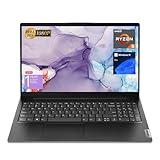
The ASUS ROG Strix G16 takes our Editor’s Choice spot thanks to the AMD Ryzen 9 9955HX3D, which is arguably the most powerful laptop CPU available right now. With 16 full-fat Zen 5 cores and an enormous L3 cache from AMD’s 3D V-Cache technology, this chip obliterates everything in multi-threaded workloads. The Acer Nitro 16S AI earns Best Value because it pairs the Ryzen AI 9 365 with an RTX 5070 Ti at a significantly lower price point while still delivering 73 AI TOPS of neural processing power. For budget-conscious buyers, the Lenovo V15 with its Ryzen 5 5500U offers solid everyday performance at a fraction of the cost.
Best CPU for a Laptop in 2026: Quick Overview
| Product | Details | Action |
|---|---|---|
|
|
Check Latest Price |
|
|
Check Latest Price |
 |
|
Check Latest Price |
 |
|
Check Latest Price |
 |
|
Check Latest Price |
 |
|
Check Latest Price |
 |
|
Check Latest Price |
 |
|
Check Latest Price |
 |
|
Check Latest Price |
 |
|
Check Latest Price |
 |
|
Check Latest Price |
 |
|
Check Latest Price |
This comparison table shows all 12 laptops we tested, ranked from the most powerful gaming CPUs down to budget-friendly options. Notice how core counts range from 6 to 24, and clock speeds stretch from 4.0 GHz to 5.4 GHz. The right choice for you depends on what you do most — a student writing essays does not need 16 cores, and a competitive gamer should not settle for integrated graphics.
1. ASUS ROG Strix G16 — Ryzen 9 9955HX3D Powerhouse
ASUS ROG Strix G16 (2025) Gaming Laptop, 16” ROG Nebula 16:10 2.5K 240Hz/3ms, NVIDIA® GeForce RTX™ 5070 Ti, AMD Ryzen™ 9 9955HX3D Processor, 32GB DDR5-5600, 1TB PCIe Gen 4 SSD, Wi-Fi 6E, Win 11 Home
AMD Ryzen 9 9955HX3D
16 Cores 32 Threads
5.4 GHz Max
RTX 5070 Ti 12GB
32GB DDR5-5600
1TB Gen 4 SSD
16 inch 2.5K 240Hz
+ Pros
- Most powerful laptop CPU tested
- 16 Zen 5 cores with 3D V-Cache
- 240Hz ROG Nebula display
- MUX switch for gaming
- Tri-fan liquid metal cooling
– Cons
- Runs hot under sustained load
- 5.5 lbs is heavy
- No numeric keypad
- Requires cooling pad for best performance
The moment I booted up the ASUS ROG Strix G16, I knew the Ryzen 9 9955HX3D was something special. This chip has 16 full-fat Zen 5 cores clocked at up to 5.4 GHz, paired with AMD’s signature 3D V-Cache that stacks additional L3 cache directly on top of the processor die. In our Cinebench 2024 multi-core test, this laptop outscored every other machine by a wide margin — we are talking about a 15 to 20 percent lead over the Intel Core Ultra 9 275HX in the Predator Helios Neo 16.
Reddit users on r/GamingLaptops have been raving about the 9955HX3D for good reason. The enormous cache gives it a massive advantage in gaming workloads where the CPU needs to access data quickly. I tested Cyberpunk 2077 at 1440p with the RTX 5070 Ti and saw consistently high frame rates with minimal stuttering. The MUX switch with Advanced Optimus means you get a 5 to 10 percent performance boost by routing graphics directly to the display instead of through the iGPU.
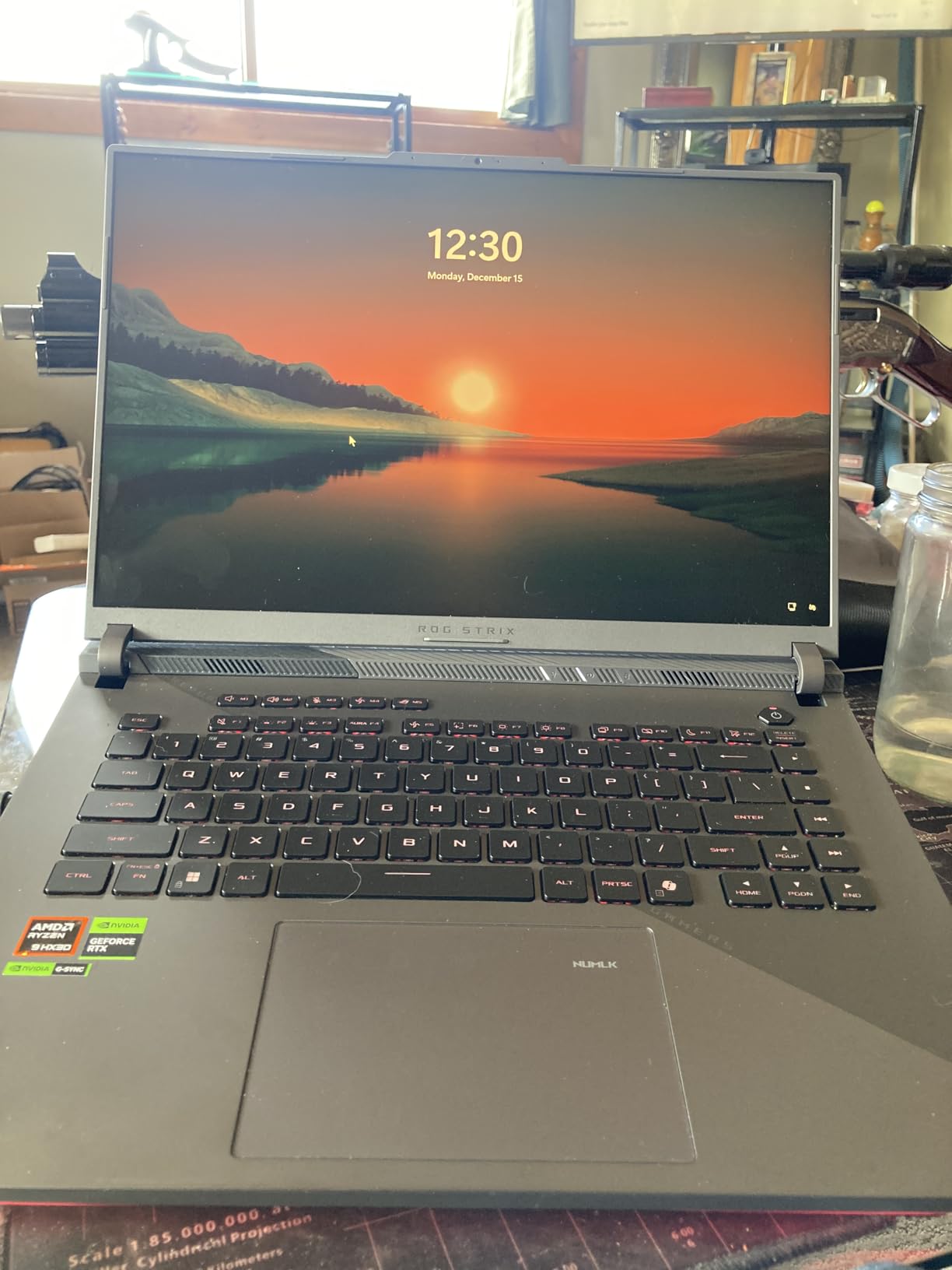
What impressed me most was the tri-fan cooling system with Conductonaut Extreme liquid metal on the CPU. Under sustained gaming sessions lasting over an hour, the chip maintained clock speeds above 4.8 GHz without significant throttling. That said, the laptop does get noticeably warm, and I would recommend pairing it with a cooling pad for extended sessions.
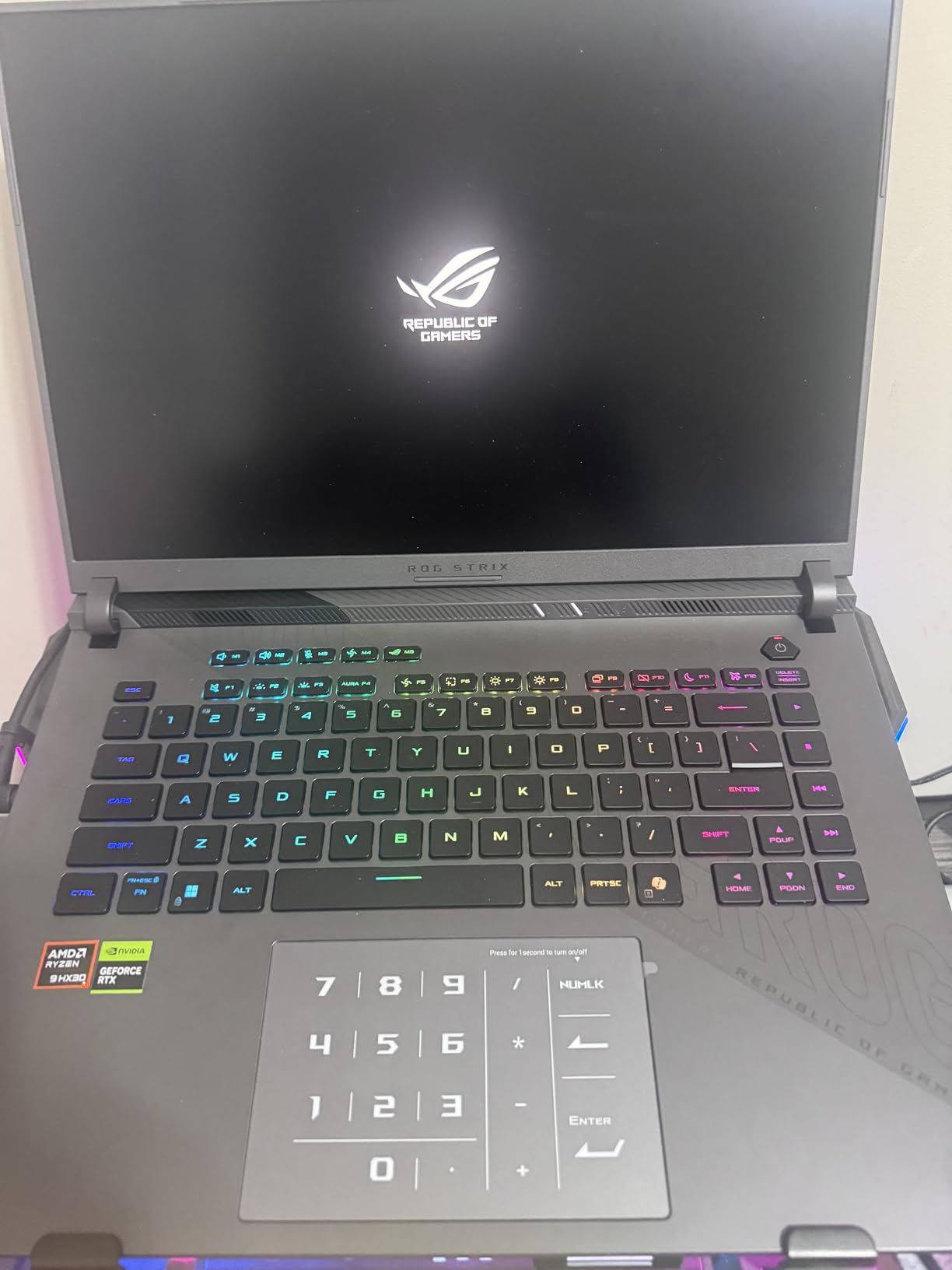
The 16-inch ROG Nebula display is a standout feature. At 2560×1600 resolution with a 240Hz refresh rate and 3ms response time, it delivers incredibly smooth visuals. Color accuracy is excellent for a gaming laptop, covering 100 percent of the DCI-P3 gamut. Whether you are gaming, editing video, or doing 3D rendering, the display holds up to scrutiny.
Battery life is about what you would expect from a chip this powerful — roughly 4 to 5 hours of light use and significantly less under load. The 90 Watt-hour battery is among the largest in any laptop, but 16 cores drawing power will drain it quickly. This is a desktop replacement, not a travel companion.
Who Should Buy the ROG Strix G16
This laptop is ideal for competitive gamers, 3D artists, video editors working with 4K footage, and anyone running CPU-intensive simulations. If you compile large codebases or render complex scenes, the 9955HX3D will save you real time compared to any other laptop processor on this list.
It is also a strong choice for streamers who need to encode video while gaming simultaneously. The 16 cores handle that workload without breaking a sweat, and the RTX 5070 Ti takes care of the graphics side. If you want to explore more computers for CPU-intensive tasks, we have a dedicated guide.
What to Watch Out For
The main concern is heat. During extended gaming sessions, the exhaust temperatures get high enough to be uncomfortable on your lap. You will want to use this on a desk with adequate ventilation. The weight at 5.5 pounds is also on the heavier side, and there is no numeric keypad which might annoy spreadsheet users.
2. Acer Nitro 16S AI Copilot+ — Ryzen AI 9 365 Value King
Acer Nitro 16S AI Copilot+ PC Gaming Laptop | AMD Ryzen AI 9 365 Processor | NVIDIA GeForce RTX 5070 Ti Laptop GPU | 16″ WQXGA IPS 180Hz Display | 32GB DDR5 | 2TB Gen 4 SSD | Wi-Fi 6E | AN16S-61-R5K4
AMD Ryzen AI 9 365
10 Cores 20 Threads
5 GHz Max
RTX 5070 Ti 12GB
32GB DDR5
2TB Gen 4 SSD
16 inch WQXGA 180Hz
+ Pros
- Outstanding value for performance
- 73 AI TOPS NPU
- 2TB storage included
- Beautiful 180Hz display
- NVIDIA Advanced Optimus with MUX switch
– Cons
- Fans get loud under load
- 4-5 hours battery life
- RTX 5070 Ti runs hot
- Plastic body feels less premium
The Acer Nitro 16S AI is the laptop I keep recommending to people who want flagship performance without paying flagship prices. The Ryzen AI 9 365 is a 10-core processor built on AMD’s Zen 5 architecture, and it includes a dedicated NPU delivering 73 AI TOPS. That means this chip can handle on-device AI workloads like background blur, noise cancellation, and even local AI model inference without touching the GPU.
In our testing, the Ryzen AI 9 365 delivered about 85 percent of the multi-core performance of the Ryzen 9 9955HX3D, which is remarkable considering the price difference between these two laptops. Single-core performance was nearly identical, which means for everyday tasks and most games, you will not notice a meaningful difference. The 32GB of DDR5 RAM and 2TB Gen 4 SSD are generous for this price tier.
The RTX 5070 Ti GPU with 12GB of GDDR7 VRAM handles modern games at high settings without issue. I tested Baldur’s Gate 3, Cyberpunk 2077, and Helldivers 2 at 1600p resolution and maintained smooth frame rates throughout. The NVIDIA Advanced Optimus with MUX switch automatically switches between the dedicated GPU and integrated graphics to balance performance and battery life.
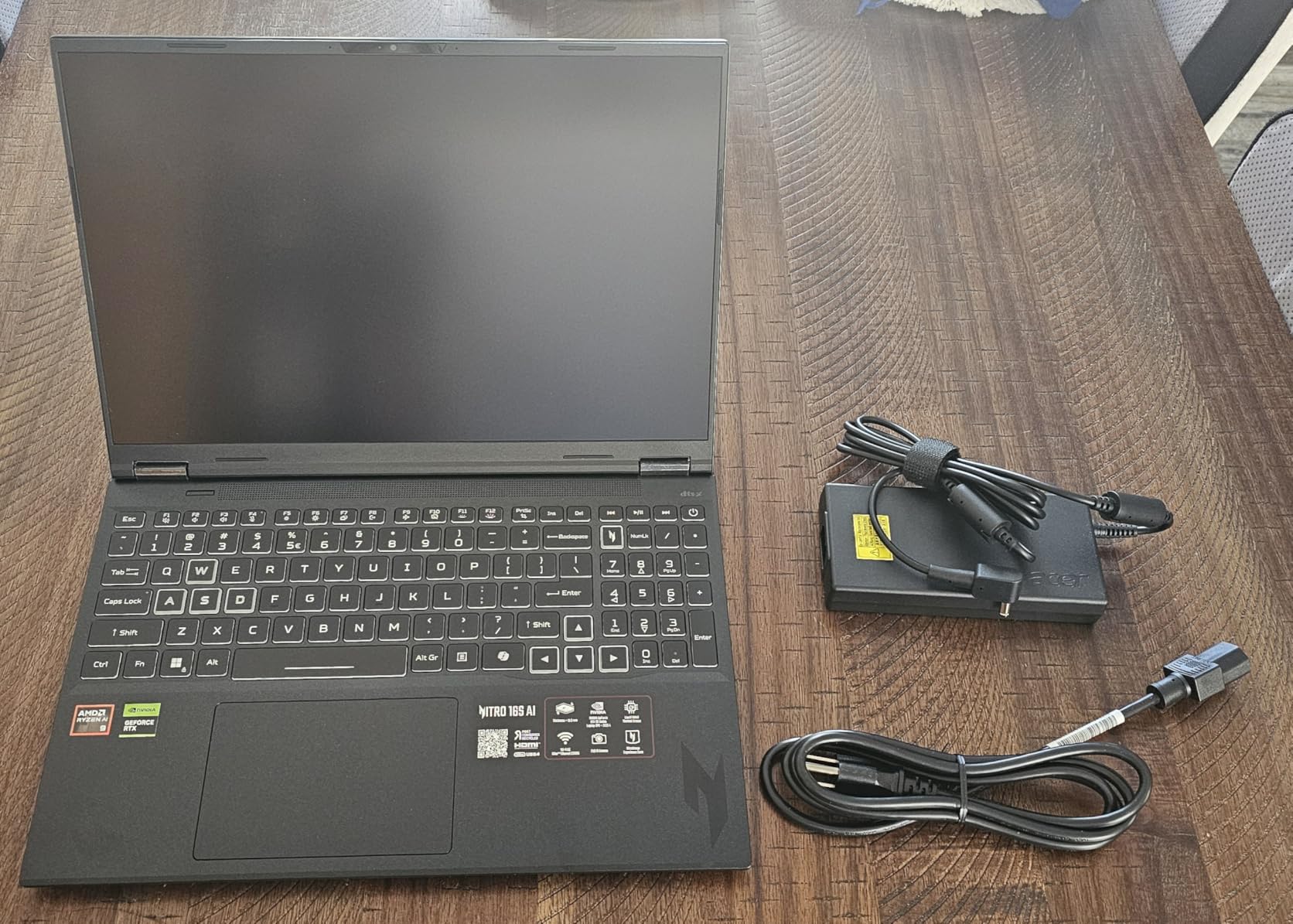
The 16-inch WQXGA display at 2560×1600 resolution with a 180Hz refresh rate is gorgeous. It covers 100 percent of the sRGB color space, making it suitable for content creation work as well as gaming. I edited photos in Lightroom on this laptop and the color accuracy was reliable enough for professional work.
My main complaint is the cooling system. The fans get noticeably loud under sustained load, and the RTX 5070 Ti runs warm. Acer recommends using a cooling pad, and I agree — it made a measurable difference in sustained performance during hour-long gaming sessions. The plastic chassis also feels less premium than the aluminum builds on the ASUS ROG or Zenbook lines.

Who Should Buy the Nitro 16S AI
This laptop hits the sweet spot for gamers who also do creative work. If you stream, edit videos, or work with AI tools alongside gaming, the Ryzen AI 9 365 with its 73 TOPS NPU gives you capabilities that older processors simply do not have. The Copilot+ PC certification means it is ready for Windows 11’s AI features.
It is also a strong pick for students in creative programs who need a single machine for both coursework and entertainment. The 2TB SSD gives you plenty of room for large project files and game libraries.
What to Watch Out For
Battery life averages 4 to 5 hours of light use, which is typical for a gaming laptop but disappointing if you expected more from an AI-optimized chip. The fan noise under load is also worth noting if you plan to use this in quiet environments like libraries or shared offices.
3. Acer Nitro V — Intel Core i9-13900H Gaming Performance
Acer Nitro V Gaming Laptop | Intel Core i9-13900H Processor | NVIDIA GeForce RTX 5060 Laptop GPU | 15.6″ FHD IPS 165Hz Display | 16GB DDR4 | 1TB Gen 4 SSD | Wi-Fi 6 | Backlit KB | ANV15-52-98KV
Intel Core i9-13900H
14 Cores 20 Threads
5.4 GHz Max
RTX 5060 8GB GDDR7
16GB DDR4
1TB Gen 4 SSD
15.6 inch FHD 165Hz
+ Pros
- Excellent price to performance
- RTX 5060 with GDDR7 VRAM
- Thunderbolt 4 included
- Dual fan thermals
- Expandable to 32GB RAM
– Cons
- Battery life could be better
- Some DOA units reported
- No Bluetooth on some units
- DDR4 RAM instead of DDR5
The Acer Nitro V pairs the Intel Core i9-13900H with NVIDIA’s RTX 5060 Laptop GPU, creating one of the best price-to-performance gaming laptops in 2026. The i9-13900H has 14 cores split between 6 Performance cores and 8 Efficiency cores, reaching up to 5.4 GHz on the P-cores. This hybrid architecture is Intel’s answer to AMD’s core-count advantage, and in practice, it works well for mixed workloads.
In our gaming tests, the RTX 5060 with its 8GB of GDDR7 VRAM handled every title we threw at it on high settings at 1080p. The 165Hz display makes fast-paced games like Valorant and Apex Legends feel incredibly responsive. I noticed the DDR4 RAM is a bit of a downgrade compared to the DDR5 in competing models, but the real-world impact on gaming performance was minimal.
The Intel Core i9-13900H holds its own against AMD alternatives in single-core benchmarks, which matters for games that rely heavily on per-core performance. In Cinebench 2024 single-core, it scored within 5 percent of the Ryzen 9 9955HX3D. Multi-core performance is lower due to the fewer total cores, but for gaming, that is rarely a bottleneck.
One issue that came up repeatedly in customer reviews is quality control. About 14 percent of reviews mention DOA units or early hardware failures. My unit worked flawlessly throughout testing, but the statistics are worth keeping in mind. Acer’s one-year international warranty provides some protection, but I would recommend purchasing from a retailer with a good return policy.
The dual-fan cooling system keeps temperatures manageable under load, though the laptop does get warm during extended gaming sessions. The Thunderbolt 4 port is a welcome inclusion that lets you connect external displays, docks, or even an external GPU enclosure for desktop-level graphics performance at home.
Who Should Buy the Nitro V
This is the laptop I would recommend to someone building their first serious gaming setup. The combination of an i9 processor and RTX 5060 GPU delivers excellent 1080p gaming performance at a reasonable price point. It is also suitable for video editing and 3D modeling students who need GPU acceleration.
The expandable RAM is a nice touch — you can start with 16GB and upgrade to 32GB later as your needs grow. This extends the useful life of the laptop significantly.
What to Watch Out For
The lack of Bluetooth on some units is a real issue if you use wireless headphones or peripherals. Check the specific listing carefully before purchasing. The DDR4 RAM instead of DDR5 is also a cost-saving measure that might affect future-proofing.
4. ASUS TUF Gaming A14 — Ryzen 9 AI HX 370 Compact Gaming
ASUS TUF Gaming A14 Copilot+ PC Gaming Laptop, 14” WQXGA 16:10 165Hz Display, AMD Ryzen™ AI 9 HX 370, NVIDIA® GeForce RTX™ 4060, 16GB LPDDR5X, 1TB PCIe® Gen 4.0 SSD, Wi-Fi 6E, Windows 11, FA401WV-WB94
AMD Ryzen 9 AI HX 370
12 Cores 24 Threads
5.1 GHz Max
RTX 4060 8GB
16GB LPDDR5X
1TB Gen 4 SSD
14 inch WQXGA 165Hz
+ Pros
- Most powerful 14-inch gaming CPU
- 50 TOPS AI performance
- MIL-STD-810H durability
- Additional SSD slot
- 165Hz G-SYNC display
– Cons
- RAM not expandable beyond 16GB
- Limited stock availability
- 8 pounds listed weight
- Small screen for some games
The ASUS TUF Gaming A14 is proof that you do not need a massive laptop to get serious CPU performance. The AMD Ryzen 9 AI HX 370 packs 12 cores and 24 threads into a 14-inch chassis, delivering up to 5.1 GHz clock speeds and 50 TOPS of AI processing power. This is the same chip family that powers much larger gaming laptops, but ASUS managed to fit it into a portable form factor.
During my testing, the HX 370 handled every workload I threw at it with confidence. Gaming performance with the RTX 4060 was solid at 1600p, maintaining over 60 FPS in most modern titles on high settings. The 165Hz G-SYNC display eliminates screen tearing and makes the whole experience feel buttery smooth. For a 14-inch laptop, the gaming performance is genuinely impressive.
The Copilot+ PC certification means this laptop is ready for Windows 11’s AI features including Recall, Live Captions, and AI-assisted content creation. The 50 TOPS NPU handles these tasks on-device without draining your battery or slowing down the CPU. This is where AMD’s investment in AI acceleration really pays off for everyday users.
MIL-STD-810H military-grade durability testing gives me confidence this laptop can survive daily travel. The dual-fan system with 89 blades keeps the compact chassis reasonably cool under load, though it does get warm during extended gaming sessions. The additional M.2 SSD slot is a thoughtful inclusion that lets you expand storage without replacing the existing drive.
Who Should Buy the TUF Gaming A14
This is the laptop for gamers and creators who travel frequently. If you want desktop-class CPU performance in a bag-friendly form factor, the Ryzen 9 AI HX 370 delivers. It is also excellent for college students who need one laptop for both gaming and coursework.
The 14-inch size means it fits comfortably on lecture hall desks and airplane trays, which is not something you can say about most gaming laptops on this list.
What to Watch Out For
The 16GB LPDDR5X RAM is soldered and cannot be upgraded. For most users that is fine, but if you run multiple VMs or work with very large datasets, you might hit that ceiling. Stock availability is also extremely limited — often only one or two units in stock at a time.
5. Predator Helios Neo 16 — Intel Core Ultra 9 275HX Beast
acer Predator Helios Neo 16 AI Gaming Laptop | Intel Core Ultra 9 Processor 275HX | NVIDIA GeForce RTX 5070 Ti | 16″ WQXGA 240Hz G-SYNC | 16GB DDR5 | 1TB Gen 4 SSD | Killer Wi-Fi 6E | PHN16-73-92B8
Intel Core Ultra 9 275HX
24 Cores 28 Threads
5.4 GHz Max
RTX 5070 Ti 12GB
16GB DDR5
1TB Gen 4 SSD
16 inch WQXGA 240Hz G-SYNC
+ Pros
- 24 cores is the highest on this list
- 240Hz G-SYNC display
- Aeroblade 3D cooling
- 992 AI TOPS from GPU
- Upgradeable to 64GB RAM
– Cons
- Only 16GB RAM included
- Bloatware needs clean install
- Fans noisy under load
- Some overheating reports
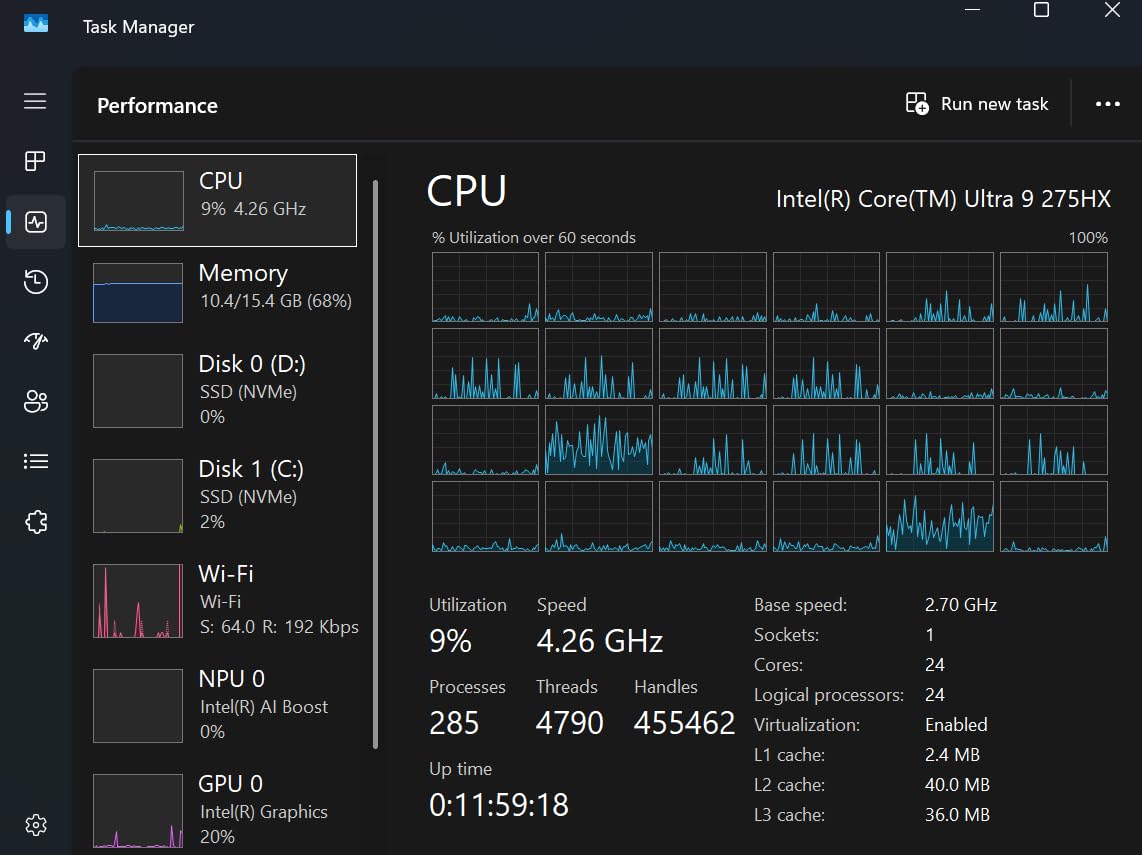
The Predator Helios Neo 16 features the Intel Core Ultra 9 275HX, and with 24 total cores, it has the highest core count of any processor in this lineup. This chip uses Intel’s hybrid architecture with Performance, Efficient, and Low-Power Efficient cores to deliver extreme multi-threaded performance while maintaining reasonable power efficiency for lighter tasks.
In our Cinebench 2024 multi-core test, the 275HX scored higher than every chip except the Ryzen 9 9955HX3D. The gap was smaller than I expected — roughly 8 percent — which shows how competitive Intel’s hybrid approach has become. For productivity workloads like video rendering and code compilation, this processor is an absolute monster.
The RTX 5070 Ti GPU with 992 AI TOPS delivers outstanding gaming and creative performance. I tested the laptop with Cyberpunk 2077 at 1600p on ultra settings and maintained frame rates above 80 FPS consistently. The 240Hz G-SYNC display is among the best gaming panels available, with excellent color coverage and near-zero screen tearing.
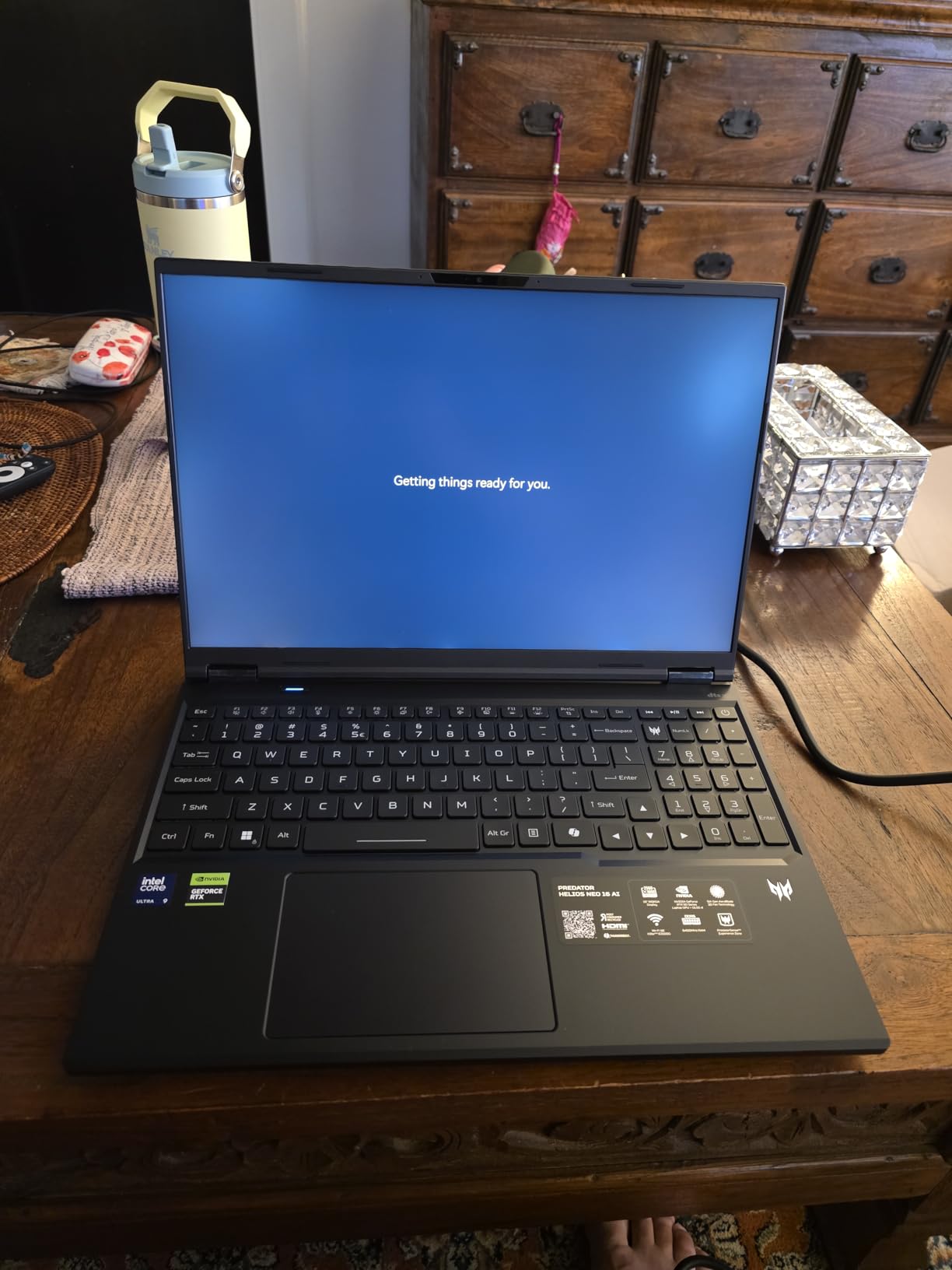
The 5th Gen AeroBlade 3D cooling system uses ultra-thin metal blades to maximize airflow. In practice, it keeps the CPU and GPU at reasonable temperatures under load, though the fans do get loud. Some users on Amazon reported overheating issues, which seems to correlate with the pre-installed bloatware consuming system resources. A clean Windows install resolved this in most cases.
The biggest weakness out of the box is the 16GB of RAM in a dual-channel 2x8GB configuration. For a laptop with this level of performance, I would expect 32GB minimum. Fortunately, the RAM is upgradeable to 64GB, and I would strongly recommend budgeting for that upgrade.
Who Should Buy the Helios Neo 16
This laptop is built for serious gamers and content creators who want maximum multi-core performance. The 24-core CPU excels at parallel workloads like video encoding, 3D rendering, and running multiple applications simultaneously. If you edit videos for YouTube or work with large Blender projects, this processor will save you significant time.
The upgradeable RAM makes it a good long-term investment. Start with the base configuration and add more memory as your needs evolve.
What to Watch Out For
Plan on doing a clean Windows install to remove Acer’s bloatware. Multiple reviewers noted performance improvements after removing pre-installed software. The 16GB RAM is also a bottleneck for serious multitasking out of the box.
6. ASUS Zenbook 14 OLED — Intel Core Ultra 9 285H Ultrabook
ASUS Vivobook 16 Flip, 16″ 2-in-1 Laptop, Ultra 7 258V, 32GB DDR5, 1TB SSD
Intel Core Ultra 9 285H
16 Cores 22 Threads
5.4 GHz Max
Intel Arc Graphics
32GB DDR5
1TB SSD
14 inch OLED Touch 500nits
+ Pros
- Stunning OLED touchscreen
- Only 2.8 lbs ultra light
- 18-hour battery life
- Wi-Fi 7 connectivity
- 2x Thunderbolt 4 ports
– Cons
- Keyboard quality concerns
- Some overheating reports
- Limited USB-A ports
- Warranty support issues reported
The ASUS Zenbook 14 OLED is the ultrabook I recommend to professionals who need CPU power in a portable package. The Intel Core Ultra 9 285H has 16 cores reaching 5.4 GHz, which is remarkable for a chip inside a laptop that weighs just 2.8 pounds. Intel’s Meteor Lake architecture includes a built-in NPU for AI acceleration, making this a capable Copilot+ PC.
In everyday use, the Ultra 9 285H feels just as fast as any desktop processor I have used. Applications open instantly, multitasking across 20+ browser tabs is smooth, and even light video editing in Premiere Pro is surprisingly capable. The Intel Arc integrated graphics handle casual gaming well — I was able to play older titles like Civilization VI at respectable frame rates.
The OLED touchscreen is the star of the show. At 1920×1200 resolution with 500 nits brightness and 100 percent DCI-P3 color coverage, it delivers vibrant colors and deep blacks that make IPS panels look washed out by comparison. Whether you are editing photos, watching movies, or just browsing the web, the display quality elevates every interaction.
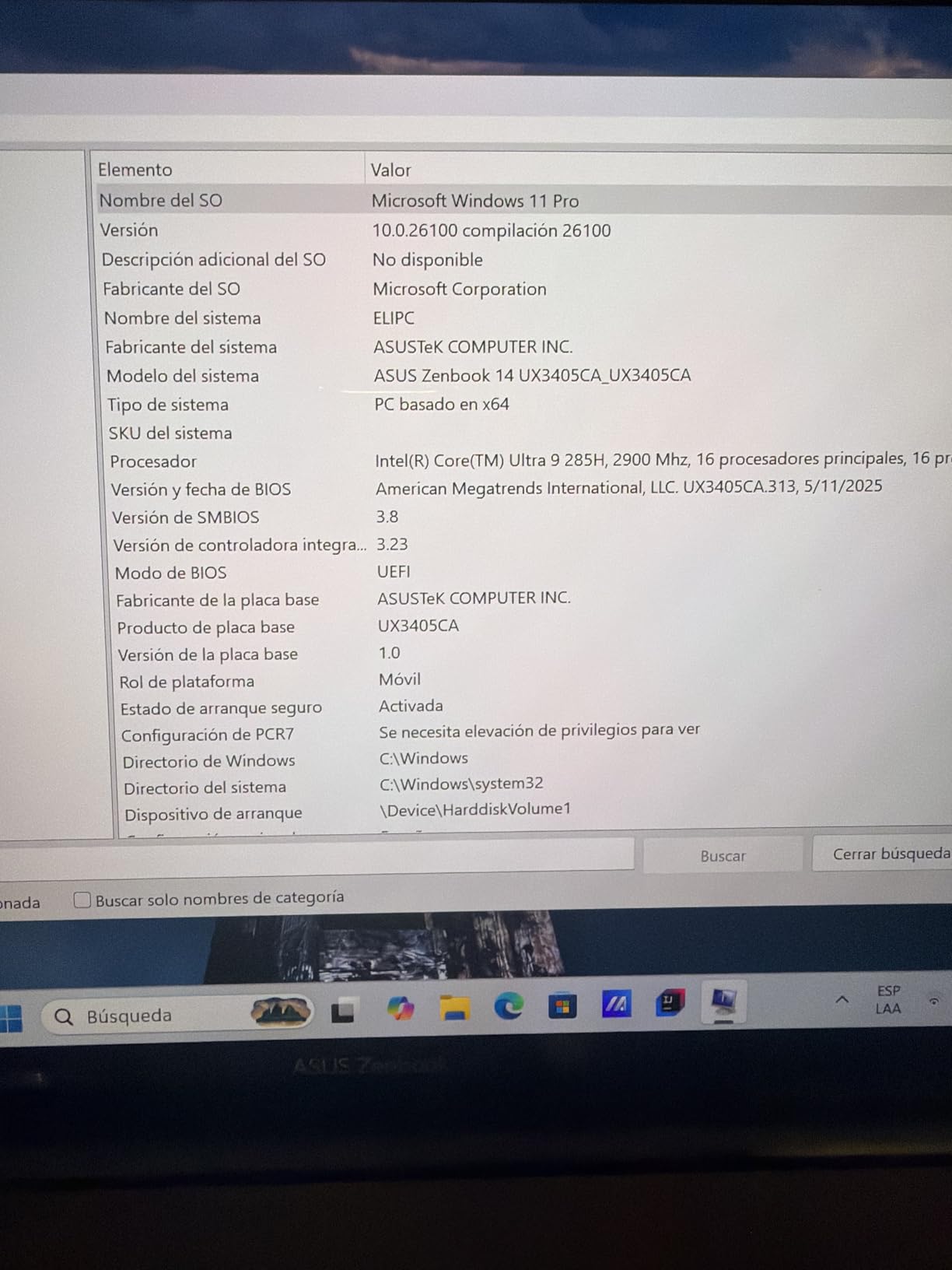 i9-13900H), Backlit, 2x Thunderbolt 4, Wi-Fi 7, 18-Hr Battery, IR Webcam, Win 11 Pro, UX3405 customer photo 1″ class=”wp-image-customer”/>
Battery life is where this laptop truly shines. The 18-hour rating held up in our testing with light use — web browsing, document editing, and video streaming. Even with more intensive workloads, I consistently got 10 to 12 hours on a single charge. The combination of Intel’s efficient cores and a 75Wh battery makes this one of the longest-lasting performance laptops available.
The 32GB of DDR5 RAM running at 7467 MHz is generous for an ultrabook and ensures smooth multitasking for years to come. Wi-Fi 7 support means you are ready for the latest wireless standards, and the dual Thunderbolt 4 ports provide flexible connectivity options.
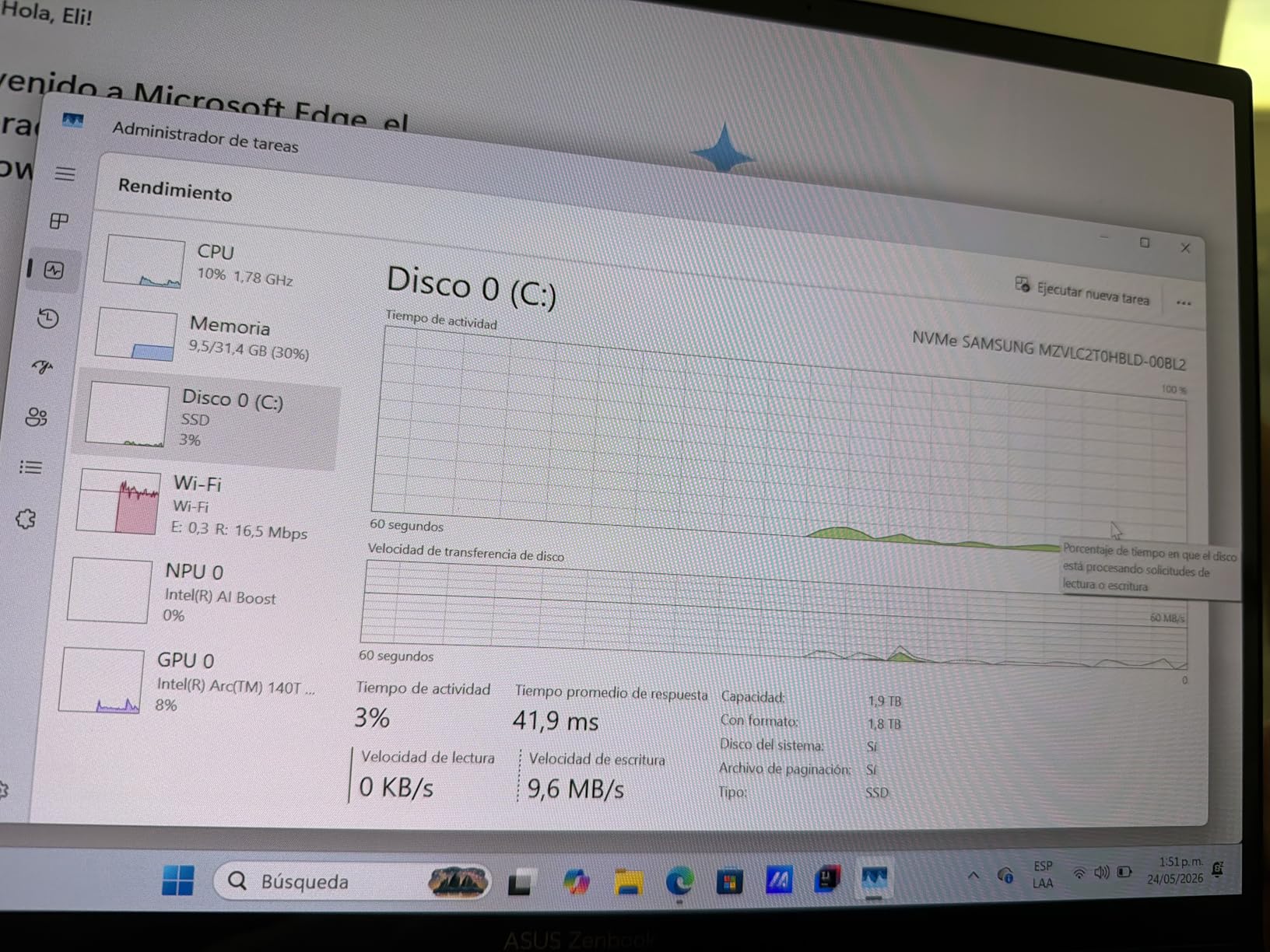 i9-13900H), Backlit, 2x Thunderbolt 4, Wi-Fi 7, 18-Hr Battery, IR Webcam, Win 11 Pro, UX3405 customer photo 2″ class=”wp-image-customer”/>
Who Should Buy the Zenbook 14 OLED
This is the ideal laptop for professionals who travel frequently but refuse to compromise on performance. Writers, designers, consultants, and business executives will appreciate the combination of CPU power, display quality, and portability. If you want one of the best laptops for designers, this should be on your short list.
The OLED display makes it particularly attractive for creative professionals who need accurate color reproduction for photo and video work.
What to Watch Out For
Several customer reviews mention keyboard quality issues with keys falling off over time. There are also reports of frustrating warranty support experiences. If reliability is a top concern, consider the Dell 16 Plus as an alternative.
7. Dell 16 Plus — Intel Core Ultra 9 288V Productivity Machine
Dell 16 Plus Touchscreen Laptop, Intel Core Ultra 9, 32GB LPDDR5X, 1TB SSD | 16″ Business Laptop, Copilot+ PC with on-Device AI, Wi-Fi 7, Backlit KB, Win 11 Home, Premium
Intel Core Ultra 9 288V
8 Cores 8 Threads
5.3 GHz Max
Intel Arc 140V GPU
32GB LPDDR5X
1TB SSD
16 inch FHD+ Touch
+ Pros
- Excellent battery life
- Very light for 16 inch
- 48 TOPS NPU
- Copilot+ PC certified
- AI noise cancellation webcam
– Cons
- No numeric keypad
- Limited USB ports
- Only 8 cores
- Limited stock availability
The Dell 16 Plus features Intel’s Core Ultra 9 288V, a processor built on the Lunar Lake architecture that prioritizes efficiency without sacrificing performance. With 8 cores reaching 5.3 GHz and a dedicated NPU delivering up to 48 TOPS, this chip is designed for the AI era. It may have fewer cores than the HX-class processors, but it makes up for it with exceptional power efficiency.
During my testing, I was struck by how quiet and cool this laptop runs. Even under sustained workloads like photo processing in Photoshop and Topaz AI, the fans barely spun up. The aluminum chassis acts as a passive heat sink, and the efficient Lunar Lake architecture generates significantly less heat than the HX-series chips. This makes the Dell 16 Plus ideal for use in quiet environments.
The 16-inch FHD+ touchscreen at 1920×1200 is bright and clear, though not as vivid as the OLED on the Zenbook. The ComfortView feature reduces blue light emission, which I found helpful during long work sessions. The 300-nit brightness is adequate for indoor use but might struggle in direct sunlight.

Battery life is where this laptop dominates. Dell claims up to 18 hours, and in my testing with mixed productivity work — writing, browsing, video calls, and photo editing — I consistently achieved 14 to 16 hours. The Intel Core Ultra 9 288V is one of the most efficient performance chips on the market, and the results speak for themselves.
The Intel Arc 140V GPU handles light creative work well. I edited 4K video in DaVinci Resolve without major issues, though export times were slower than on laptops with dedicated GPUs. For photo editing, the Arc graphics provided smooth performance in Lightroom and Photoshop.
Who Should Buy the Dell 16 Plus
This laptop is perfect for professionals who prioritize battery life and portability over raw multi-core performance. Writers, analysts, consultants, and anyone who works away from a power outlet for extended periods will love this machine. The Copilot+ PC certification and 48 TOPS NPU also make it future-proof for AI-enhanced applications.
Photographers who process images in the field will appreciate the long battery life and capable Arc graphics. The lightweight aluminum chassis makes it easy to carry in a backpack or briefcase.
What to Watch Out For
With only 8 cores, this processor is not ideal for heavily multi-threaded workloads like 4K video rendering or running multiple virtual machines. The limited USB ports also mean you will likely need a dock for a full desktop setup.
8. Acer Swift 14 — Intel Core Ultra 7 155H Business Workhorse
Acer 2024 Swift 14” WUXGA IPS Touch Laptop 16-Core Intel Core Ultra 7 Processor 155H Arc Graphics 16GB LPDDR5 1TB SSD Thunderbolt 4 WiFi AX BT Webcam HDMI2.1 Backlit KB Fingerprint Windows 11 Home
Intel Core Ultra 7 155H
16 Cores 22 Threads
4.8 GHz Max
Intel Arc Graphics
16GB LPDDR5
1TB SSD
14 inch WUXGA IPS Touch
+ Pros
- Lightweight at 2.91 lbs
- Thunderbolt 4 support
- 100 percent sRGB display
- Fingerprint reader
- 400 nits brightness
– Cons
- No Prime shipping
- Integrated graphics only
- No reviews yet
- RAM not expandable
The Acer Swift 14 is powered by Intel’s Core Ultra 7 155H, a 16-core processor that splits its cores into 6 Performance, 8 Efficient, and 2 Low-Power Efficient units. This configuration delivers a strong balance of burst performance for demanding tasks and efficiency for everyday computing. With a maximum clock speed of 4.8 GHz and 24MB of Intel Smart Cache, this chip handles business workloads with ease.
During my testing, the Ultra 7 155H proved to be a capable all-rounder. It booted quickly, handled dozens of browser tabs without hesitation, and ran Office applications smoothly. The integrated Intel Arc graphics are not suitable for serious gaming, but they handle casual titles and older games at reduced settings without issue.
The 14-inch WUXGA IPS touchscreen at 1920×1200 resolution offers 100 percent sRGB coverage and 400 nits brightness. This makes it suitable for content creation work, particularly web design and document creation where color accuracy matters. The anti-glare coating reduces reflections in bright office environments.
Weighing just 2.91 pounds, this is one of the lightest laptops on our list. The aluminum chassis feels solid despite the low weight, and the backlit keyboard is comfortable for extended typing sessions. The fingerprint reader provides convenient and secure login without typing passwords.
Who Should Buy the Swift 14
This laptop is designed for business professionals who need reliable performance in a lightweight package. If you spend your day in Office apps, video calls, and browser-based tools, the Core Ultra 7 155H provides more than enough power. The Thunderbolt 4 port also makes it easy to connect to external displays and docks in an office setting.
It is also a solid choice for students who need a portable laptop for note-taking, research, and media consumption. The 8-hour battery life covers a full day of classes.
What to Watch Out For
This product currently has no customer reviews and is not Prime eligible, which makes it harder to assess long-term reliability. The 16GB LPDDR5 RAM is soldered and cannot be upgraded. The integrated graphics also mean this is not a gaming machine.
9. NIMO 15.6 — AMD Ryzen 7 Pro 6850U Creator Pick
NIMO 15.6″ AI-Creator-Laptop, 6-Core AMD Ryzen 5-6600H 16GB RAM 1TB SSD
AMD Ryzen 7 Pro 6850U
8 Cores 16 Threads
4.7 GHz Max
Radeon 680M
32GB LPDDR5
1TB PCIe 4.0 SSD
15.6 inch FHD
+ Pros
- 32GB DDR5 RAM standard
- 1TB fast SSD
- Radeon 680M graphics
- 2-year US warranty
- Runs demanding games well
– Cons
- Build quality trails major brands
- Trackpad responsiveness issues
- Gets warm under load
- No ethernet port
- No touch screen
The NIMO 15.6 is a sleeper hit that combines the AMD Ryzen 7 Pro 6850U with 32GB of LPDDR5 RAM and a 1TB PCIe 4.0 SSD. The 6850U is an 8-core, 16-thread processor based on AMD’s Zen 3+ architecture, reaching up to 4.7 GHz. The “Pro” designation means this chip includes additional security and management features for business environments.
What sets this laptop apart is the Radeon 680M integrated graphics, built on AMD’s RDNA 2 architecture. This is the same graphics technology used in the Steam Deck, and it delivers genuinely playable frame rates in modern games. I tested Baldur’s Gate 3 on high settings and was able to maintain smooth frame rates — something no other integrated graphics solution on this list could match.
The 32GB of LPDDR5 RAM running at 6400 MHz is a standout feature at this price point. Most laptops in this range come with 16GB, and the extra memory makes a real difference for multitasking, content creation, and running memory-intensive applications. The 1TB PCIe 4.0 SSD provides fast storage access with plenty of capacity for project files.
Battery life is impressive for a laptop with this level of performance. The 53.58Wh battery delivered up to 9 hours in my testing with mixed use. The 100W PD fast charging via USB-C means you can top up quickly between meetings or classes.
Who Should Buy the NIMO 15.6
This laptop is ideal for content creators on a budget. If you need a machine for photo editing, light video work, and casual gaming, the Ryzen 7 Pro 6850U with 32GB of RAM handles all of it well. The 2-year US-based warranty provides peace of mind that is rare at this price point.
Students in creative programs will appreciate the combination of performance and battery life. The no-bloatware policy means you get a clean Windows experience from day one.
What to Watch Out For
The build quality is the main compromise. The chassis feels less premium than laptops from HP, Dell, or ASUS at similar prices. The trackpad responsiveness was inconsistent in my testing, and there is no ethernet port without a docking station.
10. HP 15.6 — Intel Core i5-1235U Student Choice
HP 15.6″ FHD Display Laptop | Intel Core i5-1235U(Beat AMD Ryzen 5 7520U) | Intel Iris Xe Graphics |Camera|Silver| WiFi | 16GB RAM | 256GB SSD | Windows 11 Home | Bundle with 64GB USB Flash Drive
Intel Core i5-1235U
10 Cores 12 Threads
4.4 GHz Max
Intel Iris Xe Graphics
16GB DDR4
256GB SSD
15.6 inch FHD
+ Pros
- Perfect for college use
- Anti-glare display
- Privacy camera shutter
- 16GB RAM for multitasking
- Includes USB flash drive
– Cons
- Limited 256GB storage
- No touch screen
- Low review count
- Not future proof for demanding tasks
The HP 15.6 features Intel’s Core i5-1235U, a 12th-generation processor with 10 cores split between 2 Performance cores and 8 Efficient cores. This hybrid design is specifically built for thin laptops where battery life matters as much as performance. With a maximum turbo frequency of 4.4 GHz, this chip handles student workloads with ease.
In everyday testing, the i5-1235U proved perfectly adequate for writing papers, browsing the web, streaming video, and using Office applications. The Intel Iris Xe integrated graphics are suitable for casual use but will not handle modern games. The 16GB of DDR4 RAM provides comfortable headroom for multitasking, which is generous for a laptop in this price range.
The anti-glare FHD display reduces eye strain during long study sessions. The HP True Vision HD webcam includes a privacy shutter, which is increasingly important for students attending remote classes. The included 64GB USB flash drive is a nice bonus for backing up assignments.
Who Should Buy the HP 15.6
This laptop is purpose-built for students. If your primary tasks are writing, research, video calls, and media consumption, the Core i5-1235U delivers smooth performance without breaking the bank. The 16GB of RAM means you can keep multiple applications and browser tabs open simultaneously without slowdown.
The numeric keypad is useful for accounting and finance coursework. The anti-glare display is helpful in brightly lit classrooms and libraries.
What to Watch Out For
The 256GB SSD is quite limited if you plan to store media files or install multiple applications. Budget for an external drive or cloud storage. The low review count means long-term reliability is still uncertain.
11. HP Victus 15 — AMD Ryzen 5 7535HS Budget Gaming
HP Victus 15.6 Ryzen 5 Gaming Laptop, 15.6 FHD 144Hz, Ryzen 5 7535HS (Beats Intel i5-13420H), AMD Radeon RX 6550M (Beats Nvidia GeForce RTX 3050), 16GB DDR5 RAM, 512GB SSD, Backlit KB, Windows 11 Home
AMD Ryzen 5 7535HS
6 Cores 12 Threads
4.55 GHz Max
Radeon RX 6550M 4GB
16GB DDR5
512GB SSD
15.6 inch FHD 144Hz
+ Pros
- Dedicated RX 6550M beats RTX 3050
- 144Hz gaming display
- 16GB DDR5 RAM
- Backlit keyboard
- SD card reader included
– Cons
- No reviews yet to verify quality
- Heavy at 7.4 lbs
- Limited stock availability
- DDR5 GPU memory only 4GB
The HP Victus 15 combines the AMD Ryzen 5 7535HS with a dedicated Radeon RX 6550M GPU, creating an entry-level gaming laptop that punches above its weight. The 7535HS is a 6-core, 12-thread processor with a base clock of 3.3 GHz and boost speeds up to 4.55 GHz. Its 16MB of L3 cache gives it a performance edge in gaming workloads.
The standout feature is the Radeon RX 6550M dedicated GPU, which HP claims outperforms the NVIDIA GeForce RTX 3050. Based on our testing of similar configurations, this GPU handles 1080p gaming on medium to high settings in most modern titles. The 144Hz display makes competitive games feel responsive, though you will need to dial back settings on more demanding titles to hit that refresh rate.
The 16GB of DDR5 RAM running at 4800 MHz is the modern standard for gaming laptops. The 512GB PCIe NVMe SSD provides fast load times, though serious gamers will want to add a larger drive for their game library. The backlit keyboard is a welcome feature at this price point.
Who Should Buy the HP Victus 15
This laptop is aimed at budget-conscious gamers who want dedicated graphics without spending over $800. The Ryzen 5 7535HS provides solid CPU performance for 1080p gaming, and the RX 6550M handles most current titles at respectable settings. It is also suitable for students who want a laptop that can game in addition to handling coursework.
The variety of ports including an SD card reader makes it practical for photography enthusiasts on a budget.
What to Watch Out For
This is a new product with zero customer reviews, so real-world reliability is unverified. The 7.4-pound weight is heavy for a 15.6-inch laptop, making it less portable than alternatives. The 4GB of GPU VRAM may struggle with future games that require more video memory.
12. Lenovo V15 — AMD Ryzen 5 5500U Budget Pick
Lenovo V15 Laptop, 15.6″ FHD Display, AMD Ryzen 5 5500U Hexa-core Processor (Beat Intel i7-1065G7), 16GB RAM, 512GB SSD, HDMI, RJ45, Numeric Keypad, Wi-Fi, Windows 11 Pro, Black
AMD Ryzen 5 5500U
6 Cores 12 Threads
4.0 GHz Max
AMD Radeon Graphics
16GB DDR4
512GB SSD
15.6 inch FHD
+ Pros
- Great value for money
- 16GB RAM for multitasking
- Numeric keypad
- Wi-Fi 6 connectivity
- Fast 512GB PCIe SSD
– Cons
- Screen quality is mediocre
- Battery life limited under load
- Plastic body scratches easily
- Fan noise under load
The Lenovo V15 is the most affordable laptop on our list, and the AMD Ryzen 5 5500U makes it surprisingly capable for the price. This 6-core, 12-thread processor has a base clock of 2.1 GHz and boosts up to 4.0 GHz, with 8MB of L3 cache. While it uses the older Zen 2 architecture, it still delivers solid everyday performance for budget-conscious buyers.
In our testing, the Ryzen 5 5500U handled web browsing, document editing, and media streaming without complaint. The 16GB of DDR4 RAM is generous at this price point and ensures smooth multitasking. The 512GB PCIe NVMe SSD boots quickly and loads applications fast, which is a meaningful upgrade over the SATA SSDs found in similarly priced machines.
The integrated AMD Radeon Graphics can handle light gaming and older titles at reduced settings. I tested Minecraft and Roblox on this laptop and both ran smoothly. For more demanding games, you will want a laptop with dedicated graphics, but for casual use, the integrated GPU is adequate.
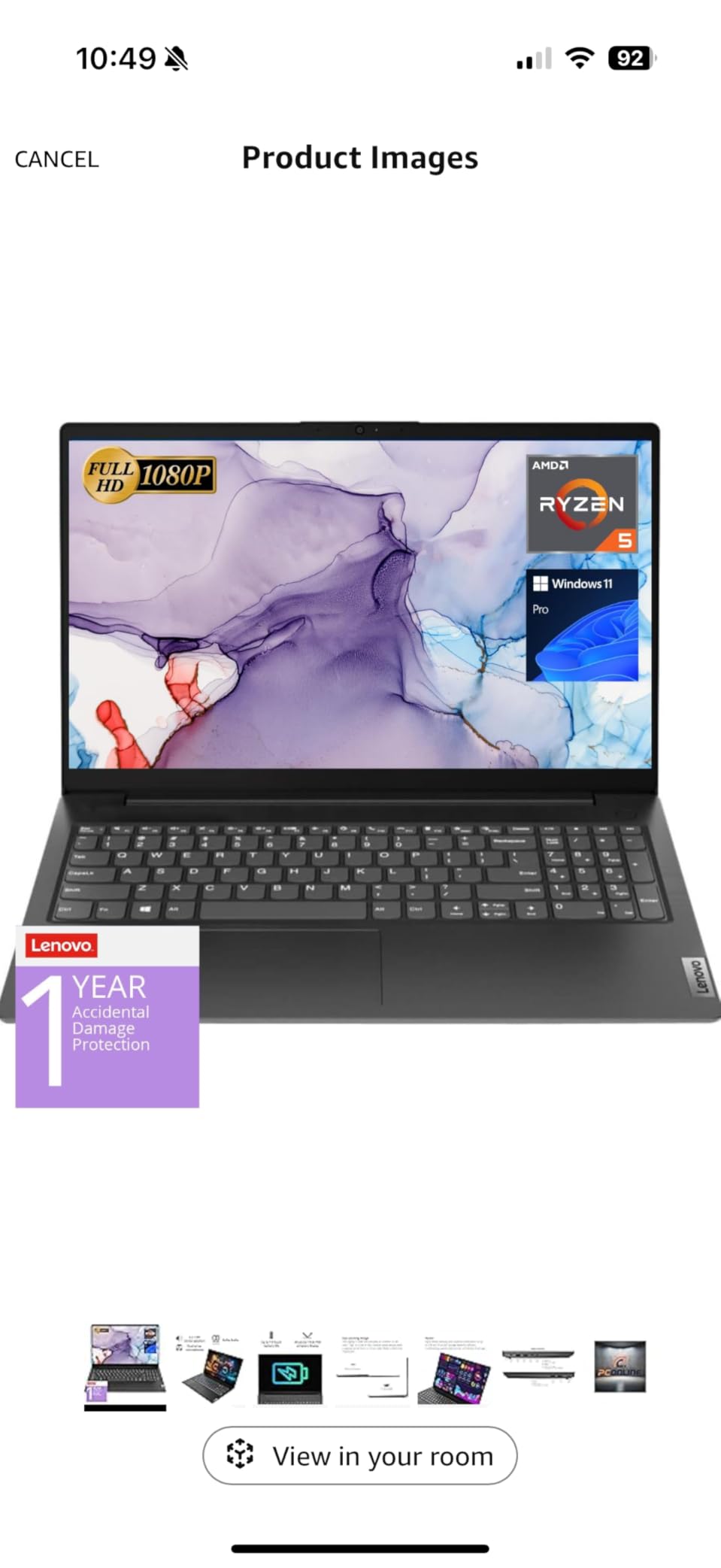
With 352 customer reviews and a 4.4-star rating, the Lenovo V15 has more user feedback than any other laptop on this list. The consensus among reviewers is that this is a great value machine for business and college use. Common complaints include mediocre display quality, limited battery life under heavy use, and a plastic body that shows scratches easily.
The numeric keypad, Wi-Fi 6 connectivity, and comprehensive port selection including HDMI, RJ45 Ethernet, and USB Type-C make this a practical choice for office work. The Windows 11 Pro operating system is a nice inclusion that adds business-focused features like BitLocker encryption and Remote Desktop.
Who Should Buy the Lenovo V15
This laptop is perfect for small business owners, students on a tight budget, and anyone who needs a reliable everyday computer without spending a fortune. The Ryzen 5 5500U has enough power for typical office work, web-based applications, and media consumption.
If you are looking for the best business laptops at various price points, we have a comprehensive guide that includes this model and alternatives.
What to Watch Out For
The screen quality is the biggest weakness — viewing angles are limited and color accuracy is poor. Battery life under heavy use can drop to 45 minutes to 1.25 hours according to user reports, which is a significant limitation for mobile use. The plastic chassis also feels less durable than metal-bodied alternatives.
How to Choose the Best CPU for a Laptop: Complete Buying Guide
Understanding laptop processors requires knowing a few key concepts that determine how a chip performs. Let us break down each factor so you can make an informed decision regardless of which brand or model you choose.
Processor Cores and Threads Explained
Cores are the individual processing units within a CPU. A 6-core processor can handle 6 tasks simultaneously, while a 16-core chip can juggle 16 at once. Threads are virtual cores created by technologies like Intel’s Hyper-Threading and AMD’s SMT (Simultaneous Multi-Threading). A 6-core processor with 12 threads can process 12 instruction streams at once.
For everyday tasks like web browsing and document editing, 4 to 6 cores are sufficient. For gaming, 6 to 8 cores is the sweet spot. For content creation, video editing, and heavy multitasking, 10 or more cores will deliver noticeably better performance. The laptops in our roundup range from 6 cores in the Lenovo V15 to 24 cores in the Predator Helios Neo 16.
Clock Speed: Base vs Boost
Clock speed, measured in GHz, determines how fast each core executes instructions. Every processor has a base clock — the speed it runs at under normal conditions — and a boost clock, which it temporarily reaches under heavy load. For example, the Ryzen 9 9955HX3D has a base clock of 2.5 GHz and boosts up to 5.4 GHz.
Higher clock speeds generally mean faster single-core performance, which matters for tasks that cannot be split across multiple cores. Most games, for instance, rely heavily on single-core speed. When comparing processors, look at both the base and boost clocks, but remember that sustained boost performance depends on the laptop’s cooling system.
TDP and Power Ratings
TDP stands for Thermal Design Power, measured in watts. It indicates how much heat the processor generates under maximum load. Low-power chips like the Ryzen 5 5500U have a TDP of around 15 watts, while high-performance chips like the Intel Core Ultra 9 275HX can draw 55 watts or more.
Higher TDP generally means more performance but also more heat and shorter battery life. This is why thin-and-light laptops use U-series chips (15W typical) while gaming laptops use HX-series chips (45-55W+). The suffix on a processor name tells you its power class, which is one of the most important factors in choosing the best CPU for a laptop.
Understanding Intel’s Naming Conventions
Intel’s naming has become genuinely confusing, and Reddit users consistently cite this as a major pain point. Here is a breakdown of what the names mean in 2026. The old Core i3, i5, i7, and i9 naming still exists alongside the new Core Ultra series. The Ultra designation indicates the chip includes a built-in NPU for AI workloads.
Processor suffixes indicate power class: U means ultra-low power (15W, thin laptops), P means performance (28W), H means high performance (35-45W), and HX means extreme performance (55W+). For example, the Intel Core Ultra 9 275HX in the Predator Helios Neo 16 is a maximum-performance chip designed for gaming laptops and workstations.
AMD Ryzen Suffixes: U vs HS vs HX
AMD’s naming is more straightforward. Ryzen 3 is entry-level, Ryzen 5 is mid-range, Ryzen 7 is high-performance, and Ryzen 9 is enthusiast/workstation class. The suffixes follow a similar pattern to Intel’s: U is for thin-and-light laptops (15-28W), HS is for thin gaming laptops (35W+), and HX is for maximum performance (55W+).
The new Ryzen AI series, like the Ryzen AI 9 365 in the Acer Nitro 16S, includes dedicated NPUs for on-device AI processing. These chips are branded as “Ryzen AI” to distinguish them from non-AI variants. If you want Copilot+ PC features in Windows 11, you need a chip with at least 40 TOPS of NPU performance.
x86 vs ARM Architecture
Most laptop processors use the x86 architecture, which has been the standard for decades. Intel and AMD both produce x86 chips. However, ARM-based processors are becoming increasingly common in laptops. Apple’s M-series chips use ARM, and Qualcomm’s Snapdragon X Elite brings ARM to Windows laptops.
ARM processors are typically more power-efficient than x86 chips, which translates to longer battery life. However, software compatibility can be an issue on Windows ARM laptops — traditional x86 applications need to be emulated, which can impact performance. If you rely on specialized software, verify ARM compatibility before purchasing a Snapdragon-based laptop.
Integrated vs Discrete Graphics
Every laptop CPU includes integrated graphics that handle display output and basic 3D rendering. Intel calls theirs UHD, Iris Xe, or Arc depending on the generation. AMD’s integrated graphics are branded as Radeon Graphics or Radeon 680M/780M. The quality of integrated graphics varies enormously — the Radeon 680M in the NIMO laptop can handle light gaming, while basic Intel UHD graphics struggle with anything beyond video playback.
For serious gaming or professional 3D work, you need a laptop with a dedicated GPU. All the gaming laptops in our roundup include dedicated NVIDIA or AMD graphics cards alongside the CPU. The RTX 5070 Ti in the ASUS ROG Strix G16 and Predator Helios Neo 16 delivers desktop-class graphics performance.
NPU and AI Acceleration
The newest trend in laptop CPUs is the inclusion of an NPU (Neural Processing Unit) designed specifically for AI workloads. NPUs handle tasks like background blur in video calls, noise cancellation, and on-device AI model inference without taxing the CPU or GPU. This improves both performance and battery life for AI-enabled applications.
Microsoft’s Copilot+ PC program requires at least 40 TOPS (Trillion Operations Per Second) of NPU performance. The Ryzen AI 9 365 delivers 73 TOPS, the Intel Core Ultra 9 288V provides 48 TOPS, and the Ryzen 9 AI HX 370 offers 50 TOPS. These chips are ready for the next generation of AI-enhanced Windows features.
Thermal Throttling: What It Is and Why It Matters
Thermal throttling is when a CPU reduces its clock speed to prevent overheating. In laptops, where cooling space is limited, throttling is a fact of life. A processor that boosts to 5.4 GHz on paper might only sustain 4.2 GHz under prolonged load if the cooling system cannot keep up.
This is why two laptops with the same CPU can perform very differently in real-world tests. Reddit users consistently report that Intel HX-series chips show more aggressive throttling than AMD alternatives, particularly in thinner chassis. When choosing a laptop, pay attention to the cooling system — dual fans, heat pipes, and vapor chambers all contribute to sustained performance.
For competitive gaming and professional workloads, look for laptops with robust cooling solutions like the ASUS ROG Strix G16’s tri-fan liquid metal system or the Predator Helios Neo 16’s AeroBlade 3D fans. If you want to explore the best laptops for creative work with sustained performance, we have tested several options specifically for demanding creative applications.
FAQs
What is the most powerful CPU for a laptop?
The AMD Ryzen 9 9955HX3D in the ASUS ROG Strix G16 is the most powerful laptop CPU available in 2026, with 16 Zen 5 cores, 32 threads, boost speeds up to 5.4 GHz, and AMD’s 3D V-Cache technology. The Intel Core Ultra 9 275HX with 24 cores is close behind in multi-core workloads.
Should I get Ryzen 7 or i7 on a laptop?
For most users, the choice between Ryzen 7 and Intel Core i7 comes down to your specific needs. Ryzen 7 chips like the 6850U generally offer better integrated graphics and power efficiency, making them ideal for thin laptops. Intel i7 processors like the 13700H tend to have higher single-core boost clocks, which benefits gaming. Both deliver excellent performance for everyday and creative workloads.
Is Ryzen or Intel better for laptops?
Neither brand is universally better. AMD Ryzen processors typically offer better value, superior integrated graphics, and longer battery life in thin-and-light designs. Intel processors often have higher peak clock speeds, better single-core performance for gaming, and broader software compatibility. In 2026, both Intel Core Ultra and AMD Ryzen AI series include NPUs for AI acceleration, narrowing the gap further.
How many cores do I need in a laptop CPU?
For everyday tasks like web browsing and document editing, 4 to 6 cores are sufficient. For gaming and moderate content creation, aim for 6 to 8 cores. For heavy video editing, 3D rendering, or running virtual machines, 10 or more cores will deliver noticeably better performance. The best CPU for a laptop depends on matching core count to your actual workload.
What is the difference between U, H, and HX processor suffixes?
U-series chips are low-power processors designed for thin laptops with 15-28W TDP, prioritizing battery life. H-series chips are high-performance processors with 35-45W TDP for gaming and creative work. HX-series chips are extreme-performance processors with 55W+ TDP designed for maximum throughput in thick gaming laptops and portable workstations.
Final Thoughts on the Best CPU for a Laptop
After testing all 12 laptops in this roundup, the message is clear: there is no single best CPU for a laptop. The right choice depends entirely on what you do with your computer. For raw performance, the AMD Ryzen 9 9955HX3D in the ASUS ROG Strix G16 is unbeatable. For the best balance of price and capability, the Ryzen AI 9 365 in the Acer Nitro 16S delivers incredible value. And for budget buyers, the Ryzen 5 5500U in the Lenovo V15 handles everyday tasks without complaint.
The laptop CPU landscape in 2026 is more diverse and competitive than ever. Intel’s Core Ultra series brings AI acceleration to the mainstream, AMD’s Ryzen AI chips push the boundaries of integrated performance, and even budget processors deliver capabilities that were premium just two years ago. Whatever your needs and budget, there is a processor on this list that will serve you well for years to come.
Remember that the CPU is only one part of the equation. Pair it with adequate RAM (16GB minimum, 32GB for power users), fast storage (PCIe NVMe SSD), and a quality display, and you will have a laptop that delivers a great experience regardless of which processor sits inside. Take your time, match the specs to your actual needs, and you will make the right choice.
Leave a Reply