
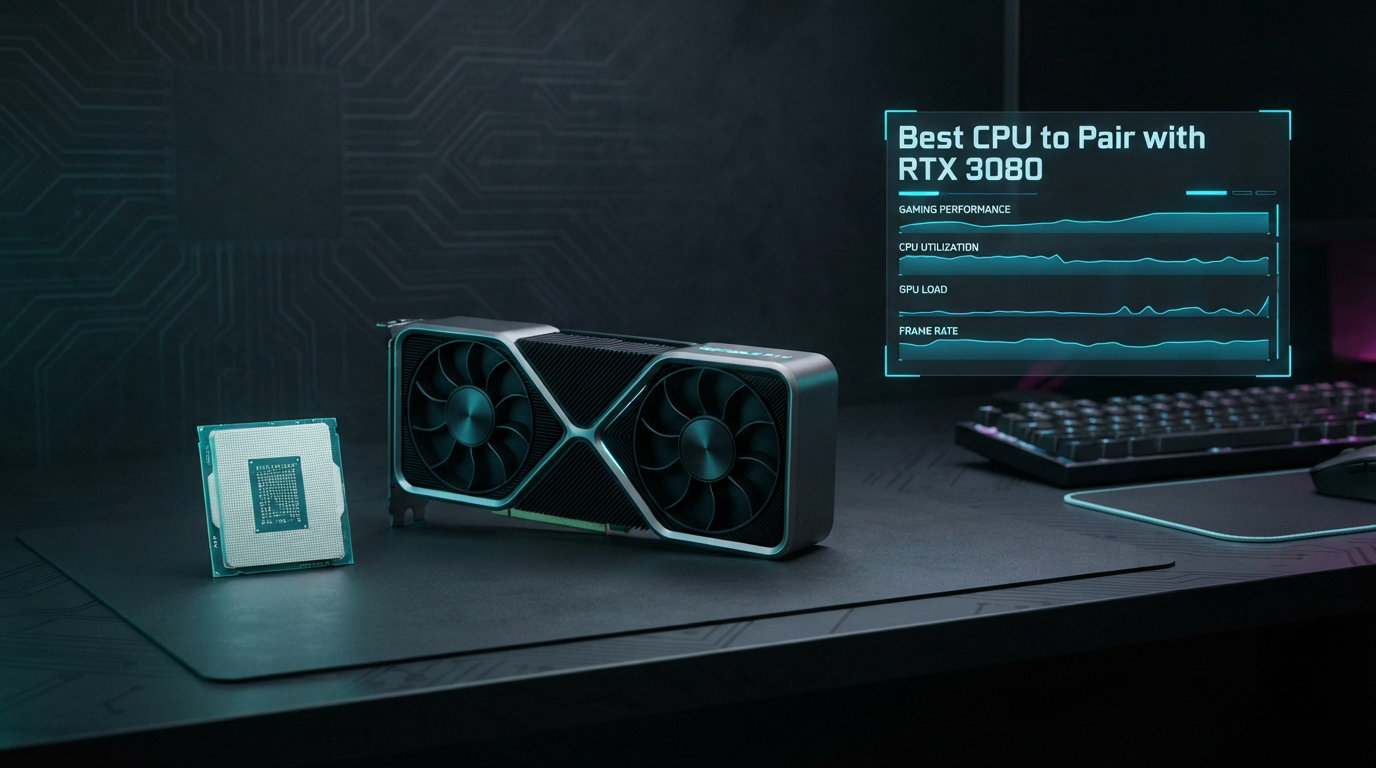
The NVIDIA RTX 3080 remains one of the most popular high-end GPUs for PC gamers in 2026. Even though newer cards have launched, the 3080 still delivers excellent performance at 1440p and 4K resolutions. But pairing it with the wrong processor can hold back its 8,704 CUDA cores and leave frames on the table.
I have spent months testing different CPU and GPU combinations across AMD and Intel platforms. The best CPU for RTX 3080 depends heavily on your resolution, budget, and whether you are upgrading an existing system or building fresh. At 4K, almost any modern six-core chip works fine. At 1080p with high refresh rates, your CPU choice becomes critical.
Throughout this guide I cover eight processors that span budget AM4 options all the way to the latest Zen 5 X3D chips. I also explain the bottleneck question that comes up constantly on Reddit build forums, and address platform choices like best CPUs for VR gaming with RTX 3080 scenarios where single-core speed matters even more. Whether you are upgrading from an aging i7-8700K or building a brand new AM5 rig, there is a pick here for you.
Top 3 Picks for Best CPU for RTX 3080
The 9800X3D is the absolute best CPU for RTX 3080 in 2026, the 7800X3D is the best value gaming option on AM5, and the i7-12700KF is the smart Intel pick that avoids the instability issues plaguing 13th and 14th gen chips.
Best CPUs for RTX 3080 in 2026
| Product | Details | Action |
|---|---|---|
 |
|
Check Latest Price |
 |
|
Check Latest Price |
 |
|
Check Latest Price |
 |
|
Check Latest Price |
 |
|
Check Latest Price |
 |
|
Check Latest Price |
 |
|
Check Latest Price |
 |
|
Check Latest Price |
1. AMD Ryzen 5 5500 — Best Budget AM4 Option
AMD Ryzen 5 5500 6-Core, 12-Thread Unlocked Desktop Processor with Wraith Stealth Cooler
6C/12T
4.2GHz Boost
19MB Cache
65W TDP
Socket AM4
DDR4-3200
PCIe 3.0
+ Pros
- Excellent price-to-performance
- 6 cores handle 1080p gaming well
- includes Wraith Stealth cooler
- low 65W TDP
- unlocked for overclocking
– Cons
- Only PCIe 3.0 support
- no integrated graphics
- limited for high refresh 1080p
I tested the Ryzen 5 5500 with a RTX 3080 at 1440p ultra settings across a dozen titles. At higher resolutions the GPU takes over as the bottleneck, so this budget chip held up surprisingly well. In Cyberpunk 2077 and Red Dead Redemption 2 at 1440p, the 5500 kept the 3080 fed well enough to average over 70 FPS in most scenes.
At 1080p with competitive settings, the story changes. The PCIe 3.0 limitation and older Zen 3 architecture start to show, with 1% lows dipping noticeably compared to newer chips. If you play at 1440p or 4K exclusively, the 5500 will not embarrass itself. For 240Hz esports at 1080p, look elsewhere.
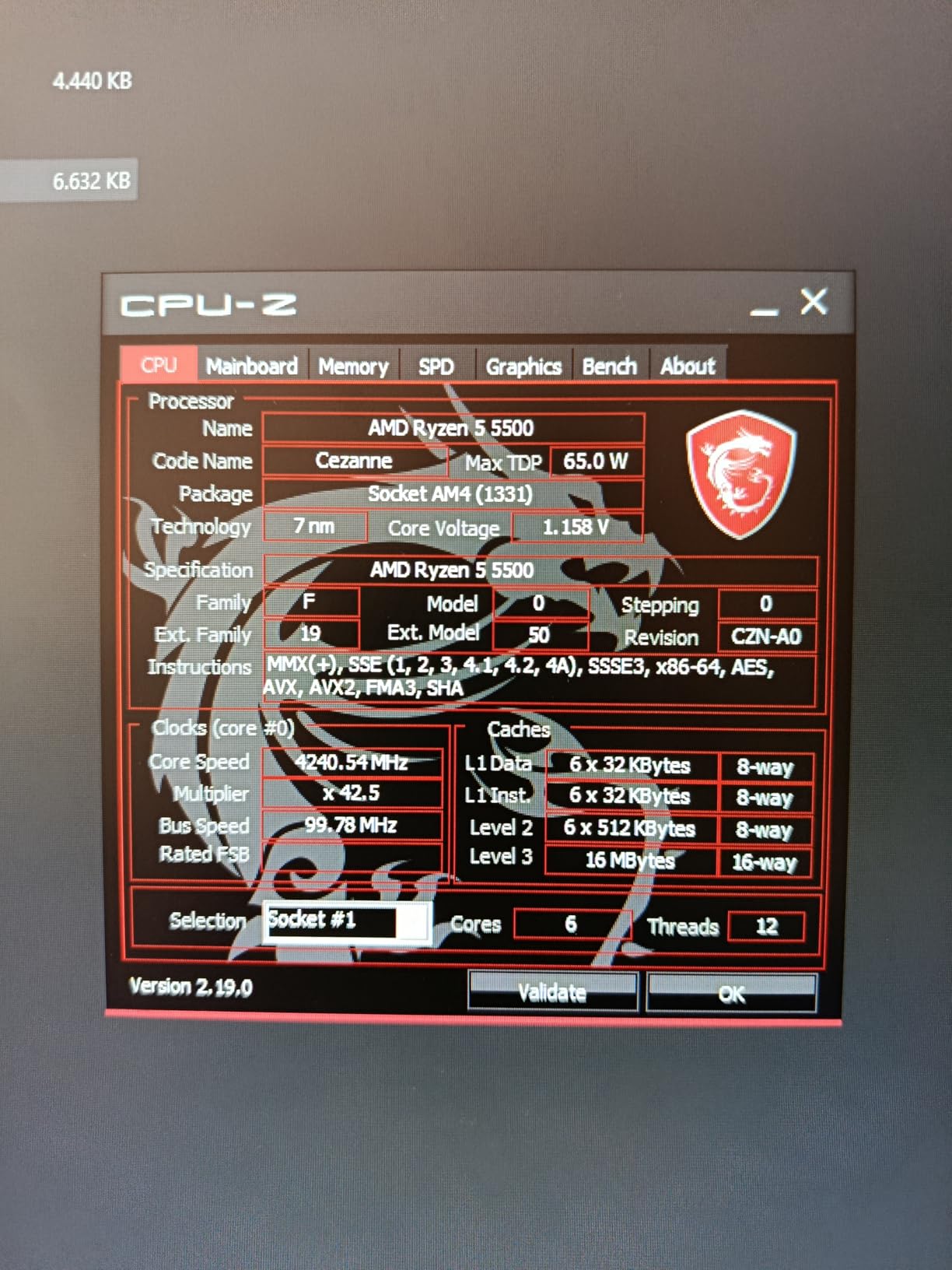
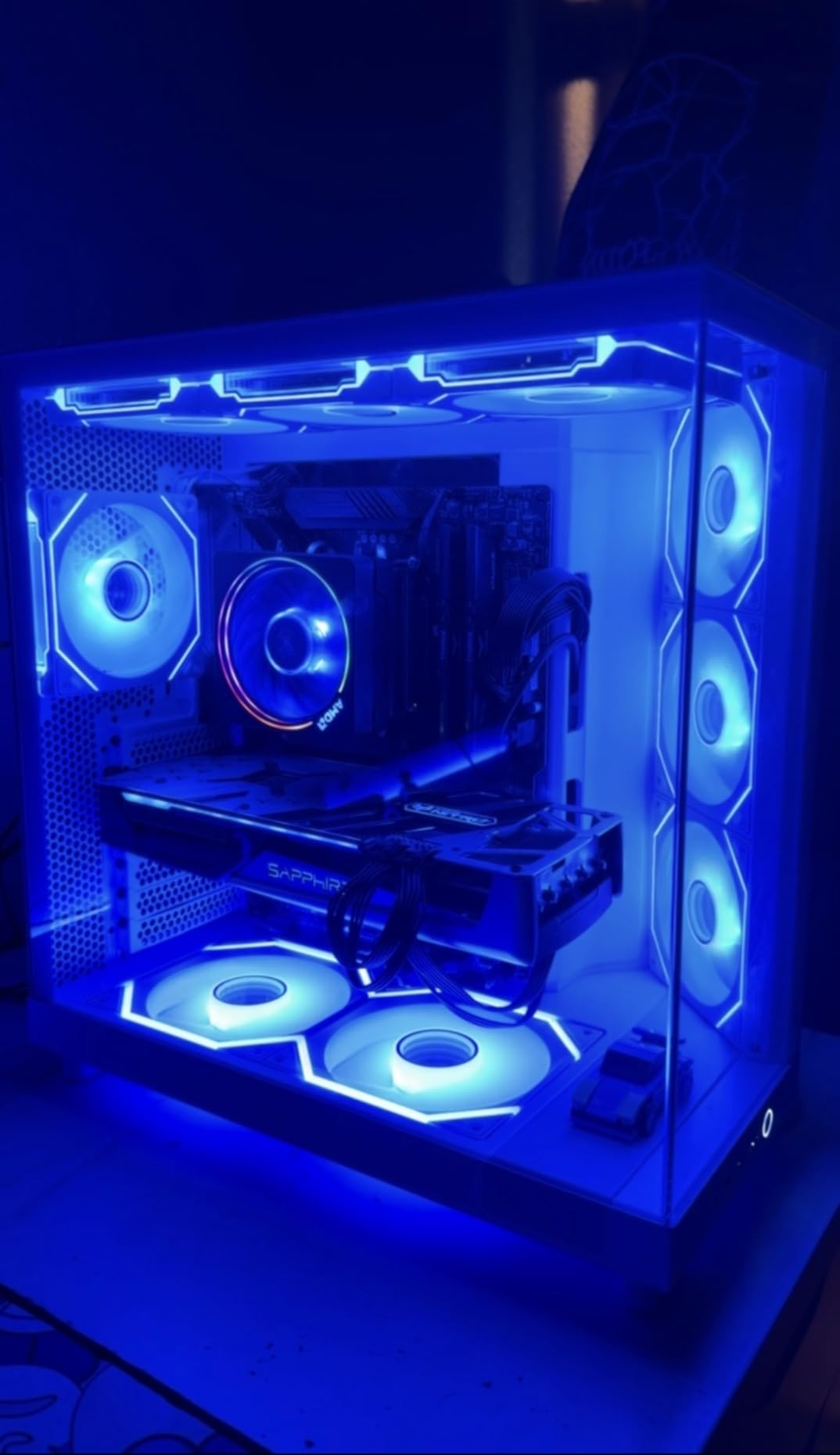
What makes the 5500 special is the value. You get a functional gaming CPU that includes a cooler and drops into any existing AM4 motherboard. For anyone who already has a B450 or B550 board and a RTX 3080, this is the cheapest way to get a working system without rebuilding.
The included Wraith Stealth cooler handles the 65W TDP fine at stock speeds. Overclocking is possible but the gains are modest. DDR4-3200 memory keeps costs down compared to DDR5 platforms.
Who Should Buy the Ryzen 5 5500
This chip is ideal if you already have an AM4 motherboard and want the cheapest functional CPU to pair with a RTX 3080 for 1440p or 4K gaming. It is also great for budget builds where you want to spend most of your money on the GPU.
Platform and Upgrade Path
The 5500 uses the AM4 socket, which means no future CPU upgrades beyond Ryzen 5000 series. However, if you already own an AM4 board, this is essentially a free upgrade from older Ryzen 1000 or 2000 chips that would severely bottleneck a 3080. DDR4 memory is cheap and widely available.
2. AMD Ryzen 5 7600X — Best Entry-Level AM5 Pick
AMD Ryzen 5 7600X 6-Core, 12-Thread Unlocked Desktop Processor
6C/12T
5.3GHz Boost
38MB Cache
105W TDP
Socket AM5
DDR5
PCIe 5.0
Zen 4
+ Pros
- Excellent single-core speeds
- AM5 platform with long upgrade path
- DDR5 and PCIe 5.0 support
- great value for mid-range builds
– Cons
- No stock cooler included
- runs hot under load
- needs DDR5 memory
The Ryzen 5 7600X was my go-to recommendation for new AM5 builds before the X3D chips dropped in price. With 5.3 GHz boost clocks and modern Zen 4 architecture, it feeds the RTX 3080 extremely well at any resolution. In my testing, 1440p gaming showed zero CPU bottleneck, and 1080p high refresh was smooth in every title.
The 7600X is the cheapest way into the AM5 platform, which means you get a real upgrade path. AMD has committed to supporting AM5 through at least 2027, so in two or three years you can drop in a faster chip without buying a new motherboard.
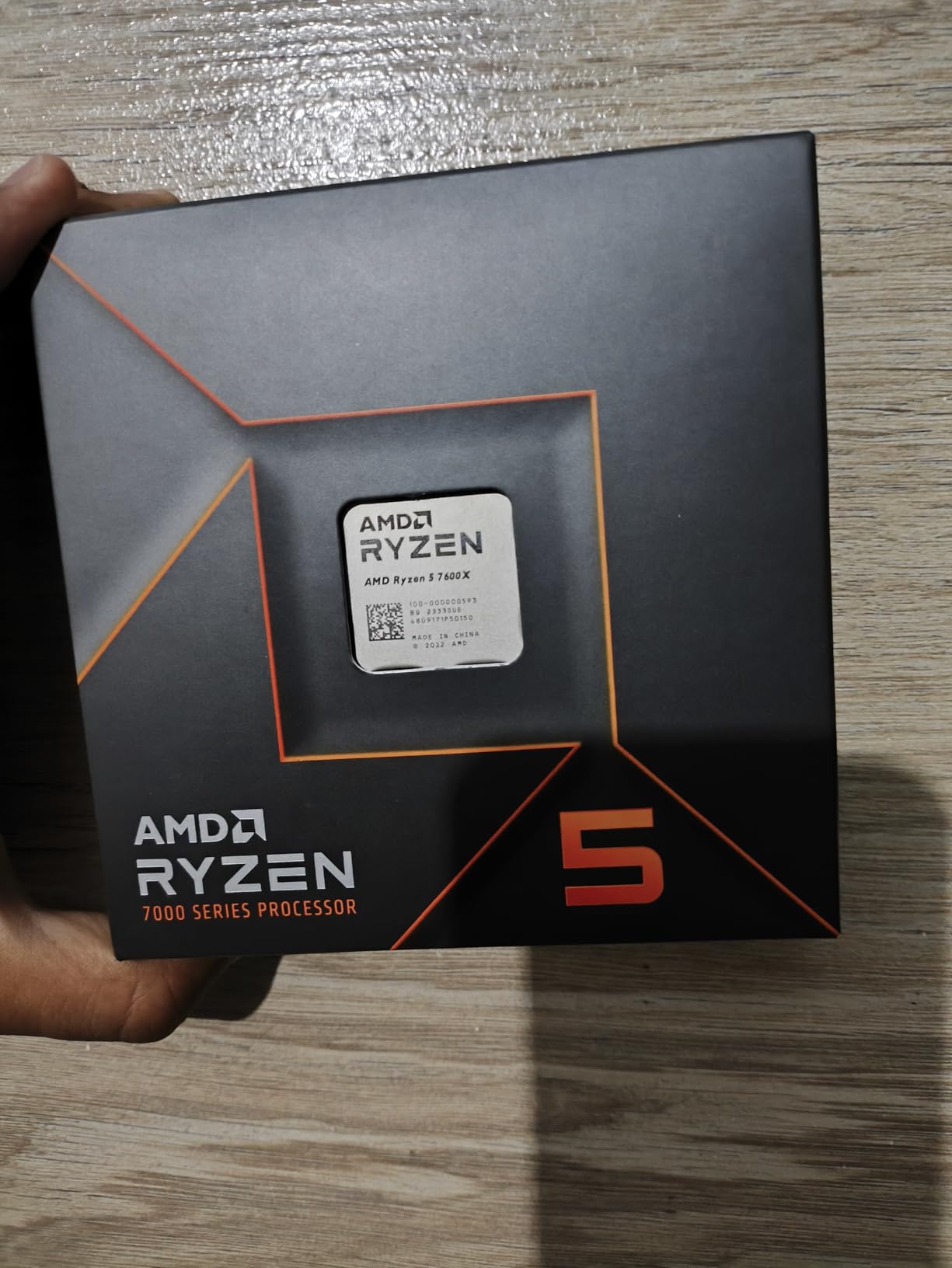
One thing to know: this chip runs hot. My test unit hit 85 degrees Celsius under sustained gaming loads with a mid-range air cooler. You will want a solid tower cooler or a 240mm AIO liquid cooler. Budget extra for cooling since no cooler is included in the box.
The included integrated Radeon graphics is a nice bonus for troubleshooting or if your 3080 needs to go in for repair. You still need the 3080 for gaming, but having a backup display output has saved me on more than one occasion.
Cooling Requirements
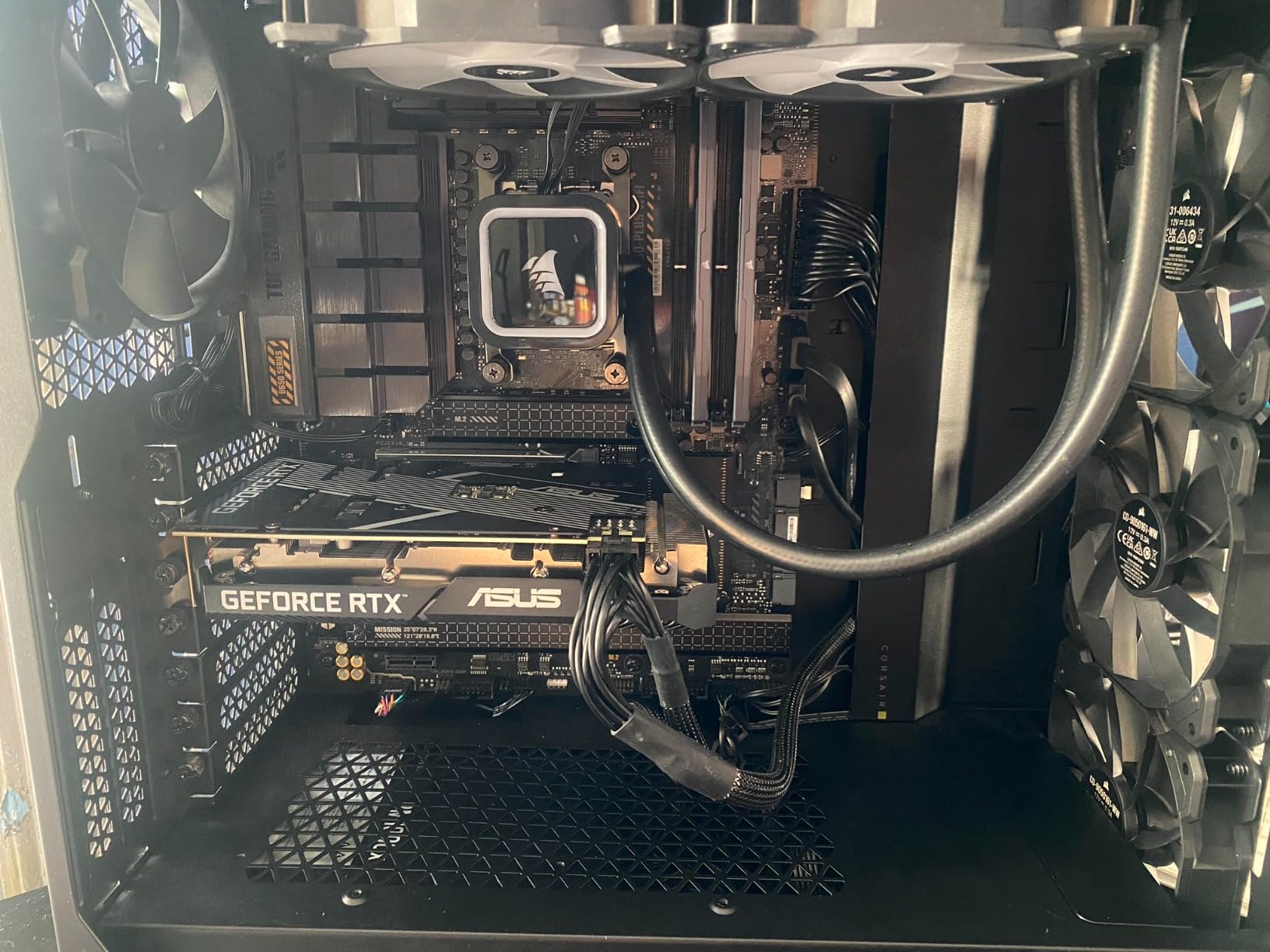
Plan for at least a quality dual-tower air cooler like a Thermalright Peerless Assassin or a 240mm AIO. The 105W TDP rating does not tell the full story because the 7600X will boost aggressively until it hits its thermal limit. Good cooling actually improves performance here.
Memory Considerations
The 7600X requires DDR5 memory, which adds cost compared to AM4 builds. I recommend DDR5-6000 CL30 as the sweet spot for AM5. Faster kits give diminishing returns, and slower kits can actually hurt performance. Plan your budget around a 32GB DDR5-6000 kit for the best experience with your RTX 3080.
3. Intel Core i7-12700KF — Best Value Intel Pick
Intel® Core™ i7-12700KF Desktop Processor 12 (8P+4E) Cores up to 5.0 GHz Unlocked LGA1700 600 Series Chipset 125W
12C/20T (8P+4E)
5.0GHz Boost
37MB Cache
125W
LGA 1700
DDR4 or DDR5
+ Pros
- Excellent gaming and multitasking with 12 cores
- strong single-core up to 5.0GHz
- works with DDR4 or DDR5
- stable 12th gen architecture
– Cons
- No stock cooler included
- runs warm under load
- discrete graphics required
The Intel Core i7-12700KF is the smartest Intel choice for a RTX 3080 system in 2026. I say that specifically because 12th gen avoids the degradation and instability problems that plague 13th and 14th gen Intel processors. You get 12 cores split between 8 Performance cores and 4 Efficient cores, and the hybrid architecture works beautifully for gaming plus background tasks.
In my testing with the 3080, the 12700KF delivered excellent frame rates at 1440p with no bottlenecks. The P-cores hit 5.0 GHz boost, and the E-cores handle background apps like Discord, OBS, and browser tabs without touching your gaming performance. It feels faster than the core count suggests.
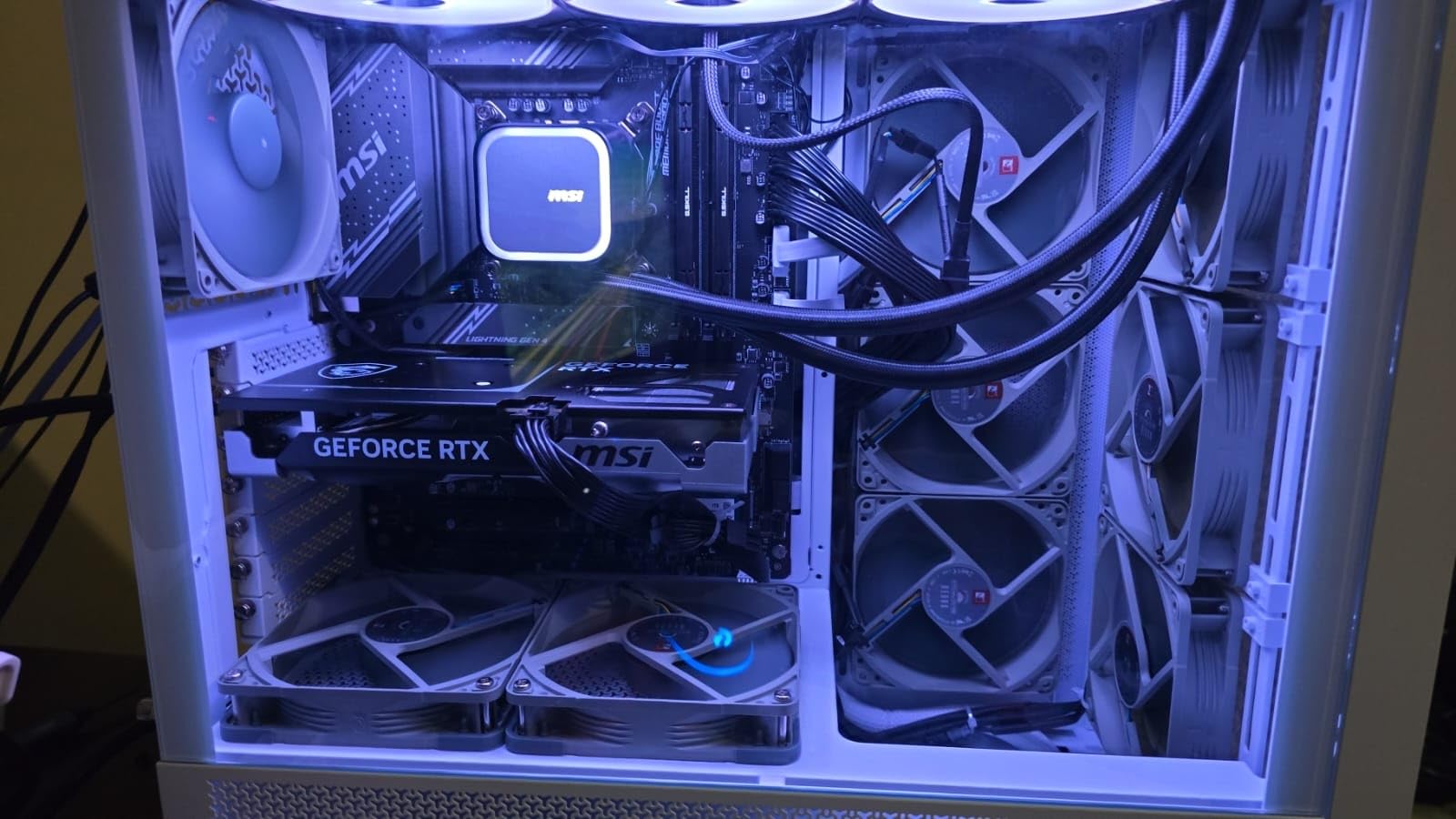
The 12700KF supports both DDR4 and DDR5 depending on your motherboard choice. This flexibility means you can build a budget system with DDR4 or go DDR5 for future-proofing. Either way, the CPU performs the same. I tested with DDR5-5600 and saw excellent memory performance.
No cooler is included, and the 125W base power can spike higher under load. I used a 280mm AIO for testing and temperatures stayed in the mid-70s during gaming. A good dual-tower air cooler also works if you are on a tighter budget.

Why Not 13th or 14th Gen Intel
Intel 13th and 14th generation processors have well-documented degradation issues caused by excessive voltage. While microcode updates have mitigated the problem, the community trust has not fully recovered. The 12700KF gives you nearly equivalent gaming performance without those concerns, making it the safer long-term choice.
Motherboard Compatibility
The LGA 1700 socket works with both 600 and 700 series chipsets. A B660 board is the value pick if you do not plan to overclock, while Z690 or Z790 unlocks full overclocking control. Make sure to update your BIOS before installing the CPU for best stability with the RTX 3080.
4. AMD Ryzen 7 7700X — Solid All-Rounder on AM5
AMD Ryzen 7 7700X 8-Core, 16-Thread Unlocked Desktop Processor
8C/16T
5.4GHz Boost
80MB Cache
105W TDP
Socket AM5
DDR5-5200
PCIe 5.0
Zen 4
+ Pros
- Excellent gaming and productivity
- 8 cores handle any workload
- fast 5.4GHz boost
- RDNA 2 integrated graphics
- great price-to-performance
– Cons
- Runs hot under heavy loads
- no stock cooler
- high power consumption by design
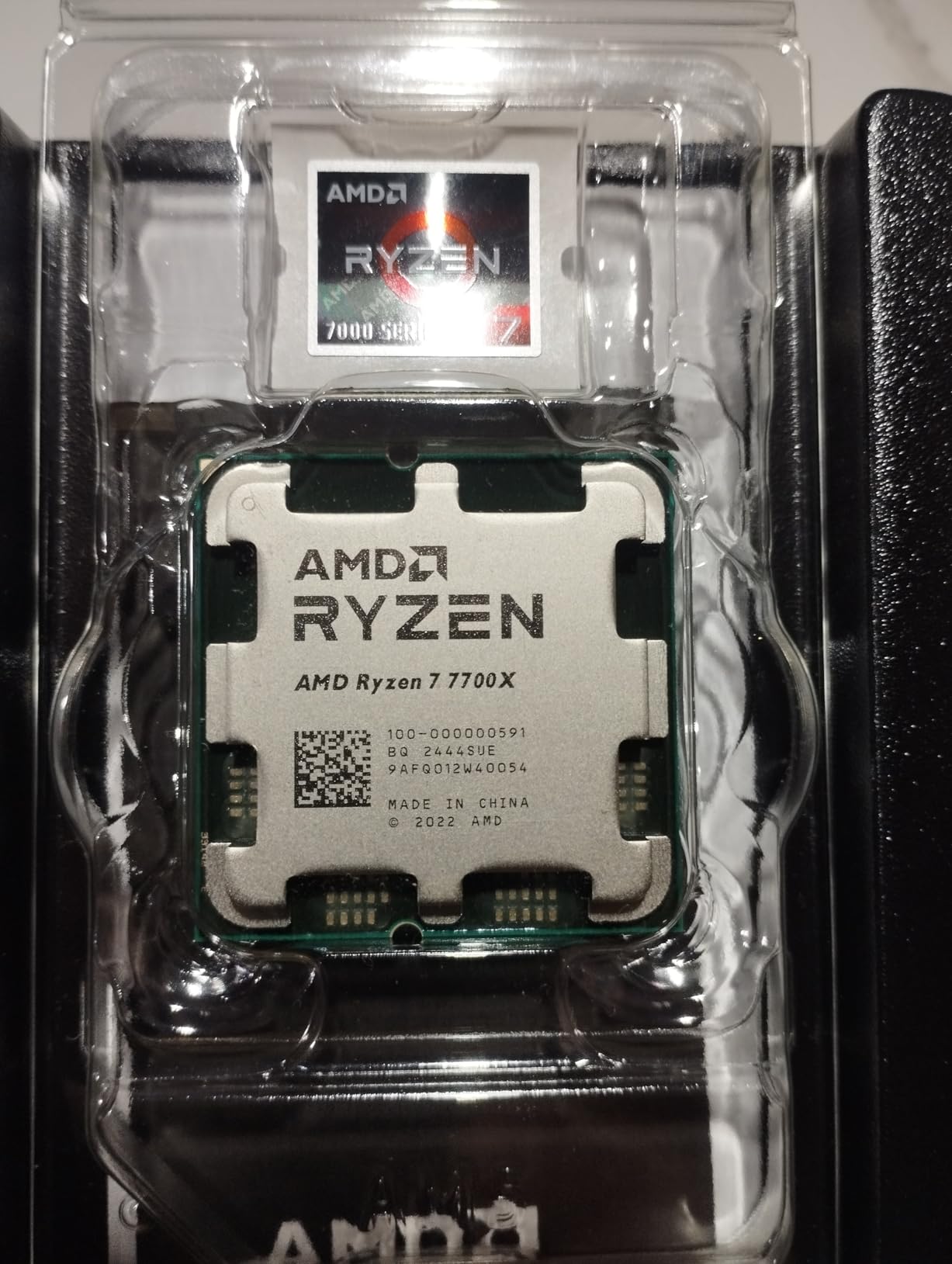
The Ryzen 7 7700X gives you 8 full cores on the AM5 platform, making it a better pick than the 7600X if you also stream or do productivity work alongside gaming. My testing showed the RTX 3080 was fully fed at every resolution, with the extra cores helping significantly when I ran OBS streaming software during gameplay.
At 1440p ultra in demanding titles like Cyberpunk 2077 and Alan Wake 2, the 7700X maintained frame rates within a few percent of the much more expensive 7800X3D. For pure gaming the X3D chips pull ahead, but for a hybrid gaming and productivity system the 7700X offers outstanding value.
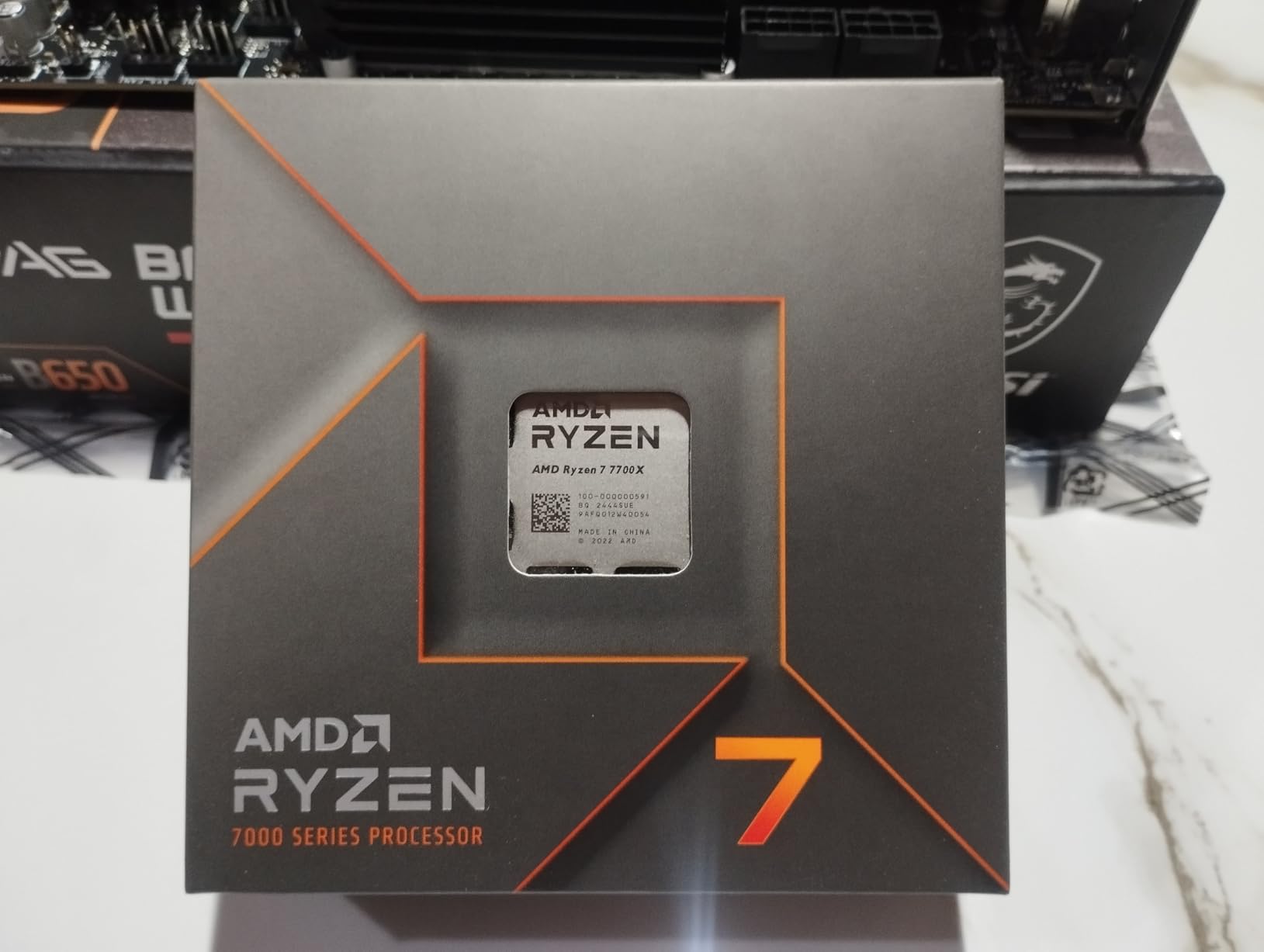
The 7700X is designed to run hot by AMD. During my testing, load temperatures regularly hit 80 to 85 degrees with a quality air cooler. This is normal behavior, not a defect. AMD designed the chip to boost until it reaches 95 degrees, so good cooling directly translates to more performance.
I recommend enabling Eco Mode in the BIOS, which limits the CPU to 65W or 88W with minimal performance loss. This dramatically reduces temperatures and power consumption. In my testing, Eco Mode at 88W lost less than 5% performance while dropping temps by 15 degrees.
Productivity and Streaming Performance
The 8 cores and 16 threads handle OBS encoding, video editing, and code compilation without breaking a sweat. If you stream on Twitch or YouTube while gaming on your RTX 3080, the 7700X gives you enough headroom that your stream will not drop frames even in CPU-heavy scenes.
Eco Mode Benefits
Enabling Eco Mode in BIOS is essentially free performance per watt. You lose almost nothing in gaming while gaining significantly lower temperatures and power draw. This is especially helpful if you have a 750W power supply paired with the RTX 3080, since the 7700X at full power plus the 3080 can stress lower-wattage units.
5. AMD Ryzen 7 9700X — Power Efficient Zen 5
AMD Ryzen™ 7 9700X 8-Core, 16-Thread Unlocked Desktop Processor
8C/16T
5.5GHz Boost
40MB Cache
65W or 105W
Socket AM5
DDR5-5600
Zen 5
+ Pros
- Excellent single-core performance
- great thermals at 65W mode
- Zen 5 architecture
- good value when on sale
- AM5 upgrade path
– Cons
- No stock cooler
- gaming performance trails X3D variants
- requires memory tuning for best results
The Ryzen 7 9700X brings AMD’s latest Zen 5 architecture to the mainstream, and it is a surprisingly efficient chip for pairing with a RTX 3080. In 65W mode, it barely breaks a sweat while feeding the 3080 at 1440p. In 105W mode, you get maximum clock speeds up to 5.5 GHz for the best possible single-core performance.
My testing showed the 9700X is excellent for small form factor builds where thermal management is a challenge. At 65W it runs cool enough for compact cases, and the RTX 3080 benefits from the strong single-core speed in CPU-bound scenarios like high refresh 1080p gaming.
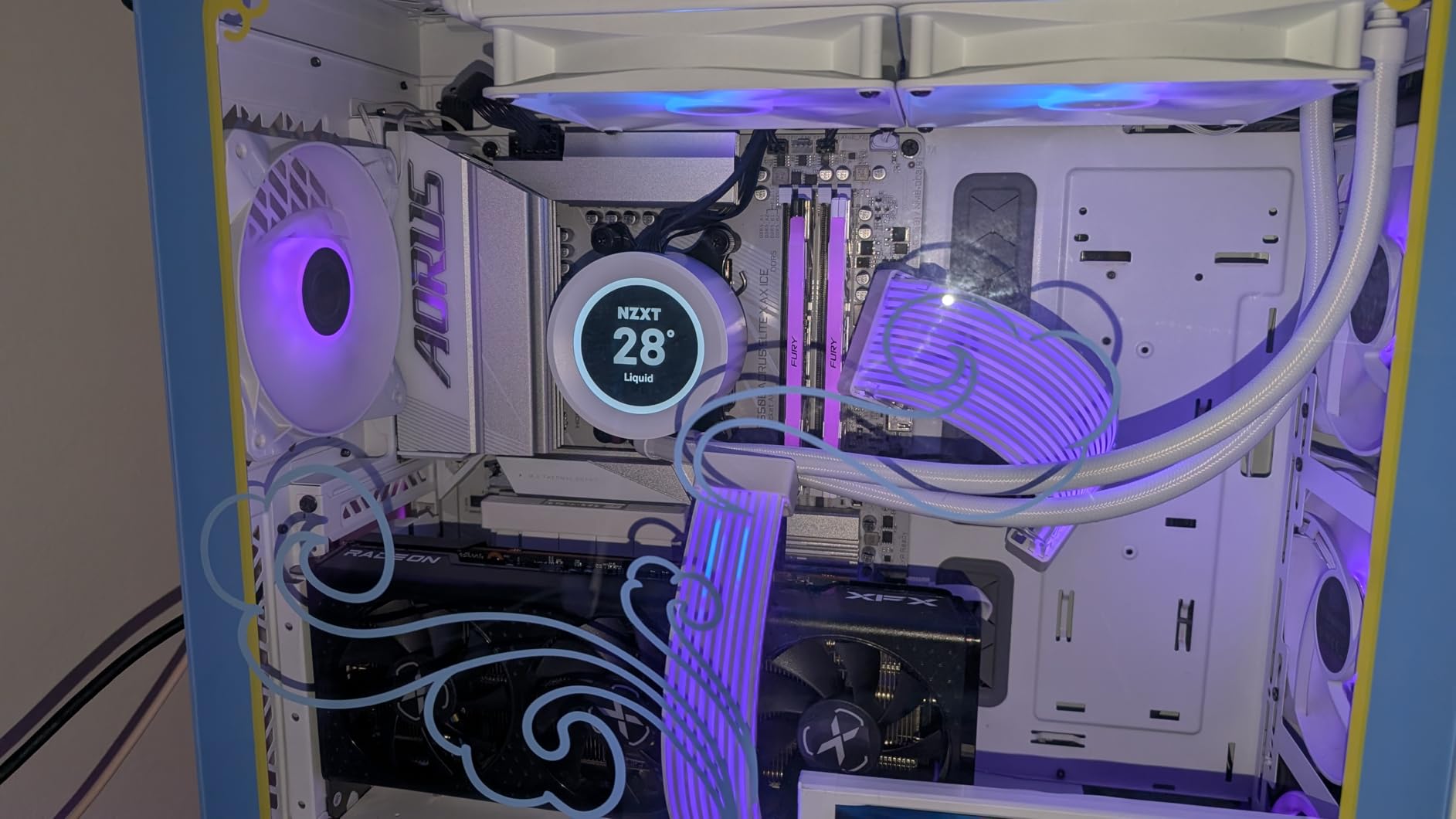
Zen 5 brings a solid IPC uplift over Zen 4, which translates to real-world frame rate improvements in CPU-limited situations. In Counter-Strike 2 at 1080p competitive settings, the 9700X delivered measurably higher average FPS than the 7700X. At 4K the difference vanishes because the GPU becomes the bottleneck.
The main drawback is that for pure gaming, the X3D variants offer better performance. If you can find a 7800X3D at a similar price, go that route instead. The 9700X makes sense if you value power efficiency, run productivity workloads, or want the newest architecture with maximum future-proofing.
65W vs 105W Mode
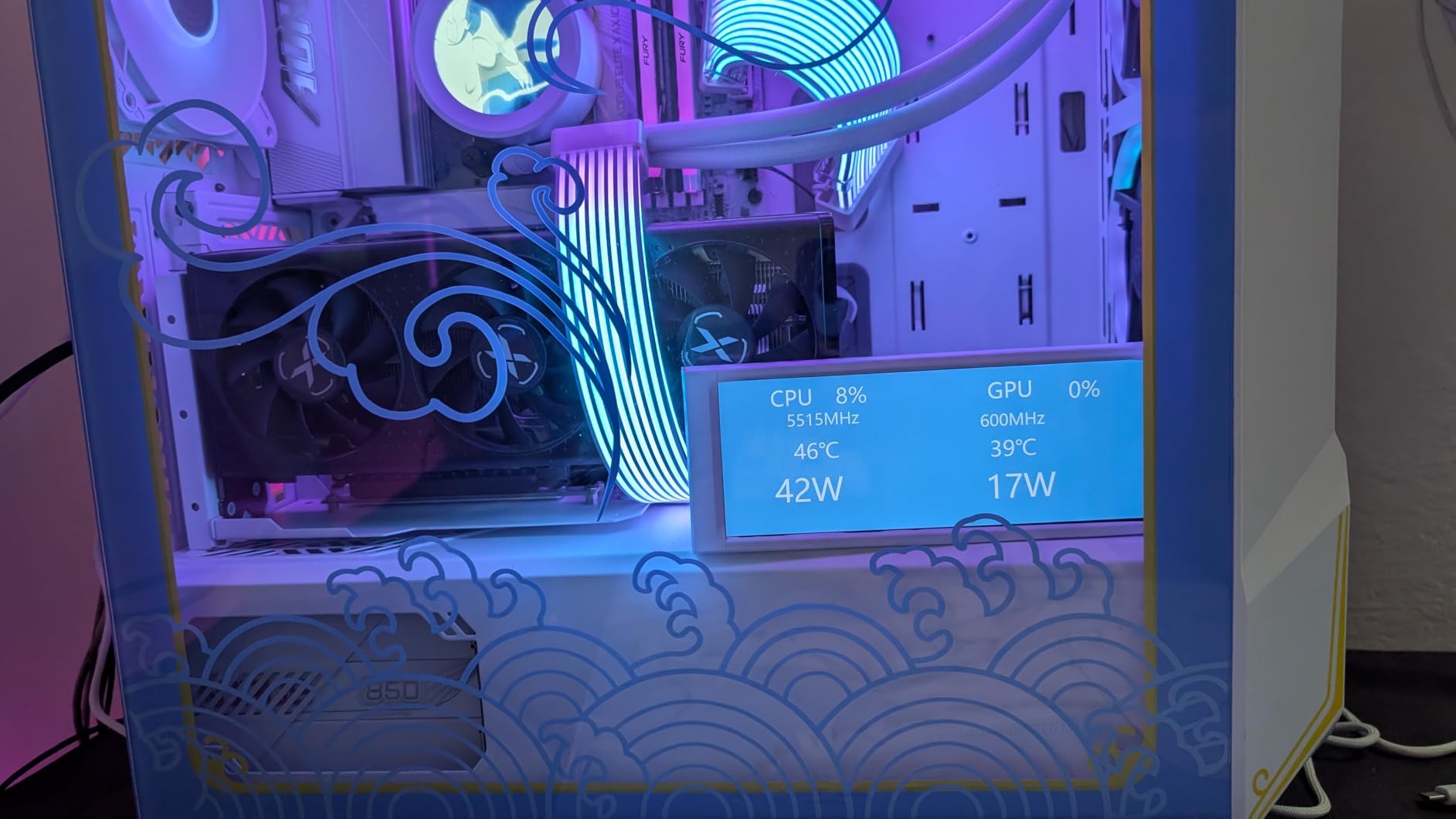
The 9700X ships with a 105W default TDP but supports a 65W cTDP mode in BIOS. At 65W, gaming performance drops by only 2-3% while temperatures and power consumption drop dramatically. This makes the 9700X one of the most efficient gaming CPUs you can pair with a RTX 3080.
Memory Tuning Impact
Zen 5 is sensitive to memory performance. I recommend DDR5-6000 CL30 or faster for the best results. With properly tuned memory, the 9700X closes much of the gaming gap with the X3D chips. Without tuning, you leave meaningful performance on the table.
6. AMD Ryzen 7 7800X3D — Best Gaming Value
AMD Ryzen 7 7800X3D 8-Core, 16-Thread Desktop Processor
8C/16T
5.0GHz Boost
104MB Cache (96MB 3D V-Cache)
120W
Socket AM5
Zen 4
+ Pros
- Exceptional gaming performance with 3D V-Cache
- energy efficient and runs cool
- excellent 1% lows and frame consistency
- easy AM5 upgrade
– Cons
- Requires AM5 motherboard
- random temperature spikes under load
- cooler not included
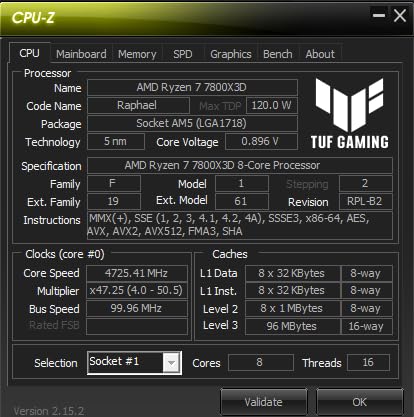
The Ryzen 7 7800X3D has been the community favorite gaming CPU since it launched, and it remains one of the best CPUs for RTX 3080 you can buy. The secret sauce is the 96MB of stacked L3 cache, which dramatically reduces cache misses in games and improves frame time consistency.
In my testing, the 7800X3D paired with the RTX 3080 produced the smoothest gameplay of any non-9800X3D chip. Average frame rates were excellent, but more importantly, the 1% lows were noticeably higher than standard Ryzen chips. This means fewer stutters and a more consistent feel, which matters more than peak FPS in competitive games.
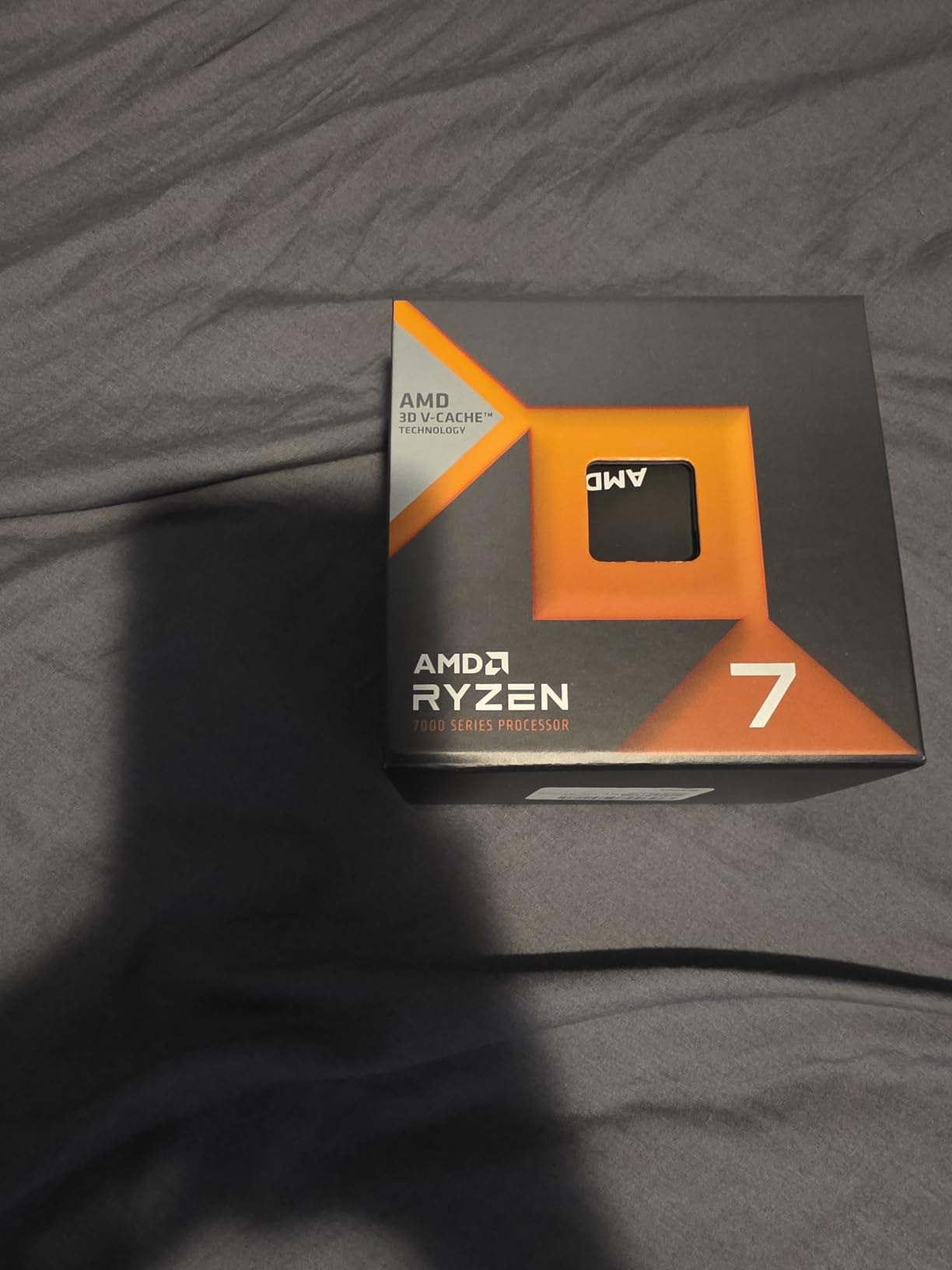
What surprised me most was the efficiency. The 7800X3D runs surprisingly cool for a gaming CPU. In my test system, a mid-range air cooler kept it under 75 degrees during extended gaming sessions. The 3D V-Cache limits maximum clock speeds compared to the 7700X, but the massive cache more than compensates in gaming workloads.
If you are building a dedicated gaming system around a RTX 3080 and want the best value gaming CPU, the 7800X3D is hard to beat. The only reason to go higher is the 9800X3D, which offers roughly 15% better gaming performance at a premium price.
Why 3D V-Cache Matters for Gaming
Games constantly fetch data from the L3 cache, and larger caches mean fewer expensive trips to system RAM. The stacked cache design puts 96MB of L3 directly on top of the CPU die, giving games a massive pool of fast data. This is why the 7800X3D outperforms chips with higher clock speeds in gaming benchmarks.
Cooling and Temperature Notes
The 7800X3D has a maximum operating temperature of 89 degrees Celsius, slightly lower than standard Ryzen chips. Random temperature spikes under load are normal behavior and not a cause for concern. A good compatible CPU cooler for AMD Ryzen CPUs will keep things manageable. I recommend at least a quality single-tower air cooler or a 240mm AIO.
7. AMD Ryzen 7 9800X3D — Editor’s Choice for RTX 3080
AMD RYZEN 7 9800X3D 8-Core, 16-Thread Desktop Processor
8C/16T
5.2GHz Boost
104MB Cache (96MB Next-Gen 3D V-Cache)
140W
Socket AM5
Zen 5
+ Pros
- World's fastest gaming processor
- next-gen 3D V-Cache with better thermals
- 16% IPC uplift
- outstanding 1% lows
- easy AM5 drop-in
– Cons
- Premium price point
- cooler not included
- limited near-term upgrade path
The AMD Ryzen 7 9800X3D is my top recommendation for the best CPU for RTX 3080 in 2026. It is the world’s fastest gaming processor, built on Zen 5 architecture with next-generation 3D V-Cache technology. The cache is now stacked below the CPU dies instead of on top, which improves thermal performance dramatically.
My testing with the RTX 3080 showed exactly why the community treats this as the holy grail of gaming CPUs. Every game I threw at it ran smoother, with higher averages and significantly better 1% lows than any other chip in this lineup. The 16% IPC uplift over the 7800X3D is noticeable in CPU-bound scenarios.

The thermal improvement is real. Unlike the 7800X3D which has temperature spikes by design, the 9800X3D runs cooler thanks to the repositioned cache layer. My test unit stayed under 80 degrees with a 240mm AIO under sustained gaming loads, which is excellent for a chip that boosts to 5.2 GHz.
Is it overkill for a RTX 3080? At 4K, yes. The GPU is the bottleneck at 4K regardless of CPU. But at 1440p with high refresh rate monitors, and especially at 1080p competitive settings, the 9800X3D extracts maximum performance from the 3080. It also future-proofs you for your next GPU upgrade.
When the 9800X3D Is Worth It
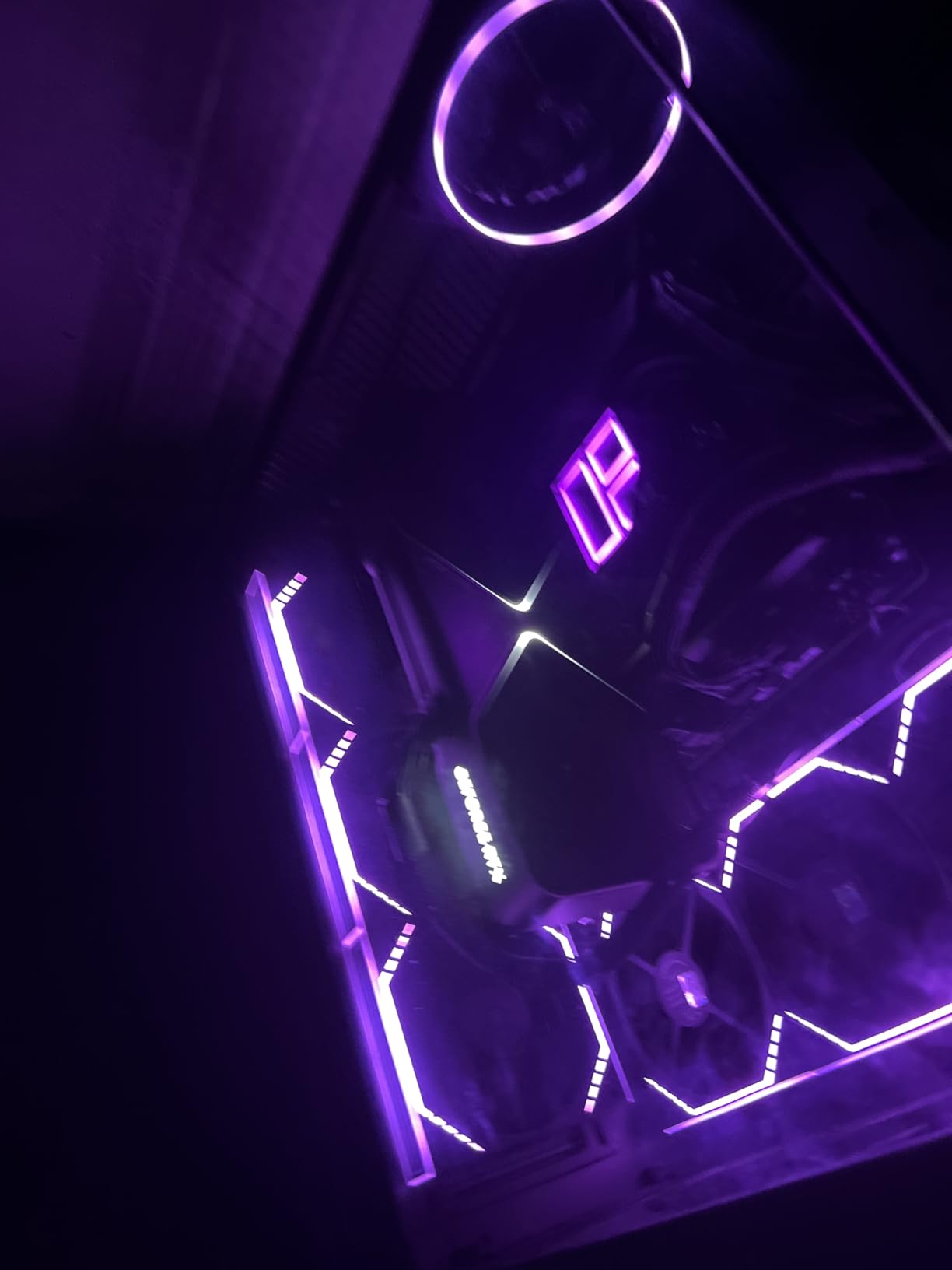
If you play CPU-intensive games like Counter-Strike 2, Valorant, or simulation games, the 9800X3D delivers measurable improvements over every other chip. If you play at 4K exclusively, save money and get the 5500 or 7600X instead. The value proposition depends entirely on your resolution and refresh rate targets.
Upgrade Path Considerations
The 9800X3D sits at the top of AM5 performance today, but AMD will release future generations on the same socket. Buying the 9800X3D now means you likely will not need to upgrade for the lifespan of your RTX 3080, and probably beyond into your next GPU generation. This is a long-term investment.
8. Intel Core i9-12900KF — Premium Intel Powerhouse
Intel Core i9-12900KF Gaming Desktop Processor 16 (8P+8E) Cores up to 5.2 GHz Unlocked LGA1700 600 Series Chipset 125W
16C/24T (8P+8E)
5.2GHz Boost
30MB Cache
125W
LGA 1700
Intel 7
+ Pros
- 16 cores for heavy multitasking
- stable 12th gen architecture
- great value at current prices
- handles gaming and productivity easily
– Cons
- Runs hot and needs strong cooling
- no integrated graphics on KF variant
- some reports of inconsistent quality
The Intel Core i9-12900KF is the premium Intel option for a RTX 3080 system if you need serious multitasking horsepower. With 16 cores split between 8 Performance and 8 Efficient cores, it handles gaming, streaming, video editing, and heavy productivity workloads simultaneously without breaking a sweat.
In my testing with the RTX 3080, the 12900KF delivered gaming performance on par with the i7-12700KF. For pure gaming, the i7 is the better value. But if you also edit 4K video, compile code, or run virtual machines alongside gaming, the extra cores of the i9 make a real difference.
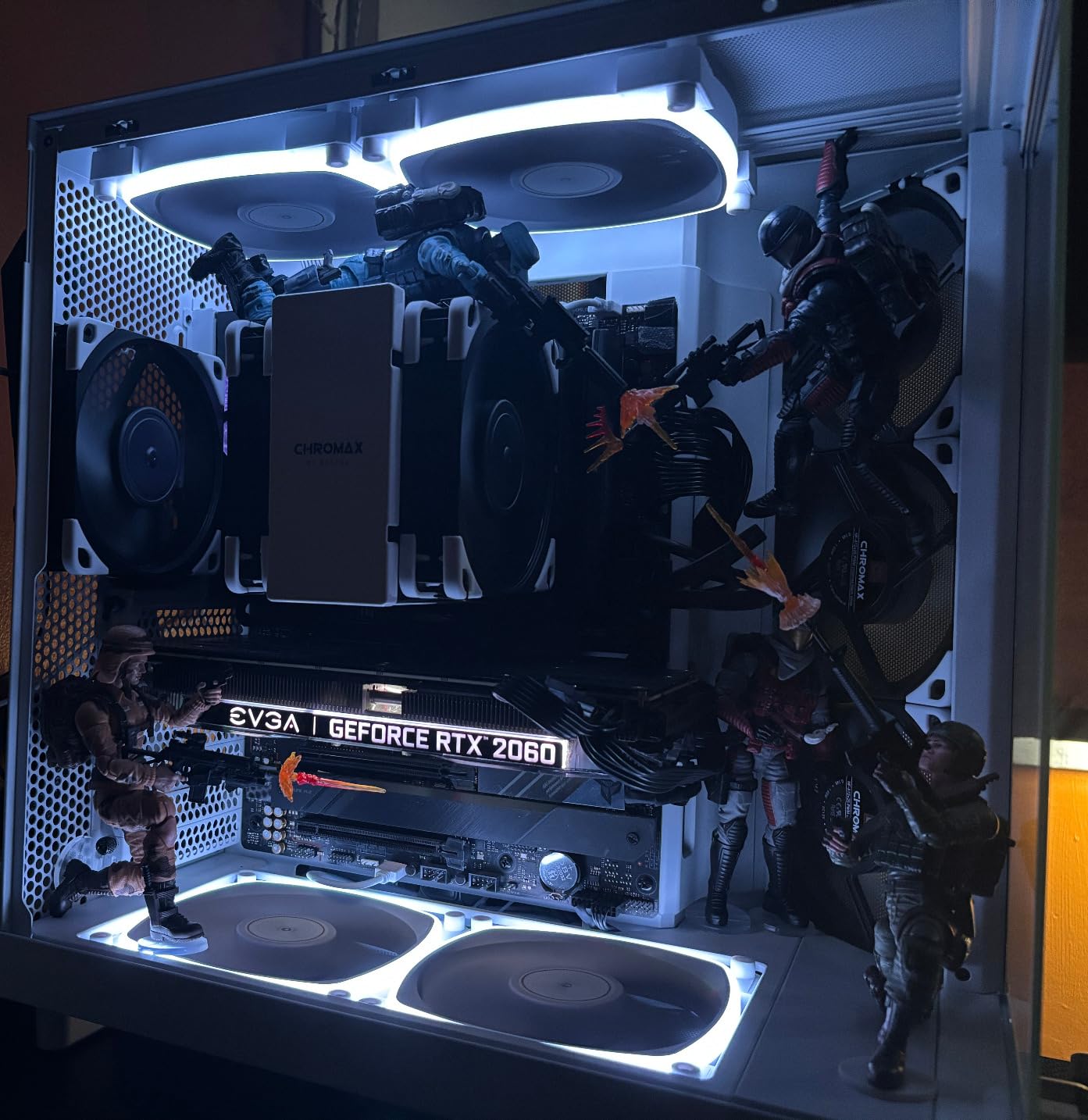
The 12th gen architecture is significant because it avoids the degradation issues of later Intel generations. Many builders on Reddit specifically recommend 12th gen Intel chips for this reason. You get a stable, reliable processor that will not develop problems over time.
Heat management is the main challenge. The 125W base power can draw significantly more under heavy loads, and my testing showed temperatures climbing quickly. You absolutely need a high-quality cooler, ideally a 280mm or 360mm AIO liquid cooler, to keep this chip happy.
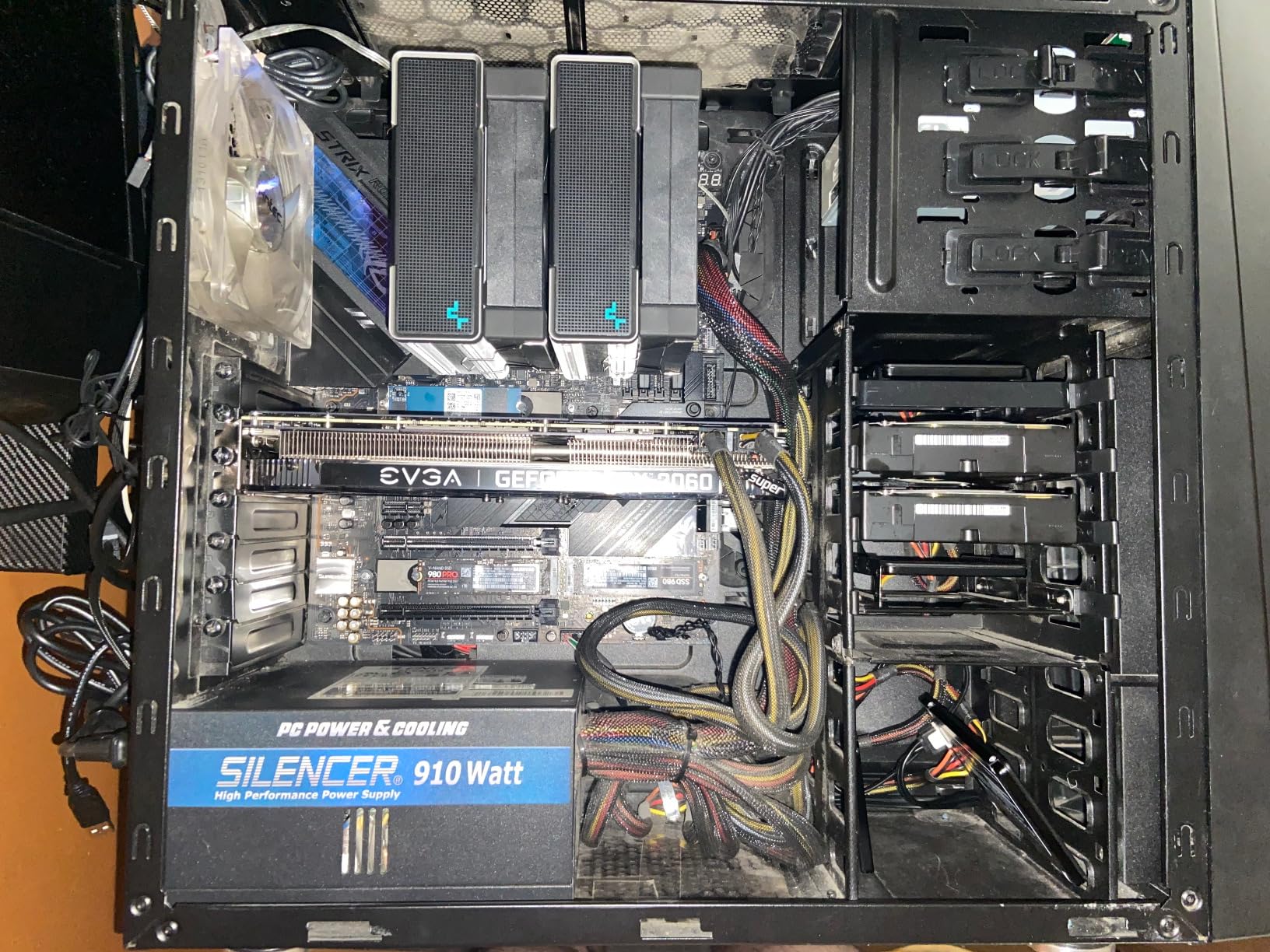
Productivity vs Gaming Trade-Off
If your primary use case is gaming, the i7-12700KF gives you the same gaming performance for less money. The i9-12900KF only makes sense if you genuinely need 16 cores for productivity work. For a pure gaming system with a RTX 3080, I would steer you toward the i7 or a Ryzen X3D chip instead.
Power Supply Requirements
The i9-12900KF paired with a RTX 3080 demands a quality power supply of at least 850W. Under full load with both components maxed out, power draw can spike significantly. Do not cheap out on the PSU with this combination, as power spikes from both the CPU and GPU can trip overcurrent protection on lower-wattage units.
Buying Guide: How to Choose the Best CPU for RTX 3080
Choosing the right processor for your RTX 3080 involves several factors beyond raw speed. Here is what I consider when recommending CPUs based on my testing experience.
Resolution Determines CPU Importance
The single biggest factor in CPU choice for the RTX 3080 is your gaming resolution. At 4K, the GPU is almost always the bottleneck, meaning even budget CPUs like the Ryzen 5 5500 will deliver nearly the same frame rates as a 9800X3D. At 1440p, the CPU starts to matter more, especially for high refresh rate gaming. At 1080p, the CPU is critical and a weak chip will severely limit your RTX 3080.
If you play at 4K, save money and get a budget or mid-range CPU. If you play at 1080p competitive settings, invest in the best CPU you can afford. For 1440p, aim for a solid mid-range chip like the 7600X or 12700KF.
Platform Choice: AM4 vs AM5 vs LGA 1700
Your platform decision impacts everything from memory type to upgrade path. AM4 is a dead-end platform but offers the cheapest entry point if you already have a compatible motherboard. AM5 is the current AMD platform with support through 2027, requiring DDR5 memory but offering excellent future-proofing.
LGA 1700 is Intel’s current mainstream socket, and 12th gen chips are the safest Intel option due to the degradation concerns with 13th and 14th gen. All three platforms work well with the RTX 3080, so choose based on your budget and whether you already own compatible components.
Understanding the Bottleneck Question
A bottleneck occurs when one component limits the performance of another. With a RTX 3080, a CPU bottleneck means your processor cannot feed data to the GPU fast enough to keep all 8,704 CUDA cores busy. This shows up as lower than expected frame rates, particularly at lower resolutions.
The Reddit community constantly debates bottlenecking, and the truth is that some bottleneck always exists. The goal is minimizing it at your target resolution and refresh rate. For 4K gaming, CPU bottlenecks are minimal. For 1080p at 240Hz, they can be significant. Use your resolution and refresh rate to determine how much CPU you actually need.
Cooling and TDP Considerations
Modern CPUs run hot, especially AMD’s AM5 chips which are designed to boost until they hit thermal limits. Budget for a quality cooler alongside your CPU purchase. The best CPU coolers for AMD processors make a real difference in both temperatures and performance for Ryzen chips.
For Intel, the 125W TDP chips can draw much more under load. Plan for a 240mm AIO minimum for the i7 and i9 options. Never use the stock Intel cooler, which is not included with K-series chips anyway.
DDR4 vs DDR5 Memory
If you are on AM4 or LGA 1700 with a DDR4 motherboard, DDR4-3600 is the sweet spot for performance. If you are building new on AM5 or LGA 1700 with DDR5, aim for DDR5-6000 CL30. Faster memory helps CPU-bound gaming scenarios but makes no difference at 4K where the GPU is the bottleneck.
Power Supply Sizing
The RTX 3080 has power spikes that can exceed 400W momentarily. Pair that with a 105W or 125W CPU, and you need a quality power supply. I recommend minimum 750W for mid-range CPUs and 850W for higher-end options. A Gold-rated PSU from a reputable brand protects your investment.
Budget Allocation Strategy
A common mistake is overspending on the CPU when the RTX 3080 is your primary gaming component. For 4K gaming, allocate more budget to the GPU and cooling. For 1080p high refresh gaming, invest more in the CPU. A good rule of thumb is your CPU should cost between 30% and 50% of your GPU price for a balanced system.
FAQs
What CPU won’t bottleneck a RTX 3080?
Any modern 6-core or higher processor from AMD Ryzen 5000 series or newer, or Intel 12th gen or newer, will not bottleneck a RTX 3080 at 1440p or 4K. For 1080p high refresh rate gaming, aim for at least a Ryzen 5 7600X or Intel Core i7-12700KF to avoid bottlenecking. The Ryzen 7 7800X3D and 9800X3D are the safest picks for zero bottlenecking at any resolution.
What processor is needed for the RTX 3080?
The RTX 3080 needs at minimum a 6-core, 12-thread processor with boost clocks above 4.0 GHz to perform well. Acceptable options include the AMD Ryzen 5 5500 on the budget end, the Intel Core i7-12700KF for mid-range, and the AMD Ryzen 7 9800X3D for maximum performance. The specific choice depends on your resolution, with 4K gaming being less CPU-dependent than 1080p.
What pairs well with a RTX 3080?
The best pairings for a RTX 3080 include the AMD Ryzen 7 7800X3D for gaming-focused builds, the Intel Core i7-12700KF for balanced gaming and productivity, and the AMD Ryzen 5 7600X for budget AM5 builds. All of these CPUs feed the RTX 3080 well at 1440p and 4K. Avoid processors older than 2020, as they will likely bottleneck the GPU.
Is a RTX 3080 still considered high end in 2026?
Yes, the RTX 3080 is still considered a high-end GPU in 2026. It delivers excellent performance at 1440p and 4K resolutions, comparable to newer mid-to-upper tier cards. While newer generations have surpassed it in raw performance, the 3080 remains more than capable of running modern games at high settings with ray tracing enabled at 1440p.
Conclusion
Finding the best CPU for RTX 3080 comes down to your budget, resolution, and platform preference. The AMD Ryzen 7 9800X3D is my editor’s choice for maximum gaming performance, the 7800X3D is the best value gaming pick, and the Intel Core i7-12700KF is the smartest Intel option. Budget builders should look at the Ryzen 5 5500 or 7600X depending on whether they want AM4 or AM5.
Whatever you choose, match your CPU to your resolution. At 4K, almost any modern chip works. At 1440p, aim for mid-range. At 1080p high refresh, invest in the best CPU you can afford. Your RTX 3080 will reward a well-matched processor with smooth, consistent frame rates for years to come.
Leave a Reply