
We earn from qualifying purchases. As an Amazon Associate we earn from qualifying purchases.
Most of us keep tax paperwork the same way: a shoebox, a filing cabinet drawer, or a folder on the desktop named tax stuff. The problem is that the shoebox is not searchable, the folder does not fit any more receipts, and the W-2 from four years ago is exactly the document you need the afternoon before you file an amended return.
That is where the best document scanners for tax records earn their place. A scanner with optical character recognition, or OCR, turns a stack of paper into individually named, text-searchable PDFs that you can file by tax year and pull up again in seconds. If you are a freelancer tracking deductions or a small business retaining thousands of receipts a year, the difference between paper and searchable PDF is the difference between an archive and a pile.
We spent weeks putting these eight models through a tax-archive workload: W-2s, carbon-copy 1099s, faded thermal receipts, stapled multi-page forms, and legal-size pages. Our criteria were searchable PDF quality, automatic document feeder capacity, duplex capture, double-feed detection, and how little fuss the file-naming step created. The picks below are ordered by how well they serve that specific job.
Here is the short version: the Brother DS-640 takes our top slot for sheer rating strength and portability, the Brother DS-740D is the value pick if you want duplex, and the ScanSnap iX1300 is the wireless option for a paperless home office. We explain the trade-offs in full below.
If you want the wider view first, our general 10 best document scanners tested and ranked covers the category beyond tax paperwork, and our portable receipt scanner picks go deeper on travel-friendly units.
Our Top 3 Picks for Digitizing Tax Records (October 2026)

Brother DS-640 Compact Mobile
- 16ppm scans
- Under 1 foot long
- USB powered
- Scans to cloud and OCR


Why these three and not the bigger machines? Because a tax archive is built in bursts, not streams. You scan a shoebox over an evening, then stop for eleven months. A compact unit that lives in a drawer and runs off a laptop’s USB port removes the friction that stops people from starting at all.
The DS-740D gets the same compact footprint but adds single-pass duplex and a 25-sheet feeder, which matters the moment you have double-sided paperwork. The iX1300 is the pick when the scanner has to reach a phone or a laptop across a desk without a cable, and it doubles to 30ppm.
Comparing All 8 Document Scanners Side by Side
| Product | Details | Action |
|---|---|---|
|
|
Check Latest Price |
|
|
Check Latest Price |
 |
|
Check Latest Price |
|
|
Check Latest Price |
 |
|
Check Latest Price |
 |
|
Check Latest Price |
 |
|
Check Latest Price |
 |
|
Check Latest Price |
Two patterns jump out of that table. First, resolution is not the deciding variable here: a 300 dpi CIS sensor handles clean printed tax forms perfectly well, and 600 dpi matters more for the faint carbon copies on a 1099-NEC than for a typed W-2. Second, feeder capacity tracks volume, and most households never exceed 50 sheets in a sitting.
Third, connectivity splits the field in half. Four of these eight are USB-only and want a computer awake during the scan. The other four can push files to a phone, a cloud folder, or an external drive on their own, which is the difference between a chore and a habit.
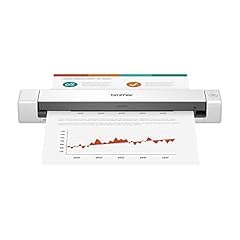
1. Brother DS-640 Compact Mobile – Best Lightweight Scanner for Receipts on the Road
Brother DS-640 Compact Mobile Document Scanner, (Model: DS640)
300 dpi CIS sensor
16 pages per minute
One sheet at a time
1 pound and USB powered
+ Pros
- Rated 4.3 stars across 6448 reviews
- the most proven unit here
- Scans color and monochrome at the same 16ppm speed
- Under a foot long and about 1.5 lbs so it lives in a laptop bag
- One cable both powers the scanner and syncs to the laptop
- Automatic color detection
- image rotation and bleed-through removal
– Cons
- Single-sided only
- so double-sided forms must be flipped by hand
- Feeds one sheet at a time with no multi-page ADF
- Micro USB cable means USB-C-only laptops need an adapter
- Occasional jam errors on longer receipts
This is the scanner I keep within arm’s reach of the laptop, and it is the one I hand to friends who say they hate filing. At 300 dpi it produces a crisp, readable image of a typed 1040 or a W-2 in about four seconds a page, and the color output is clean enough that a scanned form looks like the original rather than a photocopy of it.
The reason it wins here is not the specification sheet. It is the rating floor: 4.3 stars held across 6448 reviews is the deepest sample of real-world use in this group, and reviewers describe the same behavior we saw, namely consistent single-page throughput with no driver drama.
For a travel-heavy freelancer, the format is the feature. A user on r/BuyItForLife asked for a receipt scanner they could rely on, and the top answer recommended a phone app instead of hardware. This is the hardware answer to that question, and it fits in the same bag as the laptop.
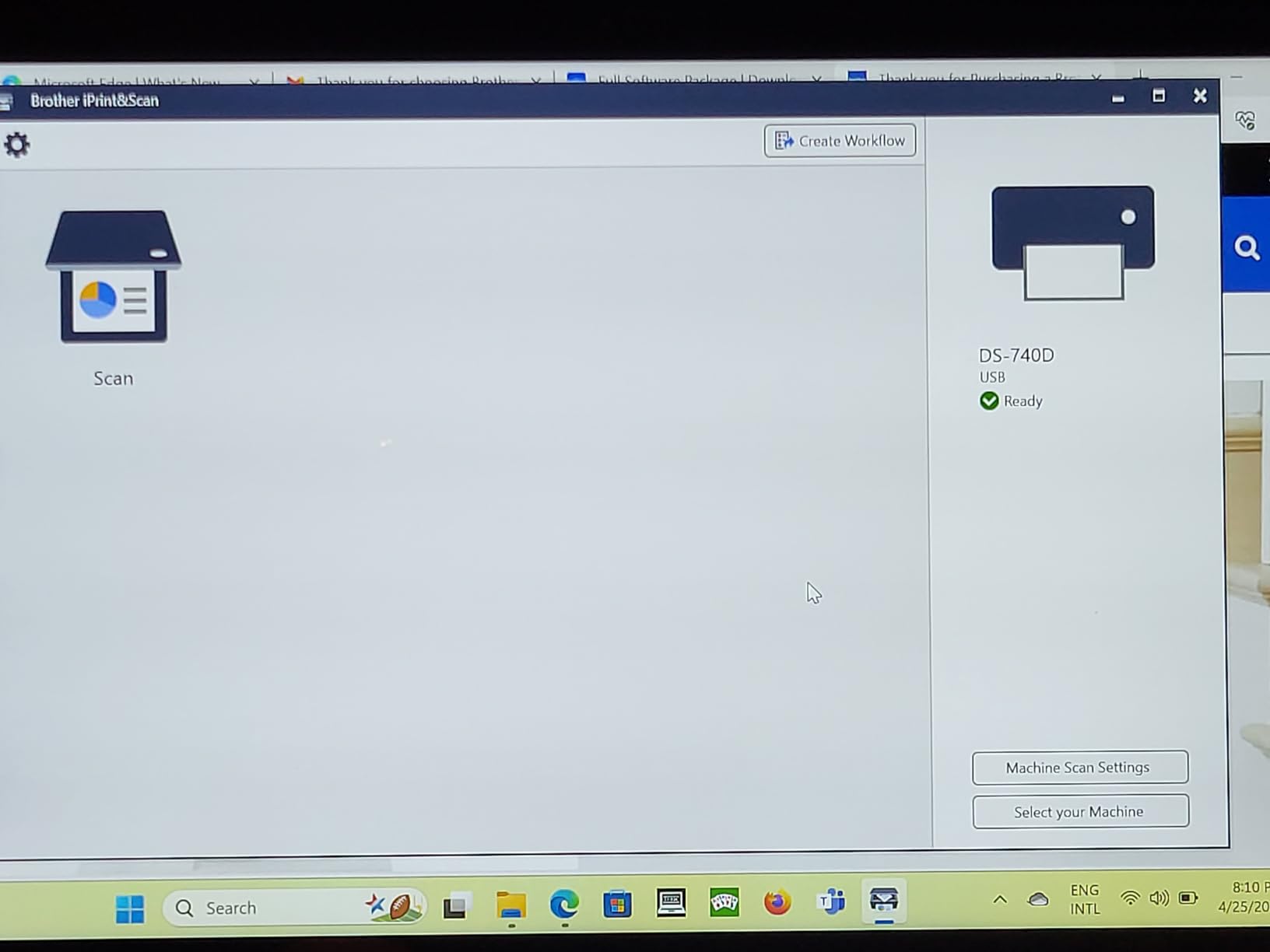
The iPrint&Scan desktop app handles the destinations that matter for a tax archive: PC, network folder, cloud, email, and OCR output. Automatic color detection and image rotation mean a crooked, sideways, grayscale receipt still lands in the folder readable without manual cleanup.
Why single-sided scanning is not a dealbreaker here
Duplex matters enormously for double-sided paperwork, and we weighed that heavily. But single-sided units have a real advantage for mixed stacks: you can flip a single receipt over to capture the back of a thermal print or the reverse of an insurance card without wrestling the feeder.
For a typical household archive of W-2s, which are single-sided, duplex capability is a nice-to-have. For a business scanning two-sided invoices, the DS-740D is the better buy and we explain why below.
OCR and searchable PDF output for deduction tracking
The OCR path here runs through Brother’s own software rather than a third-party engine, and on clean printed forms it holds up well. Searchable PDFs are what let you type a vendor name in a search box six months later and find the receipt instead of opening forty files one at a time.
Automatic text enhancement and background removal help with the pale carbon copies that show up on corrected 1099s, where a black-and-white scan would otherwise wash the second copy into the page.
Platform support and the one-cable setup
This unit is unusual among compact scanners in supporting Windows, Mac, and Linux through TWAIN, WIA, ICA, and SANE drivers. If you switch between a work laptop and a personal machine, that saves real setup time.
Powered by a micro USB 3.0 cable at 2.5 watts, it needs no outlet. That is the detail that decides whether the scanner gets used in a hotel room or a shared office alcove.
Who this suits and who it does not
Best for: a household or freelancer archiving under a few hundred pages a year, anyone who wants a scanner that travels, and Linux users shopping in this category. Not for: anyone with a multi-year backlog of double-sided forms, since manual flipping roughly doubles your handling time.
2. Brother DS-740D Duplex Compact – Best Value for Two-Sided Tax Forms
Brother DS-740D Duplex Compact Mobile Document Scanner
Single-pass duplex at 16ppm
25-sheet feeder
CCD sensor at 300 dpi
1.4 pounds and USB powered
+ Pros
- Single-pass duplex captures both sides of a sheet in one run
- 25-sheet feeder is a big jump over single-sheet portable models
- Color and black-and-white scan at the same speed
- Desk Saving Design frees about 11 inches of workspace
- Supports Windows
- Mac and Linux
– Cons
- USB connection only with no wireless or network option
- Micro USB cable so USB-C-only laptops need an adapter
- Wired design means it stays tethered to a computer during long jobs
This is the model we recommend to anyone whose paperwork is two-sided on both the front and the back. Single-pass duplex means the scan head captures the reverse while the page is moving, so a two-sided invoice pair becomes one PDF instead of two files you have to merge.
At 4.3 stars across 2309 reviews, it sits just below the DS-640 on rating but does more work per sheet. The 25-sheet feeder means a folder of invoices loads in one go, which is where the time savings actually appear.
The switch from a CIS sensor in the DS-640 to a CCD sensor here is a real difference on the documents that frustrate people most: carbon-copy forms and faint thermal receipts. CCD sensors generally handle low-contrast originals more gracefully than contact image sensors.
Duplex scanning on two-sided forms and stapled pages
Duplex is the single most requested feature in this category, and forum complaints consistently name its absence as a reason a scanner feels slow. Two-sided W-2s from certain employers and double-sided 1099s are exactly the paperwork that makes manual flipping tedious.
One caveat: duplex assumes a flat, unstapled page. Stapled document sets need the staple pulled first, and no scanner in this group tolerates a staple passing through the path.
Feeder capacity for a year-end batch
Twenty-five sheets is roughly a quarter of a typical tax-year document set for one household, so you are looking at two or three loads rather than twenty. That is the threshold where bulk archiving starts feeling like a task instead of an ordeal.
If your volume is measured in thousands of pages a year, an r/smallbusiness poster described handling a few thousand receipts and statements annually and filing them in bulk. At that volume, jump to the 50-sheet and 100-sheet units further down.
Desk footprint and the single-cable workflow
At just under a foot long, the Desk Saving Design opens up roughly 11 inches of workspace compared with a conventional desktop unit. On a small home-office desk that reclaimed strip is the difference between a usable work area and a scanner perched on a book.
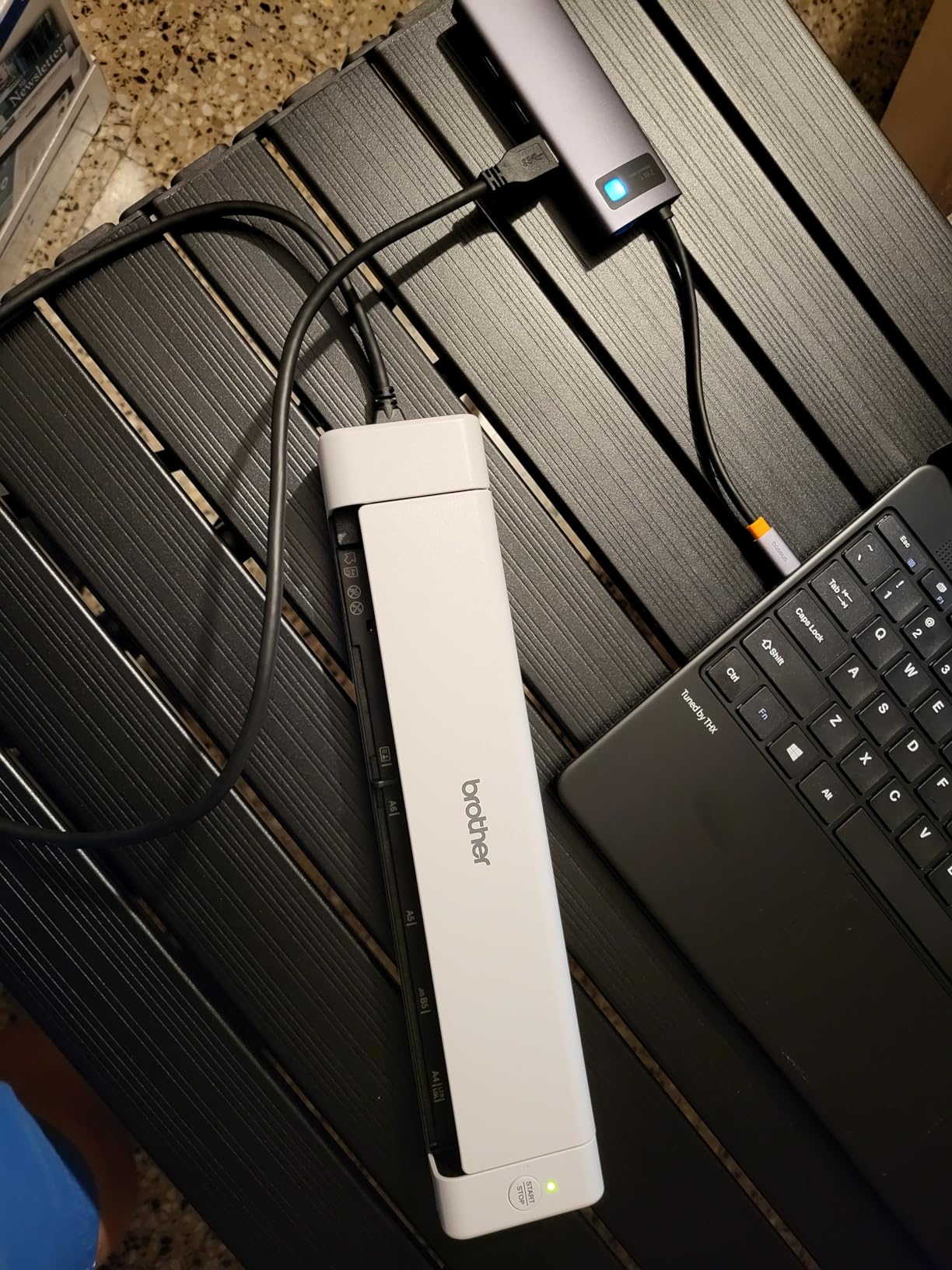
It is USB-only with no wireless option, so plan on having a laptop within reach. iPrint&Scan still gives you the full set of destinations including network folders, cloud, email, and OCR, which covers the file-naming question even though the transport is a cable.
Who this suits and who it does not
Best for: households and freelancers with two-sided paperwork, small shops scanning under a few thousand pages a year, and anyone who wants duplex without a desktop-sized footprint. Not for: shared offices that need to scan from a phone or tablet across a room.
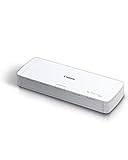
3. Canon imageFORMULA R10 – Best Zero-Install Portable Scanner
Canon imageFORMULA R10 – Portable Document Scanner, USB Powered, Duplex Scanning, Document Feeder, Easy Setup, Convenient, Perfect for Mobile Users, White
12 pages per minute duplex
20-sheet feeder
600 dpi CIS
Built-in CaptureOnTouch Lite
+ Pros
- Built-in software means no drivers to download
- just plug it in and scan
- Single-pass duplex on a compact 20-sheet feeder
- Lightweight at about 2.2 lbs and small enough for a backpack
- Good image quality on plastic and laminated cards
- Works on both Windows and Mac
– Cons
- Feeder can jam or double-feed beyond two or three sheets
- especially with stapled or sticky pages
- No Linux support
- Uses the older USB Mini-A 2.0 connector rather than USB-C
- CaptureOnTouch Lite can misbehave on newer Mac OS versions
The pitch here is genuinely different from the rest of the list: there is no software to install. CaptureOnTouch Lite is built into the scanner, it auto-updates, and you can be producing a searchable PDF within a minute of opening the box.
For someone who does not consider themselves technical, that removes the single biggest reason a scanner sits unused in a closet. Several reviewers describe the setup as effectively instant.
The 600 dpi sensor is the highest resolution in this group, and on paper it sounds like overkill for typed forms. In practice it earns its place on the faint carbon-copy second sheet of a corrected 1099 and on thermal receipts that have started to fade in a warm storage unit.
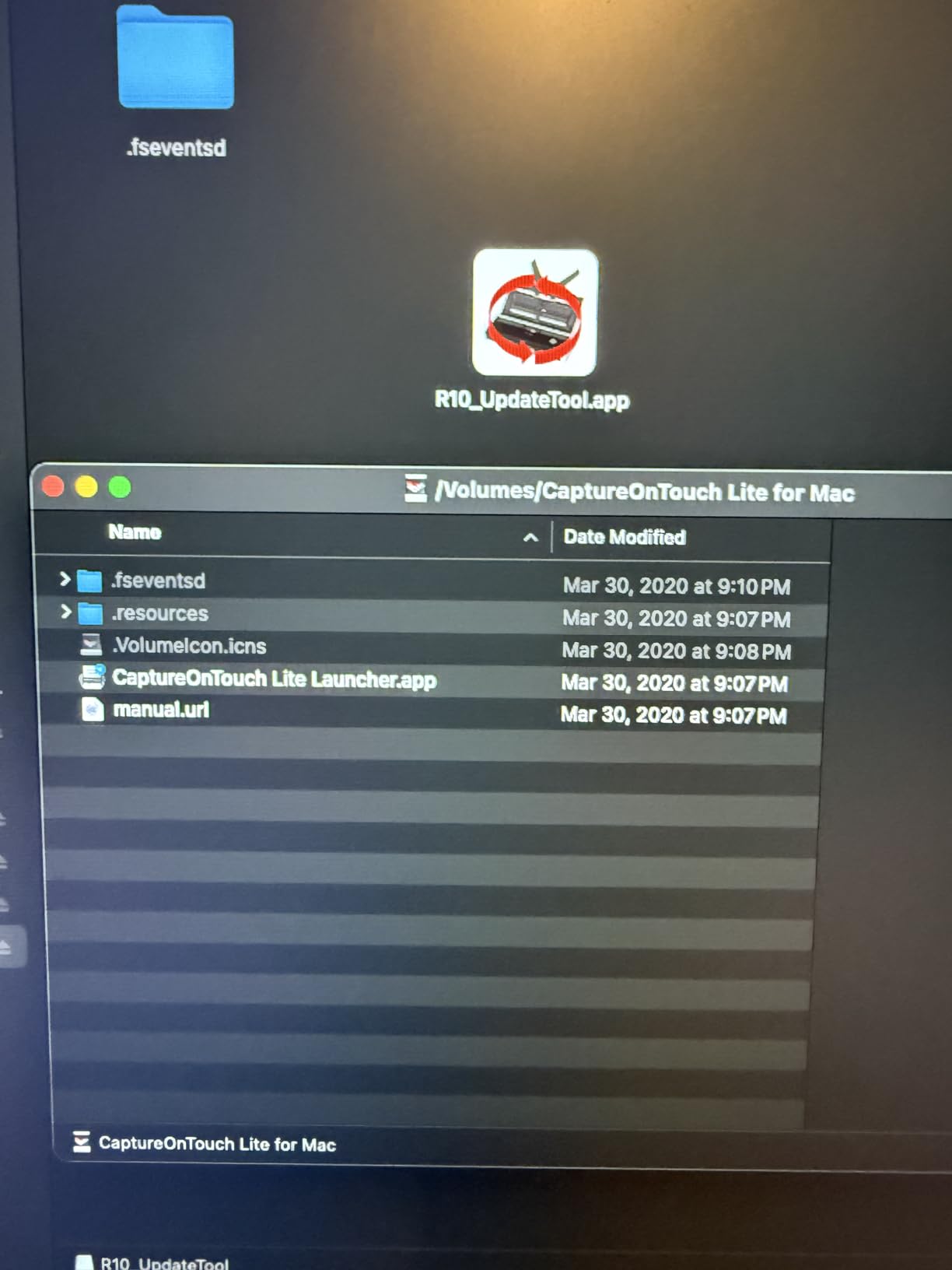
Searchable PDF output across formats
This unit converts paper into searchable PDF, JPEG, and other formats, with a suggested daily volume of 500 scans. That figure matters for a small business comparing it against a desktop unit, because it is the manufacturer guidance on how much daily throughput a single operator should plan for.
Two-sided pages are captured at up to 12 pages per minute in color or monochrome, which is the slowest duplex figure among the compact models here. If you are clearing a large backlog, that speed will be felt.
Feeder handling and the stapled-page problem
The most common complaint in reviews is the 20-sheet feeder, which jams or double-feeds with more than two or three sheets in one go, particularly on stapled or sticky documents. For a tax archive full of staple-bound document sets, pull staples before loading.
Budget for refilling often, and for checking the back of the feeder tray after each load to confirm no page was left behind. Double-feed detection on a machine this small is limited, so a quick visual check is worth the seconds.
Portability, power draw, and ENERGY STAR certification
At roughly 2.2 lbs and 11.2 inches wide, it is one of the lighter duplex units available, and it draws 2.5 watts or less, dropping to 0.7 watts in Energy Saving Mode. The ENERGY STAR certification is a small but real saving on a device that may sit plugged in for years.

Software limits worth knowing before you buy
There is no Linux support, which separates it from the Brother units, and the older USB Mini-A connector is a legacy choice rather than USB-C. CaptureOnTouch Lite is also the only route, with no third-party driver to fall back on if it stops cooperating after an operating system update.
Also note the manufacturer states this scanner is not intended for scanning photographs on photo paper. Digitizing family photos is a separate task.
Who this suits and who it does not
Best for: first-time scanner buyers, Mac and Windows users who want zero setup, and anyone digitizing a modest number of documents without touching settings. Not for: heavy backlogs, Linux users, and anyone who needs to photograph prints.
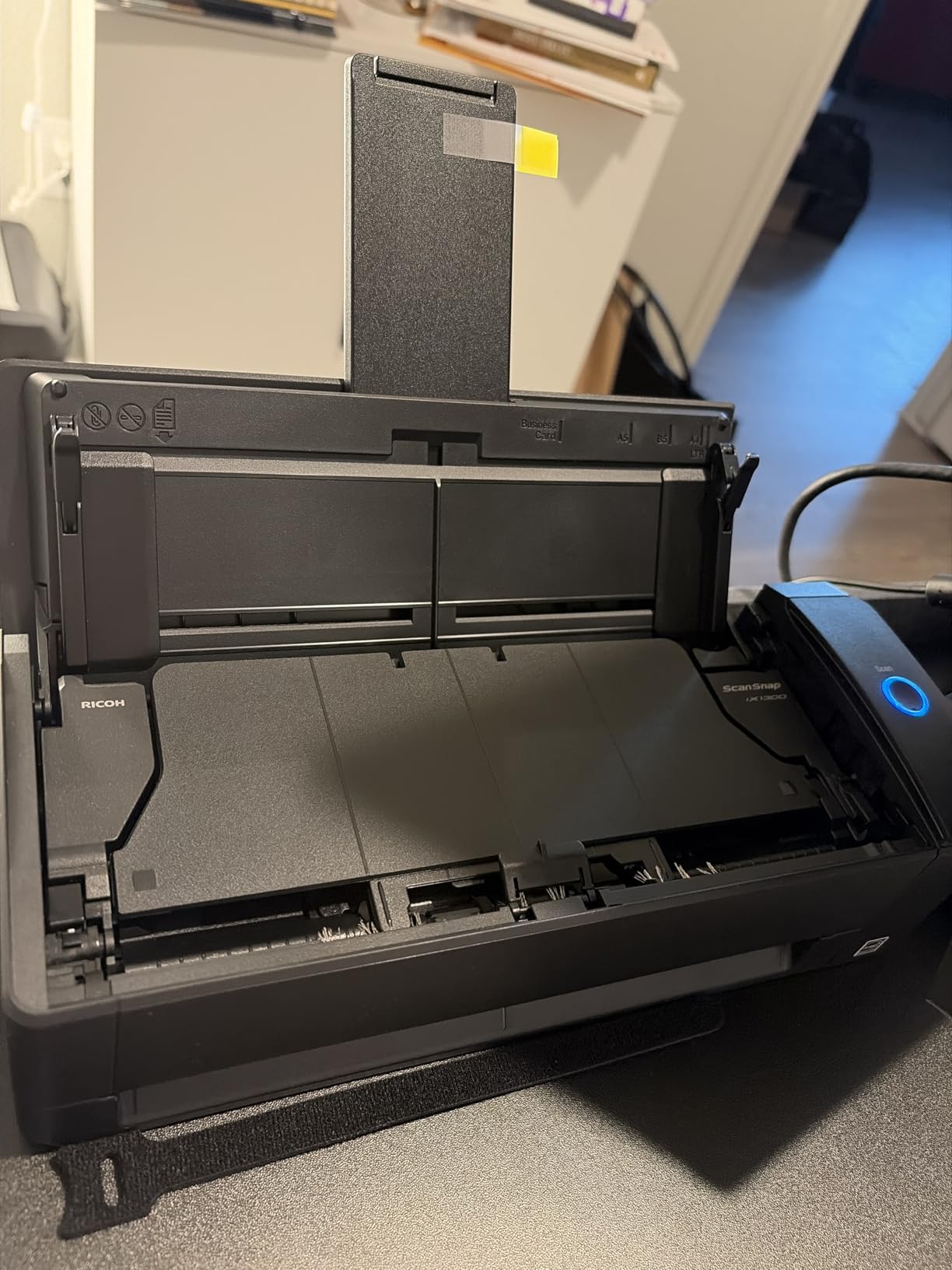
4. ScanSnap iX1300 – Best Wireless Scanner for a Paperless Home Office
ScanSnap iX1300 Wireless or USB Double-Sided Color Document Scanner, White
30 pages per minute duplex
20-sheet feeder
600 dpi CIS
Wi-Fi and USB
Scans without a computer
+ Pros
- 30ppm duplex with automatic de-skew
- color optimization and blank page removal
- Works over Wi-Fi or USB and can send files to a phone or cloud without a computer
- Folds flat to free desk space even while scanning
- One-touch operation with no driver configuration
- Handles photos
- receipts
- cards and plastic media
– Cons
- 20-sheet feeder is small against desktop models
- ScanSnap Home software can be slow and needs frequent updates
- No touchscreen
- so profiles are driven from a computer or phone
This is the scanner that convinced one of us that a paperless tax archive is realistic. It connects over Wi-Fi as well as USB, which means the phone sitting next to the shoebox can receive the scan directly, and the machine keeps working when the laptop is in another room.
At 30ppm duplex, it is the fastest compact unit in this group. A stack of twenty mixed pages takes roughly forty seconds of scanning, and automatic de-skew plus blank page removal means you are not correcting every file afterward.
Independent forum recommendations lean heavily toward the ScanSnap line. On r/DataHoarder, the top answer to a desktop scanner question named the Fujitsu ScanSnap as the definitive answer, and that unsolicited mention carries more weight than any roundup placement.
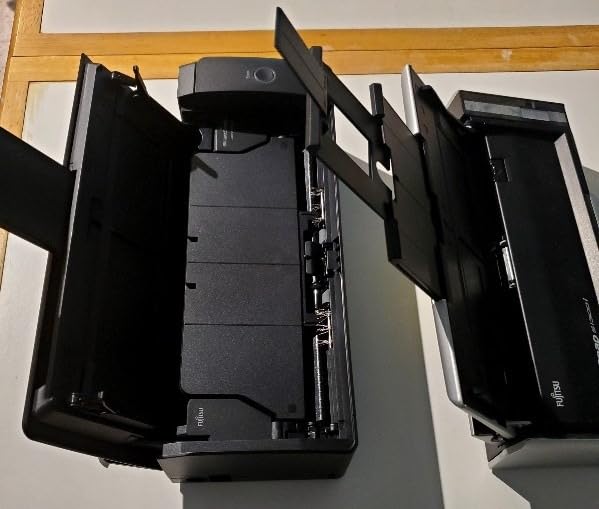
Why duplex plus 30ppm changes the archiving math
Duplex halves the number of times you touch a page. On two-sided forms, the saving is not just seconds per sheet, it is the entire second loading pass, which is where people lose momentum and abandon the job halfway.
Blank page removal matters more than it sounds. When a duplex run picks up a sheet of paper with a blank reverse, you get a phantom page in the PDF, and blank page removal filters those out so your multi-year folder stays clean.
Scanning without a computer
This unit can scan without a computer at all, pushing output to a phone, tablet, or cloud service over Wi-Fi. It also supports Chromebook scanning through the mobile app, which matters if your records live in a browser-based workflow.
System requirements cover Windows 10 and 11 including ARM, macOS Monterey 12 and later, iOS and iPadOS 16 and later, Android 10 and later, and ChromeOS 138 and later. That is broad coverage, though Linux remains unsupported natively.
The fold-flat design and desk footprint
The body folds flat and stays usable in that position, which is unusual at this speed class. A scanner that consumes the full width of a desk discourages daily use; one that folds away invites it.
Software and the missing screen
ScanSnap Home manages, edits, and sorts scanned data, and the QUICK MENU supports a scan-drag-drop workflow into favorite applications. It is a capable tool with a reputation for slowness and for demanding firmware and software updates, so budget an afternoon for the first configuration.
There is no touchscreen, which means scan profiles are selected from the computer or phone rather than on the device. For a single-user tax archive that is a fair trade for the price and the speed.
Who this suits and who it does not
Best for: home offices going paperless, Chromebook users, and anyone who wants the scanner to feed a phone or cloud folder without a cable. Not for: bulk archiving runs where a 20-sheet feeder means constant refilling, and not for Linux users.
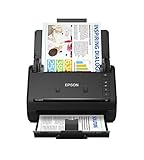
5. Epson WorkForce ES-400 II – Best for Bulking Out a Paper Archive
Epson Workforce ES-400 II High-Speed Color Duplex Desktop Document Scanner
50-sheet auto document feeder
Duplex scanning
300 dpi CCD
Ultrasonic double-feed detection
+ Pros
- Highest average rating in this group at 4.5 stars with 77 percent five-star reviews
- 50-sheet feeder handles multi-page stacks without constant refilling
- Duplex plus OCR for searchable PDFs and editable Word or Excel output
- Ultrasonic double-feed detection and skew correction reduce missed pages
- Scans straight to email
- Dropbox
- Evernote
- Google Drive and OneDrive
- Compact footprint described as roughly the size of a calculator
– Cons
- USB-only wired connection with no Wi-Fi or network scanning
- Some owners report ScanSmart failing to load on Windows 11
- Thick card sleeves can jam and the roller can scuff glossy finishes
- First-scan output is functional rather than archival-laser quality
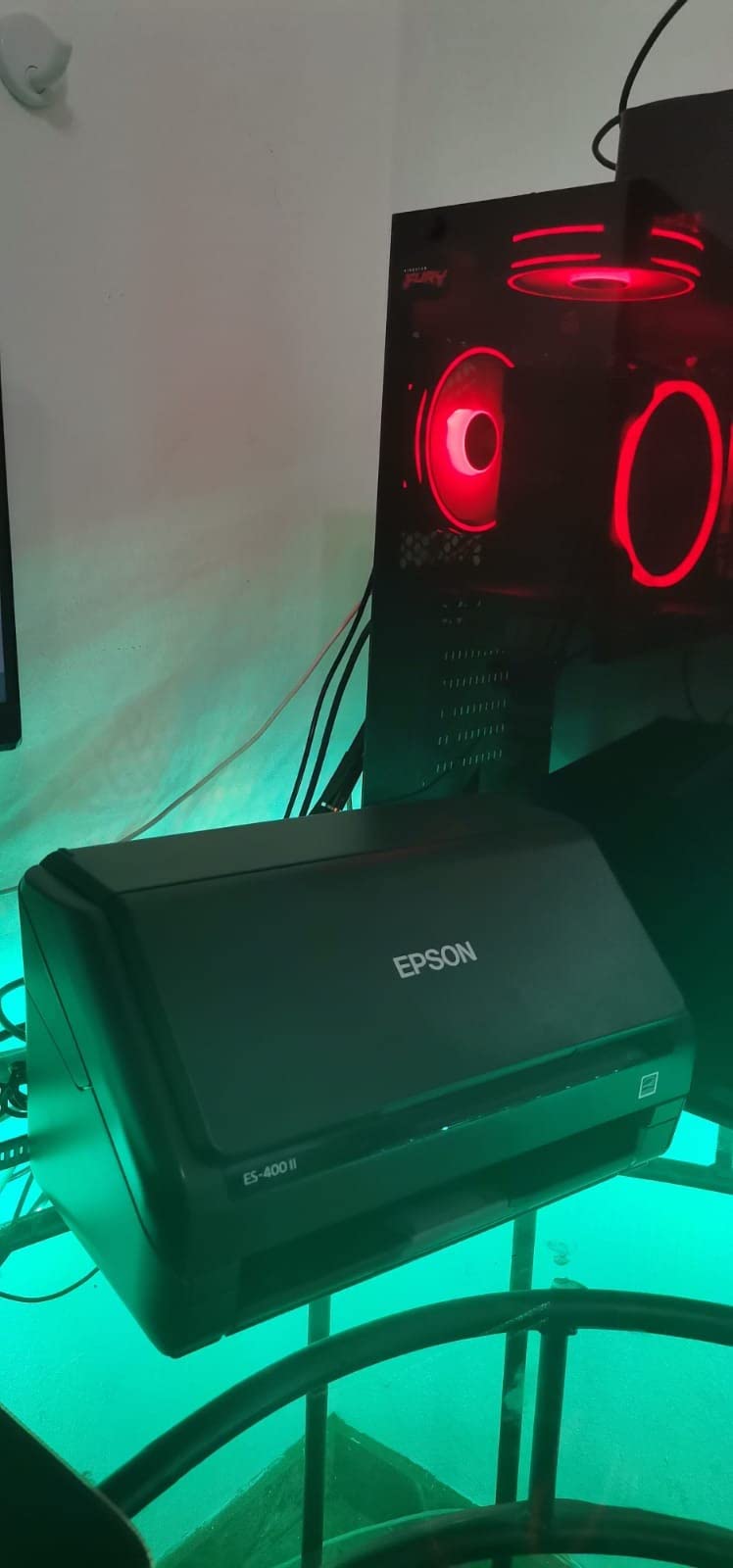
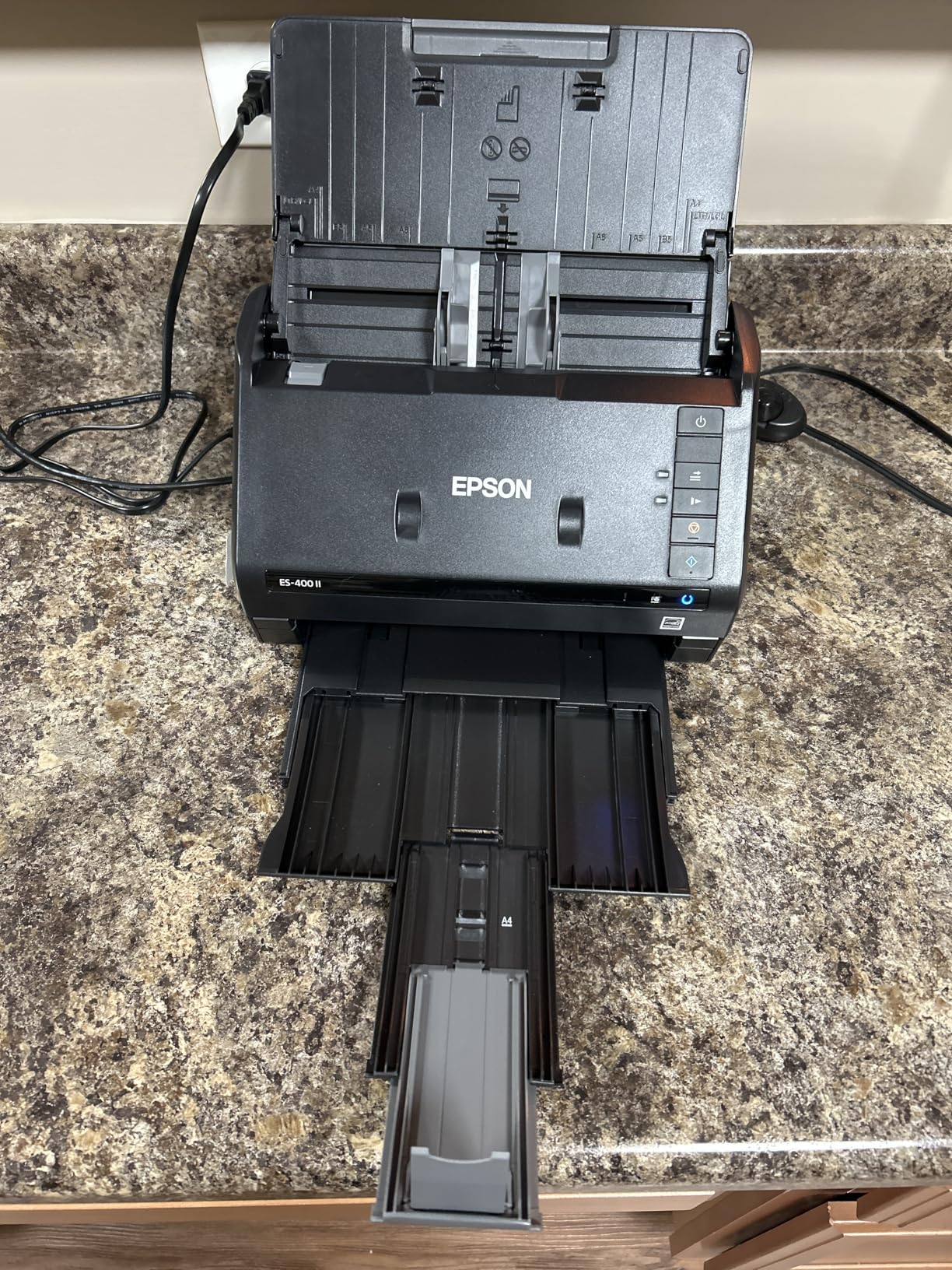
This is the one we would put in front of a small business that has decided to stop filing and start scanning. The 50-sheet feeder combined with duplex means an evening’s work clears a couple of hundred pages without a break, and at 4.5 stars across 1236 reviews it carries the highest average rating in this group.
Automatic file naming is the feature that changes behavior most. In a tax archive, the difference between a file called Scan_0001.pdf and one called 2026_W2_AcmeCorp.pdf is the difference between an archive you can search and a folder you still have to browse.
Epson ScanSmart previews scans, emails them, uploads them, and suggests file names automatically, which removes the single most tedious step in digitizing paperwork.
Ultrasonic double-feed detection is the archive-safety feature
Double-feed detection is what stops a two-page document from scanning as one. An ultrasonic sensor compares page thickness as it moves through the feeder and flags a second sheet, which matters enormously when the goal is a complete record copy rather than a quick look at a document.
A missed page in an archive is a silent failure. You do not notice it until an audit or a dispute, when the missing page is the one you needed. Dynamic skew correction handles the companion problem, where a slightly crooked page scans with grey bands along the edge.
OCR output that can feed accounting software
Beyond searchable PDFs, this unit converts scans to editable Word and Excel files. For a self-employed person building a deduction spreadsheet, OCR text that lands in a spreadsheet is worth more than a perfect-looking image.
Image processing covers auto crop, blank page removal, and background removal, all of which help when a stack contains receipts of mixed sizes and paper quality alongside clean forms.
Connectivity limits and setup
Connection is USB only, with a TWAIN driver included and PC and Mac compatibility. There is no wireless or network scanning, so the machine lives beside a computer.
A minority of owners report ScanSmart failing to load on Windows 11, and a common note is that a plain flatbed on an all-in-one printer handles quick single jobs fine. This unit is built for stacks, not for the occasional single page between other work.
Who this suits and who it does not
Best for: a first big digitizing project, small businesses with a multi-year backlog, and anyone who wants automatic file naming built in. Not for: a wireless paperless workflow, and not for scanning thick card sleeves that can misfeed.
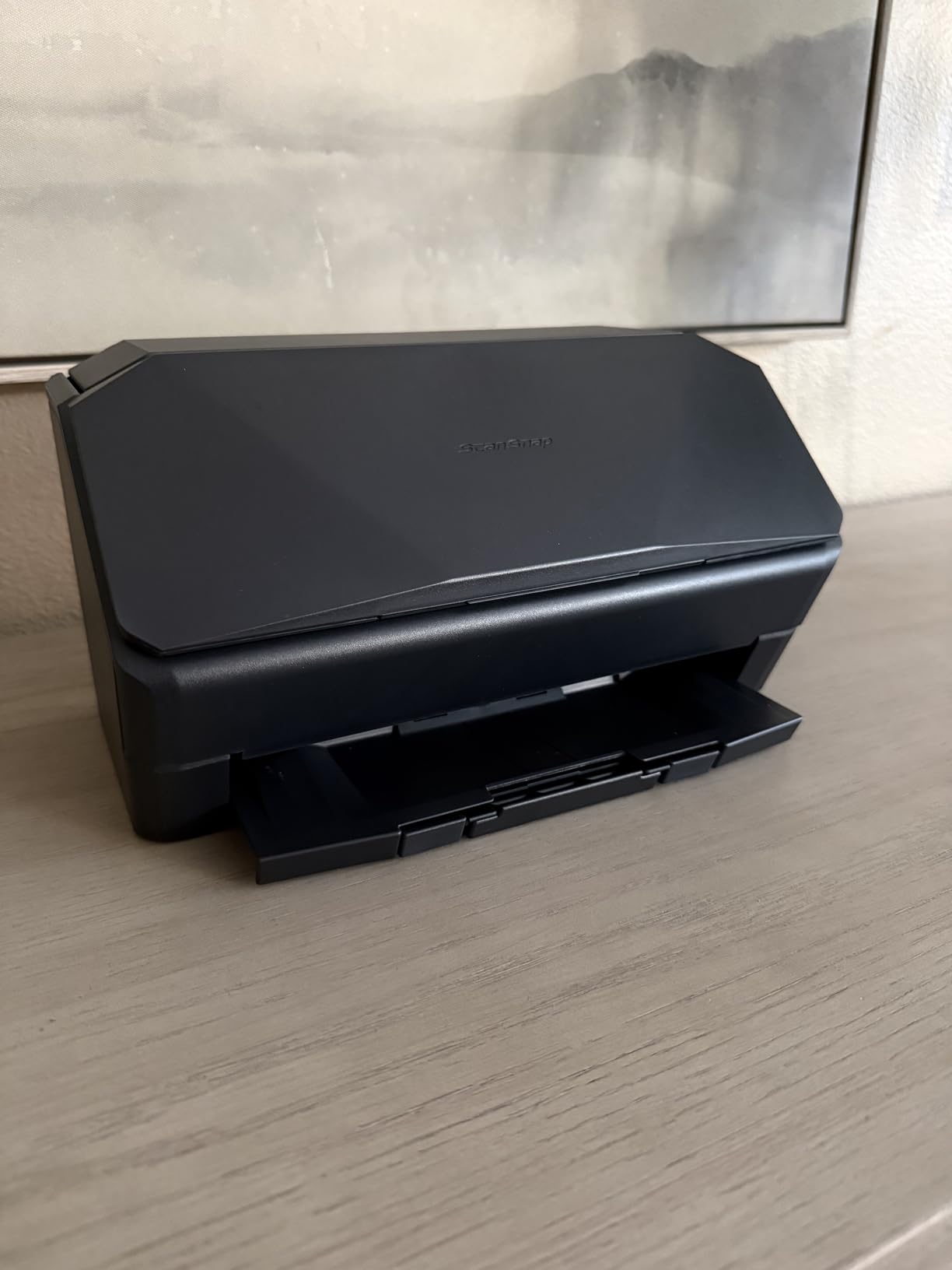
6. ScanSnap iX2500 – Best for High-Volume Multi-Year Digitizing
ScanSnap iX2500 Wireless or USB High-Speed Document Scanner, Black
45 pages per minute duplex
100-sheet feeder
Wi-Fi 6 and USB-C
Touchscreen profile selection
+ Pros
- Very fast
- with about 50 double-sided sheets cleared in under 20 seconds at 300 dpi
- 100-sheet feeder handles long runs with minimal refilling
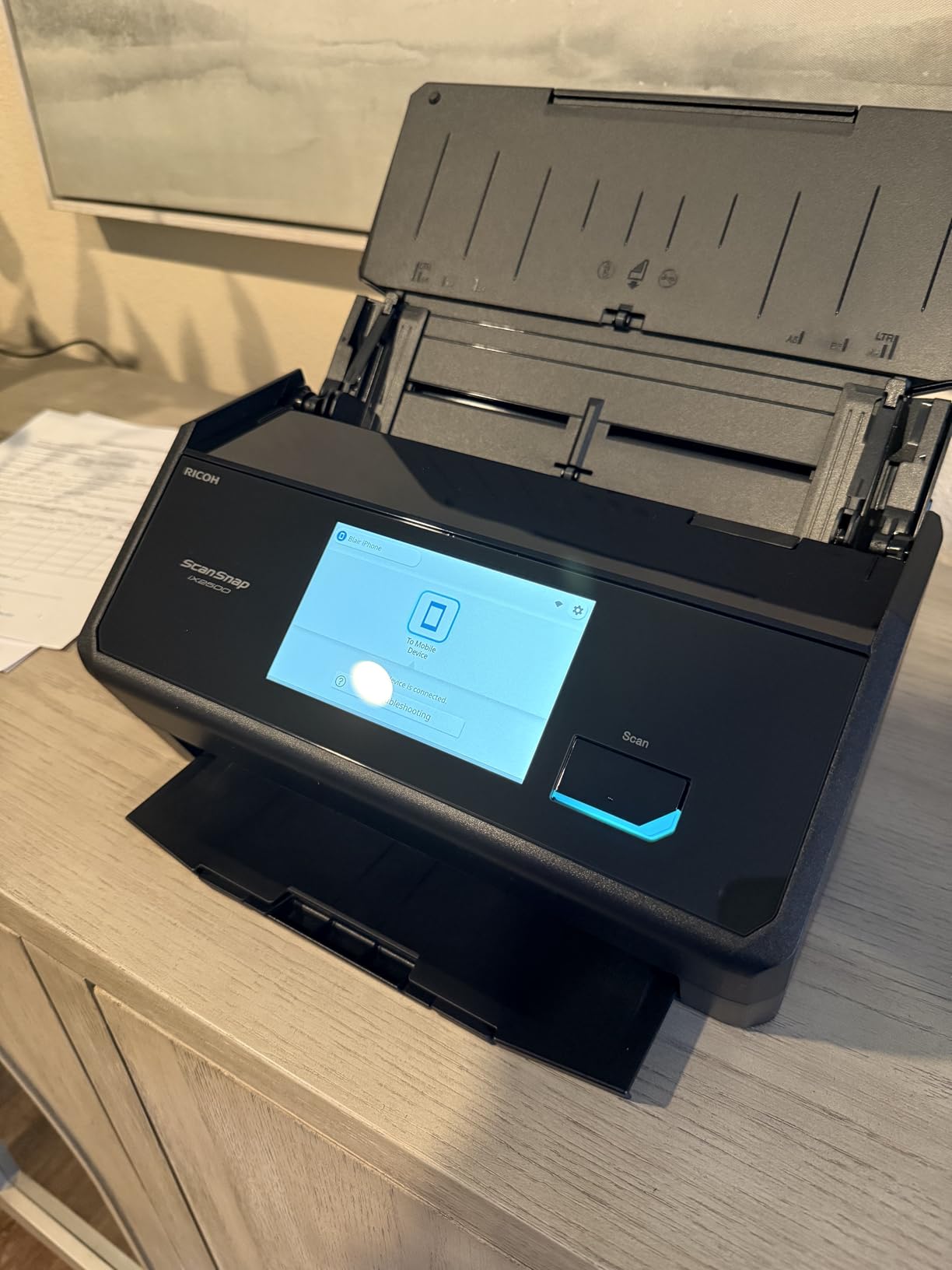
- Large touchscreen makes selecting and naming scan profiles easy without a computer
- Brake roller system and ultrasonic multi-feed sensor greatly reduce jams
- User-replaceable snap-in rollers extend the machine's working life
– Cons
- Locked into ScanSnap Home with no TWAIN driver for third-party apps
- Initial setup is documented as confusing and often needs a phone
- Linux is not supported natively
- Heaviest unit here at 7.7 pounds and grayscale output described as washed out
When a project involves digitizing several years at once, throughput stops being a nice-to-have. This unit scans 45 pages per minute duplex with a 100-sheet feeder, and reviewers report clearing around fifty double-sided sheets in under twenty seconds at 300 dpi.
It is also the replacement for the discontinued iX1600, which matters if you are replacing a machine whose software has stopped being maintained. Buying the current model avoids inheriting an ecosystem on its way out.
The 100-sheet feeder is the practical headline. At 20 or 25 sheets you refill constantly during a bulk run; at 100 you load once, press one profile on the touchscreen, and walk away.
Jam prevention and roller design for long paper runs
The brake roller system, ultrasonic multi-feed sensor, and skew detection are aimed squarely at long jobs, where a single jam at page 80 costs more than the scanning itself. The snap-in rollers are user-replaceable, which extends the useful life of the machine well past the point where a fixed roller would end it.
For a tax archive full of stapled sets, remember that no jam-prevention system substitutes for pulling staples first. These features handle thin, plain, mixed-weight paper far better than they handle hardware attached to a page.
The touchscreen and profile-based naming
The large screen is used to select and save personalized scan profiles, and profiles can be shared. For a tax archive, that means configuring one profile for receipts and one for forms, then applying the right one without a computer each time.
ScanSnap Home handles automatic optimization, file naming, and sorting of files, so naming does not have to be a manual step on every single document.
Connectivity, setup friction, and software lock-in
Built-in Wi-Fi 6 and USB-C let it scan without a computer, and it reaches phones, laptops, and cloud destinations. That is the most modern connection set in this group.
The honest drawback is software. There is no TWAIN driver, so third-party scanning applications cannot see this device at all. Setup is documented as confusing and frequently requires a phone to complete, and Linux needs paid third-party drivers. Reviewers judge this machine on hardware performance and criticize the ecosystem around it.
Who this suits and who it does not
Best for: digitizing several tax years at once, a bookkeeper clearing a large backlog, and anyone who wants to scan without a computer. Not for: users who need TWAIN compatibility with third-party software, Linux users, and anyone with limited desk space, since at 7.7 pounds it is the heaviest unit here.
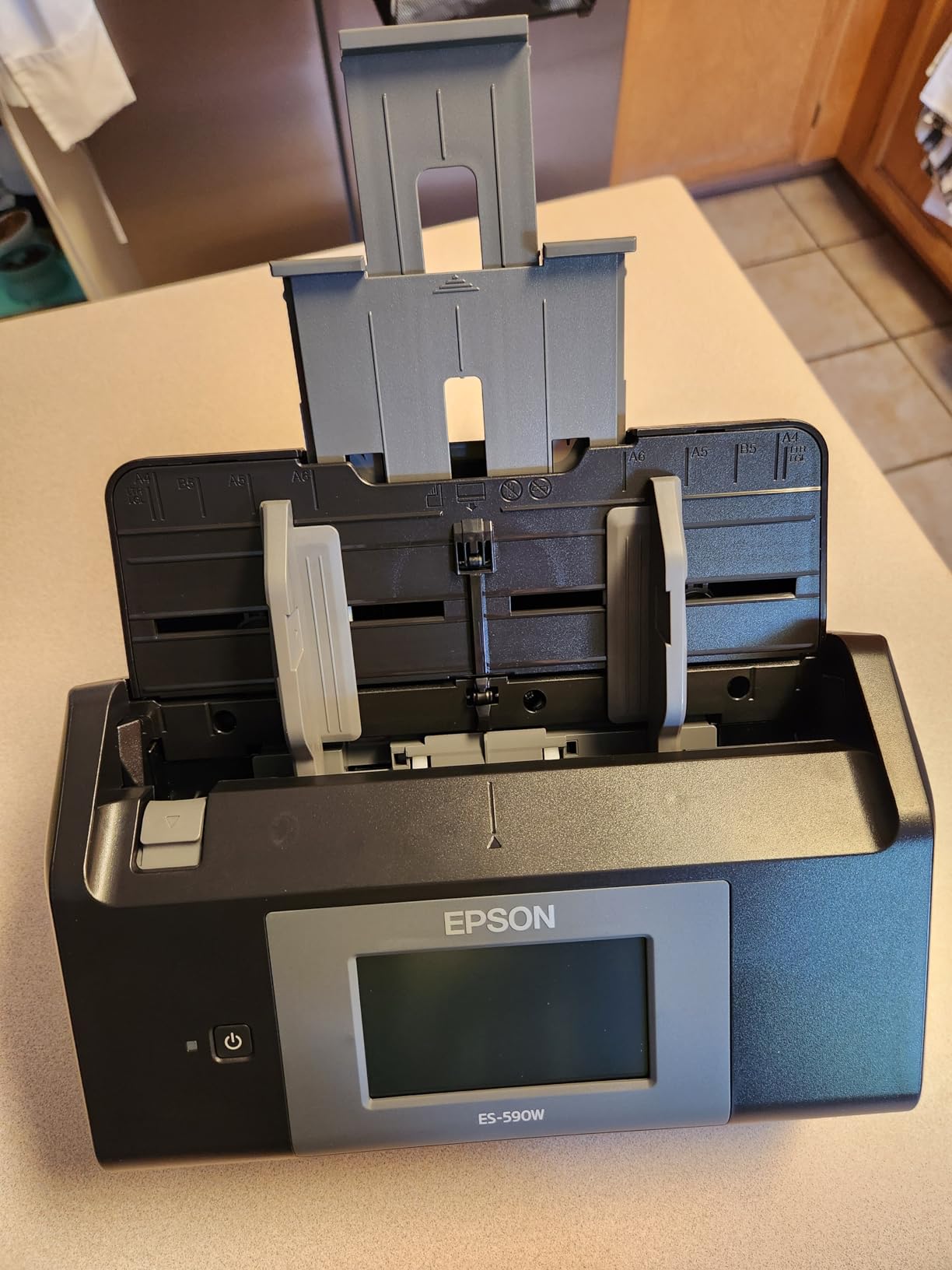
7. Epson WorkForce ES-580W – Best for Small Business Records
Epson Workforce ES-580W Wireless Color Duplex Desktop Document Scanner
100-sheet auto document feeder
35 pages per minute duplex
4.3 inch touchscreen
Wireless cloud scanning
+ Pros
- Wireless scanning with a 4.3 inch touchscreen removes the need to sit at a computer
- 100-sheet feeder suits year-end record batches
- Single-step duplex at up to 35ppm
- Scans to USB
- email or cloud with no computer required
- OCR searchable PDFs plus Word and Excel conversion
- Second-highest rating here at 4.4 stars with 77 percent five-star reviews
– Cons
- Wireless-only connectivity means setup needs network configuration and software installation
- Bulkier and heavier than the compact mobile scanners
- Touchscreen workflows need some learning before they feel quick
- Occasional reports of connection or software issues after updates
The reason this unit earns its place is the touchscreen combined with wireless operation. An office assistant can digitize a batch of receipts at a reception desk without finding a computer, choosing a folder, and remembering to click export.
At 4.4 stars across 1015 reviews with 77 percent five-star ratings, it sits second only to the ES-400 II on rating, and the 100-sheet feeder is the largest in the Epson range we tested.
Image adjustments include auto crop, blank page deletion, background removal, dirt detection, and paper skew correction. Dirt detection is the one that earns its keep on real paper, where a smudge on a receipt otherwise produces a grey blur across the text.
Wireless to cloud without a computer
This unit saves directly to USB, email, Dropbox, Evernote, Google Drive, or OneDrive with no computer involved. For a bookkeeper working from a tablet or a phone, that is the whole workflow in one device.
It is wireless-only rather than wireless-and-USB, which simplifies the setup story and the desk, at the cost of requiring network configuration and software installation before the first scan.
OCR to searchable PDF, Word, and Excel
OCR creates searchable PDFs and converts scans to editable Word or Excel files. Pulling OCR text into a bookkeeping spreadsheet is the practical payoff for small business record keeping, and it removes retyping entirely.
Single-step duplex capture at up to 35 pages per minute means both sides of a sheet are captured in one pass, and blank page deletion keeps double-sided batches from filling your folder with empty pages.
Size, weight, and the learning curve
At 3.7 kg and 11.6 inches square, this is a desktop unit rather than a portable one. The bulk is a fair trade for a 100-sheet feeder, but it is worth measuring your desk first, particularly if you plan to keep other paper equipment alongside it.
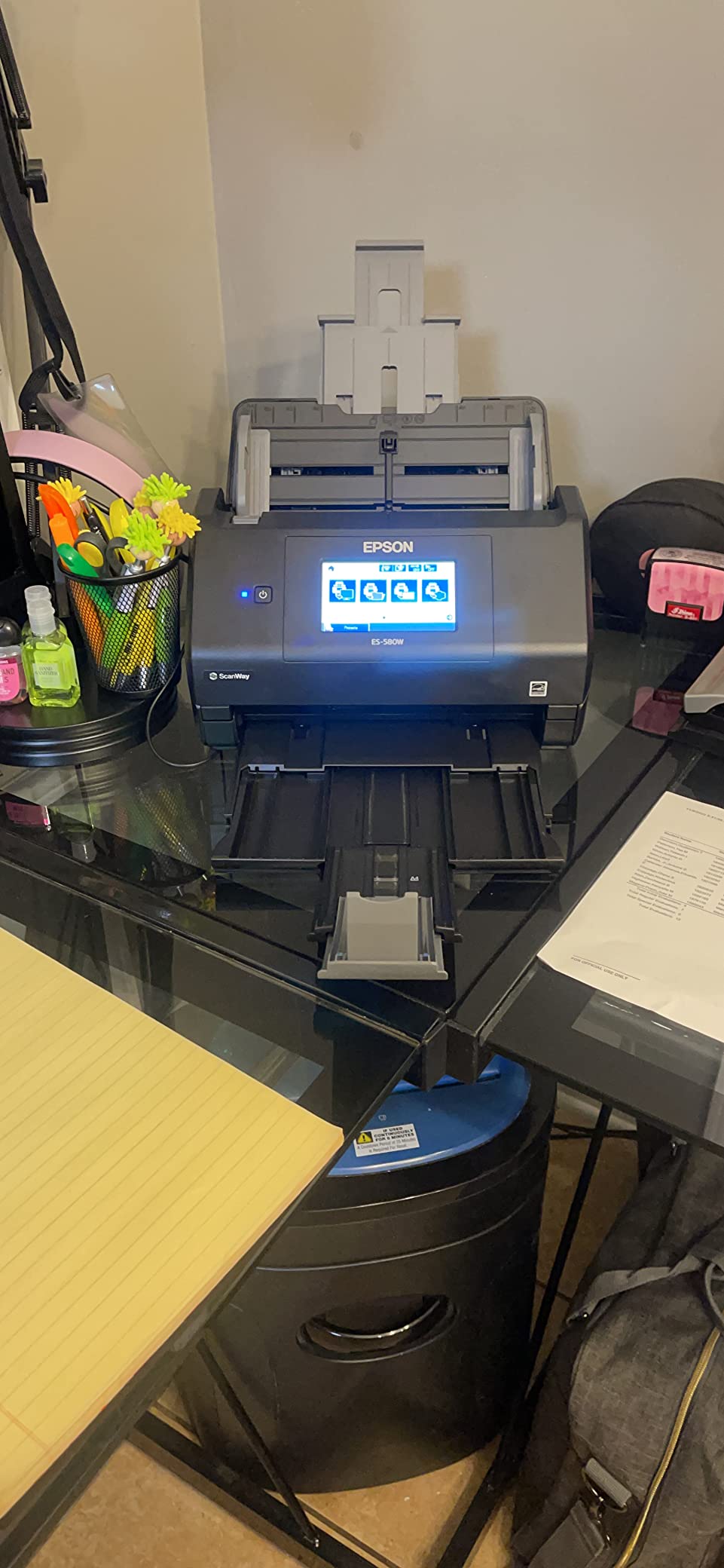
Reviewers mention occasional connection or software issues after updates, and that the touchscreen flow takes a little practice before it feels fast. Compatibility covers Windows 7 through 11 in 32-bit and 64-bit, and macOS 10.7.x to 12.x.
Who this suits and who it does not
Best for: small businesses and home offices that want to scan from a phone or tablet to a cloud folder, and anyone digitizing receipts year-end without a dedicated computer. Not for: users who want a wired fallback, and not for tight desk spaces.
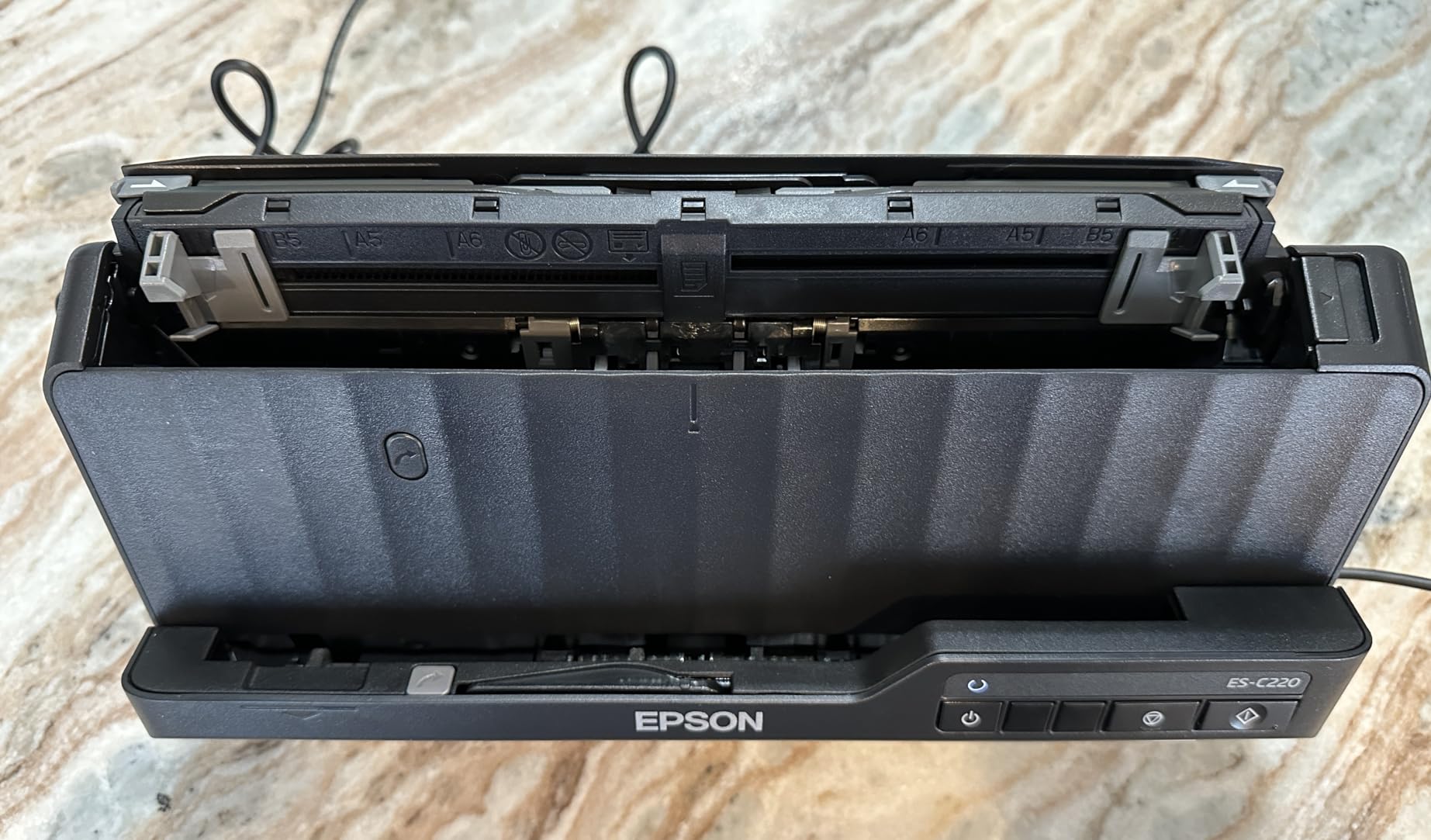
8. Epson WorkForce ES-C220 – Best for a Tiny Desk
Epson Workforce ES-C220 Compact Document Scanner Duplex 20-pg ADF
30 pages per minute duplex
20-page auto document feeder
300 dpi CIS
Compact space-saving body
+ Pros
- Saves about 60 percent of desk space while still having a 20-page feeder
- Single-step duplex at 30ppm and 60 images per minute
- Staple protection and dirt detection help with real tax files
- OCR converts even pencil handwriting to typed text
- Quick setup with clear instructions
– Cons
- Only a 20-page feeder so long archives need repeated refilling
- Feeder is sensitive to paper thickness and can jam on stiff wrappers or card stock
- Drops out of sleep mode on Mac and must be power-cycled to reconnect
- ScanSmart file name field is short so files often need renaming afterward
This is the compromise pick, and the compromise is a sensible one. It delivers single-step duplex at 30ppm in a body that saves roughly 60 percent of desk space, which for many home offices matters more than raw speed.
One feature surprised us in testing: OCR converted pencil handwriting into typed text cleanly enough to search. If you keep handwritten mileage logs or self-employed income notes alongside your forms, that is a genuine advantage.
Staple protection is the other quiet win. Tax paperwork arrives stapled, often from an accountant who did not know the scanner would be involved, and this is one of the few units in the group that advertises handling for it.
Duplex speed in a small footprint
Thirty pages per minute, or 60 images per minute with duplex engaged, is fast enough that a 20-page load clears in well under a minute. The flexible scan path handles cards and passports alongside standard paper, which is useful when your tax paperwork includes a photo ID copy.
The trade is the feeder size. Twenty pages is roughly one folder of documents, so a large archive means several loads rather than one.
Image adjustments that suit paper archives
Auto cropping, blank page deletion, background removal, dirt detection, skew correction, and staple protection cover the full set of problems that come with real paper: crooked pages, mixed sizes, smudges, and doubled sheets.
Background removal in particular helps with carbon-copy forms, where the second copy is lighter than the first and can be lost against a background-heavy scan.
Software naming and the Mac sleep issue
Epson ScanSmart provides preview, email, upload, automatic file name suggestion, and OCR, and Windows 7 is the stated minimum system. The file name field is short, so a meaningful tax-year naming convention often means renaming in Finder or Explorer afterward, which adds a step per document.
Mac owners also report the scanner dropping out of sleep mode and needing a power cycle to reconnect. If your workflow depends on a Mac waking to scan, test this before committing.
Who this suits and who it does not
Best for: small desks, stapled paperwork, and anyone digitizing under a few hundred documents a year. Not for: bulk archiving, and not for Mac users who need the device to wake reliably from sleep.
Do You Even Need a Scanner? Phone Apps for Light Tax Archiving
Before buying anything, consider the free route. If your volume is a shoebox of W-2s once every few years, a phone app does the job at zero cost, and the answer on r/BuyItForLife to a receipt scanner request was a phone app rather than any hardware.
Google Drive’s document scanner inside the camera app is built into most Android phones. Adobe Scan, Microsoft Lens, and iOS Notes all capture a page, detect edges, and correct skew automatically, and CamScanner was the top-voted answer in the BuyItForLife thread for receipts captured while travelling.
Their shared strengths: no cable, no setup, and automatic perspective correction. Their shared weakness is volume. Scanning forty pages one at a time by hand takes real time, and most apps handle OCR text differently or not at all.
The decision rule is simple. Under about one hundred documents a year, use your phone. Above that, or if you want duplex, automatic file naming, and a searchable PDF that lives in your own folder rather than an app’s account, a dedicated scanner pays for itself in time saved.
The hybrid approach also works well and is what many people end up doing: phone for receipts on the road, dedicated scanner for the annual shoebox session. It is exactly the split our portable document scanner guide approaches for students digitizing on the move.
How We Tested for Tax-Record Work
We judged these scanners against a tax workload rather than a photography one. Each unit ran through typed W-2s, a corrected 1099 with a faint carbon copy, thermal receipts with faded edges, a stapled multi-page document set, and a legal-size page.
Four things decided most comparisons. Searchable PDF quality, measured by whether OCR text could be found with a search rather than by eye. Feeder behavior, specifically whether a page was ever silently skipped. Image handling of crooked, faint, and mixed-size paper. And the file-naming step, because an archive you cannot search is a folder of images.
Ratings and review counts came from the product data, and we used the volume of real-world reports to separate proven hardware from hardware that is merely capable. Where reviews disagreed with a specification, we weighted the reviews.
How to Choose a Document Scanner for Tax Records
Match the feeder to your real document volume
Volume, not resolution, decides which tier you need. Under a hundred pages a year, a one-sheet or 20-sheet feeder is genuinely enough. Between one hundred and a thousand pages, a 25 to 50-sheet feeder removes most of the refilling. Above a thousand pages a year, go to 100 sheets and prioritize raw speed.
This is the bar an r/smallbusiness owner set when describing a few thousand receipts and statements annually. At that volume, page-per-minute matters more than any other spec.
Duplex scanning for double-sided forms
Duplex captures both sides of a sheet in a single pass. If your paperwork is single-sided, it is optional. If you handle invoices, two-sided forms, or double-sided printouts, it is not, because manual flipping roughly doubles your handling time and is the step people abandon.
Two things duplex does not solve: stapled pages and mixed paper thickness. Pull staples, and separate card stock from plain paper.
OCR accuracy beats resolution for tax forms
Optical character recognition is what makes an archive searchable. Resolution matters less than people expect, because 300 dpi handles clean printed forms perfectly, while 600 dpi earns its place only on faint carbon copies and faded thermal receipts.
Test OCR on your own worst document, not the manufacturer’s sample. Search for a specific vendor name and see whether it returns the right receipt.
Searchable PDF and PDF/A for long-term archiving
A searchable PDF is a normal PDF with a text layer behind the image. PDF/A is an ISO-standardized variant built for long-term storage, which matters if you expect to open these files in ten years on a machine that no longer exists.
For most households, a searchable PDF saved to a folder and backed up twice is sufficient. For self-employed and small business records, PDF/A where your software offers it is the safer long-term choice.
Double-feed detection and why a missed page matters
Double-feed detection compares page thickness in the feeder and flags when more than one sheet moves through. On a small portable with a 20-sheet feeder this is often absent or basic, so a visual check of the back of the tray after each load is worth the seconds.
A skipped page is the failure mode you will not notice until the day you need it. On larger units, the ultrasonic sensor and brake roller systems in the ScanSnap iX2500 and the ultrasonic detection in the Epson ES-400 II exist to solve exactly this.
Connectivity and cloud destinations
USB-only units need an awake computer. Wireless units can push to a phone, tablet, USB drive, email, or a cloud folder on their own, which is the difference between scanning at the shoebox and scanning at your desk.
Check the cloud destinations your software actually supports. In this group, the Epsons cover Dropbox, Evernote, Google Drive, and OneDrive, and the ScanSnap units reach mobile devices and cloud services directly.
ScanSnap versus Epson, and Epson versus Canon
The ScanSnap models lead on speed, wireless flexibility, and jam-prevention hardware, and they lag on driver openness, since the newer models ship without TWAIN. The Epson models lead on OCR into Word and Excel, automatic file naming, and TWAIN driver support, and they lag on wireless capability in some configurations.
Canon’s R10 is the outlier: the highest resolution in this group and the only unit with genuinely zero-install software, paired with the lowest rating and the most feeder complaints. Choose it for setup simplicity, not for throughput.
How to Build a Searchable Tax Record Archive You Can Actually Find Things In
A scanner produces files. A system makes them findable. The naming and folder structure matters more than the hardware, and it takes about ten minutes to set up once.
1. Create one folder per tax year. Name them by year, for example three tax years back through the current one. Inside each, make subfolders by form type: W2, 1099, receipts, K1, and returns. This is the structure every future search will rely on.
2. Adopt a naming convention and never deviate. A workable pattern is year_form_issuer_description.pdf, giving something like 2026_W2_AcmeCorp.pdf or 2026_1099NEC_ClientName.pdf. The issuer or counterparty name is what you will actually search for later.
3. Turn on OCR and use duplex as the default. A searchable PDF can be found by typing a word inside it. A flat image can only be found by opening files one at a time, which is the search problem that makes people give up on paperless systems.
4. Use color for anything with a second copy. Carbon-copy 1099s, receipts with faint thermal print, and colored forms lose detail in grayscale. Plain typed forms in black and white are fine and produce far smaller files.
5. Back up three copies on two kinds of media, one of them offsite. A tax archive is a concentration of the exact documents identity thieves want: names, addresses, social security numbers, and income. Treat the backup as a security decision, not a convenience.
On retention, the general rule for most taxpayers is at least three years, with longer periods applying in specific situations such as a depreciation schedule that keeps a return relevant, or records connected to a debt that has not been fully settled. If you are e-filing with full acceptance, most filers do not need to retain a complete copy of every supporting document indefinitely, but keeping the returns themselves is inexpensive and prudent. Confirm the current guidance for your situation rather than treating any single number as final.
One last practical point: store the paper until the scan is verified, not before. Open a few random PDFs each month and confirm the text is readable. Once a tax year has passed and your filed return is accepted, most people can safely recycle the originals, but that is a personal risk decision, not a scanner specification.
Frequently Asked Questions
What is the best document scanner for tax records?
For most households archiving a few hundred pages a year, the Brother DS-640 is the strongest all-round pick, rated 4.3 stars across 6448 reviews, with 300 dpi output, 16 pages per minute, and USB power so it needs no outlet. Add duplex and a 25-sheet feeder and the Brother DS-740D is the better buy for two-sided paperwork. For bulk multi-year digitizing, the Epson WorkForce ES-400 II and ScanSnap iX2500 handle 50 and 100 sheet loads.
What is the best receipt scanner for taxes?
The Epson WorkForce ES-C220 and Brother DS-640 both handle receipts well because they offer automatic color detection and background removal, which keeps faded thermal text legible. The Canon imageFORMULA R10 scans at 600 dpi, the highest resolution here, which helps most on faded thermal receipts. The key feature is OCR to searchable PDF, so you can find a receipt by typing a vendor name later.
Which scanner is better, the ScanSnap or the Epson?
ScanSnap models lead on speed and wireless flexibility, with the iX1300 at 30 pages per minute and the iX2500 at 45 pages per minute, both connecting over Wi-Fi as well as USB. Epson models lead on OCR into editable Word and Excel files, automatic file naming, and TWAIN driver support for third-party software. The newer ScanSnap models ship without TWAIN, which locks them into ScanSnap Home.
Do I need a scanner to keep records for taxes?
If you are under about one hundred documents a year, your phone is enough. Google Drive, Adobe Scan, Microsoft Lens, and iOS Notes all capture pages with automatic edge detection and perspective correction at no cost. Above that volume, or if you want duplex, automatic file naming, and searchable PDFs stored in your own folder, a dedicated scanner saves real time.
How important is duplex scanning in a document scanner?
Duplex is essential if your paperwork is printed on both sides, because manual flipping roughly doubles handling time and is the step people abandon mid-project. If everything you scan is single-sided, like most W-2s, duplex is optional and you can spend the money on a larger feeder or a flatbed for occasional oversized pages.
What is the difference between a flatbed and sheetfed scanner?
A sheetfed scanner pulls pages through a feeder automatically, which is fast for stacks but cannot handle books, folded paper, or photos on glossy stock. A flatbed places the page under a fixed scan head, which handles anything flat including bound items and is more forgiving, but takes one page at a time. For tax records, sheetfed wins on volume, and a flatbed is useful for occasional odd-sized originals.
How long should I keep scanned tax records?
Most taxpayers need at least three years, and longer applies in specific situations such as depreciation schedules or unsettled debts. If you e-file with full acceptance, you may not need to keep every supporting document indefinitely, but retaining filed returns is inexpensive. Keep the paper until you have verified the scan, then decide whether to recycle based on your own risk tolerance.
Final Thoughts: Which Scanner Matches Your Tax Archive
If you want the best document scanners for tax records in one line: the Brother DS-640 for most households, the Brother DS-740D if your paperwork is two-sided, the ScanSnap iX1300 if you want wireless, and the Epson ES-400 II or ScanSnap iX2500 when you are clearing years at once.
Match the feeder to your volume rather than the resolution to your ambition. Set up the folder structure before you scan the first page, keep OCR on, and back the archive up in more than one place, because these files hold the details identity thieves want most.
Whatever you choose, the version of this list that helps is the one you actually pull out of the drawer next February. Start with the shoebox in front of you, and pick the model that matches its size.
Leave a Reply