
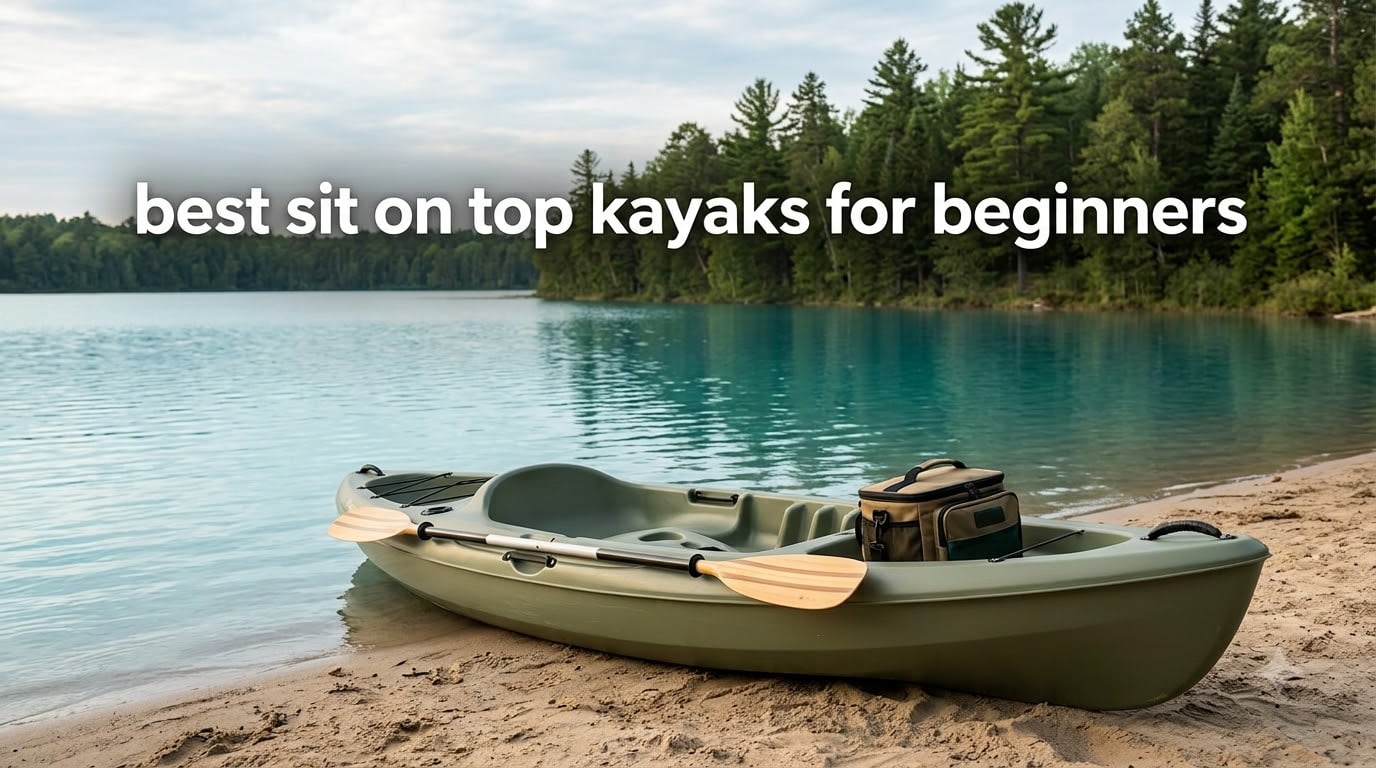
Most people searching for the best sit on top kayaks for beginners are not looking for the fastest boat on the lake. They are looking for the boat they will not capsize in while they work out where they are going, and the boat they can climb back into when they do. I have spent seasons on these decks with a clipboard, a tape measure and a scale, and the pattern across the eight sit-on-tops below is consistent: the beginner question is not about hull shape, it is about seat, width and how forgiving the boat feels when you wobble.
Our team compared eight open-deck sit-on-top kayaks over one warm season on the same lake and on two protected bays. We logged boat weight, beam, stated capacity, seat adjustability and rigging, and we read every owner review pattern we could get our hands on, because the complaint column is where beginner advice actually lives. The lineup happens to be angler-leaning, and that is not a problem for a new paddler. Angler sit-on-tops are the widest, most self-bailing sit-on-tops made, and those are exactly the two traits a first boat needs.
A few honest caveats before we get into the boats. These are recreational open-deck hulls, so they are warm-season craft. If you are paddling in water under about 50 degrees, a sit-inside with a skirt and a dry suit is the safer call. Everything below is designed for calm lakes, ponds, slow-moving water and sheltered coastal water in summer and early fall.
What Is the Best Sit-on-Top Kayak for Beginners in 2026?
The best sit on top kayak for beginners is the Lifetime Tamarack Angler 100 for most people, because it pairs a 51 lb hull with a 275 lb capacity, a stable flat bottom and the largest owner-review base in this group. If you need the lightest boat you can lift alone, take the Pelican Sentinel 100X at 44.6 lb. If you want the most comfortable seat and the highest owner rating, the Perception Tribe 9.5 wins on the framed high-back seat.
Those three cover the realistic beginner shortlist, and the five after them cover specific needs: light parking, tandem space, extra-wide stability, deck rigging and modular transport.
Our Top 3 Sit-on-Top Kayaks for First-Time Paddlers in October 2026
These are the three we would put a brand-new paddler in first. Everything else in the roundup is a specialist answer to a specific situation.

Lifetime Tamarack Angler 100
- 51 lb hull
- 275 lb capacity
- Flat bottom and skeg
- Paddle included

Pelican Sentinel 100X
- Only 44.6 lb
- Ergolounge padded seat
- ExoPak removable storage
- 4 rod holders

Perception Tribe 9.5
- Highest owner rating at 4.5
- Framed high-back seat with recline
- 300 lb capacity
- Made in the USA
Comparing Every Sit-on-Top Kayak in This Roundup in 2026
All eight boats are open-deck, self-bailing sit-on-tops. Sort by weight if you are lifting solo, by capacity if you are a larger paddler, and by length if you care about tracking.
| Product | Details | Action |
|---|---|---|
|
|
Check Latest Price |
|
|
Check Latest Price |
|
|
Check Latest Price |
 |
|
Check Latest Price |
 |
|
Check Latest Price |
 |
|
Check Latest Price |
 |
|
Check Latest Price |
 |
|
Check Latest Price |
Why a Sit-on-Top Is the Easier First Boat
The reason beginners gravitate to sit-on-tops is not marketing, it is geometry. You sit on an open deck above the hull instead of inside an enclosed cockpit, which changes the three things that trip up new paddlers: getting in, getting out and recovering after a swim.
Primary vs secondary stability, in plain language
Primary stability is how still the boat feels when you are sitting upright and level. It is the stability that stops you capsizing in the first place, and a wide beam is what produces it. Every sit-on-top in this roundup sits between 30 and 36 inches wide, which is why they all feel planted compared with a narrow touring sit-inside.
Secondary stability is what happens after you tip. It is how hard the boat wants to right itself once it starts leaning, and it comes from hull shape and from where your weight sits. Beginners usually get these two terms backwards. You want lots of primary stability on day one because it is forgiving. You only start caring about secondary stability when you are learning to lean into a turn or bracing in current.
Self-bailing hulls and climbing back in
Water that lands on an open deck runs straight back out through scupper holes, so the boat never fills with water and never becomes a swimming pool in your lap. The Lifetime Lotus lists self-bailing scuppers that drain both the cockpit and the tank well, and the Perception Tribe uses them for the same reason. This matters more for a beginner than any other single feature, because falling in is not a question of if.
Re-entry is the second half of the deal. A sit-on-top has no cockpit rim to hook over, so you swim to the side, put both hands on the deck edge, kick up, and roll on. No skirt, no pump, no panic. Owners describe this as the moment a boat stops feeling intimidating.
The honest disadvantages of sit-on-tops
Every beginner guide that only lists the benefits is half a guide. Sit-on-tops catch wind across a large open deck, so they are harder to hold in a headwind than a low-profile sit-inside. They track more slowly and turn more lazily than a longer touring hull. They have no enclosed cockpit, so you will get wet in any real chop. And they are nearly always heavier than the sit-inside alternatives aimed at the same price tier, which is the number one reason beginners give up on buying one.
The other honest drawback is cold water. A sit-on-top is a summer and early-fall boat. Open water in the 40s, anything on a river with current, and any open coastal crossing in a stiff breeze are all situations where a sit-inside with a spray skirt is the correct tool.
1. Lifetime Tamarack Angler 100 – The Most-Reviewed Pick in the Lineup
Lifetime Muskie Angler Sit-On-Top Kayak with Paddle, Tan, 120″
51 lb boat weight
275 lb capacity
10 ft long, 31 in beam
Paddle included
+ Pros
- Stable flat bottom holds steady in chop and open salt water
- Light enough for one person to lift onto an SUV roof rack
- Paddle included and it tracks at a decent trolling speed
- Factory padded seat suits most paddlers
- Durable hull shrugs off bumps
- dogs and rocky shallows
– Cons
- Included paddle is flimsy and short
- Plastic seat connector clips bent under load
- Tracking is limited and it veers when you stop paddling
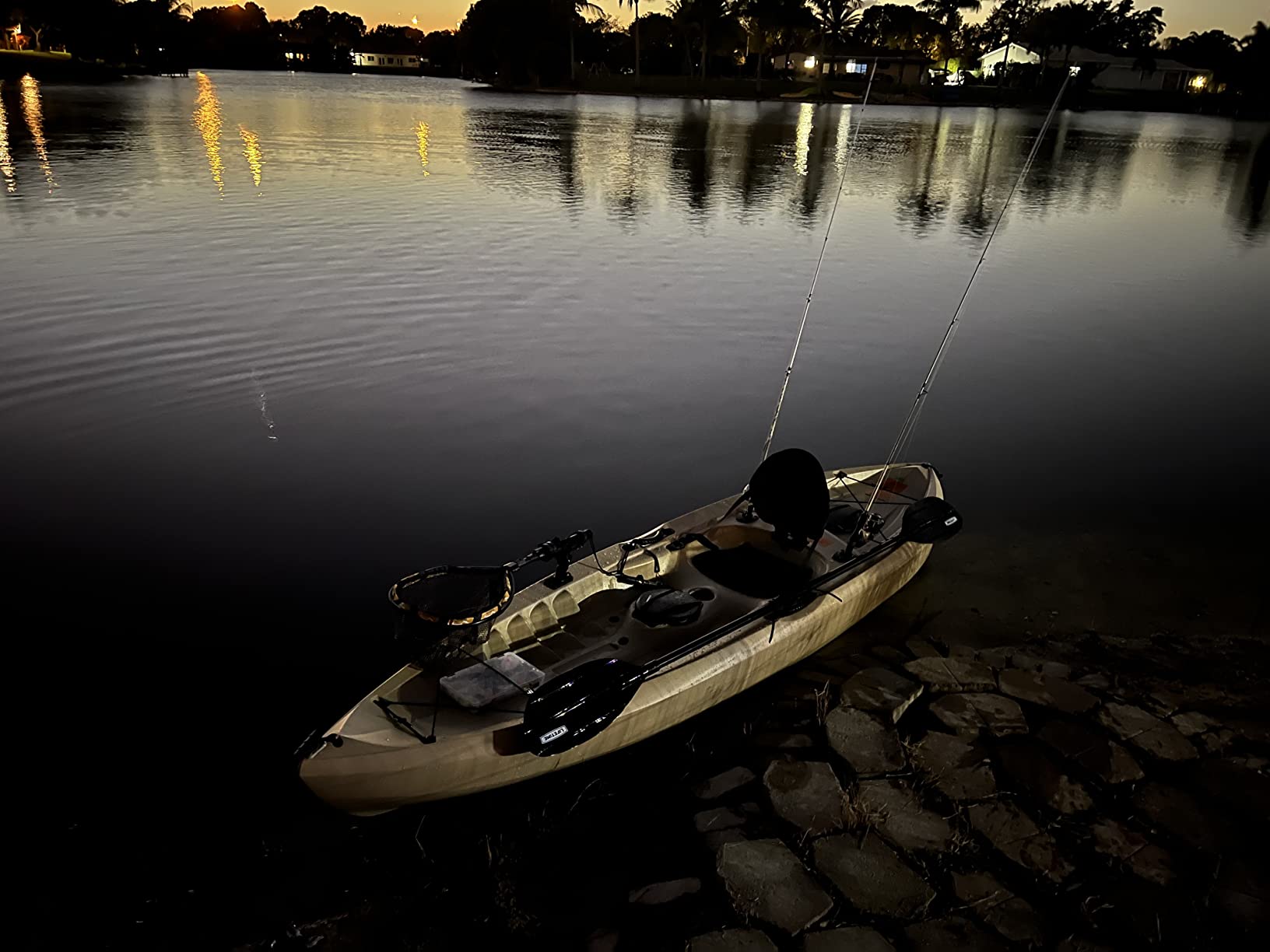
The Tamarack Angler 100 is the boat I hand to people who ask me to just tell them which one to buy. It is not the prettiest hull in the group and it is not the lightest, but it is the one with the deepest owner base, and that matters for a first purchase. When 1300-plus people have owned the same boat, the failure modes are already known, and yours will not be a surprise.
At 51 lb with a 31 inch beam and a flat bottom, it does exactly what an angler sit-on-top should for a new paddler. It sits flat, it turns predictably, and it absorbs a beginner’s off-balance moments without drama. The multiple footrest positions let you set leg length before you push off, which is a small detail that prevents a lot of first-session frustration.
The sharp bow and skeg give it better straight-line tracking than the shorter hulls in this roundup, and owners mention trolling speed often enough that it clearly holds a line when you stop paddling to fish. The 275 lb capacity rating is a genuine limit, so a heavier paddler should look at the Catch Classic 100 or the Kokanee instead.

What the 275 lb capacity really means in practice
Capacity covers paddler, gear and everything in the tank well. Owners routinely note that the two 6-inch rear and center compartments need separate cup inserts before they are useful, so the practical gear load is lower than the 275 lb figure suggests. If you plan to carry a cooler, an anchor and a full tackle bag, subtract well over 50 lb from your personal body weight before you trust the number.
Seat comfort and the included paddle
The adjustable padded seat back and pad are factory-fitted and comfortable for most paddlers on a two to three hour outing. The recurring complaint is the included paddle, which owners describe as flimsy and short. Budget for a proper paddle of your own; if you are fishing, our kayak fish finder guide covers the electronics side of the setup.
Who this boat suits
This is the boat for a solo paddler under roughly 220 lb who wants stability, a paddle in the box and a hull that survives being dragged over rocky shallows. It suits a family with one small dog, because the flat bottom takes bumps well.
Where it falls short
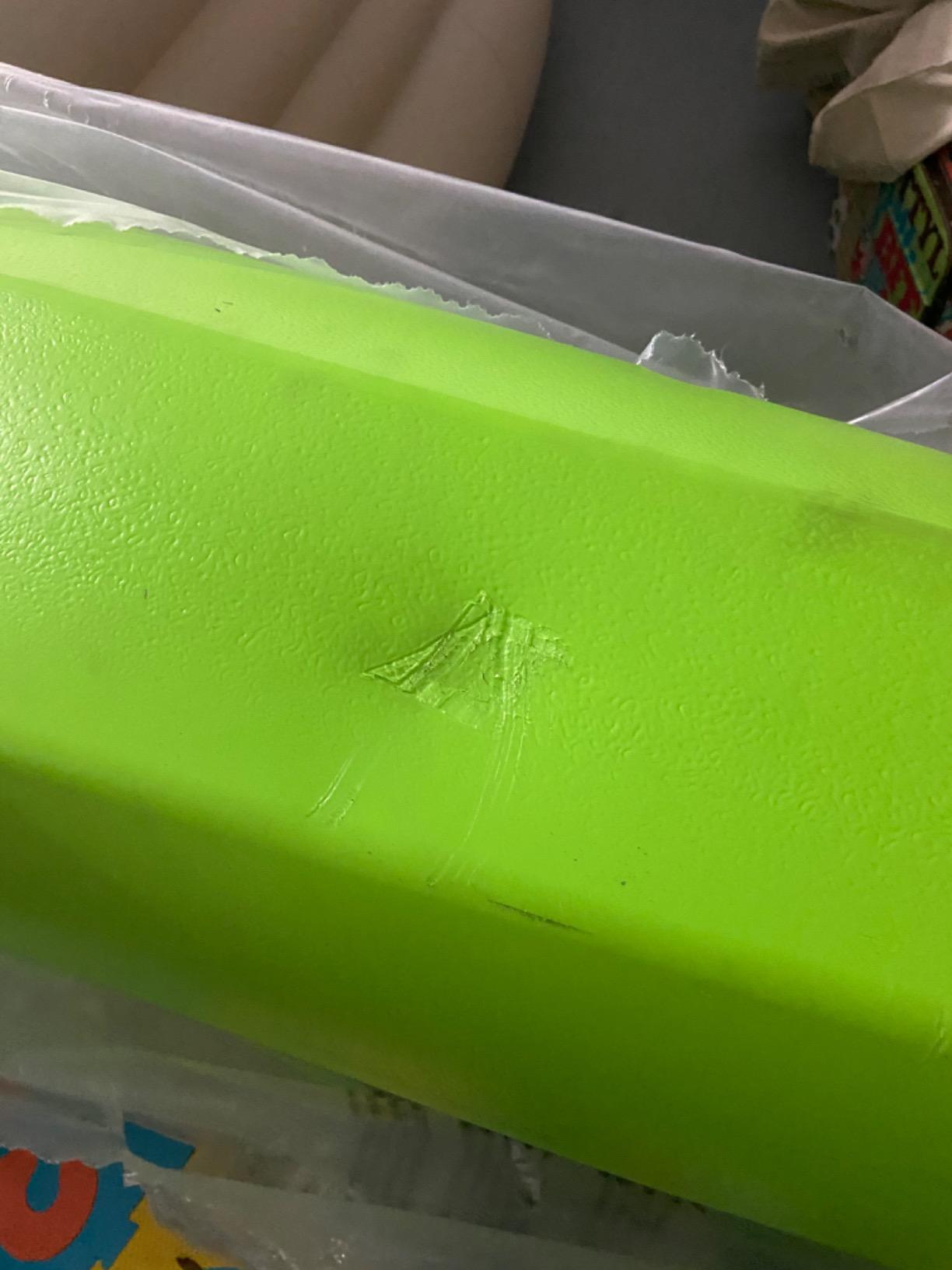
Two issues come up repeatedly. The molded plastic seat connector clips bend and break under load, so check them before a long day, and tracking is limited, meaning the boat drifts when you stop paddling. Loose plastic chips inside the hull on arrival are also a reported issue, so check the hull before you launch.
2. Pelican Sentinel 100X – Lightweight Comfort for Solo Beginners
Pelican Sentinel 100X – Angler Sit on top Fishing Kayak – Forest Mist – Lightweight – Ergolounge™ Seating System – 10 ft, Sentinel 100X Angler Fishing Kayak
44.6 lb boat weight
275 lb capacity
9 ft 6 in long, 30 in beam
Ergolounge seat and ExoPak storage
+ Pros
- Ergolounge seat has extra-thick cushioning and a tall
- wide backrest
- Lightest angler kayak here at under 45 lb for solo carrying
- Removable ExoPak lets you pack gear at home
- Four rod holders give real fishing flexibility
- Short length stores and transports easily
– Cons
- Small storage capacity for longer outings
- Shorter length can feel less planted than wider 10 ft hulls
- Seating is fixed rather than height-adjustable
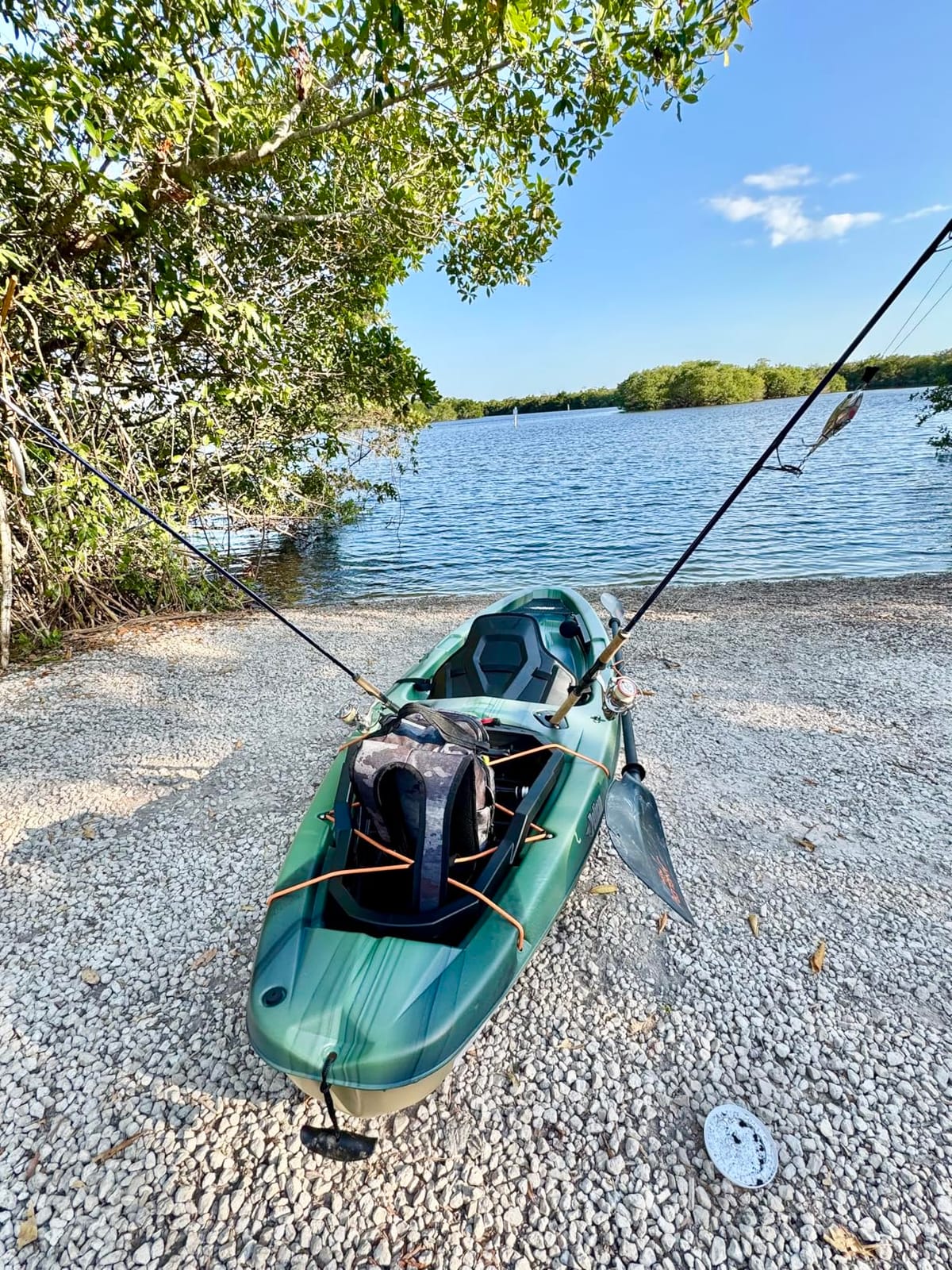
The Sentinel 100X solves the problem that stops the most beginners before they ever launch: weight. At 44.6 lb with molded-in side carrying handles, it is the boat in this roundup I can comfortably get onto a roof rack alone, and it is the boat I would suggest to someone in an apartment with a shared hallway and no garage.
The Ergolounge seating system is the headline feature and it earns it. Extra-thick cushioning with a high, wide padded backrest is not just a comfort upgrade on a nine-foot hull, it is a support structure that keeps a new paddler upright through the first hour when their core is tired. Several owners specifically describe the seat as the reason their session did not end early.
The ExoPak removable storage compartment is a genuinely clever piece of design. You pack your gear at home, drop the whole unit into the kayak at the water, and the two vertical rod holders ride along with it. That solves the wet-gear problem that most tank well setups create.
Width and length trade-offs at 30 inches
At 9 ft 6 in and 30 inches wide, the Sentinel is the narrowest boat here. That gives you speed and easy handling, but beginners report it can feel less stable than a wider ten-foot hull when they are moving off balance. If your stability anxiety is the main thing stopping you, step up in beam rather than step up in price.
Rod holders and deck layout
Four rod holders total, two flush-mounted and two vertical in the ExoPak, is more than any other boat in this group offers. For an angler, that is the difference between carrying two rods and having a rod ready at all times. The molded-in side handles are positioned low enough to make a balanced solo carry realistic.
Who this boat suits
Solo paddlers who carry their own boat, live somewhere without a garage, and want a comfortable seat more than they want maximum beam. It is also a strong choice as a first fishing kayak for someone under about 220 lb.
Where it falls short
The 275 lb capacity is the same as the Tamarack, so heavy gear loads are constrained. Storage capacity is small for longer outings, and the seat is fixed rather than height-adjustable, which is a problem for a tall paddler. Owners under 5 ft 10 in will find the backrest height a better fit than owners above 6 ft 2 in.
3. Perception Tribe 9.5 – The Highest-Rated Sit-on-Top Here
Perception Tribe 9.5 – Recerational Kayak Sit on Top – Large Rear Storage with Tie Downs – 9.5 ft – Déjà Vu
46 lb boat weight
300 lb capacity
9 ft 6 in long, 31.5 in beam
Framed seat with adjustable recline
+ Pros
- Highest owner rating in the roundup for comfort and stability
- Framed high-back seat with adjustable recline is unusually supportive
- 300 lb capacity leaves room for gear or a heavier paddler
- Fits standard roof racks and is easy to launch as a pair
- Maneuverable and quick for its length
– Cons
- Heavier than it looks and strong paddlers report needing two people to launch
- High backrest raises the center of gravity
- Rear storage is small and takes on water
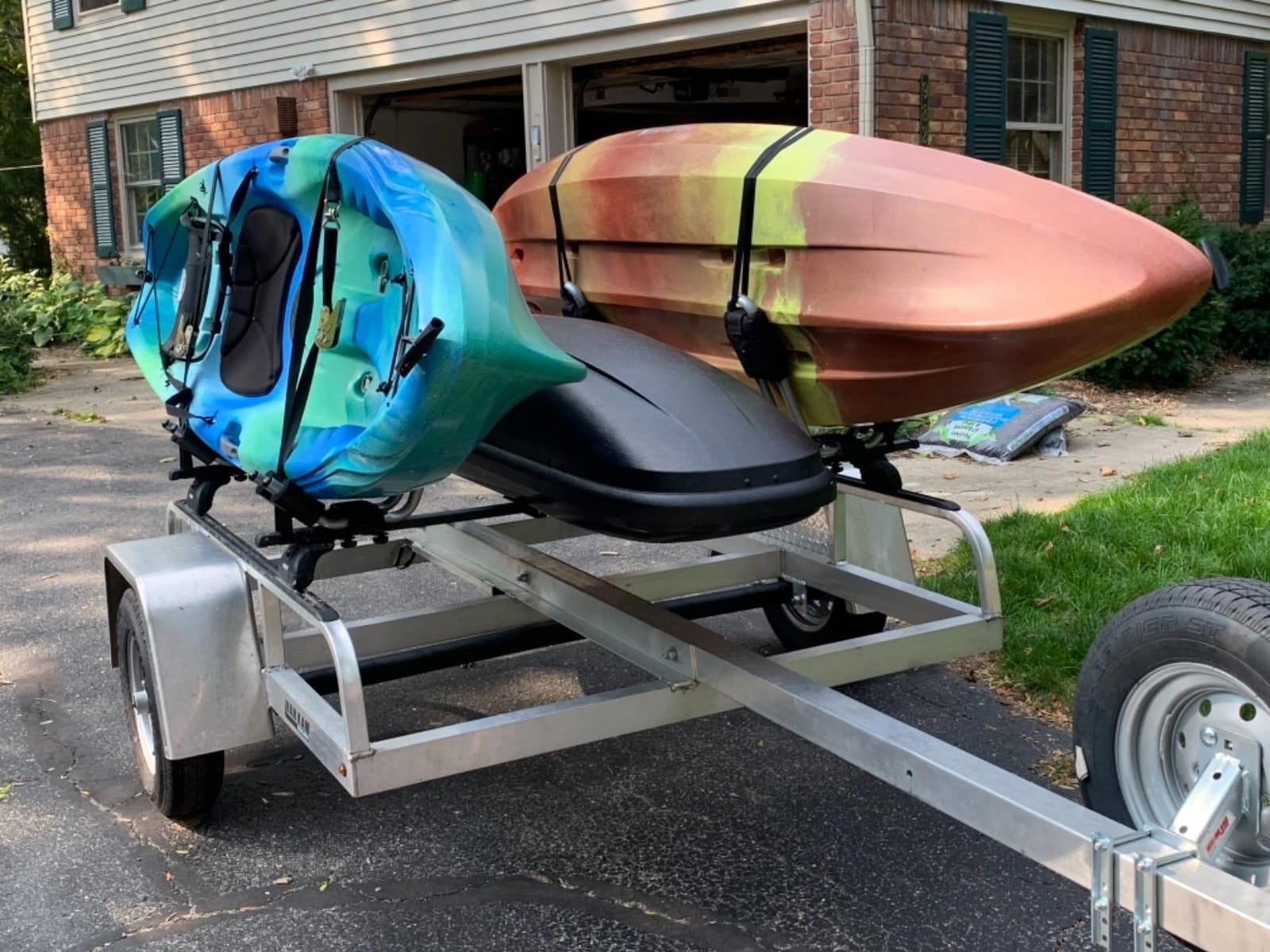
The Tribe 9.5 is the boat I recommend when someone tells me they had a bad first experience and wants a kayak that will not remind them of it. It carries the highest owner rating of the eight, and the reason owners give is almost always the same: the framed high-back seatback with adjustable recline positions.
At 46 lb and 31.5 inches wide, it sits in the sweet spot. It is narrow enough to be quick and maneuverable, wide enough to feel planted, and light enough to lift with a second person rather than a roof rack. Perception builds it in the USA, and the stackable shape matters if you have a wall you can lean it against.
The 300 lb capacity is the second highest in this roundup among single-seat boats, and that headroom is what makes it attractive to bigger paddlers. Owners pair that with a rear storage area under durable tie-downs, which is dry gear storage by day and a gear lashing system on the water.
What the adjustable recline actually changes
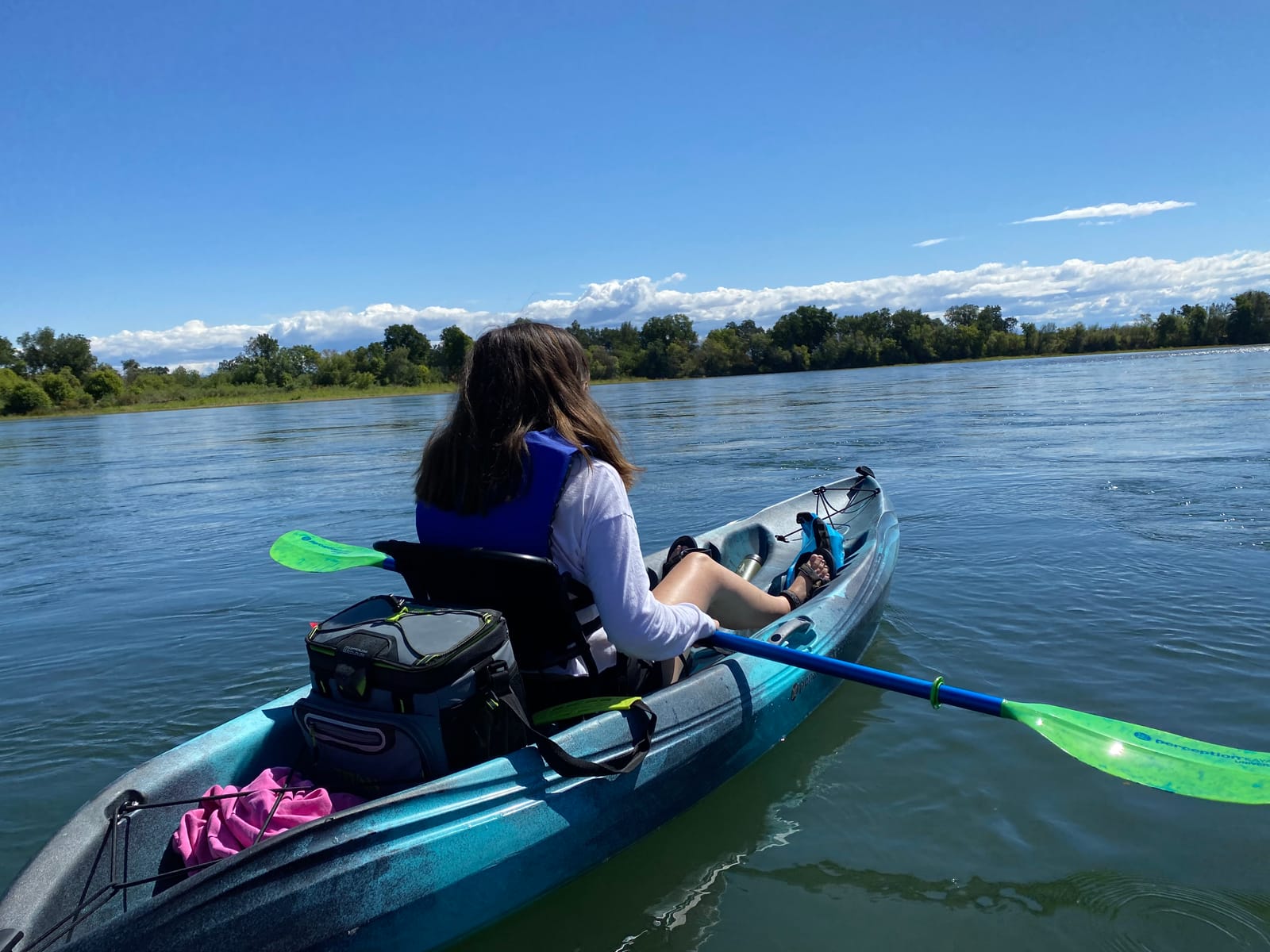
The recline positions let you move from an upright paddling posture to a relaxed one without changing boats. On a long afternoon paddle, the difference between sitting tall and sitting back is the difference between an hour and four hours. For a beginner, seat comfort is not a luxury feature, it is the reason you come back for the second session.
Stability trade-off of a tall seat back
There is a real cost to that frame. A high backrest raises your center of gravity, and owners report that the boat feels tippier in secondary stability than shorter-seat models. In practice this shows up when you lean hard to one side to get in or out at a shallow launch. If you have never paddled before, take the entry slowly.
Who this boat suits
Beginners who want the most refined seating on the water, paddlers up to about 250 lb with gear, and anyone planning long recreational days on a calm lake or mild coastal water. Perception rates it for calm lakes through mild ocean waves, which matches the summer-only reality of any sit-on-top.
Where it falls short
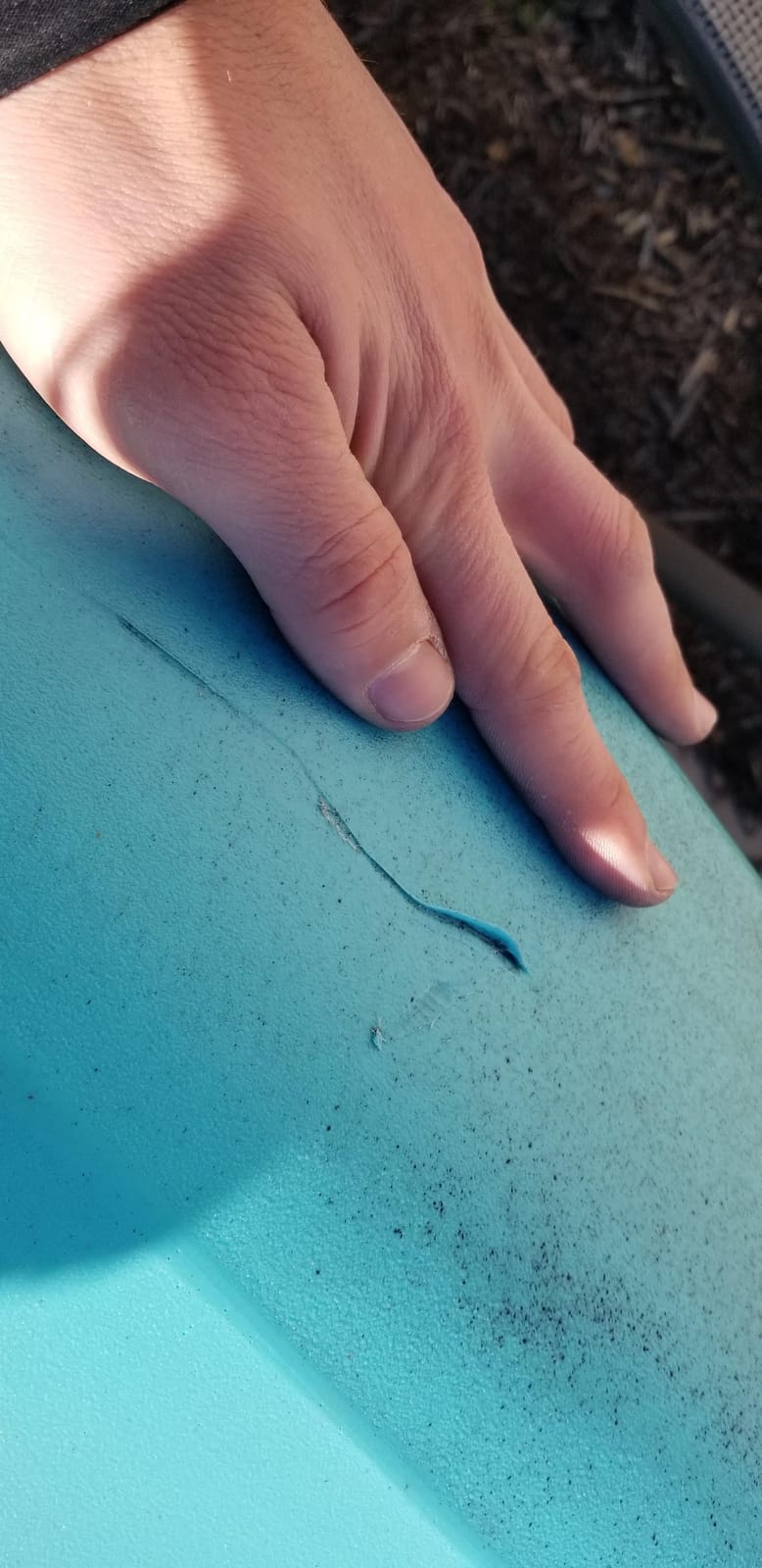
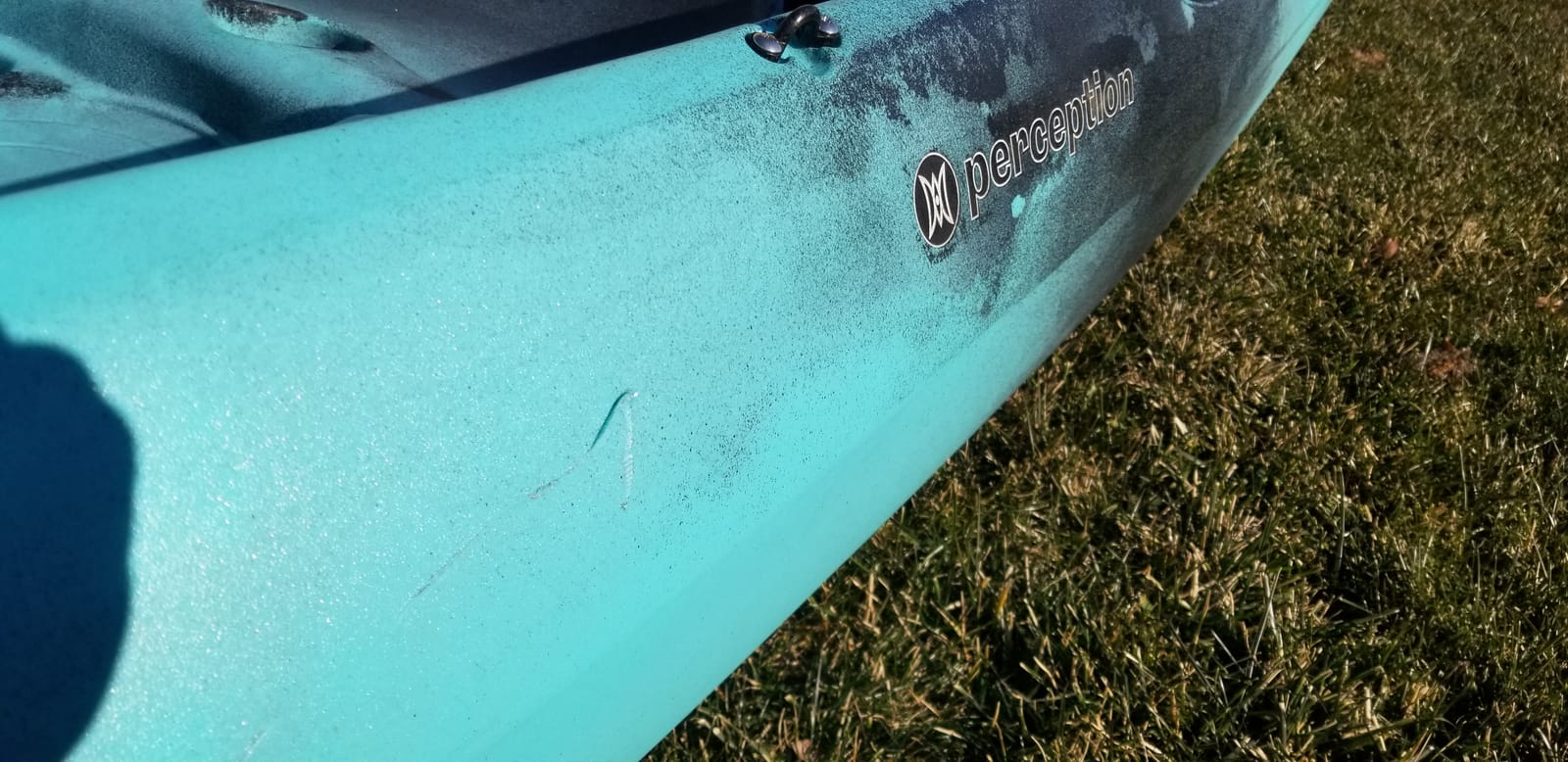
It is not fast, and like any sit-on-top it will get wet in rough water. The rear storage area is small and can take on water, so it is gear storage, not dry storage. A small number of owners reported hull cracks or light scratches on arrival, so inspect the hull carefully on delivery day.
4. Lifetime Lotus – The Lightest Sit-on-Top and Easiest Boat to Park
Lifetime Lotus Sit-on-Top Kayak with Paddle, Blue, 8′
39 lb boat weight
250 lb capacity
8 ft long, 30 in beam
Paddle and hard seat back included
+ Pros
- Lightest and most compact kayak in the roundup at 39 lb
- Ultra-stable hull with self-bailing scupper holes
- Quick-release adjustable seat back and multiple footrest positions
- Front
- rear and center carry handles
- Comes with a paddle in the box
– Cons
- 250 lb capacity is the lowest here
- Short 8 ft length tracks less precisely than longer hulls
- Hard plastic seat back is uncomfortable on long outings
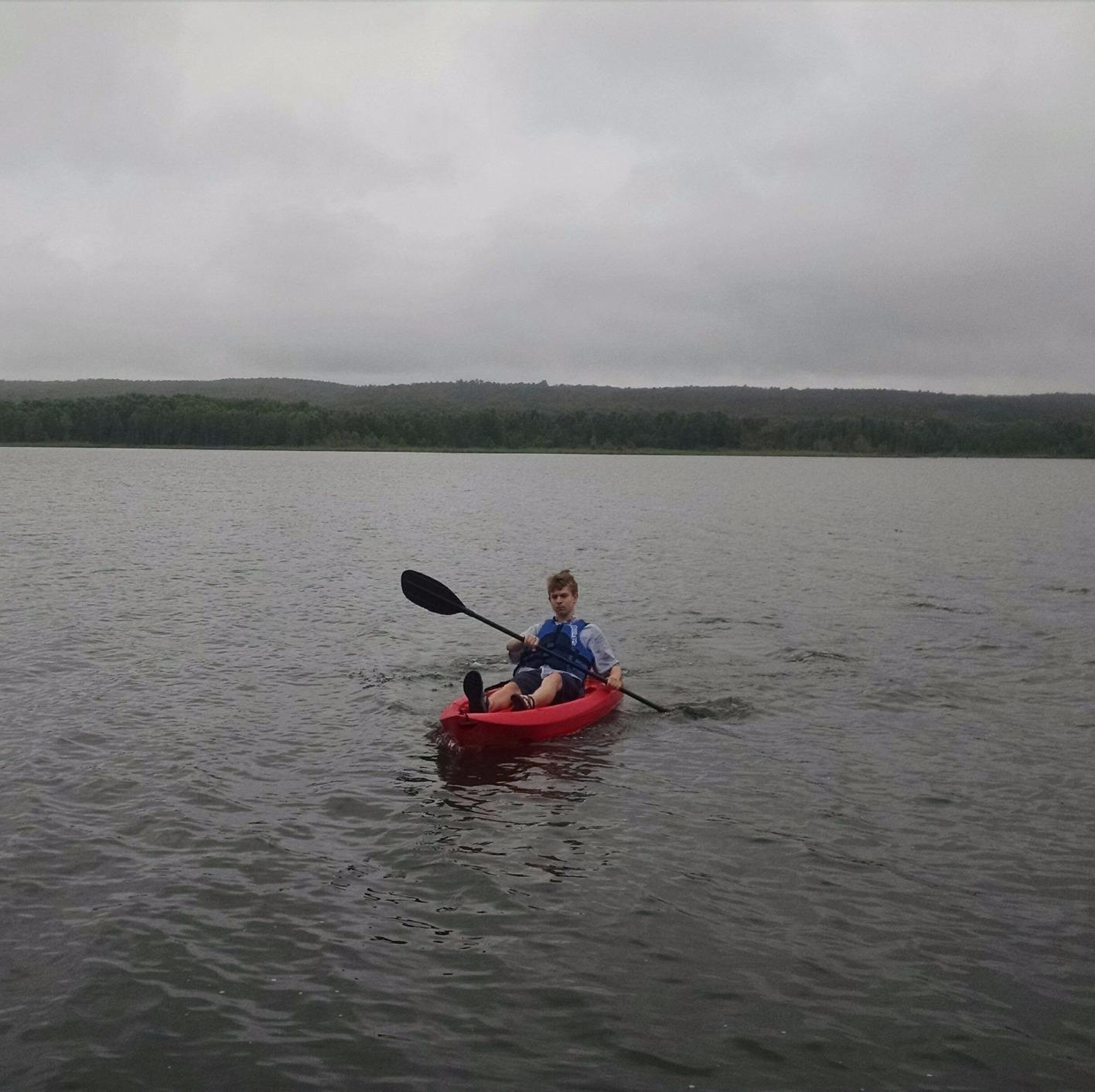
At 39 lb, the Lotus is the boat that fits in a closet. It has three carry handles, a hull you can lift with one arm, and an eight-foot length that fits inside most hatchbacks with the seats down. If the reason you have not bought a kayak is that you have nowhere to put one, this is the pick.
For a first session, the stability story is stronger than the length story. Owners consistently describe an ultra-stable hull with smooth tracking and easy maneuverability, and the self-bailing scupper holes drain the cockpit and tank well so you never sit in water. That is a beginner-friendly package in a very small footprint.
The quick-release adjustable seat back and multiple footrest positions mean two people of different sizes can share the boat without adjustment drama, and the double-sided paddle in the box gets you on the water with nothing else to buy.

When 8 feet is an advantage and when it is not
An eight-foot hull is short, and short means less tracking and more bobbing in a wake. On flat water that is a non-issue. In a boat launch with a slight chop, or on a river with any current at all, the longer hulls in this roundup hold their line much better. If your home water is moving water, buy length. If your home water is a pond, the Lotus is hard to beat.
The 250 lb capacity ceiling
This is the lowest capacity figure in the roundup, and it is the one hard limit on this boat. With minimal storage space for day-trip gear, a 250 lb rating leaves very little margin between you and the limit once a cooler and a tackle bag go in. Paddlers above roughly 190 lb should treat this as a two-person-or-under-200 lb boat.
Who this boat suits
Small paddlers, apartment dwellers, families with a single car, and anyone learning on a pond or a small sheltered lake. It is also the easiest boat here to hand to a friend who wants to try the sport for an afternoon.
Where it falls short
The hard plastic seat back is the main complaint, and it is uncomfortable past a couple of hours. Adding a foam seat pad is the cheap fix. The short length also limits gear carrying, and the hard shell construction means any hard knock leaves a mark that does not buff out.
5. Perception Rambler – Tandem Space for Families and Dogs
Perception Kayaks Rambler Sit On Top for Recreation, Sunset, 13’6″
78 lb boat weight
550 lb tandem capacity
13 ft 6 in long, 34 in beam
Center seat for a child or dog
+ Pros
- Rock-solid stability and tracking praised by pairs and families
- Roomy enough for a child or a dog in the middle seat
- Comfortable for two to three hour paddles
- Blunt heavy bow handles waves and turbulent water
- Fast enough to be enjoyable at tandem size
– Cons
- 78 lb is the heaviest boat here
- Longer and larger than buyers expect
- Some owners report shipping scuffs and scrapes
- Solo roof rack loading is a two-person job
The Rambler is the only true tandem in the lineup, and if you are paddling with a partner, a child or a dog it is the only one of these eight that works. At 13 ft 6 in long and 34 inches wide, it is enormous, and the 550 lb capacity rating gives you room for two adults plus a full day of gear.
The molded-in center seat is the feature that converts it from a boat for two people into a boat for a household. Kids and dogs settle into it because it is stable, and the multiple footrest options mean both adult positions can be set for different leg lengths without tools.
Owners consistently describe the stability and tracking as rock solid, and the blunt bow does not shy away from choppy water or light surf the way a narrow recreational hull would. That bluntness is also why it holds a line in slower moving water, which is unusual for a boat this size.
78 lb is a transportation decision, not a spec
This is the heaviest boat in the roundup, and weight is the number that stops people buying it. A kayak cart is not an accessory here, it is a requirement, and solo roof rack loading is realistically a two-person job on a car. Budget for a trailer or a proper rack rather than trying to muscle it onto a crossbar alone.
Storage for a full day out
The large rear open storage takes a cooler and a day of gear, which is a genuine advantage over the smaller boats here. It is open storage, so it is not dry storage, and it fills with water in a heavy rain. The removable padded seat and backrest are comfortable for two to three hour sessions, which is where most family outings land.
Who this boat suits
Families, couples paddling together, anyone bringing a dog, and paddlers who want a tandem hull they could extend to slow rivers and light surf. It also works as a solo boat if you want the extra platform, though that is an unusual use of the space.
Where it falls short
Length is the surprise factor. Buyers consistently underestimate how big 13 ft 6 in feels, particularly in a small car park or a narrow garage. Owners also report occasional scuffs, scrapes and dents arriving from transport, so check the hull and the seats before your first outing.
6. Lifetime Kokanee – The Widest Hull for Standing Casts and Big Paddlers
Lifetime Kokanee Sit-On-Top Kayak, Lime, 10’6″
76 lb boat weight
425 lb capacity
10 ft 6 in long, 36 in beam
Converts solo or tandem
+ Pros
- Extremely wide and stable
- described by owners as a small jon boat
- Handles two adults and a small child in the middle
- Easy to load onto an SUV roof solo
- Handles medium wind and slightly choppy water
- Converts between solo and tandem use
– Cons
- Heavy at 76 lb and two people or a kayak dolly are recommended
- Hard plastic seats need an added foam cushion
- Only one cup holder
- Storage compartment has no divider
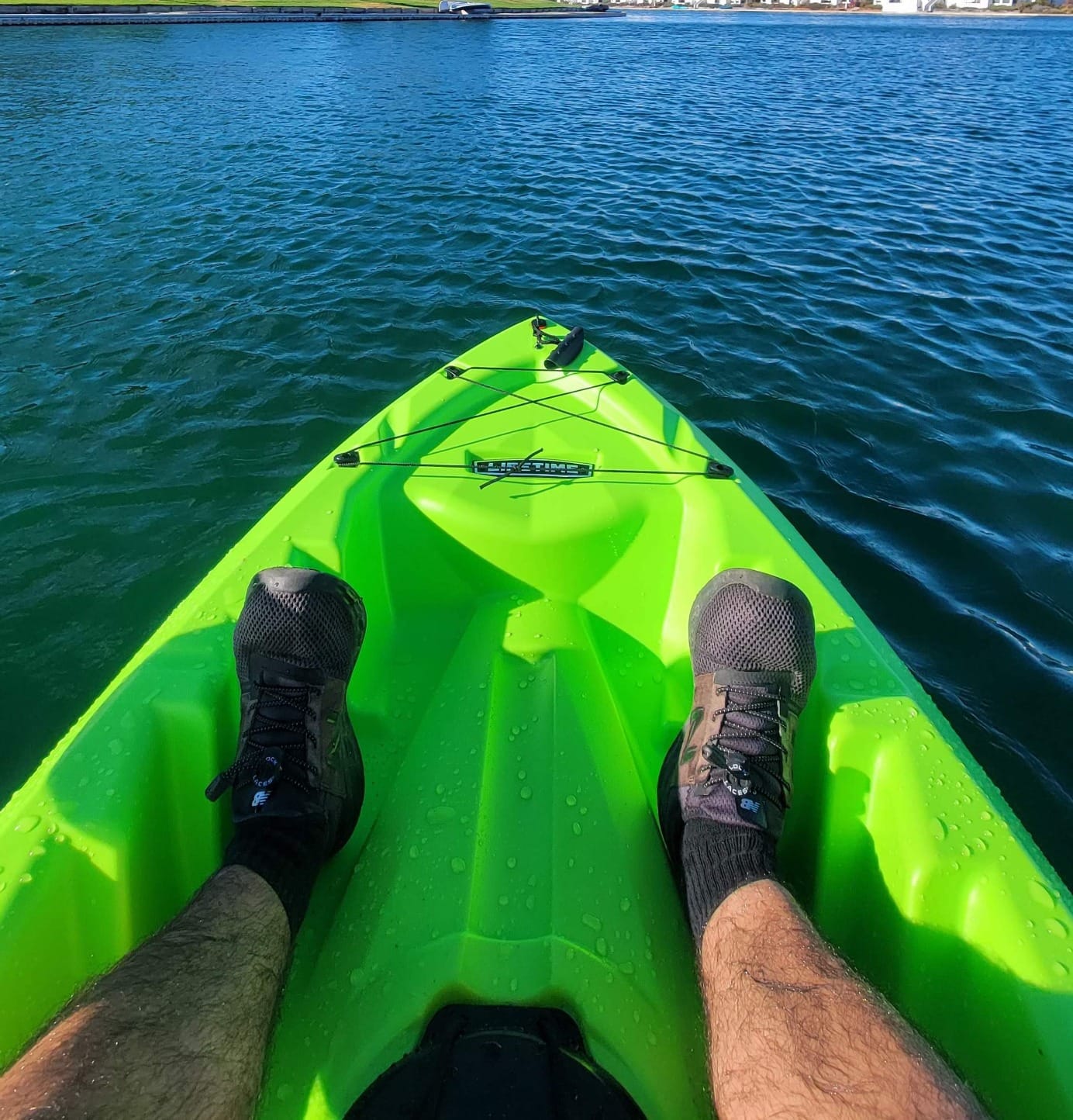
The Kokanee is the widest boat in this roundup at 36 inches of beam, and owners describe the experience as floating a small jon boat. If stability is your first concern, especially if you are a heavier paddler, this is the boat to test first. The 425 lb capacity rating is the second highest here and the highest for a boat that converts between solo and tandem.
That conversion is unusual. Two adjustable quick-release seat backs let one adult paddle the whole boat for a solo outing, then bring a second paddler aboard, or put a child in the middle for a family trip. Few boats in any category handle that flexibility well.
The one 6-inch deck hatch beneath the deck plus a bungee storage system is a modest amount of storage, but on a hull this wide there is plenty of open deck to work from. Owners report that it tracks straight in medium wind and slightly choppy water, which is unusual for something this wide.
Matching capacity to a larger paddler
This is the boat to look at if you are around 300 lb. With 425 lb of total capacity, a heavier paddler still has real headroom for gear, which is the calculation most people get wrong. The width helps in the same way: a wider hull displaces more water and simply does not want to tip when you shift your weight to cast.
The cost of a wide hull
Width buys stability and costs speed. Owners describe the Kokanee as barge-like and slow compared with the narrower hulls here, and it sits high in the water, which means it takes more wind. That is a fair trade for a fishing boat, and a poor trade if you want to cover distance quickly on a flat lake.
Who this boat suits
Larger paddlers, families who want one boat that does solo and tandem duty, and anglers who like standing to cast. It is also a strong first boat for anyone who is nervous about balance, because a 36 inch beam is very hard to knock over.
Where it falls short
At 76 lb it is the second heaviest boat here, and owners recommend two people or a kayak dolly. The hard plastic seats need a foam cushion added for real comfort, there is only one cup holder with no dedicated holder for a second passenger, and the storage compartment has no divider so contents slide around.
7. Pelican Catch Classic 100 – Deck Rigging for Stand-to-Cast Anglers
Pelican Catch Classic 100 Angler – Sit-on-Top Fishing Kayak – Ergocast Dual Position Seating System – 10 ft – Outback
58 lb boat weight
350 lb capacity
10 ft long, 34 in beam
Tunnel hull with rigging tracks
+ Pros
- Tunnel hull gives outstanding stability and easy entry and exit
- ERGOCAST CLASSIC seat adjusts high or low
- Rigging includes 4 inch accessory tracks
- rod holders and eyelets
- Plenty of clear deck space to stand and cast
- 350 lb capacity is the highest among single-seat boats here
– Cons
- Widest and bulkiest hull in the group at 34 inches
- Paddle is not included
- Lowest owner rating of the single-seat fishing boats listed
- Some owners report the hatch and tank well need extra sealing
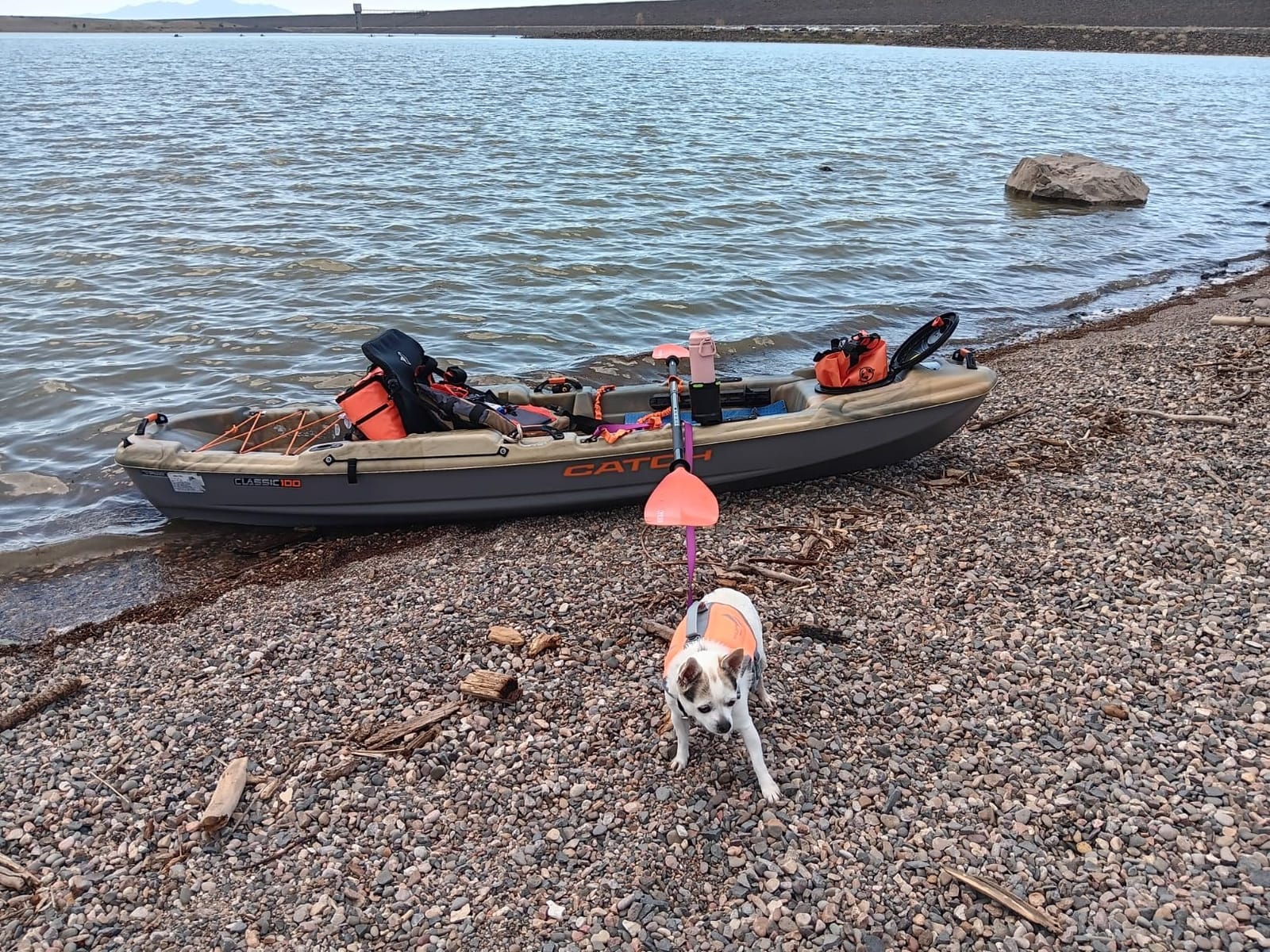
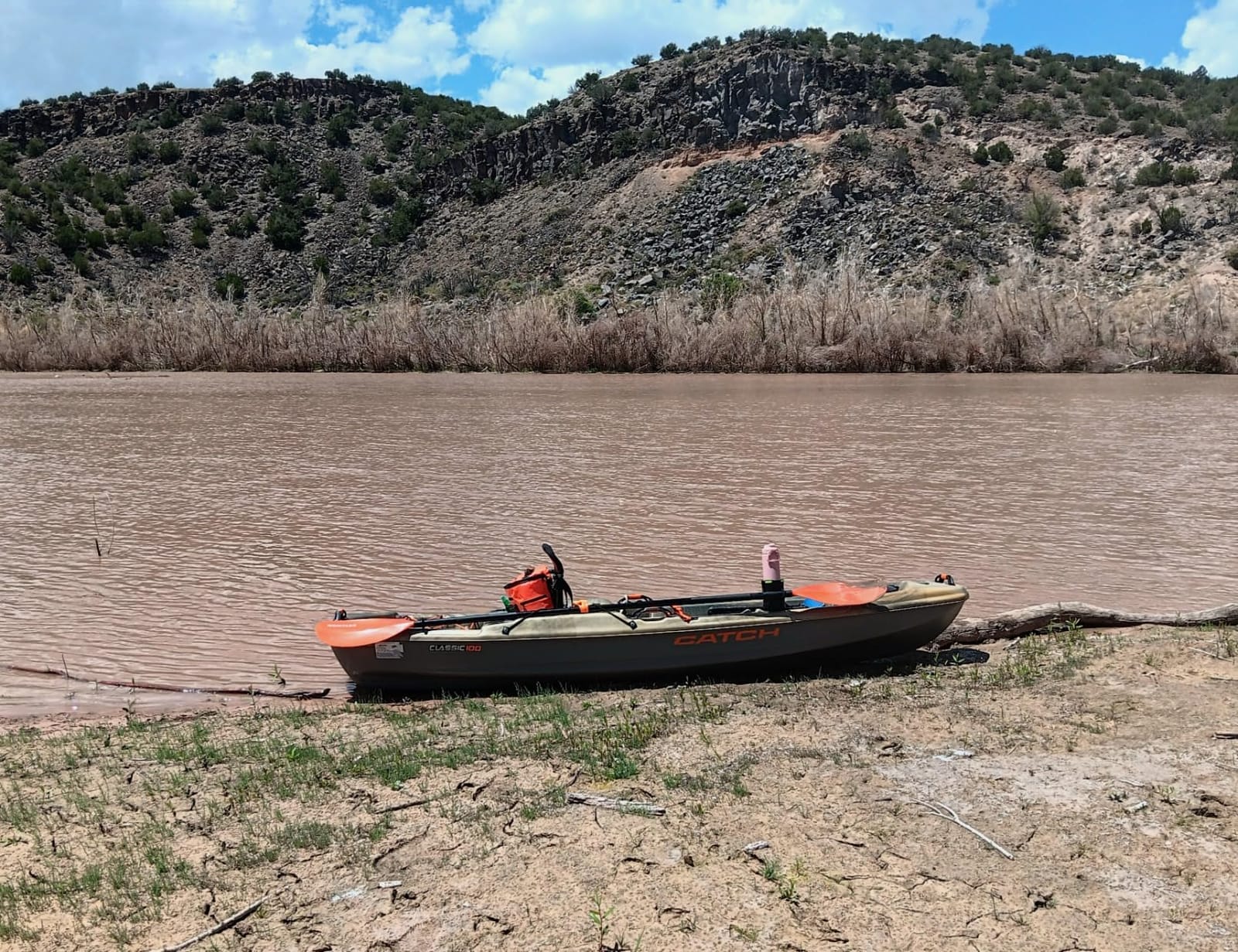
The Catch Classic 100 is the most rigged boat in this roundup, and the rigging is the reason to buy it. Two 4-inch accessory tracks, two flush mount rod holders, two accessory eyelets, paddle tie-downs, adjustable footrests and a bottle holder give you a place to put every piece of equipment without it sliding into your feet.
The tunnel hull is the defining shape. It creates a flat, wide base that is very stable and, more importantly for a beginner, it makes getting in and out easy because the sides are low and straight. Owners highlight the deck space that comes with it, specifically that they can stand to cast without tripping on gear.
The ERGOCAST CLASSIC dual position seat adjusts to a high or low setting, and owners consistently call it one of the most comfortable fishing seats they have used. It is a real step up from a fixed molded seat if you plan to spend full days on the water.
350 lb capacity in a 10-foot hull
This combination is unusual and it is the boat’s quiet advantage. A 10-foot hull that is 34 inches wide and rated to 350 lb gives a larger paddler real stability without moving to a 13-foot tandem. Additional internal flotation is built in to meet or exceed ABYC standards, which matters if the boat is swamped.
What the hull shape costs you
At 34 inches wide and 15 inches tall, this is the bulkiest single-seat boat here. It is easy to carry at 58 lb with ergonomic handles, but it is not small, and a smaller car will feel the difference. Bungee cords on the rear tank well do not keep gear dry in a downpour either.
Who this boat suits
Anglers who have decided they will fish, and specifically anglers who stand to cast and need rigging hardware to attach things to. It is also a strong stability choice for paddlers in the 280 to 300 lb range who still want a single-seat boat under 11 ft.
Where it falls short
No paddle is included, so budget for one. The owner rating is the lowest of the single-seat fishing boats in this list, and a meaningful share of negative reviews relate to accessory fit, finish and delivery condition rather than the boat itself. Some owners also report the front hatch and tank well need extra sealing for wet gear.
8. Reel Yaks Raptor – Modular Pedal Power That Fits in a Trunk
Reel Yaks Raptor Modular Fishing Kayak, Fin Drive 9.5ft, 380 lbs Capacity
62 lb boat weight
380 lb capacity
9 ft 6 in long, 30.3 in beam
Two-piece hull with pedal drive
+ Pros
- Pedal drive adds speed and hands-free movement
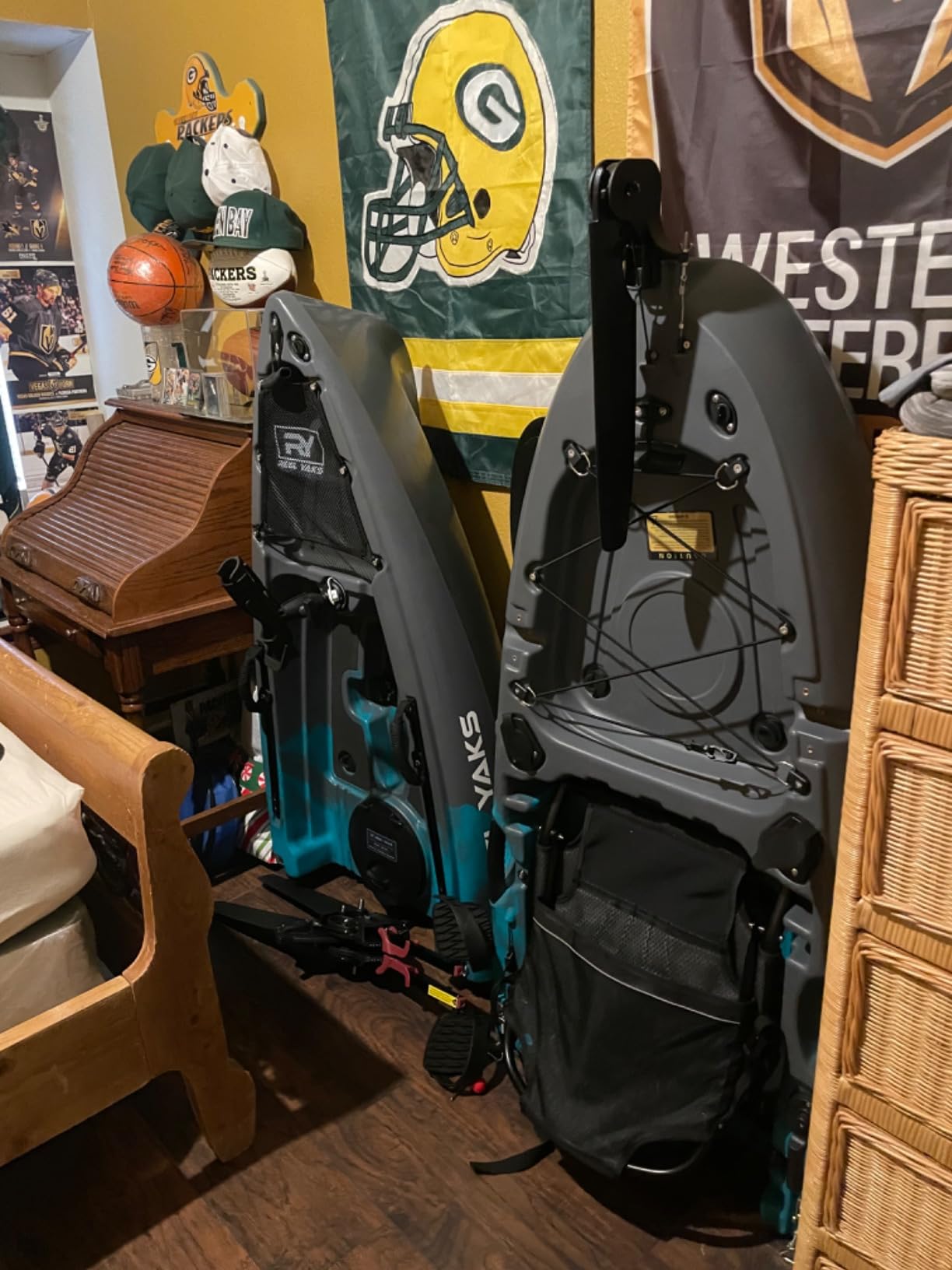
- Two-piece design fits in a car trunk with no roof rack
- Each section weighs roughly 40 lb and carries its own handles
- Wide W-hull feels stable in wind and whitecaps
- Includes paddle
- stadium seat
- rod holders and rail systems
– Cons
- Rudder control wires and ferrules are thin and break easily
- Rudder must be lifted manually out of the water
- Seat sits low so under-seat storage is limited
- Highest price in the roundup with accessories costing extra
The Raptor is the only boat here you can split in half, and that single feature solves the problem that stops more beginners than price ever does. The hull separates into two sections of roughly 40 lb each with built-in handles, and those sections fit in an SUV back seat or a trunk. No roof rack, no trailer, no second person needed at the car park.
The fin pedal drive gives you hands-free movement across the water, which quietly transforms a fishing session. You cover ground without burning your shoulders on a paddle stroke and you can hold a trolling motor. The wide W-hull and 380 lb capacity keep it stable while you cast, and owners describe it as confident in wind and whitecaps.
The package is unusually complete. The paddle, the stadium seat, flush mount rod holders, track rails and storage hatches are all included, and the system is compatible with a trolling motor and with an optional center section that converts it to a tandem.
Pedal drive as a learning aid
There is a beginner argument here beyond fishing. Paddle steering is the first thing a new paddler has to master, and a pedal drive lets you steer precisely while your paddle stays in the water as a stabilizer. It also means a full day of fishing does not depend on shoulder endurance you may not have yet.
The rudder hardware is the weak point
The most consistent complaint across owner reviews is the rudder. Control wires and ferrules are described as thin, one buyer reported a rudder guide screw snapping after a single use, and the rudder has to be lifted manually out of the water. Treat the rudder as something to inspect before every trip, and keep a spare ferrule on hand.
Who this boat suits
Apartment dwellers, people without a garage or a truck, and paddlers who want to cover water hands-free. It is also a good fit for anyone who plans to fish seriously and values being able to launch from an ordinary parking space.
Where it falls short
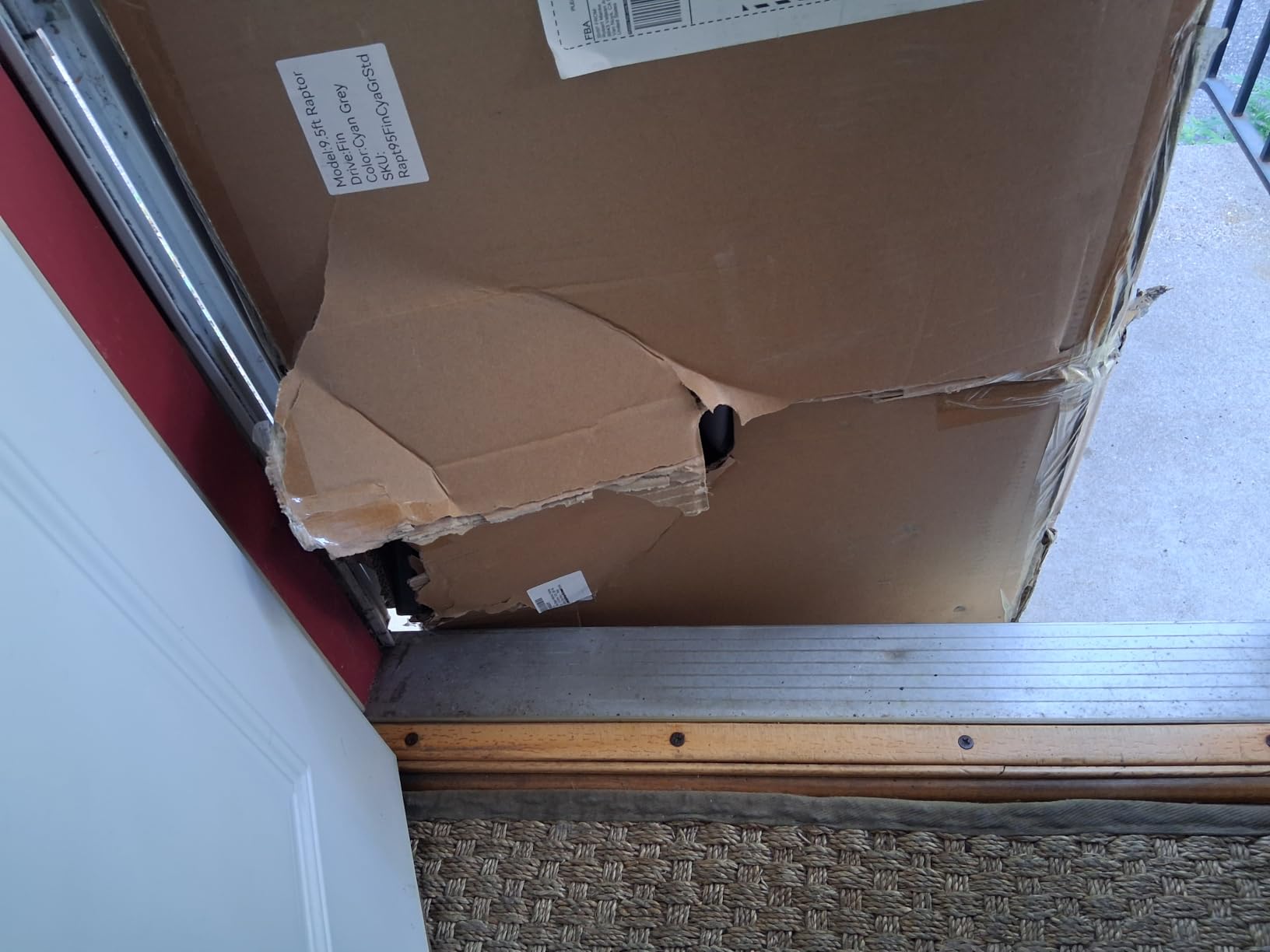
It carries the highest price in the roundup and the accessories are extra, so the ownership cost per boat is the highest here. The seat sits low to the floor, which leaves little under-seat storage, and the track rail end caps need tools to remove. Owners also report scattered complaints about packaging and the quality of the included paddle.
The 120 Rule: How to Size a Kayak to Your Body
The 120 rule is a simple screening test that removes most of the sizing anxiety, and it is the single most useful number a first-time buyer can learn. The rule is that a paddler plus their gear should weigh no more than 80 percent of the boat’s stated capacity.
It exists because capacity ratings are measured in ideal conditions. Two people sitting in a balanced boat on a flat lake can reach a listed limit. One person, off balance, in current, with a full tank well, cannot. The 20 percent buffer absorbs the difference.
Applied to this lineup, the math is straightforward. If you weigh 180 lb and plan on carrying 40 lb of gear, you need a rating of at least 275 lb, which is exactly where the Tamarack Angler 100 and the Pelican Sentinel 100X sit. A 220 lb paddler carrying fishing gear should be looking at the 300 lb Perception Tribe 9.5 or better. A paddler around 300 lb needs the 350 lb Catch Classic 100 or the 425 lb Kokanee, and there is no way to make a 250 lb hull work no matter how good the marketing sounds.
Height matters too, but less than most people expect. The variable that decides comfort is whether you can set the footrests to a bent-knee position, because a straight locked leg at 6 ft 3 in will destroy an afternoon. Every boat here except the fixed-seat Sentinel has multiple footrest positions, and that is the spec to check first.
What Makes a Sit-on-Top Beginner-Friendly: Buying Guide
Once you have ruled out the boats that are too small or too short for your water, five specs decide whether a sit-on-top will be a good first boat or a frustrating one. Here is how I rank them, in the order I actually use.
Beam width comes first
For a beginner, beam beats every other spec. A wider hull gives more primary stability, which is the property that stops you capsizing in the first place. The boats here run from 30 to 36 inches, and the difference between 30 and 36 is the difference between a boat that feels twitchy on a windy afternoon and one that feels planted. Start at 31 inches and go wider from there if your home water is exposed.
Length controls tracking and speed
Longer is more stable, tracks straighter and moves faster. Shorter is more maneuverable, easier to store and cheaper to carry. For flat water, anything from 9 to 10 ft works. For a river, a bay or any water with current, look at 10 ft and up, and accept the extra weight that comes with it. Under 8 ft, as with the Lotus, you are making a storage decision as much as a paddling one.
Seat adjustability decides whether you come back
A hard plastic seat back is the most common reason a new paddler stops coming back. Look for an adjustable or removable padded seat, a quick-release back, and multiple footrest positions. The Tribe 9.5 with its framed high-back seat and the Catch Classic 100 with its dual-position seat are the two most comfortable setups here, and both are worth stretching toward if you plan long days.
Boat weight decides whether you own a kayak at all
Count the pounds carefully, because this is where real beginners get stuck. Under 45 lb you can carry solo. Under 55 lb you can lift it with a partner. Over 70 lb, as with the Rambler and the Kokanee, you need a kayak cart, a trailer or a proper rack, and that is an ongoing cost and an ongoing hassle. If you do not have a garage or a suitable vehicle, weight is a legitimate reason to choose a different boat entirely.
Construction tells you how it will age
Every boat in this lineup is rotomolded or high density polyethylene, and that is the right material for a beginner. It is cheap, it is repairable with a kayak patch kit, and it survives being dragged over rocky shallows. The differences show up in hardware: plastic seat connector clips break, so check them, and thinner rudder wires on the Raptor need regular inspection.
What to buy first and what can wait
Buy the boat, a PFD you will actually wear, and a paddle of a length that matches your height. Everything else can wait a season. A kayak cart, a dry bag, a spray skirt for the boat, a paddle float and a fish finder such as the units in our kayak fish finder guide are all sensible additions, and so is a whistle, which costs almost nothing and matters more than any of them.
If you are not certain about the size, renting first is a legitimate and common path. Most rental fleets are angler sit-on-tops for exactly the reason this category dominates hire yards, and an afternoon in one will tell you more about your own tolerance for width and seat height than any spec sheet will. Many beginners buy a boat they cannot comfortably carry after sitting in a borrowed one for three hours, so rent, then buy what you actually liked.
Where Beginners Should Paddle in Year One
Learn in a small, sheltered, flat body of water with easy launch and retrieval. A protected lake cove, a pond, a slow-moving river section below a wide calm pool, or a bay with a beach launch all work. Avoid the following in your first season: any river narrower than about 10 feet wide with current, any water with boat traffic, open coastal crossings in wind, and anything in cold water.
Paddling skills in play for every session: wear the PFD, carry a whistle, tell someone your route and return time, and check that the hull has no cracks before you launch. When you do fall in, stay with the boat, kick up alongside the deck, and climb back on. A sit-on-top is designed to be recovered from, and practicing it in shallow water on day one is how it stops being frightening.
Frequently Asked Questions
What is the best sit-on-top kayak for beginners?
The Lifetime Tamarack Angler 100 is our top pick for beginners: a 51 lb rotomolded hull with a 31 inch beam, a 275 lb capacity, a stable flat bottom, a padded adjustable seat and a paddle in the box. Choose the Pelican Sentinel 100X instead if you need the lightest boat you can carry alone at 44.6 lb, or the Perception Tribe 9.5 if seat comfort is your priority.
Do sit-on-top kayaks flip easily?
No. Sit-on-tops are among the most stable kayak types because they are wide and flat-bottomed, and the open deck gives you nothing to get trapped under. The real risks are wind, which catches the large open deck, and a high center of gravity from a tall seat back. With a PFD, calm water and a couple of practice re-entries, a sit-on-top is a very forgiving boat.
What are the disadvantages of sit-on-top kayaks?
They catch more wind across the open deck, track and turn more slowly than longer touring hulls, provide no cockpit or skirt protection so you will get wet in chop, and are typically heavier than sit-inside boats at the same tier. They are also warm-season boats and are the wrong choice for cold water or rivers with current.
What is the 120 rule in kayaking and how does it work?
The 120 rule says your body weight plus your gear should total no more than 80 percent of the boat’s stated capacity rating. A paddler at 180 lb carrying 40 lb of gear therefore needs a boat rated at least 275 lb. The 20 percent buffer accounts for the imbalanced, loaded conditions a capacity figure is measured without.
Which type of kayak is best for beginners?
A wide, stable recreational sit-on-top is the easiest first boat for most people because it is self-bailing, has no cockpit rim to climb over, and lets you get in and out easily. A sit-inside is the better choice in cold water, on rivers with current, or for long touring trips where a skirt and enclosed cockpit matter. Rent both once before committing.
What size sit-on-top kayak is right for a larger paddler?
Look at beam first, then capacity. A paddler near 300 lb should target at least a 350 lb rated hull that is 34 inches or wider, which is why the Pelican Catch Classic 100 and the Lifetime Kokanee are the two models here worth testing. Staying under 80 percent of the rating with your gear loaded is the rule to work to.
The Best Sit-on-Top Kayaks for Beginners: Final Verdict
If you want one answer, buy the Lifetime Tamarack Angler 100. It has the widest owner history in this group, a 51 lb weight you can still lift with help, a stable flat bottom and a paddle in the box, and at 275 lb it suits most paddlers under about 220 lb once gear is loaded. If weight is your blocker, the Pelican Sentinel 100X at 44.6 lb solves it and adds the best padded seat in a short hull. If you plan long days and care most about comfort, the Perception Tribe 9.5 is the one to buy, with the highest owner rating and a 300 lb capacity.
For specific situations: the Lifetime Lotus at 39 lb fits in a closet, the Perception Rambler carries two adults plus a child or a dog, the Lifetime Kokanee is the widest and best for larger paddlers, the Pelican Catch Classic 100 has the best deck rigging for standing casts, and the Reel Yaks Raptor splits into two sections that fit in a trunk with pedal power to move you hands-free.
Whatever you choose, work out your capacity number first, buy the PFD and paddle next, and spend your first season on flat sheltered water. That is the fastest route from shopping to actually paddling the best sit on top kayaks for beginners in 2026.
Leave a Reply