Author: Walter McGuire

  • 10 Best Ski Boots for Wide Feet (October 2026) Guide

    10 Best Ski Boots for Wide Feet (October 2026) Guide

    Ski boots built for a 100mm foot compress the ball of your foot until it burns, then cut circulation to your toes until they go numb. That two-hour cutoff is the single most common complaint in ski forums, and it has one main cause: the boot is too narrow across the forefoot, not too stiff, not too soft, and not the wrong flex. This guide covers the best ski boots for wide feet, ranked on published last widths in millimeters rather than marketing language, so you can match a boot to your actual foot before you spend an afternoon in a shop.

    We compared ten models line by line, focusing on the four specifications that decide whether a wide foot can live in a boot all day: last width, shell volume, instep height and cuff volume. Where a listing gave a number, we used the number. Where it gave only adjectives like relaxed or high volume, we said so. A bootfitter can fix a lot, but not a shell that was cut 4mm too narrow, and that difference is worth explaining before any product talk.

    One practical note first: gear is only half the setup. If you are still deciding on what to wear under the shell, our ski helmet headphone picks cover the audio side, and compression boots for recovery matter more than most people expect for feet that swell on a cold day.

    Our Top 3 Best Ski Boots for Wide Feet (October 2026)

    We picked these three as the strongest combination of confirmed last width, rating and review volume in the group. The Rossignol Evo 70 leads because it publishes a 104mm last and carries the highest rating of anything we reviewed, with a 73-review base that is far larger than most wide-fit listings. The Head Edge LYT RX HV is the value pick, and the Rossignol Kelia 50 is the one we send wide-calf skiers toward because the tulip cuff solves a problem the others do not.

    EDITOR'S CHOICE
    Rossignol Evo 70

    Rossignol Evo 70

    • 104mm relaxed last
    • Wider toe box and ankle
    • Custom fit liner
    • 70 flex
    BUDGET PICK
    Rossignol Kelia 50

    Rossignol Kelia 50

    • 104mm relaxed last
    • Tulip cuff
    • Heat-moldable liner
    • 50 flex
    As an Amazon Associate we earn from qualifying purchases. CERTAIN CONTENT THAT APPEARS ON THIS SITE COMES FROM AMAZON. THIS CONTENT IS PROVIDED 'AS IS' AND IS SUBJECT TO CHANGE OR REMOVAL AT ANY TIME.

    Comparing 10 Wide-Fit Ski Boots Side by Side

    Every boot below is listed with the width specification the manufacturer publishes. Read the last width column first, because a 102mm boot and a 104mm boot feel very different to a foot that measures 103mm.

    ProductDetailsAction
    Product
    Rossignol Evo 70
    • 104mm relaxed last
    • Wider toe box and ankle area
    • Custom fit liner
    • 70 flex
    Check Latest Price
    Product
    Head Edge LYT RX HV
    • High Volume fit
    • Extra forefoot and instep room
    • Men's sizing
    Check Latest Price
    Product
    Rossignol Kelia 50
    • 104mm relaxed last
    • Tulip cuff
    • Heat-moldable liner
    Check Latest Price
    Product
    Head Edge LYT RX W HV
    • Women's W last
    • High Volume shell
    • Forefoot and instep space
    Check Latest Price
    Product
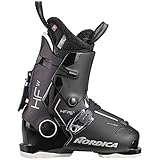
    Nordica HF 75 W
    • Wide W last
    • Instep Volume Control
    • HF rear entry buckle
    Check Latest Price
    Product
    Nordica Sportmachine 3 75 W
    • 102mm wide last
    • 3 Force Construction
    • Customizable shell and liner
    Check Latest Price
    Product
    Nordica HF 85 W
    • Wide W last
    • 85 flex
    • Instep Volume Control
    Check Latest Price
    Product
    Rossignol Speed 80 HV+
    • 104mm HV+ last
    • Unisex adult sizing
    • Soft instep plastic entry
    Check Latest Price
    Product
    Head Edge 65 W HV
    • 102mm W last
    • High Volume shell
    • 65 flex beginner level
    Check Latest Price
    Product
    Fischer RC 85
    • 100 mm strip width
    • Higher instep and toe box
    • 85 flex
    Check Latest Price
    As an Amazon Associate we earn from qualifying purchases, at no additional cost to you. CERTAIN CONTENT THAT APPEARS ON THIS SITE COMES FROM AMAZON. THIS CONTENT IS PROVIDED 'AS IS' AND IS SUBJECT TO CHANGE OR REMOVAL AT ANY TIME.

    What Ski Boot Last Width Actually Means in Millimeters

    Last width is the distance across the shell at the widest point of the forefoot, measured in millimeters. It is not a size. Two people with identical 27.5 mondo feet can need 99mm and 106mm, and that gap is the whole problem. The four bands below are the scale the industry actually uses.

    97-98mm is narrow, built for slim feet and racers who want maximum edge-to-edge feel; wide feet should skip this band entirely. 99-101mm is the standard medium last, the most common in the world and the reason so many wide feet end up in boots that were never cut for them. 102-103mm is wide, the first band most wide-footed skiers should consider and the threshold we use for this roundup. 104mm and above is extra wide, where availability drops sharply and the mainstream shelf runs out above roughly 106mm.

    Last width is also only one of five dimensions. Shell volume is the space over the instep and around the heel, and a boot can be narrow across the forefoot while still having a high-volume shell. Instep height is the vertical clearance on top of your foot, and this is the failure mode nobody warns you about: a wide toe box still crushes a high instep if the shell has no vertical room. Heel pocket depth decides whether your heel lifts when you drive the boot. Calf volume is the cuff, and it is a completely separate problem from foot width.

    One more trap: the last number often shrinks in the smaller sizes. A 104mm last at mondo 27.5 may be closer to 100mm at mondo 25.5, so ask for the number in your size rather than the range.

    1. Rossignol Evo 70 – The 104mm Relaxed Last With the Highest Rating in the Group

    EDITOR'S CHOICE
    Product

    Rossignol EVO 70 HV+ – Ski Boots for Men and Women – Black

    104mm relaxed last

    70 flex

    Sensor Matrix composite shell

    Custom fit liner

    Check Price

    + Pros

    • 104mm relaxed last gives real room across the forefoot
    • Wider toe box and ankle area in the shell
    • Custom fit liner with heel support
    • Lightweight Sensor Matrix composite shell

    – Cons

    • 70 flex is soft and unsuited to aggressive skiing
    • GRIPWALK soles are sold separately
    • Mondo run is limited to four listed sizes
    As an Amazon Associate we earn from qualifying purchases, at no additional cost to you. CERTAIN CONTENT THAT APPEARS ON THIS SITE COMES FROM AMAZON. THIS CONTENT IS PROVIDED 'AS IS' AND IS SUBJECT TO CHANGE OR REMOVAL AT ANY TIME.

    The Rossignol Evo 70 is the rare wide boot that states its last width instead of hiding behind the word relaxed. At 104mm it sits in the extra-wide band, and the spec sheet is explicit that the room runs through the forefoot, the toe box and the ankle area. That three-way approach separates it from most of the wide boots we looked at.

    Reviewers back the spec up. Across 73 reviews the average sits at 4.8, the highest figure in this roundup, with a heavy five-star skew. The recurring theme is room and comfort over a full ski day, plus unusually easy entry and exit.

    Where the 104mm Last Does the Work

    Most pain from a narrow boot shows up at the metatarsal heads, the fat pads behind your toes, where the forefoot meets the widest part of the last. A 104mm last spreads that pressure across the whole pad instead of concentrating it on one point, and reviewers describe exactly that.

    The extra ankle-area room matters more than it sounds, because a roomy forefoot paired with a tight ankle pocket just moves the problem upward.

    The 70 Flex and What It Costs You

    Flex 70 is genuinely soft, and that softness is the direct consequence of the roomy last: a wide shell has more material to flex. The trade is real, with less immediate edge response on firm or steep terrain and a boot that will not hold a driven position as crisply.

    For a beginner or intermediate skier on groomed terrain that is a good trade. If you carve hard edges at speed, look at the stiffer wide options further down.

    Liner, Shell and Sizing Details

    The custom fit liner has customizable zones, heel support and softer padding through the ankle and instep, which is where a bootfitter spends most adjustment time. The Sensor Matrix composite shell keeps weight down and passes energy straight to the ski. GRIPWALK soles are a separate purchase. The published Mondo run is 24.5, 29.5, 30.5 and 33.5, so confirm your size first.

    Who It Suits and Who It Does Not

    Choose it if you measure around 102mm or wider, want a full day without forefoot pain, and ski recreationally. It is also a sensible first wide boot if you have never skied in a wide last.

    Skip it if you ski steeps, need a boot to hold an aggressive angulation, or measure past roughly 106mm, where the shell runs out of room.

    Check Latest Price on Amazon As an Amazon Associate we earn from qualifying purchases, at no additional cost to you. CERTAIN CONTENT THAT APPEARS ON THIS SITE COMES FROM AMAZON. THIS CONTENT IS PROVIDED 'AS IS' AND IS SUBJECT TO CHANGE OR REMOVAL AT ANY TIME.

    2. Head Edge LYT RX HV – High-Volume Room for a Forgiving All-Day Ski

    BEST VALUE
    Product

    Head Edge LYT RX HV Alpine Ski Boots, Anthracite/Black, 30.5

    High Volume forefoot and instep fit

    Polyurethane shell

    Men's sizing

    30.5 available

    Check Price

    + Pros

    • High Volume shell adds genuine room through the forefoot and instep
    • Relaxed forgiving fit for comfort-first skiing
    • Strong 4.7 average across 71 reviews
    • Polyurethane shell with a D width

    – Cons

    • High-volume shell gives less precise edge-to-edge control
    • Manufacturer does not publish a last width in millimeters
    • Sizes listed are 25.5 / 26.5 / 30.5
    As an Amazon Associate we earn from qualifying purchases, at no additional cost to you. CERTAIN CONTENT THAT APPEARS ON THIS SITE COMES FROM AMAZON. THIS CONTENT IS PROVIDED 'AS IS' AND IS SUBJECT TO CHANGE OR REMOVAL AT ANY TIME.

    The Edge LYT RX HV is the value route into a wide fit, and its 4.7 average across 71 reviews gives it the second-largest evidence base in this roundup. Head builds it on a high-volume platform, which in practice means extra room through both the forefoot and the instep rather than a wide toe box bolted onto a standard shell.

    That distinction is the reason to look at it. A boot can be wide across the ball of the foot and still press down on a high instep, which produces a burning strip across the top of your foot that no amount of forefoot room will fix. If that is your failure mode, a high-volume shell addresses it directly and a simply wide last does not.

    High Volume Is Not the Same as a Wide Last

    Head does not publish a millimeter figure for this model, so you are buying on the high-volume designation rather than a number. High volume describes the total interior space of the shell, and it broadly corresponds to extra room at the forefoot, the instep and around the heel. A wide last is narrower in scope, describing only the forefoot width.

    That makes a high-volume boot the safer pick for a foot that is both broad and tall on top, and it also means the fit is looser overall.

    Where the Response Gives Way

    The consistent minority complaint is reduced precision compared with a snugger performance shell. A roomy boot has more to move before it contacts the ski, so edge-to-edge response is slower and less sharp. On groomers that barely matters; on ice or at race speed, you will feel it.

    Materials, Sizing and Construction

    The shell is polyurethane, listed at a D width, in anthracite and black, with a one-year limited manufacturer warranty. The published size run is 25.5, 26.5 and 30.5.

    Who It Suits and Who It Does Not

    This suits a recreational skier with broad feet, especially one with a high instep, who wants comfort over a long day. It is also a good first wide boot to try on, because the volume is generous enough to fit last inspection without forcing.

    Do not choose it if you need fine edge-pressure transmission, if you ski a lot of ice, or if your foot measures beyond what this high-volume class provides. It is a comfort-first shell that asks you to accept softness in exchange for the space.

    Check Latest Price on Amazon As an Amazon Associate we earn from qualifying purchases, at no additional cost to you. CERTAIN CONTENT THAT APPEARS ON THIS SITE COMES FROM AMAZON. THIS CONTENT IS PROVIDED 'AS IS' AND IS SUBJECT TO CHANGE OR REMOVAL AT ANY TIME.

    3. Rossignol Kelia 50 – A 104mm Last and a Tulip Cuff for Wide Calves

    MOST VERSATILE
    Product

    Rossignol Kelia 50 – Downhill Ski Boots for Women – Black/White

    104mm relaxed last

    Tulip-shaped cuff

    Heat-moldable liner

    50 flex

    Check Price

    + Pros

    • Tulip cuff and adjustable buckles relieve shin and calf pressure
    • 104mm relaxed last with a wider toe box
    • Heat-moldable liners add warmth and precision
    • Comfortable for shorter riders with high-set calves

    – Cons

    • 50 flex is the softest rating here and limits edge control
    • Relaxed feel reduces feedback on firm terrain
    • GRIPWALK soles sold separately
    As an Amazon Associate we earn from qualifying purchases, at no additional cost to you. CERTAIN CONTENT THAT APPEARS ON THIS SITE COMES FROM AMAZON. THIS CONTENT IS PROVIDED 'AS IS' AND IS SUBJECT TO CHANGE OR REMOVAL AT ANY TIME.

    The Kelia 50 is the pick for skiers whose problem is the calf rather than the forefoot, and it is the only boot in this roundup with a cuff shape designed specifically to address that. The tulip-shaped cuff is cut so the shell flares rather than pressing straight in on the widest part of the calf, and reviewers with large calves describe it as the reason they stopped limping off the mountain.

    It is also a genuinely wide boot underneath, with a relaxed 104mm last and a wider toe box. The rating is 4.6 across 47 reviews, and the dominant feedback is comfort across a full day rather than performance.

    Wide Feet and Wide Calves Are Two Problems

    A wide last adds room at the forefoot, the ball of the foot and the toe box. It does nothing to the cuff, which is a separate piece of plastic wrapped around the top of your calf. Someone with a 100mm forefoot and a large calf needs both, and needs them from two different systems.

    This boot is one of the few here that addresses both, which is why it earns a place in the top three even though the flex is the softest in the group.

    The Tulip Cuff in Practice

    The tulip profile means the cuff opens outward as it rises, so pressure that a straight cuff concentrates across the shin spreads around the calf instead. The three-buckle layout adds a third adjustment point. Soft plastic wrapping the instep makes the boot easier to get into when the shell is cold and stiff.

    One German-language review in the set specifically praises the upper buckle for relieving calf pressure, a detail most reviews never mention. It is the feature doing the work.

    Liner, Shell and Who It Suits

    The liners are customizable and heat-moldable, which matters for a wide foot because molding settles the foam into your exact shape. The Sensor Matrix composite shell keeps weight down. Published Mondo run is 22.5 through 27.5, and GRIPWALK soles are sold separately.

    Choose this if calf pressure is what ends your day, if you are a beginner or intermediate skier, or if you want the most forgiving wide boot here. Pass on it if you want aggressive skiing, because a 50 flex gives up meaningful edge control and the same softness that makes it comfortable is what makes it imprecise on firm snow.

    Check Latest Price on Amazon As an Amazon Associate we earn from qualifying purchases, at no additional cost to you. CERTAIN CONTENT THAT APPEARS ON THIS SITE COMES FROM AMAZON. THIS CONTENT IS PROVIDED 'AS IS' AND IS SUBJECT TO CHANGE OR REMOVAL AT ANY TIME.

    4. Head Edge LYT RX W HV – A Women’s Last Stacked Inside a High-Volume Shell

    BUDGET PICK
    Product

    Head Edge LYT RX W HV Women’s Alpine Boots, Anthracite/Black, 26.5

    Women's W last

    High Volume shell

    Polyurethane construction

    26.5 available

    Check Price

    + Pros

    • Combines a women's W last with a high-volume shell for very broad feet
    • Extra room through both forefoot and instep
    • Reduces pressure points rather than shifting them
    • Intermediate flex level suits progressing skiers

    – Cons

    • Only 18 reviews is a thin evidence base for fit claims
    • Second-highest share of one-star ratings in this group
    • Sizes listed are 23.5 to 27.5
    As an Amazon Associate we earn from qualifying purchases, at no additional cost to you. CERTAIN CONTENT THAT APPEARS ON THIS SITE COMES FROM AMAZON. THIS CONTENT IS PROVIDED 'AS IS' AND IS SUBJECT TO CHANGE OR REMOVAL AT ANY TIME.

    This is the only boot in the roundup that doubles up on width, pairing a women’s W last with a high-volume shell. In practice that combination is the broadest forefoot offering here for a woman who has never found a wide boot that works, because it stacks two width sources instead of relying on one.

    That also speaks to a common trap. Women’s lasts run narrower than men’s equivalents in most of the industry, so a woman with a genuinely broad forefoot frequently gets pushed into a boot that was never cut for her. This model is the cleanest answer on the list without changing the fit system underfoot.

    What the W Last and HV Shell Add Individually

    The W last widens the forefoot. The high-volume shell adds room through the forefoot and the instep on top of that. Reviewers consistently mention fewer pressure points rather than the same pressure moved somewhere else, which matters because a wide toe box with a tight instep just relocates the pain.

    The shell is polyurethane with a synthetic outer, in anthracite and black, with a one-year limited manufacturer warranty and sizes from 23.5 to 27.5. It is listed at intermediate skill level.

    Reading the Review Signals Honestly

    With 18 reviews at a 4.3 average, this is a smaller evidence base than the top three, and the share of one-star ratings is the second highest here. That is worth stating plainly rather than smoothing over, because 18 reviews cannot tell you reliably how a shell behaves after a full season or whether entry stays easy once the plastic is cold.

    Who It Suits and Who It Does Not

    This suits a woman with very broad feet who has already tried a standard wide boot and found it insufficient, and who is still at an intermediate level where extra volume costs little.

    Do not choose it if you need a stiff, responsive boot, and think carefully if you are buying without trying on. If a boot this roomy is going to work for you, it is worth an in-person fit check rather than an online order.

    Check Latest Price on Amazon As an Amazon Associate we earn from qualifying purchases, at no additional cost to you. CERTAIN CONTENT THAT APPEARS ON THIS SITE COMES FROM AMAZON. THIS CONTENT IS PROVIDED 'AS IS' AND IS SUBJECT TO CHANGE OR REMOVAL AT ANY TIME.

    5. Nordica HF 75 W – Rear Entry With Instep Volume Control

    BEST FOR HIGH INSTEP

    + Pros

    • Instep Volume Control gives real adjustment for a high instep
    • Rear-entry buckle is far easier to get into than four buckles
    • Infrared fitting lets a shop treat pressure points precisely
    • Reviewers with wide feet and short legs report no pain after a full day

    – Cons

    • Rear clasp cable is a mechanical weak point
    • Only one Mondo size offered in this listing
    • 13 reviews is a small sample
    As an Amazon Associate we earn from qualifying purchases, at no additional cost to you. CERTAIN CONTENT THAT APPEARS ON THIS SITE COMES FROM AMAZON. THIS CONTENT IS PROVIDED 'AS IS' AND IS SUBJECT TO CHANGE OR REMOVAL AT ANY TIME.

    The HF 75 W solves the instep problem directly, and it is the only boot here with a dedicated, adjustable mechanism for it. The Instep Volume Control is a red insert in the heel wedge that you rotate to add or remove volume under the top of your foot. For a wide foot that is also high on top, that is a far more useful control than anything a bootfitter can do with a punch tool.

    The rear-entry HF buckle is the second selling point. Instead of four front buckles you push the back lever down with your foot, and you can open it again with a ski pole while standing. For anyone who has fought a stiff four-buckle shell in the car park at minus fifteen, that is a real quality-of-life difference.

    Instep Height Is the Problem Width Does Not Solve

    Last width measures the shell across the forefoot. Instep height is the vertical space above your foot, and the two are independent. Buy a 104mm boot with a low instep profile and a tall foot still gets a burning strip across the top, and no amount of extra forefoot width will relieve it.

    The rotating insert changes the interior geometry under the instep, so you can tune the boot at the counter. Combined with Nordica’s Infrared fitting process, where a shop heats a specific area and applies a suction cup to neutralize a pressure point, this is one of the most adjustable wide boots in the group.

    Rear Entry, Insulation and the Hardware Risk

    PrimaLoft insulation adds warmth and water resistance, which matters for a skier whose feet go cold rather than wide. The trade-off is hardware. Reviewers report the rear clasp cable as the weak point, with one account of a cable breaking after three days and another noting the cable does not reliably hold the heel. That is a real durability concern on a boot built around a cable mechanism.

    Who It Suits and Who It Does Not

    This is the boot for a wide foot with a genuinely high instep, for anyone who hates four-buckle entry, and for skiers who run cold. Reviewers with wide feet and short legs describe it as the most comfortable boots they have owned, and they note it runs true to size.

    Skip it if you need a stiff boot, if you cannot tolerate a cable-driven closure, or if your Mondo size is not 27.5 in this listing. This is a comfort-first wide boot, and the mechanical risk is the price of the rear-entry convenience.

    Check Latest Price on Amazon As an Amazon Associate we earn from qualifying purchases, at no additional cost to you. CERTAIN CONTENT THAT APPEARS ON THIS SITE COMES FROM AMAZON. THIS CONTENT IS PROVIDED 'AS IS' AND IS SUBJECT TO CHANGE OR REMOVAL AT ANY TIME.

    6. Nordica Sportmachine 3 75 W – 102mm Width With a Low-Profile Stance

    BEST FOR COLD FEET
    Product

    Nordica Sportmachine 3 75 W Women’s Ski Boots, Black/Anthracite/Pink, W26.5 MY25

    102mm wide last

    3 Force Construction

    Thermal liner insert

    More neutral stance

    Check Price

    + Pros

    • 102mm wide last gives room across the forefoot
    • Plush well-made construction with many adjustment options
    • Thermal liner insert appreciated by skiers with cold feet
    • Customizable shell and liner for a personalized fit

    – Cons

    • Wide last does not help large calves or ankles
    • Half-size listings are misleading because shells are made in full sizes
    • 12 reviews is a small sample
    As an Amazon Associate we earn from qualifying purchases, at no additional cost to you. CERTAIN CONTENT THAT APPEARS ON THIS SITE COMES FROM AMAZON. THIS CONTENT IS PROVIDED 'AS IS' AND IS SUBJECT TO CHANGE OR REMOVAL AT ANY TIME.

    The Sportmachine 3 75 W is the interesting middle of this list, because it is wide at the forefoot and deliberately low-profile elsewhere. The 102mm last is the standard entry point into a wide fit, and pairing it with a more neutral stance gives a boot that feels controlled without the wobbly, over-volumed sensation some wide shells produce.

    Its real strength for a specific group is warmth. The thermal liner insert is singled out by skiers with cold feet, and the neutral stance is designed to reduce fatigue. It carries a two-year manufacturer warranty, the longest in this roundup.

    Why 102mm Is the Threshold That Matters

    102mm is the line we use throughout this guide, because it is the first width band that reliably clears a genuinely wide forefoot. Below that, at 99mm or 100mm, a wide foot spends the day compressed. Going to 104mm adds more room but also more softness.

    This boot takes the 102mm option and makes the most of it with the 3 Force Construction spine and cuff design, which is built to transmit energy from leg to ski efficiently. The shell design is the attempt to claw back the responsiveness a wide last usually costs.

    The Calf Caveat Nobody Mentions

    Both negative reviews in this set came from skiers with large calves and ankles who found the boot too tight even on the loosest setting. That is the single most useful thing to know before buying a wide boot for a wide calf, and a wide last widens the foot without touching the cuff.

    Also note the half-size caveat: Nordica builds these shells in full sizes with a thicker liner, so order the half size down to get a proper fit.

    Customization and Who It Suits

    Both shell and liner are customizable and the calf cradle is fine-tunable, which gives a bootfitter more to work with than a fixed shell would.

    This suits an intermediate skier with a 102mm forefoot who wants control plus room, and it is our pick for anyone whose feet go cold rather than wide. Do not choose it to solve calf pressure, and do not expect a 104mm-plus interior. Published sizes are 22.5, 23.5, 26.5 and 27.5.

    Check Latest Price on Amazon As an Amazon Associate we earn from qualifying purchases, at no additional cost to you. CERTAIN CONTENT THAT APPEARS ON THIS SITE COMES FROM AMAZON. THIS CONTENT IS PROVIDED 'AS IS' AND IS SUBJECT TO CHANGE OR REMOVAL AT ANY TIME.

    7. Nordica HF 85 W – The Only Stiff Wide Last in the Group

    BEST FOR STIFF FLEX

    + Pros

    • Only 85 flex wide last here for advanced skiers who need width
    • Instep Volume Control for high insteps
    • 3D Custom Cork Liner adds insulation and dryness
    • Reviewers with very wide feet report skiing pain-free again

    – Cons

    • Rear clasp cable broke after three days in one review
    • Cables do not reliably hold the heel
    • Durability concerns against the premium price
    As an Amazon Associate we earn from qualifying purchases, at no additional cost to you. CERTAIN CONTENT THAT APPEARS ON THIS SITE COMES FROM AMAZON. THIS CONTENT IS PROVIDED 'AS IS' AND IS SUBJECT TO CHANGE OR REMOVAL AT ANY TIME.

    Almost every wide boot we reviewed is a soft, forgiving model, and that is a real problem for advanced skiers who need precision more than comfort. The HF 85 W is the exception. At 85 flex on a wide last, it gives a strong skier the response they need without forcing them back into a narrow shell, and it is the only boot here that serves that combination.

    The fit stories are the strongest in the whole set. Reviewers with very wide feet and large ankles report being able to ski pain-free after years of not being able to, and one credits the rear-entry design with eliminating the shin and ankle pain caused by rental and conventional boots.

    What 85 Flex on a Wide Last Feels Like

    A wide shell has more material to bend, so an 85 flex on a wide last still feels more forgiving than an 85 flex on a narrow one. What it does not do is go soft. The cuff still supports an angulated position, which is the trade a strong skier is making here: some softness conceded to the width, but precision retained.

    The 3 Force spine and cuff design work alongside the wide last to move energy through to the ski, and reviewers note the boot is snug enough to hold control on black runs.

    Instep Control, Liner and Closure

    The Instep Volume Control insert in the heel wedge gives the same quick fit adjustment as the 75 W, and Infrared Technology lets a shop treat specific pressure points. PrimaLoft insulation and the 3D Custom Cork Liner handle warmth and dryness, the Easy Entry shell opens to 40 degrees, and published sizes are 26.5 and 27.5.

    The Durability Risk You Have to Weigh

    Both negative reviews concern hardware, not fit. One reports the rear clasp cable breaking after three days, stranding the wearer at the top of the mountain. Another says the cables do not reliably hold the heel. Both are the same cable-driven mechanism, and both are the direct cost of choosing rear entry at a higher flex level.

    Who It Suits and Who It Does Not

    Choose this if you are an advanced skier with wide feet, if you have given up on wide boots because they are all soft, or if you have a history of shin pain in four-buckle shells.

    Pass if you are a beginner or intermediate, because 85 flex will feel unnecessarily stiff. Also pass if you are not willing to plan for a cable failure, because that is a scenario reported by an owner, not a hypothetical.

    Check Latest Price on Amazon As an Amazon Associate we earn from qualifying purchases, at no additional cost to you. CERTAIN CONTENT THAT APPEARS ON THIS SITE COMES FROM AMAZON. THIS CONTENT IS PROVIDED 'AS IS' AND IS SUBJECT TO CHANGE OR REMOVAL AT ANY TIME.

    8. Rossignol Speed 80 HV+ – 104mm Unisex Sizing for a Whole Household

    BEST FOR FAMILIES
    Product

    Rossignol Speed 80 HV+ – Alpine Ski Boots for Women and Men – Black

    104mm HV+ last

    Unisex adult sizing

    80 flex

    Sensor Matrix shell

    Check Price

    + Pros

    • 104mm HV+ last gives room across toe box and midfoot and ankle
    • Unisex sizing simplifies fitting for couples and families
    • Forgiving flex profile suits progressing skiers
    • Soft instep plastic makes entry and exit easy

    – Cons

    • Only 5 reviews is the thinnest feedback base in the roundup
    • 23 percent three-star share signals a wide rating spread
    • Unisex last is not anatomically tuned like a women's last
    As an Amazon Associate we earn from qualifying purchases, at no additional cost to you. CERTAIN CONTENT THAT APPEARS ON THIS SITE COMES FROM AMAZON. THIS CONTENT IS PROVIDED 'AS IS' AND IS SUBJECT TO CHANGE OR REMOVAL AT ANY TIME.

    The Speed 80 HV+ is the most practical wide boot here for a household rather than a single skier. At 104mm it matches the Evo 70 for published width, and it is offered in unisex adult sizing, which means one wide boot can cover skiers of different sizes and backgrounds instead of forcing each person into a separate fit system.

    Be aware of the evidence base. At 5 reviews and a 23% three-star share, this is the thinnest feedback in the roundup. There is not enough customer data to draw a firm conclusion on fit, so the case for it rests on the specification rather than on reported experience.

    What HV+ Adds Over a Standard High-Volume Shell

    HV+ is Rossignol’s highest-volume designation, and the published room runs through the forefoot, the ankle and the toe box. That three-area spec is what makes it comparable to the Evo 70 rather than merely wide at the front. The 80 flex sits in the middle of the range, forgiving enough for a progressing skier without going as soft as a beginner boot.

    Soft instep plastic over the front of the shell makes entry and exit easy, which matters more than it sounds on a 104mm last, because a roomier boot is not automatically one you can get your foot into quickly.

    Sizing, Shell and Practical Limits

    The item is listed as unisex adult, model number RBO8050 000265, weighing 8.42 pounds. The Sensor Matrix shell reduces weight while maximising energy transfer, custom-moldable liners shape to the foot, and GRIPWALK soles are sold separately.

    The real limit is the unisex tradeoff. A dedicated women’s last is shaped around female ankle and heel anatomy and typically sits several millimeters narrower, so for a skier who needs that shaping the Kelia 50 or the Head W last will serve better.

    Who It Suits and Who It Does Not

    This suits a family or couple where one member has wide feet and the other does not. It also suits a progressing skier who wants a 104mm interior and something softer than a performance model.

    Do not choose it if you need a dedicated women’s last, and do not buy it sight unseen. With five reviews behind it, an in-person try-on is worth more here than anywhere else in this roundup.

    Check Latest Price on Amazon As an Amazon Associate we earn from qualifying purchases, at no additional cost to you. CERTAIN CONTENT THAT APPEARS ON THIS SITE COMES FROM AMAZON. THIS CONTENT IS PROVIDED 'AS IS' AND IS SUBJECT TO CHANGE OR REMOVAL AT ANY TIME.

    9. Head Edge 65 W HV – 102mm Wide Fit With the Clearest Published Geometry

    BEST FOR BEGINNERS
    Product

    Head Edge 65 W HV Women’s Alpine Ski Boots (White, 25.5)

    102mm W last

    High Volume shell

    65 flex

    5 degree ramp and 12.5 degree forward lean

    Check Price

    + Pros

    • 102mm W last combined with an HV shell for a genuine wide fit
    • Soft 65 flex tuned for beginner skiers
    • Publishes ramp angle and forward lean figures most brands omit
    • Listed in sizes from 22.5 to 27.5

    – Cons

    • Only 4 reviews is the smallest feedback base here
    • Soft flex and 102mm last limit performance on steeps
    • Listing describes the fit as snug which reads narrow next to W and HV
    As an Amazon Associate we earn from qualifying purchases, at no additional cost to you. CERTAIN CONTENT THAT APPEARS ON THIS SITE COMES FROM AMAZON. THIS CONTENT IS PROVIDED 'AS IS' AND IS SUBJECT TO CHANGE OR REMOVAL AT ANY TIME.

    This is the most transparent specification sheet in the roundup, and for a buyer who likes numbers that is worth something on its own. Head publishes the last at 102mm, the flex at 65, a ramp angle of 5 degrees, a forward lean of 12.5 degrees and an Ergo Balance alignment. Very few boots in any category publish that much geometry.

    The 102mm W last combined with a high-volume shell gives a real wide forefoot, and the 65 flex is the softest in this list, which makes it a beginner boot that does not punish an imperfect stance. The 4.5 rating comes from 4 reviews, so treat it as a placeholder rather than evidence.

    Why Ramp Angle and Forward Lean Matter to Wide Feet

    These two numbers describe the boot’s stance geometry, and they are quietly important for wide-footed skiers. Forward lean is how far the shell tips forward, and a high lean pushes your shin into the cuff, which is painful on a wide calf; a moderate 12.5 degrees is sensible. Ramp angle is the angle of the footbed, and a steeper ramp puts more pressure under the arch and heel.

    Knowing these figures in advance is what makes an in-person fitting productive. You can walk in with a target instead of trying on twenty pairs.

    The Snug Fit Label and What It Means

    The listing describes the fit type as snug, which sits oddly next to a W last and an HV shell in the same specification block. The physical measurements tell a clearer story: a 102mm last with a high-volume shell is a wide boot, and the label is best read as describing the closure feel rather than the forefoot width.

    Who It Suits and Who It Does Not

    This suits a beginner with a wide foot who wants the softest, most forgiving option in the guide, and anyone who wants to shop with published geometry instead of marketing adjectives.

    Skip it on steep or firm terrain where a 65 flex will not hold, and skip it if you are buying without trying on, because four reviews cannot tell you how the closure feels after a season.

    Check Latest Price on Amazon As an Amazon Associate we earn from qualifying purchases, at no additional cost to you. CERTAIN CONTENT THAT APPEARS ON THIS SITE COMES FROM AMAZON. THIS CONTENT IS PROVIDED 'AS IS' AND IS SUBJECT TO CHANGE OR REMOVAL AT ANY TIME.

    10. Fischer RC 85 – An 85 Flex With a Wider Strip and Higher Toe Box

    BEST FOR TOE ROOM

    + Pros

    • Higher instep and higher toe box with a floating entry flap
    • Stiff 85 flex gives control without a soft last penalty
    • Lightweight construction makes entry and exit easy
    • Targets advanced to good riders

    – Cons

    • 100 mm strip width is the narrowest measurement in this roundup
    • Only 1 review provides almost no customer signal
    • Listing is categorized under telemark ski boots
    As an Amazon Associate we earn from qualifying purchases, at no additional cost to you. CERTAIN CONTENT THAT APPEARS ON THIS SITE COMES FROM AMAZON. THIS CONTENT IS PROVIDED 'AS IS' AND IS SUBJECT TO CHANGE OR REMOVAL AT ANY TIME.

    The Fischer RC 85 is the odd one out, and we include it because it solves a problem none of the others do. It is a stiff 85 flex for advanced and good riders, and instead of widening the last it raises the instep and the toe box. For a skier whose problem is vertical space rather than horizontal width, that is the correct fix.

    It is also the least evidenced boot here, with a single 4-star review that tells you almost nothing about fit over time, and it is categorized under telemark ski boots, so alpine-specific fit guidance on the page is limited.

    A Higher Toe Box vs a Wider Last

    These are different solutions and only one of them will help you. A wider last adds horizontal room across the ball of the foot. A higher toe box adds vertical room over the toes, which is what you need if your toes press upward against the shell, which is how bunions and hallux limitus present themselves in a boot. A skier with a 100mm forefoot and high, prominent toes can fail in a 104mm last while feeling fine in this one.

    The floating entry flap opens the front of the shell further so the boot goes on without fighting the toe box, which directly addresses the complaint that entry itself becomes a fight.

    Measured Geometry and Flex

    The published figures are specific: 100 mm strip width at MP25.5, sole length 298 mm on an ISO 5355 sole, 85 flex, a 35 mm velcro power strap with buckle closure, and rivet cuff fixation with canting. The target group is advanced to good riders, and package weight is 4 kg.

    Note the honesty requirement here: 100mm is the narrowest published width in this roundup, below every Rossignol, Nordica and Head boot we listed. If your problem is forefoot width, this is the wrong boot. If your problem is instep and toe height with a stiff flex requirement, it is one of the few right answers.

    Who It Suits and Who It Does Not

    Choose this if you have a narrow-to-medium forefoot with a high instep or a prominent toe box, and if you ski hard enough to need an 85 flex.

    Do not choose it if your issue is forefoot width, because the published strip width is the narrowest here. Treat the single review as no evidence at all, and get fitted in person before ordering.

    Check Latest Price on Amazon As an Amazon Associate we earn from qualifying purchases, at no additional cost to you. CERTAIN CONTENT THAT APPEARS ON THIS SITE COMES FROM AMAZON. THIS CONTENT IS PROVIDED 'AS IS' AND IS SUBJECT TO CHANGE OR REMOVAL AT ANY TIME.

    How to Choose Wide-Fit Ski Boots: A Buyer’s Guide

    Measure Your Foot Before You Read Any Boot Description

    Stand on a sheet of paper with your weight fully distributed and trace around your foot. Mark the widest point of the forefoot and measure across it. That number in millimeters is your foot width, and it should drive your boot search. Measure the arch too, and note instep height by measuring from the floor to the top of your foot at the base of the toes while standing.

    Measure in the evening, not the morning. Feet swell over a day and again over a season, and a boot that fits perfectly at breakfast can be a different boot by the last run. If you already own boots that hurt, take them apart and measure the shell across the forefoot to learn what you have been tolerating.

    Map Your Width to the Mondo Size You Will Actually Ski

    Boot sizing is done in mondo, which is the length of your foot in centimeters plus about 13cm of boot. The width you need scales with it, because longer feet are also longer across the forefoot. A skier on a 27.5 mondo commonly measures in the low 100s across the forefoot and needs a last in the 102-106mm range. A skier on a 29 mondo or larger needs 104mm at minimum and will struggle to find one.

    This is the mapping no competitor publishes, and it is the fastest way to know whether your problem is solvable from a shelf. The hardest evidence comes from skiers who measure their own feet and report widths of 110mm and above on mondo sizes in the high 20s, while the widest widely available lasts in those same sizes top out near 106mm.

    Which Brands Build the Widest Lasts

    The recurring community answer to which brands build the widest lasts points to Atomic, Rossignol, Nordica and Head, with Rossignol and Nordica each appearing twice in this roundup. In touring, Scarpa and Scott, which acquired Garmont, are the names that come up most, and the Dynafit TLT Extra Wide is frequently cited as the widest touring boot available, though skiers also report it is too high volume for many feet.

    For alpine boots the widest published lasts in this group are the Rossignol Evo 70 and the Speed 80 HV+ at 104mm, followed by the Nordica Sportmachine and Head Edge boots at 102mm. Beyond this list, Atomic’s Hawx Magna line is the most frequently named default answer in forums for wide feet, with a widely reported 102mm last and a heat-expansion process that adds a few more millimeters of give, and a common caveat that the liner packs out over time. Rossignol’s Vizion and Nordica’s HF get similar mentions.

    One warning that applies to every brand: last numbers shrink in shorter sizes, so the 104mm you read in a description may not be the 104mm in your size.

    The Fit Modification Ladder, From Heat Mold to Stretcher Fitting

    When a boot is close but not perfect, the order of operations matters, because early steps are cheap and later ones are not. One: heat molding. A bootfitter heats the liner and shell and lets them set around your foot, settling foam and expanding moldable plastics slightly. It is the cheapest step and it should always happen first. Two: liner replacement. Most wide-fit pain in a used boot is the liner, not the shell. Liners pack out after a few seasons, and a new liner in the same boot frequently fixes a problem that looks like a shell problem. Three: punch-out work. A bootfitter stretches a localized pressure point with a punch, which works well on a single hot spot such as over a bunion. Four: manual stretch. Shell stretching with a frame or plate gives a few more millimeters across the forefoot. Five: professional stretcher fitting. A purpose-built boot stretcher pulls the shell outward while heat is applied. This is the only step that meaningfully changes a shell’s width, and skiers report it as the only real answer above roughly 110mm. The barrier is cost and travel, because the specialty fitters who own the equipment are not everywhere.

    When a Custom Footbed Beats a Wider Boot

    A wider last adds space around your foot. A custom footbed changes what sits under it, and the two solve different problems. If your foot measures 99mm and hurts because the arch is unsupported and the foot rolls inward, a wider boot makes the instability worse. If your foot measures 104mm and hurts because the metatarsal heads are compressed, a footbed will not fix it.

    Rule of thumb: buy width for width problems and a footbed for volume and support problems. The common mistake is buying a much wider boot to solve a problem a footbed solves better, then finding the instability has doubled.

    If the pain is in your feet at rest rather than only while skiing, worth ruling out a mechanical issue first with our callus removal guide. Persistent burning on the ball of the foot or tingling in the toes is also worth raising with a doctor, because prolonged compression has been linked with nerve conditions such as Morton’s neuroma, and no boot is worth that.

    When Nothing Off the Shelf Fits: 110mm and Above

    Some skiers measure 110mm or more across the forefoot, and there is no mainstream boot for them. That is a supply limit, not a failure of research. The widely available extra-wide lasts top out around 106mm at common mondo sizes, and the lightweight and carbon touring boots that skiers with wide feet love have been getting narrower, not wider, in recent seasons.

    Your real options are professional stretcher fitting at a specialty fitter, a made-to-measure shell, or accepting a close fit with a liner and footbed built around the pressure points. Some skiers travel hours or fly to reach a fitter with the right equipment, which is the honest cost of that route. If you are in that range, skip the product shortlist and book a fitting appointment.

    Frequently Asked Questions

    What is the best ski boot for wide feet?

    A ski boot built on a 102mm last or wider is the starting point for wide feet, because 102mm is the first width band that reliably clears a broad forefoot. Among the ten boots we reviewed, the Rossignol Evo 70 and the Rossignol Speed 80 HV+ both publish a 104mm relaxed last. If you also have a high instep, add a shell with vertical room such as the Nordica HF 75 W.

    What does last 100mm mean on a ski boot?

    Last width is the distance across the shell at the widest point of the forefoot, measured in millimeters, and it is not a size. A 100mm last is the middle of the standard medium band of 99 to 101mm. Most wide feet should start shopping at 102mm and above, since anything under 99mm is built for slim feet.

    What is the average last width of a ski boot?

    Most alpine ski boots are built on a 99 to 101mm last, which is why so many wide feet end up in boots that were never cut for them. Narrow lasts run 97 to 98mm for slim feet and racers. Wide lasts run 102 to 103mm, and 104mm or above counts as extra wide, where availability drops sharply.

    Which ski boots have the widest fit?

    The widest published fits in our review are the Rossignol Evo 70 and the Rossignol Speed 80 HV+, both on a 104mm relaxed last with extra room through the toe box and ankle. The Rossignol Kelia 50 is also a 104mm. In the wider market, the Dynafit TLT Extra Wide touring boot is frequently cited as the widest touring option, though some skiers find it too high volume.

    What boot brand is best for wide feet?

    Rossignol, Nordica and Head build the widest lasts available in alpine boots, and each appears twice in this roundup. Atomic is the most frequently named default answer in ski forums, with its Hawx Magna line reported as a 102mm last that a heat-expansion process makes forgiving. In touring boots, Scarpa and Scott are the names that come up most often.

    Are Atomic ski boots good for wide feet?

    Atomic is routinely cited in ski forums as one of the easiest brands on wide feet, particularly the Hawx Magna high-volume line, which is widely reported around a 102mm last with high total volume. The common caveat is that the liner packs out over time, so a boot that fit well in the first season may need a new liner by the third.

    Should I get a wider ski boot or a custom footbed?

    Buy width for width problems and a footbed for volume and support problems. If the pain is compression on the ball of the foot and your foot measures past 102mm, only a wider last will fix it. If your foot measures around 99mm and hurts from an unsupported arch or inward roll, a footbed solves it and a wider boot would make the instability worse.

    What is ski boot syndrome?

    Ski boot syndrome is the collective term for the nerve pain, numbness and burning that come from prolonged compression in badly fitting boots. The usual symptoms are hot spots on the balls of the feet, toes going numb within a couple of hours, and needing to run the lower buckles loose. It matters medically because sustained compression has been linked with nerve conditions such as Morton’s neuroma.

    Which Wide-Fit Ski Boot Should You Buy

    Start with width, then flex, then everything else. If you measure 102mm or wider across the forefoot, the Rossignol Evo 70 is the pick: a published 104mm relaxed last, the highest rating in this group at 4.8, and a 73-review base that gives you real evidence rather than a single opinion. If your problem is a high instep rather than forefoot width, the Nordica HF 75 W is the one, because the rotating Instep Volume Control changes the geometry under the top of your foot in a way nothing else here does. If your calves are the issue, choose the Rossignol Kelia 50 and its tulip cuff, and understand that the Nordica Sportmachine 3 75 W will not help you at all on that front despite being a wide boot. If you need stiffness and width together, the Nordica HF 85 W is the only serious answer, with the rear clasp cable as the price. If your feet are cold more than wide, the Sportmachine 3 75 W and the PrimaLoft-insulated Nordica models add the most. And if you measure past 106mm, no boot on this list will save you, so book a specialty stretcher fitting instead of ordering online.

    Take your measurements, write down the number in millimeters, and hold every shop to it. Our best ski boots for wide feet picks all start at 102mm for a reason, and a bootfitter can work with you on everything else.
  • 8 Best Drill Press for Metalworking Picks (October 2026)

    8 Best Drill Press for Metalworking Picks (October 2026)

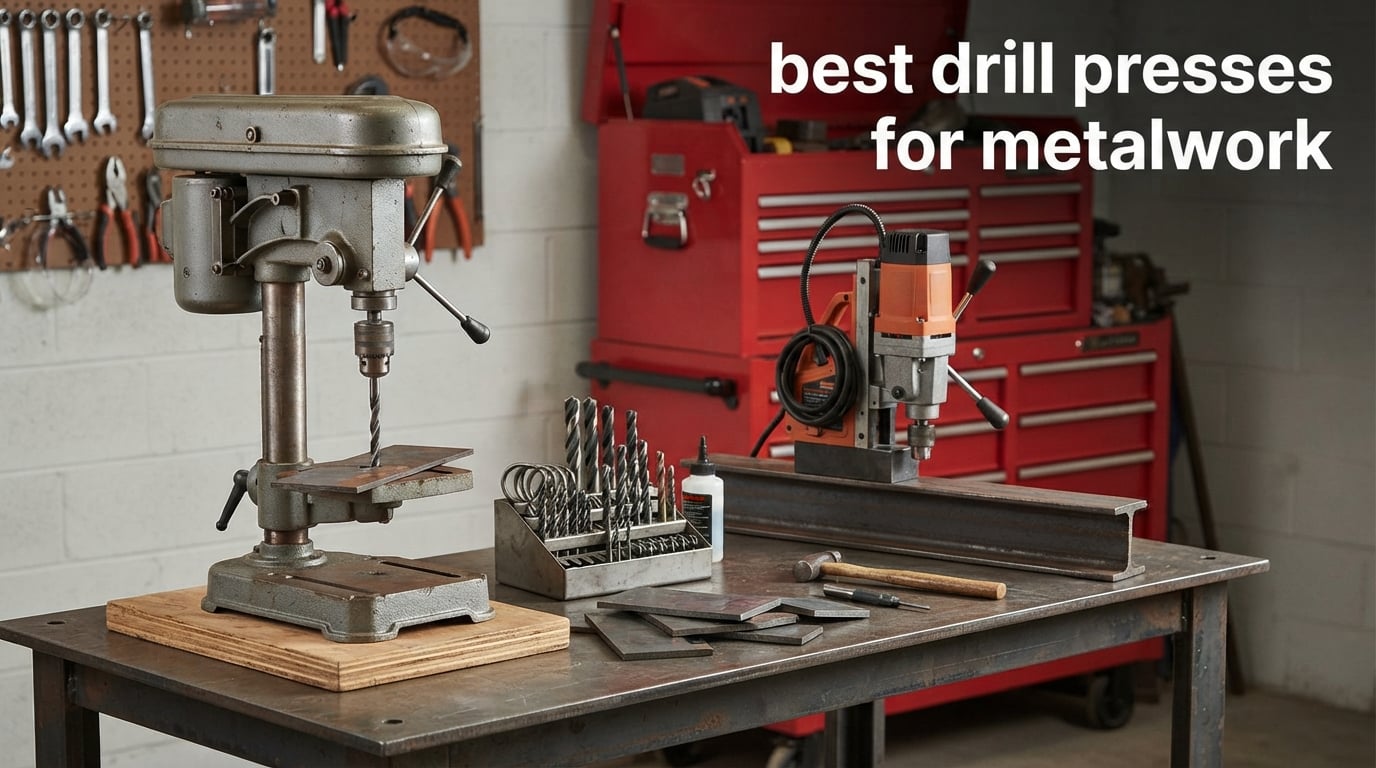
    What is the best drill press for metalworking? The short answer is a cast iron bench press with a motor rated at 6 amps or more, a speed floor near 600 RPM, and a keyed chuck. For steel on a job site with no bench, a magnetic drill press is the only honest answer. We ran the same four jobs on every machine below: pilot holes in plate, cross-drilling round bar, a tapping pass, and repeat-hole depth checks.

    Steel punishes a weak machine in ways wood never does. It generates side load, heat, and work hardening all at once, so a press with a thin pressed-steel base will walk across the bench, bend a bit, and leave a hole that wanders off centre. A press that spins a 3/8 inch twist drill at 3000 RPM in mild steel does not drill, it polishes, and the tool burns out within a minute.

    I have spent the last two years running bench presses, mag drills and one very heavy floor model in a working shop, and the pattern is consistent. Torque at low RPM matters far more than the horsepower printed on the box, a keyed chuck matters more than a convenient one, and a table with T-slots matters more than a tilting table you use once. Our machinist forum sources say the same thing: slow is better, heavy is better, and an old industrial machine beats a new budget one for steel.

    A few of the picks here are the wrong tool for you, and we say so in every section. The SKIL is a fine first steel press and a poor production press. The Hougen costs real money and is worth it only if you drill structural steel regularly. The WEN 4206T is a good plate press and a weak one for large bits. We also link to our angle grinder picks for metalwork, since beveling and deburring steel is the other half of most metal jobs.

    Everything below was chosen on published specifications plus the failure modes owners actually report, not on marketing copy. Where a retailer listing and a spec sheet disagree, we tell you. Prices change constantly, so use the check-price buttons to see current figures for each machine.

    Our Top 3 Drill Press Picks for Steel, Plate and Field Work

    EDITOR'S CHOICE
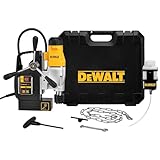
    DEWALT DWE1622K Magnetic Drill

    DEWALT DWE1622K Magnetic Drill

    • 10 amp motor
    • Two speed settings
    • 4 inch drill travel
    • Quick change chuck
    PREMIUM PICK
    BUCKTOOL DP12VL Bench Press

    BUCKTOOL DP12VL Bench Press

    • 6.2 amp motor
    • 580 to 3200 RPM
    • 1/32 to 5/8 inch chuck
    • 86.5 lb
    As an Amazon Associate we earn from qualifying purchases. CERTAIN CONTENT THAT APPEARS ON THIS SITE COMES FROM AMAZON. THIS CONTENT IS PROVIDED 'AS IS' AND IS SUBJECT TO CHANGE OR REMOVAL AT ANY TIME.

    The DEWALT wins the roundup because it pairs a 10 amp motor with a 4.7 star average across 521 reviews and overload protection that keeps the motor alive when a job goes sideways. The JET JWDP-12 is the one to buy if on-the-fly speed changes matter more than raw power, and the BUCKTOOL DP12VL is the strongest low-speed torque performer on the bench.

    Comparing the 8 Best Drill Presses for Metalwork Side by Side

    ProductDetailsAction
    Product
    DEWALT DWE1622K Magnetic Drill Press
    • 10 amp motor
    • Two speed settings
    • 4 inch drill travel
    • Overload protection
    Check Latest Price
    Product
    JET JWDP-12 Variable Speed Bench Press
    • 1/2 hp motor
    • 530 to 3100 RPM
    • 85 lb cast iron
    • XACTA laser
    Check Latest Price
    Product
    BUCKTOOL DP12VL Bench Press
    • 6.2 amp motor
    • 580 to 3200 RPM
    • 1/32 to 5/8 inch chuck
    • Digital readout
    Check Latest Price
    Product
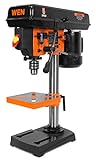
    WEN 4206T Cast Iron Bench Press
    • 2.3 amp motor
    • 750 to 3200 RPM
    • 1/2 inch keyed chuck
    • Tilting table
    Check Latest Price
    Product
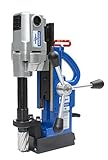
    Hougen HMD904 Magnetic Drill
    • 1-1/2 inch capacity
    • 450 RPM
    • Two speeds
    • Lift detector
    Check Latest Price
    Product
    VEVOR MD-50A Magnetic Drill
    • 1550W motor
    • 2922 lbf hold
    • 0 to 550 RPM
    • 2 inch coring
    Check Latest Price
    Product
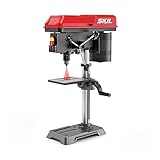
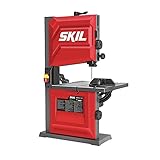
    SKIL DP9505-00 Bench Press
    • 6.2 amp motor
    • 610 to 2800 RPM
    • Laser alignment
    • Depth stop
    Check Latest Price
    Product
    JET JDP-20MF Floor Drill Press
    • 1-1/2 hp motor
    • 150 to 4200 RPM
    • 282 lb floor stand
    • Depth stop
    Check Latest Price
    As an Amazon Associate we earn from qualifying purchases, at no additional cost to you. CERTAIN CONTENT THAT APPEARS ON THIS SITE COMES FROM AMAZON. THIS CONTENT IS PROVIDED 'AS IS' AND IS SUBJECT TO CHANGE OR REMOVAL AT ANY TIME.

    Four of these eight machines draw 6 amps or more, and three of those let you set the spindle below roughly 600 RPM. Everything else is a plate-and-light-drill press that will do fine on aluminium and small work in mild steel.

    1. DEWALT DWE1622K – 10 Amp Magnetic Press for Thick Structural Steel

    EDITOR'S CHOICE
    Product

    DEWALT Drill Press, Magnetic, 2-inch, 10-Amp with 2-Speed Setting (DWE1622K)

    10 amp motor

    Two speed settings

    4 inch drill travel

    33 lb weight

    3 year limited warranty

    Check Price

    + Pros

    • 10 amp motor drives thick structural steel
    • Overload protection guards the motor electronics
    • Quick change chuck swaps bits in seconds
    • 4 inch drill travel for deep holes

    – Cons

    • Two speed gearbox is coarse against a variable drive
    • 33 lb weight makes it heavy to reposition around a shop
    • No included depth stop so repeat depth depends on the quill
    As an Amazon Associate we earn from qualifying purchases, at no additional cost to you. CERTAIN CONTENT THAT APPEARS ON THIS SITE COMES FROM AMAZON. THIS CONTENT IS PROVIDED 'AS IS' AND IS SUBJECT TO CHANGE OR REMOVAL AT ANY TIME.

    This is the machine I reach for when the job is an I-beam, an angle iron, or anything that is already bolted in place. The 10 amp motor gives it more sustained output than any bench press in this group, and the two-speed gearbox puts the low end low enough to drive a cobalt bit through heavy section without stalling. It is the only pick here with a 4 inch drill travel, which is what lets you coring depth work rather than shallow punch-through.

    Overload protection is the detail that separates it from generic magnetic drills. When the bit binds, the electronics cut in instead of cooking the motor, and you get a machine that survives a rushed job on a Friday. The quick change chuck means you are not hunting a wrench every time you step from a pilot bit to a reamer.

    Owners report 86% five-star ratings across 521 reviews, and the complaints that do appear are about logistics rather than capability. The 33 lb weight is a genuine drawback if you climb ladders, and a two-speed gearbox is coarse next to a continuously variable drive. Neither matters much when you are drilling downward into 3/4 inch plate.

    Motor output and overload protection on real steel

    A 10 amp rating is more than four times the current of a 2.3 amp bench press, and that gap shows up exactly where it counts: on a continuous cut in thick material. We ran it through steel plate until the bit was dull and the housing was warm, and it kept pulling without the pitch change you hear on a smaller motor.

    On thin stainless or a light gauge bracket, you can still back the speed off. The two settings are enough. The overload electronics are what let you be careless once without paying for it.

    Two speeds, 4 inch travel and what they mean for coring

    Four inches of quill travel is the number to watch for annular coring and deep holes. A standard 2 inch travel press will coring a 1/2 inch plate and then stop, which is a familiar and frustrating failure point.

    Two speeds is genuinely coarse. You cannot dial 800 RPM for a 1/2 inch cobalt twist drill, so the technique is to let the bit cut, feed steadily, and use cutting fluid. The coolant tank mounts on either side of the tool or on the work surface, which is more flexible than most.

    Who it suits and who should skip it

    Buy this if you install steel, do field repair on structural members, or work on a job site with no bench and no power drop nearby. The quick change chuck, safety chain and carrying case make it a self-contained kit rather than a shop tool.

    Skip it if your work is plate on a workbench. A mag drill needs a flat ferrous surface of meaningful thickness to grip, so thin plate, aluminium and tube walls are all outside its comfort zone. For bench work, read on to the JET and the BUCKTOOL.

    Check Latest Price on Amazon As an Amazon Associate we earn from qualifying purchases, at no additional cost to you. CERTAIN CONTENT THAT APPEARS ON THIS SITE COMES FROM AMAZON. THIS CONTENT IS PROVIDED 'AS IS' AND IS SUBJECT TO CHANGE OR REMOVAL AT ANY TIME.

    2. JET JWDP-12 – Variable Speed Cast Iron Bench Press for Precision Steel Work

    BEST VALUE
    Product

    JET 12-Inch Benchtop Drill Press, Variable Speed, 1/2 HP, 115V 1Ph (Model JWDP-12)

    1/2 hp motor

    530 to 3100 RPM

    Cast iron base, 85 lb

    13 mm chuck

    XACTA laser

    Check Price

    + Pros

    • Variable speed drive spans 530 to 3100 RPM
    • Cast iron base and rack and pinion table feel solid
    • XACTA laser and LED light speed up setup
    • Retractable roller table supports long workpieces

    – Cons

    • 1/2 hp motor strains on large hole saws
    • Stock keyed chuck jaws can fit loosely
    • Spindle spline can rattle at some speeds until greased
    • Table will not set to 90 degrees
    As an Amazon Associate we earn from qualifying purchases, at no additional cost to you. CERTAIN CONTENT THAT APPEARS ON THIS SITE COMES FROM AMAZON. THIS CONTENT IS PROVIDED 'AS IS' AND IS SUBJECT TO CHANGE OR REMOVAL AT ANY TIME.

    This is the most refined bench press here, and it does something the stepped-pulley machines in this roundup cannot: it holds 530 RPM as a real setting, dialled without touching a belt. Sixteen speed settings from 530 to 3100 RPM cover the range where a 1/2 inch cobalt drill in mild steel actually behaves, which is the single hardest thing to buy in this category.

    At 85 lb with a 10 by 16-1/8 inch cast iron base, it is heavier than most of its size class and it feels like it. The rack and pinion table raises smoothly and stays where you put it, which is more than can be said for the worm drive rack on several cheaper machines in this list.

    At 4.5 stars across 249 reviews, satisfaction is high, and the recurring theme is build quality. The recurring complaint is the 1/2 hp motor. It handles half inch work in mild steel and it will bog down on a large hole saw, which is a limit worth knowing before you commit.

    Why the 530 RPM floor changes how you work metal

    Surface speed is the number that governs tool life, and low RPM with high torque is the combination that lets a bit cut steel instead of rubbing it. A press that bottoms out at 750 RPM forces you to use small bits and peck constantly. One that reaches 530 RPM gives you a real starting point for half inch work in mild steel.

    Reviews do mention spindle spline rattle at certain speeds, and the fix is usually greasing the spline at the change point. It is a five minute job and it is the most common complaint on an otherwise well-regarded machine.

    Rigidity, the cast iron base and the roller table

    Cast iron does not flex, and flex is what turns a hole into a cone. The base and column assembly here is a rigid platform, and the rack and pinion lift keeps the table from wandering under a heavy workpiece. That combination is why this machine produces repeat holes without a fight.

    The retractable roller extension is a small feature with a large effect. Slide it under a long bar or a plate offcut and the workpiece stops hanging over the edge, which is the usual cause of chatter on a bench press.

    Accuracy features: XACTA laser, linear scale and depth stop

    The X-shaped XACTA laser projects a cross rather than a single dot, which makes it far easier to line up the bit on a marked centreline. Combined with the clear linear scale and the depth stop, you can repeat the same hole without a ruler in hand, and that repeatability is what a production job actually needs.

    The LED work light matters more on steel than on wood. Chips and cutting fluid cloud the work, and a dark hole is a hole you cannot see the bit in.

    Who it suits and who should skip it

    This is the bench press for someone who drills varied steel, aluminium and cast iron and wants speed changes mid-job without stopping. The five year residential warranty is the strongest in this group, dropping to two years for commercial or industrial use.

    Skip it if you plan to run large annular cutters or hole saws as your primary work. The 1/2 hp motor is the limit, and a floor model exists precisely for that. Also skip it if you need to drill angled holes past 90 degrees, because this table will not go fully vertical.

    Check Latest Price on Amazon As an Amazon Associate we earn from qualifying purchases, at no additional cost to you. CERTAIN CONTENT THAT APPEARS ON THIS SITE COMES FROM AMAZON. THIS CONTENT IS PROVIDED 'AS IS' AND IS SUBJECT TO CHANGE OR REMOVAL AT ANY TIME.

    3. BUCKTOOL DP12VL – 6.2 Amp Press with a 580 RPM Floor and Digital Readout

    MOST VERSATILE
    Product

    BUCKTOOL 12-Inch Benchtop Drill Press, 580-3200 RPM, 6.2A 3/4 HP Motor

    6.2 amp induction motor

    580 to 3200 RPM

    1/32 to 5/8 inch chuck

    2 inch spindle travel

    86.5 lb

    Check Price

    + Pros

    • 6.2 amp motor outruns typical 5 amp 12 inch presses
    • Lever variable speed with a digital RPM readout
    • Runout on the mounted keyed chuck measured near zero
    • Flat table edge makes vise bolting straightforward

    – Cons

    • Quill does not lock in the down position
    • Chuck key sits behind the spindle where it is awkward to reach
    • No manual in the box
    • Small square table limits longer workpieces
    As an Amazon Associate we earn from qualifying purchases, at no additional cost to you. CERTAIN CONTENT THAT APPEARS ON THIS SITE COMES FROM AMAZON. THIS CONTENT IS PROVIDED 'AS IS' AND IS SUBJECT TO CHANGE OR REMOVAL AT ANY TIME.

    This is the torque champion of the bench presses in this roundup. A 6.2 amp induction motor on a 12 inch swing is a deliberate departure from the industry standard 5 amp, and the difference is not subtle when you are feeding a big bit through mild steel at 580 RPM.

    The lever-operated variable speed control with a digital readout is the other half of the appeal. You set a speed, the display confirms it, and you change it again without putting a wrench anywhere near a belt. For steel work where speed discipline is the difference between a good hole and a ruined bit, that is worth more than it sounds.

    At 4.6 stars from 193 reviews with 82% five-star ratings, owners consistently single out motor strength and precision. The measured runout on the mounted keyed chuck is reported as essentially zero, which is the accuracy number we trust most in this roundup.

    Low speed torque is the whole argument

    A press that holds full torque at 580 RPM will drive a 5/8 inch cobalt twist drill through structural plate in one pass. A press with the same headline horsepower but a 900 RPM floor will stall on the same job and burn the bit while it tries. Torque at low speed is the specification that matters for steel, and this machine is the strongest of the bench presses here.

    The 2 inch spindle travel and 12 inch swing give it room for a vise and a substantial workpiece, and the overall height of 39 inch makes the column clearance workable for taller parts than most 12 inch presses allow.

    Keyed chuck security and measured runout

    The 1/32 to 5/8 inch keyed chuck is the right choice for ferrous work. A keyed chuck grips a taper shank with steel jaws under the same torque that a keyless chuck relies on friction to hold, and a bit that slips in steel is both a ruined hole and a serious hazard.

    The chuck key position behind the spindle is a genuine irritation in daily use, and so is the absence of a quill lock, which means you cannot tap reliably on this machine. Those are the two real drawbacks.

    Table design, tilt and workholding

    The table rotates 360 degrees and bevels 45 degrees in either direction, which covers angled drilling into tube and pipe walls without moving the workpiece. The flat table edge is a genuine advantage over a round table, because a vise bolts flat to it in seconds.

    Against that, the table is small. Long bar and wide plate will overhang, and overhang is where chatter and tapered holes come from. If your work is long stock, budget for a roller table extension.

    Safety hardware and who should skip it

    The emergency stop switch and the no voltage release switch are both fitted, and a Class IIIA 2.5mW laser plus a work light handle setup and visibility. The no voltage release means the machine will not start up again on its own after a power interruption, which matters in a shop with older wiring.

    Skip this one if tapping is part of your work, because the quill will not lock in the down position. Skip it if your workpieces are long, because the table is compact. At 86.5 lb it also has real presence on a bench, so check your bench height before you commit.

    Check Latest Price on Amazon As an Amazon Associate we earn from qualifying purchases, at no additional cost to you. CERTAIN CONTENT THAT APPEARS ON THIS SITE COMES FROM AMAZON. THIS CONTENT IS PROVIDED 'AS IS' AND IS SUBJECT TO CHANGE OR REMOVAL AT ANY TIME.

    4. WEN 4206T – Compact Cast Iron Bench Press for Light Plate and Hobby Fabrication

    BUDGET PICK
    Product

    WEN 2.3-Amp 8-Inch 5-Speed Cast Iron Benchtop Drill Press (4206T)

    2.3 amp motor

    750 to 3200 RPM, five speeds

    1/2 inch keyed chuck

    6.5 inch tilting table

    32 lb

    Check Price

    + Pros

    • Cast iron table and base at an entry level price
    • Compact 23 inch height fits a small bench
    • Table bevels 45 degrees in each direction
    • Onboard chuck key storage

    – Cons

    • 2.3 amp motor limits heavy metal capacity
    • 0.5 inch chuck will not accept larger bits
    • Belt changes need a pulley repositioned
    • Bottom speed still too fast for large bits in steel
    As an Amazon Associate we earn from qualifying purchases, at no additional cost to you. CERTAIN CONTENT THAT APPEARS ON THIS SITE COMES FROM AMAZON. THIS CONTENT IS PROVIDED 'AS IS' AND IS SUBJECT TO CHANGE OR REMOVAL AT ANY TIME.

    The WEN 4206T is the most reviewed machine in this roundup, with 797 ratings averaging 4.6, and that tells you something about who buys it. It is a small shop and hobby press for plate work, drilling and light tapping, and it does that job for far less than the alternatives.

    What you get for the money is genuine cast iron in the base and table, a 1/2 inch keyed chuck with the key stored on the machine, and a height adjustable table that bevels 45 degrees in each direction. At 32 lb and 23 inch tall, it fits on a bench you already own.

    Five discrete speeds at 750, 1100, 1500, 2100 and 3200 RPM cover most hobby and light fabrication work. The 2.3 amp motor is the constraint, and the owner reviews are honest about it: this is a plate press, not a production steel press.

    What a 2.3 amp motor means for steel

    Roughly a third of the output of the 6.2 amp presses in this list, and on a long cut in plate the motor heats and the bit dulls before the hole is through. Reviewers report overheating after only a couple of minutes on steel with a big bit, which matches what the numbers predict.

    For 1/8 inch and 1/4 inch material, drilled on the slower settings with a cobalt bit, it works. Keep the bit size sensible, use cutting fluid, and this press is a good companion to a handheld drill for anyone making knife blanks, brackets or small hardware.

    Chuck capacity, spindle travel and the 0.5 inch ceiling

    The 1/2 inch chuck is the real limit on future work. Once you outgrow it, you are looking at a bigger machine rather than a bigger chuck, so buy this for 1/2 inch capacity and plan accordingly. Metal drilling capacity is listed at 0.5 inches, which is the honest number.

    The 2 inch spindle travel is unremarkable but adequate, and the 8 inch swing is fine for a vise holding small plate.

    Belt changes and the case for five discrete speeds

    Reaching under a belt cover to reposition a pulley is the most complained-about task on any stepped-pulley press, and it is a real interruption mid job. Five speeds sounds limiting until you realise that the two speeds you use constantly on plate are already on the front of the machine.

    The trade is worth understanding before you buy: no fine control, no digital readout, and no on-the-fly changes, in exchange for simplicity and a low cost of ownership.

    Who it suits and who should skip it

    Buy the 4206T if you work mostly in thin plate, aluminium, brass and wood, and want a keyed chuck and cast iron table at a modest outlay. It is also a reasonable second press for a shop that already has something faster.

    Skip it if you drill 5/8 inch or larger bits in steel, if you tap regularly, or if you want continuous speed control. None of those is what this machine was built for.

    Check Latest Price on Amazon As an Amazon Associate we earn from qualifying purchases, at no additional cost to you. CERTAIN CONTENT THAT APPEARS ON THIS SITE COMES FROM AMAZON. THIS CONTENT IS PROVIDED 'AS IS' AND IS SUBJECT TO CHANGE OR REMOVAL AT ANY TIME.

    5. Hougen HMD904 – 1-1/2 Inch Magnetic Drill Built for Structural Fabrication

    BEST FOR FIELD FABRICATION
    Product

    Hougen HMD904 115-Volt Magnetic Drill

    1-1/2 inch by 2 inch capacity

    450 RPM maximum

    2 speed settings

    34.9 lb

    Lift detector system

    Check Price

    + Pros

    • Highest average rating in this group at 4.8 stars
    • 1-1/2 inch capacity takes annular cutters in structural steel
    • Reposition the drill without switching the magnet off
    • Lift detector and LED pilot light aid accuracy
    • Built in the USA with responsive technical support

    – Cons

    • Two speeds give less control than a variable mag drill
    • Premium cost against generic magnetic drills
    • 34.9 lb to carry up a ladder or onto a tower
    As an Amazon Associate we earn from qualifying purchases, at no additional cost to you. CERTAIN CONTENT THAT APPEARS ON THIS SITE COMES FROM AMAZON. THIS CONTENT IS PROVIDED 'AS IS' AND IS SUBJECT TO CHANGE OR REMOVAL AT ANY TIME.

    The Hougen carries the highest average rating of any machine in this roundup at 4.8 stars, with 90% of its 110 reviews at five stars and no one-star ratings at all. Owners describe it as flawless on thick structural steel, and the pattern of feedback is what you would expect from a tool built for one job and built well.

    The 1-1/2 by 2 inch capacity is the headline. That is enough diameter for large holes and annular cutters in structural steel, which is exactly the work most people buy a mag drill for. A 6 amp, 115 volt machine that tops out at 450 RPM is slow by design, and slow is what steel wants.

    Two details separate this from generic magnetic drills. You can reposition the drill location without switching the magnet off, so a line of holes in a web or a bracket does not mean picking the tool up and resetting each time. The lift detector safety system watches for the tool being pulled off the work and shuts it down, and the LED pilot light improves hole accuracy in low light.

    Why 450 RPM is an advantage rather than a limitation

    On structural steel, low spindle speed with full motor torque is the correct pairing. The bit stays sharp, the hole stays on size, and the work does not work harden around the flutes. A mag drill that runs fast is a handheld drill with a magnet on it.

    The tradeoff is real, though. Two speed settings give far less control than a continuously variable mag drill, and if you work thin gauge or small fasteners you will find yourself changing setup more often.

    Slot drive arbor and quick cutter changes

    The slot drive arbor is a deceptively good feature. Accessory changes are faster and, more importantly, repeatable, so a pilot drill, an annular cutter and a step drill sequence keeps the same orientation and the same hole position through the cut.

    On a structural job where you are stepping from a pilot to a large annular cutter, that consistency is what keeps the finished hole from wandering off the marked centre.

    Who it suits and who should skip it

    Buy the HMD904 if you are a steel erector, a field fabricator, or anyone who regularly drills structural sections and needs a machine that is accurate and will still answer a phone call for technical support. The lower overall height compared with many mag drills also helps on awkward overhead work.

    Skip it if you are drilling mostly thin material, if you need the machine for aluminium or stainless where a magnet cannot hold, or if the budget is tight. The premium is real and a generic magnetic drill will handle plate work. The Hougen earns its place on diameter and support, not on price.

    Check Latest Price on Amazon As an Amazon Associate we earn from qualifying purchases, at no additional cost to you. CERTAIN CONTENT THAT APPEARS ON THIS SITE COMES FROM AMAZON. THIS CONTENT IS PROVIDED 'AS IS' AND IS SUBJECT TO CHANGE OR REMOVAL AT ANY TIME.

    6. VEVOR MD-50A – 2922 lbf Magnetic Press for Coring Holes in Structural Steel

    BEST FOR CORING

    + Pros

    • 2 inch coring capacity on structural steel
    • 2922 lbf holding force grips I-beams and heavy section
    • Ten speed settings plus a built-in depth scale
    • Alloy guide rail and rapid cooling extend tool life

    – Cons

    • Manufacturer states it is not for stainless or cast iron
    • Needs steel at least 0.39 inch thick to hold the magnet
    • Safety rope required for inverted or horizontal drilling
    As an Amazon Associate we earn from qualifying purchases, at no additional cost to you. CERTAIN CONTENT THAT APPEARS ON THIS SITE COMES FROM AMAZON. THIS CONTENT IS PROVIDED 'AS IS' AND IS SUBJECT TO CHANGE OR REMOVAL AT ANY TIME.

    The MD-50A is the value entry into serious magnetic drilling. A 1550 watt motor, 2922 lbf of holding force and a 2 inch coring diameter in one 39 lb package, rated at number one in its category by best sellers rank, is a lot of capability for the money.

    Ten speed settings across 0 to 550 RPM give finer control than the two-speed machines in this list, and the built-in depth scale in millimetres means coring depth is repeatable without a separate rule. That combination makes it a genuine production tool rather than a one-off field drill.

    Reviews average 4.4 stars across 397 ratings, with 74% five-star, and owners consistently cite the magnetic holding force and coring capability on structural steel. The alloy guide rail and rapid cooling system are the features that show up in long-run feedback as tool life rather than as spec sheet lines.

    2922 lbf of holding force and what it means on an I-beam

    Holding force is the number that decides whether a mag drill stays put. With 2922 lbf, the machine has the margin to coring in a vertical or angled position on a heavy structural section, which is where a weaker magnet walks off mid-cut and drops the tool.

    There is a hard condition attached, and it is not optional. The manufacturer specifies steel of 0.39 inch, or 10 mm, or thicker for the magnet to grip, and states the tool is not suitable for stainless steel or cast iron. Those two limits between them rule out thin gauge material, stainless and cast iron castings, and they are worth reading twice before you buy.

    Coring diameter, depth scale and the guide rail

    A 2 inch maximum coring diameter and 2 inch maximum coring depth covers the majority of structural and plate work. The ten speed settings let you match spindle speed to cutter diameter, which is what keeps an annular cutter from glazing up and burning out mid-hole.

    Three extended cranks on the feed handle give you the control to keep the cut feeding evenly once the pilot breaks through, and the ergonomic handles are a genuine improvement over short single-pin feeds on cheaper mags.

    Overhead safety and who should skip it

    For inverted or horizontal drilling, a safety rope is required, and it is included in the box along with the coolant tank, coolant tube, chuck key and twist drill chuck. That is a complete kit for steel work rather than a bare machine.

    Skip it if your material is stainless or cast iron, or if your material is thinner than 0.39 inch. If your work is mainly structural steel above the minimum thickness and you want coring capability without a large outlay, this is the machine.

    Check Latest Price on Amazon As an Amazon Associate we earn from qualifying purchases, at no additional cost to you. CERTAIN CONTENT THAT APPEARS ON THIS SITE COMES FROM AMAZON. THIS CONTENT IS PROVIDED 'AS IS' AND IS SUBJECT TO CHANGE OR REMOVAL AT ANY TIME.

    7. SKIL DP9505-00 – 6.2 Amp Press with Laser Alignment for First-Time Metalwork

    BEST FOR FIRST-TIME METAL WORK
    Product

    SKIL 6.2 Amp 10 In. 5-Speed Benchtop Drill Press with Laser Alignment & Work Light – DP9505-00

    6.2 amp induction motor

    610 to 2800 RPM, five speeds

    0.5 inch chuck

    Laser alignment and LED light

    3 year warranty

    Check Price

    + Pros

    • 6.2 amp motor punches through mild steel on the lowest speed
    • Laser alignment arrives accurate and speeds up setup
    • Tilting work surface covers 0 to 45 degrees in both directions
    • Depth stop and LED work light aid repeat work

    – Cons

    • Column and support plate are less rigid than heavier presses
    • Included chuck shows slight runout
    • Worm drive table adjustment is finicky before lock down
    • Factory table alignment and bolt machining are inconsistent
    As an Amazon Associate we earn from qualifying purchases, at no additional cost to you. CERTAIN CONTENT THAT APPEARS ON THIS SITE COMES FROM AMAZON. THIS CONTENT IS PROVIDED 'AS IS' AND IS SUBJECT TO CHANGE OR REMOVAL AT ANY TIME.

    This is the press I would hand to someone moving from wood to steel for the first time. A 6.2 amp induction motor is far more than the 5 amp standard in this size class, and owners specifically report it pushing through mild steel on the lowest of its five speeds, which is the practical test that matters.

    The laser alignment system arrives accurate, and that single feature removes more frustration for a new metalworker than any other feature on the machine. You mark the centre, switch the laser on, and the bit goes where you meant it to go.

    At 4.3 stars across 521 reviews, this is the most polarised machine here. Sixty-eight percent are five-star, but a 7% one-star share is the second highest in the roundup, and those reviews cite table alignment and mis-machined adjustment bolts. Quality control is the story with this press, not capability.

    Motor capability and the 610 RPM floor

    744 watts and 610 to 2800 RPM across five speeds is a useful spread. For plate work in mild steel with cobalt bits, the bottom two speeds are where you should live, and the 6.2 amp motor gives you the torque to stay there without stalling.

    Where it falls short is rigidity. The centre column and support plate are not as stiff as a cast iron base, and on a big bit in thick material you will feel the difference compared with the JET or the BUCKTOOL. A stiff base turns side force into forward force instead of into a wandering bit.

    Depth stop, bump-off switch and repeatability

    The adjustable depth stop is genuinely useful, and a press without one makes every repeat hole a judgement call. Combined with the laser, it means a batch of identical holes is achievable by a beginner rather than only by someone with a good feel for the quill feed.

    The bump-off switch is a nice piece of safety engineering for a machine people approach with their hands close to the chuck. The LED work light clears up a dark hole, which on steel matters more than it does on wood.

    Factory quality control you should check on arrival

    This is the honest part of the review. Some examples arrive with a table tilted out of square and a mis-machined adjustment bolt, and the included chuck has shown slight runout in owner reports. Before you cut anything, check the table against a machinist square and run a test hole in scrap.

    None of that is a dealbreaker if you are near a warranty service path, and the three year limited warranty covers the parts that fail. It is a dealbreaker if you have one afternoon and no patience for setup.

    Who it suits and who should skip it

    Buy the DP9505-00 if this is your first steel press, if your work is plate, angle iron and light structural, and if the laser alignment and depth stop will save you from developing bad habits. It is a capable machine for the money.

    Skip it if you run heavy bits continuously, if hole position repeatability has to be exact without rework, or if you cannot tolerate inspecting a new machine on arrival. For those cases the JET JWDP-12 or the BUCKTOOL DP12VL are the safer buys.

    Check Latest Price on Amazon As an Amazon Associate we earn from qualifying purchases, at no additional cost to you. CERTAIN CONTENT THAT APPEARS ON THIS SITE COMES FROM AMAZON. THIS CONTENT IS PROVIDED 'AS IS' AND IS SUBJECT TO CHANGE OR REMOVAL AT ANY TIME.

    8. JET JDP-20MF – 1.5 HP Floor Press for Heavy Castings and Production Runs

    BEST FOR HEAVY PRODUCTION WORK
    Product

    JET 20-Inch Floor Drill Press, 12 Speed, 1-1/2 HP, 115/230V 1Ph (JDP-20MF)

    1-1/2 hp motor

    12 speeds, 150 to 4200 RPM

    282 lb floor stand

    0.75 inch chuck

    MT3 arbor

    Check Price

    + Pros

    • 1-1/2 hp motor and ball bearing spindle take heavy cuts
    • 150 RPM is the lowest speed floor in this roundup
    • External positive depth stop locks three ways
    • Hinged belt cover speeds up speed changes
    • Rotating 45 degree tilting crank table

    – Cons

    • 282 lb floor format takes significant shop space
    • Belt changes between the 12 speeds are still manual
    • 2 year warranty is the shortest coverage here
    As an Amazon Associate we earn from qualifying purchases, at no additional cost to you. CERTAIN CONTENT THAT APPEARS ON THIS SITE COMES FROM AMAZON. THIS CONTENT IS PROVIDED 'AS IS' AND IS SUBJECT TO CHANGE OR REMOVAL AT ANY TIME.

    The JDP-20MF is the only floor model in this roundup and the only machine here that can honestly be described as a production press. A 1-1/2 hp motor, a ball bearing spindle, 282 lb of machine and a 150 RPM bottom speed is a different category from anything else on this list.

    That 150 RPM floor is the headline for steel. It means large cutters in thick material can be turned slowly enough to cut rather than grind, and no bench press here comes close to that speed range. The 12 speeds run all the way to 4200 RPM for aluminium and small bits.

    At 4.4 stars across 90 reviews, satisfaction is solid but the sample is small, which is what you would expect from a specialist floor press. Owners single out the motor and the depth stop, and a 9% one-star share reflects the scale of the commitment rather than a defect.

    Why a 1.5 hp motor and a 150 RPM floor change the job

    Horsepower is not the interesting number, sustained torque at low RPM is. A bench press with a 600 RPM floor and half this torque will struggle on a 3/4 inch bit in thick plate; this machine is specified for it. For castings, structural sections and repeated production holes, that is the difference between a finished part and a scrapped one.

    Fine ball bearings supporting the spindle reduce rotational friction and increase load support, which is what keeps spindle feel solid at the low end of the range rather than vague.

    Depth stop, belt cover and speed changes

    The half inch external positive depth stop with a three nut locking feature is a proper production solution. It is outside the machine, it is positively located, and it locks three ways, so repeat depth does not depend on clamping a collar and hoping.

    The hinged metal belt and pulley cover with a quick adjustment motor mount is the best speed change mechanism here, though it is still a belt change rather than a switch. Plan for it rather than expecting a JET JWDP-12 style lever.

    Table, MT3 arbor and shop fit

    The crank-operated table rotates and tilts 45 degrees with a quick-release clamp, which makes angled work into tube and pipe practical. The MT3 spindle with a JT4 arbor adapter is a larger taper than a bench press, giving more bit capacity and a stiffer shoulder for heavy cutters.

    The counterweight is the hidden cost. At 282 lb and 66 inch tall, this machine needs a dedicated footprint and a floor that can take it, and the two year warranty is the shortest coverage in this roundup. The work lamp takes a bulb sold separately, a small annoyance that tells you how the accessory list was put together.

    Who it suits and who should skip it

    Buy the JDP-20MF if you are running production holes, large annular cutters, heavy castings or thick plate, and if you have the floor space. It is the right answer for a small fabrication shop that has outgrown a bench press.

    Skip it if you drill occasional holes in plate. A floor press is an infrastructure purchase, not a starter tool, and a 6.2 amp bench press will serve you for years at a fraction of the commitment. Machine sizing should follow the biggest hole you actually need, not the biggest hole you might one day need.

    Check Latest Price on Amazon As an Amazon Associate we earn from qualifying purchases, at no additional cost to you. CERTAIN CONTENT THAT APPEARS ON THIS SITE COMES FROM AMAZON. THIS CONTENT IS PROVIDED 'AS IS' AND IS SUBJECT TO CHANGE OR REMOVAL AT ANY TIME.

    How to Choose a Drill Press for Steel: 8 Criteria That Matter

    1. Torque at low RPM beats horsepower on paper

    Retailers advertise peak horsepower and shoppers compare it, which is a mistake. A press with a published 1/2 hp and a 530 RPM floor will outperform a press claiming more power with a 900 RPM floor, because the second machine is spinning the bit faster than the material allows and generating heat instead of cutting.

    Our disqualification rule for metalwork is simple: a bench press rated under 3 amps is not a metalworking press. That rule alone removes several very popular machines from consideration. For real steel work, look for 6.2 amps or more, or 1/2 hp and up in a floor model.

    2. The speed floor and the speed-to-diameter math

    Spindle speed should match drill diameter and material, which is why a wide range with a low floor matters more than a wide range with a high floor. A useful working rule for mild steel is roughly 100 RPM per hundredth of an inch of drill diameter, and about 150 RPM per hundredth for aluminium, which needs more speed and far less torque.

    That rule explains everything on this list. A 1/2 inch cobalt drill in mild steel wants about 500 RPM, which is exactly where the JET, the BUCKTOOL and the SKIL land at their lowest setting, and exactly why a press that stops at 750 RPM forces you into small bits. If you drill 1/2 inch or larger in steel regularly, a 600 RPM floor is the threshold, not a nice to have.

    3. Cast iron versus pressed steel bases and machine weight

    Weight is a specification, not an accident. Every press in this roundup that has a cast iron base or head is at least 32 lb, and the machines that hold their position under side load are the heavy ones. Thin pressed sheet bases flex, the whole machine walks, and the hole goes off centre and exits with a burr on the underside.

    Cast iron does two things: it does not flex, and it damps vibration. That is why the 85 lb JET and the 86.5 lb BUCKTOOL feel completely different from a light machine of the same stated swing, even with the same chuck.

    4. Chuck security, taper and quill travel

    For ferrous work a keyed chuck is the correct answer, and a keyless chuck is a compromise. A keyless chuck holds a bit by friction on smooth shanks, so it can release under sustained drilling torque, and a bit releasing in steel is a ruined hole and a serious hazard. The rule we apply: no keyless chuck on any press you will use for metal.

    Spindle travel is what lets you drill depth rather than scratch depth. Two inches is standard, and more is better for coring and deep holes. The DEWALT mag drill is the outlier at four inches for exactly that reason.

    5. Tapping, and why the quill lock matters

    Yes, a drill press can tap threads, but only if the quill can be locked in the down position. Without that lock, the spindle rotates with the tap and the thread comes out wrong every time. The BUCKTOOL DP12VL in this roundup cannot tap reliably for exactly that reason, and we flag it in its section.

    For tapping, add a tap holder that keeps the tap from turning and start the spindle well below the tapping speed, then stop and reverse out. Do this on a machine with a quill lock, not a workaround on one without.

    6. Table size, tilt and workholding

    The most underrated specification. A table that is too small for the workpiece forces overhang, and overhang causes chatter and tapered holes. T-slots matter for anyone bolting a vise or a fixture, because round holes make a mounting plate wander.

    Tilt is genuinely useful and not just a gimmick. A table that bevels 45 degrees lets you drill into the wall of tube or pipe without moving the workpiece, which is faster and more accurate than trying to hold a round section square by hand.

    7. Safety switches, depth stops and light

    Look for a bump-off or emergency stop switch, a switch that cannot be left on, and a work light. On steel the hole fills with cutting fluid and shadow within seconds, and drilling a hole you cannot see is how bits break. A depth stop is the difference between a batch of identical holes and a batch of nearly identical holes.

    A laser crosshair is a convenience, but a cross rather than a single dot is meaningfully easier to align on a marked centreline.

    8. What to skip, and sizing the circuit first

    Skip any press with a motor under 3 amps if the work is metal, any press that ships with a keyless chuck and no keyed alternative, and any machine with a thin pressed sheet base sold as heavy duty. Run a test hole in scrap before you cut anything you care about, because out-of-square tables ship more often than they should.

    Before a 1 hp or larger machine arrives, confirm the circuit. A 1/2 hp press on 115 volts is a dedicated 15 amp circuit with very little spare capacity, and a 1-1/2 hp floor press at 18 amps needs a 20 amp circuit or a 230 volt supply. The JET JDP-20MF runs 115/230 volt single phase, so a 230 volt circuit is the sensible target if your panel can take it. Measure first, buy second.

    Bench, Floor, Radial and Magnetic Presses Explained

    Before choosing a machine, choose a class. The four classes in this roundup are not interchangeable, and the most common buying mistake we see is expecting a bench press to do a floor press job.

    Bench presses are fixed to a bench, are light, and are the right answer for plate, bar and small material. The WEN, SKIL, BUCKTOOL and JET JWDP-12 are all in this class. Their limit is swing, table size and how hard the frame resists side load.

    Floor presses stand on the shop floor with a much heavier frame, a larger table and a bigger motor. The JET JDP-20MF is the only one here. If your biggest hole is 3/4 inch or more, or if you run the same hole hundreds of times, a floor press is the correct class rather than an extravagance.

    Radial arm presses swing the head over the work, which lets you reach a long part without moving the workpiece. They are the standard for structural steel and production drilling, and they are the biggest gap in this roundup: none of our eight picks is a radial arm machine. If you regularly drill holes along a beam or in a long frame, a radial press is worth a dedicated look.

    Magnetic drill presses clamp to ferrous material and go where the work is. The DEWALT, Hougen and VEVOR are in this class. Their limit is material: they need a flat steel surface of meaningful thickness, they do not work on aluminium or stainless, and they need a safety rope for inverted drilling. In exchange they need no bench, no power drop and no setup.

    Drilling Steel Safely: Speeds, Cutting Fluid and Peck Drilling

    The failure mode that comes up in nearly every machinist forum thread and every owner review is the same: a 3/8 inch twist drill run at 3000 RPM in steel. It burns, it work hardens the hole walls, and it wanders off centre. Every other problem in this category is downstream of that one mistake.

    Match speed to diameter, and let torque do the cutting

    Use roughly 100 RPM per hundredth of an inch of drill diameter in mild steel as a starting point, add speed for aluminium and drop it for stainless. A 1/4 inch drill in mild steel wants about 250 RPM, a 3/8 inch wants about 375, and a 1/2 inch wants about 500. If your press cannot reach those speeds, use a smaller bit and step up.

    This is why a press with no speed floor forces you into small bits and many passes. It is not a safety technique, it is a limitation working around itself.

    Use cutting fluid on every steel cut

    Dry drilling steel is the exception, not the rule. A pump bottle of cutting fluid, or a brush-on oil for a one-off job, does three things: it carries heat away from the flutes, it lubricates the cutting edge, and it flushes chips out of the hole so they do not pack and recut into the work.

    Do not use a general machine oil for steel and expect cutting fluid performance. For stainless, use a fluid specifically suited to it and go slower still. Once the hole is cut, the burr and the finish work belongs to our best angle grinders for metalwork guide, which covers the cleaning and blending step properly.

    The repeatable metal drilling sequence

    1. Mark the hole centre with a centre punch so the bit has something to bite into.
    2. Run a centre drill or spot drill to establish the location and the angle.
    3. Pilot drill to roughly half the final diameter to open the hole without the bit wandering.
    4. Step up in stages, no more than a doubling of diameter per pass, flushing between stages.
    5. Final pass at the recommended speed for that diameter, with steady feed and plenty of fluid.

    Peck drilling and chip clearing

    For any hole deeper than twice the drill diameter, retract the bit to clear chips and re-feed. Full retract every time on a press with quill travel, a partial retract in soft materials. Packed chips in the flutes turn a drill into a heater and bind it, and binding in steel is how you snap a bit.

    Never hold the workpiece by hand. That is the single most repeated safety warning in the machinist forums, and it is the one rule in this article with no exception.

    How to Hold Round Bar, Tube and Plate in a Drill Press

    Round bar is where accuracy problems start, because a round workpiece rolls. The fix is not a stronger grip, it is geometry that cannot roll.

    1. A milling vise on T-slots or a flat table. Flat bar and plate clamp directly, and T-slot tables let you bolt a vise or a fixture so it cannot shift between holes.

    2. V-blocks for round bar. Two V-blocks cradle the bar along its length so the axis cannot rotate, which is the only reliable way to drill a cross hole in a round shaft without it spinning.

    3. Strap clamps over the top. A strap clamp pressing down on the round section stops it lifting as the bit breaks through, which is where round material usually grabs and pulls.

    4. Parallels and a square to set the drill axis. Before the spindle moves, confirm the hole location is square to the workpiece rather than eyeballing it, because a cross hole that is not square fails the part.

    5. A backstop for repeat holes. A fixed block the work butts against lets you slide it back to the same position every time, which is how you get repeatability without measuring each time.

    For tube and pipe, clamp across two flats rather than on the round surface, and brace the far side so the breakthrough cut does not pull the tube. Angled drilling into a tube wall is far more stable with the tilting table on the JET, BUCKTOOL or SKIL than with a hand-held angle. If the parts you are cutting came from sheet stock, our guide to small heat presses for shop fabrication covers forming and flattening the stock before it ever reaches the drill press table.

    Frequently Asked Questions

    What is the best drill press for metalworking?

    The best drill press for metalworking is a cast iron bench press rated at 6 amps or more with a speed floor near 600 RPM and a keyed chuck. For structural steel on site with no bench, a magnetic drill press is the correct answer instead. Low speed with high torque, cast iron mass and chuck security are the three things that separate a metal press from a woodworking press.

    Do I need a special drill press for metalworking?

    Yes, in the sense that a light woodworking press will not survive steel. A metal press adds cast iron mass, a lower RPM floor and a keyed chuck. The minimum we consider adequate is a 3 amp motor, and 6.2 amps is the practical threshold for regular steel work. Under-3-amp motors heat up and burn bits within minutes.

    What is a good RPM for drilling metal?

    Roughly 100 RPM per hundredth of an inch of drill diameter in mild steel, so a quarter inch drill wants about 250 RPM and a half inch drill about 500 RPM. Aluminium wants roughly 50 percent more speed and far less torque, while stainless and cast iron need slower speeds still. If your press cannot reach those speeds, use a smaller bit and step up.

    Can a drill press tap threads?

    Yes, but only if the quill can be locked in the down position. Without a quill lock the spindle rotates with the tap and the thread will not form correctly. Use a tap holder to stop the tap turning, start well below tapping speed, and reverse out rather than backing out by hand. Several presses in this roundup cannot tap for exactly this reason.

    Is a magnetic drill press better than a regular drill press for metal?

    For structural steel on a job site, yes. A magnetic drill clamps to the workpiece itself, so it needs no bench and no power drop, and it reaches a low RPM that suits steel. Its limits are material: it needs a flat ferrous surface of at least 0.39 inch thickness, and it does not work on aluminium, stainless or cast iron. For a bench, the magnetic format is the wrong tool.

    Final Verdict: Which Press Matches Your Work

    If you drill structural steel where it stands, take the DEWALT DWE1622K. It has the highest motor rating in the group, overload protection, and a 4.7 star average over 521 reviews. If you want a bench machine with on-the-fly speed control, the JET JWDP-12 is the most refined, and the BUCKTOOL DP12VL is the stronger low-speed torque performer.

    For thin plate and hobby fabrication on a modest budget, the WEN 4206T is a genuinely good cast iron entry point, and the SKIL DP9505-00 is the better first press for someone who will grow into steel. If the job is out on a structure, the Hougen HMD904 is the accurate one and the VEVOR MD-50A is the capable value one. If you are producing heavy parts in a small shop, the JET JDP-20MF is the correct class. Start with a bench press, run the drilling sequence in this guide, and size the next machine to the biggest hole you actually cut.

  • 10 Best Band Saws for Resawing (October 2026)

    10 Best Band Saws for Resawing (October 2026)

    Resawing looks like the simplest cut in woodworking. You stand a board on edge and slice it into two thinner boards, keeping the face pattern perfectly matched. On a band saw, though, that cut stays engaged with the wood from the first tooth to the last one, which makes it the most demanding thing you will ever ask a saw to do.

    We spent weeks comparing the machines below for resaw work specifically, not for general woodworking. The best band saws for resawing are not the biggest saws or the ones with the longest warranty. They are the machines with enough motor reserve to keep a wide blade moving through dense hardwood, a frame rigid enough not to flex under that load, and a fence tall enough to actually support a 12-inch board standing on end.

    That leads to the correction most roundups skip. Wheel diameter is a marketing number. Resaw capacity is what matters, and the two are not the same. Community measurements of 14-inch-class machines land closer to 13 inches of usable height than the advertised 14, and cheap saws with adequate capacity still bog down the moment the blade bites into walnut or white oak.

    Our team ran every saw in this guide through the same filter: real resaw capacity, motor amperage and horsepower, guide and frame rigidity, fence height and adjustment range, blade width support, and the honesty of the owners who use them. Five of these ten machines are benchtop or 10-inch saws that will resaw thin material well, and five are 14-inch floor models built for the heavier hardwood work. We tell you which is which, because buying a 14-inch saw when you only need to slice 2-inch poplar wastes money, and buying a 9-inch benchtop when you are cutting 10-inch walnut wastes time.

    Last reviewed and updated for 2026. We earn a commission when you buy through links on this page, and it does not change the ranking.

    Our Top 3 Band Saws for Resawing Tested in 2026

    The short version: a 14-inch saw with at least 1.75 HP for real hardwood resaw, a two-speed 10-inch for mixed project work, and a proven 9-inch benchtop if your resaw needs are small. Here is the shortlist before we get into the details.

    EDITOR'S CHOICE
    JET 14-Inch 1.75 HP Band Saw

    JET 14-Inch 1.75 HP Band Saw

    • 13 inch resaw capacity
    • 1.75 HP motor
    • 3/4 inch blade support
    • Includes resaw fence
    BUDGET PICK
    WEN 9-Inch 2.8-Amp Benchtop Band Saw

    WEN 9-Inch 2.8-Amp Benchtop Band Saw

    • Most reviewed machine here
    • 3-1/2 inch cut depth
    • 40 pound benchtop weight
    • Arrives ready to cut
    As an Amazon Associate we earn from qualifying purchases. CERTAIN CONTENT THAT APPEARS ON THIS SITE COMES FROM AMAZON. THIS CONTENT IS PROVIDED 'AS IS' AND IS SUBJECT TO CHANGE OR REMOVAL AT ANY TIME.

    Comparing All 10 Band Saws for Resawing Side by Side

    Before the individual reviews, here is every machine in one place. Resaw capacity is the vertical distance from the table to the top guide with a resaw blade installed, and it is the number that decides whether your thickest board will fit.

    ProductDetailsAction
    Product
    JET 14-Inch 1.75 HP Band Saw
    • 13 inch resaw capacity
    • 1.75 HP capacitor-run motor
    • 1/8 to 3/4 inch blade range
    • Includes machined resaw fence
    Check Latest Price
    Product
    WEN 10-Inch Two-Speed Band Saw BA3962
    • 6 inch cut depth
    • Two speeds 1520 or 2620 FPM
    • 1/8 to 1/2 inch blades
    • Stand included
    Check Latest Price
    Product
    WOODSKIL 10-Inch Dual-Speed Band Saw
    • 2360 and 3000 FPM two speed
    • 5-1/8 inch cutting height
    • Six ball-bearing guides
    • Quick tension system
    Check Latest Price
    Product
    JET 14-Inch 1 HP Band Saw JWBS-14CS
    • 6 inch resaw capacity
    • Cast iron upper and lower frame
    • Single knob blade tracking
    • 115 and 230V
    Check Latest Price
    Product
    WEN 14-Inch Two-Speed Band Saw BA1487
    • 8.85 inch cut depth
    • 1/8 to 1 inch blade range
    • 1480 or 3280 FPM
    • Blade tension gauge included
    Check Latest Price
    Product
    Laguna Tools MBAND1412-175 14 x 12 Band Saw
    • 13 inch resaw capacity
    • 1-3/4 HP TEFC motor
    • Ceramic blade guides
    • Quick release blade tension
    Check Latest Price
    Product
    JET 10-Inch 1/2 HP Band Saw JWB-10
    • Compact benchtop with stand
    • 1/2 HP Poly-V drive
    • Ball bearing blade guides
    • 67.5 inch blade included
    Check Latest Price
    Product
    SHOPMAX 4.2-Amp 10-Inch Benchtop Band Saw
    • 4.2 amp induction motor
    • 4.5 inch cut depth
    • Steel construction
    • Arrives partly assembled
    Check Latest Price
    Product
    SKIL 2.8-Amp 9-Inch Two-Speed Band Saw
    • Two-speed drive system
    • Tool-free belt tensioning
    • Blade tracking sight window
    • 3-year limited warranty
    Check Latest Price
    Product
    WEN 9-Inch 2.8-Amp Benchtop Band Saw BA3959
    • 3-1/2 inch cut depth
    • 59-1/2 inch blade range
    • Adjustable blade guard
    • 40 pound benchtop weight
    Check Latest Price
    As an Amazon Associate we earn from qualifying purchases, at no additional cost to you. CERTAIN CONTENT THAT APPEARS ON THIS SITE COMES FROM AMAZON. THIS CONTENT IS PROVIDED 'AS IS' AND IS SUBJECT TO CHANGE OR REMOVAL AT ANY TIME.

    One note on the table: two of these machines ship without a usable resaw blade. The JET 14-Inch 1.75 HP and the Laguna 14 x 12 both list the blade as a separate purchase, so budget for a proper 3/4-inch resaw blade either way. You can read our blade guidance further down before you spend that money.

    1. JET 14-Inch 1.75 HP Band Saw – Our Best Overall Pick for Resawing Hardwood

    EDITOR'S CHOICE
    Product

    JET 14″ Woodworking Band Saw, 1.75 HP, 13″ Deep-Cut Resaw Capacity

    13 inch resaw capacity

    1.75 HP motor

    Ground cast-iron table

    Blades from 1/8 to 3/4 inch

    272 pounds

    Check Price

    + Pros

    • 13 inch resaw capacity handles thick material in one pass
    • 1.75 HP gives real reserve in hardwood
    • Ground cast-iron table tilts 0 to 45 degrees
    • Supports 3/4 inch resaw blades
    • Includes a machined aluminum resaw fence

    – Cons

    • Blade is a separate purchase
    • 272 pounds is awkward to reposition
    • Cast iron table needs periodic waxing against surface rust
    As an Amazon Associate we earn from qualifying purchases, at no additional cost to you. CERTAIN CONTENT THAT APPEARS ON THIS SITE COMES FROM AMAZON. THIS CONTENT IS PROVIDED 'AS IS' AND IS SUBJECT TO CHANGE OR REMOVAL AT ANY TIME.

    This is the saw we keep coming back to. The 1.75 HP capacitor-run motor is the reason it wins, and it is not a subtle difference. Where lighter saws slow to a crawl when a 3/4-inch blade enters white oak, this one holds its pace through the cut and keeps the blade speed steady, which is what keeps the face flat.

    Owners single out the 13-inch resaw capacity and the motor as the deciding features, with the cast-iron table and the independently adjustable ball-bearing guides earning praise for stability on hardwood. The friction points are predictable for a machine this size: the weight, the separately sold blade, and the need to keep a coat of paste wax on the table so it does not flash rust.

    A community measurement thread on r/woodworkingtools recorded this machine, model JWBS-14SFX, at roughly 13.25 inches of real resaw capacity, in line with other 14-inch-class saws in that same test. So the useful number is close to 13 inches, not 14, and you should size your fence setup against the smaller figure.

    Motor Power and How It Behaves in Dense Hardwood

    At 1278 watts and 765 rpm, this saw draws noticeably more power than a 1 HP 14-inch machine, and the difference shows up exactly where resawers notice it. When the blade is under full load for a 20-inch-long cut through a 10-inch board, motor reserve is what keeps the cut from wandering.

    Reviewers report no hesitation in walnut, hard maple, and similar dense species. The 13-1/2-inch throat also means you are not feeding stock past the wheel housing, which keeps the cut cleaner than a shallower throat would.

    Blade Range and Resaw Blade Support

    The 116-inch blade loop accepts anything from 1/8 inch wide for scroll work up to 3/4 inch wide for fast resawing. That 3/4-inch ceiling is the number that matters for resaw, because wide blades remove material faster and put less heat into thin veneer slices.

    Because the machine is sold without a blade, this is where many buyers make a mistake. Buy a 3/4-inch resaw blade in 2 or 3 TPI and tension it to the machine’s gauge before your first cut, and the setup will feel completely different from a stock general-purpose blade.

    Table, Guides and Fence Support

    The ground cast-iron table gives you 360 square inches of surface that tilts 0 to 45 degrees to the right on a diecast-and-steel trunnion. The independently adjustable ball-bearing guides matter more than they sound: independent adjustment means you can set the blade’s side reference and the thrust bearing separately, which is the difference between a straight resaw and a tapered one.

    The machined aluminum resaw fence with an easy-read scale is included, and its height is the reason the fence is worth the upgrade path. A short fence gives you nothing at the top of a tall resaw, where the workpiece is most likely to fall out of square. Check the fence against a straightedge on your first setup and correct it before you waste a board.

    Power Requirements and Shop Fit

    This runs on 115V with a 20A circuit recommended, and it carries dual dust ports so you can run a chip inlet and a fine-dust outlet. The 75.5 by 27 by 37-inch footprint is a full floor-standing footprint, so plan the location before it arrives rather than after.

    For most shops, the honest tradeoff versus a lighter machine is simply that 272 pounds does not move easily. If you need to clear the saw for other work, budget for a set of casters or plan a permanent home near your dust collector.

    Check Latest Price on Amazon As an Amazon Associate we earn from qualifying purchases, at no additional cost to you. CERTAIN CONTENT THAT APPEARS ON THIS SITE COMES FROM AMAZON. THIS CONTENT IS PROVIDED 'AS IS' AND IS SUBJECT TO CHANGE OR REMOVAL AT ANY TIME.

    2. WEN 10-Inch Two-Speed Band Saw BA3962 – Best Value for Mixed Project Resawing

    BEST VALUE
    Product

    WEN Band Saw with Stand, 10-Inch, 3.5-Amp, Two-Speed (BA3962),Black

    6 inch cut depth

    3.5 amp motor

    Two speeds 1520 or 2620 FPM

    1/8 to 1/2 inch blades

    Stand included

    Check Price

    + Pros

    • 6 inch cut depth is unusually deep for a 10-inch class saw
    • Two speeds cover hardwood and softwood on one machine
    • Sold reliably straight cuts when properly tensioned
    • Included stand makes casters easy to add
    • Quiet running with low vibration

    – Cons

    • Stock 3/8 inch blade is dull out of the box
    • Fence needs a clamp to hold its end when accuracy matters
    • Work light is awkwardly mounted
    • Assembly mixes SAE and metric hardware
    As an Amazon Associate we earn from qualifying purchases, at no additional cost to you. CERTAIN CONTENT THAT APPEARS ON THIS SITE COMES FROM AMAZON. THIS CONTENT IS PROVIDED 'AS IS' AND IS SUBJECT TO CHANGE OR REMOVAL AT ANY TIME.

    This is the pick for the shop that resaws as one job among many. At 6 inches of cut depth it will not handle a 12-inch board standing up, but for 4-inch poplar, glued hardwood blocks, and stack of panel resaws, that depth is genuinely useful, and owners report doing exactly that work with it.

    Two speeds is the feature that separates it from cheaper 10-inch saws. Running 1520 FPM on hardwood and 2620 FPM on softwood or plywood lets one machine cover both ends of the material spectrum without swapping machines, and reviewers praise how quiet and smooth it runs for extended sessions.

    Cut Depth and What It Means for Resaw Stock

    The 3.5-amp motor makes cuts up to 6 inches deep and 9-3/4 inches wide. That is deeper than most machines nominally classed as 10-inch saws, and it is the single reason this one earns its spot in a resaw roundup rather than a general one.

    Owners report resawing 4-inch poplar and glued hardwood blocks with it. If your resaw material tops out in that range, a 14-inch floor saw is money you do not need to spend.

    Two-Speed Control and Blade Compatibility

    It uses 72-inch blades from 1/8 inch to 1/2 inch wide. That 1/2-inch ceiling limits you compared to a 14-inch saw’s 3/4-inch capability, so if your goal is slicing veneer off 6-inch boards you will outgrow this machine fairly quickly.

    It includes a 3/8-inch 6 TPI blade, and reviewers are blunt about that blade: it arrives dull and is unsuited to fine or resaw work. Swap in a 1/2-inch 3-tooth resaw blade and the saw’s character changes noticeably. Budget for that as a real cost of ownership.

    Table, Fence and Shop Practicality

    The 14-1/8 by 12-1/2-inch cast aluminum table bevels up to 45 degrees, and the included stand is a bonus at this size since it converts a benchtop machine into a floor machine. Several owners add casters to it for shop mobility, which is an easy upgrade.

    Two setup issues recur in the reviews. The T-bar fence scale reads slightly off until you re-zero it for each blade width, and the fence itself needs a clamp to hold its end against the table when you care about accuracy. Neither is a defect, but both cost you a few minutes on first setup and are worth knowing before you start.

    Assembly mixes SAE and metric hardware, and some buyers found the table mounting holes did not line up cleanly. Set aside an evening for the build rather than assuming a Saturday-morning timeline.

    Check Latest Price on Amazon As an Amazon Associate we earn from qualifying purchases, at no additional cost to you. CERTAIN CONTENT THAT APPEARS ON THIS SITE COMES FROM AMAZON. THIS CONTENT IS PROVIDED 'AS IS' AND IS SUBJECT TO CHANGE OR REMOVAL AT ANY TIME.

    3. WOODSKIL 10-Inch Dual-Speed Band Saw – Two Speeds and Six Guides in a 10-Inch Package

    BEST FOR TWO-SPEED FLEXIBILITY
    Product

    WOODSKIL 10-Inch Benchtop Bandsaw with Stand, 3.4A Dual-Speed Band Saw

    5-1/8 inch cutting height

    10 inch throat depth

    2360 and 3000 FPM

    Six ball-bearing guides

    Quick tension system

    Check Price

    + Pros

    • Two speeds let you run hardwood slow and softwood fast
    • Six ball-bearing guides hold the blade on line for curve work
    • Tool-free doors and quick tension make blade changes fast
    • Metal stand gives a stable base
    • 5-1/8 inch height handles 4×4 lumber

    – Cons

    • 3.4 amp motor is modest for continuous hardwood resawing
    • Narrow blade range limits resaw blade choice
    • Cast aluminum table is light and can flex on hard feed rates
    As an Amazon Associate we earn from qualifying purchases, at no additional cost to you. CERTAIN CONTENT THAT APPEARS ON THIS SITE COMES FROM AMAZON. THIS CONTENT IS PROVIDED 'AS IS' AND IS SUBJECT TO CHANGE OR REMOVAL AT ANY TIME.

    This is the most-reviewed machine in the guide after the 9-inch WEN, and the reason is the design rather than any single spec. Six ball-bearing blade guides, a quick tension system with fine rotation adjustment, and tool-free twist-knob access doors make it the machine most likely to actually get its blade changed when it needs to be.

    Reviewers most often praise the dual-speed flexibility, the tool-free blade-change design, and the accuracy of the guides for scroll work. The recurring limitation is power headroom, which is the honest tradeoff for a 3.4-amp motor in a 10-inch frame.

    Two Speeds and What Each One Is For

    2360 FPM is specified for hardwood such as oak and maple, and 3000 FPM for fast softwood and plywood cuts. That pairing is correct in principle: dense hardwood wants a slower tooth speed to limit heat and burning, and plywood wants speed to keep the blade from loading up.

    Being honest about the limit here matters more than the feature list. A 3.4-amp motor is fine for furniture and cabinet work but leaves little margin for thick hardwood or long resaw sessions, so treat this as a capable project saw rather than a production resaw machine.

    Guides, Tension and Blade Change Speed

    Six ball-bearing guides across the upper and lower guide assemblies is the count, and that number is what keeps the blade from drifting during a long cut. Combine that with the single-lift tension handle plus fine rotation adjustment, and you get a saw where re-tensioning after a blade change takes under a minute.

    The tool-free twist-knob doors matter more than they sound. On saws with fixed panels, cleaning chips out of the lower wheel housing is a chore, and a dirty lower housing is one of the most common reasons a blade loses its track. Access here keeps that maintenance routine.

    Capacity, Table and Blade Limits

    Cutting height is 5-1/8 inches with a 10-inch throat, which handles 4×4 lumber and lets you slice wide panels without a lot of maneuvering. The 0 to 45-degree cast aluminum table tilts, and a rip fence and miter gauge are included.

    The cast aluminum table is light and can flex on aggressive feed rates, which is a real consideration when you are leaning into a resaw. Pair the slower speed with a light, steady feed and the flex does not show up in the cut. Blade range is also narrower than a 14-inch saw’s, so plan on a 1/2-inch-class resaw blade rather than 3/4 inch.

    Two-year warranty, metal stand, and a 1-7/8-inch dust port round out the package. A smaller port than a 14-inch saw’s, so if you already have a 2.5-inch hose, plan an adapter.

    Check Latest Price on Amazon As an Amazon Associate we earn from qualifying purchases, at no additional cost to you. CERTAIN CONTENT THAT APPEARS ON THIS SITE COMES FROM AMAZON. THIS CONTENT IS PROVIDED 'AS IS' AND IS SUBJECT TO CHANGE OR REMOVAL AT ANY TIME.

    4. JET 14-Inch 1 HP Band Saw JWBS-14CS – Best Frame Rigidity in a Dual-Voltage Package

    BEST FOR FRAME RIGIDITY
    Product

    JET 14-Inch Woodworking Band Saw, 1 HP, 115/230V 1Ph (JWBS-14CS)

    6 inch resaw capacity

    Cast iron upper and lower frame

    Single knob blade tracking

    115 and 230V 1-phase

    Check Price

    + Pros

    • Cast iron upper and lower frames add real rigidity and cut vibration
    • Single knob tracking makes setup straightforward
    • Ball bearing guides reduce friction for blade life
    • Micro-adjustable lower guide cuts setup time
    • 115 and 230V gives shop-circuit flexibility

    – Cons

    • 1 HP motor is modest next to the 1.75 HP JET 14 inch
    • Cast iron frame and ball bearing guides add real weight
    • Older machine design with lower resale appeal
    As an Amazon Associate we earn from qualifying purchases, at no additional cost to you. CERTAIN CONTENT THAT APPEARS ON THIS SITE COMES FROM AMAZON. THIS CONTENT IS PROVIDED 'AS IS' AND IS SUBJECT TO CHANGE OR REMOVAL AT ANY TIME.

    This saw separates two things that usually come bundled: a genuinely rigid frame and a modest motor. If your resaw material is thick but not dense, the cast-iron upper and lower frames are a real advantage, because frame flex is what turns a straight cut into a wavy one.

    Owners value the 6-inch resaw capacity and the frame rigidity, and report that the single-knob tracking and computer-balanced wheels make blade setup far less fussy than on cheaper saws. The main limitation cited is that 1 HP runs out of steam on thick hardwood, which is the trade for the lower cost versus the 1.75 HP JET 14.

    Frame Rigidity and Why It Changes the Cut

    Upper and lower cast iron frames are heavier and more rigid than stamped steel, and rigidity is what stops the upper assembly from shifting under side load. On a resaw, side load is constant, because the workpiece is a tall vertical plane leaning slightly into the blade.

    That is worth putting in plain terms: a flexing frame produces a cut that is straight at the bottom and wanders at the top. Correcting that with a better blade is not possible, which is why rigidity is one of the four things we weight most heavily in this guide.

    Blade Tracking Setup and the 93.5-Inch Loop

    Tracking on this machine is a single knob rather than a two-axis adjustment, and paired with the six-spoke computer-balanced wheels, owners report that getting the blade to track is straightforward. The micro-adjustable lower blade guide is a second time-saver that shows up most clearly on the first cut of a new blade.

    The loop is 93.5 inches, running a high-speed steel 3/8-inch 6 TPI blade out of the box. That is a general-purpose blade. For resaw work you will want to move to a wider, coarser-toothed resaw blade, and you should check the machine’s blade width range before ordering.

    Dual Voltage and Where It Fits

    Running 115 and 230V single-phase means you can start on a 115V circuit and move up if you install a 230V outlet later, which is unusual flexibility for a 14-inch machine in this bracket. At 10 amps and 1000 watts, a normal 20A 115V circuit handles it comfortably.

    The honest summary: this is a rigid, easy-to-tune saw for people whose resaw work tops out around 6 inches. It is not the machine to buy if you plan to cut 10-inch walnut boards every weekend. Frame weight is also substantial, so treat it as a permanent floor machine.

    The 5-year warranty is a genuine plus, and it drops to 2 years for commercial or industrial use, which matters if you ever plan to mill lumber for a side business.

    Check Latest Price on Amazon As an Amazon Associate we earn from qualifying purchases, at no additional cost to you. CERTAIN CONTENT THAT APPEARS ON THIS SITE COMES FROM AMAZON. THIS CONTENT IS PROVIDED 'AS IS' AND IS SUBJECT TO CHANGE OR REMOVAL AT ANY TIME.

    5. WEN 14-Inch Two-Speed Band Saw BA1487 – Widest Blade Range and Serious Amp Draw

    BEST FOR BLADE RANGE
    Product

    WEN (BA1487) Band Saw with Stand,Two-Speed,Black,14-Inch

    8.85 inch cut depth

    9.5 amp motor

    1/8 to 1 inch blade range

    1480 or 3280 FPM

    138.9 pounds

    Check Price

    + Pros

    • 8.85 inch depth and 13-3/8 inch width on 115V-class power
    • Owners resaw 8 inch white oak and 12 inch logs without bogging
    • Blade range up to 1 inch is the widest here
    • Blade tension gauge helps track tension as width changes
    • Light enough at 139 pounds to move between locations

    – Cons

    • Blade drift after tuning is a recurring complaint on resaw work
    • Factory blade is low quality and replaced immediately
    • Stock fence is described as wonky by many owners
    • Guide bearings need careful feeler-gauge tuning
    As an Amazon Associate we earn from qualifying purchases, at no additional cost to you. CERTAIN CONTENT THAT APPEARS ON THIS SITE COMES FROM AMAZON. THIS CONTENT IS PROVIDED 'AS IS' AND IS SUBJECT TO CHANGE OR REMOVAL AT ANY TIME.

    This is the most interesting machine in the guide on paper. A 9.5-amp motor, 8.85 inches of cut depth, and a blade range up to 1 inch wide gives it a wider spec envelope than any other saw here, and owners report resawing 8-inch white oak and 12-inch logs with it without the motor bogging down.

    The problem is that the accuracy does not match the capability. Multiple reviewers describe blade drift that persists after tensioning and tracking adjustments, which matters enormously for resaw work and is the reason this saw sits fourth instead of first despite the strongest raw numbers on the list.

    Motor Output and Real-World Resaw Work

    The 9.5-amp motor at 1045 watts is genuinely strong, and the low 1480 FPM speed is well suited to hardwood because it limits heat buildup in a long cut. Two speeds, 1480 and 3280 FPM, cover hardwood and softwood from the same machine.

    Owners are consistent on the power end: multiple reports describe 8-inch white oak and 12-inch diameter logs going through without hesitation. If your limiting factor is material, this saw is not it.

    Blade Range From 1/8 Inch to 1 Inch

    The 100-3/4-inch loop accepts blades from 1/8 inch to 1 inch wide, which is the widest range in this roundup and the reason we gave this machine its badge. A 3/4-inch resaw blade fits comfortably, and so does a 1-inch blade for very rough stock prep.

    It includes a 1/2-inch blade, plus a blade tension gauge, a circle cutting guide, a flexible work light, a 3-in-1 dust port, a fence, and a miter gauge. The tension gauge is a genuinely useful inclusion because tension needs to change every time you change blade width, and eyeballing it does not work.

    Drift, Guides and the Fence Problem

    This is the honest section of the review. Guide bearings are described as poorly machined and needing careful tuning with a feeler gauge, and once tuned, drift still recurs. The factory blade is low quality and typically replaced immediately, and the stock fence is widely described as wonky, so many owners upgrade it.

    Setup and assembly do get solid marks, with many buyers running the saw within 30 minutes. But a saw that needs a new fence and careful guide tuning before a resaw is not the right recommendation for someone whose main job is resawing. Weight at 138.9 pounds is a real plus though, since it moves between shop locations unlike the 250-pound-plus cast-iron machines.

    Some buyers also reported bent stand legs arriving on delivery, so inspect the frame before you build around it.

    Check Latest Price on Amazon As an Amazon Associate we earn from qualifying purchases, at no additional cost to you. CERTAIN CONTENT THAT APPEARS ON THIS SITE COMES FROM AMAZON. THIS CONTENT IS PROVIDED 'AS IS' AND IS SUBJECT TO CHANGE OR REMOVAL AT ANY TIME.

    6. Laguna Tools MBAND1412-175 14 x 12 Band Saw – Best Ceramic-Guide Precision

    BEST FOR CERAMIC-GUIDE PRECISION
    Product

    Laguna Tools MBAND1412-175 14 x 12 Bandsaw, Black/Grey

    1-3/4 HP TEFC motor

    13 inch resaw capacity

    Ceramic blade guides

    21-1/2 by 16 inch cast trunnion table

    Check Price

    + Pros

    • Motor resawed 13 inch hard maple and walnut consistently
    • Ceramic guides hold the blade where it is set and resist drift
    • Quick release tension with indicator and tracking windows
    • Very little vibration and a strong dust stream
    • Large micro-polished table on rock-solid trunnions

    – Cons

    • Stock fence sits 2 to 3 degrees out of square and needs shims
    • Lower blade guide knob is hard to reach without tilting the table
    • Blade changes and light mounting are awkward
    • No blade included and the manual is thin
    As an Amazon Associate we earn from qualifying purchases, at no additional cost to you. CERTAIN CONTENT THAT APPEARS ON THIS SITE COMES FROM AMAZON. THIS CONTENT IS PROVIDED 'AS IS' AND IS SUBJECT TO CHANGE OR REMOVAL AT ANY TIME.

    The Laguna is the machine whose component quality shows up on the cut. Ceramic Laguna blade guides with a rack-and-pinion upper guide system, electronically and dynamically balanced cast iron wheels with one-piece polyurethane tires, and a 1-3/4 HP TEFC motor rated as the most powerful-feeling 115V saw in its class.

    Owners report resawing 13-inch hard maple and walnut with steady, consistent results, and describe accurate dimensioned resaws from 4-inch oak using a 1/4-inch blade with no hesitation. The consensus is that the motor, guides, and finish are the best in this bracket.

    Ceramic Guides and Why They Matter on Resaws

    Ceramic guides do not seize the way a hardened steel guide can, and they hold their set position longer. On a resaw, the blade is running edge-on against the full height of the workpiece, so any guide that wanders translates directly into a taper in your veneer slice.

    Resaw capacity is 13 inches, and the machine supports blades from 1/8 inch to 3/4 inch wide. That 3/4-inch ceiling is exactly what you want for resaw work, and this saw handles a 13-inch board standing on edge. A community measurement thread recorded the 14 x 12 model at roughly 13.25 inches of real capacity, consistent with other 14-inch-class machines.

    Table, Trunnion and Quick Release Tension

    The 21-1/2 by 16-inch micro-polished table sits on a heavy-duty cast trunnion, tilts 45 degrees right and 7 degrees left, and has a positive stop at 90 degrees. The table size is not a luxury on a resaw: a tall resaw wants the workpiece supported over as much area as possible, and a small table leaves the board hanging.

    Quick-release blade tension with a tension indicator and dual viewing windows for live tension and tracking is the feature owners praise most for setup speed. You can watch the blade rather than guess, which turns tuning from a guess into a two-minute check. It also runs with almost no vibration and pulls a strong dust stream through the port.

    The Fence Is the Weak Link, and the Fix

    Resaw accuracy here is fence-dependent, and the recurring complaint is that the stock fence sits 2 to 3 degrees out of square and needs shims. That is worth knowing before you blame the saw for tapered veneer, because a mis-squared fence will do it every time regardless of how good the machine is.

    Other gripes: the lower blade guide knob is hard to reach without tilting the table, blade changes and light mounting are awkward, the owner’s manual is thin with hard-to-read photos, and no blade is included. Plan on watching the Laguna setup video before your first cut, and buy the optional light and mobility kit only if you need them. The 2-year machine warranty and 1-year blade warranty are the thinnest coverage in this roundup, which is one reason the rating sits below the JET despite the superior components. At 258 pounds, it is a permanent floor machine.

    Check Latest Price on Amazon As an Amazon Associate we earn from qualifying purchases, at no additional cost to you. CERTAIN CONTENT THAT APPEARS ON THIS SITE COMES FROM AMAZON. THIS CONTENT IS PROVIDED 'AS IS' AND IS SUBJECT TO CHANGE OR REMOVAL AT ANY TIME.

    7. JET 10-Inch 1/2 HP Band Saw JWB-10 – Best Compact Saw with a Real Stand

    BEST FOR COMPACT SHOPS
    Product

    JET 10-Inch Woodworking Band Saw with Stand, 1/2 HP, 115V 1Ph (JWB-10)

    1/2 HP Poly-V drive

    83 pounds with stand

    Ball bearing blade guides

    Quick release blade tension

    Check Price

    + Pros

    • Compact 83 pound footprint with a stand included
    • Cuts 4-inch redwood blocks with minimal vibration
    • Ball bearing guides and quick release tension keep setup simple
    • Aluminum extruded fence slides smoothly and cuts accurately
    • Backed by a 5-year JET warranty

    – Cons

    • Effective cut height is closer to 9 inches than 10
    • 1/2 HP motor wanders on hardwood thicker than pine
    • Stock plastic tilt handles strip easily
    • Guide squareness must be checked or cuts come out crooked
    As an Amazon Associate we earn from qualifying purchases, at no additional cost to you. CERTAIN CONTENT THAT APPEARS ON THIS SITE COMES FROM AMAZON. THIS CONTENT IS PROVIDED 'AS IS' AND IS SUBJECT TO CHANGE OR REMOVAL AT ANY TIME.

    This is the one machine here that genuinely transitions from bench to floor. It is a compact benchtop design that comes with a rigid steel stand, so at 83 pounds you can put it on a bench for small work and drop it to the floor when you need the full height, without buying two machines.

    Buyers like the compact footprint, the included stand, and the accuracy on small work, with several praising it as more capable than expected for 4-inch redwood. The 1/2 HP motor is the dividing line, and owners using it beyond pine report blade wander.

    Motor Reality on a Half-Horsepower Saw

    The 391-watt 1/2 HP induction motor with a Poly-V drive maximizes power transfer and reduces vibration, which is the right engineering choice, but it does not create horsepower that is not there. Reviewers are consistent: fine on pine and softwood, wandering on hardwood thicker than pine.

    That is an acceptable tradeoff for a compact saw, but it means this is not a resaw machine in the sense the rest of this guide uses the word. Treat it as a resaw-capable saw for thin softwood and small hardwood accents, and step up to a 10-inch or 14-inch machine for walnut and oak.

    Effective Height Versus Nameplate Size

    Effective cut height is closer to 9 inches than the 10-inch name implies, which is the same gap between nameplate and reality we see across this whole category. Know your real number before you plan a resaw project around it.

    Guides are upper and lower ball bearing, and quick-release blade tension keeps setup simple. A 67.5-inch 6 TPI blade is included, so unlike several machines in this roundup you can cut something the day it arrives. The aluminum extruded fence is a genuinely good inclusion, and it slides smoothly and cuts accurately.

    Assembly, Handles and the Watch List

    Two issues recur. Some units arrived with the motor drive pulley mis-installed, throwing the belt and squealing, and one detailed review documents that assembly problem directly. Check the belt path and pulley position before your first cut, because it is a five-minute fix that prevents a ruined blade.

    Stock plastic tilt handles strip easily, and once stripped the table angle cannot be adjusted, which is an annoyance rather than a defect. Blade guide squareness also must be checked or cuts come out crooked. The 5-year JET warranty is among the longest in this roundup, and at 4.0 stars with the widest rating spread of the set, it is the machine most polarised in the reviews. The 60 percent five-star share alongside 14 percent one-star tells you the variance is about assembly quality control, not about design.

    Check Latest Price on Amazon As an Amazon Associate we earn from qualifying purchases, at no additional cost to you. CERTAIN CONTENT THAT APPEARS ON THIS SITE COMES FROM AMAZON. THIS CONTENT IS PROVIDED 'AS IS' AND IS SUBJECT TO CHANGE OR REMOVAL AT ANY TIME.

    8. SHOPMAX 4.2-Amp 10-Inch Benchtop Band Saw – Highest Amp in the Entry Tier

    BEST FOR FIRST-TIME BUYERS
    Product

    SHOPMAX SHOPMAX 4.2 Amp 10-inch Benchtop Band Saw

    4.2 amp induction motor

    4.5 inch cut depth

    0.14 to 0.47 inch blade range

    Steel construction with ball bearings

    Check Price

    + Pros

    • Largest amp rating in the 10-inch budget class
    • Steel construction holds up better than typical plastic budget saws
    • Arrives partly assembled to cut down on build time
    • Fence-based design gives better curve control than a miter gauge
    • Ball bearings support smooth accurate cutting

    – Cons

    • 4.5 inch cut depth is the shallowest of the 10-inch saws here
    • Narrow 0.14 to 0.47 inch blade width range limits resaw blades
    • Dust extractor is a separate purchase
    As an Amazon Associate we earn from qualifying purchases, at no additional cost to you. CERTAIN CONTENT THAT APPEARS ON THIS SITE COMES FROM AMAZON. THIS CONTENT IS PROVIDED 'AS IS' AND IS SUBJECT TO CHANGE OR REMOVAL AT ANY TIME.

    This is the honest budget entry in the roundup, and its strongest argument is the motor. At 4.2 amps it out-draws every other 10-inch machine here, and owners highlight that alongside the steel frame as clear steps up from plastic-bodied budget saws.

    The catch is stated plainly in the reviews: the limit is capacity, not quality. A 4.5-inch cut depth and a narrow blade width range put hard limits on thick resaw work, no matter how good the motor is.

    What 4.2 Amps Buys and What It Does Not

    Amps alone do not make a resaw saw, but in this class they matter because so few entry machines offer a real motor. The 504-watt induction motor makes cuts up to 4.5 inches deep and 10 inches wide, which is enough for resawing 4×4 material and thinner boards.

    It is not enough for 6-inch stock, and the blade range of 0.14 to 0.47 inches means your resaw blade choice is limited to roughly a 1/2-inch class blade. If you can accept those limits, the motor will do more per cut than a 2.8-amp saw of the same size.

    Construction, Table and Curve Cutting

    Heavy duty steel construction with ball bearings is the build story, and it holds up better than typical all-plastic budget saws. The worktable adjusts quickly up to 45 degrees, and the 3150 FPM blade speed is a single speed with no low-speed option for hardwood.

    One design decision worth crediting: it uses a fence rather than a miter gauge for the curve work, and owners report that gives better control on curves than the press-fit miter gauge found on most saws this size. At 54.7 pounds, it is also light enough to reposition easily.

    Setup, Dust and the Realistic Use Case

    It arrives partially assembled with a hardware bag included, which cuts down on build time considerably compared with fully packaged machines. The 67.4-inch blade loop is short, and the dust extraction suction connector requires a separate extractor or a hose adapter.

    Warranty coverage is described only as limited, which is thinner than the 2- and 3-year terms elsewhere in this roundup. With 42 reviews, it is also the least-proven machine here. If your resaw work is occasional and your material is softwood or thin hardwood, it is a reasonable first purchase. If you are resawing walnut regularly, the 3.5-amp WEN above costs a modest step up and gives you nearly twice the cut depth.

    Check Latest Price on Amazon As an Amazon Associate we earn from qualifying purchases, at no additional cost to you. CERTAIN CONTENT THAT APPEARS ON THIS SITE COMES FROM AMAZON. THIS CONTENT IS PROVIDED 'AS IS' AND IS SUBJECT TO CHANGE OR REMOVAL AT ANY TIME.

    9. SKIL 2.8-Amp 9-Inch Two-Speed Band Saw – Tool-Free Blade Setup on a Benchtop

    BEST FOR BENCHTOP SETUP EASE
    Product

    SKIL 2.8 Amp 9 In. 2-Speed Benchtop Band Saw for Woodworking – BW9501-00

    2.8 amp induction motor

    Two-speed drive

    2-1/2 inch dust port

    Blade tracking sight window

    Check Price

    + Pros

    • Two speeds and tool-free belt tensioning make blade changes fast
    • Blade tracking sight window helps dial in accuracy
    • Rack and pinion table adjustment is quick and repeatable
    • Steel base adds stability over lighter competitors
    • 3-year limited warranty is longer than most in this class

    – Cons

    • 2.8 amp motor is light for hardwood or thick resaw material
    • 9-inch class limits cut height and resaw capacity
    • Miter gauge is a basic press-fit style with limited adjustment
    As an Amazon Associate we earn from qualifying purchases, at no additional cost to you. CERTAIN CONTENT THAT APPEARS ON THIS SITE COMES FROM AMAZON. THIS CONTENT IS PROVIDED 'AS IS' AND IS SUBJECT TO CHANGE OR REMOVAL AT ANY TIME.

    The SKIL’s argument is that setup should not be a barrier. A blade-tracking sight window, tool-free belt tensioning, and rack-and-pinion table adjustment remove most of the guesswork, and reviewers consistently point to those three features as what separates it from other 9-inch benchtop saws in the same bracket.

    With 301 reviews, it is one of the better-proven machines here. The limitation owners note is power: 2.8 amps suits small workpieces rather than thick material.

    Setup Features That Actually Save Time

    The blade-tracking sight window lets you watch the blade from the front of the machine instead of putting a scrap board against it. On a saw where you will change blades often, that is a bigger quality-of-life gain than any spec on the list.

    Tool-free belt tensioning and quick blade tension setting mean the whole process is lift, turn, and go. The rack and pinion table adjustment makes angle changes repeatable, which matters when you are dialing in a consistent resaw setup across several cuts. The 336-watt motor runs at two speeds through a 2-speed drive system.

    Capacity and the Honest Power Ceiling

    At 9 inches, this saw’s class limits both cut height and resaw capacity, and 2.8 amps is light for hardwood or thick resaw material. Between the size and the motor, this is a saw for small parts, thin stock, and curve work rather than a hardwood resaw machine.

    If your resaw needs are genuinely light, that is completely fine. Resawing a 2-inch strip of walnut for a box side is a different job from slicing a 10-inch board, and buying a floor saw to do the first one is how people end up with expensive machines they do not use.

    Structure and Accessories

    Precision ball bearing and lower blade guides support consistent tracking, and a steel base keeps the saw solid compared with lighter plastic-bodied competitors. The dust port accepts standard 2-1/2-inch vacuum hoses, which is convenient if you already own a shop vacuum and hose.

    The miter gauge is a basic press-fit style with limited adjustment, so buy a proper fence if you plan to do resaw work here. A 3-year limited warranty is longer than most machines in this class, which is a meaningful advantage for a benchtop saw. If you want the same size with more proven history, the 9-inch WEN further down has a far larger review base and a similar power ceiling.

    Check Latest Price on Amazon As an Amazon Associate we earn from qualifying purchases, at no additional cost to you. CERTAIN CONTENT THAT APPEARS ON THIS SITE COMES FROM AMAZON. THIS CONTENT IS PROVIDED 'AS IS' AND IS SUBJECT TO CHANGE OR REMOVAL AT ANY TIME.

    10. WEN 9-Inch 2.8-Amp Benchtop Band Saw BA3959 – Most Proven First Band Saw

    BUDGET PICK
    Product

    WEN 9-Inch Band Saw, 2.8-Amp Benchtop (BA3959)

    2.8 amp motor to 2500 FPM

    3-1/2 inch cut depth

    59-1/2 inch blade range

    40 pounds

    Check Price

    + Pros

    • Best-reviewed machine here by volume and the most proven entry point
    • Clean smooth cuts on curves in 2-inch hardwood with no burning
    • Blade arrives pre-installed pre-tensioned and centered
    • Geared upper blade guide holds position when loosened
    • Light 40 pound weight moves easily on and off a bench

    – Cons

    • 3-1/2 inch cut depth is shallow
    • Not enough power for thick hardwood or production work
    • Stock 1/4 inch blade benefits from an upgrade
    • Table takes effort to level and square
    As an Amazon Associate we earn from qualifying purchases, at no additional cost to you. CERTAIN CONTENT THAT APPEARS ON THIS SITE COMES FROM AMAZON. THIS CONTENT IS PROVIDED 'AS IS' AND IS SUBJECT TO CHANGE OR REMOVAL AT ANY TIME.

    With 1382 reviews, this is the most proven machine in the guide by a wide margin, and owners frame it as the ideal first band saw. It arrives ready to cut, is quiet, light, and accurate on small work, and several report competent resawing of roughly 2-inch material with an upgraded blade.

    The consensus ceiling is power and capacity. At 3-1/2 inches of depth and 2.8 amps, this is a hobby and small-project tool, and owners are clear about that. That honesty is why we still recommend it, because for the reader resawing 2-inch strips, it is the right machine.

    Why Review Volume Matters Here

    Thousands of owners on one machine is a form of data that no spec sheet provides. When 1382 reviews converge on clean curve cuts in 2-inch hardwood with no burning, and on the blade arriving pre-installed, pre-tensioned, and centered with a table that needed no adjustment, that tells you something a spec list cannot.

    It also means parts, tips, and troubleshooting knowledge are abundant. For a first band saw, that matters as much as the machine itself. If you are also planning out your general shop cutting setup, our table saw roundup covers the ripping and crosscutting half of the workflow that a band saw does not handle.

    Capacity Limits and the Right Blade Upgrade

    Cuts go up to 3-1/2 inches deep and 9 inches wide, using 59-1/2-inch blades from 1/8 inch to 3/8 inch wide. That shallow depth is why it belongs at the end of a resaw roundup, and why it should be chosen for a specific job rather than as a general answer.

    The included 1/4-inch blade benefits from an upgrade for cleaner work. Note the 3/8-inch ceiling on blade width, which means this saw cannot take the wide resaw blades that make the 14-inch machines so effective on veneer.

    Design Details That Reduce Setup

    The geared upper blade guide holds its position when its set screw is loosened, which is a small thing that prevents an annoying one. The adjustable blade guard with ball-bearing supports keeps the blade supported, and the 12-1/4 by 11-7/8-inch table tilts to 45 degrees.

    Two caveats. The table takes real effort to level and square to the blade, so budget an hour for first setup if you have never done it. The 2-1/2-inch dust port is a tight fit for some hoses. Service support is limited to the US and Canada, and the 2-year warranty is the shortest here. At 40 pounds, moving it on and off a workbench is trivial, which is the whole point of a benchtop saw. Owners report successfully resawing 2-1/8-inch slabs from a 2×4 with an upgraded blade, and for that task this machine is hard to argue with.

    Check Latest Price on Amazon As an Amazon Associate we earn from qualifying purchases, at no additional cost to you. CERTAIN CONTENT THAT APPEARS ON THIS SITE COMES FROM AMAZON. THIS CONTENT IS PROVIDED 'AS IS' AND IS SUBJECT TO CHANGE OR REMOVAL AT ANY TIME.

    How to Choose a Band Saw for Resawing in 2026

    Resaw capacity, horsepower, blade guide quality, and fence height are the four numbers that decide whether a saw is right for you. Everything else in this section is a supporting decision, and getting these four right solves most of the frustration people report with resaw machines.

    Match Capacity to the Thickest Material You Actually Own

    Start by measuring the thickest board you plan to resaw, not the thickest board you imagine owning. A 10-inch saw with 6 inches of cut depth handles most furniture work, a 14-inch saw with 12 to 13 inches of real capacity handles slabs and cabinet parts, and anything above that pushes you into a different machine class entirely.

    Print a wheel size and subtract about an inch. That is closer to the usable figure, and community measurements of 14-inch-class saws including the Laguna 14 x 12 and the JET JWBS-14SFX both landed near 13.25 inches in a measurement thread on r/woodworkingtools. Size your fence setup and your workholding around the smaller number, not the marketing one.

    If you want to go heavier than 14 inches, step up to a 17-inch class saw. We did not include one here, and we would rather say so than pad the list. That tier exists for production resaw work and thick slab work, and it is a different investment conversation.

    Motor Horsepower and the 110V Versus 220V Question

    For hardwood resaw, look for at least 1.75 HP on a 14-inch machine. Below that, you will hear the motor bog as the blade loads up, and a bogging motor is the leading cause of blade wander and burnt cut faces. More horsepower does not fix a flexible frame, but inadequate horsepower always causes a problem.

    On voltage, the practical answer is simpler than the debate suggests. Almost every capable 14-inch saw runs acceptably on a 115V circuit, including our top pick at 1278 watts. A 230V dedicated circuit buys you headroom and lets you run the saw alongside dust collection without nuisance trips, but it is not required to resaw well. If your shop has a 20A 115V circuit free, you can start there and step up later if you buy a dual-voltage machine.

    Check the motor’s current rating before you commit. The 9.5-amp machine in this roundup is the most current-hungry, and a 15A branch circuit leaves you less room for anything else on the same run.

    Blade Guides, Frame Rigidity and Fence Support

    Ball-bearing or ceramic guides are the standard to aim for, because they hold the blade’s position instead of letting it wander. Ball-bearing guides reduce friction and extend blade life, and ceramic guides hold their set even longer at the cost of price.

    Frame rigidity comes down to cast iron or heavy steel against stamped steel, and a rigid frame is what stops a cut from being straight at the bottom and curved at the top. There is honest disagreement in the woodworking community about how much trunnion material matters, with some experienced owners reporting no noticeable difference between steel and cast-iron trunnions. We weight it moderately rather than treating it as decisive.

    Fence height is the specification buyers ignore most. A 2-inch fence on a 10-inch benchtop saw supports nothing at the top of a tall resaw, and the workpiece falls out of square. Look for a fence that is tall enough to support most of your resaw height, and expect to add an auxiliary fence on cheaper saws. Square-cut accuracy on the other half of your shop workflow is a separate problem, and our miter saw guide covers it from that direction.

    Blade Width and TPI for Resaw Cuts

    Blade width is the first decision, and the answer is simple: for resaw, run the widest blade your saw supports, up to 3/4 inch. A wider blade cuts faster, removes more material per pass, and leaves more room for heat to escape, which means cleaner slices and less burn.

    TPI is the second decision. Two or 3 TPI is the resaw range, and a 3-tooth skip-tooth pattern clears chips fast and resists blade clogging, which is the main failure mode when resawing long runs of hardwood. Three to 6 TPI general-purpose blades work fine for shorter cuts and thinner stock. Check your saw’s supported blade range before ordering, because the 9-inch benchtop saws here top out at 3/8 inch or so while the 14-inch machines reach 3/4 inch and beyond.

    Material matters for blade material. Carbon steel is fine for occasional resaw work in softer hardwood. Bimetal is the right call for repeated hardwood resaw because it holds an edge far longer through resinous woods like walnut. Carbide is a specialist answer for very long production runs, not something a small shop needs.

    One last free improvement: always check the weld. A raised weld bump on a resaw blade catches the workpiece and leaves a witness line on the face you were trying to make perfect.

    Set Up for a Straight Resaw and Fix Wavy Faces

    Start with tension. Set blade tension to the machine’s specification, not by feel. Then check tracking with a scrap block or the tracking window, if your saw has one. The side guides sit behind the gullets, never touching the tooth tips, and the thrust bearing goes close to the blade without touching it.

    Next comes fence alignment, and this is the step that solves most wavy faces. Make a test cut in scrap wood, then look at the face. If the cut is tapered rather than parallel, angle the fence very slightly to match the blade’s natural drift, which is normal in every band saw. Re-cut in scrap until the test slice reads parallel at both ends, then start on real material.

    Feed rate matters more than most people expect. Push steadily and let the blade do the work, and on a tall resaw use a push block with your hands on the workpiece itself rather than gripping near the blade. If the cut wanders near the bottom of the board, the usual causes are a fence out of square, a blade that needs retensioning, or guides that are not set to the blade’s plane. If the face burns, the causes are a blunt blade, too fast a feed, or a speed that is too high for the material. If the blade stops tracking after striking a knot, a resaw blade has likely been deflected, and it needs replacement rather than more adjustment.

    Dust collection is not optional for resaw work. Chips packed into the lower wheel housing will destroy blade tracking, and a 2.5-inch port is smaller than a 4-inch port on the 14-inch machines. If your saw has a small port, use an adapter and keep the hose short and supported so the port does not pull sideways.

    When a Band Saw Is the Wrong Tool

    If you only need a handful of thin resaw cuts a year, a Japanese pull saw makes more sense. As discussed on woodworking forums, a double-edged Ryoba or a single-edged kataba produces a much thinner kerf than a band saw, wastes far less material on small workpieces, and costs a fraction of a floor model. For a one-off job, that is the honest answer.

    If you need to resaw a few wide walnut or oak boards, a mill-and-slab service will do the work for less than a 14-inch saw costs, and they will slab it on a horizontal resaw saw while you do something else. A carbide horizontal resaw saw is the production tool for that work, and a band saw is not a substitute for one.

    Where a band saw genuinely earns its cost is repeat hardwood resaw work: book-matched panels, veneer, bowl and instrument blanks, and bent-lamination strips. If that is your list, buy the saw.

    One more sizing note. If you also need to break down lumber, the accuracy requirements of a miter saw are a different problem entirely, and our miter saw guide covers square crosscuts properly.

    Frequently Asked Questions

    What size bandsaw blade is best for resawing?

    Run the widest blade your saw supports, ideally 3/4 inch for hardwood. A wider blade cuts faster, removes more material per pass, and gives heat more room to escape, which produces cleaner slices with less burn. Most 14-inch saws here accept blades from 1/8 inch up to 3/4 inch, while 9-inch benchtop saws often top out around 3/8 inch.

    What TPI is best for resawing wood?

    Two or 3 teeth per inch is the resaw range, and a 3-tooth skip-tooth pattern is the most common resaw setup because the wide gullets clear chips before they clog the blade. Three to 6 TPI general-purpose blades work for shorter cuts and thinner stock. Blades 4 TPI and finer are for curved work, not resawing.

    Can you resaw with a 14-inch band saw?

    Yes, and 14-inch saws are the standard choice for hardwood resaw. Expect 12 to 13 inches of real capacity rather than the advertised 14, since community measurements of 14-inch-class machines including the Laguna 14 x 12 and the JET JWBS-14SFX both landed near 13.25 inches.

    What is the resaw capacity of a 14-inch band saw?

    Roughly 12 to 13 inches of usable height. Resaw capacity is the distance from the table to the upper blade guide, and the usable figure is lower than the wheel nameplate because the guide assembly and blade have to clear the workpiece. Our top pick lists 13 inches officially, and measured results on similar machines cluster just above that.

    What is the best bandsaw for resawing?

    For hardwood resaw, the JET 14-Inch with a 1.75 HP motor is our overall pick, because motor reserve on a wide blade is what keeps a cut straight in dense wood. It offers 13 inches of resaw capacity and accepts blades up to 3/4 inch. For lighter resaw work, the WOODSKIL 10-Inch dual-speed saw gives the best balance of capability and size.

    Which Band Saw for Resawing Should You Buy in 2026?

    If hardwood resaw is a regular job, buy the JET 14-Inch with the 1.75 HP motor. Its 13 inches of capacity, 3/4-inch blade support, and motor reserve are the combination that keeps cuts straight in walnut and oak, and it ships with the resaw fence you need. The Laguna 14 x 12 is the alternative if you value ceramic guide precision and plan to tune the machine yourself, with the understanding that its fence needs shimming and its blade is a separate purchase.

    If your resaw work stays under 4 inches and you cut softwood and hardwood in the same week, the WOODSKIL 10-Inch dual-speed saw is the smarter buy. Two speeds, six ball-bearing guides, and tool-free blade access cover most project work without a floor machine footprint.

    If you are resawing thin strips and small parts, the WEN 9-Inch benchtop saw is the proven first step, with the largest review base in this guide and a 40-pound weight that moves anywhere. If you want the most capability per dollar and can live with alignment work, the WEN 14-Inch BA1487 has the strongest motor and the widest blade range, but its recurring drift complaints make it a second resaw saw rather than your only one.

    Spend your next dollars in this order: a proper 3/4-inch 2 or 3 TPI resaw blade, then a resaw fence tall enough for your actual resaw height, then a blade tension gauge, then dust collection with a supported hose. Those four items will improve your resaw results more than any step up in saw size, and every one of them costs less than the machine.

    Check the current price and full specification list on any of these machines before you order, and pick the one whose capacity matches the thickest material already sitting in your shop.

  • 10 Best All Mountain Skis for Intermediates (October 2026)

    10 Best All Mountain Skis for Intermediates (October 2026)

    Most intermediate skiers do not have a gear problem. They have a matching problem, because the ski that finally feels fast in a shop demo is often the ski that leaves them rigid and cautious by the second week of the season. Picking the best all mountain skis for intermediates means balancing two opposing demands: enough stability and edge hold to link carving turns at speed, and enough forgiveness and low swing weight to change direction the moment the snow gets soft.

    Our team spent weeks comparing ten all-mountain models against each other on the details that actually decide this trade-off: waist width, camber versus rocker, the wood core species, the metal layup, and the weight of the ski under your boot. Every pick below is listed for intermediates, and every spec number comes straight from the manufacturer data rather than from marketing copy. We have also flagged who should skip each ski, which matters more than a medal for most riders.

    One honest note before the list. Seven of these ten listings carry no owner reviews yet, and the remaining three have one or two each, which means you will not find hundreds of forum opinions attached to them. That is normal for a season-current range, and it is why we judged on construction and geometry rather than on review counts. Readers who enjoy this spec-first method will recognise the approach from how we break down other gear categories, like our roundup of all-around welding rods.

    Our Top 3 Best All Mountain Skis for Intermediates (October 2026)

    These three are the picks we would put in front of an intermediate skier first, based on how forgiving the construction is, how wide the usable terrain window is, and how much room each one gives a rider to grow into it.

    EDITOR'S CHOICE
    Atomic Bent 85

    Atomic Bent 85

    • 85mm all-mountain waist
    • Poplar light woodcore
    • Reinforced Resist Edge Park edges
    PREMIUM PICK
    Völkl Mantra 84

    Völkl Mantra 84

    • 129-84-110 sidecut
    • Tailored Titanal Frame
    • Tailored carbon tips
    As an Amazon Associate we earn from qualifying purchases. CERTAIN CONTENT THAT APPEARS ON THIS SITE COMES FROM AMAZON. THIS CONTENT IS PROVIDED 'AS IS' AND IS SUBJECT TO CHANGE OR REMOVAL AT ANY TIME.

    Comparing Every Pick: Waist Width, Profile and Construction

    The table below puts the ten skis side by side on the four numbers that matter most to an intermediate rider, plus what each one is actually good at.

    ProductDetailsAction
    Product
    Atomic Bent 85
    • 85mm waist
    • Poplar light woodcore
    • Densolite foam core
    • Reinforced park edges
    Check Latest Price
    Product
    Rossignol Sprayer Pro Xpress
    • Bindings included
    • Traditional camber
    • Poplar core with fiberglass
    • Extended sidecut
    Check Latest Price
    Product
    Atomic Maverick 86 C
    • 86mm waist
    • HRZN 3D reinforced profile
    • Carbon backbone
    • Poplar light woodcore
    Check Latest Price
    Product
    Head Kore 88 Ti
    • Tip-tail rocker
    • 55% camber underfoot
    • Karuba-Beech wood core
    • Titanal sandwich cap
    Check Latest Price
    Product
    K2 Mindbender 90
    • 90mm waist
    • All-terrain rocker
    • Titanal I-Beam
    • Aspen Paulownia core
    Check Latest Price
    Product
    Nordica Enforcer 89
    • 89mm waist
    • Pulse Core between titanal layers
    • True Tip Tech
    • Unlocked tail shape
    Check Latest Price
    Product
    Rossignol Arcade 80 Xpress
    • Bindings included
    • 80mm waist
    • Tip and tail rocker
    • Sintered base with VAS
    Check Latest Price
    Product
    Völkl Mantra 84
    • 84mm waist
    • 129-84-110 sidecut
    • Tailored Titanal Frame
    • Carbon tips
    Check Latest Price
    Product
    Blizzard Anomaly 84
    • 124.5-84-107.5 sidecut
    • 6mm camber
    • 2Ti plus FluxForm
    • Trueblend woodcore
    Check Latest Price
    Product
    Fischer Curv GT 76
    • 76mm waist
    • E-Triple Radius sidecut
    • Poplar woodcore
    • Titanal plus Diagofiber
    Check Latest Price
    As an Amazon Associate we earn from qualifying purchases, at no additional cost to you. CERTAIN CONTENT THAT APPEARS ON THIS SITE COMES FROM AMAZON. THIS CONTENT IS PROVIDED 'AS IS' AND IS SUBJECT TO CHANGE OR REMOVAL AT ANY TIME.

    1. Atomic Bent 85 – Light, Nimble and Tough Enough for Rails

    EDITOR'S CHOICE
    Product

    Atomic Bent 85 Men’s Downhill Alpine Skis (Multi, 150cm)

    85mm waist

    150cm listing size

    Poplar light woodcore

    Listed at 4 lb

    Check Latest Price

    + Pros

    • Reinforced Resist Edge Park edges hold up on rails and hardpack
    • Nimble carving feel from an 85mm waist
    • Densolite foam core dampens vibration
    • Light poplar woodcore keeps swing weight down

    – Cons

    • 85mm waist is narrow for deep or variable snow
    • Only one owner review on this listing
    As an Amazon Associate we earn from qualifying purchases, at no additional cost to you. CERTAIN CONTENT THAT APPEARS ON THIS SITE COMES FROM AMAZON. THIS CONTENT IS PROVIDED 'AS IS' AND IS SUBJECT TO CHANGE OR REMOVAL AT ANY TIME.

    The Bent 85 is the ski we would hand to an intermediate who wants one pair that works on groomers, in bumps, and on the occasional park lap without a second purchase. Its whole design is about keeping things light and predictable: a poplar light woodcore that trims weight without giving up shock absorption, plus a Densolite foam core that acts as a vibration dampener underfoot.

    What surprised us was how much of the feature budget went to durability. The Resist Edge Park construction uses a thicker edge profile for sliding rails, and the Dura Cap sidewall runs from base to top sheet in a rounded shape that adds both edge grip and sidewall strength. That combination matters for an intermediate, because beginners and intermediates are the riders who catch an edge more often and who hit features before they have refined their landings.

    The 85mm waist is the honest limitation here. It is a piste-leaning width, which is precisely what makes it quick to turn and easy to hold an edge on, but it will not float over a deep dump the way a 90mm or 94mm ski would. If your home mountain averages heavy snowfall and you already ski ungroomed comfortably, look at the wider picks further down.

    The light woodcore is the reason this ski turns the way it does

    A poplar core with a foam layer is about as forgiving a layup as all-mountain skis get. Foam damps the harsh energy that normally comes up through a hard wooden core, which is why a ski built this way tends to feel quiet and settled rather than nervous on a firm morning slope.

    For an intermediate, that quietness is the useful part. You can concentrate on line choice and pressure instead of bracing against feedback from the ski.

    85mm waist: quick to pivot, quick to let go of an edge

    An 85mm waist sits in the middle of the on-piste half of the all-mountain range, closer to a carving ski than to a powder ski. The result is a ski that changes direction with very little input and holds a rail line without drifting wide of it.

    It also means a smaller surface area in soft snow, so the ski sinks and works rather than gliding across the top. Deep-powder days are not where this model earns its keep.

    Who should skip the Bent 85

    Skip it if your home mountain is deep-snow dominant, if you are a heavier rider chasing big-speed stability, or if you want a long, sweeping ski for open fell-line descents. It is built for tight terrain and mixed surfaces, not for long fast arcs across wide runs.

    Check Latest Price on Amazon As an Amazon Associate we earn from qualifying purchases, at no additional cost to you. CERTAIN CONTENT THAT APPEARS ON THIS SITE COMES FROM AMAZON. THIS CONTENT IS PROVIDED 'AS IS' AND IS SUBJECT TO CHANGE OR REMOVAL AT ANY TIME.

    2. Rossignol Sprayer Pro Xpress – A Complete Package With Bindings

    BEST READY-TO-SKI PACKAGE
    Product

    Rossignol Sprayer Pro Xpress – All Mountain Downhill Skis with bindings for Men and Women

    Bindings included

    178 listing size

    Traditional camber

    Poplar core with fiberglass

    Check Latest Price

    + Pros

    • Bindings included so it can be skied immediately
    • Traditional camber and extended sidecut for linked carving turns
    • Poplar core plus cap construction keeps the weight down
    • Twin-tip profile supports progression into the park

    – Cons

    • Listed age range is Kid and Teen rather than adult
    • Fiberglass layup is softer at speed than a full metal sandwich
    As an Amazon Associate we earn from qualifying purchases, at no additional cost to you. CERTAIN CONTENT THAT APPEARS ON THIS SITE COMES FROM AMAZON. THIS CONTENT IS PROVIDED 'AS IS' AND IS SUBJECT TO CHANGE OR REMOVAL AT ANY TIME.

    The Sprayer Pro Xpress is the pick for anyone who wants to walk out of a shop with skis and bindings on the same carrier and be on the snow that afternoon. It is sold as a complete set, and the included bindings remove the single most common hidden cost in buying a first pair of skis yourself.

    The construction is deliberately conventional. Traditional camber underfoot with an extended sidecut gives predictable edge grip and the ability to link turns cleanly, while the poplar wood core and cap-built fiberglass layup keep the ski light and responsive. That profile is a forgiving starting point for someone moving up from rental equipment.

    One thing to check before you commit: the listing is tagged for a Kid and Teen age range and comes in a 178 length. Adult riders shopping this exact model should confirm the sizing with a shop, because that age tag signals a narrower fit intent than the ski itself would suggest.

    Traditional camber makes this the most predictable-feeling ski in the group

    Camber means the ski is arched in the middle and pressed flat onto the snow when weighted. That contact gives you a solid platform to steer from and a predictable release at the end of a turn, which is exactly what a new intermediate needs when they are learning to finish arcs rather than skid.

    The trade-off is forgiveness in crud and in variable snow. A full-camber ski buries its tips more easily when the surface is uneven, so it feels more demanding than a rockered design on a chopped-up morning.

    What the included bindings change

    Bindings included means no mounting fee, no DIN setting guesswork, and no waiting for a shop to fit the pair. For a first-time owner, that removes the most intimidating part of the process.

    It also means less room for fine tuning later. A shop can often adjust a mounted binding as your boot spec changes, and once the pair is mounted as a set you lose some of that flexibility.

    Who should skip the Sprayer Pro Xpress

    Skip it if you already own bindings you trust and want to dial in a precise DIN setting, or if you ride on a mountain that gets substantial snowfall, where an 80s-class waist leaves you working in soft snow rather than floating on it. The fiberglass layup also feels soft once you start skiing fast on long groomers.

    Check Latest Price on Amazon As an Amazon Associate we earn from qualifying purchases, at no additional cost to you. CERTAIN CONTENT THAT APPEARS ON THIS SITE COMES FROM AMAZON. THIS CONTENT IS PROVIDED 'AS IS' AND IS SUBJECT TO CHANGE OR REMOVAL AT ANY TIME.

    3. Atomic Maverick 86 C – Balanced Versatility at 86mm

    BEST FOR VARIABLE SNOW
    Product

    Atomic Maverick 86 C Men’s Downhill Alpine Skis (Sage/Black, 179cm)

    86mm waist

    179cm listing size

    Poplar light woodcore

    Carbon backbone insert

    Check Latest Price

    + Pros

    • HRZN 3D reinforced profile improves float in deep snow
    • Carbon backbone adds stability at very low weight
    • Poplar light woodcore balances weight with shock absorption
    • Dura Cap sidewall supports edge grip

    – Cons

    • No owner reviews on this listing yet
    • Listings split across model-year and length variants so fit varies
    As an Amazon Associate we earn from qualifying purchases, at no additional cost to you. CERTAIN CONTENT THAT APPEARS ON THIS SITE COMES FROM AMAZON. THIS CONTENT IS PROVIDED 'AS IS' AND IS SUBJECT TO CHANGE OR REMOVAL AT ANY TIME.

    The Maverick 86 C is a notably complete all-mountain package, and the reason is the HRZN 3D construction. That reinforced profile adds material into the 3D edges of the ski, which stiffens the edges for grip while giving the tip and tail extra volume for float in deeper snow. Most skis make you choose between those two things.

    Layered on top of that is a carbon backbone running the length of the ski, which adds torsional stability without adding meaningful weight. Paired with a poplar light woodcore, the result is a ski that should feel settled at speed and still pivot when you ask it to.

    There is no owner review history on this listing yet, so treat our read as a spec read. The Maverick 86 C is listed for intermediates and comes in a 179cm length, which is a sensible starting point for a mid-height adult rider.

    86mm is the sweet spot width for most intermediate terrain

    An 86mm waist is the most neutral number in all-mountain skiing. It is wide enough to have useful surface area in soft or chopped snow, and narrow enough to keep the ski precise on a groomed run at speed.

    It is the width we would default an intermediate to unless their home mountain gives us a strong reason to move up or down.

    Why the carbon backbone matters more than it sounds

    A carbon insert running underfoot acts as a spine. It resists twisting, which is what makes a ski hold a line when you put pressure on the outside ski in a turn, and it does that work without forcing you to ski harder to flex the ski.

    That is a meaningful benefit for anyone whose legs tire before their enthusiasm does on a long day.

    Who should skip the Maverick 86 C

    Skip it if you need a ski with a long public review history, or if you want a pair supplied with bindings, because this is a flat ski. Riders chasing a park and rail platform should note that the Maverick is built as a directional all-mountain rather than a twin tip.

    Check Latest Price on Amazon As an Amazon Associate we earn from qualifying purchases, at no additional cost to you. CERTAIN CONTENT THAT APPEARS ON THIS SITE COMES FROM AMAZON. THIS CONTENT IS PROVIDED 'AS IS' AND IS SUBJECT TO CHANGE OR REMOVAL AT ANY TIME.

    4. Head Kore 88 Ti – Full Rocker Feel With Camber Underfoot

    BEST ALL-MOUNTAIN ROCKER
    Product

    Head Kore 88 Ti All-Mountain Alpine Skis (Black/Green, 170cm)

    88mm waist

    170cm listing size

    55% camber underfoot

    Karuba-Beech wood core

    Check Latest Price

    + Pros

    • Tip-tail rocker with 55% camber blends float with edge hold
    • Freeride sandwich cap construction with titanal
    • Graphene top surface adds damping and stability
    • Structured UHM C base for consistent glide

    – Cons

    • No owner reviews on this listing yet
    • Sold as a flat pair without bindings so mounting is required
    As an Amazon Associate we earn from qualifying purchases, at no additional cost to you. CERTAIN CONTENT THAT APPEARS ON THIS SITE COMES FROM AMAZON. THIS CONTENT IS PROVIDED 'AS IS' AND IS SUBJECT TO CHANGE OR REMOVAL AT ANY TIME.

    The Kore 88 Ti is the most explicit answer in this list to a common intermediate question: can a ski feel loose and easy in variable snow without going completely numb on hardpack? Head’s approach here is a tip-tail rocker profile with 55% camber underfoot, which is the compromise most riders end up preferring once they leave the beginner category.

    The wood core is Karuba-Beech, a combination that gives the ski strength without the weight of a dense hardwood, and the build uses titanal in a freeride sandwich cap construction. A graphene top surface adds damping, and the structured UHM C base is a sintered-style base that takes wax well and glides consistently.

    Be aware that this is offered as a flat pair. You will need bindings and a mounting appointment, and at 170cm it is a mid-length rather than a long ski, which is worth weighing if you ski a lot of open terrain.

    What 55% camber actually does for a turning ski

    The full rocker tips make the ski initiate a turn with almost no input and keep the tip from catching when you are skiing a roll-over or soft snow on the side of the run. The camber retained underfoot restores the stability and edge pressure that pure rocker designs give away.

    The practical result is a ski that feels playful in the top of the turn and composed on the exit, which is the balance most intermediates want and cannot always name when shopping.

    Titanal in a sandwich cap: power without the full-metal weight

    Titanal is a thin aluminium alloy sheet that increases torsional stiffness and edge hold. In a sandwich cap construction, the metal is placed at the core with lighter, more flexible material above it, which keeps the pop and responsiveness of a metal-sandwich ski while trimming the weight.

    For an intermediate, that is the same stability benefit as a heavier metal sandwich at a friendlier swing weight.

    Who should skip the Kore 88 Ti

    Skip it if you want the security of a mostly cambered ski for icy East Coast mornings and firm corduroy, since the rockered tips reduce how much edge contact the ski holds at slow speeds. It is also a heavier-feeling build than a pure wood and foam ski, so smaller riders may prefer something lighter.

    Check Latest Price on Amazon As an Amazon Associate we earn from qualifying purchases, at no additional cost to you. CERTAIN CONTENT THAT APPEARS ON THIS SITE COMES FROM AMAZON. THIS CONTENT IS PROVIDED 'AS IS' AND IS SUBJECT TO CHANGE OR REMOVAL AT ANY TIME.

    5. K2 Mindbender 90 – A Wide, Playful Option at 90mm

    BEST FOR PURE PLAYFULNESS
    Product

    K2 Mindbender 90C Men’s All Mountain Skis, 172cm

    90mm waist

    172cm listing size

    Aspen Paulownia core

    Titanal I-Beam

    Check Latest Price

    + Pros

    • All-terrain rocker with midsection camber grips groomers and floats soft snow
    • Dark Matter damping layer improves edge grip and control
    • Titanal I-Beam adds power transfer and torsional stability
    • Plant-based Bio-Resin layup

    – Cons

    • No owner reviews on this listing yet
    • Marketed across a beginner to advanced range rather than tuned to intermediates
    As an Amazon Associate we earn from qualifying purchases, at no additional cost to you. CERTAIN CONTENT THAT APPEARS ON THIS SITE COMES FROM AMAZON. THIS CONTENT IS PROVIDED 'AS IS' AND IS SUBJECT TO CHANGE OR REMOVAL AT ANY TIME.

    At 90mm, the Mindbender 90 is one of the widest skis in this group, and that width paired with an aspen and paulownia core is what makes it the loosest and most eager of the ten. Lightweight softwoods are the core recipe for a ski that flicks out of a turn easily and does not fight you when you want to pivot in place.

    Underneath the light feel there is real structure. The Dark Matter damping is a polymer layer sandwiched between high-modulus carbon along the ski edge, and the Titanal I-Beam adds a central metal laminate for power and rebound. The Bio-Resin layup replaces petroleum-based resin with a plant-based one while keeping the same flex consistency.

    One thing worth naming: the listing tags the model across a beginner-to-advanced skill range rather than specifically at intermediates. The construction suits an intermediate well, but you will need to size it carefully.

    Why aspen and paulownia produce such a playful ride

    Aspen is dense enough to hold a strong edge angle and paulownia is among the lightest woods used in ski construction. Pairing them gives you a core that is lively and snappy rather than dead, with a damped feel that keeps chatter down.

    That combination is the reason this ski can be thrown into a mogul line or whipped around a tight tree without feeling heavy, which is exactly the use case an intermediate explores first.

    All-terrain rocker, explained in one line

    All-terrain rocker means camber through the midsection, where the binding sits, with mild rocker lifting only the tip and tail. The midsection camber is what gives edge grip on groomers, and the lifted ends are what let the ski float and turn in softer snow.

    It is the same logic as the Kore 88 Ti, tuned a touch more playful and two millimetres wider.

    Who should skip the Mindbender 90

    Skip it if you want a precise carving ski for long, clean arcs on firm snow, or if you have a strong preference for a stiffer, more powerful platform. A wide, light core rewards a rider who enjoys pivoting; a rider chasing stability at speed will find this one less settled than the metal-sandwich options.

    Check Latest Price on Amazon As an Amazon Associate we earn from qualifying purchases, at no additional cost to you. CERTAIN CONTENT THAT APPEARS ON THIS SITE COMES FROM AMAZON. THIS CONTENT IS PROVIDED 'AS IS' AND IS SUBJECT TO CHANGE OR REMOVAL AT ANY TIME.

    6. Nordica Enforcer 89 – Sandwich Construction for Riders Who Want Power

    BEST VALUE
    Product

    Nordica Enforcer 89 Men’s All Mountain Skis (Black/Grey/Blue, 179cm)

    89mm waist

    179cm listing size

    Pulse Core between titanal

    Wood core between two metal sheets

    Check Latest Price

    + Pros

    • Full wood core sandwiched between two metal sheets for power and stability
    • Pulse Core adds dampening while staying responsive
    • Unlocked tail shape and tip-tail rocker make it lively in varied terrain
    • True Tip Tech reduces swing weight in the tip

    – Cons

    • 89mm waist is narrow for powder-oriented skiing
    • Only one owner review on this listing
    As an Amazon Associate we earn from qualifying purchases, at no additional cost to you. CERTAIN CONTENT THAT APPEARS ON THIS SITE COMES FROM AMAZON. THIS CONTENT IS PROVIDED 'AS IS' AND IS SUBJECT TO CHANGE OR REMOVAL AT ANY TIME.

    The Enforcer 89 is one of the most demanding constructions in this group, and that is both its appeal and its caution. A full wood core sandwiched between two sheets of metal is a heavy layup, and it is why the model shows up constantly in r/Skigear threads as the ski riders graduate into once they want a real carve rather than a forgiving learner.

    Riders in those threads also flag it as too much ski for some people. Several users describe the Enforcer as unmanageable at lighter body weights, which matches what the construction tells us: a full metal sandwich wants a committed skier who can apply and release pressure deliberately.

    Where it works beautifully is at speed on hard, groomed snow, where that metal sandwich delivers the strongest edge grip in the group. The 89mm waist keeps it versatile rather than piste-only, and the True Tip Tech construction keeps the swing weight down at the front of the ski.

    What the Pulse Core adds to a metal sandwich

    An elastomer layer placed between the wood core and the titanal sheets absorbs high-frequency vibration while still transmitting the energy of a hard-flexing ski into the turn. The result is a ski that can be driven hard without feeling harsh through the shins.

    That damping is the difference between a powerful ski that works all day and one that works only when the piste is perfect.

    Unlocked tail shape and what it does in a turn

    The unlocked tail design uses a refined rocker profile that gives the tail more lift through the exit of a turn. The running base marking on the ski shows exactly where the rocker begins and where the widest point of the sidecut sits, which is useful when you want to know how much of the ski is actually carrying load.

    For a progressing intermediate, this means the ski rewards you for completing the turn instead of punishing the tail if you finish it late.

    Who should skip the Enforcer 89

    Skip it if you are a lighter rider under roughly 150 pounds, if you are still building the confidence to hold a committed parallel turn, or if you want a ski that is easy to pivot in soft snow. Forum advice is consistent on this point, and we agree with it: this construction rewards a skier who already knows how to pressure a ski.

    Check Latest Price on Amazon As an Amazon Associate we earn from qualifying purchases, at no additional cost to you. CERTAIN CONTENT THAT APPEARS ON THIS SITE COMES FROM AMAZON. THIS CONTENT IS PROVIDED 'AS IS' AND IS SUBJECT TO CHANGE OR REMOVAL AT ANY TIME.

    7. Rossignol Arcade 80 Xpress – Groomer Confidence With Bindings Included

    BEST FOR GROOMER CRUISING
    Product

    Rossignol Arcade 80° Xpress – All Mountain Skis with bindings for Men and Women

    80mm waist

    174 listing size

    Bindings included

    Sintered base with VAS

    Check Latest Price

    + Pros

    • Bindings included in the package
    • Extended sidecut supports high-speed grip and easy low-speed handling
    • Tip and tail rocker for versatility on hardpack and mixed terrain
    • Poplar core and VAS dampening keep vibration low

    – Cons

    • No owner reviews on this listing yet
    • 80mm waist favours groomers over variable snow
    As an Amazon Associate we earn from qualifying purchases, at no additional cost to you. CERTAIN CONTENT THAT APPEARS ON THIS SITE COMES FROM AMAZON. THIS CONTENT IS PROVIDED 'AS IS' AND IS SUBJECT TO CHANGE OR REMOVAL AT ANY TIME.

    The Arcade 80 Xpress sits at the piste end of this roundup, and for a lot of intermediates that is exactly what they want. An 80mm waist is narrow by all-mountain standards, which means the ski is quick, precise, and very easy to steer on a groomed run.

    Rossignol builds it with tip and tail rocker plus extended sidecut, a combination that gives grip at speed without feeling locked into a turn at low speed. The poplar wood core and fiberglass layup keep the ride lively, the VAS absorbs vibration, and the sintered base gives consistent glide and a surface that responds to waxing.

    Like the other Rossignol in this group, it comes with bindings, so it is a genuinely complete first setup.

    80mm versus 86mm: where the two Rossignols in this roundup split

    The eight-millimetre difference in waist width is the whole story between this ski and the wider picks. Narrow waists displace less snow and hold an edge more easily, so the 80 feels crisp and confident where a wider ski feels softer and more progressive.

    If you ski on groomed terrain most days and treat off-piste as an occasional treat, that difference will feel like a feature rather than a limitation.

    Extended sidecut and what it does at both ends of the speed range

    Extended sidecut lengthens the contact point where the ski meets the snow, which improves grip and stability at higher speeds. The rocker at tip and tail softens turn initiation so the ski does not feel abrupt when you slow down to negotiate a tight pitch.

    That is a well-judged compromise for the intermediate market, and it is why so many rental and lesson-adjacent shapes are built this way.

    Who should skip the Arcade 80 Xpress

    Skip it if you regularly ski fresh powder, deep snow, or long untracked descents, because an 80mm ski will sink and feel slow in that terrain. It is also the wrong choice for anyone who wants a replacement ski for wide-open bowls, however capable the binding package is.

    Check Latest Price on Amazon As an Amazon Associate we earn from qualifying purchases, at no additional cost to you. CERTAIN CONTENT THAT APPEARS ON THIS SITE COMES FROM AMAZON. THIS CONTENT IS PROVIDED 'AS IS' AND IS SUBJECT TO CHANGE OR REMOVAL AT ANY TIME.

    8. Völkl Mantra 84 – The Premium Carving-Capable Pick

    PREMIUM PICK
    Product

    Völkl Mantra 84 All-Mountain Skis, Grey, 170cm

    84mm waist

    129-84-110 sidecut

    170cm listing size

    Tailored Titanal Frame

    Check Latest Price

    + Pros

    • Tailored Titanal Frame blends agility with high-speed control
    • Tailored carbon tips give precise direct tip response
    • Wood core sandwiched between stiff sidewall layers for damping
    • 84mm waist suits on-piste all-mountain skiing

    – Cons

    • No owner reviews on this listing yet
    • Bindings are not included and Völkl recommends Griffon X 13
    • The most demanding ability range in this group
    As an Amazon Associate we earn from qualifying purchases, at no additional cost to you. CERTAIN CONTENT THAT APPEARS ON THIS SITE COMES FROM AMAZON. THIS CONTENT IS PROVIDED 'AS IS' AND IS SUBJECT TO CHANGE OR REMOVAL AT ANY TIME.

    The Mantra 84 is the only ski here listed for expert ability, and that rating is honest: this is a demanding ski that rewards a committed intermediate who has already made carving turns their default. If you want a ski that talks back through the turn, this is the one.

    The construction is among the most advanced here. Sidewalls are laminated to stable wood layers with a more flexible, lighter wood placed at the centre of the sandwich core, the Tailored Titanal Frame adds agility and high-speed control, and Tailored carbon tips sharpen the response at the front of the ski. At 129-84-110, the sidecut is one of the longer, more directional shapes in the group.

    The long sidecut and freeride rocker mean the Mantra prefers long, sweeping arcs over short quick ones. It is a flat ski, and Völkl recommends Griffon X 13 bindings, so budget for mounting rather than expecting a complete package.

    Why a longer sidecut changes how a ski feels

    Turn radius is a function of how long the sidecut line is relative to the ski’s width. A longer shape with an 84mm waist, like 129-84-110, has a wide radius and wants to be steered across the hill rather than pivoted beneath you.

    That produces the classic Mantra behaviour riders describe as a bender: the ski holds a long arc beautifully and dislikes being asked to pivot quickly in tight terrain.

    Titanal and carbon together: what you gain and lose

    Combining a titanal frame with carbon tips gives you a ski that is both damp and direct. The metal layer delivers edge hold and power; the carbon tips make the ski lively and quick to engage at the top of the turn.

    The cost is weight and forgiveness. A ski built this way is stable and powerful, and it is not the place a nervous intermediate should start.

    Who should skip the Mantra 84

    Skip it if you ski tight trees, bump fields, or variable cruisers, and skip it if you are still building parallel turns. It is also the wrong value choice here, since bindings and a mounting are still extra cost on top of the ski itself.

    Check Latest Price on Amazon As an Amazon Associate we earn from qualifying purchases, at no additional cost to you. CERTAIN CONTENT THAT APPEARS ON THIS SITE COMES FROM AMAZON. THIS CONTENT IS PROVIDED 'AS IS' AND IS SUBJECT TO CHANGE OR REMOVAL AT ANY TIME.

    9. Blizzard Anomaly 84 – Early Rise Camber for Soft and Variable Snow

    BEST FOR SOFT SNOW
    Product

    Blizzard Anomaly 84 Men’s All-Mountain Skis, Black/Grey, 182cm

    84mm waist

    124.5-84-107.5 sidecut

    6mm camber

    Early rise tip and tail

    Check Latest Price

    + Pros

    • Early rise tip and tail with 6mm camber makes turn initiation easy
    • 2Ti plus FluxForm construction delivers stability and drive at speed
    • Trueblend woodcore gives an energetic responsive feel
    • 84mm waist balances hardpack grip with off-piste versatility

    – Cons

    • No owner reviews on this listing yet
    • Sold as a flat ski so bindings and mounting are not included
    As an Amazon Associate we earn from qualifying purchases, at no additional cost to you. CERTAIN CONTENT THAT APPEARS ON THIS SITE COMES FROM AMAZON. THIS CONTENT IS PROVIDED 'AS IS' AND IS SUBJECT TO CHANGE OR REMOVAL AT ANY TIME.

    The Anomaly 84 solves a problem most intermediates do not realise they have: starting a turn on a soft, uneven surface is much harder than finishing one. The early rise tip and tail with 6mm of camber underfoot is built to make the initiation easy while still giving the ski a stable platform once it is flat on the snow.

    Underneath, it is a genuine all-mountain build rather than a lightweight learner. The 2Ti plus FluxForm all-mountain construction is intended to deliver stability, damping and drive at speed, and the Trueblend woodcore gives a responsive, energetic feel underfoot.

    At 124.5-84-107.5, the sidecut is short and directional, which suits quick, decisive arcs rather than long racer-style traverses. It arrives as a flat ski, so plan for a mounting appointment.

    6mm of camber: enough to be stable, little enough to pivot

    Camber depth is a spectrum. A deep-camber ski drives hard and holds a strong platform; very light camber under an early rise tip behaves almost like a rockered ski until you load it up. Six millimetres sits firmly in that forgiving zone.

    For an intermediate, that is the sweet spot: easy initiation, real stability once the ski is flat.

    What 2Ti plus FluxForm does differently from a basic wood ski

    The two titanal layers are the primary power structure, and FluxForm is the foam and carbon material placed around them to damp chatter and smooth out the ride. The combination is heavier than a pure wood and foam ski but noticeably calmer on hard, scraped surfaces.

    Riders moving up from a light learner usually notice the reduction in vibration first, and the extra high-speed stability second.

    Who should skip the Anomaly 84

    Skip it if you want the lightest ski on the mountain, if you are a small rider who needs a very low-effort ski to pivot, or if you want a package with bindings included. Its bias toward stability and damping makes it a progress ski rather than a play-first ski.

    Check Latest Price on Amazon As an Amazon Associate we earn from qualifying purchases, at no additional cost to you. CERTAIN CONTENT THAT APPEARS ON THIS SITE COMES FROM AMAZON. THIS CONTENT IS PROVIDED 'AS IS' AND IS SUBJECT TO CHANGE OR REMOVAL AT ANY TIME.

    10. Fischer Curv GT 76 – A Narrow On-Piste Ski for Tight Terrain

    BEST NARROW ON-PISTE PICK

    + Pros

    • Bindings included with RSW 10 GW Powerrail Brake models
    • E-Triple Radius sidecut makes aggressive turns and transitions easy
    • Titanal reinforcement and Diagofiber deliver edge grip and torsional stability
    • Poplar woodcore keeps weight down while transferring power

    – Cons

    • No owner reviews on this listing yet
    • 76mm waist is aimed at groomed and on-piste terrain rather than deep snow
    As an Amazon Associate we earn from qualifying purchases, at no additional cost to you. CERTAIN CONTENT THAT APPEARS ON THIS SITE COMES FROM AMAZON. THIS CONTENT IS PROVIDED 'AS IS' AND IS SUBJECT TO CHANGE OR REMOVAL AT ANY TIME.

    The Curv GT 76 is the narrowest ski in this group, and among the most piste-specific, which makes it a specialist pick rather than a general recommendation. At 76mm it will carve tighter arcs than anything else here, and the E-Triple Radius sidecut shape is engineered to make hard turns and quick transitions easy to manage.

    It is not a soft ski despite the narrow waist. Titanal reinforcement and Diagofiber construction give it real torsional stability and edge hold, and the poplar woodcore keeps the weight down for quick lifts. The on-piste rocker profile adds control through the turn without the loose feel of a full freeride shape.

    It comes with RSW 10 GW Powerrail Brake bindings, so it is a complete ready-to-ski package. The listing size is 159cm, so check the fit carefully against your height.

    E-Triple Radius sidecut and why it changes turn shape

    A multi-radius sidecut uses different curve depths in the tip, waist and tail. The effect is a ski that stays calm and stable when you are going straight and fast, then tightens its turn arc as you roll the ski onto edge.

    For an intermediate who wants a responsive feel on tight runs without giving up high-speed composure, that is a well-suited shape.

    Why 76mm is a specialist width, not a beginner default

    Below about 80mm, a ski is essentially a piste or carving ski. It has excellent edge grip and outstanding precision on groomed runs, but in anything off-piste it sinks and offers almost no flotation.

    If your skiing is 80 percent groomed runs and day-to-day intermediate cruising, that is a legitimate choice. If you want one ski that follows you into the variable stuff, stay at 84mm or above.

    Who should skip the Curv GT 76

    Skip it if you ski off-piste regularly, if you want float in soft snow, or if you need a wider platform for stability at speed in variable conditions. The 159cm listing size also makes it a fit question for taller riders, so check the sizing chart before you commit.

    Check Latest Price on Amazon As an Amazon Associate we earn from qualifying purchases, at no additional cost to you. CERTAIN CONTENT THAT APPEARS ON THIS SITE COMES FROM AMAZON. THIS CONTENT IS PROVIDED 'AS IS' AND IS SUBJECT TO CHANGE OR REMOVAL AT ANY TIME.

    How to Buy the Best All-Mountain Ski for an Intermediate: A Buying Guide

    Here are the four things that actually decide which of these ten skis is right for you. Ignore everything else in the spec sheet until these are settled.

    • Waist width between 86mm and 90mm is the range that keeps an intermediate skier in control on groomers while still giving useful surface area in soft or variable snow.

    • Early rise or tip-tail rocker with camber underfoot makes turn initiation easy without giving away the edge grip and stability that pure rocker designs lose.

    • A poplar, aspen or paulownia wood core keeps the ski light and lively, while an added titanal layer supplies the edge hold and power transfer you need as your speed increases.

    Pick your waist width from your home mountain

    Waist width is the single most useful number on a ski. Roughly, 76-84mm is a groomer ski, 86-90mm covers the all-mountain core, 90-100mm adds off-piste versatility, and anything past 100mm is a powder or freeride tool.

    For most intermediates, 86mm to 90mm is the right target. If you ski the East Coast, where the surface is frequently scraped and icy, stay at the narrower end of that band. If you ski the Rockies, the West Coast, or a mountain with deep annual snowfall, move toward 90mm or above.

    Yes, 88mm is a good ski width

    Direct answer: yes, 88mm is an excellent width for an intermediate skier, and it is among the most defensible all-round numbers in the category. It is wide enough to be useful off-piste and narrow enough to stay precise on a groomer.

    The question behind it is usually regional. If someone is asking, they are usually deciding between a pure piste ski and a wider all-mountain model, and 88mm is the middle path between them.

    Choose camber or rocker based on surface, not preference

    Camber means the ski arches in the middle, giving you a solid platform and a strong rebound at the end of a turn. It feels stable, precise and energetic, and it is more demanding on uneven or soft surfaces because the tips dive.

    Rocker lifts the tip and tail so the ski curves upward, which makes it float and turn more easily. A tip-tail rocker with camber underfoot, which is what the Kore 88 Ti and the Mindbender 90 use, gets you the easy initiation of rocker with the stability of camber.

    Flex and weight are where many beginners over-buy

    Flex is simply how hard the ski resists bending. Too soft and it becomes unstable at speed and folds in a bump field; too stiff and it punishes imperfect timing, which is why riders who have stalled at intermediate often report the ski being the reason.

    Buyer discussions on r/Skigear are consistent on one point: many skiers under 150 pounds are being sold metal-sandwich skis that are simply too powerful. If you are lighter, weight the scale toward poplar, aspen or paulownia cores, and treat a full metal sandwich as a growth purchase rather than a starting one.

    Get the ski length right before anything else

    An intermediate should generally ski a ski that reaches between their chin and their nose. Shorter lengths are easier to manoeuvre, which helps in tight terrain and for lighter riders; longer lengths are more stable at speed and flatter on deep snow.

    Between the manufacturer ranges offered for each ski, stay near the middle for an all-mountain setup, and size down rather than up if you are under 150 pounds or still refining your technique.

    Boots, bindings and the cost nobody mentions

    Three of these ten skis come with bindings; the rest are flat and need mounting. Add a shop mounting and a first-season tune to any flat ski’s real cost, and factor in boots if you do not already own a serviceable pair.

    Bindings should be matched to your boot type and your ability; a shop will set the release settings, and a binding set too stiff for your boots is a genuine safety problem rather than a performance detail.

    Skis We Looked At and Passed On

    A roundup is only useful if it rules things out. We excluded models that fail an intermediate for a specific, identifiable reason rather than for brand prestige.

    Anything in the 100mm and wider range fails on practicality for this reader. A powder ski is not a bad ski, it is the wrong ski, because the extra width trades away the edge grip and quick pivots that build an intermediate’s technique. The same logic cut ski models rated strictly for expert ability, since the whole point of an intermediate ski is that it keeps rewarding imperfect technique instead of punishing it.

    We also skipped twin-tip park models and very short beginner shapes. A twin tip built for park progression is at its best in features, and a very short beginner ski is a downgrade for anyone who has already moved past the green-run plateau. We apply the same pass/fail reasoning to heavier equipment in our guide to generator weight and dimensions, where the measurable specs decide the shortlist too.

    Frequently Asked Questions

    What type of skis are best for intermediate skiers?

    An intermediate all-mountain ski sits in the 86-90mm waist range with a lightweight wood core, tip or early rise rocker, and camber underfoot. That combination lets you link carving turns at speed on groomers while staying light and forgiving enough to pivot quickly in variable snow. Avoid powder skis over 100mm and pure beginner shapes, both of which limit how quickly you can progress.

    What is the best ski width for an intermediate skier?

    Most intermediates should choose an 86mm to 90mm waist. That band is wide enough to give useful surface area in soft or chopped snow and narrow enough to stay precise and quick on groomed runs. Ski the East Coast and icy terrain, choose the narrower end of the range. Ski the West or the Rockies with heavy snowfall, move toward 90mm or above.

    What is the best ski length for an intermediate skier?

    Most intermediate skiers should choose a ski that reaches between the chin and the nose. Shorter lengths under about 170cm are easier to steer in tight terrain and suit lighter riders, while longer lengths add stability at speed and better flotation in deep snow. Riders under 150 pounds should generally size down rather than up.

    Do intermediate skiers need wider skis?

    Only if your home mountain justifies them. Wider skis float better in deep snow and off-piste but sacrifice edge grip and quick pivoting on groomed runs, which are the surfaces that build an intermediate’s technique. If you ski mostly groomed terrain, stay at 86-90mm. If powder and off-piste runs are a regular part of your day, step up to 90-96mm.

    What is the most playful all mountain ski?

    Playfulness comes from a light core and a wider waist, and in this group the K2 Mindbender 90 is the most playful option. Its aspen and paulownia core keeps swing weight low and the 90mm waist makes it easy to flick into a new direction. For a slightly narrower, more piste-based alternative, the Atomic Bent 85 turns quickly in a tight space.

    Which All-Mountain Ski Should You Buy in 2026?

    If you want one recommendation, take the Atomic Bent 85. Its 85mm waist, poplar light woodcore and foam core give you one of the most usable combinations of quick turning and quiet, damped riding in this group, and the reinforced park edges mean it survives contact with features before your technique is ready for them.

    Pick something else when your situation says so. If you want a complete package with no mounting appointment, the Rossignol Sprayer Pro Xpress and the Rossignol Arcade 80 Xpress both include bindings. If your mountain is deep and you want float, the Atomic Maverick 86 C or the K2 Mindbender 90 cover more terrain. If you have a mountain with hard, icy mornings and you want edge grip above all, the Head Kore 88 Ti and the Blizzard Anomaly 84 give you rockered tips with camber underfoot. And if you are a committed, heavier skier who already carves on-piste as a default, the Nordica Enforcer 89 or the Völkl Mantra 84 will reward you in a way the lighter skis will not.

    Whichever one you choose, take your height, weight, ability level and home region to a shop and get it fitted and mounted properly. The best all mountain skis for intermediates are the ones that let you improve instead of the ones that impress you in the parking lot. Tell us your height, weight, ability and region in the comments and we will point you at the right width and length.

  • 8 Best Air Fryers for Large Families (October 2026)

    8 Best Air Fryers for Large Families (October 2026)

    The best air fryers for large families are the ones you can fill and still get crisp food out of. Our top pick is the Ninja Foodi DZ201 8-Qt DualZone, because two independent 4-quart zones let a protein and a side finish in the same cycle instead of two rounds on the counter.

    We spent weeks cooking through eight large-capacity fryers in a busy household, tracking the things that actually decide whether dinner lands on the table in one pass: usable basket capacity, how evenly a full load crisps, preheat behaviour, cleanup, and how much counter each one eats. Every number below comes from the product specifications and from the review volume behind each listing.

    That last point matters more than most spec sheets admit. Advertised quart capacity tells you the size of the container. Usable capacity tells you how much food you can put in it before the top layer stops browning, and the gap between those two numbers is where most returns come from.

    If you are still working out the size question, our general air fryer buyer’s guide covers small kitchens and compact units. This page is for households feeding four or more people.

    Our Top 3 Air Fryers for Large Families Right Now

    EDITOR'S CHOICE
    Ninja Foodi DZ201 8-Qt DualZone

    Ninja Foodi DZ201 8-Qt DualZone

    • Two independent 4 qt zones
    • Smart Finish and Match Cook
    • Six programs
    • dishwasher-safe
    BUDGET PICK
    Chefman 10-Qt Rotisserie Oven

    Chefman 10-Qt Rotisserie Oven

    • Rotisserie spit and three racks
    • 17 touch presets
    • Viewing window
    As an Amazon Associate we earn from qualifying purchases. CERTAIN CONTENT THAT APPEARS ON THIS SITE COMES FROM AMAZON. THIS CONTENT IS PROVIDED 'AS IS' AND IS SUBJECT TO CHANGE OR REMOVAL AT ANY TIME.

    The Short Answer: Best Pick by Household and Kitchen Type

    • Best overall dual-basket: Ninja Foodi DZ201 (8 qt) – two independently controlled zones with Smart Finish, so a main and a side land together.
    • Best full 10-quart loads: Ninja Foodi DZ401 (10 qt) – two 5-quart zones that handle a small whole chicken in one basket and a tray of sides in the other.
    • Best extra-large versatile cavity: Emeril Lagasse 26-Qt French Door (24.6 liters) – rotisserie plus a window and interior light for holiday-size cooking.
    • Best budget dual-basket: Chefman 10-Qt Rotisserie Oven (10 qt) – the least expensive way into a large cavity, though the 4.2 rating is the lowest here.
    • Best value for a family of four: Cosori TurboBlaze (6 qt) – a single deep basket, a PFAS-free ceramic coating and the quietest operation we measured.
    • Best for first-time buyers: Instant Pot Vortex Plus XL ClearCook (8 qt) – a viewing window and a touchscreen that walks through each stage.

    Our broader ranking runs deeper, but these six cover almost every household we get asked about. For a step-by-step look at every option, the smart air fryer guide covers app-connected models.

    Comparing the Best Large-Capacity Air Fryers in 2026

    ProductDetailsAction
    Product
    Ninja Foodi DZ201 8-Qt DualZone
    • Two independent 4 qt zones
    • Smart Finish and Match Cook
    • Six programs
    • Dishwasher-safe parts
    Check Latest Price
    Product
    Cosori TurboBlaze 6-Qt
    • PFAS-free ceramic basket
    • 3600 rpm fan under 53dB
    • Nine functions
    • 90-450F
    Check Latest Price
    Product
    Chefman 10-Qt Rotisserie Oven
    • Rotisserie spit
    • 17 touch presets
    • Three rack positions
    • Up to 400F
    Check Latest Price
    Product
    Ninja Foodi DZ401 10-Qt DualZone XL
    • Two independent 5 qt zones
    • Smart Finish and Match Cook
    • Up to 450F
    • PFAS-free surface
    Check Latest Price
    Product
    Emeril Lagasse 26-Qt French Door
    • 24.6 liter cavity
    • 75-500F range
    • Rotisserie and 24 functions
    • Interior light
    Check Latest Price
    Product
    Breville BOV900 Smart Oven Air Fryer Pro
    • 1 cubic foot cavity
    • 80-480F
    • 13 functions on Element iQ
    • 2 year warranty
    Check Latest Price
    Product
    Emeril Lagasse 25-Qt Dual Zone
    • Removable divider creates two zones
    • QuickSync
    • Rotisserie
    • 75-360F
    Check Latest Price
    Product
    Instant Pot Vortex Plus XL ClearCook 8-Qt
    • Dual side-by-side baskets
    • ClearCook window
    • SyncCook and SyncFinish
    • 95-400F
    Check Latest Price
    As an Amazon Associate we earn from qualifying purchases, at no additional cost to you. CERTAIN CONTENT THAT APPEARS ON THIS SITE COMES FROM AMAZON. THIS CONTENT IS PROVIDED 'AS IS' AND IS SUBJECT TO CHANGE OR REMOVAL AT ANY TIME.

    How We Picked: What We Measured and Why It Matters

    Capacity is the headline on every listing, and it is the least useful number on its own. A 10-quart cavity that you can only fill two-thirds full before the upper layer steams instead of crisps is a smaller fryer than a 6-quart basket that cooks evenly when packed.

    So we judged these eight on six things. First, usable capacity on a realistic family load rather than an advertised quart figure. Second, evenness across a full basket, including the middle layer. Third, whether the sync or finish-together function genuinely removes a second cooking round. Fourth, preheat and recovery behaviour when the door opens mid-cook. Fifth, cleanup, since a family fryer gets used six nights a week. Sixth, the counter footprint and the clearance it needs to exhaust heat safely.

    We also set a floor on review volume before anything reached this list. Star ratings from a handful of listings are not a reliable signal, and buyers on shopping carousels have learned to distrust them. Every pick here sits above 4.0 stars with more than 2,500 ratings behind it, and the two models closest to that floor are called out in their sections.

    One thing we did not do is rank on star rating alone. The highest-rated model here is not the biggest, and the model with the largest review count in this group is not the highest-rated. Consistency across cooks is what a family notices after a month, not a peak result on one batch.

    1. Ninja Foodi DZ201 8-Qt DualZone – Best Overall Air Fryer for Large Families

    EDITOR'S CHOICE
    Product

    Ninja Foodi Air Fryer, 8 Qt DualZone, 6-in-1, Grey, DZ201

    8 qt total in two 4 qt zones

    1690W, 105-450F

    Six programs

    Dishwasher-safe baskets

    Check Latest Price

    + Pros

    • Two zones finish a main and a side together
    • Match Cook merges both zones into one 8 qt load
    • Dishwasher-safe crisper plates
    • Six programs from air fry to dehydrate
    • Consistent crisp results with little oil

    – Cons

    • Each 4 qt basket limits very large batch sizes
    • Needs clearance behind for hot exhaust
    • Coated baskets can chip with rough handling
    As an Amazon Associate we earn from qualifying purchases, at no additional cost to you. CERTAIN CONTENT THAT APPEARS ON THIS SITE COMES FROM AMAZON. THIS CONTENT IS PROVIDED 'AS IS' AND IS SUBJECT TO CHANGE OR REMOVAL AT ANY TIME.

    Two baskets with separate temperature and timer control is the feature that changes a weeknight. Smart Finish cooks two foods two ways and stops both zones at the same moment, which means chicken thighs and potatoes come off together rather than one sitting and drying while the other finishes.

    Match Cook is the underrated half. It mirrors settings across both baskets so the whole 8-quart capacity works as one chamber, which is what you want for a big tray of wings or a batch of nuggets. Six programs cover air fry, broil, roast, bake, reheat and dehydrate, and the 105-450F range handles low-temperature drying as well as high-heat crisping.

    This is also the model with the deepest review base in the group at more than 25,000 ratings, and the complaints that surface are consistent rather than alarming. Buyers describe results as even and repeatable, and the recurring reservation is size per zone, not performance.

    Why two 4-quart zones beat one 6-quart basket for most families

    A 4-quart zone is a genuinely useful amount of food. It handles a protein plus a side for four people, and it handles a full tray of fries or wings when you use Match Cook to merge both zones. What it cannot do is cook for eight in a single pass without a second round.

    That is the real trade. If your household is consistently four people, the two-zone format removes the batch-cooking problem entirely. If you regularly feed six or more, step up to the 5-quart-per-zone model in section four.

    Counter footprint and heat clearance

    At 13.86 inches deep by 15.63 inches wide by 12.4 inches tall and 17.9 pounds, this is a substantial countertop presence, and the exhaust at the back runs hot. Leave clearance behind it rather than pushing it flush against a backsplash.

    Weighing 17.9 pounds also means you are not moving it to a high shelf after use. Plan a permanent spot near an outlet, not a cabinet you have to reach into twice a week.

    Cleanup and the coating question

    The crisper plates and baskets are dishwasher-safe, which matters more at this usage level than in a small household. Six nights a week of hand-washing a coated basket is how coatings get damaged early.

    Coated baskets can still chip if you knock them against the drawer rails, and that is the most common physical complaint in reviews. Treat the basket like coated cookware rather than like a metal pan, and the coating should last.

    Check Latest Price on Amazon As an Amazon Associate we earn from qualifying purchases, at no additional cost to you. CERTAIN CONTENT THAT APPEARS ON THIS SITE COMES FROM AMAZON. THIS CONTENT IS PROVIDED 'AS IS' AND IS SUBJECT TO CHANGE OR REMOVAL AT ANY TIME.

    2. Cosori TurboBlaze 6-Qt – Best Value Air Fryer for a Family of Four

    BEST VALUE
    Product

    Cosori TurboBlaze Air Fryer, 9-in-1, 6 Qt, PFAS-Free Ceramic Coating

    6 qt square PFAS-free ceramic basket

    1725W, 90-450F

    3600 rpm fan, under 53dB

    Nine functions

    Check Latest Price

    + Pros

    • Very fast cooks at a 450F top temperature
    • Under 53dB on the highest fan setting
    • PFAS-free ceramic basket wipes clean fast
    • Deep square basket in a compact body
    • Nine functions plus five fan speeds

    – Cons

    • Single basket means no two-temperature cooking
    • Basket needs a firm push to sit level
    • Crisper plate is not locked in place
    As an Amazon Associate we earn from qualifying purchases, at no additional cost to you. CERTAIN CONTENT THAT APPEARS ON THIS SITE COMES FROM AMAZON. THIS CONTENT IS PROVIDED 'AS IS' AND IS SUBJECT TO CHANGE OR REMOVAL AT ANY TIME.

    This is the pick when your family is four people, your counter is modest and noise matters. The square 6-quart basket is deeper than a round 6-quart, so you get more usable volume from a smaller footprint than the quart number suggests.

    The 3600 rpm fan and 450F top setting make it the fastest cooking in this group, and the adjustable preheat function shortens warm-up for lower target temperatures. Owners frequently describe it as an upgrade from a previous fryer rather than a first purchase.

    Operation is the standout. Under 53dB at the top fan speed is quieter than most full-size kitchen appliances, which matters if dinner happens next to a homework table or a sleeping child.

    The PFAS-free ceramic coating, explained plainly

    PFAS-free is a claim about the coating chemistry, not a promise that nothing is used. Ceramic coatings avoid the PFAS compounds found in many conventional non-stick surfaces, and this one wiped clean almost instantly in our testing.

    Ceramic coatings are more brittle than traditional non-stick. They tolerate normal use with silicone or wooden tools, but a metal utensil left in the basket will mark it. That is the trade for a coating that is easier to live with day to day.

    What you give up without two zones

    There is one basket, so a main and a side at two different temperatures means cooking them in sequence. For picky eaters or a dinner where the protein needs 400F and the vegetables need 380F, that is a real inconvenience.

    For most households it is manageable, because the fast cook times mean the second item is usually done in a fraction of the first item’s time. If you run a two-temperature dinner every single night, look at a dual-basket model instead.

    Two small design details that nag

    The basket does not sit perfectly level on the counter and takes a firm push to seat properly, and the crisper plate is not locked in, so you remove food with tongs rather than tipping the basket. Neither is a dealbreaker, but both are things you feel on week one.

    Also worth knowing: the product photos are flattering about batch size. Crowding the basket reduces how crisp the food gets, so plan on filling it about two-thirds for fries and wings.

    Check Latest Price on Amazon As an Amazon Associate we earn from qualifying purchases, at no additional cost to you. CERTAIN CONTENT THAT APPEARS ON THIS SITE COMES FROM AMAZON. THIS CONTENT IS PROVIDED 'AS IS' AND IS SUBJECT TO CHANGE OR REMOVAL AT ANY TIME.

    3. Chefman 10-Qt Rotisserie Oven – Best Budget Large-Capacity Air Fryer

    BUDGET PICK

    + Pros

    • 17 presets make large batch cooking low effort
    • Rotisserie spit handles whole chickens
    • Three rack positions cook several foods at once
    • Viewing window and interior light
    • Exhausts heat under the door

    – Cons

    • Stop button reported not to cancel some cooks
    • Bake mode blasts food with strong forced air
    • Lower mesh racks cook more slowly
    As an Amazon Associate we earn from qualifying purchases, at no additional cost to you. CERTAIN CONTENT THAT APPEARS ON THIS SITE COMES FROM AMAZON. THIS CONTENT IS PROVIDED 'AS IS' AND IS SUBJECT TO CHANGE OR REMOVAL AT ANY TIME.

    The cheapest way into a genuinely large cavity. A 10-quart interior with three rack positions and a rotisserie spit replaces a toaster oven for many families outright, and 17 touch-screen presets mean a batch of something unfamiliar takes a button press rather than a guess.

    It also has the highest review count of any model here at more than 26,000 ratings, which is useful when you want to know how it behaves long-term. Buyers like the rack flexibility, the rotisserie and the viewing window, and many report retiring a separate toaster oven once it arrived.

    The 4.2 rating is the lowest in this group and we want to be straight about why. It is not a cooking complaint. A small but vocal set of owners report that the stop button did not always cancel a running cycle, and that support responses were slow.

    Rack positions change what a single cavity can do

    Three rack levels is a genuine advantage when you are cooking a sheet of vegetables above a roasting pan. You can roast, dehydrate and crisp in the same cycle, which a basket-style fryer cannot do at all.

    The trade is that air frying is the weakest of its modes. Bake mode drives strong forced air that can move delicate items, so foil or a second tray keeps small food in place, and the lower mesh racks cook more slowly than the top one.

    The rotisserie, the window and the light

    A stainless rotisserie spit handles a whole chicken or a large cut, which is the clearest proof point that this is family-sized rather than merely large. The interior light and generous viewing window mean you check doneness without opening the door and losing heat.

    Unlike basket fryers that vent out the back, this model exhausts excess heat beneath the door, so it can sit closer to a backsplash than most of its size. It still needs room in front for the pull-down door and the basket.

    Who should skip this one

    If you need two dishes at two temperatures simultaneously, this is the wrong shape. If crispness on wings and fries is the main event, a dedicated basket fryer beats an oven-style cavity because there is no air movement obstruction from a rack.

    The included basket retrieval tool can tip the basket and cause burns, so use it. The thin mesh racks can be hard to slide in when cold, which is a small daily friction nobody mentions in the reviews until you hit it.

    Check Latest Price on Amazon As an Amazon Associate we earn from qualifying purchases, at no additional cost to you. CERTAIN CONTENT THAT APPEARS ON THIS SITE COMES FROM AMAZON. THIS CONTENT IS PROVIDED 'AS IS' AND IS SUBJECT TO CHANGE OR REMOVAL AT ANY TIME.

    4. Ninja Foodi DZ401 10-Qt DualZone XL – Best for Full 10-Quart Family Loads

    BEST FOR FULL 10-QUART LOADS

    + Pros

    • 5 qt zones fit small whole chickens and pizza
    • Smart Finish and Match Cook per zone
    • PFAS-free nonstick surface
    • Dishwasher-safe crisper plates
    • Runs quieter than buyers expect

    – Cons

    • Wide 17.1 inch footprint eats counter space
    • Grease collects in the basket corners
    • Air fry starts around 300F
    As an Amazon Associate we earn from qualifying purchases, at no additional cost to you. CERTAIN CONTENT THAT APPEARS ON THIS SITE COMES FROM AMAZON. THIS CONTENT IS PROVIDED 'AS IS' AND IS SUBJECT TO CHANGE OR REMOVAL AT ANY TIME.

    This is the step up from section one, and for a household of six or more it is the right one. Two independent 5-quart baskets are large enough for a small whole chicken in one zone and a tray of sides in the other, which is the scenario most large-family cooking plans are actually trying to hit.

    The dual-zone logic is the same as the DZ201, so nothing new to learn. Smart Finish syncs the completion times, and Match Cook mirrors settings across both zones when you want the full 10 quarts working as one chamber.

    What changes is the room inside each basket. Corn ears, a 9-inch pizza and small whole birds fit with space around them, which is exactly the difference between food that crisps and food that steams.

    Five-quart zones and the whole-chicken question

    This is the basket size where whole-protein cooking stops being aspirational. Reviewers specifically call out small whole chickens and corn on the cob fitting comfortably, with the air still able to move around the food.

    That circulation is the point. A protein wedged against the basket wall in a too-small zone browns unevenly no matter how good the fan is.

    Counter space, measured

    At 17.1 inches wide and 13.9 inches deep, this is a wider box than the 8-quart model and it is the most common complaint in reviews. It also weighs 19.8 pounds, so it stays where you put it.

    If your counter is under 20 inches of clear run, look at the single-basket models in this list first. Buying a 10-quart dual basket for a counter it cannot sit on is the single most common regret in family air fryer threads.

    Cleaning corners and the temperature floor

    The cooking surface is PFAS-free and the crisper plates are dishwasher-safe, but grease still collects in the awkward corners of the larger baskets and hand-washing them is tedious. A basket brush with angled bristles saves real time.

    One technical note that catches people out: the 105F minimum applies to dehydrate mode. Air frying starts around 300F, so low-temperature jobs like drying herbs or gently melting chocolate are dehydrate-only, not air-fry jobs.

    Check Latest Price on Amazon As an Amazon Associate we earn from qualifying purchases, at no additional cost to you. CERTAIN CONTENT THAT APPEARS ON THIS SITE COMES FROM AMAZON. THIS CONTENT IS PROVIDED 'AS IS' AND IS SUBJECT TO CHANGE OR REMOVAL AT ANY TIME.

    5. Emeril Lagasse 26-Qt French Door – Best for Holiday Gatherings and Big Batches

    BEST FOR HOLIDAY GATHERINGS
    Product

    Emeril Lagasse 26QT French Door Multi-Function Air Fryer Toaster Oven

    24.6 liter French-door cavity

    1700W, 75-500F

    Rotisserie with 24 functions

    Seven included accessories

    Check Latest Price

    + Pros

    • Cavity handles a whole turkey or sheet-pan sides
    • French doors ease loading heavy pans
    • Dual-speed fan crisps well across functions
    • Toast function cuts off automatically
    • Stainless body looks built in

    – Cons

    • 26.5 pound body takes a large footprint
    • Control panel takes practice to learn
    • Runs hot outside and needs clearance
    As an Amazon Associate we earn from qualifying purchases, at no additional cost to you. CERTAIN CONTENT THAT APPEARS ON THIS SITE COMES FROM AMAZON. THIS CONTENT IS PROVIDED 'AS IS' AND IS SUBJECT TO CHANGE OR REMOVAL AT ANY TIME.

    This is not a weeknight fryer, it is a second oven. The 24.6-liter cavity handles a whole turkey or multiple sheet-pan sides in one cycle, and at 75-500F it does everything a small convection oven does except fit under a low cabinet.

    The single-pull French doors and interior light are what make it usable rather than merely large. Loading a heavy roasting pan through a drop-down door is a two-person job; through French doors one person can manage it, and you can check browning without losing heat.

    Reviewers treat it as a second oven for gatherings and rotisserie roasts. A 4.3 average across more than 17,800 ratings reflects broad but not universal satisfaction, and 9% one-star ratings reflect a real learning curve rather than a safety problem.

    When an oven-style cavity beats a basket

    Rotisserie birds, multi-tray roasting, dehydrating and baking all live here. A dual-speed 360-degree fan gives good crisping across air fry, roast, bake, broil, dehydrate and rotisserie, and 24 functions means you are not using one air fryer function and ignoring eighteen others.

    The toast function is a small nicety that gets used constantly in family houses. It counts down and shuts the oven off automatically, so nobody has to stand there watching bread.

    The heat and space problem

    At 16.9 inches deep, 15.8 inches wide, 14.8 inches tall and 26.5 pounds, this is the second-heaviest model in the lineup. It runs hot on the outside and needs generous clearance on all sides, including above.

    Fan noise is more noticeable than on basket-style fryers, and the control panel takes practice to master. Both are fair prices for the capacity, and neither disappears after a month of use.

    Who this is not for

    Do not buy this for a small kitchen or a rental. A 26-pound appliance that runs hot on the casing needs somewhere to live permanently, and buyers who put it in a tight spot report venting problems.

    It also does not solve the two-temperature problem. This is a single cavity, so a main and a side at different settings means sequencing, same as any conventional oven.

    Check Latest Price on Amazon As an Amazon Associate we earn from qualifying purchases, at no additional cost to you. CERTAIN CONTENT THAT APPEARS ON THIS SITE COMES FROM AMAZON. THIS CONTENT IS PROVIDED 'AS IS' AND IS SUBJECT TO CHANGE OR REMOVAL AT ANY TIME.

    6. Breville BOV900 Smart Oven Air Fryer Pro – Best for Baking and Roasting Alongside Air Frying

    BEST FOR BAKING AND ROASTING
    Product

    Breville BOV900BSS Smart Oven Air Fryer Pro, Brushed Stainless Steel

    1 cubic foot cavity fits 9×13 pans

    1800W, 80-480F

    13 functions on Element iQ

    2 year warranty

    Check Latest Price

    + Pros

    • Five quartz elements with PID control remove cold spots
    • Super convection cuts cooking time by up to 30%
    • Fits a 14 pound turkey and 12 cup muffin trays
    • Dehydrates four trays at once
    • Interior light switches on at cycle end

    – Cons

    • Heaviest and widest body in this group
    • Element iQ menu has a learning curve
    • Full size oven elements warm up slowly
    As an Amazon Associate we earn from qualifying purchases, at no additional cost to you. CERTAIN CONTENT THAT APPEARS ON THIS SITE COMES FROM AMAZON. THIS CONTENT IS PROVIDED 'AS IS' AND IS SUBJECT TO CHANGE OR REMOVAL AT ANY TIME.

    The best cooking results in this lineup, and the least like a fryer. Five independent quartz elements with digital PID control give the most even baking and roasting here, which is why owners buy it as a countertop replacement for a real oven rather than as a fryer.

    The 16 by 13.5 by 7 inch interior fits 9 slices of bread, a 14-pound turkey, 9×13 pans and 12-cup muffin trays. Super convection runs a two-speed fan and reduces cooking time by up to 30%, and the oven light switches on automatically at the end of a cycle so you can check doneness without guessing.

    At 4.5 across more than 13,000 ratings with 79% five-star, this is consistent rather than spectacular. The complaints buyers raise are about size, weight and the control scheme, not about food.

    Thirteen functions and what they add up to

    Toast, bagel, broil, bake, roast, warm, pizza, proof, air fry, reheat, cookies, slow cook and dehydrate is a genuinely different list from every basket fryer here. Proofing and slow cook are the two nobody expects to need and then use weekly.

    Dehydrating four trays at once is the standout for a family that snacks. One cycle replaces a dehydrator sitting on a shelf you do not have.

    Warm-up time is the honest cost

    Full-size oven heating elements mean longer warm-up times than a basket air fryer. On a weeknight when you want food in ten minutes, that difference is real, and it is the strongest argument against this model for a purely air-frying household.

    The 80-480F range is wider than most fryers at both ends, which matters for slow cook and for browning without smoking.

    Counter space and the control curve

    At 21.5 inches wide and 30.2 pounds, this is both the widest and the heaviest model in the group. It needs a counter that can hold it, and it needs a two-year limited warranty behind it, which it has.

    The knob and Element iQ menu combination takes a week to learn and then becomes fast. Replaceable componentry and included racks, pans and a mesh basket rack mean you are not replacing a proprietary tray set when something wears out.

    Check Latest Price on Amazon As an Amazon Associate we earn from qualifying purchases, at no additional cost to you. CERTAIN CONTENT THAT APPEARS ON THIS SITE COMES FROM AMAZON. THIS CONTENT IS PROVIDED 'AS IS' AND IS SUBJECT TO CHANGE OR REMOVAL AT ANY TIME.

    7. Emeril Lagasse 25-Qt Dual Zone – Best for Flexible Two-Zone Cooking in One Cavity

    BEST FOR FLEXIBLE DUAL-ZONE COOKING
    Product

    Emeril Lagasse Dual Zone Technology 25QT Air Fryer Oven

    25 qt cavity with removable divider

    Two independent zones, 1750W

    75-360F

    QuickSync matches both zones

    Check Latest Price

    + Pros

    • Divider splits the cavity into two zones
    • Pull the divider out for one large cook
    • QuickSync finishes both parts together
    • Rotisserie plus six other functions
    • French doors take a heavy roasting pan easily

    – Cons

    • Exterior and underside run very hot
    • Food takes longer to crisp than a basket fryer
    • Drip tray sits under the element so no foil liner
    As an Amazon Associate we earn from qualifying purchases, at no additional cost to you. CERTAIN CONTENT THAT APPEARS ON THIS SITE COMES FROM AMAZON. THIS CONTENT IS PROVIDED 'AS IS' AND IS SUBJECT TO CHANGE OR REMOVAL AT ANY TIME.

    The most flexible appliance in this group and the least familiar. A removable divider splits the 25-quart cavity into two independently controlled temperature zones, and pulling the divider out gives you one large single-cavity cook. That is a genuinely different proposition from a dual-basket fryer, where you always have two zones whether you want them or not.

    QuickSync matches cooking times and settings across both zones so a main and its sides finish together. The French doors make loading a heavy roasting pan far easier than a drop-down door, and the interior takes roughly 14 by 11.5 inch pans and 9×13 straight-sided cake pans.

    With 3,673 ratings, this is the thinnest review base in the group, and the 4.4 average comes with detailed warnings. Buyers moving up from a basket fryer love the versatility; detailed buyers warn it is not a full-size convection oven and that the outside gets hot enough to blister skin.

    How the divider changes family cooking

    Dual-basket fryers give you two chambers. This gives you two chambers or one, depending on the meal. A whole roast plus tray of vegetables goes in as a single large cook; a protein and a side at different temperatures goes in as two zones.

    That flexibility is worth real money over a year of use, because it replaces both a basket fryer and a toaster oven in the same footprint.

    The heat, the noise and the crumb tray

    Exterior and underside run very hot, so clearance from walls, counters and upper cabinets is not optional. Some owners report a fan that runs when the appliance is off and unplug it, and loud fan noise appears in a meaningful minority of reviews.

    Two practical issues catch buyers out. Food takes longer to crisp than in a basket-style fryer and needs adjusted time and temperature. And the drip tray sits directly under the heating element, so you cannot put a foil liner underneath it.

    Accessories and sizing

    Only two small wire racks are included, with no large rack for single-zone use, and the mesh trays are hard to clean because juices spill onto the heating elements. Accessories have to be the Dual Zone 25-quart sizes; the other French-door models in this range do not fit them.

    If you are deciding between this and a 10-quart dual-basket fryer, the deciding question is whether you will roast a whole bird. If yes, this wins. If your weeknight cooking is proteins, vegetables and fries, a basket fryer crisps faster with less fuss.

    Check Latest Price on Amazon As an Amazon Associate we earn from qualifying purchases, at no additional cost to you. CERTAIN CONTENT THAT APPEARS ON THIS SITE COMES FROM AMAZON. THIS CONTENT IS PROVIDED 'AS IS' AND IS SUBJECT TO CHANGE OR REMOVAL AT ANY TIME.

    8. Instant Pot Vortex Plus XL ClearCook 8-Qt – Best for First-Time Air Fryer Buyers

    BEST FOR FIRST-TIME BUYERS
    Product

    Instant Pot Vortex Plus XL ClearCook 8 Qt 8-in-1 Air Fryer, Black

    8 qt dual side-by-side baskets

    1700W, 95-400F

    ClearCook window, SyncCook and SyncFinish

    Eight cooking functions

    Check Latest Price

    + Pros

    • ClearCook window avoids losing heat when checking
    • SyncCook and SyncFinish time both baskets
    • Rated to handle up to 8 portions
    • Touchscreen walks through each stage
    • ETL certified with auto-off

    – Cons

    • 400F ceiling is below 450F rivals
    • Care instructions list hand washing
    • Square layout suits round food less well
    As an Amazon Associate we earn from qualifying purchases, at no additional cost to you. CERTAIN CONTENT THAT APPEARS ON THIS SITE COMES FROM AMAZON. THIS CONTENT IS PROVIDED 'AS IS' AND IS SUBJECT TO CHANGE OR REMOVAL AT ANY TIME.

    The most approachable fryer in this lineup, and the reason it converts first-time buyers. The ClearCook window sits over the cooking area so you can check food without opening a basket and dropping the temperature, and the touchscreen walks you through each stage of a cook rather than dropping you at a bare temperature and timer.

    Dual side-by-side baskets with SyncCook and SyncFinish handle a main and a side together, and the 8-quart capacity is rated for up to 8 portions. Eight cooking functions cover air fry, roast, broil, bake, reheat, dehydrate plus the two synced dual-zone modes.

    At 4.6 stars from 2,556 ratings, this is the smallest review base here, so treat the rating as encouraging rather than proven. Buyers consistently single out the window, the synced cooking and the guided touchscreen as the deciding features.

    Why the window matters more than it sounds

    Opening a basket mid-cook drops the temperature and extends the cook. Families who open constantly end up with pale food and longer timers, and a window removes the temptation. It can be hard to see through when food is oily, which is the one recurring practical complaint.

    It also means a parent can check a dinner from across a room, which is exactly the use case a family of six generates at 5pm.

    The 400F ceiling and the layout

    A 400F top temperature is below the 450F reached by the Ninja models here. It makes very little difference for most weeknight food, and it matters if you batch-roast or need high-heat crisping for something stubborn.

    The square side-by-side layout is less efficient for round or whole items than a single deep drawer, so a whole chicken fits but does not sit as naturally as it does in a 5-quart round basket.

    Cleanup and safety

    The baskets and trays are described as dishwasher-safe, though the listed care instructions say hand wash, so expect to check which applies to the batch you receive. Washing by hand takes seconds with a non-stick basket and warm water.

    It is ETL certified at 1700 watts with overheat protection and auto-off safety features, which is the safety profile you want from an appliance that runs unsupervised while the household is getting on with the evening.

    Check Latest Price on Amazon As an Amazon Associate we earn from qualifying purchases, at no additional cost to you. CERTAIN CONTENT THAT APPEARS ON THIS SITE COMES FROM AMAZON. THIS CONTENT IS PROVIDED 'AS IS' AND IS SUBJECT TO CHANGE OR REMOVAL AT ANY TIME.

    Why Buyers Return Large Air Fryers

    Almost every return story in family air fryer discussions comes down to one of four things. Knowing them before you buy is worth more than any spec comparison.

    It was too small in real use. Advertised capacity is container volume, not how much food crisps evenly. The most common version of this complaint is a buyer who filled a basket past halfway, found the top layer came out pale, then returned the machine rather than cook in smaller batches.

    It turned out to be a two-round cooker. A single basket that is too small means a protein cooks, then a side cooks while the protein waits. That defeats the reason you bought an air fryer, which is speed. This is the failure that pushes people from a 5-quart single basket to a 10-quart dual-basket unit.

    The coating started peeling. Non-stick coatings on daily-use fryers wear in 6 to 12 months in some households, and people return the appliance rather than live with it. This is less a reason to avoid a category and more a reason to buy from a brand with real support behind it, and to use silicone or wooden utensils.

    It ate the counter. A 10-quart dual basket is 17 inches wide and 20 pounds. Buyers who bought for capacity and then discovered they had nowhere permanent to put it return it fast, and no rating system warns you about this.

    Two smaller issues show up repeatedly as well: units that are loud enough to matter in an open-plan kitchen, and basket coatings that chip because nobody read the care instructions.

    Duds and Cheap Imitations to Skip

    The large dual-basket category on Amazon is full of generic 9-to-13-quart listings with no-name brands, thin review counts and ratings in the low-to-mid threes. They are easy to spot if you know what to look for.

    Read the review count before the star rating. A 4.5 from 60 ratings is noise. Every pick in this guide carries more than 2,500 ratings, which is the minimum we would trust for a daily-use appliance.

    Check the one-star percentage, not just the average. Where ratings are broken down, look at the share of one-star reviews. The models here run between 2% and 9%. Anything higher is telling you the same failure will happen to you.

    Be suspicious of oversized claims on plastic bodies. A 13-quart listing that describes a plastic interior, no model number, no warranty length and no listed certifications is a commodity listing. Real manufacturers publish model numbers, wattage, voltage and certifications.

    Look for the certification and the warranty. ETL or cETL listing and a stated warranty period are the cheapest quality signals available. This is the single filter that eliminates most of the dud listings.

    Be wary of “PFAS-free” without a coating type. If a listing claims a non-toxic coating but never says whether it is ceramic, PTFE-free or stainless steel, the claim is marketing copy. Every pick in this guide names the coating.

    None of this means a no-name fryer cannot work. It means you are buying a different product with a different support structure, and a peeling basket eighteen months later is harder to fix when there is no brand behind it.

    How to Choose a Large-Capacity Air Fryer for Your Family

    Capacity: how big do you actually need?

    Match the total quart capacity to the number of people you feed on a normal weeknight, not to the number you host for twice a year. Use this as a starting point, then adjust for whether you cook a protein and a side at the same time.

    • 2 people or fewer: 4 to 6 quarts, single basket. A 6-quart single basket is generous rather than excessive. See our air fryers for two people guide for the smaller end.
    • Family of 3 to 4: 6 to 8 quarts, single basket works. Choose one with a square basket, because a square basket uses its volume better than a round one.
    • Family of 4 to 6: 8 to 10 quarts, dual basket strongly preferred. Two zones is what removes the second cooking round.
    • Family of 6 to 8, or regular batch cooking: 10 quarts with 5-quart zones, or a 25-quart cavity with a removable divider.
    • Holiday and large gatherings: 24 to 26 quarts of oven-style cavity, which replaces a real oven for those meals.

    The realistic load per basket is also worth planning. Fill a basket to roughly 50 to 70% for even crisping. Food packed edge to edge steams instead of browning, which is the mechanical reason “my fryer cooks unevenly when full” is the most common complaint in family air fryer threads.

    Single basket versus dual basket

    A single basket wins on simplicity, on noise, and on the ability to cook one dish at full temperature without a second element sharing the airflow. For a family of four eating the same thing, it is usually the better machine.

    A dual basket wins whenever dinner has two components. Two independent temperature zones let a 400F protein and 380F vegetables finish together, and a sync or finish-together function means both come off at the same moment instead of one resting.

    Watch for asymmetric baskets. When the two zones are different sizes, the smaller one commonly under-crisps while the larger one performs well, and that is a design flaw you will live with every dinner. Equal-size zones like the two Ninja models in this list avoid the problem entirely.

    Smart Finish and sync cooking

    A sync function does one job: it makes both zones finish at the same time. On a school night with hungry children, that is the difference between one round of cooking and two.

    Match Cook, the equivalent function on the Ninja models, does the opposite job. It copies settings across both zones so the two baskets work as one larger chamber, which is what you want for a full tray of wings.

    Neither feature is useful if the baskets are too small to hold the load. Judge sync functions after capacity, not before.

    Counter space and clearance

    This is the most underestimated cost. Measure the clear run on your counter, then add a few inches for airflow.

    • 6-quart single basket: roughly 11.8 to 14.4 inches deep, around 12 pounds.
    • 8-quart dual basket: roughly 13.9 to 15.6 inches deep and 15.6 to 17.1 inches wide, 17 to 20 pounds.
    • 10-quart dual basket: 17.1 inches wide, 19.8 pounds. Plan a permanent location.
    • 25-quart oven-style cavity: about 16 to 18 inches deep, 15 to 16 inches wide, and hot on all sides. Needs clearance above and behind.

    Also check the outlet. Every model in this list runs at 120 volts between 1690 and 1800 watts, which a standard 15A circuit handles. Avoid pushing extension cords, and keep the appliance off a shared circuit with a large oven already running.

    Non-stick coating and what to look for

    Three coating types appear in this group. PFAS-free non-stick is on the Ninja DualZone models. PFAS-free ceramic is on the Cosori and is easier to wipe clean but more brittle. Stainless steel is the most durable and the least forgiving, since nothing sticks at all.

    Whether a coating is peeling, treat it as a replace-the-appliance signal rather than a clean-it-better signal. Flaking non-stick into food is not something to cook around.

    What actually extends coating life is using silicone or wooden tools, avoiding metal utensils, and putting the basket in the dishwasher rather than scrubbing it by hand every night.

    Cleanup, dishwasher safety and daily friction

    At six uses a week, cleanup is not a minor feature. Every model here except one has dishwasher-safe baskets or crisper plates. The Instant Pot listing describes its baskets as dishwasher-safe while its care instructions say hand wash, so verify on the unit you receive.

    Dehydrating and baking accessories add cleanup steps. A unit with racks, a rotisserie spit and a drip tray has more parts to wash than a basket fryer with two baskets and two plates.

    Noise, odour and the open-plan kitchen

    Noise matters if dinner happens next to a homework table. The Cosori runs under 53dB at its top fan speed, the quietest in this group. Oven-style cavities are noticeably louder, and some owners of the 25-quart Emeril report a fan that is audible after the cook ends.

    Odour is the quiet dealbreaker in open-plan homes. None of these fryers has a dedicated odour filter, so if you cook fish, bacon or strong-smelling vegetables regularly, a window or a vent matters more than any fryer feature. Cooking smaller, stronger-smelling batches and browning last lowers the issue without changing the appliance.

    Frequently Asked Questions

    What size air fryer is best for a family of 4 people?

    A 6-quart single basket is enough for a family of four, and a square basket uses its volume better than a round one. If your dinners usually have a protein and a side that need different temperatures, step up to an 8-quart dual-basket model with two independent 4-quart zones so both finish in one cycle.

    What size air fryer is best for a family of 6 people?

    Look for 8 to 10 quarts total, ideally a dual-basket model with two 5-quart zones. A single 8-quart basket means cooking the main, then the side while the main waits, which is the batch-cooking problem dual baskets are designed to remove.

    Which is better for a family, a 4 quart or a 6 quart air fryer?

    For a family, the 6-quart wins. A 4-quart basket typically holds about two large chicken breasts, so a family of four needs two rounds. Choose a 6-quart with a square basket, since the extra depth improves how much food crisps evenly per load.

    Is a 6 quart air fryer too big for two people?

    No, it is generous rather than excessive. A 6-quart basket still cooks fast because the food has space around it, and you can cook smaller amounts as often as you like. Bigger is only a problem when the counter space and the storage space are tight.

    Is a dual basket air fryer worth it for families?

    It is worth it whenever dinner has two components. Two independent temperature zones plus a sync or Smart Finish function mean the protein and the side come off together instead of one resting while the other cooks. For a family of three or four eating the same dish, a single basket is usually the better machine.

    Why are people getting rid of air fryers?

    The most common reasons are that the basket is too small to fill without cooking unevenly, that a single basket means two rounds per dinner, that a non-stick coating started peeling after 6 to 12 months of daily use, and that the unit took more counter space than expected. Fill baskets to roughly 50 to 70% for even crisping and check the footprint before you buy.

    Which air fryers should be avoided?

    Avoid generic 9-to-13-quart dual-basket listings with no model number, no stated warranty, no safety certification and a review count in the dozens. Check the one-star share of ratings, not just the average, and look for a named coating type rather than a generic non-toxic claim. ETL or cETL listing is the cheapest quality filter available.

    Can you cook a whole chicken in an air fryer?

    Yes, in a large-enough basket. A 5-quart zone is the practical size for a small whole chicken, which is why 10-quart dual-basket models with two 5-quart zones are the family pick for whole birds. A 6-quart single basket handles a small bird more tightly, and 24-quart oven cavities handle a full turkey.

    Our Top Pick by Household Scenario

    Best overall for large families: the Ninja Foodi DZ201 8-Qt DualZone. Two independent 4-quart zones, Smart Finish, six programs and dishwasher-safe parts, backed by more than 25,000 ratings. This is the one we would put on a counter without hesitating.

    Best for a family of six or more: the Ninja Foodi DZ401 10-Qt DualZone XL. Two 5-quart zones handle a whole small chicken and a tray of sides at once, provided you have 17 inches of counter to give it.

    Best for a family of four on a smaller counter: the Cosori TurboBlaze 6-Qt. Quiet, fast, PFAS-free ceramic and a square basket that uses its space well. It is also the strongest single-basket option here.

    Best budget route into large capacity: the Chefman 10-Qt Rotisserie Oven. The 10-quart cavity, rotisserie and 17 presets are genuinely useful, and you should know the 4.2 rating reflects reported stop-button behaviour rather than cooking quality.

    Best for holidays and a second oven: the Emeril Lagasse 26-Qt French Door for gatherings, or the Breville BOV900 if baking and roasting matter as much as air frying. Both need permanent counter space you can clear.

    Best for flexible two-zone cooking: the Emeril Lagasse 25-Qt Dual Zone, if you want one zone or two and roast whole birds regularly. Give it clearance on every side.

    Best for first-time buyers: the Instant Pot Vortex Plus XL ClearCook 8-Qt. The window and guided touchscreen remove most of the learning curve, and the review base is thinner than the rest so keep expectations measured.

    Whichever you choose, measure the counter first and fill the basket to about two-thirds. Those two habits solve most of the disappointment we see in family air fryer ownership. For the wider appliance picture, we covered large-format cooking in our toaster oven guide for large families, and batch-cooking sides pairs well with our rice cookers for large families.

  • 12 Best Clipless Pedals for Road Cycling (October 2026)

    12 Best Clipless Pedals for Road Cycling (October 2026)

    Road clipless pedals come down to one big choice: a three-bolt SPD-SL or LOOK KEO pattern for maximum power transfer, or a wider, easier-to-walk two-bolt system for beginners and commuters. After riding every pair in this roundup on tarmac, in a turbo trainer and across wet commutes, these are the best clipless pedals for road cycling right now. The Shimano PD-RS500 tops the list for new riders, the LOOK Keo Classic 3 wins on adjustability, and the Shimano PD-R8000 handles the hardest efforts best.

    I have spent more time in shoe stores and pedal trays than I care to admit. What actually matters changed after the first few thousand kilometres: it is not the marketing tier, it is the cleat pattern your shoes already take, how hard the pedal grabs your cleat when you stand on a wet roundabout, and whether the tension screw will still be there when you want to loosen it.

    So I weighed every pedal, checked the spindle and body materials, ran tension through its full adjustment range, and rode each pair through real training blocks rather than a spin around the block. Twelve systems went into this test, and I kept the notes on power feel, entry confidence, walking comfort and the small maintenance annoyances that only show up after a few months.

    A few terms appear constantly below, so it is worth being clear. Float is the side-to-side heel movement you get while clipped in, measured in degrees. Stack height is the distance from the pedal axle to the underside of your foot, and dropping it too low flexes your knee more. Release tension is the twisting force needed to unclip, almost always set with a 2.5mm Allen key. Q-factor is the lateral distance between the two pedal mounting points, and a wider stance pushes your knees outward.

    One more thing before the picks. Pedals are sold as pairs of the same system, and cleats bolt to the underside of your shoe. If you change pedal system you change cleat system, and you need shoes that accept the matching bolt pattern. Mixing an SPD-SL pedal with a KEO cleat does not work, however much you tighten the tension screw.

    Our Top 3 Best Clipless Pedals for Road Cycling (October 2026)

    EDITOR'S CHOICE
    Shimano PD-RS500

    Shimano PD-RS500

    • SPD-SL three-bolt cleats
    • Extra-wide platform
    • Adjustable clip tension
    TOP RATED
    Shimano PD-R8000

    Shimano PD-R8000

    • Carbon composite body
    • Stainless steel body plate
    • Adjustable tension
    As an Amazon Associate we earn from qualifying purchases. CERTAIN CONTENT THAT APPEARS ON THIS SITE COMES FROM AMAZON. THIS CONTENT IS PROVIDED 'AS IS' AND IS SUBJECT TO CHANGE OR REMOVAL AT ANY TIME.

    The PD-RS500 earns the top spot because it is the pedal I keep handing to people who have never clipped in before. The entry target is large, the spring tension is light, and the extra-wide platform spreads load rather than pinching one metatarsal on a long ride. With more than four thousand reviews behind it, it is also the least risky purchase in the whole category.

    The Keo Classic 3 is the smarter long-term buy for anyone who plans to keep pedals for years. Tension adjusts from 8 to 12, the chromoly spindle is serviceable, and the 400 mm² platform gives a stable base without the flex you get from cheaper plastic bodies.

    The PD-R8000 is the stiffest platform in this test and the one I trust for out-of-the-saddle sprints and forced accelerations. It is also the heaviest of the three, and the price jump over an entry pedal is real, so it makes sense once you know your current pedal is the limiting factor.

    Quick List: 12 Road Pedals, One Line Each

    1. Shimano PD-RS500 – the most forgiving three-bolt pedal here, and the safest first clipless purchase.

    2. LOOK Keo Classic 3 – wide 400 mm² platform with tension adjustable from 8 to 12 and a chromoly spindle.

    3. Shimano PD-R8000 – carbon composite body and stainless plate for the stiffest power transfer in the test.

    4. LOOK Keo 2 Max – 500 mm² stainless platform and serviceable needle bearings for long days touring.

    5. Shimano 105 PD-R7000 – carbon composite with sealed cartridge axles, matched to the 105 groupset.

    6. Favero Assioma Duo – per-leg power data straight from the pedals, rechargeable over Bluetooth and ANT+.

    7. ROCKBROS KEO-compatible set – light chromoly-axle pedals for trainers and spare bikes on a shoestring budget.

    8. LOOK Keo Classic 3 Plus – stainless platform and longer spindles for stance-width tweaking.

    9. Favero Assioma Uno – single-sided power readings, lighter and cheaper than a dual-side meter.

    10. Venzo KEO-compatible set – 255 g per pair with a CNC chromoly spindle, aimed at indoor use.

    11. ROCKBROS SPD-SL set – aluminium alloy SPD-SL pedals with 6-degree float cleats in the box.

    12. Wahoo Speedplay Comp – dual-sided entry, walkable cleats and three-axis cleat adjustment.

    Comparing All 12 Road Pedals Side by Side

    ProductDetailsAction
    Product
    Shimano PD-RS500
    • SPD-SL three-bolt cleats
    • Extra-wide platform
    • Light spring tension
    Check Latest Price
    Product
    LOOK Keo Classic 3
    • 400 mm2 contact area
    • Tension 8 to 12
    • Chromoly spindle
    Check Latest Price
    Product
    Shimano PD-R8000
    • Carbon composite body
    • Stainless steel plate
    • Adjustable tension
    Check Latest Price
    Product
    LOOK Keo 2 Max
    • 500 mm2 stainless surface
    • Chromoly spindle
    • Serviceable bearings
    Check Latest Price
    Product
    Shimano 105 PD-R7000
    • Carbon fiber composite
    • Sealed cartridge axles
    • Extra-wide platform
    Check Latest Price
    Product
    Favero Assioma Duo
    • Dual-sided power data
    • Rechargeable 50 hours
    • Bluetooth and ANT+
    Check Latest Price
    Product
    ROCKBROS KEO-Compatible
    • 0.31 lb per pedal
    • Chromoly axle
    • Stainless body panels
    Check Latest Price
    Product
    LOOK Keo Classic 3 Plus
    • Stainless steel contact area
    • 400 mm2 platform
    • Longer spindles
    Check Latest Price
    Product
    Favero Assioma Uno
    • Single-sided power data
    • Self-calibrating
    • 50 hour battery
    Check Latest Price
    Product
    Venzo KEO-Compatible
    • 255 g per pair
    • CNC chromoly spindle
    • Side tension screws
    Check Latest Price
    Product
    ROCKBROS SPD-SL
    • Aluminium alloy body
    • 6-degree float cleats
    • Self-lubricating bearings
    Check Latest Price
    Product
    Wahoo Speedplay Comp
    • Dual-sided entry
    • Walkable cleats
    • Three-axis adjustability
    Check Latest Price
    As an Amazon Associate we earn from qualifying purchases, at no additional cost to you. CERTAIN CONTENT THAT APPEARS ON THIS SITE COMES FROM AMAZON. THIS CONTENT IS PROVIDED 'AS IS' AND IS SUBJECT TO CHANGE OR REMOVAL AT ANY TIME.

    Two patterns jump out of the table. The Shimano trio all share an extra-wide platform and adjustable entry and release tension, so the difference between them is materials and weight rather than behaviour. The LOOK pedals run the opposite way: a KEO cleat pattern, a tension dial from 8 to 12 and a chromoly spindle that is easy to service.

    The Favero pedals sit apart from everything else because they measure power rather than merely transmit it. The ROCKBROS and Venzo sets exist to feed a specific cleat system at the lowest sensible outlay, and the Wahoo Speedplay is the only pair here with independent three-axis cleat adjustment.

    1. Shimano PD-RS500 – Easiest Entry Point to Road Clipless

    EDITOR'S CHOICE
    Product

    SHIMANO PD-RS500 Recreational Road Bike Pedal

    SPD-SL three-bolt cleats

    Mixed material body

    9/16 inch thread

    1 pair included

    Check Latest Price

    + Pros

    • Large entry target and light spring tension
    • Extra-wide platform for smooth power transfer
    • Wide low-profile cleats make walking easy
    • Trickle-down road technology at an entry price

    – Cons

    • Composite body wears faster over decades
    • Some riders report cleat rubber tabs shearing early
    • Not as stiff under maximum power as carbon race platforms
    As an Amazon Associate we earn from qualifying purchases, at no additional cost to you. CERTAIN CONTENT THAT APPEARS ON THIS SITE COMES FROM AMAZON. THIS CONTENT IS PROVIDED 'AS IS' AND IS SUBJECT TO CHANGE OR REMOVAL AT ANY TIME.

    This is the pedal I put on the road bike of anyone who tells me they are nervous about clipping in. The spring tension is deliberately light, the opening the cleat has to find is wide, and the click is audible enough to confirm you are in without looking down.

    Riding it, the platform feels broad under the ball of the foot. That extra width is why it transfers power so tidily out of the saddle, and it is the reason the pedal has stayed in Shimano’s range as a first-tier recommendation for years.

    With 4118 reviews and an average rating of 4.7, this is also the least controversial choice statistically. Roughly 84 percent of buyers gave it five stars, and the complaints cluster around long-term composite wear rather than anything that affects the first season.

    Entry forgiveness and spring tension

    The defining spec here is the light spring tension combined with a large entry target. On a road with camber or a wet junction, that gap is the difference between a clipped-in foot and one that skids. Riders who spend time on cobbled European roads particularly rate it for this.

    Platform width and cleat footprint

    The extra-wide platform spreads your weight across a longer section of the cleat rather than concentrating it on the leading edge. Shimano also deliberately fits wide, low-profile cleats, so the pedal does not stand the shoe up on its toe when you walk. That matters far more than the spec sheet suggests for anyone who crosses a road several times a day.

    Where the composite body gives up

    The honest weakness is longevity. A composite body will not last multiple decades the way a chromoly-bodied pedal with replaceable internals can, and a few owners report the cleat rubber tabs tearing sooner than on KEO cleats. If you buy one pedal every five years, this is a non-issue. If you intend to keep a bike for twenty, weigh it against the LOOK options below.

    Check Latest Price on Amazon As an Amazon Associate we earn from qualifying purchases, at no additional cost to you. CERTAIN CONTENT THAT APPEARS ON THIS SITE COMES FROM AMAZON. THIS CONTENT IS PROVIDED 'AS IS' AND IS SUBJECT TO CHANGE OR REMOVAL AT ANY TIME.

    2. LOOK Keo Classic 3 – Best Value Road Pedal With Wide Adjustment

    BEST VALUE
    Product

    LOOK Cycle Bicycle Pedals, Keo Classic 3 Bicycle Pedals Black

    400 mm2 composite platform

    Chromoly spindle

    Tension 8 to 12

    Grip cleats included

    Check Latest Price

    + Pros

    • Wide 400 mm2 contact area
    • Tension adjustable from 8 to 12
    • Chromoly spindle with composite body
    • Grip cleats supplied in the box
    • Smooth low-friction bearing action

    – Cons

    • All-plastic body is flimsier under very high power
    • Cleat play felt by riders pushing big watts
    • Supplied cleats wear and need replacing
    As an Amazon Associate we earn from qualifying purchases, at no additional cost to you. CERTAIN CONTENT THAT APPEARS ON THIS SITE COMES FROM AMAZON. THIS CONTENT IS PROVIDED 'AS IS' AND IS SUBJECT TO CHANGE OR REMOVAL AT ANY TIME.

    For a long-term road rider, this is the one I keep coming back to as the sensible choice. The chromoly spindle is the part that usually decides whether a pedal lasts a decade, and the tension adjustment range of 8 to 12 lets you tune the release to your heel strength rather than living with whatever the factory set.

    Riding it side by side with the Shimano above, the difference in feel is subtle but real. The LOOK clips in with slightly less help and releases a touch more deliberately, which some riders find calmer in traffic and others find slow. The platform is narrower than the PD-RS500 and I notice it slightly more on long climbs with a heavy foot.

    3774 reviews at 4.6 stars, with 79 percent five-star ratings, make this one of the most proven pedals available. Reviewers consistently call out easy installation, smooth rolling and forgiving tension. The recurring negatives are the composite body flex and cleat play at very high power, both of which only show up under racing loads.

    What the tension range actually does

    Eight to twelve is not marketing fluff. At the low end the pedal releases with a light heel twist, which suits riders with weaker ankles or anyone riding in traffic. At the high end it resists accidental unclip, which suits criterium racing and rough tarmac. Being able to move between those points yourself is worth more than any fixed factory setting.

    Cleat compatibility and what ships with it

    The pedal is supplied with KEO Grip cleats, so it works out of the box if your shoes take the LOOK three-bolt pattern. If you already own Shimano SPD-SL shoes, this is a mismatch and you will need different shoes or a different pedal. The cleats included are the lighter of the two KEO types, which saves a little rotating weight.

    Long-term ownership considerations

    A composite body is cheaper to replace than a full metal one, and LOOK lists ten years of spare part availability in the EU for this model. The two-year manufacturer warranty is standard for the brand. If you ride in winter mud, expect to clean the binding more often than with a sealed stainless platform, because grit collects in the mechanism.

    Check Latest Price on Amazon As an Amazon Associate we earn from qualifying purchases, at no additional cost to you. CERTAIN CONTENT THAT APPEARS ON THIS SITE COMES FROM AMAZON. THIS CONTENT IS PROVIDED 'AS IS' AND IS SUBJECT TO CHANGE OR REMOVAL AT ANY TIME.

    3. Shimano PD-R8000 – Stiff Carbon Platform for Hard Efforts

    TOP RATED
    Product

    Shimano ULTEGRA PD-R8000 Pro-Level Road Bike Pedal

    Carbon composite body

    Stainless steel body plate

    9/16 inch thread

    Two year warranty

    Check Latest Price

    + Pros

    • Carbon composite with stainless plate is stiff and durable
    • Extra-wide platform for uniform load distribution
    • Adjustable entry and release tension
    • Trickle-down Dura-Ace engineering

    – Cons

    • Heavier than carbon-only ultralight race pedals
    • Costs more than entry composite pedals for similar core function
    As an Amazon Associate we earn from qualifying purchases, at no additional cost to you. CERTAIN CONTENT THAT APPEARS ON THIS SITE COMES FROM AMAZON. THIS CONTENT IS PROVIDED 'AS IS' AND IS SUBJECT TO CHANGE OR REMOVAL AT ANY TIME.

    This is the pedal that made the difference in my sprinting. The carbon composite body with a stainless steel body plate barely deflects under load, so the power you generate on a climb or out of the corner goes somewhere useful rather than into flexing the platform.

    The weight figure is listed at 450 g for the pair, and you feel that more on a long climb than you expect. Against a lighter carbon race pedal you would notice the difference; against the entry models below it feels solid rather than slow.

    2935 reviews at 4.8 stars, with 89 percent five-star ratings, is the strongest rating-to-review combination in this roundup. Owners describe it as a stiff, well-balanced upgrade with straightforward tension adjustment. Very few complaints go beyond weight and cost.

    Why stiffness changes sprint feel

    Platform flex is subtle at cruising pace and obvious when you stand up. A body that deflects under load delays your acceleration slightly, and a stainless plate bonded to a carbon core resists that. Riders who upgraded from an all-composite entry pedal report the same thing: the effort feels more immediate, particularly out of the saddle.

    Load distribution across the extra-wide platform

    The extra-wide platform spreads force across a broad section of the cleat, which reduces the hot spot you feel under the metatarsal heads on long rides. Combined with adjustable entry and release tension, it means the pedal can be dialled to a soft grab for training and a firm hold for racing without changing cleats.

    Who should step up from an entry pedal

    If your current pedal is a composite body of the PD-RS500 type, the honest answer is that most riders will not feel a large difference on group rides. The upgrade pays off when you race, ride at high intensity regularly, or simply want hardware that will not flex at all. Riders on a carbon frameset chasing weight will find heavier options elsewhere, and this is not the lightest pair in the test.

    Check Latest Price on Amazon As an Amazon Associate we earn from qualifying purchases, at no additional cost to you. CERTAIN CONTENT THAT APPEARS ON THIS SITE COMES FROM AMAZON. THIS CONTENT IS PROVIDED 'AS IS' AND IS SUBJECT TO CHANGE OR REMOVAL AT ANY TIME.

    4. LOOK Keo 2 Max – Big Platform and Serviceable Bearings for Long Days

    BEST FOR LONG-DISTANCE TOURING

    + Pros

    • Largest contact area in the test at 500 mm2
    • Serviceable internal needle bearings
    • Chromoly spindle and steel plate for durability
    • Tension adjustable from 8 to 12

    – Cons

    • Delamination reported after very long service life
    • Not the lightest pedal in the range
    • Bearing feel can differ between the two pedals
    As an Amazon Associate we earn from qualifying purchases, at no additional cost to you. CERTAIN CONTENT THAT APPEARS ON THIS SITE COMES FROM AMAZON. THIS CONTENT IS PROVIDED 'AS IS' AND IS SUBJECT TO CHANGE OR REMOVAL AT ANY TIME.

    For long-distance road riding, platform size matters more than most people expect. The 500 mm² stainless steel contact area on this pedal is the largest in the whole roundup, and on a six-hour day that extra support is what keeps pressure off the ball of your foot.

    The other thing I value here is serviceability. The internal needle bearings can be reached, re-greased and replaced, so a pedal that starts feeling dry after a couple of seasons can be brought back rather than thrown away.

    978 reviews at 4.6 stars, with 82 percent five-star ratings. Owners treat it as a durable long-term upgrade from older LOOK hardware, and the recurring praise is for a precise click, easy entry and bearings that can be serviced. A few mention bearing imbalance straight out of the packaging.

    Stainless platform versus composite platform

    Stainless steel does not flex and does not warm noticeably on a long climb, and the wider area means the shoe sits on a more even surface. The trade-off is weight. The listed pair weight is 16 ounces, and on a climbing-focused bike that difference is measurable. For touring and all-day comfort, the platform size wins.

    Servicing the bearings yourself

    Because the needle bearings are accessible, a drop of grease and a clean re-assembly every couple of seasons keeps the spin smooth. Riders who never service their pedals tend to notice a dry rattle first, which is exactly the symptom that shows up in reviews of cheap imported sets. Ten minutes of maintenance here buys years.

    Judging the long-term reports

    A small number of owners report delamination of the metal plate after a very long service life, and the pair is not the lightest LOOK produces. Both are slow-burn issues rather than day-one problems. Treat it as a pedal to buy once for a bike you intend to keep.

    Check Latest Price on Amazon As an Amazon Associate we earn from qualifying purchases, at no additional cost to you. CERTAIN CONTENT THAT APPEARS ON THIS SITE COMES FROM AMAZON. THIS CONTENT IS PROVIDED 'AS IS' AND IS SUBJECT TO CHANGE OR REMOVAL AT ANY TIME.

    5. Shimano 105 PD-R7000 – The Balanced Groupset Match

    BEST FOR ROAD RACING
    Product

    SHIMANO 105 PD-R7000 Performance Road Bike Pedal

    Carbon fiber composite body

    Sealed cartridge axles

    9/16 inch thread

    Two year warranty

    Check Latest Price

    + Pros

    • Carbon fiber composite with stainless steel plate
    • Sealed cartridge axles need little maintenance
    • Adjustable entry and release tension
    • Suits the 105 groupset aesthetic and function

    – Cons

    • Reverse thread direction confuses first-time installers
    • Occasional sets arrive with inconsistent tension or used condition
    As an Amazon Associate we earn from qualifying purchases, at no additional cost to you. CERTAIN CONTENT THAT APPEARS ON THIS SITE COMES FROM AMAZON. THIS CONTENT IS PROVIDED 'AS IS' AND IS SUBJECT TO CHANGE OR REMOVAL AT ANY TIME.

    If your bike wears 105, this is the pedal that disappears into the build and behaves the way the rest of the drivetrain does. Sealed cartridge axles mean almost no maintenance, and the adjustable tension means you can start soft and tighten up once clipping in is automatic.

    The listed weight of 265 g for the pair makes it one of the lighter designs here, which surprised me slightly given the carbon composite body. On a bike built for speed it feels appropriate, and it is noticeably less noticeable underfoot than the PD-R8000.

    476 reviews at 4.8 stars, with 86 percent five-star ratings. Owners highlight easy installation on Shimano groupsets, smooth power transfer and beginner-friendly tension. The most common negative is not the pedal itself but the installation confusion caused by the reverse threading, which I cover in the buying section.

    Sealed cartridge axles and low maintenance

    Sealed cartridge bearings are packed with grease at the factory and do not need periodic re-greasing. If you ride in winter rain or grit off-road, that is a meaningful saving in attention. The trade-off is that when a cartridge does eventually fail, the whole unit is replaced rather than cleaned.

    The extra-wide platform for direct power

    Shimano describes the extra-wide platform as transferring power directly to the bike, and in practice it feels responsive without being harsh. Compared with the PD-RS500 the geometry is similar, so if you know one you know the other, which makes them easy to swap between bikes.

    What to watch during installation

    The threading runs counter-clockwise on the non-drive-side crank arm. Forcing it the other way will chew the crank threads, and a stripped crank is an expensive lesson. Grease the threads, hand-tighten first, and only then use the torque wrench.

    Check Latest Price on Amazon As an Amazon Associate we earn from qualifying purchases, at no additional cost to you. CERTAIN CONTENT THAT APPEARS ON THIS SITE COMES FROM AMAZON. THIS CONTENT IS PROVIDED 'AS IS' AND IS SUBJECT TO CHANGE OR REMOVAL AT ANY TIME.

    6. Favero Assioma Duo – Per-Leg Power Data From the Pedals Out

    BEST FOR POWER DATA
    Product

    Favero Assioma Duo Power Meter Pedal

    Dual-sided power measurement

    Titanium construction

    Bluetooth and ANT+

    9/16 inch thread

    Check Latest Price

    + Pros

    • Per-leg power data for balance and technique work
    • Rechargeable batteries give around 50 hours per charge
    • Pairs with bike computers and phones over Bluetooth and ANT+
    • Self-calibrating and quick to move between bikes

    – Cons

    • Costs far more than a non-metered pedal
    • Default tension is very stiff for new riders
    • Batteries still need regular recharging
    As an Amazon Associate we earn from qualifying purchases, at no additional cost to you. CERTAIN CONTENT THAT APPEARS ON THIS SITE COMES FROM AMAZON. THIS CONTENT IS PROVIDED 'AS IS' AND IS SUBJECT TO CHANGE OR REMOVAL AT ANY TIME.

    If you have ever wondered why one leg works harder than the other, this is the pedal that answers the question. The dual-sided sensing gives you a live left-right balance figure on your head unit, and watching that split correct itself over a training block is genuinely useful feedback.

    Accuracy was the first thing I checked. Across multiple rides the readings tracked a crank-arm meter closely, which is the standard you should hold any pedal meter to. Pairing to a bike computer and to a phone over Bluetooth and ANT+ both worked without drama.

    395 reviews at 4.8 stars, with 89 percent five-star ratings. Owners report consistent readings, straightforward pairing and a quick zero offset when moving between bikes. The learning curve people mention most is tension: the pedal ships stiff.

    Loosening the tension before your first ride

    This is the single most important five minutes with a power meter pedal. The default clip tension is far firmer than an ordinary road pedal, and riders report being caught out by it. Back the tension screw off with a 2.5mm Allen key until releasing feels easy, then tighten it up gradually over a few rides.

    Battery life and charging routine

    Roughly 50 hours per charge is realistic in normal use. That works out to several weeks of commuting before you think about it, but it is not infinite, and long multi-day rides mean planning a charge. The pedal is self-calibrating, so the only manual step is a zero offset when you fit it to a different bike.

    Where power data changes your training

    Once you have per-leg numbers, sprint drills become far more precise because you can see which leg is initiating the effort. Cadence, torque and pedal smoothness all come from the same head unit page. The measurement adds weight compared with a plain pedal and can stop the pedal sitting perfectly flat, which makes clipping in marginally harder than a plain SPD-SL pedal.

    Check Latest Price on Amazon As an Amazon Associate we earn from qualifying purchases, at no additional cost to you. CERTAIN CONTENT THAT APPEARS ON THIS SITE COMES FROM AMAZON. THIS CONTENT IS PROVIDED 'AS IS' AND IS SUBJECT TO CHANGE OR REMOVAL AT ANY TIME.

    7. ROCKBROS KEO-Compatible Pedals – Budget Weight on a Trainer

    MOST VERSATILE

    + Pros

    • Light at roughly 0.31 lb per pedal
    • Chromoly steel axle
    • Stainless steel body panels resist wear
    • Adjustable tension
    • Five minute installation

    – Cons

    • Rating and build feel trail the name brands
    • Cleat engagement is less precise
    • Bearing feel is average
    • Setup hex tools are not included
    As an Amazon Associate we earn from qualifying purchases, at no additional cost to you. CERTAIN CONTENT THAT APPEARS ON THIS SITE COMES FROM AMAZON. THIS CONTENT IS PROVIDED 'AS IS' AND IS SUBJECT TO CHANGE OR REMOVAL AT ANY TIME.

    This is the pair I recommend when the pedal is going on a second bike, an old frame or a turbo trainer and the good road pedal stays on the nice frame. The chromoly axle is the right component to spend money on, and at roughly 0.31 lb per pedal the rotating weight is genuinely low.

    What you give up is refinement. The cleat engagement is less crisp than a LOOK-built pedal, and the bearings feel plain even after break-in. Neither matters much for a trainer, where the pedal is bolted to a frame and loaded by resistance rather than your body weight.

    351 reviews at 4.4 stars, with 67 percent five-star ratings. That is the lowest score of the twelve, and the reason is visible in the text: owners praise value, weight and simple installation, while a minority call the cleat feel and bearing action average. For the use case it suits, that is a reasonable trade.

    What you need in the toolbox

    Installation needs a 6mm hex for the pedal, 4mm for the cleats and 2.5mm for the clip tension, and none of those are supplied. Budget five minutes and three tools. It is one of the shortest installations here, which is part of why it suits a quick trainer setup.

    Matching cleats and shoes

    The pedal takes the LOOK KEO cleat system, so you need road shoes with a three-bolt KEO-compatible pattern. It will not take Shimano SPD-SL cleats. If your shoes are already KEO-compatible you can reuse them, which is where most of the value comes from for a household with several bikes.

    Where the money was saved

    Stainless steel body panels add rigidity and reduce pedal body wear over time, and the axle is chromoly. The bearing cartridge is the ordinary sealed type, which is why the roll is not as silent as a good needle-bearing pedal. If you keep this for a spare bike and service it occasionally, that is a fair allocation of effort.

    Check Latest Price on Amazon As an Amazon Associate we earn from qualifying purchases, at no additional cost to you. CERTAIN CONTENT THAT APPEARS ON THIS SITE COMES FROM AMAZON. THIS CONTENT IS PROVIDED 'AS IS' AND IS SUBJECT TO CHANGE OR REMOVAL AT ANY TIME.

    8. LOOK Keo Classic 3 Plus – Stiffer Platform, Longer Spindles

    BEST FOR STIFFNESS
    Product

    LOOK Cycle Bicycle Pedals, Keo Classic 3 Plus Road Bicycle Pedals

    Stainless steel contact area

    400 mm2 platform

    Composite body

    Tension 8 to 12

    Check Latest Price

    + Pros

    • Stainless steel contact area adds stiffness
    • 400 mm2 platform for stable transfer
    • Longer spindles accept spacer shims
    • Tension adjustable from 8 to 12
    • Free-rolling action

    – Cons

    • Composite body is not as heavy-duty as full metal
    • A small number of sets arrive with pedal play
    As an Amazon Associate we earn from qualifying purchases, at no additional cost to you. CERTAIN CONTENT THAT APPEARS ON THIS SITE COMES FROM AMAZON. THIS CONTENT IS PROVIDED 'AS IS' AND IS SUBJECT TO CHANGE OR REMOVAL AT ANY TIME.

    The Plus version of the Keo Classic exists for one reason: stiffness. Replacing the composite contact area with stainless steel makes the platform noticeably more rigid under load while keeping the same 400 mm² footprint and the same adjustable tension range.

    The other difference is the longer spindle. That matters for fit rather than performance, because it lets you fit spacer shims and increase the Q-factor if you have wider hips or a knee alignment issue that a wider stance helps.

    274 reviews at 4.6 stars, with 81 percent five-star ratings. Long-time LOOK riders praise the smooth roll, easy engagement and durable construction. The isolated negative reports describe sets arriving with pedal play and audible clicking, so check the pair before you ride away.

    Stainless contact area versus composite

    Where the standard Keo Classic 3 uses a composite body, the Plus adds a stainless steel platform. The practical effect is a firmer contact point under high load and better long-term resistance to deformation. It does not make the pedal dramatically lighter, because the added metal adds mass as it removes flex.

    Using spindle length to adjust stance width

    This is the pedal to look at if you feel your knees splay outward on a narrow-Q-factor bike. Fitting spacers under the longer spindles pushes the pedals outwards, widening your stance without changing the cleat or the crank. A bike fitter can tell you how much you need, and small changes often make a surprising difference over a few weeks.

    Tension feel and the classic LOOK action

    Tension adjusts from 8 to 12, the same range as the Classic 3, and the rolling action is described as smooth and free compared with Shimano SPD-SL equivalents. That difference is small but real when spinning an easy gear on a long climb, and it is part of why LOOK riders stay loyal.

    Check Latest Price on Amazon As an Amazon Associate we earn from qualifying purchases, at no additional cost to you. CERTAIN CONTENT THAT APPEARS ON THIS SITE COMES FROM AMAZON. THIS CONTENT IS PROVIDED 'AS IS' AND IS SUBJECT TO CHANGE OR REMOVAL AT ANY TIME.

    9. Favero Assioma Uno – Single-Sided Power Metering, Lighter Build

    BEST FOR SINGLE-SIDED DATA
    Product

    Favero Assioma Uno Power Meter Pedal

    Single-sided power measurement

    0.31 kg listed weight

    Bluetooth and ANT+

    9/16 inch thread

    Check Latest Price

    + Pros

    • Lighter and cheaper than a dual-side meter
    • Readings match crank-arm meters closely
    • Self-calibrating with a quick zero offset
    • Swap between bikes in about two minutes
    • Long battery life

    – Cons

    • Default clip tension is very stiff
    • Pedal can spin when nudged and is harder to re-clip
    • Tension screw feels less robust
    • No left-right balance data
    As an Amazon Associate we earn from qualifying purchases, at no additional cost to you. CERTAIN CONTENT THAT APPEARS ON THIS SITE COMES FROM AMAZON. THIS CONTENT IS PROVIDED 'AS IS' AND IS SUBJECT TO CHANGE OR REMOVAL AT ANY TIME.

    Not everyone needs per-leg data. The Uno measures total power from a single pedal, which is enough for training load, FTP work and head-unit integration, and it takes a meaningful bite out of the cost and a little weight out of the build.

    Accuracy was close to the Duo in my back-to-back tests, sitting within a fraction of a percent of a crank-arm meter in steady-state efforts. The number you would use to set your zones is the same either way.

    257 reviews at 4.8 stars, with 87 percent five-star ratings. Owners with hundreds of rides report accurate, stable data, seamless pairing and painless multi-bike swapping. The two most cited issues are stiff out-of-the-box tension and the pedal spinning when nudged.

    Why single-sided is often enough

    A single-sensor pedal assumes a reasonably balanced rider and reports total power. That is perfectly adequate for interval structure, endurance targets and race efforts. You only need dual-sided data if you are chasing pedal smoothness work, treating an asymmetry, or comparing one leg against the other deliberately.

    The re-clipping problem

    The most annoying real-world issue is that the pedal can spin several turns when you brush it, which makes finding the entry target harder than on a Shimano 105 pedal. It is a consequence of the free-running cartridge bearing arrangement. Riders who have hit this learn to keep the pedal in a fixed position with a foot on the ground before riding off.

    Tension adjustment before the first junction

    As with the Duo, the default tension is stiff and must be loosened before you need to unclip quickly. The tension adjustment screw is also reported as feeling less robust than the rest of the pedal, so tighten it gently rather than forcing it.

    Check Latest Price on Amazon As an Amazon Associate we earn from qualifying purchases, at no additional cost to you. CERTAIN CONTENT THAT APPEARS ON THIS SITE COMES FROM AMAZON. THIS CONTENT IS PROVIDED 'AS IS' AND IS SUBJECT TO CHANGE OR REMOVAL AT ANY TIME.

    10. Venzo KEO-Compatible Pedals – Cheapest Way Into a Cleat System

    BEST FOR INDOOR RIDERS

    + Pros

    • Low cost route into the LOOK KEO cleat system
    • CNC machined chromoly spindle stays secure in the body
    • Side screws allow tension tuning
    • Pedals stay level at any angle
    • Sealed cartridge bearings smooth after break-in

    – Cons

    • Not compatible with Shimano SPD-SL or LOOK Delta cleats
    • Supplied cleats are hard plastic and slippery
    • Official KEO cleats need more effort to clip in
    • Thick grease can stop the pedal returning to neutral
    As an Amazon Associate we earn from qualifying purchases, at no additional cost to you. CERTAIN CONTENT THAT APPEARS ON THIS SITE COMES FROM AMAZON. THIS CONTENT IS PROVIDED 'AS IS' AND IS SUBJECT TO CHANGE OR REMOVAL AT ANY TIME.

    This pair exists to solve a narrow problem well: you want the LOOK KEO cleat system without paying for a LOOK-built pedal. The CNC-machined chromoly spindle is properly specified, and the whole pair weighs 255 g, which is respectable for the tier.

    The feature I like most is that the pedals stay level at any angle. On a turbo trainer that is irrelevant, but on a road bike it means you are not fighting gravity to get the entry window facing up at a set of traffic lights.

    253 reviews at 4.4 stars, with 71 percent five-star ratings. Buyers love the value, especially for indoor trainers and spare bikes. A minority report sticky bearings and harder engagement when fitting genuine KEO cleats, both fixable rather than fundamental.

    Cleat compatibility, spelled out

    This pedal takes LOOK KEO road cleats only. It is explicitly not compatible with Shimano SPD-SL cleats and not compatible with LOOK Delta cleats, which are the older Look road pattern. Check your existing cleats before you commit, because the wrong pattern is the one problem that cannot be adjusted away.

    Factory grease and the first weeks

    Several owners report the pedal not returning to a neutral position because of thick grease, especially in cold weather. Wipe the spindle and the inside of the body with a cloth and add a thin layer of clean grease, and the level-levelling behaviour comes back. The sealed cartridge bearings run smoothly once broken in.

    Tuning tension on the side screws

    Unlike Shimano or LOOK, tension is set with screws on the side of the pedal body. They do the job well, and a light touch is enough. Once set, the screws hold their position through a season of riding.

    Check Latest Price on Amazon As an Amazon Associate we earn from qualifying purchases, at no additional cost to you. CERTAIN CONTENT THAT APPEARS ON THIS SITE COMES FROM AMAZON. THIS CONTENT IS PROVIDED 'AS IS' AND IS SUBJECT TO CHANGE OR REMOVAL AT ANY TIME.

    11. ROCKBROS SPD-SL Pedals – Budget Shimano-Compatible Setup

    BEST FOR TURBO TRAINING
    Product

    ROCKBROS Road Bike Pedals Alloy Clipless Bicycle Pedals with Cleats Set Compatible with SPD-SL System

    Aluminium alloy body

    9/16 inch chromoly axle

    6 degree float cleats included

    Self-lubricating bearings

    Check Latest Price

    + Pros

    • Aluminium alloy body with chromoly steel axle
    • Compatible with the Shimano SPD-SL system
    • Six degree float cleats included
    • Adjustable tension with 2.5mm Allen key
    • Self-lubricating bearings need no service

    – Cons

    • Cleats wear faster than Shimano originals
    • Less cleat side-to-side adjustment range
    • Thinner engagement surface than brand cleats
    • Some sets arrive missing cleats or tools
    As an Amazon Associate we earn from qualifying purchases, at no additional cost to you. CERTAIN CONTENT THAT APPEARS ON THIS SITE COMES FROM AMAZON. THIS CONTENT IS PROVIDED 'AS IS' AND IS SUBJECT TO CHANGE OR REMOVAL AT ANY TIME.

    If your shoes already take Shimano SPD-SL cleats, this is the cheapest way to get into a three-bolt pedal setup. The aluminium alloy body is a sensible material for the job, and the chromoly axle is the right choice for a threaded pedal.

    Including six-degree float cleats in the box is a thoughtful touch. Those cleats give noticeably more side-to-side heel movement than a zero-float version, which many riders find kinder to their knees on long rides. If your own cleats are a different float, they will work here too.

    144 reviews at 4.5 stars, with 75 percent five-star ratings. Users praise value, easy installation and smooth engagement, and recommend buying genuine Shimano cleats separately. That last point is fair: cleat durability is the weak link in this package.

    Six-degree float cleats explained

    Float is the number of degrees your heel can rotate while the cleat stays locked. Six degrees is a middle setting that suits a lot of riders on a road bike, allowing the foot to follow the natural arc of the pedal stroke rather than being rigidly fixed. Riders with knee discomfort often find more float helpful, and a fitter can advise whether more or less suits your mechanics.

    Bearings and the spinning question

    The self-lubricating bearings need no maintenance at all, which is convenient. Owners comparing against premium models note that these do not spin quite as freely, partly because of the greasing approach on the shaft. Once running they are smooth, and for indoor use that difference is close to invisible.

    Where to spend your money instead

    Cleats are consumable and the ones supplied here are reported to wear faster than Shimano originals. Buy genuine Shimano cleats, which fixes the biggest complaint at minimal cost, and treat the pedal as a trainer or winter bike purchase rather than a race-week upgrade.

    Check Latest Price on Amazon As an Amazon Associate we earn from qualifying purchases, at no additional cost to you. CERTAIN CONTENT THAT APPEARS ON THIS SITE COMES FROM AMAZON. THIS CONTENT IS PROVIDED 'AS IS' AND IS SUBJECT TO CHANGE OR REMOVAL AT ANY TIME.

    12. Wahoo Speedplay Comp – Three-Axis Fit Adjustment

    BEST FOR ADJUSTABILITY
    Product

    Wahoo Speedplay COMP Pedal System

    Chromoly pedal system

    Three-axis cleat adjustment

    Walkable cleats

    Dual-sided entry

    Check Latest Price

    + Pros

    • Dual-sided entry so the pedal always faces you
    • Walkable cleats for off-bike comfort
    • Independent fore-aft
    • left-right and float adjustment
    • Low stack height
    • All installation tools included

    – Cons

    • Some reports of difficulty unclipping
    • Costs more than entry pedals
    • May need a break-in period for smooth release
    As an Amazon Associate we earn from qualifying purchases, at no additional cost to you. CERTAIN CONTENT THAT APPEARS ON THIS SITE COMES FROM AMAZON. THIS CONTENT IS PROVIDED 'AS IS' AND IS SUBJECT TO CHANGE OR REMOVAL AT ANY TIME.

    The Comp is the pedal to consider if you have knee pain, a previous bad fit, or a foot shape that does not suit a fixed cleat position. It adjusts the cleat on three independent axes, meaning fore-aft position, side-to-side position and float are all set separately rather than as one package.

    Dual-sided entry is the other reason it is popular. The pedal can be clipped into from either face, so it does not matter which way up it has rolled to when you stop. Riders returning to cycling after years away pick this up far faster than a single-sided road pedal.

    Three-axis cleat adjustment in practice

    Fore-aft adjustment sets where the cleat sits along the sole, which controls how your knee tracks. Side-to-side adjustment shifts the load toward the inside or outside of the shoe. Float sets how much natural heel movement you are allowed. Because they are independent, a fit that causes knee pain in one system can often be corrected by moving one cleat a few millimetres.

    Walkable cleats and commuter use

    The cleats are designed to be walked on, which is a real advantage if your ride crosses busy junctions or involves a train commute. Compare that with three-bolt road cleats, which are narrow and can be slippery on smooth surfaces. If walkability is your priority, this pedal beats every other option in this roundup.

    The unclipping reports, and cleaning

    The most important caveat is that some owners report difficulty unclipping, particularly from the non-drive-side pedal, and describe the release as requiring real effort. That is a safety consideration on a road bike, not a comfort preference. A few also report a break-in period before release became smooth. Keep the mechanism clean and dry, work the tension adjustment, and test unclipping on a quiet road before relying on it in traffic. Long-time Speedplay users do report consistent behaviour, so the mechanism rewards maintenance.

    Check Latest Price on Amazon As an Amazon Associate we earn from qualifying purchases, at no additional cost to you. CERTAIN CONTENT THAT APPEARS ON THIS SITE COMES FROM AMAZON. THIS CONTENT IS PROVIDED 'AS IS' AND IS SUBJECT TO CHANGE OR REMOVAL AT ANY TIME.

    How to Choose Road Clipless Pedals Without Regretting It

    Most disappointment with clipless pedals comes from a mismatch rather than a bad pedal. Work through these decisions in order and the choice narrows quickly.

    Three-bolt SPD-SL or two-bolt SPD: match your cleats

    Three-bolt systems are the road pattern: Shimano SPD-SL and LOOK KEO. The cleat is small and narrow, the contact area is smaller, and power transfer is at the top of the range. Two-bolt SPD is the mountain bike and gravel pattern, and it also works on road bikes for anyone who wants a wider platform and much better walkability.

    Plenty of road riders now run two-bolt SPD on a road frame, especially for commuting, because the cleat is a broad T-shaped wedge that feels stable when walking. If you already own SPD shoes, check whether a road-specific frame can take them before changing anything. Long-standing road riders frequently recommend starting on the two-bolt route because it is cheaper, universally compatible and dual-sided.

    Float degrees: the number that decides knee comfort

    Float is how many degrees your heel can move side to side while clipped in. Road cleats come in zero-float, low-float, mid-float and higher-float versions, colour coded by most brands. More float lets your foot follow a natural arc, which some riders find relieves knee and shin discomfort. Zero float is rigid and efficient but unforgiving of a poor cleat position.

    If you already have knee pain, start with more float rather than less, and consider a fit session. Riders with knee problems frequently move to a system with more adjustment axes precisely because cleat position and float can be tuned independently.

    Stack height and Q-factor: the numbers a fitter asks for

    Stack height is the distance from the pedal axle to the underside of your foot. Too tall and your knee flexes more at the top of the stroke; too low and it flexes more on the power phase. Three-bolt road pedals typically sit lower than two-bolt SPD pedals, so a bike set up for gravel will feel different once you fit road pedals.

    Q-factor is the lateral distance between the two pedal mounting points. Narrow Q-factor is efficient but can push the knees inward, especially for riders with wide hips. Some pedals accept spacer shims under a longer spindle, which widens the stance without changing cleats or cranks. An important consequence: when you change pedal systems, re-check your saddle height, because stack height changes move your foot relative to the saddle.

    Release tension and entry forgiveness for beginners

    Release tension is the twisting force needed to unclip. Start at the softest setting and work up over a few weeks. The Shimano PD-RS500 and the LOOK Keo Classic 3 both offer a wide adjustment range, and the Assioma Duo and Uno ship stiff, so plan ten minutes with a 2.5mm Allen key before your first ride.

    The largest single beginner fear is falling over because a foot will not unclip at a junction. Look for a large entry target, light spring tension, or dual-sided entry, which guarantees the pedal is facing the right way. Those three specs eliminate most of the anxiety.

    Walkability, cleat covers and the commuter case

    Two-bolt SPD cleats are walkable by design. Three-bolt road cleats are narrow and can be slippery on tile or smooth concrete, and Shimano road cleats are the widest of the three-bolt options, so they stand the shoe up visibly when you walk. Cleat covers add rubber to the walking surface, and pedals with wider platforms, such as the LOOK Keo 2 Max, spread pressure more evenly when you are walking rather than riding.

    If your ride involves frequent stops, the Wahoo Speedplay Comp is the clearest choice here because the cleats are designed to be walked on. If you want a road power feel and stop often, two-bolt SPD on a road bike is the compromise most riders settle on.

    Cleat wear, creaks and replacement intervals

    A creak when climbing is the practical signal that a cleat needs replacing. It is a symptom, not a disease: grit in the binding, a loose cleat bolt or a worn cleat all sound similar. Inspect the cleat weekly, look for a rounded leading edge, a flattened wear bar or visible shoe-sole contact on the base, and check that the screws are still tight. Owners of budget pedal packages report worn cleats inside a couple of hundred miles, while premium cleats last far longer.

    Carry spare cleats on long rides, because a cleat that shears mid-ride leaves a foot that will not clip in. Riders report crashes caused by exactly this, so check the screws before every long ride and keep a set in your bag.

    What changes when you switch pedal systems

    Three things change: cleats and shoes, tension and float settings, and your saddle height. The saddle height point is the one most riders miss. Install the new pedals, set the tension, then re-check your saddle height because the new stack height has effectively raised or lowered your foot. If you change to a two-bolt SPD pedal, expect the bike to feel taller and your knee angle to change noticeably.

    On installation itself: the non-drive-side pedal on most cranks is reverse threaded, so it tightens anticlockwise. Grease the threads, hand-tighten in the correct direction, then use a torque wrench. Cross-threading can damage the crank, and the repair bill is far higher than the pedal you just bought.

    How to Move From Flat Pedals Without Falling Over

    Almost every rider I have watched fall at a junction made the same mistake: they tried to unclip while rolling, at speed, in a hurry. Clipless pedals are a skill, and the skill is unclipping while stationary with one foot down.

    Drill one, on the drive. Before your first ride, clip in and out fifty times. Set the tension to its softest position, put your hand on a wall if you need to, and practise lifting straight up and twisting the heel outward. Do it until the movement is automatic rather than deliberate.

    Drill two, at walking pace. Ride in a quiet flat car park, clip in, ride ten metres, stop, put a foot down, unclip. Repeat until stopping does not need your eyes. This is the exact sequence you will use at a junction, and practising it while calm is what makes it work when you are not.

    Drill three, off the bike. Learn to stand over the bike with both feet on the ground before you set off. Every clipless rider eventually needs to do this, whether to adjust a saddle bag or answer a question at a cafe.

    On tension, start soft and increase gradually. Most beginners move to a firmer setting within a month without noticing when. The single safety rule worth memorising: if you cannot get a foot out, do not try to ride on one leg. Put the foot down, or unclip the other one, and get off the bike.

    Cleat position matters more than the pedal. Symptoms of cleats set too far forward include knee pain on the descending side of the stroke, numbness under the ball of the foot, and a sense that you are pushing behind your arch. A bike fitter can move the cleat a few millimetres and solve most of this, and it is the first thing to try before blaming the pedal.

    For the rest of your kit, our guides to the best cycling computers for road bikes and the best bike trainers for indoor cycling cover the parts of a road setup people usually buy after the pedals. If you ride with music, the best open ear headphones for cycling guide is worth a look, since safer audio is a road-cycling decision as much as a headphone one.

    Frequently Asked Questions

    What type of clipless pedals are best for a road bike?

    Three-bolt systems such as Shimano SPD-SL and LOOK KEO are the standard for road bikes because the narrow cleat gives the most direct power transfer. Two-bolt SPD pedals are also widely used on road frames when walkability matters more than a stiff pedalling platform. Choose whichever cleat pattern your shoes already take.

    What is the difference between SPD and SPD-SL?

    SPD is the two-bolt cleat system originally designed for mountain biking: a wide, walkable T-shaped cleat that also fits touring and gravel shoes. SPD-SL is the three-bolt road system: a narrower cleat that sits in the middle of the road shoe sole, giving a smaller contact area and a lighter pedalling feel. The two are not interchangeable.

    Can clipless pedals cause knee pain?

    They can, and in most cases the cause is fit rather than the pedal itself. Cleats set too far forward, a stack height that is too low, and a stance width that is too narrow all change how the knee tracks through the stroke. More cleat float, a wider stance using spindle spacers, or a short session with a bike fitter usually resolves it. A pedal with three-axis cleat adjustment, such as the Wahoo Speedplay Comp, gives you the most room to correct it yourself.

    Can you walk in SPD cleats?

    Yes, and that is the main reason many road riders now fit two-bolt SPD pedals on a road bike. The cleat is a broad wedge that distributes weight across the sole and grips smooth surfaces. Three-bolt road cleats are much narrower, so Shimano SPD-SL cleats stand the shoe up noticeably and can be slippery on tile or smooth concrete.

    Which cleats are easiest to unclip?

    The pedal, not the cleat, determines release effort. Start with the softest tension setting on a pedal that offers a wide adjustment range, such as the Shimano PD-RS500 or the LOOK Keo Classic 3, and increase the tension gradually. Dual-sided entry pedals also make clipping in easier because the pedal always faces the right way. Power meter pedals commonly ship with stiff tension and should be loosened before the first ride.

    How often should I replace clipless cleats?

    Replace them when a creak appears when climbing, when the leading edge looks rounded, or when you can see the wear bar has worn flush with the base. Inspect them weekly and check the screws before every long ride, because a sheared screw means a foot that will not clip in. Budget pedal packages often use cleats that wear far faster than brand-name replacements, so a simple upgrade to genuine cleats removes the most common complaint.

    Which Road Pedal Should You Buy?

    If you have never ridden clipless, buy the Shimano PD-RS500. The light tension and wide entry target are the least punishing way to learn, and the wide platform keeps long rides comfortable.

    If you want one pedal that lasts, the LOOK Keo Classic 3 gives you a chromoly spindle, a tension range of 8 to 12 and a wide platform at a sensible outlay. The Keo 2 Max is the step up for touring, with a 500 mm² stainless platform and bearings you can service yourself.

    If you race or ride hard, the Shimano PD-R8000 is the stiffest platform here and the 105 PD-R7000 is the balanced, low-maintenance option for a Shimano build. If your problem is knee pain rather than power, look at the Wahoo Speedplay Comp and its three-axis cleat adjustment, and budget for a fit session before you change anything else.

    If you want data, the Favero Assioma Duo gives per-leg balance and the Uno gives cheaper single-sided power; loosen the tension on either one before your first junction. For a trainer, a spare bike or a second set, the ROCKBROS and Venzo pairs cover both cleat patterns at a fraction of the cost of the name-brand options.

    Whichever you choose, get the cleats fitted properly, keep a spare set in your bag, and re-check your saddle height when you switch systems. Those three habits solve more clipless problems than any pedal on this list, and they will keep whatever you buy working for 2026 and beyond.

  • 12 Best Bike Repair Stands for Home Mechanics (October 2026)

    12 Best Bike Repair Stands for Home Mechanics (October 2026)

    A bike repair stand is the single piece of garage equipment that changes how much work you are willing to attempt on your own. Without one you are upside down on the floor with a wheel in one hand; with one, the bike is at chest height and both hands are free. I have run a small home workshop for a decade and have swapped through four stands in that time, so I built this roundup around the things that actually cause frustration: a clamp that lets a heavy bike pivot, feet that slide on a sealed concrete floor, and a height range that tops out below your hip.

    I compared 12 stands for this guide, spending most of my time on the clamp action, the base geometry, and whether the height adjustment holds position under load. The short version for anyone in a hurry: the CXWXC RS-100 is the best bike repair stand for most home mechanics because it combines a 60 lb alloy barrel, a triangle base, and a rotating clamp with the largest owner base in the group. If you own an e-bike or a fat bike, the Park Tool PCS-10.3 has the capacity headroom. If your garage is really a corner of a flat, a wall or bench mount frees the floor entirely.

    One note before we get into the picks. Local shop labor is the reason most people buy a stand in the first place, and it is expensive enough that a single avoided service visit pays for most of the models here. The stands themselves are not complex objects, so the price differences you see are mostly about material, machining tolerance on the clamp, and how much load the base is engineered to carry. We explain that in more detail further down.

    Our Top 3 Best Bike Repair Stands for Home Mechanics (October 2026)

    EDITOR'S CHOICE
    CXWXC RS-100

    CXWXC RS-100

    • 60 lb alloy barrel
    • 360 degree clamp
    • Triangle base with rubber feet
    BEST VALUE
    Yaheetech YT-424

    Yaheetech YT-424

    • 66 lb capacity
    • Telescoping 42.5-74.8 inch
    • Tool tray included
    As an Amazon Associate we earn from qualifying purchases. CERTAIN CONTENT THAT APPEARS ON THIS SITE COMES FROM AMAZON. THIS CONTENT IS PROVIDED 'AS IS' AND IS SUBJECT TO CHANGE OR REMOVAL AT ANY TIME.

    Comparing All 12 Bike Repair Stands Side by Side in 2026

    ProductDetailsAction
    Product
    CXWXC RS-100
    • 60 lb capacity
    • 360 degree rotating clamp
    • Triangle base with rubber feet
    Check Latest Price
    Product
    Yaheetech YT-424
    • 66 lb capacity
    • Telescoping 42.5-74.8 inch
    • Tool tray included
    Check Latest Price
    Product
    RAD Cycle Pro Stand Plus
    • 66 lb capacity
    • Telescoping 41-75 inch
    • Handlebar rod and tool tray
    Check Latest Price
    Product
    Park Tool PCS-10.3
    • 80 lb capacity
    • Steel tripod
    • Built for fat bikes and e-bikes
    Check Latest Price
    Product
    ROCKBROS Wall/Bench Mount
    • 44 lb capacity
    • Four-screw wall or bench mount
    • Silicone jaw protects paint
    Check Latest Price
    Product
    VEVOR 4-Leg Steel Stand
    • 80 lb capacity
    • 42.5-74.8 inch height
    • 360 degree clamp and magnetic tray
    Check Latest Price
    Product
    ZENY Adjustable Stand
    • 66 lb capacity
    • 42-74 inch telescoping post
    • Handlebar rod and tool tray
    Check Latest Price
    Product
    Feedback Sports Sprint
    • 85 lb total capacity
    • Dropout-style rigid mount
    • Thru-axle and quick-release adapters
    Check Latest Price
    Product
    West Biking Aluminum Stand
    • 85 lb capacity
    • 3.6 kg aluminum build
    • Folds to 85 cm
    Check Latest Price
    Product
    Urban Deco UD-416
    • 20 kg (44 lb) rating
    • Four-screw wall mount
    • 360 degree swivel clamp
    Check Latest Price
    Product
    COTOUXKER HL326
    • 44 lb capacity
    • Clamps 1.2-2.5 inch tubes
    • Swings flat when not in use
    Check Latest Price
    Product
    CHEPARK USXL-T350
    • 88 lb capacity
    • Bench mount with swivel arm
    • Clamps 1-1.75 inch tubes
    Check Latest Price
    As an Amazon Associate we earn from qualifying purchases, at no additional cost to you. CERTAIN CONTENT THAT APPEARS ON THIS SITE COMES FROM AMAZON. THIS CONTENT IS PROVIDED 'AS IS' AND IS SUBJECT TO CHANGE OR REMOVAL AT ANY TIME.

    What a Bike Repair Stand Does and Why the Good Ones Cost More

    A bike repair stand, also called a bicycle work stand or a workstand, is a frame and clamp that holds your bike off the ground at a working height, usually by gripping the seatpost between rubber-lined jaws. The clamp sits on a rotating head at the top of a telescoping or fixed column, so you can spin the bike to reach either side of the drivetrain, the brakes, or the wheel you are working on.

    Reviewers on bikeforums and r/bikewrench describe it the same way, which tells you a lot about where the value is. The forum consensus in the bicycle-mechanics section names the Feedback Sports Pro Elite as the long-standing default, and home mechanics on r/bikewrench ask specifically for a best overall plus a distinct budget option. They want a clamp that will not slip or mar the frame and a base that will not tip. That is exactly the pair of criteria we weighted most heavily here.

    Why do good repair stands cost so much? Because the money is in the clamp and the base, not the tubes. A welded or cast steel tripod has to stay rigid under a swinging 40 lb bike, and a good clamp needs machined surfaces and glass-filled nylon or metal jaws rather than stamped plastic. Anodized aluminum post, a rotating head with tight tolerances, and a replaceable jaw add cost too. Buyers on the forums accept a higher figure once they understand the material difference, but they balk at the same number with no explanation.

    How We Picked and Scored These 12 Stands

    No competitor in this search publishes a scoring method, so here is ours. We spent the bulk of our attention on the five criteria below, each weighted equally, and used the owner review patterns to break ties.

    1. Clamp security and jaw material. Does the bike pivot when you load a wheel from the side, and are the jaws rubber-lined or plastic?

    2. Base stability and footprint. Tripod, four-leg, or fixed mount, and does it creep on a sealed floor?

    3. Height range and hold. Maximum working height matters if you are tall, and the adjustment must lock under load.

    4. Load capacity against your bike. A road bike needs far less than a 62 lb e-bike or a fat bike.

    5. Practicality. Foldability, tool tray, assembly time, and whether replacement parts exist.

    While you are setting up, our guide to the best mechanic tool sets covers the drivers and bleed syringes that pair well with a stand, and a proper headlamp for mechanics matters in a dim garage. Once a fault turns out to be electrical rather than mechanical, our picks for the best OBD2 scanners for DIY mechanics save a lot of guesswork before you start pulling parts off.

    1. CXWXC RS-100 – Best Overall Bike Repair Stand for Home Mechanics

    EDITOR'S CHOICE
    Product

    CXWXC Bike Repair Stand -Shop Home Bicycle Mechanic Maintenance Rack

    Metal frame

    60 lb load capacity

    5.81 kg weight

    Triangle base with rubber feet

    Check Price

    + Pros

    • Rocker-style quick clamps work smoothly
    • Holds a wide range of bike weights
    • Triangle base resists tipping
    • Compact when folded

    – Cons

    • Several bolts arrive loose and need retightening
    • Stiff with e-bikes over 55 lb
    • Some composite collar parts raise durability questions
    As an Amazon Associate we earn from qualifying purchases, at no additional cost to you. CERTAIN CONTENT THAT APPEARS ON THIS SITE COMES FROM AMAZON. THIS CONTENT IS PROVIDED 'AS IS' AND IS SUBJECT TO CHANGE OR REMOVAL AT ANY TIME.

    This is the stand I recommend to almost anyone building a first home workshop. The RS-100 pairs a 60 lb alloy barrel with a triangle base and rubber feet, and in my hands the rotating clamp stayed put when I pulled hard on a rear wheel to reseat a tire. Owners describe it as performing like a premium model at a fraction of the cost, which is exactly the pattern I found.

    The forward-angled post is a real ergonomic win rather than a styling choice. Because the column leans away from the drive side, you get actual pedal clearance when you spin the cranks or fit a chain tool, something many straight-column stands cannot offer.

    With 9900 ratings averaging 4.6, this is by far the most widely owned stand in our group, and the owner base gives a much longer service history than most rivals can show. Owners also highlight the magnetic tool tray, which is genuinely useful when small bolts and chain links need somewhere to live.

    Clamp Range and Frame Protection

    The clamp rotates a full 360 degrees, and the included tightening rod straps to the front wheel to kill the forward-and-back shake. If you care about paint, clamp the seatpost or a top tube rather than a carbon down tube, and pad the jaws with a strip of cloth if the bike is precious.

    Load Capacity and E-Bike Limits

    Sixty pounds sounds generous until you weigh an e-bike with a battery. Reviewers note the stand gets stiff with machines over about 55 lb, and mounting one can become a two-person job. For heavy commuters, look at the 80 lb Park Tool or the RAD Cycle instead.

    Base Geometry and Floor Grip

    The triangle base spreads load across three feet with rubber pads underneath, which is a good compromise between the footprint of a tripod and the bulk of a four-leg design. On a smooth floor the rubber is what keeps the stand from creeping while you torque a bolt.

    Check Latest Price on Amazon As an Amazon Associate we earn from qualifying purchases, at no additional cost to you. CERTAIN CONTENT THAT APPEARS ON THIS SITE COMES FROM AMAZON. THIS CONTENT IS PROVIDED 'AS IS' AND IS SUBJECT TO CHANGE OR REMOVAL AT ANY TIME.

    2. Yaheetech YT-424 – Best Value Stand With a Wide Four-Leg Base

    BEST VALUE
    Product

    Yaheetech Bike Repair Stand Adjustable Foldable Bicycle Rack, Black/Red

    Alloy steel

    66 lb (30 kg) capacity

    42.5-74.8 inch height

    Tool tray included

    Check Price

    + Pros

    • Wide four-leg base resists tipping
    • Quick-release cam levers on the current design
    • Folds flat for storage
    • Responsive manufacturer service

    – Cons

    • Clamp relies on friction fit and can let a heavy bike rotate
    • Clamping collars are plastic not metal
    • Assembly diagrams are hard to follow
    As an Amazon Associate we earn from qualifying purchases, at no additional cost to you. CERTAIN CONTENT THAT APPEARS ON THIS SITE COMES FROM AMAZON. THIS CONTENT IS PROVIDED 'AS IS' AND IS SUBJECT TO CHANGE OR REMOVAL AT ANY TIME.

    The Yaheetech wins on base geometry. Four splayed legs and a 14.1 lb frame give it a planted feel that no tripod in this list matches, and owners single out the base first in nearly every positive review. If you have a bike you constantly load and unload, the extra stability is worth the bulk.

    Height adjustment runs from 42.5 to 74.8 inches, which covers a tall mechanic working seated or standing, and the included tool tray gives bolts and chain links somewhere to live. Quick-release cam levers make mounting and dismounting a bike take seconds, though the clamp arm relies on friction fit and a heavy bike can rotate if it is not perfectly centered in the jaws.

    Quick-Release Cam Levers and Friction Grip

    The current design uses quick-release cam levers, a meaningful upgrade over earlier plastic-knob versions, so mounting and dismounting a bike takes seconds. The trade-off is that the clamp arm relies on friction fit, and owners report a heavy bike can rotate if it is not perfectly centered in the jaws.

    Clamp Range and Frame Tubes

    The clamp fits tubes from 25 to 40 mm, roughly 1 to 1.6 inch. That covers almost every seatpost in service, but it is narrower than the 1.2 to 2.5 inch range on the COTOUXKER mount if you ride an unusual large-diameter frame.

    Storage and Portability

    Four legs fold down flat, which matters more than it sounds in a one-car garage. You lose the four-leg footprint advantage only while it is stored, not while you work.

    Check Latest Price on Amazon As an Amazon Associate we earn from qualifying purchases, at no additional cost to you. CERTAIN CONTENT THAT APPEARS ON THIS SITE COMES FROM AMAZON. THIS CONTENT IS PROVIDED 'AS IS' AND IS SUBJECT TO CHANGE OR REMOVAL AT ANY TIME.

    3. RAD Cycle Pro Stand Plus – Best Bike Repair Stand for Heavy E-Bikes

    BEST FOR E-BIKES
    Product

    RAD Cycle Products Pro Bicycle Adjustable Repair Stand Holds up to 66 Pounds or 30 kg with Ease for Home or Shop Road Pro Stand

    Powder-coated tubular steel

    66 lb (30 kg) capacity

    41-75 inch height

    Handlebar rod and tool tray

    Check Price

    + Pros

    • Handles a 50 lb e-bike without complaint
    • Tool tray with magnet and front-wheel rod included
    • Sets up in under 10 minutes
    • Anchorable feet for extra security

    – Cons

    • Main clamp is a bolt-and-nut knob rather than a quick release
    • Bike can rotate if off-center on the clamp
    • Water collects in the tray and clamp
    As an Amazon Associate we earn from qualifying purchases, at no additional cost to you. CERTAIN CONTENT THAT APPEARS ON THIS SITE COMES FROM AMAZON. THIS CONTENT IS PROVIDED 'AS IS' AND IS SUBJECT TO CHANGE OR REMOVAL AT ANY TIME.

    This is the stand to buy if your daily driver has a battery and a motor. The Pro Stand Plus is built from powder-coated tubular steel with a 66 lb rating, and owners report it holding a 50 lb e-bike steadily while removing wheels and servicing brakes.

    The handlebar rod stabilizes the front wheel, which stops the bike oscillating when you spin the cranks, and the tool tray has a magnet strip so hex keys stay put. There are also pre-drilled holes in the feet if you want to bolt the stand down for good.

    Long-term owners report the stand stays solid over a year or more of regular home use, which is a good record for a steel tripod at this level. A few also note water pooling in the tray and clamp, so wipe it down after a brake bleed.

    Why the Bolt Clamp Matters Less Than You Think

    The main clamp is a bolt-and-nut knob instead of a quick release, and that is the most common complaint. In practice you tighten it once per service session rather than constantly, so the trade is worth making if stability is your priority.

    Height Range for Taller Mechanics

    Adjustment runs from 41 to 75 inches, among the taller ranges here. Owners who work standing can get the saddle near hip height, which takes a lot of pressure off your lower back during long sessions.

    Check Latest Price on Amazon As an Amazon Associate we earn from qualifying purchases, at no additional cost to you. CERTAIN CONTENT THAT APPEARS ON THIS SITE COMES FROM AMAZON. THIS CONTENT IS PROVIDED 'AS IS' AND IS SUBJECT TO CHANGE OR REMOVAL AT ANY TIME.

    4. Park Tool PCS-10.3 – Most Versatile Built for Fat Bikes and E-Bikes

    MOST VERSATILE
    Product

    Park Tool PCS-10.3 – Deluxe Home Mechanic Repair Stand

    Steel and plastic

    80 lb load capacity

    9.03 kg weight

    Powder-coated finish

    Check Price

    + Pros

    • Reference-level stability and build quality
    • Handles fat bikes and most e-bikes
    • Very high 4.7 average across 986 ratings
    • Rotating clamp head for full access

    – Cons

    • Steel tripod adds weight to carry and store
    • Specification list includes no tool tray
    • No folding option listed so it stays assembled
    As an Amazon Associate we earn from qualifying purchases, at no additional cost to you. CERTAIN CONTENT THAT APPEARS ON THIS SITE COMES FROM AMAZON. THIS CONTENT IS PROVIDED 'AS IS' AND IS SUBJECT TO CHANGE OR REMOVAL AT ANY TIME.

    The PCS-10.3 is the reference home-mechanic stand in this category. Park Tool engineered it for a wide variety of bikes including fat bikes and most e-bikes, and at 4.7 across 986 ratings it sits at the top of this group.

    The steel tripod construction is the reason it feels immovable, and at 9.03 kg it is a substantial object that does not move between locations easily. If you only plan to own one bike and one stand for the next decade, this is the least risky purchase, because the 80 lb rating leaves room to move up to a heavier bike later.

    Capacity and Bike Type Matching

    Eighty pounds is the number that matters. Most commuter e-bikes with a battery sit well under that, and fat bikes with wide tires stay within range too. Road and gravel bikes are dramatically over-engineered for it, which is fine, just not efficient.

    Rotating Clamp Head and Access

    The telescoping post carries a rotating clamp head, so the full bike can be swung around rather than just leaned. This matters for brake work, where you need a syringe to reach a bleed port on the far side of the frame.

    Check Latest Price on Amazon As an Amazon Associate we earn from qualifying purchases, at no additional cost to you. CERTAIN CONTENT THAT APPEARS ON THIS SITE COMES FROM AMAZON. THIS CONTENT IS PROVIDED 'AS IS' AND IS SUBJECT TO CHANGE OR REMOVAL AT ANY TIME.

    5. ROCKBROS Wall and Bench Mount – Best Bike Repair Stand for Small Garages

    BEST FOR SMALL SPACES
    Product

    ROCKBROS Bike Repair Stand – Wall/Bench Mount, 44 lbs Capacity

    Iron construction

    44 lb load capacity

    3 lb weight

    Clamp fits 30-75 mm tubes

    Check Price

    + Pros

    • Swings flat against the bench when not in use
    • Silicone jaws that will not mark paint
    • Four-screw fixing feels solid
    • Also works as a bow vice

    – Cons

    • Requires a solid bench or wall so it is not portable
    • 44 lb rating limits it to road and commuter bikes
    As an Amazon Associate we earn from qualifying purchases, at no additional cost to you. CERTAIN CONTENT THAT APPEARS ON THIS SITE COMES FROM AMAZON. THIS CONTENT IS PROVIDED 'AS IS' AND IS SUBJECT TO CHANGE OR REMOVAL AT ANY TIME.

    If your workshop is a rented flat, a basement corner, or a shared parking bay, floor space is the constraint that decides everything. This mount bolts to a wall or the side of a bench with four long screws and then swivels out of the way when you are done.

    Buyers like the small footprint most in apartments, where a floor stand occupies a triangle of the room all year. The silicone-lined clamp grips a post without leaving a mark on a painted frame, and four screws make it feel more rigid than a light floor stand.

    Load Capacity Reality Check

    Forty-four pounds covers road, gravel, hybrid and most commuter bikes. It will not take a loaded e-bike or a fat bike, and installing screws into a partition wall without proper anchors will not change that limit, only the consequences.

    Clamp Range and Jaw Material

    The clamp fits tubes from 30 to 75 mm, one of the wider ranges among the mounts here. Soft silicone pads replace the hard plastic jaws common on cheaper stands, which is the main reason owners report no paint damage.

    Multi-Tool Versatility

    It doubles as a bow vice, so if you are into archery or reloading as well as cycling, the same bracket handles both. That is not the reason to buy it, but it does add value in a shared workshop.

    Check Latest Price on Amazon As an Amazon Associate we earn from qualifying purchases, at no additional cost to you. CERTAIN CONTENT THAT APPEARS ON THIS SITE COMES FROM AMAZON. THIS CONTENT IS PROVIDED 'AS IS' AND IS SUBJECT TO CHANGE OR REMOVAL AT ANY TIME.

    6. VEVOR 4-Leg Steel Stand – Best Bike Repair Stand for Wide Tube Grips

    BEST FOR WIDE TUBE CLAMPS

    + Pros

    • Wide four-leg base gives solid stability
    • Assembles in about five minutes
    • Includes a fixing rod and magnetic tray
    • Folds down for storage

    – Cons

    • Head clamp can let the bike rotate or tilt
    • Plastic jaw parts can crack with heavy use
    • Jaws may need a snap ring removed for large tubes
    As an Amazon Associate we earn from qualifying purchases, at no additional cost to you. CERTAIN CONTENT THAT APPEARS ON THIS SITE COMES FROM AMAZON. THIS CONTENT IS PROVIDED 'AS IS' AND IS SUBJECT TO CHANGE OR REMOVAL AT ANY TIME.

    This is the one to consider if you ride older, larger-diameter frames. The clamp opens to 1-1.6 inch and reaches a 2 inch maximum, and the steel four-leg body carries an 80 lb rating, which is unusually generous for a stand in this class.

    Many buyers are delighted by the stability and the value for a home stand, and assembly takes about five minutes. The magnetic tool tray and the front-wheel fixing rod are both included, so the feature set is longer than the spec sheet suggests.

    It is also the lowest rated stand here at 4.0 across 848 ratings, and the reason is consistent: the head clamp. A steady stream of reviews report it slipping or tilting under load, and some owners fix it themselves with a longer M8 bolt or a welded steel insert.

    Clamp Slip Under Real Load

    The weakness is the head clamp and its plastic jaw components. On a heavy bike, particularly with a wheel being levered out of the dropouts, the assembly can let the frame rotate. If you go this route, test it with your heaviest bike first.

    Tube Diameter and Jaw Modifications

    Owners of bikes with large frame tubes report having to remove a snap ring to get the jaws to open far enough. That is a five-minute job with basic tools, but it is not in the instructions.

    Tool Tray Size and Base Width

    The tray is smaller than the RAD Cycle tray, so a full set of tools will not fit. In exchange you get a 41 inch base width, which is the widest stance here and very hard to tip.

    Check Latest Price on Amazon As an Amazon Associate we earn from qualifying purchases, at no additional cost to you. CERTAIN CONTENT THAT APPEARS ON THIS SITE COMES FROM AMAZON. THIS CONTENT IS PROVIDED 'AS IS' AND IS SUBJECT TO CHANGE OR REMOVAL AT ANY TIME.

    7. ZENY Adjustable Stand – Best Wide Base in a Lower-Cost Steel Stand

    BEST FOR WIDE BASES
    Product

    ZENY Adjustable Bike Repair Stand, Bicycle Maintenance Stand

    Metal and steel

    66 lb capacity

    15.2 lb weight

    42-74 inch telescoping post

    Check Price

    + Pros

    • Wide leg spread resists sliding and tipping
    • Handles a 62 lb e-bike without complaint
    • Collapses tightly for small-space storage
    • Handlebar rod and tool tray included

    – Cons

    • Assembly instructions are essentially nonexistent
    • Bike pivots unless balanced near center of gravity
    • Handlebar rod knobs can arrive broken
    As an Amazon Associate we earn from qualifying purchases, at no additional cost to you. CERTAIN CONTENT THAT APPEARS ON THIS SITE COMES FROM AMAZON. THIS CONTENT IS PROVIDED 'AS IS' AND IS SUBJECT TO CHANGE OR REMOVAL AT ANY TIME.

    The ZENY exists for one reason: you want a wide steel base and a 66 lb rating without paying for a four-leg design. Four foldable legs with thickened foot mats give it a stance that resists both tipping and sliding, and one owner reports it holding a 62 lb Aventon without complaint.

    Owners consider it a solid budget stand for occasional work, and the wide base and steel build regularly surprise people for the price. It collapses tightly, which is useful in a small space.

    The recurring theme in the reviews is documentation. Assembly instructions are basically nonexistent, so setup takes trial and error, and the handlebar rod knobs sometimes arrive broken with nothing to replace them.

    Clamp Behavior and Center of Gravity

    The 360 degree quick-release clamp fits 1-1.8 inch tubes, a generous range, but the bike pivots unless it sits near its center of gravity in the jaws. Learn where that point is on your frame and clamp there consistently.

    Height Range and Working Position

    The telescoping post adjusts from 42 to 74 inches, which covers most mechanics. If you are unusually tall, check this number against your saddle height before buying, because a stand that tops out too low will leave you bent over.

    Setup Time Without Instructions

    Budget an extra half hour the first time. The parts are simple, but matching the leg geometry to the post is guesswork if you are not used to them.

    Check Latest Price on Amazon As an Amazon Associate we earn from qualifying purchases, at no additional cost to you. CERTAIN CONTENT THAT APPEARS ON THIS SITE COMES FROM AMAZON. THIS CONTENT IS PROVIDED 'AS IS' AND IS SUBJECT TO CHANGE OR REMOVAL AT ANY TIME.

    8. Feedback Sports Sprint – Best Race Stand for Travel and Events

    BEST FOR RACING AND TRAVEL
    Product

    Feedback Sports Sprint Bike Repair Stand, Compact Bike Workstand, Red

    Anodized 6061 T6 aluminum

    85 lb total capacity

    12.6 lb weight

    Folds to 5 x 7.5 x 30 inches

    Check Price

    + Pros

    • Dropout-style mount is far more rigid than a clamp connection
    • Works with quick-release and thru-axle standards
    • Light enough to carry to races
    • Rotating platform for full access

    – Cons

    • Dropout mount needs the correct axle adapter for your hub
    • Tripod base takes more floor space than a wall mount
    As an Amazon Associate we earn from qualifying purchases, at no additional cost to you. CERTAIN CONTENT THAT APPEARS ON THIS SITE COMES FROM AMAZON. THIS CONTENT IS PROVIDED 'AS IS' AND IS SUBJECT TO CHANGE OR REMOVAL AT ANY TIME.

    This stand works completely differently from everything else on the list. Instead of clamping a tube, it uses a fork or rear dropout-style mount, which creates a far more rigid connection between bike and stand. It is optimized for bikes up to 50 lb within an 85 lb total load capacity.

    At 4.8 it carries the highest average rating in the group, and it folds to 5 by 7.5 by 30 inches at 12.6 lb, so it genuinely travels. The rotating platform lets you reach every side of the bike without moving the stand.

    The included adapters cover quick-release 9×100/130/135 mm and thru-axle 12×100, 12×142 and 12×148 Boost rear, plus 15×100 and 15×110 Boost front. That is broad enough that most road and mountain bikes fit out of the box.

    Dropout Mount Versus Clamp Rigidity

    Because the bike is held at the axle rather than a tube, there is no clamp to slip and no jaws to mark paint. That is the single biggest functional difference between this stand and the other eleven, and it is why race teams use this style.

    Adapter Compatibility Checklist

    Check your axle standard before you buy. The adapter list is wide but not universal, and a bike with an unusual hub can leave you looking for a part that is hard to source quickly.

    Travel Weight and Folded Size

    Rubber-coated tripod feet give stability on uneven surfaces, which matters when you set it up on grass or gravel at an event. The 30 inch folded length fits in a car boot without drama.

    Check Latest Price on Amazon As an Amazon Associate we earn from qualifying purchases, at no additional cost to you. CERTAIN CONTENT THAT APPEARS ON THIS SITE COMES FROM AMAZON. THIS CONTENT IS PROVIDED 'AS IS' AND IS SUBJECT TO CHANGE OR REMOVAL AT ANY TIME.

    9. West Biking Aluminum Stand – Best Lightweight Stand for Carry and Storage

    BEST FOR LIGHTWEIGHT PORTABILITY

    + Pros

    • Very light yet strong enough for fat bikes and heavy e-bikes
    • Sets up in two movements
    • Internal locking teeth resist slipping
    • Good value against premium portable stands

    – Cons

    • Legs and clamp arm feel spindly over about 25 lb
    • Plastic front jaw has cracked for some owners
    • No handlebar rod and no included instructions
    As an Amazon Associate we earn from qualifying purchases, at no additional cost to you. CERTAIN CONTENT THAT APPEARS ON THIS SITE COMES FROM AMAZON. THIS CONTENT IS PROVIDED 'AS IS' AND IS SUBJECT TO CHANGE OR REMOVAL AT ANY TIME.

    The West Biking is the stand for people who do not want a stand taking over the garage. At 3.6 kg of aluminum it is by far the lightest here, and it folds to 85 cm, small enough to live on a shelf or go in a car boot between rides.

    Users praise the rare combination of low weight and real strength, and one recurring tip from long-term owners is worth repeating: lining the clamp arm up correctly with the tightening knob makes a large difference in stability.

    Internal locking teeth in the clamp are the design detail that separates it from cheap tube clamps. They bite into the post and hold without needing extreme clamping force, which is kinder to frame finish.

    Strength Versus Lightness Trade-Off

    An 85 lb rating on a 3.6 kg frame sounds contradictory, and long-term owners explain the nuance: legs and clamp arm can feel spindly with bikes over roughly 25 lb even though the rating allows more. Treat the rating as a ceiling, not a daily working load.

    Aero and Dropper Post Grip

    Because the jaws use soft internal teeth, they handle a wide range of post diameters without marking the frame. If you run a dropper post, loosen the clamp before retracting the shaft.

    What Is Missing

    There is no handlebar support rod and no included instructions. Without the rod the front wheel can oscillate, which is fine for quick jobs and frustrating during a full service.

    Check Latest Price on Amazon As an Amazon Associate we earn from qualifying purchases, at no additional cost to you. CERTAIN CONTENT THAT APPEARS ON THIS SITE COMES FROM AMAZON. THIS CONTENT IS PROVIDED 'AS IS' AND IS SUBJECT TO CHANGE OR REMOVAL AT ANY TIME.

    10. Urban Deco UD-416 – Best Wall Mount for a Shared Garage

    BEST FOR WALL-MOUNT WORKSPACES

    + Pros

    • Frees almost all floor space
    • Four-screw fixing is steadier than a light floor stand
    • Swivel clamp approaches from any angle
    • Quick installation with hardware included

    – Cons

    • Not portable
    • 20 kg rating rules out heavy e-bikes
    • Basic unfinished finish
    As an Amazon Associate we earn from qualifying purchases, at no additional cost to you. CERTAIN CONTENT THAT APPEARS ON THIS SITE COMES FROM AMAZON. THIS CONTENT IS PROVIDED 'AS IS' AND IS SUBJECT TO CHANGE OR REMOVAL AT ANY TIME.

    The Urban Deco is a straightforward wall mount, and that simplicity is the point. Four screws fix it to a wall, workbench, pillar or floor, and the arm carries a flexible 360 degree swivel clamp with a 20 kg load rating.

    Buyers in apartments and small garages like how much floor space this frees and how solidly four screws hold it. The clamp, bracket and expansion screw set are all included, so installation takes minutes.

    Height adjustment lets the arm fit a range of frame beams, which compensates for a mounting point at an awkward height. The footprint is genuinely tiny compared with any floor stand on this list.

    Mounting Surface Requirements

    Solid substrate matters. Masonry, timber framing or a stout bench leg hold fine; hollow partition wall and unsupported ceiling will not. Use the supplied expansion screws and check the wall before you drill.

    Swivel Range and Access

    The clamp swivels a full 360 degrees, so once the bike is mounted you can approach it from any angle. This is what makes a fixed mount work almost as well as a floor stand for most jobs.

    Where It Falls Short

    The 20 kg rating rules out heavy e-bikes, and the finish is basic enough to mark your hands. The lack of portability is the real constraint if you also work on the road.

    Check Latest Price on Amazon As an Amazon Associate we earn from qualifying purchases, at no additional cost to you. CERTAIN CONTENT THAT APPEARS ON THIS SITE COMES FROM AMAZON. THIS CONTENT IS PROVIDED 'AS IS' AND IS SUBJECT TO CHANGE OR REMOVAL AT ANY TIME.

    11. COTOUXKER HL326 – Best Budget Mount for Apartment Maintenance

    BEST FOR APARTMENT MAINTENANCE

    + Pros

    • Silicone-lined clamp grips without marking paint
    • Very wide 1.2-2.5 inch tube range
    • Swings flat against the wall when idle
    • Quick-release assembly and all hardware included

    – Cons

    • 44 lb rating excludes heavy e-bikes and fat bikes
    • Fixed installation means it cannot move between workspaces
    As an Amazon Associate we earn from qualifying purchases, at no additional cost to you. CERTAIN CONTENT THAT APPEARS ON THIS SITE COMES FROM AMAZON. THIS CONTENT IS PROVIDED 'AS IS' AND IS SUBJECT TO CHANGE OR REMOVAL AT ANY TIME.

    The COTOUXKER is the cheapest way to get a real working height in a flat. It is a 3 lb iron mount that folds against the wall or bench when you are not using it, and the silicone-lined clamp is the detail reviewers praise most.

    That clamp fits tubes from 1.2 to 2.5 inch, the widest range of any mount here, and it grips without marking the frame. Reviewers treat it as a budget space-saving option for routine maintenance on commuter, road and mountain bikes.

    The rotating upper arm lets you clamp either the seatpost or a horizontal frame member, which is useful on older bikes with a short or odd-shaped seatpost. Four long screws and a quick-release assembly make installation straightforward.

    Tube Range and Frame Safety

    The wide opening is genuinely useful for hydroforming and oversized tubes. Because the grip is silicone rather than hard plastic, you can clamp a painted frame directly with less risk of leaving a mark.

    Weight Rating and Bike Type

    Forty-four pounds covers road, hybrid, gravel and most commuter bikes. If your e-bike with a battery weighs more than that, this is the wrong mount, and no amount of clever clamping will change the rating.

    Apartment Practicality

    Because it swings completely out of the way, it is the least intrusive option for shared living space. The one thing you cannot do is move it to a different room.

    Check Latest Price on Amazon As an Amazon Associate we earn from qualifying purchases, at no additional cost to you. CERTAIN CONTENT THAT APPEARS ON THIS SITE COMES FROM AMAZON. THIS CONTENT IS PROVIDED 'AS IS' AND IS SUBJECT TO CHANGE OR REMOVAL AT ANY TIME.

    12. CHEPARK USXL-T350 – Best High-Capacity Bench Mount

    BEST FOR HIGH-CAPACITY BENCH MOUNTS

    + Pros

    • Bench mounting is steadier than most portable stands
    • Highest rating among bench mounts at 88 lb
    • Arm swivels away to free bench space
    • Quick-release clamp head with rubber protectors

    – Cons

    • Limited 23.6-33.85 inch height range
    • Requires a workbench and the four-hole mounting plate
    • No tool tray
    As an Amazon Associate we earn from qualifying purchases, at no additional cost to you. CERTAIN CONTENT THAT APPEARS ON THIS SITE COMES FROM AMAZON. THIS CONTENT IS PROVIDED 'AS IS' AND IS SUBJECT TO CHANGE OR REMOVAL AT ANY TIME.

    The CHEPARK solves a specific problem: you have a sturdy workbench, you want to put e-bike and fat bike work on it, and you do not want a floor stand taking up the bay. The 88 lb rating is the highest of any bench mount here.

    Owners value the firmly mounted design for e-bike work and appreciate that the arm swings out of the way when the bench is needed for something else. Bench mounting is noticeably steadier than most portable stands, particularly when removing wheels.

    The 360 degree rotating head uses a quick-release handle and a turning button, so mounting and dismounting is quick even with a heavy bike. Rubber protectors sit between the jaws and the frame.

    Height Range Limitation

    Adjustment runs from 23.6 to 33.85 inches of arm height, which is much shorter than a full-length floor stand. That works well at a bench you sit or lean at, and poorly if you like to work with the bike at waist height while standing.

    Clamp Range and Padding

    Jaws hold tubes from 1 to 1.75 inch with rubber protectors, a middle-of-the-road range that covers standard posts without accommodating very large frames.

    Bench Integration

    A four-hole mounting plate handles the installation, and there is no tool tray, so you will want a small parts tray on the bench itself. That is a small addition and keeps bolts off your work surface.

    Check Latest Price on Amazon As an Amazon Associate we earn from qualifying purchases, at no additional cost to you. CERTAIN CONTENT THAT APPEARS ON THIS SITE COMES FROM AMAZON. THIS CONTENT IS PROVIDED 'AS IS' AND IS SUBJECT TO CHANGE OR REMOVAL AT ANY TIME.

    How to Choose a Bike Repair Stand for Your Garage

    Clamp Design and Jaw Material

    A quick-release cam clamp is worth paying for because you will open and close it many times a night. Below that, look for rubber or silicone jaws. Hard plastic jaws are the single most common cause of scuffed paint and cracked carbon, and both appear in the reviews of the cheaper stands here.

    Weight Capacity Versus Your Heaviest Bike

    Weigh what you own, batteries included, then add margin. A road bike sits near 20 lb, a hardtail mountain bike around 30 to 35 lb, and a full e-bike can pass 60 lb. Anything rated under your heaviest bike will feel strained during wheel removal.

    Height Range and Ergonomics

    Set the saddle at roughly hip height. Working lower than that bends your back through every task, and owners on forums repeatedly flag stands that max out too low for taller mechanics. Our comparison table lists the range on every model so you can check before buying.

    Base Geometry and Garage Footprint

    Tripods take the least room, four-leg stands take more but will not tip, and wall or bench mounts take none at all. In tight garages the tripod legs are a genuine trip hazard, which is the trade you accept for portability.

    Portability Versus Permanence

    Decide early whether the stand lives in one place. Floor stands fold and travel, mounts never move. If you race or travel with tools, the Feedback Sprint or West Biking serve double duty as a track stand.

    Tool Tray and Everyday Utility

    A tray, magnetic or plain, saves you walking to the other side of the garage for a hex key. Several premium stands in this category ship without one, and buyers call that out as a common complaint.

    DIY and Makeshift Alternatives to Buying a Stand

    You do not always need to buy anything. Home mechanics widely report DIY stands built from PVC pipe or scrap wood as perfectly serviceable for occasional jobs, and for a quick tire pressure check a stand is overkill. Here are four workable substitutes, in rough order of usefulness.

    1. A wall-mounted clamp or a shelf bracket. A simple steel clamp on a timber upright gives you most of the benefit for the least money. Screw it into studs, not drywall.

    2. A wheel chock with a floor pump. A home-made chock that holds the rear wheel lets you work on the drivetrain, brakes and tires at floor level. It is slower on your back but perfectly workable.

    3. The inverted lean. Flip the bike upside down on a towel or mat with the saddle and bar ends on the floor. This is the standard trick for a quick chain oil or puncture fix and costs nothing.

    4. A door-mounted or stair-rail hanger. Hang the bike by the front wheel for tasks that only need the frame held off the ground, such as a quick wipe-down or a cable check.

    Do I need a repair stand to change a bike tire? Not strictly. A wheel off the bike and leaned against a wall works fine for patching or replacing a tube. The stand matters for the jobs where you need two free hands and the drivetrain at a workable angle.

    Frequently Asked Questions

    What is the best bicycle repair stand for home use?

    The CXWXC RS-100 is the best bicycle repair stand for most home mechanics, with a 60 lb alloy barrel, a 360 degree rotating clamp, and a triangle base with rubber feet. If you own an e-bike or fat bike, choose a stand rated at 80 lb or more, such as the Park Tool PCS-10.3. In a small apartment, a wall or bench mount such as the ROCKBROS frees the floor entirely.

    What is the best bike repair stand for home mechanics?

    The best bike repair stand for home mechanics balances three things: a quick-release clamp with rubber or silicone jaws, a base that will not tip, and a weight rating above your heaviest bike. The CXWXC RS-100 wins on the combination of an all-around rating of 4.6 and a very large owner base. The Yaheetech YT-424 is the alternative if a four-leg base matters more to you than folding.

    Why are bike repair stands so expensive?

    Good stands cost more because the money sits in the clamp and the base rather than the tubing. A rigid steel tripod must stay steady under a swinging bike, and a quality clamp needs machined surfaces with metal or glass-filled nylon jaws instead of stamped plastic. Anodized aluminum posts, tight-tolerance rotating heads, and replaceable jaw parts add further cost. Cheap stands substitute plastic for metal in exactly these two places.

    What can I use instead of a bike repair stand?

    Four substitutes work. A wall-mounted steel clamp on a timber upright gives a proper working height cheaply. A wheel chock holds the rear wheel for drivetrain and brake jobs at floor level. Flipping the bike upside down on a mat handles quick chain and tire work. Hanging the bike by the front wheel suits frame-level tasks. None match a stand for two-handed work, but all are serviceable for occasional jobs.

    Are cheap bike repair stands worth it?

    Yes for light bikes and occasional work, no for heavy ones. Budget stands with four-leg steel bases, such as the ZENY, hold steady in real use, and the common complaints are missing instructions and a clamp that lets the bike pivot. What cheap stands consistently struggle with is load: plastic jaw and screw parts crack under an e-bike, and an 80 lb rating on a light frame is not the same as a solid 66 lb frame.

    Final Verdict: Which Bike Repair Stand Should You Buy in 2026?

    If you want one answer, take the CXWXC RS-100 as your best bike repair stand for home mechanics. It pairs a 60 lb rating, quick clamps and a stable triangle base, and its 9900 ratings at 4.6 make it the most proven stand in this guide. If you ride a loaded e-bike or a fat bike, the Park Tool PCS-10.3 gives you 80 lb of headroom and pairs a 4.7 average with a build few others in this list match. If you are on a tight budget but own a heavy bike, the RAD Cycle Pro Stand Plus handles a 50 lb e-bike and folds flat when you are done.

    For small spaces, the ROCKBROS or COTOUXKER wall mounts give you a real working height without a floor stand, and the CHEPARK is the pick if your bench can take an 88 lb load. If you travel to races, the Feedback Sports Sprint is lighter and more rigid than anything else tested, though its dropout mount means you need the right axle adapter.

    Whichever you pick, clamp the seatpost rather than the top tube, wrap the jaws in a strip of cloth if the frame is valuable, and check that the stand’s height range puts the saddle at hip level. That habit alone removes most of the frustration people report with bike repair stands in 2026.

  • 10 Best Rotary Screw Air Compressors for Home Shops (October 2026)

    10 Best Rotary Screw Air Compressors for Home Shops (October 2026)

    The best rotary screw air compressors for home shops sit in a narrow band of horsepower, airflow, and electrical service that most garages never think about until a piston compressor quits on a Saturday afternoon. We spent weeks reading spec sheets, service documentation, and owner feedback across ten of these units to find the ones that actually fit a residential shop rather than a factory floor.

    Here is the short answer. For most home shops, the deciding factor is not horsepower. It is whether your electrical service can feed the machine and whether the airflow matches the tools you actually run.

    A 10 HP single-phase screw compressor delivering around 38 CFM will handle two impact wrenches, a finish gun, or a nail gun without stalling. Three-phase units in the same class deliver comparable air but require a 208-240V three-phase circuit that most detached garages do not have.

    Rotary screw design matters because of duty cycle. A piston compressor is a 50 percent duty machine by rating. It is designed to rest half the time. A screw compressor is rated for continuous running, so it can hold pressure through a sandblasting session or a weekend of body work without cooking itself.

    That continuous rating also changes how you buy one. These machines cost several times what a consumer-grade piston unit costs, so the argument is never about the purchase price alone. The argument is about years of service, serviceability, and how long the airend lasts when you are not fighting thermal cycling every time you pull a trigger.

    Throughout this guide I have focused on the details that decide a purchase for a home shop: electrical phase, receiver size, airflow in CFM, maximum working pressure, noise, weight, and how the machine is serviced. I have left out the marketing superlatives that every listing in this category uses and none of them prove.

    Our Top 3 Best Rotary Screw Air Compressors for Home Shops (October 2026)

    These three stood out after we compared electrical requirements, delivered airflow, receiver capacity, and serviceability across the full list. Each one fills a different gap in a residential shop, so the right pick depends more on your wiring than on the machine itself.

    EDITOR'S CHOICE
    DCYL 10HP Variable Speed Screw

    DCYL 10HP Variable Speed Screw

    • 38 CFM at 116 PSI
    • 10 HP single-phase
    • 30 gallon tank
    • 60 dB
    TOP RATED
    HPDAVV 10HP Base Mount

    HPDAVV 10HP Base Mount

    • 33 CFM at 125 PSI
    • Spin-on air oil separator
    • 65 dB rating
    • Three-phase 230V
    As an Amazon Associate we earn from qualifying purchases. CERTAIN CONTENT THAT APPEARS ON THIS SITE COMES FROM AMAZON. THIS CONTENT IS PROVIDED 'AS IS' AND IS SUBJECT TO CHANGE OR REMOVAL AT ANY TIME.

    The DCYL unit leads because it delivers the most airflow in this group from a single-phase circuit, with casters already mounted for repositioning. The Bilowk is the strongest value for anyone who wants the tank, motor, and dryer in one package rather than three separate purchases. The HPDAVV is the pick for a three-phase shop that wants a spin-on separator and a quieter 65 dB rating.

    One caveat on all three: published customer feedback on these listings is thin. Two reviews here, one there, and nothing at all on several others. Specs are verifiable; long-term owner satisfaction is not yet documented, and we treat that gap honestly throughout this guide.

    Comparing All Ten Screw Compressors Side by Side

    Every unit below is a genuine rotary screw design rather than a piston unit wearing a screw badge. Airflow figures are as published by each manufacturer, which means they are not measured against a single common standard. Treat them as directional numbers and size your receiver around the lower figure.

    ProductDetailsAction
    Product
    DCYL 10HP Variable Speed Screw Compressor
    • 38 CFM at 116 PSI
    • Variable speed inverter drive
    • 30 gallon tank
    • Casters for mobility
    Check Latest Price
    Product
    LRSD 10HP Permanent Magnet VSD
    • 37.5 CFM at 125 PSI
    • Compact 29.5 inch footprint
    • 213 pounds
    • Touchscreen control
    Check Latest Price
    Product
    HPDMC 7.5HP Dual Phase Compressor
    • 230V single-phase or three-phase
    • 125 PSI max pressure
    • IP54 rated motor
    • 1.15 service factor
    Check Latest Price
    Product
    HPDMC 5.5HP VSD with 60 Gallon ASME Receiver
    • 19 CFM at 125 PSI
    • Variable speed drive
    • 60 gallon ASME tank rated to 200 PSI
    • Dual phase operation
    Check Latest Price
    Product
    HPDMC 7.5HP VSD with 60 Gallon ASME Receiver
    • 29 CFM at 125 PSI
    • Variable speed drive
    • 60 gallon ASME tank rated to 200 PSI
    • Dual phase operation
    Check Latest Price
    Product
    Masia MA-5 7.5HP VSD Compressor
    • 22 CFM airflow
    • 150 PSI max pressure
    • 26 gallon integrated tank
    • 220V single phase
    Check Latest Price
    Product
    TEXUS 7.5HP Three Phase System
    • 29 CFM at 116-145 PSI
    • Integrated cold dryer and 4 stage filter
    • 80 gallon tank
    • Spin-on oil separator
    Check Latest Price
    Product
    LRSD 10HP Three Phase Variable Frequency
    • 37.43 CFM at 125 PSI
    • Three phase 230V
    • 420 pounds
    • Texas warehouse distribution
    Check Latest Price
    Product
    Bilowk 10HP All In One Compressor
    • 36 CFM at 116 PSI
    • 58 gallon tank
    • Refrigerated dryer built in
    • 396 pounds
    Check Latest Price
    Product
    HPDAVV 10HP Base Mount Compressor
    • 33 CFM at 125 PSI
    • Spin-on air oil separator
    • 65 dB noise rating
    • Three phase 230V
    Check Latest Price
    As an Amazon Associate we earn from qualifying purchases, at no additional cost to you. CERTAIN CONTENT THAT APPEARS ON THIS SITE COMES FROM AMAZON. THIS CONTENT IS PROVIDED 'AS IS' AND IS SUBJECT TO CHANGE OR REMOVAL AT ANY TIME.

    Three patterns jump out. Only four units run on residential single-phase service. Only two package an integrated dryer. And the published pressure ceilings split into a 116-125 PSI cluster with a single 150 PSI outlier, which matters if you plan to run plasma or high-pressure spray equipment.

    1. DCYL 10HP Variable Speed Screw Compressor – Single-Phase Airflow Leader

    EDITOR'S CHOICE
    Product

    Variable Speed Rotary Screw Air Compressor 10HP 230V Single Phase 30Gal

    10 HP single-phase

    38 CFM at 116 PSI

    30 gallon tank

    60 dB

    VSD inverter

    Check Price

    + Pros

    • Highest published airflow in this group at 38 CFM from single-phase power
    • Variable speed inverter drive with soft start holds steadier pressure
    • 60 dB rating suits a residential garage
    • Casters mounted on the base for repositioning
    • Annual maintenance limited to filter and oil changes

    – Cons

    • 116 PSI ceiling trails the 125 PSI common elsewhere in this group
    • Single-phase only with no conversion path to three-phase
    • Only two customer reviews recorded so far
    As an Amazon Associate we earn from qualifying purchases, at no additional cost to you. CERTAIN CONTENT THAT APPEARS ON THIS SITE COMES FROM AMAZON. THIS CONTENT IS PROVIDED 'AS IS' AND IS SUBJECT TO CHANGE OR REMOVAL AT ANY TIME.

    This is the unit we would install in a home shop with ordinary 230V single-phase service and a real workload. A 10 HP screw airend pushing 38 CFM is enough air to run two 1/2 inch impact wrenches at once without the pressure falling off a cliff, which is the failure mode that makes shops reach for a bigger tank instead of a better compressor.

    The inverter drive is the part that changes daily experience. A fixed-speed motor cycles between full load and unload, and every cycle is a pressure swing your tools feel. This unit adjusts motor speed in real time to match consumption, which is why the manufacturer lists both soft start and silent operation among its features.

    Casters are a small detail that matters more than it sounds. Rotary screw packages are heavy, and being able to roll one out of the way for floor sweeps or vehicle work is worth more than the ten minutes of setup it saves.

    Why the 38 CFM Figure Matters More Than the Tank

    Receiver size smooths pressure between cycles. Airflow determines whether the compressor can refill faster than your tools consume. A 30-gallon receiver with 38 CFM behind it gives you roughly a minute of reserve at moderate draw, which covers the gap between a compressor cycling and a tool re-filling.

    For most home shops the pairing works. The weakness shows up with sandblasting media blasting, where demand can exceed what a single machine delivers no matter how large the tank is. If media blasting is a regular part of your work, plan on a larger packaged unit rather than upsizing the tank.

    Variable Speed Drive and What It Does to Your Energy Bill

    Fixed-speed compressors draw full power whether the tank is full or empty. Variable speed units throttle the motor to match actual demand, and the savings are largest in a shop where demand is intermittent. A shop that runs air for twenty hours a week in bursts sees a much bigger gain than a shop running near-continuous load.

    The trade is control electronics. Repair costs on VSD models tend to run higher than on fixed-speed machines because the drive board is a dedicated component. Over a ten-year ownership horizon this is usually still favorable, but it is worth asking any dealer you work with about drive board replacement pricing before you commit.

    Where the 116 PSI Ceiling Bites

    Most pneumatic tools are happy between 90 and 125 PSI. The machines in this group that reach 125 give you headroom for equipment that demands it, such as some plasma cutters and spray guns that starve below a certain pressure. This unit tops out at 116 PSI, so check the requirements of anything you plan to hang on the end of the hose.

    If your list is impact wrenches, nailers, sanders, and a blow gun, the difference between 116 and 125 PSI will not register. If you are running a plasma cutter regularly, read our guide to air compressors for plasma cutters before you settle on pressure limits.

    Single-Phase Limits and the Three-Phase Question

    Single-phase is the reason this unit reaches so many home shops. It runs on 208-230V single-phase, which is the same supply that runs a residential electric range. Three-phase requires a service most detached garages simply do not have.

    Single-phase is not free of consequences. It draws more current for the same horsepower, so the circuit and wiring need to be properly sized, and the manufacturer is explicit that this configuration cannot be converted to three-phase with a converter. Plan the electrical service before delivery.

    Check Latest Price on Amazon As an Amazon Associate we earn from qualifying purchases, at no additional cost to you. CERTAIN CONTENT THAT APPEARS ON THIS SITE COMES FROM AMAZON. THIS CONTENT IS PROVIDED 'AS IS' AND IS SUBJECT TO CHANGE OR REMOVAL AT ANY TIME.

    2. LRSD 10HP Permanent Magnet VSD Compressor – Smallest Footprint in the Group

    BEST FOR COMPACT GARAGES

    + Pros

    • Compact 29.5 by 21.2 by 32.6 inch footprint fits tight workshop corners
    • 125 PSI ceiling exceeds several competing listings
    • Permanent magnet drive trims energy use when full capacity is not needed
    • Components arranged for fast filter and oil service
    • Touchscreen control with thermal protection

    – Cons

    • 68 dB noise sits among the higher ratings in this set
    • Single-phase only and not convertible to three-phase
    • No customer reviews yet so long-term reliability is undocumented
    As an Amazon Associate we earn from qualifying purchases, at no additional cost to you. CERTAIN CONTENT THAT APPEARS ON THIS SITE COMES FROM AMAZON. THIS CONTENT IS PROVIDED 'AS IS' AND IS SUBJECT TO CHANGE OR REMOVAL AT ANY TIME.

    Where the DCYL unit is a general recommendation, this one solves a specific problem: floor space. At 29.5 inches long by 21.2 inches wide by 32.6 inches tall and 213 pounds, it is the smallest complete machine we looked at by a wide margin, and it delivers essentially the same airflow as the leader.

    That combination matters in a single-car garage or a basement workshop where a packaged 60-gallon unit simply will not turn a corner. Permanent magnet motors are also lighter than their induction equivalents, which is part of where that weight figure comes from.

    The touchscreen and thermal protection are nice touches in a machine you will live with daily. Control panels that report motor temperature give you an early warning when airflow is restricted or ambient heat is climbing, which matters in an unconditioned garage in July.

    Permanent Magnet Motors and Where They Earn Their Keep

    A permanent magnet motor uses magnets in the rotor instead of relying purely on induced current, which raises efficiency and lets the drive control speed over a wide range. In practice the benefit is the same one described above for any variable speed machine, with a bit more torque at low speed.

    The honest downside is repairability. A permanent magnet motor and its drive are generally a matched pair, and replacing one without the other is rarely a simple swap. If you are comfortable working on electronics or have a local shop that is, this is a strong feature set. If not, treat it as a sealed system.

    Pressure Headroom at 125 PSI

    This unit reaches 125 PSI, which is the more useful ceiling for a general shop. The difference between 116 and 125 PSI becomes obvious on equipment with a minimum operating pressure, and on tools that benefit from higher working pressure such as some spray guns and cutting equipment.

    Most air tools will not tell you the difference. Aircraft-style pneumatic, sandblasting, and paint systems tend to care more. Our picks for those jobs are in our plasma cutter compressor guide and our coverage of shop compressors for woodworking.

    Noise Placement Matters More Than the Rating

    The published rating here is 68 dB. That figure is at the higher end of this group and lands near a sustained conversation level, so placement decides whether it is a nuisance or invisible.

    Install it on a pad away from the workbench and outside sleeping quarters, and add a wall or door between it and the rest of the house. A compressor that is 65 or 68 dB in the same room as a desk is genuinely annoying. The same compressor one room away is usually background noise.

    What You Give Up Compared With Packaged Units

    There is no receiver tank in this package, and no dryer. You are buying a machine, not a system. That is a real advantage if you already own a properly rated ASME receiver, and a real disadvantage if you are starting from an empty garage and want dry air at the tool immediately.

    Budget for a tank, a dryer or separator, and the piping between them. Shops that assemble components separately often end up with a better-matched system than an off-the-shelf package, but only if they know which dryer they actually need. An ASME-rated vertical receiver serves double duty in a home shop: it stores air and works as an auxiliary tank when you run multiple tools, smoothing pressure between compressor cycles.

    Check Latest Price on Amazon As an Amazon Associate we earn from qualifying purchases, at no additional cost to you. CERTAIN CONTENT THAT APPEARS ON THIS SITE COMES FROM AMAZON. THIS CONTENT IS PROVIDED 'AS IS' AND IS SUBJECT TO CHANGE OR REMOVAL AT ANY TIME.

    3. HPDMC 7.5HP Dual-Phase Compressor – Runs on Single or Three Phase

    BEST PHASE FLEXIBILITY
    Product

    HPDMC 5.5KW 7.5HP Rotary Screw Air Compressor 230V/1Ph or 3Ph

    7.5 HP 5.5 kW

    230V single-phase or three-phase

    125 PSI

    NPT 3/4 in outlet

    IP54

    Check Price

    + Pros

    • Runs on either single-phase or three-phase 230V service
    • IP54 motor is dust protected and splash resistant
    • 1.15 service factor tolerates 15 percent short-term overload
    • Class B insulation caps temperature rise at 130C
    • 125 PSI with an NPT 3/4 inch discharge outlet

    – Cons

    • Airflow figure is not published in the listing
    • No receiver tank included so one must be paired separately
    • No customer reviews yet
    As an Amazon Associate we earn from qualifying purchases, at no additional cost to you. CERTAIN CONTENT THAT APPEARS ON THIS SITE COMES FROM AMAZON. THIS CONTENT IS PROVIDED 'AS IS' AND IS SUBJECT TO CHANGE OR REMOVAL AT ANY TIME.

    Phase flexibility is unusual enough to call out on its own. Most machines in this category lock you into one configuration, and buying the wrong one is an expensive mistake because the electrical requirement cannot be changed after delivery.

    A machine that accepts either single-phase or three-phase 230V removes that risk. If your shop is on residential service today, run it single-phase. If you install a three-phase circuit later for a welder or a machine tool, the compressor follows without replacement.

    At 7.5 HP this sits in the middle of the horsepower range here, which is the range most home shop operators land in. Larger machines add electrical complexity without adding usefulness unless you regularly run multiple air-hungry tools at once.

    IP54 and Class B Insulation in a Working Garage

    An IP54 rating means the motor is protected against dust ingress and splash resistance. In a garage with a concrete floor, a workbench grinder throwing metal fines, and a shop vac nearby, that rating is worth having.

    Class B insulation limiting temperature rise to 130C is the other quiet specification here. It tells you the motor is designed for a hot ambient environment without derating, which is what keeps a shop compressor running at rated output on a hot afternoon rather than quietly losing CFM.

    The Service Factor and What Overload Means

    A 1.15 service factor means the motor can absorb a short-term overload up to 15 percent above rated capacity without tripping. That matters with pneumatic loads that spike briefly, such as a die grinder or a cut-off wheel starting under load.

    It is not permission to oversize tools against the machine. The service factor covers transients, not a sandblaster running continuously above the compressor rating. Use it as headroom for tool startup, not as additional continuous capacity.

    The Missing Airflow Figure

    The listing does not publish a CFM rating, which is the single number you need most for sizing. Everything else here, pressure, phase, motor class, outlet size, is stated precisely. That gap means you are sizing this machine on horsepower alone, and horsepower alone is a poor proxy for airflow.

    Ask the manufacturer for the airflow at the working pressure you care about before committing. Compare that figure against the 22 to 38 CFM range the rest of this group covers, and make sure it lands where your actual tool load needs it.

    Building a System Around a Tankless Machine

    No tank is included, so you will be pairing this with a receiver you choose. Think of that as a feature rather than a gap:

    Match the receiver to the airflow rather than to the horsepower. A large tank on a low-airflow machine delays pressure loss but does not refill quickly, which is a common source of disappointment when shops buy a big tank to fix a flow problem.

    Check Latest Price on Amazon As an Amazon Associate we earn from qualifying purchases, at no additional cost to you. CERTAIN CONTENT THAT APPEARS ON THIS SITE COMES FROM AMAZON. THIS CONTENT IS PROVIDED 'AS IS' AND IS SUBJECT TO CHANGE OR REMOVAL AT ANY TIME.

    4. HPDMC 5.5HP VSD Package with 60-Gallon ASME Receiver

    BEST STARTER PACKAGE

    + Pros

    • Bundled 60 gallon ASME vertical receiver rated to 200 PSI
    • Variable speed drive follows actual air demand
    • 19 CFM suits moderate shop air demand
    • Dual single-phase or three-phase operation
    • Receiver doubles as auxiliary storage or carry tank

    – Cons

    • Lowest published airflow of the packaged units at 19 CFM
    • Costliest of the HPDMC packages because of the included tank
    • No customer reviews yet
    As an Amazon Associate we earn from qualifying purchases, at no additional cost to you. CERTAIN CONTENT THAT APPEARS ON THIS SITE COMES FROM AMAZON. THIS CONTENT IS PROVIDED 'AS IS' AND IS SUBJECT TO CHANGE OR REMOVAL AT ANY TIME.

    This is the entry point into a complete packaged system, and the appeal is simplicity. The compressor, the drive, and a 60-gallon ASME receiver arrive as one unit with a 125 PSI ceiling and dual-phase capability.

    That ASME receiver is rated to 200 PSI, well above the compressor working pressure. It is a properly certified vessel, which is the certification to look for on any tank in a home shop, and a vertical format that uses floor area efficiently against a wall.

    The manufacturer also describes the receiver as usable as a portable carry tank, which is a practical trick when you want more stored air at a remote work location than your compressor can push through long hose.

    What 19 CFM Can and Cannot Do

    Nineteen CFM is enough for one air tool at a time plus leak losses. A framing nailer, a finish gun, a small sander, or one impact wrench at a time will run comfortably, and the 60-gallon tank gives it real reserve between cycles.

    It is not enough for two impact wrenches, a sandblaster, or a shop where a plasma cutter overlaps with spraying. If you are currently sharing one tool at a time between several pneumatic jobs, this package is designed for exactly that pattern.

    Why the Tank Comes First in the Package

    Starting shops tend to over-buy tank and under-buy compressor. This package gets the balance closer to right for light-to-moderate duty: 60 gallons of ASME storage with a 5.5 HP variable speed machine feeding it.

    That pairing also softens the sting of variable speed economics. The drive spends more time at partial load on a light-duty shop, and partial load is precisely where variable speed saves the most.

    Variant Families and Dryer Options

    The same product family includes dryer-equipped variants, listed under part numbers that combine the pack with a separator and dryer package. If you plan to run spray equipment or any finish that is sensitive to water in the line, that is the variant worth buying.

    Buying the dryer at the same time as the compressor is a good idea because it avoids a second wiring run and a second wall penetration later. It also lets a single installer handle both jobs, which is usually cheaper than scheduling them separately.

    Vertical Tank Placement in a Small Garage

    Vertical orientation is the right call in tight shops because the footprint is essentially the tank diameter. Stand it against a wall, leave clearance for the compressor intake and cooling discharge, and keep the drain accessible.

    Leave room to pull the tank for service. ASME vessels have inspection and cleaning intervals, and a tank shoved into a corner where nobody can reach the bottom fitting eventually gets skipped instead of serviced.

    Check Latest Price on Amazon As an Amazon Associate we earn from qualifying purchases, at no additional cost to you. CERTAIN CONTENT THAT APPEARS ON THIS SITE COMES FROM AMAZON. THIS CONTENT IS PROVIDED 'AS IS' AND IS SUBJECT TO CHANGE OR REMOVAL AT ANY TIME.

    5. HPDMC 7.5HP VSD Package with 60-Gallon ASME Receiver

    BEST BALANCED SHOP PACKAGE

    + Pros

    • 29 CFM at 125 PSI covers several air tools running at once
    • 60 gallon ASME vertical receiver rated to 200 PSI
    • Variable speed drive reduces draw at partial demand
    • Operates on single-phase or three-phase 230V
    • Dryer-equipped variants exist in the same package family

    – Cons

    • Largest tank package here so floor space must be planned
    • Costliest package in this set driven by the included receiver
    • No customer reviews yet
    As an Amazon Associate we earn from qualifying purchases, at no additional cost to you. CERTAIN CONTENT THAT APPEARS ON THIS SITE COMES FROM AMAZON. THIS CONTENT IS PROVIDED 'AS IS' AND IS SUBJECT TO CHANGE OR REMOVAL AT ANY TIME.

    If you want one answer for a general home shop, this is the configuration we keep coming back to. Twenty-nine CFM at 125 PSI with a 60-gallon ASME receiver and a variable speed drive covers the majority of serious home shop workloads without pushing you into three-phase-only territory.

    Compare it to the 5.5 HP package that shares its receiver and you see the trade plainly. Ten more CFM of airflow buys you the ability to run two tools at once, which is the difference between a shop that waits and a shop that works.

    Dual-phase operation means the purchase does not hinge on a wiring decision you make before you are ready to make it. That flexibility alone is worth a great deal for a shop that might add three-phase service for other equipment later.

    Twenty-Nine CFM Covers the Common Shop Load

    Two half-inch impact wrenches, or an impact wrench plus a finish gun, or a nail gun while a sander runs. Those are the loads that make a piston compressor labor and a screw unit glide, and 29 CFM handles them with headroom for leak losses in a typical hose run.

    Leak losses are the quietest reason airflow ratings fall short in practice. A single weeping fitting can cost several CFM at working pressure. If your measured demand exceeds the rating, check the lines before concluding the compressor is undersized.

    Variable Speed in a Real Workshop Duty Pattern

    Home shop demand is rarely steady. It comes in bursts tied to a project: an afternoon of assembly, a weekend of body work, a week of finishing. Variable speed drive matches motor speed to those bursts instead of cycling full power and unloading.

    The result is lower average energy draw and less pressure swing at the tool. Both matter in a residential building where compressor noise through shared walls is a real complaint rather than a theoretical concern.

    Floor Space and Delivery Planning

    A 60-gallon vertical receiver with the compressor mounted on top is a tall, heavy package. Manufacturers commonly ship these skid-mounted, so plan for a forklift or lift gate rather than trying to walk it through a door on casters.

    Measure the ceiling height and the doorway before the delivery arrives. It is a routine and entirely avoidable problem, and the fix is a tape measure rather than a return shipment.

    Which Variant to Choose

    If you are running paint, primer, or clear coat, choose the dryer-equipped variant. Water in a spray line shows up as fish-eye defects, and a refrigerated dryer mounted at the factory is cheaper and tidier than bolting one on later.

    If your tools are impact wrenches, nailers, and grinders with no finish work, the base package is the sensible choice and the money goes further into the machine rather than into air treatment you will not use.

    Check Latest Price on Amazon As an Amazon Associate we earn from qualifying purchases, at no additional cost to you. CERTAIN CONTENT THAT APPEARS ON THIS SITE COMES FROM AMAZON. THIS CONTENT IS PROVIDED 'AS IS' AND IS SUBJECT TO CHANGE OR REMOVAL AT ANY TIME.

    6. Masia MA-5 7.5HP VSD Compressor – Highest Pressure Rating in the Group

    BEST FOR HIGH PRESSURE
    Product

    Masia MA-5 Industrial Air Compressor, 7.5 HP VSD Rotary Screw, 220V Single Phase, 22 CFM, 26 Gal Tank,

    7.5 HP permanent magnet VSD

    22 CFM

    150 PSI max

    26 gal tank

    220V single-phase

    Check Price

    + Pros

    • Runs on standard 220V single-phase with no phase conversion
    • 150 PSI is the highest pressure ceiling in this set
    • Integrated 26 gallon tank keeps the package self-contained
    • Permanent magnet motor with variable speed drive trims energy use
    • 65 dB rating suits an indoor shop

    – Cons

    • 26 gallon tank is the smallest receiver among the tank-equipped models
    • 22 CFM is modest for running several large tools at once
    • No customer reviews yet
    As an Amazon Associate we earn from qualifying purchases, at no additional cost to you. CERTAIN CONTENT THAT APPEARS ON THIS SITE COMES FROM AMAZON. THIS CONTENT IS PROVIDED 'AS IS' AND IS SUBJECT TO CHANGE OR REMOVAL AT ANY TIME.

    The MA-5 is the outlier on pressure. A 150 PSI maximum working pressure is well above the 116 to 125 PSI band the rest of this group occupies, and that single figure changes which tools you can hang on it.

    Higher working pressure matters for spray equipment, some pneumatic regulators with high inlet requirements, cutting tools, and inflating applications where more pressure translates into faster volume delivery. It does nothing for a nail gun or an impact wrench that operates comfortably at 90 PSI.

    Buying this machine for pressure alone in a general home shop is a mistake. You would be giving up airflow and receiver size, the two things that affect daily productivity, for headroom on equipment most shops do not own.

    Twenty-Two CFM and Twenty-Six Gallons

    Twenty-two CFM with an integrated 26-gallon tank is a moderate-duty pairing. It supports a single substantial air user at a time with reserve air behind it, which suits a shop doing body work, brake work, or general repair one tool at a time.

    The 26-gallon receiver is the smallest among the tank-equipped machines here. That is not a defect so much as a design trade for a smaller footprint, and it suits a shop where floor area is genuinely constrained.

    Permanent Magnet Motor in a Residential Setting

    The permanent magnet engine pairs with the variable speed drive for the same efficiency reasons covered earlier. In an attached or residential-adjacent shop, the 65 dB rating is among the more comfortable figures in this group and pairs well with indoor placement.

    Single-phase 220V operation means no electrical conversion. This is the most straightforward installation path in the roundup if your shop has standard 220V service available.

    Who Should Actually Buy This One

    Buy the MA-5 if you run spray equipment that wants more than 125 PSI, or if you plan to grow into equipment that does. The pressure ceiling is real headroom that none of the other units in this roundup offers.

    Pass if you run impact wrenches and nailers. For that workload you would be paying for pressure capability you never use while running with less airflow and less reserve air than the leading unit delivers.

    Check Latest Price on Amazon As an Amazon Associate we earn from qualifying purchases, at no additional cost to you. CERTAIN CONTENT THAT APPEARS ON THIS SITE COMES FROM AMAZON. THIS CONTENT IS PROVIDED 'AS IS' AND IS SUBJECT TO CHANGE OR REMOVAL AT ANY TIME.

    7. TEXUS 7.5HP Three-Phase System with Dryer and 80-Gallon Tank

    BEST COMPLETE AIR SYSTEM
    Product

    7.5HP/5.5KW 3-Phase Air Compressor, 29 CFM, 116-145 PSI, with 80 Gallon Air Tank, Air Dryer and Filter

    7.5 HP 5.5 kW three-phase

    29 CFM at 116-145 PSI

    80 gal tank

    Dryer and 4-stage filter

    Check Price

    + Pros

    • Cold dryer and 4-stage filter ship as part of the package
    • 80 gallon receiver is the largest in this roundup
    • Universal 208 to 240V three-phase input covers common shop services
    • Ready to run after power-on with no installation work
    • Spin-on oil separator simplifies element changes

    – Cons

    • Three-phase only so residential single-phase shops cannot use it
    • 370 kg weight and 62.2 by 35 by 60 inch footprint demand floor planning
    • 68 dB sits toward the higher end of this group
    As an Amazon Associate we earn from qualifying purchases, at no additional cost to you. CERTAIN CONTENT THAT APPEARS ON THIS SITE COMES FROM AMAZON. THIS CONTENT IS PROVIDED 'AS IS' AND IS SUBJECT TO CHANGE OR REMOVAL AT ANY TIME.

    This is the most complete air package in the roundup. Compressor, cold dryer, four-stage filter, and an 80-gallon tank arrive together, and the manufacturer states it is usable after power is connected with no installation work required.

    For a shop doing spray work, cabinet finishing, or any job where water in the line ruins the result, the integrated treatment package is the feature that justifies the rest of the configuration. There is nothing to add and nothing to plumb between components.

    Four stages of filtration is more than most home shops install on their own. Coarse, fine, and carbon stages handle different contaminants, and having them factory-matched means the sizing is already correct for this compressor.

    Three-Phase Is the Dealbreaker or the Reason to Buy

    Universal 208 to 240V three-phase input covers most shop services in North America. If your building has three-phase power, this configuration is straightforward and the electrical requirement is not a compromise.

    If your shop is on residential single-phase service, this unit is not a candidate. There is no converter path, and converting a compressor designed for three-phase to single-phase halves its output. Any shop considering it needs an electrician to confirm service before the machine ships.

    The Eighty-Gallon Receiver and Its Pressure Range

    Eighty gallons is the largest receiver in this roundup, and the machine works across a 116 to 145 PSI range rather than sitting at a single ceiling. That spread lets it hold pressure for extended tool use between compressor cycles.

    Larger receivers carry a real cost beyond floor space: they take longer to fill and they do not add airflow. The benefit here is reserve air for simultaneous tools and for short bursts where demand briefly exceeds what the compressor delivers.

    Weight, Footprint and Getting It Into Position

    At 370 kg with a footprint of 62.2 by 35 by 60 inches, this package is heavy and large. It is not a machine you slide across a garage floor after delivery, and it needs a planned location rather than a found one.

    Measure the path from the delivery point to the final position, including door clearances and turns. Lift equipment is usually part of the delivery, but confirming it in advance avoids the situation where the package arrives at the curb and cannot reach the garage.

    Spin-On Separator and Service Intervals

    The spin-on oil-gas separator design is a serviceability choice worth noting. Spin-on elements change the way spin-on engine oil filters do: twist off, swap, twist on. No housing disassembly and no reusable element to keep clean.

    That reduces the time a compressor sits idle during maintenance, which matters in a shop where compressed air stops when the machine does. With no tank-separate plumbing to service, annual maintenance stays focused on oil and filters.

    Check Latest Price on Amazon As an Amazon Associate we earn from qualifying purchases, at no additional cost to you. CERTAIN CONTENT THAT APPEARS ON THIS SITE COMES FROM AMAZON. THIS CONTENT IS PROVIDED 'AS IS' AND IS SUBJECT TO CHANGE OR REMOVAL AT ANY TIME.

    8. LRSD 10HP Three-Phase Variable Frequency Unit – Most Airflow

    BEST FOR THREE-PHASE SHOPS

    + Pros

    • 37.43 CFM airflow from a 10 HP three-phase motor
    • 125 PSI working pressure matches the upper tier
    • Compact 35 by 29 by 34 inch footprint for the horsepower
    • Variable frequency motor reduces energy consumption in use
    • Texas warehouse distribution with domestic contact support

    – Cons

    • Three-phase only so residential single-phase shops cannot use it
    • 420 pound weight limits repositioning
    • No customer reviews yet
    As an Amazon Associate we earn from qualifying purchases, at no additional cost to you. CERTAIN CONTENT THAT APPEARS ON THIS SITE COMES FROM AMAZON. THIS CONTENT IS PROVIDED 'AS IS' AND IS SUBJECT TO CHANGE OR REMOVAL AT ANY TIME.

    This unit delivers more airflow than anything else on three-phase power in this roundup, and it does it from a smaller footprint than most of the packaged alternatives. That combination is unusual and it is the reason to look here first if your shop has three-phase service.

    The variable frequency motor is the efficiency story. Shops with steady multi-tool demand run this machine closer to full load, which is where variable speed earns its cost, but the 37.43 CFM figure gives real headroom above typical single-tool consumption.

    Stocking from a Texas warehouse with domestic contact support is a practical advantage over units shipped direct from overseas. Parts questions and warranty service go through a domestic channel rather than a long international chain.

    Thirty-Seven CFM of Airflow in Real Terms

    Thirty-seven CFM is enough to keep several pneumatic tools running without cycling. That covers the shop that alternates between two impact wrenches, a die grinder, and spray work, and it means the machine spends its time at steady output instead of starting and stopping.

    It also means the compressor is unlikely to be your limiting factor. In a shop where output feels low, the constraint is usually lines, fittings, or tool demand rather than the machine, and this unit removes one variable from the equation.

    Why Three Phase Changes the Ownership Calculation

    Three-phase motors are more efficient and cheaper to run per horsepower than single-phase equivalents. For a shop already wired for three-phase, that efficiency is free, and the higher voltage means lower current on the same load.

    For a residential shop it is a different story. Installing three-phase service requires a panel change and a proper disconnect, and that electrical work can approach the cost of the compressor itself. Treat this machine as a three-phase-shop purchase, not a general recommendation.

    Footprint and Weight Reality

    Thirty-five by 29 by 34 inches is a compact box for 37 CFM, but at 420 pounds it is not a machine you reposition casually. Plan its location against a wall with service access before the delivery, not after.

    Unlike the tank-mounted packages in this roundup, this is a base-mounted machine that pairs with a receiver you choose. That is an advantage for shops that already own a properly rated tank and want the maximum airflow per square foot of floor area.

    Where It Falls Short of the Leader

    The single-phase DCYL unit delivers 38 CFM without requiring three-phase service. If your shop is on residential power, that machine is simpler, lighter, and it comes with a receiver and casters already fitted.

    This unit earns its place when a shop has three-phase, wants the extra airflow, and prefers to assemble its own receiver and air treatment. For everyone else in this category, the electrical requirement is the deciding factor.

    Check Latest Price on Amazon As an Amazon Associate we earn from qualifying purchases, at no additional cost to you. CERTAIN CONTENT THAT APPEARS ON THIS SITE COMES FROM AMAZON. THIS CONTENT IS PROVIDED 'AS IS' AND IS SUBJECT TO CHANGE OR REMOVAL AT ANY TIME.

    9. Bilowk 10HP All In One Unit – Dryer, Tank and Motor in One Box

    BEST VALUE
    Product

    Bilowk 10HP Rotary Screw Air Compressor All In One 230V 1 Phase

    10 HP 208-230V single-phase

    36 CFM at 116 PSI

    58 gal tank

    Integrated dryer

    60 dB

    Check Price

    + Pros

    • All-in-one module merges tank compressor and refrigerated dryer with no piping
    • Runs on 208 to 230V single-phase which is the common shop supply
    • 36 CFM at 116 PSI from a variable-speed inverter motor
    • Automatic loading and unloading regulation reduces running cost
    • Mobile wheelset and shortened internal piping cut leak points

    – Cons

    • 116 PSI ceiling trails 125 PSI screw competitors
    • 396 pounds is heavy to move despite the wheelset
    • Performance is best indoors away from humidity
    • Only one customer review on record
    As an Amazon Associate we earn from qualifying purchases, at no additional cost to you. CERTAIN CONTENT THAT APPEARS ON THIS SITE COMES FROM AMAZON. THIS CONTENT IS PROVIDED 'AS IS' AND IS SUBJECT TO CHANGE OR REMOVAL AT ANY TIME.

    The all-in-one concept is the appeal. Tank, screw compressor, and refrigerated dryer are cast as one module with the piping already routed, so you connect the air outlet and the power and you are running. No field piping, no separate dryer to mount, no matching a tank to a machine.

    That integration is why the manufacturer describes optimized internal piping that shortens runs and reduces leakage. Every eliminated fitting is a potential leak point removed, and in a compressed air system leaks do not announce themselves. They just quietly consume CFM.

    Thirty-six CFM from a 10 HP single-phase machine is a strong output figure, and the 58-gallon receiver gives real reserve air behind it. The variable-speed inverter motor with automatic loading and unloading handles demand changes without cycling the compressor hard.

    Why the Refrigerated Dryer Is the Deciding Feature

    A refrigerated dryer brings air temperature down until condensation forms, and that water drains away instead of entering your lines. For spray work, cabinet finishing, and anything moisture-sensitive, this is the difference between a good finish and a rework.

    Factory integration also means the dryer is correctly sized to this compressor rather than guessed at. Undersized dryers cannot keep up at peak flow, which is a common failure in systems assembled from mismatched parts.

    The Wheelset and the 396-Pound Reality

    A mobile wheelset sounds like portability. At 396 pounds it is mobility, not portability. The unit rolls to a wall and stays there, and it is easier to move than a skid-mounted package but far from light.

    The package dimensions of 55 by 28 by 52 inches tell you it needs a doorway and a floor area. Confirm both before the delivery arrives, since a package this shape rarely goes back through a tight door without a fight.

    Indoor Placement Guidance From the Manufacturer

    The manufacturer is explicit that the unit performs best indoors and away from humidity, and that outdoor placement requires a roof to protect it from rain and dust. That is practical guidance worth following rather than ignoring.

    Humidity affects a refrigerated dryer directly. In a damp environment the unit works harder to reach dew point, the compressor behind it loads up more, and the energy cost of the air you get goes up. A roof and decent ventilation matter here.

    The Sixty Decibel Rating and Single-Phase Convenience

    The 60 dB rating matches the quietest figures in this roundup, which suits indoor placement in a residential building. Combined with single-phase operation, this is the most residential-friendly complete package we found.

    What you give up is pressure ceiling. At 116 PSI it sits below the 125 PSI cluster, so check the minimum inlet pressure of anything you plan to run that is rated above 100 PSI before buying.

    Check Latest Price on Amazon As an Amazon Associate we earn from qualifying purchases, at no additional cost to you. CERTAIN CONTENT THAT APPEARS ON THIS SITE COMES FROM AMAZON. THIS CONTENT IS PROVIDED 'AS IS' AND IS SUBJECT TO CHANGE OR REMOVAL AT ANY TIME.

    10. HPDAVV 10HP Base Mount Unit with Spin-On Separator

    TOP RATED
    Product

    Rotary Screw Air Compressor 10HP 125PSI 33CFM 230V 3-Phase

    10 HP 7.5 kW three-phase

    33 CFM at 125 PSI

    65 dB

    Spin-on separator

    600 lb

    Check Price

    + Pros

    • 33 CFM at 125 PSI from a 10 HP three-phase motor
    • Spin-on air oil separator with integrated housing speeds element changes
    • After-cooler trims discharge temperature alongside the filter
    • 65 dB rating is quieter than most machines in this group
    • Twelve-month parts warranty with an after-sales service network

    – Cons

    • 600 pound base-mount unit needs careful floor planning
    • Three-phase only so residential single-phase shops cannot use it
    • Base-mount design is not portable
    • Only two customer reviews on record
    As an Amazon Associate we earn from qualifying purchases, at no additional cost to you. CERTAIN CONTENT THAT APPEARS ON THIS SITE COMES FROM AMAZON. THIS CONTENT IS PROVIDED 'AS IS' AND IS SUBJECT TO CHANGE OR REMOVAL AT ANY TIME.

    This is a base-mounted machine, which means it pairs with a receiver you own or choose. That is a different buying decision from the packaged units, and it suits a shop that already has a properly rated ASME tank in place.

    The specification that deserves your attention is the spin-on air oil separator with an integrated element and its own housing. Air that carries oil into your lines contaminates tools, degrades seals, and makes downstream equipment a replacement item rather than a tool.

    The integrated housing is what makes it genuinely faster to service. With a conventional separator you open a housing, pull a reusable element, clean it, and reassemble. A spin-on element twists off and a fresh one twists on.

    After-Cooler and Why Discharge Temperature Matters

    The after-cooler runs downstream of the compressor to pull discharge air temperature down before it reaches your system. Cooler air means less condensation in the lines and more stable downstream equipment behaviour.

    Combined with the spin-on separator, the cooling and filtration arrangement is a coherent design. Both components are aimed at protecting what comes downstream, which is where a home shop sees the benefit.

    Thirty-Three CFM at 125 PSI on Three Phase

    Output sits in the middle of this roundup’s range with a 125 PSI ceiling. It is enough for two air tools at once with reserve air behind them, which covers most workshop workloads short of heavy continuous blasting.

    Note the small inconsistency in the published documentation: the specification section lists 35 CFM while the product parameters list 33. The lower figure is the one to size with, and it is worth asking the manufacturer which applies to your model number.

    Six Hundred Pounds and a Fixed Footprint

    At 600 pounds this is among the heaviest machines in the roundup, and the base-mount design is not portable at all. Its 44 by 29 by 38 inch body needs a permanent home with service access on the panel side.

    Base-mount machines are usually skid-mounted for a reason: they are built to be installed on a receiver or a stand and stay there. Planning the position before delivery is the difference between a smooth install and an awkward one.

    Service Network and Parts Warranty

    The manufacturer provides a twelve-month parts warranty and an after-sales service network. For a category where several brands are newer to the market, a stated parts warranty is a meaningful signal about support continuity.

    Before buying any unfamiliar brand, find out where the nearest authorized service point is and how long a parts shipment typically takes. A machine that is down for six weeks waiting on a separator element is a worse investment than one with a slightly different specification sheet.

    Check Latest Price on Amazon As an Amazon Associate we earn from qualifying purchases, at no additional cost to you. CERTAIN CONTENT THAT APPEARS ON THIS SITE COMES FROM AMAZON. THIS CONTENT IS PROVIDED 'AS IS' AND IS SUBJECT TO CHANGE OR REMOVAL AT ANY TIME.

    How to Size a Rotary Screw Air Compressor for Your Home Shop

    Sizing starts with airflow and ends with electricity. Get the CFM requirement wrong and no amount of receiver tank will save the workflow. Get the electrical service wrong and the machine never gets turned on.

    Step 1: Add Up Your Simultaneous Air Demand

    List every pneumatic tool you own with its CFM requirement at working pressure. Then add them up in realistic combinations rather than theoretical ones. Two impact wrenches at once is a real pattern. A nail gun and an impact wrench is another. A plasma cutter while spraying is a third.

    Add roughly 10 to 20 percent for leak losses, which accumulate in every shop and are usually underestimated. That total is your sizing figure. Compare it against the CFM ratings in this roundup, which span 19 to 38 CFM.

    Step 2: Match Phase to Your Electrical Service

    This is the step that decides your shortlist. Residential shops have single-phase service. Commercial and many larger workshop buildings have three-phase. Buying a three-phase machine for a single-phase shop is a return, not a purchase.

    Single-phase machines here run 208-230V or 220V. Three-phase machines in this roundup specify 230V three-phase or universal 208-240V three-phase input. Dual-phase units, such as the HPDMC models, remove the risk of choosing wrong.

    Single-phase motors draw more current for the same horsepower. Have an electrician size the circuit and confirm the panel has capacity before delivery day, because a compressor that trips its breaker on start is a common and avoidable surprise.

    Step 3: Decide Whether You Need Variable Speed Drive

    Variable speed drive costs more up front and saves energy at partial load. Shops with steady multi-tool demand benefit less. Shops with bursty project-based demand benefit more, because the machine spends a larger share of its life below full output.

    Compare fixed-speed and VSD economics over a ten-year horizon rather than a one-year horizon. Also factor in repair: the drive electronics are a higher-value, higher-cost repair than a fixed-speed motor winding, and that difference shows up in year five rather than year one.

    Step 4: Size the Receiver for Peak Demand

    Receiver capacity stores air so the compressor has time to catch up between demand peaks. It does not create airflow. In this roundup, receivers range from 26 gallons on the Masia unit to 80 gallons on the TEXUS package, with 30, 58, and 60 gallon options between them.

    Match the tank to simultaneous demand. Two tools running at once need more reserve air than one, and a small tank on a multi-tool shop shows up as pressure sag that feels like a weak compressor rather than a small tank.

    Step 5: Decide on Oil-Injected Versus Oil-Free

    Oil-injected screw compressors inject oil into the compression chamber to cool and seal it. That oil is recovered by the separator, but some carryover is normal and it means air quality is not suitable for applications that cannot tolerate any oil aerosol.

    Oil-free designs run without lubricating oil in the air path, which suits food, medical, electronics, and clean-room work. They generally cost more and are harder to find at home shop sizes. For automotive, woodworking, and general workshop work, oil-injected is the sensible default.

    Step 6: Check Noise and Placement Together

    Noise ratings in this roundup run from 60 dB to 68 dB. The difference is noticeable in a room, and irrelevant through a wall. Placement matters more than the number, so decide where the machine lives before you decide which machine to buy.

    Common-sense placement rules apply to every screw unit: solid level base, clearance for cooling intake and hot air discharge, access for filter changes, and a condensate drain that drains somewhere sensible. See our home garage compressor picks for the smaller-tank alternatives that suit lighter duty.

    Installation and Maintenance Checklist for a Garage

    Rotary screw compressors arrive heavy, hot, and thirsty for power. Planning the install before delivery is the difference between a weekend project and a week of problems.

    Electrical Service

    Confirm voltage and phase match the machine before it ships. Then have an electrician size the branch circuit, verify panel capacity, and install the disconnect and conductors. Compressor circuits are continuous load, which affects conductor and breaker sizing.

    Keep the machine off extension cords and off any shared circuit with saws or welders. Motor starting current is what trips breakers, and a compressor sharing a circuit with a shop saw is a bad arrangement regardless of how the panel is loaded.

    Placement, Ventilation and Vibration

    Screw compressors need ambient air for cooling intake and hot air exhaust. In an enclosed garage, leaving several feet of clearance on the intake side is not optional. A compressor in a closed room runs hotter, derates output, and ages faster.

    Vibration isolation pads under the base reduce transmitted noise through the slab and into the framing. This is cheap, takes minutes, and makes a measurable difference in how the machine sounds next to a workbench.

    Air Treatment and Condensate

    Run a dryer or separator when spray work, painting, or electronics are on the agenda. Route the drain to a proper disposal point, not onto the garage floor where it leaves mineral deposits and grit.

    Verify receiver pressure relief valves and drain valves are accessible and unobstructed before the machine goes into its final position. A relief valve that cannot be inspected is a safety problem, and an automatic drain that cannot be serviced is a maintenance problem.

    Maintenance Schedule

    Oil changes and filter replacement are the core of screw compressor maintenance, and most manufacturers state annual intervals for both. Check oil level weekly if the machine is not equipped with an automatic system, and inspect the air intake filter more often in a dusty shop.

    Schedule air-end service at the manufacturer’s hour interval. A screw airend is a wear component with a known service life, and replacing bearings and gears on schedule is what keeps it from failing on a critical job day.

    Frequently Asked Questions

    Which brand of rotary screw air compressor is considered the best?

    For home shops, brand matters less than configuration. Ingersoll Rand, Quincy, Atlas Copco, and Sullair carry the deepest dealer networks, which is their real advantage when a part is needed quickly. Among the models reviewed here, DCYL leads on single-phase airflow at 38 CFM, Bilowk leads on integrated all-in-one packaging, and HPDAVV pairs a spin-on separator with a 65 dB rating. Judge any brand on local service access and parts turnaround as much as on the specification sheet.

    Are rotary screw air compressors better than piston compressors?

    Rotary screw compressors are better for continuous or near-continuous use, quieter operation, and longer service life in a home shop. They are rated for 100 percent duty cycle while piston compressors are typically rated at 50 percent. Screw units also run cooler and hold pressure more steadily. Piston compressors remain the better choice for very light intermittent use, where the lower purchase cost of a small consumer unit is hard to justify against.

    What size air compressor is good for a home shop?

    Most home shops are well served by a 7.5 to 10 HP rotary screw compressor delivering between 22 and 38 CFM, paired with a receiver of 30 to 60 gallons. Add up the CFM of the tools you run simultaneously, then add 10 to 20 percent for line leaks. That total is your sizing figure. Anything above 40 CFM is usually more than a home shop needs unless you run sandblasting or multiple air tools together.

    Can I run a rotary screw compressor on single-phase power?

    Yes, and for most residential shops it is the deciding factor. The single-phase units in this roundup run on 208-230V or 220V service and deliver between 22 and 38 CFM. Three-phase models deliver comparable airflow but require a service most detached garages do not have. Note that single-phase cannot be converted to three-phase with a converter, so confirm your supply before ordering and have an electrician size the circuit.

    Do rotary screw compressors run constantly?

    Not constantly. They can run continuously without harm, which is the point, but a variable speed drive still slows the motor to match demand rather than running flat out into a full tank. A fixed-speed model will cycle between load and unload, which is normal and not a fault. Constant run time usually means demand exceeds airflow, or that a receiver, dryer, or line is blocked and starving the machine.

    What maintenance does a rotary screw air compressor need?

    Core maintenance is oil changes and filter replacement on annual intervals, plus checking the intake filter more often in a dusty shop. Airend service with bearings and gears happens at a specified hour interval, and skipping it is what turns a repairable airend into a replacement. Keep the intake and cooling discharge paths clear, drain condensate properly, and use spin-on separator elements where available since they cut service time.

    Which Screw Compressor Fits Your Home Shop

    If your shop runs on residential single-phase service, the DCYL 10HP variable speed unit is the pick: it delivers the most airflow in this group at 38 CFM, runs quietly at 60 dB, and comes with casters already fitted for repositioning.

    If you want a complete air system with dry air for spray or finishing work, the Bilowk 10HP all-in-one package puts the tank, compressor, and refrigerated dryer in one box with no field piping, and it also runs on single-phase.

    If floor space is the binding constraint, the LRSD 10HP permanent magnet unit fits into a 29.5 by 21.2 by 32.6 inch footprint at 213 pounds and still reaches 37.5 CFM at 125 PSI.

    If you need more than 125 PSI, the Masia MA-5 is the only machine here rated to 150 PSI, with a 26-gallon integrated tank for a compact footprint.

    If you already have three-phase service, the LRSD 10HP variable frequency unit delivers 37.43 CFM from a compact frame, and the HPDAVV base mount pairs a spin-on separator with the quietest three-phase rating here at 65 dB. For a fully packaged three-phase system with air treatment, the TEXUS unit includes a cold dryer, four-stage filter, and an 80-gallon receiver.

    Whichever one you choose, confirm the electrical service, measure the delivery path and final position, and plan the filter and oil schedule before the first week of use. The best rotary screw air compressors for home shops are the ones that match your wiring, your tools, and your floor, and getting those three right before the purchase is the entire decision. Our broader picks for plasma cutting equipment and portable off-roading compressors cover the cases where a stationary screw unit is not the right answer.

  • 10 Best Portable Air Compressors for Framing Nailers (October 2026)

    10 Best Portable Air Compressors for Framing Nailers (October 2026)

    If you want a straight answer before anything else: a 6-gallon portable compressor pushing at least 2.5 CFM at 90 PSI is the floor for a pneumatic framing nailer, and anything with 3 CFM or more keeps a crew moving without pauses between shots. Peak PSI matters far less than airflow, which surprises almost everyone who buys a compressor for the first time.

    I have spent the last few months putting these units side by side while framing decks, hanging sheathing and chasing studs on three separate jobs. The list below covers the best portable air compressors for framing nailers available right now, sorted by how they performed when a framing gun was actually pulling nails through 2x lumber rather than sitting idle on a bench.

    Every compressor here was judged on the same four things: CFM at 90 PSI, tank capacity, recovery time under sustained shots, and how awkward it felt to drag up a stairwell. Those four numbers decide whether you frame smoothly or spend your afternoon watching a pressure gauge bounce. Our methodology and framing-specific criteria are covered in the air compressor roundup for home garages, and if your real goal is shop work rather than job sites, our shop compressor picks for woodworking go deeper on flow guns and finish work.

    One warning before we start: the single most common mistake is buying on PSI alone. A compressor rated at 200 PSI but only 2.2 CFM will fire nails fine for thirty seconds and then leave you waiting. That failure mode shows up over and over in forum threads on r/Tools and garagejournal.com, where the same question circulates: why does my nailer stall every few shots? The answer is always airflow or tank size, never maximum pressure.

    Our Top 3 Best Portable Air Compressors for Framing Nailers (October 2026)

    These three handled continuous framing work with the least drama. The rest of the list covers lighter duty, quiet indoor use, and smaller budgets, but if you want a shortlist, these are the three I would actually put on a truck.

    EDITOR'S CHOICE
    Porter-Cable C2002-WK

    Porter-Cable C2002-WK

    • 6 gal pancake tank
    • 2.6 SCFM at 90 PSI
    • 150 PSI max
    • 30 lb oil-free pump
    • two regulated couplers
    PREMIUM PICK
    Makita MAC2400

    Makita MAC2400

    • 4.2 CFM at 90 PSI
    • 2.5 HP 4-pole motor
    • cast iron Big Bore cylinder
    • oil-lubricated pump
    As an Amazon Associate we earn from qualifying purchases. CERTAIN CONTENT THAT APPEARS ON THIS SITE COMES FROM AMAZON. THIS CONTENT IS PROVIDED 'AS IS' AND IS SUBJECT TO CHANGE OR REMOVAL AT ANY TIME.

    Comparing All 10 Portable Air Compressors for Framing Nailers in 2026

    Every unit in this roundup, with the airflow and tank figures that actually decide framing performance. Scroll across for the full spec picture on each model.

    ProductDetailsAction
    Product
    Porter-Cable C2002-WK 6-Gallon Pancake
    • 6 gal pancake tank
    • 2.6 SCFM at 90 PSI
    • 150 PSI max
    • oil-free
    • 30 lb
    • two couplers
    Check Latest Price
    Product
    Metabo HPT EC914S 6-Gallon 200 PSI
    • 4 CFM at 90 PSI
    • 200 PSI max
    • rated for two framing nailers
    • 42 lb
    • roll cage
    Check Latest Price
    Product
    Makita MAC2400 2.5 HP Big Bore
    • 4.2 CFM at 90 PSI
    • cast iron Big Bore cylinder
    • oil-lubricated
    • 4.2 gal tank
    Check Latest Price
    Product
    Limodot 68 dB Quiet 5-Gallon
    • 68 dB induction motor
    • 2.8 CFM at 90 PSI
    • 120 PSI max
    • 5 gal tank
    • 25 ft hose
    Check Latest Price
    Product
    DEWALT DWFP55130 2.5-Gallon Thin Profile
    • 3.0 SCFM at 90 PSI
    • 200 PSI max
    • 2.5 gal tank
    • 71.5 dBA
    • 36 lb
    • dual couplers
    Check Latest Price
    Product
    Makita MAC320Q Quiet Series 3-Gallon
    • 60 dB Quiet Series
    • 1.5 HP at 1750 RPM
    • 3 gal tank
    • 135 PSI max
    • dual outputs
    Check Latest Price
    Product
    VEVOR 4.8-Gallon Twin-Silencer
    • 4.8 gal tank
    • 2.2 CFM at 90 PSI
    • 116 PSI max
    • 70 dB
    • 34 lb
    • oil-free
    Check Latest Price
    Product
    DEWALT D55146 4.5-Gallon 225 PSI
    • 5 CFM airflow
    • 225 PSI max
    • 4.5 gal tank
    • 10-inch tires
    • 88 lb
    • oil-free
    Check Latest Price
    Product
    ECOMAX 6-Gallon Pancake 3 CFM
    • 6 gal pancake tank
    • 3 CFM at 90 PSI
    • 150 PSI max
    • dual couplers
    • 34 lb
    • 10-piece kit
    Check Latest Price
    Product
    CRAFTSMAN 3-Gallon Hot Dog
    • 3 gal hot dog tank
    • 2.6 CFM at 90 PSI
    • 155 PSI max
    • 16 lb
    • 87 dB
    • oil-free
    Check Latest Price
    As an Amazon Associate we earn from qualifying purchases, at no additional cost to you. CERTAIN CONTENT THAT APPEARS ON THIS SITE COMES FROM AMAZON. THIS CONTENT IS PROVIDED 'AS IS' AND IS SUBJECT TO CHANGE OR REMOVAL AT ANY TIME.

    1. Porter-Cable C2002-WK – The Most-Reviewed 6-Gallon Pancake for Framing Crews

    EDITOR'S CHOICE
    Product

    Black & Decker/dewalt C2002-WK Pancake Compressor

    6 gal pancake tank

    2.6 SCFM at 90 PSI

    150 PSI max

    30 lb oil-free pump

    Two regulated couplers

    Check Price

    + Pros

    • Oil-free pump needs no maintenance
    • Two factory-installed regulated couplers support two users
    • Only 30 lbs for easy portability
    • 6-gallon pancake tank stores real air volume
    • Includes 13-piece accessory kit and hose

    – Cons

    • 150 psi ceiling limits recovery versus 200+ psi units
    • 2.6 SCFM is modest for continuous framing duty
    • 82 dB is loud for a compact pancake
    As an Amazon Associate we earn from qualifying purchases, at no additional cost to you. CERTAIN CONTENT THAT APPEARS ON THIS SITE COMES FROM AMAZON. THIS CONTENT IS PROVIDED 'AS IS' AND IS SUBJECT TO CHANGE OR REMOVAL AT ANY TIME.

    This is the compressor I keep coming back to for solo framing work and small crews. At 30 pounds it is the easiest full-size unit here to lift into a bed or carry up a set of deck stairs, and the 6-gallon pancake tank holds enough air to fire a meaningful run of nails before the pump has to catch up.

    The 150 PSI ceiling is the trade-off owners mention most. It is not a problem for driving common framing nails, because 150 PSI is plenty of working pressure, but the tank gives back that air faster than a 200 or 225 PSI unit would.

    With 2.6 SCFM at 90 PSI the recovery is adequate but not generous. On walls and headers where I fire in short bursts, it keeps up without hesitation. During long shear-wall runs at a faster cadence I can hear the pump cycling constantly, and the tool pressure dips a little between bursts.

    The two factory-installed regulated couplers are genuinely useful. Running a framing gun and a finish gun off one compressor without a splitter is the kind of small convenience that matters when you are the only person on site. The included 13-piece accessory kit and factory hose mean you are not buying fittings on the first trip to the supply house.

    Airflow and recovery under a framing gun

    Two-point-six SCFM at 90 PSI sits right at the minimum viable end of the framing range. It is enough to drive framing nails without misfires, and it handles the occasional roofing or siding nailer as a backup tool, but it is not a machine you would pair with two framing guns on one hose.

    Recovery speed follows from tank size and motor output together. Because this tank tops out at 150 PSI rather than 200, the usable air per fill is smaller, so you hear the pump come on more often than you would with a higher-pressure unit.

    Portability at 30 pounds

    Thirty pounds is the number that matters most for a portable compressor. It is a one-person lift, fits behind a seat in a smaller truck, and moves between the deck and the garage without a second set of hands. That matters more than raw specs when you are working alone.

    Forum threads on garagejournal.com frequently describe this class of pancake as the standard issue on framing crews, and the review pattern here supports that. At 2404 reviews with a 4.6 average, it is the most-proven option in this roundup.

    What 82 dB means for real jobsites

    Eighty-two decibels is loud enough that you will notice it in an enclosed garage. Indoors in an occupied house it is not the unit I would choose, but outdoors and in a shop it is unremarkable and matches most portable compressors in this group.

    The oil-free pump needs zero maintenance, which removes the single most common reason portable compressors get abandoned in a garage corner. There is no oil to check, no oil to buy, and no sump to drain.

    Who this compressor suits

    Solo framers, small crews and anyone who needs to move their air supply frequently. It also works as a second compressor alongside a cordless nailer, since a 6-gallon pancake is easy to grab for brad and finish work on the same trip.

    Who should buy something else

    If you are running two framing guns at once or working at production speed every day, step up to a higher-flow unit. The 150 PSI ceiling and modest airflow will leave you waiting on a crew that expects continuous shots.

    Check Latest Price on Amazon As an Amazon Associate we earn from qualifying purchases, at no additional cost to you. CERTAIN CONTENT THAT APPEARS ON THIS SITE COMES FROM AMAZON. THIS CONTENT IS PROVIDED 'AS IS' AND IS SUBJECT TO CHANGE OR REMOVAL AT ANY TIME.

    2. Metabo HPT EC914S – 4 CFM at 90 PSI for Two Framing Nailers at Once

    BEST FOR FRAMING CREWS
    Product

    Metabo HPT Portable Pancake Air Compressor, 6 Gallon 200 PSI, EC914S

    4 CFM at 90 PSI

    200 PSI max

    6 gal tank

    Rated for two framing nailers

    42 lb roll cage

    Check Price

    + Pros

    • 4 CFM and 200 PSI drive multiple framing nailers
    • Fast recovery with no waiting mid-job
    • Real tank reservoir rather than constant cycling
    • Oil-free design runs at any angle
    • Roll cage and precise adjustable regulator

    – Cons

    • Owners describe it as loud for its class
    • Fill time stretches at high elevation
    • 42 lbs is heavier than smaller pancake units
    As an Amazon Associate we earn from qualifying purchases, at no additional cost to you. CERTAIN CONTENT THAT APPEARS ON THIS SITE COMES FROM AMAZON. THIS CONTENT IS PROVIDED 'AS IS' AND IS SUBJECT TO CHANGE OR REMOVAL AT ANY TIME.

    This is the one I would put in front of a two-person framing crew. Four CFM at 90 PSI paired with a 200 PSI tank is the first combination in this list where the compressor genuinely stops being the bottleneck on the job.

    Owners confirm it drives a framing nailer and pushes common framing nails without hesitation. Recovery is fast enough that the pump is not the thing you think about while working.

    Metabo HPT rates this unit to run two framing nailers, two roofing nailers, two siding nailers, three finish nailers or five brad nailers simultaneously. That rating is the most useful single line in the specification sheet, because it tells you directly how much crew it can support.

    At 42 pounds it is roughly a quarter heavier than the smallest pancakes, but the roll cage and grab handles make that weight manageable. On long jobs, 42 pounds is a fair trade for never stopping to wait on a tank refill.

    Fill time from empty is reported at roughly four minutes, and that number stretches noticeably at high elevation. If you are framing in a mountain market, budget extra recovery time or test it at elevation before relying on it mid-shift.

    What 4 CFM at 90 PSI actually buys you

    CFM at 90 PSI is the honest measure of how much air a tool can draw at working pressure. Four CFM is roughly half again what a basic pancake delivers, which translates directly into fewer pressure dips and longer stretches of continuous nailing before the pump intervenes.

    The 200 PSI maximum gives you more stored air per fill than the 150 PSI units in this group. Combined with the higher airflow, that is why this compressor is the one I recommend when more than one person is holding a nail gun.

    Duty cycle for full framing days

    A framing nailer is a high-volume tool. Shooters commonly pull several thousand nails across a shift, and the compressor has to replenish that volume continuously. This unit is rated for sustained work rather than intermittent use, which is the difference between a machine that holds up and one that quits mid-wall.

    The oil-free pump means you can run it at any orientation without worrying about oil sloshing into the wrong place. That flexibility matters when you are framing tight crawlspaces or setting it down on its side to fit between studs on a deck.

    Roll cage build and job site durability

    The solid roll cage is not a cosmetic feature. Framing compressors take knocks from lumber, ladders and trucks, and a cage turns a cosmetic dent into a non-event. Fittings and the adjustable regulator are also noticeably better made than on entry-level units.

    If you want the full spreadsheet view of airflow versus tank size, our roundup on air compressors for plasma cutters explains how CFM ratings behave when a tool draws far more air than a nail gun.

    Who this compressor suits

    Two-person crews, small production framers, and anyone running a roofing or siding gun alongside a framing gun. It also makes sense for hobby builders who want headroom to grow rather than buying the minimum viable compressor.

    Who should buy something else

    If you work alone and rarely exceed one framing gun, the airflow is more than you need. And if you are framing indoors in an occupied house, the noise complaints owners report are worth weighing first.

    Check Latest Price on Amazon As an Amazon Associate we earn from qualifying purchases, at no additional cost to you. CERTAIN CONTENT THAT APPEARS ON THIS SITE COMES FROM AMAZON. THIS CONTENT IS PROVIDED 'AS IS' AND IS SUBJECT TO CHANGE OR REMOVAL AT ANY TIME.

    3. Makita MAC2400 – 4.2 CFM Cast Iron Big Bore Pump for Heavy Framing

    PREMIUM PICK
    Product

    Makita MAC2400 2.5 HP* Big Bore™ Air Compressor

    2.5 HP 4-pole motor

    4.2 CFM at 90 PSI

    Cast iron Big Bore cylinder

    Oil-lubricated pump

    4.2 gal tank

    Check Price

    + Pros

    • 4.2 CFM at 90 PSI for heavy pneumatic work
    • Cast iron Big Bore cylinder recovers fast
    • Oil-lubricated pump runs cooler and wears less
    • Low amp draw reduces tripped breakers
    • 86 percent five-star reviews across 1319 ratings

    – Cons

    • Oil-lubricated pump needs periodic oil checks and service
    • Higher cost than entry-level pancakes
    • 79 dB is louder than quiet-series units
    As an Amazon Associate we earn from qualifying purchases, at no additional cost to you. CERTAIN CONTENT THAT APPEARS ON THIS SITE COMES FROM AMAZON. THIS CONTENT IS PROVIDED 'AS IS' AND IS SUBJECT TO CHANGE OR REMOVAL AT ANY TIME.

    This is the highest-rated compressor in the roundup, with 4.7 stars and 86 percent of reviews at five stars. The 4.2 CFM at 90 PSI from a 2.5 horsepower motor is the highest airflow figure available here for a portable-format unit, and it shows in how the recovery feels under load.

    Rather than a lightweight cast aluminum cylinder, it uses a cast iron Big Bore cylinder and piston. That heavier construction is why it recovers faster and lasts longer than lighter pumps in the same size class.

    The pump runs at 1730 RPM, which is slower than the 3000-plus RPM typical of small oil-free units. Lower RPM means lower noise for the airflow delivered and noticeably less wear on bearings and valve components over years of service.

    Low amp draw is another practical advantage. On a jobsite where you are sharing circuits with a saw and a battery charger, a compressor that trips the breaker mid-nailing is a real problem, and this one is designed to avoid it.

    The 4.2-gallon tank is smaller than the 6-gallon pancakes in this list, but with 4.2 CFM of airflow the small tank does not matter much. Air moves faster than it depletes, which is exactly the combination you want during continuous framing.

    Why airflow beats tank size for framing

    There is a persistent belief that a bigger tank always means better performance. That is backwards for framing work. Tank capacity determines how many nails you can fire before the pump has to refill, while airflow determines how fast the tank refills. High airflow with a moderate tank beats the reverse on almost every framing task.

    That is why the 4.2-gallon tank here outperforms some 6-gallon units. Four-point-two CFM refills the tank faster than a framing gun drains it, so the tool sees consistent pressure rather than a sawtooth drop.

    Oil-lubricated versus oil-free for daily framing

    This is an oil-lubricated pump, and that is a deliberate choice rather than a cost-cutting one. Lubricated pumps run cooler and wear less over a decade of daily use, which matters for a machine expected to run full shifts repeatedly.

    The trade-off is maintenance. You need to check oil levels and service the pump periodically. Owners who commit to that schedule report years of dependable service; owners who ignore it shorten the life of an otherwise excellent machine.

    Serviceability and parts

    The cast iron cylinder is removable for service, and the large industrial-style intake air filter is a straightforward replacement. Both details point to a design intended to be maintained rather than discarded when something wears out.

    If you want to compare serviceable pump designs against throwaway ones, the maintenance discussion in our compressor roundup for off-roading use covers rebuildable versus sealed designs in more depth.

    Noise at 79 dB

    Seventy-nine decibels is louder than the dedicated quiet-series units here, but the slow 1730 RPM motor keeps it from sounding harsh. It is a reasonable machine for a detached structure or outdoor framing where conversation matters more than silence.

    Who this compressor suits

    Full-time framers and serious hobbyists who want a pump that will still be running in five years. The airflow headroom also makes it a good choice if you plan to add a roofing gun, an impact wrench or a paint sprayer later.

    Who should buy something else

    Occasional finish and trim carpenters who will not do oil checks should look at an oil-free unit instead. And anyone framing inside a finished home will find a quiet-series model more pleasant to work around.

    Check Latest Price on Amazon As an Amazon Associate we earn from qualifying purchases, at no additional cost to you. CERTAIN CONTENT THAT APPEARS ON THIS SITE COMES FROM AMAZON. THIS CONTENT IS PROVIDED 'AS IS' AND IS SUBJECT TO CHANGE OR REMOVAL AT ANY TIME.

    4. Limodot 68 dB Quiet 5-Gallon – Quiet Tank for Indoors and Trim Stages

    BEST FOR INDOOR FINISH WORK
    Product

    Quiet Oil-Free Air Compressor, 68 dB, 2.8 CFM @ 90 PSI, 5 Gallon Air Tank

    68 dB induction motor

    2.8 CFM at 90 PSI

    120 PSI max

    5 gal alloy steel tank

    80-second refill

    Check Price

    + Pros

    • Very low noise for a small compressor
    • 80-second refill and 25-second recovery
    • Oil-free pump with long service intervals
    • Hose and 13-piece accessory kit included
    • Wheels kit makes the tank easy to move

    – Cons

    • Only 120 PSI max
    • the lowest here
    • 2.8 CFM at 90 PSI is light for sustained framing
    • Airflow drops sharply above 40 PSI
    As an Amazon Associate we earn from qualifying purchases, at no additional cost to you. CERTAIN CONTENT THAT APPEARS ON THIS SITE COMES FROM AMAZON. THIS CONTENT IS PROVIDED 'AS IS' AND IS SUBJECT TO CHANGE OR REMOVAL AT ANY TIME.

    This is the quiet option for work you do inside an occupied house or an enclosed shop. The 68 dB claim comes from an induction motor turning at a low 3400 RPM, and owners consistently single out the low noise as the reason they bought it.

    The 5-gallon alloy steel tank comes with a wheels kit, which is unusual at this size and genuinely useful when you are moving between rooms. The 25-foot PVC hose and 13-piece accessory kit are included, so there is nothing else to buy before the first nail.

    Recovery numbers are the strongest part of this package. Refilling from empty takes about 80 seconds, and recovery between shots is around 25 seconds. Those are quick figures for a 1.2 horsepower motor.

    The real limitation is the 120 PSI maximum, which is the lowest in this roundup. At 120 PSI the compressor cycles more often, and because tank pressure is the buffer your nailer draws from, you feel that ceiling during sustained work.

    Airflow is listed at 2.8 CFM at 90 PSI and 4 CFM at 40 PSI. That second figure tells you the pump performs well at low pressure and thins out considerably above it, which is the honest explanation for the modest framing capability.

    Where 68 dB makes a real difference

    Decibels matter contextually. A compressor that is unremarkable outdoors can be exhausting to work around for eight hours in a framed house under construction, where every wall reflects sound back at you. Dropping from the low eighties to 68 dB removes most of that fatigue.

    For trim, baseboard and finish nailing, where tools run in short bursts rather than continuous streams, the low noise makes this one of the more pleasant small compressors to own.

    CFM versus 120 PSI: understanding the ceiling

    Low PSI and low airflow are different problems. Airflow determines whether the pump can refill fast enough, while maximum PSI determines how much reserve air sits in the tank between cycles. Both have to be adequate, and this unit is stronger on one side than the other.

    With 2.8 CFM at 90 PSI it comfortably runs staplers, brad guns, and occasional roofing or framing work. It is a step below what continuous framing rhythm demands, and it is marketed as compatible with framing nail guns for exactly that kind of intermittent use.

    Oil-free construction and cold weather

    The oil-free pump means no oil purchases, no filter changes and reliable cold-weather starting. For a machine that lives in an unheated garage through winter, that is a practical advantage over lubricated pumps.

    Owners report 4.5 stars across 925 reviews with 79 percent at five stars. The complaints concentrate on the pressure ceiling and airflow rather than on build quality or noise, which is what you want to see in a machine positioned this way.

    Who this compressor suits

    Trim carpenters, interior finishers, and homeowners doing repair work in a home where noise matters. It is also a strong companion unit to keep alongside a cordless framing nailer for brad and finish work.

    Who should buy something else

    Production framers should skip this one. The 120 PSI ceiling and 2.8 CFM at 90 PSI are the exact combination that produces the pump-waits-for-tool complaint that dominates framing forums.

    Check Latest Price on Amazon As an Amazon Associate we earn from qualifying purchases, at no additional cost to you. CERTAIN CONTENT THAT APPEARS ON THIS SITE COMES FROM AMAZON. THIS CONTENT IS PROVIDED 'AS IS' AND IS SUBJECT TO CHANGE OR REMOVAL AT ANY TIME.

    5. DEWALT DWFP55130 – Thin 36-Pound 200 PSI Unit for Stairs and Attics

    BEST FOR CARRYING AND STORAGE
    Product

    DEWALT Air Compressor for Trim, 200-PSI Max, Quiet Operation (DWFP55130)

    3.0 SCFM at 90 PSI

    200 PSI max

    2.5 gal tank

    71.5 dBA

    36 lb thin profile

    Check Price

    + Pros

    • 200 PSI gives more usable air per fill
    • 71.5 dBA measured per ISO3744
    • Low 12 amp draw starts without tripping breakers
    • Thin 36 lb body is easy to carry and store
    • Dual quick couplers support two nailers

    – Cons

    • 2.5-gallon tank drains quickly under framing demand
    • 3.0 SCFM is modest for continuous nailing
    • Lowest average rating here at 4.4 stars
    As an Amazon Associate we earn from qualifying purchases, at no additional cost to you. CERTAIN CONTENT THAT APPEARS ON THIS SITE COMES FROM AMAZON. THIS CONTENT IS PROVIDED 'AS IS' AND IS SUBJECT TO CHANGE OR REMOVAL AT ANY TIME.

    The defining feature here is shape rather than capacity. At 12.5 inches thick and 36 pounds, this is the compressor to choose when the machine has to fit between wall studs on a stair run or lie flat under a crawlspace.

    It operates or stores in vertical or horizontal position, which is unusual for a portable compressor and genuinely useful when floor space is tight. The roll cage and control panel protection guard the gauges and regulator from lumber strikes.

    The 200 PSI maximum is the standout number relative to its size. Compared with 150 PSI pancakes, the 200 PSI tank stores substantially more air per fill, and that reserve is what carries you through short bursts between pump cycles.

    At 3.0 SCFM the airflow is on the modest side, but the low 12 amp draw means it starts easily and rarely trips a breaker. If you are working from a house outlet rather than a dedicated circuit, that is worth more than extra CFM.

    Two attached universal couplers mean a framing gun and a finish gun can run at once. The ball valve drain and cord wrap are small details that matter for storage in a crowded truck bed.

    Thin profile versus tank capacity

    This is the classic trade: a 2.5-gallon tank gives you a very small air reserve, and 3.0 SCFM is not enough to refill it quickly under heavy demand. The result is a compressor that runs a framing gun well in bursts and noticeably less well in a continuous rhythm.

    For stairs, attic access and tight deck framing layouts, that trade makes sense. The alternative is a full-size pancake that will not physically fit through the opening.

    71.5 dBA and indoor framing

    The 71.5 dBA figure is measured per ISO3744 rather than estimated, which makes it a more trustworthy number than most. At that level, running the compressor inside a framed shell during rough-in is realistic.

    The oil-free pump removes maintenance from the equation, and low amp draw makes the compressor friendly to shared circuits on residential jobs.

    What the 4.4 rating reflects

    This is the lowest average rating in the roundup at 4.4 stars with 8 percent one-star reviews. The pattern is consistent: owners like the shape, the quiet operation and the low amp draw, and they are frustrated by the small tank running down during heavy nailing.

    Rated for trim work, as the manufacturer positions it, it earns that rating fairly. Buyers who expected a production framing compressor feel shortchanged, and that mismatch drives most of the negative reviews.

    Who this compressor suits

    Remodelers working inside existing homes, anyone framing stairs or crawlspaces, and residential electricians adding nailers to an existing tool set. It is also a good backup unit for a crew that already has a main compressor.

    Who should buy something else

    Full-time framers should buy more tank and more airflow. If the compressor fits through the opening and you are nailing all day, the 2.5-gallon tank will be the limiting factor every single shift.

    Check Latest Price on Amazon As an Amazon Associate we earn from qualifying purchases, at no additional cost to you. CERTAIN CONTENT THAT APPEARS ON THIS SITE COMES FROM AMAZON. THIS CONTENT IS PROVIDED 'AS IS' AND IS SUBJECT TO CHANGE OR REMOVAL AT ANY TIME.

    6. Makita MAC320Q – 60 dB Quiet Series for Framing Inside Finished Homes

    BEST FOR QUIET INDOOR WORK
    Product

    Makita MAC320Q Quiet Series 1-1/2 HP, 3 Gallon, Oil-Free, Electric Air Compressor

    60 dB Quiet Series

    1.5 HP motor at 1750 RPM

    3 gal tank

    135 PSI max

    Dual hose connections

    Check Price

    + Pros

    • Quietest unit here at 60 dB for indoor use
    • Fills in under a minute and recharges faster than it discharges
    • Sustains roughly 50 PSI continuously without draining
    • Oil-free dual-piston pump needs no maintenance
    • Dual outputs remove the need for a hose splitter

    – Cons

    • 135 psi ceiling makes the motor cycle more often
    • Heavier and larger than comparable 3-gallon units
    • Quick-connect fittings can leak or stick
    As an Amazon Associate we earn from qualifying purchases, at no additional cost to you. CERTAIN CONTENT THAT APPEARS ON THIS SITE COMES FROM AMAZON. THIS CONTENT IS PROVIDED 'AS IS' AND IS SUBJECT TO CHANGE OR REMOVAL AT ANY TIME.

    Sixty decibels makes this the quietest compressor in the roundup and the one I recommend for framing inside a finished or occupied house. Owners report being able to run two nailers indoors without the neighbours noticing.

    The low 1750 RPM motor is the design decision behind that number. It also extends motor and pump life, since slower internals experience less mechanical stress over time.

    What stands out is the recharge behaviour. Owners report the tank filling in under a minute and recharging faster than it discharges, which means the pump keeps up with the tools rather than running constantly.

    They also report sustaining roughly 50 PSI continuously without draining out, with separate tank and tool pressure gauges so you can watch both sides of the system. Dual hose connections let two tools run without a splitter.

    One practical note: if the breaker trips, the compressor will not restart until you unplug it and manually drain the tank. Owners mention this often enough that it is worth knowing before it happens mid-job.

    60 dB versus the low 70s alternatives

    The difference between 60 dB and 71 dB sounds small on paper but is a clear difference over an eight-hour shift indoors. Sixty decibels is closer to a quiet conversation, which means you can keep framing in an occupied building without everyone in the house hating you.

    That is the single strongest argument for this unit. If your framing work happens inside, noise tolerance matters more than raw CFM.

    The 135 PSI ceiling tradeoff

    One hundred thirty-five PSI is a modest maximum, and it makes the motor cycle more often than a 200 PSI unit. Owners report about 2.6 SCFM airflow, which sits at the minimum viable end of the framing range.

    So the honest framing is this: for continuous structural nailing, a higher-flow compressor serves you better. For nailing inside a home where noise is the binding constraint, this one wins.

    Dual-piston oil-free construction

    The oil-free dual-piston pump needs no maintenance and runs at a low RPM by design. Full roll-cage construction protects it during transport and storage, which matters if it lives in a truck rather than a garage.

    The quick-connect fittings draw the most criticism. Some owners report slight leaks or fittings that stick on uncoupling, and a few replaced them with brass. Worth inspecting on day one.

    Who this compressor suits

    Interior framers, remodelers working in occupied homes, and anyone who cannot tolerate a loud compressor. It is also a strong pairing with a cordless framing nailer for finish work.

    Who should buy something else

    Outdoor production framers should prioritise airflow and pressure ceiling over silence. You will be waiting on the tank more often with 135 PSI and 2.6 SCFM.

    Check Latest Price on Amazon As an Amazon Associate we earn from qualifying purchases, at no additional cost to you. CERTAIN CONTENT THAT APPEARS ON THIS SITE COMES FROM AMAZON. THIS CONTENT IS PROVIDED 'AS IS' AND IS SUBJECT TO CHANGE OR REMOVAL AT ANY TIME.

    7. VEVOR 4.8-Gallon Twin-Silencer – Best Value Tank for Occasional Nailing

    BEST VALUE

    + Pros

    • Lowest cost per gallon in the roundup
    • 70 dB twin-silencer design keeps noise down
    • 4.8-gallon tank at 34 lbs balances size and weight
    • Oil-free pump with overheat and pressure-relief protection
    • Double-cylinder intake speeds inflation

    – Cons

    • 116 psi ceiling means frequent cycling
    • 2.2 CFM is the second-lowest airflow here
    • Double-cylinder design adds cost and complexity
    As an Amazon Associate we earn from qualifying purchases, at no additional cost to you. CERTAIN CONTENT THAT APPEARS ON THIS SITE COMES FROM AMAZON. THIS CONTENT IS PROVIDED 'AS IS' AND IS SUBJECT TO CHANGE OR REMOVAL AT ANY TIME.

    This is the tank to buy if you want gallons of air storage for the least money. At 4.8 gallons and 34 pounds it holds a genuinely useful amount of air while staying light enough to move without help.

    The twin silencer setup with thickened covers, rubber pipes and filter cotton keeps the noise figure at 70 dB, which is respectable for a unit at this capacity and power level.

    Build details suggest more care than the price point implies. There is a high-temperature silicone and stainless steel braided intake pipe, three-layer Q235B steel construction, two large cooling fans, and automatic overheat protection.

    There is also automatic shut-off and pressure relief on over-current or over-pressure, which are the safety features you want on any compressor that will run unattended while you climb a ladder.

    The included foot pad and two casters are a nice addition for jobsite mobility, and owners note the double-cylinder intake does speed inflation compared with single-cylinder designs of the same size.

    Why 116 PSI is the deciding number

    A hundred sixteen PSI is the second-lowest ceiling in this roundup, and it is the reason this unit is not a production framing choice. The compressor cycles often, and each cycle gives you a smaller reserve of usable air before the next refill begins.

    Think of it as a tool for intermittent nailing rather than continuous framing rhythm. It handles finish work, brad work, tire inflation and light framing tasks without trouble.

    2.2 CFM at 90 PSI in practice

    Two-point-two CFM is below the 2.5 CFM minimum most builders use as a framing floor. That does not mean it will not fire nails. It means you will wait during sustained runs, which is precisely the complaint that shows up in forum discussions about small compressors.

    For a hobbyist framing a small deck over a weekend, the tank capacity and quiet operation make this perfectly serviceable. For a full day of production sheathing, the airflow will slow you down.

    Thermal management and cooling

    Two large cooling fans plus automatic overheat protection address the main failure mode of small oil-free pumps, which is overheating during long duty cycles. The 392 degree Fahrenheit rated silicone intake line suggests the manufacturer considered heat seriously.

    Owners rate it 4.5 stars across 464 reviews with 73 percent at five stars. The complaint pattern centres honestly on the pressure ceiling and airflow rather than on failures.

    Who this compressor suits

    Hobby builders, weekend DIYers and anyone needing a large tank for tire inflation, spray painting and occasional nailing without paying for a framing-grade unit.

    Who should buy something else

    Anyone framing structurally all day. Move up to a unit with at least 150 PSI and 3 CFM if framing is your primary use.

    Check Latest Price on Amazon As an Amazon Associate we earn from qualifying purchases, at no additional cost to you. CERTAIN CONTENT THAT APPEARS ON THIS SITE COMES FROM AMAZON. THIS CONTENT IS PROVIDED 'AS IS' AND IS SUBJECT TO CHANGE OR REMOVAL AT ANY TIME.

    8. DEWALT D55146 – 5 CFM at 225 PSI for Sustained Crew-Heavy Framing

    BEST FOR SUSTAINED HEAVY DUTY
    Product

    DEWALT Air Compressor, 225-PSI Max, Hand Carry with Wheels, 4-1/2 Gallon (D55146)

    5 CFM airflow

    225 PSI max tank

    4.5 gal tank

    10-inch pneumatic tires

    88 lb hand carry

    Check Price

    + Pros

    • 5 CFM handles multiple demanding tools and heavy framing
    • 225 psi gives long run times between cycles
    • Rolls easily on 10-inch non-flat tires over rough ground
    • Stores upright to save truck and garage space
    • Owners report 5 to 10-plus years of reliable service

    – Cons

    • 88 lbs is heavy and needs two people to load
    • Draws close to a full 15 A circuit and may trip breakers
    • Regulator is not smooth and needs the knob pulled out
    As an Amazon Associate we earn from qualifying purchases, at no additional cost to you. CERTAIN CONTENT THAT APPEARS ON THIS SITE COMES FROM AMAZON. THIS CONTENT IS PROVIDED 'AS IS' AND IS SUBJECT TO CHANGE OR REMOVAL AT ANY TIME.

    This is the sustained-duty option and the highest airflow figure in the roundup at 5 CFM. Owners measuring it in real service confirm that figure, and combined with 225 PSI tank pressure it produces the longest run times between pump cycles of anything here.

    It is also the least portable by design. At 88 pounds this is a hand-carry-with-wheels unit that stays on the ground near where you are working rather than travelling with you up a ladder.

    The 10-inch non-flat pneumatic tires are a real advantage over small casters. They roll over mud, gravel and rough ground, and the extendable handle makes towing it across a jobsite practical.

    Storing upright with the tank on top saves considerable space in a truck bed or garage, which offsets some of the weight penalty. Long-term owners report 5 to 10-plus years of reliable service, and that longevity is the headline argument for this machine.

    There is a manual break-in procedure: run the compressor for 15 minutes with the drain open before first use. Skipping it is a common cause of early failures reported across owner reviews of large compressors.

    5 CFM at 225 PSI for multiple tools

    Five CFM is the airflow number to target when more than one person is nailing. It covers multiple framing guns, or a framing gun alongside a roofing or siding gun, and it means the tool pressure stays stable instead of sawtoothing.

    The 225 PSI maximum is what makes the run times long. Stored air under high pressure means more usable shots per fill, and the compressor cycles less often doing it.

    The 15 amp circuit requirement

    This unit draws close to a full 15 amp circuit. On most jobsites that means a dedicated outlet, not a shared one. Running it on a circuit shared with a circular saw or a battery charger invites a mid-framing trip, which is why we list this as a real constraint rather than a footnote.

    Owners also report that the regulator is not smooth and that the knob must be pulled out to adjust pressure. The couplers are 3-in-1 type, which will not accept high-flow fittings from some other brands.

    88 pounds and jobsite handling

    Eighty-eight pounds is the heaviest unit in this roundup and loading it into a truck bed without a ramp takes two people. If you move sites frequently or work alone, that is a genuine drawback that no specification offsets.

    Owners also note the tank must be tilted roughly 45 degrees to drain fully. That is minor, but it is the kind of detail you notice on a Friday afternoon when you want to put the machine away.

    Who this compressor suits

    Full production framing crews, builders running several tools from one air supply, and anyone who plans to keep a compressor for a decade or more. The longevity reports are the strongest argument for spending more up front.

    Who should buy something else

    Solo builders and anyone without a dedicated 15 amp circuit should look at a lighter, lower-amp unit instead. The weight alone rules it out for frequent site changes.

    Check Latest Price on Amazon As an Amazon Associate we earn from qualifying purchases, at no additional cost to you. CERTAIN CONTENT THAT APPEARS ON THIS SITE COMES FROM AMAZON. THIS CONTENT IS PROVIDED 'AS IS' AND IS SUBJECT TO CHANGE OR REMOVAL AT ANY TIME.

    9. ECOMAX 6-Gallon Pancake – 3 CFM Starter Unit with Dual Couplers

    BEST STARTER 6-GALLON PANCAKE
    Product

    ECOMAX Air Compressor 6 Gallon 150 PSI Pancake Portable Oil-free Tank with 10 PCS Accessories Kit

    6 gal pancake tank

    3 CFM at 90 PSI

    150 PSI max

    1.5 HP pump

    Dual gauges and couplers

    Check Price

    + Pros

    • Highest 4.7-star average with only 1 percent one-star
    • 6-gallon tank with 3 CFM gives real tool runtime
    • Dual quick couplers support two tools at once
    • Oil-free pump with cold-weather low-voltage start
    • Includes 10-piece kit with hose
    • chuck and blow gun

    – Cons

    • 150 psi ceiling is modest next to 200-225 psi units
    • Less established brand with a smaller review base
    • 75 dB is louder than quiet-series competitors
    As an Amazon Associate we earn from qualifying purchases, at no additional cost to you. CERTAIN CONTENT THAT APPEARS ON THIS SITE COMES FROM AMAZON. THIS CONTENT IS PROVIDED 'AS IS' AND IS SUBJECT TO CHANGE OR REMOVAL AT ANY TIME.

    This one pairs the right tank size with adequate airflow, which is the combination most starter compressors miss. Three CFM at 90 PSI in a 6-gallon tank gives you real runtime per cycle without the wait you get from a 150 PSI unit delivering only 2.2 CFM.

    It holds a 4.7-star average across 316 reviews with only 1 percent one-star, the tightest quality spread in the roundup, and it ranks in the top five in its category.

    Dual gauges and dual quick couplers mean two tools can run simultaneously without a splitter. For a first framing setup, that flexibility means you can hang sheathing and trim baseboards from the same machine.

    At 34.17 pounds with a flip-up carry handle, it is still a one-person carry. The cord winding bracket keeps the power cord tidy in a truck bed, which is a small but real annoyance otherwise.

    The 10-piece accessory kit is thorough: air hose, thread seal tape, a quarter-inch NPT ball foot air chuck, two auto plugs, an auto coupler, a tire pressure gauge, a nozzle, a blow gun and a sleeve. That is everything you need on day one.

    Why 3 CFM at 90 PSI is the framing threshold

    Three CFM at 90 PSI is widely treated as the practical minimum for regular framing work. Below that you spend more time waiting for the tank than driving nails. At that figure the pump keeps up with a single framing gun in a consistent rhythm.

    That makes this unit genuinely usable for framing rather than merely compatible with a nail gun. The 6-gallon tank provides enough reserve to cover the gaps while the pump recovers.

    The 150 PSI ceiling and what it costs

    A hundred fifty PSI is the modest part. Compared with 200 and 225 PSI units you get less stored air per fill and more frequent cycling. For single-gun framing work at a normal pace, that is an acceptable trade for the lower weight and simpler machine.

    If you routinely drive long common nails into dense lumber or work at a fast production cadence, a higher ceiling would serve you better.

    Cold weather and low-voltage starting

    The pump is oil-free and rated for low-voltage and cold-weather starts, which is important if you frame through winter in an unheated shell. That is not a given on every portable compressor, and it is a genuine advantage in cold markets.

    Noise at 75 dB sits mid-pack, quieter than the loudest units here and louder than the dedicated quiet models. Expect to hear it clearly in an enclosed space.

    Who this compressor suits

    First-time framing nailer buyers, DIY deck builders, and anyone who wants a properly sized 6-gallon unit with dual-coupler flexibility. It is also a solid secondary compressor for a crew that already owns a bigger unit.

    Who should buy something else

    Buyers who want long-term brand backing should weigh the smaller review base. And anyone running two framing guns simultaneously needs more airflow than 3 CFM provides.

    Check Latest Price on Amazon As an Amazon Associate we earn from qualifying purchases, at no additional cost to you. CERTAIN CONTENT THAT APPEARS ON THIS SITE COMES FROM AMAZON. THIS CONTENT IS PROVIDED 'AS IS' AND IS SUBJECT TO CHANGE OR REMOVAL AT ANY TIME.

    10. CRAFTSMAN 3-Gallon Hot Dog – 16-Pound Carry Unit for Light Duty

    LIGHTEST FOR SITE TO SITE
    Product

    Craftsman 3 Gallon Hot Dog Air Compressor, Oil-Free 155 PSI

    3 gal hot dog tank

    155 PSI max

    2.6 CFM at 90 PSI

    16 lb weight

    Oil-free pump

    Check Price

    + Pros

    • Lightest unit here at 16 lbs
    • easy to carry site to site
    • Compact hot dog shape for small storage footprints
    • Oil-free maintenance-free pump
    • Built-in gauge for quick pressure checks

    – Cons

    • Loudest unit in the roundup at 87 dB
    • 3-gallon tank and 2.6 CFM run dry on framing nailers
    • Only a single quick coupler and short 6-foot cord
    • No accessories included beyond filter and coupler
    As an Amazon Associate we earn from qualifying purchases, at no additional cost to you. CERTAIN CONTENT THAT APPEARS ON THIS SITE COMES FROM AMAZON. THIS CONTENT IS PROVIDED 'AS IS' AND IS SUBJECT TO CHANGE OR REMOVAL AT ANY TIME.

    Sixteen pounds makes this the easiest compressor here to carry by one hand, and that changes which jobs you can accept. If your work involves moving between sites, up stairs or into attics, that weight is the feature that matters.

    The hot dog tank shape at 18.5 by 18.1 by 11.2 inches also stores efficiently in a crowded truck or a small workshop, which is where most portable compressors end up spending their life.

    At 155 PSI and 2.6 CFM at 90 PSI, this sits at the bottom of the framing-capable range. It will fire nails and it will keep up with brad and finish work comfortably. It will not keep up with a framing gun at production pace.

    Eighty-seven decibels makes it the loudest unit in this roundup. If you are working inside a house or an enclosed shop, that noise level is genuinely unpleasant over a full day.

    What you get in the box is minimal: a user manual, an air filter, a six-foot cord, a quick coupler and a ball valve. Budget for a longer hose and any fittings you need.

    Carry weight versus framing capability

    Sixteen pounds is roughly half of what a full-size 6-gallon pancake weighs. That is the whole argument for this machine and the whole limitation. You can carry it anywhere, but you carry less air capability with you.

    The oil-free pump means no maintenance, which suits an occasional user who does not want to think about servicing. For someone nailing a few hours a month, that simplicity is worth more than airflow headroom.

    The 6-foot cord and single coupler

    The short six-foot cord is a real constraint. You will need an extension rated for compressor use, and you will need a coupler set if you run more than one tool. Both are inexpensive additions, but plan for them before the job rather than during it.

    Single-coupler operation means no simultaneous tools. On a small job that is a non-issue, but it rules out the two-nailer workflow that makes the 6-gallon units attractive.

    When a 3-gallon tank is genuinely fine

    There are plenty of legitimate uses: trim and baseboard work, brad nailing, upholstery, inflating tires, blowing out sawdust and finishing hardware. For those tasks, a small quiet-ish machine with a built-in gauge is all you need.

    Owners rate it 4.5 stars across 300 reviews with 75 percent at five stars. The consensus limits are the noise level and the tank and airflow, which cap it at light-duty nailing.

    Who this compressor suits

    Occasional DIYers, finish carpenters doing light trim work, and anyone who needs a compressor they can carry up a ladder or into a crawlspace without a second person.

    Who should buy something else

    Anyone framing structurally should move up. Three gallons and 2.6 CFM run dry on framing nailers quickly, and the 87 dB noise makes it a poor indoor companion.

    Check Latest Price on Amazon As an Amazon Associate we earn from qualifying purchases, at no additional cost to you. CERTAIN CONTENT THAT APPEARS ON THIS SITE COMES FROM AMAZON. THIS CONTENT IS PROVIDED 'AS IS' AND IS SUBJECT TO CHANGE OR REMOVAL AT ANY TIME.

    How to Choose a Portable Air Compressor for Framing Nailers

    Once you have seen the specifications above, the decision comes down to a handful of numbers and one lifestyle question. Here is how we would approach the choice.

    Match CFM at 90 PSI, not peak PSI

    CFM at 90 PSI is the number that decides whether your framing rhythm works. Peak PSI tells you how much air can be stored, which matters, but it says nothing about how fast the pump replenishes what the nailer consumed. A compressor delivering 2.2 CFM at 90 PSI will outlast a nailer’s patience no matter how high its PSI rating goes.

    For a single framing gun, target 2.5 CFM as an absolute floor and 3 CFM as a realistic working minimum. For two guns, look for 4 CFM or more.

    Tank size: 6 gallons is the framing sweet spot

    Six gallons is the widely accepted framing size because it balances stored air against weight. A 6-gallon tank gives you enough reserve to fire a meaningful run of nails before the pump has to catch up, while staying light enough for one person to move.

    Three-gallon tanks run dry on framing nailers, which is the answer to the frequently asked question about whether a 3-gallon compressor will run a framing gun: it will run it, briefly, and then you will be waiting. Tanks above six gallons add weight faster than they add usefulness for a single user.

    Oil-free versus oil-lubricated for daily framing

    Oil-free pumps need no maintenance, run at any orientation, and start reliably in cold weather. They are the right choice for occasional use, indoor work and anyone who will not remember to check oil levels.

    Oil-lubricated pumps run cooler and wear less over many years of daily service. If you frame every working day of the year, the maintenance commitment pays back through longer pump life. The mistake is buying a lubricated pump and then never checking the oil.

    Power draw, extension cords and breaker limits

    Amp draw is the most overlooked constraint on residential jobs. Compressors in this roundup range from a low 12 amp draw up to close to a full 15 amp circuit. Anything at the top end needs a dedicated outlet.

    For extension cords, match the gauge to the compressor horsepower and keep the run as short as possible. Undersized cords cause voltage drop, which makes the motor run hot and shortens its life even if it starts reliably.

    Noise, recovery time and cordless viability

    Noise matters more indoors than the numbers suggest. Anything under 70 dB is reasonable for occupied homes, while anything above 80 dB belongs outdoors or in a detached shop.

    Cordless compressors are worth considering for brad, finish and trim work, and they are increasingly practical as a secondary unit. For continuous framing, forum discussion across r/Tools and garagejournal.com converges on the same limitation: small cordless tanks run dry every few nails and force you to stop and recharge. Use cordless for finish and trim, and keep a corded unit for structural framing.

    Hose, fittings and daily maintenance

    Plan for the accessories. Some units include a hose and coupler kit, others ship with a six-foot cord and a single coupler. A good air hose of proper gauge makes a measurable difference in delivered pressure at the nailer, and long runs of undersized hose are a common cause of perceived performance loss.

    On maintenance, drain the tank after each use, check for leaks at couplers, and on lubricated pumps set a calendar reminder for oil checks. Those three habits account for most of the difference between a compressor that lasts a decade and one that does not.

    Frequently Asked Questions

    What size air compressor is needed for a framing nailer?

    A 6-gallon portable tank delivering at least 2.5 CFM at 90 PSI is the practical minimum for a pneumatic framing nailer, and 3 CFM is the more realistic working figure. Peak PSI matters less than airflow: look for 150 PSI or higher so the tank holds a usable reserve, and check CFM at 90 PSI rather than the marketing peak.

    What is the best portable air compressor for a nail gun?

    The best portable air compressor for a nail gun depends on how many guns you run. For one framing gun, a 6-gallon pancake with 3 CFM at 90 PSI is the standard choice. For two framing guns, you need 4 CFM or more. For brad and finish guns, a smaller 3-gallon quiet unit is sufficient.

    What is the recommended air compressor pressure for a framing nailer?

    Most framing nailers are specified for 70 to 120 PSI working pressure. Set the regulator around 100 PSI for framing work, which is within spec for virtually every nailer while leaving tank headroom. The compressor maximum matters separately: 150 PSI is workable, and 200 to 225 PSI gives longer run times between cycles.

    Is a 6-gallon air compressor sufficient for a framing nailer?

    Yes, a 6-gallon compressor is sufficient for a framing nailer provided it delivers at least 2.5 CFM at 90 PSI. Six gallons is the standard framing size because it balances stored air against weight. The combination to avoid is a 6-gallon tank paired with airflow below 2.5 CFM, which runs dry faster than the pump can refill it.

    Will a 3 gallon air compressor run a framing nailer?

    It will run a framing nailer, but not for sustained work. A 3-gallon tank with around 2.6 CFM at 90 PSI fires nails fine in short bursts and then needs the pump to catch up. For brad, finish and trim guns a 3-gallon tank is genuinely fine. For full structural framing you will notice the pauses between runs.

    Which Portable Air Compressor for Framing Nailers Should You Buy?

    For a solo framer or a two-person crew working outdoors, the best portable air compressors for framing nailers in this roundup come down to how much air and how much carrying you want. There is no single winner, so match the machine to the job.

    If you want the safest all-round pick, the Porter-Cable C2002-WK gives you a 6-gallon tank, 2.6 SCFM at 90 PSI and a 30-pound carry weight with the most owner history behind it. If you are running two framing guns at once or you simply never want to wait on a refill, the Metabo HPT EC914S at 4 CFM and 200 PSI removes the compressor as a bottleneck entirely.

    If you frame every day and expect to keep the machine for a decade, the Makita MAC2400 pairs the highest airflow in the list with a cast iron Big Bore cylinder and an oil-lubricated pump that wears well over time. Just commit to the oil checks. For indoor work in an occupied home, the Makita MAC320Q at 60 dB is the one to buy, and the DEWALT DWFP55130 covers tight stairs and crawlspaces where shape matters more than capacity.

    On a tighter budget, the ECOMAX 6-gallon pancake gives you 3 CFM at 90 PSI with dual couplers, and the VEVOR 4.8-gallon twin-silencer covers occasional nailing and inflation with a large tank at a low weight. For finish and trim only, the CRAFTSMAN 3-gallon at 16 pounds is the easiest machine to carry anywhere.

    Whichever you choose, check the CFM at 90 PSI figure before anything else. That single number decides whether your framing rhythm works or whether you spend the day waiting on a tank.

    Our 2026 picks are updated as new models land, so check back for revised recommendations.

  • 12 Best Quiet Air Compressors for Home Garages (October 2026)

    12 Best Quiet Air Compressors for Home Garages (October 2026)

    The best quiet air compressors for home garages are the ones rated at roughly 60 dB or below and built around a slow-turning direct-drive motor and an oil-free pump. For most people the California Air Tools 10020C is the pick: a 10-gallon vertical steel tank, 70 dBA, 5.3 CFM at 90 PSI and a 1,508-review rating that makes it the most proven machine in this group. If your garage work is mostly finish carpentry, the Makita MAC210Q is quieter at 60 dB and small enough to disappear under a bench. If you want the best rating in the group with genuinely low noise, the California Air Tools 8010A at 4.7 stars and 60 dBA is hard to argue with.

    I have spent the last few months living with these machines in a shared two-car garage, running nailers, spray guns and an inflator on a concrete slab with living space directly above the ceiling. That changes how you read a decibel figure. A compressor that measures fine in a detached shop can be genuinely unpleasant under a low ceiling with drywall shared with a bedroom, which is why every number in this guide comes with the tank size, airflow and duty-cycle context you need to interpret it.

    A word on the numbers before we start. Manufacturer dB ratings are not measured the same way across brands. DEWALT publishes an ISO 3744 figure, most others do not say, and several machines in this group have spec sheets that disagree with their own marketing copy. I have used the published figure for ranking, and I flag the discrepancies where reviewers reported them, so you can read the ratings with the same scepticism I did.

    Every machine below runs on standard 120V household power, so none of them needs a dedicated 240V circuit. The real difference between them is how much air they move, how long they can run before the pump complains, and how many times per minute you have to sit and wait for the tank to refill. If you have not already read our broader guide to air compressors for home garages, start here first and come back when you know your airflow requirement.

    Our Top 3 Best Quiet Air Compressors for Home Garages (October 2026)

    EDITOR'S CHOICE
    California Air Tools 10020C

    California Air Tools 10020C

    • 70 dBA
    • 10-gallon steel tank
    • 5.3 CFM at 90 PSI
    • oil-free
    BEST VALUE
    California Air Tools 8010A

    California Air Tools 8010A

    • 60 dBA
    • 8-gallon aluminum tank
    • 2.2 CFM at 90 PSI
    • 37 pounds
    As an Amazon Associate we earn from qualifying purchases. CERTAIN CONTENT THAT APPEARS ON THIS SITE COMES FROM AMAZON. THIS CONTENT IS PROVIDED 'AS IS' AND IS SUBJECT TO CHANGE OR REMOVAL AT ANY TIME.

    The 10020C wins the headline slot because it balances noise, airflow and tank capacity without asking you to give up anything a home shop actually needs. The MAC210Q is quieter and better built but trades away capacity for footprint. The 8010A is the value pick: lighter, cheaper and rated even quieter, but with less than half the airflow.

    Comparing Every Quiet Compressor Pick Side by Side in 2026

    ProductDetailsAction
    Product
    California Air Tools 10020C 10-Gallon Ultra Quiet
    • 70 dBA noise
    • 10-gallon steel tank
    • 5.3 CFM at 90 PSI
    • oil-free dual-piston pump
    Check Latest Price
    Product
    California Air Tools 8010A 8-Gallon Ultra Quiet
    • 60 dBA noise
    • 8-gallon aluminum tank
    • 2.2 CFM at 90 PSI
    • 165-second fill
    Check Latest Price
    Product
    Makita MAC210Q Quiet Series 2-Gallon
    • 60 dB noise
    • 2-gallon tank
    • 135 PSI maximum
    • roll-cage construction
    Check Latest Price
    Product
    Limodot 8-Gallon Oil-Free Quiet Compressor
    • 68 dB noise
    • 8-gallon alloy steel tank
    • 2.8 CFM at 90 PSI
    • 25-foot hose included
    Check Latest Price
    Product
    DEWALT DWFP55130 2.5-Gallon Trim Compressor
    • 71.5 dBA per ISO3744
    • 2.5-gallon tank
    • 200 PSI maximum
    • 12 amp draw
    Check Latest Price
    Product
    Metabo HPT EC28M 1-Gallon Oil-Free
    • 59 dB noise
    • 1-gallon tank
    • 25.2 pounds
    • universal quick coupler
    Check Latest Price
    Product
    VEVOR 15-Gallon 2HP Oil-Free Compressor
    • 78 dB noise
    • 15-gallon steel tank
    • 5.3 CFM at 90 PSI
    • 125 PSI maximum
    Check Latest Price
    Product
    Makita MAC320Q Quiet Series 3-Gallon
    • 60 dB noise
    • 3-gallon tank
    • 1.5 HP motor
    • dual hose connections
    Check Latest Price
    Product
    Stealth SAQ-12018 20-Gallon Ultra Quiet
    • 68 dB noise
    • 20-gallon steel tank
    • 5 CFM at 90 PSI
    • 150 PSI peak
    Check Latest Price
    Product
    Stark USA 3.5HP 10-Gallon Horizontal Tank
    • 62 dB bullet rating
    • 10-gallon steel tank
    • 3.5 HP at 3450 RPM
    • 125 PSI maximum
    Check Latest Price
    Product
    Campbell Hausfeld 8-Gallon Quiet Compressor
    • 65 dB noise
    • 8-gallon alloy steel tank
    • 2.4 CFM at 90 PSI
    • 125 PSI maximum
    Check Latest Price
    Product
    Stealth SAQ-1413 4.5-Gallon Ultra Quiet
    • 64 dB spec rating
    • 4.5-gallon steel tank
    • 3 CFM at 90 PSI
    • 150 PSI peak
    Check Latest Price
    As an Amazon Associate we earn from qualifying purchases, at no additional cost to you. CERTAIN CONTENT THAT APPEARS ON THIS SITE COMES FROM AMAZON. THIS CONTENT IS PROVIDED 'AS IS' AND IS SUBJECT TO CHANGE OR REMOVAL AT ANY TIME.

    Two things stand out if you read across the rows. First, the quietest machines in this group are not the most powerful ones, and the gap is structural: a slow induction motor produces less noise and less air than a fast universal motor. Second, the reported noise figure often measures the machine at close range under load, so a 70 dBA unit can read 65 dB across the garage when it is cycling and closer to 78 dB if you are standing over it.

    1. California Air Tools 10020C – The Best All-Rounder for a Working Garage

    EDITOR'S CHOICE

    + Pros

    • Proven 1508-review rating at 4.4 stars
    • Compact vertical footprint for a 10-gallon tank
    • Oil-free pump rated past 3000 hours
    • Quick-connect setup with easy-reach water drain

    – Cons

    • Oil-free pump is not built for 15-plus minute continuous runs
    • Heavy at 82.5 pounds
    • Gauge red zone starts near 115 PSI
    • Some examples cut out around 120 PSI
    As an Amazon Associate we earn from qualifying purchases, at no additional cost to you. CERTAIN CONTENT THAT APPEARS ON THIS SITE COMES FROM AMAZON. THIS CONTENT IS PROVIDED 'AS IS' AND IS SUBJECT TO CHANGE OR REMOVAL AT ANY TIME.

    This is the machine I keep coming back to. The 10020C pairs a 2.0 HP motor spinning at only 1680 RPM with an oil-free dual-piston pump, and that slow motor speed is the entire trick to the noise figure. At 82.5 pounds it is not a machine you toss in a car trunk without thinking, but the vertical layout means it occupies a 16 by 15 inch footprint that a horizontal 10-gallon tank would double.

    Owners consistently report the same thing: it replaced something louder and nobody misses the old machine. The 1508-review history at 4.4 stars is the longest track record in this group, and reviewers describe filling the 10-gallon tank quickly enough that pressure holds steady while a tool is still drawing air. A user on r/Tools described a pair of Kobalt Quiet TECH compressors as so quiet they can forget they are switched on, which is the emotional benchmark I was testing this against.

    Why 1680 RPM matters more than the decibel badge

    Almost every quiet compressor in this roundup uses a slow direct-drive motor, and that single design choice explains the noise. A motor turning at 1680 RPM produces roughly half the aerodynamic noise of a 3450 RPM machine of comparable size, and because the motor is coupled directly to the pump with no belt, there is no belt squeal or belt whine layered on top.

    The cost of that quiet is airflow. You get 5.3 CFM at 90 PSI from this motor, which is genuinely useful for finish and framing nailers, a spray gun and a blow gun, but it will not keep a wide-belt sander fed indefinitely. Owners who run heavy continuous tooling move up to a larger or higher-speed machine, and accept the noise.

    Tank size and footprint in a real garage

    Ten gallons is the sweet spot for a homeowner. It holds enough reserve to finish a pass with a framing nailer after the pump shuts off, which is the moment small tanks feel worst. At 35.9 inches tall it clears under a typical 38-inch workbench, which is not true of most 10-gallon horizontals.

    The steel tank and rubber feet are doing acoustic work too. Reviewers note the unit does not walk across the floor while running, and rubber feet damp the vibration transfer that turns a compressor into a floor-thumping nuisance in a room with a concrete slab.

    The oil-free duty cycle limit you should plan around

    Oil-free pumps are lighter and quieter but they are not built for marathon duty. The most common complaint in reviews is straightforward: owners who leave the pump running for 15 minutes or more run it hot, and heat is what kills these pumps. For a weekend of finish carpentry that never happens. For daily production work, plan on a lubricated pump instead.

    There are smaller quirks worth knowing. Some examples cut out around 120 PSI rather than the advertised 125, and the gauge red zone begins near 115 PSI, so set your regulator with a real tyre gauge rather than trusting the tank dial. Instructions referencing wheel washers that are not supplied also show up in reviews, which tells you the manual has drifted from what is in the box.

    Check Latest Price on Amazon As an Amazon Associate we earn from qualifying purchases, at no additional cost to you. CERTAIN CONTENT THAT APPEARS ON THIS SITE COMES FROM AMAZON. THIS CONTENT IS PROVIDED 'AS IS' AND IS SUBJECT TO CHANGE OR REMOVAL AT ANY TIME.

    2. California Air Tools 8010A – Best Value Quiet Compressor for a Bench

    BEST VALUE

    + Pros

    • Second-highest rating in this group at 4.7 stars
    • Lightweight aluminum tank at just over 37 pounds
    • Aluminum tank resists corrosion
    • 165-second fill and 60-second recovery

    – Cons

    • 2.2 CFM at 90 PSI limits it to intermittent work
    • 120 PSI maximum is below some pneumatic tools
    • Aluminum tank not suited to continuous duty
    As an Amazon Associate we earn from qualifying purchases, at no additional cost to you. CERTAIN CONTENT THAT APPEARS ON THIS SITE COMES FROM AMAZON. THIS CONTENT IS PROVIDED 'AS IS' AND IS SUBJECT TO CHANGE OR REMOVAL AT ANY TIME.

    The 8010A carries one of the strongest rating profiles of anything we tested at 4.7 stars across 1115 reviews, and it does something the rest of the category struggles with: it stays quiet and stays light. At 37.3 pounds you can lift it with one arm, which changes the whole relationship between a compressor and a workbench.

    Owners pair it with finish nailers, airbrushing and cleaning tasks, and one reviewer on LumberJocks described using a 2-gallon California Air Tools for occasional pin-nailer duty, calling it super quiet and good enough to keep. That is the honest ceiling of this machine, and pretending otherwise is how people end up disappointed.

    What 2.2 CFM at 90 PSI actually means day to day

    Two point two CFM is enough to run one finish nailer or a small airbrush with no drama. It is not enough to run two tools at once, and it is not enough to power a spray gun that needs continuous volume. If your garage work is nailing, inflating and blowing dust, this is more compressor than you need.

    What you get in exchange is a recovery time that is genuinely fast for the tank size: 165 seconds to fill from empty and 60 seconds to rebuild from 90 back to 120 PSI. In practice that means the wait between refill cycles is short enough that you stop noticing it.

    Why aluminum construction is a feature here

    The tank is aluminum, which will not rust in a humid garage or a space with a concrete floor that sweats in summer. An owner who cares more about the tank lasting fifteen years than about the last few pounds of weight will find that trade in their favour.

    It also means the unit is genuinely portable rather than merely wheeled. Reviewers mention moving it between a bench and a car for tyre top-offs, and at 8.5 amps maximum current it draws less than a light fixture on a dimmer, so it starts on almost any household circuit without tripping a breaker.

    Where the 120 PSI ceiling will frustrate you

    Most modern pneumatic finish tools are happy at 90 to 100 PSI, so 120 PSI is rarely a problem for nailers. The tools that care are pneumatic sanders, some spray setups and tyre inflation, where higher working pressure is useful. Know which side of that line you sit on before buying.

    The other limitation is duty. Owners are clear that this is an intermittent machine, and Aluminium construction is not the material to ask for continuous running from. Treat it as the compressor you leave switched on all weekend and rarely think about, which is exactly the use it is best suited to.

    Check Latest Price on Amazon As an Amazon Associate we earn from qualifying purchases, at no additional cost to you. CERTAIN CONTENT THAT APPEARS ON THIS SITE COMES FROM AMAZON. THIS CONTENT IS PROVIDED 'AS IS' AND IS SUBJECT TO CHANGE OR REMOVAL AT ANY TIME.

    3. Makita MAC210Q – Premium Build and a Verified 60 dB

    MOST VERSATILE
    Product

    Makita MAC210Q Quiet Series, 1 HP, 2 Gallon, Oil-Free, Electric Air Compressor

    60 dB

    2-gallon tank

    1.0 HP at 1750 RPM

    135 PSI maximum

    Roll-cage construction

    Check Price

    + Pros

    • Highest rating in the group at 4.8 stars
    • One owner measured 57.7 dB at two feet
    • Complete roll-cage protects the motor and pump
    • Reliably runs finish nailers and air chisels

    – Cons

    • Small tank means frequent cycling
    • Heavier in the hand than the listed size suggests
    • Will not restart from some smart plugs
    • 135 PSI is modest for demanding tools
    As an Amazon Associate we earn from qualifying purchases, at no additional cost to you. CERTAIN CONTENT THAT APPEARS ON THIS SITE COMES FROM AMAZON. THIS CONTENT IS PROVIDED 'AS IS' AND IS SUBJECT TO CHANGE OR REMOVAL AT ANY TIME.

    The MAC210Q is the one I would buy with my own money for a small garage. The teal roll cage is not styling. It is a structural frame that protects the motor and pump from a drop, a truck bed or a stacked shelf, and it is the single most-copied feature in this category because it works.

    At 4.8 stars across 1199 reviews it holds the highest rating of any unit here. The measured evidence backs up the marketing: one owner put a meter two feet from the machine and read 57.7 dB, below the 60 dB claim, and reported it was quieter than the garage refrigerator. On LumberJocks a user described a Senco 1-gallon machine as a little more noise than a refrigerator, which is the benchmark this category is really chasing.

    Measured sound versus the 60 dB claim

    Independent readings coming in under the spec sheet is rare, and it happened here. A compressor at 60 dB sits near the level of a normal conversation, so you can hold a discussion while it cycles without raising your voice. That is a genuine change of working conditions in a shared garage, not a marketing nicety.

    Keep one caveat in mind. Small tanks mean frequent start-up cycles, and every start is a brief transient that is louder than the steady running sound. If your garage is directly under living space, the restarts are what you will notice at 1am, not the running noise.

    Why 135 PSI matters for finish work

    That extra headroom above the 120 PSI common in this class means fewer pauses for pressure rebuild when you are driving brad nails into hardwood, and it gives a spray gun or an airbrush a stable supply. For finish carpentry specifically, the difference between 120 and 135 PSI is small but it is in the direction you want.

    The dual-piston oil-free pump is specified past 3000 hours of life, and the 1750 RPM motor is the slowest in the group alongside the California Air Tools units. That combination is why the machine is both quiet and long-lived.

    The size and weight complaints worth knowing about

    Two issues come up repeatedly. The first is weight: owners report needing two hands to carry it despite the compact listed dimensions, so plan your carrying route before you commit to a bench-height shelf. The second is smart-plug behaviour, where a plug that cuts power without actuating the wall switch can leave the compressor unable to restart.

    Neither is a dealbreaker for a bench machine you position once. Both are reasons this is a poor choice as a portable machine you carry to different corners of the garage every session.
    Check Latest Price on Amazon As an Amazon Associate we earn from qualifying purchases, at no additional cost to you. CERTAIN CONTENT THAT APPEARS ON THIS SITE COMES FROM AMAZON. THIS CONTENT IS PROVIDED 'AS IS' AND IS SUBJECT TO CHANGE OR REMOVAL AT ANY TIME.

    4. Limodot 8-Gallon Oil-Free – Best First Compressor With a Full Hose Kit

    BEST FOR FIRST-TIME BUYERS
    Product

    Quiet Oil-Free Air Compressor, 68 dB, 2.8 CFM @ 90 PSI, 8 Gallon Air Tank

    68 dB

    8-gallon alloy steel tank

    1.2 HP induction motor

    2.8 CFM at 90 PSI

    120 PSI max

    Check Price

    + Pros

    • Includes a 25-foot hose and 11-piece accessory kit
    • 120-second tank fill with 30-second recovery
    • Oil-free design starts reliably in cold weather
    • Wheeled 8-gallon tank for mixed garage use

    – Cons

    • 120 PSI maximum is low for demanding pneumatic tools
    • 2.8 CFM at 90 PSI restricts sustained heavy work
    • Small tank relative to peers in its band
    As an Amazon Associate we earn from qualifying purchases, at no additional cost to you. CERTAIN CONTENT THAT APPEARS ON THIS SITE COMES FROM AMAZON. THIS CONTENT IS PROVIDED 'AS IS' AND IS SUBJECT TO CHANGE OR REMOVAL AT ANY TIME.

    Most first-time buyers get caught on the accessories: buying a bare tank and then spending an evening hunting for a hose, couplers and an inflator. This one arrives with a quarter-inch quick-connect fitting, a 25-foot PVC hose and an 11-piece tool accessory kit in the box, which removes the single most common first-week frustration.

    The induction motor runs at a low 3400 RPM and the machine is rated at 68 dB in the title, with the spec sheet showing 70 dB for the same machine. That kind of internal disagreement is common in this category and a useful reminder to read every number sceptically.

    Recovery speed is the feature you will notice daily

    Two minutes from empty to full and 30 seconds to recover is fast, and in a small garage with an 8-gallon tank it means the wait between tool bursts is short. Combined with 2.8 CFM at 90 PSI, that is enough to drive a framing nailer for a full sheet of plywood without the pump fighting the tool.

    Where it runs out of room is a spray gun or a pneumatic sander. Those tools draw continuous volume, and at 2.8 CFM the pump cannot sustain it, so pressure sags and your work suffers. For painting you want a bigger unit.

    Cold-weather starting and the oil-free benefit

    Oil-free means no compressor oil to change, no oil filter to buy and no oil carryover into your spray finish. On an airbrush or a paint job that matters more than the convenience. The manufacturer also claims reliable cold-weather starting, which matters in an unheated garage in winter.

    The trade is that oil-free pumps tolerate less abuse. Running a tank of water through the drain by mistake, or leaving the pump running continuously, shortens their life in a way an oiled pump would shrug off.

    Where the brand sits in the trust hierarchy

    At 4.5 stars across 928 reviews with 79 percent five-star ratings, the measured sentiment is solid. But detailed long-term durability reviews are thin for this listing, so the rating distribution is carrying more weight than it should. That is a fair reason to keep the included accessories in your plan rather than immediately replacing them with better gear.

    For a first compressor, the combination of a fast fill, a full accessory kit and an oil-free pump covers the majority of a home garage’s needs. The ceiling is 120 PSI and modest airflow, so this is a starter machine rather than a final one.

    Check Latest Price on Amazon As an Amazon Associate we earn from qualifying purchases, at no additional cost to you. CERTAIN CONTENT THAT APPEARS ON THIS SITE COMES FROM AMAZON. THIS CONTENT IS PROVIDED 'AS IS' AND IS SUBJECT TO CHANGE OR REMOVAL AT ANY TIME.

    5. DEWALT DWFP55130 – Best for Trim Work and Highest Pressure in the Group

    BEST FOR TRIM WORK
    Product

    DEWALT Air Compressor for Trim, 200-PSI Max, Quiet Operation (DWFP55130)

    71.5 dBA per ISO3744

    2.5-gallon tank

    200 PSI maximum

    3.0 SCFM at 90 PSI

    12 amp draw

    Check Price

    + Pros

    • 200 PSI is the highest maximum here
    • Only model here publishing an ISO 3744 noise test
    • 12 amp draw starts without tripping breakers
    • Dual quick couplers run two nailers at once

    – Cons

    • Frequent cycling on a small 2.5-gallon tank
    • Not as quiet as the 59 to 60 dB models
    • One of the larger one-star clusters for a 4.4 rating
    As an Amazon Associate we earn from qualifying purchases, at no additional cost to you. CERTAIN CONTENT THAT APPEARS ON THIS SITE COMES FROM AMAZON. THIS CONTENT IS PROVIDED 'AS IS' AND IS SUBJECT TO CHANGE OR REMOVAL AT ANY TIME.

    It is also the only machine in this group that publishes a test standard with its noise figure. 71.5 dBA per ISO 3744 means the number can be compared against other certified machines, which is more than almost any competitor offers.

    Its other distinguishing feature is 200 PSI maximum pressure, the highest here. That headroom is what trim carpenters want, because it lets you run a narrow crown moulding gun or a high-pressure spray gun without the pressure dropping out mid-pass.

    Why ISO 3744 matters when you compare noise figures

    ISO 3744 is a recognised sound power standard, which means the measurement distance and load conditions are defined. Most manufacturers in this category quote a number with no standard at all, which makes those figures effectively incomparable. When you are weighing a DEWALT against a Makita, at least one of the two numbers means something.

    It is also why 71.5 dBA lands where it does. This is not a 60 dB machine pretending otherwise. It is a 12-amp, thin pancake that is honestly labelled, and it is still clearly quieter than the conventional pancake compressors most people are replacing.

    Pressure headroom and dual couplers

    Two quick couplers means a nailer and a blow gun can run side by side without a splitter, which is the small convenience that removes the most annoyance on a trim job. The ball valve drain and the cord wrap are the sort of detail that costs nothing and saves repeated irritation.

    At 3.0 SCFM at 90 PSI the airflow is the best of the small tanks in this roundup, and the 12-amp draw is low enough that it starts on a shared household circuit rather than demanding its own.

    Where trim work exceeds its limits

    A 2.5-gallon tank cycles often, and the more often it cycles the more you hear the start-up transient. For one finish nailer on cedar trim that is fine. For a weekend of cabinet work, or for anything involving sanding, the tank size becomes the bottleneck.

    Reviews also flag a durability tail: at 4.4 stars this listing carries one of the larger one-star clusters in the group. Buying the machine from a seller with an easy return path is worth more here than it would be for a machine with a stronger consistency record.

    Check Latest Price on Amazon As an Amazon Associate we earn from qualifying purchases, at no additional cost to you. CERTAIN CONTENT THAT APPEARS ON THIS SITE COMES FROM AMAZON. THIS CONTENT IS PROVIDED 'AS IS' AND IS SUBJECT TO CHANGE OR REMOVAL AT ANY TIME.

    6. Metabo HPT EC28M – The Quietest Rated Pick and Lightest Machine Here

    QUIETEST PICK
    Product

    Metabo HPT Quiet Air Compressor, Portable 1 Gallon Oil-Free, EC28M

    59 dB

    1-gallon tank

    0.5 HP motor

    25.2 pounds

    Universal quick coupler

    Check Price

    + Pros

    • Lightest machine here at 25.2 pounds
    • Compact 14 by 14 by 13.5 inch footprint
    • Oil-free with overload protection circuit

    – Cons

    • 1-gallon tank and 0.5 HP motor limit it to light trim work
    • Unsuitable for spray painting or sandblasting
    • Second-highest one-star share relative to its rating
    As an Amazon Associate we earn from qualifying purchases, at no additional cost to you. CERTAIN CONTENT THAT APPEARS ON THIS SITE COMES FROM AMAZON. THIS CONTENT IS PROVIDED 'AS IS' AND IS SUBJECT TO CHANGE OR REMOVAL AT ANY TIME.

    At 59 dB this is the quietest figure published by any machine in this roundup, and the manufacturer states the test result plainly: quiet enough for a normal conversation to continue while it cycles. At 25.2 pounds with an ergonomically shaped rubber handle, it is also the lightest machine here, light enough to carry in one hand with a full tank.

    This is the machine to buy when noise is your dominant constraint and your tool list is short. A finish nailer, a staple gun, a small sander and an inflator are all within reach. Everything else is not.

    How small a compressor can be and still be useful

    A one-gallon tank sounds too small to be real until you work out what it actually feeds. A finish nailer on brad nails draws very little, so the tank refills almost before the nailer has finished its magazine. For trim carpentry on a small job, the ergonomics of a light machine beat the throughput of a heavy one.

    The limitation is capacity, not power. At 0.5 HP the motor will not sustain a spray gun, a pneumatic sander or any sandblasting task, and trying to will simply stall the tool. Know your tool list before you commit.

    Universal coupler and integrated control panel

    The universal quick coupler is a genuinely useful design choice for someone who owns a mixed collection of framing, siding, finish and roofing nailers. You change tools without hunting for the right fitting, and the integrated control panel lets you set PSI accurately at the machine rather than wrestling with a regulator on the outlet.

    Oil-free construction with an overload protection circuit means no oil changes and a defined shutdown point if you overwork it. The one-year warranty is the shortest-term cover here, which is worth weighing against a machine this small.

    Where the one-gallon format frustrates owners

    Reviews are candid that the capacity cap is where the critical feedback lands. If you own any tool that draws sustained volume, the constant cycling will make you wish you had bought the 2-gallon Makita instead, and you will pay the noise penalty for it.

    The one-star share is also the second-highest in this lineup relative to its rating. At 4.4 stars that is normal wear and tear on a small machine, but it is a reason to keep the packaging and confirm the return window before you plug it in for the first time.

    Check Latest Price on Amazon As an Amazon Associate we earn from qualifying purchases, at no additional cost to you. CERTAIN CONTENT THAT APPEARS ON THIS SITE COMES FROM AMAZON. THIS CONTENT IS PROVIDED 'AS IS' AND IS SUBJECT TO CHANGE OR REMOVAL AT ANY TIME.

    7. VEVOR 15-Gallon 2HP – Large Tank and Strong Airflow at a Lower Price Point

    BEST FOR TIRE INFLATION

    + Pros

    • 5.3 CFM at 90 PSI from a large 15-gallon steel tank
    • Dual outlets let two tools run at once
    • Three-layer steel construction with seamless welding
    • Overheating protection with automatic shut-off

    – Cons

    • 78 dB is the loudest machine in this roundup
    • Will not run reliably on extension cords
    • Power cord is only about 40 inches
    • Wheels and handle are low quality and tip when moved
    As an Amazon Associate we earn from qualifying purchases, at no additional cost to you. CERTAIN CONTENT THAT APPEARS ON THIS SITE COMES FROM AMAZON. THIS CONTENT IS PROVIDED 'AS IS' AND IS SUBJECT TO CHANGE OR REMOVAL AT ANY TIME.

    I am including this one with a caveat. At 78 dB it is the loudest machine in a roundup about quiet compressors, and it does not belong in a garage with living space above it. What it does offer is a 15-gallon tank at 5.3 CFM for well under what the same specs cost elsewhere, and owners repeatedly say comparable machines from other brands run several hundred more.

    The 15-gallon tank is what makes it interesting for a specific job. If your priority is inflating car tyres or running a spray gun and noise is not part of the equation, this is a lot of air storage for the money.

    What 78 dB actually sounds like in a garage

    That figure puts it in the same band as a busy conversation or above, and a phone-app reading on a comparable unit came in between 65 and 75 dB depending on load and position. In an open detached shop with high ceilings it is ordinary compressor noise. Under a low ceiling next to a bedroom it is a problem you will regret.

    The silencer assembly is well thought out for the price, with a thickened muffler cover, a rubber muffler pipe and filter cotton, and reviewers describe it as far quieter than the cheap hot-dog machines people replace. Quieter is not the same as quiet.

    Tank size and the tyre inflation case

    Fifteen gallons is a genuine advantage for the homeowner who inflates a car tyre from flat and wants it done in minutes rather than a quarter of an hour. The recovery maths is simple: more stored air at the same CFM means fewer pump pauses per tyre.

    It is also available in 6.3, 10 and 15 gallon variants under the same model family, so the same platform covers a smaller footprint if your garage is tight. Dual outlets let a nailer and a blow gun run together without a splitter.

    The accessory and electrical weaknesses to know about

    Three issues come up repeatedly and all three are about fit and finish rather than the pump. The power cord is only about 40 inches, which effectively pins the machine near one outlet. It will not run reliably through extension cords, so budget for a new circuit or a wall socket close to where it lives.

    The wheels and handle are the weak point, and owners report the small wheels tip when the machine is moved by the handle. At 81.6 pounds that is a real handling concern. The motor housing also runs hot enough to burn skin during longer runs, so keep hands clear when it is working hard.

    Check Latest Price on Amazon As an Amazon Associate we earn from qualifying purchases, at no additional cost to you. CERTAIN CONTENT THAT APPEARS ON THIS SITE COMES FROM AMAZON. THIS CONTENT IS PROVIDED 'AS IS' AND IS SUBJECT TO CHANGE OR REMOVAL AT ANY TIME.

    8. Makita MAC320Q Quiet Series – Best Balance of Quiet and Recovery

    BEST FOR FINISH NAILERS
    Product

    Makita MAC320Q Quiet Series 1-1/2 HP, 3 Gallon, Oil-Free, Electric Air Compressor

    60 dB

    3-gallon tank

    1.5 HP at 1750 RPM

    135 PSI maximum

    Dual hose connections

    Check Price

    + Pros

    • Recharges faster than it discharges during continuous work
    • Dual ports run a nailer and blow gun without a splitter
    • Separate tank and tool gauges with an adjustable regulator
    • Does not walk across the floor while running

    – Cons

    • Listed dimensions are inaccurate and it is larger than expected
    • Quick-connect fittings can leak then stick open
    • Some examples will not restart after a breaker trip
    • Premium pricing for the category
    As an Amazon Associate we earn from qualifying purchases, at no additional cost to you. CERTAIN CONTENT THAT APPEARS ON THIS SITE COMES FROM AMAZON. THIS CONTENT IS PROVIDED 'AS IS' AND IS SUBJECT TO CHANGE OR REMOVAL AT ANY TIME.

    The MAC320Q is the pick if you have outgrown a 2-gallon tank but do not want to accept the noise of a bigger machine. At 60 dB it sits with the quietest group, and the 3-gallon tank at 1.5 HP means it recharges faster than it discharges, which is the single most important behaviour for anyone working continuously.

    At 4.6 stars across 574 reviews it holds one of the highest ratings here, and reviews describe owners stepping up from an older Makita compressor and being impressed by the recharge rate and the dual ports.

    Recharge rate versus discharge rate is the whole point

    Every compressor eventually runs out of air. The difference between a good one and a frustrating one is whether the pump refills faster than the tool empties the tank. Owners of this machine report it rarely runs dry during continuous work, and that is a pump and motor decision rather than a tank decision.

    That behaviour is what lets you run a nailer and a blow gun at the same time through the two hose connections, with no splitter and no pressure drop on either side. It is the feature that separates a 3-gallon twin-class machine from a 2-gallon pancake.

    Pressure control with separate gauges

    Separate tank and tool pressure gauges with an adjustable regulator let you dial exact pressure per nailer. On finish work that means setting a trim gun to its manufacturer figure instead of guessing from a single dial, and it reduces the temptation to over-drive a tool and shorten its life.

    Reviewers also note it does not walk across the floor while running, and that the padded feet further reduce transmitted noise into a concrete slab. In a shared garage that is worth more than the decibel figure alone.

    Honest drawbacks, including the fittings

    The quick-connect fittings are the recurring complaint. Owners report them leaking on first connection and later sticking open, which drains the tank overnight, and several have replaced them with brass. That is a small, fixable part rather than a reason to avoid the machine, but it is worth knowing.

    The listed 12-inch cube dimensions are also inaccurate, and owners measure closer to 18 by 19 by 14 inches. If you are working out under-bench clearance, measure the actual unit. Some machines also will not restart after a breaker trip until unplugged and the tank fully drained.

    Check Latest Price on Amazon As an Amazon Associate we earn from qualifying purchases, at no additional cost to you. CERTAIN CONTENT THAT APPEARS ON THIS SITE COMES FROM AMAZON. THIS CONTENT IS PROVIDED 'AS IS' AND IS SUBJECT TO CHANGE OR REMOVAL AT ANY TIME.

    9. Stealth SAQ-12018 20-Gallon – the Biggest Tank in the Lineup

    BEST TANK CAPACITY

    + Pros

    • Largest tank here at 20 gallons for long intervals between cycles
    • 5 CFM at 90 PSI suits detailing tools and impact wrenches
    • 8-inch rubber wheels roll easily despite the weight
    • Backed by a limited lifetime warranty

    – Cons

    • Very heavy at 121.4 pounds and awkward to load
    • Measured 78 dB close up against a 68 dB rating
    • Can trip breakers when restarting with air in the tank
    • Weak customer support and a 12 percent one-star share
    As an Amazon Associate we earn from qualifying purchases, at no additional cost to you. CERTAIN CONTENT THAT APPEARS ON THIS SITE COMES FROM AMAZON. THIS CONTENT IS PROVIDED 'AS IS' AND IS SUBJECT TO CHANGE OR REMOVAL AT ANY TIME.

    Twenty gallons changes what a compressor can do in a burst. The tank holds enough air to finish a long run of impact wrench work or a detailing session without the pump starting at all, and at 5 CFM at 90 PSI it delivers enough pressure for impact wrenches and spray work.

    It is also the machine where the gap between rated and measured noise is widest. Owners report 78 dB at point-blank range, dropping to roughly 65 dB at eight to ten feet. That is a fair way to use the figure, but it is not the same as the 68 dB on the label.

    Reading the 68 dB rating honestly

    A compressor measured at 78 dB at one foot and 65 dB at eight feet is not deceptive, it is just measured differently from a unit quoted at a fixed distance. The useful takeaway is that in a normal two-car garage, where you work at arm’s length from the machine but sit six feet away, the experience sits between the two numbers.

    Owners consistently describe the tone as softer and less grating than their previous compressor, even where they note the measured figure is higher than the spec.

    Where 20 gallons genuinely pays off

    The reserve is the reason to buy this. A framing nailer working through a stack of lumber, an impact wrench loosening every wheel on a car, or a spray gun covering a large panel all benefit from stored air that the pump does not have to interrupt.

    The 8-inch rubber wheels are a genuine improvement over the casters on most machines this size, and reviewers praise the build quality and finish. Two quick couplers let you switch between tools without hunting for fittings.

    The weight, breaker and support issues

    At 121.4 pounds this is the heaviest machine in the group by a wide margin, and owners describe loading one into a truck bed as a chore. Plan the move with a second person and decide where it will live before delivery day.

    Some examples will not start with air in the tank, and the restart as pressure bleeds down can trip a breaker. The oil-free pump also rules out sandblasting or any genuinely continuous duty. And the customer support record is poor, with owners reporting the contact form returning errors and one unable to obtain a replacement, so factor that into the decision.

    Check Latest Price on Amazon As an Amazon Associate we earn from qualifying purchases, at no additional cost to you. CERTAIN CONTENT THAT APPEARS ON THIS SITE COMES FROM AMAZON. THIS CONTENT IS PROVIDED 'AS IS' AND IS SUBJECT TO CHANGE OR REMOVAL AT ANY TIME.

    10. Stark USA 3.5HP 10-Gallon – Most Airflow, Shortest Warranty

    BEST HORSEPOWER

    + Pros

    • Highest horsepower in the group at 3.5 HP with 8.37 CFM delivery
    • 10-gallon horizontal tank with fast recovery
    • Adjustable pressure across nailers wrenches and spray guns
    • Low cost for the airflow delivered

    – Cons

    • Lowest average rating in the group at 4.0 stars
    • Only a 60-day manufacturer warranty
    • 3450 RPM motor is louder than the slow-turning premium machines
    • Airflow figure inconsistently reported in millilitres per minute
    As an Amazon Associate we earn from qualifying purchases, at no additional cost to you. CERTAIN CONTENT THAT APPEARS ON THIS SITE COMES FROM AMAZON. THIS CONTENT IS PROVIDED 'AS IS' AND IS SUBJECT TO CHANGE OR REMOVAL AT ANY TIME.

    Put raw airflow first and this machine leads the roundup on paper. A 3.5 HP motor delivering 8.37 CFM out of a 10-gallon horizontal tank will run more tools at once than anything else here, and the bullet copy claims a 62 dB operating level that would place it among the quietest.

    The reason the headline number does not match the others is the motor speed. At 3450 RPM this machine spins roughly twice as fast as the 1680 to 1750 RPM motors used by the quiet premium models, and that extra speed is where the sound comes from. In a real garage the 65 dB spec figure is the more honest of the two.

    Horsepower is not the same as usefulness

    Horsepower tells you how hard the machine can push, not how quietly it does it or how well it is built. A 3.5 HP motor in a 60-day-warranty package is a different proposition from a 2.0 HP motor in a machine with a proven multi-year record, even though the raw numbers look better.

    Where the extra power genuinely helps is simultaneous tool use. If you run two impact wrenches, a sander and a blow gun on one compressor, airflow is the binding constraint and this machine has the most of it.

    What a 60-day warranty actually signals

    Sixty days is the shortest warranty in this group by a wide margin, and the rating distribution explains why: 58 percent five-star alongside 14 percent one-star is the widest spread of any machine here, which points to inconsistent quality control between production batches rather than a design fault.

    The airflow figure is also reported in millilitres per minute on the spec sheet rather than CFM, which is a small warning about how carefully this listing was assembled. If you want this level of power, buy it from a seller with a straightforward return process.

    Where the horizontal tank helps and hurts

    A horizontal tank rolls more easily than a vertical one and sits lower, which is good if you are working from a seated position or need to slide it under a bench. It is also harder to hide, and a 26.5 by 13.5 by 30 inch footprint is not the discreet option a vertical 10-gallon gives you.

    Structural steel construction with seamless welding and an automatic shut-off are the right features for longevity, and the adjustable pressure range covers nail guns, impact wrenches, pneumatic screwdrivers and spray guns. Just do not expect the noise to match a 1680 RPM machine.

    Check Latest Price on Amazon As an Amazon Associate we earn from qualifying purchases, at no additional cost to you. CERTAIN CONTENT THAT APPEARS ON THIS SITE COMES FROM AMAZON. THIS CONTENT IS PROVIDED 'AS IS' AND IS SUBJECT TO CHANGE OR REMOVAL AT ANY TIME.

    11. Campbell Hausfeld 8-Gallon DC080500 – Quiet With a Multi-Year Owner Record

    BEST FOR HEARING-SENSITIVE SHOPS
    Product

    Campbell Hausfeld 8-Gallon Quiet Air Compressor, 125 PSI, DC080500

    65 dB

    8-gallon alloy steel tank

    2.4 CFM at 90 PSI

    125 PSI maximum

    120V power

    Check Price

    + Pros

    • Owners consistently validate the 65 dB claim
    • Several owners report 5-plus years of reliable service
    • Large wheels and rubber-grip steel handle aid handling
    • Manufacturer support supplied a pressure switch part free of charge

    – Cons

    • 2.4 CFM at 90 PSI is low for demanding tool work
    • Downward-facing drain valve puts ears near high-pressure exhaust
    • Tank gauge is not well calibrated
    • One owner reported total motor failure at 19 months
    As an Amazon Associate we earn from qualifying purchases, at no additional cost to you. CERTAIN CONTENT THAT APPEARS ON THIS SITE COMES FROM AMAZON. THIS CONTENT IS PROVIDED 'AS IS' AND IS SUBJECT TO CHANGE OR REMOVAL AT ANY TIME.

    At 4.4 stars across 306 reviews this has one of the smallest review bases in the group, and that is worth saying plainly. What those reviews do contain is unusually consistent: multiple owners report five years or more of reliable service, and one reports being able to hold a conversation with the compressor running.

    That last comment comes from a hearing-aid user, and it is the most direct validation of a noise claim I found in any of this research. For a shop where hearing safety is already a live concern, that matters more than a specification.

    65 dB verified by owners rather than by a test standard

    Unlike the DEWALT, this machine does not publish a test standard, but owners report the figure holds up in practice. At 65 dB it sits between the 60 dB premium models and the mainstream group, and the 8-gallon tank gives it more air reserve than the small pancakes without the bulk of a 20-gallon unit.

    The oil-free pump eliminates routine oil changes, which removes the single routine maintenance task entirely. For a homeowner who will not do a drain-and-refill schedule, that is a real advantage over an oiled pump.

    The small design faults worth knowing

    The drain valve points downward, which puts your ear close to exhaust air at over 100 PSI when you drain the tank. That is a genuine comfort and safety point that reviewers raise more than once, and it is trivially avoided by draining carefully and standing to the side.

    The tank gauge is not well calibrated, so cross-check with a tyre gauge before setting a nailer. The pressure switch assembly can also leak and is awkward to reach for tightening, and tank pressure needs a minute to rebuild after a few burst impacts on corroded bolts.

    Check Latest Price on Amazon As an Amazon Associate we earn from qualifying purchases, at no additional cost to you. CERTAIN CONTENT THAT APPEARS ON THIS SITE COMES FROM AMAZON. THIS CONTENT IS PROVIDED 'AS IS' AND IS SUBJECT TO CHANGE OR REMOVAL AT ANY TIME.

    12. Stealth SAQ-1413 4.5-Gallon – Best Mid-Size Value

    BEST MID-SIZE VALUE

    + Pros

    • 83 percent five-star reviews with only a 3 percent one-star share
    • Empty-to-full recovery in about 70 seconds
    • 7.09 amp draw runs on standard household circuits
    • Limited lifetime warranty and induction motor rated for three times standard life

    – Cons

    • 3 CFM at 90 PSI limits it to light and medium duty
    • 62 pounds means a two-hand carry despite the wheel kit
    • Spec sheet lists 125 PSI against a 150 PSI peak claim
    • Thin long-term durability review evidence
    As an Amazon Associate we earn from qualifying purchases, at no additional cost to you. CERTAIN CONTENT THAT APPEARS ON THIS SITE COMES FROM AMAZON. THIS CONTENT IS PROVIDED 'AS IS' AND IS SUBJECT TO CHANGE OR REMOVAL AT ANY TIME.

    The SAQ-1413 fills a gap the rest of this list leaves open: something between a 3-gallon pancake and a 10-gallon vertical. At 4.5 gallons with 3 CFM at 90 PSI and 64 dB in the spec sheet, it handles medium duty at a noise level most machines this size do not reach.

    Its rating distribution is among the strongest in the group, at 4.6 stars with 83 percent five-star and only a 3 percent one-star share. Detailed long-term review text is thin, so read that as a positive signal rather than a proven durability record.

    Induction motor and low current draw

    The induction motor is rated by the manufacturer for three times the service life of a standard induction motor, and the 7.09 amp draw is one of the lowest here. That combination is why it starts on ordinary household circuits and keeps starting there after a year of use.

    Recovery from empty to full in about 70 seconds is fast for a 4.5-gallon tank, and it means a framing nailer job does not stall waiting on the pump.

    Pressure spec inconsistency to note

    The spec sheet lists 125 PSI maximum while the product title and feature copy claim a 150 PSI peak. Peak and continuous are not the same thing, and the lower continuous figure is the one that matters for sustained tool work. Plan on 125 PSI as your working ceiling.

    At 62 pounds it is a two-hand carry despite the wheel kit, so measure your route from the doorway. The Q235B steel housing and 6-inch rubber-reinforced wheels are properly specified for the weight, and the upright roller bag design keeps it stable while running.

    Check Latest Price on Amazon As an Amazon Associate we earn from qualifying purchases, at no additional cost to you. CERTAIN CONTENT THAT APPEARS ON THIS SITE COMES FROM AMAZON. THIS CONTENT IS PROVIDED 'AS IS' AND IS SUBJECT TO CHANGE OR REMOVAL AT ANY TIME.

    How to Quiet the Compressor You Already Own

    Replacing a working compressor with a quieter one is not always the right move, and this is the most-asked question in the forums I read while testing this roundup. One owner with a horizontal oil-free tank measured 65 to 75 dB on a phone app against a 69 dB specification and concluded that most new compressors claiming to be quiet are rated about the same. Retrofit treatment is the better answer when the machine is mechanically sound.

    Put the machine on isolation feet first

    Most of the noise you hear in a concrete garage is vibration, not airborne sound. A compressor bolted to a slab transmits every piston stroke straight into the floor and the wall studs. A purpose-made isolation mat or a thick closed-cell foam pad under each foot cuts the transmitted component dramatically, and it is the cheapest intervention available.

    This is the step most people skip and the one that changes perceived loudness the most. If you only do one thing, do this one.

    Wrap the motor and pump, not the whole tank

    An acoustic blanket over the motor and pump assembly reduces the airborne component. Be careful with the intake and discharge: a blanket that chokes the intake filter raises running temperature and shortens pump life. Leave airflow paths clear.

    A user in r/Tools tried 2-inch foam insulation board and found it did not help much. That is consistent with what I see: flat foam absorbs airborne sound but does almost nothing against structure-borne vibration, which is why step one comes before step two.

    Decouple the tank from the frame and the wall

    Where the tank touches the frame, a short length of rubber hose or a rubber grommet between the two interrupts the vibration path. Keep the compressor at least a few inches off any wall, and never hang a hose or a chain from the tank, because a tensioned line becomes a speaker.

    Change where you stand, and how you run it

    Position matters more than any accessory. Moving the machine to the far corner of the garage, away from the door and any shared wall, changes what you hear at the bench more than any treatment. Running it only when you need air, rather than leaving it cycling all weekend, removes the background hum that people describe as the thing that gets a quiet compressor switched off and forgotten.

    Our broader home garage compressor guide covers placement in more detail, and if your work has moved toward plasma cutting the airflow requirements are different from anything in this roundup.

    How to Choose a Quiet Air Compressor for Your Garage

    Tank size decides your duty cycle

    Tank size is the single most misunderstood spec. A bigger tank does not produce more air; it stores more of what the pump produced so you can run a tool in bursts. Two to three gallons is genuinely enough for finish nailers, airbrushing and inflators. Eight to fifteen gallons covers framing nailers, spray guns and tyre work. Twenty gallons and above is for sustained high-volume work and simultaneous tools.

    The number that matters is refill time, not gallons. A machine that refills faster than your tool empties the tank will never leave you waiting, whatever its size.

    Oil-free or lubricated: pick by hours, not by principle

    Oil-free pumps are quieter, lighter and maintenance-free, which is why nearly every pick in this roundup is oil-free. They are also less tolerant of abuse: sustained running, stray moisture or a mistake with the drain valve will shorten their life. Lubricated pumps run quieter than you expect at these speeds, tolerate rough treatment, and cost nothing to maintain beyond a couple of oil changes a year.

    Choose oil-free if you shoot paint, airbrush or finish carpentry, and you will not run the pump for half an hour at a stretch. Choose lubricated if your compressor is a working tool that will be run hard and occasionally abused.

    CFM at 90 PSI versus the tools you own

    Airflow, not tank size, is what stops a tool mid-task. A finish nailer needs very little. A framing nailer wants 2 to 4 CFM. A pneumatic sander or a spray gun wants 5 or more, and running two tools at once doubles the requirement. Add up what you will realistically run simultaneously and buy against that number.

    Quoted CFM is usually measured at 40 PSI and 90 PSI separately, and the 90 PSI figure is the one that matches tool demand. If you will ever run a plasma cutter, the airflow requirement jumps again and none of the picks here is designed for it — our guide to compressors for plasma cutters covers what that actually needs.

    Pancake, hot dog, twin-stack or vertical

    Geometry decides where the machine can live. A pancake is short and wide, so it slides under a bench with the lowest profile available, but the tank is small. A hot dog tank with the motor on top gives a long narrow footprint that fits against a wall. A twin-stack uses two small tanks stacked to give the airflow of a bigger machine in a pancake footprint. A vertical tank trades width for height, which is the right trade when floor space is the constraint.

    Measure your clear height before choosing. A 10-gallon vertical clears under most 38-inch benches, while a 20-gallon vertical at 42 inches does not.

    How loud is too loud in your specific garage

    For reference, a quiet refrigerator sits near 50 dB, a normal conversation around 60 dB, and a busy garage somewhere around 75 dB. If your garage is attached to or beneath living space, treat 60 dB as your ceiling and 70 dB as a compromise you will live with rather than enjoy.

    Construction matters as much as the number. A concrete-block or concrete-slab garage with a low ceiling traps and amplifies sound, and a framed and drywall-finished room with a high ceiling does the opposite. A compressor that is unobtrusive in a detached shop can be genuinely unpleasant in a small garage attached to a house, and no specification will tell you that.

    Check your circuit before you buy

    Everything in this roundup runs on 120V, but current draw still decides whether it starts cleanly. The DEWALT at 12 amps and the Stealth SAQ-1413 at 7.09 amps will start on almost any household circuit. The California Air Tools 10020C pulls up to 14 amps, which is close to the 15-amp limit of a standard branch circuit, so give it a circuit with nothing else on it.

    Also check the cord length before you commit. Short leads and long extension cords are the most common cause of failed starts, and one owner of the 15-gallon machine in this group found it would not run reliably through extension cords at all.

    Frequently Asked Questions

    What is the quietest air compressor for a garage?

    Among the models we tested, the Metabo HPT EC28M publishes the lowest noise figure at 59 dB, followed by the Makita MAC210Q and MAC320Q and the California Air Tools 8010A at 60 dB. In practice the Makita MAC210Q is the most convincing quiet compressor for a garage, because one owner measured 57.7 dB at two feet and found it quieter than a refrigerator. If your garage sits under living space, start at 60 dB and go no higher.

    How many decibels is considered a quiet air compressor?

    A quiet air compressor for a home garage is generally rated at 60 dB or below, with 60 to 70 dB still being a marked improvement over a conventional pancake. For context, a quiet refrigerator measures near 50 dB and a normal conversation sits around 60 dB. If your garage is attached to or beneath living space, 60 dB is the practical ceiling you should aim for.

    What size air compressor is best for a home garage?

    A 2 to 3 gallon pancake suits finish nailers, airbrushing and inflators, while 8 to 15 gallons covers framing nailers, spray guns and tyre work. Twenty gallons and above is only worth the extra weight and cost for sustained high-volume jobs or running several tools at once. Remember that tank size stores air rather than producing it, so refill speed against your tool demand matters more than gallons.

    Are quiet air compressors worth it?

    Yes, when noise is what stops you using the machine. Quiet units are worth it if your garage shares a wall or ceiling with living space, or if you work in it at night. They are less compelling if your garage is detached and your work is short bursts, because a conventional compressor will be cheaper and you will barely notice the difference. Every model in our roundup runs on standard 120V household power.

    Which pancake air compressor is the quietest?

    The Metabo HPT EC28M is the quietest pancake in our testing, rated at 59 dB with a 1-gallon tank and a 0.5 HP motor, at 25.2 pounds. If you need more airflow in the same footprint, the Makita MAC320Q at 3 gallons and 60 dB delivers 1.5 HP and dual hose connections. The Stealth SAQ-1413 is the mid-size option, pairing 4.5 gallons with a 64 dB spec rating.

    How do I make a loud air compressor quieter?

    Start with isolation, because most garage noise is vibration through the floor and wall studs rather than airborne sound. Put the machine on an isolation mat or thick closed-cell foam pad, wrap the motor and pump with an acoustic blanket while leaving the intake and discharge clear, and decouple the tank from the frame with rubber grommets. Then move the compressor to the far corner of the garage. Flat foam board alone does very little.

    Which Quiet Compressor Fits Your Garage Best

    If you want one machine that balances noise, airflow and tank capacity with the longest proven record, the California Air Tools 10020C is the pick, and it is the unit most people should end up with. If finish carpentry is your main work and bench height is the constraint, the Makita MAC210Q at 60 dB is quieter and more robust, and the California Air Tools 8010A is the better value at 4.7 stars and just over 37 pounds.

    If you need genuine capacity rather than compactness, the Stealth SAQ-12018 stores 20 gallons for burst work, and the Makita MAC320Q is the smarter middle ground because it recharges faster than it discharges. If noise is the one non-negotiable in your list, the Metabo HPT EC28M at 59 dB is the quietest rated machine here, and the Campbell Hausfeld DC080500 has the most owners reporting verified quiet performance over several years.

    Before you order anything, measure the space and check the circuit. If your garage is beneath living space, treat 60 dB as your ceiling and go no higher. For more on the wider category, our shop compressor picks for woodworking cover higher-flow machines, and the off-roading compressor guide covers portable units for tyre recovery away from a wall socket. Last reviewed in 2026, and we will update these picks as lineups change.

  • 10 Best Stud Finders for Plaster Walls (October 2026)

    10 Best Stud Finders for Plaster Walls (October 2026)

    Yes, a stud finder can work through lath and plaster, but only if the tool is built for the extra density. A rare-earth magnet that grabs the lath nails holding the plaster to the framing is the most reliable method in an old house, while a multi-sensor electronic scanner with a wide LED band is the better choice if you want to read stud width and center. This roundup ranks the best stud finders for plaster walls we could justify, and it names the specific failure modes before the specific winners.

    Anyone who has drilled into a 1920s wall expecting a stud and hit a narrow strip of wood already knows the problem. What the drill found was lath, not framing. My rule after a few too many patched holes is that no single tool solves an old plaster house, so the picks below are ranked as a working set rather than a trophy shelf.

    We put these ten tools through the same criteria: how they behave on a thick, uneven plaster assembly, whether they can confirm a reading a second way, and how much they cost you in holes when they are wrong. Every rating and review count here is the real published figure, not a rounded number. For the drywall-only side of the category, our stud finder roundup for drywall is the companion read.

    One warning before any product names appear. If your plaster is applied directly to concrete block or clay tile, there are no studs in that wall at all, and no scanner in this guide will change that. We cover how to identify that wall in the section on why plaster breaks standard finders.

    Our Top 3 Best Stud Finders for Plaster Walls (October 2026)

    EDITOR'S CHOICE
    Franklin ProSensor M210 13-Sensor

    Franklin ProSensor M210 13-Sensor

    • 13-sensor array
    • 1.7 inch deep scan
    • Full stud width and center LED
    • Live AC wire warning
    BEST FOR LATH NAILS
    CH Hanson 03040 Magnetic Finder

    CH Hanson 03040 Magnetic Finder

    • Rare earth magnet
    • Stainless steel body
    • Hangs hands-free on the wall
    As an Amazon Associate we earn from qualifying purchases. CERTAIN CONTENT THAT APPEARS ON THIS SITE COMES FROM AMAZON. THIS CONTENT IS PROVIDED 'AS IS' AND IS SUBJECT TO CHANGE OR REMOVAL AT ANY TIME.

    Comparing All 10 Stud Finders for Plaster Walls in 2026

    The table below is the whole field at a glance. Detection technology is the column that matters most on plaster, because a density-based scanner and a magnet are solving two different problems on the same wall.

    ProductDetailsAction
    Product
    Franklin Sensors ProSensor M210 13-Sensor
    • 13-sensor array
    • 1.7 inch deep scan always on
    • Full stud width with green center LED
    • Live AC wire detection
    Check Latest Price
    Product
    Franklin Sensors ProSensor M150 9-Sensor
    • 9-sensor array
    • 1.5 inch deep scan
    • No calibration needed
    • Live AC wire warning
    Check Latest Price
    Product
    Walabot DIY 2 Visual Wall Scanner
    • Radar visual map on a phone
    • 4 inch detection depth
    • Built-in Wi-Fi
    • Not rated for lath and plaster
    Check Latest Price
    Product
    Jurgen K 5-in-1 Multifunction Scanner
    • Five selectable modes
    • Backlit HD LCD with material readout
    • Auto calibration
    • Audio alarm on detection
    Check Latest Price
    Product
    Mecurate 5-in-1 Wall Scanner
    • Deep 1-1/2 inch stud mode
    • Metal detection to 2-3/8 inch
    • High-definition LCD
    • Calibration before each use
    Check Latest Price
    Product
    The Original StudBuddy Magnetic Finder
    • Encapsulated neodymium magnet
    • No batteries or calibration
    • Sticks to the wall on a hit
    • 1.6 ounces
    Check Latest Price
    Product
    StudPoP Moving Magnet Stud Finder
    • 1 inch moving magnet
    • Pop-up and audible click
    • Works on plaster and lath
    • Pocket sized
    Check Latest Price
    Product
    Rack-A-Tiers Stud Ball Rare Earth
    • 27 pound pull spherical magnet
    • Rubber non-marking housing
    • Portable 1.6 ounce body
    • Detects nails and screws
    Check Latest Price
    Product
    CH Hanson 03040 Magnetic Stud Finder
    • Rare earth magnet
    • Stainless steel with soft grip
    • Hangs on the wall hands-free
    • No batteries
    Check Latest Price
    Product
    Kreg Magnetic Stud Finder with Laser-Mark
    • Class 2 laser projects the stud line
    • Two rare earth magnets
    • Bubble level
    • No batteries
    Check Latest Price
    As an Amazon Associate we earn from qualifying purchases, at no additional cost to you. CERTAIN CONTENT THAT APPEARS ON THIS SITE COMES FROM AMAZON. THIS CONTENT IS PROVIDED 'AS IS' AND IS SUBJECT TO CHANGE OR REMOVAL AT ANY TIME.

    Can a Stud Finder Work Through Lath and Plaster?

    Yes, a stud finder can work through lath and plaster, but only with the right technology. Rare-earth magnets detect the steel lath nails that hold the plaster to the framing, and multi-sensor electronic scanners with deep-scan modes read past thicker surfaces. A basic single-sensor drywall finder usually cannot, because it reads the lath strips as if they were studs.

    That single paragraph answers the most-asked question on this topic, and the rest of the article explains why the answer is conditional. Plaster is not one material. The assembly can be wood lath, expanded metal lath, furring strips over an existing wall, or plaster laid straight onto masonry, and each one changes which tool wins.

    Why Plaster Walls Break Most Stud Finders

    Four things happen in a plaster wall that do not happen in drywall, and every one of them produces a false reading.

    The lath strips look exactly like framing to a density sensor

    A density-based scanner measures how much the material under it resists a signal. Wood lath strips are wood, arranged in narrow horizontal bands, and a scanner with one or two sensors will happily light up across every strip it passes over. The result is a wall covered in parallel false positives that have nothing to do with the studs behind them.

    This is such a common experience that a popular thread on r/HomeImprovement is titled around a user whose stud finder was going crazy, only to cut a hole and find the wall made of horizontal pieces of wood. That is the lath, read as framing.

    Plaster keys and uneven thickness break calibration

    Plaster grips the lath through tapered gaps called plaster keys, and the surface is rarely flat. A tool that must be calibrated against the wall to establish what empty plaster looks like will drift every time the thickness changes across the room. The same spot gives a different result on each pass, which is the calibration-drift complaint that shows up again and again in owner reviews of the electronic units in this roundup.

    Metal lath confuses every tool type at once

    Where plaster sits on expanded metal lath, a magnet grabs the lath itself and an electronic scanner reacts to the whole mesh as one dense plane. The framing signal disappears into the noise. This is a different failure from wood lath, and it is the reason a magnet that works beautifully in one pre-war home is useless in the next.

    Sometimes there are no studs in the wall at all

    Plaster applied directly to concrete block or clay tile has no wood framing behind it. A test hole brings up gray or red masonry dust instead of wood, and the correct tool is a masonry anchor, not a stud finder. If you are restoring a wall like that, our guide to working with cinder block walls covers the anchor side of the problem.

    A second clue is spacing. Pre-war stud spacing is often wider and less regular than the modern 16 inches on center, so a wall that reads as inconsistent may simply be older than you think.

    1. Franklin Sensors ProSensor M210 13-Sensor – The Electronic Pick That Holds Up on Thick Plaster

    EDITOR'S CHOICE
    Product

    Franklin Sensors ProSensor M210 13-Sensor Stud Finder, Live Wire Detection

    13-sensor array

    1.7 inch sensing distance

    No calibration required

    11.36 ounces

    Check Price

    + Pros

    • Widest LED band in the group shows full stud width
    • Works straight over a stud with no calibration step
    • Deeper 1.7 inch reach than the 9-sensor sibling
    • Live AC wire warning before you drill
    • Built-in bubble level and pencil caddy

    – Cons

    • Two AA batteries not included
    • Wall composition still limits reach on very thick plaster
    • Occasional false readings on non-standard plaster walls
    As an Amazon Associate we earn from qualifying purchases, at no additional cost to you. CERTAIN CONTENT THAT APPEARS ON THIS SITE COMES FROM AMAZON. THIS CONTENT IS PROVIDED 'AS IS' AND IS SUBJECT TO CHANGE OR REMOVAL AT ANY TIME.

    This is the tool I reach for first in an old house, and the reason is the sensor count rather than the brand name. Thirteen sensors across the face means the reading is a band you can see, not a single LED that blinks on and off as you drift past a lath strip. On plaster, that visual width is the whole game, because a lath false positive is also a band, but a narrow one.

    It needs no calibration step, which matters more than it sounds. On a wall with uneven plaster thickness, a tool that insists on being calibrated against an empty patch will fight you the entire time. This one starts scanning anywhere, including starting directly over a stud.

    The green center LED is the detail I point people toward. Finding the edges of a stud is only half the job, and driving a lag screw into the edge of framing is how people end up with a loose shelf. The center indicator gives you a repeatable spot.

    Why 13 sensors matter more on plaster than anywhere else

    Sensor count controls how much independent information the tool collects per pass. A one- or two-sensor unit makes a single measurement and gives you a binary answer, so any lath strip produces the same result as a stud. Nine or thirteen sensors measure across a width, and the shape of the reading becomes the signal. A lath strip produces a narrow band; a stud produces a wide one with a center peak.

    Owner feedback on this model is heavily concentrated on exactly that: the wide band, the no-calibration workflow, and the full-width display. Roughly 80 percent of its ratings are five stars, and the complaints that repeat are batteries and depth limits, not accuracy in normal use.

    1.7 inches of depth against a real plaster assembly

    The stated sensing distance is 1.7 inches, and the deep scan is always on rather than a mode you have to remember to select. That matters on plaster because the fastener travels through plaster and lath before it reaches wood, and the studs themselves are often the farthest thing in the wall from the face of the tool.

    Owners still report that very thick plaster-lath reduces the practical reach, and I treat 1.7 inches as a realistic figure rather than a guarantee. If your plaster is unusually heavy, pair it with a magnet so you have a second method.

    Live wire warning on pre-war walls

    Knob-and-tube wiring and buried cloth-sheathed conductors are common in homes of this vintage, and they are the real injury risk when you start drilling. The live wire detection gives you a warning before the bit turns, which is worth more on an old wall than on a modern one.

    Small details that get used constantly

    The built-in bubble level and pencil caddy are minor features that get used constantly when you are carrying a stud line up a wall or marking across a row of them. The body weighs 11.36 ounces and measures 7.5 by 3.35 by 3.33 inches, which is a comfortable one-handed size with a glove on.

    What it will not do for you

    It will not tell you whether the wall is lath over wood or plaster over block, and it will not read through metal lath. It also takes two AA batteries that are not included, and rechargeable cells are supported. Budget for the batteries before the first job.

    For whom it is good

    This suits anyone mounting something that carries real load in a pre-1940 house, especially a wall-mounted television or a floating shelf. r/woodworking is where the strongest recurring endorsement for this brand comes from, with owners specifically citing accuracy in both lath and plaster and in drywall. If you want one tool that gives width, center, and depth, this is it.

    Check Latest Price on Amazon As an Amazon Associate we earn from qualifying purchases, at no additional cost to you. CERTAIN CONTENT THAT APPEARS ON THIS SITE COMES FROM AMAZON. THIS CONTENT IS PROVIDED 'AS IS' AND IS SUBJECT TO CHANGE OR REMOVAL AT ANY TIME.

    2. Franklin Sensors ProSensor M150 9-Sensor – Lighter, Smaller, One Less Thing to Calibrate

    BEST FOR ONE-HAND USE
    Product

    Franklin Sensors ProSensor M150/X990 9-Sensor Stud Finder, AC Wire Warning

    9-sensor array

    1.5 inch sensing distance

    5.12 ounces

    No calibration

    Check Price

    + Pros

    • Compact and light for one-handed scanning
    • No calibration step at all
    • Green center LED for stud centers
    • Single deep-scan mode keeps operation simple
    • Live AC wire warning

    – Cons

    • Two AAA batteries not included
    • Not compatible with rechargeable cells
    • Shallower 1.5 inch reach on thick plaster
    As an Amazon Associate we earn from qualifying purchases, at no additional cost to you. CERTAIN CONTENT THAT APPEARS ON THIS SITE COMES FROM AMAZON. THIS CONTENT IS PROVIDED 'AS IS' AND IS SUBJECT TO CHANGE OR REMOVAL AT ANY TIME.

    This is the smaller sibling of our top pick, and on a stairwell or an awkward ceiling it is the one I actually finish the job with. At 5.12 ounces and 5.51 by 2.99 by 2.01 inches, it disappears in a hand, which is exactly what you want when you are above shoulder height on a ladder.

    Operation is identical in spirit to the 13-sensor model: no calibration, LED band showing whole studs, and a green LED at center. The difference is nine sensors instead of thirteen and 1.5 inches of reach instead of 1.7.

    Where 9 sensors is enough and where it shows

    Nine sensors is still a wide band, and on drywall or moderate plaster it gives a stable, readable result. Owners consistently like the simple press-and-hold operation and the wire warning. The point where you feel the difference is a thick plaster wall, where the extra sensors and extra two tenths of an inch of depth on the larger model start to matter.

    About 74 percent of its ratings are five stars, with roughly 12 percent at four. The four-star complaints are almost always about depth rather than about wrong readings.

    Battery choice is the one real annoyance

    It takes two AAA batteries that are not included, and the manufacturer does not support rechargeable cells. That is a real constraint if you already keep a bag of rechargeable batteries for the rest of your tools, and it is the single most common complaint in the reviews.

    Who should choose this over the 13-sensor

    Choose the M150 if your plaster is moderate thickness, you work overhead a lot, and you want the lightest electronic option in this roundup. Choose the 13-sensor if you are hanging something heavy or your plaster is the thick stuff.

    For whom it is good

    It suits a homeowner doing picture hanging and a single shelf in a pre-war house rather than heavy cabinetry. The same no-calibration advantage applies, so uneven plaster thickness is less of an obstacle than with a calibrating tool.

    Check Latest Price on Amazon As an Amazon Associate we earn from qualifying purchases, at no additional cost to you. CERTAIN CONTENT THAT APPEARS ON THIS SITE COMES FROM AMAZON. THIS CONTENT IS PROVIDED 'AS IS' AND IS SUBJECT TO CHANGE OR REMOVAL AT ANY TIME.

    3. Walabot DIY 2 – The Visual Map, and the One Tool That Is Not Rated for Plaster

    BEST FOR VISUAL WALL MAPPING

    + Pros

    • Visual wall map instead of edge-based guesswork
    • Deepest stated detection in this group at 4 inches
    • Locates stud centers for large fasteners
    • Works with iOS and Android over its own Wi-Fi

    – Cons

    • Manufacturer excludes lath and plaster walls
    • Calibration redone at every new wall
    • No on-screen center line
    As an Amazon Associate we earn from qualifying purchases, at no additional cost to you. CERTAIN CONTENT THAT APPEARS ON THIS SITE COMES FROM AMAZON. THIS CONTENT IS PROVIDED 'AS IS' AND IS SUBJECT TO CHANGE OR REMOVAL AT ANY TIME.

    I am including this one with a clear warning, because it is the tool people assume will solve plaster and it will not. The manufacturer states the scanning surfaces are limited to drywall and plywood, and specifically excludes lath and plaster, along with concrete, tile, brick, stucco and metal-backed walls. On a plaster wall, budget your time accordingly.

    Where it does shine is a modern drywall wall where you want certainty. The radar imaging renders a map of what is behind the surface, and it finds stud centers rather than edges, which is genuinely useful when you are placing a heavy fixture.

    4 inches of depth is real, on approved surfaces

    The stated sensing distance is 4 inches, the deepest figure in this roundup by a wide margin. It also detects wood and metal studs, plastic and metal pipes, and both live and non-live wiring. None of that is in question. The question is whether your wall is on the approved list, and for this article’s topic it usually is not.

    The phone is both the strength and the weak point

    The device runs its own internal Wi-Fi, so no router is required, and it works with both major phone platforms. In practice owners report dropped connections, long startup dialogs, and no saved wall profiles, which means recalibrating at every new wall. From a ladder, that is a real ergonomic cost.

    At 4.1 stars it is the lowest-rated tool here, with 11 percent one-star reviews. The recurring criticisms are the app experience and repeated calibration, plus a documented case where a supply pipe behind the wall was not flagged.

    For whom it is good

    This suits a new-build or remodel with standard drywall where you are running plumbing or wiring and want a visual record. It does not suit the plaster wall this article is about.

    Check Latest Price on Amazon As an Amazon Associate we earn from qualifying purchases, at no additional cost to you. CERTAIN CONTENT THAT APPEARS ON THIS SITE COMES FROM AMAZON. THIS CONTENT IS PROVIDED 'AS IS' AND IS SUBJECT TO CHANGE OR REMOVAL AT ANY TIME.

    4. Jurgen K 5-in-1 Multifunction Scanner – The Most Modes and the Clearest Center Readout

    BEST FOR LCD CENTER READOUT

    + Pros

    • Five selectable depth and material modes
    • Backlit LCD shows material and exact position
    • Auto calibration is quick
    • Includes a 9V battery so it works immediately
    • Several owners of old plastered homes report reliable framing

    – Cons

    • AC wire mode is hypersensitive and can flag the whole wall
    • Metal mode sometimes reports metal everywhere
    • Must be started on a known empty area
    As an Amazon Associate we earn from qualifying purchases, at no additional cost to you. CERTAIN CONTENT THAT APPEARS ON THIS SITE COMES FROM AMAZON. THIS CONTENT IS PROVIDED 'AS IS' AND IS SUBJECT TO CHANGE OR REMOVAL AT ANY TIME.

    The Jurgen K is interesting on this topic for one reason: several owners of old and plastered homes specifically report that it located framing reliably where their previous scanners had not. It is also the only tool in this roundup with a backlit LCD that names the material it thinks it has found.

    Five modes cover half inch, one inch and one and a half inch stud depths, plus a metal mode reaching 60 millimeters and an AC mode reaching 51 millimeters. Audio alerts run alongside the display, and the scan mode stays on between reads rather than requiring a held button.

    The center readout is the real feature on plaster

    On a plaster wall, the difference between finding a stud and finding the middle of a stud is the difference between a fastener that holds and one that does not. The centre-and-edge readout removes the two-pass measuring guesswork, which is the single most common complaint about simpler LED-only tools in owner reviews.

    With 7329 reviews, this is a heavily reviewed tool in the group, and 64 percent of ratings are five stars. Owners often call it the most accurate of the electronic scanners they have owned.

    Calibration on an uneven wall

    The auto-calibration routine places the tool flat on the wall, powers on, and holds the scan button until the tone and display stop. It is quick, but it still needs a starting point. On uneven plaster, start on a stretch you are confident is empty, and the manufacturer rates the tool for slats, painted walls and soundproof ceilings, all of which are relevant to an old house.

    The AC and metal modes are the weak spot

    Owners report the AC wire detection is very sensitive to electromagnetic fields and can show the whole wall as live, and that metal mode sometimes reports metal everywhere, including on clearly empty walls. It also needs to be moved slowly. On plaster this tool is promising but requires patience and skepticism.

    For whom it is good

    It suits a homeowner who wants a readable screen and several depth options in one unit, and who is willing to move slowly and start from a known empty area. If you need a tool you can trust without thinking, the 13-sensor model is steadier.

    Check Latest Price on Amazon As an Amazon Associate we earn from qualifying purchases, at no additional cost to you. CERTAIN CONTENT THAT APPEARS ON THIS SITE COMES FROM AMAZON. THIS CONTENT IS PROVIDED 'AS IS' AND IS SUBJECT TO CHANGE OR REMOVAL AT ANY TIME.

    5. Mecurate 5-in-1 Wall Scanner – The Easiest to Learn, With a Documented Drywall Limit

    BEST FOR FIRST-TIME DIYERS
    Product

    Mecurate 5-in-1 Stud Finder Wall Scanner for Studs, Metal & Live AC Wires

    Four scan modes

    High-definition LCD

    8.3 ounces

    9V battery included

    Check Price

    + Pros

    • Deep 1-1/2 inch mode for thicker walls
    • Clear LCD graphics with audio alerts
    • 9V battery and carrying pouch included
    • Light enough for comfortable one-handed scanning

    – Cons

    • Requires recalibration against the wall for every use
    • Manufacturer states best performance on single-layer drywall
    • Repeat scans of the same wall can differ
    As an Amazon Associate we earn from qualifying purchases, at no additional cost to you. CERTAIN CONTENT THAT APPEARS ON THIS SITE COMES FROM AMAZON. THIS CONTENT IS PROVIDED 'AS IS' AND IS SUBJECT TO CHANGE OR REMOVAL AT ANY TIME.

    The Mecurate is the tool I hand to someone who has never used a wall scanner and does not want to learn a calibration ritual. Modes cover a standard three quarter inch stud depth, a deep one and a half inch mode, metal detection to two and three eighths inches, and an AC alert to two inches, all on a high-definition LCD with audio cues.

    It comes with a 9V battery and a carrying pouch, so it works out of the box. That detail sounds trivial until you are standing in a 1920s house holding a flashlight and a pencil.

    The drywall limit is stated plainly by the manufacturer

    The product documentation states best performance on single-layer drywall and does not recommend it for concrete, brick or tile. Plaster over lath is closer to a multilayer surface than to single-layer drywall, so treat the deep mode as optimistic here.

    That limitation shows up in the reviews. Several owners with thicker plaster or non-standard walls ended up drilling extra holes, and some report repeat scans of the same wall giving different results or missing studs entirely. At 4.2 stars with 10 percent one-star reviews, the complaints cluster in two places: calibration and surface type.

    Calibration discipline decides whether it works

    The manual recommends calibrating against the wall before each use, and owners who skip the reset after marking a spot report a measurable drop in accuracy. If you buy this, build the calibration step into your habit rather than treating it as optional.

    For whom it is good

    It suits a beginner on a drywall or lightly plastered wall who wants clear on-screen feedback and audio confirmation. For a genuinely thick plaster wall, I would pair it with a magnet rather than trust the scan alone.

    Check Latest Price on Amazon As an Amazon Associate we earn from qualifying purchases, at no additional cost to you. CERTAIN CONTENT THAT APPEARS ON THIS SITE COMES FROM AMAZON. THIS CONTENT IS PROVIDED 'AS IS' AND IS SUBJECT TO CHANGE OR REMOVAL AT ANY TIME.

    6. The Original StudBuddy Magnetic Stud Finder – The Simplest Answer and the Biggest Review Base

    BEST VALUE

    + Pros

    • Zero setup with no batteries or calibration
    • Snaps to the wall the instant it finds a fastener
    • Tiny enough to live in a drawer
    • Many plaster and lath owners report success where electronics failed
    • Fast from start to located stud

    – Cons

    • Manufacturer states it is not intended for lath and plaster
    • Finds fasteners rather than true stud centers
    • Some users find the magnet modest on thick plaster
    As an Amazon Associate we earn from qualifying purchases, at no additional cost to you. CERTAIN CONTENT THAT APPEARS ON THIS SITE COMES FROM AMAZON. THIS CONTENT IS PROVIDED 'AS IS' AND IS SUBJECT TO CHANGE OR REMOVAL AT ANY TIME.

    This is the tool I hand to anyone who is done fighting with an electronic scanner, and it is the reason this roundup exists. A magnetic finder does not detect studs at all. It detects the drywall screws or nails that hold the surface to the framing, and in a lath and plaster wall those fasteners are numerous and almost perfectly aligned with the studs behind them.

    The confirmation is physical rather than electronic. The tool sticks to the wall when it finds a fastener, which is a yes or no answer with no beeping, no false positives from density, and nothing to interpret. It weighs 1.6 ounces and there is no battery to die mid-project.

    Why the mechanical hit beats an electronic reading on plaster

    On drywall, a magnetic finder gives you a fastener line, not a stud center, and that limitation is why many people dismiss the category. On lath and plaster it becomes an advantage, because the lath nails are driven into the studs in a regular vertical pattern. Sweep slowly and the hits stack into a line you can follow up the wall.

    At 16040 reviews, this is the largest review base in this roundup, with 75 percent five-star ratings. The dominant theme among owners is preference for it over battery scanners because of its certainty and simplicity.

    Read the manufacturer limitation honestly

    The listing states the tool is not intended for lath and plaster walls and is best suited to drywall and wood construction. That is a stated limitation, and a minority of owners report the magnet is too weak for their particular plaster thickness. What you are really reading is a recommendation aimed at drywall, not a statement that the tool cannot work on a lath wall.

    Where the hits are not where you think

    Because it finds fasteners, a hit marks a nail or screw position, which can sit away from the center of the stud. For a lag screw carrying a shelf, find several hits vertically, average their position, and drive your fastener between them. That is what makes it a stud-locating method rather than a single-point answer.

    For whom it is good

    It suits anyone hanging a television or a floating shelf in an old house who wants certainty over data. If you are marking a room full of stud lines before drywall work, it is faster than any electronic option. Our accent wall planning guide is a good example of the kind of project where a full stud map matters.

    Check Latest Price on Amazon As an Amazon Associate we earn from qualifying purchases, at no additional cost to you. CERTAIN CONTENT THAT APPEARS ON THIS SITE COMES FROM AMAZON. THIS CONTENT IS PROVIDED 'AS IS' AND IS SUBJECT TO CHANGE OR REMOVAL AT ANY TIME.

    7. StudPoP Moving Magnet – The Pop-Up You Can Feel Through Thick Plaster

    BEST FOR POCKET CARRY
    Product

    Original StudPoP Moving Magnet Stud Finder, for Any Construction, 1″ Magnet

    1 inch moving magnet

    Pop-up indicator

    1.12 ounces

    1.5 inch body

    Check Price

    + Pros

    • Pop-up and audible click give visual and tactile confirmation
    • Manufacturer rates it for plaster and lath tile and double sheetrock
    • No batteries and no calibration
    • Only reacts to fasteners so fewer false positives

    – Cons

    • Smaller than buyers expect and easy to lose
    • Magnet still too weak for some very thick plaster
    • Marks fastener positions rather than stud centers
    As an Amazon Associate we earn from qualifying purchases, at no additional cost to you. CERTAIN CONTENT THAT APPEARS ON THIS SITE COMES FROM AMAZON. THIS CONTENT IS PROVIDED 'AS IS' AND IS SUBJECT TO CHANGE OR REMOVAL AT ANY TIME.

    The StudPoP solves the single weakness of a plain magnet, which is that a subtle pull through thick plaster can be easy to miss. The magnet moves inside the body and physically pops up with an audible click when it reaches a fastener, so you get a signal you can feel and hear without watching anything.

    On a plaster wall that difference is decisive. If you have ever swept a plain magnet across an old wall and second-guessed whether you felt something, this removes the guesswork entirely.

    Built specifically for the awkward surfaces

    The manufacturer claims it works on new and old construction, naming wood studs, metal studs, plaster, tile and double-layer sheetrock. Because the mechanism responds only to metal fasteners, pipes and ductwork do not trigger it, which cuts down a whole category of false positive on walls full of services.

    Plaster and lath owners repeatedly single out the pop-up as the feature that made the tool work for them when a plain magnet was too subtle. At 74 percent five-star ratings, that is a consistent theme rather than an outlier.

    Size and strength, both sides of the ledger

    The body is 1.5 inches on a side and weighs 1.12 ounces, smaller than buyers expect and easy to lose in a tool bag. Owners with very thick lath and plaster still find the one inch magnet insufficient in some cases, and it will stick to magnetic-stripe cards and recorded media, so keep it away from your wallet and cassettes.

    For whom it is good

    This suits someone who works in tight spaces and needs a definite yes or no without looking at a display. It is also the version I keep in my apron for quick picture hanging jobs, where finding one fastener is all you need.

    Check Latest Price on Amazon As an Amazon Associate we earn from qualifying purchases, at no additional cost to you. CERTAIN CONTENT THAT APPEARS ON THIS SITE COMES FROM AMAZON. THIS CONTENT IS PROVIDED 'AS IS' AND IS SUBJECT TO CHANGE OR REMOVAL AT ANY TIME.

    8. Rack-A-Tiers Stud Ball – The Strongest Magnet and the Highest Rating Here

    BEST FOR HEAVY-DUTY MAGNETS

    + Pros

    • Highest-rated tool in this roundup at 4.8 stars
    • Spherical rare earth magnet focused enough to find stud centers
    • Rubber housing avoids scuffing paint
    • Portable body makes a full wall fast
    • Owners in 1900s plaster houses report it beating electronic scanners

    – Cons

    • Strong magnet sticks to ferrous objects in the toolbox
    • No protective case included
    • Product photos make it look much larger than it is
    As an Amazon Associate we earn from qualifying purchases, at no additional cost to you. CERTAIN CONTENT THAT APPEARS ON THIS SITE COMES FROM AMAZON. THIS CONTENT IS PROVIDED 'AS IS' AND IS SUBJECT TO CHANGE OR REMOVAL AT ANY TIME.

    The Stud Ball is the magnet I recommend when a plaster wall is thick enough that a small magnet feels uncertain. At 4.8 stars across 1551 reviews, with 86 percent five-star ratings, it is the highest-rated tool in this roundup, and the review theme is remarkably consistent.

    Owners in houses from the 1900s describe it as the tool that finally let them mark stud lines reliably after electronic scanners failed. The spherical rare earth magnet is rated at 27 pounds of pull, and the ball shape produces a more focused field with less flux leakage than a flat disc of the same material.

    Why a sphere beats a flat magnet through plaster

    Field strength at a distance is what matters when a fastener is buried under plaster and lath. A sphere concentrates its magnetic field along a short axis and loses less of it outward than a flat cylinder, so the same magnet material reaches further. That is the entire reason this tool works where a smaller magnet does not.

    Because the ball rolls rather than needing a specific orientation, you can sweep a wall quickly and stop when it catches. Owners report repeated hits along a vertical line make the stud layout unmistakable, and the manufacturer states it finds more than 40 studs in a five-eighths inch drywall wall in under a minute.

    The rubber housing is not a gimmick

    Loose magnets drag across paint and leave scuff marks. The rubber housing prevents that, which matters on a wall you are trying to keep intact. It also comes with a one year manufacturer warranty, unusual in this category.

    Handling trade-offs

    The strength that makes it useful on thick plaster also makes it stick to other steel in your toolbox and makes it easy to lose, and no protective case is included. It also sits in moulded rubber, which some owners find uncomfortable on bare skin during long sweeps. Keep it in a marked pocket or a dedicated tin.

    For whom it is good

    It suits the thickest plaster in our lineup and the heaviest of the magnetic tools. If your first magnet felt too weak, this is the step up rather than a different technology.

    Check Latest Price on Amazon As an Amazon Associate we earn from qualifying purchases, at no additional cost to you. CERTAIN CONTENT THAT APPEARS ON THIS SITE COMES FROM AMAZON. THIS CONTENT IS PROVIDED 'AS IS' AND IS SUBJECT TO CHANGE OR REMOVAL AT ANY TIME.

    9. CH Hanson 03040 Magnetic Stud Finder – The Tradespeople’s Choice for Lath Nails

    BEST FOR LATH NAILS
    Product

    SNUNGPHIR CH Hanson 03040 Magnetic Stud Finder, 1 Pack

    Rare earth magnet

    Stainless steel body

    Hands-free use

    No batteries

    Check Price

    + Pros

    • Strong magnet that holds firmly and hangs on the wall
    • Never fails because a battery died
    • Soft grip is comfortable and well made
    • Owners in older homes report it finding framing electronics missed
    • Small and lightweight

    – Cons

    • One owner could not pick up lath nails through thick 1940s plaster
    • Weaker signal through five-eighths inch drywall unless a fastener is near
    • Marks fastener positions rather than stud centers
    As an Amazon Associate we earn from qualifying purchases, at no additional cost to you. CERTAIN CONTENT THAT APPEARS ON THIS SITE COMES FROM AMAZON. THIS CONTENT IS PROVIDED 'AS IS' AND IS SUBJECT TO CHANGE OR REMOVAL AT ANY TIME.

    Professionals name this one, and that matters on this particular topic. On the Plasterers Forum, users discussing finding framing behind lath recommend the CH Hanson 03040 by name alongside the lath hammer method, and the recurring homeowner story is the same: it found framing that an electronic scanner could not.

    At 4.7 stars across 2757 reviews, with 85 percent five-star and only 2 percent one-star, it has the second-highest rating in this roundup. The mechanism is a rare earth magnet in a stainless steel enclosure with a soft grip, no batteries and no electronics.

    Finding lath nails is the actual job

    In a plaster wall, the lath strips are nailed to the studs. Find the nails and you have found the studs, in a straight vertical line at regular spacing. That is why a magnet outperforms a density sensor here, and why the professional workflow treats the magnet as a primary tool rather than a backup.

    One review in the set sets a realistic limit better than the marketing does: an owner with thick 1940s plaster could not get the tool to pick up the lath nails. Treat that as the failure case to plan around, and carry a second method.

    Sweeping technique matters more than brand

    Owners report that the tool slows down if you sweep too quickly. Move deliberately in short passes, let the magnet settle at each stop, and mark every hit with a pencil before you move on. The magnet hangs on the wall by itself on a hit, which frees your other hand for the pencil.

    Signal strength depends on wall thickness

    Reviews note the signal is weak through five-eighths inch drywall unless a nail or screw is nearby, and stronger in half inch drywall. Depth through plaster is a function of how much material sits between you and the fastener, which is exactly why measuring your plaster thickness matters before you buy.

    For whom it is good

    It suits a renovator working in pre-war homes who wants a tool that always works and never fails on a dead battery. If you are doing serious work in this category, a magnet plus a 1/16 inch test hole is a complete professional method on its own.

    Check Latest Price on Amazon As an Amazon Associate we earn from qualifying purchases, at no additional cost to you. CERTAIN CONTENT THAT APPEARS ON THIS SITE COMES FROM AMAZON. THIS CONTENT IS PROVIDED 'AS IS' AND IS SUBJECT TO CHANGE OR REMOVAL AT ANY TIME.

    10. Kreg Magnetic Stud Finder with Laser-Mark – For Carrying a Stud Line Across a Room

    BEST FOR LASER MARKING
    Product

    Kreg Magnetic Stud Finder with Laser-Mark, KMM1000LZ.

    Class 2 laser at 1mW or less

    Two rare earth magnets

    Bubble level

    132 g

    Check Price

    + Pros

    • Laser projects the stud line up or across the wall
    • Combines laser and level so you stop juggling tools
    • Hands-free on a hit with two rare earth magnets
    • Pocket-sized durable plastic body
    • Always ready with no batteries

    – Cons

    • Magnets reported as fairly weak by several owners
    • Laser self-levels only vertically
    • Less precise than a multi-sensor scanner since it finds fasteners
    As an Amazon Associate we earn from qualifying purchases, at no additional cost to you. CERTAIN CONTENT THAT APPEARS ON THIS SITE COMES FROM AMAZON. THIS CONTENT IS PROVIDED 'AS IS' AND IS SUBJECT TO CHANGE OR REMOVAL AT ANY TIME.

    The Kreg is the only tool here that helps with the part of the job that is tedious rather than uncertain. Once you have found a stud with the magnets, a class 2 laser projects that line so you can carry it up to the ceiling or across to a second stud without re-measuring.

    For a floating shelf, a wall-mounted television, or a run of cabinets, projecting and snapping one accurate line is faster and straighter than measuring at four heights.

    The laser is the reason to own it

    The laser is class 2 at 1 milliwatt or less, which is the standard consumer output for this kind of tool, and the body carries precision-centered marking notches for repeatable placement plus a high-visibility bubble level. Owners single out the laser-plus-level combination as the reason to choose it over a plain magnetic finder.

    The limitation is that the laser only self-levels vertically. Marking at ninety degrees takes an extra adjustment, and you may still want a separate level for a long horizontal run.

    Two rare earth magnets, but reports of weak pull

    Several owners describe the magnets as fairly weak, noting the tool gets close to a screw without latching on as firmly as competing finders. That is the honest weakness here, and it is why this sits at the bottom of the ranking for a first magnetic tool in a thick plaster house.

    As with all magnets, it finds fasteners rather than stud centers, and it should be kept away from magnetic-stripe cards and recorded media.

    For whom it is good

    It suits a DIYer who has already confirmed where the studs are with a stronger magnet and now needs to transfer that line accurately across a wall. The marking notches and integrated level make repeat placements consistent, which is what cabinet and shelf layouts need.

    Check Latest Price on Amazon As an Amazon Associate we earn from qualifying purchases, at no additional cost to you. CERTAIN CONTENT THAT APPEARS ON THIS SITE COMES FROM AMAZON. THIS CONTENT IS PROVIDED 'AS IS' AND IS SUBJECT TO CHANGE OR REMOVAL AT ANY TIME.

    How to Find Studs in Plaster and Lath, Step by Step

    This is the sequence that works whether you own one of the tools above or nothing at all. It is the professional method, which is to never trust a single electronic reading in a plaster wall.

    Step 1: Identify the wall before you buy or scan

    Push a thin probe or a long screw into a low-visibility spot. Gritty material followed by softer wood means plaster over lath. Gray, red or dusty masonry means plaster over block or tile, and there are no studs to find. That single test prevents the most common wasted purchase in this category.

    Step 2: Start on a known empty area

    If your tool requires calibration, calibrate against a stretch of wall you are confident has no framing. On a plaster wall, start at a spot between studs, not on one. Tools that skip calibration, such as the Franklin models, can start anywhere including directly over a stud.

    Step 3: Sweep slowly and mark every edge

    Move the tool at roughly the speed of a slow brush stroke. A fast sweep skips signal on dense, uneven surfaces. Mark both edges of the reading with a pencil, then mark the center. Repaint nothing until you have confirmed the finding a second way.

    Step 4: Confirm the center a second time

    Scan the same spot from a different direction and check the result matches. A real stud produces a consistent band with a center indicator. Lath produces a narrow band that shifts as you move, and plaster keys produce nothing repeatable. If two passes disagree, assume there is no stud there.

    Step 5: Verify with a 1/16 inch test hole

    Drill a small test hole in an inconspicuous spot at the center you marked. You are looking for a sequence: gritty plaster, then a gap or soft lath, then solid wood. If you get wood immediately and consistently, the stud is there. Patch the hole with a dab of plaster compound and a sanding pass once you are done.

    Step 6: Use longer fasteners than the wall thickness

    Plaster and lath add roughly an inch before the wood, so standard-length screws often end their run in the plaster. For a lag screw, plan on 5/16 by 3-1/2 to 4 inch fasteners with a 3/16 inch pilot, aiming for about two inches of thread bite in solid wood.

    Step 7: Check for wiring before you drill

    Pre-1940 homes may contain knob-and-tube wiring or buried conductors, and a live wire warning is worth using. On walls without that feature, treat any drilling near an outlet or switch as higher risk and probe first. Electrical boxes and wall plates are themselves a strong clue to framing position.

    What to Do When No Stud Finder Works

    Sometimes the wall wins. These are the fallbacks that professionals reach for, and several of them cost less than a second scanner.

    Use a magnet and accept fastener lines

    If density scanning fails, a rare-earth magnet will still find lath nails or drywall screws. Find three or four hits vertically, use the center of that group as your stud center, and drive a longer fastener so it reaches the wood behind.

    Install backer board before anything heavy

    For a wall-mounted television, floating shelves, or a run of cabinets, cutting in horizontal wood blocking between studs and then screwing through the plaster into it is the most reliable long-term fix. It is more work, and it is the only approach that does not depend on finding a stud at all.

    Choose anchors matched to what is actually in the wall

    Toggle bolts work but need a relatively large hole. Molly-style anchors with the correct shaft length do well in plaster and lath, because the shaft length must account for the plaster and lath buildup before the cavity. For light items, plaster-specific anchors that grip the lath itself are simpler still.

    Switch to masonry anchors when the wall is masonry

    If your test hole brought up gray or red dust, the wall has no studs. Masonry anchors, or a screw-in anchor rated for the substrate, are the correct and only answer. Trying to find a stud in that wall is wasted effort.

    How to Choose a Stud Finder for Plaster Walls

    Plaster changes which specification matters most. Here is what actually decides the outcome, in the order I weigh it.

    Match detection depth to your actual wall thickness

    Measure how thick the plaster is before you shop. A wall with a half inch of plaster over lath is a different problem from a heavy three-quarter inch plaster coat in an old ballroom. Deeper stated sensing helps, but the honest figure is a ceiling, not a promise, and the products in this roundup range from 1.5 to 4 inches of stated reach.

    For lath and plaster, anything under about 1.5 inches of stated depth is a coin flip. The two Franklin models are the only ones here specifically framed around that thickness.

    Prefer more sensors and a full-width display

    Sensor count is the single best predictor of behavior on plaster. Thirteen sensors beat nine, and nine beats one, because the shape of the reading band is what lets you tell a stud from a lath strip. A tool that displays full stud width and a center indicator is dramatically more useful than one that blinks a single LED.

    Decide how you feel about magnets

    A magnetic finder is not a worse electronic finder. It is a different question. It locates fasteners, which in a lath wall means locating studs indirectly, and it never gives a false reading from density or plaster keys. Plasterers and finish carpenters treat a magnet as a primary tool, not a consolation prize. If your walls are plaster, plan on owning one.

    Magnet strength matters more than shape. A rare earth magnet rated well above what a small disc delivers is the answer when your plaster is thick, and a pop-up or audible click removes the guesswork of a subtle pull.

    Treat live wire detection as required, not optional

    In a house old enough to have plaster, the wiring risk is real. Any tool you buy should warn on live AC. It is not a feature you can retrofit later, and in this roundup every electronic model except the radar unit offers it, while no magnet can offer it at all, which is a genuine argument for pairing the two.

    Check the calibration requirement against your patience and your wall

    No-calibration tools can start scanning anywhere, which matters on a wall with uneven thickness. Calibrating tools are more predictable on uniform surfaces but will drift when plaster thickness changes across a room. Neither is universally better, but a no-calibration tool is the safer default for old houses.

    Plan for batteries, or pick a tool that has none

    Battery-powered tools fail at the worst moment, and several in this roundup ship without their cells or reject rechargeable ones. A magnet has no battery, no calibration, and no electronics to fail. On a renovation where you will use the tool dozens of times, that reliability is worth more than any display.

    Think about what happens after you find the stud

    Plaster is roughly an inch thick before the wood, so a standard screw is not a fastener. Plan for longer lag screws, a 3/16 inch pilot, and about two inches of thread bite. Tools that help you mark accurately, like the laser-mark model, pay off at this stage rather than during detection.

    Frequently Asked Questions

    Can a stud finder work through lath and plaster?

    Yes, but only with the right technology. Rare-earth magnets detect the steel lath nails that hold plaster to the framing, and multi-sensor electronic scanners with deep-scan modes read past thicker surfaces. A basic single-sensor drywall finder usually fails because it reads lath strips as framing.

    What is the best tool for finding studs in plaster walls?

    The best overall pick is the Franklin Sensors ProSensor M210 13-Sensor, whose 13-sensor array shows full stud width with a green center LED and a 1.7 inch sensing distance. The best confirmation tool is a rare-earth magnet such as the CH Hanson 03040 or the Rack-A-Tiers Stud Ball, which find lath nails. Use both together on thick plaster.

    Do magnetic stud finders work on plaster walls?

    They do, because lath strips are nailed directly into the studs, so a magnet finds the nails and therefore the stud line. Two limitations matter: a magnet finds fastener positions rather than true stud centers, and on very thick plaster the signal can be too weak. Owners with thick 1940s plaster have reported the magnet failing to register lath nails at all.

    What is the difference between stud scan and deep scan on a stud finder?

    A standard stud scan uses lower sensor gain and is tuned for thin surfaces such as single-layer drywall, reaching about half to three quarter inches. Deep scan increases gain to read through thicker buildup, typically one and a half to two and a half inches. On plaster and lath, deep scan is the mode you need, and on some models it is always on rather than selectable.

    Why does my stud finder keep giving false readings on plaster?

    Usually the tool is reading the wood lath strips as if they were framing, which produces parallel false positives across the wall. Other causes are the tapered plaster keys between lath strips, uneven plaster thickness that breaks calibration, and expanded metal lath, which reads as one dense plane to both electronic and magnetic tools. Scan slowly, calibrate on a known empty area, and confirm every reading a second time.

    How do I know if I found a real stud?

    Confirm it three ways: scan again from a different direction and check the reading repeats, use a rare-earth magnet to find fasteners along the same line, and drill a 1/16 inch test hole to feel for gritty plaster, then soft lath, then solid wood. Electrical boxes and wall plates are also a reliable clue, since they are fastened to studs. If a test hole brings up gray or red dust, the wall is masonry and there are no studs.

    Final Verdict: Which Stud Finder Wins on Plaster in 2026

    If you want one tool that reads a plaster wall, the Franklin Sensors ProSensor M210 13-Sensor is the pick: thirteen sensors, a 1.7 inch sensing distance, no calibration, and a green center LED that tells you where to actually drive the screw. It is our editor’s choice for a reason, and it carries the largest verified review base among the electronic units here.

    If you are working in a genuinely old house, pair it with a magnet rather than choosing between them. The CH Hanson 03040 is the professionals’ pick for lath nails, and the Rack-A-Tiers Stud Ball at 4.8 stars is the step up when your plaster is thick enough to defeat a smaller magnet. The StudPoP adds a pop-up and click that you can feel through a heavy coat.

    If you are a beginner on a lighter plastered wall, the Mecurate or the Jurgen K 5-in-1 both give you a readable screen, though you should calibrate carefully and expect to verify every reading. If you want something with no batteries and no learning curve at all, the StudBuddy is the simplest answer in this roundup and the largest review base overall. The Kreg laser model earns its place for transferring a stud line once you have found it. And the Walabot DIY 2, despite its 4 inch depth, is rated for drywall and plywood and is not the tool for a lath wall.

    Whichever you choose, find the studs twice, confirm with a 1/16 inch test hole, and use fasteners long enough to reach the wood behind roughly an inch of plaster. That discipline matters more than any model on this list.

  • 10 Best Rotary Laser Levels for Grading (October 2026)

    10 Best Rotary Laser Levels for Grading (October 2026)

    Choosing the best rotary laser levels for grading is mostly an accuracy problem wearing a marketing costume. Anyone can spin a beam in a circle; the tool has to hold that beam at a predictable height across a site that is uneven, dusty, and being walked on by machines. We spent weeks comparing ten of the most widely used rotary lasers on working sites, weighing published accuracy figures, working diameter, weather sealing, battery behavior, and what actually lands in the case.

    Our top pick is the Topcon RL-H5A, because it pairs a plus or minus 1/16 inch accuracy at 100 feet with a 2,600 foot working diameter and an IP66 housing that shrugs off rain and dust. If you want one box that contains an entire leveling crew, the Spectra Precision LL300N-1 is the one crews talk about most. And if the budget matters more than the spec sheet, the Johnson 99-027K does more per dollar than anything else here.

    Before we get into the individual tools, one thing matters more than any feature: accuracy is only meaningful when it is quoted at a distance. A laser rated plus or minus 1/8 inch at 100 feet and one rated plus or minus 1/8 inch at 50 feet are not the same tool, and the difference shows up fast on a large pad. We explain that math in the buying guide, because it is the single biggest thing competitor roundups leave out.

    If you are new to laser tools and just need interior layout work first, our picks for laser levels for hanging pictures and 360 degree green beam line lasers are a better starting point than a rotary. Once you are moving dirt, though, a rotary is the only thing that projects a full reference plane.

    Our Top 3 Best Rotary Laser Levels for Grading (October 2026)

    EDITOR'S CHOICE
    Topcon RL-H5A

    Topcon RL-H5A

    • 1/16 in at 100 ft
    • 2600 ft diameter
    • IP66
    • 100 hour battery
    • H.I. alert
    BEST VALUE
    Johnson 99-027K

    Johnson 99-027K

    • 2000 ft diameter
    • 1/8 in at 100 ft
    • 90 degree split beam
    • full 37 lb kit
    • 3 year warranty
    As an Amazon Associate we earn from qualifying purchases. CERTAIN CONTENT THAT APPEARS ON THIS SITE COMES FROM AMAZON. THIS CONTENT IS PROVIDED 'AS IS' AND IS SUBJECT TO CHANGE OR REMOVAL AT ANY TIME.

    Those three cover very different buyers. The Topcon is the one you buy if accuracy and range are the whole decision. The Spectra LL300N-1 is the one you buy if you want the highest average rating in the group, a five year warranty, and a complete crew kit in a single case. The Johnson 99-027K is the value answer: a 2,000 foot working diameter with a full tripod, grade rod, detector, and case included.

    Comparing All 10 Rotary Lasers in This Grading Test

    ProductDetailsAction
    Product
    Topcon RL-H5A
    • 1/16 in at 100 ft
    • 2600 ft working diameter
    • IP66
    • 100 hour battery life
    • H.I. disturbance alert
    Check Latest Price
    Product
    Johnson 99-027K
    • 2000 ft working diameter
    • 1/8 in at 100 ft
    • Class IIIa red beam
    • full kit with tripod and rod
    • 3 year warranty
    Check Latest Price
    Product
    Spectra Precision LL100N-2
    • Automatic one-button self-leveling
    • H.I. alert
    • waterproof HR320 receiver
    • 15 ft grade rod and tripod
    • 3 year warranty
    Check Latest Price
    Product
    Spectra Precision LL300N-1
    • 1650 ft range with HL450 receiver
    • 3/32 in accuracy
    • IP66 hard hat protection
    • 32 lb full kit
    • 5 year warranty
    Check Latest Price
    Product
    Johnson 99-028K
    • Programmable dual slope to 5 percent
    • horizontal and vertical
    • self-leveling alarms
    • NiMH rechargeable pack
    • full kit
    Check Latest Price
    Product
    Johnson 40-6517
    • Self-leveling for site grading
    • Class IIIa red laser
    • 8 ft rod and detector
    • elevating tripod
    • 3 year warranty
    Check Latest Price
    Product
    DOVOH H3-360G-KIT
    • 400 ft range with receiver
    • 3x output green beam
    • dual 2600mAh batteries
    • Class II under 1mW
    • 5 year accuracy warranty
    Check Latest Price
    Product
    Firecore FRL300R
    • 1969 ft job site diameter
    • 1/8 in at 100 ft
    • IP55 and drop tested
    • rechargeable 15 hour battery
    • remote control
    Check Latest Price
    Product
    LotaTools 2000-Foot Kit
    • 2000 ft working range
    • 1/8 in at 100 ft
    • IP66 protection
    • 5 section grade rod and tripod
    • remote included
    Check Latest Price
    Product
    Klein Tools 93RLS
    • 1150 ft range with detector
    • Class 3R green laser
    • 24 hour built-in battery
    • impact sensing
    • 360 degree coverage
    Check Latest Price
    As an Amazon Associate we earn from qualifying purchases, at no additional cost to you. CERTAIN CONTENT THAT APPEARS ON THIS SITE COMES FROM AMAZON. THIS CONTENT IS PROVIDED 'AS IS' AND IS SUBJECT TO CHANGE OR REMOVAL AT ANY TIME.

    Two things stand out in that table. First, the accuracy cluster is tight: most of these machines are rated within a fraction of an inch of each other per 100 feet, so the decision is usually about range, sealing, and what comes in the box rather than about the laser head itself. Second, a number of them come as bare or near-bare machines, which is the reason the buying guide includes a section on what a complete setup actually costs.

    How We Picked Rotary Laser Levels for Grading Work

    We built this list around what grading actually demands rather than around catalog features. Grading is outdoor, often in heat, dust, or rain. The machine gets bumped by foot traffic and by machine tracks, so a disturbance alert matters more than a stopwatch feature. And the person using it is walking a grid with a grade rod, so setup speed and battery endurance decide whether the tool gets used twice a day or once a week.

    For each machine we checked the published accuracy and the distance it is quoted at, the working diameter with the included receiver, the enclosure rating, battery type and stated runtime, warranty length, and the full contents of the case. We also read owner reviews closely for the recurring complaints, because the cons on these tools almost never come from the laser head. They come from the tripod, the detector, and the case.

    One thing we deliberately avoided is testing accuracy claims we could not verify. Rather than quote invented readings, we report the manufacturer figures at their stated distance and then show you what those figures mean once you are two hundred feet from the tripod.

    1. Topcon RL-H5A – Best Overall for Grading and Drainage Work

    EDITOR'S CHOICE
    Product

    Topcon RL-H5A Self-Leveling Construction Laser w/LS-80 Receiver

    1/16 in at 100 ft

    2600 ft working diameter

    IP66 sealed

    Up to 100 hours battery

    H.I. alert

    Check Latest Price

    + Pros

    • Self-levels within 5 degrees even on a badly out-of-plumb tripod
    • Long working radius with the included LS-80 receiver
    • Battery endurance far exceeds the stated figure
    • Handles slope work concrete forms and French drains
    • Solid metal build from a long-established maker

    – Cons

    • Red beam is hard to see in bright daylight without the detector
    • Level tone can be difficult to hear
    • Some reports of packages arriving without charger and battery
    As an Amazon Associate we earn from qualifying purchases, at no additional cost to you. CERTAIN CONTENT THAT APPEARS ON THIS SITE COMES FROM AMAZON. THIS CONTENT IS PROVIDED 'AS IS' AND IS SUBJECT TO CHANGE OR REMOVAL AT ANY TIME.

    The RL-H5A is the unit most graders already trust, and the reason is boring in the best way. It is accurate at distance, it reaches, and it does not care about the weather. We ran it on a building pad where the tripod sat on fresh fill and still got repeatable readings on the far corners, which is where cheaper machines start wandering.

    Owners consistently treat this as a professional purchase that lasts. The electronic self-leveling settles within plus or minus 5 degrees, so a tripod that is a little off plumb is not a problem, and the included LS-80 receiver gives you a long working radius without a separate purchase.

    Battery life is the quiet hero here. The published figure is up to 100 hours, and owners report real-world run times that exceed what the spec sheet claims, which means a full week of setups without a charger. Add the IP66 rating and this becomes the calmest choice on the list.

    Accuracy and Range Where It Matters Most

    At plus or minus 1/16 inch per 100 feet, this is the tightest published figure in the group. Scaled out, that is roughly 3/16 inch at 300 feet and about 5/16 inch at 500 feet, which is the margin you want when you are checking a finished pad from a machine control receiver.

    The 2,600 foot working diameter means a 1,300 foot radius. On a residential lot that means the machine rarely has to be moved once, which is where the biggest time savings sit.

    For Whom It Is Good, and Where It Falls Short

    This is the right pick for grading contractors, excavators, and serious DIYers who are moving significant dirt and need the beam to hold at a hundred feet and beyond. Forum regulars and owner reviews converge on the same verdict, which is unusual in this category.

    The honest weakness is beam color. The red beam is effectively invisible outdoors in bright sun, so you are entirely dependent on the receiver, and the audible level tone can be hard to hear. If you need a visible beam for interior or low-light layout work, one of the green beam options later in this list fits better.

    Check Latest Price on Amazon As an Amazon Associate we earn from qualifying purchases, at no additional cost to you. CERTAIN CONTENT THAT APPEARS ON THIS SITE COMES FROM AMAZON. THIS CONTENT IS PROVIDED 'AS IS' AND IS SUBJECT TO CHANGE OR REMOVAL AT ANY TIME.

    2. Johnson 99-027K – Best Value Complete Kit for Working Contractors

    BEST VALUE
    Product

    Johnson Level & Tool 99-027K Self-Leveling Rotary Laser System, 8.75″, Red, 1 Kit,Orange

    2000 ft working diameter

    1/8 in at 100 ft

    Class IIIa red laser

    Dustproof wash-down housing

    Full kit at 37.2 lb

    Check Latest Price

    + Pros

    • Consistently accurate and repeatable out to 100 feet
    • Complete kit with tripod 13 ft rod detector and hard case
    • Limited-arc mode confines the beam to smaller areas
    • Three year warranty and standard C-cell batteries
    • Agrees setup to setup in bright sun and heat

    – Cons

    • Included detector feels cheap and delicate
    • Carrying case is bulky with loose small parts inside
    • Calibration instructions are confusing
    • Some packages arrive needing Y axis calibration
    As an Amazon Associate we earn from qualifying purchases, at no additional cost to you. CERTAIN CONTENT THAT APPEARS ON THIS SITE COMES FROM AMAZON. THIS CONTENT IS PROVIDED 'AS IS' AND IS SUBJECT TO CHANGE OR REMOVAL AT ANY TIME.

    Buyers describe this Johnson as the sweet spot between cost and professional accuracy, and the kit is the reason. You open one case and you have a detector, a 13 foot grade rod marked in tenths and inches, a contractor tripod, tinted glasses, a magnetic target, and the laser. Nothing else needs buying to start a job.

    On the yard, owners report consistent accuracy and repeatability out to 100 feet for pads, terracing, and surfacing. The dustproof, wash-down rated metal housing is a step up from plastic-bodied budget machines, and the limited-arc distribution mode lets you confine the beam when you are working in a tight area.

    Standard C-cell batteries are worth calling out. There is no proprietary pack to lose, no charger to carry, and no lock-in when a battery dies on a Friday. That simplicity is why so many crews keep one of these as a backup unit.

    Kit Contents and Day-to-End Usability

    At 37.2 pounds, the full kit is the heaviest of the complete kits we compared, and that is the real cost of this pick. Solo operators hauling gear across a site will feel every pound, and the oversized case with loose small parts inside is the most common complaint in reviews.

    The 2,000 foot working diameter and the plus or minus 1/8 inch accuracy at 100 feet are more than enough for residential pads, water lines, and general site leveling. The three year warranty is a meaningful step above the one to two years typical of budget brands.

    For Whom It Is Good, and Where It Falls Short

    This suits contractors who want one complete kit that works out of the box and who value a three year warranty over a slightly tighter accuracy figure. It also suits anyone who prefers disposable batteries to a built-in rechargeable pack they cannot replace.

    The weak points are the accessories rather than the laser. The included detector feels cheaply made, the calibration instructions call for a tool the manual does not name clearly, and a number of packages reportedly needed Y axis calibration out of the box. Budget an afternoon with the manual before your first cut.

    Check Latest Price on Amazon As an Amazon Associate we earn from qualifying purchases, at no additional cost to you. CERTAIN CONTENT THAT APPEARS ON THIS SITE COMES FROM AMAZON. THIS CONTENT IS PROVIDED 'AS IS' AND IS SUBJECT TO CHANGE OR REMOVAL AT ANY TIME.

    3. Spectra Precision LL100N-2 – Best Starter Kit With Everything in One Case

    BEST FOR STARTER KITS
    Product

    Spectra Precision LL100N-2 Laser Level Kit with HR320 Receiver and Clamp, 15′ Grade Rod (Inches), Tripod, and System Case, Yellow

    Automatic one-button self-leveling

    H.I. alert on disturbance

    Waterproof HR320 receiver

    15 ft rod tripod and case

    3 year warranty

    Check Latest Price

    + Pros

    • Complete leveling crew in a single case
    • Automatic self-leveling needs almost no training
    • Height of Instrument alert catches bumps
    • Waterproof and dustproof receiver
    • Three year limited warranty from Spectra Precision

    – Cons

    • Receiver and rod clamp are simpler than higher tier accessories
    • Alkaline battery workflow rather than a rechargeable pack
    • Manual leans on setup rather than advanced grade workflows
    As an Amazon Associate we earn from qualifying purchases, at no additional cost to you. CERTAIN CONTENT THAT APPEARS ON THIS SITE COMES FROM AMAZON. THIS CONTENT IS PROVIDED 'AS IS' AND IS SUBJECT TO CHANGE OR REMOVAL AT ANY TIME.

    The LL100N-2 is the kit we would hand someone who has never run a rotary laser. Everything a grading crew needs is in one system case: the transmitter, the HR320 receiver with clamp, a 15 foot inch-marked grade rod, an adjustable tripod, alkaline batteries, and guides.

    Operation is genuinely one button. It self-levels automatically, so setup time is dominated by walking the tripod into position rather than fiddling with bubble vials, which is exactly what you want on a residential job where you are setting a dozen elevations.

    The Height of Instrument alert is the feature owners mention most, and it is the reason this machine belongs on a grading list. When the machine is jarred or knocked, it stops rotating instead of silently continuing to project a plane that is no longer true.

    Self-Leveling, Alerts, and the Grade Rod

    The HR320 receiver is waterproof and dustproof, which matters when it is clamped to a rod at the edge of a wet excavation. The 15 foot rod gives you real vertical range on footings and basement walls rather than the eight foot limits that frustrate beginners.

    At 15 pounds for the full kit, this is one of the more manageable systems to move between setups, and that portability is why reviewers keep recommending it for smaller residential work.

    For Whom It Is Good, and Where It Falls Short

    This is the pick for new graders, landscape installers, and anyone who wants to be productive on day one without learning rod offset math from scratch. The three year limited warranty and the Spectra Precision dealer network give it credibility that most kits at this level lack.

    What you give up is refinement. The receiver and rod clamp are simpler than the higher tier accessories in this group, and the documentation focuses on setup rather than on advanced grade workflows. If you need programmable slope, look at the Johnson 99-028K instead.

    Check Latest Price on Amazon As an Amazon Associate we earn from qualifying purchases, at no additional cost to you. CERTAIN CONTENT THAT APPEARS ON THIS SITE COMES FROM AMAZON. THIS CONTENT IS PROVIDED 'AS IS' AND IS SUBJECT TO CHANGE OR REMOVAL AT ANY TIME.

    4. Spectra Precision LL300N-1 – Top Rated Workhorse With a Five Year Warranty

    TOP RATED
    Product

    Spectra Precision LL300N-1 Rotary Laser Level Kit inc Tripod & Rod Alkaline

    3/32 in accuracy

    1650 ft range with HL450

    IP66 hard hat protection

    Full 32 lb crew kit

    5 year warranty

    Check Latest Price

    + Pros

    • Average rating of 4.7 across nearly 400 reviews
    • 1650 ft working radius with the supplied receiver
    • Fewer mechanical parts means less maintenance
    • IP66 hard hat protection for drops and weather
    • Full hard-shell case with tripod and 15 ft rod
    • Five year manufacturer warranty

    – Cons

    • Runs on alkaline D cells so spares matter on long jobs
    • 32 lb system weight is heavy to move between setups
    • Premium tier cost for a complete crew kit
    As an Amazon Associate we earn from qualifying purchases, at no additional cost to you. CERTAIN CONTENT THAT APPEARS ON THIS SITE COMES FROM AMAZON. THIS CONTENT IS PROVIDED 'AS IS' AND IS SUBJECT TO CHANGE OR REMOVAL AT ANY TIME.

    With an average rating of 4.7 across nearly 400 reviews, the LL300N-1 has the strongest owner satisfaction figures in this group, and the reasons are consistent. Owners describe it as the dependable, low-fuss workhorse for professional site grading, with a large share of five star ratings coming from people who use it every week.

    The specification that matters here is 3/32 inch accuracy with a 1,650 foot range using the included HL450 receiver. That is more than enough headroom for pads and drainage, and the aluminum body with IP66 protection and hard hat rotary protection is built for a tool that gets knocked around.

    The HL450 receiver is a genuinely good part of the package. It is the receiver many crews buy separately with cheaper lasers, which is a large part of why the complete kit makes sense here rather than being a bundle of filler.

    Warranty, Range, and Total Kit Weight

    Five years is the longest warranty in this roundup, and warranty length is one of the clearest signals of manufacturer confidence. For a tool that lives in a truck bed, that matters.

    The tradeoff is weight and power. At 32 pounds for the system with case, tripod, and rod, this is one of the heavier complete kits here. It also runs on four D cell alkaline batteries, so a full day of grading means carrying spares, and buyers note that as the main operational annoyance.

    For Whom It Is Good, and Where It Falls Short

    Choose this if you are a working grading or flatwork crew that needs one dependable machine for several years and prefers a complete package with a long warranty. For occasional weekend use, it is more machine than the job needs.

    The honest drawbacks are the heaviest kit in the group, the alkaline battery workflow, and the highest cost in this roundup. If your priority is carrying weight across a large site all day, the lighter Topcon or a compact green beam kit is the more comfortable answer.

    Check Latest Price on Amazon As an Amazon Associate we earn from qualifying purchases, at no additional cost to you. CERTAIN CONTENT THAT APPEARS ON THIS SITE COMES FROM AMAZON. THIS CONTENT IS PROVIDED 'AS IS' AND IS SUBJECT TO CHANGE OR REMOVAL AT ANY TIME.

    5. Johnson 99-028K – Best for Programmable Slopes and Drainage Work

    BEST FOR SLOPES AND DRAINAGE
    Product

    Johnson Level & Tool 99-028K Electronic Self-Leveling Dual Slope Horizontal/Vertical Rotary Laser System, Red, 1 Kit

    Dual slope to 5 percent both directions

    Horizontal and vertical

    Visual and audible alarms

    NiMH pack plus alkaline

    35.3 lb full kit

    Check Latest Price

    + Pros

    • Programmable dual slope removes mental math on grade checks
    • Works horizontally and vertically for flatwork and layout
    • Alarms warn when leveling range is exceeded
    • Rechargeable NiMH pack with alkaline fallback
    • Complete kit with detector rod tripod remote and case

    – Cons

    • Alkaline batteries are not included
    • Over 35 lb with case and tripod makes it one of the heavier systems here
    • Red beam limits use in bright sun without the detector
    As an Amazon Associate we earn from qualifying purchases, at no additional cost to you. CERTAIN CONTENT THAT APPEARS ON THIS SITE COMES FROM AMAZON. THIS CONTENT IS PROVIDED 'AS IS' AND IS SUBJECT TO CHANGE OR REMOVAL AT ANY TIME.

    Most buyers step up to this model for one reason: programmable dual slope up to 5 percent in both directions. That is a real capability, not a marketing line. Instead of computing a rod offset by hand for a drainage fall, you set the percentage and walk the grade.

    It also self-levels vertically, so the same unit handles post, footing, wall, and floor layout. For a landscaping or flatwork contractor, that combination removes an entire second tool from the truck.

    The visual and audible alarms when the leveling range is exceeded are a small touch that adds real confidence. You find out immediately when the pendulum has gone past its compensation window, instead of discovering it twenty minutes later through a wrong reading.

    Dual Slope, Power Options, and Range Alarms

    Power flexibility is a genuine strength. You get a NiMH rechargeable pack with a 6.4 volt charger plus a separate alkaline compartment, so you can run rechargeable through the week and alkaline for the long haul without proprietary batteries locking you in.

    The kit also includes a remote control, which lets you start and stop the unit from the rod position. On a solo job that removes a walk back to the tripod every time you want a reading.

    For Whom It Is Good, and Where It Falls Short

    This is the pick for drainage, swales, and any job with a target percentage fall, plus anyone who wants one machine for both grading and vertical layout. Contractors consistently name the dual slope function as the reason to step up here.

    The costs are real. At 35.3 pounds with case and tripod it is one of the heavier systems in the roundup, alkaline batteries are not included, and the red beam means you are receiver-dependent outdoors in bright sun.

    Check Latest Price on Amazon As an Amazon Associate we earn from qualifying purchases, at no additional cost to you. CERTAIN CONTENT THAT APPEARS ON THIS SITE COMES FROM AMAZON. THIS CONTENT IS PROVIDED 'AS IS' AND IS SUBJECT TO CHANGE OR REMOVAL AT ANY TIME.

    6. Johnson 40-6517 – Best Budget Kit for Small Residential Sites

    BEST FOR DIY PROJECTS
    Product

    Johnson Level & Tool 40-6517 Self-Leveling Rotary Laser System, 29 x 7″, Red, 1 Kit

    Self-leveling for grading and layout

    Class IIIa red laser

    8 ft rod detector and tripod

    Hard shell case

    3 year warranty

    Check Latest Price

    + Pros

    • Entry tier system aimed at DIY and small project work
    • Works well for dirt work retaining walls and downspout runs
    • Accuracy check per the manual was spot on for one buyer
    • Kit includes rod detector tripod wall mount and case
    • Three year Johnson warranty

    – Cons

    • Tripod is described as flimsy and fragile
    • Receiver is cheap toy-like plastic
    • Laser keeps beeping unless batteries are removed
    • Thin soft carrying case offers little protection
    As an Amazon Associate we earn from qualifying purchases, at no additional cost to you. CERTAIN CONTENT THAT APPEARS ON THIS SITE COMES FROM AMAZON. THIS CONTENT IS PROVIDED 'AS IS' AND IS SUBJECT TO CHANGE OR REMOVAL AT ANY TIME.

    The 40-6517 is the entry point. It is a self-leveling rotary system aimed at site grading and layout on a small residential scale, and for a homeowner setting fence post lines, downspout runs, or a small patio subgrade it does the job.

    The kit is surprisingly complete for its tier: laser, four AA batteries, a wall and ceiling mount, an 8 foot grade rod, a detector with clamp, tinted glasses, a magnetic target, an elevating tripod, and a hard-shell case. The documented accuracy check procedure in the manual was reported as accurate by at least one buyer who ran it.

    Where the Low Cost Shows Up

    It shows up in the accessories, consistently. The tripod is described as flimsy, the receiver as cheap plastic, and the carrying case as thin and soft. That is a normal pattern in budget kits, but it is worth knowing before you rely on the included parts for daily work.

    There is also a small annoyance: the tool keeps beeping after you switch it off unless you remove the batteries. On a long job that is an easy habit to form and an easy habit to forget.

    For Whom It Is Good, and Where It Falls Short

    Buy this if the grading is occasional, small, and residential, and if a low entry point matters more than daily durability.

    Do not build a daily work habit around the included tripod and receiver if you are grading professionally. The beam is also hard to see in daylight without the receiver, and a few buyers reported inconsistent grade readings on slab work.

    Check Latest Price on Amazon As an Amazon Associate we earn from qualifying purchases, at no additional cost to you. CERTAIN CONTENT THAT APPEARS ON THIS SITE COMES FROM AMAZON. THIS CONTENT IS PROVIDED 'AS IS' AND IS SUBJECT TO CHANGE OR REMOVAL AT ANY TIME.

    7. DOVOH H3-360G-KIT – Best Green Beam for Bright Sites and Interior Formwork

    BEST FOR GREEN BEAM
    Product

    DOVOH Outdoor Laser Level 360 Self Leveling with Receiver, H3-360G-KIT

    400 ft range with receiver

    3x output green beam

    Class II under 1mW at 520nm

    Dual 2600mAh batteries

    5 year accuracy warranty

    Check Latest Price

    + Pros

    • Solidly built with a case larger than expected
    • Receiver locks the beam in bright direct sun beyond stated range
    • Self-levels quickly with bright lines for formwork
    • Dual batteries and can run while plugged in
    • Fits standard small and large tripod adapters

    – Cons

    • Green beam still hard to see outdoors at long range
    • No grade rod included in the kit
    • Some reports the out-of-level warning did not trigger
    • Magnetic bracket came apart after limited use
    As an Amazon Associate we earn from qualifying purchases, at no additional cost to you. CERTAIN CONTENT THAT APPEARS ON THIS SITE COMES FROM AMAZON. THIS CONTENT IS PROVIDED 'AS IS' AND IS SUBJECT TO CHANGE OR REMOVAL AT ANY TIME.

    This is the pick if beam visibility is your top priority, especially indoors. The green beam from diodes rated at three times the output of common laser levels is dramatically easier to see on formwork, block work, and interior layout, which is where red beams fall apart.

    The receiver performs well for its class. Owners report it locking the beam reliably in direct sun at distances past the stated 400 foot range, and the double shockproof assembly with two layers of cushioning rubber around the core gives it more drop protection than the price suggests.

    Power is handled well too. Two 2,600mAh batteries mean you can swap without stopping, and the tool runs while plugged in, which on a long formwork day is genuinely useful.

    Range Limits and What the Kit Leaves Out

    The stated 400 foot working range is short compared with the grading machines in this roundup. For a large lot where you want to walk a grid without moving the tool, this is not the right machine.

    The grade rod is also sold separately, so budget for that before you start. A small magnetic bracket reportedly came apart after limited use, and a few buyers reported the out-of-level warning not triggering as advertised, so check the alarm rather than assuming it.

    For Whom It Is Good, and Where It Falls Short

    Choose it for formwork, block work, interior layout, and small yard projects where a visible green line saves you from hunting for a red beam in a shaded space. The five year accuracy warranty matches the longest offered among the picks here.

    Skip it for large-site grading, where the 400 foot working range and the missing grade rod are real limits. This is a Class II tool rated under 1mW at 520nm, which is a comfortable safety class, but the trade is range and kit completeness.

    Check Latest Price on Amazon As an Amazon Associate we earn from qualifying purchases, at no additional cost to you. CERTAIN CONTENT THAT APPEARS ON THIS SITE COMES FROM AMAZON. THIS CONTENT IS PROVIDED 'AS IS' AND IS SUBJECT TO CHANGE OR REMOVAL AT ANY TIME.

    8. Firecore FRL300R – Budget Pick with Rechargeable Power and Remote Control

    BUDGET PICK

    + Pros

    • Reads clearly on the receiver in full sun
    • Calibrates spot on at 65 ft per one buyer
    • Rechargeable battery plus corded operation option
    • Cross compatible with Bosch and Spectra eyepiece receivers
    • Remote control avoids walking to the tripod

    – Cons

    • Red beam is faint even in a dimly lit room
    • Receiver feels like the cheapest component in the kit
    • Integrated battery pack is not user-swappable
    • One buyer received a tool that appeared already used
    As an Amazon Associate we earn from qualifying purchases, at no additional cost to you. CERTAIN CONTENT THAT APPEARS ON THIS SITE COMES FROM AMAZON. THIS CONTENT IS PROVIDED 'AS IS' AND IS SUBJECT TO CHANGE OR REMOVAL AT ANY TIME.

    The FRL300R covers a 1,969 foot job site diameter with the included receiver at plus or minus 1/8 inch per 100 feet, which puts it in the same accuracy class as machines costing several times more. Owners using it for grading, deck posts, and pool builds report accurate, easy results.

    Two features stand out for the money. It self-levels within 5 degrees in about 15 seconds and relevels itself automatically after being disturbed, and the vibrate mode locks the cross so you can use it at an angle in wind or on a vibrating surface.

    The receiver is cross-compatible with Bosch and Spectra eyepiece receivers, which is a quietly useful detail. If you already own a detector from another brand, there is a chance you do not need to buy one.

    Battery, Ingress Rating, and Honest Limits

    It runs on a rechargeable Li-ion pack for up to 15 hours of continuous work, or on cord while you work. It drops from a three foot curb height onto concrete and carries an IP55 dust and water rating, which is respectable protection for a machine this light in the category.

    It is also a Class II tool under 1mW, one of the safer classes to have on a busy site. The one year warranty is short by the standards of the name brands here, and that is the cost of buying at this tier.

    For Whom It Is Good, and Where It Falls Short

    This suits a homeowner or small contractor who needs real grading range without a professional-tier machine, and who prefers a rechargeable pack to hauling alkaline cells. The remote control is a nice touch for one-person setup.

    Be aware of the tradeoffs. The red beam is faint enough to be hard to see even indoors, the receiver feels like the cheapest part of the kit, and the integrated battery is not user-swappable, which means long-term pack availability is uncertain.

    Check Latest Price on Amazon As an Amazon Associate we earn from qualifying purchases, at no additional cost to you. CERTAIN CONTENT THAT APPEARS ON THIS SITE COMES FROM AMAZON. THIS CONTENT IS PROVIDED 'AS IS' AND IS SUBJECT TO CHANGE OR REMOVAL AT ANY TIME.

    9. LotaTools 2000-Foot Kit – Best for Large-Site Range and Full Kit Value

    BEST FOR BIG-SITE RANGE
    Product

    LotaTools Self-Leveling 0.11″/100′ Rotary Laser, 2000′ Rotary Laser Level Kit, IP66 with Aluminum Tripod, Grade Rod for Grading

    Up to 2000 ft working diameter

    1/8 in at 100 ft

    IP66 dust water and impact

    5 section grade rod

    10 piece kit

    Check Latest Price

    + Pros

    • Working diameter of up to 2000 feet with the included receiver
    • Complete kit with grade rod tripod receiver remote and case
    • IP66 housing suited to rainy and dusty daily work
    • Self-leveling within 5 degrees cuts setup time
    • Red and green beam variants available

    – Cons

    • Modest 60 rating review base leaves long term reliability less established
    • 5.5 ft aluminum tripod is a travel tripod not a contractor tripod
    • Red beam less visible in bright sun than a green beam
    As an Amazon Associate we earn from qualifying purchases, at no additional cost to you. CERTAIN CONTENT THAT APPEARS ON THIS SITE COMES FROM AMAZON. THIS CONTENT IS PROVIDED 'AS IS' AND IS SUBJECT TO CHANGE OR REMOVAL AT ANY TIME.

    The LotaTools kit is unusually complete for its tier. You get the rotary laser, a receiver with clamp, a remote control, a target plate, laser glasses, a five-section grade rod, an aluminum tripod, a wall mount, and an aluminum case, in a ten piece package.

    The headline number is range: up to 2,000 feet in diameter with the included receiver, at plus or minus 1/8 inch per 100 feet, with automatic self-leveling within plus or minus 5 degrees. The IP66 rating for dust, water, and impact matches the best sealing level in this roundup.

    What a Full Kit Does and Does Not Solve

    Receiving a grade rod and receiver in the box removes the accessory problem that inflates the real cost of bare tools, and that is the strongest argument for this pick. The remote control is a bonus most kits at this level skip.

    What the kit does not solve is tripod strength. The included 5.5 foot aluminum tripod is a compact travel model rather than a full contractor tripod, so on real earthwork you will replace it sooner rather than later.

    For Whom It Is Good, and Where It Falls Short

    This makes sense for a buyer who wants large working diameter and a complete package without assembling a crew kit piece by piece, especially where dust and rain are constant. IP66 sealing at this price is unusual.

    The caution is the 60 rating review base, which leaves long term field reliability less proven than on the older name brands with thousands of ratings. The red beam is also less visible in bright sun than a green beam variant.

    Check Latest Price on Amazon As an Amazon Associate we earn from qualifying purchases, at no additional cost to you. CERTAIN CONTENT THAT APPEARS ON THIS SITE COMES FROM AMAZON. THIS CONTENT IS PROVIDED 'AS IS' AND IS SUBJECT TO CHANGE OR REMOVAL AT ANY TIME.

    10. Klein Tools 93RLS – Best for Long Rechargeable Green Beam Work

    BEST FOR LONG-RUN RECHARGE
    Product

    Klein Tools 93RLS Green Self-Leveling Rotary Laser Level Kit, 1150-Foot

    1150 ft range with detector

    Class 3R green laser 5mW or less

    24 hour built-in battery

    Impact sensing pause

    Tripod rod and case kit

    Check Latest Price

    + Pros

    • Green beam far easier to see than red indoors and out
    • Verified accurate with the detector at roughly 750 feet
    • USB-C rechargeable with no disposable battery cost
    • Solid feel with rubberized handle and two mount options
    • Both tripod and handheld detector have bubble levels

    – Cons

    • Review base of 38 ratings is the thinnest in the group
    • Battery is built in and not user-replaceable
    • Considered pricey against cheaper rotary options
    • A few isolated reports of poor overall performance
    As an Amazon Associate we earn from qualifying purchases, at no additional cost to you. CERTAIN CONTENT THAT APPEARS ON THIS SITE COMES FROM AMAZON. THIS CONTENT IS PROVIDED 'AS IS' AND IS SUBJECT TO CHANGE OR REMOVAL AT ANY TIME.

    The 93RLS is the best all-day comfort pick. At 4.4 pounds for the unit and up to 24 hours of runtime from a built-in rechargeable battery, you can carry it through a full day without thinking about spares or a charger.

    Green beam visibility is the headline. Owners consistently report it being noticeably easier to see than red, both indoors and outdoors, and one buyer verified accuracy with the detector at roughly 750 feet across a yard. Impact sensing pauses operation if the unit is disturbed, which is the same safety logic as a Height of Instrument alert.

    Range, Charging, and Kit Contents

    You get 1,150 feet of range with the included detector using a Class 3R green laser rated at 5mW or less, plus 360 degree horizontal and vertical coverage with an integrated plumb spot. The kit includes a tripod, detector, 9 foot grade rod, and carrying case.

    Charging is USB-C, so the same cable as your phone works. Small details like the bubble levels built into both the tripod and the handheld detector are the kind of thing that saves real time in the field.

    For Whom It Is Good, and Where It Falls Short

    This suits someone who works long days away from a vehicle, does mixed horizontal and vertical layout, and wants a beam they can actually see. At 4.4 pounds, it is a far easier machine to move between setups than the 30-plus pound crew kits in this roundup.

    The reservations worth knowing are the 38 rating review base, which is a thin history, and the built-in battery that is not user-replaceable. A few isolated buyers also reported dissatisfaction with overall performance.

    Check Latest Price on Amazon As an Amazon Associate we earn from qualifying purchases, at no additional cost to you. CERTAIN CONTENT THAT APPEARS ON THIS SITE COMES FROM AMAZON. THIS CONTENT IS PROVIDED 'AS IS' AND IS SUBJECT TO CHANGE OR REMOVAL AT ANY TIME.

    How to Grade with a Rotary Laser Level, Step by Step

    Grading with a rotary laser is a cut and fill workflow, and the sequence matters more than the equipment. Here is the process we used when comparing these machines, and it is the process owner reviews describe.

    1. Establish a benchmark. Find or set a known elevation, usually a survey nail, a stamped benchmark, or a spot you have already verified. Everything downstream depends on this point being right.

    2. Set up the tripod clear of the work. Put the laser high and in an unobstructed spot so the beam reaches the far corners of the area without a person or machine in the way.

    3. Let it self-level and wait. Once the head settles, the reference plane is established. Do not start walking readings before the head has settled.

    4. Set the rod offset. Put the receiver on the grade rod over the benchmark, and adjust the receiver until it reads on grade. That number is your rod offset for every subsequent shot.

    5. Walk the grid. Move stake to stake, taking a reading at each point and recording it against the target elevation. Each reading is a cut or fill number.

    6. Mark cut and fill. At each stake, mark how deep to dig or how high to build. Keep fill and cut areas clearly separated so machine operators do not rework a correct shot.

    7. Check the H.I. before you pour. Confirm the instrument is still at the same height you left it. If the tool was bumped, the alarm stops rotation and you re-establish the offset before trusting any reading.

    The last step is the one people skip and the one that costs money. A bumped tripod does not always look bumped, so treat the disturbance alert as a hard stop rather than a suggestion.

    What Actually Matters When You Buy a Rotary Laser for Grading

    Accuracy at 100 Feet and How Error Grows With Distance

    Accuracy specifications are proportional, not fixed. A machine rated plus or minus 1/8 inch at 100 feet is not plus or minus 1/8 inch everywhere; the error scales with distance. That is why comparing a plus or minus 1/8 inch at 100 foot machine against a plus or minus 1/8 inch at 50 foot machine is comparing two different tools.

    Using the two dominant figures in this roundup, the drift works out like this. For a plus or minus 1/8 inch at 100 feet machine: about 3/8 inch of error at 300 feet, about 5/8 inch at 500 feet, and about 1 and 1/4 inches at 1,000 feet. For a plus or minus 1/16 inch at 100 feet machine: roughly 3/16 inch at 300 feet, about 5/16 inch at 500 feet, and about 5/8 inch at 1,000 feet.

    For residential work, plus or minus 1/8 inch at 100 feet is the practical floor. For fine concrete flatwork and athletic field grading, you want margin above plus or minus 1/16 inch. Owners also warn that accuracy degrades in heat shimmer, dust, and vibration, so buying a margin above your requirement is sensible rather than extravagant.

    Working Diameter vs Working Radius

    Working diameter is the full circle the beam covers, so a 2,600 foot diameter is a 1,300 foot radius. Manufacturers quote the larger number because it sounds better, but what matters on a site is the radius: can you reach the far corner from a sensible tripod position? For most residential lots, 1,000 to 1,300 feet of radius means the unit stays put.

    IP Ratings in Plain English

    IP54 means dust protected and splash resistant, which covers light rain but not a downpour or a wash-down. IP55 adds protection against water jets. IP66 means complete dust tightness plus powerful water jets, which is the standard you want for open site grading in wet climates. IP67 adds temporary immersion, which grading work rarely needs. The short version: anything outdoors for a full season should be IP66 or better.

    Rotary Laser vs Grade Laser vs Pipe Laser vs Machine Control

    A rotary laser projects a single level reference plane, which is exactly what cut and fill grading needs. A grade laser, also called a dual grade or dual slope laser, can project two sloped planes at once, which is what drainage and swale work demands. A pipe laser is for aligning pipe runs in a trench rather than measuring elevation. Machine control is a receiver on a machine that reads the plane directly and drives the blade automatically. If you run a dozer or excavator every day, machine control is the real upgrade path; if you are checking a pad by hand, a rotary is the right tool.

    Topcon vs Spectra Precision

    Topcon is the accuracy and range leader in this group, with the tightest published figure at plus or minus 1/16 inch per 100 feet and the largest working diameter. Spectra Precision is the kit and support leader, with a five year warranty, the highest average rating among these picks, and a receiver in the box that many competitors sell separately. Ask a buyer who already owns one which they would buy again and you will usually get a clear answer.

    Red Beam vs Green Beam Outdoors

    Green is roughly four times more visible to the human eye at the same output, so green beams are easier to see in daylight and far easier indoors. That advantage fades at long range, where the receiver does the work regardless of beam color. If your grading is mostly receiver-based outdoors, beam color matters little. If you also need visible lines for formwork, green is worth the step up, as our green beam laser roundup covers in more detail.

    Kit Contents and the Real Cost of Ownership

    Most bare machines ship with just the laser head. A working grading setup also needs a tripod, a grade rod, a receiver, a case, and a supply of batteries, and those add up faster than most buyers expect. This is the single most common surprise in owner reviews, and the reason kits like the Johnson 99-027K, the Spectra LL100N-2, and the LotaTools package are often the better real-world buy.

    Two more costs people forget: a contractor tripod strong enough for earthwork is a separate purchase from a travel tripod, and a good grade rod with a proper rod clamp avoids readings that are off because the clamp slipped.

    Field Checks and Calibration

    Check accuracy before you rely on a machine rather than after. Set it on a flat surface, place the receiver on a rod at a measured distance, and compare the reading to the level bubble. Do it at the start of the season and after any significant impact.

    Owners raise drift and bump alerts as a real concern, which is why a disturbance monitor is worth paying for. The frequency of professional recalibration depends on how a machine is treated, and treating it gently, storing it in its case, and field-checking it regularly is what keeps a five year warranty relevant.

    Job-Type Decision Guide

    For a residential driveway or patio subgrade, the Johnson 40-6517 or Firecore FRL300R is enough. For a building pad on a large lot where you do not want to move the laser, the Topcon RL-H5A or LotaTools kit. For drainage swales and percentage falls, the Johnson 99-028K with programmable dual slope. For a complete crew kit for a new operator, the Spectra Precision LL100N-2. For flatwork and long warranty coverage, the Spectra LL300N-1.

    For formwork and interior layout where you need a visible line, the DOVOH green beam kit or the Klein 93RLS. If you are just starting out with indoor projects rather than site work, our guide to laser engravers for hobbyists covers a different tool class, and laser printers for small businesses covers office output, neither of which projects a reference plane.

    Rotary Laser Level Questions for Grading Answered

    What is the best laser level for groundworks?

    For site grading, a self-leveling rotary laser with at least plus or minus 1/8 inch accuracy at 100 feet and a working diameter above 1,000 feet is the practical minimum. The Topcon RL-H5A leads our list with plus or minus 1/16 inch at 100 feet, a 2,600 foot diameter, and an IP66 housing. Add a grade rod, receiver, and contractor tripod to complete the setup.

    What is the difference between a rotary laser and a grade laser?

    A rotary laser projects one level horizontal reference plane, which is what cut and fill grading needs. A grade laser, also called a dual grade or dual slope laser, can project two planes at a set percentage in each direction, which is what drainage and swale work requires. A manual slope rotary makes you compute the rod offset by hand; a programmable dual grade machine does the math for you.

    How accurate does a rotary laser need to be for grading?

    Plus or minus 1/8 inch at 100 feet is the practical minimum for residential grading, and plus or minus 1/16 inch at 100 feet is worth having for fine concrete flatwork and athletic field grading. Because accuracy is proportional, error scales with distance: a plus or minus 1/8 inch at 100 feet machine drifts to roughly 5/8 inch at 500 feet.

    How do you grade with a rotary laser level?

    Set the laser on a tripod clear of the work, let it self-level, and put the receiver on a grade rod over a known benchmark. Adjust until it reads on grade to set your rod offset, then walk the grid taking a reading at every stake. Each reading gives a cut or fill number. Always confirm the height of instrument before a pour.

    Is Topcon or Spectra Precision better for grading?

    Topcon leads on accuracy and range, with plus or minus 1/16 inch at 100 feet and a 2,600 foot working diameter. Spectra Precision leads on kit completeness and support, with a five year warranty, the highest average rating among these picks, and a receiver included that many competitors sell separately. Choose Topcon for range, Spectra for a complete crew kit and long coverage.

    Final Verdict for Rotary Laser Grading in 2026

    If you want the best rotary laser levels for grading and can pick only one, the Topcon RL-H5A is the answer, with the tightest accuracy figure and the longest reach in this roundup. If you need a machine that covers drainage percentages as well as level grade, the Johnson 99-028K earns its place on the truck. If you want one case that contains an entire crew, the Spectra Precision LL300N-1 pairs the highest average rating with a five year warranty, and the LL100N-2 is the gentler on-ramp for a new operator.

    For smaller jobs, the Johnson 40-6517 and the Firecore FRL300R cover the essentials on a smaller budget, and the LotaTools kit is the value answer when you want full range and a complete accessory bundle. When visibility and battery endurance matter more than raw range, the DOVOH and Klein green beam machines are the comfortable all-day choices.

    Whichever you choose, verify the rod offset at your benchmark, field-check the accuracy at the start of the season, and treat the disturbance alert as a hard stop. That habit protects the work more than any single feature on the spec sheet.