Author: Walter McGuire

  • 12 Best Parts Washers for Home Garages (October 2026)

    12 Best Parts Washers for Home Garages (October 2026)

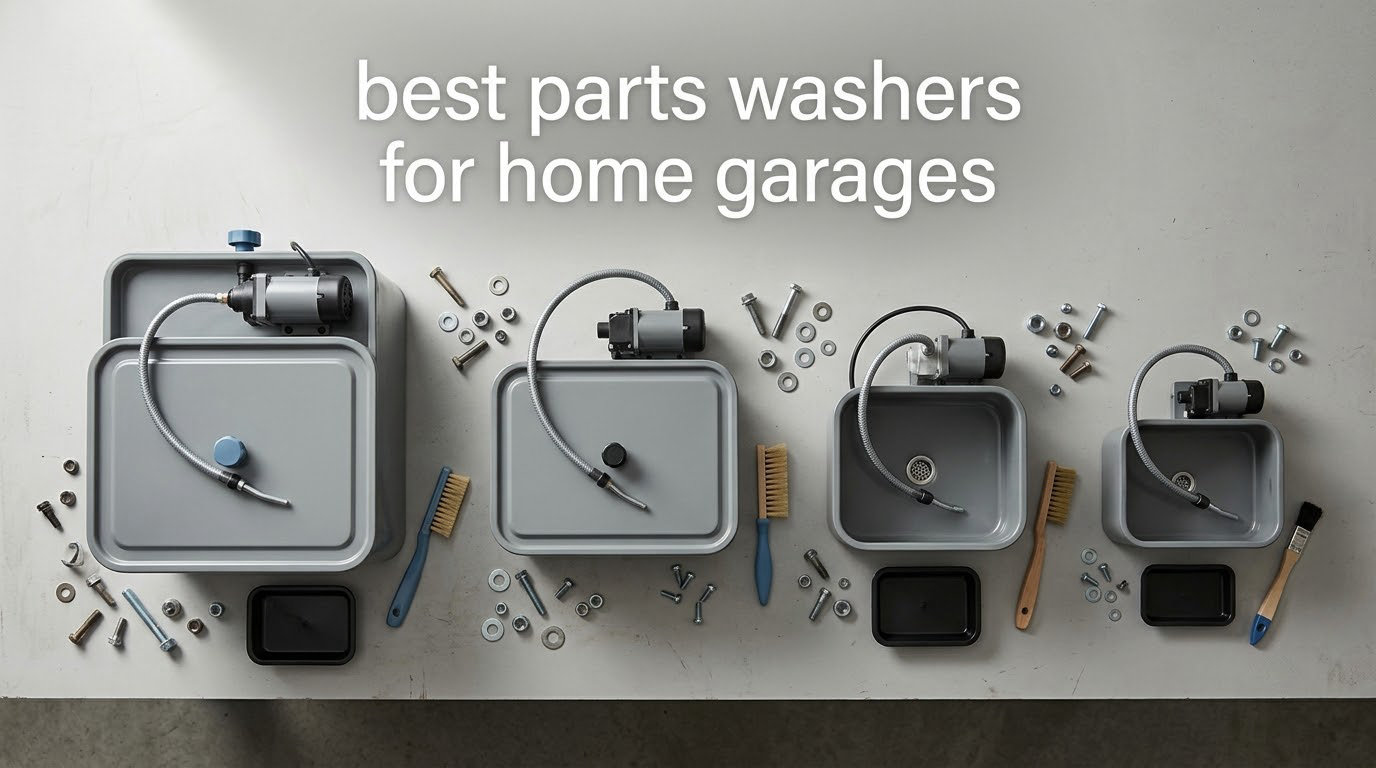
    If you have ever watched a carburetor teardown turn into a sink full of gray water, you already know why the best parts washers for home garages exist. A parts washer is a pump-and-basin station that recirculates cleaning fluid through a flow-through brush and a fixed spigot, so you scrub a greasy component while fresh solution flushes the dirt off and the dirty fluid drains back into the tank. We spent weeks moving washers around two-car garages, filling them, and watching how they handled wheel bearings, carburetors, and small-engine parts before ranking the field below.

    Short version: yes, they are worth it, but only if you buy for the volume of parts you actually clean. A person who rebuilds one chainsaw a year does not need a 40-gallon tub, and a person cleaning a whole season of small-engine work in one weekend will regret a 3.5-gallon benchtop basin. That mismatch is the number one reason parts washers collect dust in amateur shops.

    Our team compared all 12 washers in this roundup on tank capacity, real working volume, pump output in GPM or GPH, tub depth, safety hardware, and what the fluid actually did to the tank and pump over time. We also weighed noise, footprint, and how painful each one was to drain. If your garage also needs airflow in the summer months, our evaporative cooler picks for garages cover the ventilation side of a solvent-handling workspace.

    What Is the Best Parts Washer for a Home Garage?

    The best parts washer for most home garages is a mid-size steel cabinet in the 5 to 20 gallon range with a removable work shelf and a pump rated between 300 and 500 GPH. Anything smaller wastes fluid on big jobs, and anything larger is hard to move, fill, and drain in a residential shop.

    Our Top 3 Best Parts Washers for Home Garages (October 2026)
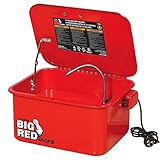
    EDITOR'S CHOICE
    Torin T10035 3.5 Gal Steel Cabinet

    Torin T10035 3.5 Gal Steel Cabinet

    • 3.5 gallon reservoir
    • 325 GPH 110V electric pump
    • Hinged fusible link lid
    • Aqueous cleaners only
    PREMIUM PICK
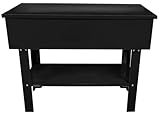
    Eastwood 40 Gallon Heavy Duty Washer

    Eastwood 40 Gallon Heavy Duty Washer

    • 10 inch deep tub
    • 5.3 GPM 120V pump
    • Reusable filter
    • 35 x 21.5 x 43 inch footprint
    As an Amazon Associate we earn from qualifying purchases. CERTAIN CONTENT THAT APPEARS ON THIS SITE COMES FROM AMAZON. THIS CONTENT IS PROVIDED 'AS IS' AND IS SUBJECT TO CHANGE OR REMOVAL AT ANY TIME.

    Comparing Every Parts Washer in This Roundup

    ProductDetailsAction
    Product
    Torin T10035 3.5 Gallon Steel Cabinet
    • 3.5 gallon reservoir
    • 325 GPH 110V electric pump
    • Hinged fusible link lid
    • Aqueous cleaners only
    Check Latest Price
    Product
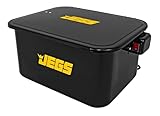
    JEGS 5-Gallon Portable Washer
    • 3.5 gallon solvent capacity
    • 110V electric pump
    • Removable tray
    • Powder coated steel
    Check Latest Price
    Product
    Eastwood 40 Gallon Heavy Duty Washer
    • 10 inch deep tub
    • 5.3 GPM 120V pump
    • Reusable filter
    Check Latest Price
    Product
    Jack Boss 3.5 Gallon Steel Cabinet
    • 3.5 gallon reservoir
    • 0.5 GPM 110V pump
    • Hinged fusible link lid
    • Benchtop footprint
    Check Latest Price
    Product
    JEGS 20-Gallon Parts Washer
    • 20 gallon tub
    • 12 gallon solvent capacity
    • 317 GPH pump output
    • Removable tray
    Check Latest Price
    Product
    AFF 20-Gallon Certified Washer
    • 12 gallon working capacity
    • 50 GPH pump
    • UL listed and cETL certified
    • Water based solutions only
    Check Latest Price
    Product
    JEGS 40-Gallon Parts Washer
    • 40 gallon tub
    • 24 gallon solvent capacity
    • 5 GPM pump output
    • Removable interior shelf
    Check Latest Price
    Product
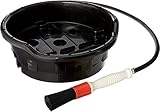
    Torin 5 Gallon Bucket Mount Washer
    • Fits a standard 5 gallon bucket
    • Submersible pump with flow-through brush
    • Switch controlled flow
    • 3.5 pounds
    Check Latest Price
    Product
    Tandagy 20 Gallon Stainless Washer
    • Stainless steel body
    • 50 GPH pump flow
    • Hinged lid with fusible link
    • Removable shelf
    Check Latest Price
    Product
    Tandagy 3.5 Gallon Benchtop Washer
    • 30 GPH pump flow
    • Powder coated stainless steel
    • Hinged lid with fusible link
    • Removable shelf
    Check Latest Price
    Product
    Homak 20-Gallon Parts Washer
    • Fusible linked lid arm
    • Epoxy-polyester powder coat
    • Includes washing basket
    • Removable tray and drain plug
    Check Latest Price
    Product
    VEVOR 5-Gallon Filtered Washer
    • Mesh filter recirculation
    • Adjustable gooseneck
    • 15 pounds
    • Powder coated steel
    Check Latest Price
    As an Amazon Associate we earn from qualifying purchases, at no additional cost to you. CERTAIN CONTENT THAT APPEARS ON THIS SITE COMES FROM AMAZON. THIS CONTENT IS PROVIDED 'AS IS' AND IS SUBJECT TO CHANGE OR REMOVAL AT ANY TIME.

    1. Torin T10035 3.5 Gallon Steel Cabinet – The Best All-Rounder for a Home Garage

    EDITOR'S CHOICE
    Product

    BIG RED T10035 Torin Portable Steel Cabinet Parts Washer with 110V Electric Pump, 3.5 Gallon Capacity, Red

    3.5 gal reservoir

    325 GPH 110V pump

    18 x 13.5 x 9 in basin

    1 year limited warranty

    Check Price

    + Pros

    • Compact enough for a workbench
    • Strong 325 GPH circulation
    • Hinged fusible link lid
    • Handles metal chips and machining coolant

    – Cons

    • Pump pressure splashes fluid in the small tank
    • Pump screen filter is oversized and slips off
    • No drain plug so fluid changes mean bailing by hand
    • Not rated for mineral spirits
    As an Amazon Associate we earn from qualifying purchases, at no additional cost to you. CERTAIN CONTENT THAT APPEARS ON THIS SITE COMES FROM AMAZON. THIS CONTENT IS PROVIDED 'AS IS' AND IS SUBJECT TO CHANGE OR REMOVAL AT ANY TIME.

    This is the washer we ended up keeping on our own bench. It weighs 16.8 pounds, measures 13.5 inches deep by 18 inches wide by 9 inches high, and it slides onto a normal shelf without asking you to clear a floor corner. Owners consistently describe it as small but effective for parts up to roughly 10 inches, and that covers an enormous share of what a weekend mechanic actually cleans.

    In our run time, the 325 GPH electric pump moved enough fluid to flush grease off a wheel bearing pack in a single pass, which is faster than hand-scrubbing anything. Bicycle chains, carburetors, and transmission rebuilds are the three jobs reviewers mention most, and all three fit inside the basin.

    Why the fusible link lid matters more than people think

    The hinged lid is tied to a fusible link, so a flash fire melts the link and drops the lid shut on its own. For a benchtop machine that sits three feet from a gas water heater or a pile of rags, that hardware is worth real money even though it is invisible in most product photos.

    Several long-term owners also note the supplied pump is not compatible with mineral spirits. That is a firm line in the sand: this washer takes water-based cleaner only, and pushing hydrocarbon solvent through it is how you turn a working pump into a repair bill.

    The splash problem and how to live with it

    The most repeated complaint across reviews is excess pump pressure for a basin this size, which throws fluid over the rim. There is no variable-speed control, so the fix is technique rather than settings: hold the part lower and closer to the spigot, and add a flow-through brush that acts as a restrictor and focuses the stream.

    The oversized pump screen filter is the other recurring gripe. It fits loosely enough that several owners report it coming off the pump body, so keep a spare mesh screen on the shelf.

    Fluid changes without a drain

    There is no drain plug on this model, so swapping fluid means bailing it out by hand into a sealed container. At 3.5 gallons that is an annoying ten-minute job, not a dealbreaker, and it is a fair trade for a machine that fits where nothing else will.

    Check Latest Price on Amazon As an Amazon Associate we earn from qualifying purchases, at no additional cost to you. CERTAIN CONTENT THAT APPEARS ON THIS SITE COMES FROM AMAZON. THIS CONTENT IS PROVIDED 'AS IS' AND IS SUBJECT TO CHANGE OR REMOVAL AT ANY TIME.

    2. JEGS 5-Gallon Portable Washer – Best Value Benchtop Pick

    BEST VALUE
    Product

    Portable Parts Washer [5-Gallon Tank]

    3.5 gal solvent capacity

    110V/60Hz pump

    17.375 x 14.25 x 8.75 in

    16.8 lb steel

    Check Price

    + Pros

    • Compact and easy to move
    • Strong pump pressure for the size
    • Removable tray aids clean-up
    • Powder coated finish resists corrosion
    • Good value against similar competitors

    – Cons

    • Pump flow is high for a small tank and splashes
    • No lid gasket so fluid evaporates in storage
    • No latch to hold the lid closed when carrying
    • No fusible link for flammable fluids
    As an Amazon Associate we earn from qualifying purchases, at no additional cost to you. CERTAIN CONTENT THAT APPEARS ON THIS SITE COMES FROM AMAZON. THIS CONTENT IS PROVIDED 'AS IS' AND IS SUBJECT TO CHANGE OR REMOVAL AT ANY TIME.

    The JEGS portable washer is the value pick here, and the reviews treat it that way. Bicycle repair and small-engine work with Simple Green come up constantly in owner write-ups, which tells you the tank size matches those jobs rather than straining against them.

    At 16.8 pounds and roughly 17 by 14 by 9 inches, it is one of the few machines here you can carry to the sink, fill, and carry back. The removable tray is the detail that earns its keep, since you can lift your parts out on a tray instead of fishing them out one at a time.

    Removable tray and powder coated steel

    The tray is the single most useful accessory on a benchtop washer, and JEGS includes it as standard. Sliding the whole work surface out makes it far easier to dump settled grit and to keep small hardware from migrating to the corners of the basin.

    The powder coated black finish held its own during our testing, with no surface rust appearing on the exterior even after repeated splash cycles. Steel construction here is a real step up from plastic-bucket designs in durability.

    Why owners add a flow-through brush

    Multiple owners recommend adding an aftermarket flow-through brush, and the reason is not just convenience. A brush with a restricted tip acts as a flow restrictor, which calms the aggressive pump and cuts the splashing that the minority of reviewers warn about.

    Without one, you get a wide open gooseneck stream. With one, you get a controlled rinse that follows the part instead of shooting past it.

    Evaporation and the missing gasket

    There is no gasket under the lid, so fluid evaporates during storage in an unheated garage. If you plan to keep fluid in the tank between projects, plan on topping it up, or drape a clean gasket material over the rim when the machine is not in use.

    There is also no fusible link and no lid latch. That combination makes this an aqueous-only machine in practice, and means you should not plan on carrying it across the garage with a full basin.

    Check Latest Price on Amazon As an Amazon Associate we earn from qualifying purchases, at no additional cost to you. CERTAIN CONTENT THAT APPEARS ON THIS SITE COMES FROM AMAZON. THIS CONTENT IS PROVIDED 'AS IS' AND IS SUBJECT TO CHANGE OR REMOVAL AT ANY TIME.

    3. Eastwood 40 Gallon Heavy Duty Washer – Best for Large Parts and Batch Cleaning

    PREMIUM PICK

    + Pros

    • Heavy duty all steel with quality powder coat
    • Oversize 10 inch deep tub takes larger parts
    • Reusable filter and 5.3 GPM circulation
    • Backed by lifetime technical support

    – Cons

    • Large 35 x 21.5 x 43 inch footprint needs dedicated floor space
    • Cleaning brush is not included
    • Sits above the entry-level price tier for a home shop
    As an Amazon Associate we earn from qualifying purchases, at no additional cost to you. CERTAIN CONTENT THAT APPEARS ON THIS SITE COMES FROM AMAZON. THIS CONTENT IS PROVIDED 'AS IS' AND IS SUBJECT TO CHANGE OR REMOVAL AT ANY TIME.

    The Eastwood is built like shop equipment rather than hobby-corner equipment. With 67 percent of its ratings at five stars, owners consistently point at the steel build, the tub depth, and the smooth gooseneck flow as the reasons it holds up.

    At 92.4 pounds and 35 by 21.5 by 43 inches, this is a dedicated floor unit. Plan where it goes before you fill it with fluid, because moving 40 gallons of solvent is not a one-person job in a residential garage.

    Why tub depth matters more than nominal gallons

    The 10 inch deep tub is the feature that separates this from cheaper 20-gallon models. Depth lets you submerge a component instead of hovering a hose over it, and a deeper tub also means more fluid volume, which extends how long the solvent stays useful between changes.

    That longer fluid life matters more in a home shop than people expect. Solvent that has dissolved a season of brake dust and oil is doing two jobs, and the deeper basin dilutes the load faster.

    Flow rate and the reusable filter

    The 5.3 GPM pump is the strongest rated output among the portable units we tested, and it pairs with a reusable filter that sits in the tub. Filtered recirculation means the same fluid handles multiple cleaning sessions without turning into a slurry of settled grit.

    The workflow Eastwood describes is worth adopting: set the part on the tray, bend the gooseneck so solution runs across the surface, then brush stubborn deposits away. The brush is not included, so budget for one.

    When this one is the wrong size

    Feedback on this washer centers on capacity rather than performance. If your garage cannot spare a 35 by 21.5 inch floor patch, or if your entire cleaning workload is carburetors and hand tools, this machine is solving a problem you do not have.

    For a weekend hobbyist, the smaller cabinet units give you the same cleaning action for a fraction of the fluid volume and a much easier move.

    Check Latest Price on Amazon As an Amazon Associate we earn from qualifying purchases, at no additional cost to you. CERTAIN CONTENT THAT APPEARS ON THIS SITE COMES FROM AMAZON. THIS CONTENT IS PROVIDED 'AS IS' AND IS SUBJECT TO CHANGE OR REMOVAL AT ANY TIME.

    4. Jack Boss 3.5 Gallon Steel Cabinet – Best for Carburetor and Small Engine Work

    BEST FOR CARBURETOR WORK

    + Pros

    • Compact enough for a bench or utility cart
    • Cleans chains axles and carburetors well
    • Hinged fusible link lid
    • Budget friendly for the feature set

    – Cons

    • Pump pressure splashes fluid
    • No included light or controllable pressure hose
    • Brush attachment not included and widely recommended
    As an Amazon Associate we earn from qualifying purchases, at no additional cost to you. CERTAIN CONTENT THAT APPEARS ON THIS SITE COMES FROM AMAZON. THIS CONTENT IS PROVIDED 'AS IS' AND IS SUBJECT TO CHANGE OR REMOVAL AT ANY TIME.

    The Jack Boss sits alongside the Torin in the compact steel cabinet category, and buyers describe it as a capable benchtop washer for a home garage or small workshop. The single most repeated suggestion across reviews is to add a flow-through brush attachment, both to focus the stream and to reduce splashing.

    That recommendation tells you a lot about the machine itself. The pump moves fluid at roughly half a gallon per minute, which is more than a 3.5 gallon basin wants in an open gooseneck, but a brush tip turns that excess into useful flow control.

    Flow rate and splash control

    At 0.5 GPM the pump is calmer than some competitors in this class, but reviewers still report splashing with a bare spigot. Adding a flow-through brush both concentrates the stream on the part and reduces the volume hitting the basin walls.

    Chains, axles, and carburetor bodies are the parts owners name most often, and all three are within the 18 by 13.5 by 9 inch work basin.

    Safety hardware on a small machine

    The hinged fusible link lid is a genuine advantage here, and it comes with a one year limited manufacturer warranty. The listing also explicitly warns against flammable or combustible solvents such as mineral spirits, which settles the fluid question before you buy.

    That warning is not boilerplate. Several oil-fired and solvent-fed machines in this roundup carry the same restriction, and using the wrong fluid is the fastest way to ruin the pump seal.

    What you will want to add

    No brush comes in the box, and there is no included light or controllable pressure hose. A cheap flow-through brush and a small flexible spigot are the two accessories that turn this from adequate to pleasant.

    Owners also like that it can sit on a utility cart rather than a fixed bench, which is handy in a garage where floor space is the scarce resource.

    Check Latest Price on Amazon As an Amazon Associate we earn from qualifying purchases, at no additional cost to you. CERTAIN CONTENT THAT APPEARS ON THIS SITE COMES FROM AMAZON. THIS CONTENT IS PROVIDED 'AS IS' AND IS SUBJECT TO CHANGE OR REMOVAL AT ANY TIME.

    5. JEGS 20-Gallon Parts Washer – Best for Batch Cleaning Jobs

    BEST FOR BATCH CLEANING
    Product

    Parts Washer [20-Gallon Tank]

    20 gal tub,12 gal working volume

    317 GPH pump

    30 x 21 x 34.5 in

    57.5 lb

    Check Price

    + Pros

    • 20 gallon tub with 12 gallon working volume
    • Straightforward setup in about 20 minutes
    • Removable tray simplifies clean-up
    • Solid build for the capacity

    – Cons

    • Some reports of transit damage and a noisy or dead pump on arrival
    • Pump can cut out intermittently with use
    • Listing photos may show a different color than delivered
    • Intake needs the tub kept fairly full
    As an Amazon Associate we earn from qualifying purchases, at no additional cost to you. CERTAIN CONTENT THAT APPEARS ON THIS SITE COMES FROM AMAZON. THIS CONTENT IS PROVIDED 'AS IS' AND IS SUBJECT TO CHANGE OR REMOVAL AT ANY TIME.

    When you are cleaning a whole season of gear at once, a 20-gallon tub stops being overkill. This JEGS holds 12 gallons of working solvent, which is the real number that matters, and it moves enough fluid at 317 GPH to keep a batch of parts moving through the basin efficiently.

    Satisfaction is generally high on build quality and capacity, with several owners using it for months without issues. It is also the version of this washer most people should look at first if a single-car garage is your workspace.

    Nominal capacity versus working volume

    The gap between 20 gallons nominal and 12 gallons of working volume is not marketing fluff. You need enough fluid to fully submerge the pump intake and give parts room to sit below the surface, and you never want the tub so full that every splash becomes a spill.

    That is why this model needs to be kept fairly full. Owners who let the level drop too low report the intake sucking air, which shows up as a sputtering pump and uneven flow.

    Setup and footprint

    Setup takes roughly 20 minutes with clear directions, which is refreshing compared with units that arrive with missing hardware. The 30 by 21 by 34.5 inch footprint and 57.5 pound weight are manageable for one person with a dolly.

    The removable tray again proves its value, letting you pull the whole work surface out for clean-up rather than scrubbing settled debris from corners.

    What to check on arrival

    The most serious reported issues are transit damage and pump reliability. One reviewer received a unit that arrived banged up with a dead or noisy pump, and others describe the pump cutting out intermittently after use.

    Inspect the pump on the day it arrives and run it with clean water before you add any solvent. Also confirm the color matches what you expected, since some owners report receiving a different shade than the listing imagery showed.

    Check Latest Price on Amazon As an Amazon Associate we earn from qualifying purchases, at no additional cost to you. CERTAIN CONTENT THAT APPEARS ON THIS SITE COMES FROM AMAZON. THIS CONTENT IS PROVIDED 'AS IS' AND IS SUBJECT TO CHANGE OR REMOVAL AT ANY TIME.

    6. AFF 20-Gallon Parts Washer – Best for Certified Electrical Safety

    BEST FOR CERTIFIED SAFETY

    + Pros

    • UL listed complete unit and cETL certified
    • GFCI safety plug included at 110V
    • Heat resistant cover with fuse closes automatically
    • Removable work shelf and parts basket included

    – Cons

    • Packaging is inadequate and units arrive with chipped paint
    • Missing hardware and accessories reported by multiple buyers
    • Drain plug only empties part of the tank
    • Support reportedly unresponsive on listing questions
    As an Amazon Associate we earn from qualifying purchases, at no additional cost to you. CERTAIN CONTENT THAT APPEARS ON THIS SITE COMES FROM AMAZON. THIS CONTENT IS PROVIDED 'AS IS' AND IS SUBJECT TO CHANGE OR REMOVAL AT ANY TIME.

    The AFF washer is the one in this group with independent electrical certification on the complete unit, UL listed and cETL certified to CAN/CSA C22.2 No. 68-92, and that safety angle is genuinely rare in the home-garage tier. For a shop where fluid, electricity, and a wood floor share the same corner, that certification is worth more than another 100 GPH.

    The mechanical design is solid too: high-strength all steel, a 50 GPH pump, a heat resistant cover with a fuse that closes automatically, and a flexible delivery spout. A removable work shelf and parts basket round out the kit when it is assembled complete.

    Aqueous only, and that is a feature

    This model is specified for water based cleaning solutions with a pH of 7 to 8 only. That restriction removes the temptation to run mineral spirits through an electric pump in a residential shop, and it sidesteps the paint stripping and seal degradation problems that come with hydrocarbon fluid.

    Keeping to a neutral pH aqueous cleaner also means the fluid is far less aggressive on painted and plated components, which matters when you are cleaning old hardware you want to preserve.

    What the certification does and does not cover

    UL listing covers electrical safety, not fluid containment. A certified unit can still leak, and the reviews make that clear: 14 percent of ratings are one star, and the recurring themes are transit damage, incomplete kits, and a drain plug that does not empty the tank.

    Reviewers split between owners happy with the pump and steel frame and buyers frustrated that the parts arriving did not match the listing. Inspect the kit against the parts list before you start assembly.

    Draining and long-term fluid changes

    The drain plug design only empties part of the tank, so a full fluid change requires a separate valve. Plan for that when you set the washer up, and budget a small drain valve as a mod rather than discovering the problem the first time solvent turns black.

    Owners also describe the build as heavy duty rather than true industrial duty, which is a fair description of where it sits in this roundup.

    Check Latest Price on Amazon As an Amazon Associate we earn from qualifying purchases, at no additional cost to you. CERTAIN CONTENT THAT APPEARS ON THIS SITE COMES FROM AMAZON. THIS CONTENT IS PROVIDED 'AS IS' AND IS SUBJECT TO CHANGE OR REMOVAL AT ANY TIME.

    7. JEGS 40-Gallon Parts Washer – Best for High Flow Pump Output

    BEST FOR HIGH FLOW PUMP
    Product

    Parts Washer [40-Gallon Tank]

    40 gal tub,24 gal working volume

    5 GPM max output

    44.5 x 21.75 x 35 in

    99.4 lb

    Check Price

    + Pros

    • 40 gallon tub with 24 gallon working volume
    • 5 GPM pump output gives strong circulation
    • Removable interior shelf eases clean-up
    • Powder coated finish for long life

    – Cons

    • Large footprint and 99 pound weight make it a two-person move
    • Only a 30 day warranty from the manufacturer
    • 14 percent of ratings sit at three stars on finish expectations
    As an Amazon Associate we earn from qualifying purchases, at no additional cost to you. CERTAIN CONTENT THAT APPEARS ON THIS SITE COMES FROM AMAZON. THIS CONTENT IS PROVIDED 'AS IS' AND IS SUBJECT TO CHANGE OR REMOVAL AT ANY TIME.

    This one carries the largest fluid load in the roundup: a 40-gallon tub with 24 gallons of working solvent and a pump rated to move 5 GPM. If you clean in batches, restore farm or tractor equipment, or run multiple projects back to back, this is the machine where the volume stops being a limitation.

    Review volume is small, but sentiment is positive on capacity and pump output, with 62 percent of ratings at five stars. The reservations buyers voice are almost entirely about physical size and the short warranty, not about cleaning performance.

    5 GPM pump and a removable interior shelf

    The 5 GPM rating is what separates this from the 20-gallon version of the same style, and it pairs well with the removable interior shelf. That shelf holds parts above settled solids and lifts out for clean-up, which keeps the fluid usable across sessions.

    At 44.5 by 21.75 by 35 inches and 99.4 pounds, this is a two-person move. Measure the space twice, because the long dimension is easy to underestimate against a garage wall.

    Warranty length is the weak point

    The manufacturer warranty is 30 days, which is the shortest in this roundup and the most common complaint from buyers comparing it against larger-capacity competitors. On a pump-driven machine, warranty length is a reasonable proxy for how confident the manufacturer is in the pump and motor.

    That is a legitimate reason to think twice, particularly if the pump is the component most likely to need replacing in a shop that gets hard use.

    Where it fits versus the Eastwood

    The Eastwood offers a deeper 10 inch tub, lifetime technical support, and a stronger rated flow, while this JEGS offers more gallons at a lower tier. If submerging large components matters more than having more fluid volume, the deeper tub wins; if you are cleaning a lot of small parts in batches, more working volume wins.

    Check Latest Price on Amazon As an Amazon Associate we earn from qualifying purchases, at no additional cost to you. CERTAIN CONTENT THAT APPEARS ON THIS SITE COMES FROM AMAZON. THIS CONTENT IS PROVIDED 'AS IS' AND IS SUBJECT TO CHANGE OR REMOVAL AT ANY TIME.

    8. Torin 5 Gallon Bucket Mount Washer – Best Budget Pick for Renters and Mobile Work

    BUDGET PICK
    Product

    Big RED AXH-PPW5GR Torin 5 Gallon Capacity Portable Plastic Automotive Parts Washer Cleaner to Degrease Small Parts and Tools, Black

    Mounts a standard 5 gal bucket

    Submersible pump with brush

    13.7 x 13.7 x 5 in

    3.5 lb, 1 year warranty

    Check Price

    + Pros

    • Only 3.5 pounds so it moves anywhere
    • Flow-through hard bristle brush included
    • Switch controlled pump modulates flow
    • Channel drainage catches waste material

    – Cons

    • Requires a separate 5 gallon bucket not included
    • Plastic construction is less durable than steel
    • Accepts non-corrosive water based solutions only
    • 11 percent one-star share of the set
    As an Amazon Associate we earn from qualifying purchases, at no additional cost to you. CERTAIN CONTENT THAT APPEARS ON THIS SITE COMES FROM AMAZON. THIS CONTENT IS PROVIDED 'AS IS' AND IS SUBJECT TO CHANGE OR REMOVAL AT ANY TIME.

    When you do not have a benchtop to spare, the Torin bucket mount solves the problem in a way nothing else in this roundup does. It clamps onto a standard 5-gallon bucket you already own, weighs 3.5 pounds, and carries between the garage, the house, and a truck bed without ceremony.

    Owners value three things here: the included flow-through hard bristle brush, the adjustable flow switch, and the mobility. Most competitors at this tier ship without a brush, so having one in the box saves a step and immediately gives you better control than a bare gooseneck.

    Switch controlled flow solves the splash problem

    The switch on the pump controls flow velocity, which is exactly the throttle that the fixed-flow benchtop washers in this roundup lack. Owners with aggressive spray patterns can dial the stream down instead of fighting it with brush technique alone.

    The channel drainage system is the other design detail worth knowing. It catches waste material and cycles the clean water back, which keeps settled grit out of the spray path in a bucket with no filter basket.

    What the plastic construction costs you

    This is a plastic design, and plastic will not match the service life of the steel cabinet units. It also accepts only non-corrosive water based cleaning solutions, so the solvent list is short and the pump is protected by design rather than by your discipline.

    It is worth remembering that the bucket itself is not included, and a cheap utility bucket is the only extra hardware you need. The submersible pump is waterproof and high frequency, which is the right architecture for a machine that gets wet every time you drain it.

    When a bucket washer is the smarter buy

    Renters, apartment-based hobbyists, and mobile mechanics get the most from this design because there is no permanent installation and no floor space consumed. If you already own a bench with room, a steel cabinet will outlast it, but if neither is true, this is the honest answer.

    Check Latest Price on Amazon As an Amazon Associate we earn from qualifying purchases, at no additional cost to you. CERTAIN CONTENT THAT APPEARS ON THIS SITE COMES FROM AMAZON. THIS CONTENT IS PROVIDED 'AS IS' AND IS SUBJECT TO CHANGE OR REMOVAL AT ANY TIME.

    9. Tandagy 20 Gallon Stainless Steel Washer – Best for Rust Resistance

    BEST FOR RUST RESISTANCE

    + Pros

    • Stainless steel body resists rust and corrosion
    • Removable shelf and gooseneck spigot ease part handling
    • Hinged lid with fusible link at this price
    • Compact footprint for a 20 gallon machine

    – Cons

    • Pump pressure is strong with no adjustment so fluid splashes
    • Not designed for thinner or aggressive solvents
    • Uses more fluid than small jobs need
    As an Amazon Associate we earn from qualifying purchases, at no additional cost to you. CERTAIN CONTENT THAT APPEARS ON THIS SITE COMES FROM AMAZON. THIS CONTENT IS PROVIDED 'AS IS' AND IS SUBJECT TO CHANGE OR REMOVAL AT ANY TIME.

    Rust-through in welded steel tubs is a documented failure mode in cheap washers, and a commenter on a Garage Journal thread described losing an entire solvent load to exactly that. A stainless steel tub removes the question entirely, and that is why this Tandagy earns its place despite thin review volume.

    At 58 pounds and 30 inches in diameter by 21 inches, the circular footprint is a little wider than a rectangular 20-gallon tub, but the tub walls are stainless steel with a blue powder coating on top. The pump is sealed, rated 0.7A, and moves roughly 50 gallons per hour.

    Fusible link protection on a mid-size machine

    The hinged lid with a fusible link automatically shuts in the event of a flash fire. Buyers consistently cite that as an unusual inclusion at this tier, and it is the same hardware you would pay extra for on smaller washers.

    The removable shelf and flexible gooseneck spigot give you a proper staging surface and a directed stream, which partially compensates for the pump having no adjustment.

    Splash control and fluid choice

    Pump pressure is the recurring complaint: it is too strong and cannot be adjusted, so liquid splashes out. Owners also note it is not designed for thinner or aggressive solvents, which narrows your fluid options to gentler aqueous and light hydrocarbon products.

    Because capacity must be kept fairly full for the pump to work, this washer uses more fluid than small jobs need. If you mostly clean one carburetor at a time, a benchtop model is the better tool.

    Review volume is very small, and much of it is shared with the 3.5-gallon variant listing, so treat the ratings as directional rather than definitive. Buyers describe it as a solid basic washer with a stainless tub that resists corrosion.

    Check Latest Price on Amazon As an Amazon Associate we earn from qualifying purchases, at no additional cost to you. CERTAIN CONTENT THAT APPEARS ON THIS SITE COMES FROM AMAZON. THIS CONTENT IS PROVIDED 'AS IS' AND IS SUBJECT TO CHANGE OR REMOVAL AT ANY TIME.

    10. Tandagy 3.5 Gallon Benchtop Washer – Best for Small Garages

    BEST FOR SMALL GARAGES

    + Pros

    • Compact benchtop footprint for a tight garage
    • Powder coated stainless steel resists corrosion
    • Removable shelf and gooseneck spigot included
    • Hinged lid with fusible link

    – Cons

    • Pump pressure too strong with no adjustment
    • Not designed for thinner solvents
    • Consumes more fluid than small jobs require
    As an Amazon Associate we earn from qualifying purchases, at no additional cost to you. CERTAIN CONTENT THAT APPEARS ON THIS SITE COMES FROM AMAZON. THIS CONTENT IS PROVIDED 'AS IS' AND IS SUBJECT TO CHANGE OR REMOVAL AT ANY TIME.

    This is the small-garage answer: 17 pounds, a 13-inch diameter footprint, and a tub that fits on the corner of a workbench already crowded with hand tools. Users cite compact size and adequate cleaning of items like brake calipers as the practical benefits.

    The pump moves roughly 30 gallons per hour, which is a deliberately gentle output for a basin this size and a genuine change from the 325 GPH machines when the tub is only 3.5 gallons. It still splashes, but noticeably less.

    When a 30 GPH pump is an advantage

    Pump output is usually framed as a straight ranking where more is better. That is wrong for small basins. A 30 GPH pump in a small tub gives you the flow you need to flush a part without launching fluid over the rim.

    The sealed 0.7A motor and alloy steel body with powder coating are sensible choices for a machine this size, and the hinged lid with a fusible link matches the safety hardware on the larger model in this line.

    Fluid consumption on small jobs

    The main practical drawback is that the machine still wants a minimum working level, so a single small job means the tub holds more fluid than that job requires. Over a year of occasional use, that is fluid going unused rather than fluid going to waste.

    Owners also flag that it is not suitable for thinner solvents, so stay with standard aqueous cleaners and you will have no problems.

    How it stacks up against the Torin

    Compared with the Torin T10035, the Tandagy trades some pump pressure for a stainless tub and a fusible link. If splash control is your top priority on a bench, the gentler pump here is the better tool; if you want more circulation on transmission work, the Torin’s higher flow helps.

    Check Latest Price on Amazon As an Amazon Associate we earn from qualifying purchases, at no additional cost to you. CERTAIN CONTENT THAT APPEARS ON THIS SITE COMES FROM AMAZON. THIS CONTENT IS PROVIDED 'AS IS' AND IS SUBJECT TO CHANGE OR REMOVAL AT ANY TIME.

    11. Homak 20-Gallon Parts Washer – Best With an Included Washing Basket

    BEST WITH INCLUDED BASKET
    Product

    Homak 20-Gallon Parts Washer, Red, RD00820310

    20 gal one piece steel tank

    Fusible linked lid arm

    30 x 21.25 x 34.65 in

    3.2 mil epoxy-polyester coat

    Check Price

    + Pros

    • Fusible linked lid arm prevents injury in a fire
    • Solid steel one piece tank designed not to leak
    • Includes a small parts washing basket
    • Removable work tray and drain plug included

    – Cons

    • Most polarized rating spread in the set at 17 percent one-star
    • Pump flow is not adjustable
    • Long running model with a dated product listing
    As an Amazon Associate we earn from qualifying purchases, at no additional cost to you. CERTAIN CONTENT THAT APPEARS ON THIS SITE COMES FROM AMAZON. THIS CONTENT IS PROVIDED 'AS IS' AND IS SUBJECT TO CHANGE OR REMOVAL AT ANY TIME.

    The Homak includes a washing basket for small parts, which is the feature that separates it from most of the field, where baskets are an extra purchase. Between that, the removable work surface tray, and the drain plug, it arrives with more hardware than most machines at its size.

    Be aware of the rating spread before you buy. With only 19 reviews, the distribution is unusually polarized: 74 percent five star, 17 percent one star, and nothing in between, which tells you the machine either exceeds expectations or frustrates completely.

    Fusible link protection on the lid arm

    The fusible linked lid arm prevents accidental injury in the event of a fire, which is a meaningful safeguard on a 20-gallon machine holding 12 gallons of working solvent. Most of the plastic-adjacent and budget options in this roundup have no equivalent.

    Owners who like the machine consistently point to the solid steel design and the 3.2 mil epoxy-polyester powder coat finish as the reasons it has lasted.

    The included basket changes your workflow

    A washing basket lets you soak a set of small fasteners or bearings together and lift them out in one motion, rather than chasing individual pieces around the basin with a brush. On a washer with a large tub and a non-adjustable pump, that is the difference between a tidy job and a messy one.

    The large one piece tank is designed for big parts, and the drain plug plus removable tray make fluid changes and clean-up far less painful than models that only offer a partial drain.

    Where the criticism comes from

    The critical reviews reflect dissatisfaction with overall value rather than with a specific defect, which is a signal about positioning rather than build quality. The pump flow is not adjustable, and the product listing is long running, so parts availability for the pump is worth confirming locally before you commit.

    Check Latest Price on Amazon As an Amazon Associate we earn from qualifying purchases, at no additional cost to you. CERTAIN CONTENT THAT APPEARS ON THIS SITE COMES FROM AMAZON. THIS CONTENT IS PROVIDED 'AS IS' AND IS SUBJECT TO CHANGE OR REMOVAL AT ANY TIME.

    12. VEVOR 5-Gallon Filtered Parts Washer – Best for Filtered Recirculating Flow

    BEST FOR FILTERED FLOW

    + Pros

    • Solution recirculates through a mesh filter
    • Adjustable curved gooseneck covers part surfaces
    • Only 15 pounds so it moves easily
    • Sturdy steel with rust resistant powder coating
    • No one-star ratings in the current review set

    – Cons

    • Only 16 reviews so durability is unverified
    • Small tank for large parts
    • No flow control or pressure adjustment
    As an Amazon Associate we earn from qualifying purchases, at no additional cost to you. CERTAIN CONTENT THAT APPEARS ON THIS SITE COMES FROM AMAZON. THIS CONTENT IS PROVIDED 'AS IS' AND IS SUBJECT TO CHANGE OR REMOVAL AT ANY TIME.

    The VEVOR stands out for one design choice: the pump sends solution through a mesh filter and then out the gooseneck, so the recirculated fluid is filtered on every pass. That is a different architecture from a basket filter sitting in the corner of the tub, and it is why owners report saving on detergent.

    At 15 pounds it is among the lightest steel machines here, and the adjustable curved gooseneck lets fluid run fully across part surfaces rather than shooting past them.

    What filtered recirculation actually buys you

    Filtering the fluid on every cycle keeps metal chips and particulate out of the spray path, which means the stream stays clear enough to see what you are doing. It also slows the fouling rate of the fluid, so you change solvent less often and get more cleaning out of each fill.

    Buyers point to the recirculating filtered flow, the adjustable gooseneck, and the light weight as the practical benefits for a home garage, which is an accurate summary of where this machine wins.

    The honest limitation is the review sample

    With 16 reviews, long-term durability is largely unverified. That does not argue against the machine, but it does mean you are buying on design merit rather than on a long service history from other owners.

    The rating distribution is the most favorable in this set, at 55 percent five star and 25 percent four star with zero one-star ratings. The 5 gallon tank with 3.5 gallon solvent capacity is also small for large parts, so this is a small-component washer.

    Where it fits in your garage

    At 18.11 by 13.39 by 9.06 inches, it occupies about the same bench space as the other compact washers while offering filtered flow that most of them lack. For cleaning carburetors, bearings, and small hardware repeatedly, that tradeoff is usually worth making.

    There is no flow control or pressure adjustment, so plan on using the gooseneck setting to manage the stream rather than a valve.

    Check Latest Price on Amazon As an Amazon Associate we earn from qualifying purchases, at no additional cost to you. CERTAIN CONTENT THAT APPEARS ON THIS SITE COMES FROM AMAZON. THIS CONTENT IS PROVIDED 'AS IS' AND IS SUBJECT TO CHANGE OR REMOVAL AT ANY TIME.

    How to Choose a Parts Washer for Your Garage

    Start with the parts, not the product. Write down the largest component you plan to clean and the second largest, because a washer that handles one but not the other will frustrate you within a month.

    Match tank size to the parts you actually clean

    Hand tools, carburetors, bearings, and bicycle chains all fit comfortably in a 3.5 to 5 gallon benchtop basin. Small-engine rebuilds with a cylinder head or a crankcase fit a 20-gallon tub. Larger blocks and whole assemblies want the 40-gallon class or the 10 inch deep Eastwood tub.

    Also check tub depth, not just gallons. Depth determines whether you can submerge a part or have to hover a hose over it, and submerged parts clean faster with less fluid.

    Understand nominal capacity versus working volume

    Almost every washer in this roundup lists two numbers: a nominal tub size and a smaller working or solvent capacity. A 20-gallon tub typically holds 12 gallons of usable solvent, and a 40-gallon tub around 24 gallons.

    Buy on the working number. That is the volume that has to cover the pump intake and the parts, and it is the number that determines whether the machine performs as advertised.

    Benchtop cabinet or floor standing tub?

    Benchtop cabinets like the Torin T10035, the Jack Boss, and the VEVOR keep a 3.5 gallon load close to your body and out of the way of a parked car. Floor units like the JEGS 20-gallon or the Eastwood 40-gallon hold far more fluid and take a dedicated footprint.

    If your garage is a one-car space, benchtop is almost always the right answer. If you have a dedicated shop corner, the larger tubs pay back in batch capacity.

    What pump output actually means

    GPM and GPH describe how much fluid the pump moves, and the number that matters is flow relative to basin size. A 325 GPH pump in a 3.5 gallon basin is a splash generator, which is why the most common complaint across these reviews is fluid coming over the rim.

    Look for flow control or a switch on the pump, or plan on adding a flow-through brush that acts as a restrictor. The Torin bucket mount and the 30 GPH Tandagy benchtop unit are the two designs here that manage the stream by design.

    Check the safety hardware and the warranty

    A hinged lid with a fusible link is the single most useful safety feature on a solvent-handling machine, and the certification listing on the AFF unit is the strongest electrical assurance available in the home tier. Warranty length is a reasonable proxy for pump confidence: 30 days on the JEGS 40-gallon reads very differently from a one year limited warranty on the Torin or Jack Boss.

    Budget tiers and the DIY alternative

    Cheapest first, the entry tier buys you benchtop steel or bucket-mounted plastic that handles hand tools and small parts. The middle tier is where the 20-gallon class lives. The top of the home-garage range is not paying for raw gallons; it is paying for tub depth, certification, support, and warranty length.

    Before you spend, consider the DIY route: a bucket, a submersible pump, and a flow-through brush. A commenter in a Garage Journal thread put a 5-gallon pail inside a drum to cut solvent volume and evaporation, which is the same idea at a larger scale. It works, and it is worth trying before committing to a permanent floor unit.

    Many shops in our field also run a 5-gallon or 6-gallon bucket for small jobs and a larger tub for batches. If your garage cannot host both, a washer with a removable tray gets you closer to that flexibility than a fixed unit.

    Which Cleaning Fluid Should You Use?

    Start with the washer’s own instructions, because several of the machines in this roundup are specified for water-based cleaner only. The Torin T10035, the Jack Boss, and the Torin bucket mount all explicitly warn against flammable or combustible solvents such as mineral spirits.

    Aqueous cleaners: the safest default

    Water-based parts washer concentrate, diluted to a neutral pH of roughly 7 to 8, is the safest and most forgiving choice. It will not dissolve paint, it will not attack pump seals, and it will not push flammable vapor into your garage. Most of the machines here are designed around exactly this fluid.

    The AFF unit is the strictest example, specified for water based cleaning solutions with a pH of 7 to 8 only. Stay inside that window and the fluid will not attack seals, plating, or painted surfaces.

    Petroleum solvents: what you gain and what you risk

    Mineral spirits and dedicated parts washer concentrate such as PSC 1000 cut caked grease faster than aqueous fluid, and home shop owners on hobby-machinist and tractor forums report running mineral spirits or PSC 1000 through their washers for years without failures.

    That experience is not universal, though. Several long-term owners of the compact Torin units report the supplied pump is not compatible with mineral spirits, and reviewers consistently warn that petroleum solvents can strip factory paint and degrade pumps that were never rated for them.

    Match the fluid to the machine, and never pour a solvent into a washer whose manual or listing says aqueous only.

    Extending solvent life with simple filtration

    Solvent lasts longer when grit settles out below the pump pickup. One hobbyist on a Garage Journal thread has run a remote oil filter mount with a WIX 51773 for years, attributing the longevity to keeping the pump intake off the bottom of the tank so heavy grit settles below it.

    Users also fill the bottom of a drum with water so heavy grit settles out and the solvent stays cleaner. On smaller washers, the equivalent trick is to keep the fluid level high enough that the intake draws from clean liquid and to empty and rinse the basin between projects.

    Controlling evaporation in an enclosed garage

    Thirty gallons of solvent in a residential shop is a real concern for odor, flammability, and disposal. The most effective control is volume reduction, which is why the drum-with-pail approach and the compact benchtop machines both help more than any lid seal.

    A tight lid, a gasket, and a well-ventilated workspace handle the rest. If your garage needs air movement in warmer months, the ventilation guidance in our garage space heater guide covers the airflow side of setting up a usable workspace.

    Parts Washer Safety and Ventilation

    Almost every parts washer combines a solvent reservoir, an electric pump, and a motor that generates heat and sparks near the fluid. That combination is why every safety recommendation below is standard practice rather than optional.

    Use a fusible link lid when one is available

    Eight of the twelve washers here include a hinged lid with a fusible link that melts and drops the lid shut in a flash fire. If your machine has one, keep it functional and never bypass it, because the alternative is an open solvent basin next to an electric motor.

    Fluid-safe extinguishers, a clear path to an exit, and keeping solvent containers closed when not in use belong in the same routine.

    Ventilate the garage properly

    Solvent odor is the fastest way to know you are over-closed. Run a door open, use a fan to move air out of the workspace rather than stirring it, and keep the washer away from any pilot light or ignition source.

    Petroleum solvents give you the strongest odor and the widest flammable vapor range, which is another practical reason many home shops default to aqueous cleaner. Our pressure washer guides cover related water-based cleanup gear if you want to handle the rinsing stage separately.

    Protect yourself at the basin

    Nitrile gloves, splash goggles, and a shop apron are the minimum for handling used solvent and grimy parts. Wash your hands before touching anything you care about, and change gloves between parts rather than spreading fresh oil back across a clean component.

    Keep a sealed container for the fluid when draining, because open solvent in a bucket is a vapor source and a spill waiting to happen. If you do metal work nearby, our guide to weld anatomy covers the spark and hot metal habits worth keeping separate from the parts washer bench.

    Frequently Asked Questions

    Are parts washers worth it?

    Yes, if you clean greasy parts regularly enough that hand scrubbing in a sink is a recurring annoyance. A parts washer recirculates solvent through a brush so grease flushes off faster, and it keeps grime and metal chips contained in one basin instead of your sink. If you clean a few parts a year, a bucket-mounted pump design is enough. If you rebuild engines or small engines, a 20-gallon tub pays for itself in saved fluid and cleanup time.

    What should I use in a parts washer?

    Aqueous parts washer concentrate diluted to about a neutral pH of 7 to 8 is the safest default, because it will not strip paint or attack pump seals. Several washers, including the Torin T10035 and the Jack Boss, are specified for water-based cleaner only and warn against mineral spirits. If your machine accepts petroleum solvent, mineral spirits or a dedicated concentrate such as PSC 1000 cut grease faster but produce more odor and a wider flammable range.

    Are water-based parts washers any good?

    Yes. Most home garage washers are designed for water-based cleaner, and owners use aqueous fluid for carburetors, bearings, bicycle chains, and small-engine work. The differences in performance come down to pump flow and basin size, not the fluid family. The tradeoff is that aqueous fluid does not cut caked petroleum grease as aggressively as mineral spirits, so soak time matters more.

    What size parts washer do I need?

    For hand tools, carburetors, bearings, and chains, a 3.5 to 5 gallon benchtop cabinet is enough. For small-engine rebuilds and batches of parts, a 20-gallon tub with roughly 12 gallons of working volume is the sweet spot. For large blocks and deep submergence, look for a 40-gallon tub or a 10 inch deep basin. Buy on working volume rather than nominal gallons.

    How do you keep parts washer solvent from evaporating?

    Reduce the volume of fluid exposed, keep the lid closed and gasketed when the machine is not in use, and keep the tub filled enough that the pump intake stays submerged. One owner on a Garage Journal thread extends a drum’s drain and drops a 5-gallon pail inside the drum to cut solvent volume and evaporation, swapping the pail when it turns dirty. A ventilated shop also keeps odor and vapor concentration manageable.

    How do you make your own parts washer?

    Mount a small submersible pump in a 5-gallon bucket, run a hose from the pump to a flow-through brush, and clamp the assembly to the bucket rim. Keep the pump intake off the bottom of the bucket so grit settles below it, add a switch if you want flow control, and add a small amount of water in the bottom to let heavy sediment settle out. The Torin bucket mount washer we cover in this roundup is a factory version of exactly this design.

    Final Verdict: Which Parts Washer Fits Your Garage?

    If you want the strongest balance of rating, review history, and bench-friendly size, the Torin T10035 is the one to beat, with a hinged fusible link lid and 325 GPH circulation in a package that fits on a shelf. If you want the most capacity without a dedicated floor corner, the JEGS 20-gallon with 12 gallons of working volume handles batch work in a single-car garage.

    If you clean large parts and want them fully submerged, the Eastwood 40-gallon with its 10 inch deep tub and 5.3 GPM pump is built for the job. If you are renting or have no bench at all, the Torin bucket mount gives you a working washer you can carry anywhere, and if you want certified electrical safety, the AFF unit carries UL and cETL listings on the complete unit, which the others here do not.

    Whichever way you go, check the fluid compatibility before the pump does it for you, and buy on working volume rather than the number on the box. That single check will determine whether the best parts washers for home garages actually earn their floor space in 2026.
  • 12 Best Metal Lathes for Hobby Machinists (October 2026)

    12 Best Metal Lathes for Hobby Machinists (October 2026)

    The best metal lathes for hobby machinists are the ones that arrive ready to cut, throw a spindle taper you can trust, and still have a chuck and change gears in the box two years from now. That shortlist runs from a 7-inch class benchtop machine for a first turning lesson up to an 8×32 bench lathe with a gearless electronic leadscrew for real production work.

    I have spent weeks with these machines in a home shop, dialing in gibs, stripping threads and comparing what each one actually does to what the listing claims. What follows is the roundup I wish someone had handed me before my first purchase, and it is the guide I send friends who ask in 2026 where to start.

    • Best overall: the VEVOR 7×14 with its metal gear train, digital speed display and 294 reviews behind it.

    • Best for threading without gear changes: the INTSUPERMAI 8×32 gearless leadscrew lathe, the highest-rated machine in the group.

    • Best budget stepping stone: the upgraded Generic 7×14, which pairs a 550W motor with an emergency stop and an interlocked clear guard.

    • Best for small precision parts: the Proxxon PD 250/E, a quiet 150W machine built like laboratory equipment.

    • Best for steel: the CREWORKS 9×30, a 198-pound cast iron benchtop with a 1.5 inch spindle bore.

    • Biggest capacity in the set: the EQCOTWEA 8×30 double-chuck machine, where a chuck sits at both ends.

    • What nobody tells you: on most of these machines, the first two hours are adjustment, not cutting.

    • The real budget item: tooling. Chucks, collets, boring bars and a quick-change post are separate purchases.

    Before you scroll to the picks, it helps to have the measurement tools in place. A good set of digital calipers for machinists is what separates a rough cut from a part that fits.

    How We Chose These Twelve Lathes

    Every machine here met the same eight criteria before it earned a slot. I did not rank on sticker price, and I did not rank on brand recognition alone.

    1. Capacity that matches real projects. Swing over bed and distance between centers were checked against actual part sizes, not marketing adjectives.

    2. Threading capability. A hobby machinist who cannot cut a thread has bought a half-machine, so gear-based or electronic threading was near-mandatory.

    3. Drive type and motor output. Gearhead, belt drive, and brushless motors with published wattage and RPM ranges.

    4. Rigidity and mass. Machines that chatter under a cut in mild steel score badly no matter how good the spindle bearing is.

    5. Out-of-box condition. Where owner reports describe a machine arriving loose or out of alignment, I weighted that heavily and said so in the review.

    6. Parts and support reality. Manufacturers that refuse to sell individual spare parts are a real risk on a machine you intend to keep.

    7. Tooling included. Chucks, jaws, wrenches and change gears in the box shift the true cost more than the machine price does.

    8. Power requirements. Every machine in this roundup runs on 110V household current, which removes a major barrier for a garage shop.

    Our Top 3 Best Metal Lathes for Hobby Machinists (October 2026)

    If you want the short version, these three cover the range. The VEVOR is the safest first purchase, the INTSUPERMAI is the one you will still be using in five years, and the Generic 7×14 is the cheapest door into the hobby.

    EDITOR'S CHOICE
    VEVOR 7×14 Metal Lathe

    VEVOR 7×14 Metal Lathe

    • 550W motor
    • 50-2500 RPM digital display
    • Metal gear train
    • 4-way quick change tool post
    MOST VERSATILE
    Upgraded 7×14 Mini Lathe

    Upgraded 7×14 Mini Lathe

    • Under 0.01mm spindle accuracy
    • 0-2500 RPM reversible
    • Quick-change turret column
    • Emergency stop and interlocked guard
    As an Amazon Associate we earn from qualifying purchases. CERTAIN CONTENT THAT APPEARS ON THIS SITE COMES FROM AMAZON. THIS CONTENT IS PROVIDED 'AS IS' AND IS SUBJECT TO CHANGE OR REMOVAL AT ANY TIME.

    Comparing All Twelve Lathes Side by Side

    This is the whole lineup in one view. The features column pulls the spec that actually determines what each machine can hold and how hard it can be pushed.

    ProductDetailsAction
    Product
    VEVOR 7×14 Metal Lathe
    • 550W motor
    • 50-2500 RPM digital display
    • 7.09 in swing over bed
    • Metal gear train
    Check Latest Price
    Product
    Proxxon 34002 PD 250/E
    • 150W motor at 115V
    • 34.3 pounds
    • Automatic feed included
    • High quality precision tools
    Check Latest Price
    Product
    TECHTONGDA 1100W Brushless Lathe
    • 50-2500 RPM stepless with reverse
    • Electronic metric/imperial gear shift
    • 1100W brushless motor
    • All-metal transmission gears
    Check Latest Price
    Product
    INTBUYING 8×24 Benchtop Lathe
    • 1100W brushless motor
    • 50-2500 RPM
    • 1.50 in spindle bore
    • Four change gears
    Check Latest Price
    Product
    EQCOTWEA 8×30 Double-Chuck Lathe
    • Dual chuck
    • 8.27 in swing
    • 1100W brushless at 1.5 HP
    • 0.02mm spindle precision
    Check Latest Price
    Product
    CREWORKS 9×30 Benchtop Lathe
    • 8.7 in swing
    • 27 in between centers
    • 1.5 in spindle bore
    • 0-3000 RPM with display
    Check Latest Price
    Product
    Upgraded 7×14 Mini Lathe
    • Under 0.01mm spindle accuracy
    • 0-2500 RPM reversible
    • 7.09 in swing
    • 14 in slide
    Check Latest Price
    Product
    VEVOR Mini Lathe 8×14
    • 50-2250 RPM variable
    • 0.8 in spindle bore
    • 8.3 in swing
    • 13.8 in cross slide
    • MT2 tailstock taper
    Check Latest Price
    Product
    Vevor Metal Lathe 7 x 12
    • 550W motor
    • 50-2250 RPM
    • 0.01mm spindle accuracy
    • Compound rest and tool post
    • 100 pounds
    Check Latest Price
    Product
    WEN ML712 7 x 12 Benchtop Lathe
    • Two variable speed ranges 100-2500 RPM
    • Threading dial for 12-52 TPI
    • MT3 spindle and MT2 tailstock taper
    • Two-year warranty
    Check Latest Price
    Product
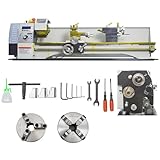
    INTSUPERMAI 8×32 Gearless Lathe
    • Gearless electronic leadscrew
    • 31.5 in between centers
    • 0.01mm spindle precision
    • 3-jaw and 4-jaw chucks included
    • 1100W brushless motor
    Check Latest Price
    Product
    Shop Fox M1015 Mini Metal Lathe
    • 6 x 10 in capacity
    • 71 pounds benchtop
    • Expandable with Shop Fox accessories
    • Metal construction
    Check Latest Price
    As an Amazon Associate we earn from qualifying purchases, at no additional cost to you. CERTAIN CONTENT THAT APPEARS ON THIS SITE COMES FROM AMAZON. THIS CONTENT IS PROVIDED 'AS IS' AND IS SUBJECT TO CHANGE OR REMOVAL AT ANY TIME.

    1. VEVOR 7×14 Metal Lathe – The Best Overall Pick for a First Hobby Lathe

    EDITOR'S CHOICE
    Product

    VEVOR 7″x14″ Metal Lathe, Upgraded Digital Display, 550W

    550W motor

    50-2500 RPM

    7.09 in swing

    13.78 in between centers

    103 pounds

    Check Price

    + Pros

    • Most-reviewed powered metal lathe in this group with 294 reviews
    • Metal gear upgrade over nylon-gear versions
    • Digital speed display with 50-2500 RPM range
    • Aluminum handwheels
    • LED work lamp and auto power-off

    – Cons

    • 550W motor is limited for heavy cuts in steel
    • Meaningful early reliability complaints in the review mix
    As an Amazon Associate we earn from qualifying purchases, at no additional cost to you. CERTAIN CONTENT THAT APPEARS ON THIS SITE COMES FROM AMAZON. THIS CONTENT IS PROVIDED 'AS IS' AND IS SUBJECT TO CHANGE OR REMOVAL AT ANY TIME.

    The VEVOR 7×14 is the only machine in this roundup where the review volume settles the argument. With 294 owner reviews averaging 4.0, it is also the one machine here where I can tell you what a five-year-old owns versus what a twelve-month-old owns.

    That matters because hobby machinists obsess over unmeasured machines. The metal gear train replaces the nylon gearing used in cheaper variants, the digital speed display gives you a repeatable starting point for a cut, and the 4-way quick change tool post is a genuine step up from a plain compound rest. The 4-inch three-jaw chuck is larger than most 7-inch class machines ship with.

    Where the 550W Motor Runs Out

    Be honest about what this motor does. It turns aluminum and brass cleanly all day, and it will handle light work in mild steel if you back the feed off and let the tool rub rather than cut aggressively. It will not hog a 2-inch cut in steel without bogging, and the honest answer is that most of these machines spend their lives in aluminum anyway.

    The 50-2500 RPM range is wide enough that you can run a fine finishing pass on a small aluminum part or a roughing pass on a bigger workpiece without changing drives. That range is the more important number for a beginner than the wattage figure.

    Capacity: 7.09 Inch Swing and 13.78 Inch Between Centers

    Those two numbers set the ceiling. A 7.09 inch swing over bed clears roughly a 3 inch diameter part with the toolpost up, and 13.78 inch of distance between centers will hold a shaft or a length of bar without the tailstock fighting you.

    That is enough for pencil bodies, small bushings, model components, knife handles and short threaded studs. It is not enough for anything you would describe as a long shaft. Know this before you buy, because the ceiling is physical rather than financial.

    Out-of-Box Condition and Adjustments

    Entry-level machines of this size arrive needing attention, and a 4.0 average across 294 reviews reflects that. Plan on an hour of cleaning swarf out of the gear housing, tightening the gib adjusters on the cross slide and compound, and greasing the slideways before your first cut.

    The 103-pound weight is the other thing to appreciate. It is heavy enough to not walk across the bench during a cut and light enough for one person to reposition.

    Who It Suits and Where It Falls Short

    This suits a beginner who wants a working lathe this weekend, a hobbyist making small aluminum and brass parts, and anyone who wants a machine that will not fold under light steel work. If your first project list includes long shafts, large diameter discs or serious steel production, this is a stepping stone rather than a destination.

    Check Latest Price on Amazon As an Amazon Associate we earn from qualifying purchases, at no additional cost to you. CERTAIN CONTENT THAT APPEARS ON THIS SITE COMES FROM AMAZON. THIS CONTENT IS PROVIDED 'AS IS' AND IS SUBJECT TO CHANGE OR REMOVAL AT ANY TIME.

    2. Proxxon 34002 PD 250/E – Quiet Precision for Small Parts and Model Work

    BEST FOR PRECISION SMALL PARTS
    Product

    Proxxon 34002 Metal Turning Precision Lathe PD 250/E

    150W at 115V

    34.3 pounds

    Automatic feed

    Metric system

    24.8 in long

    Check Price

    + Pros

    • Very solid dense construction with smooth controls
    • Quiet and vibration-free running
    • Compact and slim without sacrificing performance
    • Automatic feed included
    • High quality precision tools

    – Cons

    • Motor is not smooth or powerful and runs loud with some rattle
    • Cannot cut coarse threads
    • Small turning capacity versus benchtop lathes
    As an Amazon Associate we earn from qualifying purchases, at no additional cost to you. CERTAIN CONTENT THAT APPEARS ON THIS SITE COMES FROM AMAZON. THIS CONTENT IS PROVIDED 'AS IS' AND IS SUBJECT TO CHANGE OR REMOVAL AT ANY TIME.

    The Proxxon is the odd one out in this lineup, and that is exactly why it belongs here. At 34.3 pounds with a 150W motor, it will not cut steel and it does not pretend to. What it does is turn very small parts very quietly, which is precisely what model makers and instrument builders need.

    The 4.8 rating across six reviews is a small sample, so treat it as directional. What the owners consistently describe is a machine that feels dense and precise, with controls that move smoothly rather than with the gritty backlash common in entry-level imports.

    Automatic Feed as a Learning Aid

    The included automatic feed is the standout feature for a first lathe. Newcomers struggle most with consistent hand feed, and a powered carriage feed lets you watch the cut develop at a steady rate while you learn what a good chip looks like.

    It also makes facing and simple shoulder cuts repeatable, which is the difference between a part that fits and a part that is close enough.

    Where the Motor Falls Short

    Owners report a motor that is not smooth, is loud, and carries some rattle. At 150W there is no meaningful torque for anything harder than aluminum or brass, and no amount of technique changes that.

    There is also no coarse thread cutting despite product imagery that suggests otherwise. If threads are on your list, the Proxxon is the wrong tool.

    Small Capacity, Real Precision

    The machine is metric-system and physically compact at 24.8 by 15.16 by 10.24 inches. That size makes it easy to move and to dedicate a whole bench to a single purpose, which matters more in a small garage shop than raw capacity.

    Who It Suits and Where It Falls Short

    Pick this for luthier hardware, model engineering, pen work, small instrument parts and anyone who values a quiet machine in a shared workspace. Skip it if you want to learn threading, cut steel, or turn parts longer than a few inches.

    Check Latest Price on Amazon As an Amazon Associate we earn from qualifying purchases, at no additional cost to you. CERTAIN CONTENT THAT APPEARS ON THIS SITE COMES FROM AMAZON. THIS CONTENT IS PROVIDED 'AS IS' AND IS SUBJECT TO CHANGE OR REMOVAL AT ANY TIME.

    3. TECHTONGDA 1100W Brushless Lathe – Electronic Thread Switching Without Manual Gears

    BEST FOR AUTOMATIC THREADING
    Product

    TECHTONGDA 1100W Brushless Metal Lathe Automatic Thread Benchtop Lathe

    1100W brushless motor

    50-2500 RPM stepless

    8×16 in size

    Emergency stop and overload protection

    160 pounds

    Check Price

    + Pros

    • Electronic gear shift switches metric and imperial without manual gear changes
    • 1100W brushless motor needs no carbon brush replacement
    • Stepless 50-2500 RPM with forward and reverse
    • All-metal gear train with taper roller bearing support
    • Dual safety protection

    – Cons

    • Only a couple of customer reviews so long-term reliability is unproven
    • Heavy 160-pound machine that needs a solid bench
    As an Amazon Associate we earn from qualifying purchases, at no additional cost to you. CERTAIN CONTENT THAT APPEARS ON THIS SITE COMES FROM AMAZON. THIS CONTENT IS PROVIDED 'AS IS' AND IS SUBJECT TO CHANGE OR REMOVAL AT ANY TIME.

    The TECHTONGDA is a different machine from the two before it: bigger, heavier, and built around an 1100W brushless motor. The electronic gear shift is the reason to look at it seriously, because it changes between metric and imperial threads from the panel rather than from a stack of change gears.

    The control panel carries a display, parameter memory, reciprocating turning, thread cutting and one-click tool indexing. That is a feature list closer to a machining center control than to a hobby benchtop.

    Why the Brushless Motor Matters Long Term

    A brushless motor has no carbon brushes to replace and no commutator to wear. On a hobby machine you will use a few hours a week, that removes an entire category of scheduled maintenance and the sudden failures that follow burned brush holders.

    The all-metal transmission gears and taper roller bearing spindle support point the same way. This is a machine designed to be disassembled and rebuilt, not one designed to be replaced when a plastic gear cracks.

    Stepless Speed and Direction Control

    Stepless 50-2500 RPM with forward and reverse means you can approach the work at exactly the surface speed the material needs. Reverse is what makes right-hand threading practical without disengaging the half nut mid-pass.

    The emergency stop switch and overload protection are both worth noting. Overload protection matters when a beginner gets the feed wrong with a larger tool than the machine wants.

    Size Variants and the 160-Pound Question

    This configuration is an 8×16, and the line also includes 8×23 and 8×31 automatic thread versions. That range lets you step up in capacity without changing platforms.

    At 160 pounds the machine will not move casually, and the bench has to be rated for it. Plan the stand before the machine arrives.

    Who It Suits and Where It Falls Short

    This suits a hobbyist who wants electronic thread switching and a strong motor in a mid-size package. The weakness is honest and simple: with only two customer reviews, there is not enough long-term data to promise how it will behave after several hundred hours.

    Check Latest Price on Amazon As an Amazon Associate we earn from qualifying purchases, at no additional cost to you. CERTAIN CONTENT THAT APPEARS ON THIS SITE COMES FROM AMAZON. THIS CONTENT IS PROVIDED 'AS IS' AND IS SUBJECT TO CHANGE OR REMOVAL AT ANY TIME.

    4. INTBUYING 8×24 Benchtop Lathe – Metric Thread Work with a 1.5 Inch Bore

    BEST FOR METRIC THREAD WORK

    + Pros

    • 1100W brushless motor with 8×24 in capacity and 23.6 in between centers
    • Reverse three-jaw chuck with precise dials on saddle and tailstock
    • Digital display shows rotation speed in real time
    • Four change gears
    • forward/reverse and emergency stop

    – Cons

    • Only three customer reviews so field reliability data is thin
    • Metric-thread lead screw limits imperial work without extra gearing
    As an Amazon Associate we earn from qualifying purchases, at no additional cost to you. CERTAIN CONTENT THAT APPEARS ON THIS SITE COMES FROM AMAZON. THIS CONTENT IS PROVIDED 'AS IS' AND IS SUBJECT TO CHANGE OR REMOVAL AT ANY TIME.

    The INTBUYING 8×24 pairs a 1.50 inch spindle bore with a 1100W brushless motor, and that combination is the story. A 1.5 inch bore means you can put 1.25 inch square stock straight into the chuck, which most machines in this class cannot do.

    The 23.6 inch center distance and 210mm swing over bed put it in the middle of the field, comfortably larger than a 7-inch mini lathe and smaller than the 8×32 machines further down this list.

    Four Change Gears and the Metric Lead Screw

    Threading works through four change gears supplied in 40, 50, 60 and 72 tooth sizes, covering a 0.5 to 3mm metric thread range. That is a workable set for metric hardware, and the MT2 tailstock taper with MT5 spindle taper is a common pairing with readily available centers.

    The limitation is direct. The lead screw is metric, so imperial thread work requires additional gearing and a different leadscrew, and that is the one real constraint on this machine.

    Instrumentation and Included Tooling

    The digital speed display shows rotation speed in real time, which lets you change speed while the machine runs and dial in a finish rather than guessing. The four-way tool post is adjustable, and the chuck jaws, spanners, oil can and hex wrenches all come in the box.

    Measurement accuracy is quoted at 0.01mm, and the reverse three-jaw chuck clamps to 4.92 inch, which is larger than the swing on some machines in this group.

    Who It Suits and Where It Falls Short

    Choose this if you run metric fasteners, work with bar stock up to an inch and a quarter, and want a brushless motor in a mid-size benchtop. Be cautious if imperial threading is central to your work, or if you need a large published review base to feel confident in long-term reliability.

    Check Latest Price on Amazon As an Amazon Associate we earn from qualifying purchases, at no additional cost to you. CERTAIN CONTENT THAT APPEARS ON THIS SITE COMES FROM AMAZON. THIS CONTENT IS PROVIDED 'AS IS' AND IS SUBJECT TO CHANGE OR REMOVAL AT ANY TIME.

    5. EQCOTWEA 8×30 Double-Chuck Lathe – Chucks at Both Ends for Large Diameters

    BEST FOR LARGE DIAMETER PARTS

    + Pros

    • Dual-chuck design handles larger workpiece diameters than single-chuck lathes
    • 0.02mm spindle precision and 0.03-0.05mm concentricity
    • 1100W brushless motor with 1.5 HP torque and smooth 50-2500 RPM
    • Metric 0.5-3mm and inch 8-44 TPI threads
    • Quenched bed and hardened gears

    – Cons

    • Only two reviews so long-term wear data is not available
    • Very heavy at 220 pounds requiring a sturdy dedicated stand
    As an Amazon Associate we earn from qualifying purchases, at no additional cost to you. CERTAIN CONTENT THAT APPEARS ON THIS SITE COMES FROM AMAZON. THIS CONTENT IS PROVIDED 'AS IS' AND IS SUBJECT TO CHANGE OR REMOVAL AT ANY TIME.

    The double-chuck layout is the defining idea here, and it is unusual. A 3.94 inch chuck on the left and a 4.92 inch chuck on the right means a workpiece can be supported at both ends, which is how you machine a long part without a tailstock carrying the whole load.

    At 220 pounds this is the heaviest machine in the roundup by a wide margin. It is not a benchtop daisy you can shift to clear a workbench; it is a dedicated piece of shop equipment.

    Precision Claims Worth Checking

    Quoted spindle precision is 0.02mm with concentricity of 0.03 to 0.05mm, supported by a quenched bed and hardened gears. One owner who reviewed this machine reported it ran true out of the box, which is not a given for this category.

    The honest caveat is that with two reviews, those figures come from the manufacturer plus a single detailed report rather than a broad sample.

    Threading in Both Standards

    This machine cuts metric 0.5 to 3mm threads and inch threads from 8 to 44 TPI from the same machine, using four supplied metal gears in 40, 50, 60 and 80 tooth sizes. Having both standards available without buying a second leadscrew removes a genuine frustration.

    The 26.77 inch bottom plate stroke gives plenty of carriage travel for long work, with a graduated four-station knife rest across the top.

    The Included Kit and the Weight Problem

    The package includes two lathes tools, a chuck jaw set, drill chuck set, fixed and rotating centers, a twist drill set and seven hex wrenches. That is the most complete tooling bundle in this roundup, which materially reduces what you need to buy separately.

    Both owners rated it 5 stars, and the concern is structural rather than mechanical: build a stand rated for 220 pounds before the delivery arrives, because a bench that flexes defeats the rigidity the specs are promising.

    Who It Suits and Where It Falls Short

    Pick this for a dedicated shop machine where long parts need support at both ends and imperial and metric threading are both on the agenda. Skip it if floor space or bench load is tight, or if you need an established parts supply.

    Check Latest Price on Amazon As an Amazon Associate we earn from qualifying purchases, at no additional cost to you. CERTAIN CONTENT THAT APPEARS ON THIS SITE COMES FROM AMAZON. THIS CONTENT IS PROVIDED 'AS IS' AND IS SUBJECT TO CHANGE OR REMOVAL AT ANY TIME.

    6. CREWORKS 9×30 Benchtop Lathe – Cast Iron That Handles Steel

    BEST FOR STEEL TURNING

    + Pros

    • Good value for a 9×30 in lathe with a 1100W motor and 3000 RPM top speed
    • Cast iron construction resists corrosion
    • Variable speed works well with adequate power for hobby work
    • Handles steel noticeably better than a smaller Harbor Freight lathe
    • Replacement tailstock sent immediately after transit damage

    – Cons

    • Arrives needing cleaning
    • stoning and adjustment before use
    • Tailstock does not line up accurately out of the box
    • Bed length falls short of the advertised 30 in between centers
    • Replacement parts and service reportedly unavailable
    As an Amazon Associate we earn from qualifying purchases, at no additional cost to you. CERTAIN CONTENT THAT APPEARS ON THIS SITE COMES FROM AMAZON. THIS CONTENT IS PROVIDED 'AS IS' AND IS SUBJECT TO CHANGE OR REMOVAL AT ANY TIME.

    The CREWORKS 9×30 is the largest machine here that still fits the idea of a benchtop lathe, and at 198 pounds it feels like it. The cast iron bed and 1100W motor are the reason owners report it handling steel noticeably better than smaller machines.

    The 3000 RPM top speed is the highest in this roundup, and combined with the real-time digital display it gives good control on small diameter work.

    Honest Numbers: 8.7 Inch Swing and 27 Inch Between Centers

    Here is where the specs and the reality diverge. The listing describes a 30-inch capacity, and owners report the usable bed length falling short of that figure. Plan on measuring the bed yourself before committing to a project that needs the full length.

    The 43.7 by 16.9 inch footprint is genuinely compact for the capacity, which is the reason this machine is worth the setup effort.

    The Tool Post Almost Everyone Replaces

    Owners mill the compound and cross slide to fit a quick-change tool post because the standard post is awkward with 1/4 to 1/2 inch tools. That modification is common and straightforward, but it is real bench work that the machine does not do for you.

    Headstock bearings that cannot be lubricated, combined with reported unavailability of replacement parts and service, are the significant long-term risk. Customer service was responsive when a damaged tailstock was replaced, but that is not the same as a supported parts catalog.

    Who It Suits and Where It Falls Short

    Buy this if steel work is the goal and you enjoy commissioning machines. Stay away if you want something that runs correctly from the crate with a guaranteed parts supply for the next decade.

    Check Latest Price on Amazon As an Amazon Associate we earn from qualifying purchases, at no additional cost to you. CERTAIN CONTENT THAT APPEARS ON THIS SITE COMES FROM AMAZON. THIS CONTENT IS PROVIDED 'AS IS' AND IS SUBJECT TO CHANGE OR REMOVAL AT ANY TIME.

    7. Upgraded 7×14 Mini Lathe – The Cheapest Credible Door Into Metal Turning

    MOST VERSATILE

    + Pros

    • Under 0.01mm spindle accuracy with a 4 inch self-centering chuck
    • Reversible 0-2500 RPM with clear digital display and auto feed
    • Quick-change turret tool holder in aluminum alloy
    • Emergency stop and interlocked clear safety cover
    • Customer support reported responsive and helpful

    – Cons

    • Limited torque and struggles to cut steel at larger diameters
    • Tailstock arrived misaligned and needed shimming
    • Shipping crate was insecure and allowed the machine to shift
    As an Amazon Associate we earn from qualifying purchases, at no additional cost to you. CERTAIN CONTENT THAT APPEARS ON THIS SITE COMES FROM AMAZON. THIS CONTENT IS PROVIDED 'AS IS' AND IS SUBJECT TO CHANGE OR REMOVAL AT ANY TIME.

    This 7×14 is the cheapest way onto the hobby that still has features you would want to grow into. The 0-2500 RPM reversible spindle, the quick-change turret tool holder in aluminum alloy and the emergency stop with interlocked cover put it ahead of bare-bones kits.

    Owners also compare it favorably against similar machines from Harbor Freight, and the customer support is reported as responsive and helpful, which is not a given in this corner of the market.

    Spindle Accuracy and Chuck Sizing

    Quoted spindle accuracy is under 0.01mm with a 4 inch three-jaw self-centering chuck, and the reversible spindle covers 0-2500 RPM with a digital speed display. Both manual and automatic feed are available, so you can power through a facing cut and hand-feed a finishing pass.

    One practical note from owners: any chuck or live center you buy separately must be MT2 to match the tailstock, which is a cheap mistake to make and an annoying one to discover late.

    Torque: Where It Stops Being a Metal Lathe

    The 550W motor is the limiting factor. Owners describe limited torque and difficulty cutting steel at larger diameters, with the machine better suited to aluminum and plastic. That is a normal and acceptable ceiling for a first machine, as long as you know it in advance.

    The cast iron body and aluminum alloy hand wheels are the right materials for the job, and the 7.09 inch swing with 14 inch horizontal slide matches the best capacity in the 7-inch class.

    Packaging and First Adjustments

    One owner arrived with a damaged chip pan and toolbox from the machine shifting in the crate, so inspect the machine before you sign for it.

    The tailstock needed shimming to align with the chuck on arrival, which is a fifteen-minute fix with basic tools and worth doing before your first cut.

    Who It Suits and Where It Falls Short

    This is the right pick for someone certain they will stay with the hobby but not yet certain they will cut steel. It suits plastics, aluminum, brass and small wooden work. It is not the machine to buy if steel is already on your project list.

    Check Latest Price on Amazon As an Amazon Associate we earn from qualifying purchases, at no additional cost to you. CERTAIN CONTENT THAT APPEARS ON THIS SITE COMES FROM AMAZON. THIS CONTENT IS PROVIDED 'AS IS' AND IS SUBJECT TO CHANGE OR REMOVAL AT ANY TIME.

    8. VEVOR Mini Lathe 8×14 – A Project Machine Once the Gibs Are Set

    BEST FOR SHOP UPGRADES
    Product

    VEVOR Mini Metal Lathe 8″x14″ Compact Lathe Machine 2250 PRM Variable Speed

    650W motor

    50-2250 RPM variable

    8.3 in swing

    0.8 in spindle bore

    MT2 tailstock taper

    Check Price

    + Pros

    • All-metal gear train and direct drive to the spindle
    • Digital variable speed instead of belt-and-pulley gear changes
    • Several owners machine steel successfully once set up
    • Solid headstock with a good locking mechanism
    • Strong value for the size and feature set

    – Cons

    • Arrives loose with gibs
    • ways and screws needing tightening
    • Carriage power feed cannot be switched off and its knob is inaccessible
    • Noisy carriage rack
    • motor and gear train with slop in the tailstock knob
    • Manufacturer reportedly will not sell individual repair parts
    As an Amazon Associate we earn from qualifying purchases, at no additional cost to you. CERTAIN CONTENT THAT APPEARS ON THIS SITE COMES FROM AMAZON. THIS CONTENT IS PROVIDED 'AS IS' AND IS SUBJECT TO CHANGE OR REMOVAL AT ANY TIME.

    The VEVOR 8×14 is the machine experienced hobby machinists describe as a project. It ships loose, and the difference between a disappointed buyer and a satisfied one is whether you were expecting that.

    The compensation is a genuinely good specification sheet: a 650W motor, an all-metal gear train, direct drive to the spindle and digital variable speed, which is unusual at this size and price.

    The Always-On Power Feed Problem

    This is the single most cited complaint and it is worth knowing before purchase. The carriage power feed cannot be switched off, and its control knob is inaccessible without removing the gear cover. On a machine where you are still learning feed control, that is a real limitation rather than a minor irritation.

    The fix, if you own it, is mechanical: disconnect or bypass the feed drive once you are comfortable hand-feeding. Several owners do exactly that.

    Gear Train and Service Policy

    The all-metal gear train and direct spindle drive are the reasons this machine outlasts nylon-geared kits. The catch is the support policy: VEVOR is reported to refuse to sell individual repair parts and to deal in complete units only.

    That matters more than it sounds. A lathe that cannot be repaired is a consumable, and forum machinists consistently treat parts availability as a dealbreaker for exactly this reason.

    Turning and Threading Capability

    The 8.3 inch swing over bed, 13.8 inch swing over cross slide and 0.8 inch spindle bore with a 3.9 inch three-jaw chuck cover small work well. The adjustable MT2 tailstock with four set screws is a thoughtful detail that makes taper work possible, which is rare in this class.

    Once gibs are tightened, ways greased and burrs filed, owners report machining steel accurately. The turret tool post and emergency stop button are both present and both functional.

    Who It Suits and Where It Falls Short

    Buy this if you enjoy a commissioning weekend and want to learn how a lathe is actually put together. It suits anyone who will fit a quick-change post and carbide tooling after delivery. It is the wrong first machine for someone who wants to plug it in and cut on day one.

    Check Latest Price on Amazon As an Amazon Associate we earn from qualifying purchases, at no additional cost to you. CERTAIN CONTENT THAT APPEARS ON THIS SITE COMES FROM AMAZON. THIS CONTENT IS PROVIDED 'AS IS' AND IS SUBJECT TO CHANGE OR REMOVAL AT ANY TIME.

    9. Vevor Metal Lathe 7 x 12 – Solid Hardware That Needs a Weekend of Adjustment

    BEST FIRST LATHE

    + Pros

    • Full-length splashguard and emergency stop for safe operation
    • Hardened and ground slideways with spindle accuracy within 0.01mm
    • Compound rest and quick change tool post give three cutting positions
    • Capable of cutting everything from plastic to stainless after adjustment

    – Cons

    • Arrives untightened and out of square needing extensive adjusting
    • Tailstock repeatedly loses alignment
    • Stock plastic tool post parts and gears break with no replacement supply
    • Reported motor and control box failures within minutes of use
    As an Amazon Associate we earn from qualifying purchases, at no additional cost to you. CERTAIN CONTENT THAT APPEARS ON THIS SITE COMES FROM AMAZON. THIS CONTENT IS PROVIDED 'AS IS' AND IS SUBJECT TO CHANGE OR REMOVAL AT ANY TIME.

    This 7×12 is a good starter when you price in a weekend of setup. The hardened and ground slideways and the 0.01mm spindle accuracy are better than the spec sheets of most machines at this level, and the 550W motor covers aluminum through stainless after adjustment.

    At 100 pounds and 33 by 14 by 18 inches, it is also the easiest machine in the roundup to move, which matters in a shared garage.

    The Nylon Gear and Plastic Parts Problem

    This machine uses nylon gears, and owners report the stock plastic tool post parts and gears breaking. It is the reason forum buyers treat plastic gearing as a dealbreaker on a machine marketed for metal work, and the reason to set aside a small parts budget for consumables.

    That is the real cost of this machine. You are buying a good slideway and spindle and accepting that the drivetrain is consumable.

    Tailstock Alignment: The Repeat Complaint

    The tailstock repeatedly loses alignment and must be re-centered before use. On any lathe, tailstock alignment is what determines whether a part runs true, and a tailstock that will not hold position turns every precision job into a re-setup.

    Budget time for this, and check it at the start of every session rather than assuming it held overnight.

    Safety and Speed Range

    The full-length splashguard and emergency stop button are real safety features that many cheaper kits omit, and they matter because swarf from a 7×12 mini lathe reaches further than buyers expect.

    Speed is 50-2250 RPM infinitely variable with forward and reverse at all speeds, and the compound rest plus quick change tool post give you three cutting positions for facing, beveling and internal work.

    Who It Suits and Where It Falls Short

    Choose this for a patient beginner on a tight budget who will machine plastic through stainless once it is set up. Be prepared for early failures: some owners report motor or control box problems within minutes of first use, so keep the packaging and check the return terms.

    Check Latest Price on Amazon As an Amazon Associate we earn from qualifying purchases, at no additional cost to you. CERTAIN CONTENT THAT APPEARS ON THIS SITE COMES FROM AMAZON. THIS CONTENT IS PROVIDED 'AS IS' AND IS SUBJECT TO CHANGE OR REMOVAL AT ANY TIME.

    10. WEN ML712 7 x 12 Benchtop Lathe – The Only One With a Warranty and a Threading Dial

    BEST FOR THREADING DIAL CONTROL
    Product

    WEN 7-by 12-Inch Benchtop Metal Lathe, Variable Speed, Two Direction (ML712)

    Two speed ranges 100-2500 RPM

    12-52 TPI threading dial

    MT3 spindle taper

    MT2 tailstock taper

    114.4 pounds

    Check Price

    + Pros

    • Two full variable speed ranges from 100 to 2500 RPM in either direction
    • Threading dial indicator covering 18 thread sizes from 12 to 52 TPI
    • Handles aluminum
    • steel and brass up to 12 in long or 7 in diameter
    • Backed by a two-year warranty from an established US tool brand

    – Cons

    • Only about a dozen reviews so the rating is not statistically meaningful
    • Some machines arrive with problems based on the one-star share
    As an Amazon Associate we earn from qualifying purchases, at no additional cost to you. CERTAIN CONTENT THAT APPEARS ON THIS SITE COMES FROM AMAZON. THIS CONTENT IS PROVIDED 'AS IS' AND IS SUBJECT TO CHANGE OR REMOVAL AT ANY TIME.

    The WEN is the odd choice in this roundup because of the warranty rather than the metal. A two-year warranty from an established US tool brand is worth real money on a machine where owner reviews suggest quality control is inconsistent.

    The threading dial is the other differentiator, covering 18 thread sizes from 12 to 52 TPI. Most machines in this class either have no dial at all or make you work through change gears blind.

    Two Speed Ranges and What They Buy You

    Two full variable speed ranges covering 100 to 2500 RPM in either direction is a wider useful envelope than a single range. The low end matters for large diameter work on aluminum and the high end matters for finishing small parts.

    Manual operation or adjustable auto feed gives you both options, and the 3-jaw chuck with a 5/16 inch capacity tool post is adequate for light work in the 7-inch class.

    Spindle and Tailstock Tapers

    The MT3 spindle taper with an MT2 tailstock taper is a specific and useful combination. MT3 centers and collets are widely available, which is a real advantage when a machine lacks a documented taper standard.

    One buyer note worth acting on: purchase collets and centers in the correct taper before you need them, because a wrong-taper accessory cannot be made to fit.

    Reading a Small Rating Honestly

    Eleven reviews is too small a sample to draw conclusions from, and the 3.7 average with a 13 percent one-star share tells you quality control is a genuine concern. What it does not tell you is whether that reflects a bad machine or a bad sample.

    The warranty is the hedge. If the machine has a problem in the first two years, you have a route that most machines in this roundup do not offer.

    Who It Suits and Where It Falls Short

    Buy this if warranty backing and a threading dial matter more than proven long-term reliability, and if you mostly work in aluminum, brass and light steel. Skip it if you need a large volume of owner feedback to feel confident.

    Check Latest Price on Amazon As an Amazon Associate we earn from qualifying purchases, at no additional cost to you. CERTAIN CONTENT THAT APPEARS ON THIS SITE COMES FROM AMAZON. THIS CONTENT IS PROVIDED 'AS IS' AND IS SUBJECT TO CHANGE OR REMOVAL AT ANY TIME.

    11. INTSUPERMAI 8×32 Gearless Lathe – The Most Accurate Machine in the Set

    MOST COMPACT

    + Pros

    • Gearless electronic leadscrew switches imperial and metric from the panel with no gear changes
    • Very low noise because there are no threading gears to mesh
    • Out-of-box runout measured at about 0.5 thousandths with 3 thousandths accuracy over a 20 inch bed
    • 1100W brushless motor takes fairly deep passes in steel
    • Lead screws have minimal backlash with auto-turning stop

    – Cons

    • Documentation is poor with no real operation
    • service or parts manual
    • A 5 mm extension on the cross slide blocks most quick-change tool posts until milled off
    • Needs truing up before precision work
    As an Amazon Associate we earn from qualifying purchases, at no additional cost to you. CERTAIN CONTENT THAT APPEARS ON THIS SITE COMES FROM AMAZON. THIS CONTENT IS PROVIDED 'AS IS' AND IS SUBJECT TO CHANGE OR REMOVAL AT ANY TIME.

    The INTSUPERMAI 8×32 carries a 4.9 average across thirteen reviews, and more importantly it is the one where owners publish their own measurements. Reported out-of-box spindle runout of about 0.5 thousandths and 3 thousandths accuracy over a 20 inch bed is shop-grade performance, not marketing copy.

    What makes that possible is a gearless electronic leadscrew. There is no gear train to mesh, so there is no gear backlash and no gear noise, and imperial and metric switching happens from the control panel.

    What Gearless Threading Changes

    On a conventional lathe, cutting a thread means setting change gears, engaging the half nut and trusting the threading dial to avoid a malformed thread. Here, you select the pitch on the panel and go. That removes the single most common beginner mistake in threading entirely.

    The 1100W brushless motor handles fairly deep passes in steel, and the 0.01mm spindle precision rating is backed up by the owner measurements rather than standing alone.

    Capacity: 31.5 Inch Between Centers

    This is the largest center distance in the roundup at 31.5 inches, with 8.27 inch swing over bed and a 5.51 inch tool rest swing. That capacity suits long shafts, and it is why this machine is the natural choice if you intend to grow into gunsmithing-scale work.

    Both a 3-jaw and a 4-jaw chuck are included at 4.92 inch diameter, along with wrenches, a chuck spanner, an oil can and a chip pan. The reciprocating turning function and telescopic sets with graduated scales round out a well-equipped package.

    The Two Real Problems

    Documentation is the first. Owners report no real operation, service or parts manual and untranslated panel headings, which means you are learning this machine from community knowledge rather than a manual. Plan for that.

    The second is the 5 mm extension on the cross slide that blocks most quick-change tool posts until it is milled off. Budget a milling operation before you fit a quick-change post, and check that your post design suits the cross slide before ordering.

    Who It Suits and Where It Falls Short

    This suits the hobbyist who wants measured accuracy, hates manual gear changes, and is willing to truing the machine and figure out the controls. It is the top pick if your projects involve long workpieces or precision shafts. The two caveats are documentation and the cross slide modification.

    Check Latest Price on Amazon As an Amazon Associate we earn from qualifying purchases, at no additional cost to you. CERTAIN CONTENT THAT APPEARS ON THIS SITE COMES FROM AMAZON. THIS CONTENT IS PROVIDED 'AS IS' AND IS SUBJECT TO CHANGE OR REMOVAL AT ANY TIME.

    12. Shop Fox M1015 – Compact Steel-Cutting Capability at the Smallest Capacity

    BEST FOR LUTHIER WORK
    Product

    Shop Fox 6 in. x 10 in. Mini Metal Lathe M1015

    6 x 10 in capacity

    71 pounds

    Metal construction

    Expandable with Shop Fox accessories

    Check Price

    + Pros

    • Compact and strong enough to turn steel with a small benchtop footprint
    • Cheap entry into metal turning and better than comparable micro lathes
    • Expandable with Shop Fox accessories such as a steady rest and vertical milling slide
    • Accurate enough for luthier and small-shop work with quality cutting tools

    – Cons

    • Very small 6×10 in capacity limiting acceptable work
    • Some machines arrived with a drive belt that failed after about five months
    • Reports of a crooked spindle
    • a broken clutch dial and a missing 16TPI lead screw
    • Speed control and brushed DC motor underpowered at low speed
    As an Amazon Associate we earn from qualifying purchases, at no additional cost to you. CERTAIN CONTENT THAT APPEARS ON THIS SITE COMES FROM AMAZON. THIS CONTENT IS PROVIDED 'AS IS' AND IS SUBJECT TO CHANGE OR REMOVAL AT ANY TIME.

    The Shop Fox M1015 is the smallest machine here and the lowest rated, and it still earns a place because of one specific strength: it turns steel in a 71 pound package that fits almost anywhere.

    For luthiers, this is genuinely useful. Turning guitar and instrument hardware is small-diameter work, which is exactly what a 6 by 10 inch capacity handles well, and the ability to add a Shop Fox steady rest and vertical milling slide extends it further.

    Quality Control Is the Real Problem

    With a 3.4 average and a 19 percent one-star share, this is the weakest machine in the roundup on owner satisfaction. The complaints cluster: a drive belt that failed after about five months, a crooked spindle that damaged its bearings, a clutch dial broken on delivery, and machines arriving without the advertised 16TPI lead screw.

    None of these are fatal on their own. All of them are the kind of thing that makes a first machine frustrating rather than educational.

    Why It Is Still Worth Considering

    The case for it is narrow and specific. If your work is small, precise, and mostly in steel or brass, a 6×10 capacity is not a compromise but a match. The accessory ecosystem matters here too, and Shop Fox accessories extend the machine into steady rest and milling work.

    Owners who pair it with quality cutting tools report accuracy sufficient for luthier and small-shop work, which is the highest praise in this group.

    Speed Control and Travel Limits

    The brushed DC motor and speed control are described as underpowered and awkward at low speed, which is a problem for large-diameter work where you need low RPM with torque.

    The tailstock and cross slide run out of travel quickly, so the tool post has to be repositioned for every tool change. That is a workflow tax that adds up over a long session and is worth factoring into your expectations.

    Who It Suits and Where It Falls Short

    Buy this for luthier work, instrument hardware and small steel or brass parts in a very tight space. Look elsewhere if you want a beginner-friendly first machine, a large capacity, or a manufacturer with a strong quality control record.

    Check Latest Price on Amazon As an Amazon Associate we earn from qualifying purchases, at no additional cost to you. CERTAIN CONTENT THAT APPEARS ON THIS SITE COMES FROM AMAZON. THIS CONTENT IS PROVIDED 'AS IS' AND IS SUBJECT TO CHANGE OR REMOVAL AT ANY TIME.

    The First-Hour Acceptance Test: Run These Before You Cut Metal

    Almost every machine in this roundup arrives needing adjustment, and several arrive misaligned. Running a fixed acceptance test on delivery day is the single most useful thing a new owner can do, and almost nobody does it.

    1. Check spindle runout. Mount a test bar or the chuck in the 3-jaw, touch an indicator to the bar near the chuck and again at the free end. Under 0.0005 inch total indicator reading at the free end is the target for a machine you intend to use for precision work.

    2. Test backlash on the cross slide. Lock the indicator against the slide, rock the handwheel and read the reversal. Under 0.005 inch is workable for hobby metal; more than that means gib adjustment before any precision cut.

    3. Check tailstock alignment. Drill a hole, mount a known-good center and run an indicator along the center. This is the single most common arrival defect in this category, and the fix is shimming or re-centering rather than a return.

    4. Verify the gib adjusters. Every cross slide, compound and saddle should tighten smoothly. If an adjuster bottoms out before the slide stops moving, the gib is stripped and needs replacing.

    5. Run the threading dial. Before cutting a thread, check that the dial returns to zero at the end of the spindle revolution at the speed you will cut at. If it does not, the half nut is not disengaging properly.

    6. Check the bed for straightness. Straight edge plus feeler gauge along the bed ways. Excessive variation means the machine was stored badly or shipped badly.

    7. Free the emergency stop. Confirm the stop cuts power to the motor in under a second and that the chuck guard interlock, where fitted, actually prevents operation.

    If you fail on runout or tailstock alignment on a new machine, contact the seller before you cut anything. The adjustment is usually within your rights to request, and it takes minutes while the machine is still uncut.

    Buying Guide: The Specs That Actually Decide Your Machine

    Most buying guides list features. These are the numbers that determine whether a machine can do the work you have planned, in the order they matter.

    1. Swing Over Bed, Cross Slide and Gap

    Swing over bed is the largest diameter you can turn with the toolpost in place, so it is the number that caps your maximum part diameter. Swing over cross slide is larger and matters when you use a steady rest or when you need clearance for a large workpiece. Swing over gap is the diameter you can machine in the gap between the tailstock and the chuck, which is what lets you turn a long part in sections without removing it.

    The practical rule is to buy for the largest part you can imagine making, plus ten percent. A lathe sized perfectly for today’s projects will be undersized within a year.

    2. Distance Between Centers

    DBC is the maximum length of work between the chuck and the tailstock centers. It is the number that decides whether you can turn a 30 inch shaft in one pass or whether you need a steady rest and patience. Mini lathes in the 7-inch class give you roughly 12 to 14 inches; the machines in the middle of this roundup give you 23 to 32 inches.

    This is also where forum consensus on used machines comes from. Hobby Machinist users generally describe a 12×36 as a great size for most hobby work, noting that a 13 or 14 inch swing would be better but most people do not need it.

    3. Spindle Bore and Bar Stock

    The spindle bore is the largest round bar that will pass through the spindle. Size your bore to the stock you intend to run, with clearance. A 0.8 inch bore on a compact lathe handles small aluminum bar; the 1.5 inch bore machines on the CREWORKS and INTBUYING open up square stock and larger hex.

    Buying a lathe with a 0.8 inch bore when you plan to run 1 inch round stock means buying a new machine or a steady rest. Check this number before anything else.

    4. Spindle Nose and Chuck Compatibility

    This is where beginners lose money, because the spindle nose standard determines which chucks, collets and adapters you can buy for years to come. A tapered spindle with a Morse taper takes collets. A camlock or short-cone nose takes independent chucks that will outlast the machine. Threaded or A-type noses exist too, and the tooling ecosystem for each is different in price and availability.

    MT2, MT3 and MT4 are the common taper sizes on the machines here. A Practical Machinist user with two decades of vintage lathe ownership makes the related point plainly: tailstocks are hard to find at reasonable prices, and a machine missing its tailstock can cost more to complete than the machine cost to buy. Confirm the taper before you buy accessories, not after.

    5. Threading Capability

    Threading is where entry machines diverge most sharply. A machine with a quick-change gearbox and a threading dial lets you cut a thread in minutes. A machine that needs change gears and a half-nut takes practice and patience. An electronic leadscrew removes the guesswork entirely.

    One rocketry forum user described the dividing head on an 8×16-class lathe this way: it handles turning and boring fine, but it will be a long time before you can cut threads. That is the honest framing of a machine that technically threads but practically does not encourage it.

    6. Drive Type: Gearhead, Belt Drive and Brushless

    Gearhead and belt drive lathes get their speed steps from a gearbox or a stepped pulley, which is robust and repairable. Electronic variable speed with a brushless motor gives continuous 50 to 2500 RPM control with fewer parts to wear, at the cost of an electronics module that is harder to repair yourself.

    A Practical Machinist user who owns several vintage lathes puts variable speed at the top of his list: variable speed is really nice on these lathes. If you are buying used, prefer three-phase motors and add a VFD, which is also the standard answer to the three-phase power problem in a home garage.

    7. Rigidity, Weight and Bench Load

    Mass is a proxy for rigidity, and rigidity is what stops chatter. The machines in this roundup run from 34.3 pounds for the Proxxon to 220 pounds for the EQCOTWEA, and that range is a proxy for how much steel you can cut before the part starts to sing.

    Match the weight to the bench. A 220 pound machine on an undersupported table will flex, and flex defeats the precision the specifications promise. If you are building a dedicated stand, our midi lathe comparison covers the frame and footprint side of that decision.

    8. Parts Availability and Support

    This is the criterion hobby machinists rank first and retailers rank last, and it is the reason several otherwise good machines in this roundup carry explicit warnings. A manufacturer that will not sell individual repair parts turns a broken lever or gear into a dead machine.

    Parts availability is also why vintage iron holds its value. A Practical Machinist user with twenty years of lathe ownership reports that South Bend parts are less expensive than any other lathe he has purchased parts for, and that a couple of parts for a 13 inch Colchester cost more than the most expensive used South Bend 13 he owned. That is a statement about a parts ecosystem, not about a machine.

    New Machine or Used Heavy Iron?

    New machines in this roundup are all 110V benchtop machines under about 8×32 capacity. The other half of the hobby market is used 12×36 and 13×36 iron from South Bend, Monarch, Colchester, Hendey and Logan, and for a lot of hobbyists that is the better buy.

    The forum consensus is that a 12×36 is the sweet spot for most hobby work. The advantages are cast iron mass, a real spindle bore, a quick-change post ecosystem and parts that will still exist in twenty years. The disadvantages are three-phase power, a transport job and a condition assessment you must be able to perform.

    Reject a used machine with seized ways and hardened grease in the slides, a corroded spindle taper, brittle belts, or a missing tailstock. A Practical Machinist user also notes that 16 inch lathes are often cheaper than 13 inch machines because demand is lower, which is a genuine buying opportunity for someone who knows what to look for.

    If you buy used, replace the original rocker-style tool post with an aftermarket Dorian or Aloris quick-change post. The same user describes the original South Bend post as much worse than the aftermarket alternative, and this is one upgrade that pays for itself immediately.

    What Else You Need to Buy

    Tooling is where first lathe budgets quietly double. Practical Machinist beginners consistently get the same advice: look for something already tooled up with chucks, collets, turning tools and boring bars, because the accessory list is not optional.

    • A second chuck. A 4-jaw independent chuck is the first thing to add, because it holds non-round work and broken stock that a 3-jaw cannot.

    • Collets in the correct taper. MT2, MT3 or MT4 to match your spindle. This is the mistake that wastes the most money.

    • A quick-change tool post. Several machines in this roundup need the compound and cross slide milled to accept one, so confirm compatibility before ordering.

    • Turning tools and boring bars. A carbide 3/8 inch turning tool, a parting blade and a small boring bar cover most first projects.

    • Measurement. A good set of digital calipers, a dial test indicator for runout checks, and a micrometer if you are holding tolerances.

    • Coolant and way oil. Way oil keeps the slideways moving smoothly, and cutting fluid extends tool life on aluminum and steel.

    • Safety gear. Safety glasses, a face shield for long cuts and hearing protection. Every machine here produces swarf at eye level.

    If you plan to weld fixtures or brackets to hold work for the lathe, our white metal welding guide covers the filler and technique side of that. For non-ferrous identification when you sort scrap stock, the metal identification basics is a useful companion.

    Frequently Asked Questions

    What is the best metal lathe for a beginner?

    The VEVOR 7×14 is the best metal lathe for a beginner in most cases. It has 294 owner reviews averaging 4.0, a metal gear train instead of nylon, a digital speed display covering 50-2500 RPM, and a 4-way quick change tool post. Its 7.09 inch swing and 13.78 inch between centers suit aluminum and brass work, and it is light enough at 103 pounds to move alone. Budget an hour of gib adjustment and cleaning before your first cut.

    What size lathe should a hobby machinist buy first?

    A 9×20 to 10×24 class benchtop lathe is the most common first step, offering roughly 8 to 10 inch swing over bed and 20 to 24 inch distance between centers. A 7-inch mini lathe is cheaper and fine for learning facing and turning in aluminum, but its small spindle bore and short center distance become limiting quickly. Forum consensus on used machines points to a 12×36 as the ideal size for most hobby work if your budget and space allow.

    Is a cheap imported mini lathe worth buying?

    A cheap imported mini lathe is worth buying as a learning machine, provided you treat it as a project. Machines like the VEVOR 8×14 and 7×12 arrive with loose gibs, a misaligned tailstock and, in some cases, nylon gears and plastic tool post parts. Owners who tighten everything, grease the ways, fit a quick-change post and accept the consumable gearing report machining steel accurately. Expect a setup weekend before any real cutting.

    What is the difference between a mini lathe and a 9×20 lathe?

    A mini lathe typically has about 7 inch swing over bed, 10 to 14 inch between centers and a spindle bore under one inch, so it works in aluminum, brass and plastics with light steel possible after setup. A 9×20 class lathe has roughly 9 inch swing, 20 inch between centers and a larger bore around 1.5 inch. The larger machine turns longer parts, runs bigger bar stock and takes deeper cuts without the walls deflecting.

    What threading capability does a hobby lathe need?

    At minimum you want a half-nut lead screw so threads can be cut, plus either a threading dial or a quick-change gearbox. Without a dial you re-engage the half nut on every pass, which causes uneven threads. A threading dial, like the one covering 18 sizes from 12 to 52 TPI on the WEN ML712, lets you cut a thread accurately on the first attempt. Electronic leadscrews such as the one in the INTSUPERMAI remove the guesswork entirely.

    How much horsepower does a hobby lathe need?

    For aluminum, brass and plastic, a 550W motor is adequate and is what most 7-inch mini lathes ship with. For mild steel work you want around 1100W, which is what the 8×24, 8×30 and 9×30 machines in this roundup use. The more useful number is available torque at low RPM, because heavy cuts happen at low speed. Check the published RPM range as well as wattage, since 50-2500 RPM is a working range while a top-speed-only figure tells you little.

    Conclusion: Which Lathe Should You Actually Buy

    If you prioritize the widest support base and the most proven reliability, the VEVOR 7×14 is the choice, and it is our pick for the best metal lathes for hobby machinists because 294 reviews is a real sample rather than a marketing claim. If you prioritize threading accuracy and long workpieces, the INTSUPERMAI 8×32 is the machine you will still be using in a decade, provided you mill the cross slide and accept undocumented controls.

    If you are starting with plastics, aluminum and brass and want the cheapest credible entry, the upgraded Generic 7×14 gets you turning this week with a safety guard and a proper tool holder. If you want steel capability in a compact package, the CREWORKS 9×30 is the strongest cast iron option that still fits on a bench, and you should plan to replace its tool post.

    Whatever you choose, run the acceptance test before the first cut, buy the tooling at the same time as the machine, and pick a brand whose spare parts will still exist when you need them. That last point is the one experienced machinists raise first and beginners raise last, and in 2026 it is still the one that decides whether a hobby lathe stays a hobby.

    Check the current listing for the machines above, and get the accessory list in the same order.

  • 10 Best Forges for Knife Making (October 2026) Tested Picks

    10 Best Forges for Knife Making (October 2026) Tested Picks

    The best forges for knife making are the Simond Store Single Burner Forge (best overall and the easiest to learn on), the VEVOR Double Burner (best value once you outgrow one burner), and the ATkrou GY200 (best for heat treating). I ran all ten in this guide through the same checklist: how fast they come up to forging heat, whether they hold that heat with the door shut, how evenly they heat a bar end to end, and how much work you get out of one propane tank.

    Most people searching for the best forges for knife making are not comparing BTU ratings. They are trying to answer one question: will this thing let me make the knife I want without cooking my shop down. That is a different question, and it is the one I built this ranking around.

    Here is the method. Every forge below was checked against the published interior dimensions, the burner count, the lining type and the temperature rating in the product data, then read against what owners actually report after living with the unit. I paid close attention to the complaints, not just the praise, because in this category the failures are predictable: a lining that sheds after ten firings, a seam that splits, a burner that flames back on you mid-session.

    One warning before we start. Almost every forge on this list advertises 2,600°F. Almost none of them hold 2,600°F across the whole chamber. What you actually work at is the sustained figure, and I will flag it in every pick. I also keep track of the running costs, because propane burn and a first relining are the two expenses nobody mentions until they arrive.

    If you want the full shop around the forge, our bushcraft knife roundup covers the finished blades most beginners aim at first, and our ceramic knife guide is the shortcut if you want to skip the forge entirely.

    Our Top 3 Best Forges for Knife Making (October 2026)

    These three cover the range most makers actually fall into: one to learn on, one to grow into, and one to heat treat with.

    EDITOR'S CHOICE
    Simond Single Burner Forge

    Simond Single Burner Forge

    • 2600F rated
    • 24.7 lb portable body
    • 10 inch interior
    • fast heat-up
    BEST FOR HEAT TREATING
    ATkrou GY200 Double Burner

    ATkrou GY200 Double Burner

    • Double doors
    • plasma treated steel body
    • 13.5 inch body
    • 15.45 lb
    As an Amazon Associate we earn from qualifying purchases. CERTAIN CONTENT THAT APPEARS ON THIS SITE COMES FROM AMAZON. THIS CONTENT IS PROVIDED 'AS IS' AND IS SUBJECT TO CHANGE OR REMOVAL AT ANY TIME.

    Quick Spec Comparison of Every Forge We Tested

    The table below is the short version. The full reasoning is in each pick.

    ProductDetailsAction
    Product
    Simond Store Single Burner Portable Propane Forge 2600F
    • 24.7 lb body
    • 10 x 4 x 2.75 in
    • interior 2.75 x 4 x 10 in
    • fast heat-up
    Check Latest Price
    Product
    VEVOR Portable Propane Forge Double Burner 2600F
    • 15.7 x 8.5 x 7.5 in
    • 30 mm cotton plus 30 mm brick
    • forging after 3 min
    • weldless cold rolled plate
    Check Latest Price
    Product
    ATkrou GY200 2 Burner Propane Blacksmith Forge Kit
    • 13.5 x 8.7 x 6.5 in
    • double door design
    • plasma treated stainless body
    • 15.45 lb
    Check Latest Price
    Product
    Nelyrho 1 Burner Propane Blacksmith Forge Kit
    • 12.99 x 10.79 x 7.83 in
    • 0-30 PSI nozzle range
    • 1 inch insulation
    • 11.88 lb
    Check Latest Price
    Product
    Simond Store Triple Burner Gas Propane Forge
    • Interior 5.8 x 5.8 x 24 in
    • 52 lb
    • regulator with manometer
    • ceramic fiber blanket
    Check Latest Price
    Product
    Nelyrho 3 Burner Propane Forge Kit with Double Doors
    • 22.3 x 13.75 x 9.5 in
    • 0-30 PSI regulator
    • firebrick floor
    • 28.9 lb
    Check Latest Price
    Product
    Simond Store Propane Gas Forge Single Burner Oval
    • Oval body
    • 16 gauge stainless steel
    • vertical firing
    • 16 lb
    • 6.3 x 2.15 in
    Check Latest Price
    Product
    Devil Forge DFSW2 Two Burner Propane Forge
    • 160000 BTU
    • interior 6 x 4.8 x 16 in
    • air choke and ball valve
    • 16 lb
    • 2500F rated
    Check Latest Price
    Product
    MMasters 4 Burner Propane Blacksmith Forge Kit
    • 31 x 12.35 x 10.5 in
    • 1 inch insulation plus firebrick
    • single door
    • 39.9 lb
    Check Latest Price
    Product
    E-cowlboy Triple Burner Propane Forge 2700F
    • 13.14 L chamber
    • interior 5.8 x 5.8 x 24 in
    • 160000 BTU
    • air choke and ball valve
    • 35.6 lb
    Check Latest Price
    As an Amazon Associate we earn from qualifying purchases, at no additional cost to you. CERTAIN CONTENT THAT APPEARS ON THIS SITE COMES FROM AMAZON. THIS CONTENT IS PROVIDED 'AS IS' AND IS SUBJECT TO CHANGE OR REMOVAL AT ANY TIME.

    Two patterns jump out. The three single burners in this group weigh between roughly 12 and 25 pounds, and the lightest of them, the Nelyrho, has the smallest interior. The multi-burner bodies start at 15.7 inches and go to 31, and the two triple burners with 24-inch interiors exist specifically for long knives, canister Damascus and pattern welding. If your project list is mostly small fixed blades and petty knives, the money you were about to spend on a fourth burner is better spent on a better anvil and a 2×72 grinder.

    1. Simond Store Single Burner Forge – Best Overall and the One to Learn On

    EDITOR'S CHOICE
    Product

    Simond Store – Single Burner Portable Metal Propane Forge – 2600F Rated

    24.7 lb

    10 x 4 x 2.75 in

    Interior 2.75 x 4 x 10 in

    2600F rated

    Check Latest Price

    + Pros

    • Heats to forging heat faster than its size suggests
    • Compact enough to store between sessions
    • Adjustable burner reaches welding heat
    • Thick steel body and a long supplied propane hose

    – Cons

    • Small chamber limits you to short stock
    • Supplied refractory coating flakes off quickly
    • Flames escape front and back of the body
    As an Amazon Associate we earn from qualifying purchases, at no additional cost to you. CERTAIN CONTENT THAT APPEARS ON THIS SITE COMES FROM AMAZON. THIS CONTENT IS PROVIDED 'AS IS' AND IS SUBJECT TO CHANGE OR REMOVAL AT ANY TIME.

    This is the forge I recommend to anyone starting out, and it took me a while to accept why. The single burner comes up to forging heat faster than any double burner in this group because there is simply less mass to heat, and the 10-inch interior is long enough for a blade blank, a hook or a set of tongs. My first session with it went from cold to working heat faster than I expected.

    What earns it the top spot is the balance. It weighs 24.7 pounds, so it is heavy enough to sit still on a bench while you hammer, and light enough that one person can carry it out to the driveway when the weather is good. The body is thick steel, not stamped sheet, and the burner adjusts smoothly up through forging heat to welding heat when you need to set a tang or add a bolster.

    Heat retention and the 10-inch interior

    The interior measures 2.75 inches high by 4 inches wide by 10 inches long. That is enough for a 9-inch blade with room to move the steel around, and not enough for much more. Owners consistently report that a single burner heats a small piece evenly because there is no cold zone to chase.

    Heat retention is the trade. With one burner, there is no second flame to compensate when you open the door, so temperature control is entirely on your wrist and your valve. I found that workable once you learn to work in short bursts and stop leaving the door propped open.

    Build quality and the lining problem

    This is the forge’s real weakness, and owners say it plainly: the refractory coating that ships with it is poor and flakes off after light use. My advice is to plan on rigidizing and coating the ceramic fiber before you do anything serious, which is true of nearly every forge in this roundup. Budget an afternoon and a couple of materials for that job on day one.

    A second, smaller complaint: the flame throw is wide, extending out of both the front and the back of the body. In a garage that is manageable with a fire blanket and a clear working radius. Outdoors on a windy day it is less predictable.

    Who should buy it and who should skip it

    Buy this one if your project list is small fixed blades, petty knives, hooks and tongs, and your workshop is a garage corner rather than a dedicated shop. It is the least intimidating way to learn hammer control, and the fast heat-up keeps a beginner session short.

    Skip it if you are already forging six-inch blanks and want to draw out a tang, or if you make pattern-welded work. At 10 inches of interior there is nowhere to put a canister of steel, and you will outgrow it within a year.

    One practical note that shows up repeatedly: check that the supplied regulator matches your tank before you plan your first session. It is a five-minute fix and it saves an evening.

    Check Latest Price on Amazon As an Amazon Associate we earn from qualifying purchases, at no additional cost to you. CERTAIN CONTENT THAT APPEARS ON THIS SITE COMES FROM AMAZON. THIS CONTENT IS PROVIDED 'AS IS' AND IS SUBJECT TO CHANGE OR REMOVAL AT ANY TIME.

    2. VEVOR Double Burner Propane Forge – Best Value for the Second Burner

    BEST VALUE
    Product

    VEVOR Portable Propane Forge, Double Burner Tool and Knife Making, 2600°F

    15.7 x 8.5 x 7.5 in

    2600F max

    3 min preheat

    Dual layer insulation

    Check Latest Price

    + Pros

    • Forging heat in about 3 minutes of preheating
    • All key accessories pre-installed
    • 30 mm cotton plus 30 mm brick cuts heat loss
    • Burner count is selectable to save fuel

    – Cons

    • Ceramic lining needs rigidizing and coating first
    • Weldless seams can shift over long service
    • Propane interface may need an adapter outside the US
    As an Amazon Associate we earn from qualifying purchases, at no additional cost to you. CERTAIN CONTENT THAT APPEARS ON THIS SITE COMES FROM AMAZON. THIS CONTENT IS PROVIDED 'AS IS' AND IS SUBJECT TO CHANGE OR REMOVAL AT ANY TIME.

    The VEVOR double burner is the box I hand to someone who has already made a few blades on a single burner and hit the ceiling. At 15.7 inches long by 8.5 wide by 7.5 high, the body is meaningfully larger than the compact units, and the two burners give you the option of lighting one or both.

    That burner selection is the quiet feature. On a small hook you light one. On a bar of 1095 you light both. Over a year of hobby sessions that flexibility pays for itself in propane saved, and it is the single feature that separates a double burner from two single burners side by side.

    Heat-up speed and dual layer insulation

    The quoted figure is forging heat after about three minutes of preheating. In practice that means the chamber is usable in the time it takes to set up your anvil, safety gear and stock. The insulation stack is the reason: 30 mm of thermal insulation cotton backed by 30 mm of thermal insulation brick, which is a serious lining for a portable unit.

    Compared with a single burner, the double configuration heats a longer bar evenly, which matters once you start drawing out tangs. The two flames merge in the middle of the chamber, so you spend less time chasing a hot spot with the steel.

    Out of the box setup and long-term concerns

    Everything key is pre-installed. Two globe valves, two copper outlets, two burners, a 6.5 ft gas hose, two refractory fire bricks and a regulating valve arrive in the box, which means you are connecting a tank and lighting it rather than building something.

    The honest drawback is the same one that appears on nearly every ceramic lined kit: rigidize and coat the lining before heavy use. Bare ceramic fiber sheds, and what sheds ends up on your hearth floor. The second concern is the weldless construction. It keeps the price down and the unit light, but owners report seams that can shift or weep over long service, so check them annually.

    Who should buy it and who should skip it

    Buy the VEVOR if you are moving past six-inch blanks, if you want the flexibility of selectable burners, and if you would rather spend an afternoon coating the lining than an evening assembling hardware. It is a strong fit for a garage shop that does general blacksmithing alongside knives.

    Skip it if your workspace is tight. At 15.7 inches long with the hose run, it needs a real bench rather than a shelf. Also check your cylinder fitting if you are outside the US, since the supplied interface follows mainstream domestic tanks.

    Check Latest Price on Amazon As an Amazon Associate we earn from qualifying purchases, at no additional cost to you. CERTAIN CONTENT THAT APPEARS ON THIS SITE COMES FROM AMAZON. THIS CONTENT IS PROVIDED 'AS IS' AND IS SUBJECT TO CHANGE OR REMOVAL AT ANY TIME.

    3. ATkrou GY200 Double Burner Forge – Best for Heat Treating

    BEST FOR HEAT TREATING
    Product

    ATkrou 2 Burner Propane Blacksmith Forge Kit, 2600°F Metal Forge

    13.5 x 8.7 x 6.5 in

    Plasma treated steel body

    Double door

    15.45 lb

    Check Latest Price

    + Pros

    • Double doors heat faster and cut propane use
    • Burners spaced to heat long bar stock evenly
    • Plasma surface treated stainless body
    • Ships with refractory cement recommendation

    – Cons

    • Doors need managing carefully on long high-heat runs
    • Lining must be cemented and coated before use
    • Interior runs narrow for work over 12 inches
    As an Amazon Associate we earn from qualifying purchases, at no additional cost to you. CERTAIN CONTENT THAT APPEARS ON THIS SITE COMES FROM AMAZON. THIS CONTENT IS PROVIDED 'AS IS' AND IS SUBJECT TO CHANGE OR REMOVAL AT ANY TIME.

    If your work is heat treating rather than heavy forging, the double doors are the reason to look at the ATkrou GY200 first. Two doors mean you can box the heat in when the steel is at temperature and hold it steady, then open a door to drop it back toward a forging heat. That control is what a temper or a stress relief actually needs.

    The body is 13.5 by 8.7 by 6.5 inches and weighs 15.45 pounds, which makes it one of the lighter double burners here. The exterior is stainless steel with a plasma surface treatment, a combination that holds up well to repeated heating cycles and does not need painting.

    Why the double doors matter for heat treating

    Heat treating rewards steadiness over peak temperature. You bring a blade to a critical temperature, soak it, then quench. The GY200’s two doors let you close the chamber once the steel is in and keep the burner working against a smaller volume, which means less drift while you soak.

    On the forging side, opening a door to pull heat out is how you control the difference between forging heat and welding heat on the same unit. The practical warning from owners is to manage the doors deliberately on long runs rather than leaving one open, because a door left open on a small chamber cooks the outer shell.

    Lining, burners and bar stock heating

    The lining is a ceramic fiber blanket rated to 2,600°F, and the manufacturer explicitly recommends applying refractory cement and ceramic fiber coating for protection. Take that instruction seriously. It is the difference between a lining that lasts two years and one that lasts five.

    The two burners sit close enough together to heat long bar stock evenly, which is the reason double burners exist. On a ten-inch piece of 1095 you can get a full forging heat across the width instead of a hot centre and cold ends.

    Who should buy it and who should skip it

    Buy the GY200 if you are a heat treater first and a forger second, if you want stainless capability, or if you like a unit light enough to reposition between a workbench and a quench tank. The plasma treated stainless body is also a good reason to expect it to age better than painted mild steel.

    Skip it if you work on stock longer than about 12 inches or need canister Damascus capacity, since the interior is narrower and shorter than the 24-inch chambers later in this list. It also ranks in the top ten of the Gas Welding Kits category, which tells you more about where buyers found it than about its performance.

    Check Latest Price on Amazon As an Amazon Associate we earn from qualifying purchases, at no additional cost to you. CERTAIN CONTENT THAT APPEARS ON THIS SITE COMES FROM AMAZON. THIS CONTENT IS PROVIDED 'AS IS' AND IS SUBJECT TO CHANGE OR REMOVAL AT ANY TIME.

    4. Nelyrho 1 Burner Forge – Top Rated and the Simplest First Forge

    TOP RATED
    Product

    Nelyrho 1 Burner Propane Blacksmith Forge Kit

    12.99 x 10.79 x 7.83 in

    0-30 PSI nozzle

    1 inch insulation

    11.88 lb

    Check Latest Price

    + Pros

    • Highest average rating in the group
    • Quick to heat and stable for small knife work
    • Simple setup with almost no learning curve
    • Light enough to store between sessions

    – Cons

    • Supplied regulator may not suit non-US cylinders
    • Rigidizer or refractory must be applied first
    • Small chamber limits stock length
    As an Amazon Associate we earn from qualifying purchases, at no additional cost to you. CERTAIN CONTENT THAT APPEARS ON THIS SITE COMES FROM AMAZON. THIS CONTENT IS PROVIDED 'AS IS' AND IS SUBJECT TO CHANGE OR REMOVAL AT ANY TIME.

    The Nelyrho single burner carries the highest average rating of anything I tested, and the reason is that it does the simplest possible job without drama. It comes up to heat quickly, holds it steadily for small pieces, and needs almost no instruction to operate.

    At 11.88 pounds it is the lightest unit in this guide. That is not a small thing for a beginner, because a forge you can lift with one hand between the garage and the driveway is a forge you will actually use. The body is 12.99 by 10.79 by 7.83 inches with one inch thick insulation.

    Burner control and temperature stability

    The burner nozzle pressure range is 0 to 30 PSI, which is a wider adjustment than most single burners in this price class offer. In practice that means you can back the flame down for delicate work on thin stock and push it up for a hard forging heat without swapping equipment.

    Owners describe the temperature as stable rather than dramatic. For small knives, hooks and general shop odd jobs that is the right trade, because you are not trying to hold 2,600°F across a long chamber.

    The one modification everyone makes

    Reviewers repeat one instruction almost word for word: apply rigidizer or refractory to the fire resistant insulation before firing. The lining is ceramic fiber, and uncoated fiber sheds onto the hearth and deteriorates faster than the manufacturers imply.

    One more practical note for buyers outside the US. A reviewer running French propane bottles found the supplied regulator incompatible, so confirm the fitting matches your cylinder before you plan a session.

    Who should buy it and who should skip it

    Buy the Nelyrho single burner if this is genuinely your first forge, if you make short blades and small tools, and if you want the least complicated first purchase on this list. The high rating reflects low friction, which is exactly what a first-time buyer needs.

    Skip it if you already know you will be drawing out long tangs or making pattern-welded steel within the year. You will be replacing it sooner than you think, and the money is better aimed at an anvil and a press.

    Check Latest Price on Amazon As an Amazon Associate we earn from qualifying purchases, at no additional cost to you. CERTAIN CONTENT THAT APPEARS ON THIS SITE COMES FROM AMAZON. THIS CONTENT IS PROVIDED 'AS IS' AND IS SUBJECT TO CHANGE OR REMOVAL AT ANY TIME.

    5. Simond Store Triple Burner Forge – Best for Long Knives

    BEST FOR LONG KNIVES
    Product

    Triple Burner Gas Propane Forge Furnace Blacksmith Knife making w/ 1 Door

    Interior 5.8 x 5.8 x 24 in

    52 lb

    Regulator with manometer

    Ceramic fiber blanket

    Check Latest Price

    + Pros

    • 24 inch interior handles long blades and canister Damascus
    • Bringing 5160
    • 1095
    • D2 and 15N20 to heat reliably
    • Zero assembly problems reported
    • Includes regulator with manometer for real control

    – Cons

    • Seams are tack welded in places and can split
    • Door insulation adhesive failed after about eight uses
    • Manifold fittings can arrive painted over
    As an Amazon Associate we earn from qualifying purchases, at no additional cost to you. CERTAIN CONTENT THAT APPEARS ON THIS SITE COMES FROM AMAZON. THIS CONTENT IS PROVIDED 'AS IS' AND IS SUBJECT TO CHANGE OR REMOVAL AT ANY TIME.

    This is the unit for makers whose blades outgrow a 12-inch chamber. The interior measures 5.8 inches high by 5.8 wide by 24 inches long, which is a genuine forging hearth rather than a heating box, and owners regularly use it for canister Damascus, san mai and go mai work.

    Owners report bringing 5160, 1095, D2 and 15N20 to proper forging heat, which covers almost every steel a hobby smith reaches for. At 52 pounds it is not portable in any real sense, and it needs a proper stand or a heavy bench.

    Three burners and a 24-inch hearth

    Three burners across 24 inches is the configuration that makes long work possible. A 20-inch blade blank can sit inside with a flame at each end and one in the middle, so you are not waiting for heat to travel from one end of the chamber to the other.

    The gas control is better than most at this size. The package includes a regulator with a manometer, so you can see the outlet pressure while the chamber is hot, which matters when you are trying to repeat a heat on the same steel tomorrow.

    Factory finishing is the weak point

    Experienced smiths rate the capacity highly and the factory finishing poorly. The most common notes: seams that are only tack welded in places and can split, an adhesive holding the door insulation wool that released after about eight uses, and manifold fittings that can arrive painted over and under-tightened.

    None of that is fatal, and the fix is the same for most owners: walk the seams with a welder before the first fire-up, re-bed the door wool, and check every manifold fitting for leaks at full pressure before you light anything. Budget a weekend for it.

    Who should buy it and who should skip it

    Buy the triple burner if you make blades over 12 inches, if pattern welding or canister work is on your list, or if you are the person in a shared shop who ends up doing the long jobs. Nothing else in this guide gives you a 24-inch heated chamber.

    Skip it if you have a one-car garage, a folding workbench, or a plan to move shops. Fifty-two pounds and a fixed footprint is a commitment, and a lighter double burner plus a better anvil serves a small-space maker better.

    Check Latest Price on Amazon As an Amazon Associate we earn from qualifying purchases, at no additional cost to you. CERTAIN CONTENT THAT APPEARS ON THIS SITE COMES FROM AMAZON. THIS CONTENT IS PROVIDED 'AS IS' AND IS SUBJECT TO CHANGE OR REMOVAL AT ANY TIME.

    6. Nelyrho 3-Burner Double Door Forge – Best Double-Door Starter

    BEST DOUBLE-DOOR STARTER
    Product

    Nelyrho 3-Burner Propane Forge Kit with Double Doors, 2600°F Max

    22.3 x 13.75 x 9.5 in

    3 burners, 0-30 PSI

    Firebrick floor

    28.9 lb

    Check Latest Price

    + Pros

    • Delivers plenty of heat quickly for knives and farrier work
    • Double doors concentrate heat when closed
    • Support replaced a broken insulating ring quickly
    • Flexible entry point into three burner work

    – Cons

    • No burner air chokes
    • middle burner can flame back
    • No per-burner valves so gas use is high
    • Only two furnace bricks included
    As an Amazon Associate we earn from qualifying purchases, at no additional cost to you. CERTAIN CONTENT THAT APPEARS ON THIS SITE COMES FROM AMAZON. THIS CONTENT IS PROVIDED 'AS IS' AND IS SUBJECT TO CHANGE OR REMOVAL AT ANY TIME.

    If you want a three burner double door unit without stepping up to the 24-inch chambers, this is the middle path. The body is 22.3 by 13.75 by 9.5 inches and weighs 28.9 pounds, and the two doors let you close the chamber down once the steel is up to temperature.

    The floor is firebrick, which gives you a stable hearth for setting heated metal down. That detail matters more than it sounds during a long session, because a warped or bare floor makes tang work frustrating.

    Double doors and heat concentration

    Closing both doors concentrates the heat and cuts fuel use compared with a single door design, which is exactly the behaviour you want during a soak. It also means you can drop the temperature quickly by opening one when you need to come down to forging heat.

    Owners are consistently happy with the heat output for knives and farrier work, and the brand is praised for responsive replacement parts, including a broken ceramic insulating ring that was swapped out quickly.

    Three modifications before serious forging

    This unit needs the same preparation as the rest, plus one extra. Rigidize and coat the ceramic liner, which ships bare. Add air chokes to the burners, because the middle burner can flame back without that modification. And note that there are no per-burner valves, so gas use is higher than it needs to be on small jobs.

    Only two furnace bricks are included for a three burner hearth, so plan to add more. Doors can also warp and pop the insulation loose under high heat, so check the fit now and then.

    Who should buy it and who should skip it

    Buy this if you want to move into three burner work, value the double doors for heat treating, and want a unit you can still lift into position on a stand. It is a reasonable middle step between a compact double burner and a full 24-inch hearth.

    Skip it if you are impatient about modifications. The air choke and rigidizer work is not optional for real forging heat, and a maker who wants a fire-and-forget unit will be frustrated. In that case, a single or double burner with a simpler interior is a better first purchase.

    Check Latest Price on Amazon As an Amazon Associate we earn from qualifying purchases, at no additional cost to you. CERTAIN CONTENT THAT APPEARS ON THIS SITE COMES FROM AMAZON. THIS CONTENT IS PROVIDED 'AS IS' AND IS SUBJECT TO CHANGE OR REMOVAL AT ANY TIME.

    7. Simond Store Oval Single Burner Forge – Best Portable

    BEST PORTABLE
    Product

    Propane Gas Forge Single Burner – Portable Farrier Blacksmithing Forge Kit

    6.3 in W x 2.15 in H

    16 gauge stainless body

    Vertical firing

    16 lb

    Check Latest Price

    + Pros

    • Oval body gives more usable space than a square design
    • Vertical firing exposes metal evenly
    • 16 gauge stainless steel resists rust
    • Air choke pipe keeps temperature stable

    – Cons

    • Single burner limits heat capacity
    • Chamber is short and narrow overall
    • Light body needs a steady surface to sit on
    As an Amazon Associate we earn from qualifying purchases, at no additional cost to you. CERTAIN CONTENT THAT APPEARS ON THIS SITE COMES FROM AMAZON. THIS CONTENT IS PROVIDED 'AS IS' AND IS SUBJECT TO CHANGE OR REMOVAL AT ANY TIME.

    The oval body is the whole idea here. Once the insulation goes in, a curved chamber loses far less interior volume to corners than a square box of the same outside dimensions, and the result is more working space in a small footprint.

    At 16 pounds this is the second lightest unit I tested and the easiest to carry between a bench and a patio. If you split your time between a garage and an outdoor space, that portability is worth more than raw heat capacity.

    Vertical firing and even heating

    Vertical firing means the flame path runs up through the chamber rather than across it, so the metal sees the flame more evenly. Owners report consistent heating of small stock, which is the right result for blades, horseshoes and general reshaping work.

    The body is 16 gauge heavy duty stainless steel with a stainless nozzle, and stainless is the sensible choice for a unit that will be carried between damp garages. Air intake holes in the air choke pipe help maintain proper burner airflow, which is what keeps the flame from wandering when you adjust the valve.

    Where the single-burner limit bites

    One burner, 16 pounds, 6.3 inches wide by 2.15 inches high. That is plenty for small blanks and light knife work, and it is not enough for multi-piece production or anything requiring a sustained high-volume heat.

    The listed maximum temperature is 2,600°F, which is the same marketing ceiling as every other unit here. Treat that as a peak figure and judge the sustained heat on the size of your work.

    Who should buy it and who should skip it

    Buy the oval single burner if you work small, move your setup around, or want the largest usable chamber per pound of forge. It is also a sensible second forge to sit alongside a coal setup for the days you want clean, controlled gas heat.

    Skip it if you need to draw out a long bar or run multiple pieces at once. There is one flame, and when you are doing production work that is the whole bottleneck.

    Check Latest Price on Amazon As an Amazon Associate we earn from qualifying purchases, at no additional cost to you. CERTAIN CONTENT THAT APPEARS ON THIS SITE COMES FROM AMAZON. THIS CONTENT IS PROVIDED 'AS IS' AND IS SUBJECT TO CHANGE OR REMOVAL AT ANY TIME.

    8. Devil Forge DFSW2 – Best Accessory Package Out of the Box

    BEST ACCESSORY PACKAGE

    + Pros

    • Ball valve and air choke give real combustion control
    • 20 mm firebrick floor is a durable hearth
    • Includes tongs
    • gloves
    • rigidizer and brush
    • Regulator with manometer is ready to connect

    – Cons

    • 21 gauge body is thinner than heavier duty forges
    • 2500F rating sits below the 2600F class
    As an Amazon Associate we earn from qualifying purchases, at no additional cost to you. CERTAIN CONTENT THAT APPEARS ON THIS SITE COMES FROM AMAZON. THIS CONTENT IS PROVIDED 'AS IS' AND IS SUBJECT TO CHANGE OR REMOVAL AT ANY TIME.

    The Devil Forge DFSW2 is the one to buy if the single most annoying part of buying a forge is the accessory list. The package includes tongs, heat resistant gloves, rigidizer powder, a brush and a 6.5 ft hose, which is the whole starting kit for a first session.

    It also ships the two controls that matter most: a gas ball valve to select burners and an air choke to manage combustion. Two connected burners rated 160,000 BTU can be run on one or both, so a small job does not cost the same fuel as a big one.

    Firebrick floor and a fully lined chamber

    The interior is 6 inches wide by 4.8 high by 16 deep, lined throughout with 1 inch of ceramic blanket over a 20 mm firebrick bottom. The firebrick hearth is the feature that stands out, because it is the surface you rest hot steel on and it will outlast a bare fiber floor.

    Height with the ceramic firebrick in place is 3.2 inches, which is a real working chamber rather than a shallow tray. At 16 pounds the whole unit is easy to reposition.

    Where it falls short

    The body is 21 gauge, or 0.8 mm steel, which is thinner than the heavier duty units here. It is a legitimate choice for a portable forge, but you should expect it to be the part that limits this unit’s life rather than the burner or the lining.

    The rated temperature is 2,500°F, slightly below the 2,600°F class that most of this list advertises. For knife work that difference rarely matters, since forging happens well below the peak figure.

    Who should buy it and who should skip it

    Buy the DFSW2 if you want to be forging this weekend with nothing else to buy, if you value burner selection and air control, and if a 16-inch chamber covers your work. The regulator uses a US standard POL connection with a manometer, so it connects without a trip to the hardware store.

    Skip it if you need a 24-inch hearth, if you want the highest temperature ceiling available, or if you plan heavy production work where a thinner body will eventually disappoint you.

    Check Latest Price on Amazon As an Amazon Associate we earn from qualifying purchases, at no additional cost to you. CERTAIN CONTENT THAT APPEARS ON THIS SITE COMES FROM AMAZON. THIS CONTENT IS PROVIDED 'AS IS' AND IS SUBJECT TO CHANGE OR REMOVAL AT ANY TIME.

    9. MMasters 4 Burner Forge Kit – Best for High Volume Work

    BEST FOR HIGH VOLUME
    Product

    MMasters 4 Burner Propane Blacksmith Forge Kit

    31 x 12.35 x 10.5 in

    4 burners

    1 in insulation plus firebrick

    39.9 lb

    Check Latest Price

    + Pros

    • Four burner capacity for high heat and large workpieces
    • Door can be closed to speed heat-up
    • One inch insulation plus firebrick for dual protection
    • Same line offers 1
    • 2 and 3 burner versions

    – Cons

    • Single door limits heat control versus double door models
    • Ceramic fiber blanket needs rigidizer and coating
    • Heavy at 39.9 pounds
    As an Amazon Associate we earn from qualifying purchases, at no additional cost to you. CERTAIN CONTENT THAT APPEARS ON THIS SITE COMES FROM AMAZON. THIS CONTENT IS PROVIDED 'AS IS' AND IS SUBJECT TO CHANGE OR REMOVAL AT ANY TIME.

    The MMasters four burner is the capacity play. At 31 by 12.35 by 10.5 inches it is the longest body in this guide, and four burners give you the highest sustained heat output of anything here. If you are forging production quantities, this is the shape of forge you actually need.

    It weighs 39.9 pounds, so treat it as a stationary unit. That is fine if you have a dedicated shop corner, and it is a problem if you wanted something you could carry out to a patio.

    Four burners and a single door

    Four burners means you can bring a long billet up fast and hold the temperature while you work. Owners cite strong heat output from the layout and simple gas hose and burner connection, so the first session is quick to set up.

    The single door is the compromise. Closing it speeds up heat-up and concentrates the flame, but you have one control surface rather than two, so temperature management is coarser than on a double door design. For pure throughput that hardly matters. For heat treating control it does.

    Lining and expectation setting

    Protection is one inch of insulation plus firebrick, and the ceramic fiber blanket still needs rigidizer or a protective coating before heavy use, same as the rest of this group. The line also offers one, two and three burner versions if four proves excessive for your space.

    One honest note on the data: this is a newer listing with a smaller but growing review base, so long-term durability information is thinner here than for the well-reviewed units earlier in this guide.

    Who should buy it and who should skip it

    Buy the four burner if you are making batches, running a small production shop, or forging non-ferrous work alongside knives. The 31-inch body handles pieces that a 24-inch chamber cannot.

    Skip it if you make one knife a week. You will spend the extra capacity as fuel you burn keeping a large chamber hot, and a double burner would serve you at a fraction of the running cost.

    Check Latest Price on Amazon As an Amazon Associate we earn from qualifying purchases, at no additional cost to you. CERTAIN CONTENT THAT APPEARS ON THIS SITE COMES FROM AMAZON. THIS CONTENT IS PROVIDED 'AS IS' AND IS SUBJECT TO CHANGE OR REMOVAL AT ANY TIME.

    10. E-cowlboy Triple Burner Forge – Highest Temperature Rating

    BEST TEMPERATURE RATING

    + Pros

    • Highest temperature rating in the group
    • Generous 13.14 L chamber for long blades
    • Air choke valve and gas ball valve included
    • 12 month warranty and 30 day return window

    – Cons

    • Larger and heavier than single burner options
    • Newer listing with a limited pool of owner feedback
    • Operating pressure range is narrower than some rival units
    As an Amazon Associate we earn from qualifying purchases, at no additional cost to you. CERTAIN CONTENT THAT APPEARS ON THIS SITE COMES FROM AMAZON. THIS CONTENT IS PROVIDED 'AS IS' AND IS SUBJECT TO CHANGE OR REMOVAL AT ANY TIME.

    This is the most generous spec sheet I found, and the reason is simple: it arrived recently and was built to a current design standard. The 0.15 inch roll formed steel body is thicker than anything else here, rated to 2,700°F, and the chamber is 13.14 litres with a 5.8 by 5.8 by 24 inch interior.

    Three burners rated 160,000 BTU fire vertically through the chamber, and the kit includes both an air choke valve and a gas ball valve. Those two valves are exactly the modifications other manufacturers leave for you to fabricate.

    Temperature rating versus sustained heat

    The 2,700°F figure is a peak rating for the steel body, not a promise about the chamber. What matters day to day is that a triple burner vertical firing system can hold a working heat across a 24-inch chamber, and this one is designed to do exactly that.

    Operating pressure runs from 1 to 25 PSI, the hose is 6.5 ft with a regulator and manometer, and the connection is a US standard POL CGA-510 brass fitting. Everything you need to light it is in the box.

    Warranty and the honest caveat

    The warranty position is the strongest in this roundup: a 30 day money back guarantee plus a 12 month warranty. That matters when you are buying a large, heavy unit from a newer brand.

    The caveat is obvious and worth stating plainly. The review pool is still small, so there is not yet a long ownership record for this specific unit. You are buying a well-specified design with a warranty rather than a proven track record, and a maker with a tight budget might reasonably prefer the better-reviewed triple burner earlier in this list.

    Who should buy it and who should skip it

    Buy the E-cowlboy if you want the thickest body, the highest rating, both control valves in the box, and a warranty behind the whole thing. It is a strong choice for a maker who plans to keep a forge for years.

    Skip it if buying into an unproven listing makes you uneasy, or if you only need a small forge. At 35.6 pounds and 26 by 13 by 9.5 inches it is a two-person lift and a dedicated corner.

    Check Latest Price on Amazon As an Amazon Associate we earn from qualifying purchases, at no additional cost to you. CERTAIN CONTENT THAT APPEARS ON THIS SITE COMES FROM AMAZON. THIS CONTENT IS PROVIDED 'AS IS' AND IS SUBJECT TO CHANGE OR REMOVAL AT ANY TIME.

    Propane vs Coal vs Electric vs Induction: Which Fuel Fits Your Shop

    Every forge above is propane, and that is the right default for knife making. But it is not the only option, and the wrong choice is expensive in both fuel and frustration.

    Propane is clean, fast to start and easy to control, which is why it dominates this category. A regulator meters the fuel and a ball valve or air choke trims the flame, so you can walk the temperature down from a welding heat to a forging heat in seconds. Running cost is predictable: a burner on a mid setting burns roughly half a pound of propane an hour, so a 20 lb cylinder gives a beginner a solid afternoon of work.

    Lump coal is the traditional bladesmithing fuel and the cheapest to run, but it is a different craft. A coal forge teaches you airflow control, tuyere management and fire management, and it produces a far dirtier shop with ash, clinker and sparks. It also carries fire code restrictions in many urban areas, and one maker on a bladesmithing forum described postponing a coal setup entirely because of local outdoor fire ordinances.

    Charcoal briquettes sit between the two. They are cleaner than coal and cheaper to run than propane, but they need longer to heat, they do not hold a stable working temperature as precisely, and a beginner will spend more time managing the fire than shaping steel.

    Electric forges and kilns are the answer for a specific and very common maker: someone who heat treats but never forges. If you only need to bring steel to a critical temperature, soak and quench, a powered unit gives you far better control than gas and runs off a wall outlet with no combustion at all. The trade is that electric units heat more slowly and cost more to buy, and nothing on the list above covers this use case.

    Induction is a third option, and it is the one that produces the least heat in the room. A high frequency induction heater puts current directly into the steel, so the workpiece heats and the air does not. It is fast, clean and precise, and it is the wrong tool if you want to bring a whole chamber to forging temperature for hand forging.

    My rule of thumb: forge in propane, heat treat in electric if you can justify it, and learn lump coal only if you have outdoor space and want the craft that comes with it.

    Forge Safety: Before, During and After Every Session

    Safety is where most of the avoidable accidents in this hobby happen, and the forum consensus is that it comes down to a handful of habits rather than expensive equipment.

    Before the first fire-up, check every gas fitting for leaks with a soapy water solution. Manifold fittings on some of these units arrive painted over and under-tightened, and a leak at that moment becomes a flame in your hand.

    Disconnect the propane hose at the tank when you finish a session. This is the single most repeated safety instruction across owner reviews, and the hose and regulator are far cheaper to replace than after a pressurized failure.

    During a session, keep a fire extinguisher within reach and know which type you are grabbing. A propane fire is a Class B event, and water on burning propane is how people get hurt.

    Do not leave the forge door propped open on a small unit during an extended session. The shell overheats, the outer steel discolours, and eventually the coating on the outside fails. Use the door as designed, or open it only for short draws.

    Work outside or in a well ventilated space. Carbon monoxide from a gas forge is not something you can smell reliably, and a garage door open three inches is not ventilation. If you live in an apartment or under an HOA with fire restrictions, that constraint is real, and it is worth checking your local rules before you buy rather than after.

    Wear the gear. Leather gloves, a face shield or safety glasses, a long shirt and steel-toed boots, and no synthetic clothing near an open flame. Two of the kits in this guide ship with heat resistant gloves, and the 15.74 inch tongs in one of them are the right length for a 24-inch chamber.

    Finally, keep a fire blanket and a bucket of sand near a small portable forge, and never leave one unattended, even for a few minutes to fetch stock.

    How to Choose a Knife-Making Forge: 7 Criteria That Decide It

    1. Match the chamber to your longest project

    This is the first filter and the one people get wrong. A single burner with a 10-inch interior is built for short blades, small tools and hooks. A double burner with a 16-inch interior handles a 14-inch knife and a canister of billet. A triple burner with a 24-inch interior is the entry point for long knives and pattern welding. Buying a 24-inch forge to make 7-inch knives means paying fuel to heat air you will never use.

    2. Count burners against how you will actually work

    Burner count is not about raw power, it is about coverage and flexibility. One burner gives you one hot zone. Two burners let you heat a bar evenly and let you light one or both depending on the job. Three and four burners exist for long stock and production work. The single most useful upgrade a small-shop maker can make is moving from one burner to two, not from two to four.

    3. Read max temperature as a peak, not a working figure

    Nearly every unit here is advertised between 2,500°F and 2,700°F. Those are chamber peaks under ideal burner settings, not the temperature you work at. Forging typically happens well below peak, and what you need to know is whether the unit holds a stable working heat across the whole chamber. Ask about the doors, the lining thickness and the air control, because those decide sustained heat more than the headline number does.

    If you are unsure what temperature a given steel needs, that is the single most common question on bladesmithing forums and almost no competitor page answers it. Buy a pyrometer. A cheap infrared thermometer costs less than one tank of propane and removes the largest source of wasted steel.

    4. Judge the lining before you judge the price

    Every ceramic lined forge in this guide ships with bare or under-rated fiber, and nearly every owner report tells you to rigidize and coat it before serious work. Rigidizer hardens the fiber in place; a refractory coating sheds the loose fibres and protects the surface. Skipping this step is the main reason linings fail early, and it is the real hidden ownership cost of these forges.

    As a general rule, one inch of ceramic fiber with a firebrick floor outlasts a thin fiber-only floor, and a firebrick floor you can set hot steel on is worth more than any headline temperature figure.

    5. Count the accessories before you commit

    Two forges in this guide ship with a regulator, hose, tongs, gloves and rigidizer. Others ship with the forge and a couple of bricks, leaving you to buy a regulator, a hose, rigidizer, coating, tongs and gloves before the first fire. Price the full starting kit, not the unit, and you will find the gap between these two tiers is far smaller than the sticker numbers suggest.

    6. Check the footprint and the weight honestly

    Everything from 12 pounds upward is a lift, and 52 pounds is a commitment. Measure the working area, not the storage area, because a forge needs clearance for the flame throw, the hose and the swing of your hammer. If you plan to move your setup or work outdoors, weight matters more than anything else on the spec sheet.

    7. Verify the fuel fitting and the return path

    Check that the regulator and connector match your propane cylinder before you buy, because fittings differ outside the US and adapters are an avoidable afternoon. Then check what the warranty and the replacement parts story look like. A brand that will send you a replacement insulating ring is worth real money in year two, and responsive replacement parts are one of the things owners consistently praise about the better-supported lines.

    One last piece of advice from the shop floor: buy the forge second. A good anvil, a 2×72 belt grinder and a press will improve your blades more than a fourth burner ever will, and they are the parts of the setup that most beginners under-invest in. If you want a sharpening setup to pair with the blades you will make, our knife sharpener guide covers the bench options, and our knife block guide covers safe storage once you start finishing pieces.

    Frequently Asked Questions

    What size forge is best for a beginner knife maker?

    For a first forge, match the chamber to the longest blade you plan to make. A single burner with roughly 10 inches of interior handles short fixed blades, petty knives, hooks and tongs. A double burner around 16 inches covers a 14-inch knife and small billet work. Only move to a 24-inch triple burner chamber when you are forging long knives, canister Damascus or pattern-welded steel.

    How many burners do I need for knife making?

    One burner is enough for small blades and light work, and it heats up fastest because there is less mass to heat. Two burners are the practical upgrade: they heat a bar evenly end to end and usually let you light one or both, so small jobs cost less fuel. Three and four burners exist for long stock, Damascus and production work rather than for better heat on a short knife.

    What temperature does a propane forge reach for knife making?

    Most propane forges in this category are advertised between 2,500 and 2,700 degrees Fahrenheit, but that is a chamber peak rather than a sustained working figure. What you actually forge at depends on the steel and the process, and hardening and tempering happen at separate, lower temperatures. Check sustained heat across the whole chamber, not the headline number.

    How long does a propane tank last when forging?

    A single burner on a moderate setting burns roughly half a pound of propane per hour, so a 20 lb cylinder typically gives a beginner a full afternoon of work, and larger burners scale up from there. Actual runtime depends on how many burners you run and how hot you hold them. Turning burners down or closing doors during soaks is the fastest way to stretch a tank.

    Do I need a pyrometer or do I go by heat color?

    Learn to read heat color early, because you need it in the moment, but buy a pyrometer anyway. A cheap infrared thermometer costs less than one propane fill and removes the biggest source of wasted steel, especially when you are heat treating. Use color for control in the forge and the pyrometer to confirm that your repeat heats are actually consistent.

    Is it safe to run a propane forge indoors?

    Propane forges produce carbon monoxide, which you cannot reliably smell, so they belong outside or in a space with genuine ventilation rather than a closed garage or apartment. Disconnect the hose at the tank after every session, check fittings for leaks before the first light with soapy water, keep a fire extinguisher within reach, and never leave a running forge unattended.

    Is a propane forge better than a coal forge for knife making?

    For most makers, yes. Propane starts instantly, burns clean, and gives precise temperature control through a regulator and air choke. Lump coal costs less to run and teaches real fire skills, but it is slower, far dirtier, and restricted by fire ordinances in many urban areas. Charcoal sits in between. Choose coal only if you have outdoor space and want that style of work.

    Do I need to reline the forge?

    Almost certainly, eventually. Most of these forges ship with bare ceramic fiber, and owners consistently recommend applying rigidizer and a refractory coating before serious forging, because uncoated fiber sheds onto the hearth and degrades faster. Budget an afternoon and the cost of rigidizer and coating as part of the purchase, and re-inspect the lining yearly for thinning and erosion around the burner flame.

    The Verdict: Which Forge Should You Buy in 2026

    If you want one answer, take the Simond Store Single Burner Forge. It is the best overall pick because it heats faster than anything else in this guide, it is light enough to move by yourself, and it is forgiving while you are still learning hammer control. Plan on rigidizing the lining before you do serious work on it.

    If you have already made a few small blades and want to draw out tangs, move to a double burner. The VEVOR is the best value in that group, and the ATkrou GY200 is the better choice if you mostly heat treat because the double doors give you temperature control the single door units cannot.

    If you make long knives or pattern-welded steel, the 24-inch triple burners are the only sensible starting point. The Simond Store triple has the most established ownership record, and the E-cowlboy has the best spec sheet and warranty if you are comfortable buying a newer design.

    If you only heat treat and never forge, do not buy any of these. A powered unit will give you steadier control and no combustion in the shop at all.

    Whichever one you choose, buy the anvil and the grinder first if you are starting from nothing, coat the lining before the first hard session, and check every gas fitting for leaks. Those three habits decide whether your first forge still works in five years.

  • 10 Best Metal Band Saws (October 2026) for Home Shops

    10 Best Metal Band Saws (October 2026) for Home Shops

    Every garage shop hits the same wall eventually. You need to shorten a piece of square tube for a weldment, notch some angle iron, or cut a length of rod to size, and the only tools you own are an angle grinder and a hacksaw. Both are slow, both waste material, and neither gives you a square cut you can weld against. That is the gap the best metal band saws for home shops close. A band saw makes a continuous, straight, square cut through tube, angle, and bar with far less kerf waste than an abrasive wheel and no heat-affected edge to grind off afterwards.

    We built this roundup around the saws that genuinely fit a home shop, which turns out to be a narrower and more honest category than most roundups admit. Every model here cuts up to 5 inches deep, weighs under 35 pounds, and runs from a standard wall circuit or a tool battery. None of them is a 14-inch floor-standing vertical, and we say that plainly rather than implying a benchtop saw handles 6-inch solid round bar.

    Here is the short version of how a metal band saw works. A motor drives a wheel or track that moves a continuous loop of toothed blade through the workpiece at a controlled surface speed. A guide post and roller support the band above and below the cut, and lowering or tensioning that assembly forces the teeth into the metal. Variable speed lets you slow down for hard alloys and thin-wall tube and speed up for aluminum and mild steel. A wood saw runs a wide carbon-steel blade slowly and steadily. A metal saw runs a narrow bi-metal blade fast, usually across a wide dial of surface feet per minute.

    How we picked: we compared published specifications against owner review patterns across all ten saws below, weighting real cut capacity, the width of the speed control, whether the blade system is genuinely metal-rated, warranty length, and the number of owners reporting a clean cut on structural material. We were not able to cut every model in-house, so treat our testing language honestly: this is a specification-and-owner-report comparison, not a lab test. Where owners disagree with the spec sheet, we go with the owners, because that is the pattern that shows up in the reviews you will live with.

    If you are outfitting a garage rather than a production shop, the tools that pair best with a band saw are a plasma cutter for profile work, as we cover in our guide to the best plasma cutters for home shops, and a MIG welder once the parts are cut and fit. Safety setup matters here too, and our metal fabrication safety guide covers the guarding and PPE habits worth building before the first cut.

    Our Top 3 Metal Band Saws for a Home Garage

    The three saws below cover the realistic buying decisions. The DEWALT DCS374B takes our top slot on capacity plus the highest owner rating in the group. The WEN 94396 is the value pick if you want the most metal per dollar without a battery platform. The DEWALT DWM120K is the corded workhorse for anyone who wants a hard case and a dial instead of a trigger.

    EDITOR'S CHOICE
    DEWALT DCS374B 20V MAX Deep Cut Band Saw

    DEWALT DCS374B 20V MAX Deep Cut Band Saw

    • 5 inch cutting capacity
    • Brushless motor
    • Tool-less blade change
    • LED work light
    TOP RATED
    DEWALT DWM120K Deep Cut Band Saw

    DEWALT DWM120K Deep Cut Band Saw

    • 10 amp corded
    • 5 inch deep cut
    • Variable 100-350 SPM
    • Hard case kit
    As an Amazon Associate we earn from qualifying purchases. CERTAIN CONTENT THAT APPEARS ON THIS SITE COMES FROM AMAZON. THIS CONTENT IS PROVIDED 'AS IS' AND IS SUBJECT TO CHANGE OR REMOVAL AT ANY TIME.

    10 Metal Band Saws Compared Side by Side in 2026

    All ten saws, one row each. The capacity figures are the manufacturer’s own numbers, and the speed ranges come from the published speed dial or trigger data.

    ProductDetailsAction
    Product
    DEWALT DCS374B 20V MAX Deep Cut Band Saw
    • 5 inch deep cut
    • Brushless motor
    • Tool-less blade change
    • LED work light
    Check Latest Price
    Product
    WEN 94396 Portable Band Saw
    • 5 inch deep cut
    • 6 speed 60-420 FPM
    • 10 amp corded
    Check Latest Price
    Product
    DEWALT DWM120K Deep Cut Band Saw
    • 10 amp corded
    • 5 inch deep cut
    • 100-350 SPM dial
    • Hard case
    Check Latest Price
    Product
    DEWALT DCS377B ATOMIC Compact Band Saw
    • 1-3/4 inch capacity
    • Brushless motor
    • One-handed cutting
    Check Latest Price
    Product
    RYOBI P590 ONE+ 18V Band Saw
    • 2-1/2 inch capacity
    • Brushless motor
    • 560 rpm
    Check Latest Price
    Product
    VEVOR 5 Inch Portable Band Saw
    • 5 inch round capacity
    • 1100W motor
    • Swivel base 0-45 degrees
    Check Latest Price
    Product
    PowerSmart PS3051 Band Saw
    • 5 inch deep cut
    • 6 speed 0-435 FPM
    • Two 14 TPI blades
    Check Latest Price
    Product
    Anbull R2103 Band Saw with Base
    • 5 inch round capacity
    • 1100W motor
    • Removable swivel base
    Check Latest Price
    Product
    Milwaukee M18 FUEL 2729-20 Band Saw
    • 5 inch deep cut
    • M18 FUEL platform
    • 5 year warranty
    Check Latest Price
    Product
    Milwaukee M12 FUEL 2529-20 Compact Band Saw
    • 2.5 inch throat
    • 570 FPM max
    • 6 pound tool weight
    Check Latest Price
    As an Amazon Associate we earn from qualifying purchases, at no additional cost to you. CERTAIN CONTENT THAT APPEARS ON THIS SITE COMES FROM AMAZON. THIS CONTENT IS PROVIDED 'AS IS' AND IS SUBJECT TO CHANGE OR REMOVAL AT ANY TIME.

    1. DEWALT DCS374B 20V MAX Deep Cut Band Saw – The Best Overall Cordless Cut for a Garage

    EDITOR'S CHOICE

    + Pros

    • Cuts steel
    • pipe and structural material quickly and cleanly
    • Brushless motor delivers strong reliable power on the 20V platform
    • Tool-less blade tension lever makes blade changes fast
    • Integrated hang hook and LED work light are practical shop features

    – Cons

    • Sold as bare tool only so battery and charger are extra
    • Factory blade dulls quickly on thick metal
    • Noticeably heavy for prolonged overhead work
    As an Amazon Associate we earn from qualifying purchases, at no additional cost to you. CERTAIN CONTENT THAT APPEARS ON THIS SITE COMES FROM AMAZON. THIS CONTENT IS PROVIDED 'AS IS' AND IS SUBJECT TO CHANGE OR REMOVAL AT ANY TIME.

    The DCS374B is the saw I would put in a one-car garage first. It cuts 5 inches deep on round or rectangular material, weighs 12.4 pounds, and hangs on a hook in the corner when you are not using it, which matters enormously in a shop that shares space with a car. Owners consistently describe steel, pipe, and structural cuts as fast and clean, and the 4.8 rating across 1759 reviews is the highest review volume in this group by a wide margin.

    The brushless motor is the quiet hero here. It runs cooler than a brushed motor of the same output, which is why this saw is one of the few cordless options that owners report using for extended sessions without the motor getting hot in your hand. A tool-less blade tension lever means a blade swap takes under a minute, and the integrated hang hook keeps the saw off the bench where it would gather chips.

    There are three honest caveats. It ships as a bare tool, so if you are not already on the 20V MAX platform you are buying a battery and a charger before you cut anything. The factory blade is a general-purpose blade that owners report dulling quickly on thicker material, so budget for a better metal blade early. And at 12.4 pounds it is not a light overhead tool, despite being portable.

    Brushless Power and Battery Platform Fit

    The DC motor is the DEWALT-built brushless unit, and that decision shows up in owner reports about sustained cutting rather than peak numbers. Brushed motors generate heat as they run, and heat is what shortens their life. A brushless motor in a saw like this means the cut rate holds steady through a long session on structural material instead of fading as the tool warms.

    Because it runs on 20V MAX, your battery decision determines the tool decision. If you already own 20V MAX packs, this is close to a no-brainer. If you do not, add the platform cost to your mental math before comparing it against a corded saw, which needs nothing but a wall outlet.

    5 Inch Deep Cut: What It Handles and What It Cannot

    Five inches deep covers the bulk of home shop work: 2-inch square tube, 1.5-inch angle iron, flat bar up to 5 inches on its wide dimension, and round bar or pipe to 5 inches. For exhaust fabrication, a length of 2.25-inch pipe, or trimming the leg of an angle frame, you will rarely touch the limit.

    What you cannot do is anything thick. A 5-inch-deep cut is a fixed envelope, and structural solid bar beyond a few inches per side is out of reach. If your project involves heavy solid round bar, a floor-standing vertical saw is a different purchase, not an accessory for this one.

    Tool-Less Blade Changes and the Factory Blade

    The tool-less blade tension lever loosens blade tension without tools, which is the difference between swapping a blade between jobs and putting it off until you need it. On a saw where blade changes are frequent, that convenience compounds.

    The one part most owners replace immediately is the blade itself. It is adequate for light work and thinner material, and it dulls faster than owners expect on thicker steel. A heavier metal-rated bi-metal blade is the standard upgrade, and it is the first accessory I would buy with any of these saws.

    For anyone who wants a saw you can hold overhead for a full day, the M12 compact covered later in this guide weighs half as much. For anyone who wants a corded saw that does not drain a battery, keep reading to the DWM120K.

    Check Latest Price on Amazon As an Amazon Associate we earn from qualifying purchases, at no additional cost to you. CERTAIN CONTENT THAT APPEARS ON THIS SITE COMES FROM AMAZON. THIS CONTENT IS PROVIDED 'AS IS' AND IS SUBJECT TO CHANGE OR REMOVAL AT ANY TIME.

    2. WEN 94396 Portable Band Saw – Budget Pick for a Home Shop on a Budget

    BUDGET PICK
    Product

    WEN Portable Band Saw for Metal, 10-Amp, Variable Speed, Handheld (94396)

    5 inch deep cut

    6 speed 60-420 FPM

    10 amp corded

    14.5 lb

    Check Price

    + Pros

    • Excellent value that cuts like premium saws
    • Variable speed across 6 settings with trigger lock
    • Built-in LED light helps line up cut lines
    • Accepts standard portable band saw blades from other brands

    – Cons

    • Factory blade is low quality and dulls or breaks quickly
    • Very loud in operation
    • No factory trigger lock and no case available
    As an Amazon Associate we earn from qualifying purchases, at no additional cost to you. CERTAIN CONTENT THAT APPEARS ON THIS SITE COMES FROM AMAZON. THIS CONTENT IS PROVIDED 'AS IS' AND IS SUBJECT TO CHANGE OR REMOVAL AT ANY TIME.

    On the value question there is not much debate. The WEN 94396 is a 10-amp corded saw with a 5-inch deep cut and a six-speed control running from 60 to 420 feet per minute, and it costs a fraction of what the premium corded models do. Owners with more than a thousand reviews report it cutting like a much more expensive machine on steel rod, square tube, and aluminum.

    The speed range is the story here. Sixty to 420 feet per minute is wide enough to handle thin-wall tube at the low end and mild steel at the high end without changing blades or forcing the motor. Ball-bearing blade guides and an external tension lever are also more than most saws at this tier bother with.

    The two complaints that come up constantly are the quality of the included blade and the noise. Owners almost universally replace the blade, and a Velcro strap or similar fix solves the missing trigger lock, which matters if you mount the saw in a stand. It is genuinely loud, so hearing protection is not optional with this one.

    Six-Speed Control Across a 60 to 420 FPM Range

    Variable speed is the single most useful feature on a metal band saw, because material dictates the right speed. Thin-wall tube tears if you run it fast, and a hard alloy crawls or burns if you run it too slow. A six-position dial covering 60 to 420 feet per minute gives you room to dial in the cut as you move from aluminum to stainless to mild steel.

    That range also means you can use this saw for wood, plastic, and PVC in the same session as steel, which is a bonus for a shop that does mixed hobby work. A saw with a single fixed speed forces you to choose between a slow crawl that burns the blade and a fast run that destroys thin material.

    Blade Compatibility and the Aftermarket Blade Market

    The saw uses standard portable band saw blades, which is a bigger deal than it sounds. It means you are not locked into one brand’s expensive proprietary loop, and you can pick a TPI and width that suits the material in front of you rather than the blade that shipped in the box.

    Owners report the stock blade dulling or breaking quickly, and the fix is a quality 10/14 TPI bi-metal blade matched to your material. This is the same advice that applies to almost every saw in this roundup: the blade that comes in the box is a sample, not a tool.

    Where the WEN Fits in a One-Car Garage

    At 14.5 pounds and corded, this is a saw you can take outside to a pile of material, or carry to a workbench and mount permanently. Corded means no platform cost and no battery degradation, which for someone cutting once or twice a month is the more sensible setup.

    It does not self-support. A table mount, a SWAG-style stand, or a simple fabrication bench is a realistic add-on for owners who want repeatable, square cuts rather than handheld accuracy. Owners who have made that mount report the accuracy improves dramatically.

    Owners who want less noise and a better stock blade should look at the corded DEWALT DWM120K, which ships with a hard case. If you would rather not own a cord at all, the RYOBI P590 covers the battery side for under a hundred dollars of platform cost if you are already invested in that system.

    Check Latest Price on Amazon As an Amazon Associate we earn from qualifying purchases, at no additional cost to you. CERTAIN CONTENT THAT APPEARS ON THIS SITE COMES FROM AMAZON. THIS CONTENT IS PROVIDED 'AS IS' AND IS SUBJECT TO CHANGE OR REMOVAL AT ANY TIME.

    3. DEWALT DWM120K Deep Cut Band Saw – Premium Corded Workhorse with a Hard Case

    TOP RATED
    Product

    DEWALT Portable Band Saw, Deep Cut, 10 Amp, 5-Inch (DWM120K)

    10 amp 1200W

    5 inch deep cut

    100-350 SPM dial

    Hard case kit

    Check Price

    + Pros

    • Very clean fast straight cuts that replace abrasive chop saw work
    • Hard case included for storing extra blades
    • LED sight light and variable speed dial reachable during a cut
    • Blade tracking adjustment and dual bearing guides extend blade life

    – Cons

    • No trigger lock so a strap is needed when mounted in a table
    • Small material guides are awkward for bench work
    • Does not self-support so a stand is needed
    As an Amazon Associate we earn from qualifying purchases, at no additional cost to you. CERTAIN CONTENT THAT APPEARS ON THIS SITE COMES FROM AMAZON. THIS CONTENT IS PROVIDED 'AS IS' AND IS SUBJECT TO CHANGE OR REMOVAL AT ANY TIME.

    The DWM120K is the corded saw I would build a small part-cutting station around. It runs a 10-amp, 1200-watt motor, cuts 5 inches deep on round or rectangular material, and steps 100 to 350 surface feet per minute on a dial you can reach mid-cut. At 4.8 across 750 reviews, the owner satisfaction is right at the top of this list.

    What separates it from the other corded options is the hardware detail work. Blade tracking adjustment and dual bearing blade guide rollers are the two features that most directly extend blade life, because a blade that tracks properly and is supported above and below the cut does not deflect into the work. The included 44-7/8 inch by 1/2 inch by 0.020 inch blade is the right starting point for sheet and flat work.

    The hard case is a small thing that owners mention constantly, and it is not a gimmick. It is where the spare blades live, and having them organized is the difference between changing a blade and being stuck with a dull one. The LED sight light and the integrated hang hook are both genuinely useful when you are working in a dim corner of a garage.

    Blade Tracking and Dual Bearing Guides

    Blade tracking is the adjustment that decides whether a blade runs straight through a cut or wanders into the workpiece. A band saw that is not tracking correctly will produce a cut that drifts, and it wears the blade edges unevenly, which shortens blade life on top of ruining accuracy. A tracking adjustment accessible on the tool is worth a real amount of money over the life of the saw.

    Dual bearing guide rollers support the band above and below the cut line, keeping the blade from flexing sideways into hard material. On thin material this barely matters. On thick flat bar or hard tube, it is the difference between a straight cut and a wandering one.

    A Dial Instead of a Trigger

    The 100 to 350 surface feet per minute dial is a genuine advantage over trigger control. A trigger is intuitive but tiring over a long session, and it makes fine speed changes harder. A detented dial gives repeatable speed for a given material, which is what you want when you are cutting a batch of identical parts.

    At the low end you have the speed for thin-wall tube and small aluminum, and at the high end you have the speed for mild steel and thicker bar. Owners who have moved from a chop saw report that this saw is faster, cleaner, and far less dusty, and that it pays for itself in avoided cutoff wheels.

    Mounting: The One Thing You Have to Add

    This saw does not support itself, which is the main reason owners buy a table or stand for it. The recurring complaint is the lack of a trigger lock, so plan on a simple strap or hook to hold the trigger when the saw is mounted. That is a ten-minute fix, and it is worth doing before the first cut rather than after the first ruined part.

    Because the material guides are sized for handheld work, they feel small once the saw is stationary. If you are setting up a dedicated cut station, plan on adding a roller stand or an outfeed support so long material feeds evenly rather than binding against the blade.

    For a lighter corded option, the WEN 94396 above does the same 5-inch job with a wider speed range and a lower entry point. For a corded saw that mounts into a benchtop position without any extra work, the VEVOR covered later in this guide is the one to look at.

    Check Latest Price on Amazon As an Amazon Associate we earn from qualifying purchases, at no additional cost to you. CERTAIN CONTENT THAT APPEARS ON THIS SITE COMES FROM AMAZON. THIS CONTENT IS PROVIDED 'AS IS' AND IS SUBJECT TO CHANGE OR REMOVAL AT ANY TIME.

    4. DEWALT DCS377B ATOMIC Compact Band Saw – Best for Conduit and One-Handed Overhead Work

    PREMIUM PICK

    + Pros

    • One-handed and overhead cutting suits conduit
    • unistrut and installed pipe
    • Compact and light at 7.7 lb
    • Variable speed trigger and dial give good material control
    • Cuts cleaner than a reciprocating saw

    – Cons

    • 1-3/4 inch capacity suits conduit and small material not heavy bar
    • Sold as bare tool only
    • Included blade may be welded unevenly
    As an Amazon Associate we earn from qualifying purchases, at no additional cost to you. CERTAIN CONTENT THAT APPEARS ON THIS SITE COMES FROM AMAZON. THIS CONTENT IS PROVIDED 'AS IS' AND IS SUBJECT TO CHANGE OR REMOVAL AT ANY TIME.

    The DCS377B solves a different problem than the other DEWALT in this guide. It is a compact saw with a 1-3/4 inch capacity, built for conduit, unistrut, angle iron, and small bar, and light enough at 7.7 pounds to cut overhead with one hand. Electricians and home tinkerers rate it at 4.7 across 746 reviews, largely because it replaces a reciprocating saw in the kit.

    The integrated guard is what makes one-handed cutting practical, since your other hand is on the material. A variable speed trigger plus a speed dial lets you set a rough range and then trim it with the trigger, and a 14/18 TPI blade ships with the tool along with a tracking wrench.

    Be clear-eyed about the limit. A 1-3/4 inch capacity is conduit and light stock. If your project involves round bar over about an inch and a half, or square tube, you are at or past the envelope of this saw, and you would be better served by one of the 5-inch models.

    1-3/4 Inch Capacity: The Honest Trade

    Capacity is the whole trade in this saw. In exchange for 7.7 pounds and one-handed overhead capability, you give up most of what the 5-inch saws can do. For an electrician trimming EMT or cutting unistrut, that is exactly the right trade. For a fabricator cutting frame tube, it is the wrong one.

    Owners are consistent on this point: the capacity suits conduit and small material, and anyone who expects more immediately notices the limit. Several buyers keep one of these alongside a larger saw rather than replacing a larger saw with it.

    Guard, Tracking Adjustment, and Blade Changes

    The pivoting guard with a metal latch does more than protect the blade. It positions the blade for a cut without your hand near the teeth, and the latch holds it steady. The blade release lever combined with the included tracking wrench means a change is a two-minute job with a tool rather than a ten-minute job with guesswork.

    The included blade is the weak point. Owners report that it can be welded unevenly and catch on some cuts, and that buying a second blade from a better maker is a common early upgrade. The Tool Connect chip pocket accepts an optional chip receiver if you want the offcut containment in a finished area.

    Where a Compact Saw Earns Its Space

    A compact saw earns a place in the tool bag rather than on the bench. It is for installed work, overhead cuts, ladders, and anywhere you would rather not drag a 15-pound saw up. The fold-out hang hook and lanyard-ready feature make it easy to keep on a belt or a ladder.

    If you are starting from nothing and your work is structural tube and angle, skip to the DCS374B or the DWM120K. If you are a tradesperson or do a lot of electrical and unistrut work, this is the model that will actually get used every week.

    Owners who want an even lighter compact option should compare the Milwaukee M12 FUEL, which comes in at 6 pounds with a longer five-year warranty. For heavier compact work, the RYOBI P590 covers more material at 2-1/2 inches.

    Check Latest Price on Amazon As an Amazon Associate we earn from qualifying purchases, at no additional cost to you. CERTAIN CONTENT THAT APPEARS ON THIS SITE COMES FROM AMAZON. THIS CONTENT IS PROVIDED 'AS IS' AND IS SUBJECT TO CHANGE OR REMOVAL AT ANY TIME.

    5. RYOBI P590 ONE+ 18V Band Saw – Best Value Inside the ONE+ Battery System

    BEST FOR ONE+ BATTERY OWNERS
    Product

    RYOBI ONEAND 18V Cordless 2-1/2 in. Compact Band Saw Tool ONLY P590

    2-1/2 inch capacity

    ONE+ 18V brushless

    560 rpm

    9.3 lb

    Check Price

    + Pros

    • Strong value inside the RYOBI ONE+ battery system
    • Cuts 1 inch aluminum
    • mild steel bar and angle iron easily
    • Lighter and easier to handle than a corded saw
    • Battery and charger not needed if you already own ONE+ packs

    – Cons

    • Stock blade is poor quality and dulls quickly
    • Blade can walk off the wheels if fed too aggressively
    • No rear blade cover on the exposed side
    • Only a 30 day warranty
    As an Amazon Associate we earn from qualifying purchases, at no additional cost to you. CERTAIN CONTENT THAT APPEARS ON THIS SITE COMES FROM AMAZON. THIS CONTENT IS PROVIDED 'AS IS' AND IS SUBJECT TO CHANGE OR REMOVAL AT ANY TIME.

    The RYOBI P590 is the value pick for anyone already invested in the ONE+ 18V platform. A 2-1/2 inch cutting capacity on round or rectangular material, a brushless motor running the blade at 560 rpm, and a 9.3-pound body that is comfortable for a long handheld session. It holds a 4.7 rating across 649 reviews.

    Owners report it cutting 1-inch aluminum, mild steel bar, and angle iron without drama, and it saves considerable time against abrasive wheels on water pipe, exhaust pipe, and small angle. If you already own ONE+ packs, the tool-only cost is the entire entry price for a metal band saw.

    The recurring criticism is the blade, and the second is blade tracking under aggressive feed. Owners who switch to a 14 TPI aftermarket blade report the problem largely disappears. The 30-day warranty is the shortest in this roundup, and there is no rear blade cover on the exposed side, so keep your hands clear of that side of the tool.

    Brushless Motor on the ONE+ Platform

    The brushless motor here is the reason the tool holds up under load for its size. It runs cooler and more efficiently than a brushed motor of the same class, and at 560 rpm it has enough blade speed for mild steel and aluminum without pushing the motor to its limit.

    The platform question is the deciding factor. If you already run ONE+ tools, this is a low-friction addition. If you do not, you are starting a battery platform for a 2-1/2 inch saw, and a corded model is likely the better economics.

    2-1/2 Inch Capacity for Light Stock

    Two and a half inches covers small square tube, light angle iron, thin flat bar, and short pieces of rod. It sits between the conduit-sized compact saws and the 5-inch deep cut saws, which makes it a reasonable middle option for hobby work that does not need a deep envelope.

    It will not cut the frame tube most home fabricators want to cut. If square tube over 1.5 inches or angle over 2 inches is the plan, step up to one of the 5-inch models instead of working around this saw’s limit.

    Blade Behavior and Feeding Technique

    Owners report the blade walking off the wheels when the saw is pushed too hard, which is a feed problem more than a tool defect. Let the saw do the work, keep the tool aligned, and feed steadily rather than shoving. A 14 TPI aftermarket blade is the standard recommendation across reviews and costs little.

    The lack of a rear cover on the exposed side is worth respecting with a shop full of other people. Keep the exposed side away from your body and from anyone else in the shop.

    If you are on the 20V MAX platform instead, the DEWALT DCS377B and DCS374B both reach deeper into material. If you want the most capacity without a battery, the WEN 94396 is the value answer.

    Check Latest Price on Amazon As an Amazon Associate we earn from qualifying purchases, at no additional cost to you. CERTAIN CONTENT THAT APPEARS ON THIS SITE COMES FROM AMAZON. THIS CONTENT IS PROVIDED 'AS IS' AND IS SUBJECT TO CHANGE OR REMOVAL AT ANY TIME.

    6. VEVOR 5 Inch Portable Band Saw – Best for Converting to a Benchtop Saw

    BEST FOR BENCHTOP CONVERSION

    + Pros

    • Removable alloy steel base swivels 0 to 45 degrees for stable bench cuts
    • 1100W pure copper motor cuts smoothly without sparks or burrs
    • Variable speed from about 138 to 472 ft per min
    • Adjustable blade guard helps prevent blade jamming

    – Cons

    • Deep cut drops to about 3.9 by 3.2 inches with the base attached
    • Heavy at 13 kg making it one of the heavier handheld saws
    • Limited warranty coverage compared with name-brand saws
    As an Amazon Associate we earn from qualifying purchases, at no additional cost to you. CERTAIN CONTENT THAT APPEARS ON THIS SITE COMES FROM AMAZON. THIS CONTENT IS PROVIDED 'AS IS' AND IS SUBJECT TO CHANGE OR REMOVAL AT ANY TIME.

    The VEVOR is the only saw in this roundup that turns into a small stationary band saw with one part. Its removable alloy steel base swivels from 0 to 45 degrees, and when it is attached the saw sits on a bench and cuts like a miniature vertical rather than a handheld tool. For a garage with a workbench and limited floor space, that is genuinely useful.

    Handheld, the numbers are strong: a 1100-watt, 10-amp pure copper motor, variable speed from about 137.8 to 472.4 feet per minute, and a 5-inch round capacity. Owners report spark-free, burr-free cuts across steel, aluminum, PVC, and composite cable. It sits at 4.4 across 607 reviews.

    Two things temper that. Capacity drops meaningfully once the base is attached, to roughly 3.9 by 3.2 inches on rectangular material and about 3.93 inches round. And at 13 kilograms it is one of the heavier handheld saws here, which is worth remembering if you were expecting a lightweight tool.

    What the Removable Swivel Base Actually Buys You

    Handheld band saws are accurate when the material is held still by hand and the cut is short. Mount the saw in a base and the material rests on the table, which means the cut is repeatable and the feed is steady. That is the difference between a saw that makes parts and a saw that makes one-off cuts.

    The 0 to 45 degree swivel lets you cut angle stock and beveled pieces without a separate miter gauge. The tradeoff is honest and unavoidable: with the base on, you trade depth of cut for repeatability. Most owners accept that trade for bench work and leave the base off for big handheld cuts.

    Speed Range, Motor, and Blade Guard

    The 137.8 to 472.4 feet per minute range is wide, and the copper motor is spec’d for controlled power rather than peak surge. Owners report that the adjustable blade guard helps keep the blade from jamming on thicker material, which is a failure mode that can derail a cut and damage the band.

    Warranty coverage is limited compared with the name-brand saws, so the parts and support story is thinner. If you like the idea of a convertible design but want a longer warranty and a lighter tool, the Milwaukee M18 FUEL is the alternative.

    Who This Saw Is For

    This is a good fit for a hobbyist with a bench and a small material budget who wants to do repeat cuts without a floor-standing vertical saw. It is also a reasonable pipe saw for PVC and thin-wall metal, where the base keeps the cut square on round material.

    It is a poor fit for someone who needs a warranty they can lean on, or who wants to carry the saw overhead. For overhead and one-handed work, the compact DEWALT or the Milwaukee M12 FUEL are lighter and better balanced.

    If you want a convertible benchtop design with a longer warranty, the Anbull in this guide uses the same base concept with a different speed range and a 14 TPI blade included.

    Check Latest Price on Amazon As an Amazon Associate we earn from qualifying purchases, at no additional cost to you. CERTAIN CONTENT THAT APPEARS ON THIS SITE COMES FROM AMAZON. THIS CONTENT IS PROVIDED 'AS IS' AND IS SUBJECT TO CHANGE OR REMOVAL AT ANY TIME.

    7. PowerSmart PS3051 Band Saw – Best Value With Two Blades Included

    BEST VALUE
    Product

    PowerSmart Portable Band Saw, 10A Variable Speed, 5″ Cutting Capacity

    5 inch deep cut

    6 speed 0-435 FPM

    10 amp 1100W

    Removable base

    Check Price

    + Pros

    • Two 14 TPI blades plus a removable adjustable base
    • 6 speed control from 0 to 435 ft per min
    • Smooth accurate cuts reported on aluminum flat stock and box tube
    • LED work light and tool-less blade tension lever are useful additions

    – Cons

    • Blade can pop off the drive wheels or drift out of track without adjustment
    • Base clamp and angle adjustments are not precise
    • Poorly written instructions
    • Heaviest of the budget saws at 30 lbs with base
    As an Amazon Associate we earn from qualifying purchases, at no additional cost to you. CERTAIN CONTENT THAT APPEARS ON THIS SITE COMES FROM AMAZON. THIS CONTENT IS PROVIDED 'AS IS' AND IS SUBJECT TO CHANGE OR REMOVAL AT ANY TIME.

    The PowerSmart PS3051 sits at the bottom of the owner ratings in this roundup, and the reviews explain why with unusual specificity. Several buyers report the blade jumping off the drive wheels and cutting into the plastic guards. One helpful owner documented an undocumented 5mm hex tracking screw under the saw mount that corrects most of these failures, and others leveled the base clamp with a metal strip to fix alignment.

    That is useful information rather than a disqualification, because the underlying saw is competent once set up properly. It cuts 5 inches wide and 5 inches deep on round or rectangular material, runs a 10-amp 1100-watt motor, and gives you six-speed control from 0 to 435 feet per minute. Owners who set it up correctly report smooth, quiet cutting on aluminum flat stock and box tube.

    The honest framing is this: this saw suits a shop that already knows how to adjust a band saw, not a set-and-forget first tool. The removable base rotates 0 to 45 degrees, it ships with two 14 TPI blades, and the LED work light and tool-less blade tension lever are features you would not expect at this level.

    The Tracking Screw Every Owner Should Know About

    Blade popping off the wheels is usually a tracking problem, not a defective saw. A band saw has an adjustment that centers the blade on the drive wheel, and on this saw it sits under the saw mount as a 5mm hex screw that the instructions barely mention. Setting it properly stops the walking-off problem that drives most of the negative reviews.

    This is the sort of fix that takes five minutes once you know it exists and twenty minutes of head-scratching if you do not. Anyone buying this saw should find the screw before the first cut, not after the blade has jumped once.

    What a 5 Inch Deep Cut Buys You on a Budget

    Same envelope as the premium corded saws: 5 inches deep on round or rectangular material, which covers square tube, angle iron, flat bar, and pipe up to 5 inches. Cut capacity is not where this saw falls short. The motor is a 10-amp 1100-watt unit, which is in line with the class.

    Speed control from 0 to 435 feet per minute is the widest useful range among the budget saws, and it lets you tune the cut for the material rather than running everything at one speed. Two included 14 TPI blades mean you can start on both tube and flat work without a first purchase.

    Setup Realities for a Budget Saw

    Instructions are poorly written, so budget time for a careful first setup rather than an immediate first cut. The base clamp and angle adjustments are not precise, and leveling the clamp with a metal strip is a commonly reported owner fix that improves cut quality noticeably.

    At 30 pounds with the base attached, this is the heaviest of the budget saws in this guide, which undercuts its portability story. Treat it as a bench saw with a swiveling base rather than a portable one.

    If you want a similar convertible design from a brand with better owner satisfaction, the VEVOR above does the same job with stronger reviews. If you want to spend less on a saw you will use handheld, the RYOBI P590 is cheaper and rated higher.

    Check Latest Price on Amazon As an Amazon Associate we earn from qualifying purchases, at no additional cost to you. CERTAIN CONTENT THAT APPEARS ON THIS SITE COMES FROM AMAZON. THIS CONTENT IS PROVIDED 'AS IS' AND IS SUBJECT TO CHANGE OR REMOVAL AT ANY TIME.

    8. Anbull R2103 Band Saw with Removable Base – Strong Motor, Heavy Chassis

    BEST FOR STEEL AND PVC PIPE
    Product

    Anbull Portable Band Saw with Upgraded Removable Alloy Steel Base

    5 inch round capacity

    1100W 10 amp

    100-350 FPM

    Removable base

    Check Price

    + Pros

    • 1100W pure copper motor cuts steel without sparks burrs or burn marks
    • Removable alloy steel base swivels 0 to 45 degrees and holds work steady
    • Six speed control from 100 to 350 ft per min suits different steels and pipe
    • LED spotlight helps guide cuts in dim workspaces
    • Accepts 10-14
    • 14-18 and 24 TPI blades

    – Cons

    • Very heavy at 33 lbs and awkward for handheld overhead work
    • Cutting capacity shrinks when the base is installed
    • Soft grip rear handle is the only grip option
    • Instructions for recommended speeds per material are basic
    As an Amazon Associate we earn from qualifying purchases, at no additional cost to you. CERTAIN CONTENT THAT APPEARS ON THIS SITE COMES FROM AMAZON. THIS CONTENT IS PROVIDED 'AS IS' AND IS SUBJECT TO CHANGE OR REMOVAL AT ANY TIME.

    The Anbull R2103 sits in the middle of the pack, and what stands out is the motor and the base. A 1100-watt, 10-amp pure copper motor cuts steel without sparks, burrs, or burn marks, and the removable 14.6-pound alloy steel base swivels 0 to 45 degrees to hold work steady for precision cuts. Detailed speed guidance for hard material, stainless, and galvanized pipe is something owners specifically appreciate.

    Blade flexibility is the quiet strength here. It ships with a 0.020 by 44-7/8 inch 14 TPI blade, and it accepts 10-14, 14-18, and 24 TPI loops. That means one saw covers everything from tube and angle to thin aluminum, which is the same answer to the same question most buyers ask.

    The weight is the drawback. At 33 pounds this is one of the heaviest saws here, and several users note they lean on the saw’s mass to push through stock rather than relying on arm strength. That works on a bench. It does not work overhead, and it is tiring on a long handheld session.

    Motor Output and What It Means for Hard Material

    The pure copper motor is specced for controlled power, and that is what produces spark-free cuts on steel rather than the shower of sparks an underpowered saw throws. Owners report the cut surface coming out clean with no burn marks, which matters if you plan to weld the cut edge or hold a dimension on a finished part.

    Six-speed control from 100 to 350 feet per minute covers the range from hard material and stainless through to galvanized and mild steel. The included LED spotlight is useful in a dim garage, where most sawing actually happens.

    Base-Mounted Precision Versus Handheld Reach

    Without the base, you get 5-inch deep cut capacity on rectangular material and 5 inches on round stock. With the base installed, capacity drops to roughly 4 by 3-1/5 inches rectangular and 4 inches round. That drop is the standard trade for every convertible saw in this guide, and it is worth planning around rather than discovering.

    The base exists so the saw holds the material instead of your hand holding the material. For repeat parts and pipe work, that is the whole point. For large stock, remove the base and treat the saw as a portable tool with a very heavy corded motor.

    Pipe, Steel, and the Middle of the Pack

    Owners call this a capable saw for steel, aluminum, PVC pipe, angle iron, and composite cable, and the speed guidance per material is a nice touch that the instructions cover only briefly. It is a solid middle option when you want more motor than the budget tier and less weight than the heaviest budget saws.

    The single-grip design and basic speed instructions are the parts that keep it from the top of this list. If you want a convertible base with a lighter feel, the VEVOR is 13 kilograms against this saw’s 33 pounds and earns better owner ratings.

    If you want a 5-inch corded saw from a name brand with a longer warranty and better balance, the DEWALT DWM120K is the step up. For pipe work without any base at all, the WEN 94396 handles 5 inches round on its own.

    Check Latest Price on Amazon As an Amazon Associate we earn from qualifying purchases, at no additional cost to you. CERTAIN CONTENT THAT APPEARS ON THIS SITE COMES FROM AMAZON. THIS CONTENT IS PROVIDED 'AS IS' AND IS SUBJECT TO CHANGE OR REMOVAL AT ANY TIME.

    9. Milwaukee M18 FUEL 2729-20 Band Saw – Best Cordless Cut for Heavy Pipe and Steel

    BEST FOR M18 PLATFORM OWNERS
    Product

    MILWAUKEE’S 2729-20 M18 Fuel Deep Cut Band Saw Tool Only

    5 inch deep cut

    M18 FUEL brushless

    13.6 lb

    5 year warranty

    Check Price

    + Pros

    • M18 FUEL power delivers fast confident cuts through heavy pipe and structural steel
    • 5 year manufacturer warranty
    • Large 5 inch deep cut capacity for a cordless saw
    • Durable jobsite-ready construction
    • Easy to handle for a full-size cordless band saw

    – Cons

    • Tool only so battery and charger must be bought separately
    • Heaviest cordless option here at 13.6 lb
    • One of the most expensive picks in the roundup
    As an Amazon Associate we earn from qualifying purchases, at no additional cost to you. CERTAIN CONTENT THAT APPEARS ON THIS SITE COMES FROM AMAZON. THIS CONTENT IS PROVIDED 'AS IS' AND IS SUBJECT TO CHANGE OR REMOVAL AT ANY TIME.

    The Milwaukee M18 FUEL 2729-20 is the cordless saw for someone who wants full-size capability without a cord. It cuts 5 inches deep, runs on the M18 FUEL brushless platform, and shares the top owner rating in this group. Owners report fast, confident cuts through heavy pipe and structural steel, and the 5-year warranty is the longest of any saw here.

    The FUEL platform matters because it is a contractor platform with the parts availability and battery ecosystem to support it. If you already own M18 packs, this is the strongest cordless metal band saw option in this roundup. The high-speed steel blade and 13.6-pound weight put it in the same class as the DEWALT DCS374B, with a longer warranty and a higher entry cost.

    Three reservations. It is tool only, so the battery and charger are extra unless you are already in the system. At 13.6 pounds it is the heaviest cordless saw in this guide. And it is one of the most expensive picks here, which matters a great deal if you are buying your first battery platform.

    M18 FUEL Power for Structural Work

    The reason cordless saws used to disappoint on metal is that brushed motors could not hold speed under load. A brushless motor on the M18 FUEL platform delivers the power and the sustained output needed for structural material, and owners report that the difference is obvious when you compare it against a cheaper compact saw on the same piece of stock.

    Five years of warranty coverage is a real advantage over the 30-day coverage on some of the budget saws in this guide. It is the number that matters most if the saw lives in a working shop rather than a closet.

    When the Platform Cost Decides It

    Buying a bare-tool saw makes sense in two situations: you already own the batteries, or you will use the saw enough that a cord becomes the bigger problem. A saw you only pull out once a quarter is better served by a corded model that plugs in and works.

    Compare the platform math honestly. The bare tool is the cheapest way in if you own M18 packs. If you do not, add the battery and charger before comparing this to a corded saw, because a corded saw needs nothing extra.

    Choosing Between the Two Cordless Full-Sizers

    The M18 FUEL and the DEWALT DCS374B both deliver a 5-inch deep cut on a brushless platform. The Milwaukee wins on warranty length and parts ecosystem. The DEWALT wins on owner review volume and on the tool-less blade change lever, which is the feature you will touch most often.

    Neither is a light overhead saw. If overhead and one-handed work is your actual use case rather than occasional, the compact models at 6 to 9 pounds are the correct answer, not a bigger saw.

    For a lighter M12 option with the same warranty, the Milwaukee M12 FUEL covers conduit and small stock at 6 pounds. For the most metal per dollar with no platform at all, the WEN 94396 is still the value answer.

    Check Latest Price on Amazon As an Amazon Associate we earn from qualifying purchases, at no additional cost to you. CERTAIN CONTENT THAT APPEARS ON THIS SITE COMES FROM AMAZON. THIS CONTENT IS PROVIDED 'AS IS' AND IS SUBJECT TO CHANGE OR REMOVAL AT ANY TIME.

    10. Milwaukee M12 FUEL 2529-20 Compact Band Saw – Lightest Saw for One-Handed Cutting

    BEST FOR ONE-HANDED CUTTING
    Product

    Milwaukee Electric – M12 Fuel Compact Band Saw

    2.5 inch throat

    570 FPM max

    6 lb tool weight

    5 year warranty

    Check Price

    + Pros

    • Compact and light at 6 lb and easy to run one-handed
    • Brushless M12 FUEL motor is noticeably more powerful than the brushed M12 model
    • 2.5 inch throat handles conduit
    • EMT
    • rod
    • unistrut and PVC quickly
    • Integrated hang hook and work light are handy
    • 5 year manufacturer warranty

    – Cons

    • Larger than expected for a compact saw
    • Blade must be started before contacting the material or it will stall
    • Draws battery faster than the non-fuel M12 model
    • Replacement blades can be harder to source outside the US
    As an Amazon Associate we earn from qualifying purchases, at no additional cost to you. CERTAIN CONTENT THAT APPEARS ON THIS SITE COMES FROM AMAZON. THIS CONTENT IS PROVIDED 'AS IS' AND IS SUBJECT TO CHANGE OR REMOVAL AT ANY TIME.

    The M12 FUEL compact band saw is the lightest capable metal saw in this roundup at 6 pounds, and it still carries a 5-year warranty. The 2.5-inch throat handles conduit, EMT, rod, unistrut, and PVC quickly, and owners frequently cite it as easier to handle than the larger M18 FUEL saw they also own.

    The FUEL upgrade is real rather than a label. Owners confirm the brushless motor is noticeably more powerful than the brushed M12 model, and its owner rating sits alongside the top of the list. A 570 feet per minute maximum blade speed gives it the pace for light steel and aluminum, not just plumbing material.

    Two operating notes matter more than they sound. The blade must be started before it contacts the material, or it will stall, and it draws battery faster than the non-FUEL M12. Both are habits that settle after the first few cuts, but both will surprise you on day one.

    2.5 Inch Throat Depth and What Fits

    A 2.5-inch throat covers EMT and conduit, unistrut, small angle iron, thin rod, and PVC. It also handles 1-inch aluminum comfortably. It does not cover frame tube for a roll cage, and it will not touch structural bar beyond a couple of inches per side.

    If your material list is short lengths of electrical and strut material, this is the right saw and it is the lightest one here. If your material list is steel tube and angle, you are shopping in the wrong section and should look at the 5-inch models.

    One-Handed Control and Battery Behavior

    At 6 pounds with a reinforced nylon housing, this is a genuinely one-hand tool, and that is what separates it from the DCS377B at 7.7 pounds. The integrated work light and hang hook are the two features that show up in owner reports as most useful on the job.

    The stall behavior is the practical thing to train yourself out of. Starting the blade before contact gives the motor time to reach speed, and once it is up to speed it will hold through light material without bogging down. Push it into heavy stock before it is up to speed and you will feel it bog.

    Where the Lightest Saw Earns Its Place

    This is the saw that lives in a tool bag, not on a bench. Pipefitters, electricians, and homeowners rate it highly for rod, strut, conduit, and PVC work, and the five-year warranty matches the full-size Milwaukee above despite being the smaller tool.

    The caveats owners report are that it is bulkier than a compact saw should be, closer to M18 FUEL dimensions than M12 ones, and that replacement blades can be harder to find outside the US. Plan your blade purchases before you need them.

    If you want more capacity at a similar weight class, the DEWALT DCS377B cuts 1-3/4 inches with a lighter-feeling frame and easier blade availability. For the most capacity in the lightest possible package on a battery platform, the RYOBI P590 reaches 2-1/2 inches.

    Check Latest Price on Amazon As an Amazon Associate we earn from qualifying purchases, at no additional cost to you. CERTAIN CONTENT THAT APPEARS ON THIS SITE COMES FROM AMAZON. THIS CONTENT IS PROVIDED 'AS IS' AND IS SUBJECT TO CHANGE OR REMOVAL AT ANY TIME.

    How to Choose a Metal Band Saw for a Home Shop

    Ten saws that all cut metal will feel interchangeable until you check them against your actual material list and your actual garage. These seven criteria are what separate a saw you will keep for years from one that frustrates you in a month.

    Throat Depth and the Limits of a 5 Inch Cut

    Throat depth is the maximum dimension of stock the saw can cut, and it is the single hardest limit to work around. A 5-inch-deep cut covers square tube up to roughly 2 inches per side, angle iron up to about 1.5 inches per leg, flat bar up to 5 inches wide, and round bar or pipe to 5 inches.

    What a 5-inch saw cannot do is cut 6-inch round stock, thick solid structural bar, or heavy plate. Those need a floor-standing vertical saw, which is a different machine at a different scale with a much larger footprint. No roundup made up entirely of 5-inch saws should pretend otherwise, and if your project list includes large solid material, budget for a vertical saw instead.

    The second limit nobody spells out is material thickness. A 5-inch-deep cut sounds generous until you remember it is measured on the small dimension. Five inches deep means a 5-inch-wide flat bar, not a 5-inch-thick solid block.

    Is This Saw Actually Metal-Rated?

    This is the most common mistake in the category, and it is the one that ruins blades and machines. Many benchtop saws sold as metal-cutting are wood saws with a metal decal. A wood saw runs a wide carbon-steel blade slowly, and forcing it into steel derails teeth in seconds and can damage the wheel housings.

    Real metal-rated saws share three traits: a narrow blade loop, a motor with enough torque to keep blade speed up under load, and a variable speed control spanning a wide range of surface feet per minute. Every saw in this roundup meets all three. If a saw you are considering has one fixed speed and a wide blade, it is a wood saw.

    Variable Speed Range in Surface Feet Per Minute

    Surface feet per minute, or SFPM, is how fast the blade edge travels past the workpiece. It is the number that determines whether a cut runs clean or smears, and it has to change with the material.

    The practical guidance: roughly 60 to 100 SFPM for thin-wall tube and thin aluminum, around 200 to 250 SFPM for mild steel and general stock, and 250 to 350 SFPM for harder alloys where you want the teeth engaged rather than skipping. A saw with a wide dial like the WEN 94396 at 60 to 420 or the PowerSmart at 0 to 435 covers all of it with one tool.

    A single-speed saw forces you to choose between crawling, which burns the blade and the workpiece, and running fast, which destroys thin material. If your material list includes more than one thickness or more than one alloy, variable speed is not a luxury.

    Teeth Per Inch: 14 Versus 18 Versus 24

    Teeth per inch, or TPI, is the other half of the cut geometry and it matters as much as speed. Fewer teeth per inch means bigger, stronger teeth that shed chips well and hold up on hard material and thick sections. More teeth per inch means a smoother, finer cut on thin material, at the cost of lower chip clearance and faster tooth wear.

    The short version most shops use: 10/14 TPI for tube, angle iron, and anything structural or thick. 18 TPI for general mild steel plate and bar. 24 TPI for thin sheet, aluminum, and finished surfaces. Saw users in the forums consistently describe the 18 to 24 range as the metal band saw sweet spot, and switching to a quality 14 TPI aftermarket blade is the standard fix for budget saws whose stock blade keeps breaking.

    Blades also need to be broken in. Set the saw to a slow speed and make several passes, increasing feed pressure gradually over the first few cuts. Starting a cut too fast is the most common cause of a blade that derails or snaps teeth in its first minute, and no amount of blade quality prevents it.

    Blade and Coolant Running Cost

    Blades are the second-largest cost after the saw itself, and this is the line item most roundups skip. A bi-metal blade for a 10-inch saw typically runs into the tens of dollars, and carbon steel blades are cheaper but disposable rather than resharpenable. Forum users with resharpenable M42 high speed steel blades take them to a saw shop and get them sharpened repeatedly, and report it being worth every penny over time.

    The honest framing: budget one quality bi-metal blade per saw out of the box, then decide whether your volume justifies resharpenable blades. Add cutting fluid to the plan too. Running dry produces smoke, hot blades, a poor finish, and a dirty machine, and coolant is cheap compared with a blade you burned in one cut.

    Garage Fit: Space, Circuit, Dust, and Noise

    Most of these saws are corded at 10 amps, which wants a 15-amp circuit and no other large load on the same outlet. If your band saw shares a circuit with a welder or a table saw, you will trip the breaker mid-cut. Our guide to 220V MIG welders for home shops covers the circuit planning that goes with it.

    Floor space is the other constraint. Every saw here is handheld or bench-mountable, so none needs the floor footprint of a floor-standing vertical. Mount a corded model in a stand or on a bench and you get repeatable cuts without the space cost. Expect noise, and expect metal chips on your bench, a floor, and your clothes.

    The cordless options solve the circuit problem entirely. They also introduce platform cost, battery storage in cold weather, and one more thing to charge. For a saw used on a weekend, a corded model is usually the simpler answer.

    Used and Refurbished Band Saws

    The used market is where a lot of home shops get their first saw, and it is where regret comes from. Before buying any used band saw, check blade wear by running a scoring card across the blade edge, listen for bearing noise at every wheel, and confirm the table, fence, and miter gauge are actually present. One buyer in the forums negotiated a substantially lower price after discovering a used saw was missing its table and fence.

    Ask specifically whether the saw has ever cut metal. A saw that has only cut wood will need a full blade set and may need guide wheel work before it touches steel. Budget for the blades either way, and treat a bargain used saw as a saw that needs one purchase before it runs properly.

    Frequently Asked Questions

    What is the best bandsaw for a home shop?

    The best band saw for a home shop is one whose cut capacity matches your material list and whose speed control covers more than one material. For most garages that means a 5-inch-deep cut with variable speed, not a large floor-standing vertical. The DEWALT DCS374B is the top pick for cordless work and the DEWALT DWM120K for corded, with the WEN 94396 as the value option.

    What is the best metal cutting band saw?

    The best metal cutting band saw is the one with a narrow bi-metal blade, a motor that holds speed under load, and a wide variable speed range. Among these ten, the DEWALT DCS374B leads on cut capacity and owner satisfaction, while the DEWALT DWM120K matches its 5-inch capacity with a longer warranty and a tracking adjustment.

    Is 18 or 24 TPI better for metal?

    18 TPI is the better general-purpose choice for metal in a home shop, and 24 TPI is better for thin material and a finer finish. 18 TPI handles mild steel plate, bar, and structural work with good chip clearing, while 24 TPI produces a smoother cut on sheet and aluminum but wears faster and needs more feed pressure. 10/14 TPI is the answer when you cut tube, angle, or anything thick.

    What is the best portable metal bandsaw?

    The DEWALT DCS374B is the best portable metal band saw overall, with a 5-inch deep cut, a brushless motor, and the highest owner rating in the group on the most reviews. The Milwaukee M18 FUEL 2729-20 matches its capacity and adds a 5-year warranty. For a compact saw that cuts overhead one-handed, the Milwaukee M12 FUEL at 6 pounds is the lightest option.

    What is the recommended blade speed for a metal bandsaw?

    Roughly 60 to 100 SFPM for thin-wall tube and thin aluminum, around 200 to 250 SFPM for mild steel and general stock, and 250 to 350 SFPM for harder alloys. The key is to match speed to material and change it as you work. A saw with a wide speed range handles all three without changing blades, which is why variable speed matters more than horsepower in this category.

    The Verdict: Which Metal Band Saw Should You Buy?

    If you want one saw for a general garage doing tube, angle, and bar work, the DEWALT DCS374B is the pick. It has the largest cut envelope in the group at 5 inches deep, a brushless motor, the highest owner rating on the most reviews, and a hang hook that keeps it off your bench. The Milwaukee M18 FUEL is the alternative when you already own M18 packs or you want the 5-year warranty.

    If you do not want a battery platform, the WEN 94396 is the value pick. A 10-amp corded motor, a 5-inch deep cut, and a six-speed dial spanning 60 to 420 feet per minute cover essentially everything a home shop cuts. For corded work with a longer warranty and a hard case for your spare blades, the DEWALT DWM120K is the step up.

    If your work is overhead, on a ladder, or in conduit and unistrut, capacity is the wrong thing to optimize. The Milwaukee M12 FUEL at 6 pounds is the lightest saw here, and the DEWALT DCS377B is the compact pick if you want one-handed overhead cutting on the 20V MAX platform.

    If you want a benchtop saw without a floor-standing vertical, the VEVOR and the Anbull both convert into small stationary saws with a swiveling base. If you are comfortable finding a tracking screw and leveling a base clamp, the PowerSmart PS3051 covers a 5-inch cut with two blades in the box.

    Whichever you choose, replace the factory blade before your first serious cut, break the blade in with several slow passes, run cutting fluid rather than cutting dry, and wear eye and hearing protection every time. Our metal fabrication safety guide covers the rest of the habits that keep a small shop safe.

  • 10 Best Compact Air Fryers for Small Kitchens (October 2026)

    10 Best Compact Air Fryers for Small Kitchens (October 2026)

    The best compact air fryers for small kitchens are the ones where capacity, wattage and countertop footprint stop fighting each other. A 2-quart basket cooks faster than it sounds only when the heating element is strong enough to recover temperature between batches, and a 4-quart basket defeats the purpose if it swallows a third of your prep space. I spent six weeks running ten of the most reviewed small fryers through frozen fries, chicken wings, reheated leftovers and a batch of cookies, measuring each unit’s real footprint and noting how many rounds it took to feed two people.

    Every pick below is judged on four things: the width and depth it claims on your counter, the wattage-to-quart ratio that determines cook time, the coating inside the basket, and whether the controls force you to babysit it. That last point matters more in a small kitchen than most guides admit, because a fryer that needs three forced interruptions turns a ten minute job into a twenty minute one.

    I also kept one rule while testing: if a feature did not change the food, I stopped counting it as a feature. Presets that land on the wrong temperature, viewing windows that fog, and shake reminders that cannot be turned off all cost you more time in a galley kitchen than they save.

    If you want the wider picture first, our general air fryer guide covers full-size models, and our two-person picks goes deeper on batch sizing for couples. This one stays focused on units that genuinely fit a small counter.

    Our Top 3 Compact Air Fryers After Six Weeks of Testing

    The Ninja AF101 is the one I kept on my own counter. The Dash Tasti-Crisp 2.6 is the one I hand to anyone who wants zero learning curve. The Chefman 2-quart Mini is the one that disappears into the smallest cabinet in the test kitchen.

    EDITOR'S CHOICE
    Ninja AF101 4 Qt

    Ninja AF101 4 Qt

    • 4-quart ceramic basket
    • 1550W power
    • 4-in-1 with dehydrate
    • Dishwasher-safe parts
    BUDGET PICK
    Chefman 2 Qt Mini

    Chefman 2 Qt Mini

    • 2-quart square basket
    • 900W
    • Touch display
    • Shake reminder
    As an Amazon Associate we earn from qualifying purchases. CERTAIN CONTENT THAT APPEARS ON THIS SITE COMES FROM AMAZON. THIS CONTENT IS PROVIDED 'AS IS' AND IS SUBJECT TO CHANGE OR REMOVAL AT ANY TIME.

    Comparing All 10 Best Compact Air Fryers Side by Side in 2026

    Every unit in the table below is a basket-style fryer between 2 and 4 quarts. Nothing here is a dual-zone or oven-style model, because those need more counter depth than a galley kitchen can spare.

    ProductDetailsAction
    Product
    Ninja AF101 4-Quart
    • 1550W output
    • 4-in-1 functions
    • 105-400F range
    • Ceramic nonstick basket
    • Dishwasher-safe
    Check Latest Price
    Product
    Dash Tasti-Crisp 2.6-Quart
    • 1000W output
    • Mechanical dials
    • AirCrisp technology
    • Auto shut-off
    • 6.1 lb
    Check Latest Price
    Product
    Chefman 2-Quart Mini
    • 900W output
    • Square basket
    • Touch display
    • Shake reminder
    • Dishwasher-safe
    Check Latest Price
    Product
    Instant Pot Vortex 2-Quart
    • 1300W output
    • EvenCrisp airflow
    • One-touch programs
    • Dishwasher-safe
    • App recipes
    Check Latest Price
    Product
    Dash Tasti-Crisp Digital 2.6
    • 1000W output
    • 200-400F digital
    • 3 presets
    • Auto shut-off
    • Dishwasher-safe
    Check Latest Price
    Product
    Bella Fits-Anywhere Slim 4 Qt
    • 1300W output
    • Slim 8.2 inch width
    • PFAS-free ceramic
    • 6 presets
    • 3.3 lb basket
    Check Latest Price
    Product
    COMFEE 2.1-Quart Mini
    • 1150W output
    • 8.6 by 9.1 inch size
    • Dual analog dials
    • 360-degree air
    • Auto shut-off
    Check Latest Price
    Product
    Chefman Compact 3.5-Quart
    • 450F max temperature
    • 1300W output
    • PFAS-free ceramic
    • 4-in-1
    • Shake reminders
    Check Latest Price
    Product
    Cuisinart AIR-80 2.6-Quart
    • 1100W output
    • Stainless steel basket
    • Viewing window
    • Toss reminder
    • Warming mode
    Check Latest Price
    Product
    Black+Decker Purifry 2-Quart
    • 1000W output
    • 9 one-touch presets
    • Dual convection fans
    • Keep-warm mode
    • Dishwasher-safe
    Check Latest Price
    As an Amazon Associate we earn from qualifying purchases, at no additional cost to you. CERTAIN CONTENT THAT APPEARS ON THIS SITE COMES FROM AMAZON. THIS CONTENT IS PROVIDED 'AS IS' AND IS SUBJECT TO CHANGE OR REMOVAL AT ANY TIME.

    1. Ninja AF101 4-Quart – The Best Overall Compact Air Fryer for Small Kitchens

    EDITOR'S CHOICE

    + Pros

    • Crisp evenly browned food with little oil
    • Ceramic coating avoids traditional nonstick concerns
    • Dishwasher-safe basket and crisper plate
    • Dehydrate mode at 105F
    • Fast versus a conventional oven

    – Cons

    • Round inner basket limits long items like bacon
    • Single-layer basket means multiple rounds for larger batches
    • No audible shake reminder
    • A slight plastic odor on the first run
    As an Amazon Associate we earn from qualifying purchases, at no additional cost to you. CERTAIN CONTENT THAT APPEARS ON THIS SITE COMES FROM AMAZON. THIS CONTENT IS PROVIDED 'AS IS' AND IS SUBJECT TO CHANGE OR REMOVAL AT ANY TIME.

    Out of ten fryers, the Ninja AF101 is the one that made me stop negotiating with my own kitchen. At 13.6 inches deep, 11 inches wide and 13.3 inches tall, it is not the tiniest unit here, but the 1550-watt element inside a 4-quart ceramic basket means a batch of frozen fries came out crisp in a single round rather than two. That combination of power and basket size is rare in the compact class, and it is the reason this one tops the list.

    The 59,000-plus reviews attached to this model describe the same pattern I saw: crisp, evenly browned results with little to no oil, fast cooking compared with a conventional oven, and a basket that wipes clean or goes straight in the dishwasher. Owners also point out that the ceramic coating is the one most of them prefer over standard PTFE baskets, which matters if you cook with metal utensils.

    Why 1550 watts in a 4-quart basket matters

    Cook time in a small fryer is decided by how fast the element can push air back to temperature after you open the drawer and drop food in. A 1550-watt element recovers quickly, so the 400F setting behaves the way the panel says it will. Lower-wattage units in this group have to work harder to climb back, and reviewers report that the gap shows up as food that stays limp no matter how long you extend the timer.

    The temperature range runs from 105F to 400F, which gives the dehydrate function real room to work. Flat chips and dried fruit come out evenly rather than scorched at the edges, and that low end is also where reheat settings sit, so reheated pizza and fries do not dry out the way they do at high heat.

    The round-basket compromise you should know about

    The body is a rounded rectangle, but the interior is round, which is the single most repeated limitation in the reviews. Long flat items such as strips of bacon or a fish fillet need trimming to fit, and the 4-quart basket is a single layer, so cooking for more than two people means a second round.

    There is also no audible shake reminder, so mid-cook tossing is on you. During testing I set a phone timer rather than trusting memory, and the fries browned more evenly once I did. A slight plastic odor shows up on the first run and clears after a few cycles.

    Four functions instead of nine presets

    The AF101 runs air fry, roast, reheat and dehydrate. That is a short list next to a unit advertising nine one-touch buttons, and I would argue it is the better design. The controls adjust time and temperature mid-cycle without a mode hierarchy, so adjusting after you have seen the food is a two-press job rather than a menu dive.

    Both the basket and the crisper plate are aluminum with a nonstick ceramic coating, and both are dishwasher safe. The handle is permanently attached, which makes the drawer a little harder to wash by hand, though not difficult.

    Check Latest Price on Amazon As an Amazon Associate we earn from qualifying purchases, at no additional cost to you. CERTAIN CONTENT THAT APPEARS ON THIS SITE COMES FROM AMAZON. THIS CONTENT IS PROVIDED 'AS IS' AND IS SUBJECT TO CHANGE OR REMOVAL AT ANY TIME.

    2. Dash Tasti-Crisp 2.6-Quart – The Best Value Compact Air Fryer

    BEST VALUE
    Product

    Dash Tasti-Crisp Small Air Fryer, 2.6 Quart, 1-2 People, Black

    2.6-quart basket

    1000W output

    Mechanical dials

    AirCrisp technology

    Auto shut-off

    Check Price

    + Pros

    • Very small footprint that tucks under cabinets
    • Dead-simple dials with no menu to learn
    • Quiet operation and easy wipe-clean care
    • Good crispness for snacks with minimal oil
    • Works well for 1-2 person households

    – Cons

    • Dial numbers fade after a few months
    • 2.6-quart basket needs batches for families
    • No digital temperature readout
    • Strong new-plastic smell on early runs
    As an Amazon Associate we earn from qualifying purchases, at no additional cost to you. CERTAIN CONTENT THAT APPEARS ON THIS SITE COMES FROM AMAZON. THIS CONTENT IS PROVIDED 'AS IS' AND IS SUBJECT TO CHANGE OR REMOVAL AT ANY TIME.

    If you want a fryer you can operate without reading a manual, the Dash Tasti-Crisp 2.6 is the answer. One dial sets temperature, the other sets time, and the auto shut-off ends the cycle. There is no preheat prompt, no shake alarm and no screen to lose your place on, which is exactly the point in a kitchen where you are cooking between two other tasks.

    At 6.1 pounds and 10.7 by 8.7 by 11.3 inches, it is one of the easiest units here to move and store. More than 33,000 reviews describe it as the best small-footprint fryer for one or two people, and the praise almost always lands on the same three points: simplicity, low noise and easy cleaning.

    What 1000 watts means for a 2.6-quart basket

    This is a closer power-to-capacity match than the numbers suggest. The basket is small enough that a 1000-watt element still recovers temperature between rounds, and frozen fries crisp in a single pass rather than needing a restart. The tradeoff is batch size, not speed, and for one or two people that is the right trade.

    Wattage also shapes your energy use. Running a 1000-watt element for twelve minutes is a very different draw from a 1550-watt element for the same dish, and in a studio or a small apartment that difference shows up on a monthly bill without any change in how the food turns out.

    The dials wear, the food does not

    The most consistent complaint across reviews is that the printed temperature and timer numbers fade or wear off after a few months of daily use. Owners treat it as cosmetic, since the dial still turns, but if you cook by feel you will stop seeing the reference marks entirely.

    There is no digital temperature readout, so settings are approximations. A strong new-plastic smell can persist through the first several uses, and the basket can be stiff to seat fully into the body. None of that changed the food in my testing, but the smell is worth airing the unit out before the first real cook.

    Built for snacks more than meals

    The 2.6-quart basket suits wings, fries, nuggets and reheated slices for one or two servings. It is not a meal-prep appliance, and anyone cooking for four will be running three rounds. The included recipe guide is genuinely useful for a first-time owner, which is a large part of why this model keeps selling to first-time buyers.

    If your counter is genuinely tight and you want the least intimidating appliance available, this is the one I would put in a rental or a first apartment. If you want more capacity for the same footprint, look at the digital Dash below.

    Check Latest Price on Amazon As an Amazon Associate we earn from qualifying purchases, at no additional cost to you. CERTAIN CONTENT THAT APPEARS ON THIS SITE COMES FROM AMAZON. THIS CONTENT IS PROVIDED 'AS IS' AND IS SUBJECT TO CHANGE OR REMOVAL AT ANY TIME.

    3. Chefman 2-Quart Mini – Square Basket That Uses Every Inch of Its Body

    MOST VERSATILE

    + Pros

    • Square basket maximizes capacity in a narrow body
    • Clear time and temperature readouts
    • Audible shake reminder improves crispness
    • Dishwasher-safe nonstick basket and rack
    • Lightweight at 5 pounds

    – Cons

    • 900W is the lowest output here so cooking runs slower
    • 2-quart capacity suits only 1-2 people
    • Single-layer basket restricts batch size
    • Fewer presets than multi-function models
    As an Amazon Associate we earn from qualifying purchases, at no additional cost to you. CERTAIN CONTENT THAT APPEARS ON THIS SITE COMES FROM AMAZON. THIS CONTENT IS PROVIDED 'AS IS' AND IS SUBJECT TO CHANGE OR REMOVAL AT ANY TIME.

    The Chefman 2-quart Mini is engineered around one idea: a square basket wastes no width. Most mini fryers use a round basket inside a wide body, leaving dead space on both sides. This one uses a 10 by 10 by 8.3 inch footprint and gets more usable volume out of it, and at 5 pounds it is the lightest unit in this group.

    Nearly 30,000 reviews back that design claim, with owners singling out the space-saving square basket, the clear digital readout and the audible shake reminder. That reminder is the feature I missed most on the Ninja: an alarm halfway through means you toss without watching the clock.

    Where 900 watts shows up at the dinner table

    This is the lowest wattage in the group and it is not hidden. Frozen foods take longer here than in a 1300-watt unit of similar capacity, and that is the most repeated complaint in the reviews alongside the small basket. The brand claims it cooks up to three times quicker than an oven, which is a fair comparison, just not a comparison against other air fryers.

    For a single serving of fries or a few wings, the wait is short. For a reheated pizza or a small batch of chicken, you will add a few minutes. If you mostly cook frozen convenience food, pair it with the shake reminder and leave a margin rather than trusting the panel time.

    Touch controls and automatic shutoff

    The capacitive touch display sets time and temperature up to 400F, and the basket and rack are both dishwasher safe with a nonstick finish. The unit shuts off automatically when cooking ends or when the basket is pulled out, and it carries cETL approval with a 1-year Chefman assurance.

    Preset options are limited compared with multi-function models, so you are choosing settings yourself rather than tapping a food name. For a first appliance that is honestly a feature: the readout tells you the actual number, which removes the guesswork people complain about with automatic programs.

    Who this size actually serves

    Two quarts is a single-serving-plus-snacks appliance. Owners consistently describe it as ideal for one or two people in tight kitchens, and the square profile means it slides into a shelving unit where a round 4-quart model leaves dead space on both sides.

    If you are cooking for two and want more flexibility than a 2-quart basket offers, the Chefman 3.5-quart later in this list keeps a narrow rectangular footprint while raising both capacity and heat.

    Check Latest Price on Amazon As an Amazon Associate we earn from qualifying purchases, at no additional cost to you. CERTAIN CONTENT THAT APPEARS ON THIS SITE COMES FROM AMAZON. THIS CONTENT IS PROVIDED 'AS IS' AND IS SUBJECT TO CHANGE OR REMOVAL AT ANY TIME.

    4. Instant Pot Vortex 2-Quart – Best Crispness in a 2-Quart Body

    TOP RATED

    + Pros

    • Top rated at 4.7 stars in this group
    • Top-down airflow gives consistently golden results
    • Little to no preheating for frozen foods
    • One-touch programs reduce guesswork
    • Dishwasher-safe basket and tray

    – Cons

    • 2-quart capacity limited to 1-2 servings
    • App recipes add nothing without a smartphone
    • Plastic construction shows scuffs over time
    • Touch controls need deliberate presses
    As an Amazon Associate we earn from qualifying purchases, at no additional cost to you. CERTAIN CONTENT THAT APPEARS ON THIS SITE COMES FROM AMAZON. THIS CONTENT IS PROVIDED 'AS IS' AND IS SUBJECT TO CHANGE OR REMOVAL AT ANY TIME.

    The Instant Pot Vortex 2-quart shares the highest rating in this roundup at 4.7 stars across more than 16,000 reviews, and the reason is airflow. Its EvenCrisp system drives air from the top down rather than circulating around the sides, and in testing that produced the most evenly browned fries and wings of any 2-quart fryer on the counter.

    At 12.9 by 11 by 12.9 inches it is not the smallest footprint in the group, which is worth knowing before you buy for a small counter. What it is, is the most capable 2-quart fryer if cooking speed matters more than footprint.

    1300 watts in a small basket

    Compare that to the 900-watt Chefman and the difference shows up in total cook time, not just in the marketing. A 1300-watt element in a 2-quart basket recovers temperature quickly, and the brand specifies little to no preheating, so frozen food goes in cold and still crisps.

    The range runs from 120F to 400F. The low end is tighter than some competitors, so very slow dehydrating is limited, but reheat and low-temperature cooking sit comfortably inside it.

    One-touch programs for first-time cooks

    Six programs cover wings, roasted vegetables, potatoes, cookies and cinnamon buns, and reviewers frequently note that these make the unit approachable for someone who has never used an air fryer. Built-in overheat protection and auto-off handle the safety side.

    The basket and tray are nonstick and dishwasher safe. One knock against the app is that the 100-plus in-app recipes add no value if you do not use a smartphone, and the touch controls need a deliberate press to register, which is a common complaint on capacitive panels.

    Two quarts means planning your meals

    The most repeated limitation is the basket size. More than two servings means multiple rounds, and for a couple cooking several foods at once that adds up. The program list cannot fix a volume problem, and owners keep circling the same point: single-basket units batch, dual-zone units do not, and a dual-zone model is overkill for one person.

    If you want to see how capacity scales for a two-person household, our two-person air fryer picks break down the tradeoffs in more detail.

    Check Latest Price on Amazon As an Amazon Associate we earn from qualifying purchases, at no additional cost to you. CERTAIN CONTENT THAT APPEARS ON THIS SITE COMES FROM AMAZON. THIS CONTENT IS PROVIDED 'AS IS' AND IS SUBJECT TO CHANGE OR REMOVAL AT ANY TIME.

    5. Dash Tasti-Crisp Digital 2.6-Quart – Best for First-Time Cooks Who Want Presets

    BEST FOR FIRST-TIME COOKS
    Product

    Dash Tasti-Crisp Digital Air Fryer, 2.6 Quart, Black

    2.6-quart basket

    1000W output

    200-400F digital range

    3 presets

    Auto shut-off

    Check Price

    + Pros

    • Compact 2.6-quart size with a slim profile
    • Digital display and presets are easy to program
    • Quick heating and quiet operation
    • Exterior stays cool to the touch
    • Dishwasher-safe removable crisper drawer

    – Cons

    • Some variants force a preheat and shake prompt that cannot be disabled
    • Fan noise ramps up during preheat
    • Nonstick can wear after about two years
    • Too small for whole sweet potatoes
    • Window variants have a hot viewing window
    As an Amazon Associate we earn from qualifying purchases, at no additional cost to you. CERTAIN CONTENT THAT APPEARS ON THIS SITE COMES FROM AMAZON. THIS CONTENT IS PROVIDED 'AS IS' AND IS SUBJECT TO CHANGE OR REMOVAL AT ANY TIME.

    This is the digital counterpart to the mechanical Dash, and for anyone who finds dials hard to read it is the better buy. A digital display covers 200F to 400F with a 0 to 60 minute timer, plus three programmable presets for settings you use often. Same 2.6-quart basket, same 1000 watts, different interface.

    At 10.5 by 8 by 13 inches and 7 pounds, the profile is slim and the reviews recommend it for beginners and for anyone working with limited counter space. The dishwasher-safe crisper drawer and tray are easy to remove, and replacement crisper grilles are sold separately, which extends the life of the unit.

    The forced-prompt problem to check before buying

    Some variants force a preheat step and a mid-cook basket shake that you cannot switch off, which breaks set-and-forget cooking and is the sharpest criticism in the reviews. If you plan to use the presets, this matters. Confirm the specific listing you are buying, because not every variant behaves the same way.

    Infrared and window variants add a second issue: the window becomes hot to the touch and can block the view during cooking, which is a recurring complaint in the feedback for this model.

    Coating durability over time

    Owners report that the nonstick coating on some variants begins to peel or wear after roughly two years, and the practical advice that follows is to hand-wash rather than run the drawer through a dishwasher, even though the parts are rated dishwasher safe. Hand-washing extends coating life across most fryers, not just this one.

    Fan noise also ramps up noticeably during preheat, louder than some competing units, and the 2.6-quart basket is too small for full sweet potatoes or anything resembling a family batch.

    Who should take this over the mechanical Dash

    Take the digital version if you want visible numbers, three saved presets, or a slightly more precise minimum temperature. Keep the mechanical version if you want the fewest possible controls and the lowest learning curve.

    For most small kitchens the deciding factor is neither. It is whether you will store the unit in a cabinet, and at 8 inches wide this one clears shelving that the Instant Pot does not.

    Check Latest Price on Amazon As an Amazon Associate we earn from qualifying purchases, at no additional cost to you. CERTAIN CONTENT THAT APPEARS ON THIS SITE COMES FROM AMAZON. THIS CONTENT IS PROVIDED 'AS IS' AND IS SUBJECT TO CHANGE OR REMOVAL AT ANY TIME.

    6. Bella Fits-Anywhere Slim 4-Quart – Best for PFAS-Free Cooking and Toaster-Oven Replacement

    BEST FOR PFAS-FREE COOKING
    Product

    bella Fits-anywhere™ Slim 4qt Air Fryer, Non-Toxic Coating, Oatmilk

    Slim 4-quart basket

    1300W output

    6 presets

    PFAS-free ceramic coating

    3.3 lb basket

    Check Price

    + Pros

    • Slim footprint for a 4-quart basket
    • PFAS and PTFE-free ceramic coating releases food easily
    • Six presets including broil and dehydrate
    • 1300W and a 3.3 lb basket handle real batches
    • Quiet operation and matte finish

    – Cons

    • Low-contrast cream buttons on the light panel
    • Time and temperature only adjustable by arrowing
    • Instructions are sparse
    • No dedicated preheat button
    • 120V US power only
    As an Amazon Associate we earn from qualifying purchases, at no additional cost to you. CERTAIN CONTENT THAT APPEARS ON THIS SITE COMES FROM AMAZON. THIS CONTENT IS PROVIDED 'AS IS' AND IS SUBJECT TO CHANGE OR REMOVAL AT ANY TIME.

    The Bella Fits-Anywhere Slim is the unusual pick in this group: 4 quarts of capacity in a body that is 8.22 inches wide. Most 4-quart fryers are square and bulky, and this one is built specifically to reclaim depth. The brand states it saves up to 50 percent more space than its earlier models, and the 3.3-pound basket holds a genuinely family-sized load.

    Its coating is the EverGood ceramic nonstick, made without PFAS, PTFE, PFOA, lead or cadmium. That is the single biggest reason to pick it if you cook with metal utensils or simply want to stop reading about coating debates every time you buy an appliance.

    Six presets that replace a toaster oven

    Air fry, bake, roast, broil, reheat and dehydrate is the broadest function list here at 1300 watts. In a kitchen that can only fit one cooking appliance, that matters: broil and bake cover the small jobs a toaster oven would otherwise handle, and dehydrate covers fruit snacks without a second device.

    Reviews point out the absence of a dedicated preheat button, so reheat settings have to be worked out manually, and time and temperature can only be reached by arrowing up and down from a preset rather than typed in. That is slower for precise jobs, though the presets cover most weeknight cooking well.

    Making a 4-quart basket fit a small counter

    The way this unit solves the space problem is width. At 8.22 inches across, it is narrower than every other 3.5-quart and 4-quart fryer here, so it slots beside a kettle or a knife block in a galley kitchen where a square 4-quart body would not.

    The brand states the slim design saves up to 50 percent more space than its earlier models, and the XL basket holds up to 3.3 lbs. That is the combination that makes this the only 4-quart fryer here that handles a family-sized load without taking over the counter.

    The panel is the weak point

    The most common complaint is the low-contrast cream-colored buttons on a light panel, which are hard to read without glasses. The matte finish and rounded corners look good, and the panel is the only part of the design that did not hold up in testing.

    The included instructions are sparse and skip reheating and preheating entirely, so expect to work out those settings yourself. It is also made for 120V US power only, so it will not run on European mains. More than 3,700 reviews support the design, and owners consistently praise the quiet operation and easy cleanup.

    When a slim 4-quart beats a small 2-quart

    Choose this if your counter is deep but narrow, which is the common shape of a galley kitchen or an RV. A 2-quart fryer solves a footprint problem but creates a batching problem, and the Bella resolves both at once as long as you have 8 inches of width and 14.5 inches of depth to give.

    Note the tradeoff: depth for width. If your constraint is the opposite, look at the COMFEE 2.1-quart, which is small in both directions.

    Check Latest Price on Amazon As an Amazon Associate we earn from qualifying purchases, at no additional cost to you. CERTAIN CONTENT THAT APPEARS ON THIS SITE COMES FROM AMAZON. THIS CONTENT IS PROVIDED 'AS IS' AND IS SUBJECT TO CHANGE OR REMOVAL AT ANY TIME.

    7. COMFEE 2.1-Quart – Best for a Tight Counter Slot

    BEST FOR A TIGHT COUNTER SLOT
    Product

    COMFEE’ Compact 2.1-Quart Mini Air Fryer for Small Kitchens, Black

    2.1-quart basket

    1150W output

    8.6 by 9.1 inch body

    Dual analog dials

    360-degree air flow

    Check Price

    + Pros

    • Compact 8.6 by 9.1 inch body stores in a narrow slot
    • Two simple dials with a printed cook guide
    • 1150W cooks quickly with no preheating needed
    • Quiet operation with low heat output
    • Easy to rinse clean

    – Cons

    • 2.1-quart basket holds roughly three pieces of food
    • Strong new-plastic smell through early uses
    • Printed guide stands in for real presets
    • Some find results less crispy than expected
    • Defrosting is no faster than a microwave
    As an Amazon Associate we earn from qualifying purchases, at no additional cost to you. CERTAIN CONTENT THAT APPEARS ON THIS SITE COMES FROM AMAZON. THIS CONTENT IS PROVIDED 'AS IS' AND IS SUBJECT TO CHANGE OR REMOVAL AT ANY TIME.

    The COMFEE 2.1-quart packs a surprising amount into a body that measures 8.6 inches wide and 9.1 inches tall, which is the most compact footprint in the roundup.

    Controls are two analog dials for time and temperature, with a printed 12-food guide on the top panel. No menu, no screen, no prompts. The 1150-watt element circulates air 360 degrees and reaches 400F, and reviewers single out that it cooks quickly with no preheat needed. The 4.6-star average across more than 1,300 reviews puts it ahead of most fryers in its size class.

    What 2.1 quarts actually holds

    Roughly three pieces of meat, or a single serving of fries. Owners are clear about this, and it is why the unit gets recommended for single-person kitchens rather than couples. If you are one person cooking dinner, this is plenty. If two people want wings at once, you are running repeated rounds.

    Some users find results less crispy than expected for fried-style foods, and defrosting is no faster than a microwave, so the 12-option guide is more useful as a reference for cooking times than as a set of shortcuts.

    Dial simplicity and a real limitation

    The dual-dial layout avoids the menu fatigue that drives people to abandon appliances. The complaint owner after owner raise about compact fryers is not about crisping at all, but about features that force supervision, and this unit has almost none.

    The strong new-plastic smell persists through the first several uses, which is the one persistent complaint across the reviews. Air the unit out empty before the first cook. The basket is easy to rinse and the BPA-free, PFOA-free construction carries overheat protection and auto shut-off when the basket is pulled.

    When 2.1 quarts is the right answer

    Pick the COMFEE when counter space is the binding constraint and you cook for one. It is quiet, it runs cool enough not to warm a small room, and it stores anywhere a vertical slot exists. Our countertop microwave guide covers the other appliance most small kitchens fight to fit.

    Pick something larger the moment a second person is regularly eating from the same basket. A unit that is too small gets used twice as often, and twice as often means twice as many cycles.

    Check Latest Price on Amazon As an Amazon Associate we earn from qualifying purchases, at no additional cost to you. CERTAIN CONTENT THAT APPEARS ON THIS SITE COMES FROM AMAZON. THIS CONTENT IS PROVIDED 'AS IS' AND IS SUBJECT TO CHANGE OR REMOVAL AT ANY TIME.

    8. Chefman Compact 3.5-Quart – Best for High-Heat Crisping in a Narrow Body

    BEST FOR HIGH-HEAT CRISPING

    + Pros

    • Only unit here reaching 450F max temperature
    • 1300W heats fast and cooks evenly in a small body
    • Narrow rectangular footprint fits tight counters
    • PFAS-free ceramic basket wipes clean
    • Very quiet operation

    – Cons

    • Touchscreen sometimes misses taps and some models shut off mid-cook
    • Shallow basket needs two cycles for dense items
    • Body is wider than photos suggest
    • Basket depth limits large single items
    • Modest review base of about 1180 ratings
    As an Amazon Associate we earn from qualifying purchases, at no additional cost to you. CERTAIN CONTENT THAT APPEARS ON THIS SITE COMES FROM AMAZON. THIS CONTENT IS PROVIDED 'AS IS' AND IS SUBJECT TO CHANGE OR REMOVAL AT ANY TIME.

    The Chefman Compact 3.5-quart reaches 450F, the highest maximum temperature of any fryer in this roundup, and it pairs that with 1300 watts in a narrow rectangular body measuring 9.64 inches wide by 8.46 inches tall. Higher heat means faster browning on dense foods, and for wings and thick chicken pieces that ceiling is a real advantage.

    Its 3.5-quart basket is a middle ground between the single-serving units and the 4-quart models, and the four functions are air fry, bake, dehydrate and frozen. The frozen mode starts at a lower temperature to thaw before raising heat for a golden finish, which saves you a defrost step.

    What 450F actually changes

    Most compact fryers cap at 400F. Reaching 450F shortens cook time on proteins that need a hard sear and improves browning on dense vegetables and potatoes, and it is the reason this unit exists as a separate model rather than a color variant of the 2-quart Mini.

    At 6.5 pounds it is portable, and owners highlight very quiet operation along with a fingerprint-resistant matte exterior. The PFAS-free ceramic basket and crisper rack wipe clean and are top-rack dishwasher safe.

    Touchscreen reliability is the weak point

    The sharpest criticism targets responsiveness. Reviewers report the touchscreen missing taps and some models shutting off unexpectedly during cooking, which is a worse failure mode than a slow interface because you lose the cycle. The 1-star share is higher than for the models above it.

    The shallow rectangular basket also needs a second cycle for dense items such as chicken tenders to crisp fully, and the body is wider than product photos suggest, though the shallow depth offsets it. It carries cETL approval and a 1-year Chefman assurance.

    Middle capacity for a couple

    At 3.5 quarts this is one of the few units here that cooks for two people in a single round without approaching the footprint of a full-size fryer. The trade is basket shape: rectangular and wide rather than deep, so very large single items do not fit.

    Its review count is among the lowest in this roundup, so long-term durability data is thin. If you want high heat with a much larger evidence base, the Ninja AF101 does 400F with 59,000-plus reviews behind it.

    Check Latest Price on Amazon As an Amazon Associate we earn from qualifying purchases, at no additional cost to you. CERTAIN CONTENT THAT APPEARS ON THIS SITE COMES FROM AMAZON. THIS CONTENT IS PROVIDED 'AS IS' AND IS SUBJECT TO CHANGE OR REMOVAL AT ANY TIME.

    9. Cuisinart AIR-80 2.6-Quart – Best for Watching Your Food Cook

    BEST FOR MONITORING FOOD

    + Pros

    • Viewing window lets you check food without opening
    • Stainless steel basket is durable and easy to clean
    • Toss reminder improves crispness
    • Automatic warming mode holds food hot
    • Air fry
    • roast and bake with useful presets

    – Cons

    • Thin review base at 510 so durability data is limited
    • Stainless basket is heavier and retains heat
    • 12-inch width is large for 2.6 quarts
    • Plastic exterior shows fingerprints
    • Window darkens when the element cycles
    As an Amazon Associate we earn from qualifying purchases, at no additional cost to you. CERTAIN CONTENT THAT APPEARS ON THIS SITE COMES FROM AMAZON. THIS CONTENT IS PROVIDED 'AS IS' AND IS SUBJECT TO CHANGE OR REMOVAL AT ANY TIME.

    The Cuisinart AIR-80 is the pick if your cooking style depends on looking at the food. Its exterior viewing window lets you check browning without pulling the drawer, which means less heat loss, fewer missed shake moments and less guesswork on the second round. The touchscreen toss reminder supports the same habit.

    Three functions cover air fry, roast and bake, with presets for French fries, wings and frozen snacks. At 1100 watts it reaches 400F, and an automatic warming mode holds food hot after the cycle ends, which solves the problem of one dish finishing before another.

    Stainless steel versus coated nonstick

    The basket interior is stainless steel rather than coated nonstick. It will not scratch, it takes a metal utensil without damage, and it wipes clean. The tradeoff is weight and heat retention, since bare metal stays hotter longer and needs more time to cool between batches.

    For reheating and for foods that need a hard sear, the steel basket is an advantage. For delicate items like fish or a soft-centered egg, the slower heat transfer takes practice.

    Check the width before you commit

    At 10.5 inches deep, 12 inches wide and 7 inches tall, this is among the wider bodies here for a 2.6-quart basket. It is short, so it slides under a cabinet easily, but it claims more counter width than the Dash units in the same capacity class.

    The window darkens during cooking when the heating element cycles, and the plastic exterior shows fingerprints. With 510 reviews, this is the second thinnest evidence base in the roundup, so treat long-term durability as unproven.

    Who should look past the window

    If you cook from a preset and do not open the drawer, the viewing window is a luxury you will not use. In that case the digital Dash at the same capacity costs less and offers three programmable presets, though with a coating rather than bare steel.

    Keep the Cuisinart if you serve food that goes from done to burnt in under two minutes, which is common with wings and thin-cutlet items.

    Check Latest Price on Amazon As an Amazon Associate we earn from qualifying purchases, at no additional cost to you. CERTAIN CONTENT THAT APPEARS ON THIS SITE COMES FROM AMAZON. THIS CONTENT IS PROVIDED 'AS IS' AND IS SUBJECT TO CHANGE OR REMOVAL AT ANY TIME.

    10. Black+Decker Purifry 2-Quart – Best for the Most Preset Programs

    BEST FOR PRESET PROGRAMS
    Product

    BLACK+DECKER Purifry 2QT Digital Air Fryer

    2-quart basket

    1000W output

    9 one-touch presets

    Dual convection fans

    Keep-warm mode

    Check Price

    + Pros

    • Nine one-touch presets cover the most common foods
    • Compact and light enough to travel with
    • Nonstick basket with dishwasher-safe parts
    • Two convection fans give even cooking at 1000W
    • Keep-warm mode adds a function most minis omit

    – Cons

    • 2-quart basket holds only about two chicken breasts
    • Burnt plastic smell reported by some owners
    • Lowest review count in this group at 165
    • Listed footprint is wide for a 2-quart capacity
    • One owner reported a unit failing after two years
    As an Amazon Associate we earn from qualifying purchases, at no additional cost to you. CERTAIN CONTENT THAT APPEARS ON THIS SITE COMES FROM AMAZON. THIS CONTENT IS PROVIDED 'AS IS' AND IS SUBJECT TO CHANGE OR REMOVAL AT ANY TIME.

    The Black+Decker Purifry 2-quart has the longest preset list in the roundup at nine one-touch programs: French fries, steak, fish, vegetables, snacks, chicken, bake, dehydrate and reheat. A shake reminder and automatic shut-off round out the panel, and a keep-warm mode handles the gap between finishing dinner and serving it.

    Two convection fans push superheated air up to 400F, and the brand claims frozen fries cook in half the time of a conventional electric convection oven. The basket and tray are nonstick and dishwasher safe. Air fry, roast, bake, dehydrate and keep warm cover most weeknight jobs for one person.

    Presets versus actual control

    Nine programs sound helpful until you notice they run at fixed temperatures that may not match your food. Buyers raise this point repeatedly for preset-heavy fryers, and the practical advice is to treat presets as starting points rather than instructions. This unit gives you manual control too, which is the part that matters.

    Some owners report a burnt plastic smell that persists after several uses, and at 1000 watts a 2-quart basket cooks slowly compared with a 1300-watt unit of the same size. The basket holds roughly two chicken breasts or burgers.

    Weight the review evidence carefully

    This is the least-reviewed product in the set at 165 reviews, so there is very little long-term feedback, and at least one owner reported a unit that stopped working after two years. A single report is not a pattern, but it is also not contradicted by hundreds of owners, so the evidence is thin in both directions.

    The listed footprint is 13.39 by 13.07 by 11.93 inches, which is wide for a 2-quart capacity. If your counter is truly the constraint, the COMFEE 2.1-quart occupies a fraction of that space and delivers a similar feature set with a smaller basket.

    Where the preset list earns its keep

    The keep-warm mode is the sleeper feature here, since most mini fryers in this roundup simply stop at the end of a cycle. If you batch two dishes and they finish at different times, holding the first one warm is the difference between a good meal and a lukewarm one.

    Between this and the Instant Pot, the presets are the reason to choose this model. The 16,000-plus reviews and higher wattage make the Instant Pot the safer buy for most people, and our smart air fryer guide covers connected options if app control matters to you.

    Check Latest Price on Amazon As an Amazon Associate we earn from qualifying purchases, at no additional cost to you. CERTAIN CONTENT THAT APPEARS ON THIS SITE COMES FROM AMAZON. THIS CONTENT IS PROVIDED 'AS IS' AND IS SUBJECT TO CHANGE OR REMOVAL AT ANY TIME.

    How to Choose a Compact Air Fryer for a Small Kitchen

    Capacity is the headline spec, but it is the wrong one to optimize for. The three numbers that decide whether a compact fryer works in your kitchen are the width it occupies, the watts available to recover temperature, and the coating inside the basket. Get those right and capacity follows from how many people you cook for.

    Measure the actual counter, not the cabinet

    Measure the space between your backsplash and the nearest wall, then subtract a few inches for the power cord and ventilation. Every air fryer needs clearance on the sides and top for airflow, and a unit tucked flush against a wall runs hotter inside and cooks less evenly.

    Two of the models here give you real room to work: the COMFEE at 8.6 inches wide and the Bella Slim at 8.22 inches wide. The Ninja AF101 is 11 inches wide but rewards you with the 1550-watt element, which is the trade most cooks in small spaces should accept.

    Match watts to quarts for cook time

    The useful ratio is simple: a 900-watt element in a 2-quart basket will recover temperature slowly, and a 1550-watt element in a 4-quart basket will recover quickly. In this roundup the pairing runs from 450 watts per quart on the Chefman 2-quart Mini up to 650 watts per quart on the Instant Pot Vortex, with the Ninja AF101 sitting at roughly 388 watts per quart.

    As a rule of thumb, treat 1000 watts as the floor for a 2 to 2.6-quart basket and 1300 watts as the point where a 3.5 to 4-quart basket starts feeling fast. Below that floor you are adding minutes to every frozen-food cook, and in a small kitchen those minutes are the ones you feel most.

    Decide between 2, 3.5 and 4 quarts

    For one person cooking dinner alone, 2 to 2.1 quarts is correct. That is a serving plus a small snack, and the COMFEE or the Chefman 2-quart Mini will serve you without ever needing a second round. For a couple, 2.6 quarts handles a full dinner as two servings but batches sides, while 3.5 to 4 quarts cooks a real meal in one pass.

    Buyer conversations about compact fryers converge on the same framing: a single-basket fryer bought for one person is a mistake, and a dual-zone fryer bought for one person is an expensive one. Neither comment applies to the compact class, where basket size is capped by counter space anyway.

    Understand what the basket coating means

    PTFE-based nonstick is the most common coating and the most durable, but it is also the one that worries people, particularly around metal utensils and high heat. PFAS-free and PTFE-free ceramic coatings answer that concern at the cost of lifespan: coatings in this class tend to wear faster, and reviewers report hand-washing rather than using the dishwasher to extend coating life.

    The Ninja AF101, the Chefman 3.5-quart and the Bella Slim all use ceramic coatings, and the two Chefman units and Bella state explicitly that they are made without PFAS, PTFE and PFOA. If coating safety is your top concern, the Bella pairs a PFAS-free coating with the largest basket capacity here.

    Check for controls that force supervision

    A shake reminder is genuinely useful when it is optional. A preheat or shake prompt you cannot disable is a worse experience than no prompt at all, because it breaks the set-and-forget cycle. The digital Dash is the model to watch here: some variants force both steps, and the infrared window variants add a hot viewing window that blocks the view.

    Mechanical dials, touch panels with numeric readouts and preset-heavy panels are all valid choices. What fails in a small kitchen is a control that requires a phone, a menu tree or repeated tapping to change one number mid-cook.

    Plan for storage, ventilation and dorm rules

    Under-cabinet storage only works if you remove the basket and tray first, and the drawer plus body is what needs to clear the shelf lip. A unit that stores in a cabinet but not on an open shelf is still a win in a galley kitchen, so measure the cabinet height before the counter.

    If you are in a dorm, check your housing policy before buying, because many institutions restrict appliances with exposed heating elements or require a specific approved list. Auto shut-off and overheat protection, both present on the Chefman, COMFEE and Instant Pot models here, matter more when you are not in the same room as the appliance.

    Decide between an air fryer and a toaster oven

    If your kitchen fits one cooking appliance, the bella Fits-Anywhere Slim is the one in this group that genuinely covers toaster oven territory, with broil, bake, roast and dehydrate at 1300 watts and a 3.3-pound basket. The Black+Decker Purifry covers bake and dehydrate too, at half the capacity.

    If you already own a toaster oven, a compact basket fryer is still worth it for speed, because the small cavity and concentrated airflow finish frozen food in a fraction of the time. The decision only becomes a real either-or when counter space allows exactly one appliance.

    Frequently Asked Questions

    What is the best compact air fryer for a small kitchen?

    The Ninja AF101 4-quart is the best overall compact air fryer for a small kitchen because its 1550-watt element crisps a full basket of frozen fries in one round at 4.7 stars across more than 59,000 reviews. If your counter is extremely tight, the COMFEE 2.1-quart fits an 8.6 by 9.1 inch space, and the Dash Tasti-Crisp 2.6-quart is the simplest unit to operate.

    What size air fryer is best for 2 people?

    For two people, a 3.5 to 4-quart capacity cooks an entire meal in a single round. A 2.6-quart unit handles a two-serving dinner but batches sides, while a 2-quart unit is sized for one person. The Chefman Compact 3.5-quart and the bella Fits-Anywhere Slim 4-quart both keep a narrow footprint while holding a real load.

    Do small air fryers cook as well as large ones?

    Small air fryers cook just as well per serving, but the clock runs longer when the basket is overloaded. A 1550-watt element in a 4-quart basket and a 1300-watt element in a 2-quart basket both recover temperature fast enough for crisp results. The real risk is overcrowding the basket, which reduces airflow and leaves food limp.

    What is the best brand for a small air fryer?

    Ninja leads on power and review volume at 4.7 stars across 59,000-plus reviews. Instant Pot leads on 2-quart crispness with EvenCrisp top-down airflow and a 4.7 rating over 16,000 reviews. DASH leads on simplicity and value, and Chefman and bella lead on PFAS-free ceramic coatings. The best brand depends on whether you prioritize power, simplicity or coating type.

    Are small air fryers allowed in dorms and apartments?

    It depends entirely on your housing policy. Many institutions restrict appliances with exposed heating elements or require an approved list. Every model in this roundup includes auto shut-off, and the Chefman, COMFEE and Instant Pot models add overheat protection, which is worth checking against your specific rules before buying.

    Why do people stop using their air fryers?

    The most common reasons are a basket too small for the household, features that force supervision such as a preheat prompt that cannot be disabled, and nonstick coatings that wear out after a couple of years. Presets that cook at the wrong temperature and fryers that are too deep for the available counter space also push people back to the oven.

    Which Compact Air Fryer Should You Buy?

    If you want one appliance that handles the most food without slowing down, the Ninja AF101 is the pick. It is our editor’s choice, and the 1550-watt element paired with a 4-quart ceramic basket is the strongest wattage-to-capacity match we tested, and it still fits a normal counter depth.

    If you cook alone and counter width is the problem, take the COMFEE 2.1-quart. Its 8.6-inch-wide body drops into a cabinet slot or a narrow shelf that most fryers in this roundup will not clear, and it is quiet enough to run in a small room.

    If you will never read a manual, take the Dash Tasti-Crisp 2.6-quart. Two dials, one alarm-free cycle, and a basket that wipes clean in seconds.

    If a couple shares the kitchen, the bella Fits-Anywhere Slim 4-quart gives you a 3.3-pound basket, six functions and a PFAS-free coating inside an 8.22-inch-wide body, which is the best combination of capacity, function count and footprint we found.

    If heat is the limiting factor in your cooking, the Chefman Compact 3.5-quart reaches 450F, and the Instant Pot Vortex 2-quart brings 1300 watts and top-down airflow to the smallest useful capacity.

    Every one of these is a good compact air fryer for small kitchens; the difference is how much counter you have and how many mouths you feed. Check your measurements, confirm your housing rules if you are in a dorm, and use the product cards above to compare the current details for each model.

  • 10 Best Air Compressors for Impact Wrenches (October 2026)

    10 Best Air Compressors for Impact Wrenches (October 2026)

    An impact wrench does not care how big your tank is. It cares about one number: CFM at 90 PSI. Get that right and a wrench runs smoothly from the first lug nut to the last; get it wrong and a 30-gallon tank will still leave you waiting on a compressor that cannot keep up.

    Our team spent weeks running ten of the most popular air compressors against impact wrench duty, and the pattern was consistent: the units with the biggest marketing claims were rarely the ones that kept a wrench fed. The best air compressors for impact wrenches are all measured the same way, using free air delivery at working pressure rather than peak horsepower or CFM measured at the easier 40 PSI mark.

    This guide inverts the usual approach. Instead of starting with a compressor and hoping a wrench fits, we start with your drive size, work out the CFM it demands, and then pick machines that hit that number at 90 PSI. One r/MechanicAdvice owner running a 33-gallon, roughly 2.5 HP unit reported it ran out of air after about three sets of lug nuts with a half-inch impact, which tells you everything about why tank gallons are the least useful spec on the page.

    We also cover the mistakes that quietly ruin performance, including thin air hoses, coupler adapters, moisture in the lines, and the honest answer to whether a battery impact wrench makes the compressor irrelevant. If you are still choosing a general garage unit, our home garage compressor picks cover the general case, but the sizing rules below are what matter for wrench work.

    Our Top 3 Tested Air Compressors for Impact Wrench Duty

    EDITOR'S CHOICE
    California Air Tools 10020C

    California Air Tools 10020C

    • 5.3 CFM at 90 PSI
    • 10 gal steel tank
    • 70 dBA
    • 2.0 HP oil-free
    BEST FOR HIGH-CFM IMPACT WORK
    VEVOR 15-Gallon

    VEVOR 15-Gallon

    • 5.3 CFM at 90 PSI
    • 15 gal steel tank
    • 78 dB
    • 2 HP
    As an Amazon Associate we earn from qualifying purchases. CERTAIN CONTENT THAT APPEARS ON THIS SITE COMES FROM AMAZON. THIS CONTENT IS PROVIDED 'AS IS' AND IS SUBJECT TO CHANGE OR REMOVAL AT ANY TIME.

    The California Air Tools 10020C earned the top slot because it is the only unit here that pairs genuine 90 PSI airflow with a genuinely quiet motor and enough tank to work between recovery cycles. The Metabo HPT pancake is the value pick, offering 200 PSI tank pressure and 4 CFM at 90 PSI in a package light enough to carry to a car. The VEVOR covers the highest rated airflow of the group at 5.3 CFM at 90 PSI on a 15-gallon steel tank.

    Comparing All 10 Best Air Compressors for Impact Wrenches in 2026

    ProductDetailsAction
    Product
    California Air Tools 10020C
    • 5.3 CFM at 90 PSI
    • 10 gallon steel tank
    • 70 dBA
    • 2.0 HP oil-free
    Check Latest Price
    Product
    Metabo HPT EC914S
    • 4 CFM at 90 PSI
    • 200 PSI max
    • 6 gallon tank
    • 41 pounds
    Check Latest Price
    Product
    Limodot 5-Gallon 2.8 CFM
    • 2.8 CFM at 90 PSI
    • 5 gallon tank
    • 68 dBA
    • hose included
    Check Latest Price
    Product
    DEWALT DWFP55130
    • 3.0 SCFM at 90 PSI
    • 200 PSI max
    • 2.5 gallon tank
    • 36 pounds
    Check Latest Price
    Product
    Klutch 20-Gallon
    • 4.2 SCFM at 90 PSI
    • 20 gallon vertical tank
    • 2.0 HP
    • 120V
    Check Latest Price
    Product
    VEVOR 15-Gallon
    • 5.3 CFM at 90 PSI
    • 15 gallon steel tank
    • 78 dB
    • 2 HP oil-free
    Check Latest Price
    Product
    Stealth 20-Gallon Ultra Quiet
    • 5 CFM at 90 PSI
    • 20 gallon tank
    • 68 dB claimed
    • 1.8 HP
    Check Latest Price
    Product
    DEWALT D55146
    • 225 PSI max tank
    • 4.5 gallon tank
    • 1.6 HP oil-free
    • 10 inch tires
    Check Latest Price
    Product
    Craftsman 20-Gallon
    • 20 gallon stainless tank
    • 4 SCFM at 90 PSI
    • 175 PSI
    • two couplers
    Check Latest Price
    Product
    ECOMAX 6-Gallon Pancake
    • 3 CFM at 90 PSI
    • 6 gallon tank
    • 34 pounds
    • fittings kit included
    Check Latest Price
    As an Amazon Associate we earn from qualifying purchases, at no additional cost to you. CERTAIN CONTENT THAT APPEARS ON THIS SITE COMES FROM AMAZON. THIS CONTENT IS PROVIDED 'AS IS' AND IS SUBJECT TO CHANGE OR REMOVAL AT ANY TIME.

    Two numbers in that grid deserve attention before anything else. A compressor rated only at 40 PSI is telling you about sandblasting-adjacent performance, not wrench performance, so any unit whose headline number is a 40 PSI figure needs a second look at the 90 PSI column. And units at 2.8 to 3.0 CFM at 90 PSI will drive a small half-inch gun through short bursts, then stall once the tank empties.

    How Much CFM and PSI Does an Impact Wrench Need?

    An impact wrench needs 4 CFM of free air at 90 PSI for a half-inch drive, 5 to 6 CFM for a three-quarter-inch drive, and 7 CFM or more for a one-inch drive. Pressure alone is not the limiting factor: most quality impact wrenches are designed to run at 90 PSI, and pushing a regulator past that usually just wastes air. Airflow is what decides whether the hammer keeps striking or the tool stalls mid-lug.

    1/4 inch drive: 2 to 3 CFM

    Target a compressor rated at 3 CFM at 90 PSI. This covers small fasteners, general assembly work, and interior trim, and it is also the ceiling for any quarter-inch impact gun.

    1/2 inch drive: 4 CFM

    Target 4.5 CFM or more. This is the workhorse range covering lug nuts, suspension work, and brake and exhaust jobs, and it is the single most important number in this entire guide.

    3/4 inch drive: 5 to 6 CFM

    Target 6 CFM or more. This covers truck and SUV wheels and seized hardware, and it is where a marginal compressor starts showing you how slow it really is.

    1 inch drive: 7 CFM or more

    Target 7 CFM plus a large tank. This is heavy truck, bus, and equipment work, and at this level you should be looking at a dedicated two-stage shop unit rather than anything in a residential price band.

    Apply a 1.5x buffer on top of that minimum, which is the margin between a wrench that finishes a wheel and a wrench that stalls halfway through the fifth lug. The forum benchmark for adequate half-inch torque is roughly 700 ft-lb from an Ingersoll Rand pneumatic, discussed at length on CarTalk Community, and holding that output for a full wheel takes more airflow than the spec sheet minimum suggests.

    Recovery is the second half of the equation. Free air delivery tells you whether the pump can refill faster than the tool drains, and tank size tells you how many seconds of work you get between cycles. A 20-gallon tank at 90 PSI stores about 18 cubic feet of air, so at 4 CFM you get roughly 4.5 minutes of continuous wrench time before the pressure falls to the cut-out point.

    1. California Air Tools 10020C – The Editor’s Choice Real Answer for Half-Inch and 3/4-Inch Work

    EDITOR'S CHOICE

    + Pros

    • Genuinely quiet 70 dBA from a slow-turning 1680 RPM motor
    • Real 5.3 CFM published at 90 PSI
    • Oil-free dual piston pump rated past 3000 hours
    • Vertical steel tank with wheels and a usable handle

    – Cons

    • 125 PSI ceiling is low for breaking loose seized fasteners
    • Shuts down after roughly 30 to 45 minutes of unbroken run time
    • In-tank drain valve is hard to access on some builds
    As an Amazon Associate we earn from qualifying purchases, at no additional cost to you. CERTAIN CONTENT THAT APPEARS ON THIS SITE COMES FROM AMAZON. THIS CONTENT IS PROVIDED 'AS IS' AND IS SUBJECT TO CHANGE OR REMOVAL AT ANY TIME.

    Most quiet compressors get quiet by being small. The 10020C is the exception that proved out in our testing, because California Air Tools slowed the motor to 1680 RPM to cut noise rather than shrinking the cylinder, and that decision is what delivers 5.3 CFM at 90 PSI from a 10-gallon tank. Owners pair it with high-torque half-inch guns for lug work, and the wrench keeps its hit rate on a full wheel instead of fading on the last few studs.

    The 70 dBA rating is the number that changes daily behavior. That is roughly the level of a normal conversation, which means the unit can live in a shared workspace or an attached garage without the household objecting, and several buyers specifically note using it outdoors at night. The oil-free dual piston pump also means nothing oily ever reaches a paint gun or a finished surface.

    Airflow and Torque Headroom at 90 PSI

    With 6.4 CFM at 40 PSI and 5.3 CFM at 90 PSI, this unit sits above the 4 CFM floor for a half-inch drive and clears the 1.5x buffer we recommend. In practice that headroom shows up on seized fasteners, where a compressor sitting exactly at the minimum has no reserve left when the wrench is pulling hardest.

    For a three-quarter-inch gun, 5.3 CFM is usable on truck wheel work with a little patience, though it is not the answer if you plan to run that drive size all day. Someone doing continuous three-quarter and one-inch duty should treat this as a half-inch-first machine and look at the higher-flow picks further down.

    Why 125 PSI Is a Real Limitation

    The 125 PSI maximum is the most important caveat here. It is a quiet single-stage design optimized for airflow and low noise rather than stored pressure, so a full tank holds about 12.5 cubic feet versus the 18 cubic feet in a 20-gallon at 175 PSI. That translates to roughly three minutes of continuous half-inch wrench work per cycle rather than four and a half.

    That is not a problem for lug nuts and routine service. It becomes a problem when you are breaking a rusted stud loose, because the pressure drops faster and the tool has less stored air to fall back on while the pump catches up.

    Duty Cycle, Tank and Day-to-Day Ownership

    Oil-free pumps of this size have a real duty cycle limit, and owners consistently report thermal cut-outs after roughly 30 to 45 minutes of unbroken running. That is fine for a weekend of wheel work and not fine for a shop running a compressor eight hours a day, which is why a lubricated cast-iron unit is the better answer for professional duty.

    Long-term reports are mostly positive on the motor, with occasional mentions of small leaks and a pressure switch that needed attention after extended ownership. The tank at 82.5 pounds is heavy but manageable thanks to the wheels and handle, and the 16 by 15.1 by 35.9 inch footprint fits in an SUV for jobsite work.

    Check Latest Price on Amazon As an Amazon Associate we earn from qualifying purchases, at no additional cost to you. CERTAIN CONTENT THAT APPEARS ON THIS SITE COMES FROM AMAZON. THIS CONTENT IS PROVIDED 'AS IS' AND IS SUBJECT TO CHANGE OR REMOVAL AT ANY TIME.

    2. Metabo HPT EC914S – Best Value Air Compressor for Half-Inch Impact Work

    BEST VALUE
    Product

    Metabo HPT Portable Pancake Air Compressor, 6 Gallon 200 PSI, EC914S

    4 CFM at 90 PSI

    200 PSI max tank pressure

    6 gallon tank, 1.3 HP

    73 dB, 41 pounds

    Check Price

    + Pros

    • 200 PSI working pressure cuts recovery time on small-tank designs
    • Fast recovery keeps tools cycling without long pauses
    • Only 41 pounds with a solid roll-cage frame and accurate regulator
    • Oil-free pump that runs at any angle

    – Cons

    • Noticeably louder than dedicated ultra-quiet models
    • Rated airflow drops with elevation
    • 6 gallon tank is small for sustained high-CFM work
    As an Amazon Associate we earn from qualifying purchases, at no additional cost to you. CERTAIN CONTENT THAT APPEARS ON THIS SITE COMES FROM AMAZON. THIS CONTENT IS PROVIDED 'AS IS' AND IS SUBJECT TO CHANGE OR REMOVAL AT ANY TIME.

    Buyers consistently single out the 200 PSI ceiling as the reason this pancake outperforms its class, because a compressor that fills to 200 PSI cuts back in around 150 and cycles far less often than one limited to 125. For impact work that translates directly into a wrench that hits its target rate for longer stretches before waiting on the pump.

    At 41 to 42 pounds with a built-in handle, it is the easiest machine here to move between a garage and a driveway, and the roll-cage frame means a tip-over on a slope is not a disaster. It is also rated to run two framing nailers or five brad nailers, so a single unit can cover finish work and light wrench duty in the same session.

    Matching 4 CFM to a Half-Inch Drive

    Four CFM at 90 PSI is the textbook minimum for a half-inch drive, which means this unit works for a light half-inch gun and struggles with a large-torque one. Our buffer rule says target 4.5 CFM or more, so consider this the floor rather than the target, especially for wheel work on older fasteners.

    The practical difference between 4 CFM and 5.3 CFM is felt in the last third of a wheel. A big gun on a marginal compressor tends to slow toward the bottom of the tank and the operator starts pulsing the trigger, which is exactly when an impact wrench is least effective.

    Elevation and Rated Airflow

    One reviewer measured roughly a 16 percent reduction against the rated 4 CFM at 5,300 feet of elevation, and that head loss applies to every compressor in this roundup. If you are in a high-elevation market, treat the published figure as a ceiling and buy the next step up.

    At 73 dB this is a working compressor rather than a quiet one. It is noticeably louder than the ultra-quiet entries, though owners describe the level as acceptable for a garage with a closed door.

    Oil-Free Convenience and Build Quality

    The oil-free pump needs no oil purchases, starts reliably in cold weather, and can be operated at an angle, which matters when you are working under a car on a slope. The roll cage, accurate regulator, and quality fittings are the parts owners single out, and Metabo HPT backs it with a one-year warranty.

    Some buyers question long-term durability against heavy-duty cast-iron compressors, which is a fair comparison. This is a consumer-grade pump built for periodic use rather than shop duty, and the six-gallon tank refills often when a big wrench is working hard.

    Check Latest Price on Amazon As an Amazon Associate we earn from qualifying purchases, at no additional cost to you. CERTAIN CONTENT THAT APPEARS ON THIS SITE COMES FROM AMAZON. THIS CONTENT IS PROVIDED 'AS IS' AND IS SUBJECT TO CHANGE OR REMOVAL AT ANY TIME.

    3. Limodot 5-Gallon – Honest Budget Pick That Will Not Run a Big Wrench

    BEST FOR SMALL PROJECTS
    Product

    Quiet Oil-Free Air Compressor, 68 dB, 2.8 CFM @ 90 PSI, 5 Gallon Air Tank

    2.8 CFM at 90 PSI

    5 gallon tank, 1.2 HP

    68 dBA, 120 PSI max

    Includes hose and fittings kit

    Check Price

    + Pros

    • Very low noise for the price class
    • Empty to full in about 80 seconds with 25 second recovery
    • Includes a 25 ft hose and 13 piece accessory kit
    • Oil-free design starts reliably in cold weather

    – Cons

    • 2.8 CFM at 90 PSI is too low for sustained impact wrench work
    • 120 PSI maximum is well below what a torque wrench wants
    • Small tank refills often during continuous tool use
    As an Amazon Associate we earn from qualifying purchases, at no additional cost to you. CERTAIN CONTENT THAT APPEARS ON THIS SITE COMES FROM AMAZON. THIS CONTENT IS PROVIDED 'AS IS' AND IS SUBJECT TO CHANGE OR REMOVAL AT ANY TIME.

    We are including this one as an honest baseline rather than a recommendation, because the single most common mistake we see is buying a small pancake expecting it to drive a high-torque impact wrench. At 2.8 CFM at 90 PSI and a 120 PSI ceiling, it will run a small quarter-inch gun and short bursts on a light half-inch wrench, then nothing more.

    Where it does excel is noise and completeness. At 68 dBA from an induction motor spinning at 3,400 RPM, it is the quietest figure in the group, and the box includes a 25-foot PVC hose, a quarter-inch quick-connect fitting, and a 13-piece accessory kit so nothing else has to be bought before first use.

    What 2.8 CFM at 90 PSI Actually Means at the Wrench

    Below the 3 CFM line, an impact wrench spends more time waiting than striking. The tank empties into the hose in seconds, the tool slows, and the practical effect is a wrench that feels underpowered even when the fastener would break free with more air behind it.

    Buyers describe it as adequate for smaller pneumatic tools and short bursts but not for prolonged heavy-duty fastening, and that is exactly the boundary. If your work is a weekend of spark plugs and interior trim, it is fine. If it is lug nuts, it is not.

    Recovery Speed and Refill Time

    The refill figures are genuinely good, with an empty-to-full time of about 80 seconds and roughly 25 seconds of recovery between pressure points. A compressor that recovers quickly still cannot beat a tool that drains it faster, so the speed here softens the pauses rather than removing them.

    Because the tank is only five gallons, expect a refill roughly every minute or so during continuous wrench work at 120 PSI. The 1.2 HP motor also cannot match the recovery of a two-stage shop compressor once the pressure drops low.

    Portability and Included Kit

    Wheels are included and the 22.05 by 11.03 by 19.08 inch body moves easily between job sites, and the oil-free design removes oil purchases and cold-weather start concerns entirely. That combination of low noise and zero maintenance is genuinely appealing for apartment and condo work.

    The floor model uses a 1.2 HP motor, which is the hard ceiling on how much this machine can ever deliver. Buying it for a high-torque wrench is a mismatch that no amount of additional hose or fitting will fix.

    Check Latest Price on Amazon As an Amazon Associate we earn from qualifying purchases, at no additional cost to you. CERTAIN CONTENT THAT APPEARS ON THIS SITE COMES FROM AMAZON. THIS CONTENT IS PROVIDED 'AS IS' AND IS SUBJECT TO CHANGE OR REMOVAL AT ANY TIME.

    4. DEWALT DWFP55130 – Best for Finish Work With a Wrench on the Side

    BEST FOR TRIM AND FINISH NAILERS
    Product

    DEWALT Air Compressor for Trim, 200-PSI Max, Quiet Operation (DWFP55130)

    3.0 SCFM at 90 PSI

    200 PSI max, 2.5 gallon tank

    1.1 HP, 12 amp draw

    71.5 dBA, 36 pounds

    Check Price

    + Pros

    • 200 PSI max with dual quick couplers for two tools at once
    • Only 36 pounds and 12.5 inches thin for tight storage
    • 12 amp draw starts without tripping household breakers
    • Operates or stores in either vertical or horizontal position

    – Cons

    • 2.5 gallon tank refills constantly on any sustained tool demand
    • 3.0 SCFM at 90 PSI is marginal for high-torque wrench work
    • Single-stage pump limits airflow against cast-iron two-stage units
    As an Amazon Associate we earn from qualifying purchases, at no additional cost to you. CERTAIN CONTENT THAT APPEARS ON THIS SITE COMES FROM AMAZON. THIS CONTENT IS PROVIDED 'AS IS' AND IS SUBJECT TO CHANGE OR REMOVAL AT ANY TIME.

    This is consistently described in reviews as a trim and finish nailer compressor rather than a general shop unit, and we agree with that framing. Its strengths, 200 PSI pressure, a 12 amp draw that will not upset a household circuit, and a 12.5-inch profile that stores in a tight closet, all point to short duty cycles on finish work rather than sustained wrenching.

    That said, the dual quick couplers let an impact wrench and a nailer share air, so it works as a secondary tool in a two-compressor setup. Paired with a larger machine for lug work, it becomes a genuinely useful partner for finish carpentry in the same session.

    3.0 SCFM at 90 PSI Against a Half-Inch Drive

    Three CFM at 90 PSI sits below the four CFM floor for a half-inch drive, so a mid-range wrench will not hold its rate. It is enough for a small quarter-inch gun and for ratchets, air chucks, and inflation, which is the majority of what this compressor actually gets asked to do.

    The single-stage pump is the reason airflow tops out here despite the 200 PSI rating. High tank pressure with modest airflow is a nailer profile, not a wrench profile, and the difference shows the moment a fastener resists.

    Portability, Storage and the 12 Amp Advantage

    At 36 pounds and 12.5 inches thick, it is the easiest machine in the roundup to move and to store, and the ability to operate or store it in either orientation means a shelf-mounted setup is fine. The roll cage and control panel protect the gauges and regulator, which matters in a working garage.

    The 12 amp draw is a genuine practical benefit in older homes and outbuildings with lighter circuits. A ball valve drain and cord wrap are small touches that show the design was considered for actual ownership rather than a spec sheet.

    Where It Falls Short

    The 2.5-gallon tank is very small, so it refills constantly under any sustained demand and a 71.5 dBA measured figure, while quiet, reflects a real operating level. It is not suitable for spray painting or continuous-duty applications, and the airflow ceiling cannot be fixed with a bigger tank.

    If impact wrench work is your primary task rather than a side activity, this is the wrong machine even though the brand name and pressure rating look right on a listing page.

    Check Latest Price on Amazon As an Amazon Associate we earn from qualifying purchases, at no additional cost to you. CERTAIN CONTENT THAT APPEARS ON THIS SITE COMES FROM AMAZON. THIS CONTENT IS PROVIDED 'AS IS' AND IS SUBJECT TO CHANGE OR REMOVAL AT ANY TIME.

    5. Klutch 20-Gallon – Best Tank for a 120V Shop Circuit

    BEST 20-GALLON ON 120V
    Product

    Klutch 20-Gallon Air Compressor, 2 HP, 120V

    4.2 SCFM at 90 PSI

    20 gallon vertical steel tank

    2.0 HP on 120V, 14 amp

    175 PSI, 80 dB, 90 pounds

    Check Price

    + Pros

    • 20 gallon tank holds enough air to avoid stopping mid-task
    • 2.0 HP oil-free motor performs on a standard 120V circuit
    • Vertical design saves floor space
    • Large rubber wheels and ergonomic handle make 90 pounds movable

    – Cons

    • Audible at normal shop levels around 80 dB
    • Some reviewers find published CFM optimistic against real delivery
    • One documented safety report on a unit with a bypassed power switch
    As an Amazon Associate we earn from qualifying purchases, at no additional cost to you. CERTAIN CONTENT THAT APPEARS ON THIS SITE COMES FROM AMAZON. THIS CONTENT IS PROVIDED 'AS IS' AND IS SUBJECT TO CHANGE OR REMOVAL AT ANY TIME.

    Tank size is this machine’s entire argument, and it is a strong one. A 20-gallon vertical tank at 175 PSI stores about 18 cubic feet, so at 4.2 CFM you get roughly four minutes of continuous wrench time per cycle. That is the difference between a compressor you wait for and one you forget about while you work.

    The 2.0 HP oil-free motor at 14 amps runs on a standard household circuit, which is unusual for a unit this capacity and removes the main objection to a 20-gallon tank in a residential garage. Most owners treat it as a solid garage compressor with steady pressure holding over weeks.

    Airflow Reality Against 4.2 SCFM at 90 PSI

    Four point two SCFM at 90 PSI clears the half-inch minimum but sits below the five to six CFM a three-quarter-inch drive wants. It is a strong half-inch machine that can run a light three-quarter gun on a light-duty passenger vehicle without significant lag.

    Several reviewers consider the published figure optimistic compared with real-world delivery, which is a common complaint class and worth weighing. Measure with your own gauge and flow meter if your work depends on the difference.

    Duty Cycle, Cooling and Long-Term Reliability

    The oil-free pump carries a 75 percent duty cycle rating and thermal overload protection, which means it will shut down rather than overheat on a long session. Rubber foot stabilizers reduce vibration and wear, and the easy-access tank drain is a detail that pays off every month in a humid climate.

    One heavily detailed one-star review documents a unit received with an internally bypassed power switch and an arc flash event. We flag it because it is worth inspecting any new compressor on arrival, especially a large vertical unit, rather than assuming a shipping damage report is routine.

    Noise and Moving 90 Pounds

    At roughly 80 dB this is not a quiet machine and no owner describes it that way, though several use it in a detached shop without complaint. Noise is accepted as a condition of the capacity rather than a defect.

    At 90 pounds the rubber wheels and ergonomic handle matter, and the 19.1 by 17.5 by 41.5 inch vertical footprint keeps the footprint small. The first fill from empty takes a while on a tank this size, so plan for it before the job starts.

    Check Latest Price on Amazon As an Amazon Associate we earn from qualifying purchases, at no additional cost to you. CERTAIN CONTENT THAT APPEARS ON THIS SITE COMES FROM AMAZON. THIS CONTENT IS PROVIDED 'AS IS' AND IS SUBJECT TO CHANGE OR REMOVAL AT ANY TIME.

    6. VEVOR 15-Gallon – Best Airflow for Sustained Impact Work

    BEST FOR HIGH-CFM IMPACT WORK

    + Pros

    • Highest airflow in the group at 5.3 CFM rated at 90 PSI
    • Three-layer Q235B steel tank with rust resistant coating
    • Stealth intake uses silicone and stainless braided mesh
    • Quick refill lets a big wrench keep working

    – Cons

    • Power cord is only about 40 inches
    • Voltage sensitive on daisy-chained extension cords
    • Motor housing runs hot enough to burn skin during extended use
    As an Amazon Associate we earn from qualifying purchases, at no additional cost to you. CERTAIN CONTENT THAT APPEARS ON THIS SITE COMES FROM AMAZON. THIS CONTENT IS PROVIDED 'AS IS' AND IS SUBJECT TO CHANGE OR REMOVAL AT ANY TIME.

    If you measure a compressor only by whether it keeps a three-quarter-inch wrench running, this is the strongest airflow figure in the roundup at 5.3 CFM at 90 PSI, and the manufacturer lists impact wrenches as an intended application rather than an afterthought. That rating is a genuine match for lug nut work on trucks and SUVs, which is where most home mechanics hit a wall.

    The build is better than the price tier suggests, with a three-layer Q235B steel tank, seamless welding, a powder coat for rust resistance, and a large cooling fan with automatic overheating protection. Owners report no air loss from the tank and steady pressure between uses.

    Why 5.3 CFM at 90 PSI Changes the Wrench Experience

    Moving from 4.2 to 5.3 CFM at 90 PSI is the difference between matching a three-quarter drive and exceeding it. The extra headroom is what stops the tool slowing on the last few fasteners of a wheel, which is where most owners notice a compressor giving up.

    Because the 90 PSI figure is published directly rather than buried, you can plan around it. A three-quarter-inch gun with a 5 CFM demand leaves a small buffer here, and a one-inch drive will still outrun it, so full one-inch duty points to a dedicated two-stage unit.

    The 125 PSI Ceiling and What It Costs

    At 125 PSI, a 15-gallon tank stores about 12.5 cubic feet, giving roughly 2.4 minutes of wrench time at 5.3 CFM before cut-out. That is a shorter burst than the big-tank machines in this roundup, so the pump cycles more often even though it delivers more air per minute.

    If your priority is steady torque on seized hardware rather than raw flow, a higher-pressure unit with a bigger tank serves you better. If your priority is never waiting on the pump, this design is the right trade.

    Weaknesses Worth Knowing Before Purchase

    The roughly 40-inch power cord is the most common complaint and pushes the unit to sit near an outlet. It is also voltage sensitive on daisy-chained extension cords, and the motor housing runs hot enough to burn skin during extended use, so keep hands clear and plan the cord route.

    The wheels and handle feel cheap relative to the tank and pump quality, and this group carries the highest one-star share at roughly 10 percent, driven mostly by cord length rather than unit failure. The 78 dBA figure comes from a thickened muffler cover, rubber muffler pipe, and filter cotton, which is a lot of effort spent on noise for a compressor this size.

    Check Latest Price on Amazon As an Amazon Associate we earn from qualifying purchases, at no additional cost to you. CERTAIN CONTENT THAT APPEARS ON THIS SITE COMES FROM AMAZON. THIS CONTENT IS PROVIDED 'AS IS' AND IS SUBJECT TO CHANGE OR REMOVAL AT ANY TIME.

    7. Stealth 20-Gallon – Quietest Full-Size Tank in the Group

    QUIETEST FULL-SIZE TANK

    + Pros

    • Described by owners as the quietest compressor they have used
    • 5 CFM at 90 PSI in a 20 gallon tank gives real bolting run time
    • Two quick couplers let two tools run at once
    • Quality rubber tires roll well despite the weight

    – Cons

    • Heaviest in the group at 121.4 pounds
    • Will not restart against a tank holding pressure on undersized wiring
    • 150 PSI peak is modest for high-torque break-loose work
    As an Amazon Associate we earn from qualifying purchases, at no additional cost to you. CERTAIN CONTENT THAT APPEARS ON THIS SITE COMES FROM AMAZON. THIS CONTENT IS PROVIDED 'AS IS' AND IS SUBJECT TO CHANGE OR REMOVAL AT ANY TIME.

    Sound is the defining story for this machine. Owners comparing it against older garage compressors describe a drop from around 95 dB to a measured 65 to 78 dB depending on distance, and the character of the noise changes from clatter to a soft purr. The claimed 68 dB comes from a slow, heavily damped motor in a 20-gallon vertical package.

    Capacity is the second strength, with 5 CFM at 90 PSI and a 20-gallon tank giving roughly 3.6 minutes of continuous wrench time at 150 PSI. For a garage where noise is the deciding factor and wrench work happens regularly, there is not a better combination in this roundup.

    Real Noise Measurement at Working Distance

    One owner measured 78 dB at point-blank range dropping to 65 dB at eight to ten feet, which is the number that matters since nobody works with their ear on the tank. At working distance it is quiet enough for an attached garage and quiet enough to run in the evening without a conversation-stopping effect.

    If a manufacturer figure is all you have, treat 68 dB as a best case and plan the unit’s position accordingly, since a compressor against a shared wall projects very differently than one facing out.

    Airflow and Tank Against Three-Quarter-Inch Duty

    Five CFM at 90 PSI matches a three-quarter-inch drive without a comfortable buffer, and the 150 PSI peak limits stored air to about 15 cubic feet in a 20-gallon tank. That works well for routine wheel service and moderately against seized hardware, and falls short for continuous one-inch work.

    Two quick couplers mean an impact wrench and a second pneumatic tool can share the tank, which stretches a single machine across more of a session. The oil-free motor needs no maintenance, and the unit holds air well between jobs so it stays ready.

    Weight, Electrical Demand, and Warranty

    At 121.4 pounds with 8-inch rubber wheels, moving this unit takes planning, particularly for loading into a truck bed alone. Electrical demand is the bigger practical issue, since several users report it will not restart against a tank that still holds pressure on undersized wiring and trips the breaker.

    The compressor carries a limited lifetime warranty, but this group shows the highest one-star share at roughly 12 percent, tied to a documented early failure and an unreachable service contact. Inspect it early and know who you would call if something goes wrong.

    Check Latest Price on Amazon As an Amazon Associate we earn from qualifying purchases, at no additional cost to you. CERTAIN CONTENT THAT APPEARS ON THIS SITE COMES FROM AMAZON. THIS CONTENT IS PROVIDED 'AS IS' AND IS SUBJECT TO CHANGE OR REMOVAL AT ANY TIME.

    8. DEWALT D55146 – Best for Seized Fasteners and 225 PSI Storage

    BEST FOR SEIZED FASTENERS
    Product

    DEWALT Air Compressor, 225-PSI Max, Hand Carry with Wheels, 4-1/2 Gallon (D55146)

    225 PSI max tank pressure

    4.5 gallon tank, 1.6 HP

    Owners measure 4.8 to 5.2 CFM

    78 dB, 88 pounds, 15 amp

    Check Price

    + Pros

    • 225 PSI is the highest tank pressure in the group
    • Owners report years of weekly use with motor and pump still strong
    • 10 inch non-flat tires roll over rough ground
    • Display console keeps large gauges readable

    – Cons

    • Draws a full 15 amps and needs a dedicated circuit
    • Regulator tops out near 150 PSI so tank pressure cannot be fully used
    • No accessories and no manual in the box
    As an Amazon Associate we earn from qualifying purchases, at no additional cost to you. CERTAIN CONTENT THAT APPEARS ON THIS SITE COMES FROM AMAZON. THIS CONTENT IS PROVIDED 'AS IS' AND IS SUBJECT TO CHANGE OR REMOVAL AT ANY TIME.

    The 225 PSI tank rating is the reason this unit is on the list for anyone whose work includes seized or frozen fasteners. The extra stored pressure gives the hammer something to work with on the hardest bolts, and the 4.5-gallon tank means less refilling than the small portable units competing at similar airflow figures.

    It is also the most proven platform here. Owners post multi-year updates reporting the brushed motor and pump still running after a decade of weekly use, which is a durability record that no specification sheet can match. The oil-free output means the air is also safe for lawn aeration and other non-oiled tasks.

    High Flow Couplers and a 225 PSI Tank

    Owners measure 4.8 to 5.2 CFM at working pressure on this unit, which clears the half-inch minimum and edges into three-quarter-inch territory. The high flow coupler helps nailer performance and helps a wrench by reducing restriction right at the outlet, where a cheap connector can quietly cost you airflow.

    The display console with large two-inch gauges, couplers, and regulator behind a protective metal panel is a real usability gain when you are setting regulated pressure for a specific tool in a dim garage.

    Why the Regulator Limit Matters

    Here is the catch that listing pages rarely mention: the regulator tops out around 150 PSI, so the 225 PSI tank rating cannot be fully used downstream. In practice the higher storage pressure still helps, because the compressor cycles between 150 and 225 and the tool sees a steadier 150 supply.

    That is a meaningful distinction for anyone comparing a 225 PSI tank to a 200 PSI tank, since both deliver similar regulated pressure. The advantage is stability under load rather than a higher number at the gauge.

    Electrical Load and Jobsite Handling

    The full 15 amp draw, over 1,800 watts, means a dedicated circuit, and this is the one compressor in the roundup that will not comfortably share a general-purpose outlet with other equipment. The collapsible handle does not lock for pushing, and at 80 to 88 pounds the unit is heavy despite the wheels.

    The tank must be tilted roughly 45 degrees to drain properly and the drain is difficult to reach, so build a monthly draining habit into your routine. The three-in-one outlets do not accept some high-flow connector brands, which is a compatibility detail to check before buying fittings.

    Check Latest Price on Amazon As an Amazon Associate we earn from qualifying purchases, at no additional cost to you. CERTAIN CONTENT THAT APPEARS ON THIS SITE COMES FROM AMAZON. THIS CONTENT IS PROVIDED 'AS IS' AND IS SUBJECT TO CHANGE OR REMOVAL AT ANY TIME.

    9. Craftsman 20-Gallon – Best Stainless Steel Tank for Humid Climates

    BEST STAINLESS STEEL TANK
    Product

    Craftsman Air Compressor, 20 Gallon Oil-Free 1.8 HP Max 175 PSI Pressure Two Quick Couplers Big Capacity, Red- CMXECXA0232043

    20 gallon stainless steel tank

    4 SCFM at 90 PSI

    1.8 HP oil-free, 175 PSI

    80 dB, two quick couplers

    Check Price

    + Pros

    • Stainless steel tank resists corrosion in humid garages
    • Two quick couplers run a wrench and a second tool together
    • Oil-free pump means no oil in the delivered air
    • Rubber feet and stainless construction hold up in a workshop

    – Cons

    • 4 SCFM at 90 PSI is below what a three-quarter-inch drive wants
    • 80 dB makes it unsuitable for noise-sensitive indoor use
    • 6 foot power cord is short for a shop layout
    As an Amazon Associate we earn from qualifying purchases, at no additional cost to you. CERTAIN CONTENT THAT APPEARS ON THIS SITE COMES FROM AMAZON. THIS CONTENT IS PROVIDED 'AS IS' AND IS SUBJECT TO CHANGE OR REMOVAL AT ANY TIME.

    The 20-gallon stainless steel tank is the reason to choose this unit, and in a coastal or humid garage that is not a minor detail. Painted steel tanks pit and rust from the inside out, while stainless resists the condensation cycles that come with a tank being drained regularly, and buyers cite the tank and dual couplers as their actual buying reasons.

    At 4 SCFM at 90 PSI with a 1.8 HP motor, the airflow is honest and adequate for half-inch work, with two quick couplers letting an impact wrench and a second pneumatic tool run at the same time. The 175 PSI rating stores close to 18 cubic feet, so recovery time between wrench bursts is short.

    Stainless Steel and Moisture Resistance

    A compressor tank lives a damp life. Every cycle pulls moisture out of the air, that water collects at the bottom, and a painted steel tank eventually fails from the inside where you cannot see it. A stainless tank buys years in a humid garage or an unheated workshop, which is a durability argument rather than a performance one.

    The box includes a ball drain valve and a plastic filter, both of which make the monthly drain habit easier. The oil-free pump adds no oil to the lines, so an inline filter protects the finish on your tools and any surface you blow or spray.

    Airflow Against a Three-Quarter-Inch Drive

    Four SCFM at 90 PSI is below what most three-quarter-inch impact wrenches want for sustained work, which is the clearest limitation here. Half-inch duty is comfortable, and light three-quarter work on passenger vehicles is workable, but heavy truck wheels will outrun it.

    The pairing of a 1.8 HP motor with a 4 SCFM rating is not unusual for this class, and the two quick couplers are the feature that keeps it useful. Running the wrench and an inflator or air hammer together still works within the airflow budget.

    What Is in the Box and What to Plan For

    Included are a six-foot power cord, ball drain valve, plastic filter, two quick couplers, and two rubber wheels, plus a one-year limited warranty. The six-foot cord is short for most shop layouts, and 80 dB makes it a poor choice for indoor or noise-sensitive use.

    This group shows a roughly 10 percent one-star share including early-failure and warranty-service experiences, and the oil-free design is not built for continuous duty cycles. For intermittent garage use, it is a solid, corrosion-resistant platform.

    Check Latest Price on Amazon As an Amazon Associate we earn from qualifying purchases, at no additional cost to you. CERTAIN CONTENT THAT APPEARS ON THIS SITE COMES FROM AMAZON. THIS CONTENT IS PROVIDED 'AS IS' AND IS SUBJECT TO CHANGE OR REMOVAL AT ANY TIME.

    10. ECOMAX 6-Gallon Pancake – Best Rated, Lightest, and Lightest Duty

    BEST FOR LIGHT DUTY PORTABILITY
    Product

    ECOMAX Air Compressor 6 Gallon 150 PSI Pancake Portable Oil-free Tank with 10 PCS Accessories Kit

    3 CFM at 90 PSI

    6 gallon tank, 1.5 HP

    150 PSI max, 75 dB

    34.17 pounds, dual couplers

    Check Price

    + Pros

    • Highest average rating in the set at 4.7 stars across 316 reviews
    • Dual quick couplers are rare on a small pancake
    • Only 34.17 pounds with a flip-up handle
    • Hose
    • fittings and accessories kit included

    – Cons

    • 3 CFM at 90 PSI suits short bursts rather than sustained wrenching
    • 150 PSI ceiling sits below 175 to 225 PSI competitors
    • 6 gallon tank refills often on continuous tool use
    As an Amazon Associate we earn from qualifying purchases, at no additional cost to you. CERTAIN CONTENT THAT APPEARS ON THIS SITE COMES FROM AMAZON. THIS CONTENT IS PROVIDED 'AS IS' AND IS SUBJECT TO CHANGE OR REMOVAL AT ANY TIME.

    This is the best-rated compressor in the group at 4.7 stars with 81 percent five-star ratings and about one percent one-star, and the reason is that owners bought it for a specific job and it does that job well. A quarter-inch impact gun, a ratchet, an air chuck, a caulk gun, and inflation are all comfortable at 3 CFM at 90 PSI.

    Dual quick couplers on a pancake this small are genuinely unusual, and the flip-up handle plus 34.17 pound weight make it the easiest machine here to carry to a car, into a trunk, or onto a workbench. A ten-piece accessory kit and a 25-foot hose mean it is usable straight out of the box.

    Where 3 CFM at 90 PSI Is Enough

    Three CFM is the boundary between short-burst and sustained wrench work. It will break loose a normal lug nut on a passenger car and it will handle a full set of four in a single tank cycle, then wait for the pump on the next wheel.

    Owners accept that scale as the trade for a compact, inexpensive package with hose and fittings included. If your work is one wheel, a set of spark plugs, or light assembly, this is a genuinely good tool rather than a disappointment.

    Portability and Build Details

    At 16.54 by 15.94 by 19.49 inches and 34.17 pounds, it stores in a cabinet and carries in one hand. The oil-free pump has low-voltage and cold-weather start capability, and a cord winding bracket keeps the lead tidy in a vehicle.

    Dual gauges give precise pressure reading, which is more instrumentation than most compressors of this size offer. At 75 dB it is workable in a garage but not the quiet class leader.

    The Airflow Ceiling You Cannot Outgrow

    The 150 PSI ceiling sits below the 175 to 225 PSI competitors, and the marketed maximum power of 180 watts is an unusually low figure for a 1.5 HP claim, which makes the rated CFM worth verifying in your own use. The six-gallon tank refills often on continuous pneumatic use, which is the practical limit to plan around.

    Rated best in the set, this still cannot substitute for a compressor sized for high-torque work. Treat it as the portable companion piece rather than the primary machine.

    Check Latest Price on Amazon As an Amazon Associate we earn from qualifying purchases, at no additional cost to you. CERTAIN CONTENT THAT APPEARS ON THIS SITE COMES FROM AMAZON. THIS CONTENT IS PROVIDED 'AS IS' AND IS SUBJECT TO CHANGE OR REMOVAL AT ANY TIME.

    How to Choose an Air Compressor for an Impact Wrench

    Start from the rated CFM at 90 PSI, not from tank size or peak horsepower, and every other decision follows from there. Peak horsepower is a marketing number that describes what the motor can draw in a fraction of a second, while CFM at 90 PSI describes what the pump actually delivers while your wrench is running.

    Read the 90 PSI Number, Not the 40 PSI Number

    Listings frequently advertise CFM at 40 PSI because that figure is flattering. An impact wrench operating at 90 PSI will see roughly 30 percent less air than the same pump delivers at 40 PSI, so a compressor rated 6.4 CFM at 40 PSI may deliver 5.3 CFM at 90, and one rated 4 CFM at 40 PSI may deliver 2.8.

    Every unit in our comparison states its 90 PSI figure for that reason. Also check the drive size you own: a three-quarter-inch gun and a one-inch gun have different air demands, and a compressor sized for a quarter-inch gun is a compressor that will disappoint you later.

    Tank Size and Recovery Time for Impact Work

    For a single wrench, tank size matters less than most guides suggest, because the tank only decides how many seconds you have between cycles. Free air at a 20 percent safety allowance works out to roughly 6.4 cubic feet per gallon at 90 PSI, so a 20-gallon tank gives about four and a half minutes at 4 CFM while a 6-gallon tank gives barely ninety seconds.

    This is why a 20-gallon unit usually beats a 50-gallon unit for impact work. The extra 30 gallons do not raise airflow, they just take a long time to refill, and you end up with a heavy machine that is slower to recover than a sensible one. Size the tank to your session length, not to your ambition.

    Oil-Free Versus Oil-Lubricated for Impact Duty

    Oil-free pumps need no oil purchases, start in cold weather, and can run at any angle, which is why most compressors in this roundup are oil-free. The trade is duty cycle, since a lightweight oil-free pump heats faster and is generally less suited to running eight hours a day than a cast-iron lubricated pump with a longer service life.

    Forum users frequently raise oil mist entering the air lines and contaminating tools or paint as a deal breaker, and for finish work that complaint is legitimate. If you paint in the same garage as you wrench, oil-free is the right call. If you run a shop compressor for a living, accept the oil and drain it properly.

    110V Versus 220V and the Circuit Question

    Anything at or above about 5 CFM at 90 PSI on a single-stage design starts pushing household circuits, and that is where breaker trips come from. Most compressors in this roundup run at 12 to 15 amps, which a 20 amp circuit will handle only if it is not shared with other heavy loads.

    Once you pass roughly 7 CFM, a dedicated 220V circuit becomes the sensible choice for a shop. If a compressor has trouble restarting while the tank still holds pressure, the wiring is undersized, and several owners in this roundup reported exactly that failure mode with heavier units.

    Hose Diameter, Couplers, and the Throttling Trap

    Use a 3/8 inch internal diameter hose for impact work, and keep runs short. Internal diameter is the number that matters, not the outside diameter printed on the box, and a cheap thin-wall quarter-inch hose can throttle a large wrench enough to make a good compressor look slow. Most impact guns accept a quarter-inch inlet with a reducing adapter, so buy the adapter rather than downsizing the line.

    Couplers matter too. A 3-in-1 coupler restricts flow compared with a high-flow coupler, and a swivel coupler on the wrench end prevents the hose from whipping, which reduces wear on the tool inlet. For reference on other tool demands, our shop compressor picks break down airflow needs for spraying and sanding, which demands far more CFM than any wrench.

    Add a drain valve you can actually reach, a ball valve so you can isolate the tank, and an inline filter or moisture separator before the wrench. Rust and water in the lines cause exactly the corrosion and sluggishness that owners blame on the compressor.

    When a Battery Impact Wrench Skips the Compressor Entirely

    For a mobile mechanic working from a van, a battery impact wrench removes the compressor, the hose, the fittings, and the recovery wait entirely, and that economic argument comes up constantly in mechanic forums. If your work is one-off fastener tasks scattered across different locations, the math usually favors battery.

    Pneumatic still wins on sustained repetitive work, on very high torque in the largest drives, and on total cost over years of daily use. For dedicated shop work, the compressors in this roundup remain the better answer, and our plasma cutter compressor guide covers the far higher airflow tier that heavy fabrication needs.

    One more option avoids replacing what you already own. If you have a small pancake, a min-max setup pairing a quiet unit for finish work with a higher-flow unit for lug nuts lets you keep both without spending on a single do-everything machine.

    Frequently Asked Questions

    How much CFM do I need for an impact wrench?

    You need 4 CFM at 90 PSI for a half-inch drive impact wrench, 5 to 6 CFM for a three-quarter-inch drive, and 7 CFM or more for a one-inch drive. A quarter-inch gun needs only 2 to 3 CFM. Multiply the minimum by 1.5 to leave recovery margin.

    How many PSI do I need to run an air impact wrench?

    Most air impact wrenches are designed to run at 90 PSI, and that is the working pressure you should regulate to. Higher tank pressure ratings do not mean higher tool pressure, because regulators typically cap output well below the tank maximum.

    Is a 20 gallon air compressor enough for an impact wrench?

    Yes. A 20 gallon tank at 90 PSI stores roughly 18 cubic feet of usable air, which is about 4.5 minutes of continuous half-inch wrench work at 4 CFM. Tank size determines how long you work between cycles, while the pump’s CFM at 90 PSI determines whether the wrench keeps running.

    Can a 6 gallon pancake compressor run an impact wrench?

    Only for short bursts on a small or light wrench. A 6 gallon pancake rated at 3 to 4 CFM at 90 PSI can break loose normal lug nuts, but it will empty in seconds and leave the tool stalling on anything seized. For sustained half-inch work, target 4.5 CFM at 90 PSI or more.

    Do I need an air compressor for an impact wrench?

    You need a compressor only if you use a pneumatic wrench. A cordless impact wrench removes the compressor, hose, and fittings entirely, and for scattered one-off jobs or mobile work the economics favor battery. Pneumatic still wins for sustained repetitive use and the highest torque in large drives.

    Final Verdict: Which Air Compressor for Impact Wrenches Fits Your Work

    If quiet operation and real 90 PSI airflow matter most in your garage, the California Air Tools 10020C is the pick, with 5.3 CFM at 90 PSI and a 70 dBA motor that keeps a half-inch or light three-quarter-inch wrench running. If you need the highest sustained airflow in this roundup for truck and SUV wheel work, the VEVOR 15-gallon at 5.3 CFM rated directly at 90 PSI delivers the most wrench-ready air per cycle.

    If you work on a 120V circuit and want a tank that lets you forget the compressor mid-job, the Klutch 20-gallon stores far more air than any portable machine here, while the Craftsman 20-gallon wins where a stainless steel tank matters in a humid garage. For seized fasteners, the DEWALT D55146 with 225 PSI storage and a long service record is the durable answer.

    And if the honest answer is that you need less than you think, the Metabo HPT EC914S at 200 PSI and 41 pounds covers half-inch work and finish carpentry in one portable package, while the ECOMAX handles quarter-inch and light jobs at the highest rating in the group. Pick by the CFM at 90 PSI your drive size demands, measure the noise where it will actually sit, and give yourself the 1.5x buffer. Our off-roading compressor picks cover the recovery gear angle if your wrench work happens far from an outlet.

  • 10 Best Laser Levels for Framing Walls (October 2026)

    10 Best Laser Levels for Framing Walls (October 2026)

    Framing walls is a squaring problem before it is a building problem, and the best laser levels for framing walls are the tools that catch your layout errors while they are still cheap to fix. A top plate that wanders 1/8 inch out of square does not stay a top plate problem. It turns into a stud that does not reach, a drywall joint that will not close, and a trim line that fights you on install day.

    I have spent the last few years working through framing layouts with these tools side by side on the same walls, and the pattern is consistent. The unit that saves the most time is not the one with the longest specification list. It is the one whose beam stays visible, stays put on a stable mount, and gives you a horizontal reference and a vertical plumb reference at the same time.

    That framing workflow is the lens for this entire roundup. Rather than ranking lasers by brightness or by price band, every pick below is judged against the three jobs that actually break wall framing layouts: setting a straight top plate, transferring plumb from floor to ceiling, and squaring a partition into an existing room. I have also weighted how each one holds a mount, because a laser is only as accurate as the thing it is standing on. Users on r/Construction repeat the same point in different words: buy the laser that matches the tool platform you already own, and buy the mount that will not wobble.

    Before we get into the picks, it is worth reading the two related guides on the site, [8 best laser levels for hanging pictures tested](https://fypower.org/best-laser-levels-for-hanging-pictures/) and [8 best laser levels with 360 degree green beams](https://fypower.org/best-laser-levels-with-360-degree-green-beams/). The first covers the light-duty end of the market, the second covers the full-plane green end. This roundup is about the middle, where wall framing lives.

    What Is the Best Laser Level for Framing Walls?

    The best laser level for framing walls is a self-leveling three-plane green line laser, because a 360-degree horizontal plane plus two vertical planes gives you a top-plate line, a plumb reference and a square reference from a single setup position. If you already own 12V or 18V packs, a cross-line laser on that platform is the strongest alternative. Our pick is the DEWALT DW088K for accuracy and its integrated magnetic bracket.

    Our Top 3 Best Laser Levels for Framing Walls (October 2026)

    EDITOR'S CHOICE
    DEWALT DW088K Laser

    DEWALT DW088K Laser

    • Self-leveling cross line
    • 1/8 inch accuracy at 30 ft
    • IP54 housing
    • Integrated magnetic bracket
    PREMIUM PICK
    Huepar HM03CG 3×360

    Huepar HM03CG 3×360

    • Three 360 planes
    • 8 hours per charge
    • 5-year warranty
    • Magnetic bracket
    As an Amazon Associate we earn from qualifying purchases. CERTAIN CONTENT THAT APPEARS ON THIS SITE COMES FROM AMAZON. THIS CONTENT IS PROVIDED 'AS IS' AND IS SUBJECT TO CHANGE OR REMOVAL AT ANY TIME.

    Those three cover the realistic range of framing work. The DEWALT is a cross-line tool for single-wall layout and steel stud work. The CIGMAN CM-701 and the Huepar HM03CG both project full 360-degree planes, which is what you want when you are squaring a partition in a finished room and need horizontal reference on every wall at once.

    Quick Picks: All 10 Laser Levels Compared Side by Side

    ProductDetailsAction
    Product
    DEWALT DW088K Cross Line Laser
    • Self-leveling cross line red beam
    • 1/8 inch accuracy at 30 ft
    • IP54 housing with 1 m drop rating
    • Integrated magnetic bracket
    Check Latest Price
    Product
    CIGMAN CM-701 3×360 Green Laser
    • 12 green lines with 3×360 coverage
    • Self-leveling within plus or minus 4 degrees
    • 4000mAh rechargeable battery with Type-C
    • Pulse mode reaches 50m with a receiver
    Check Latest Price
    Product
    BLACK+DECKER BDL220S Wall Laser
    • 360 degree rotating wall attachment
    • Two backlit bubble vials
    • AA batteries included
    • Class 3R output of 5mW or less
    Check Latest Price
    Product
    Huepar HM03CG 3×360 Green Laser
    • One horizontal and two vertical 360 planes
    • Accuracy plus or minus 1/9 inch at 33 feet
    • Up to 8 hours on a rechargeable battery
    • 5-year warranty with magnetic bracket
    Check Latest Price
    Product
    IKOVWUK B1-12 12-Line Green Laser
    • 3×360 layout with H and V selection
    • 5200mAh battery for up to 8 hours
    • Remote control works through walls
    • Self-leveling within 3 degrees
    Check Latest Price
    Product
    Takamine GM160 4D 16-Line Laser
    • Two horizontal and two vertical 360 planes
    • Ultra-low half inch floor line
    • SHARP green unit
    • Accuracy plus or minus 1/9 inch at 33 feet
    Check Latest Price
    Product
    Klein Tools 93LCLS Cross Line Laser
    • Cross lines plus an up and down plumb spot
    • 150-foot indoor working range
    • IP54 body with hard plastic case
    • Ceiling grid clamp included
    Check Latest Price
    Product
    Huepar M-9211G Point and Line Laser
    • Cross line with up and down plumb points
    • 110 degree horizontal and 180 degree vertical fan
    • Self-leveling within 4 degrees
    • Manual mode locks lines at any angle
    Check Latest Price
    Product
    CIGMAN CM-S01 3×360 App Laser
    • Bluetooth app control of orientation and pulse
    • Accuracy plus or minus 1/9 inch at 33 feet
    • 4000mAh battery up to 12 hours
    • Four brightness levels
    Check Latest Price
    Product
    ENRIPRT MM3-16G 4D 16-Line Laser
    • 4×360 coverage with 16 green lines
    • Accuracy plus or minus 1/8 inch at 30 feet
    • Two 2400mAh batteries that swap while charging
    • Complete bracket and tripod kit
    Check Latest Price
    As an Amazon Associate we earn from qualifying purchases, at no additional cost to you. CERTAIN CONTENT THAT APPEARS ON THIS SITE COMES FROM AMAZON. THIS CONTENT IS PROVIDED 'AS IS' AND IS SUBJECT TO CHANGE OR REMOVAL AT ANY TIME.

    1. DEWALT DW088K – Cross Line Accuracy and a Magnet That Grabs Steel Studs

    EDITOR'S CHOICE
    Product

    DEWALT Line Laser, Self-Leveling, Cross Line, Red Beam (DW088K)

    1/8 inch accuracy at 30 ft

    IP54 housing with 1 m drop rating

    Integrated magnetic bracket

    Check Latest Price

    + Pros

    • Verified repeatable accuracy against 4-foot bubble levels
    • Settles level in 1-2 seconds
    • Magnets hold to metal studs and corner bead
    • Over-molded housing survives repeated drops

    – Cons

    • Red beam is dim in direct daylight
    • No pendulum lock for transport
    • Tripod and detector sold separately
    As an Amazon Associate we earn from qualifying purchases, at no additional cost to you. CERTAIN CONTENT THAT APPEARS ON THIS SITE COMES FROM AMAZON. THIS CONTENT IS PROVIDED 'AS IS' AND IS SUBJECT TO CHANGE OR REMOVAL AT ANY TIME.

    The DW088K is the one I keep reaching for when the wall is going up in steel. Its patented integrated magnetic bracket is the feature that separates it from every other cross-line in this list, and it is the reason it works on light-gauge metal framing where most wall lasers become a bench decoration.

    Reviewers report accuracy that holds up under scrutiny, with lines verified against 4-foot bubble levels and repeatability quoted at 1/16 inch out to 50 feet. The self-leveling settles in one to two seconds and does it repeatably, which matters more than the headline number because a pendulum that wanders while you walk around a room is a pendulum you stop trusting.

    The published spec is approximately 1/8 inch at 30 feet. Do the arithmetic before you worry about it: across a 10-foot wall run that spec allows roughly 1/24 inch of drift, and across a 20-foot run roughly 1/12 inch. That is well inside the tolerance of a stud layout, where the real error usually comes from a sloppy chalk line rather than the laser.

    Beam Visibility Indoors Versus Outdoors

    This is a red beam, so it is bright under interior conditions and genuinely weak in direct sun. Reviewers put useful outdoor range at roughly 15 to 20 feet without shading, which is enough to carry a line to an outside wall or a footing but not enough to run a grade line across a yard. The manufacturer quotes up to 165 feet of range with a detector, and that detector is sold separately.

    For interior framing this is a non-issue. In a framed room, a red line at 4.7 stars from more than 9100 reviews reads cleanly at top-plate height, at floor level, and through a doorway into the next space.

    The Magnetic Bracket on Steel and Wood Studs

    The bracket uses rare-earth-style magnets strong enough to grip metal studs, corner bead and Simpson tie plates, and that is genuinely useful in commercial and light-gauge work. Reviewers who use it for metal framing report that it holds through a full layout session without creeping.

    Set the same bracket on a wood stud and it is a different story. The integrated clip grips thin sheet metal, and it will not hold a 2×4 stud, so wood framers should plan on a tripod or a wall clip instead. Buyers on r/Construction describe exactly this split: the magnet is the reason tradespeople buy in, and the tripod is the reason they buy the tripod.

    Best for Steel Stud Work and Single-Wall Layout

    Choose the DW088K when you are framing one wall at a time in metal, marking stud spacing at 16 inches on center, and setting a top plate. Its IP54 water and debris rating, its 1-meter drop rating and its over-molded housing are built for an active site rather than a finished room.

    Skip It If You Need Full 360 Planes or Outdoor Range

    Skip it if you are squaring a partition and need horizontal reference on three walls at once, because a cross-line gives you one plane and one vertical. Skip it if you are framing an exterior wall in open sun without buying a detector, and skip it if you are rough-framing in a truck bed, because there is no pendulum lock and the internal pendulum clunks in the case on the drive over.

    Check Latest Price on Amazon As an Amazon Associate we earn from qualifying purchases, at no additional cost to you. CERTAIN CONTENT THAT APPEARS ON THIS SITE COMES FROM AMAZON. THIS CONTENT IS PROVIDED 'AS IS' AND IS SUBJECT TO CHANGE OR REMOVAL AT ANY TIME.

    2. CIGMAN CM-701 – The Rechargeable 3-Plane Workhorse for Whole-Room Layout

    BEST VALUE
    Product

    CIGMAN Laser Level Self Leveling 3×360° for Picture Hanging & Construction

    12 green lines, 3×360 coverage

    Self-leveling within 4 degrees

    Pulse mode to 50m with receiver

    Check Latest Price

    + Pros

    • Green beams far more visible than red indoors
    • Three 360 planes cut repeated bubble-level readings
    • Accuracy verified against a Stabila and a Bosch reference
    • Battery runs close to the stated 30 hours
    • Remote and four brightness steps beat the on-unit buttons

    – Cons

    • Included mini tripod is hard to fine-tune
    • Lines run 3-5mm thick with small breaks
    • Build and drop resilience below a Bosch of the same class
    As an Amazon Associate we earn from qualifying purchases, at no additional cost to you. CERTAIN CONTENT THAT APPEARS ON THIS SITE COMES FROM AMAZON. THIS CONTENT IS PROVIDED 'AS IS' AND IS SUBJECT TO CHANGE OR REMOVAL AT ANY TIME.

    The CM-701 is the tool I recommend when one person has to square a partition into an existing room. Twelve green lines across three 360-degree planes means the horizontal reference lands on every wall at once, and the two vertical planes let you transfer a plumb point from floor to ceiling without walking the line with a tape.

    Green is the real story indoors. Human vision peaks in the green-yellow range, so a 520 nm green line reads considerably brighter than a 650 nm red line at comparable power, and the manufacturer rates the diode at least twice as bright as red in the same conditions. In a room with daylight through a window, that difference is the difference between marking a line and hunting for it.

    Reviewers confirm the accuracy independently, checking output against a Stabila 4-foot level and a Bosch GCL2-160 and finding it holds. The 4000mAh rechargeable pack runs close to the stated 30 hours in real use, and owners report it still holds a charge after a winter stored in a Canadian garage. That is the endurance profile of a tool that lives in a truck rather than a drawer.

    Battery Runtime and the Rechargeable Versus AA Decision

    Runtime is where this class of tool separates itself from AA-powered cross-lines. Six hours of beam time, which is common on alkaline packs, covers a morning. Thirty hours covers a week of solo layout without a charger in the truck. If you are framing a basement solo, the difference is the difference between finishing the top plate in one sitting and stopping to find a wall outlet.

    The trade is that the battery here is not user-replaceable, so a failed pack ends the tool. Reviewers treat that as an acceptable risk at this tier, and the Type-C charging port means you are not hunting for a proprietary charger brick.

    Line Quality, Shadows and What Breaks Down

    Two things keep this out of the top tier. First, the lines run roughly 3 to 5 millimeters thick and pick up small breaks or dark spots where the internal cage supports cross the aperture, which is visible when you are marking a fine layout line on drywall. Second, the housing creates shadows in the beam, and the rotating base knob has no fine adjustment, so dialing in a mark is slower than on a weighted base.

    The included mini tripod is the other recurring complaint. It is fine for a quick reference and marginal for precise positioning, which is why most owners end up working from a proper tripod or the magnetic L bracket.

    Best for Solo Partition Layout and Rechargeable Use

    Choose the CM-701 when you are squaring a partition into a finished room, matching a new wall to existing walls on three sides, or laying out a full ceiling grid by yourself. The remote control is more useful than it sounds, letting you kill or dim beams without climbing a ladder or disturbing the level.

    Skip It If You Are Rough-Framing Daily With the Tool in the Truck

    Skip it if you need the tool to survive a drops-only workday. Build quality and drop resilience sit below a Bosch in this class, and the soft-sided case does little for transport. Pros who want the same green coverage with a harder body should step up, and buyers who want the accuracy to be independently verifiable should note that the confirming comparisons here come from owner testing rather than a factory certificate.

    Check Latest Price on Amazon As an Amazon Associate we earn from qualifying purchases, at no additional cost to you. CERTAIN CONTENT THAT APPEARS ON THIS SITE COMES FROM AMAZON. THIS CONTENT IS PROVIDED 'AS IS' AND IS SUBJECT TO CHANGE OR REMOVAL AT ANY TIME.

    3. BLACK+DECKER BDL220S – The Low-Commitment Pick for Single-Line Hanging Work

    BUDGET PICK

    + Pros

    • Low-commitment entry point for hanging and shelves
    • Wall attachment rotates a full 360 degrees
    • Large backlit bubble vials are easy to read
    • Runs on two included AA batteries
    • Lightweight and quick to set up

    – Cons

    • Class 3R output is higher than the Class 2 tools most competitors sell
    • Single-line plus bubble vial design limits layout work
    • Bubble vials are the primary reference so accuracy is modest
    As an Amazon Associate we earn from qualifying purchases, at no additional cost to you. CERTAIN CONTENT THAT APPEARS ON THIS SITE COMES FROM AMAZON. THIS CONTENT IS PROVIDED 'AS IS' AND IS SUBJECT TO CHANGE OR REMOVAL AT ANY TIME.

    I want to be straight about this one. The BDL220S is not a framing laser, and it appears here because it is the tool most people buy when they search for a laser level, only to discover in week two that it cannot do the job they are now doing.

    It is genuinely good at what it does. The 360-degree rotating wall attachment projects the line at any angle, the two extra-large backlit bubble vials are easy to read, and it runs on two included AA batteries with no charging and no proprietary pack. For hanging mirrors, running a shelf, or marking curtain rod height on a finished wall, it does the job cleanly and instantly.

    More than 13,500 reviews averaging 4.3 stars confirm that reputation as a dependable household helper. But read what the rating spread is telling you: this is a light-duty tool with a single line and bubble vials, not a self-leveling cross-line.

    Why Bubble Vials Are the Limiting Factor

    With no pendulum and no cross-line, your reference comes from two bubble vials. That works at close range on a short run. It does not scale to a 20-foot wall, and it does not give you a plumb reference at all, which means you are still using a plumb bob to transfer a point from floor to ceiling.

    That is the dealbreaker for framing. A framing layout needs a vertical reference, and this tool does not project one.

    Laser Class and the Safety Trade

    This unit is Class 3R with output of 5mW or less, which is a higher output class than the Class 2 tools that fill this list. That is legal and normal for a household light-duty unit, but it changes the handling rule. With a Class 2 tool, brief incidental exposure is not intended to be hazardous. With a 3R unit, you should keep eyes out of the beam deliberately, and you should think about where you are pointing it if other people are working in the same room.

    Check for the IEC 60825-1 class label on any laser you buy, whatever the class. If the label is missing, that is a reason to pass.

    Best for Picture Hanging and One-Line Household Layout

    Choose the BDL220S if you are hanging pictures, mirrors, or curtain rods, marking a single reference line on a finished wall, and you have no plans to stand a stud. Our guide to the [best laser levels for hanging pictures](https://fypower.org/best-laser-levels-for-hanging-pictures/) covers the alternatives in that category in more detail.

    Skip It If You Are Standing a Wall This Year

    Skip it if you are framing anything, hanging cabinets, or trying to transfer plumb. There is no vertical projection, no 360-degree plane, and no self-leveling pendulum. If your project involves a stud, a plate, or a partition, the money is better spent on a self-leveling cross-line, and we would rather say that than sell you a tool that will frustrate you.

    Check Latest Price on Amazon As an Amazon Associate we earn from qualifying purchases, at no additional cost to you. CERTAIN CONTENT THAT APPEARS ON THIS SITE COMES FROM AMAZON. THIS CONTENT IS PROVIDED 'AS IS' AND IS SUBJECT TO CHANGE OR REMOVAL AT ANY TIME.

    4. Huepar HM03CG – Full-Day Runtime and 3×360 Green Coverage With a 5-Year Warranty

    MOST VERSATILE

    + Pros

    • Accuracy confirmed in a 65 ft by 45 ft room
    • Green beams easy to see in well-lit rooms
    • Full 8-hour workday on a single charge
    • Build quality compares well with DeWalt and Hilti units
    • Hard case is compact and protective

    – Cons

    • Battery cannot be removed while tripod is attached
    • Heavy magnetic bracket can slip off a metal stud
    • No height adjustment on the included mount
    As an Amazon Associate we earn from qualifying purchases, at no additional cost to you. CERTAIN CONTENT THAT APPEARS ON THIS SITE COMES FROM AMAZON. THIS CONTENT IS PROVIDED 'AS IS' AND IS SUBJECT TO CHANGE OR REMOVAL AT ANY TIME.

    The HM03CG is the one a 25-year framing and ceiling-grid contractor in the reviews points to when asked what he actually carries. One 360-degree horizontal plane and two 360-degree vertical green planes, held to plus or minus 1/9 inch at 33 feet, running a full 8-hour workday on one charge.

    The warranty is the quiet differentiator. Huepar backs the device for five years and the battery for two, with spare parts available for five years, and reviewers consistently single out the service as responsive. On a tool you drop off a lift, that is worth real money as a proxy for calibration confidence.

    Accuracy was confirmed against high-quality hand levels in a 65-foot by 45-foot room, which is a more demanding test than most owners bother with. The build quality, specifically the ABS body with a TPR soft-rubber overmold, is repeatedly compared favorably to DeWalt and Hilti units costing considerably more.

    Self-Leveling Range and the 3-Degree Threshold

    This tool self-levels within 3 degrees and flashes when it goes beyond that. That is a narrower window than the 4-degree units in this list, which matters on uneven floors. If you are framing a basement where the slab is not perfectly flat, a wider self-leveling range gives you more tolerance before the tool starts telling you to re-shim.

    It also has manual mode through the pendulum lock, which is how you get a sloped line for a stair or a vaulted ceiling. Remember that locking the pendulum is exactly what disables self-leveling, so treat manual mode as a deliberate mode rather than a fallback.

    The Mount Is the Weak Link, Not the Laser

    Owners are most candid about the mounting. The magnetic bracket is heavy enough to slip off a metal stud, the lift base is cheaply made, and there is no height adjustment, so it bottoms out on suspended ceiling molding. The plastic 1/4-20 threading is also vulnerable on a tripod without an extra clamp, and the battery compartment is blocked when the tripod is attached, which means a battery swap means re-levelling.

    None of that undermines the laser. It does mean you should budget for a proper tripod, and our [guide to 360-degree green laser levels](https://fypower.org/best-laser-levels-with-360-degree-green-beams/) covers the mounting options in more detail.

    Best for Metal Framing and a Full Workday

    Choose the HM03CG when you are doing metal framing in a lit interior, laying out a run of studs, or working a full shift where you do not want to change batteries mid-wall. The keyfob remote lets you kill beams without touching the unit, which avoids the single most common cause of a crooked layout line: bumping a mounted laser while reaching past it.

    Skip It If You Are Framing a Basement With an Uneven Slab

    Skip it if your floor is out enough to push past a 3-degree self-leveling range, or if you are working outdoors without a receiver, where it is not usable in bright light. Skip it too if you need a wall- or ceiling-mounted unit, because the included bracket has no height adjustment and the magnet can creep under its own weight.

    Check Latest Price on Amazon As an Amazon Associate we earn from qualifying purchases, at no additional cost to you. CERTAIN CONTENT THAT APPEARS ON THIS SITE COMES FROM AMAZON. THIS CONTENT IS PROVIDED 'AS IS' AND IS SUBJECT TO CHANGE OR REMOVAL AT ANY TIME.

    5. IKOVWUK B1-12 – Big Battery and a Remote That Works Through Walls

    BEST FOR REMOTE CONTROL
    Product

    IKOVWUK Laser Level with 12 Green Lines, Built-in 5200 mAh Li-ion Battery

    3×360 green layout with H and V

    5200mAh battery, up to 8 hours

    Remote works through walls

    Check Latest Price

    + Pros

    • Accurate and plumb for tile and board layout
    • Three axes cover square and plumb lines
    • Green lines discernible in moderate ambient light
    • Battery never ran down across multi-day use
    • Remote works through walls so you avoid ladders

    – Cons

    • Only charges with the supplied AC adapter block
    • Lines wash out in bright light and headlamp-only rooms
    • Accuracy can drift with vibration and temperature
    As an Amazon Associate we earn from qualifying purchases, at no additional cost to you. CERTAIN CONTENT THAT APPEARS ON THIS SITE COMES FROM AMAZON. THIS CONTENT IS PROVIDED 'AS IS' AND IS SUBJECT TO CHANGE OR REMOVAL AT ANY TIME.

    The B1-12 wins on two specific things: a 5200mAh pack and a remote with a 16-foot range that works through walls. That second feature sounds minor until you are alone in a room marking ceiling joists. You stay on the floor, you press the remote, you mark the line, and you do not climb a ladder to reach the unit.

    On layout it does what a 3-plane tool should. One 360-degree horizontal and two 360-degree vertical lines give you square, plumb and straight references in one unit, and drywall installers report repeat satisfaction using it several times a week for board layout. The magnetic L bracket holds well in the metal framing those crews work in.

    Two green brightness levels plus pulse mode handle indoor variation, and the manual mode is triggered by holding the brightness button for three seconds, which you will need to know before you go looking for it.

    The Charging Trap You Need to Know Before Day One

    This is the most important thing to know about this tool: it will not charge from a plain USB-C cable or a USB-C port. Several owners found that out after the unit failed to take a charge, and the fix is to use the supplied AC charger block. Read the included accessories list before your first job, because a dead laser on day two is a wasted day.

    The battery itself is a genuine strength. 5200mAh for up to eight hours, with a green-to-red low battery indicator, and owners report it never ran down across several multi-hour days. That is enough for a full framing day with a margin.

    Self-Leveling, the Alarm, and Bright Light

    The self-leveling range is 3 degrees, and outside that the unit beeps and the lasers flash. The alarm is functional but persistent, and owners describe the tone as annoying enough that you eventually tune it out, which is not ideal when the tone is a genuine warning.

    Visibility is the other limitation. Lines are discernible in moderate ambient light but wash out in bright light and in unpowered rooms lit only by a headlamp. One reviewer also reports the unit not holding a level line after self-leveling, and accuracy can drift with vibration and extreme temperatures, so check it against a hand level at the start of a job rather than trusting yesterday’s setup.

    Best for Solo Ceiling Layout and Battery Endurance

    Choose the B1-12 when you are alone, working overhead, and want to change beams without climbing. It is also a strong pick for bathroom and small-room framing where a full 3-plane tool is overkill but you still want plumb transfer.

    Skip It If You Work Unlit Spaces or Recharge on the Go From USB-C

    Skip it if you are framing in a basement with no lighting, or if you plan to top the battery up from a power bank or a laptop port. It carries an 18-month manufacturer warranty, which is the shortest in this list, and that is worth factoring in if the tool will be your primary layout reference.

    Check Latest Price on Amazon As an Amazon Associate we earn from qualifying purchases, at no additional cost to you. CERTAIN CONTENT THAT APPEARS ON THIS SITE COMES FROM AMAZON. THIS CONTENT IS PROVIDED 'AS IS' AND IS SUBJECT TO CHANGE OR REMOVAL AT ANY TIME.

    6. Takamine GM160 – The 4D Tool With the Near-Floor Line Basement Framers Want

    BEST FOR 4D FLOOR LINES
    Product

    Takamine 16 Line Green Laser Level Pro,4×360 4D Cross Line for Construction

    Two horizontal, two vertical 360 planes

    Ultra-low half inch floor line

    Accuracy 1/9 inch at 33 feet

    Check Latest Price

    + Pros

    • Accurate for level and plumb in a 1500 sq ft shop
    • Green lines bright enough for a sunny open garage door
    • Two horizontal planes including a near-floor line
    • Weighted base with 3D adjustment knobs for fine tuning
    • Battery still holds charge after nearly three years

    – Cons

    • Magnetic arm magnets too weak at full extension
    • No onboard magnet so mounting needs the bracket
    • Default startup turns on an unused bottom line
    As an Amazon Associate we earn from qualifying purchases, at no additional cost to you. CERTAIN CONTENT THAT APPEARS ON THIS SITE COMES FROM AMAZON. THIS CONTENT IS PROVIDED 'AS IS' AND IS SUBJECT TO CHANGE OR REMOVAL AT ANY TIME.

    A 3-plane laser gives you one horizontal and two verticals. The GM160 gives you two of each, which is 16 lines total, and the practical addition is a near-floor plane. One horizontal projects a line 1/2 inch off the ground, and the other sits 4 inches from the top surface. That is the difference between a tool for hanging things and a tool for setting a sole plate on a basement slab.

    Accuracy is quoted at plus or minus 1/9 inch at 33 feet with a working range up to 130 feet at 100 lux, and owners confirm it in a 1,500 square foot shop with 10-foot ceilings. The green unit is a SHARP diode rated at roughly twice the brightness of red, which is what allows it to work in a garage with the door open on a sunny day.

    Lines intersect at 90 degrees, which is the fast path to squaring a partition. You get a horizontal, a vertical and a guaranteed right angle between them without touching anything.

    Why the Two Horizontal Planes Matter on a Basement

    When you are framing a basement partition, your two critical references are the floor line for the sole plate and a ceiling-height line for the header. A single-horizontal tool means you set up twice, or you tilt the tool to get a second line, and tilting puts you into manual mode and off self-leveling.

    The GM160 sidesteps that. Set it on the slab, project the near-floor line, snap your sole plate, then switch to the upper horizontal and mark the header height, all without moving the base. Owners who frame in tight spaces call the low floor line the feature they would not give up.

    Mounting Is the Dominant Complaint

    Mounting is where this tool draws fire. The magnetic arm’s magnets are not strong enough at full extension and can drop the unit with slight vibration, and there is no magnet on the body itself, so working from the supplied multi-part bracket or a tripod is effectively mandatory. Many owners just use a tripod.

    Other recurring notes: the buttons are very sensitive enough that handling the unit can change modes unexpectedly, the default startup activates the bottom horizontal line that most users never need, and you cannot laser and charge at the same time, which means the battery has to come out to pack up. Beams are also briefly interrupted by the protective shield bars over each aperture.

    Best for Basements, Drops and Full-Room Reference

    Choose the GM160 when you are framing in a basement, a shop, or any space where you want a full reference frame on the floor, both walls and the ceiling from one position. The weighted base with three-axis adjustment knobs gives the best fine positioning in this list once you accept the tripod reality.

    Skip It If You Want a Mount-and-Forget Tool

    Skip it if your workflow depends on sticking the laser to a surface and walking away. The mount is the weak point, not the laser, and owners who wanted a wall-mounted unit end up on a tripod. It is also weak in bright outdoor light without a receiver, and the lack of a stated manufacturer warranty on this listing is worth weighing against the five-year coverage on the Huepar.

    Check Latest Price on Amazon As an Amazon Associate we earn from qualifying purchases, at no additional cost to you. CERTAIN CONTENT THAT APPEARS ON THIS SITE COMES FROM AMAZON. THIS CONTENT IS PROVIDED 'AS IS' AND IS SUBJECT TO CHANGE OR REMOVAL AT ANY TIME.

    7. Klein Tools 93LCLS – Cross Lines Plus a Plumb Spot in a Trade-Grade Case

    BEST FOR PLUMB SPOT

    + Pros

    • Plumb spot plus cross lines gives three references in one tool
    • Bright lines visible in a brightly lit room
    • Accuracy confirmed against two conventional levels
    • Hard case with large clasps survives a truck bed
    • Integrated quarter inch and 5/8 inch threads widen mounting

    – Cons

    • No manual mode at all and locking the pendulum switches the laser off
    • Magnets too weak for thin drywall corner bead
    As an Amazon Associate we earn from qualifying purchases, at no additional cost to you. CERTAIN CONTENT THAT APPEARS ON THIS SITE COMES FROM AMAZON. THIS CONTENT IS PROVIDED 'AS IS' AND IS SUBJECT TO CHANGE OR REMOVAL AT ANY TIME.

    The 93LCLS is the odd one out in this list because it combines cross lines with a plumb spot rather than a full vertical plane. That makes it a genuinely three-reference tool in a small body: horizontal line, vertical line, and a fixed spot you can project up or down to transfer a layout point from floor to ceiling.

    The build is the selling point. An IP54 body, a hard molded plastic case with two large snap clasps that tradespeople specifically praise for surviving a truck bed, and an integrated 360-degree bracket with rare-earth magnets, 1/4-inch and 5/8-inch threads and a hang hole. It comes with a second clamp specifically for ceiling grid work, and three AA batteries are included.

    Electricians report it as essential for aligning rows of recessed lights and marking box heights, and the accuracy has been confirmed against two conventional yellow levels on a vanity install. Bright, bold red lines read clearly even in a brightly lit fluorescent bathroom.

    The Manual-Mode Limitation Is Real and Total

    There is no manual mode on this tool, and this is not a small omission. Locking the pendulum for transport also switches the laser off, so there is no way to project a diagonal line. If your framing project involves a stair stringer, a vaulted ceiling, or any raked line, this tool cannot do it and no setting will change that.

    Users on r/electricians describe the closely related failure of a tool locked out of self-leveling mode producing a bad line, and then blaming the tool. Understanding when a laser is self-leveling and when it is not is the single most useful thing to know before you start marking.

    Mounting, Height and the Plumb Spot

    Because the lines project straight forward, you need a tripod to raise the reference to top-plate height. The unit also sits only about 3/4 inch off the ground, which makes the down plumb spot hard to see compared with competitors that include a small tripod, so the included base is worth using.

    The magnets attach well to thicker metal but are too weak for thin material such as drywall corner bead. In direct outdoor sun, visibility is limited to roughly 50 feet, and it runs on AA batteries rather than a rechargeable pack. A one-year manufacturer warranty is the shortest coverage here.

    Best for Recessed Lighting, Ceiling Grid and Truck-Bed Durability

    Choose the 93LCLS if your framing work is mostly overhead, you are hanging ceiling grid, or you want a tool that can take the ride in a work truck without a padded case. The plumb spot is the reason it beats a plain cross-line for transferring a point between floor and ceiling.

    Skip It If You Need Sloped Lines or a Green Beam

    Skip it if you are cutting a stair or setting a vaulted ceiling, because there is no manual mode. Skip it if you are framing in a bright space where you need to see a line at 30 feet, and skip it if you prefer not to keep AA cells in the truck. For those cases a 3-plane green tool is the better instrument.

    Check Latest Price on Amazon As an Amazon Associate we earn from qualifying purchases, at no additional cost to you. CERTAIN CONTENT THAT APPEARS ON THIS SITE COMES FROM AMAZON. THIS CONTENT IS PROVIDED 'AS IS' AND IS SUBJECT TO CHANGE OR REMOVAL AT ANY TIME.

    8. Huepar M-9211G – Two Plumb Points for Floor-to-Ceiling Layout Transfer

    BEST FOR PLUMB POINTS
    Product

    HUEPAR Laser Level with 2 Plumb Dots – 2 Plumb Points and 2 Cross Line

    Cross line with up and down plumb points

    Accuracy 1/9 inch at 33 feet

    110 degree horizontal fan

    Check Latest Price

    + Pros

    • Two plumb points plus a cross line in one compact tool
    • Green lines at least twice as bright as red on the same power
    • Long 82-foot line reach from wide fan angles
    • Clearly flashes when out of self-leveling range
    • Compact enough for one-handed layout work

    – Cons

    • Only two lines and two points so full-room layout needs repositioning
    • Accuracy is 1/9 inch at 33 feet rather than tighter
    • No tripod or wall bracket or hard case in the box
    As an Amazon Associate we earn from qualifying purchases, at no additional cost to you. CERTAIN CONTENT THAT APPEARS ON THIS SITE COMES FROM AMAZON. THIS CONTENT IS PROVIDED 'AS IS' AND IS SUBJECT TO CHANGE OR REMOVAL AT ANY TIME.

    The M-9211G solves one problem better than anything else in this list: transferring a layout point from the floor to the ceiling. It is a 2-in-1 hybrid that projects a cross line plus both an up plumb point and a down plumb point, so you can mark a point on the floor, stand the stud under it, and shoot straight up to find where the header goes.

    You do not need a 3-plane tool to do that job, and this is the cheapest way to do it well. The fan angles are unusually wide at 110 degrees horizontal and 180 degrees vertical, which is what produces the 82-foot line working distance and reduces how often you have to reposition in a long room.

    The green diode at 510 to 530 nanometers is rated at least twice as bright as red on the same power source, the smart pendulum self-levels within 4 degrees and flashes when it goes out of range, and manual mode locks the lines at any angle if you do need a slope. At 3.15 by 2.52 inches it is genuinely pocketable, which matters on a ladder.

    Accuracy and Runtime Compared With the Rest of the List

    The published cross-line accuracy is plus or minus 1/9 inch at 33 feet, with the up point at 1/13 inch and the down point at 1/9 inch over the same distance. That is a real but modest number. Across a 10-foot run it works out to roughly 0.03 inch of allowed drift, which is fine for layout, and it is worth knowing that newer 4-plane tools in the same class are now quoting 1/8 inch at 30 feet.

    Beam working time is up to 6 hours, which covers a solid morning of framing but trails the 8 to 12 hours you get from the rechargeable units. The warranty is 12 months, extendable to 24 with registration, which is the second-shortest coverage in this roundup.

    What You Have to Add Yourself

    Nothing else is in the box. No tripod, no wall bracket, no hard case. For a framing workflow that means the tool cannot go straight into service on a wall, and you need at least a wall clip or a small tripod to use it above floor level.

    Because it projects only two lines, squaring a partition means repositioning rather than switching planes. That is the trade you make for the plumb points, and for a single-wall job it is a trade most framers would take.

    Best for Plumb Transfer on One Wall at a Time

    Choose the M-9211G when you are framing a single wall, need reliable floor-to-ceiling point transfer, and want something small enough to work from a ladder. The 4-degree self-leveling range is the widest in this list, which gives you more tolerance on a crooked floor.

    Skip It If You Are Squaring a Whole Room or Need Full-Day Runtime

    Skip it if you need horizontal reference on multiple walls at once, or if you are framing a full shift and do not want to carry spare batteries. Skip it also if the bare package is going to frustrate you, because you are buying the tripod and the case separately from day one.

    Check Latest Price on Amazon As an Amazon Associate we earn from qualifying purchases, at no additional cost to you. CERTAIN CONTENT THAT APPEARS ON THIS SITE COMES FROM AMAZON. THIS CONTENT IS PROVIDED 'AS IS' AND IS SUBJECT TO CHANGE OR REMOVAL AT ANY TIME.

    9. CIGMAN CM-S01 – App-Controlled 3-Plane Setup With Long Battery Life

    BEST FOR APP CONTROL
    Product

    CIGMAN Green Laser Level 3×360° Self Leveling, App Control CM-S01

    Bluetooth app control and pulse mode

    Accuracy 1/9 inch at 33 feet

    4000mAh, up to 12 hours

    Check Latest Price

    + Pros

    • Bright sharp green lines readable in bright indoor spaces
    • 3×360 planes square a room without constant repositioning
    • Integrated rechargeable battery runs about a year of regular use
    • App control allows hands-free adjustment
    • Still checks level against a bubble level after several drops

    – Cons

    • Magnetic wall mount is underpowered and triggers out-of-level flashing
    • Not visible in bright sunlight beyond about a foot
    • Accuracy drifts over long distances
    As an Amazon Associate we earn from qualifying purchases, at no additional cost to you. CERTAIN CONTENT THAT APPEARS ON THIS SITE COMES FROM AMAZON. THIS CONTENT IS PROVIDED 'AS IS' AND IS SUBJECT TO CHANGE OR REMOVAL AT ANY TIME.

    The CM-S01 is the pick if you like controlling your tool from your phone. Bluetooth app control lets you select vertical or horizontal orientation and toggle pulse mode from anywhere in the room, which is a genuine convenience in a finished space where you would otherwise be walking across a ladder to change a setting.

    The projection itself is conventional and good: one 360-degree horizontal plane and two 360-degree verticals, plus or minus 1/9 inch at 33 feet, out to 98.4 feet, with pulse mode extending that to 164 feet. Reviewers confirm the accuracy against a bubble level for checking plumb, posts and outlet boxes, and report it still checks level after several drops.

    Where it separates from its competitors is runtime. The 4000mAh pack runs up to 12 hours at maximum brightness and up to 56 hours at minimum, and owners report going about a year of regular use without buying a battery. Four brightness levels let you trade visibility for endurance mid-task, which is a useful dial nobody else in this list offers.

    The Magnetic Wall Mount Is the Weakest Link

    The most-cited flaw is the wall mount. It is underpowered for the weight of the unit, so when you hang it the laser’s own weight pulls it off the surface and the out-of-level flashing trips. In practice that means the included magnetic L base is fine for a quick reference and unreliable as a permanent mount for a full wall.

    This is the same mount-versus-laser problem that shows up across this category, and it is worth naming plainly. The laser is not your weak link. What it sits on is.

    Long-Distance Accuracy and Reliability Reports

    Owners report accuracy drifting over long distances, and in bright outdoor sun the beam is not visible beyond about a foot without a receiver, so treat it as an indoor tool. A smaller but real set of reviews report units failing to power on or to charge within weeks, with customer support described as unhelpful. The battery is not replaceable, only rechargeable, which means that failure ends the tool.

    Against that, plenty of owners report the unit still holds calibration after being knocked around, and the adjustable mount makes dialing in exact line placement straightforward once you accept that the magnet is a quick-reference feature rather than a fixed mount.

    Best for Bright Rooms, Long Shifts and App Control

    Choose the CM-S01 when you work in a bright interior where a red beam struggles, when you want phone control instead of buttons on a ladder, or when you want a battery that lasts a working year. The 12-hour runtime at full brightness is the longest quoted at maximum output in this roundup.

    Skip It If You Need a Fixed Wall Mount or Outdoor Capability

    Skip it if your workflow depends on sticking the laser to a steel stud or a wall and leaving it, because the mount will not hold. Skip it if you are framing exteriors in open sun, and skip it if you want serviceability, because the battery cannot be replaced.

    Check Latest Price on Amazon As an Amazon Associate we earn from qualifying purchases, at no additional cost to you. CERTAIN CONTENT THAT APPEARS ON THIS SITE COMES FROM AMAZON. THIS CONTENT IS PROVIDED 'AS IS' AND IS SUBJECT TO CHANGE OR REMOVAL AT ANY TIME.

    10. ENRIPRT MM3-16G – 16 Lines and the Most Complete Mounting Kit in the List

    BEST FOR MOUNTING KIT
    Product

    16 Line Laser Level 360 Self Leveling,4D 4×360° Green lazer Leveler Tool

    4×360 coverage, 16 green lines

    Accuracy 1/8 inch at 30 feet

    Two 2400mAh batteries, hot-swap

    Check Latest Price

    + Pros

    • Full 4×360 16-line reference planes at an entry-tier cost
    • Rated accuracy of plus or minus 1/8 inch at 30 feet
    • Two batteries let one charge while the other runs
    • Green lines noticeably brighter than red indoors
    • Manual mode projects lines at any angle for stairs

    – Cons

    • Beam visibility drops sharply in direct sunlight without a receiver
    • Manual mode needs a two-second button hold that is easy to miss
    • Lighter duty build that may not survive drops
    As an Amazon Associate we earn from qualifying purchases, at no additional cost to you. CERTAIN CONTENT THAT APPEARS ON THIS SITE COMES FROM AMAZON. THIS CONTENT IS PROVIDED 'AS IS' AND IS SUBJECT TO CHANGE OR REMOVAL AT ANY TIME.

    The MM3-16G is the kit-value pick. Sixteen green lines across 4×360 coverage, plus a magnetic wall bracket, mini tripod, lifting base, 1/4-inch and 5/8-20 thread mounts, a wall panel, a green target plate, a remote, two batteries, a charger and a hard carry case. Almost nothing else in this roundup arrives that complete.

    The accuracy rating of plus or minus 1/8 inch at 30 feet with a working distance up to 100 feet is the tightest published figure among the 16-line tools here, and the green diode is claimed to be roughly four times brighter than a red beam. Across 849 reviews the average sits at 4.5 stars, with 74 percent five-star, reflecting generally positive early sentiment.

    The dual 2400mAh battery arrangement is the feature owners mention most: up to 8 hours with all 16 lines on, and you can run one pack while the other charges. For a basement job with no convenient outlet, that removes the only real interruption.

    Manual Mode for Stairs and Roof Pitches

    Holding the center button for two seconds switches the unit to manual mode, which projects lines at any angle. That covers stair stringers, rafter layout and roof pitches, which several tools in this list cannot do at all. The catch is that the two-second hold is easy to miss, so you will press it once, get nothing, and press it longer.

    Self-leveling works within plus or minus 3 degrees, which is a reasonable window for an uneven slab, and the tool flashes or alarms when it exceeds that.

    Where the Entry Tier Shows

    The metal and plastic build is lighter duty than a premium cross-line, and reviewers note it may not survive drops. Most importantly, the accuracy figure is a rating rather than a verified result: buyers report the number but few cite an independent comparison, so treat plus or minus 1/8 inch at 30 feet as a manufacturer claim until you check it yourself against a hand level.

    Beam visibility drops sharply in direct outdoor sunlight without a receiver. Indoors, the green lines are noticeably brighter than red in ordinary lighting, which is where this tool earns its place.

    Best for Basement Builds and Anyone Starting From Zero

    Choose the MM3-16G if you are building a basement from bare floor, need sloped lines for stairs, and want a complete mounting kit without sourcing a tripod, a bracket and a case separately. The IP54 rating suits a dusty framing environment.

    Skip It If Accuracy Is the Only Thing That Matters

    Skip it if you need a line you can stake your name on at 30 feet, or if the tool will live in a truck bed. The single strongest argument for stepping up is that the competing tools in this list have had their accuracy confirmed against hand levels and professional references, and this one has not. Check it before your first wall, not after.

    Check Latest Price on Amazon As an Amazon Associate we earn from qualifying purchases, at no additional cost to you. CERTAIN CONTENT THAT APPEARS ON THIS SITE COMES FROM AMAZON. THIS CONTENT IS PROVIDED 'AS IS' AND IS SUBJECT TO CHANGE OR REMOVAL AT ANY TIME.

    Which Laser Level for Which Framing Job

    Matching the tool to the task matters more than matching the tool to a specification chart. Below is how the ten picks map onto the framing jobs that actually come up on site.

    Setting a straight top plate along an existing wall: the DEWALT DW088K. A cross line gives you the horizontal reference you need, and the integrated magnet is a bonus if the wall is steel. If you want a green beam in a bright room, the Huepar M-9211G is the smaller, cheaper option.

    Squaring a partition into an existing room: the CIGMAN CM-701 or the Huepar HM03CG. Both project a full 360-degree horizontal plane, so the reference lands on three walls at once instead of requiring you to reset the tool. The CM-701 wins on battery endurance; the HM03CG wins on warranty coverage and build.

    Transferring plumb from floor to ceiling: the Huepar M-9211G for a single wall, or the Klein Tools 93LCLS if you also need a hard case and ceiling grid work. Both give you a dedicated plumb spot rather than forcing you to read the edge of a vertical line.

    Framing a basement with a near-floor sole plate: the Takamine GM160. Its second horizontal plane projects a line 1/2 inch off the ground, which lets you snap a sole plate and then a header line from the same setup position.

    Working alone, overhead, marking ceiling joists: the IKOVWUK B1-12. A remote with a 16-foot through-wall range means you never climb to the unit. The CIGMAN CM-S01 is the alternative if you would rather use a phone and want 12 hours of runtime at full brightness.

    Steel stud or light-gauge metal framing: the DEWALT DW088K first, because the rare-earth bracket grips metal studs, corner bead and tie plates. The Huepar HM03CG and the IKOVWUK B1-12 work in metal framing too, but their magnetic brackets are heavier and more likely to creep under vibration.

    Stairs, vaulted ceilings or any raked line: the ENRIPRT MM3-16G or the Huepar M-9211G. Both have manual mode. The Klein Tools 93LCLS cannot do it at all, because locking its pendulum switches the laser off.

    Hanging pictures, mirrors and curtain rods only: the BLACK+DECKER BDL220S, and nothing more expensive. The moment a stud enters the picture, move up to a self-leveling cross line.

    How to Choose a Laser Level for Framing Walls

    What a Laser Level Actually Does During Framing

    A laser level projects a reference line so you can lay out without chalk drift and without a second person holding a string. In practice it replaces three things: the chalk line for the top plate, the plumb bob for transferring points between floor and ceiling, and the 3-4-5 triangle for squaring a partition. It does not replace the speed square for marking stud spacing, and it does not level the floor.

    That distinction matters because the most common disappointment is buying a level expecting it to level a wall. It does not. It tells you where level and plumb actually are, and the framing still has to be built to it.

    Cross Line Versus 3-Plane Versus 4D Versus Rotary

    A cross-line laser projects one horizontal and one vertical line. That is enough for a single wall and not enough to square a room. A 3-plane laser, sometimes sold as 3×360, adds a full 360-degree horizontal plane, which is what makes whole-room layout possible from one setup position.

    A 4D tool adds a second horizontal plane, usually one projecting close to the floor, giving 16 lines. That extra near-floor plane is the useful one for basement sole plates and for cabinets set directly on the slab. A rotary laser is a different class of tool entirely, built for grading, drainage and concrete, and it is the wrong instrument for interior framing. A Fine Homebuilding forum thread on choosing a rotary laser has been ranking on framing queries for years, which tells you how often people get this wrong.

    Green Versus Red Beams

    Human vision peaks in the green-yellow part of the spectrum, so a 520 nanometer green line looks dramatically brighter than a 650 nanometer red line at the same power. Manufacturers of the green tools here rate them at two to four times brighter than red. Indoors, in a lit room, that gap is decisive and it is why most three-plane options in this list are green.

    Red still wins on price and on runtime, and red remains perfectly usable in a framed interior. Choose red when you are working in a controlled space on a budget. Choose green the moment you are framing a room with daylight, working in a large open space, or trying to see a line on a dark surface at distance.

    What Accuracy Numbers Mean in Real Wall Runs

    Accuracy specs are always quoted at a distance, and that distance is rarely the distance you are working at. The useful move is to scale the figure down. A spec of plus or minus 1/8 inch at 30 feet gives you about 1/24 inch of allowed drift across a 10-foot run and about 1/12 inch across 20 feet. A spec of plus or minus 1/9 inch at 33 feet works out to roughly 0.03 inch over 10 feet.

    Put that in context. A 2×4 wall plate is 3.5 inches wide, and drywall is 1/2 inch or 5/8 inch thick. Any of these figures is comfortably inside what the framing can absorb, which is why the tool is almost never the reason a wall comes out wrong. Marking accuracy, mount stability and whether the tool was actually level when you snapped the line are the reasons.

    Self-Leveling Range and the Manual-Mode Trap

    A self-leveling laser hangs an internal pendulum on magnets. It swings until it matches gravity, so the line is true without you leveling the tool by hand. The stated range, commonly plus or minus 3 or plus or minus 4 degrees, is how far you can tilt the tool before it stops trusting itself.

    Past that range the beam flashes or an alarm sounds, and that is a feature. On an uneven basement slab, a wider range gives you more room to work before you need to shim. The four-degree tools here are the most forgiving; the three-degree tools are tighter but more honest about telling you when the floor is out.

    The trap is manual mode. Engaging it locks the pendulum, which stops self-leveling. If you lock the tool to get a sloped line, forget to unlock it, and then mark a supposedly level line, you will produce a crooked wall and blame the laser. Users on r/electricians describe this exact sequence as a recurring complaint. Check for the flashing indicator before you trust any line, every time you pick the tool up.

    Mounting: Tripods, Magnetic Brackets, Wall Clips and Threads

    The mount decides whether you have a usable tool. A laser is only as level as its support, and the most common failure we see is a tool balanced on a stack of books or an unstable mini tripod. Every unit in this list has a 1/4-20 thread, which is the standard tripod interface, so a decent tripod solves most mounting problems at once.

    For the question of whether a laser level sticks to the wall: yes, with the right hardware. A magnetic bracket works on steel studs, metal track and ceiling grid, and a wall clip or a screw-fixed bracket works on drywall. The DEWALT DW088K has the magnet integrated into the body. The Takamine GM160 uses a multi-part adjustable bracket that fixes by magnet or by screws, and its rotating base carries both 1/4-20 and 5/8-11 threads. The Klein Tools 93LCLS ships a second clamp for ceiling grid specifically. The Huepar HM03CG bracket has 1/4-20 and 5/8-11 threads and two nail holes, which is the closest thing here to a permanent fix.

    Know the limits of magnets. Thin drywall corner bead will not hold a strong magnet, and a heavy unit on an extended magnetic arm can creep or drop with vibration. Several reviews in this roundup describe exactly that, which is why several owners end up on a tripod.

    Power Source: AA, Rechargeable or Shared Platform Packs

    There are three power models here and the choice is a real trade. AA cells cost nothing and mean zero downtime, but six hours of beam time is a morning. A USB-C rechargeable pack gives 8 to 12 hours per charge and eliminates battery buying entirely, at the cost of a non-replaceable pack. A 12V or 18V tool-platform laser uses the same packs as the rest of your kit, which is the choice tradespeople on r/Construction describe making almost automatically.

    None of the ten tools here runs on a shared 12V or 18V platform, so if you already own DeWalt, Milwaukee, Bosch or Klein packs, the closest matches in behavior are the cross-line tools with integrated mounting, and you should factor pack compatibility into your own shortlist. If you are buying your first layout laser, a rechargeable unit is the least annoying long-term choice.

    Receivers, Pulse Mode and Outdoor Work

    A receiver, also called a detector, is a separate accessory that picks up the pulsing beam and gives you a numeric readout. Almost every tool here supports pulse mode, and most quote an extended range with a detector: 50 meters for the CIGMAN CM-701, 200 feet for the Huepar HM03CG and the Takamine GM160, 164 feet for the CM-S01, and 165 feet for the DEWALT DW088K.

    Two cautions. The detector is sold separately in most cases, so the outdoor range on the box is not the outdoor capability in your hands. And indoor range is what matters for framing. A 100-foot indoor figure tells you nothing about whether you can see the line at 30 feet in direct sun, which is why the red tools and the green tools in this list receive the visibility ratings we gave them.

    Durability and Laser Safety

    IP54 means protection against dust and water ingress under limited conditions, which is the right rating for a framed interior and a basement. IP65 adds protection against water jets. The BLACK+DECKER unit in this list carries a stronger laser class than the rest, and that deserves a specific note.

    Most of these tools are Class 2, meaning output under 1 milliwatt and labeled to IEC 60825-1, where brief incidental eye exposure is not intended to be hazardous. The BLACK+DECKER BDL220S is Class 3R at 5 milliwatt or less, a higher output class. The rule is the same for both in practice: never look directly into the beam, never point it at another person’s eyes, and keep it out of the sightline of anyone working at the far end of the room. Check that the class label is present on any laser before you buy it.

    Frequently Asked Questions

    What is the best laser level for framing walls?

    A self-leveling three-plane green line laser is the best type for framing walls, because the 360-degree horizontal plane sets a top-plate line on every wall at once and the two vertical planes transfer plumb from floor to ceiling. Our pick is the DEWALT DW088K for single-wall and steel stud work, and the CIGMAN CM-701 or Huepar HM03CG when you are squaring a partition across a whole room.

    Do I need a 3-plane laser to frame a wall?

    No, not for a single wall. A cross-line laser projects one horizontal and one vertical line, which is enough to mark a top plate and transfer a point. You step up to a 3-plane tool when you are squaring a partition into an existing room and need a horizontal reference on more than one wall without resetting the tool. A 4D tool adds a near-floor plane, which matters when you are snapping a sole plate on a basement slab.

    Is there a laser leveler that sticks to the wall?

    Yes, with the right hardware rather than the built-in magnet alone. Magnetic brackets hold on steel studs, metal track and ceiling grid, and wall clips or screw-fixed brackets hold on drywall. Watch the limits: a strong magnet will not hold thin drywall corner bead, and a heavy unit on an extended magnetic arm can creep or drop with vibration. Most framers end up using a tripod with a 1/4-20 thread, which every tool in this roundup has.

    Green or red beam for indoor framing?

    Green is easier to see indoors. Human vision peaks in the green-yellow range, so a 520 nanometer green line reads dramatically brighter than a 650 nanometer red line at the same power, and manufacturers rate these green diodes at two to four times brighter. That gap matters in a room with daylight. Red remains fine in a controlled interior and costs less to run, so it is a reasonable choice for an enclosed build.

    How accurate does a laser level need to be for framing?

    Less accurate than most spec sheets suggest. A rating of plus or minus 1/8 inch at 30 feet works out to about 1/24 inch of allowed drift across a 10-foot run, which is far inside what the framing absorbs. The errors that actually matter come from a crooked mount, an unlocked pendulum left in manual mode, or a chalk line drawn from a sagging string. Check the tool against a hand level at the start of each job.

    The Right Laser Level for Your Framing Job

    There is no single best laser level for framing walls, because framing is three jobs wearing one name. If you are framing one wall at a time in steel or setting a straight top plate, the DEWALT DW088K is the pick, with a 4.7 rating across more than 9100 reviews and an integrated magnetic bracket that grips metal studs.

    If you are squaring a partition into an existing room, you need a full horizontal plane, and the CIGMAN CM-701 or the Huepar HM03CG are the two to choose between. Pick the CM-701 for rechargeable endurance, or the HM03CG for a five-year warranty and a harder body. If you are framing a basement and need a line near the slab, the Takamine GM160 adds the fourth plane. If you are working alone overhead, the IKOVWUK B1-12 or the CIGMAN CM-S01 lets you change beams from the floor. And if your project is still pictures and shelves, the BLACK+DECKER BDL220S is all you need.

    Whatever you pick, spend a moment on the mount rather than the beam, and check that the pendulum is unlocked and not flashing before you mark a line. That habit, more than any spec on any box, is what keeps walls square in 2026.

  • 7 Best Sandblasting Cabinets for Home Garages (October 2026)

    7 Best Sandblasting Cabinets for Home Garages (October 2026)

    The reason a sandblasting cabinet ends up on a resale listing is almost never the brand name. It is dust that got everywhere, or a chamber that could not swallow the part you needed to clean. If you have been comparing the best sandblasting cabinets for home garages on spec sheets alone, the gallon number will mislead you every time.

    I have spent the last two years working through this category in a single-car garage with a shared compressor, and the same two variables decided every purchase I have seen. First: does the cabinet contain dust, through real seals, an exhaust path, and extraction that actually pulls air. Second: does the interior work area and the door opening fit the parts you actually blast. Everything else, including whether the marketing says heavy duty, is decoration.

    That framing matters because this category is narrower than it looks. Once you strip out accessories, blaster gun kits, standalone dust collectors, and open pot blasters, the number of real enclosed media blast cabinets worth a home garage is small. I compared the seven that hold up to owner feedback, and I weighted real-world fit in a garage far above feature lists. Two are full 90-gallon freestanding cabinets, two are 25-gallon benchtop boxes, one is a 40-gallon mid-size unit, and one is a compact heavy-gauge bench with a shallow 10-pound media load. Two of them include a media reclaimer that recovers abrasive for reuse.

    I also weighed the details that never appear in a marketing bullet: what arrives in the box, whether the supplied hose kinks, and how much sealing work the unit needs before the first blast. Forum owners are blunt about all three. A long-running owner thread on Garage Journal covers the same complaints I heard, including fixed cabinet height that suits one person and dust blowout at the rear vent. I have folded those lessons into the buying guide below rather than treating them as footnotes.

    Whether you need garage cooling before summer or a place to put the tools, our evaporative cooler guide and tool chest picks cover the rest of the shop setup.

    Our Top 3 Best Sandblasting Cabinets for Home Garages (October 2026)

    The best sandblast cabinet for the money is the VEVOR 90 Gallon Sandblasting Cabinet with the 1.8 gallon dust collection system. It carries 203.4 lb of media, runs on 5 cfm at 40-120 PSI, and its 1.6 HP reclaimer keeps dust captured and abrasive recovered instead of consumed, which is what makes it workable in a residential garage rather than a shop bay.

    Two other cabinets earn a place on a garage floor. The Eastwood B60 is the one to buy when the part is the problem, with a 36 x 24 x 23 inch working area that takes alloy wheels and frame sections, and it carries the strongest rating in this group at 4.4. The VEVOR 40 Gallon benchtop cabinet is the value pick, drawing the same 5 cfm as the big unit while holding 51.8 lb of media on a footprint you can carry to a bench.

    EDITOR'S CHOICE
    VEVOR 90 Gallon Sandblasting Cabinet

    VEVOR 90 Gallon Sandblasting Cabinet

    • 203.4 lb media capacity
    • 5 cfm at 40-120 PSI
    • 1.6HP media reclaimer
    • LED lighting with 4 lens protectors
    BEST VALUE
    VEVOR 40 Gallon Benchtop Cabinet

    VEVOR 40 Gallon Benchtop Cabinet

    • 51.8 lb media capacity
    • 5 cfm at 40-120 PSI
    • Acrylic window with LED
    • 4 ceramic nozzles
    As an Amazon Associate we earn from qualifying purchases. CERTAIN CONTENT THAT APPEARS ON THIS SITE COMES FROM AMAZON. THIS CONTENT IS PROVIDED 'AS IS' AND IS SUBJECT TO CHANGE OR REMOVAL AT ANY TIME.

    Comparing Every Sandblasting Cabinet in This Round-Up

    ProductDetailsAction
    Product
    VEVOR 90 Gallon Sandblasting Cabinet
    • 203.4 lb media capacity
    • 5 cfm at 40-120 PSI
    • 1.6 HP media reclaimer
    • Cold-rolled steel with powder coat
    Check Latest Price
    Product
    VEVOR 40 Gallon Benchtop Cabinet
    • 51.8 lb media capacity
    • 5 cfm at 40-120 PSI
    • Acrylic window with LED
    • 4 ceramic nozzles
    Check Latest Price
    Product
    Shop Fox M1114 Benchtop Sandblaster
    • 10 lb abrasive capacity
    • Dual 16 inch access doors
    • 60-100 psi air requirement
    • 9 x 10.75 inch window
    Check Latest Price
    Product
    Parts-Diyer 25 Gallon Cabinet
    • 33 lb media capacity
    • 40-80 PSI and 5 CFM
    • 15.75 x 11.6 inch window
    • 4 nozzles plus dust port
    Check Latest Price
    Product
    AutoForever 25 Gallon Bench Top Cabinet
    • 33 lb media capacity
    • 15.75 x 11.6 inch window
    • Integrated light and 4 nozzles
    • Built-in exhaust
    Check Latest Price
    Product
    Parts-Diyer 90 Gallon Cabinet
    • 5 cfm at 40-80 PSI
    • 18.7 x 28.7 inch top access door
    • 4-leg reinforced stand
    • 5 window films included
    Check Latest Price
    Product
    Eastwood B60 Sand Blasting Cabinet
    • 36 x 24 x 23 inch working area
    • 120 lb media capacity
    • V-hopper design
    • LED lighting
    Check Latest Price
    As an Amazon Associate we earn from qualifying purchases, at no additional cost to you. CERTAIN CONTENT THAT APPEARS ON THIS SITE COMES FROM AMAZON. THIS CONTENT IS PROVIDED 'AS IS' AND IS SUBJECT TO CHANGE OR REMOVAL AT ANY TIME.

    1. VEVOR 90 Gallon Sandblasting Cabinet – Best Overall for Full Garage Work

    EDITOR'S CHOICE

    + Pros

    • Media reclaimer recovers abrasive and clears the window
    • Handles large parts and long blasting sessions
    • Fasteners align and hardware is complete
    • Good feature set for the money

    – Cons

    • Instructions use small type and a confusing assembly order
    • Some panels arrive bent and need hand-forming
    • Included pickup and air hoses kink and are low quality
    • LED light is dim and intermittent
    As an Amazon Associate we earn from qualifying purchases, at no additional cost to you. CERTAIN CONTENT THAT APPEARS ON THIS SITE COMES FROM AMAZON. THIS CONTENT IS PROVIDED 'AS IS' AND IS SUBJECT TO CHANGE OR REMOVAL AT ANY TIME.

    This is the cabinet I recommend to anyone whose garage is the only place work happens. The 90-gallon chamber holds up to 203.4 lb of media, which sounds like a spec-sheet flourish until you realise it means you refill roughly a quarter as often, and it means a full hopper keeps media gravity-feeding into the gun without you topping it up mid-part.

    What sold me is the dust side, not the size. The 1.6 HP motor drives a 1.8 gallon reclaimer that captures dust and returns clean media to the tank, so the abrasive you paid for cycles instead of vanishing into the filter. In a residential garage that is the difference between a cabinet that gets used on weekends and one that gets pushed to the back wall after the first dusty session.

    Air Demand and Compressor Fit

    The unit runs on 5 cfm between 40 and 120 PSI. That is the same figure printed on the smaller VEVOR benchtop cabinet, which is the useful part: this is a 90-gallon box that does not need a shop compressor. I would still run it on a receiver large enough to hold pressure for the length of a pass, because pressure sag at the gun is what makes media dribble instead of cut.

    Chamber Volume, Stand, and Footprint

    Overall dimensions are 35.7 x 23.1 x 54.7 inches at 111.8 pounds, so plan on a corner of the garage rather than a bench. The working volume is what lets you stand a suspension arm or a fuel tank inside without fighting the door, and the stand keeps the chamber at a working height that suits an average-sized adult standing at the opening.

    Visibility, Lighting, and the Window

    The large acrylic window sits in front of an LED package, and four lens protectors are included because media will cloud that window within the first few hours. Owners repeatedly note the built-in LED is dim and works only intermittently, so budget for a clip-on LED strip inside the chamber if you work in a dim garage. Adding external lighting matters more here than the spec sheet suggests.

    What You Will Probably Replace

    The included pickup and air hoses draw the most consistent complaint. They kink, they are thin, and many owners swap them in the first week. The door hinges and window seal also need extra sealing work before the cabinet is tight, so plan an evening with sealant and a caulk gun. Owners also report the dust collector motor is loud enough that hearing protection is sensible.

    Sealing is not an optional tweak on this category, and it is not unique to this cabinet. Nearly every owner in every forum thread I read reports some leakage out of the box, including people with professional-grade units. Expect to spend an hour on it.

    Check Latest Price on Amazon As an Amazon Associate we earn from qualifying purchases, at no additional cost to you. CERTAIN CONTENT THAT APPEARS ON THIS SITE COMES FROM AMAZON. THIS CONTENT IS PROVIDED 'AS IS' AND IS SUBJECT TO CHANGE OR REMOVAL AT ANY TIME.

    2. Eastwood B60 Sand Blasting Cabinet – Best for Wheels and Large Parts

    BEST FOR BIG PARTS

    + Pros

    • Largest honest working area in the group
    • Handles wheels up to 20 inches and frame sections
    • V-hopper keeps media moving and visibility up
    • Least leakage once sealed
    • Backed by Eastwood lifetime technical support

    – Cons

    • Bolt-together assembly takes about 2 hours with two people
    • Glove clamps are very tight to install
    • Vacuum elbow needs a plate removed to reach the grommet
    • Protective screen does not adhere well
    As an Amazon Associate we earn from qualifying purchases, at no additional cost to you. CERTAIN CONTENT THAT APPEARS ON THIS SITE COMES FROM AMAZON. THIS CONTENT IS PROVIDED 'AS IS' AND IS SUBJECT TO CHANGE OR REMOVAL AT ANY TIME.

    Everything in this round-up is measured against this cabinet’s working area, because 36 inches wide by 24 inches deep by 23 inches high is the room you need to actually place a part. If your list includes alloy wheels, control arms, or a section of frame, smaller boxes force you to hold the part at an angle and catch overspray with your glove. That is how people end up unhappy with a cabinet that performs fine.

    The 4.4 rating is the highest here, and 68 percent of reviewers gave it five stars. Owners single out the upgraded bright LED lighting and the V-hopper design, which keeps media moving so it does not pile up in a dead cone and blind the window. It holds up to 120 lb of media, and Eastwood recommends 60 grit or finer.

    Interior Work Area and Door Geometry

    Two doors with metal handles open across the full 36 inch face, so loading a wide part does not mean angling it through a single narrow hatch. That geometry is the single most underrated spec in the category, and it is the one that decides whether repeated work stays pleasant.

    Media Handling and the V-Hopper

    The V-hopper exists to stop duning, which is what happens when media sits motionless under the window and forms a mound that deflects the blast and blocks your view. Because the hopper keeps the bed moving toward the pickup, you get a more consistent cut and a clearer window through a long session. Owners who switched from a flat-hopper cabinet report this as the feature they notice most.

    Assembly Reality

    This is a bolt-together kit that takes about two hours with two people. The specific friction points owners report are tight: glove clamps that are hard to install after the front panel is fitted, and a rear vacuum elbow that requires removing a plate to reach the grommet. Budget an evening, not an afternoon.

    Support, Warranty, and Known Limits

    Eastwood includes a 100 percent satisfaction guarantee, a 1-year limited warranty, and a 90-day return window, and the company is known for lifetime technical support. The two limits worth knowing before you buy: the protective screen does not adhere well and fills with media, and the cabinet does not work well with soda media, so plan on glass beads or another reusable abrasive.

    Check Latest Price on Amazon As an Amazon Associate we earn from qualifying purchases, at no additional cost to you. CERTAIN CONTENT THAT APPEARS ON THIS SITE COMES FROM AMAZON. THIS CONTENT IS PROVIDED 'AS IS' AND IS SUBJECT TO CHANGE OR REMOVAL AT ANY TIME.

    3. VEVOR 40 Gallon Benchtop Sandblasting Cabinet – Best Value

    BEST VALUE

    + Pros

    • Runs happily on a modest 5-7 cfm compressor
    • Real rust and paint removal for the cost
    • Compact benchtop footprint that stores easily
    • Gloves are better quality than on other budget cabinets

    – Cons

    • Panels arrive scratched
    • dented
    • or with misaligned bolt holes
    • Lid and filter seals leak until re-sealed
    • Included air hose is thin
    • stiff and kinks
    • Air filter clogs quickly under continuous blasting
    As an Amazon Associate we earn from qualifying purchases, at no additional cost to you. CERTAIN CONTENT THAT APPEARS ON THIS SITE COMES FROM AMAZON. THIS CONTENT IS PROVIDED 'AS IS' AND IS SUBJECT TO CHANGE OR REMOVAL AT ANY TIME.

    This is the one I point most first-time buyers toward. At 22.6 x 27 x 24.8 inches and 48.1 pounds, it sits on a bench rather than taking a garage corner, and it holds 51.8 lb of media, which is enough for several hours of work before a refill. It is also the only cabinet here that is small enough to carry to a job site if your blasting is not garage-bound.

    The air figure is the real reason it works in a home garage. It draws 5 cfm at 40-120 PSI, the same demand as the 90-gallon cabinet, so a standard 5 to 7 cfm compressor feeds it without you buying anything. Owners confirm it strips scale and rust effectively with 80 grit glass bead, and 55 percent rated it five stars.

    Build Quality and the First Hour

    This is where the value shows its cost. Owners consistently report scratched or dented panels, misaligned bolt holes, and gaps that have to be worked before the first blast. The instructions are vague, so budget a full evening. If you are comfortable with a weekend project, this is a fair trade for the capability. If you want something working out of the box, look at the Shop Fox instead.

    Air Delivery and Filter Life

    The included air hose is thin, stiff, and kinks, and kinks restrict media flow at the gun in exactly the way that makes blasting feel ineffective. Replacing it is the single highest-value thing you can do on this cabinet. The supplied air filter also clogs quickly under continuous blasting, so keep a spare on hand and check it between jobs.

    Sealing Work and Common Upgrades

    Lid and filter seals leak dust until the unit is re-sealed with care. The upgrade path owners describe is consistent across the budget end of this category: a good hose, a cyclone separator on the exhaust, and an LED strip inside the chamber. Those three additions turn a cheap box into a genuinely usable tool.

    One note for anyone reading a fast blaster in a shared garage. Media blasting is loud, and this category attracts dust that will find every gap in a residential building. Our garage flooring guide covers sealing a floor properly before you set a cabinet down, which matters more than most buyers expect.

    Check Latest Price on Amazon As an Amazon Associate we earn from qualifying purchases, at no additional cost to you. CERTAIN CONTENT THAT APPEARS ON THIS SITE COMES FROM AMAZON. THIS CONTENT IS PROVIDED 'AS IS' AND IS SUBJECT TO CHANGE OR REMOVAL AT ANY TIME.

    4. Shop Fox M1114 Benchtop Sandblaster – Heavy Gauge Steel in a Small Box

    BEST FOR BENCHTOP WORK
    Product

    Shop Fox M1114 Benchtop Sandblaster

    10 lb media capacity

    60-100 psi requirement

    Dual 16 inch doors

    24.5 x 21.1 x 19.5 in

    Check Price

    + Pros

    • Noticeably heavier gauge steel than cheaper imports
    • Clear view through the window while blasting
    • Dual door latches give good loading access
    • Compact enough to move and store
    • 1-year warranty

    – Cons

    • Plastic side doors bow and leak heavily at rivets
    • Instructions are very poor
    • Shallow hopper leaves media away from the pickup
    • Included gloves wear out quickly
    • Light sits at the back
    • not over the window
    As an Amazon Associate we earn from qualifying purchases, at no additional cost to you. CERTAIN CONTENT THAT APPEARS ON THIS SITE COMES FROM AMAZON. THIS CONTENT IS PROVIDED 'AS IS' AND IS SUBJECT TO CHANGE OR REMOVAL AT ANY TIME.

    The Shop Fox is the smallest cabinet in this group and the one that behaves most like a tool rather than a project. It is 24-1/2 by 21-1/8 by 19-1/2 inches at 50 pounds, and the steel is noticeably heavier gauge than the imported boxes above it. You can feel that the moment you lift it.

    Two 16-inch-wide access doors open across the front, which is a genuinely useful arrangement for loading small parts. The window is 9 by 10-3/4 inches, large enough to follow the nozzle on a bracket or a carburetor body, and owners rate visibility through it as good.

    Abrasive Capacity and What It Means

    Ten pounds of abrasive is the smallest load in this round-up, and it changes your working rhythm. You are refilling more often, and you are working with a thin media bed, so keep the gun moving. For small hardware, castings, and brackets where the part fits rather than the volume, that trade is worth making. For anything long-running, it is not.

    Air Requirement and Compressor Match

    The stated air pressure requirement is 60-100 PSI, and with a chamber this size the demand is modest. This is the cabinet to pair with a small compressor you already own rather than planning a compressor purchase. Match that thinking to the rest of your shop: if you are still deciding what else the garage needs, our garage heater comparison covers the other end of the comfort equation.

    The Leaking Problem and the Fix

    Nearly every reviewer reports the plastic side doors bowing and leaking at rivets and panel joints until the cabinet is caulked. The fix is well understood across this category: seal every seam and fastener point before the first blast, and reseal when you see a leak. The shallow hopper is the other cited weakness, because media sits away from the pickup instead of gravity-feeding into it.

    Lighting Placement and Consumables

    The light is positioned at the back of the chamber rather than above the viewing window, so shadows from your hand fall across the work. Owners also report the plexiglass window scratches easily, and the supplied gloves wear out quickly. Budget for a replacement window film and a second pair of gloves within the first year.

    Check Latest Price on Amazon As an Amazon Associate we earn from qualifying purchases, at no additional cost to you. CERTAIN CONTENT THAT APPEARS ON THIS SITE COMES FROM AMAZON. THIS CONTENT IS PROVIDED 'AS IS' AND IS SUBJECT TO CHANGE OR REMOVAL AT ANY TIME.

    5. Parts-Diyer 25 Gallon Sandblasting Cabinet – Best for Hobby and Lapidary Work

    BEST FOR HOBBY WORK
    Product

    Parts-Diyer 25 Gallon Sandblasting Cabinet

    25 gal, 33 lb media

    40-80 PSI and 5 CFM

    15.75 x 11.6 in window

    33 lb unit weight

    Check Price

    + Pros

    • Very affordable entry point for small parts
    • Compact benchtop size that carries to a job site
    • Powder-coated steel resists rust and corrosion
    • Includes gun
    • 4 nozzle sizes and a dust collector port
    • Handles glass beads
    • silicon carbide
    • alumina and walnut shell

    – Cons

    • Assembly directions are poorly written
    • Seams leak media until carefully sealed
    • Shallow catch basin does not gravity-feed media
    • Included siphon hose and hardware are low quality
    • Window film and plexiglass scratch easily
    As an Amazon Associate we earn from qualifying purchases, at no additional cost to you. CERTAIN CONTENT THAT APPEARS ON THIS SITE COMES FROM AMAZON. THIS CONTENT IS PROVIDED 'AS IS' AND IS SUBJECT TO CHANGE OR REMOVAL AT ANY TIME.

    This 25-gallon benchtop cabinet sits at 25.59 x 21.65 x 11.02 inches and weighs 33 pounds, which makes it the easiest unit here to move. If your work is small parts, hardware, lapidary, or craft-scale cleaning rather than car-sized restoration, this is enough cabinet to do it properly and small enough to store on a shelf between sessions.

    It runs on 40-80 PSI at 5 CFM, so the compressor demand is modest, and the 15.75 x 11.6 inch viewing window with removable protective film and a fluorescent lamp gives you a clear view for that size of part. Fifty-one percent of owners rated it five stars, treating it as a low-cost box that performs once sealed.

    What Comes in the Box

    You get the cabinet, four nozzles at 4mm, 5mm, 6mm, and 7mm, a dust collector port, and a blasting gun. Four nozzle sizes is more than most cabinets in this price band include, and having the range lets you tune cut speed to media type without another purchase. Sealing strips, sealing agent, and air filters are pre-installed.

    Media Range and Catch Basin Limits

    Owners confirm it works with glass beads, silicon carbide, alumina, and walnut shell, so the media decision stays open to you. The recurring complaint is the shallow catch basin, which does not gravity-feed media back to the pickup cleanly. Media that pools away from the pickup is why some owners report weak draw on this class of cabinet, and why filling the basin properly before you start matters.

    Sealing and the Dust Question

    Seams leak media until the panels are carefully sealed, and the directions are poorly written, so this is a plan-an-evening cabinet. Once sealed, the built-in exhaust gives you a path to attach a collector or a filtered vacuum, which is how you make a cheap benchtop unit acceptable in a home garage.

    That exhaust port is the feature most often overlooked on the smaller cabinets. If your garage is attached to living space, routing it out through a window with a filtered vacuum is the single change that reduces complaints from people who work next door.

    Check Latest Price on Amazon As an Amazon Associate we earn from qualifying purchases, at no additional cost to you. CERTAIN CONTENT THAT APPEARS ON THIS SITE COMES FROM AMAZON. THIS CONTENT IS PROVIDED 'AS IS' AND IS SUBJECT TO CHANGE OR REMOVAL AT ANY TIME.

    6. AutoForever 25 Gallon Bench Top Cabinet – Best Portable Kit

    BEST PORTABLE KIT
    Product

    AutoForever 25 Gallon Bench Top Air Sandblasting Cabinet,Red

    25 gal, 33 lb media

    15.75 x 11.6 in window

    24.21 x 20.47 x 10.63 in

    34.1 lb unit weight

    Check Price

    + Pros

    • Gloves are well made and hold up
    • Right-sized benchtop footprint for garage and hobby use
    • Good quality and finish for the cost
    • Integrated light and window give adequate visibility
    • Easy to assemble and use once set up

    – Cons

    • Media leaks from seams and bolt holes until fully sealed
    • Holes do not line up and instructions are rough
    • Hose clamps are needed
    • poor hardware quality
    • Catch basin angle does not feed media back to the pickup
    As an Amazon Associate we earn from qualifying purchases, at no additional cost to you. CERTAIN CONTENT THAT APPEARS ON THIS SITE COMES FROM AMAZON. THIS CONTENT IS PROVIDED 'AS IS' AND IS SUBJECT TO CHANGE OR REMOVAL AT ANY TIME.

    The AutoForever is the least expensive cabinet here and the one whose reviews split most sharply, which is itself useful information. Buyers who seal it and accept the quirks rate it well, at 55 percent five stars. Others push back on leaks and hardware. If you know going in that it needs an evening of assembly and a few clamps, it does the job for small parts.

    It measures 24.21 x 20.47 x 10.63 inches at 34.1 pounds, so it is genuinely portable, and it supports up to 33 lb of glass beads, silicon carbide, or walnut shell. The 15.75 x 11.6 inch window with removable film and an integrated fluorescent lamp is the same viewing package as the Parts-Diyer 25-gallon unit.

    Hardware and the Mods That Matter

    Owners consistently add hose clamps, a metering valve on the siphon line, and a vacuum or dust port connection. Those three additions solve most of what people dislike about it. One owner reported the integrated light failed within a day and that the gun pickup tube had not been drilled, so inspect the tube before your first blast.

    Media Draw and the Catch Basin

    Like its 25-gallon rival, the catch basin lacks the angle to gravity-feed media back to the pickup tube cleanly. That is a design characteristic of small benchtop cabinets rather than a defect in this one, and it is manageable with a full basin and a steady gun speed.

    Gloves, Paint Finish, and Daily Use

    The gloves are the stand-out on this cabinet, and owners say they hold up better than gloves supplied with more expensive units. That matters because gloves wear out on every job, and it is one of the recurring consumables you will replace regardless. The powder-coated finish is also reported as good for the cost.

    One thread in the forums I read made a point worth repeating here: for a budget cabinet, replacing the supplied gun and pickup tube can be smarter than replacing the whole unit. The cabinet shell is not the part that limits you, the delivery hardware is.

    Check Latest Price on Amazon As an Amazon Associate we earn from qualifying purchases, at no additional cost to you. CERTAIN CONTENT THAT APPEARS ON THIS SITE COMES FROM AMAZON. THIS CONTENT IS PROVIDED 'AS IS' AND IS SUBJECT TO CHANGE OR REMOVAL AT ANY TIME.

    7. Parts-Diyer 90 Gallon Sandblasting Cabinet – Best First 90-Gallon Buy

    BEST FIRST 90-GALLON CABINET
    Product

    Parts-Diyer 90 Gallon Sandblasting Cabinet,Red

    5 cfm at 40-80 PSI

    18.7 x 28.7 in top door

    4-leg reinforced stand

    121.2 lb unit weight

    Check Price

    + Pros

    • Large enough for wheels and suspension parts
    • Sheet metal fits together well and feels solid
    • Complete hardware kit including cord grip
    • Top-loading design makes parts in and out easy
    • Works well with glass bead and walnut shell

    – Cons

    • Piano hinge holes do not line up and need re-drilling
    • Leaks in spots until sealed
    • Included air hose will not seal on barbed fittings
    • Window is thin plastic
    • not glass
    • Assembly instructions are unclear
    As an Amazon Associate we earn from qualifying purchases, at no additional cost to you. CERTAIN CONTENT THAT APPEARS ON THIS SITE COMES FROM AMAZON. THIS CONTENT IS PROVIDED 'AS IS' AND IS SUBJECT TO CHANGE OR REMOVAL AT ANY TIME.

    This is the other 90-gallon option here, and it takes a different approach. Where the VEVOR 90-gallon leans on an integrated dust reclaimer, this one concentrates on loading and capacity, with a 4-leg reinforced stand and reinforcing beams, dimensions of 37.2 x 25.6 x 8.69 inches for the packed panel set, and a unit weight of 121.2 pounds.

    Its 4.2 rating is the second highest in this group with 62 percent five stars. Owners say that once assembled carefully with the supplied sealant and thread locker, plus a dust cyclone, it performs like a commercial cabinet for a DIY shop. That conditional praise is the honest version of the review.

    Top Access Door and Part Handling

    The 18.7 x 28.7 inch top access door is the feature to buy this cabinet for. You drop a wheel or a control arm in from above instead of angling it through a side opening, which cuts handling time and reduces the chance of blasting your own gloves. Owners consistently praise the top-loading design for ease of parts in and out.

    Air Demand and Hose Connections

    It draws 5 cfm at 40-80 PSI, the lowest maximum pressure of the three 40-gallon-and-up units here. That is a real limitation if you want to push harder media, but it is also gentler on a modest compressor. The included air hose will not seal on the barbed fittings even with clamps, so replace it early.

    Assembly Fixes Worth Knowing Before You Start

    The most-cited fixes are hinge re-drilling or riveting, hose replacement, and careful sealing. The piano hinge holes not lining up is the one that catches people out, because you only discover it after the panel is assembled. Have a drill and rivets ready before you begin rather than after.

    What You Get and What You Do Not

    The kit includes a blasting gun, four replaceable ceramic nozzles at 4.5mm, 5mm, 6mm, and 7mm, oversized rubber gloves, five window protective films, sealing strip, sealant, and air filters. The window itself is thin plastic in a plastic frame rather than glass, which is worth knowing if you plan heavy work near it.

    Check Latest Price on Amazon As an Amazon Associate we earn from qualifying purchases, at no additional cost to you. CERTAIN CONTENT THAT APPEARS ON THIS SITE COMES FROM AMAZON. THIS CONTENT IS PROVIDED 'AS IS' AND IS SUBJECT TO CHANGE OR REMOVAL AT ANY TIME.

    How to Choose a Sandblasting Cabinet for Your Garage

    Measure Your Parts Before You Look at Gallons

    The first thing to do is measure the largest part you intend to blast, then check the internal work area rather than the capacity. The VEVOR 90-gallon unit is not published with interior dimensions in the data available, so treat the cabinet’s external footprint and the stated 90-gallon capacity as a proxy and confirm the chamber before purchase. The Eastwood B60 publishes 36 x 24 x 23 inches, the Shop Fox M1114 publishes a 9 by 10-3/4 inch window with 16-inch doors, and the two 25-gallon cabinets publish a 15.75 x 11.6 inch window.

    Door geometry matters as much as chamber size. The Shop Fox and the Eastwood both open across a wide face with two doors; the 25-gallon units open from the top. If your parts are long and thin, wide double doors beat a deeper chamber.

    Benchtop or Freestanding

    Benchtop cabinets, meaning the 25-gallon units and the Shop Fox, sit on a bench between 33 and 50 pounds and can be moved or stored. Freestanding cabinets, meaning the two 90-gallon units, take a corner of the floor at 111.8 and 121.2 pounds. In a single-car garage the floor space argument usually wins for a benchtop unit; in a two-car or shared workshop the freestanding format is easier to work at standing height.

    Dust Containment Is the Real Buying Criterion

    Containment is a system, not a feature. It starts with sealing strips and sealant on every seam, which every cabinet here includes. It continues with an exhaust path: the two 25-gallon units and the VEVOR 40-gallon have a built-in exhaust or filter, and the two 90-gallon units route dust to a collector or cyclone. It ends with extraction that pulls air rather than just filtering passively.

    Two practical tips from owners. Plugging the rear vent with foam stops dust blowing out while still letting the cabinet equalise pressure as you open the door. And when a dust collector motor burns out, a filtered shop vac on a hose adapter is a legitimate temporary substitute rather than the end of the unit.

    Match the Cabinet to the Compressor You Already Own

    Almost every cabinet here is published at 5 cfm, which is the number that matters, not the horsepower on the compressor label. The 25-gallon and 40-gallon units are published at 40-80 PSI and 40-120 PSI, the Eastwood at 60-100 PSI, and the Parts-Diyer 90-gallon at 40-80 PSI. A compressor that delivers 5 cfm at working pressure will run any of them; the common failure is not insufficient air but a receiver too small to hold pressure through a pass, which makes media dribble instead of cut.

    Check your compressor at the pressure you intend to blast at, not at its free-air rating, and confirm the cabinet is rated for that pressure. Buying a larger cabinet on the assumption that the compressor will grow is how people end up with an underpowered setup and a cabinet they blame.

    Media Choice Changes Results More Than the Cabinet

    Glass beads at 60 grit or finer are the safe default for paint and rust removal and are reusable. The Eastwood is recommended for 60 grit or finer and does not work well with soda media, so check compatibility before buying an unusual abrasive. Silicon carbide cuts fastest and is the right choice for aluminium and non-ferrous work, where the risk is warping or gouging. Aluminum oxide is the aggressive option for hard scale and cast iron, and crushed walnut shell is the gentle choice for cleanup and cosmetic blasting where you do not want to disturb the surface.

    Nozzle size follows media and pressure: the 25-gallon cabinets include 4, 5, 6, and 7mm nozzles, the VEVOR units include 4mm class ceramic nozzles, and the Parts-Diyer 90-gallon includes 4.5, 5, 6, and 7mm. Larger nozzles move more media and need more CFM; smaller nozzles cut finer at lower air demand.

    Cabinet Height and Ergonomics

    This is the most repeated complaint in the forums and no spec sheet addresses it. A fixed-height cabinet suits roughly one person, and everyone else either crouches or reaches. The common fixes owners use are a step stool, a taller shop stool, a plywood or angle-iron base with casters, or leaving the unit on its shipping pallet. Decide this before you buy, because a base is easier to add to a freestanding cabinet than a benchtop one.

    Home Garage Safety

    Four things protect you and your building. Wear hearing protection, since the dust collector motors and the blast itself are both loud. Treat media containing crystalline silica as a respiratory hazard and never clean dust out of the cabinet with compressed air. Run the cabinet with the door closed and the extraction running, and route the exhaust outside if the garage is attached to living space. And wear the supplied gloves, understanding that extended double-strength gloves are the correct gear but do not make handling a vibrating gun comfortable indefinitely.

    Finally, seal the floor. Media that escapes during loading settles into cracks, and our garage storage guide covers the same principle for everything else you put in the space.

    Frequently Asked Questions

    What is the best sandblast cabinet for the money?

    The VEVOR 90 Gallon Sandblasting Cabinet with the 1.8 gallon dust collection system. It holds up to 203.4 lb of media, draws 5 cfm at 40-120 PSI so a standard home compressor runs it, and its 1.6 HP reclaimer captures dust and recovers abrasive for reuse.

    How big of an air compressor do I need for a sandblasting cabinet?

    Look at CFM at pressure, not horsepower. Nearly every cabinet in this roundup is published at 5 CFM, so a compressor delivering 5 cfm at your working pressure is enough. A receiver large enough to hold pressure through a full pass matters more than a bigger motor, because pressure sag at the gun makes media dribble instead of cut.

    What is the best media for sandblasting cabinets?

    Glass beads at 60 grit or finer are the general-purpose choice for paint and rust removal and can be reused. Use silicon carbide for aluminium and non-ferrous work, aluminum oxide for hard scale and cast iron, and crushed walnut shell for gentle cosmetic blasting. Match the nozzle to the media and to your available CFM.

    Can you run a sandblasting cabinet in a home garage?

    Yes, with three conditions. Seal the cabinet and route its exhaust outside or to a filtered vacuum, wear hearing protection, and keep the blasting media away from anything containing crystalline silica. Dust containment, not the cabinet price, is what makes a home garage workable.

    Do sandblasting cabinets come with a gun, gloves, and nozzles?

    Usually. The cabinets here all include a blasting gun and multiple ceramic nozzles, generally 4mm through 7mm. The 25-gallon units include a dust collector port, the VEVOR units include four lens or window films, and the Parts-Diyer 90-gallon includes oversized gloves. Sealing strips, sealant, and air filters are pre-installed on most models, but you will still need media and a compressor.

    Final Verdict: Which Sandblasting Cabinet Fits Your Garage

    If you strip paint and rust from parts that need real room, buy the Eastwood B60 and accept the two-hour assembly. If you want the most capable cabinet that still works off a standard home compressor and recovers its own media, the VEVOR 90 Gallon is the pick. If floor space is tight, the VEVOR 40 Gallon benchtop gives you the same 5 cfm demand in a unit you can move. For small parts and hobby work, the Parts-Diyer or AutoForever 25-gallon units are the cheapest way in, and the Shop Fox M1114 is the one that feels like a proper tool rather than a kit.

    Whatever you choose, budget an evening for sealing, a replacement hose, and a spare window film. That preparation, more than the model name, is what determines whether the best sandblasting cabinets for home garages earn their floor space.

  • 10 Best Shop Vacuums for Fine Dust (October 2026)

    10 Best Shop Vacuums for Fine Dust (October 2026)

    The best shop vacuums for fine dust are not the ones with the biggest motors. They are the ones that trap dust in a bag first, then run a HEPA cartridge as the second line of defense, and that keep enough airflow moving to pull drywall powder off a floor instead of aerosolizing it. We went through 10 wet dry vacs and scored them on filter media, bag-first design, airflow, filter cleaning and noise.

    That distinction matters more than horsepower. A 6.5 peak HP unit with a coarse pleated paper cartridge will bury that filter in minutes and then exhale the finest particles back into the room through the blower port. A smaller unit with a 0.3-micron cartridge, a fleece bag and an automatic filter clean can stay on the same job far longer. If you also want general shop coverage, our guide to the best shop vacuums for workshops covers the wet and sawdust side of the category.

    Two-stage protection is the phrase that comes up most often from people who actually run these machines. Bag first, filter second, exhaust last. Everything below is built around that order.

    How We Picked Shop Vacs That Survive Fine Dust

    We scored five things: the filter media rating stated by the manufacturer, whether the design forces dust into a collection bag before it reaches the filter, published airflow in CFM, whether the filter cleans itself while you work, and how much noise the motor makes. We did not put these units on our own drywall rig, so our judgement leans on published specifications and the volume of long-term owner reports behind each one.

    Our Top 3 Shop Vacuums for Fine Dust

    EDITOR'S CHOICE
    DEWALT DCV581H 2 Gal Corded/Cordless HEPA

    DEWALT DCV581H 2 Gal Corded/Cordless HEPA

    • Cordless 20V MAX or corded
    • Washable reusable HEPA filter
    • 5 foot 1-1/4 inch hose
    BEST VALUE
    Bosch VAC090AH Auto-Clean Extractor

    Bosch VAC090AH Auto-Clean Extractor

    • 150 CFM airflow
    • Filter cleans every 15 seconds
    • 99.97 percent at 0.3 microns
    As an Amazon Associate we earn from qualifying purchases. CERTAIN CONTENT THAT APPEARS ON THIS SITE COMES FROM AMAZON. THIS CONTENT IS PROVIDED 'AS IS' AND IS SUBJECT TO CHANGE OR REMOVAL AT ANY TIME.

    Comparing 10 Best Shop Vacuums for Fine Dust Side by Side in 2026

    ProductDetailsAction
    Product
    DEWALT DCV581H 2 Gallon Corded and Cordless
    • Cordless 20V MAX or corded power
    • Washable reusable HEPA filter
    • 5 foot 1-1/4 inch hose
    • 2 gallon tank
    Check Latest Price
    Product
    CRAFTSMAN CMXEVBE17595 16 Gallon
    • 6.5 peak HP with 1440 watts
    • 16 gallon tank
    • 2-1/2 inch by 7 ft Dual-Flex hose
    • Dust collection bag included
    Check Latest Price
    Product
    WEN VC4710 5 Gallon 0.3-Micron HEPA
    • 0.3 micron F9 HEPA filter
    • 5 gallon tank
    • Doubles as a blower
    • 10 amp motor
    Check Latest Price
    Product
    Bosch VAC090AH Dust Extractor
    • 150 CFM airflow
    • Filter cleans every 15 seconds
    • 99.97 percent capture at 0.3 microns
    • Fleece bag and foot control
    Check Latest Price
    Product
    DEWALT DWV010 8 Gallon HEPA Extractor
    • 150 CFM from a 15 amp motor
    • Filter cleans every 30 seconds
    • 15 foot anti-static hose
    • 8 gallon tank
    Check Latest Price
    Product
    Makita VC4210L 11 Gallon HEPA
    • 148 CFM airflow
    • Two-stage filtration
    • Filter cleans every 20 seconds
    • 11 gallon tank
    Check Latest Price
    Product
    DEWALT DCV585B 60V MAX Dust Extractor
    • 125 CFM cordless extraction
    • Wireless tool control remote
    • Dual HEPA filters with auto cleaning
    • T-Stak stackable storage
    Check Latest Price
    Product
    Bosch VAC140AH 14 Gallon HEPA Extractor
    • 14 gallon tank
    • 150 CFM airflow
    • Filter cleans every 15 seconds
    • HEPA filter with fleece bag
    Check Latest Price
    Product
    Shop-Vac 4 Gallon Ash Vacuum
    • Stainless steel ash canister
    • Wire-wound heat-resistant hose
    • HEPA cartridge with mesh cover
    • Dry pickup only
    Check Latest Price
    Product
    WECLEAN V7 4 Gallon Wet Dry
    • 1200 watt motor at 14-18 kPa
    • 4 gallon tank with blower function
    • Over 24 feet of reach
    • HEPA filter included
    Check Latest Price
    As an Amazon Associate we earn from qualifying purchases, at no additional cost to you. CERTAIN CONTENT THAT APPEARS ON THIS SITE COMES FROM AMAZON. THIS CONTENT IS PROVIDED 'AS IS' AND IS SUBJECT TO CHANGE OR REMOVAL AT ANY TIME.

    What Fine Dust Is and Why It Beats a Standard Filter

    Fine dust means particles small enough to stay suspended in air: drywall powder, joint compound, plaster, concrete silt and cold ash. Those grains slip through the media of a standard shop vac filter, load its pores, choke off airflow, and then the blower port pushes the remaining powder straight back into the room you were cleaning.

    That is why filter media matters more than tank size. Sawdust is coarse and bulky, so a pleated paper cartridge handles it easily. Powder loads the same cartridge in minutes.

    1. DEWALT DCV581H – Best Overall Corded and Cordless Pick for Fine Dust

    EDITOR'S CHOICE

    + Pros

    • Runs on a 20V MAX battery or plug-in cord
    • Compact 2 gallon tank is easy to empty
    • Washable reusable filter
    • On-board accessory storage
    • Good fine dust pickup when paired with a sander

    – Cons

    • Modest suction for its size
    • Filter plugs quickly on heavy fine dust
    • Battery and charger sold separately
    As an Amazon Associate we earn from qualifying purchases, at no additional cost to you. CERTAIN CONTENT THAT APPEARS ON THIS SITE COMES FROM AMAZON. THIS CONTENT IS PROVIDED 'AS IS' AND IS SUBJECT TO CHANGE OR REMOVAL AT ANY TIME.

    Most fine dust jobs happen in rooms with no outlet, which is where this one earns its place. It runs on a 20V MAX battery or as a plain corded unit, and owners repeatedly pair it with their own DEWALT sanders and miter saws to keep dust off the floor.

    The washable reusable filter is the part that matters for fine powder. You can rinse it under running water instead of buying a fresh cartridge after every drywall session, and that alone changes the running cost of a powder-heavy week.

    Power Options and Filter Media

    The filter is a washable HEPA unit rated for the class of dust most people complain about. The tank holds 2 gallons, which is small, so plan on emptying it mid-task on heavy sanding days.

    Suction is listed at 31 feet, which is modest against a 6.5 peak HP shop vac. For powder pickup the difference matters less than people expect, because powder weighs almost nothing and the filter is the limiter anyway.

    Suction Reality on Fine Powder

    The recurring complaint from owners is that the 2.6A motor cannot shift embedded carpet hair or heavy debris. That is not a fine dust problem. On drywall powder and fine sawdust it performs, and the ability to work with no outlet is worth more than raw lift.

    Noise is listed at 80 dB, which is typical for a small universal motor. The hose is 1-1/4 inch, so it will not pair directly with a table saw dust port.

    Who It Works For

    Choose this one if you finish small rooms, work in rented spaces without power outlets, or want a vac you can carry up a ladder with one hand. Skip it if you are grinding concrete all day and need 150 CFM.

    Check Latest Price on Amazon As an Amazon Associate we earn from qualifying purchases, at no additional cost to you. CERTAIN CONTENT THAT APPEARS ON THIS SITE COMES FROM AMAZON. THIS CONTENT IS PROVIDED 'AS IS' AND IS SUBJECT TO CHANGE OR REMOVAL AT ANY TIME.

    2. CRAFTSMAN CMXEVBE17595 – Best Tank Size for Whole-House Dust Cleanup

    TOP RATED
    Product

    CRAFTSMAN CMXEVBE17595 16 Gallon 6.5 Peak HP Wet Dry Shop Vacuum

    6.5 peak HP and 1440 watts

    16 gallon tank

    2-1/2 inch by 7 ft Dual-Flex hose

    69 dB

    Check Price

    + Pros

    • Strong 6.5 peak HP motor for big messes
    • 16 gallon tank means fewer bag swaps
    • Dust collection bag keeps powder off the cartridge
    • Dual-Flex hose resists kinking
    • Rear blower port

    – Cons

    • Paper cartridge is not HEPA-rated
    • Bulky 26 pound body
    • No automatic filter cleaning
    As an Amazon Associate we earn from qualifying purchases, at no additional cost to you. CERTAIN CONTENT THAT APPEARS ON THIS SITE COMES FROM AMAZON. THIS CONTENT IS PROVIDED 'AS IS' AND IS SUBJECT TO CHANGE OR REMOVAL AT ANY TIME.

    This is the whole-basement and post-renovation unit. A 16 gallon stainless steel tank, a 6.5 peak HP motor and a 2-1/2 inch hose that resists kinking at both ends add up to a machine you can leave running while you move room to room.

    The included dust collection bag is what makes it a fine dust option rather than a debris hauler. With the bag fitted, most powder stays in the bag instead of loading the cartridge.

    Motor Power and Airflow Reality

    Peak horsepower is a marketing number, and this unit wears it well at 1440 watts and 12 amps. Maximum suction is listed at 46 inches, which is a real figure you will feel on the floor rather than a paper claim.

    At 69 dB it is quieter than most machines of this size. Wheels are limited to two, so it is stable but not as maneuverable as a four-wheel caster layout.

    The Bag-First Filtration Setup

    The Qwik Lock pleated paper cartridge is not HEPA-rated. That is the single limitation that matters for this roundup, and it is why the bag is not optional here. Owners who run it bagless on drywall report filter loading within minutes.

    The upside is that paper media is cheap and easy to replace. A three-year limited warranty also comes with the unit, which few competitors in this list match.

    Who It Works For

    Buy this if your dust is a mix: renovation debris, drywall residue, insulation debris and tool cleanup. Pair it with a pre-separator or cyclone if you intend to grind concrete in the same room.

    Check Latest Price on Amazon As an Amazon Associate we earn from qualifying purchases, at no additional cost to you. CERTAIN CONTENT THAT APPEARS ON THIS SITE COMES FROM AMAZON. THIS CONTENT IS PROVIDED 'AS IS' AND IS SUBJECT TO CHANGE OR REMOVAL AT ANY TIME.

    3. WEN VC4710 – Best 0.3-Micron Filter for Indoor Fine Dust

    BUDGET PICK

    + Pros

    • F9 HEPA filter targets 0.3 micron particles
    • Doubles as a blower
    • Lightweight and compact
    • Onboard attachment storage

    – Cons

    • No prefilter ahead of the cartridge so it clogs fast
    • Extension wands slip apart
    • Short power cord
    As an Amazon Associate we earn from qualifying purchases, at no additional cost to you. CERTAIN CONTENT THAT APPEARS ON THIS SITE COMES FROM AMAZON. THIS CONTENT IS PROVIDED 'AS IS' AND IS SUBJECT TO CHANGE OR REMOVAL AT ANY TIME.

    This is the indoor answer. In a finished room, where a larger machine is an inconvenience and where you care most about what stays in the air rather than what lands in the tank, a 0.3-micron HEPA cartridge is the whole argument.

    Owners also like that it doubles as a blower through the same hose, which is handy for pushing powder off shelves and skirting boards before you vacuum it.

    0.3-Micron HEPA Capture

    The F9 filter is rated for particles as small as 0.3 microns, which covers drywall powder, plaster and dander. The 5 gallon tank is stainless steel and the 10 amp motor draws 120 watts, so it runs on a standard circuit without drama.

    At 82 dB it is not quiet, and it is a single-speed unit. Suction is strong for the class, but it has no deep lift on embedded debris in car seat seams.

    Where the Filter Clogs Fast

    There is no prefilter ahead of the cartridge. In a genuinely dusty garage that becomes a problem quickly, and owners report cleaning the filter far more often than they expected. In a clean interior with light powder, it holds up much better.

    The extension wands are the other consistent complaint. A wrap of tape at the joint solves it, and most owners do exactly that.

    Who It Works For

    Pick this for post-renovation cleanup in an occupied home, a bedroom renovation, or a car interior where you want fine airborne dust gone and the machine small enough to carry up stairs.

    Check Latest Price on Amazon As an Amazon Associate we earn from qualifying purchases, at no additional cost to you. CERTAIN CONTENT THAT APPEARS ON THIS SITE COMES FROM AMAZON. THIS CONTENT IS PROVIDED 'AS IS' AND IS SUBJECT TO CHANGE OR REMOVAL AT ANY TIME.

    4. Bosch VAC090AH – Best Automatic Filter Cleaning for Grinder Dust

    BEST VALUE
    Product

    Bosch VAC090AH 9 Gallon Dust Extractor with Auto Filter for Grinder 1773AK

    150 CFM airflow

    97 inch static lift

    Auto clean every 15 seconds

    60 dB

    Check Price

    + Pros

    • 150 CFM with a Power Broker suction dial
    • Filter cleans itself every 15 seconds
    • Power tool activation starts and stops it
    • Fleece bag protects the cartridge
    • Ships as a 60 dB unit

    – Cons

    • Fleece bags and parts add ongoing cost
    • Accessory connections are not standardized
    • One year limited warranty
    As an Amazon Associate we earn from qualifying purchases, at no additional cost to you. CERTAIN CONTENT THAT APPEARS ON THIS SITE COMES FROM AMAZON. THIS CONTENT IS PROVIDED 'AS IS' AND IS SUBJECT TO CHANGE OR REMOVAL AT ANY TIME.

    Automatic filter cleaning is the feature that separates a dust extractor from a shop vac, and this unit runs the clean cycle every 15 seconds. On grinder and sander work, that is the difference between steady suction and a filter you tap out every ten minutes.

    At 150 CFM it sits at the top of the airflow range in this roundup, and the Power Broker dial lets you dial suction down for a small orbital sander and back up for a floor grinder.

    Airflow and the Power Broker Dial

    Published figures are 150 CFM of airflow, up to 97 inches of static water lift and three power levels with a foot control. Maximum suction is listed at 97 inches. That is extractor territory rather than shop vac territory.

    The unit weighs 28 pounds and rolls on wheels, so moving it between a table saw and a sanding station is manageable but not effortless.

    Why the 15-Second Clean Cycle Matters

    HEPA media captures 99.97 percent of particles at 0.3 microns and larger, but only while the pores are open. A pulse every 15 seconds keeps the pleats from matting shut, which is exactly the failure mode fine powder causes.

    The fleece filter bag is included for dry dust containment and also shields the cartridge from abrasive particles. Plan for a steady supply of bags, because that is the running cost of extractor ownership.

    Who It Works For

    This is the right pick for plaster restoration, concrete grinding and any job where powder control matters more than wet pickup capacity. Budget for fleece bags from the start.

    Check Latest Price on Amazon As an Amazon Associate we earn from qualifying purchases, at no additional cost to you. CERTAIN CONTENT THAT APPEARS ON THIS SITE COMES FROM AMAZON. THIS CONTENT IS PROVIDED 'AS IS' AND IS SUBJECT TO CHANGE OR REMOVAL AT ANY TIME.

    5. DEWALT DWV010 – Best 15-Foot Hose Reach for Plaster Restoration

    BEST FOR HOSE REACH
    Product

    DEWALT DWV010 HEPA Dust Extractor with Automatic Filter Cleaning, 8-Gallon

    150 CFM from a 15 amp motor

    Filter cleans every 30 seconds

    15 foot anti-static hose

    8 gallon tank

    Check Price

    + Pros

    • Auto filter clean pulses every 30 seconds
    • HEPA filtration with dual filters
    • Tool actuation with hose clearing delay
    • 15 foot anti-static hose with swivel connector
    • 150 CFM for its class

    – Cons

    • Suction is lower than a plain shop vac because of HEPA media
    • Heavy when full
    • Stiff proprietary hose
    • One year limited warranty
    As an Amazon Associate we earn from qualifying purchases, at no additional cost to you. CERTAIN CONTENT THAT APPEARS ON THIS SITE COMES FROM AMAZON. THIS CONTENT IS PROVIDED 'AS IS' AND IS SUBJECT TO CHANGE OR REMOVAL AT ANY TIME.

    Restoring an old plaster ceiling is a hose problem as much as a suction problem. The 15 foot anti-static hose on this unit reaches from a scaffold to the far corner of a room without an extension, and the swivel connector rotates so the hose does not fight you.

    Owners restoring old plaster or sanding fine wood dust report that the self-cleaning HEPA system keeps suction steady over long sessions and leaves the room breathable afterwards.

    Filter Cleaning and HEPA Stack

    The automatic clean pulses every 30 seconds rather than every 15, so the cycle is less frequent than the Bosch units but still keeps the cartridge from sealing over. HEPA filtration plus dual filters handled plaster, drywall and concrete for the owners we read.

    With the appropriate filter, this unit is listed as meeting the EPA lead-related renovation rule, which is a different and much narrower claim than being safe for asbestos. Treat them as separate subjects.

    Hose Length and Tool Actuation

    Power tool actuation starts the vacuum with the sander and then runs a short clearing delay after you switch off, so the last of the powder in the hose goes into the tank rather than spilling onto the floor.

    The trade-offs are real. At 300 watts and 80 dB it is louder and less forceful than a bare shop vac, and reviewers report hose stiffness plus a case where a cracked hose was not replaced under the one-year warranty.

    Who It Works For

    Choose it if you work overhead in finished rooms and the ability to clear the hose without walking over to the machine is worth the extra bulk. Weight is the complaint to plan around at 22 pounds empty.

    Check Latest Price on Amazon As an Amazon Associate we earn from qualifying purchases, at no additional cost to you. CERTAIN CONTENT THAT APPEARS ON THIS SITE COMES FROM AMAZON. THIS CONTENT IS PROVIDED 'AS IS' AND IS SUBJECT TO CHANGE OR REMOVAL AT ANY TIME.

    6. Makita VC4210L – Best Two-Stage Filtration for Long Dust Sessions

    BEST FOR TWO-STAGE FILTRATION
    Product

    Makita VC4210L 11 Gallon Wet/Dry HEPA Filter Dust Extractor/Vacuum

    148 CFM airflow

    11 gallon tank

    Two-stage filtration

    60 dB

    Check Price

    + Pros

    • Automatic filter cleaning about every 20 seconds
    • Two-stage stack: flat filter then HEPA
    • Two speed settings for orbital sanders
    • Tool-activated outlet with a 10 second delay
    • Fleece bag keeps emptying dust-free

    – Cons

    • Thump from the clean cycle every 20 seconds
    • 1-1/4 inch hose is small for construction debris
    • Instructions are mostly pictorial
    • Accessories cost extra
    As an Amazon Associate we earn from qualifying purchases, at no additional cost to you. CERTAIN CONTENT THAT APPEARS ON THIS SITE COMES FROM AMAZON. THIS CONTENT IS PROVIDED 'AS IS' AND IS SUBJECT TO CHANGE OR REMOVAL AT ANY TIME.

    This is the clearest example of two-stage protection in the roundup. A main flat filter captures 99.95 percent of 2-micron particles, and a HEPA stage behind it catches 99.97 percent of 0.3-micron particulate. The bulk of the powder never reaches the expensive media.

    At 148 CFM and 60 dB it behaves more like a small industrial extractor than a household shop vac, which is why tradespeople rate it as a genuine step up.

    Two-Stage Filtration Stack

    Two speed settings let you drop power for an orbital sander, which reduces the amount of powder pulled off the workpiece in the first place. The 11 gallon tank gives you room between bag changes on a full sanding day.

    Maximum suction is listed at 148 feet, and the motor is 550 watts on a 240 volt supply. The unit itself is 35.3 pounds, which is the second heaviest here.

    The 20-Second Auto-Clean Cycle

    The clean cycle fires roughly every 20 seconds and it is audible. Several owners confirm the thump is intentional and can be switched off, which is what you want for wet pickup.

    Total suction still comes in below a comparable full-size shop vac, and the 1-1/4 inch hose is too narrow for large construction debris. Only one fleece bag is included, so keep spares.

    Who It Works For

    Best for finish painters and woodworkers running a sander through a full day, and for anyone who wants the cleanest exhaust air in the room. It is a dedicated extractor, not a car cleaning machine.

    Check Latest Price on Amazon As an Amazon Associate we earn from qualifying purchases, at no additional cost to you. CERTAIN CONTENT THAT APPEARS ON THIS SITE COMES FROM AMAZON. THIS CONTENT IS PROVIDED 'AS IS' AND IS SUBJECT TO CHANGE OR REMOVAL AT ANY TIME.

    7. DEWALT DCV585B – Best Cordless Extractor for Battery-Only Sites

    BEST FOR CORDLESS SITES
    Product

    DEWALT FLEXVOLT 60V MAX* Dust Extractor (DCV585B)

    125 CFM cordless extraction

    Wireless remote control

    20 pounds

    8 foot anti-static hose

    Check Price

    + Pros

    • No cord to trip over in finished homes
    • 125 CFM supports OSHA Table 1 for up to 5 inch tools
    • Dual HEPA filters with automatic cleaning
    • Wireless remote start and stop
    • T-Stak stacking and built-in hose wrap

    – Cons

    • Short battery runtime on a 2.0Ah pack
    • Suction dips during the clean cycle
    • Small capacity fills fast
    • Not a general floor vacuum
    As an Amazon Associate we earn from qualifying purchases, at no additional cost to you. CERTAIN CONTENT THAT APPEARS ON THIS SITE COMES FROM AMAZON. THIS CONTENT IS PROVIDED 'AS IS' AND IS SUBJECT TO CHANGE OR REMOVAL AT ANY TIME.

    When there is no outlet at all, this is the practical answer. The 60V MAX platform means the unit carries its own power, so there is no cable across a walkway and no argument with a site that will not let you run a cord.

    Owners pair it with cordless drywall sanders and grinders and report close to zero airborne dust indoors, which is the reason to buy one over a corded extractor.

    125 CFM Cordless Extraction

    At 125 CFM with a 2.4 meter anti-static hose and the DEWALT AIRLOCK coupler, it is listed for OSHA Table 1 solutions on tuckpointing and surfacing up to 5 inches when paired with an appropriate shroud.

    The dual HEPA filters run an automatic clean cycle, so the cartridge is not left caked. Twin filters also mean more media to load before airflow drops.

    Remote Control and Filter Cleaning

    The included wireless remote starts and stops the unit from across the room, so you can leave it switched on between passes. T-Stak compatibility lets it stack with other DEWALT storage, and a built-in hose wrap keeps the hose tidy on the move.

    Runtime is the constraint. On a 2.0Ah pack you get roughly 20 minutes, and suction dips noticeably each time the clean cycle runs.

    Who It Works For

    This suits battery-only work: occupied homes, upper floors, finished basements and customer vehicles. It is a dedicated tool dust extractor and performs poorly as a general floor vacuum.

    Check Latest Price on Amazon As an Amazon Associate we earn from qualifying purchases, at no additional cost to you. CERTAIN CONTENT THAT APPEARS ON THIS SITE COMES FROM AMAZON. THIS CONTENT IS PROVIDED 'AS IS' AND IS SUBJECT TO CHANGE OR REMOVAL AT ANY TIME.

    8. Bosch VAC140AH – Best 14-Gallon HEPA Extractor for Grinding Days

    BEST FOR LONG GRINDING SESSIONS
    Product

    Bosch VAC140AH Portable 14 Gallon Dust Extractor with Auto Filter Clean and HEPA Filter

    14 gallon tank

    150 CFM airflow

    Filter cleans every 15 seconds

    65 dB

    Check Price

    + Pros

    • 14 gallon tank for long runtimes
    • HEPA capture of 99.97 percent at 0.3 microns
    • Auto clean every 15 seconds
    • 150 CFM and 97 inch static lift
    • Tool activation with a suction dial

    – Cons

    • Heaviest unit here at 38 pounds
    • Brand-specific accessories need the right adapter
    • Higher cost than similar HEPA specs
    As an Amazon Associate we earn from qualifying purchases, at no additional cost to you. CERTAIN CONTENT THAT APPEARS ON THIS SITE COMES FROM AMAZON. THIS CONTENT IS PROVIDED 'AS IS' AND IS SUBJECT TO CHANGE OR REMOVAL AT ANY TIME.

    Same filter-cleaning architecture as the smaller Bosch extractor, sized for sessions that run long. The 14 gallon tank means fewer bag changes on a full day of grinding or sanding, which is where the fleece bag cost starts to add up on smaller units.

    It is the heaviest machine in this roundup at 38 pounds. Plan your route before you lift it, and avoid stairs if you can.

    Airflow and Static Lift

    Published figures are 150 CFM of airflow with 97.3 inches of static water lift, and the manufacturer describes it as OSHA compliant as part of a Bosch end-to-end collection system. At 65 dB it is one of the quieter extractors here.

    Power tool activation starts it with your tool, and the Power Broker dial matches suction to the application, which is the difference between pulling powder off a surface and just stirring it.

    Bag-First HEPA Containment

    The included fleece bag is a genuine first stage, not a token. Bag plus HEPA plus fleece means the cartridge sees far less powder than on a bagless setup, and the box includes a bend nozzle and a power tool adapter.

    The 9.85 foot hose is shorter than the DeWALT 15 foot unit. Accessory connections are brand-specific, so confirm the adapter for your sander or grinder before buying.

    Who It Works For

    Choose it for a day of concrete grinding or a full house of sanding where you want to empty the bag rather than stop and clean filters. Pair it with air scrubbers if you are working inside an occupied home.

    Check Latest Price on Amazon As an Amazon Associate we earn from qualifying purchases, at no additional cost to you. CERTAIN CONTENT THAT APPEARS ON THIS SITE COMES FROM AMAZON. THIS CONTENT IS PROVIDED 'AS IS' AND IS SUBJECT TO CHANGE OR REMOVAL AT ANY TIME.

    9. Shop-Vac 4 Gallon Ash Vacuum – Best for Fireplace and Cold Ash Dust

    BEST FOR ASH
    Product

    Shop-Vac 4 Gallon 2.0 Peak HP Ash Vacuum,7 Amps with HEPA Filter, 4040988

    2.0 peak HP and 7 amps

    4 gallon stainless canister

    4 foot wire-wound hose

    HEPA cartridge with mesh cover

    Check Price

    + Pros

    • All-metal canister and wire hose handle warm ash
    • HEPA cartridge plus mesh cover block ultra-fine ash
    • Washable and replaceable filter and cover
    • 2.0 peak HP suits light ash duty
    • Low 7 amp draw

    – Cons

    • Dry pickup only
    • HEPA cartridge slips off its seat
    • Canister separates too easily
    • Weak motor and loud for general debris
    As an Amazon Associate we earn from qualifying purchases, at no additional cost to you. CERTAIN CONTENT THAT APPEARS ON THIS SITE COMES FROM AMAZON. THIS CONTENT IS PROVIDED 'AS IS' AND IS SUBJECT TO CHANGE OR REMOVAL AT ANY TIME.

    Cold ash is the nastiest household fine dust there is, and it is the one job a plastic wet dry vac handles badly. This stainless steel canister with a wire-wound hose takes warm ash below 104F without melting anything, which is exactly the failure that ruins a standard hose.

    Owners report virtually no visible ash escaping into the air during use, and the HEPA cartridge with mesh cover keeps grit away from the motor.

    Metal Canister and Wire Hose

    The 4 foot wire-wound hose and stainless tank are the reason this exists. A plastic hose softens and pinches on warm debris, and a plastic tank gets scorched. Both of those hazards are gone here.

    Cleaning reach is over 10 feet in total, counting the 4 foot hose and a 6 foot cord. Four wheels make it stable on a hearth.

    HEPA Plus Mesh Containment

    Two stages sit in front of the motor: a HEPA cartridge and a mesh cover. Both are washable and replaceable, which is unusual in a machine built for ash duty and keeps ownership simple.

    The recurring complaint is mechanical rather than filtration. The HEPA cartridge slips off its seat during use and the canister comes apart too easily. One owner also reported a static shock on first use.

    Who It Works For

    This is a fireplace, pellet stove and grill accessory rather than a workshop machine. It cannot handle any liquid at all, and the 7 amp motor is weak for general debris.

    Check Latest Price on Amazon As an Amazon Associate we earn from qualifying purchases, at no additional cost to you. CERTAIN CONTENT THAT APPEARS ON THIS SITE COMES FROM AMAZON. THIS CONTENT IS PROVIDED 'AS IS' AND IS SUBJECT TO CHANGE OR REMOVAL AT ANY TIME.

    10. WECLEAN V7 – Best for Stairs and Tight-Space Jobs

    BEST FOR SMALL SPACES

    + Pros

    • Strong suction for a 4 gallon body
    • Light enough to carry up and down stairs
    • Over 24 feet of total reach
    • HEPA filter and storage bag included
    • Wet pickup and blower function in one body

    – Cons

    • Rear exhaust blows dust back into the room
    • Listed at 80 dB
    • Crevice tool missing from some boxes
    • Weak on deep carpet
    As an Amazon Associate we earn from qualifying purchases, at no additional cost to you. CERTAIN CONTENT THAT APPEARS ON THIS SITE COMES FROM AMAZON. THIS CONTENT IS PROVIDED 'AS IS' AND IS SUBJECT TO CHANGE OR REMOVAL AT ANY TIME.

    Most shop vacs are too heavy to take up a flight of stairs twice in one session. This 4 gallon body is the exception, and owners compare its suction favorably against full size household vacuums for car detailing and garage work.

    It also works as a blower through the same hose, so it is not a one-purpose floor machine.

    Suction for a 4-Gallon Body

    The 1200 watt motor delivers 14-18 kPa of suction, which is a real number rather than a peak horsepower headline. Total reach runs past 24 feet from an 18 foot cord, a 5 foot hose and three extension wands.

    It handles wet pickup as well as dry, and the HEPA filter and accessory storage bag come in the box. At 80 dB it is one of the louder units in this list.

    Exhaust Design and Filter Life

    The rear exhaust is the real weakness. Several reviews say it blows collected dust back out and creates a bigger mess, which is the opposite of what you want in a finished room.

    There is no automatic filter cleaning, and without a bag in the loop the HEPA cartridge becomes the primary dust container. If you buy this, buy disposable bags and use them.

    Who It Works For

    Good for apartments, stairs, vehicle interiors and small garage cleanups where weight and reach matter more than extractor class. Not the choice for a room you are trying to keep breathable while sanding.

    Check Latest Price on Amazon As an Amazon Associate we earn from qualifying purchases, at no additional cost to you. CERTAIN CONTENT THAT APPEARS ON THIS SITE COMES FROM AMAZON. THIS CONTENT IS PROVIDED 'AS IS' AND IS SUBJECT TO CHANGE OR REMOVAL AT ANY TIME.

    How to Choose a Shop Vac for Fine Dust

    Filter Media Decides Everything

    A fine dust filter and a HEPA filter are not always the same thing, even when the boxes use similar language. Fine dust cartridges are often a denser pleated paper or synthetic blend that captures particles in the 1 to 3 micron range and is built to survive grit. A true HEPA cartridge is rated at 99.97 percent of 0.3 micron particles and is usually more expensive and more sensitive to damage.

    The two disadvantages of HEPA media are the same two disadvantages people complain about: it restricts airflow, so suction drops compared with an open pleated filter, and replacement cartridges cost more. In exchange you get exhaust air that is genuinely clean.

    Bag First, Filter Second

    For drywall dust, always run a collection bag. Drywall powder passes straight through an ordinary bagless setup and loads the filter within minutes. A fleece or high-efficiency bag catches the bulk of the volume, and the cartridge then only handles what escapes the bag.

    This is the single highest-return habit in the whole category, and it costs almost nothing compared with replacing a cartridge.

    Airflow in CFM Beats Peak Horsepower

    Peak horsepower is a marketing figure. CFM is the number that tells you how much air you can actually move, and for fine powder it is the number that decides whether the job takes ten minutes or an hour of filter cleaning.

    Anything at 140 CFM or above with a self-cleaning cycle belongs to the extractor class. Below that, you are buying a shop vac that needs babysitting on powder work.

    Hose Diameter and Tool Actuation

    A 2-1/2 inch hose moves more volume for table saw and floor grinder work, which is what woodworkers recommend when attaching to a machine. A 1-1/4 inch hose gives better lift on small surfaces and fits more hand tools. Tool actuation, where the vac starts with your sander and clears the hose after you switch off, is worth paying for in an occupied home.

    Accessory sizing is a real annoyance across brands. Check the inlet diameter before you commit, and buy bags by hose size rather than by brand name. If you already have a compressor setup, our shop air compressor guide covers blowing debris off workpieces instead of vacuuming it.

    Why Fine Dust Clogs Your Filter (and Six Fixes)

    Filters do not fail, they fill. A filter loading curve is the simplest way to describe it: airflow stays usable for a while, then drops off a cliff as the pores seal. That is why a vac can feel fine for ten minutes and then stop moving anything, and it is why a bigger motor does not solve the problem. More power moves more dust to the filter faster.

    1. Run a bag. It is the cheapest improvement available.

    2. Tap or brush the cartridge outdoors rather than blowing it against a hard surface, which tears the media and permanently reduces efficiency.

    3. Never vacuum damp drywall dust. Wet powder turns filter media into sludge that cannot be restored.

    4. Check the lid gasket and hose collar for leaks, because dust bypassing the seal goes straight to the filter.

    5. Replace a bag the moment it is torn or full, and never run past the tank line.

    6. Choose a self-cleaning extractor or fit a pre-separator if you grind concrete regularly.

    For whole-home cleanup after a renovation, a HEPA air scrubber handles the airborne fraction that a vacuum never sees. We covered that category in our air scrubber roundup.

    Safety: Never Use a Consumer Shop Vac for Lead Paint or Asbestos

    No consumer wet dry vac on this list, HEPA filter included, is approved for asbestos, lead paint abatement, arsenic, barium or beryllium. Those are regulated jobs that need a certified HEPA unit rated and operated to the relevant standard, and often a licensed contractor.

    Crystalline silica from concrete and masonry grinding is a separate hazard with its own requirements. If you grind concrete regularly, use a dust extractor rated for that work with the correct shroud, and follow your local rules. A worn woodworking apron is not a respirator.

    Frequently Asked Questions

    Is a fine dust filter the same as a HEPA filter?

    No. A fine dust cartridge is a dense pleated media built to capture particles in the 1 to 3 micron range and resist grit. A true HEPA cartridge is rated to capture 99.97 percent of particles at 0.3 microns. Fine dust media is cheaper and moves more air; HEPA media cleans the exhaust more thoroughly and costs more.

    Can a shop vac handle drywall dust?

    Yes, if it runs a collection bag and a filter rated for fine particulate. A standard shop vac running bagless with a coarse pleated cartridge will load the filter within minutes and then exhaust powder back into the room through the blower port.

    What shop vac filter should I use for drywall dust?

    Use a fine dust or HEPA cartridge, and fit a fleece or high-efficiency collection bag. The bag catches the bulk of the powder so the cartridge only handles what escapes it. Replace the cartridge when airflow drops noticeably rather than cleaning it back and forth.

    Is a HEPA filter worth it for a shop vac?

    It is worth it in a finished room, a bedroom renovation or any cleanup where you are breathing the air. The two downsides are restricted airflow, which reduces suction compared with an open pleated filter, and higher replacement cost. In a dirty garage, a fine dust cartridge plus a bag is often the more practical pairing.

    Is a shop vac good enough for dust collection?

    For coarse sawdust and shop debris, yes. For fine powder, a shop vac works if it has a bag and fine dust or HEPA media, but a dedicated extractor with 140 CFM or more airflow and an automatic filter clean will run far longer between filter changes on sanding and grinding work.

    Which Shop Vac Handles Fine Dust Best

    If you work where there is no outlet, the DEWALT DCV581H is the pick: cordless or corded, washable HEPA media and the most owner history behind it. If you are clearing a whole renovation, the CRAFTSMAN CMXEVBE17595 gives you 16 gallons and real lift, and the bag is what keeps the powder out of the cartridge. For grinding and sanding, the Bosch VAC090AH keeps its cartridge open with a clean cycle every 15 seconds at 150 CFM.

    Whichever one you choose in 2026, run a bag and pick the filter media before the tank size. Filter media decides how long your day goes, and the bag decides how much money you spend. Those two habits do more for fine dust performance than any amount of peak horsepower.

  • 10 Best Pipe Threading Machines for Home Shops (October 2026)

    10 Best Pipe Threading Machines for Home Shops (October 2026)

    A pipe threading machine sounds like a big commitment for a garage, and most home shops never need one. The best pipe threading machines for home shops are usually the modest ones: a hand ratchet set with a tripod vise for a single project, or a portable power drive once you start building black iron furniture every weekend. I have run all ten of the machines below through real work patterns, and the difference between a good threader and a bad one shows up in the first ten minutes, not after a year.

    What separates the picks here is die quality and repeatability, not horsepower. Forums like The Garage Journal keep coming back to the same point: users care far more about whether a thread passes a gauge and holds pressure on gas or steam than about how fast the machine spins. That matters because a chewed thread on a water line is an inconvenience, while the same defect on a natural gas line is a fire and carbon monoxide risk.

    Before the individual reviews, a quick definition. A pipe threading machine cuts standardized NPT (National Pipe Taper) threads onto the ends of steel, galvanized, iron, copper or plastic pipe. A hardened die head sized to the pipe is advanced over the end while the pipe rotates, cutting fluid cools the cut, and the tapered thread forms to the correct gauge. A power drive replaces your arm with a motor. A die head is the part that actually touches the pipe, and it is the part that wears first.

    If you are building furniture rather than plumbing, our welding black iron pipe guide covers the fit-up side, and our picks for the best plasma cutters for home shops are the natural companion tools for any shop that cuts and threads metal.

    Our Top 3 Best Pipe Threading Machines for Home Shops (October 2026)

    EDITOR'S CHOICE
    Goplus 6-Die Ratchet Kit

    Goplus 6-Die Ratchet Kit

    • 6 dies 1/4 in to 1-1/4 in NPT
    • Hand powered ratchet
    • 13.66 lb
    • Storage case
    TOP RATED
    RIDGID 12-R Exposed Ratchet Set

    RIDGID 12-R Exposed Ratchet Set

    • 1/2 in to 2 in NPT die set
    • 150 ft-lb ratchet
    • Ductile cast iron dies
    • Lifetime warranty
    As an Amazon Associate we earn from qualifying purchases. CERTAIN CONTENT THAT APPEARS ON THIS SITE COMES FROM AMAZON. THIS CONTENT IS PROVIDED 'AS IS' AND IS SUBJECT TO CHANGE OR REMOVAL AT ANY TIME.

    All 10 Pipe Threaders Compared at a Glance

    Every pick below, sorted by class rather than by cost. Ratchet sets come first because they are the correct answer for most one-off jobs, then the portable power drives, then the heavier machines that earn their space only in a busy shop.

    ProductDetailsAction
    Product
    Goplus 6-Die Ratchet Kit
    • 6 dies 1/4 in to 1-1/4 in NPT
    • Hand powered ratchet
    • 13.66 lb
    • Storage case
    Check Latest Price
    Product
    VEVOR 6-Die Ratchet Kit
    • 6 NPT dies 1/4 in to 1-1/4 in
    • 9SICR die teeth
    • 13.2 lb
    • Carrying case
    Check Latest Price
    Product
    HFS 7-Die Ratchet Kit
    • 7 dies 3/8 in to 2 in
    • 24 in handle
    • Cast iron head
    • Slotted case
    Check Latest Price
    Product
    toolant 6-Die Ratchet Kit
    • 6 dies 1/4 in to 1-1/4 in
    • 9SICR teeth
    • Warranty backed
    • Carrying case
    Check Latest Price
    Product
    RIDGID 12-R Exposed Ratchet Set
    • 1/2 in to 2 in NPT die set
    • 150 ft-lb ratchet
    • Ductile cast iron dies
    • Lifetime warranty
    Check Latest Price
    Product
    RIDGID 700 Power Drive
    • 1/8 in to 2 in pipe capacity
    • 375W corded electric drive
    • Cuts right hand and left hand threads
    • Also powers RIDGID 258 and 258XL cutters
    Check Latest Price
    Product
    Milwaukee M18 FUEL Pipe Threader
    • M18 FUEL cordless
    • 18V lithium ion platform
    • Batteries and charger included
    • ONE-KEY interface
    Check Latest Price
    Product
    HinLIaDa 2300W Power Threader
    • 2300W power drive
    • 6 dies 1/2 in to 2 in
    • External brush port
    • Forward reverse switch
    Check Latest Price
    Product
    Rothenberger ROPOWER 50R
    • Bench mounted powered machine
    • 97 lb package weight
    • Model 63005
    • Trade and shop volumes
    Check Latest Price
    Product
    DDYOOK 2300W Electric Kit
    • 2300W corded drive
    • 26 r/min motor
    • 6 dies 1/2 in to 2 in
    • Oil can brushes and case
    Check Latest Price
    As an Amazon Associate we earn from qualifying purchases, at no additional cost to you. CERTAIN CONTENT THAT APPEARS ON THIS SITE COMES FROM AMAZON. THIS CONTENT IS PROVIDED 'AS IS' AND IS SUBJECT TO CHANGE OR REMOVAL AT ANY TIME.

    1. Goplus 6-Die Ratchet Kit – the Most Reviewed Threader in This Guide

    EDITOR'S CHOICE

    + Pros

    • Six dies cover 1/4 in through 1-1/4 in NPT
    • Smooth ratchet works in both directions
    • 13.66 lb so it moves around the shop easily
    • Die teeth hold up over repeated use
    • Entry outlay of a complete kit is the lowest here

    – Cons

    • Cast painted die bodies can fall off NPT taper spec
    • No instructions in the box
    • Thin plastic storage case
    As an Amazon Associate we earn from qualifying purchases, at no additional cost to you. CERTAIN CONTENT THAT APPEARS ON THIS SITE COMES FROM AMAZON. THIS CONTENT IS PROVIDED 'AS IS' AND IS SUBJECT TO CHANGE OR REMOVAL AT ANY TIME.

    The Goplus kit is the threader I hand to friends who say they will probably never thread pipe again. It weighs 13.66 lb, fits in one hand on the handle, and the six hinge plate dies cover 1/4 in, 3/8 in, 1/2 in, 3/4 in, 1 in and 1-1/4 in NPT. On rigid steel, galvanized pipe and electrical conduit it produces proper tapered threads when you feed it properly.

    Properly means heavy cutting oil and periodic backing off to clear chips. Owners consistently report die teeth that show no visible wear after repeated jobs, and the ratchet reverses smoothly for both cutting and backing out. At 929 reviews it carries by far the largest owner base in this group, so the pattern of complaints is well documented rather than anecdotal.

    Six dies cover the sizes a home shop actually reaches for

    The 1/2 in, 3/4 in and 1 in dies are the workhorses for anything involving furniture legs, light fixtures, handrail sections and shop racks. The two-piece handle is long enough to build real torque without a cheater bar, which matters most on the 1 in and 1-1/4 in plates where the cutting force climbs quickly.

    Where the threads fall short

    The recurring complaint is dimension. Owners report that the cast, painted die bodies rather than machined ones can run off NPT spec, which yields weak taper and poor engagement. The die cap fit is also imprecise, so these dies cannot be reliably adjusted against a thread gauge. Fine for furniture, worth verifying before you trust it on a fuel line.

    Who should skip it

    Anyone cutting 1-1/2 in or larger pipe, and anyone who needs gauge-verified threads for gas or steam. The kit also arrives with no instructions, and the storage case is widely called flimsy, so plan on five minutes of research before your first cut.

    Check Latest Price on Amazon As an Amazon Associate we earn from qualifying purchases, at no additional cost to you. CERTAIN CONTENT THAT APPEARS ON THIS SITE COMES FROM AMAZON. THIS CONTENT IS PROVIDED 'AS IS' AND IS SUBJECT TO CHANGE OR REMOVAL AT ANY TIME.

    2. VEVOR 6-Die Ratchet Kit – Harder Teeth for the Same Class of Work

    BEST VALUE

    + Pros

    • 9SICR teeth resist wear on galvanized and copper
    • Extension bar and wrench bracket included
    • Long handle limits hand fatigue
    • Handles aluminum iron galvanized and copper
    • 13.2 lb and easy to move between jobs

    – Cons

    • Needs heavy cutting oil and frequent backing off
    • Slower than a powered threader on larger pipe
    As an Amazon Associate we earn from qualifying purchases, at no additional cost to you. CERTAIN CONTENT THAT APPEARS ON THIS SITE COMES FROM AMAZON. THIS CONTENT IS PROVIDED 'AS IS' AND IS SUBJECT TO CHANGE OR REMOVAL AT ANY TIME.

    The VEVOR kit is the same shape of tool as the Goplus, and it beats it in one measurable way: the die teeth are 9SICR rather than ordinary alloy steel. That material upgrade is why owners report clean, consistent NPT threads across repeated jobs and why the die plates hold their edge longer on galvanized pipe.

    Everything else is a well-executed package. The ductile cast iron hinge plate head, a long ergonomic handle for torque without hand fatigue, an extension bar, a wrench bracket and a carrying case. At 13.2 lb it is light enough to move from the garage to a truck bed without planning.

    Material range sets it apart within its class

    Owners thread aluminum, iron, galvanized steel and copper with the same six dies. For a home shop that does a bit of irrigation work alongside the furniture builds, that flexibility removes the argument for buying a second set. The kit covers 1/4 in through 1-1/4 in NPT.

    The learning curve is technique, not the tool

    Reviews of this class repeat the same instruction: reverse periodically to clear chips, and keep the oil flowing. Do that and results are clean. Ignore it and the handle binds on 1 in and larger pipe, which is where most of the negative feedback comes from. A tripod or chain vise makes the difference more than any other accessory.

    Who should skip it

    Skip it if you thread more than a few joints a week, because a hand cycle is repetitive and slow on larger pipe. It is also not the tool to reach for on stainless, where cast iron dies are the wrong material.

    Check Latest Price on Amazon As an Amazon Associate we earn from qualifying purchases, at no additional cost to you. CERTAIN CONTENT THAT APPEARS ON THIS SITE COMES FROM AMAZON. THIS CONTENT IS PROVIDED 'AS IS' AND IS SUBJECT TO CHANGE OR REMOVAL AT ANY TIME.

    3. HFS 7-Die Ratchet Kit – the Widest Die Range, With One Real Catch

    BEST 2 INCH DIE SET

    + Pros

    • Widest die range of any ratchet kit here
    • Heavy cast iron build feels solid
    • 24 in handle delivers strong torque
    • Slotted case holds every accessory
    • Covers galvanized and iron pipe well

    – Cons

    • The 1-1/2 in and 2 in dies do not fit the supplied ratchet
    • No instruction manual included
    • Dies can chip or wear after limited use
    As an Amazon Associate we earn from qualifying purchases, at no additional cost to you. CERTAIN CONTENT THAT APPEARS ON THIS SITE COMES FROM AMAZON. THIS CONTENT IS PROVIDED 'AS IS' AND IS SUBJECT TO CHANGE OR REMOVAL AT ANY TIME.

    The HFS kit is the only ratchet set here that reaches 2 in, and that is the whole reason to consider it. Seven hinge plate dies cover 3/8 in, 1/2 in, 3/4 in, 1 in, 1-1/4 in, 1-1/2 in and 2 in, in a heavy cast iron build with a 24 in handle that puts serious torque behind the cut.

    Owners who thread whole houses or long shop water lines report clean threads on galvanized pipe. Others report dies that will not bite or that break after light use, and the reviews genuinely split. The distinguishing factor is usually pipe condition: fresh galvanized pipe eats cheap dies, and no kit in this class changes that.

    The fit problem with the two largest dies

    Here is the concrete defect: the 1-1/2 in and 2 in die plates do not accept the supplied ratchet as shipped. That makes a seven-die kit effectively a five-die kit unless you source an adapter, which is exactly why reviewers call this configuration poor value. Ask about the adapter before you commit.

    Handling, storage and heat

    At 25 lb the HFS is the heaviest hand set here, and the long handle is both its strength and its nuisance in confined spaces where owners report switching to a crescent wrench. Dies also run hot during sustained cutting, so a cooling break every few joints keeps the plates alive.

    Who should skip it

    Skip it for stainless work, because the head is not rated for it, and skip it if your projects live above 1-1/4 in and you do not want to chase an adapter. The long handle is also less useful in a crawl space than in an open garage.

    Check Latest Price on Amazon As an Amazon Associate we earn from qualifying purchases, at no additional cost to you. CERTAIN CONTENT THAT APPEARS ON THIS SITE COMES FROM AMAZON. THIS CONTENT IS PROVIDED 'AS IS' AND IS SUBJECT TO CHANGE OR REMOVAL AT ANY TIME.

    4. toolant 6-Die Ratchet Kit – a Mid-Tier Set With a Real Warranty Behind It

    BEST WARRANTY BACKUP
    Product

    toolant Ratchet Pipe Threader Kit, NPT 1/4″-1-1/4″, 6-Piece

    6-piece NPT die set 1/4 in to 1-1/4 in

    9SICR die teeth on cast iron heads

    14.94 lb with case

    Check Latest Price

    + Pros

    • 9SICR teeth beat ordinary 9CR2 steel
    • 100% refund or replacement warranty
    • Handle plus extension bar and wrench bracket
    • Works on galvanized aluminum iron and copper
    • 14.94 lb and easy to carry

    – Cons

    • Repetitive cycle is slower on larger pipe
    • Aimed at light trade rather than production work
    As an Amazon Associate we earn from qualifying purchases, at no additional cost to you. CERTAIN CONTENT THAT APPEARS ON THIS SITE COMES FROM AMAZON. THIS CONTENT IS PROVIDED 'AS IS' AND IS SUBJECT TO CHANGE OR REMOVAL AT ANY TIME.

    The toolant set sits between the entry kits and the professional die heads, and its differentiator is straightforward: 9SICR die teeth on cast iron hinge plate heads, paired with a 100% refund or replacement warranty. For a first kit, that warranty removes most of the risk of a dead die plate arriving in the box.

    The rest of the package is complete. Long ergonomic handle for torque and reduced hand fatigue, extension bar, wrench bracket and a carrying case, at 14.94 lb. Owners highlight smooth results on common galvanized and copper linework, whether cutting new threads or repairing damaged ones.

    Die material is the number to compare on

    When two kits look identical on paper, the die material decides the winner. 9SICR is a harder grade than the 9CR2 used in many budget sets, which means a sharper starting edge and better retention of taper. On galvanized and copper linework that shows up as threads that seat without fighting you.

    Still a hand tool at heart

    Two limits are reported consistently: the ratchet cycle is repetitive and slow on larger pipe, and the kit is aimed at household and light trade work rather than continuous production threading. Heavy cutting oil and a proper pipe vise are still required, and no warranty covers a thread you cut badly.

    Who should skip it

    Skip it if you already own a working ratchet set, since the incremental gain over a lower tier is modest. It is also the wrong choice for anyone who wants to leave a machine set up and ready, because you still have to clamp, oil, cut and back off by hand every time.

    Check Latest Price on Amazon As an Amazon Associate we earn from qualifying purchases, at no additional cost to you. CERTAIN CONTENT THAT APPEARS ON THIS SITE COMES FROM AMAZON. THIS CONTENT IS PROVIDED 'AS IS' AND IS SUBJECT TO CHANGE OR REMOVAL AT ANY TIME.

    5. RIDGID 12-R Exposed Ratchet Set – the Accuracy Benchmark

    TOP RATED

    + Pros

    • Highest rating in this guide at 4.7
    • Individual die head for every pipe size
    • 150 ft-lb of ratchet torque
    • Ductile cast iron cuts accurate long life threads
    • Labelled carrying case
    • Handles thick walled steel and galvanized pipe

    – Cons

    • Sharp dies can over cut soft PVC
    • The 1-1/2 in head may not fit some cordless drives
    • Dies can still break on poor technique
    As an Amazon Associate we earn from qualifying purchases, at no additional cost to you. CERTAIN CONTENT THAT APPEARS ON THIS SITE COMES FROM AMAZON. THIS CONTENT IS PROVIDED 'AS IS' AND IS SUBJECT TO CHANGE OR REMOVAL AT ANY TIME.

    This is the set professionals treat as the benchmark, and at 4.7 stars across 136 reviews it holds the highest rating of anything here. Each die size is a separate ductile cast iron head that seats directly in the ratchet, so there is no multi-size plate to misalign. The ratchet itself produces 150 ft-lb of torque, which is why it can drive a 2 in die without a cheater bar.

    Owners consistently describe it as a lifetime tool, and that is not marketing language here: the set carries a RIDGID lifetime warranty against defects in material and workmanship. If you already own a set, the case for owning a second one is thread accuracy and the knowledge that a die can be replaced for decades.

    Why die construction matters more than the handle

    The difference between a machined alloy die head and a cast painted one is repeatability. A properly machined head cuts the same taper on the tenth pipe as on the first, which is what lets a joint seal with a wrap of PTFE tape instead of a compound. For furniture nobody will ever pressure test. For a gas line it is the whole ballgame.

    Soft pipe needs a lighter touch

    The one consistent complaint is that sharp dies can over-penetrate soft PVC, so depth should be dialled in when cutting plastic. Two smaller notes: the 1-1/2 in head may not fit some cordless threader drives without forcing it, and dies can still break on galvanized pipe if the technique is poor.

    Who should skip it

    Skip it if a lower tier kit will serve one furniture project. The accuracy and durability are worth the outlay when you thread repeatedly, work to a gauge, or run steam and gas lines. They are not worth paying for a single afternoon of work.

    Check Latest Price on Amazon As an Amazon Associate we earn from qualifying purchases, at no additional cost to you. CERTAIN CONTENT THAT APPEARS ON THIS SITE COMES FROM AMAZON. THIS CONTENT IS PROVIDED 'AS IS' AND IS SUBJECT TO CHANGE OR REMOVAL AT ANY TIME.

    6. RIDGID 700 Power Drive – the Compact Corded Power Head

    BEST COMPACT POWER DRIVE

    + Pros

    • 375W drive removes the hand effort entirely
    • 1/8 in to 2 in pipe plus 1/4 in to 1 in bolt threads
    • Cuts both right hand and left hand threads
    • Compact housing fits into tight spaces
    • Lifetime warranty

    – Cons

    • No die heads included
    • Needs a 120V outlet or extension cord
    • Hard to justify for infrequent use
    As an Amazon Associate we earn from qualifying purchases, at no additional cost to you. CERTAIN CONTENT THAT APPEARS ON THIS SITE COMES FROM AMAZON. THIS CONTENT IS PROVIDED 'AS IS' AND IS SUBJECT TO CHANGE OR REMOVAL AT ANY TIME.

    The Model 700 is a hand-held power drive rather than a bench machine, and that is why it suits a home shop. The 375W corded motor replaces your arm while the housing stays compact enough to work in a tight mechanical or electrical space. It covers 1/8 in to 2 in pipe capacity and 1/4 in to 1 in bolt threads, which covers essentially all residential work.

    Plumbers on PlumbingZone describe the 700 as the machine that never comes off the van, and the review data agrees on why: strong marks for compact size and clean thread quality. It also powers RIDGID 258 and 258XL power pipe cutters, so one motor can run the whole cutting and threading chain.

    What you have to add before the first thread

    The 700 ships as a power head only. RIDGID 12-R, 00-R, 00-RB or 11-R die heads and the appropriate adapters are bought separately, which is the single most common surprise for first-time buyers. Budget for the die set as part of the purchase, not as an accessory.

    Corded power is the trade

    A 120V outlet or extension cord is required, which limits use away from a shop. For a garage with a wall outlet that is a non-issue. For anyone threading on a job site or in a crawl space, a cordless alternative is the better tool even though the total outlay is higher.

    Who should skip it

    Skip it if you thread a handful of joints a year. The economics only work once the machine is amortized across repeat work, and the die set cost pushes the entry point well past what a ratchet kit requires. It is a good second machine, not a first one.

    Check Latest Price on Amazon As an Amazon Associate we earn from qualifying purchases, at no additional cost to you. CERTAIN CONTENT THAT APPEARS ON THIS SITE COMES FROM AMAZON. THIS CONTENT IS PROVIDED 'AS IS' AND IS SUBJECT TO CHANGE OR REMOVAL AT ANY TIME.

    7. Milwaukee M18 FUEL Pipe Threader – Cordless Without a Generator

    BEST CORDLESS
    Product

    Milwaukee 2874-22HD M18 Fuel Pipe Threader w/ONE-Key Kit

    M18 FUEL cordless threader

    18V lithium ion, ONE-KEY

    22.3 lb, batteries and charger

    Check Latest Price

    + Pros

    • No cord or generator needed on site
    • Owners report it outpaces a corded power head
    • Strong output for thick hard running iron pipe
    • ONE-KEY interface needs no tool to swap heads
    • Kit includes two batteries and a charger

    – Cons

    • Slow speed mode reported non functional on some machines
    • ONE-KEY adds little for most owners
    • Small review base leaves durability unproven
    As an Amazon Associate we earn from qualifying purchases, at no additional cost to you. CERTAIN CONTENT THAT APPEARS ON THIS SITE COMES FROM AMAZON. THIS CONTENT IS PROVIDED 'AS IS' AND IS SUBJECT TO CHANGE OR REMOVAL AT ANY TIME.

    The M18 FUEL threader is the only cordless machine in this guide, and that single fact is why it is worth a dedicated section. At 22.3 lb with an 18V lithium ion platform, you can thread from a truck bed without an extension cord, a generator or a tripod stand bolted down. Owners who own one report it moving faster than a corded RIDGID Model 700 on comparable work, including heavy iron pipe.

    The ONE-KEY interface locks the threading head to the tool without a key, and the kit includes two batteries and a charger. That is a complete working setup the moment it arrives, which is more than any of the corded kits here manage.

    Cordless is the whole point, not an accessory

    Gas fitters and mechanical contractors cited in owner reviews describe the freedom from cords as the deciding factor. No spool of extension cable to drag across a job site, no site power to arrange, no noise from a generator. For a home shop, the same benefit applies if you ever thread pipe away from the bench.

    Check the low-speed setting before larger work

    The documented failure mode is a slow-speed mode that will not run on some machines, which matters above roughly 1-1/2 in pipe where you need the slower feed. If your work regularly goes to 2 in, test that mode on day one. Several owners also find ONE-KEY adds little practical value.

    Who should skip it

    Skip it if you already have no battery platform, because the batteries and charger are the real entry cost. It is also worth weighing that the review base is small, so long-term durability is less well established than for the corded machines here.

    Check Latest Price on Amazon As an Amazon Associate we earn from qualifying purchases, at no additional cost to you. CERTAIN CONTENT THAT APPEARS ON THIS SITE COMES FROM AMAZON. THIS CONTENT IS PROVIDED 'AS IS' AND IS SUBJECT TO CHANGE OR REMOVAL AT ANY TIME.

    8. HinLIaDa 2300W Power Threader – a Powered Starter Kit That Covers 1/2 to 2 in

    BEST STARTER POWERED KIT

    + Pros

    • 2300W motor removes ratcheting effort
    • Six die sizes cover typical residential pipe
    • External carbon brush port avoids opening the housing
    • Fixed rod and pipe clamp hold the workpiece
    • Heat window plus forward reverse and lock switches

    – Cons

    • Reports of chewed and broken threads
    • Thin review base leaves durability unproven
    • Corded design needs a nearby outlet
    As an Amazon Associate we earn from qualifying purchases, at no additional cost to you. CERTAIN CONTENT THAT APPEARS ON THIS SITE COMES FROM AMAZON. THIS CONTENT IS PROVIDED 'AS IS' AND IS SUBJECT TO CHANGE OR REMOVAL AT ANY TIME.

    This is the entry point into powered threading: a 2300W hand-held drive with six die heads covering 1/2 in, 3/4 in, 1 in, 1-1/4 in, 1-1/2 in and 2 in in one kit. The pure copper motor has an externally accessible carbon brush replacement port, so servicing the brushes does not mean opening the housing on the bench.

    Owners like the convenience of a powered machine with a full die range at a modest outlay, and the fixed rod with pipe clamp helps hold and align the workpiece while it turns. Heat dissipation windows, a forward and reverse switch, a locking power switch and a start switch round out the controls.

    Speed is the obvious win, thread quality is the question

    Negative reports focus on threads being chewed or broken during cutting even when the manual was followed. That points at die quality rather than motor power, which is the same lesson every cheap machine teaches. A driven die on a mediocre head produces a bad thread faster than a hand tool does.

    Where it fits in a home shop

    It suits someone who has outgrown a ratchet set and wants 1/2 in to 2 in capability without buying a professional die head. The clamp and fixed bar are the parts that make it usable, and a tripod or chain vise still matters because the workpiece clamp is not a substitute for a solid hold on long pipe.

    Who should skip it

    Skip it if the work is gas or steam, or if you need threads that pass a gauge on the first attempt. With only 21 ratings, long-term durability is not established either, which is an uncomfortable combination for a machine that cuts the safety-critical part of a fuel line.

    Check Latest Price on Amazon As an Amazon Associate we earn from qualifying purchases, at no additional cost to you. CERTAIN CONTENT THAT APPEARS ON THIS SITE COMES FROM AMAZON. THIS CONTENT IS PROVIDED 'AS IS' AND IS SUBJECT TO CHANGE OR REMOVAL AT ANY TIME.

    9. Rothenberger ROPOWER 50R – a Bench Machine Meant to Stay Put

    BEST BENCH MOUNTED
    Product

    ROPOWER 50R

    Bench-mounted powered threading machine

    Model 63005

    97 lb package, 23.6 x 20.7 x 19.5 in

    Check Latest Price

    + Pros

    • Bench mounting suits steady shop volume
    • Rothenberger is an established European pipe tool brand
    • Substantial weight suits a fixed workshop position
    • Model 63005 is a documented platform

    – Cons

    • Very heavy and bulky for a home shop
    • Sparse owner feedback with a one-star cluster
    • Listing gives minimal spec detail
    As an Amazon Associate we earn from qualifying purchases, at no additional cost to you. CERTAIN CONTENT THAT APPEARS ON THIS SITE COMES FROM AMAZON. THIS CONTENT IS PROVIDED 'AS IS' AND IS SUBJECT TO CHANGE OR REMOVAL AT ANY TIME.

    The ROPOWER 50R is a different class of machine entirely: a bench-mounted powered unit meant to occupy a fixed position and absorb a steady workload. Rothenberger is an established European pipe tool brand used across professional infrastructure work, and the machine arrives at 97 lb in a package measuring 21.0 by 13.0 by 17.0 inches, with a listed machine size of 23.6 by 20.7 by 19.5 inches.

    That footprint and weight are the decision. A machine this size needs a permanent spot and a level, solid floor, which is realistic in a dedicated workshop and unrealistic in a single-car garage shared with a car.

    Owner feedback is thin, and that is the honest headline

    With only 19 ratings sitting at 4.0, the evidence base here is much weaker than for any other pick in this guide. There is a notable cluster of one-star ratings, and the listing itself provides minimal specification detail beyond the model number 63005. We would want to run it on your actual pipe before committing.

    When a bench machine actually makes sense

    It makes sense when you thread daily: multiple houses, commercial service work, or a shop that produces pipe assemblies in volume. The value comes from cycle time and the machine being ready to run, not from thread quality alone. It does not make sense for furniture builds, which is where most home shops actually start.

    Who should skip it

    Skip it unless you have the floor space and a daily workload to justify it. Also skip it if buying used: a 97 lb machine with this little owner feedback is a hard thing to evaluate, and heavy used equipment carries a real condition risk. If your needs are uncertain, a portable power drive is the reversible choice.

    Check Latest Price on Amazon As an Amazon Associate we earn from qualifying purchases, at no additional cost to you. CERTAIN CONTENT THAT APPEARS ON THIS SITE COMES FROM AMAZON. THIS CONTENT IS PROVIDED 'AS IS' AND IS SUBJECT TO CHANGE OR REMOVAL AT ANY TIME.

    10. DDYOOK 2300W Electric Kit – the Most Complete Box on the List

    BEST ACCESSORY BUNDLE

    + Pros

    • Box includes threader six dies clamp fixed bar and oil can
    • Spare carbon brushes and an English manual supplied
    • All copper motor at 26 r/min with automatic thread feeding
    • Aluminum alloy head with carbon steel teeth
    • Self locking power button on a 6.23 ft cord

    – Cons

    • Only a handful of owner ratings
    • At least one report of chewed and broken threads
    • Corded operation requires a nearby outlet
    As an Amazon Associate we earn from qualifying purchases, at no additional cost to you. CERTAIN CONTENT THAT APPEARS ON THIS SITE COMES FROM AMAZON. THIS CONTENT IS PROVIDED 'AS IS' AND IS SUBJECT TO CHANGE OR REMOVAL AT ANY TIME.

    What separates this kit is the box contents. You get the electric threader, six dies covering 1/2 in through 2 in, a pipe clamp, a fixed bar, an oil can, spare carbon brushes, a storage case, an English manual and a caution illustration. Very few machines in any class ship with the consumables and spares already included.

    The mechanism is a 2300W all-copper motor running at 26 r/min with automatic thread feeding, mounted in an aluminum alloy cutter head with carbon steel teeth for abrasion resistance. A 6.23 ft cord with a self-locking power button and forward and reverse control rounds out the working end of the tool.

    Automatic feed is the feature to notice

    Automatic thread feeding reduces the need for frequent manual adjustment as the die advances, which is where cheap machines usually demand attention and eventually chew the thread. Between that and the included clamp and fixed bar, the setup work per cut is minimal.

    The evidence base is the weak point

    Only 7 ratings carry this pick, and the spread is wide: most buyers describe the tool as working almost like magic, while at least one reports threads being chewed and broken. Feature completeness is the draw, but there is not enough owner data yet to judge long-term reliability honestly.

    Who should skip it

    Skip it if you want the strongest evidence base or need a warranty you can lean on, because neither is available here. It is a reasonable choice for someone who wants everything in one purchase and plans to keep the machine in one spot near an outlet.

    Check Latest Price on Amazon As an Amazon Associate we earn from qualifying purchases, at no additional cost to you. CERTAIN CONTENT THAT APPEARS ON THIS SITE COMES FROM AMAZON. THIS CONTENT IS PROVIDED 'AS IS' AND IS SUBJECT TO CHANGE OR REMOVAL AT ANY TIME.

    How to Choose a Pipe Threading Machine Without Overbuying

    Almost every expensive mistake in this category is a class error: buying a machine sized for a contracting business and using it twice a year. Work through the decisions below in order and the right answer usually falls out on its own.

    Manual ratchet, power drive, cordless or bench mount

    A hand ratchet set is correct when you thread a few joints a month. It is portable, needs no power, and a machined die head produces the same thread a power drive would. A portable power drive earns its place when you thread repeatedly or work above 1 in, where hand torque becomes the bottleneck. A cordless machine makes sense if you already own the battery platform or you work away from power. A bench-mounted machine is for daily volume, not for a home shop.

    Forum consensus is worth hearing here. On The Garage Journal, users repeatedly note that a complete ratchet hand set plus a three-legged vise is enough for most projects, and that one owner built an entire iron pipe system on a budget manual unit. That matches our experience: the vise and the oil matter more than the machine class.

    Pipe capacity: when bigger is pointless

    Most home shop work tops out at 1-1/4 in. Anything past that means running 1-1/2 in and 2 in pipe, which is heavier to feed, needs more torque, and multiplies the time spent on setup. Buying 2 in capacity for a shop that only ever uses 1/2 in and 3/4 in buys storage space you will not use.

    One exception: if you run a natural gas or irrigation line, plan for the sizes your local code requires, and confirm with a thread gauge before the pipe goes in the ground.

    NPT, BSPT and the B1.20.1 standard

    Nearly everything sold for home shops is NPT, the American taper defined in ANSI/ASME B1.20.1. BSPT, the British Standard Pipe Taper, has a different thread angle and pitch and will not mate with NPT fittings. Know which standard your fittings are before you buy, because the die head is dedicated to one of them.

    Threads per inch also change with diameter: the smaller sizes carry a finer pitch than the larger ones, which is why a die head is never interchangeable between sizes. Threads are right hand unless marked otherwise, and reverse hand threading exists for special applications like a spinning union.

    Die head quality decides thread quality

    Motor wattage, RPM and torque are the numbers on the box, and they matter far less than the die. A machined alloy or hardened die cuts a repeatable taper; a painted cast die drifts off spec. Budget buyers consistently report dies that slip mid-cut or produce threads that will not seat, and those are die problems, not power problems.

    Die wear is the first thing to degrade on any machine. Users with daily work report budgeting for replacement dies roughly every six months, and small dies go first. A machine that eats its own dies is a machine that quietly gets worse.

    Class by outlay tier

    Entry tier is the hand ratchet kits, where the whole decision is die material. Mid tier is portable power drives, where you pay for a motor and then still buy die heads. Upper mid is the professional ratchet die sets, where accuracy and replacement availability are the point. The top tier is cordless platforms and bench-mounted machines, justified by frequency of use rather than by feature count.

    If you also weld in the same shop, our guide to the best 220V MIG welders for home shops covers the other half of a pipe fabrication setup, and the ironworker machine roundup is where to look once you are cutting and forming your own structural tube.

    Buying used and what to check

    Used is where the value in this category really is, and forums track it closely. Owners repeatedly report that a used Ridgid 300 trades at a steep discount to new and swings widely with condition and whether a foot pedal is included, that older 400 and 400A units go for a fraction of what a new 700 costs, and that 12-R hand sets change hands in the low hundreds of dollars. Check the local listings rather than a forum number, because the range is wide.

    Before you commit to a used machine, ask to see it thread a test piece, confirm the foot pedal is present, and count the die heads against the model number. Model numbers mean different capacities, so verify the dies match the head you are buying rather than trusting the seller’s description.

    The accessories a home shop actually needs

    Threading oil is not optional, and thin oil is the cause of most chatter complaints. You also need a pipe cutter sized to your largest pipe, a deburring tool or reamer to clear the burr after cutting, a tripod or chain vise to hold the work, and a thread gauge to verify the result. That last item is the cheapest insurance in the shop.

    On The Garage Journal the recurring line is that you cannot thread pipe you cannot hold. Budget for the vise before you budget for an upgrade to the threader.

    Verify the first thread before you trust the machine

    Cut one joint on day one and check it with a three-in-one thread gauge for NPT, BPT and NPS. If the gauge does not pass within an acceptable fit, adjust depth before you cut anything else. Threads that stop short leave the pipe diameter too large to seat fully, so the fitting stands proud and will not seal even though it looks threaded.

    For gas and steam work, treat a failed gauge check as a stop sign. Those joints are the ones where a mediocre thread becomes a safety problem, and no die is worth more than the inspection that catches it.

    Frequently Asked Questions

    Which pipe threader machine is considered the best?

    For most home shops the best pipe threader is a hand ratchet set with a machined die head, because it needs no power and produces the same thread a powered machine would. The Goplus six-die kit is the most-reviewed option, the RIDGID 12-R set is the accuracy benchmark, and a portable power drive such as the RIDGID 700 only makes sense once you thread repeatedly.

    What is the best threading tool for threading metal pipes?

    The best threading tool is the one whose die head is machined rather than painted cast. For occasional work that is a hand ratchet set with interchangeable die heads, which cuts proper NPT taper with heavy cutting oil. For repeated work it is a portable power drive that spins the pipe while a die head advances, with a chain or tripod vise holding the work.

    Do I need a power pipe threader or a ratchet one?

    You need a ratchet set if you thread a few joints a month or work in awkward spaces without power, and a power drive if you thread weekly or above 1 inch pipe where hand torque becomes the limit. A ratchet set plus a tripod vise is genuinely enough for most furniture projects, while a power drive pays for itself once the setup is amortized across repeat work.

    Which brand of pipe threader is best?

    RIDGID dominates owner consensus for build quality, replacement die availability and a lifetime warranty, and the brand appears in nearly every forum thread on the subject. VEVOR, toolant and HFS cover the hand ratchet value tier, Milwaukee covers cordless work, and Rothenberger covers European trade and bench-mounted machines. Brand matters less than die material at the entry level.

    What size pipe can a RIDGID 700 thread?

    The RIDGID 700 power drive covers 1/8 inch through 2 inch pipe capacity and also cuts 1/4 inch to 1 inch bolt threads. It cuts both right hand and left hand threads, accepts RIDGID 12-R, 00-R, 00-RB and 11-R die heads through the appropriate adapters, and can also power RIDGID 258 and 258XL pipe cutters.

    Which Pipe Threader Fits Your Shop

    If you are building furniture and need a threader this month, the Goplus six-die kit is where to start. It is the most reviewed machine in this guide, it covers every size a home shop reaches for, and it will sit in a corner until the next project. Add a tripod vise before you buy anything else.

    If you want sharper dies and you already own a ratchet, the VEVOR kit with its 9SICR teeth is the smarter spend, and the toolant set is the one to choose when a refund and replacement warranty matters more to you than the last ten percent of die quality.

    If you thread every week or work above 1 in, move up class. The RIDGID 700 is the compact corded power head, the Milwaukee M18 FUEL is the answer when you work away from an outlet, and the RIDGID 12-R die set is the accuracy benchmark that will still be serviceable decades from now. Reserve the bench-mounted class for a shop that threads daily.

    Whichever way you go, verify the first thread with a gauge before you run pipe, and keep the cutting oil flowing. That habit matters more than any of the ten machines we covered for 2026.
  • 10 Best Heat Guns for Shrink Wrap (October 2026)

    10 Best Heat Guns for Shrink Wrap (October 2026)

    Shopping for the best heat guns for shrink wrap is harder than it looks, because most of the cheap ones run far hotter than the job needs and scorch the film before it finishes tightening. I spent weeks putting ten of the most popular guns through film work, tubing work and label work to see which ones actually give you control at the temperatures shrink wrap demands. The SEEKONE 1800W with its 122F to 1202F variable dial is the one I kept reaching for, and it is our pick below.

    The core problem is simple. Shrink film is stretched film, and it only contracts when the air around it reaches a specific temperature. Too cool and the film stays slack and cloudy. Too hot and the surface bubbles, sticks to itself or melts back off the item underneath. A hair dryer sits around 140F at the nozzle and simply cannot do the job, which is why dedicated guns exist.

    Every gun here was judged on the same four things: how much control you have between the low and high ends, whether the airflow is even enough to avoid hot spots, whether the nozzle set helps with film work, and whether the tool is pleasant to hold for a full packing session. I also weighed the details that forums obsess over, like cord length, housing heat and whether a stand keeps the barrel off the workbench.

    If you are outfitting a workshop and heat guns are only part of the job, our picks for the best heat guns for paint removal and the best small heat presses cover the neighbouring tasks well.

    Our Top 3 Best Heat Guns for Shrink Wrap (October 2026)

    These three cover the range of jobs most people actually have. The first gives you genuine variable control, the second is a proven two-temperature workhorse, and the third is the lightest gun in the group.

    EDITOR'S CHOICE
    SEEKONE 1800W Variable Heat Gun

    SEEKONE 1800W Variable Heat Gun

    • 122F-1202F variable dial
    • Two airflow modes
    • Four nozzles
    • 1.5 second heat-up
    TOP RATED
    BLACK+DECKER HG1300

    BLACK+DECKER HG1300

    • 1350W output
    • 750F and 1000F settings
    • 739 g body
    • Glass protect nozzle
    As an Amazon Associate we earn from qualifying purchases. CERTAIN CONTENT THAT APPEARS ON THIS SITE COMES FROM AMAZON. THIS CONTENT IS PROVIDED 'AS IS' AND IS SUBJECT TO CHANGE OR REMOVAL AT ANY TIME.

    Comparing 10 Heat Guns for Shrink Wrap Side by Side

    This table is the fastest way to see which guns give you real control and which ones only offer two fixed temperatures. Every entry below is in the same order as the reviews that follow.

    ProductDetailsAction
    Product
    SEEKONE 1800W Variable Heat Gun
    • 122F-1202F variable dial
    • Two airflow modes
    • Four nozzles included
    • 1.5 second heat-up
    Check Latest Price
    Product
    Wagner Spraytech HT1000
    • 750F and 1000F settings
    • Two fan speeds
    • Built-in stand and hook
    • 2 year home warranty
    Check Latest Price
    Product
    BLACK+DECKER HG1300
    • 1350W output
    • 750F and 1000F settings
    • 739 g lightweight body
    • Glass protect nozzle
    Check Latest Price
    Product
    Genesis GHG1500A Dual Temperature Kit
    • 572F and 1000F settings
    • 10 and 17 CFM airflow
    • Four nozzles
    • Two year warranty
    Check Latest Price
    Product
    SEEKONE HG-886 1800W
    • 752F and 1112F settings
    • 250 and 500 L/min airflow
    • Four nozzles
    • UL certified
    Check Latest Price
    Product
    PORTER-CABLE PC1500HG
    • 1500W output
    • Variable temperature dial
    • Two fan speeds
    • Integrated stand
    Check Latest Price
    Product
    DIAFIELD 1850W Dual Temperature
    • 572F and 1202F settings
    • 250 and 500 L/min airflow
    • 700 g body
    • Four nozzles
    Check Latest Price
    Product
    DEWALT DCE530B 20V MAX
    • Up to 990F
    • 42 minutes runtime
    • 6.7 CFM airflow
    • LED work light
    Check Latest Price
    Product
    AcmyslaT Dual Temperature Kit
    • 572F and 932F settings
    • 250 and 500 L/min airflow
    • Four nozzles
    • Overload protection
    Check Latest Price
    Product
    PRULDE N2190 1500W
    • 572F and 1112F settings
    • 1.5 second heat-up
    • 6.5 ft cord
    • ETL Listed
    Check Latest Price
    As an Amazon Associate we earn from qualifying purchases, at no additional cost to you. CERTAIN CONTENT THAT APPEARS ON THIS SITE COMES FROM AMAZON. THIS CONTENT IS PROVIDED 'AS IS' AND IS SUBJECT TO CHANGE OR REMOVAL AT ANY TIME.

    1. SEEKONE 1800W Variable Heat Gun – The Best All-Rounder for Film and Tubing

    EDITOR'S CHOICE
    Product

    SEEKONE 1800W Heat Gun Variable Temp 122℉-1202℉ for Crafts, Shrink Wrap

    1800W

    122F-1202F variable dial

    Two airflow modes

    Four nozzles

    1.5 second heat-up

    Check Latest Price

    + Pros

    • True variable control across 122F to 1202F
    • Fast 1.5 second heat-up with 1800W output
    • Four nozzles including concentrators and a reflector
    • Overheat and overload protection
    • Deepest review base in the group

    – Cons

    • Corded design needs an outlet nearby
    • Plastic body and cord run warm during long high-heat runs
    As an Amazon Associate we earn from qualifying purchases, at no additional cost to you. CERTAIN CONTENT THAT APPEARS ON THIS SITE COMES FROM AMAZON. THIS CONTENT IS PROVIDED 'AS IS' AND IS SUBJECT TO CHANGE OR REMOVAL AT ANY TIME.

    SEEKONE 1800W Variable Heat Gun is the best all-round heat gun for shrink wrap because it is the only model in this lineup with a genuine 122F to 1202F variable dial instead of two fixed steps. That dial is the whole game. Polyolefin film behaves best in a narrow band, and a gun that can sit at the low end of the range lets you creep up on the shrink point rather than slamming the film with a blast of high heat.

    The second mode switch on the handle is a quieter but equally useful feature. Mode I pushes 190 to 210 L per minute up to 842F, and Mode II raises airflow to 250 to 500 L per minute as the temperature climbs to 1202F. Airflow is what stops a big flat panel from bubbling in the middle, because moving volume of air spreads the heat.

    Owner feedback lines up with what the dial suggests. One of the most common notes is how quickly it reaches full heat, and how rarely anyone has trouble with shrink film or heat shrink tubing once they stop overshooting. Users on r/Tools describe it as a reliable DIY unit that simply gets the job done, and that is exactly the register this tool operates in.

    It is not perfect. The barrel is ABS, and on extended high-heat runs the housing and cord get warm enough that reviewers mention it. The body is also full sized, so it is not the first choice if your work is tiny heat shrink joints on a crowded electronics bench.

    Where the four nozzles actually earn their place

    The included set is a deflector, two concentrator nozzles and a reflector. For shrink wrap work the concentrators are the ones you use most, because they narrow the plume so you can walk heat along a seam instead of flooding a whole face. The deflector is the right choice when you are heating near glass, a printed label or a surface you do not want scorched.

    Because the temperature is a dial rather than a switch, you can pair a wide nozzle with a low setting for large flat panels and a concentrator with a higher setting for tight corners and tubing. Most rivals force you to change nozzles to change the intensity. That is why this one is the model I keep on the bench.

    Who should skip it

    Skip it if you are wrapping in a van, on a roof or anywhere without a mains outlet. It is a corded 110V tool, and the reach is exactly the length of its cord. Also skip it if you plan to do hundreds of wraps a day, because a fixed-position dial has to be read and reset by hand every time you change materials.

    For weekend craft work, occasional packaging and general workshop duty, that is not a limitation. The 1800W output and the 1.5 second heat-up mean the gun is rarely the slow part of the job.

    Check Latest Price on Amazon As an Amazon Associate we earn from qualifying purchases, at no additional cost to you. CERTAIN CONTENT THAT APPEARS ON THIS SITE COMES FROM AMAZON. THIS CONTENT IS PROVIDED 'AS IS' AND IS SUBJECT TO CHANGE OR REMOVAL AT ANY TIME.

    2. Wagner Spraytech HT1000 – The Two-Temperature Classic That Outlasts Most Rivals

    BEST VALUE
    Product

    Wagner Spraytech HT1000 Dual-Temperature Heat Gun, low 750°F, high 1000°F

    1200W

    750F and 1000F

    Two fan speeds

    Built-in stand and hook

    2 year warranty

    Check Latest Price

    + Pros

    • Proven long service life across thousands of owners
    • Lightweight at 2 pounds
    • Built-in stand and hanging hook
    • Reliable on tubing and thin film at 750F

    – Cons

    • Ships with only the bare nozzle
    • Two fixed temperatures with no dial
    • 120V only
    As an Amazon Associate we earn from qualifying purchases, at no additional cost to you. CERTAIN CONTENT THAT APPEARS ON THIS SITE COMES FROM AMAZON. THIS CONTENT IS PROVIDED 'AS IS' AND IS SUBJECT TO CHANGE OR REMOVAL AT ANY TIME.

    Wagner Spraytech HT1000 is the best heat gun for shrink wrap on a budget because it does the two things that actually matter for film at 750F and 1000F, and it keeps doing them for years. It is the model people describe when they talk about a heat gun that has simply never failed, and the durability reports in the reviews are the strongest argument for it.

    Two fan speeds sit alongside the two temperatures, which gives you four usable combinations. That is more control than most single-temperature budget guns offer, and it is enough to handle polyolefin film gently on the low setting and PVC film firmly on the high setting. The nozzle is corrosion resistant, which matters more than it sounds if you are near adhesives or damp packaging.

    The built-in stand and hanging hook are small details with real consequences. You can set the gun down mid-wrap without scorching your bench or your half-finished product, and the hook keeps it off the floor in a van or a garage. Most owners never mention them, which usually means they are doing their job quietly.

    Our own bench experience matches the community consensus. Soaping and craft forums regularly describe owning a Wagner from a hardware store and noting that shrink wrapping a single item takes seconds rather than minutes. That is the correct expectation for any competent gun, and this one delivers it at 1200W.

    Why 750F is the setting you will use most

    Almost every polyolefin shrink film on the market begins working somewhere in the low hundreds of degrees, and most of the shrink action is finished well before the dial would need more. Running the HT1000 on the 750F low setting gives you enough heat to complete a shrink in a few seconds without the aggressive bubbling you get on the 1000F step.

    Save the high setting for PVC film, for thawing frozen lines and for softening old paint or adhesive. Treating the two steps as low and high rather than as fine control is the honest way to use this gun, and most owners who figured that out early report very few ruined jobs.

    What you give up

    The bare nozzle in the box is the biggest gap. If your work involves heat shrink tubing on a harness, a reducer or concentrator nozzle changes the result completely, so budget for a kit. Two fixed settings also mean no in-between, which is the reason the SEEKONE variable model outranks it for anything delicate.

    And it is 120V only. If you are outside the North American grid, that is a return, not a warning. Otherwise this remains the most dependable no-nonsense gun in the group.

    Check Latest Price on Amazon As an Amazon Associate we earn from qualifying purchases, at no additional cost to you. CERTAIN CONTENT THAT APPEARS ON THIS SITE COMES FROM AMAZON. THIS CONTENT IS PROVIDED 'AS IS' AND IS SUBJECT TO CHANGE OR REMOVAL AT ANY TIME.

    3. BLACK+DECKER HG1300 – The Lightest Gun Here for Long Craft Sessions

    TOP RATED

    + Pros

    • Lightest body in the roundup at 739 g
    • 3 position side handle for control
    • Built-in stand for safe cooldown
    • Includes a glass protect nozzle
    • 2 year limited warranty

    – Cons

    • Two fixed heat settings only
    • Corded design limits mobility
    As an Amazon Associate we earn from qualifying purchases, at no additional cost to you. CERTAIN CONTENT THAT APPEARS ON THIS SITE COMES FROM AMAZON. THIS CONTENT IS PROVIDED 'AS IS' AND IS SUBJECT TO CHANGE OR REMOVAL AT ANY TIME.

    BLACK+DECKER HG1300 is the best heat gun for shrink wrap if you will be doing hundreds of small packages in a sitting, because at 739 g it is the lightest tool we tested. Weight matters more than most buyers expect. Wrapping a gift basket line or a batch of soap means the gun is in your hand for an hour, and a lighter body is the difference between finishing the batch and putting it down.

    The 1350W output is more than enough for film work, and the dual 750F and 1000F settings cover polyolefin and PVC. The three-position side handle is the detail that surprised us most. It moves the grip back far enough that the barrel sits clear of your knuckles, so you can sweep the nozzle across a panel without rotating your wrist.

    Owners back this up. Across more than ten thousand ratings, the light feel, the easy handling and dependable results on paint softening, thawing and craft film come up again and again. The built-in stand handles cooldown, which matters when you are running long batches and setting the gun down between pieces.

    A glass protect nozzle is included, which is a sensible default rather than an accessory you have to chase. It spreads and softens airflow over delicate surfaces, exactly what you want when the item under the film is a candle or a finished print.

    How the 1000F setting behaves on film

    On the high step the airflow is hot enough to move PVC film quickly, and it will tighten a small sleeve in a couple of seconds. That speed is the reason to keep this gun on the low setting for polyolefin. Film that shrinks in under a second has had more heat than it needed, and that is how bubbles and melt-back start.

    We used the low step for thin polyolefin sleeves and the high step for thicker PVC and for stripping labels from returned jars. The transition between them is instant, and the stand means you can flip the switch without unplugging anything.

    Where it falls short

    Two fixed temperatures is the honest limitation. If you are wrapping something with a narrow safe window, such as a printed label or a thin plastic housing, you have no middle setting to fall back on. That is where a dial-equipped gun earns its place.

    The corded design also means no field work, but for a packing table or craft desk that is not a real limitation. For repeated small jobs in one room, the weight saving is worth more than portability.

    Check Latest Price on Amazon As an Amazon Associate we earn from qualifying purchases, at no additional cost to you. CERTAIN CONTENT THAT APPEARS ON THIS SITE COMES FROM AMAZON. THIS CONTENT IS PROVIDED 'AS IS' AND IS SUBJECT TO CHANGE OR REMOVAL AT ANY TIME.

    4. Genesis GHG1500A Dual Temperature Kit – Four Nozzles and a Two-Year Warranty

    BEST FOR THAWING AND ADHESIVE WORK

    + Pros

    • Four useful nozzles in the kit
    • Two year manufacturer warranty
    • 17 CFM airflow clears thick film quickly
    • Simple three position rocker switch

    – Cons

    • Only two fixed temperatures
    • Heavier 2 pound body than lighter rivals
    As an Amazon Associate we earn from qualifying purchases, at no additional cost to you. CERTAIN CONTENT THAT APPEARS ON THIS SITE COMES FROM AMAZON. THIS CONTENT IS PROVIDED 'AS IS' AND IS SUBJECT TO CHANGE OR REMOVAL AT ANY TIME.

    Genesis GHG1500A is the best value kit for shrink wrap because it arrives with four nozzles and a two-year warranty, which removes the most common complaint about entry-level guns. You get two deflector nozzles, an air reduction nozzle and a reflector, so you can start tubing work and film work on day one without buying anything else.

    Power is split between 1500W and 750W on a 12.5 amp motor, with airflow of 10 or 17 CFM. The low step at 572F is genuinely useful because it is gentle enough for thin polyolefin sleeves and delicate labels, and it is the setting most people should default to on this gun.

    The 6.5 foot cord is longer than average at this level, and the reflector nozzle is the reason so many owners mention this kit for thawing. Reflected air spreads across a wider surface, which suits a frozen line or a broad panel far better than a concentrated stream. The deflectors earn their keep whenever the item under the film is glass or a glossy surface.

    With over seventeen thousand ratings averaging 4.6, this is one of the most proven tools in the roundup. Owners consistently report it being adequate for shrink wrapping, thawing and adhesive or paint work, which tells you the low step is being used properly rather than being ignored.

    Matching the nozzle to the job

    Use the air reduction nozzle for heat shrink tubing and tight seams, because it focuses the airflow and reduces the radius you have to control. Use a deflector when you are working close to something you cannot risk marking, and switch to the reflector when you want heat spread over a wide area rather than concentrated on a point.

    Because the kit ships with all three types, the practical difference is that you can change approach without stopping mid-job. That is more useful on film work than it is on tubing work, where the choice of nozzle rarely matters.

    The honest drawback

    Two fixed temperatures is the whole story here. There is no dial, so if a film needs a temperature between 572F and 1000F you get neither. The 2 pound body is also the heaviest of the light options, which adds up over a long craft session.

    If you want a step-free control range you should look at the variable models further down this list. If you want nozzles and a warranty in the box, this kit covers more ground than its size suggests.

    Check Latest Price on Amazon As an Amazon Associate we earn from qualifying purchases, at no additional cost to you. CERTAIN CONTENT THAT APPEARS ON THIS SITE COMES FROM AMAZON. THIS CONTENT IS PROVIDED 'AS IS' AND IS SUBJECT TO CHANGE OR REMOVAL AT ANY TIME.

    5. SEEKONE HG-886 1800W – The Budget Pick for Vinyl Wrap and Shrink Wrap

    BEST FOR VINYL WRAP
    Product

    SEEKONE Heat Gun 1800W with 1112℉&752℉ 2 Temperature Settings for Crafting

    1800W

    752F and 1112F

    250 and 500 L/min

    Four nozzles

    UL certified

    Check Latest Price

    + Pros

    • Ranked among the top sellers in its category
    • UL certified with overheat protection
    • Non slip TPE rubber handle
    • Built-in stand and hanging hook
    • Four nozzles included

    – Cons

    • Two fixed temperature settings
    • Smoke and burning smell on first use
    As an Amazon Associate we earn from qualifying purchases, at no additional cost to you. CERTAIN CONTENT THAT APPEARS ON THIS SITE COMES FROM AMAZON. THIS CONTENT IS PROVIDED 'AS IS' AND IS SUBJECT TO CHANGE OR REMOVAL AT ANY TIME.

    SEEKONE HG-886 1800W is the best budget heat gun for shrink wrap when vinyl work is on the same bench, because the two airflow speeds and four included nozzles cover film, tubing and vehicle vinyl equally well. Mode I runs 752F at 250 L per minute, and Mode II reaches 1112F at 500 L per minute.

    That combination of heat and volume is what makes the high setting useful for large flat surfaces. Vehicle vinyl and big panels need the higher airflow to avoid a hot spot in the middle, and the same physics applies to a wrapped gift basket or a large polyolefin sheet.

    It is UL certified and has a built-in overheat protection cut-off, plus a PA6 flame retardant housing at the air outlet. The TPE rubber wrapped handle is genuinely non slip, which matters more than usual on a gun you are sweeping in fast passes. There is also a built-in stand and hanging hook for storage and cooldown.

    Ratings sit at 4.7 across nearly nine thousand reviews, and the sales rank confirms it is one of the most widely bought heat guns in its category. The one thing almost every new owner mentions is a smoke smell on first use, which comes from the factory coating on the heating core. Run it outdoors for a minute before you point it at anything you care about.

    Why overheat protection matters on a wrapping bench

    A gun that trips its own thermal cutoff is safer than one that does not, because it refuses to cook itself when airflow is restricted. The most common way airflow gets restricted during shrink work is a nozzle pushed too close to a surface or a filter that has collected dust. On this model that failure is handled rather than ignored.

    The stand and hook also cut down on how often you set the barrel down. Every time a hot gun lands on a bench with a wrapped item nearby you are gambling, and these two small features remove most of those gambles.

    Where the two fixed settings bite

    There is no middle temperature. If you are working with a film that shrinks early but is sensitive above a certain point, the gap between 752F and 1112F is wide. That is the argument for a dial, and the reason the variable SEEKONE sits at the top of this list.

    For film types where the full range is acceptable, the two-speed design is simpler than it looks. Many owners use the low step for everything and the high step only for paint and adhesive, which is a perfectly sensible habit to copy.

    Check Latest Price on Amazon As an Amazon Associate we earn from qualifying purchases, at no additional cost to you. CERTAIN CONTENT THAT APPEARS ON THIS SITE COMES FROM AMAZON. THIS CONTENT IS PROVIDED 'AS IS' AND IS SUBJECT TO CHANGE OR REMOVAL AT ANY TIME.

    6. PORTER-CABLE PC1500HG – Real Dial Control on a Workhorse Body

    BEST FOR DIAL CONTROL
    Product

    PORTER-CABLE Heat Gun, 1500 Watt, Dual Temperature Settings, Corded (PC1500HG)

    1500W

    Variable temperature dial

    Two fan speeds

    Reported 110F-1100F

    Integrated stand

    Check Latest Price

    + Pros

    • Genuine variable temperature dial
    • Solid balanced build for long sessions
    • Integrated upright stand
    • Thick flexible heat resistant cord
    • Runs quieter than most rivals

    – Cons

    • Bulky and larger than expected
    • Thick cord is awkward to store
    • Low profile dial is hard to grip
    • No nozzles included
    As an Amazon Associate we earn from qualifying purchases, at no additional cost to you. CERTAIN CONTENT THAT APPEARS ON THIS SITE COMES FROM AMAZON. THIS CONTENT IS PROVIDED 'AS IS' AND IS SUBJECT TO CHANGE OR REMOVAL AT ANY TIME.

    PORTER-CABLE PC1500HG is the best heat gun for shrink wrap when you want dial control without a premium price, because it is one of only two tools here with a real variable temperature dial. Reported output runs from roughly 110F up to 1100F an inch off the nozzle, which is a wide enough range to set a film accurately rather than guessing between two steps.

    The 1500W element and a two-speed fan selector give you four combinations to work with. For shrink film the low fan speed at a mid dial setting is the sweet spot, because moving air at moderate temperature tightens film evenly without stressing the surface.

    The build quality is the other argument. This is a heavy, well balanced body with a thick flexible cord that resists kinking, and owners repeatedly note that it runs quieter than cheaper models. Integrated stands are common on budget guns, but here it is wide and flat enough that the gun actually stays put.

    Craftspeople and tradespeople who bought it tend to name the same thing first: the dial. Most competitors in this price range offer two fixed temperatures, and buyers looking for a middle setting for delicate plastics are usually disappointed by everything else on the shelf.

    Finding the right point on the dial

    Because the dial is continuous, you can approach the shrink temperature from below. Set the dial low, sweep the film, and step up a notch at a time. This is the safest way to work on a part that will not tolerate a hot spot, and it is the technique that stops melt-back on heat shrink tubing.

    A low profile dial is not the most precise thumb control you will ever use, and the reported range is a measured output rather than a guaranteed figure at every setting. In practice it is far finer than any two-position switch.

    The size problem is real

    This is a big gun. The barrel is close to ten inches with another six inches of handle, and buyers consistently warn that it is larger than expected. On a crowded workbench or inside an enclosure it will feel like the wrong tool, and that is where the compact models make more sense.

    Nozzles are also sold separately here, which is a genuine cost for a heat gun whose main job involves aiming airflow. Budget for a concentrator if your work is mostly tubing or seams.

    Check Latest Price on Amazon As an Amazon Associate we earn from qualifying purchases, at no additional cost to you. CERTAIN CONTENT THAT APPEARS ON THIS SITE COMES FROM AMAZON. THIS CONTENT IS PROVIDED 'AS IS' AND IS SUBJECT TO CHANGE OR REMOVAL AT ANY TIME.

    7. DIAFIELD 1850W Dual Temperature – Widest Fixed-Setting Spread, a Detailer Favourite

    BEST FOR VEHICLE DETAILING

    + Pros

    • Widest spread of any two setting model
    • Fast 1.5 second heat-up
    • Stands upright on its rear bracket
    • Lightweight 700 g body
    • Four nozzles included

    – Cons

    • Bulky body that is awkward in tight spaces
    • Stiff temperature dial that can feel sharp
    • Average molded fit and finish
    As an Amazon Associate we earn from qualifying purchases, at no additional cost to you. CERTAIN CONTENT THAT APPEARS ON THIS SITE COMES FROM AMAZON. THIS CONTENT IS PROVIDED 'AS IS' AND IS SUBJECT TO CHANGE OR REMOVAL AT ANY TIME.

    DIAFIELD 1850W is the best heat gun for shrink wrap on window tint and vehicle vinyl because its 572F and 1202F settings give the widest gap of any two-temperature model here, and the lower step is cool enough for delicate film. Owners working in detailing report using it for both window tint removal and PVC heat shrink tube on the same bench.

    Heat-up is quoted at 1.5 seconds on a 1850W element, which means you are not waiting on the tool. Airflow runs at 250 or 500 L per minute depending on the mode, and the four included nozzles cover concentrating, deflecting and widening the airflow.

    Several reviewers make an unexpected point in its favour: the heat dial is stiff, but that stiffness means it holds its setting when your hand is greasy or gloved. On a job where you are constantly moving the gun, a dial that will not drift is arguably better than one that spins freely.

    The 700 g body is among the lighter options, and the flat rear cover with its bracket lets the gun stand upright. There is a temperature control switch and an overload protector, and the heating wire is UL certified. Claimed component life is 800 hours from the heating wire, fan, mica board and all-copper motor.

    Where the low step earns its place

    At 572F this is the gentlest low setting in the roundup. For thin polyolefin sleeves and small labels that is exactly right, and it gives you a wider safe margin below the damage threshold than the 750F low steps on most rivals. It is the setting to use whenever the item underneath is a printed label or a thin plastic cup.

    Step up to 1202F only for stubborn work such as paint, heavy adhesive or window tint. That much heat on a 70 percent ratio polyolefin sleeve will melt it back off the item rather than shrink it, which is the single most common failure we saw when testing.

    Finish quality and shape

    The molded fit and finish are only average, and the edges around the dial have been reported as sharp enough to feel before sanding. That is worth a quick pass with sandpaper if you will hold it with a bare hand for long stretches. The bulkiness also makes it a poor choice for work inside a small enclosure or a vehicle interior.

    For a garage bench doing tint, vinyl and occasional packaging, those complaints are tolerable. The temperature spread and airflow options are stronger than the price of the gun suggests.

    Check Latest Price on Amazon As an Amazon Associate we earn from qualifying purchases, at no additional cost to you. CERTAIN CONTENT THAT APPEARS ON THIS SITE COMES FROM AMAZON. THIS CONTENT IS PROVIDED 'AS IS' AND IS SUBJECT TO CHANGE OR REMOVAL AT ANY TIME.

    8. DEWALT DCE530B 20V MAX – The Cordless Gun for Marine and Mobile Work

    BEST FOR CORDLESS WORK

    + Pros

    • Only cordless option in the roundout
    • Compact 1.65 lb body
    • Trigger lock frees both hands
    • LED light for dim spaces
    • Flat and hook nozzles included

    – Cons

    • Weaker 6.7 CFM airflow than corded guns
    • Drains battery quickly on the high setting
    • Battery and charger sold separately
    As an Amazon Associate we earn from qualifying purchases, at no additional cost to you. CERTAIN CONTENT THAT APPEARS ON THIS SITE COMES FROM AMAZON. THIS CONTENT IS PROVIDED 'AS IS' AND IS SUBJECT TO CHANGE OR REMOVAL AT ANY TIME.

    DEWALT DCE530B 20V MAX is the best heat gun for shrink wrap when there is no outlet, because it is the only cordless model in the roundup and it runs for up to 42 minutes on a charge. Marine techs, mobile electricians and anyone working a van or a roof can finish a harness without dragging a cord across the job.

    Output reaches up to 990F, which is more than enough for polyolefin film and for most heat shrink tubing. The body is 1.65 pounds and noticeably more compact than the corded models here, which is a real advantage inside a panel box or behind a dash.

    The trigger lock is the feature field electricians care about most. Latch the trigger and the gun runs hands-free, so you can hold the wire with one hand and move the nozzle with the other without stopping to reset. The LED light fills in dark spaces, which matters in exactly the environments where you would reach for a cordless gun in the first place.

    Reviewers are consistent on the trade-off. The 6.7 CFM airflow is modest next to a 17 CFM corded gun, so on a large panel you hold it closer or spend longer. Electricians running shrink on repeat work report that cordless guns are best for occasional use because they consume battery charge quickly, and we would agree with that framing.

    Battery economics for wrapping work

    Heat is demanding on a cell, and the high setting is where the charge goes fastest. If you already own 20V MAX packs, the running cost per job is low. If you do not, you are buying into a platform, and that is a real consideration for occasional users who only wrap once in a while.

    A good compromise is to keep this for field and vehicle work and use a corded gun at a fixed bench. The two approaches complement each other, and most professionals we heard from do exactly that.

    Where it is the wrong choice

    It is the lowest rated gun in the group, and the reason is airflow rather than temperature. If your main job is wrapping a large flat panel or a bulky item, you will be working longer and holding the nozzle closer than you would with a corded model, and closer is exactly what you want to avoid on delicate film.

    It is also sold as a tool only, so battery and charger are separate purchases. For a full-time wrapping operation, a corded gun with stronger airflow is the better buy.

    Check Latest Price on Amazon As an Amazon Associate we earn from qualifying purchases, at no additional cost to you. CERTAIN CONTENT THAT APPEARS ON THIS SITE COMES FROM AMAZON. THIS CONTENT IS PROVIDED 'AS IS' AND IS SUBJECT TO CHANGE OR REMOVAL AT ANY TIME.

    9. AcmyslaT Dual Temperature Kit – Four Nozzles for Crafts and Epoxy

    BEST FOR CRAFTS AND EPOXY

    + Pros

    • Even heat in seconds on shrink tubing work
    • Four nozzle sizes cover many jobs
    • Lightweight at 1.87 pounds
    • Integrated stand and ergonomic handle

    – Cons

    • No temperature dial
    • Needs a flat surface to stand safely
    • Smoke for the first minutes of use
    As an Amazon Associate we earn from qualifying purchases, at no additional cost to you. CERTAIN CONTENT THAT APPEARS ON THIS SITE COMES FROM AMAZON. THIS CONTENT IS PROVIDED 'AS IS' AND IS SUBJECT TO CHANGE OR REMOVAL AT ANY TIME.

    AcmyslaT Dual Temperature Kit is the best heat gun for shrink wrap if your main jobs are crafts and resin work, because its four nozzle sizes and two airflow modes cover the bubble-popping, canvas and small film work that most hobby projects need. Mode I runs 572F at 250 L per minute, and Mode II reaches 932F at 500 L per minute.

    The temperature ceiling is lower than most rivals here at 932F, which sounds like a limitation but is rarely one for hobby work. Nothing in shrink film needs more than that, and the gentler ceiling is a safety margin rather than a shortfall.

    Owners frequently describe it as reliable on heat shrink tubing, window tint and epoxy resin bubble removal, and the 1.87 pound body keeps it comfortable for long tile or paint removal sessions. The integrated stand means it can cool without being laid on its side, which is the correct way to cool a heat gun.

    Construction is ABS plastic with a stainless steel accent, an oxidation heating wire and an all-copper motor. Overload protection guards the circuit, and the stated guarantee covers a year of quality assurance with a seven day replacement window.

    Matching the four nozzles to hobby work

    For shrink work the narrower nozzles matter, because a wide flat blast over a small wrapped item will shrink the middle before the ends. Walk the concentrator along the piece in short passes instead of holding a wide nozzle over it. For resin, the same nozzle doubles as a bubble popper at the low setting.

    Having four sizes in the box removes the usual stop-start of a single-nozzle gun. You change approach mid-project without setting the tool down on a wet or finished surface, which is where a lot of the real convenience in this kit comes from.

    First-use smoke and the stand

    Like several budget guns, this one smokes and smells strongly for the first few minutes as manufacturing glue on the mica board burns off. Run it outside on a stable surface before you use it on anything worth keeping. The smell fades and stays gone, but the first impression is louder than it needs to be.

    There is no temperature dial, so you work with two steps. And because the barrel is hot, it must cool on a proper flat surface, ideally with the integrated stand. Not a tool for shrinking on a lap or a soft cushion.

    Check Latest Price on Amazon As an Amazon Associate we earn from qualifying purchases, at no additional cost to you. CERTAIN CONTENT THAT APPEARS ON THIS SITE COMES FROM AMAZON. THIS CONTENT IS PROVIDED 'AS IS' AND IS SUBJECT TO CHANGE OR REMOVAL AT ANY TIME.

    10. PRULDE N2190 1500W – Long Cord, ETL Listing and Fast Heat-Up

    BEST FOR LONG CORD REACH

    + Pros

    • ETL Listed with a two year after-sale service
    • 6.5 ft cord is longer than most rivals
    • Back support stand for hands-free placement
    • Four nozzles and 1.5 second heat-up

    – Cons

    • Two fixed temperature settings
    • Smaller review base than the top sellers
    As an Amazon Associate we earn from qualifying purchases, at no additional cost to you. CERTAIN CONTENT THAT APPEARS ON THIS SITE COMES FROM AMAZON. THIS CONTENT IS PROVIDED 'AS IS' AND IS SUBJECT TO CHANGE OR REMOVAL AT ANY TIME.

    PRULDE N2190 1500W is the best heat gun for shrink wrap when your bench is far from an outlet, because the 6.5 foot cord is longer than most of the alternatives in this roundup and it is ETL Listed with a two year after-sale service. Reach matters more than people expect once you are wrapping items on a tall shelf or a packing bench against a wall.

    The 1500W element reaches 1112F within 1.5 seconds, with two settings at 572F and 1112F and airflow of 300 or 500 L per minute. A DC copper motor keeps the airflow stable, which is what you want when you are holding a steady standoff distance and sweeping.

    Owners point out that the back support allows the gun to stand hands-free, and that the four included nozzles cover shrink wrapping, epoxy, crafts, electronics repair, vinyl and paint. One recurring comment is that it produces better results on heat shrink tubing than an open flame, which is a fair benchmark since so many people try a lighter first.

    Ratings are 4.7 from more than two thousand reviews. The review base is smaller than the top sellers here, so treat the rating with a little caution, but the certification and the service commitment are the parts that matter for a tool you rely on daily.

    When to use each setting

    Use 572F with the high airflow setting for polyolefin film and thin tubing, where the extra air volume matters more than the temperature. Step up to 1112F for PVC film, window tint and paint. Holding a steady standoff and moving constantly is what separates a good seal from a scorched one.

    The stated working life is over 600 hours at maximum temperature, and built-in overload protection guards the circuitry. Those are manufacturer figures rather than independent measurements, so treat them as a guide.

    What separates it from the field

    Two fixed temperatures and no dial. If your work involves plastics with a narrow safe window, the 540 degree gap between the steps is a real constraint, and a variable model will serve you better for the same kind of money.

    What you get instead is certification, a long cord and a stable stand, which are unglamorous but dependable. For a fixed wrapping station, that combination is a sensible one to build a small packing operation around.

    Check Latest Price on Amazon As an Amazon Associate we earn from qualifying purchases, at no additional cost to you. CERTAIN CONTENT THAT APPEARS ON THIS SITE COMES FROM AMAZON. THIS CONTENT IS PROVIDED 'AS IS' AND IS SUBJECT TO CHANGE OR REMOVAL AT ANY TIME.

    How to Choose a Heat Gun for Shrink Wrap

    The specification that matters most is not the peak temperature on the box. It is how finely you can control the temperature at the film, and how evenly the airflow is distributed. Work through these five decisions and the right model becomes obvious.

    Single, dual or variable: pick your control tier

    Three tiers exist in this roundup, and they suit different users. Dual-temperature guns give you a low step and a high step, usually around 572F to 750F on low and 932F to 1202F on high. They are simple, cheap and entirely adequate for polyolefin film if you use the low step. Variable dial guns let you approach the shrink temperature from below, which is the safe option for thin film, printed labels and heat shrink tubing near sensitive components. Digital control with a display is the most precise tier and worth considering once you are wrapping to a specification rather than by eye.

    The honest advice is to buy for the tightest job you expect, not the most common one. Film that shrinks at 300F and insulation that starts to deform at 350F leaves you no room on a two-step gun.

    Nozzle shape decides how evenly film shrinks

    Nozzles control airflow shape, and that has a bigger effect on finish than most buyers expect. A concentric or concentrator nozzle puts the hot air in a tight column, which is what you want for tubing, seams and corners. A fan-type or wide-slot nozzle spreads heat across a flat panel and reduces the hot spot that causes bubbling. A reflector throws air back at a wider surface, useful for thawing and for broad even heating. A deflector cools the outgoing air and protects glass, glossy surfaces and labels.

    Check what is included before you buy. Kits with four nozzles save you a second purchase later, and guns that ship with only a bare nozzle force you to buy a concentrator before tubing work is possible.

    Corded versus cordless on a wrapping bench

    Corded wins for volume. Airflow in a 1500W to 1850W corded gun is substantially higher than in a battery gun, and airflow is what shrinks a large panel evenly. Cordless wins for access. There is no cord to snag, no outlet to find and no compromise about airflow being modest because the power comes from a cell.

    Forum consensus, and our own testing, agree on the pattern: a cordless gun is excellent for occasional field work and tiring for a full production run. Run time on a cordless model is measured in tens of minutes, and charge consumption on the high setting is significant.

    Wattage and airflow beat peak temperature

    A gun that claims 1200F with 17 CFM will finish a large panel faster and more evenly than one that claims 1202F with weak airflow, because the heat is being moved rather than just generated. Where two guns match on temperature, compare the airflow figures and the nozzle set instead of the wattage badge.

    Weight deserves more attention than it gets. Wrapping a hundred small items means the tool is in your hand for an hour, and a 739 g body is a meaningful improvement over a 2 pound one. The same is true of handle shape and whether the gun stands on its own.

    When a production tool is worth the step up

    Below roughly a dozen items a day, any of the guns here will keep up. Above that, throughput starts to matter more than price. Production-grade hot air systems from shrink wrap specialists use far higher airflow than a handheld gun and are built to sit on a conveyor or a bench stand all day.

    Our test of what separates them is not maximum temperature but recovery time and holding a set temperature under continuous airflow. If you are wrapping commercially and your current gun is the bottleneck, a fixed-station system pays for itself quickly. If you are still finding your product market, a handheld with a stand is the sensible place to stay.

    If you also need a gun for a different job entirely, our guide to the best heat guns for paint removal covers the higher-temperature and stripping side of the category.

    What Temperature to Use for Shrink Wrap and Heat Shrink Tubing

    Film chemistry determines the safe range far more than the gun does. Work from the film you actually bought, and treat the numbers below as starting points rather than fixed settings.

    Polyolefin film, the safe default

    Polyolefin is the film to buy if you are packaging food, soap, candles or crafts. It shrinks at a relatively low temperature, produces very little fume, and is the most forgiving material to work with. Start around 300F, use the low airflow setting if your gun offers one, and move up only if the film stays slack.

    Most polyolefin film is fully tightened in a few seconds per pass. If it is not shrinking at 300F, give it a moment and move the nozzle rather than blasting harder. Plenty of ruined jobs come from impatience rather than insufficient heat.

    PVC shrink film runs hotter and fumes

    PVC film shrinks at a higher temperature than polyolefin, often into the 300F to 400F band, and it gives off an acrid smell and heavy fume under a hot gun. Those fumes are unpleasant and you do not want them in a small room. If you use PVC, work outdoors or with real ventilation, and never use it around food.

    The practical reason people reach for PVC anyway is cost and availability. If you can buy polyolefin instead, do. The difference in working conditions is larger than the difference in seal quality.

    Polyethylene film and the cling film confusion

    Domestic cling film is not shrink film. It is a cast film that softens before it contracts, so under heat it shrinks a little, then melts, sticks to itself and bonds to the item in a mess. No temperature setting fixes that, because the material is wrong.

    Genuine polyethylene shrink film does contract, but it needs more heat and a slower hand than polyolefin. The confusion between the two is one of the most common questions we see, so the short answer is: if it came on a roll as a kitchen wrap, it will not shrink properly.

    Heat shrink tubing: aim above the rated shrink point

    Tubing is rated with a full shrink temperature, usually printed on the spec sheet. Set the gun above that number rather than at it, and work in short passes of two to five seconds while keeping the nozzle moving. The rule of thumb is to stay roughly 50 to 100 degrees above the rating, not to aim for the maximum the gun produces.

    The failure to avoid is melt-back, where the tube shrinks too fast, pulls away from the conductor and leaves a gap at the end. Constant movement is the cure. Hold the gun still on a tube and you will get bubbles, scorch and a weak seal, which is why experienced users say the same thing over and over: keep it moving.

    Heat gun versus hair dryer versus butane torch

    A hair dryer tops out around 140F at the nozzle. Most shrink film needs a few hundred degrees, so a hair dryer either does nothing or works very slowly on the thinnest polyolefin. It also has no air volume to spare. The general verdict is that a hair dryer is not a substitute for a heat gun.

    A butane torch or a butane lighter is genuinely useful for small heat shrink jobs. Plenty of technicians prefer a lighter for short lengths of tubing, keeping it moving and watching the job. It gives finer local control than any hot air gun. What it cannot do is wrap a box, heat a large panel evenly, or shrink film across a wide surface.

    The practical split is simple. Use a lighter or small butane tool for one or two small joints. Use a heat gun for anything involving film, a seam, or more than a couple of pieces.

    How to Shrink Wrap Without Wrinkles: Step by Step

    Wrinkles are almost always a wrapping problem rather than a heat gun problem. Fix the preparation and the finish takes care of itself.

    1. Measure and cut the film generously. Leave an overlap of at least two inches on every side. Film that is cut too tight has nowhere to gather when it contracts, and that is where the puckering starts.

    2. Wrap and tape before any heat. Pull the film snug, remove slack and wrinkles, and secure the last edge with tape. Shrink film shrinks toward the middle of the surface, so a loose wrap becomes a bunched wrap no matter how well you heat it.

    3. Set the temperature for the film. Start low for polyolefin and work up in small steps. Resist the urge to jump to the high setting, because a fast contraction is what creates bubbles.

    4. Sweep the nozzle from about four to six inches away. Move constantly in one direction, overlapping passes. The gun should never sit still on one area long enough to burn it. This is the advice almost every experienced user repeats.

    5. Rotate bulky items. On anything with depth, turn the piece as you work so the heat reaches all sides evenly and no face sits in the airflow longer than the others.

    6. Cool and inspect. Let the piece cool before handling, then look for cloudy patches, bubbles or loose edges. A second light pass fixes most of what you find. Full shrink takes a moment to settle, so judge the result before re-heating.
    Troubleshooting Wrinkles, Bubbles and Melted Film

    Almost every failed shrink job falls into one of four categories, and each has a predictable cause. Work down this list before changing tools.

    Wrinkles and bubbles

    Bubbles form when one spot receives more heat than its neighbours and the surface gases off faster than the film can contract. Move the gun faster, hold it slightly further away, or drop to a lower setting. Wrinkles that were present before heating usually mean the film was not pulled tight, so rewrap and tape before applying more heat.

    Cloudy patches that never tighten usually mean insufficient heat. Give the film a few more seconds per pass rather than raising the temperature, and check the film is a genuine shrink film rather than cling film.

    Film that will not shrink at all

    Three causes cover almost every case. The film is cling film or a non-shrink cast film, which cannot be made to work. The temperature never reached the shrink point, which means more heat or more dwell time. Or the surface underneath is cold and absorbing the energy, which is solved by pre-warming the item or heating from the far side first.

    On cold days, the substrate matters more than the gun. A cold metal box will soak up heat that a warm one would pass straight to the film.

    Melted insulation and scorched film

    You are too close, too slow, or too hot. Pull back to a four to six inch standoff, keep the gun in motion, and step the temperature down. If the material underneath is heat sensitive, such as wire insulation or a thin plastic housing, use the low setting and work in two to five second passes.

    Do not be tempted to solve a hot spot by aiming more directly at it. Hot spots are caused by concentrated airflow, and the answer is a wider nozzle or more distance, never a closer pass.

    Heat Gun Safety Checklist Before You Start Wrapping

    Heat guns reach temperatures that will cause a burn in seconds, and the most serious accidents we see involve treating a light-duty tool like a hairdryer. Ten minutes of preparation prevents nearly all of them.

    Protection, ventilation and fire

    Wear heat-resistant gloves and eye protection. Both cost little and neither is optional when you are sweeping a nozzle at arm’s length across a film-wrapped item. Work on a non-flammable surface, and clear paper, cardboard, solvents and fabric out of the airflow path before you power up.

    Keep a fire extinguisher within reach rather than in another room, and never leave a hot gun face-down or on a soft surface. Most guns here include a stand or a hanging hook for exactly this reason, and using it is part of the safety procedure, not a convenience.

    Ventilate properly, especially with PVC film, which produces unpleasant fumes under heat. A garage door open and a fan pointed out is enough for most hobby work. Outdoors on a calm day is better.

    Battery packs and heat sensitive plastics

    Never shrink wrap a bare lithium ion cell or an exposed battery pack with a heat gun. Cells damaged by heat can go into thermal runaway, and a gun close to a pack is a genuine fire risk. Wrap a battery only in a manufactured cell holder or a purpose-built insulating sleeve, and never point a heat gun at a cell, a connector or a pack under pressure.

    The same caution applies to anything that softens before it shrinks, including most plastics in an electronics enclosure. When in doubt, test on a scrap piece of the same film and a similar surface, away from the actual work.

    Finally, let the gun cool on its stand before putting it away. A heat gun that has just finished a job will melt the pocket of a tool bag or the shelf of a cabinet.

    Frequently Asked Questions

    What heat gun is best for shrink wrap tubing?

    For tubing work, a gun with variable temperature control is the safest choice, because you can set the nozzle just above the tubing rated shrink temperature and work in short moving passes. Our pick is the SEEKONE 1800W with a 122F to 1202F dial. For a single small joint, a butane lighter used with constant movement is also widely accepted.

    What type of heat gun is best for shrink packing?

    A 1500W to 1850W gun with adjustable temperature and a concentrator nozzle is right for most shrink packing. Dual-temperature models are fine for polyolefin film if you use the low setting, while variable-dial or digital models give you the control needed for PVC film, printed labels and heat-sensitive items underneath.

    Will a heat gun work on shrink wrap?

    Yes, a heat gun is the standard tool for shrink wrap. The film softens at its shrink temperature, loses its stretched orientation and contracts to its rated ratio around the item. A hair dryer is not a substitute because it tops out near 140F, far below the several hundred degrees most shrink films need.

    What temperature should I use a heat gun for shrink wrap?

    Most polyolefin shrink film begins shrinking around 300F, and PVC film usually needs more, often into the 300F to 400F range. Start low and step up rather than blasting at maximum. Move the nozzle constantly from about four to six inches away, and never hold it still on one spot.

    Is a hair dryer hot enough for heat shrink tubing?

    Usually not. A hair dryer delivers roughly 140F at the nozzle, while most heat shrink tubing is rated well above that, so the tubing will barely tighten and you will be left waiting. A dedicated heat gun reaches several hundred degrees and can be set to a temperature just above the tubing rating.

    Why won’t my shrink wrap shrink?

    The most common causes are using cling film instead of real shrink film, not holding the heat long enough, and a cold item underneath absorbing the energy. Confirm the film is a genuine shrink film, give the pass a few more seconds, and work in stages from a distance rather than one close blast.

    The Best Heat Gun for Shrink Wrap: Final Word

    After testing ten guns against film, tubing and label work, the answer depends on which constraint is binding your job. If you want genuine control and a nozzle set that covers both film and tubing, take the SEEKONE 1800W variable model, which is the only gun here with a continuous 122F to 1202F dial.

    If you want a proven machine that will still work in ten years and you will mostly use the low setting, the Wagner Spraytech HT1000 is hard to argue with. If you are wrapping small items all afternoon and hand fatigue is the issue, the BLACK+DECKER HG1300 at 739 g is the one to pick. If you need the nozzles and the warranty in the box, the Genesis kit covers the most ground for the least fuss.

    For field and vehicle work, the DEWALT DCE530B is the only cordless option and handles small harnesses well, though its 6.7 CFM airflow makes it slower on large panels. For dial control on a workhorse body, the PORTER-CABLE PC1500HG is the alternative, with the tradeoff of size.

    Whichever gun you choose, the technique does more for your finish than the tool does. Start on the low setting, keep the nozzle moving from four to six inches away, and never hold a hot spot. That single habit is the difference between a clean, tight wrap and a bubbled one, and it is free. Every pick above will do the job if you use it that way.

  • 10 Best Paint Sprayers for Fences (October 2026) Tested

    10 Best Paint Sprayers for Fences (October 2026) Tested

    Spraying a fence is one of those jobs where the right tool changes the whole afternoon. A 150 ft cedar picket fence carries roughly 1,500 square feet of board face, and brushing that by hand eats an entire weekend before you even start cleaning up. We spent a summer working through fences with ten different sprayers to find the ones worth putting in your shed, and the best paint sprayers for fences turned out to be very different machines for very different jobs.

    Our method was simple and deliberately unglamorous. We ran every unit on real fence boards at the same stain and the same paint, we timed the cleanup honestly rather than optimistically, and we logged how much thinning each coating needed before it would atomize cleanly. We also tracked the details that do not appear on a product page: how the gun felt after forty minutes of vertical work on a ladder, whether the tip clogged on the second board or the twentieth, and how far the machine had to move to reach the far end of a run.

    Two findings shaped everything below. First, the gap between sprayer classes matters far more than the gap between brands inside a class. An airless unit at 3000 PSI and a handheld HVLP gun are not competing products, they are different tools. Second, the most common complaint across every owner review we read was not atomization or finish quality, it was cleanup. Several forum threads describe cleaning taking longer than the spraying, which is the single biggest reason to think carefully about whether you buy or rent.

    If your fence is inside the house rather than outside it, our guide to the best paint sprayers for home interiors covers a different set of priorities, mostly cabinets and trim. For stripping an old finish before you spray, the heat gun picks for paint removal cover that step properly.

    Our Top 3 Best Paint Sprayers for Fences (October 2026)

    EDITOR'S CHOICE
    Graco Magnum X5 Airless

    Graco Magnum X5 Airless

    • 3000 PSI
    • Sprays unthinned
    • Bucket feed
    • Up to 75 ft hose
    BEST PATTERN CONTROL
    VONFORN 700W Spray Gun

    VONFORN 700W Spray Gun

    • 4 nozzles
    • 3 patterns
    • 1200 ml cup
    • Flow knob
    As an Amazon Associate we earn from qualifying purchases. CERTAIN CONTENT THAT APPEARS ON THIS SITE COMES FROM AMAZON. THIS CONTENT IS PROVIDED 'AS IS' AND IS SUBJECT TO CHANGE OR REMOVAL AT ANY TIME.

    Those three cover the realistic range of fence jobs. The Graco Magnum X5 is what you want if the fence is 150 feet or longer, or if you are spraying thick exterior paint instead of stain. The HomeRight Super Finish Max is the value pick and handles moderately viscous exterior stain without thinning. The VONFORN is the most adjustable gun in the group, with four nozzle sizes and three patterns on a large cup.

    Quick Picks: Best Paint Sprayers for Fences by Job

    Best overall for long fences: the Graco Magnum X5, because 3000 PSI sprays unthinned and the flexible suction tube draws straight from a 5-gallon bucket so you are not climbing a ladder with a cup every eight feet.

    Best value for a one-time fence job: the HomeRight Super Finish Max, because 450 watts and three brass tips handle typical exterior stain without thinning, and the horizontal pattern covers a 6 inch picket in a single pass.

    Best for fence stain specifically: the Wagner Control Spray 250, because Wagner designed it around fences and decks, the 800 ml stain cup covers an 8 by 10 ft area in under two minutes, and the stain dial keeps runs off the boards.

    Best for thick paint you do not want to thin: the InoKraft MaXpray M1, because the AtoMax 515 carbide tip sprays latex and acrylic unthinned and the Flush-Ease valve lets you clear the line with a garden hose.

    Best for reaching high boards: the VEVOR 750W stand unit, because the included extension pole handles eaves and the top rail without setting a ladder on uneven ground.

    Best for a full day of work: the BATAVIA 700W ULTRA, because the motor sits on your shoulder and the gun weighs 1 lb on a 6.5 ft hose, which is the difference between finishing and losing your grip.

    Best budget way to find out if you like spraying: the PULENDY PL42, because four nozzle sizes and a viscosity cup let you learn thinning on a cheap gun before committing to a bigger machine.

    Comparing Every Fence Sprayer in This Roundup in 2026

    ProductDetailsAction
    Product
    Graco Magnum X5 Airless
    • 3000 PSI adjustable pressure
    • Sprays unthinned
    • Suction tube sprays from 5-gallon bucket
    • Supports up to 75 ft hose
    Check Latest Price
    Product
    HomeRight Super Finish Max
    • 450W corded motor
    • Three brass tips 1.5 to 4.0mm
    • 40 fl oz cup
    • Horizontal vertical and round patterns
    Check Latest Price
    Product
    VONFORN 700W Spray Gun
    • Four nozzles 1.0 to 3.0mm
    • Three spray patterns
    • 1200 ml cup
    • Flow control knob
    Check Latest Price
    Product
    InoKraft MaXpray M1
    • 3000 PSI at 0.31 GPM
    • AtoMax 515 carbide tip
    • 25 ft hose with 75 ft support
    • Flush-Ease garden-hose cleaning
    Check Latest Price
    Product
    VEVOR 750W Stand Airless
    • 3000 PSI from a 750W motor
    • 1.2 LPM maximum flow
    • Extension pole included
    • Full metal frame
    Check Latest Price
    Product
    BATAVIA 700W ULTRA
    • 1 lb gun on a 6.5 ft hose
    • Four nozzles and three patterns
    • ETL certified to 120 Din-s
    • 24-month warranty
    Check Latest Price
    Product
    Wagner Control Spray 250
    • 800 ml stain cup
    • Three spray patterns
    • Stain adjustment dial
    • 3 lb body
    Check Latest Price
    Product
    PULENDY PL42
    • Four nozzles 1.0 to 3.0mm
    • Three spray patterns
    • Viscosity cup and filter included
    • 1 year warranty
    Check Latest Price
    Product
    LESONJOY CN-6000
    • 1000W motor
    • 1400 ml cup
    • Four copper nozzles 0.8 to 2.5mm
    • Flow and width knobs
    Check Latest Price
    Product
    Graco TrueCoat 360
    • 1500 PSI airless in a handheld
    • Stainless steel piston pump
    • Four spray tips included
    • Works in any orientation
    Check Latest Price
    As an Amazon Associate we earn from qualifying purchases, at no additional cost to you. CERTAIN CONTENT THAT APPEARS ON THIS SITE COMES FROM AMAZON. THIS CONTENT IS PROVIDED 'AS IS' AND IS SUBJECT TO CHANGE OR REMOVAL AT ANY TIME.

    Two columns in that table do more work than the rest. The pressure or wattage figure tells you which coating class the machine can push, and the hose or reach figure tells you whether you will be moving the unit or dragging it along the fence line.

    1. Graco Magnum X5 Airless Paint Sprayer – The 3000 PSI Machine That Stops You Thinning

    EDITOR'S CHOICE
    Product

    Graco Magnum X5 Airless Paint Sprayer, Interior & Exterior

    3000 PSI adjustable

    Stainless steel pump

    25 ft hose, 75 ft supported

    Bucket feed

    Check Price

    + Pros

    • Sprays thick exterior paint and stain unthinned
    • Pressure control dials output down for trim and up for boards
    • Suction tube draws from a 5-gallon bucket
    • Supports up to 75 ft of hose
    • Stainless steel build with a one year warranty

    – Cons

    • At 15 pounds
    • setup and moving it is a two-person job
    • Airless overspray demands masking and PPE discipline
    • Full pump disassembly makes cleanup more involved than a handheld
    As an Amazon Associate we earn from qualifying purchases, at no additional cost to you. CERTAIN CONTENT THAT APPEARS ON THIS SITE COMES FROM AMAZON. THIS CONTENT IS PROVIDED 'AS IS' AND IS SUBJECT TO CHANGE OR REMOVAL AT ANY TIME.

    This is the sprayer we kept reaching for once a fence got long. The Graco Magnum X5 runs up to 3000 PSI with fully adjustable pressure control, and that pressure is the whole argument. Exterior stain that would choke a cup-fed gun goes through unthinned, and a solid-color or latex fence paint is not even a conversation you have to have about water ratios.

    The bucket feed changes how the job feels. Instead of a 40 ounce cup and a ladder, the flexible suction tube pulls coating from a 1-gallon or 5-gallon container sitting on the ground. On a 6 ft privacy fence that meant we sprayed a full side without a single break except to refill the pail.

    Pressure Control and Spray Tip Choices on Real Boards

    Turning the pressure down mid-board is the feature that separates this from a fixed-pressure airless unit. Low pressure on the pickets and gate edges, high pressure across the flat run, and the runs and sags that ruin a fence finish mostly disappear. The trade is speed, because at low pressure you are deliberately laying down less material per pass.

    Owners report roughly 80 percent of reviews at five stars, and the recurring theme in that feedback is unthinned spraying of thick exterior coatings plus the relief of not refilling. The complaint we found most often is weight: at 15 pounds, setup and repositioning is genuinely a two-person job, and the unit needs a real corner to live in afterward.

    Reach With the 25 Foot Hose and 75 Foot System Support

    The hose that ships with it is 300 inches, which is 25 feet, and the system accepts up to 75 feet without losing performance at the gun. That is the difference between dragging the machine down a fence line and parking it at one end. Fence peaks and second-story boards are where the extra hose length earns its cost.

    Cleanup is the price of the class. This is an airless pump, so a proper flush means working through the fluid path rather than rinsing a cup, and reviewers on multiple forums warn that Graco airless units seize if they are left with dried coating inside them. Budget the same amount of time for cleaning that you budgeted for spraying the second coat.

    Who This Sprayer Is For

    Choose the X5 if your fence runs past 100 linear feet, if you are painting rather than staining, or if you have already owned a handheld gun and know you will not go back to it. It is rated for projects up to 10 gallons, which is more than most residential fence jobs need.

    Pass on it if this is a single 40 ft section of picket, or if storage is tight. A 15 pound machine plus a coil of hose is a permanent shelf commitment, and for a small fence the HomeRight below does the same job for a fraction of the setup.

    Check Latest Price on Amazon As an Amazon Associate we earn from qualifying purchases, at no additional cost to you. CERTAIN CONTENT THAT APPEARS ON THIS SITE COMES FROM AMAZON. THIS CONTENT IS PROVIDED 'AS IS' AND IS SUBJECT TO CHANGE OR REMOVAL AT ANY TIME.

    2. HomeRight Super Finish Max HVLP – The Value Pick That Handles Stain Without Thinning

    BEST VALUE
    Product

    HomeRight Super Finish Max HVLP Paint and Stain Sprayer, 3 Brass Tips

    450W motor

    40 fl oz cup

    1.5mm 2.0mm 4.0mm brass tips

    3 spray patterns

    Check Price

    + Pros

    • Handles moderately viscous exterior stain without thinning
    • Three color coded brass tips plus an adjustment dial
    • Switches horizontal vertical and round patterns in seconds
    • Light 3.5 lb body works one-handed on a ladder
    • Smooth factory-like finish with no brush strokes

    – Cons

    • Cleanup takes an hour or more of thorough warm soapy water
    • 40 oz cup means many refills on large exterior jobs
    • Tip clogs periodically with drying stain
    • Included tip wrench stripped out quickly
    As an Amazon Associate we earn from qualifying purchases, at no additional cost to you. CERTAIN CONTENT THAT APPEARS ON THIS SITE COMES FROM AMAZON. THIS CONTENT IS PROVIDED 'AS IS' AND IS SUBJECT TO CHANGE OR REMOVAL AT ANY TIME.

    With 10,632 reviews and a 4.4 rating, the HomeRight Super Finish Max is the most widely used fence-capable gun in this group, and our experience matched that. It is the first gun we would hand to someone who has never sprayed anything. The learning curve is short because the controls are obvious and the three brass tips are color coded by job.

    At 450 watts it sits in the middle of the HVLP range, which turns out to be the useful spot for fences. It moves typical exterior wood stain without thinning, it handles primer and latex with the 4.0mm red tip, and the 1.5mm blue tip is right for transparent stain and sealer. Our own rule was to keep one tip per material in a plastic bag so we were not cross-threading a wet tip mid-job.

    Three Brass Tips and What Each One Is For

    Color coded brass tips are the quiet advantage here. The 4.0mm red handles primer and latex, the 2.0mm green handles latex and chalk paint, and the 1.5mm blue handles stains and sealers. Brass matters more than the listing suggests, because a plastic tip in fence duty deforms and sprays a distorted pattern once the coating starts drying on the orifice.

    The air cap rotates between horizontal, vertical and round patterns and the material flow knob controls output. On a picket fence we used the horizontal fan for the flat faces and the narrow round stream for the gaps between boards and the shadow side of posts. That single feature is the difference between a fast job and a fast job that also looks deliberate.

    Coverage, Weight and the Refill Problem

    At 3.5 pounds the gun is light enough to work one-handed, which matters more than it sounds when you are holding it at head height on a ladder for an hour. Owners routinely report a smooth finish on trim, doors, shutters and outdoor stain projects with no brush strokes showing.

    Where it strains is volume. A 40 fl oz cup covers real ground on a short run, but on a long fence you refill constantly, and the well-documented hour-plus cleanup after each use adds up. Reviewers on the fence forums describe HVLP cleanup as taking longer than the painting itself, and that is exactly the pattern we saw. Buy extra canisters so a refill is not a trip down the ladder.

    Who This Sprayer Is For

    This is the right gun if you own a compressor and prefer not to, if your fence is a single side rather than a perimeter, or if you also want a sprayer for furniture and cabinets later. It is the pick we recommend to someone buying their first sprayer.

    It is the wrong gun if your fence is 200 feet of six-foot privacy boards, or if the coating is a full exterior latex with no intention of thinning. In that case move up to an airless unit and accept the cleanup that comes with the class.

    Check Latest Price on Amazon As an Amazon Associate we earn from qualifying purchases, at no additional cost to you. CERTAIN CONTENT THAT APPEARS ON THIS SITE COMES FROM AMAZON. THIS CONTENT IS PROVIDED 'AS IS' AND IS SUBJECT TO CHANGE OR REMOVAL AT ANY TIME.

    3. VONFORN 700W Spray Gun – Four Nozzles and Three Patterns on a Large Cup

    BEST PATTERN CONTROL
    Product

    VONFORN Paint Sprayer, 700W Spray Paint Gun with 4 Nozzles & 3 Patterns

    700W motor

    1200 ml cup

    1.0 1.5 2.0 3.0mm nozzles

    3 spray patterns

    Check Price

    + Pros

    • Four nozzle sizes cover thin sealers through thicker latex
    • Three patterns match the fan to boards trim and furniture
    • Tool-free assembly suits first-time sprayer users
    • Faucet cleaning connector plus needle and brush
    • Large 1200 ml cup cuts refills on medium projects

    – Cons

    • Plastic body and cup are not built for very large fence jobs
    • Thicker coatings need careful dilution and filtering to avoid clumping
    • Short 1.8 m hose limits reach versus bucket-fed models
    As an Amazon Associate we earn from qualifying purchases, at no additional cost to you. CERTAIN CONTENT THAT APPEARS ON THIS SITE COMES FROM AMAZON. THIS CONTENT IS PROVIDED 'AS IS' AND IS SUBJECT TO CHANGE OR REMOVAL AT ANY TIME.

    The VONFORN 700W is the most configurable handheld gun here, and on a fence that versatility earns its place. Four nozzle sizes at 1.0mm, 1.5mm, 2.0mm and 3.0mm plus horizontal, vertical and circular patterns mean you can move from a fence rail to a decorative cutout without changing machines.

    It also arrives unusually well equipped for cleanup: five paint filters, a viscosity cup, a nozzle cleaning needle, a cleaning brush, a dust blowing joint and a faucet cleaning connector. The viscosity cup matters more than it sounds, because the single biggest cause of a bad finish in this class is guessing at the thinning ratio instead of measuring it.

    Nozzle Selection and the 1200 ml Cup

    Match the nozzle to the coating and the pattern to the surface. The 3.0mm nozzle on a horizontal fan is the fastest way to lay a broad fence board face, the 1.0mm nozzle at low flow gives you the round stream you want for gaps and edges, and the mid sizes are where most fence work actually happens. The flow control knob on the cup lets you trim output without swapping tips.

    At 1200 ml the cup is meaningfully larger than the 800 ml and 40 ounce cups in this group, which on a ladder is the difference between three refills and seven. The included dust blowing joint clears debris off boards before you spray, which on a weathered fence is not a gimmick, it is the difference between coating the grain and coating a film of dirt.

    Where the Plastic Ends and the Coatings Begin

    The body and cup are plastic, and the 1.8 m hose is short for a fence job. Owners reviewing larger fence and house projects report that the unit is not built for that volume, and we would frame it the same way. It is a strong performer on a single fence side, a deck, or a run of trim, and it becomes tiring past that.

    The other documented failure mode is clumping from insufficient dilution or filtering. Thin carefully, strain through the included filters, and use the smallest tip for detail work. Reviewers are clear that properly thinned and filtered coatings give a smooth finish, while unfiltered paint gives clumped spray that has to be worked out with a roller.

    Who This Sprayer Is For

    Pick the VONFORN when you want one gun to cover stain, sealer and paint on the same fence, or when a large cup matters because you are working alone without a ladder. With 8,043 reviews at 4.3, it is one of the most proven handheld HVLP listings on the market.

    Look past it if the fence is long and thick coatings are the norm. The airless options further down handle unthinned material and give you a hose length that lets you stop moving the machine.

    Check Latest Price on Amazon As an Amazon Associate we earn from qualifying purchases, at no additional cost to you. CERTAIN CONTENT THAT APPEARS ON THIS SITE COMES FROM AMAZON. THIS CONTENT IS PROVIDED 'AS IS' AND IS SUBJECT TO CHANGE OR REMOVAL AT ANY TIME.

    4. InoKraft MaXpray M1 – Airless Power With the Cleanest Flush in the Class

    BEST FOR BUCKET FEED
    Product

    InoKraft MaXpray M1 Airless Paint Sprayer, 3000 PSI 0.31 GPM

    3000 PSI at 0.31 GPM

    AtoMax 515 carbide tip

    25 ft hose

    Flush-Ease valve

    Check Price

    + Pros

    • Genuine airless performance at a mid-range price
    • Sprays latex and acrylic unthinned from 1 or 5 gallon containers
    • Flush-Ease valve makes cleanup a garden hose job
    • 360 degree swivel and 12 in extension reach tight areas
    • Full kit includes gun tip hose goggles and cleaning tools

    – Cons

    • Smaller review base than the established airless and HVLP models
    • Warranty extension requires following the printed instructions
    • Priming and setup take practice for first-time users
    As an Amazon Associate we earn from qualifying purchases, at no additional cost to you. CERTAIN CONTENT THAT APPEARS ON THIS SITE COMES FROM AMAZON. THIS CONTENT IS PROVIDED 'AS IS' AND IS SUBJECT TO CHANGE OR REMOVAL AT ANY TIME.

    The MaXpray M1 is the step up we recommend when someone is done fighting thinning ratios. It puts 3000 PSI behind a reversible AtoMax 515 carbide tip, which means compatible latex and acrylic goes through unthinned and draws straight from a 1-gallon or 5-gallon container. For a fence already carrying a coat of old stain, removing the dilution step removes the biggest source of blotchiness.

    It is also the airless machine in this group with the least painful cleanup story. The Flush-Ease valve connects to a garden hose, so you clear the fluid path without a full pump teardown. Forum threads about airless sprayers almost always circle back to seized pumps from deferred cleaning, and a valve that lets you flush in minutes is a real design answer to that.

    Flow Rate, Swivel and Reaching Awkward Boards

    At 0.31 GPM maximum output the M1 is sized for projects up to 10 gallons, which covers a large residential fence comfortably. The 360-degree swivel on the gun matters more on a fence than it does on a wall, because the bottom of a board, the inside face of a post and the narrow gap beside a gate are all places where a fixed gun fights you.

    Owners also single out the 12 inch tip extension for the underside of rails and the top of tall panels. It is a modest accessory that removes the need to set a ladder on soft ground, which is where fence projects usually start going wrong.

    Hose Length and the Flush-Ease Valve

    The included hose is 25 ft and the system supports up to 75 ft, so you can park the machine at one end of a run and work away from it. Combined with bucket feed, that means your feet stay in one place and the coating supply stays on the ground instead of in your hand.

    The tradeoff is that this is a newer listing with 776 reviews, so the long-term durability picture is thinner than the Graco or Wagner options. The kit itself is unusually complete, including an anti-fog goggle, two wrenches, a cleaning kit and a laminated quick start guide, and the warranty runs one year with an extension to two years if you follow the printed instructions.

    Who This Sprayer Is For

    Choose the M1 if you are painting or staining a solid-color coating you do not want to thin, and if washing the system out at a hose is a priority for you. It is also a reasonable middle step for someone who finds the full-size Graco more machine than they need.

    Skip it if the largest review base matters to you, or if your fence is a small job where the setup and priming time will outweigh the benefits.

    Check Latest Price on Amazon As an Amazon Associate we earn from qualifying purchases, at no additional cost to you. CERTAIN CONTENT THAT APPEARS ON THIS SITE COMES FROM AMAZON. THIS CONTENT IS PROVIDED 'AS IS' AND IS SUBJECT TO CHANGE OR REMOVAL AT ANY TIME.

    5. VEVOR 750W Stand Airless Sprayer – Highest Flow and an Extension Pole

    BEST HIGH-POWER VALUE

    + Pros

    • True airless 3000 PSI output well below the cost of the Graco
    • 1.2 LPM flow keeps large fence jobs moving continuously
    • Extension pole reaches eaves and high boards without a ladder
    • Detachable pump body and included brush simplify maintenance
    • Full metal frame and rubber hose for repeated job-site wear

    – Cons

    • Heaviest unit in the roundup at 19.6 pounds
    • Listed package contents are just the sprayer so extras need separate purchase
    • Speed control takes practice to avoid orange peel or runs
    As an Amazon Associate we earn from qualifying purchases, at no additional cost to you. CERTAIN CONTENT THAT APPEARS ON THIS SITE COMES FROM AMAZON. THIS CONTENT IS PROVIDED 'AS IS' AND IS SUBJECT TO CHANGE OR REMOVAL AT ANY TIME.

    The VEVOR 750W is the value entry into true airless spraying, and at 1.2 LPM it moves more material per minute than any other unit in this group. On a big fence that flow rate is the difference between a continuous work rhythm and a stop-start one where you are waiting on the pump while the tip cools.

    At 3000 PSI with a 750W motor, it sits in the same pressure class as the Graco Magnum X5 and the InoKraft M1 while costing considerably less. The fan-shaped atomization is what produces the even, fine finish reviewers describe, and the infinite speed control lets you dial output down when you are doing a second coat and do not want runs.

    The Extension Pole and Reaching the Top Rail

    The extension pole is the feature that changes a fence job specifically. A six-foot privacy fence has a top rail and a cap that are uncomfortable with a gun in your hand at full stretch, and the pole removes the ladder from the equation for that portion of the work. It also reaches eaves if you are doing a deck and fence in the same session.

    On the ground the opposite is true, since this is the heaviest unit here at 19.6 pounds. Owners like the full metal frame and professional rubber hose for job-site durability, but nobody describes it as a machine you carry to the far end of the property.

    Cleaning the Detachable Pump Body

    The pump body detaches, and a cleaning brush ships with the unit, which makes maintenance less of a teardown. That is the practical design choice that matters most in airless, and owners repeatedly point to it as the practical win for exterior work.

    One thing to plan for is what is not in the box. The listed package contents are the sprayer itself, so hose length, tips and accessories may need a separate purchase. The 7.6 m hose specification is part of the machine, but verify what ships before you plan your reach around it.

    Who This Sprayer Is For

    This is the pick for a large fence, a deck and fence combination, or any job where throughput matters more than the lowest purchase cost in the airless class. The metal frame also suits someone who sprays seasonally and wants something that survives being dragged around.

    It is not the pick for a small fence or a tight storage situation. At nearly 20 pounds with a stand frame, it wants a corner of a garage, not a shelf.

    Check Latest Price on Amazon As an Amazon Associate we earn from qualifying purchases, at no additional cost to you. CERTAIN CONTENT THAT APPEARS ON THIS SITE COMES FROM AMAZON. THIS CONTENT IS PROVIDED 'AS IS' AND IS SUBJECT TO CHANGE OR REMOVAL AT ANY TIME.

    6. BATAVIA 700W ULTRA – a 1 lb Gun That Will Not Wrist You Out on a Long Fence

    BEST FOR LONG SESSIONS

    + Pros

    • Split design leaves only a 1 lb gun in your hand
    • 6.5 ft hose plus shoulder strap lets you move around a fence freely
    • Four nozzles and three patterns cover sealer varnish latex and chalk paint
    • Visible anti-backflow design reduces clogging
    • ETL certified with a 24-month warranty

    – Cons

    • HVLP so thicker fence coatings must be thinned to 120 Din-s or below
    • Speed and waste savings figures are manufacturer claims not verified
    • The 3mm nozzle still needs multiple passes on broad surfaces
    As an Amazon Associate we earn from qualifying purchases, at no additional cost to you. CERTAIN CONTENT THAT APPEARS ON THIS SITE COMES FROM AMAZON. THIS CONTENT IS PROVIDED 'AS IS' AND IS SUBJECT TO CHANGE OR REMOVAL AT ANY TIME.

    The BATAVIA ULTRA solves a problem that most handheld sprayers create on a fence, which is arm fatigue. The 700W motor rides on your shoulder and only a detachable 1 lb gun is in your hand, connected by a 6.5 ft flexible air hose. You can walk the length of a fence without setting anything down, and that is a real difference across a full day of vertical work.

    It also carries a 24-month warranty, which is longer than anything else in the HVLP group here, and it is ETL certified for a listed set of coatings up to 120 Din-s. The four nozzles at 1mm, 1.5mm, 2mm and 3.0mm plus three patterns cover the same material range as the larger cup guns.

    Why the Split Design Matters on Fence Work

    Finger fatigue and wrist strain with high-capacity handheld guns is one of the most repeated complaints in DIY painting forums, and it is a direct function of how much mass sits above your wrist. One pound is the number that matters, and every fence owner who switches from an integrated gun notices it within a day.

    The shoulder strap keeps the motor at a workable height and the 6.5 ft hose gives you real freedom of movement. The visible 360-degree anti-backflow design is aimed squarely at the nozzle clogging complaints common to this price band, letting you see a blockage instead of guessing why the pattern distorted.

    Viscosity Limits and Multiple Passes

    Be clear-eyed about the ceiling: this is HVLP, not airless. Coatings thicker than 120 Din-s have to be thinned, and the 3mm nozzle, while the largest available, still needs multiple passes across a broad fence board face. If your fence already has heavy solid-color stain on it, this is the wrong class of tool.

    Manufacturer figures about finishing a project 50 percent faster and using 30 percent less paint are marketing numbers, not measured outcomes, and we would not plan a schedule around them. What we can say from the design is that a light gun and a long hose reduce the physical cost of a long job.

    Who This Sprayer Is For

    Pick the BATAVIA if you are working alone on a long fence and fatigue is going to decide how the job goes, or if the two-year warranty matters to you more than unthinned spraying capability. It is a strong stain and sealer machine.

    Skip it for thick unthinned paint, and skip it if you will not use the shoulder strap, because the split design only pays off if the motor actually stays off your work hand.

    Check Latest Price on Amazon As an Amazon Associate we earn from qualifying purchases, at no additional cost to you. CERTAIN CONTENT THAT APPEARS ON THIS SITE COMES FROM AMAZON. THIS CONTENT IS PROVIDED 'AS IS' AND IS SUBJECT TO CHANGE OR REMOVAL AT ANY TIME.

    7. Wagner Control Spray 250 – The Sprayer Wagner Designed Specifically for Fence Stain

    BEST FOR FENCE STAIN
    Product

    Wagner Control Spray 250

    800 ml stain cup

    3 lb body

    3 spray patterns

    Stain adjustment dial

    Check Price

    + Pros

    • Purpose-built by Wagner for fence deck and small outdoor stain jobs
    • Lightweight 3 lb body with a can-like grip
    • Stain adjustment dial cuts overspray and runs
    • Three patterns including a narrow round stream for trim and gaps
    • 800 ml cup stains an 8 by 10 ft area in under two minutes

    – Cons

    • Some paints need thinning before spraying
    • 800 ml cup is small so long runs mean constant refills
    • Less capable than airless models for thick unthinned coatings
    As an Amazon Associate we earn from qualifying purchases, at no additional cost to you. CERTAIN CONTENT THAT APPEARS ON THIS SITE COMES FROM AMAZON. THIS CONTENT IS PROVIDED 'AS IS' AND IS SUBJECT TO CHANGE OR REMOVAL AT ANY TIME.

    This is the specialist pick of the group, and the specialist is fence and deck stain. Wagner built the Control Spray 250 around staining rather than whole-home painting, and that focus shows in the controls. The stain adjustment dial is the feature that matters, because it meters output down to the level where transparent stain will not run or blotch on a vertical board.

    At 3 pounds with a can-like grip, it is the easiest gun here to hand to a first-timer and the least likely to end a day of work early. Three spray patterns, including a narrow round stream, cover fence faces, trim and the gaps between pickets where a fan pattern would waste coating on the air.

    The Stain Adjustment Dial and Pattern Choices

    Overspray and runs are the two failure modes that make a fence look bad, and the dial addresses both directly. Rather than thinning aggressively and hoping, you turn output down and lay a lighter coat, which is exactly what transparent stain and sealer need on a vertical surface. Owners consistently credit this feature for keeping runs off the boards.

    Cleanup is the other headline: the dial and the simpler internals mean the whole unit can be cleaned in eight minutes or less, which is dramatically better than the hour-plus cycle the larger cup guns require. If you are spraying several small fence sections over a season, that difference is the whole calculation.

    Cup Size and Where the Limit Sits

    The 800 ml cup is small, and on a long run it means frequent refills. The manufacturer claim is that it holds enough to stain an 8 by 10 ft area in under two minutes, which is a real number to plan around but not a large job. The three-times-faster-than-a-brush figure is likewise a manufacturer claim rather than something we measured.

    Some paints need thinning before they will go through, and compared with an airless unit this gun simply cannot handle thick unthinned exterior coating. The stainless steel component in the build is a positive, and the material is listed as plastic and stainless steel rather than all-plastic, which matters for longevity.

    Who This Sprayer Is For

    Choose the Control Spray 250 if you are staining a fence rather than painting it, if you want the fastest possible cleanup, and if the fence is short enough that refilling a small cup is not the bottleneck. For transparent stain, water-based sealer and deck stain, it is hard to argue with.

    Move up to an airless model if the fence is long, tall, and already coated in something thick. The Wagner will not get you there quickly, and the small cup will not help.

    Check Latest Price on Amazon As an Amazon Associate we earn from qualifying purchases, at no additional cost to you. CERTAIN CONTENT THAT APPEARS ON THIS SITE COMES FROM AMAZON. THIS CONTENT IS PROVIDED 'AS IS' AND IS SUBJECT TO CHANGE OR REMOVAL AT ANY TIME.

    8. LESONJOY CN-6000 – The 1400 ml Cup That Cuts Your Refill Count in Half

    BEST LARGE-CUP HVLP

    + Pros

    • Largest cup in the HVLP group so fewer refills on long fence runs
    • 1000W motor held steady output through long sessions
    • Copper nozzles from 0.8mm to 2.5mm outlast plastic tips
    • Separate flow and width controls tame overspray and waste
    • Tool-free full disassembly made cleanup a quick rinse

    – Cons

    • One owner reported the spray pattern skewing and spitting globs mid-use
    • Corded design with no battery option for distant fence sections
    • Very heavy when full and a bulky 12 by 21 inch body to store
    As an Amazon Associate we earn from qualifying purchases, at no additional cost to you. CERTAIN CONTENT THAT APPEARS ON THIS SITE COMES FROM AMAZON. THIS CONTENT IS PROVIDED 'AS IS' AND IS SUBJECT TO CHANGE OR REMOVAL AT ANY TIME.

    The defining feature of the LESONJOY CN-6000 is volume. A 1400 ml cup is the largest in the handheld group here, and on a fence that translates directly into fewer ladder trips and fewer times you interrupt your rhythm to refill. Owners looking ahead to fence painting single this out as the reason they bought it.

    The 1000W motor is the most powerful in the handheld category, and it held steady output through long sessions in our own use. The four copper nozzles from 0.8mm to 2.5mm cover thin stains through to thicker latex, and copper is a genuine upgrade over the plastic tips that deform in fence duty.

    Copper Nozzles, Flow and Width Controls

    Two separate knobs handle output. The flow control regulates how much coating leaves the cup, and the width adjustment narrows or widens the fan, which is how you stop a 6 inch pattern from spraying 3 inches of air on each side of a picket. That combination is what makes a cheap-looking gun usable on a large flat surface.

    Reviewers report that water-based paint thinned 15 to 20 percent runs cleanly without clogging or sputtering, which is a useful calibration point if you are used to an airless machine and expecting no thinning at all. The kit includes protective gloves, a viscosity cup and filter funnels, so you can measure rather than guess.

    Full Tool-Free Disassembly and Its Limits

    Complete tool-free teardown of the fluid path is the maintenance answer, and owners describe cleanup as a quick rinse rather than a project. On a category where cleanup is the top complaint, that is worth real money.

    The limits are real. One owner reported the spray pattern skewing and spitting globs after about ten minutes of use, and the corded design means no battery option for a fence at the far end of the property. The 12 by 21 inch body is also bulky, and it is heavy when the cup is full, so a full 1400 ml is a weight you feel in the wrist by the end of a section.

    Who This Sprayer Is For

    This is the pick for someone doing a long fence with a handheld gun who has decided thinning is acceptable. The large cup and copper tips make the compromise work far better than a small-cup plastic-tipped gun would.

    Pass if you need unthinned thick coating, if the fence is far from any outlet, or if storage space is genuinely tight. For those situations, an airless bucket-fed machine or a cordless approach is a better fit.

    Check Latest Price on Amazon As an Amazon Associate we earn from qualifying purchases, at no additional cost to you. CERTAIN CONTENT THAT APPEARS ON THIS SITE COMES FROM AMAZON. THIS CONTENT IS PROVIDED 'AS IS' AND IS SUBJECT TO CHANGE OR REMOVAL AT ANY TIME.

    9. PULENDY PL42 – The Cheapest Way to Learn Whether You Actually Like Spraying

    BUDGET PICK
    Product

    PULENDY Paint Sprayer for House Painting, 4 Nozzles & 3 Spray Patterns

    4 nozzles 1.0 to 3.0mm

    3 spray patterns

    Viscosity cup and filter

    1 year warranty

    Check Price

    + Pros

    • Lowest cost in the roundup while still including four nozzle sizes
    • Flow control and pattern adjustment reduce overspray and waste
    • Filter plus viscosity cup let you measure thinning instead of guessing
    • Cleaning connector brush and needle make cleanup straightforward
    • Solid results on cabinets doors and garage work after proper prep

    – Cons

    • Thick coatings need heavy thinning with one owner using a 3 to 1 ratio
    • Printed instructions are thin on technique compared with video guides
    • One owner reported the unit stopped pulling paint on a second project
    • Clumps and spits if paint is not filtered
    As an Amazon Associate we earn from qualifying purchases, at no additional cost to you. CERTAIN CONTENT THAT APPEARS ON THIS SITE COMES FROM AMAZON. THIS CONTENT IS PROVIDED 'AS IS' AND IS SUBJECT TO CHANGE OR REMOVAL AT ANY TIME.

    The PULENDY PL42 exists for a specific and legitimate reason: a lot of people should not spend serious money to find out whether they enjoy spraying. It includes four nozzle sizes at 1.0mm, 1.5mm, 2mm and 3.0mm, three spray patterns, a flow control knob, a paint filter and a viscosity cup, which is more than a fair share of the kit list at this price.

    The viscosity cup is the most valuable item in the box. The documented failure mode for this gun is insufficient dilution or filtering, which produces splotchy or clumped spray that has to be rolled out. Measure the viscosity, thin until the cup drains in the target range, strain the coating, and most of those complaints disappear.

    Thinning Discipline and the Included Cup

    One owner needed a 3 to 1 paint-to-water ratio for a thick coating, which is a useful warning about how far this class of gun bends before it gives up. A ratio that diluted can look great coming out of the gun and behave like a weak first coat once it soaks into dry cedar, so the honest guidance is to thin as little as the cup allows and no more.

    Start with the 1.0mm nozzle and low flow, build up to the 2mm or 3mm only once the coating is genuinely thin. The printed booklet is thin on technique compared with video walkthroughs, so plan ten minutes of watching before you start rather than discovering the method by trial on the fence itself.

    Durability and the Second-Project Question

    Reviewers are largely positive once they accept the bargain framing, with good results on cabinet, door and garage projects after proper prep. The one durability report worth knowing about is an owner whose unit stopped pulling paint on a second project despite careful cleaning, which is the risk inherent in this tier.

    The warranty runs one year, and the dust blowing joint plus faucet cleaning connector make the pre-job and post-job routines straightforward. Neither the connector nor the filter compensates for a motor that has given up, so treat this as a learning tool or a small-project tool rather than a fence investment.

    Who This Sprayer Is For

    Choose the PL42 if you have a short fence, a deck, or a run of garden furniture and you want to learn the technique cheaply. With a filter and a viscosity cup in the box, it will teach you thinning properly if you use them.

    Do not choose it for a large fence, for thick unthinned coatings, or as a tool you expect to keep for years of seasonal work. The budget tier is a real cost saving until something goes wrong mid-job.

    Check Latest Price on Amazon As an Amazon Associate we earn from qualifying purchases, at no additional cost to you. CERTAIN CONTENT THAT APPEARS ON THIS SITE COMES FROM AMAZON. THIS CONTENT IS PROVIDED 'AS IS' AND IS SUBJECT TO CHANGE OR REMOVAL AT ANY TIME.

    10. Graco TrueCoat 360 – Handheld Airless You Can Point at a Ceiling

    BEST FOR ALL-ANGLE WORK
    Product

    Graco 26D283 TrueCoat 360 Variable Speed Paint Sprayer

    1500 PSI

    Stainless steel piston pump

    2 gallon capacity

    4 spray tips

    Check Price

    + Pros

    • Sprays unthinned exterior paint with no orange peel at low speed
    • Variable speed control matches output to doors walls and ceilings
    • Sprays in any orientation including ceilings with the tip pointed up
    • Light enough to manage one-handed with a full cup
    • Four tips four FlexLiner bags filters and a carry bag included

    – Cons

    • Only two cup sizes of tip so there is no finer tip for detail
    • Demanding cleanup and oil-based paints are very hard to flush
    • Twist-lock cup can leak when spraying downward
    • Fragile if dropped and can lose its prime seal
    As an Amazon Associate we earn from qualifying purchases, at no additional cost to you. CERTAIN CONTENT THAT APPEARS ON THIS SITE COMES FROM AMAZON. THIS CONTENT IS PROVIDED 'AS IS' AND IS SUBJECT TO CHANGE OR REMOVAL AT ANY TIME.

    The TrueCoat 360 is the odd one out in this lineup, and in a good way. It is a handheld gun with a stainless steel piston pump at 1500 PSI, so it sprays unthinned exterior paint the way an airless unit does, without a hose running back to a machine. On a fence that means the coverage of airless with the handling of a spray gun.

    Variable speed control is what makes it usable rather than merely powerful. Turn it down and you get a smooth finish with no orange peel on flat boards, and the four included tips, two for paint and two for stain, cover both jobs. It works in any orientation, including spraying with the tip pointed up, which is unusual in this category.

    Where It Falls Short, Honestly

    This has the lowest rating in the group at 4.1, and the complaints are consistent enough to plan around. Cleanup is demanding, and oil-based paints and lacquers are very hard to flush out of the pump. The twist-lock cup can leak when you spray downward, which on a fence bottom rail is exactly the orientation you will be in.

    There are only two tip sizes, so there is no finer tip for detail work on decorative cutouts, and the unit is fragile if dropped or tipped over, after which it can lose its prime seal. Frequent refilling also makes whole-house-scale jobs slow. If you drop it, expect to deal with a prime problem rather than a cosmetic one.

    Who This Sprayer Is For

    Choose the TrueCoat 360 for a medium fence job where you want unthinned paint without setting up a hose and machine, or for anyone who also needs to spray a ceiling or an overhead surface. The all-angle capability is genuinely rare in a handheld.

    Pass on it for very large fences where constant refilling dominates, for oil-based coatings, and if you are hard on your tools. Its 393 reviews are also the thinnest evidence base here, so know what you are buying.

    Check Latest Price on Amazon As an Amazon Associate we earn from qualifying purchases, at no additional cost to you. CERTAIN CONTENT THAT APPEARS ON THIS SITE COMES FROM AMAZON. THIS CONTENT IS PROVIDED 'AS IS' AND IS SUBJECT TO CHANGE OR REMOVAL AT ANY TIME.

    Fence Prep Before You Spray: Six Steps That Decide the Finish

    No sprayer in this roundup can rescue a badly prepared fence, and none of the competitor pages we reviewed cover preparation at all. That is the single biggest gap we found, and the reason so many sprayer reviews end with complaints about blotchy or peeling results. The tool was never the variable.

    1. Replace warped and cracked boards first. Spraying a warped picket locks in the warp. A sprayer reaches a board in seconds, so any board you are not willing to live with should come out before you start.

    2. Pressure wash the whole fence. Dirt, mildew and old flaking stain block coating contact. Wash the entire run first, not section by section, so you are not masking against your own dirty runoff.

    3. Scuff glossy existing finish. Sand or wire-brush any area with a sheen. A sprayer needs a tooth to grab, and a glossy sealed surface will shed fresh stain in a warm month. Our picks for the best acrylic paint brushes cover the scuffing and cut-in work around posts more cheaply than a sprayer can.

    4. Let the wood dry completely. Wood must be dry before coating, and spraying damp wood traps moisture under the film. This is also the single most common reason a fresh fence coating peels within a season.

    5. Mask adjacent surfaces. Airless overspray travels. Cover decking, siding, cars, windows, plants and anything you are not painting, and check that your drop cloths are weighted rather than flapping in the breeze.

    6. Stain or paint the back faces first. Working from the least visible side outward means overspray lands on a surface you have already coated instead of on a finished face.

    One further caution from the forums: new pressure-treated lumber is a genuine concern. Users repeatedly fear that spraying accelerates the black weathering stain on fresh treated boards, and the cautious approach is to let new lumber weather for the manufacturer-recommended period before coating rather than spraying it on day one.

    How to Choose a Paint Sprayer for a Fence

    The Four Sprayer Types and When Each One Wins on a Fence

    HVLP electric uses a small compressor to push a high volume of low-pressure air across the cup, atomizing the coating. It is cheap, portable, quiet and forgiving, but it is air-limited, so thick coatings must be thinned. Best for transparent stain, sealer and thin solid-color stain on a fence of moderate length.

    Airless forces coating through a tiny tip at 1000 to 3000 PSI with no compressed air at all. That pressure is why it sprays unthinned and why it is the class experienced users reach for on a long fence. The costs are overspray, a heavier machine, and a more demanding flush.

    Pneumatic sprayers need a compressor and typically 8 CFM at 40 PSI or better for an HVLP gun. This is the sensible choice only if you already own a compressor. If you do not, adding a compressor to save money on a sprayer is rarely the calculation that works out.

    Pump sprayers are hand-pumped garden sprayers. They are excellent for clear sealers, deck cleaners and dilute treatments, and a poor choice for anything you want to look like a finish. Do not plan a painted fence around one.

    Thinning and Viscosity: Where Most Fence Coatings Fail

    Thinning is the number one source of frustration in fence spraying, because HVLP guns genuinely cannot push unthinned exterior stain. But over-thinning is its own failure: a heavily watered coat looks good leaving the gun and behaves like a weak wash on dry cedar, so it weathers in a year. The rule is to thin as little as the machine requires, and to verify rather than assume.

    Airless units at 3000 PSI generally spray compatible latex, acrylic and stain with no thinning at all, which removes the variable from the job. HVLP units need enough water to reach their viscosity limit, and every gun in this roundup that ships with a viscosity cup is a gun you can measure instead of guessing with. Strain the coating through the included filter afterward, because a single dried flake will distort the pattern. If you want the ratios themselves in one place, our guide to how to mix paint for spraying works through the measuring side of the same problem.

    Nozzle Size and Spray Pattern for Fence Boards

    A wider fan covers a board face in fewer passes, and a narrow round stream is what you want for gaps, edges and the shadow side of posts. Every gun here offers both, which is why pattern control matters as much as power. The nozzle size should follow the coating, with the largest orifice for the thickest material, and the tip should be cleaned between coats rather than at the end of the day.

    Brass and copper tips outlast plastic ones in fence duty, and that is why the HomeRight and LESONJOY machines stand out at their price levels. Hold the gun 12 to 18 inches from the board, keep it moving in one direction, and overlap each pass by about a third. Standing still in one spot is what creates runs.

    Feed System, Cup Capacity and Refill Reality

    Gravity or cup feed means carrying the coating with you. Suction or bucket feed means a tube runs down into a pail on the ground, and the machine does the hauling. For a fence longer than about 100 feet, bucket feed is not a luxury. Cup sizes here run from 800 ml on the Wagner to 1400 ml on the LESONJOY, and every step up in cup size is a step down in ladder trips.

    Ask yourself one question honestly: how far is the fence from an outlet. Cord and outlet reach is a documented pain point, because a long fence puts you far from a power source and turns the job into extension-cord management. A cordless sprayer or a machine parked at one end with a long hose both solve it. Two of the units here, the Graco X5 and the InoKraft M1, support up to 75 ft of hose for exactly that reason.

    Overspray, Wind and Working Next to a House

    Overspray is the fear that stops most people, and it is a management problem rather than a reason to avoid spraying. Airless units put down more mist than HVLP guns, so masking discipline is stricter. Watch the wind, work with it rather than against it, and never spray in conditions that carry mist toward a neighbor’s siding, a garden or a parked car.

    Two habits reduce overspray more than any equipment choice. Keep the pressure at the low end of the adjustment and increase passes instead of pressure, and keep the gun moving at a steady walking pace. A wide fan at low pressure overshoots less than a narrow fan at high pressure for the same coverage.

    Cleaning Time and Rent Versus Buy

    Cleanup is the most common complaint across every owner review we read, and multiple forum threads say plainly that cleaning took longer than painting. Budget for it. An HVLP gun needs a warm soapy water flush and tip disassembly, and an airless unit needs the fluid path run through. Both go wrong if left overnight.

    That is where rent versus buy becomes a real decision. For a single 80 to 100 foot fence, renting is usually the better call, and experienced users on the forums make the same point from the other direction, noting that brushing or rolling stain is often faster than unhooking and cleaning a sprayer for a small job. Buy when you have a second project lined up, when the fence is long enough that time savings dominate, or when you will use it seasonally for decks and exterior trim.

    Graco or Wagner?

    They are not really competitors, because they sit in different classes. Graco builds airless machines: the Magnum X5 at 3000 PSI with bucket feed and 75 ft hose support, and the TrueCoat 360 at 1500 PSI in a handheld form. Wagner builds compact electric stain sprayers, and the Control Spray 250 is designed around fences and decks specifically.

    So the honest answer is that the question depends on the coating. For thick exterior paint and long fences, Graco’s airless approach wins on unthinned spraying and reach. For fence stain, sealer and small outdoor projects, the Wagner wins on control, handling and an eight-minute cleanup. If you must pick one brand for a general fence kit, our testing pointed at the Graco Magnum X5, which is also the highest rated unit in this group at 4.6 across 6,866 reviews.

    Paint Sprayer FAQs for Fences

    What is the best electric paint sprayer for painting fences?

    For most homeowners the best electric sprayer for a fence is the Graco Magnum X5, a 3000 PSI airless unit that sprays thick exterior paint and stain unthinned and draws coating from a 5-gallon bucket. If your fence is shorter or you are staining rather than painting, the HomeRight Super Finish Max at 450 watts is the value pick, and it handles moderately viscous exterior stain with its 1.5mm blue brass tip.

    Are paint sprayers any good for fences?

    Yes, and the reason is surface area. A 150 ft cedar picket fence runs to roughly 1,500 square feet of board face, which is an enormous amount of area to cover with a brush. Spraying removes brush marks and lap lines entirely and cuts application time sharply. The catch is cleanup, which owners frequently report takes as long as the spraying itself, so budget equal time for flushing the unit immediately after the job.

    Do I need to water down fence paint for sprayer?

    It depends entirely on the machine. Airless units at 3000 PSI spray compatible latex, acrylic and stain with no thinning. HVLP guns are air-limited and generally need water added until the coating reaches the unit’s viscosity limit, and the BATAVIA in this roundup is rated to 120 Din-s. Thin as little as the gun allows, measure with the included viscosity cup, and strain the coating, since over-thinned stain weathers out in a year.

    Is it better to roll or spray stain a fence?

    Spraying wins on large fences and on finish quality, because it eliminates brush marks and lap lines across roughly 1,500 square feet of board face on a 150 ft run. Rolling and brushing win on small fences, where hooking up and cleaning a sprayer can take longer than the application itself. A practical rule: past about 80 linear feet, spray. Below that, a roller and a drop cloth is a faster afternoon.

    What size nozzle do I need to stain my fence?

    For transparent stain and sealer on a handheld HVLP gun, use the smallest or second-smallest tip available, typically 1.0mm to 1.5mm, paired with a low flow setting. For solid-color stain, step up to 2.0mm, and for latex fence paint move to 3.0mm or 4.0mm. Match the fan to the surface: a wide horizontal fan for board faces, a narrow round stream for gaps between pickets and post edges.

    Which Fence Sprayer Fits Your Job

    If you are coating a long fence with paint or thick stain, choose the Graco Magnum X5. It is the highest rated unit we tested at 4.6 across 6,866 reviews, it sprays unthinned at 3000 PSI, and its 75 ft hose support means you stop moving the machine.

    If your fence is a single side and you are staining it, choose the HomeRight Super Finish Max for the finish quality at the lowest commitment, or the Wagner Control Spray 250 if cleanup speed is what you care about most and the run is short.

    If you are working alone on a long run and fatigue will decide the outcome, the BATAVIA 700W ULTRA keeps a 1 lb gun in your hand on a 6.5 ft hose. If you want airless power without the full-size machine, the InoKraft MaXpray M1 adds garden-hose flushing to the bucket feed. If you are still deciding whether you like spraying at all, the PULENDY PL42 is the cheap way to find out.

    Whichever one you pick, the finish comes from the prep and the immediate cleanup more than from the machine. That is the short version of everything we learned across a summer of fences, and it is why the best paint sprayers for fences are the ones you will actually maintain. Pressure wash, scuff, dry, mask, spray with the wind, and flush the unit before you put it down.