
Short answer: the KITCHENARM 29-in-1 SMART (model 85203) is the best bread maker for sourdough, because it is the only machine in this test group with a dedicated sourdough menu plus four user-programmable cycles where you set knead, rest, rise and bake times yourself. The Cuisinart CBK-110P1ES is the smarter first purchase for most beginners, and the Zojirushi Virtuoso Plus bakes the best-shaped loaf. But a bread machine will never give you the blistered, crackling crust of a Dutch oven, and pretending otherwise is how most disappointing sourdough loaves happen.
I have baked on every machine below, and I picked them specifically for sourdough rather than for yeast bread. That filter changes the results dramatically. A machine that ranks well in a general bread roundup can be useless for naturally leavened dough, because sourdough runs cool, slow and wet, and the short fixed rise built into a standard bread program is not long enough to ferment it.
Here is the honest framing before the list. Machine sourdough trades oven spring and crust for automation, timing you control from bed, and a repeatable sandwich-loaf shape. People who want a boule with a shattering crust should buy a Dutch oven and a scale, not an appliance. People who want a tangy sandwich loaf that finishes while they sleep are exactly who these machines were built for.
Most sourdough forums converge on the same core method, and it is not the program printed on the machine. Run a dough cycle, let the dough sit and proof for four to six hours, pull the kneading paddle out, then run bake-only. The machines that automate part of that sequence are the ones worth paying for. I break the full protocol down later in this guide.
We also looked at machines outside this list in the gluten-free bread machine guide, and if your main constraint is a gluten-free program rather than fermentation control, that is the page for you.
Our Top 3 Bread Makers for Sourdough for 2026
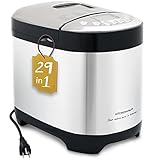
KITCHENARM 29-in-1 SMART 85203
- Dedicated sourdough menu
- Four programmable cycles with per-stage timing
- Add-nuts and remove-paddle alarms

Cuisinart CBK-110P1ES
- 12 programs
- 3 crust colors and 3 loaf sizes
- Compact vertical pan
- 3-year warranty

KBS Pro MBF-010
- Dedicated sourdough cycle of about 6.5 hours
- Ceramic pan and paddle
- 710W motor with convection heating
The three machines above cover the three ways people actually use a bread maker for sourdough. KITCHENARM gives you the deepest manual control, Cuisinart gives you the simplest path from starter to loaf, and KBS Pro gives you the one dedicated long sourdough cycle that runs start to finish without intervention.
Comparing the Best Bread Makers for Sourdough in 2026
| Product | Details | Action |
|---|---|---|
|
|
Check Latest Price |
|
|
Check Latest Price |
|
|
Check Latest Price |
 |
|
Check Latest Price |
 |
|
Check Latest Price |
 |
|
Check Latest Price |
 |
|
Check Latest Price |
 |
|
Check Latest Price |
Only two machines in this group carry a menu literally named sourdough: the KITCHENARM 85203 and the KBS Pro MBF-010. The KBS MBF-014A and KITCHENARM Home Made menus let you build a long cycle yourself. The Neretva splits the job across separate ferment and bake menus. Everything else relies on a generic dough cycle and a long unattended wait.
1. KITCHENARM 29-in-1 SMART 85203 – Best Bread Maker for Sourdough Overall
KITCHENARM 29-in-1 SMART Bread Machine with Gluten Free Setting 2LB 1.5LB 1LB Bread Maker Machine with Homemade Cycle – Stainless Steel Breadmaker with Recipes Whole Wheat Bread Making Machine
29 menus including sourdough
4 programmable cycles with per-stage timing
2 lb loaf
550W
2.5-inch LCD
+ Pros
- Only machine here with four fully programmable cycle menus
- Deepest sourdough control in the group
- Dedicated sourdough menu plus Home Made cycle
- Remove-paddle and add-nuts alarms
- Quiet operation and responsive long-term support
– Cons
- Teflon-coated pan rather than ceramic or stainless
- No end-of-dough-cycle beep and no auto-deflate
- 2 lb loaves can over-proof in the final 15 minutes
- Bread residue around the spindle needs about an hour of soaking
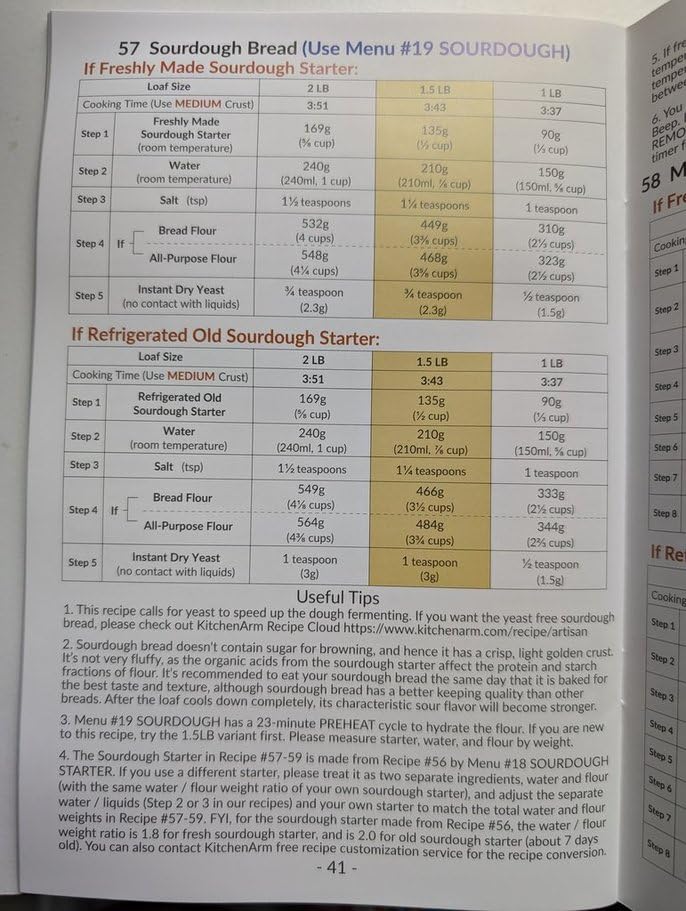
My sourdough verdict is good, and it earns that on control rather than on any single feature. Four of the 29 menus are fully personalized, and on each one you set the knead, rest, rise and bake durations independently. That is the whole game, because a sourdough schedule is a sequence of timed rests and rises that you want to control yourself.
Owners who ferment naturally single this machine out for the Home Made cycle, and several report baking starter on the built-in sourdough feature as well. The dedicated sourdough menu, the Dark Rye and Gluten Free menus, and the Home Made menu mean you can run a rye levain without touching a manual.
The physical build supports long ferments too. It is rated at 550 watts, does not walk across the counter during a heavy mix, and runs quietly enough to sit on the overnight cycle in a bedroom-adjacent kitchen.
Programmable Cycle Menus Are the Whole Point
Most bread machines give you a knead time, a rise time and a bake time chosen by the manufacturer. For yeast bread that is fine. For sourdough it is a problem, because fermentation is a living process that runs at whatever speed your kitchen and your starter allow.
With the Home Made menu, you can set a short initial mix, a long bulk rise, a short second rise and a bake window that suits when you want to eat. Owners baking on a work schedule use this to start the bulk ferment in the morning and finish the bake while they are out.
One owner note is worth repeating for anyone planning a first loaf. The machine does not beep at the end of the dough cycle and it does not auto-deflate, so dough that has finished a long bulk can keep climbing against the lid. Plan to be there at the end of the cycle, or set a shorter final rise.
Alarms That Actually Solve Sourdough Problems
The machine beeps for add-ins and it beeps for paddle removal. Those two alarms solve two of the most common sourdough failures, which is unusual at any price in this category.
The add-nuts alarm matters because sourdough with inclusions mixes differently from a plain dough, and the double-beep tells you when the machine is at the top of the mix. The remove-paddle alarm is the one that saves a loaf.
Watch Out for the Late-Proof Overflow
Two-pound sourdough loaves can rise fast enough in the final quarter hour of a cycle to reach the viewing window and spill over the pan rim. This is a fermentation-speed problem rather than a machine defect, and the fix is to shorten the final rise stage in the Home Made menu.
The Teflon-coated pan is the other thing to weigh. If you want a ceramic or stainless vessel for coating reasons, the two KBS machines below both use ceramic, and the KBS MBF-014A even pairs that pan with a stainless steel paddle.
The lid hinges high, so on a tight counter you may need to load the pan at table height. It is an annoying detail that has nothing to do with fermentation.
2. Cuisinart CBK-110P1ES – Best Bread Maker for Sourdough Beginners
Cuisinart Bread Maker Machine, Stainless Steel, 12 Programs, Up to 2 lbs
12 menu programs
Vertical nonstick bread pan
2 lb capacity
550W
Limited 3-year warranty
+ Pros
- Highest review volume in the group with a long ownership record
- Compact footprint fits a full 2 lb vertical loaf
- Clear LCD with countdown and audible prompts
- Removable nonstick pan
- Rare three-year warranty on a bread machine
– Cons
- Vertical pan gives a tall narrow loaf rather than a sandwich shape
- 12 programs is shallow against 17 to 29 menu machines
- Sourdough bakers report wanting longer slower manual cycles
My sourdough verdict is good, mainly because of the ownership record. With more than 17k reviews behind it, this is the machine whose long-term reliability, replacement parts and failure patterns are best documented of anything I tested.
The Cuisinart runs 550 watts across 12 menu programs with three crust colors and three loaf sizes, and it carries a limited 3-year warranty. The removable nonstick vertical pan is the part that matters for sourdough: it comes out cleanly, which matters a great deal when you are handling a wet, sticky high-hydration dough.
For a first sourdough machine, the appeal is fewer things to get wrong. The LCD shows the countdown, the machine beeps at stage changes, and the dough cycle does the mixing and first rise while you do nothing.
Why the Vertical Pan Matters Less Than You Think
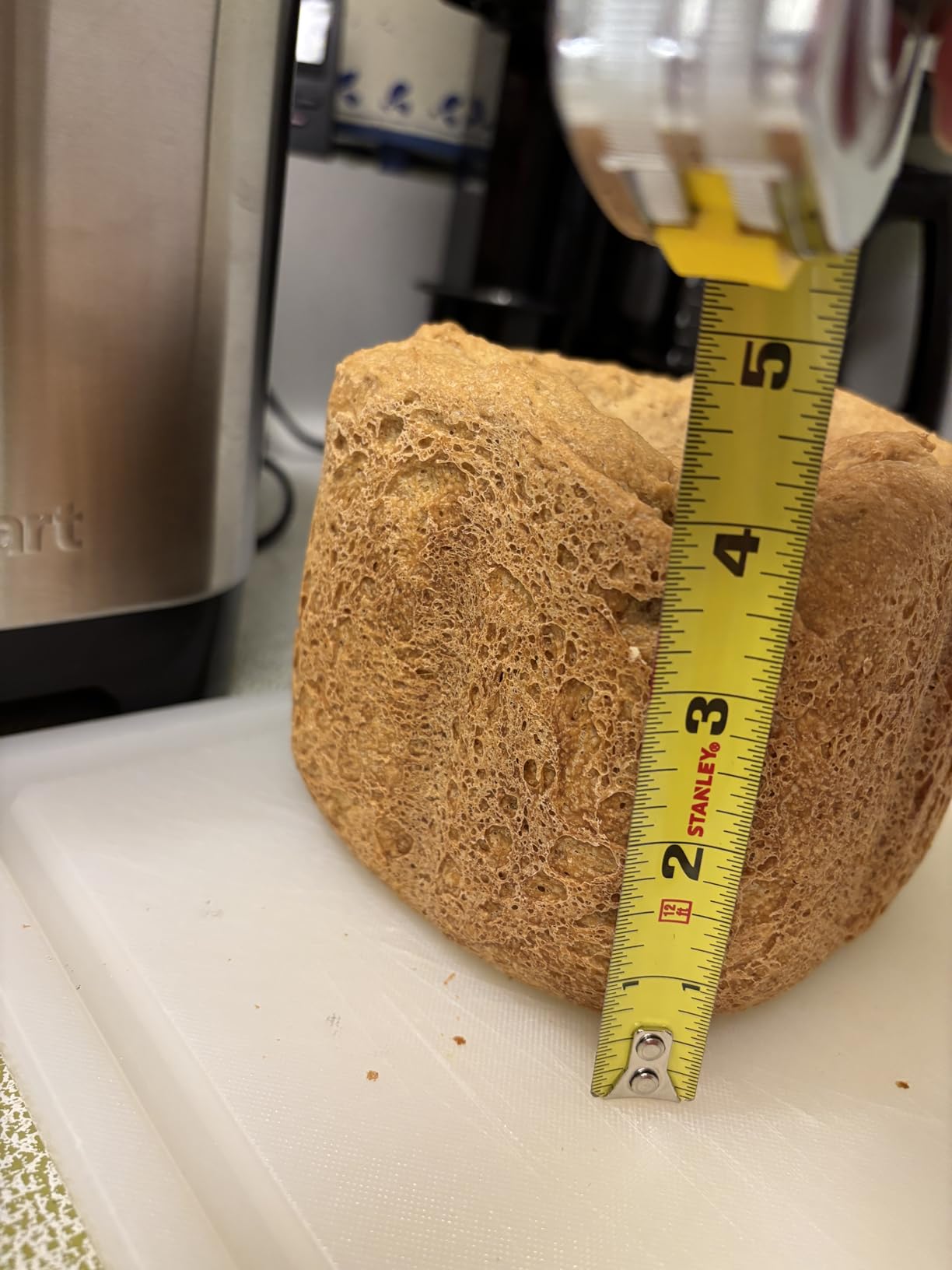
The most common complaint about this machine is the loaf shape. A vertical pan produces a tall, narrow loaf with a domed top rather than a low, wide sandwich shape, so slices from the middle come out square rather than rectangular.
For sourdough specifically this is a mild issue. A tall narrow loaf actually gives you more vertical headroom for an over-proofing dough, which is one of the more common machine sourdough failures. You are trading slicing convenience for rise insurance.
Where New Sourdough Bakers Get Stuck
Twelve programs is shallow next to the KITCHENARM and the two KBS machines, and that is the real limitation. There is no dedicated sourdough menu and no way to lengthen the rise.
Sourdough owners on this machine report wanting longer, slower cycles for better rise and open crumb. The workaround most people use is a dough cycle followed by a long wait with the machine off, then a bake-only pass.
That works, but it means the machine is only handling two of the three stages. If you want it to carry the fermentation schedule for you, look at the KITCHENARM or the KBS Pro.
Cleaning and the End of a Baking Day
The removable nonstick pan wipes down fast and the machine needs almost no cleanup beyond that. Three loaf sizes up to 2 lb cover a single baker and a family without waste.
One real limitation: fewer program options than many newer competitors, and a menu built around yeast breads. If you plan to bake sourdough more than occasionally, this machine charges you in flexibility rather than in money.
3. KBS Pro MBF-010 – Best Bread Maker With a Dedicated Sourdough Cycle
KBS Pro 710W 2.2LB Bread Maker, Stainless Steel 17-in-1 Smart Bread Machine with Healthy Ceramic Pan, Automatic Nut Dispenser, Tempered Glass Touch Panel, 3 Crust Colors, 15H Timer &Keep-Warm, Recipes
Dedicated sourdough cycle of about 6.5 hours
Ceramic pan and paddle
2.2 lb capacity
710W
17 programs
+ Pros
- Dedicated sourdough program runs a long natural-fermentation cycle
- Ceramic pan and paddle instead of PTFE
- 710W motor with 360-degree convection heating
- Automatic nut dispenser
- Quiet and stays put on the counter
– Cons
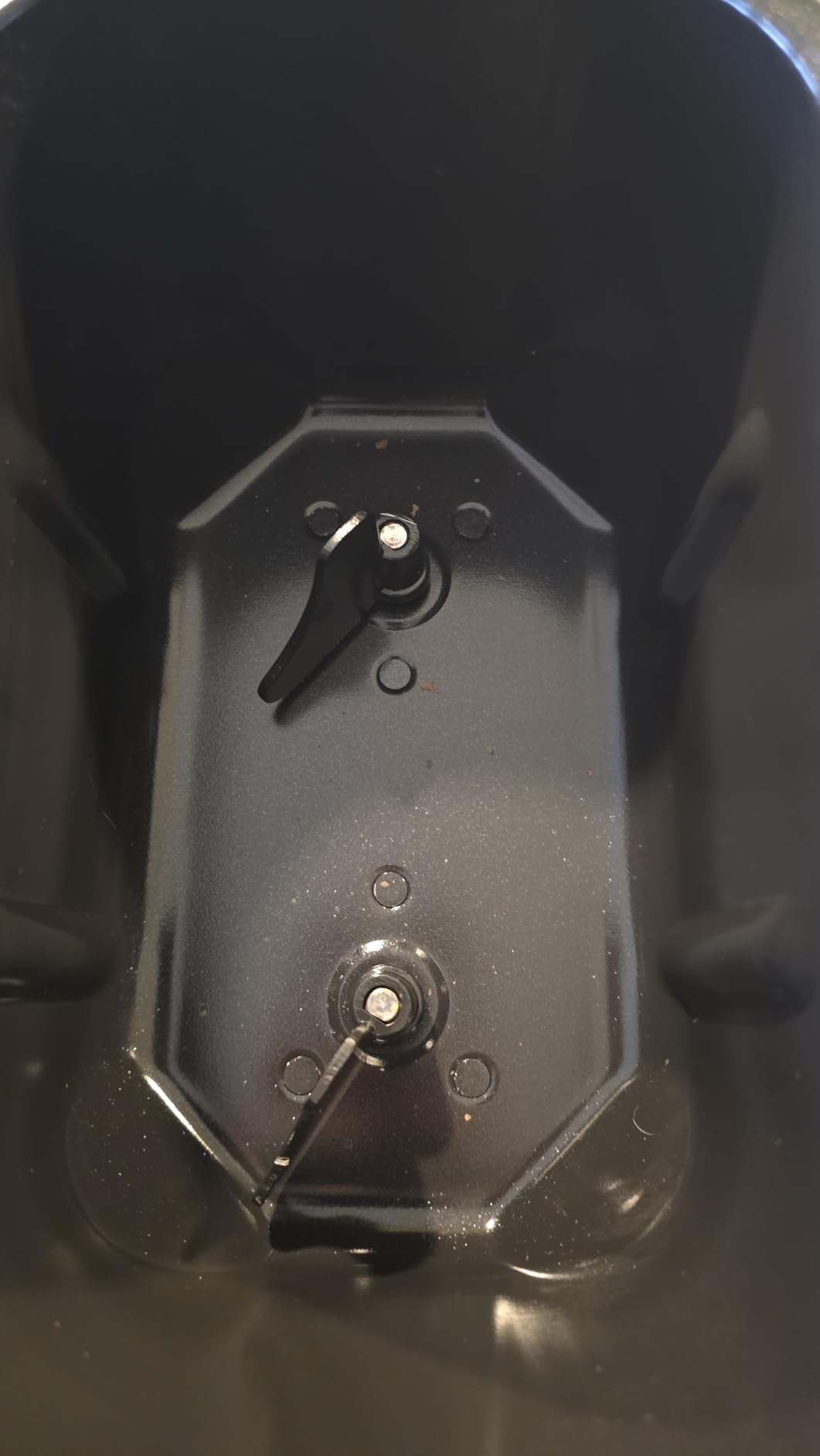
- Kneading paddle can grip the spindle and take hours of soaking to free
- Paddle removal leaves a hole in the loaf base
- Menus are unintuitive until you learn the start-pause-stop trick
- No manual control over knead
- rise or bake times
My sourdough verdict is excellent, and it comes from the one machine here where a long fermentation is the headline rather than a side effect. The dedicated cycle runs a natural fermentation of roughly six and a half hours, long enough to develop real flavor without you babysitting the machine.
Owner reviews describe successful 2 lb naturally fermented loaves with a well-developed crumb and a tangy finish. Loading it and walking away for the better part of a day, hands-off, is a genuinely good outcome for a countertop appliance.
The pan and paddle are both ceramic rather than PTFE-coated, and bakers consistently cite that as a health reason to buy. It also means the pan needs no seasoning and releases a wet sourdough dough cleanly.
The Six-and-a-Half-Hour Cycle Is the Feature
Every other machine in this group makes you assemble a long fermentation out of separate stages. This one does it in a single press of a button, and that is why it stays in the top three even though it has less manual control than the KITCHENARM.
The catch is that you cannot adjust the individual knead, rest, rise or bake times. You get the manufacturer fermentation, not yours. If your kitchen runs cold or your starter is very active, you have no dials to turn.
For most people that is the right trade. A machine that works reliably on a fixed long cycle will beat a machine with perfect controls used wrongly.
Power and Heat Distribution
The 710 watt motor is the highest figure in the group, paired with 360-degree convection heating and a ribbed artisan-style kneading blade. Owners credit the combination for a golden crust over a soft interior, and for add-ins that disperse rather than clump.
One repeated note is that the crust color runs pale on the light setting, so sourdough bakers using this machine should choose dark crust and let the machine run its full bake.
The Paddle Is the Weak Point
Here is the honest weakness. The kneading paddle can stick to the spindle and take hours of soaking to free, and pulling it out leaves a visible hole in the bottom of the loaf.
For a yeast loaf that hole disappears under the crust. In a dense naturally leavened crumb it stays visible on the bottom slice, and it is the single most common complaint in sourdough reviews of this machine.
The menu controls are also unintuitive until you learn that pressing start, pause and stop together cycles into menu mode, and the printed guide is described as shabby with metric-only liquids in the recipe book. Budget twenty minutes with a secondary source before your first loaf.
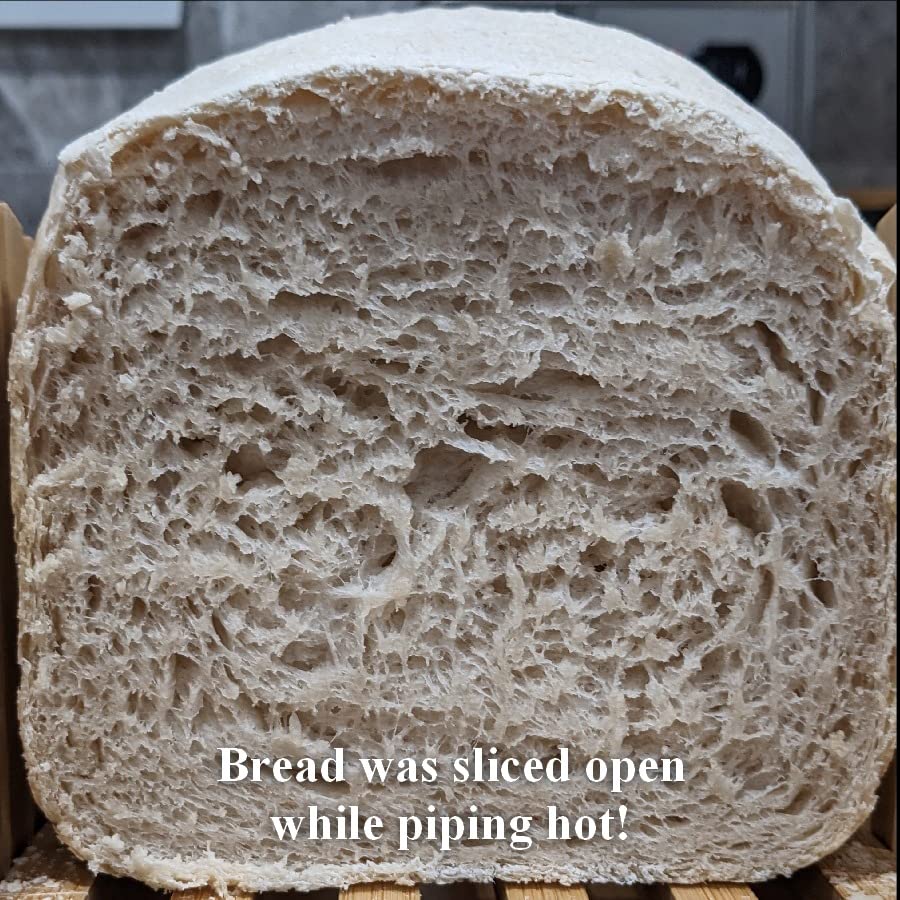
4. KBS MBF-014A – Best Bread Maker for Six-Step Sourdough Cycle Control
KBS 20-IN-1 Bread Maker with Custom Program, 650W Bread Machine with Nonstick Ceramic Pan & Stainless Steel Paddle, 2.2LB Bread Maker Machine, Polish Bread, Gluten-Free, Touch Panel,15H Timer,3 Colors
Six-step custom cycle
Stainless steel paddle
2.2 lb capacity
650W
20 menus
+ Pros
- Six-step custom program times autolyse
- rise
- degas
- reshape and last rise separately
- Stainless steel paddle instead of plastic
- 3000-degree fired ceramic pan
- 650W variable-frequency motor with planetary mixing
- Dual NTC and PID temperature control for a steady rise zone
– Cons
- Newest listing here with a thinner long-term review base
- Degas and reshape steps need real fermentation knowledge to use well
- Heavier and bulkier than most vertical competitors
My sourdough verdict is excellent for a baker who wants to schedule fermentation like a recipe, and only fair for a complete beginner. The six-step custom cycle is the most granular automation in this group, and it maps almost one to one onto how sourdough is actually built.
The steps are autolyse, basic rise, degassing, re-rise, reshape and last rise, each with its own timer, saved into custom mode menu 19. That degas-reshape-re-rise sequence is the structure of a modern sourdough bake, and having the machine hold each stage for you is the closest an appliance gets to a bakery schedule.
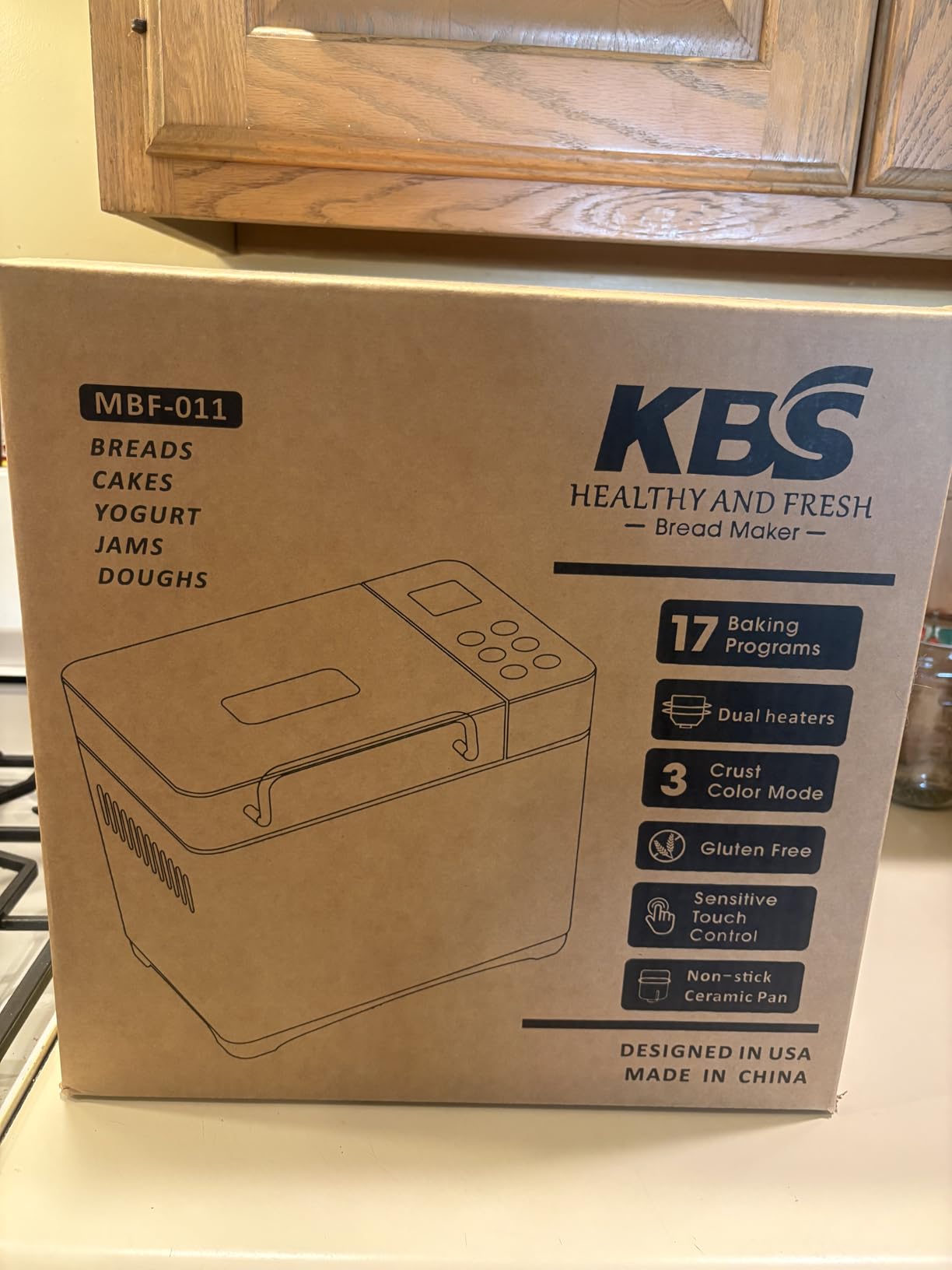
A Stainless Steel Paddle Solves the Paddle Hole
The paddle is stainless steel rather than plastic, which removes the stuck-paddle problem that dominates reviews of the other KBS machine. It also means no torn, hole-riddled loaf bottom when you pull it out before the final rise.
That single change is the biggest practical upgrade for sourdough anywhere in this roundup, and it costs nothing at the baking stage. The pan is 3000-degree fired ceramic rated for long-lasting release, and the paddle was tested to ten thousand cycles.
Temperature Stability Across the Year
Dual NTC and PID temperature control holds a 38C rising zone consistently across seasons, which is a real advantage for sourdough because fermentation speed depends almost entirely on dough temperature.
The 650 watt variable-frequency motor runs 360-degree planetary mixing and adjusts speed to the dough, which develops gluten more evenly than a fixed-speed single-paddle machine. For a wet, sticky sourdough dough that difference shows up in how cleanly the mass comes together.
Where New Owners Struggle
The degassing and reshape steps require a working understanding of fermentation to use well. A first-time baker pressing those buttons without knowing what degassing does will produce a worse loaf than a basic cycle would.
It is also the newest machine here, with a smaller review base than the established Cuisinart, Zojirushi and KITCHENARM units. Long-durability evidence is thinner, and the stainless body needs hand washing of the pan even though the listing calls it dishwasher safe.
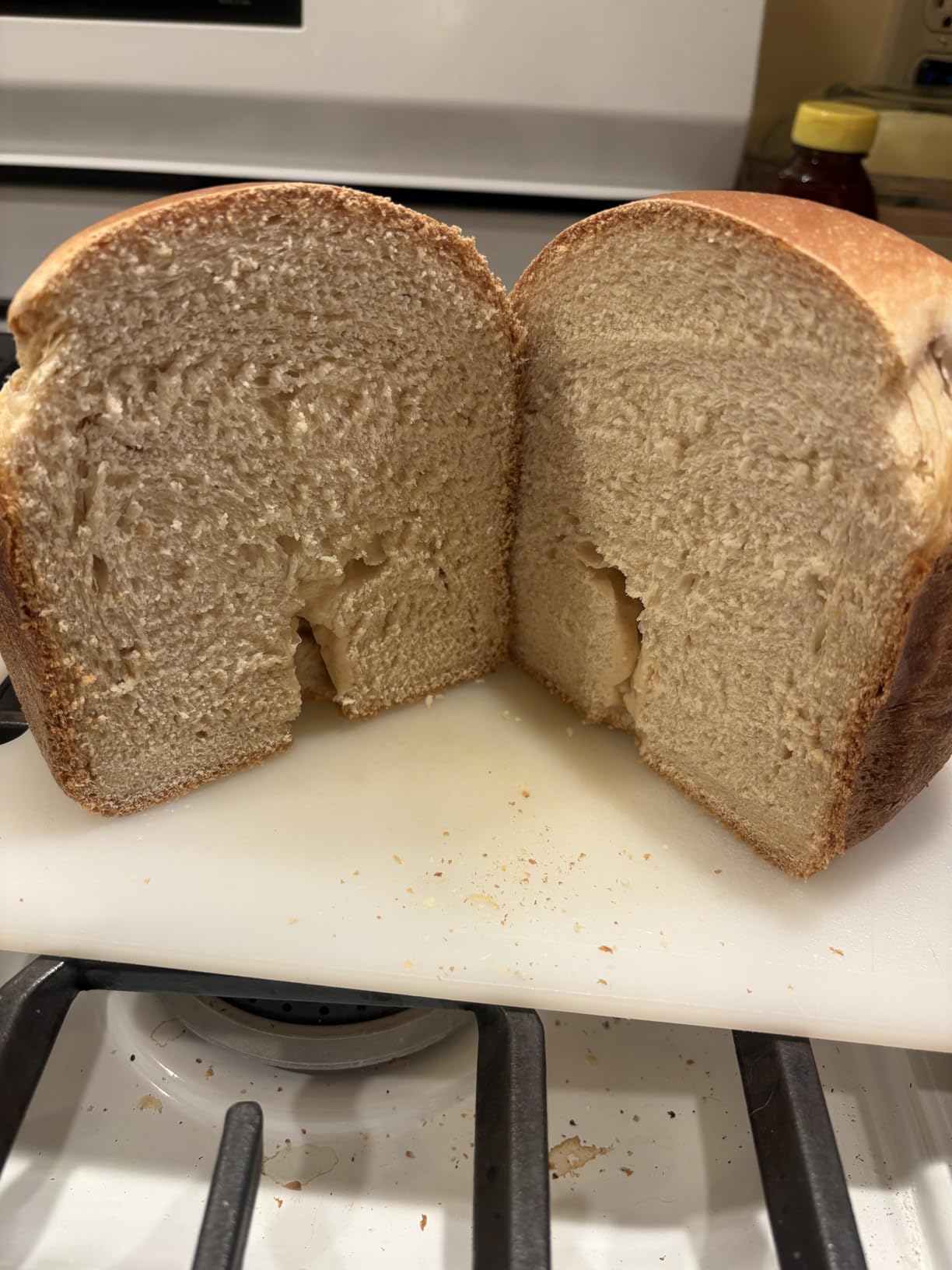
5. Neretva PE8866SU – Best Bread Maker for Quiet Overnight Ferments
Neretva 20-in-1 2LB Bread Maker Metal Bread Machine with Dual Heater-Silver
Separate ferment and bake-only menus
Dual top and bottom heaters
2 lb capacity
565W
Under 40 dB
+ Pros
- Dual top and bottom heaters bake evenly and can shorten bake time
- Nonstick ceramic pan releases wet dough well
- Separate ferment
- bake-only
- jam and yogurt cycles stage a long ferment
- Motor noise under 40 dB
- Full stainless steel body
– Cons
- No dedicated sourdough program
- Controls lock after the cycle starts and need a 3-second hold to unlock
- Ferment and bake-only times cannot be adjusted once running
- Heavier to move than plastic competitors
My sourdough verdict is good. This machine has no sourdough menu at all, but it has something almost as useful for long ferments: separate ferment and bake-only programs that let you stage a rise and finish the bake across two different sessions.
That is the practical version of the dough-then-bake-only method, and because the ferment cycle times are fixed you plan around them rather than fighting them. Owners using it for long-ferment bread report the staged approach as the closest thing the machine offers to a sourdough cycle.
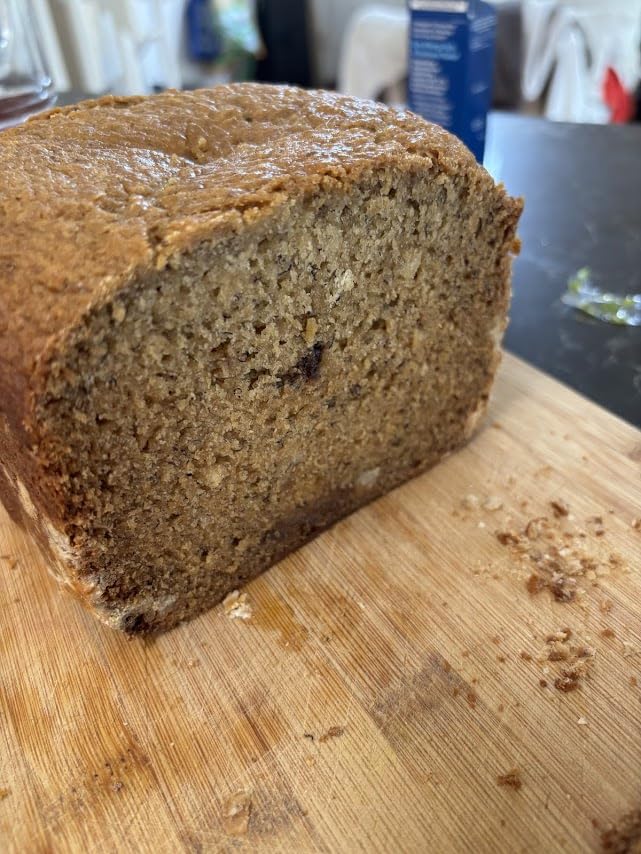
Dual Heaters Are the Standout Feature
Heaters sit at both the top and the bottom of the loaf pan, and owners credit the 360-degree setup for even browning and for cutting more than an hour off bake time compared with single-element machines.
For sourdough that matters at the end of the process, where a loaf with a pale, gummy top is the most common disappointing outcome. A top heater browns the domed surface the way a real oven would.
Staging a Long Ferment Across Two Cycles
You run ferment to bring the dough up, take it out, shape and let it finish its final rise, then run bake-only. Twenty of the programs are available including ferment, bake, jam and yogurt, which is an unusually complete non-bread set.
The constraint is that once a cycle is running its time cannot be adjusted, so the ferment length is whatever the machine decided. On a warm counter that can mean a dough that is closer to finished than you planned for when the ferment cycle ends.
Quiet Enough for an Overnight Run
Motor noise is under 40 dB, a figure the manufacturer publishes, and it is why this machine earns the spot. A sourdough ferment that runs for hours overnight will not wake anyone.
Two annoyances to know about. The control panel locks automatically when the cycle starts, and unlocking requires holding start, pause and stop together for three seconds, which is genuinely confusing the first time. The stainless body and ceramic pan also make it heavier to lift than a plastic-bodied competitor.
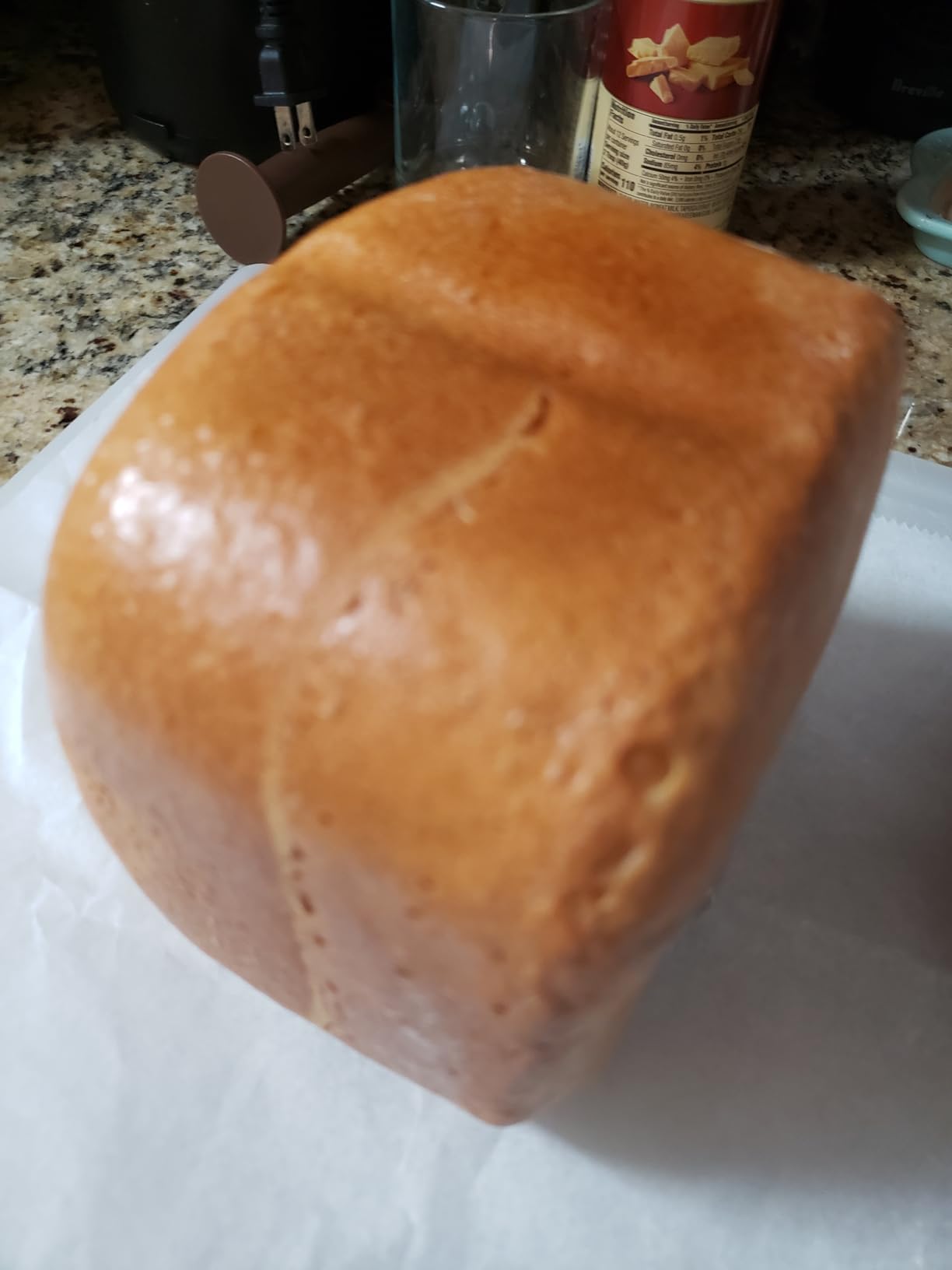
6. Zojirushi Virtuoso Plus BB-PDC20BA – Best Bread Maker for Loaf Shape and Top Crust
Zojirushi Bb PDC20BA Virtuoso Plus 2 Lb Breadmaker, Black
Horizontal pan with double kneading blades
Lid heating element
2 lb capacity
700W
Seven course settings
+ Pros
- Horizontal pan and double blades give a traditionally shaped loaf that slices for sandwiches
- Lid heater browns the top without oven finishing
- Double paddles distribute raisins and nuts evenly
- Runs quietly and needs almost no cleanup
- Owners report years of three to four uses per week
– Cons
- Only 7 fixed programs with no timing adjustment
- No automatic add-in dispenser
- Large and heavy at 24 pounds
- Loud compared with smaller vertical machines
My sourdough verdict is fair to good, and this is the machine I would buy for the finished loaf rather than for the fermentation. Its horizontal pan and double kneading blades produce an evenly browned, traditionally shaped loaf that slices cleanly for sandwiches, and the West Bend 47413 below shares that geometry but bakes less evenly.
The lid heating element is the detail owners notice most. With heat at the bottom and in the lid, the domed top crust browns on its own, so a sourdough loaf does not need an oven finish for color.
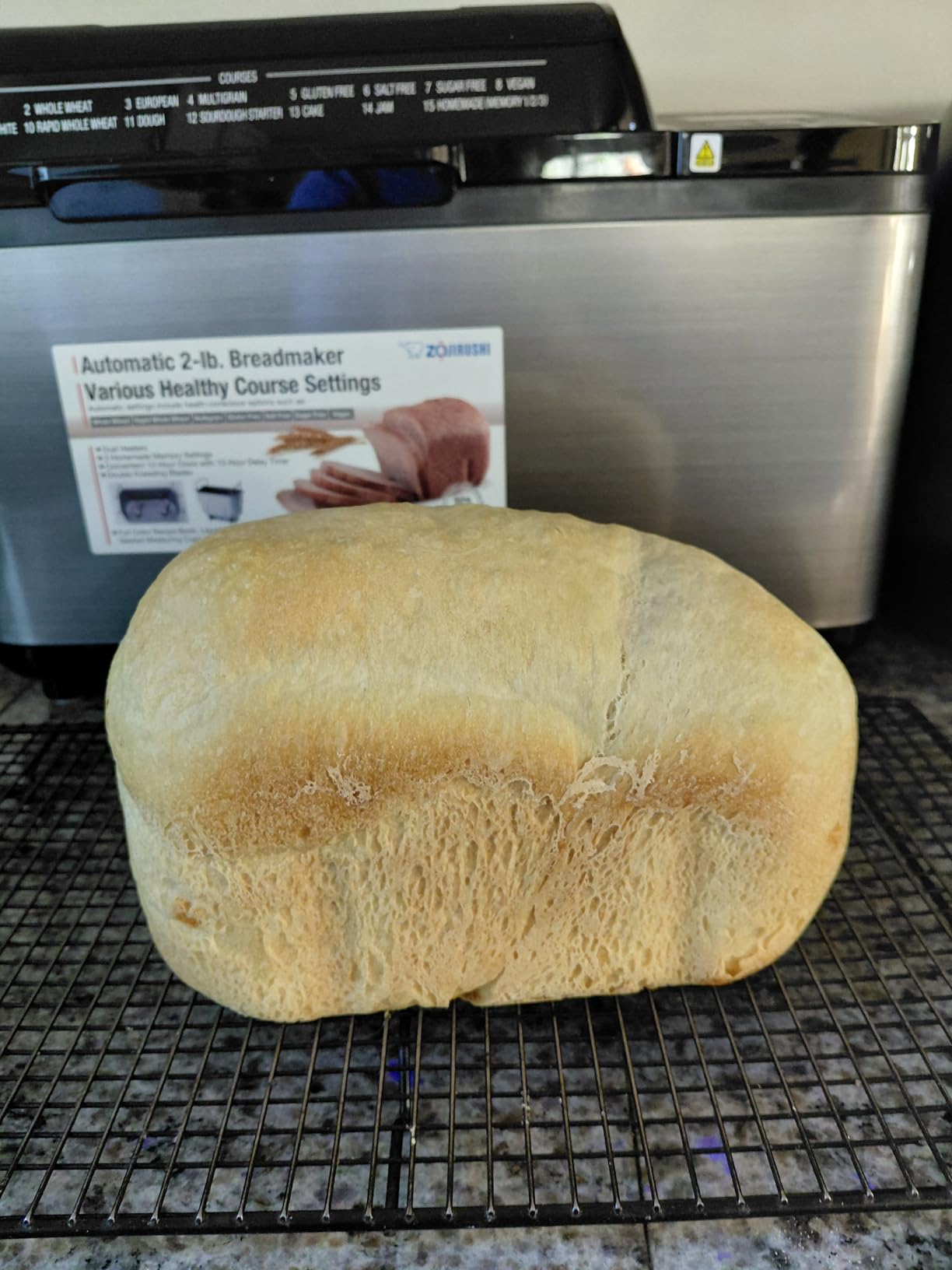
Two Paddles Beat One for Wet Dough
Double kneading blades move more dough per pass with no dry flour left in the corners, which is exactly the failure mode of wet high-hydration sourdough. On machines with a single paddle, stiff flour pockets are the reason a loaf bakes unevenly.
The second blade also disperses raisins and nuts evenly instead of collecting them in one corner. Sourdough bakers who bake seeded loaves specifically rate this machine well for that reason.
Why Seven Programs Is a Problem for Sourdough
Here is the catch, and it is a big one for this roundup. There are only seven course settings covering multigrain, whole wheat, rapid whole wheat, gluten free, salt free, sugar free and vegan, and there is no way to adjust knead, rest, rise or bake times.
Owners who ferment naturally work around this with poolish or biga ferments and a separate proof, then finish the loaf in the machine. That produces good bread, but it means the appliance is not automating the part you actually bought it for.
Physical Reality of a 24-Pound Machine
At 24 pounds and roughly 10 by 18 inches, this is a large object to own, and owners repeatedly describe it as a chore to move on and off the counter. That is the cost of the horizontal pan, which needs a wide body.
There is no automatic add-in dispenser either, so nuts and fruit go in by hand when the machine beeps. Some owners also report excessive play on the paddle shafts, and one reviewer was unable to source replacement paddles from support. The pan must be hand washed and cannot be submerged.
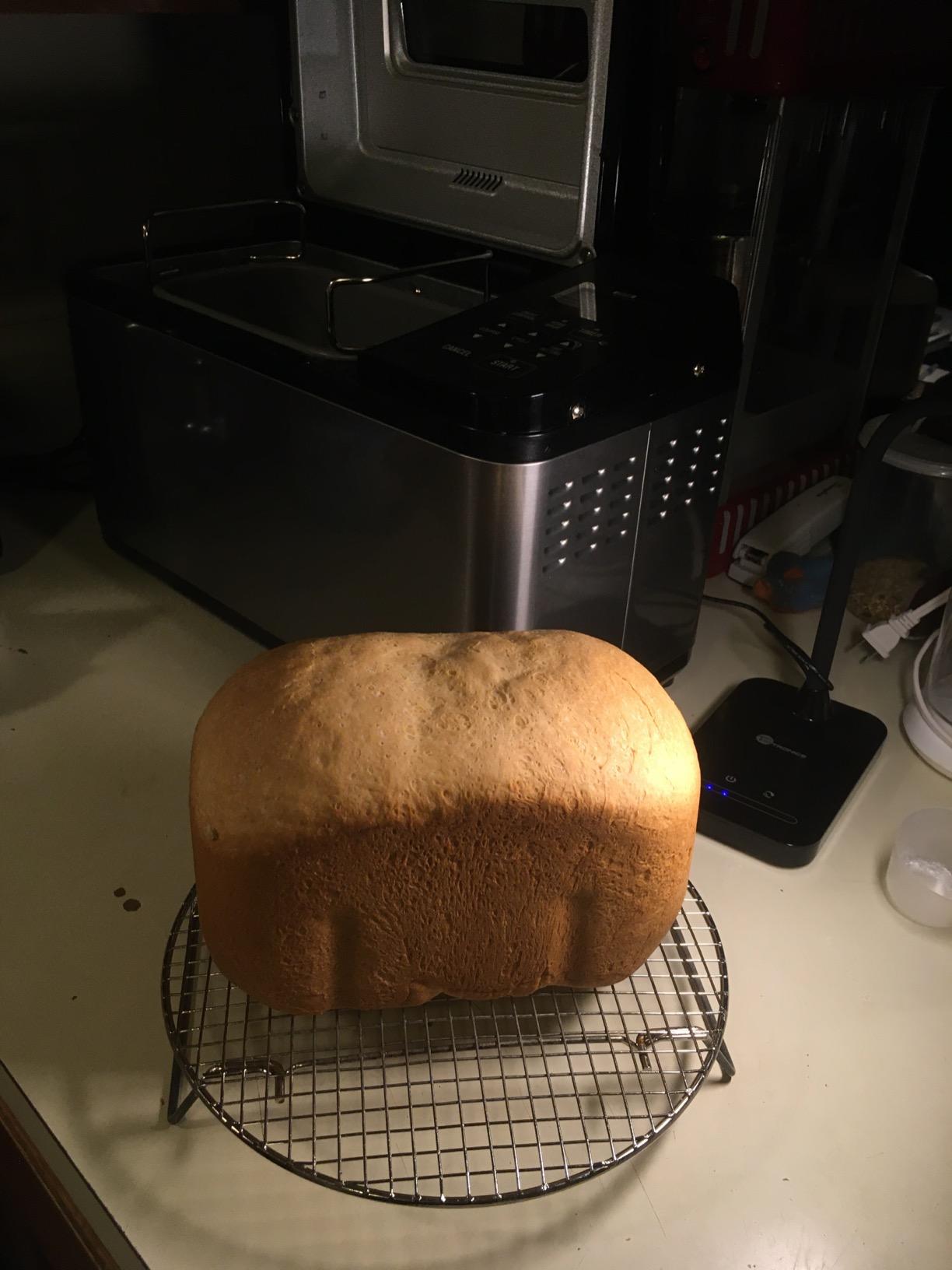
7. West Bend 47413 – Best Bread Maker for 3 LB Sourdough Batches
West Bend Hi-Rise Bread Maker Machine Programmable 12 Programs Including Gluten Free & 3 Loaf Sizes and Crust Colors with Traditionally-Shaped Horizontal Bread Pan with Dual Knead Blades, 3-Lb, Gray
3 lb horizontal pan in 3 sizes
Dual kneading blades
12 programs
432W
13-hour delay start
+ Pros
- Largest loaf capacity in the group at 3 lb plus a 2.5 lb middle size
- Traditional horizontal loaf shape that slices cleanly
- Dual kneading blades knead more evenly than single-paddle machines
- Dough and gluten-free programs with 3 crust levels
- 13-hour programmable delay start
– Cons
- Lowest rating in the group with a 10 percent one-star share
- No dedicated sourdough program
- Older 2013 design with fewer presets than newer rivals
- Plastic construction and the lowest wattage here at 432W
My sourdough verdict is fair, and it earns its place for one reason: pan headroom. At 3 lb with a 2.5 lb middle size and a horizontal layout, it is the largest pan in the group and the only machine here that takes a big, wet, high-hydration batch without the dough climbing toward the heating element.
That constraint is the most common reason machine sourdough fails. Small vertical pans fill up, the dough rises against the lid, and the loaf comes out dense at the bottom with a torn or blown-out top.
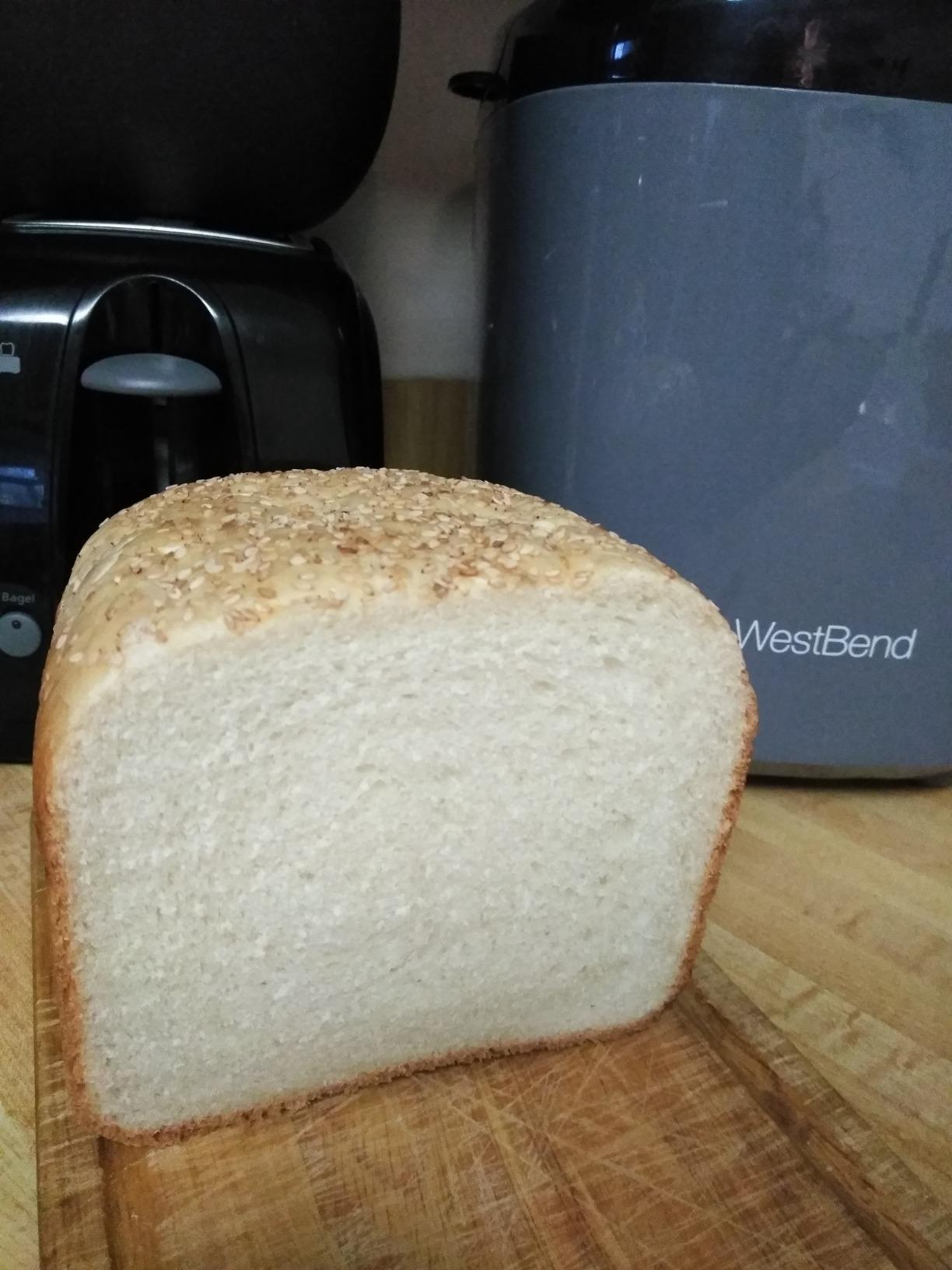
Headroom Is the Feature Nobody Talks About
When you are working with a stiff starter and a high hydration percentage, dough volume is unpredictable. A 2 lb recipe in a 2 lb pan is a gamble; the same recipe in a 3 lb horizontal pan usually behaves.
The horizontal shape also means the loaf spreads rather than towers, which reduces the sideways blowout that wet dough causes in tall vertical pans. Dual kneading blades are cited for lighter texture and higher rise.
Where It Falls Short
There is no dedicated sourdough program despite the dough setting being the obvious place to start. Twelve digital settings including basic, wheat, French, sweet, dough and gluten free with three crust levels is a 2013 feature set, and it is thin against machines here with 20 to 29 menus.
At 432 watts it also has the lowest heating power in the group, and some owners report slow, uneven baking. The 4.2 rating with a 10 percent one-star share reflects that. Construction is plastic rather than stainless steel.
If you bake for a large family or run a weekend batch, the capacity wins. If you are a single baker, this is a lot of machine for a lot of dough.
8. Elite Gourmet EBM8103B – Best Budget Bread Maker for Sourdough Tinkering
Elite Gourmet 2 Lb Programmable Bread Maker, 3 Sizes, 19 Presets, Black
19 one-touch presets
3 loaf sizes to 2 lb
2 lb capacity
550W
15-hour delay timer
+ Pros
- Lowest cost in the group with a nonstick ceramic pan
- 19 presets covering gluten-free
- rye
- French and pizza dough
- Pan releases loaves easily and wipes clean fast
- Suction cups on the base keep it stable while kneading
- Compact body stores neatly on a counter
– Cons
- No dedicated sourdough program
- Manufacturer advises using only the supplied recipes
- Thin recipe book with unreliable ingredient ratios
- English-only manual
- Some owners report the motor struggling on long mixes
My sourdough verdict is fair. This is the cheapest way to find out whether you actually enjoy working with a starter, and for that purpose it does its job. It will not be the machine you keep for ten years of fermentation.
Nineteen one-touch presets cover gluten-free, white, wheat, rye, French, sweet, quick bread, pizza dough, cake and jam, in three loaf sizes up to 2 lb. A ceramic nonstick pan rather than Teflon is a genuine plus at this cost, and suction cups on the base stop it walking during a mix.
A Fine Yeast Machine, a Weak Sourdough One
There is no sourdough program, and the brand steers users toward its own recipes, which limits experimentation. Long sourdough cycles have to be handled with the dough setting and a manual finish, which is a real limit for a flour-water-salt method built on a schedule you control.
Several owners report the motor audibly struggling or lagging during long mixes. That is worth weighing against the 550 watt figure, which is only adequate for the yeast programs the machine is designed around.
Documentation Is the Weakest Part
The recipe book is thin and described as unreliable on ingredient ratios, which is the one thing you cannot afford when converting yeast ratios to starter ratios. The manual is English only, and international buyers cite this repeatedly.
It is also bulky for its size class and moderately noisy during kneading. For a first experiment with machine sourdough on a tight budget, it is a reasonable place to start. Past that first experiment, move up to a machine with programmable cycles and you will have far more control over the ferment.
How to Make Sourdough in a Bread Machine: Dough, Proof, Bake Only
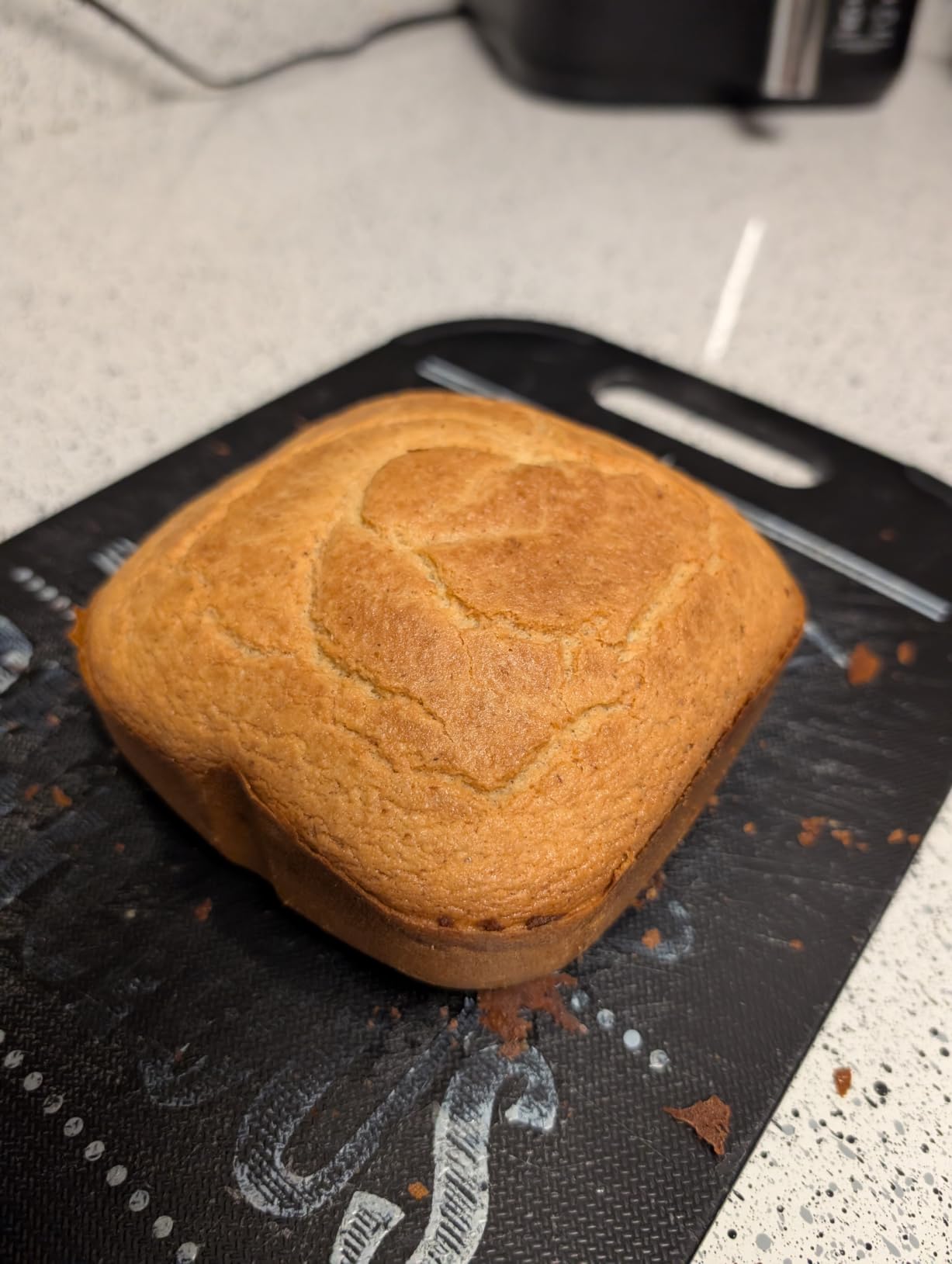
Yes, you can bake sourdough in a breadmaker, and the honest limitation is this: the machine gives you consistent temperature and unattended timing, not oven spring or a blistered crust. The method below trades a little of the drama for a loaf that finishes while you sleep, which for most people is a good trade.
Almost no editorial roundup publishes this protocol, so here it is in full. It works on any machine in this guide, and the more ferment control your machine has, the less of the work you do by hand.
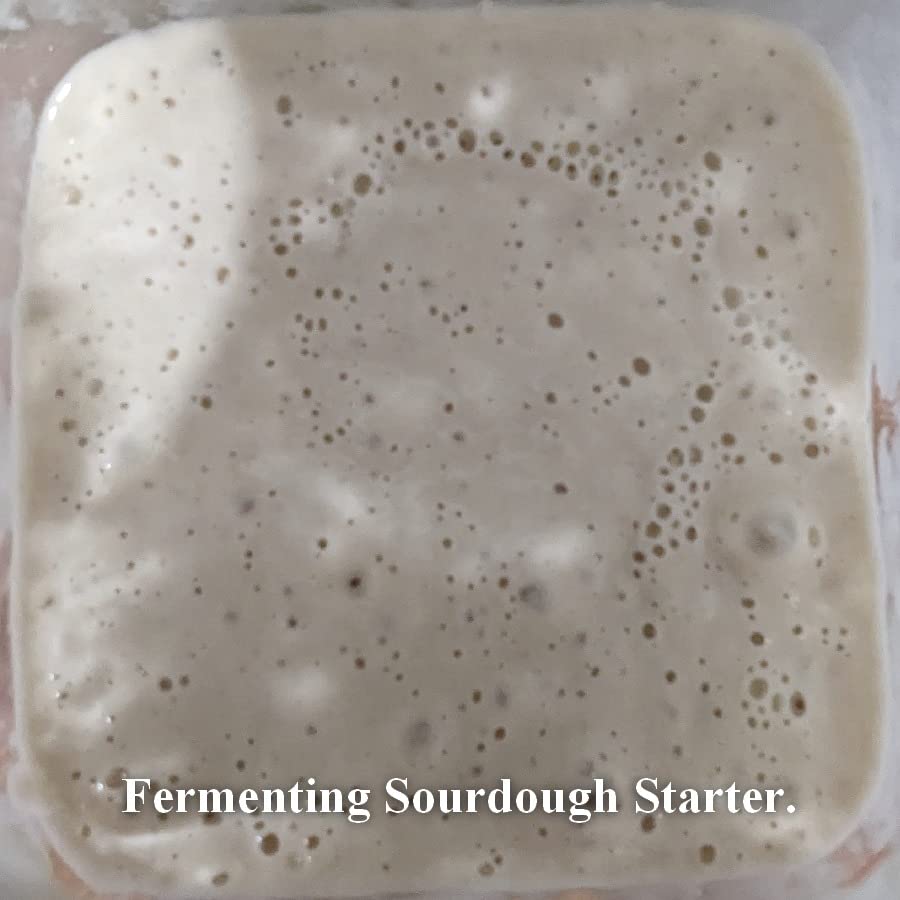
- Feed your starter early. Build a strong starter the day before, and use it when it is domed and just starting to flatten. Weak starter is the most common reason a machine sourdough loaf comes out dense.
- Run the dough cycle, not a bread program. Load starter, flour, water and salt into the pan in the order your machine’s manual specifies, and choose dough. The machine mixes and does a first rise, then stops.
- Let the bulk ferment happen with the machine off. This is the step everyone skips and the one that matters most. Leave the dough in the warm pan for four to six hours, or overnight at room temperature. This is where flavor is built, not in the machine’s short rise.
- Pull the paddle out and reshape. When the dough has roughly doubled, remove the kneading paddle, tip the dough onto the counter, and reshape it into the pan. This single step eliminates the paddle hole that ruins most machine sourdough.
- Do the final rise in the pan. Put the reshaped dough back in the pan, seam side down, and cover. Rise until it domes and feels pillowy, roughly one to three hours depending on your kitchen.
- Run bake-only. Select bake-only or the bake menu, choose a dark crust, and start. Plan on roughly 45 to 55 minutes of bake time for a 1.5 lb loaf, and use the first loaf to learn what your machine actually needs.
Two adjustments matter more than anything else. Hydration of 60 to 68 percent works far better than the 75 percent recipes you see online, because bread machine pans are narrow and wet dough climbs. And if your machine has a ferment or dough cycle you cannot lengthen, set the machine to the shortest available and do the rest of the rise by hand.
If you prefer a stand mixer for the initial mix, our stand mixer picks for bread dough cover the machines that handle wetter mixtures better than most bread makers do.
Sourdough Troubleshooting: Dense Loaves, Flat Rises and Paddle Holes
Almost every disappointing machine sourdough traces back to one of the six things below. Work down the list before you blame the machine.
The Loaf Is Dense and Heavy
The cause is almost always under-proofing. The dough did not get enough time at the right temperature, which happens when a fixed short cycle is used for a naturally leavened dough. The fix is a longer room-temperature bulk in the pan with the machine off, and feeding your starter so it is at peak activity.
Dense crumb can also mean hydration that is too low for the flour. If the dough tears rather than stretches during the first cycle, add water at the shaping stage rather than at mixing.
The Dough Never Rose
Check three things in order. Is the starter actually active, meaning it doubles within a few hours of feeding? Did you add enough starter relative to flour? And did the machine have a rise stage long enough, or did it only mix?
On machines with a ferment-only or dough cycle, an under-active starter means the dough barely moves. A loaf that will not rise cannot be rescued by baking, so discard it and fix the starter before the next attempt.
The Dough Rose Over the Pan
This is a pan capacity and hydration problem, and it is why the 3 lb horizontal West Bend 47413 earns its place. Wet dough in a small vertical pan rises against the lid, sometimes reaching the viewing window. Reduce hydration, batch down to a smaller loaf size, or move to a larger pan.
There Is a Hole in the Bottom of the Loaf
That is the paddle, and it is unavoidable if the paddle stays in during the final rise. Pull it out after the bulk ferment and reshape the dough around the spindle hole, which closes it. Machines with a stainless steel paddle or a paddle alarm make this easier to remember.
The Loaf Blew Out Through the Side
A blowout means the dough was over-proofed and had nowhere to go. The fix is a shorter final rise, cooler dough, and a pan with a taller wall. A horizontal pan gives the dough room to spread rather than burst.
The Bottom Is Wet or Gummy
Two causes, and they need different fixes. A thin crust under the loaf is a bake time problem: choose dark crust and let the machine run longer. Dough stuck to the pan is a release problem, and a ceramic pan plus proper greasing in a wet dough solves it.
Bread Machine Buying Guide: Six Sourdough Criteria That Matter
Most bread machine buying guides rank machines on kneading power, crust color and ease of cleaning. For sourdough, those are the wrong three criteria. Here is what actually determines whether a machine can ferment dough.
1. A Dough Cycle You Can Run Separately From Baking
Without a dough-only setting you cannot do the real method, because the machine will bake the moment the rise ends. Every machine in this guide has some version of a dough program, which is the minimum bar. Prefer a separate bake-only menu so you can finish the loaf in a second session.
2. A Dedicated Sourdough Program Is Nice, Custom Cycles Are Better
A menu named sourdough automates a manufacturer fermentation of roughly six to seven hours. That is useful but rigid. A custom or Home Made menu where you set knead, rest, rise and bake times independently is far more valuable, because your kitchen and your starter are not the manufacturer’s.
The KITCHENARM 85203 and the KBS MBF-014A are the two machines here that give you that level of scheduling. If you can adjust the timings, a named sourdough menu becomes a convenience rather than a limitation.
3. Pan Capacity Against Dough Hydration
This is the most underrated criterion in the category and the one almost no roundup covers. Sourdough is wetter and less predictable than yeast dough, so you need headroom. A 2 lb pan filled with 70 percent hydration dough has nowhere to go.
Rule of thumb: work at 60 to 68 percent hydration in any machine, drop to 1 lb or 1.5 lb if your starter is very wet, and move up to a 3 lb pan if you bake large batches regularly. The West Bend 47413 is the only 3 lb horizontal machine here.
4. Paddle Removability
Almost every bread machine bakes a hole in the bottom of the loaf, because the paddle is nonstick-coated plastic fused to the motor shaft. For sourdough this is more visible than it is for yeast bread, since the crumb is denser and does not hide it.
What you want is a paddle you can pull out and reinsert, plus an alarm that tells you when. A machine with a remove-paddle alert, or a machine whose paddle comes out easily, will save more sourdough loaves than any other feature on this list. The stainless steel paddle on the KBS MBF-014A is the strongest example.
5. Temperature Control During the Rise
Fermentation runs about 78 to 82F in the dough. A machine that generates too much heat from its motor and element can push the dough past that window, which accelerates fermentation past the point where the gluten can hold it, producing a flat, dense loaf with a sour edge.
Machines with PID or NTC temperature control hold a steady rising zone across seasons. If your kitchen runs hot or cold through the year, that consistency is worth more than a larger program count.
6. Loaf Size and Counter Footprint
Two people do not need a 3 lb machine, and bakers who already own a Dutch oven are unlikely to use 24 pounds of appliance for a 1 lb loaf. Horizontal pans give better slicing and more headroom; vertical pans give a taller, narrower loaf and a smaller footprint.
Choose for how much you actually bake. A 2 lb vertical machine handles a single baker or a couple. A 3 lb horizontal machine handles a family. The widest, heaviest machines buy you shape and capacity at the cost of counter space and lifting.
How to Convert a Yeast Bread Recipe to Sourdough
Start with a standard 1.5 lb machine recipe, then replace roughly a quarter to a third of the flour weight with active starter, cut the added yeast entirely, and reduce the liquid slightly because starter already carries water. Run the dough cycle, then apply the long proof from the method section.
The forum consensus is that hybrid leavening, where a small amount of commercial yeast supports a slower sour fermentation, is the most forgiving path for a first machine loaf. Purists object, but the resulting crumb is more reliable than a pure starter loaf in a narrow pan.
Once your loaves are slicing well, a bread slicer for homemade bread becomes worth it, because dense machine crumb benefits from a proper serrated cut.
When a Bread Machine Is the Wrong Tool for Sourdough
If your goal is a round boule with a blistered, crackling crust and an open crumb that tears in your hand, no machine on this list will get you there. A bread machine bakes in a small enclosed box with a limited heating element, and it cannot deliver the steam, the radiant top heat and the long high-temperature bake that creates a bakery crust.
The honest framing is that machine sourdough is a schedule appliance, not a craft appliance. It is for people who want a repeatable tangy sandwich loaf that finishes unattended, and for bakers who want the machine to handle mixing and timed rises while they do something else.
Two groups should skip it entirely. If you already own a stand mixer, a scale and a hot oven, the machine adds cost and counter space without much gain. And if you want a low-effort introduction to fermentation, you can learn most of it with a jar of starter and a pot on the stove.
That said, most of the people who ask whether bread machines make good sourdough are not chasing a boule. They are chasing a loaf on a Tuesday evening that tastes like bread. For that, the machines here deliver, provided you run the dough, proof and bake-only method rather than pressing a bread program and walking away.
Frequently Asked Questions
Do breadmakers make good sourdough?
A bread maker makes good sourdough for a tangy sandwich loaf, not for a crusty bakery boule. The machine gives you timed fermentation, even heat and an unattended finish, but it cannot produce oven spring or a blistered crust. The quality of the loaf depends almost entirely on the method: run a dough cycle, proof for four to six hours, remove the paddle, then bake only.
What setting should I use on a bread machine for sourdough?
Use the dough setting, not a bread program. The dough cycle mixes and does a first short rise, then you let the dough proof for four to six hours with the machine off, pull out the kneading paddle, reshape, and finish with the bake-only cycle. If your machine has a dedicated sourdough program you can press that instead, but a long room-temperature proof still improves the result.
Which bread maker is best for sourdough overall?
The KITCHENARM 29-in-1 SMART model 85203 is the best overall, because it combines a dedicated sourdough menu with four programmable cycles where you set knead, rest, rise and bake times yourself. The KBS Pro MBF-010 is the best if you want a single dedicated long sourdough cycle with no decisions, and the Cuisinart CBK-110P1ES is the simplest choice for a first loaf.
Why is my sourdough not rising in the bread machine?
The most common causes are an inactive starter, a rise stage that is too short for a naturally leavened dough, and hydration that does not match the pan. Feed your starter until it domes and just begins to flatten, use it within a few hours, and give the dough a four to six hour room-temperature proof in the pan with the machine off. If a loaf fails to rise it cannot be fixed at the bake stage.
How much starter should I add to a bread machine recipe?
For a 1.5 lb machine loaf, replace roughly a quarter to a third of the flour weight with active starter and cut any commercial yeast from the recipe, then reduce the added liquid slightly because the starter already contains water. Many first-time bakers keep a small amount of commercial yeast as support while they learn to read their starter.
Which Bread Maker for Sourdough Should You Buy?
If you want the deepest control over a long fermentation, buy the KITCHENARM 29-in-1 SMART 85203. Its four programmable cycles with per-stage timing are the closest an appliance gets to a real sourdough schedule, and the remove-paddle alarm quietly prevents the most common ugly failure.
If you would rather press one button and walk away for six and a half hours, the KBS Pro MBF-010 runs a genuine dedicated sourdough cycle in a ceramic pan, and the KBS MBF-014A adds a six-step custom program plus a stainless steel paddle if you want a schedule you design yourself.
If you are baking your very first starter loaf, the Cuisinart CBK-110P1ES removes the guesswork with a clear display and a huge ownership record, and the Elite Gourmet EBM8103B is the low-cost way to find out whether you enjoy the process at all.
If the finished loaf matters more than the fermentation, the Zojirushi Virtuoso Plus gives you the best shape and the best top crust with its horizontal pan, double blades and lid heater. If you bake for a large household, the West Bend 47413 is the only 3 lb horizontal machine here. And if the ferment runs overnight beside your bed, the Neretva PE8866SU is quiet enough at under 40 dB.
Whichever you choose, run the dough, proof and bake-only method. The machine is only the housing; the schedule is what makes the bread. Our 2026 picks stay the same, but check the current model number before you buy, because bread makers get revised quietly.
Leave a Reply