
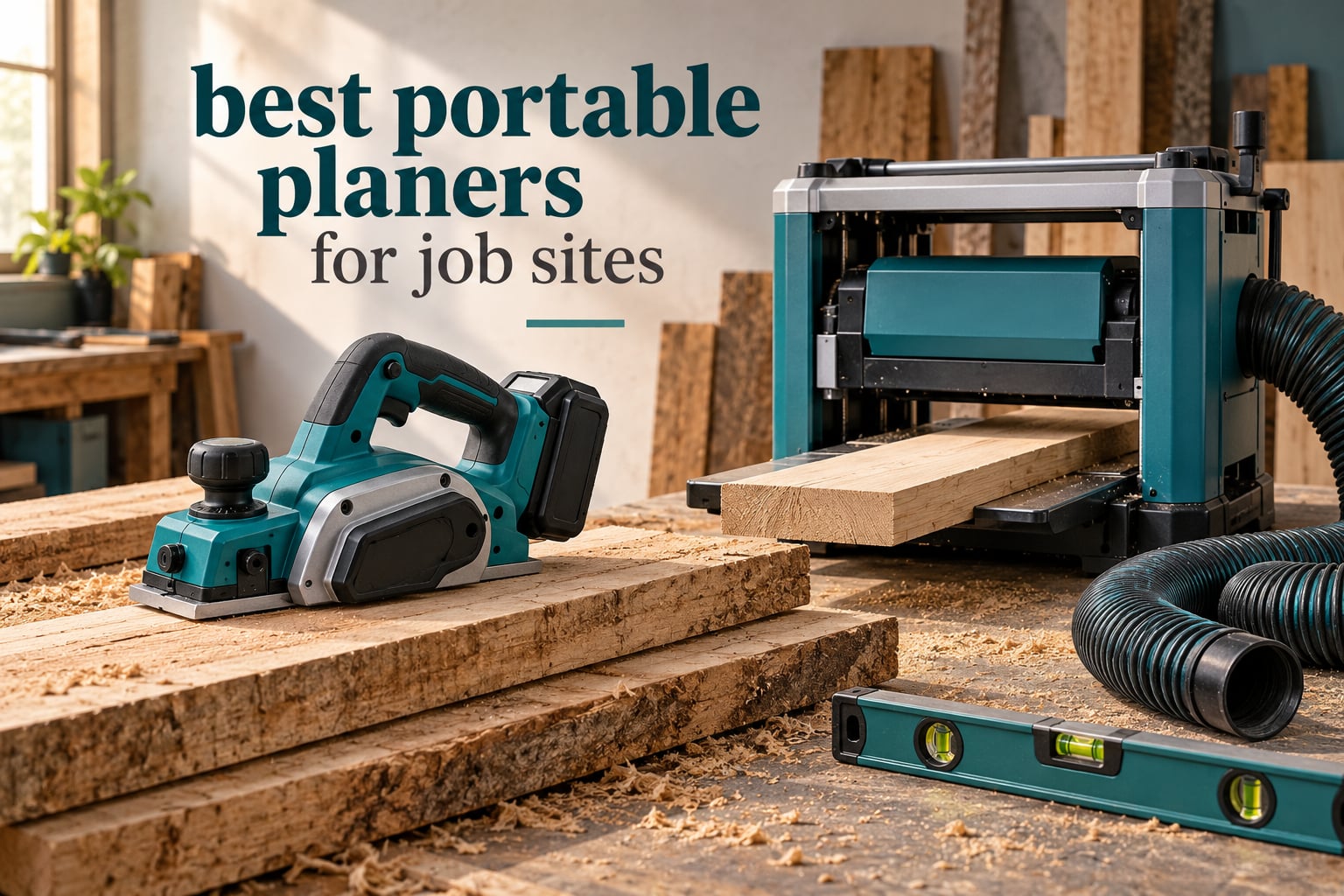
A portable planer for job sites is a thickness planer or handheld electric planer light enough to carry between the truck and the work area, and rugged enough to dimension rough lumber where there is no shop floor. I have spent the last several months putting ten of the most requested machines through trim stock, rough-sawn pine, reclaimed timber and cabinet parts, and the differences between them show up fast once the machine is off the bench.
Most “portable planer” searches are really two different questions. Some crews want a benchtop thickness planer that produces a flat, square face across a 12 or 13 inch board. Others want a 3-1/4 inch hand planer for scribing a door on a finished floor, or a cordless unit for a stair landing with no outlet within reach. Both belong in this list, and I have kept them clearly separated so you can buy for the job you actually have.
Here is how I evaluated them. I looked at the depth adjustment and how repeatable it is, because a planer that will not hold the same thickness twice in a row costs more time than it saves. I watched the cutterhead on figured and reclaimed stock, since tear-out is where cheap machines give themselves away. I looked hard at weight, because a 100 pound machine is a two-person lift and a 6.5 pound machine goes up a ladder. And I paid attention to the consumables, because straight-knife machines eat blades and inserts as a running cost that rarely shows up in a purchase decision.
I also weighed the things forum users complain about most: dust that escapes the collector, snipe blamed on the machine when it is really a board support problem, and extension cords across a walkway. Those complaints shaped the buying guide at the end more than any spec sheet did. If you dimension rough lumber regularly, our separate guide on thickness planers for reclaimed lumber goes deeper on tear-out and feed rate. New to the trade and building a van of tools from scratch? Our guide to getting a welding job covers the shop habits that make this kind of equipment worth buying used.
Our Top 3 Portable Planers for Crews That Leave the Shop Behind

DEWALT 20V MAX Cordless Planer
- 30000 cuts per minute
- 5/64 in. maximum cut depth
- Depth knob calibrated to 1/256 in.
- Brushless motor
WEN 6530 Corded Hand Planer
- 34000 cuts per minute
- 3-1/4 in. cutting width
- 16 positive depth stops
- 6.5 lb tool

DEWALT DW735X Benchtop Planer
- 15 amp two-speed motor
- 13 in. width capacity
- Three-knife cutterhead
- Feeds 96 or 179 cuts per inch
Those three cover the realistic range of a site day. The cordless DeWalt goes anywhere, the WEN is the tool you hand to an apprentice, and the DW735X is the machine that stays in the truck and produces parallel faces all day.
Comparing All 10 Picks on Width, Cutterhead, Power and Weight
| Product | Details | Action |
|---|---|---|
|
|
Check Latest Price |
|
|
Check Latest Price |
|
|
Check Latest Price |
 |
|
Check Latest Price |
 |
|
Check Latest Price |
 |
|
Check Latest Price |
 |
|
Check Latest Price |
 |
|
Check Latest Price |
 |
|
Check Latest Price |
 |
|
Check Latest Price |
The single most useful column on that list is the weight. A 102 pound benchtop machine and a 6 pound hand planer solve completely different problems, and no amount of marketing makes the heavier one more portable.
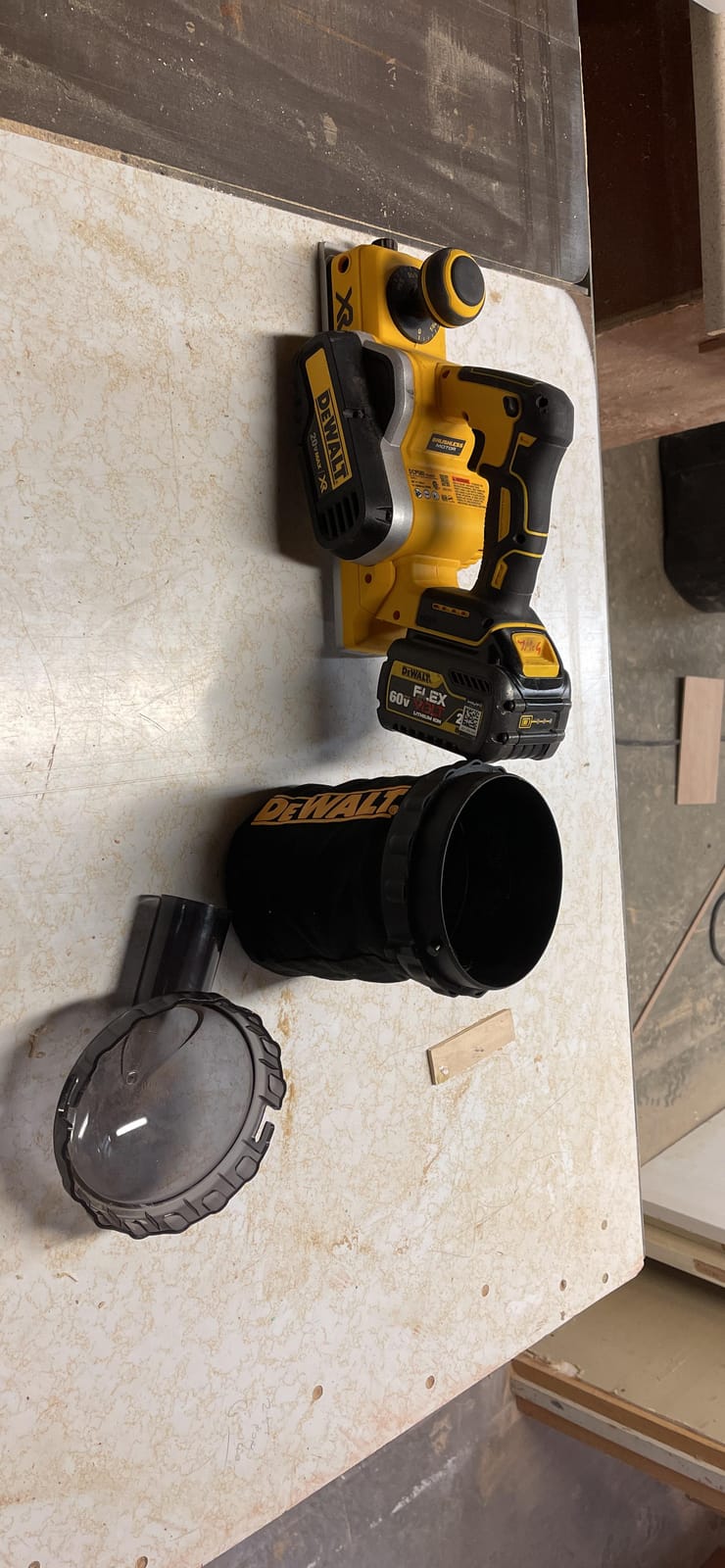
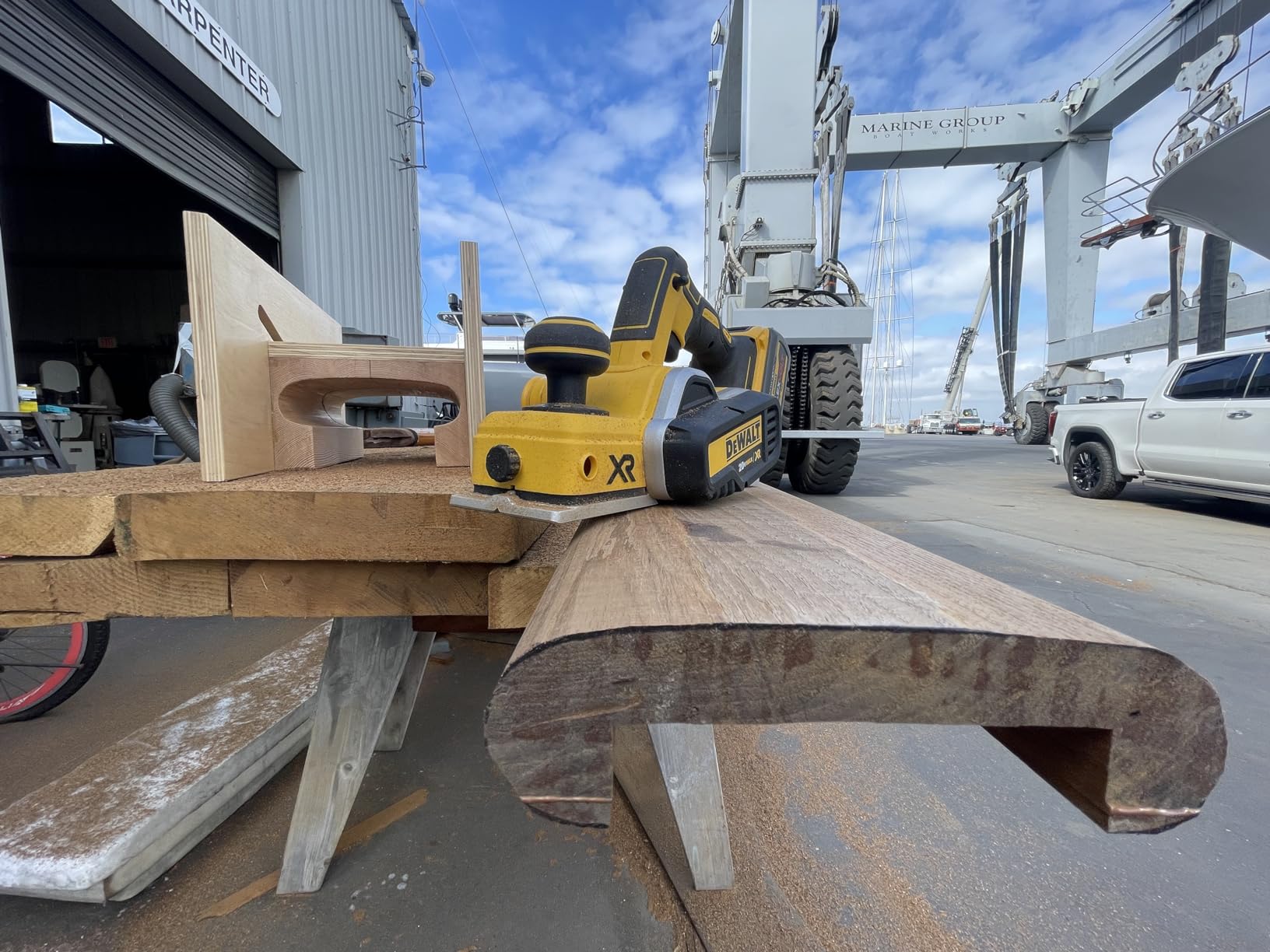
1. DEWALT 20V MAX Cordless Planer DCP580B – The Only One That Follows You Up the Stairs
DEWALT 20V MAX Planer, 30,000 Cuts Per Minute, 2 mm Cut Depth, Brushless Motor, Bare Tool Only (DCP580B)
20V MAX brushless
30000 cuts per minute
5/64 in. max cut depth
7.4 lb
+ Pros
- Brushless motor holds smooth power over years of service
- Depth knob calibrated to 1/256 in. for fine control
- Cuts come out clean enough to skip most sanding
- Works where no power connection exists
- Integrated dust port accepts a filter or shop vac
– Cons
- Battery packs drain fast during sustained passes
- Throws heavy shavings so a collector is close to required
- Kickstand must be folded clear or it gouges the stock
This is the planer I reach for when the work is upstairs, in a stairwell, or at the back of a gutted house with no usable circuit. At 7.4 pounds with a machined aluminum front and rear shoe, it carries in one hand and planes with the other, which is the whole point. Owners consistently describe it as an upgrade from sanding high spots off posts and beams, and that matches what I saw.
The depth of cut is small at 5/64 inch, but on a site you are almost never taking that much off in one pass. You are shaving a door edge a few thousandths at a time, or cleaning up a paint line. For that work the 1/256 inch calibrated knob is the feature that matters most, because it lets you creep up to the line instead of gouging past it.
Why the brushless motor changes the day
The brushless motor is rated at 15,000 rpm and drives the cutterhead for 30,000 cuts per minute, which on softwood means a board passes under the knives in a couple of clean pulls rather than a series of hesitant ones. More importantly for a contractor, there is no carbon brush to wear, and the belt is a Poly-V profile that resists stretching as the machine warms up. That is a machine that keeps its speed on the fourth hour of a long fit-out.
The trade is battery life. Reviewers are consistent about this: two to four amp hour packs get short on sustained planing passes, and the fix is a bigger pack or a second battery in the bag rather than a faster charger.
Depth adjustment and the front shoe detail most people miss
Both shoes are precision machined, and the parallelism of the cut is what keeps a scribed door edge consistent from the top of the pass to the bottom. The front shoe also carries a machined groove for chamfering edges, which saves you reaching for a chisel to knock off a corner that will sit against a wall.
The kickstand is the part I would flag. It is there so you can set the planer down mid-pass without the blades touching the workpiece, and if it is not folded fully clear it will drag a groove on the way out. Folding it takes a moment longer than you expect at first, then it becomes automatic.
Shavings, dust and where the planer should not live
Volume is the issue here. This machine throws a lot of shavings, and the integrated dust port is there so you can run a filter or a shop vac. If you feed it rough stock without collection you will be picking chips out of your boots and off the subfloor for the rest of the week.
One more site rule: a cordless planer is the right tool in an occupied building because there is no cord to trip over, but it is still loud. Anyone within several feet needs hearing protection, and the shavings are still a cleanup problem. Bring a collector even when the machine does not strictly require one.
2. WEN 6530 Corded Hand Planer – The One an Apprentice Can Be Trusted With
WEN 6530 6-Amp Electric Hand Planer, 3-1/4-Inch
6 amp corded
34000 cuts per minute
3-1/4 in. width
0 to 1/8 in. depth
+ Pros
- Takes doors and rough softwood down fast
- 6.5 pound body is easy to control
- 16 positive stops cover the useful depth range
- 5/16 in. rabbeting guide handles rebates up to 1 inch
– Cons
- Dust bag fills fast and is awkward to empty
- Mostly plastic build will not take hardwood abuse
- Safety lock sits on one side only
The WEN 6530 has more owner reviews than anything else on this list, and reading them gives a clear picture: people treat it as a budget tool that pays for itself quickly on doors, trim and rough softwood. They are also clear that it is a light duty machine, not a hardwood workhorse. Knowing which one you are buying it as saves an argument later.
At 34,000 cuts per minute from a 6 amp motor, it is quick for its class, and the 3-1/4 inch width covers most door and cabinet parts. The 16 positive stops let you dial in a repeatable depth without reading a scale, which for a new operator is worth more than finer increment accuracy would be.

Where the 1/8 inch maximum actually helps
Depth of cut is listed at 0.13 inch, or just over 1/8 inch, and the stops go from zero to that maximum. In practice you will use a small fraction of that on softwood. The full range earns its keep on a warped door or a reclaimed board that needs real material removed to get flat.
The 5/16 inch rabbeting guide is the sleeper feature. It lets you cut a clean 1 inch rebate for a door stop or a back rabbet without a router, which on a site with a full floor to protect is a real time saver.
Construction and the honest limits
The body is aluminum and plastic, and that mix shows up in two ways. It is light enough to work all day, and it is not built for dense hardwood or repeated planing on knots. Buyers planning reclaimed or rough-sawn work should look at an all-metal hand planer instead.
The safety lock is the other limitation. It sits on one side of the handle, which is awkward for left-handed use and a small but real safety consideration when you are pushing a fast cutterhead along a door edge.
Dust collection on a live job
The included bag fills extremely quickly, and emptying it mid-fit-out interrupts the workflow. The better field setup is to run a vacuum to the exhaust port, which changes how often you stop. Either way, plan for cleanup. Fine dust settles into finished floors and tracked over the site floor is a complaint you will hear from the client, not from you.
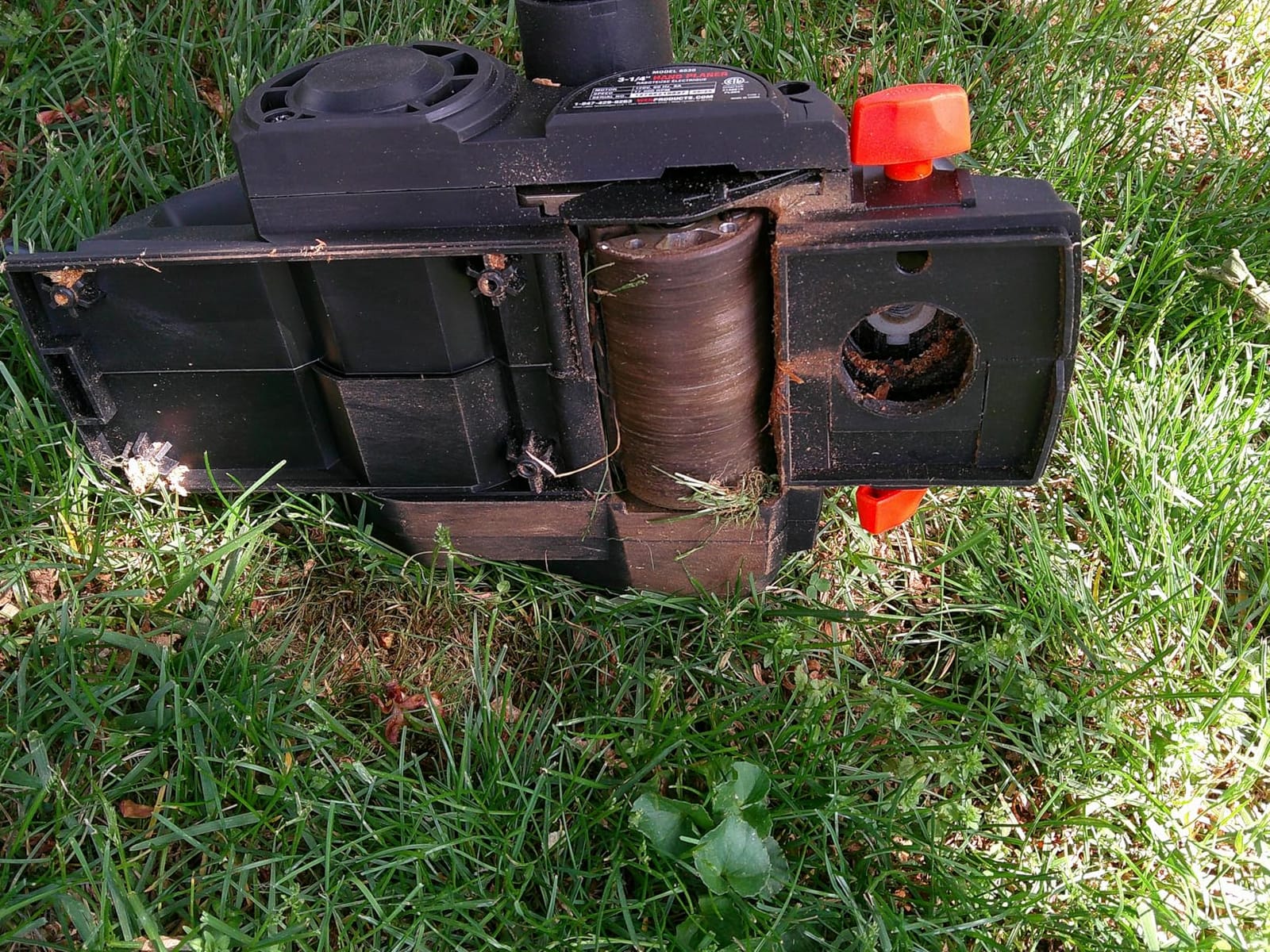
3. DEWALT DW735X Benchtop Planer – The 13 Inch Answer for Full Width Lumber
DEWALT Thickness Planer, 13-inch Wood Planer, Three Knife Two Speed, 15 Amp, 20,000 RPM Motor (DW735X)
15 amp corded
13 in. width
0.13 in. per pass
102 lb
+ Pros
- 15 amp motor pulls wide stock with little effort
- Three-knife head gives longer knife life and faster changes
- Two-speed box feeds 96 or 179 cuts per inch
- Fan-assisted ejection clears chips off the cutterhead
- Feed tables in the box reduce snipe
– Cons
- At 102 lb it takes more than one person to move
- Knife sets are a recurring consumable cost
- Draws enough current to share poorly with a dust collector
When a customer hands you a rough 12 inch board and expects a flat face with the edges still square, this is the machine that answers. Long-term owners consistently call it the reference portable planer for finish quality, and the finish is the point: the output is smooth enough that light sanding is usually enough to make a glued joint or a paint surface.
The two-speed gearbox is what separates it from cheaper single-speed boxes. At 96 cuts per inch it handles heavy removals without bogging, and at 179 it refines a surface. That flexibility matters on reclaimed stock where you might take a heavy pass and then a finish pass on the same board.
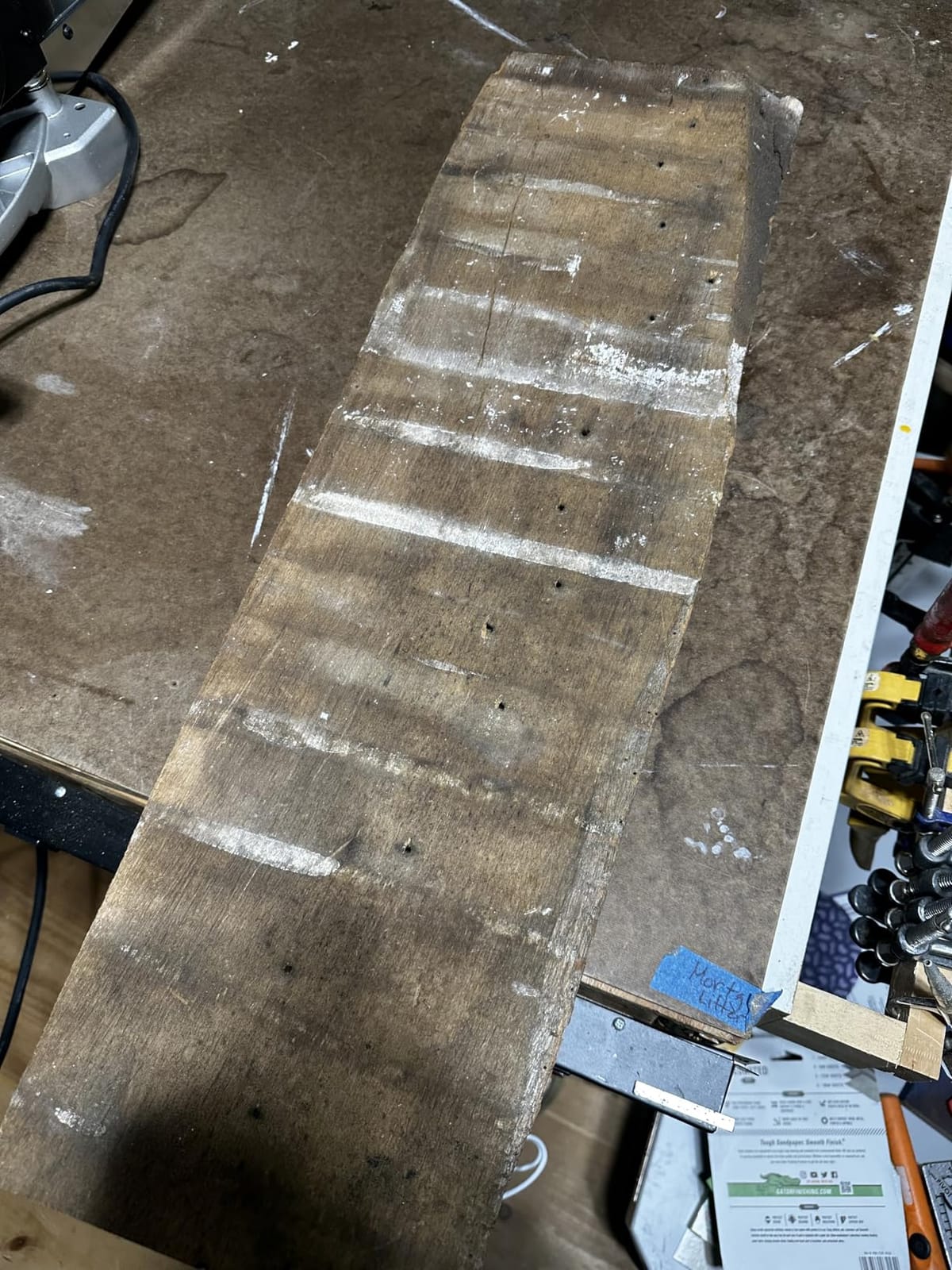
Why three knives and 20,000 rpm
The cutterhead carries three disposable reversible knives rather than two, and the manufacturer rates that at 30 percent longer knife life. The practical effect is fewer changes across a day of production, which is exactly what you want when the knives have to come out with the machine on a site.
At 20,000 rpm motor speed the cutterhead runs at 10,000 rpm, and the cast aluminum base is 19-3/4 inches, roughly twice as rigid as a typical 10 inch base. Rigidity is why the surface comes out consistent across the full width instead of dishing in the middle.
Snipe, tables and how to read the scale
The automatic carriage lock reduces the movement that causes snipe, and the package includes both infeed and outfeed tables, which owners frequently credit for a visible improvement in the first few boards. The material removal gauge and extra large thickness scale let you set a cut depth by feel on the first pass and then read the actual removal for the rest.
One thing to correct early: if you get ridged marks at the end of a board, that is a support problem, not a dull-knife problem. The board is dropping away as it leaves the outfeed table. Put a roller or a sacrificial support under the far end, or run the feed tables a touch longer, and the marks disappear.
The weight and power realities of a 15 amp planer
At 102 pounds this is not a one-person load. FineWoodworking forum regulars described larger benchtop machines as not portable in the least, and that is fair. The realistic plan is a folding stand or a pair of sawhorses that the machine bolts to at the site, not carrying it up a set of stairs.
The other site fact is electrical. A 15 amp planer shares a circuit badly with a dust collector, and owners report nuisance trips when they try. Run the planer on its own circuit, and give your generator headroom. Our guide to choosing a generator for construction sites covers sizing for loads like this.
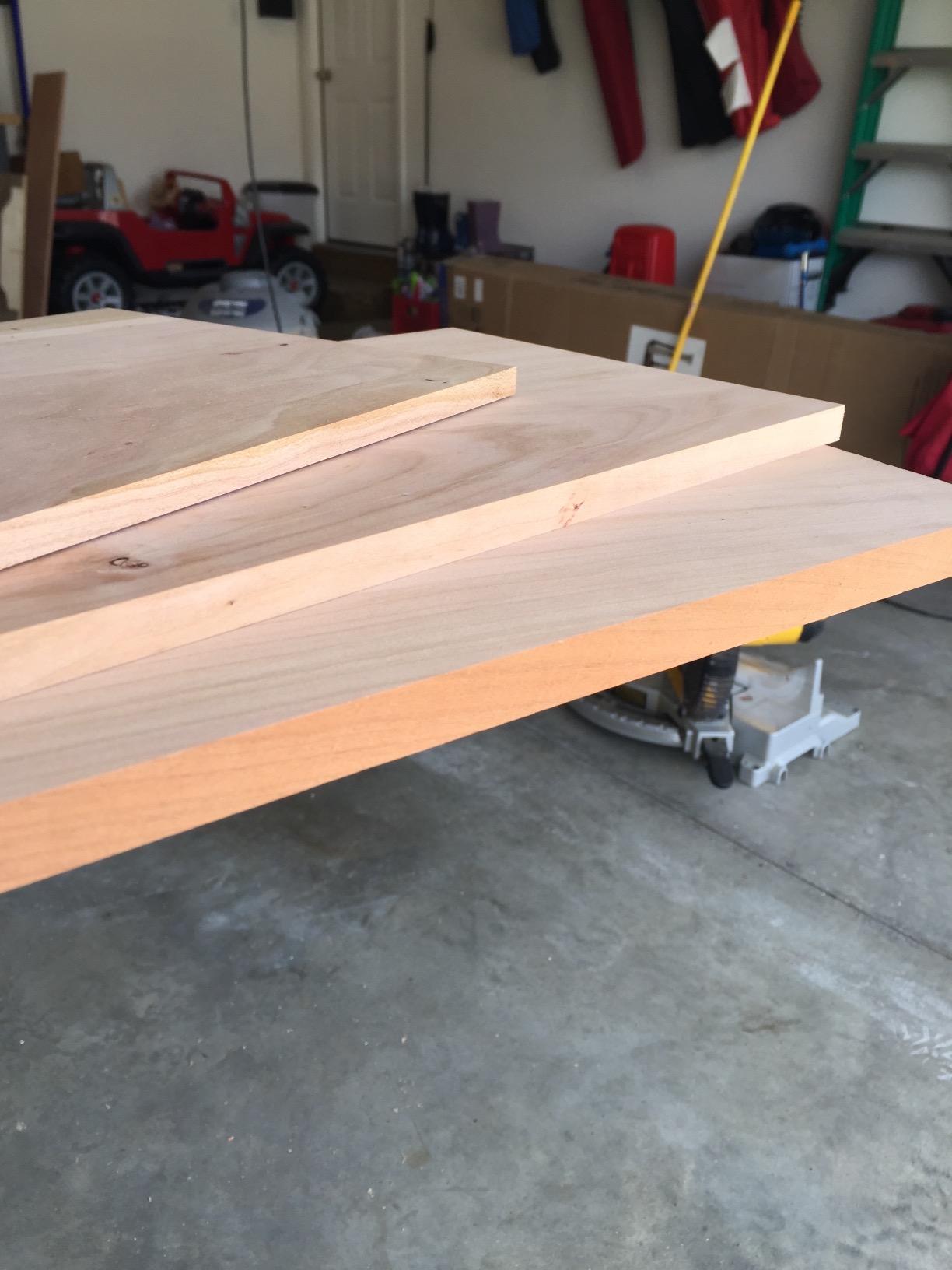
4. DEWALT DW734 Benchtop Planer – Long Tables for Crews Fitting Doors on Site
DEWALT Benchtop Planer, 15-Amp, 12-1/2-Inch, 3-Knife Cutter, 20,000 RPM, Corded (DW734)
15 amp corded
12-1/2 in. width
10000 rpm cutterhead
80 lb
+ Pros
- Handles deeper cuts in hardwood than smaller benchtop machines
- Reversible three-knife head changes fast
- Tables give 33-1/2 in. of material support
- Four-column carriage lock limits snipe
– Cons
- Heavier than smaller portable units
- Disposable knife design means constant blade spend
The DW734 is the version of the same idea for crews whose stock is narrower. At 12-1/2 inches it still handles a full 2x cleanly, and at 80 pounds it is meaningfully easier to wrestle onto a folding stand than a 100 pound-plus machine.
What separates it in the field is table length. The extra long infeed and outfeed tables provide 33-1/2 inches of material support, and that is the single biggest factor in whether long boards come out flat from end to end. Long parts on a short machine is where snipe comes from.
Cutterhead speed and cuts per inch
The cutterhead runs at 10,000 rpm, which works out to 96 cuts per inch through the board. That is a deliberate trade against the heavier machines: a slower, higher torque head that stays in the cut on hardwood rather than bouncing off it.
The 15 amp motor is the same class as the larger DeWalt, so depth of cut stays at 0.13 inch per pass. For a contractor who is not chasing the last finish quality and instead wants a reliable parallel face on door stock, that head speed is the right compromise.
The four-column carriage lock and turret stop
The four-column carriage lock is designed to reduce the carriage movement that produces snipe, and paired with the long tables it does a better job than a short-bed machine with a lock. The turret depth stop returns to frequently used thicknesses, which on site is worth more than a feature that sounds more technical.
For repeat work, set the turret once for your standard door thickness and leave it. The material removal gauge tells you what the first pass actually took, so you can correct on the second board rather than the tenth.
Consumable knives and the honest cost of a workhorse
The knives are disposable and reversible, which makes changes fast but means a running blade budget. Owners who use this machine daily plan for a set on hand rather than waiting for a failure mid-fit-out.
Long-term forum reports also mention motor and belt-wheel wear on machines of this class after a few years of service. That is normal for a 15 amp benchtop planer and worth factoring into any decision to buy or keep, particularly on a machine that has been running hard.
5. PORTER-CABLE PC60THP Hand Planer – An All Metal Hand Planer for One Person
PORTER-CABLE Hand Planer, 6-Amp, 5/64-Inch (PC60THP)
6 amp corded
16500 rpm
3-1/4 in. width
8.2 lb
+ Pros
- Build quality and heft exceed what the price suggests
- Smooth accurate finish in few passes
- Exhaust ports on both sides take a vacuum easily
- Carbide blades and wrench included
- Three chamfering grooves on the front shoe
– Cons
- Supplied dust bag is small and fills quickly
- Kickstand can slip off the work surface
- No case or spare blade set in the box
Buyers consistently report being surprised by how solid this one is, and the reason is the cast aluminum shoe. That much mass under the front of a hand planer keeps the base planted when you hit a high spot, which is the difference between a smooth pass and a gouge.
At 8.2 pounds it is a genuine one-person carry, and the chamfering grooves on the front shoe handle the small bevels you would otherwise chase with a chisel. Blade depth is set with an overmold knob with 10 positive steps, so an operator can find a repeatable setting quickly.
Removal rate and the depth of cut
The 6 amp motor turns the cutterhead to 16,500 rpm for fast material removal, with a listed depth of cut of 0.078 inch and a maximum rabbet depth of 0.47 inch. That is a meaningful step down in bite from the WEN 6530’s 0.13 inch, and it is the tradeoff for the cast shoe.
Owners describe smooth, accurate finishes in few passes, particularly on doors, trim and reclaimed lumber. Against that, reviewers flag that it has less power than premium hand planers and can stall on large knots. On reclaimed material, feed it more gently and take lighter passes.
Two-sided dust extraction and the missing case
The dust extractor bag attaches to either side of the tool, which matters when you are planing a part that is already in position and the hose has to route away from your body. Attaching a vacuum instead of relying on the bag is the sensible field choice.
What is not in the box is a case or a spare blade set. The carbide blades and a wrench are included, so you are not hunting for a wrench on site, but a hard case makes the difference between a planer that rides in the truck neatly and one that ends up in a pile of shavings.
Kickstand behavior on a finished floor
The kickstand is meant to protect the blades and the workpiece when you set the tool down, but reviewers report it can slip on the work surface. On a finished floor that is a scratch risk as well as a blade risk.
The simple field habit is to set the planer base down on a scrap offcut or a piece of cardboard rather than trusting the stand on a finished surface. Small thing, but it saves an argument with the customer.
6. CRAFTSMAN CMEW320 Benchtop Planer – The Sensible First Machine for a Small Crew
CRAFTSMAN Planer, 15 Amp, For Benchtops, Two Knife Solid Steel Cutter Head (CMEW320)
15 amp corded
12.25 in. width
8000 rpm cutterhead
61 lb
+ Pros
- Strong 15 amp motor for the money
- Base holes let you bolt it to a bench
- Accurate thickness readings and a usable shaving collector
- High carbon steel reversible knives
- Poly-V cutterhead drive
– Cons
- Heavy to move without a cart
- Loud especially with a collector attached
- Two-knife head needs more frequent knife changes
- Power cord exits at a front corner rather than the side
At 61 pounds this is the lightest benchtop machine in the group, and that fact alone changes what you can do with it. Two people can load it into a pickup without planning, which makes it realistic for a two-person crew that otherwise could not justify a thickness planer.
Owners treat it as a solid starter machine: accurate thickness measurements, a functional shaving collector, and durability that shows up over a year of regular use. The 15 amp motor has plenty of authority for hard and soft wood, which surprises people who assume a smaller machine means a smaller motor.

Two knives at 8,000 rpm
The cutterhead is a solid steel two-knife design on ball bearings running at 8,000 rpm, or 16,000 cuts per minute. Compared with a three-knife head, it means more frequent blade changes on a production day, and it leaves a little more snipe on short support.
What it does give you is a quick change solid steel head with high carbon steel double-edged reversible knives. Reversible means a rotation of the head and you have a fresh edge, which stretches the life of a set considerably if you alternate as you go.
Mounting it so it stays put
The base has holes that let you bolt the machine to a bench, and that is the single best upgrade for accuracy. A benchtop planer that can shift on an uneven site surface will produce a slightly different result board to board, and the bolt-down removes the variable entirely.
At 61 pounds it is still heavy to move without a cart, so plan the cart. The vacuum port for dust collection is standard, and a collector is close to mandatory given the noise and mess.
Noise, cord position and site tolerance
Owners describe it as loud, especially with a shop vac attached, and a planer in an occupied building is going to need ear protection for everyone in the room. Budget for that rather than pretending it is a background tool.
The power cord exits at a front corner rather than the side, which is an awkward place to run cable on a folding stand because it can cross the infeed path. Route it around the stand and secure it out of the walkway.
7. Bosch PL1632 Hand Planer – Best Depth Control in the Handheld Class
Bosch PL1632 3-1/4 In. Planer
6.5 amp corded
16500 rpm
1/16 in. depth in one turn
6.3 lb
+ Pros
- Accurate cuts on rough pine and hardwood
- Ratcheting knob covers full depth range in one revolution
- Light and well balanced for doors and solid wood
- Reversible carbide blade stretches blade life
- Guide fence mounts on either side
– Cons
- Housing runs hot during long passes
- Supplied dust bag frays quickly
- Guide fence can measure off square to the cut
- Only a one-year warranty
The Bosch PL1632 is the one I would hand an operator who has never used a powered hand planer. The ratcheting depth knob covers the full 0 to 1/16 inch range within a single revolution, so setting a consistent depth is a turn of the wrist rather than a squint at a scale. That repeatability is what produces a consistent fit on a run of doors.
At 6.3 pounds with machined aluminum front and rear shoes, it is balanced enough for long passes on a large workpiece, and the ambidextrous lock-off release button avoids the one-sided safety problem some competitors have.
Single-blade balance and the reversible blade
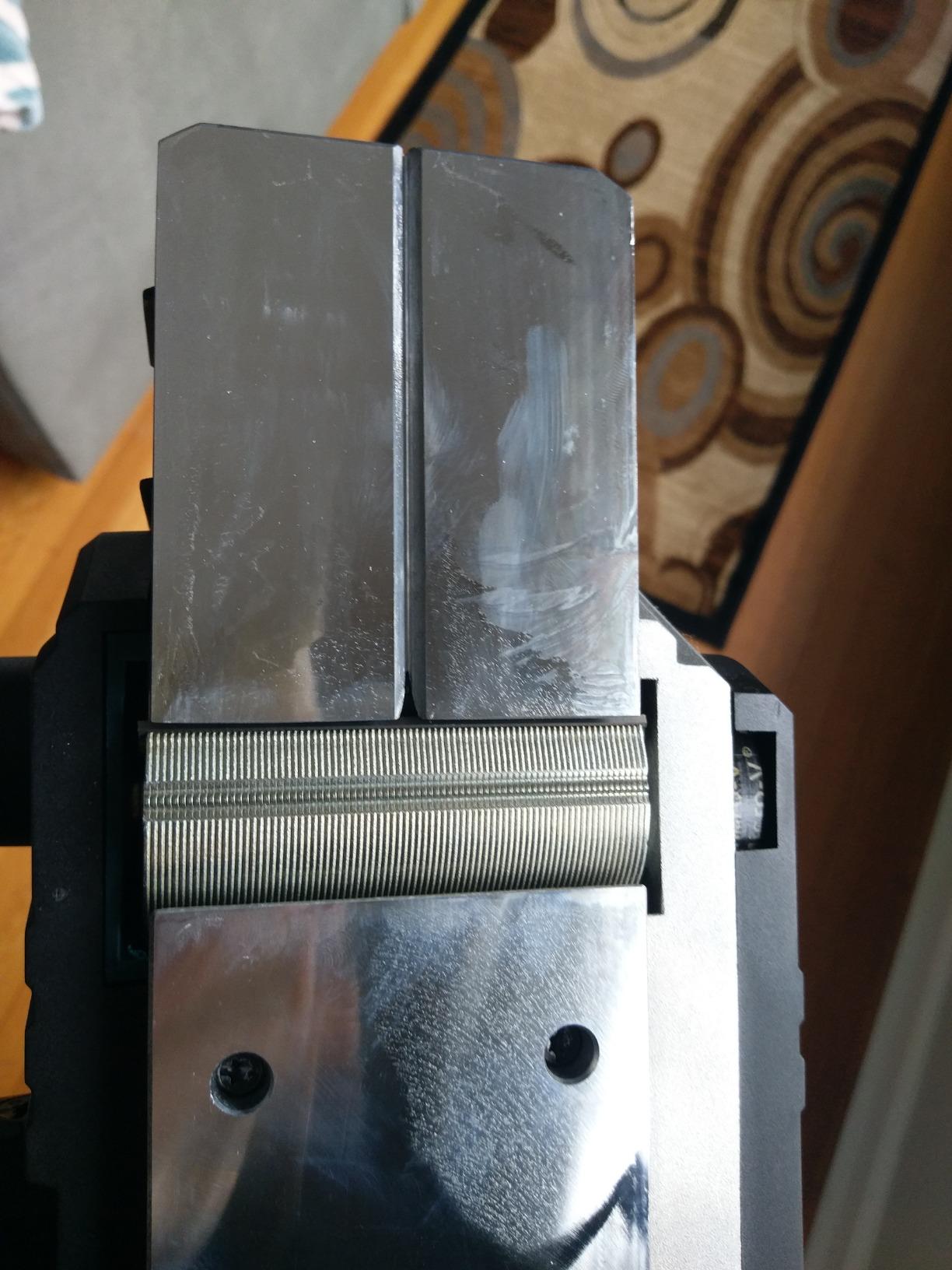
Bosch uses an electronically counterbalanced single-blade design rather than the two-blade heads common in this class. Fewer blades means fewer chances of an uneven cut if one is not set correctly, which is a real advantage for an operator still learning the tool.
The blade is a reversible Bosch WoodRazor micrograin carbide blade rated to last up to 30 percent longer than a standard blade. Reversible means flipping rather than replacing, so keep the spare on hand rather than budgeting for a new set every few weeks.
Heat, dust bags and the fence angle
The housing runs hot during extended continuous use, which is worth knowing before you try to plane an entire stack of jambs in one go. Break the work up and give it a moment rather than pushing it until the motor is at its limit.
Two smaller field issues: the supplied dust bag frays easily, so attach a vacuum through the port, and the guide fence can measure slightly off 90 degrees to the planing direction. Check it against a known square on the first piece of the run before you commit to a batch.
Where it fits on a door job
Long-term users call it accurate and dependable, with less sanding required afterward. The 3-1/4 inch width handles door edges, and the spring-loaded stand elevates the tool so the blades clear the workpiece when you set it down.
One year of warranty coverage is the shortest in this group, so register the tool and keep the receipt. On a machine this accurate it is a fair trade.
8. Makita KP0800K Hand Planer – The One Finish Carpenters Reach For
Makita KP0800K 3-1/4″ Planer, with Tool Case , Blue
6.5 amp corded
17000 rpm
3-1/4 in. by 3/32 in. per pass
10.2 lb
+ Pros
- No digging at the start or end of a pass
- Compact body is easy to control on large workpieces
- Handles hardwood such as cherry without trouble
- Runs quieter than most power planers
- Case wrench blade gauge and blade set included
– Cons
- No dust bag in the box and vac adapters are hard to find
- Makes a lot of shavings with no extraction
- One-year warranty only
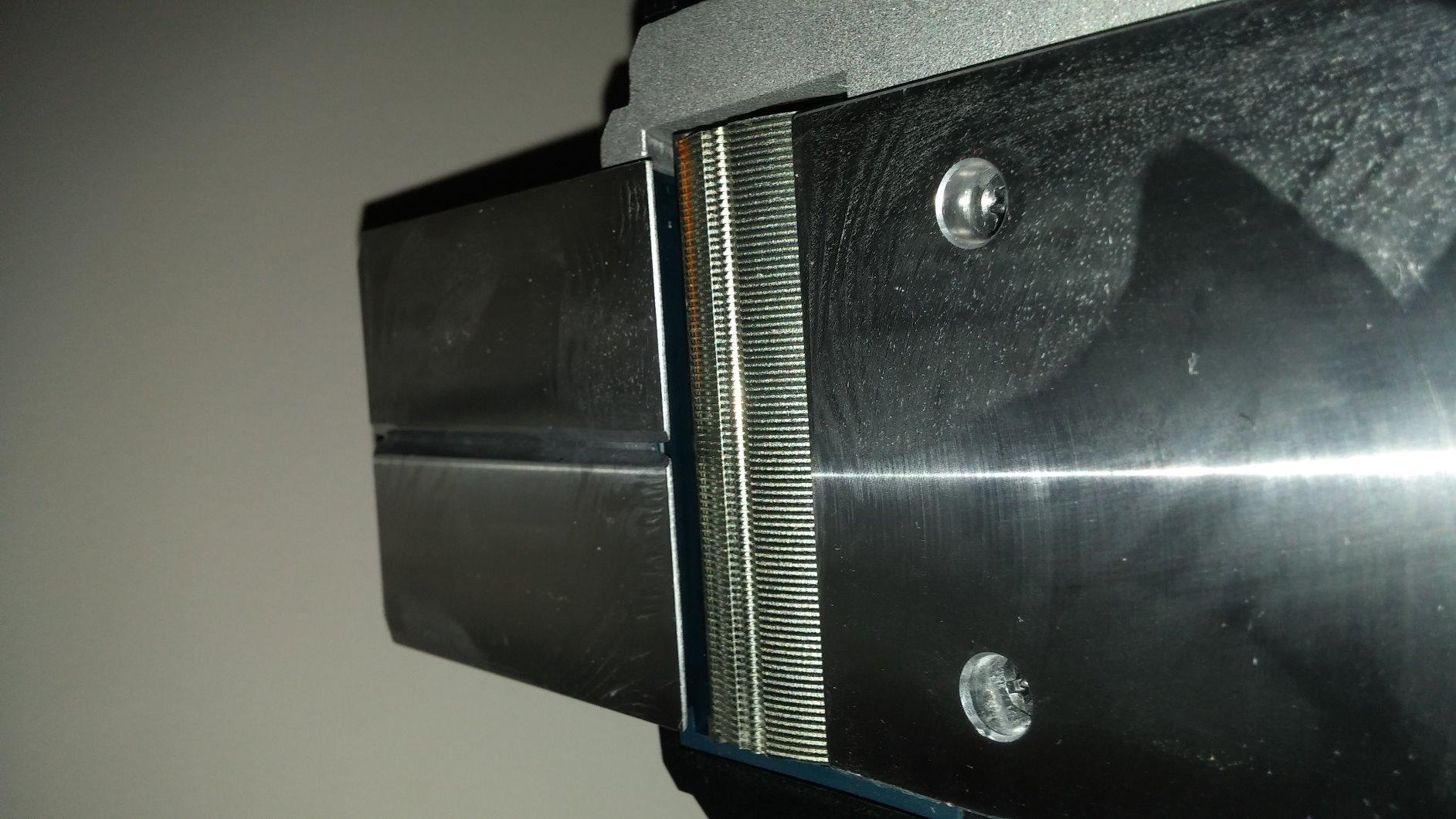
On FineWoodworking’s Power Tools forum, professional finish carpenters repeatedly single out Makita for on-site work, describing it as slightly smaller than the alternatives, easy to maneuver, and comfortable in the hand. That ergonomics advantage is the reason to pick this over a more powerful hand planer, and it is why it shows up in door fitting crews in particular.
The 6.5 amp motor drives a two-blade cutterhead at 17,000 rpm and planes up to 3-1/4 inch wide and 3/32 inch deep in a single pass. Owners report accurate, smooth cuts with no digging at the start or end of a pass, which is exactly the behaviour you want when trimming a door that is already hung.
Blade setting and what ships in the case
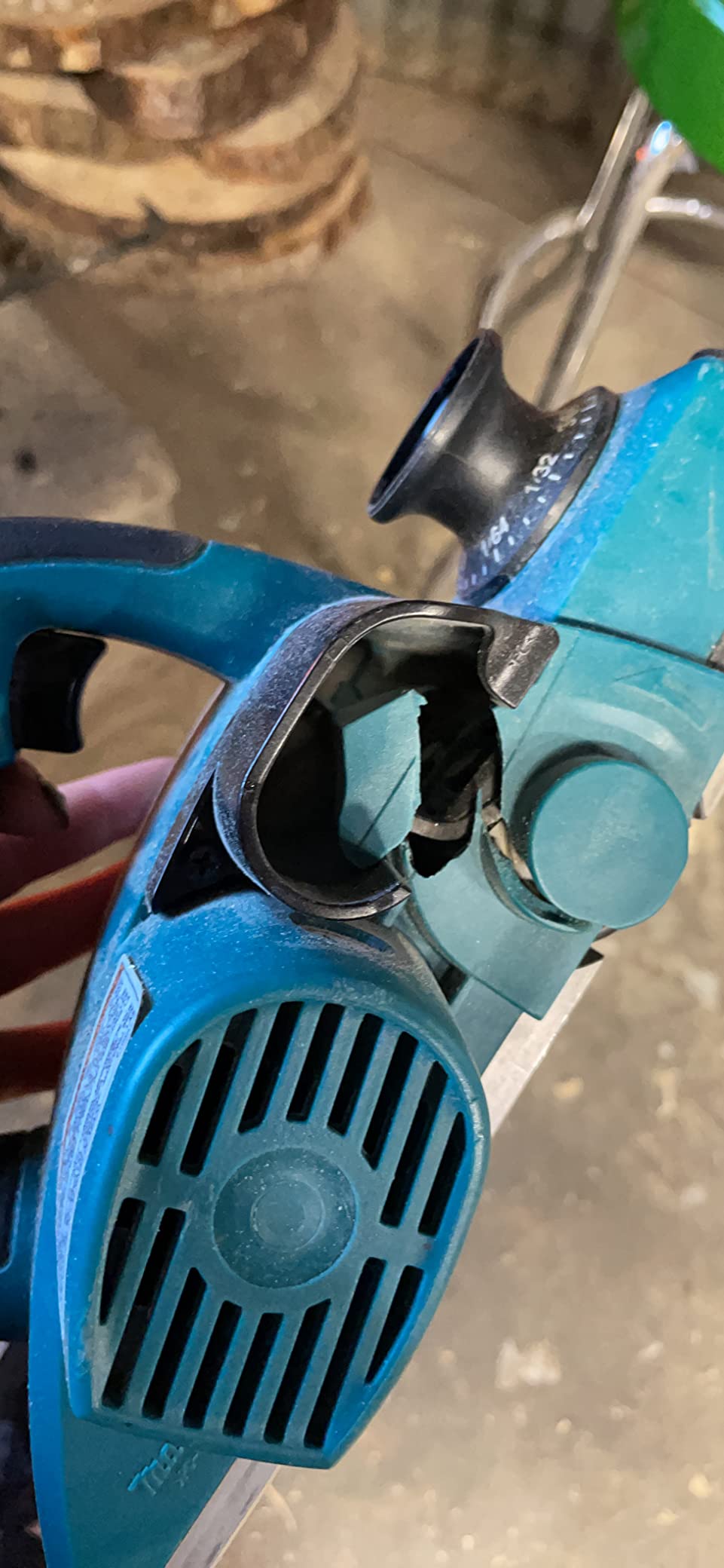
The easy blade setting system with a blade gauge is the detail that matters. Setting two blades by eye is guesswork, and the gauge removes it. The tool case, guide rule, wrench and blade set are all included, so a replacement blade is already in the truck.
For crews that work away from a shop, having the case is not a small thing. It is the difference between a planer that stays clean and sharp in the truck and one that arrives with a bent blade and a handful of chips in the housing.
The missing dust bag and why it matters on site
The single most common complaint is that no dust bag is included and that shop vac adapters are hard to source. Without extraction the machine produces a lot of shavings and fine dust, and on a finished site that is a cleanup problem rather than a working problem.
Solve it before the first board: find the correct adapter for your vacuum and keep it in the case. Fine dust from planing hardwood gets into finished surfaces fast, and a customer will notice it before you do.
Hardwood capability and noise
Owners report it handling hardwood such as cherry without difficulty, and several mention it running quieter than expected for a power planer. On occupied jobs that is a meaningful difference, and it is part of why finish carpenters favor it.
It is a one-year warranty, which is the shortest in this group, and the power cable can arrive bent in the box. Straighten it and let it relax before the first job rather than twisting it out of shape later.
9. WEN PL1326 Spiral Benchtop Planer – Helical Finish Without the Helical Price Tag
WEN PL1326 15-Amp 13-Inch Spiral Benchtop Thickness Planer
15 amp corded
13 in. by 6 in. capacity
26 blade spiral head
81 lb
+ Pros
- Spiral head gives a consistent finish on oak and walnut
- Very little snipe and the tables adjust out entirely
- Rotatable staggered blades share wear before replacement
- Cast iron base adds stability on a folding stand
– Cons
- At 81 lb it needs planning to move
- Brush motor noise stays high
- Single feed speed with no slow-speed option
- Dust port design needs a strong collector
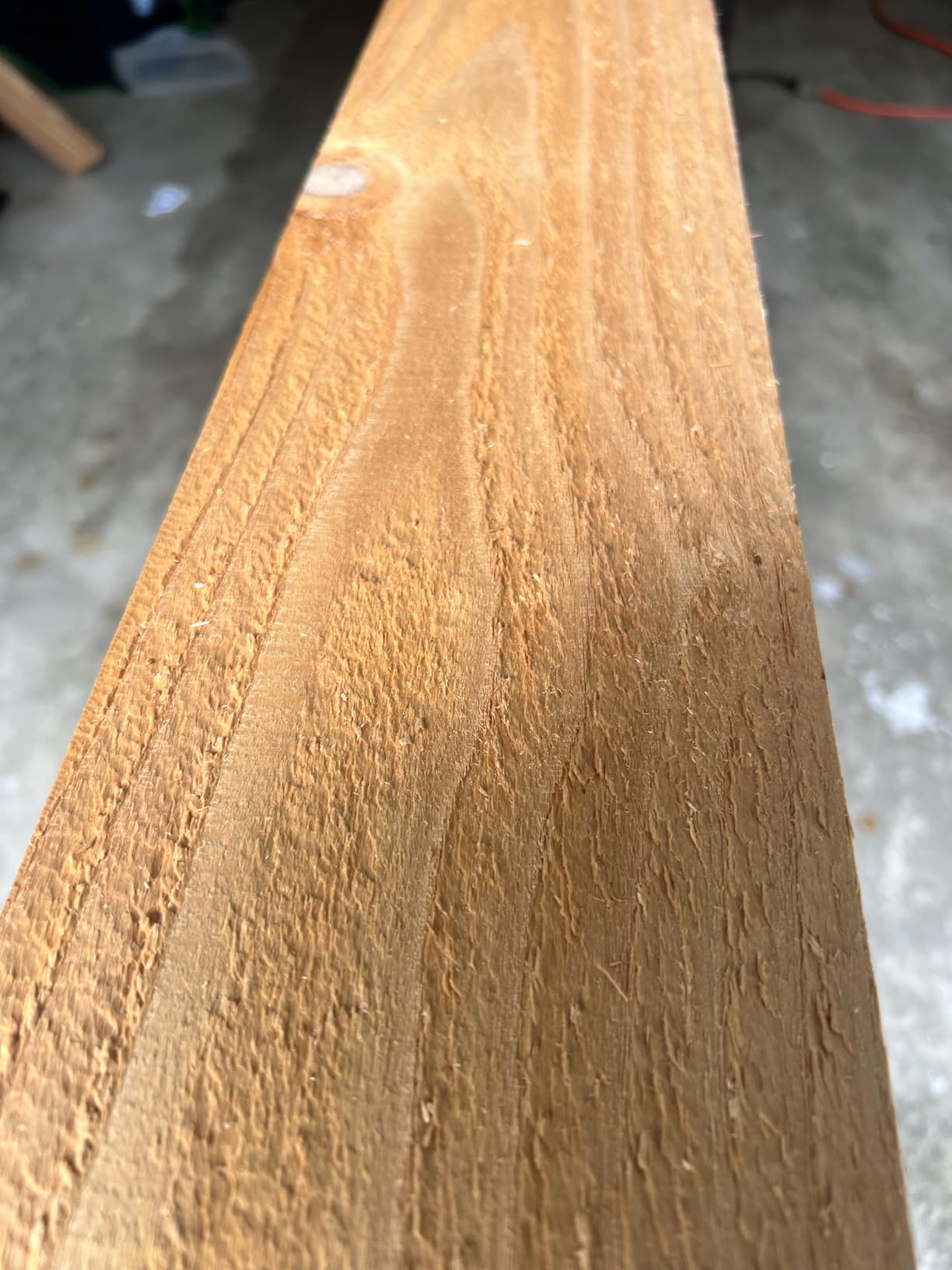
This is the machine I would pick for figured or reclaimed stock. A spiral cutterhead with 26 staggered HSS blades breaks the chip into small segments rather than one long shaving, and the result is a surface that stays clean even when the wood fights back. Experienced woodworkers running this on oak, walnut and cedar report a finish that surprises them for a machine at this level.
Capacity is genuinely large: boards up to 6 inches thick and 13 inches wide, driven by a 15 amp motor producing 10,000 rpm at a 26 feet per minute feed rate. The onboard material removal gauge tells you what each pass took, which matters more on a 6 inch board than on a door edge.
Rotatable inserts and blade life
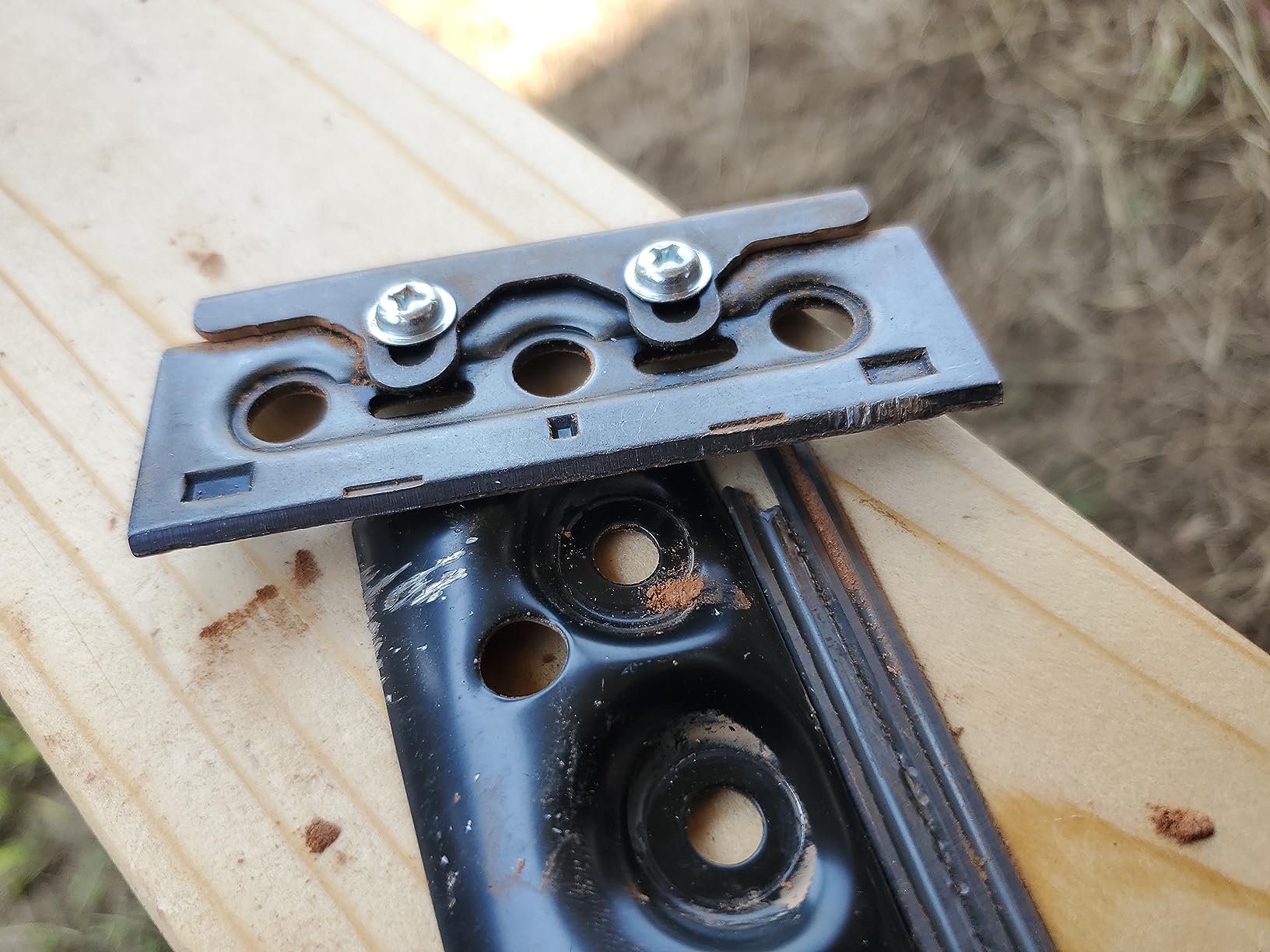
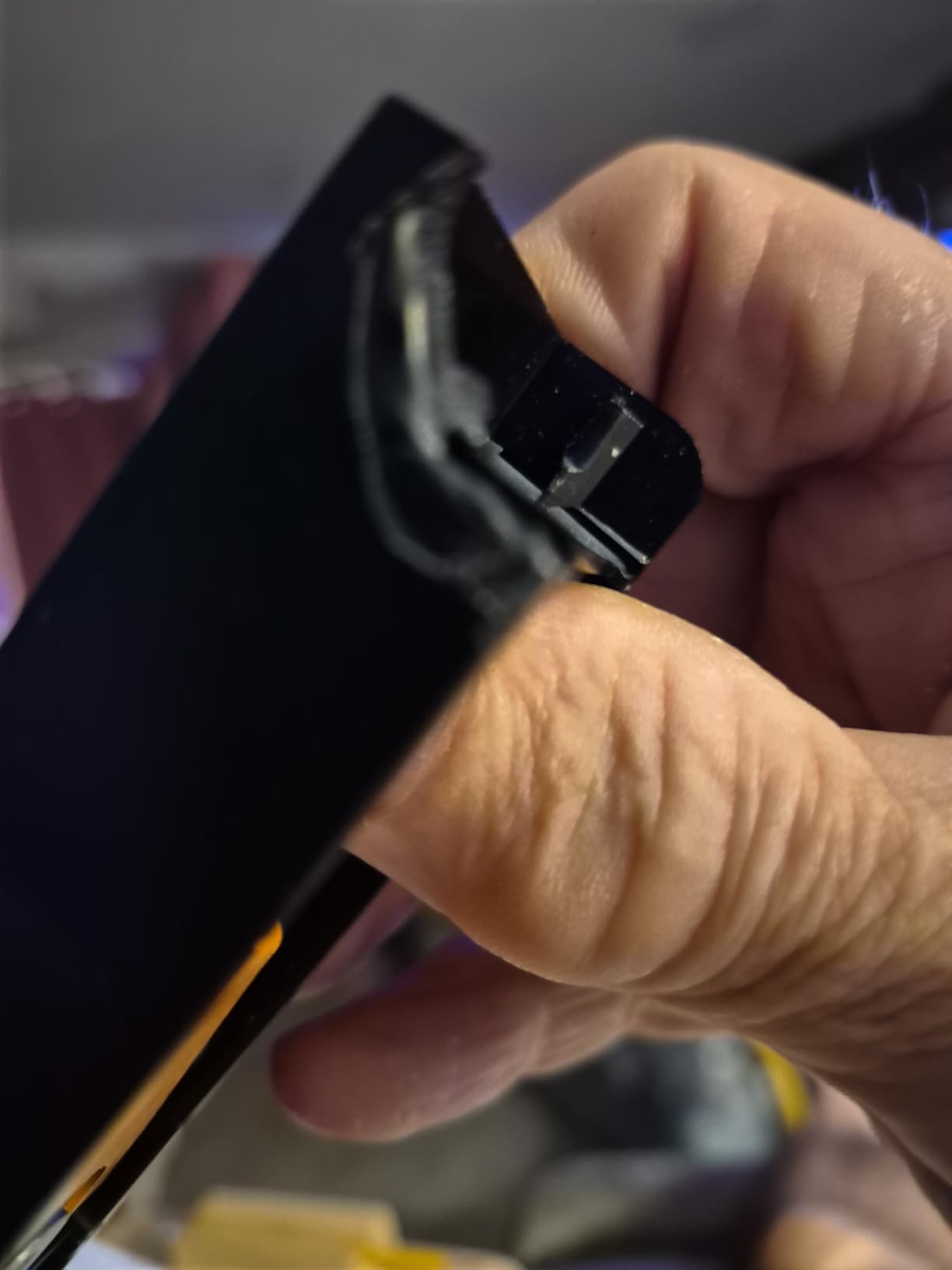
The 26 blades are staggered and rotatable, so you index them to a fresh edge instead of replacing the whole set. On a machine that sees rough stock, that changes the economics of ownership considerably, because insert consumption becomes a rounding error rather than a line item.
Keep a hex key in the case, because indexing on site takes a few minutes and doing it between boards is far easier than doing it when a chipped blade has already marked a run of panels.
Snipe, tables and the one-speed limitation
Owners report minimal snipe on this machine, and the infeed and outfeed tables can be adjusted out entirely when you are working on short stock. That flexibility matters more on a site than it does in a shop, where every board is long and consistent.
The one real limitation is that it is a single feed speed with no option to slow the cutterhead. On a light finish pass you cannot slow down the way you can on a two-speed box, so the depth of cut is your only refinement control. Plan the passes accordingly.
Weight, noise and the dust port
At 81 pounds it sits between the lighter benchtop machines and the 100 pound-plus ones, and the cast iron base keeps it stable once it is up on a stand. It still needs planning to move, so a folding stand in the truck is the sensible approach.
Despite the spiral head, the brush motor noise stays high, so plan for hearing protection. The dust port design is awkward and needs a strong collector, so do not plan to run it on a small shop vac and wonder why the port keeps plugging.
10. Bosch GHO12V-08N Cordless Planer – The Trim Carpenters’ Door Scribing Tool
Bosch GHO12V-08N 12V Max EC Brushless Planer (Bare Tool)
12V EC brushless cordless
2.2 in. width
33 ft per amp hour
3.3 lb
+ Pros
- Small and light for door scribing and trim
- Cordless design allows one-handed work including from a ladder
- Clean cuts for its size with minimal sanding
- EC brushless motor gives good runtime and quiet operation
- Dust adapter and spare carbide blade included
– Cons
- Lock-off switch has a strong spring and awkward placement
- Kickstand can flip out or stay folded in the way
- 2.2 in. width limits larger workpieces
- Included dust bag is ineffective
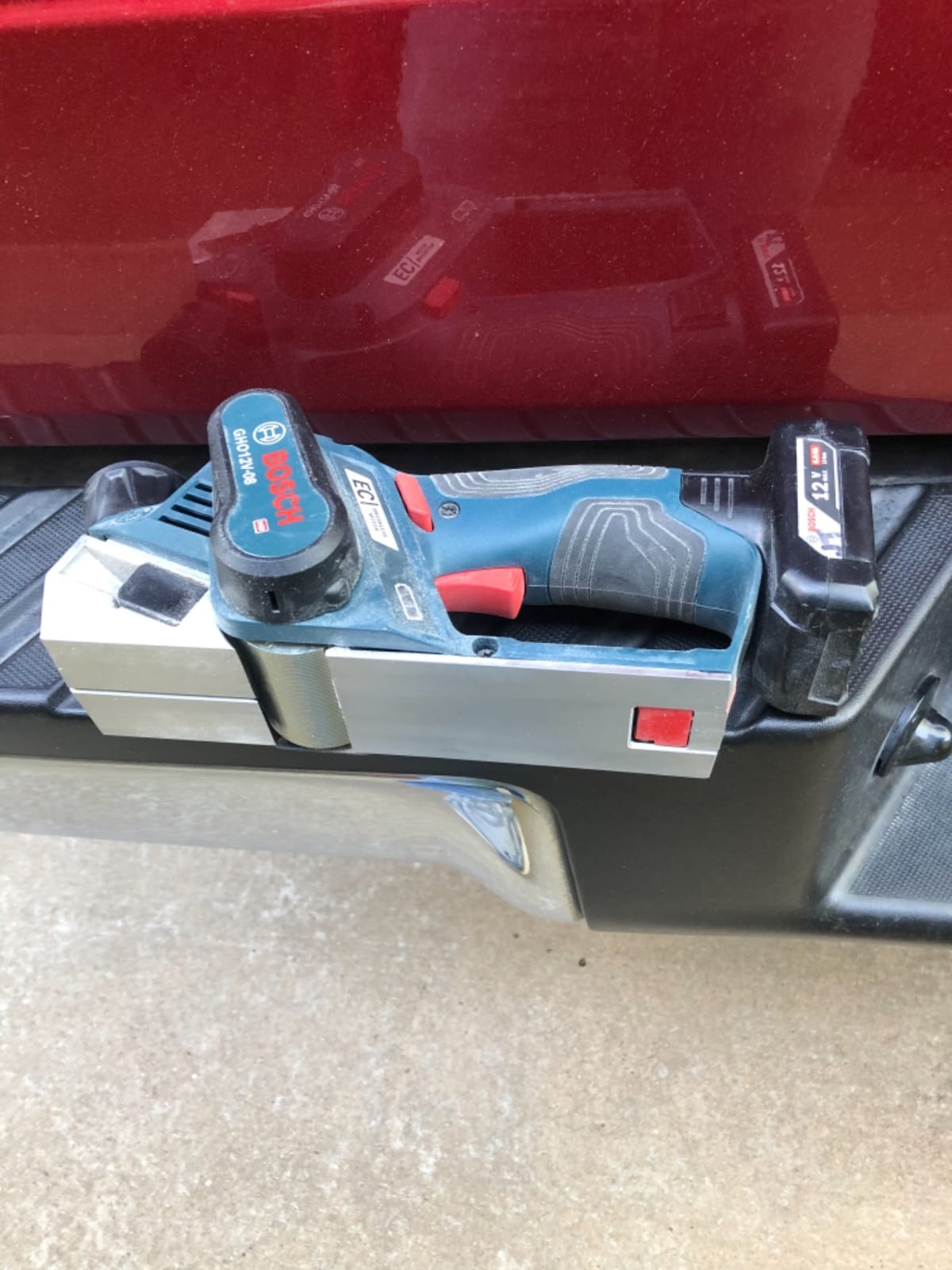
Trim carpenters describe this as a workflow-changing tool for scribing and fitting doors. It works one-handed for scribing and trim, and at 3.3 pounds it is the lightest machine here. That changes the job: you can hold a door with one hand and trim the edge with the other on a landing where a benchtop planer is not an option.
The EC brushless motor runs at 14,500 rpm, and Bosch rates it at up to 33 feet of planing per battery amp hour in hardwood at a 0.04 inch depth. The 2.2 inch planing width suits most wood door edges, and single-pass depth goes to 0.08 inch with rabbets up to 0.7 inch.
Balanced construction from a single block
The body is machined from one aluminum block with a deep balance point, which is why it feels stable rather than top-heavy at full extension. It is just over 10 inches long, which matters when you are working inside a door frame rather than on a bench.
Shavings ejection is switchable, so you can direct debris either way depending on which side of the door you are standing on. On a finished floor, that switch is the difference between a clean job and chips swept up twice.
Battery reality on hardwood
The 33 feet per amp hour figure is a hardwood rating at a light 0.04 inch depth, so treat it as a guide rather than a promise. On repeated heavier passes you will see the tool slow noticeably as the battery drains, and the sensible field habit is a second pack in the belt rather than pushing through at reduced speed.
For a single door or a run of trim, though, one pack is plenty. This is a precision tool for scribing, not a production thickness machine, and the runtime is matched to that job.
Switch, kickstand and dust
The two most common criticisms are the lock-off safety switch, which has a strong spring and an awkward placement, and the kickstand, which can flip out unexpectedly or stay folded where it gets in the way. Both are manageable once you know them, and neither affects the cut quality.
The included dust bag is ineffective, so use the dust adapter with the correct Bosch hose into a vacuum. The 2.2 inch width is the other limit: this is a door edge and scribe tool, not a planer for wide stock.
What Actually Matters When You Buy a Planer for Job Sites
The spec sheet tells you what a machine can do. The site tells you what you will actually use it for, and those two answers are not always the same. Here is how I would weigh the decisions, in the order they come up.
Corded vs cordless on a site with no clean circuit
This is the decision crews get wrong most often, and forum advice from finish carpenters is consistent: for planers, routers and table saws, they prefer corded, because a steadier supply means a safer and more accurate cut on plywood and dimensional lumber. That is correct for production work.
Cordless wins in a different set of conditions, and they are common. No outlet within reach, occupied interiors where a cord across a walkway is a trip hazard, ladder work, tight closet and stairwell work, and any site where you are moving rather than producing. A 3.3 pound cordless planer that fits a tool bag changes what jobs you can take at all.
If you are feeding a 15 amp benchtop planer, plan on a dedicated circuit. Running it alongside a dust collector on the same outlet is the most common cause of nuisance trips we heard about, and it is a five-minute fix at the panel that saves an afternoon.
Benchtop or handheld: match the tool to the stock
Decide this from the lumber in front of you, not from the price gap. A benchtop thickness planer is the only way to get a full-width face parallel and dimensioned to a set thickness, which is what doors, casework and cabinet parts need. A hand planer is the right tool when the part is already installed and the job is a scribed fit, a chamfer or a cleaned-up edge.
Running a 13 inch board through a hand planer is a bad afternoon. Trying to scribe a hung door with a benchtop machine means unhinging it. The two tools are complements, and a two-person crew that does both types of work usually ends up owning both.
Straight knife vs spiral cutterhead on rough and figured stock
Straight knives are cheaper to service and faster on softwood, and a three-knife head changes fast in the field. Their weakness shows on figured, curly or reclaimed stock, where a long chip catches the leading edge and tears the surface. That is tear-out, and sanding it out means you have removed more material than you planned.
A spiral cutterhead with staggered rotatable blades changes the chip geometry. Blades that can be indexed to a fresh edge also cut the running consumable cost substantially. If you mill reclaimed lumber or figured wood regularly, the spiral machine pays for itself in material saved rather than in finish alone.
Snipe is a support problem, not a machine problem
Ridged marks at the start or end of a board are almost always the workpiece dropping away as it leaves the outfeed table, not dull knives. New operators waste a lot of time resharpening a machine that was never the problem. Support the far end with a roller or a sacrificial block, feed the board at a steady rate, and the marks go.
Long infeed and outfeed tables are the machine-side fix, and they are why we rated the DW734 for table support. On any machine, the boards still need to stay supported beyond the machine itself.
Dust collection, knives and what it really costs per year
Set up dust extraction before the first board. A planer throws both shavings and fine dust, and a bag that fills every few minutes breaks the rhythm of the job. Run a vacuum where the port allows it, and check the adapter fits before the crew leaves the shop.
Knife and insert consumption is the running cost people forget. Straight-knife machines need replacement sets, and a three-knife head consumes a set every few times what a two-knife head does, though it stretches the interval between changes. A spiral head with rotatable blades reduces it to occasional indexing. Work out which machine you will actually use most, because that machine is the one whose consumable rate matters.
Frequently Asked Questions
What is a good wood planer to buy?
A good wood planer is one that holds a repeatable depth, has a cutterhead that suits your stock, and is light enough for the space you work in. For dimensioning 12 or 13 inch lumber away from a shop, a 15 amp benchtop planer with reversible knives and long feed tables is the standard answer. For fitting doors on site, a 3-1/4 inch hand planer with an aluminum shoe is the better buy.
What are the key differences between the Grizzly G0940 and Dewalt 735 planers?
Both are 12 inch class benchtop planers, and the meaningful differences are speed and support. The DW735 has a two-speed gearbox feeding 96 or 179 cuts per inch, a three-knife cutterhead and longer feed tables, which suits production work. A single-speed machine is simpler and cheaper but gives you one feed rate, so heavy and finish passes are less flexible. Neither model was in our test group.
Is a planer thicknesser worth it?
A planer is worth it if you regularly dimension rough, reclaimed or bowed lumber. It gives you a flat face at a set thickness far faster than a jointer followed by a sander, and a planer thicknesser also flattens one face in the same pass. If you only work on already dimensioned milled lumber, a sharp hand plane is faster and cheaper.
Are electric hand planers any good?
Yes, for the jobs they are built for. A 3-1/4 inch electric hand planer removes roughly 0.09 to 0.13 inch per pass and saves enormous time over hand sanding on doors, jambs and rough softwood. They are not a substitute for a thickness planer on wide stock, and light plastic models are not built for hardwood or knots.
What is the best 13-inch thickness planer?
Among the machines we ran, the DEWALT DW735X is the strongest 13 inch option, with a 15 amp two-speed motor, a three-knife cutterhead feeding 96 or 179 cuts per inch, and infeed and outfeed tables in the box. If a spiral cutterhead matters more than the two-speed gearbox, the WEN PL1326 handles 13 inch boards with 26 rotatable blades.
Which planer is the best value for money?
The WEN 6530 is the clearest value in the handheld class, pairing a 6 amp motor at 34,000 cuts per minute with 16 positive depth stops and a 1 inch rabbeting guide in a 6.5 pound body. For a benchtop machine, the CRAFTSMAN CMEW320 gives a 15 amp motor, a solid steel cutterhead and base holes for bolting down at a much lower entry point.
Are corded tools generally better than cordless tools?
For production work, yes. Contractors doing planing, routing and sheet cutting consistently prefer corded because a steady supply holds speed and accuracy under load. Cordless wins when there is no outlet within reach, when cords would cross a walkway, or for ladder and scribing work. Pick based on where the work happens, not on the power source itself.
Can I use a table saw instead of a planer?
You can rip and crosscut sheet goods on a table saw, but it cannot flatten a cupped or twisted board or bring it to a consistent thickness. A planer takes a full-width pass to a set measurement in one operation, which is why finish carpenters use one before fitting. A planer thicknesser also flattens a face while you are at it.
Which Portable Planer Fits the Way You Work
If you fit doors and scribed trim and move between job sites, start with the DEWALT 20V MAX cordless planer. It follows you upstairs, it holds a depth to 1/256 inch, and it is the pick we would put in a tool bag without hesitating.
If your day is spent dimensioning full width lumber and you have a second person to help unload, the DEWALT DW735X is the machine that produces parallel faces all day with the least finish sanding. If the second person is not there, the CRAFTSMAN CMEW320 at 61 pounds is the realistic benchtop answer.
If reclaimed or figured wood is your material, choose the WEN PL1326 for its spiral cutterhead, and accept the single feed speed as the tradeoff. If you need the finish of a spiral head on a smaller budget and softer stock, the Makita KP0800K is the hand planer finish carpenters keep coming back to.
If you are one person, on a budget, and cutting doors and softwood, the WEN 6530 does the job and keeps doing it. Ten portable planers later, the difference between a good buy and a bad one usually comes down to three things: whether the depth adjustment repeats, whether the dust stays in the collector, and whether you can move the machine to the work or the work to the machine.
These are the ten we would consider in 2026, ordered by how often we think a crew reaches for them rather than by price. Check the current details and owner reviews for each machine before you commit, and tell us which one ended up in your truck.
Leave a Reply